Loading summary
Transcript5 lines
- [00:30]
A
Ready to rack to school and save big. Get to your Nordstrom Rack store today for thousands of deals from just $20.
- [00:38]
B
Cause I want to look fresh. How did I not know rack has Adidas? I got a new backpack.
- [00:43]
A
Score. Everyone's favorite denim sneakers, boots, and activewear from Nike, Levi's, Steve Madden, Madewell, and free people. Great brands, great prices. Everyone's got a reason to rack. She shop Nordstrom Rack and make it the best school year ever.
- [00:59]
B
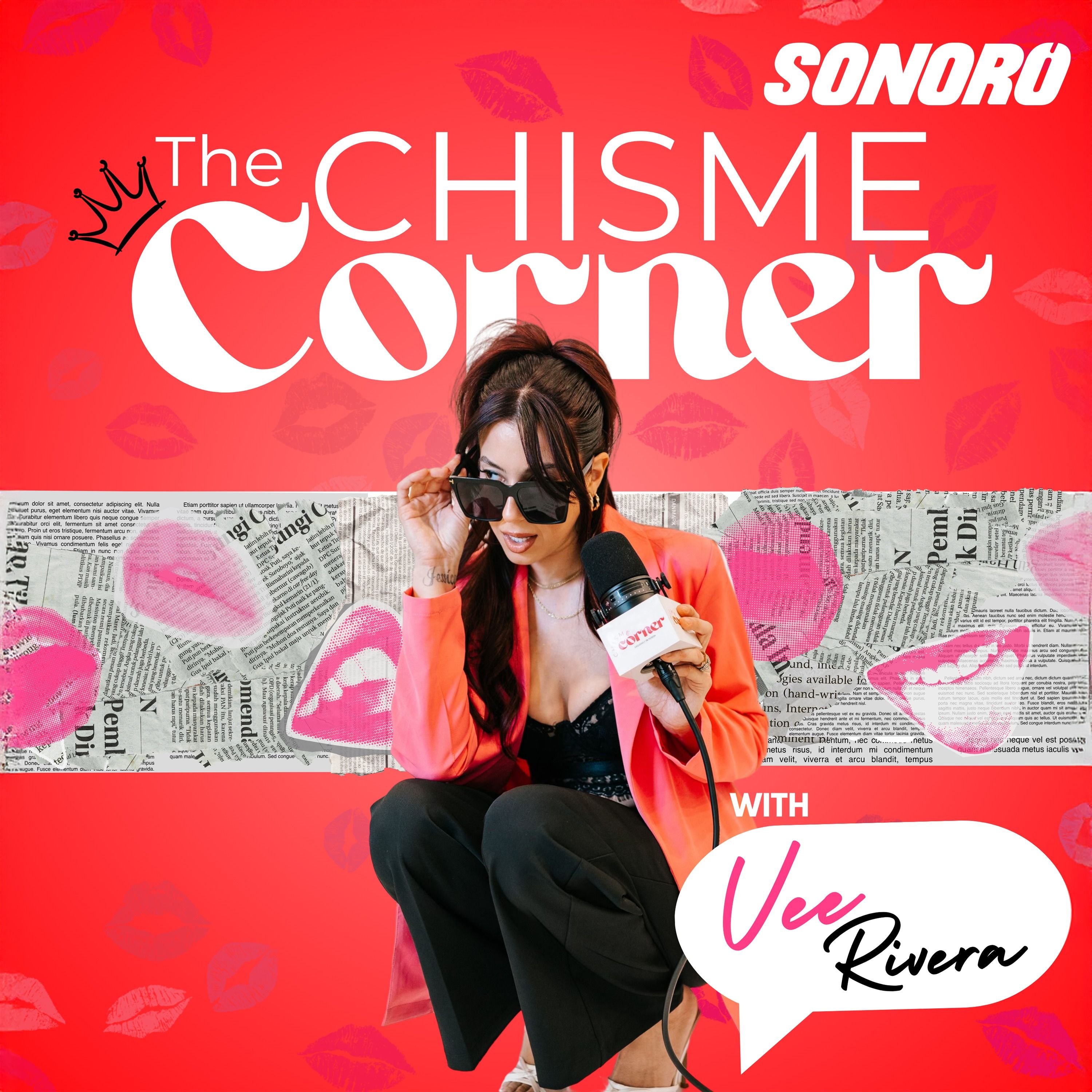
The world loves a quiet woman until she gets loud. Welcome to the Cheeseman corner. I'm your host, V. Rivera, your Latina bestie. And go to Chismosa for all the chisme that actually matters. Latina, motherhood, beauty, navigating life in your 30s and keeping our mental health in check. We're keeping it raw, relatable, and a little spicy, but only for the tea. And today we're using Karoji story to reflect on ambition, identity, softness, doubt, and also reclaiming your narrative. And if you've ever been called dramatica, you're too soft, all because you're simply feeling those feelings out loud. This space is yours. So get comfy, grab your little cafesito, because the chisme starts now. Okay, guys, let me quickly reintroduce myself. I know it's been a hot minute, and a lot of you are like, where you been? Where the hell you been? It's been a minute since I have had a microphone in front of my mouth. I'm not even going to lie. But I'm so grateful to be here. I'm so grateful that you guys are here. And the Cheesemake corner is something that is so. Is so special to me because I feel like this is just something that is so natural for me. As much as I love chisme, this show was definitely born from chisme nights with my sister, my mom, my abuelita. Like, this is something that I've grown up with, and we just sit down at the table and just talk about whatever. Whatever comes to mind. And that's always been something that's so special to me. I know people sometimes look at chisme as, like, something bad, but I don't give it that negative connotation. You look back at moments like that, and it's connection, it's comfort, like, it's honestly culture. And that's why the Cheese My corner exists, and that's why it is so special to me. And I'm. I'm looking forward to it and all the episodes to come. And you guys have no idea. Just how grateful and excited I am. Pop culture is kind of like that door, like stepping in. But our lived experiences and the things that we go through is the foundation. So I really love that I'm able to blend the two. Blending pop culture and blending our own lived, lived in experiences. I'm really excited for that. So we're gonna hop right into it. Okay. I. I watched Scott OG Tomorrow was Beautiful on Netflix. I think it's on Netflix right now and it's also on Amazon Prime. I advise every woman, especially Latina, to watch that documentary. I'm still really emotional about it, even just thinking about it. And it really reminded me how hard it is to dream big when we are already in a world that tells us to stay small, stay small, stay in that box. So the documentary basically follows Karo G's rise to fame and stardom. And she goes from just this little girl from Colombia to this global star. And it didn't take. It took her a really long time to like, she's. She almost gave up a few times. And it just really mixes, like, emotional, like all the behind the scenes footage, especially from her tour, the Manana Serabonito tour, and just real talk about fame and fear and fighting to be taken seriously. Especially being in a male dominated space. Like, I don't know if you guys know the genre of reggaeton, but. So reggaeton is basically dominated by men. It's always been like that and there are women who are really successful in it, but overall it's. It's like a male dominated thing. She was told no about her tour. Like, she literally. They looked at her and were like, girl, no. Especially because she was trying to do it within under a year, a year's time. And she was told that she shouldn't. And she made a whole tour out of that and out of that resistance. And I commend her, I really do. Because it was. I think it was one of the highest grossing tours by a Latina woman. And she was the first woman to do a stadium tour. The first Latina woman to do a stadium tour. I think just now she got beat out by Shakira, but it's like Bow Down Queen. Like, I know she even has a song with Shakira. So I'm sure that doesn't even bother her. Yeah, it ended up becoming something huge. It was record breaking. But imagine if she had taken everything that the doubters were telling her and ran with it. And it also just made me ask the question to myself, like, what parts of myself do? I feel like I'M shrinking, you know, because I think we do live in a world where it's easier to just shrink yourself. And I. It's very hard when you feel like you have to shrink yourself down or just water yourself down for other people around you to feel comfortable. And I. I feel like I've done that so much in my life, and it was at. The comfortability of others like you shining bright and doing things that you love and enjoy and are good at should not make other people uncomfortable or shouldn't make them look at you a certain way. Like, you should be able to be in those spaces that you're meant to be in and walk in with your head held high and say, I'm here, I'm here. I'm here to stay, whether you like it or not. So I really. I regret and I feel bad for that woman that I was, that I felt like I had to water down or be like this little shrunken version of myself to be in certain spaces or be around people. You know, that feeling. You know, that gut feeling and that intuition that you get when you're just like, it's not. It's not clicking for me, like, this isn't. I know this is not where I should be. I know that there's something more out there, and I need to stop putting myself in this box and thinking, like, this is where I fit, when, no, going outside of the box is where I should be. So her team literally tried to talk her out of greatness, and she ignored them. And. And that hit me because I really felt that, too. Like this podcast, for example. It's no surprise that my last podcast ended, and after that, I didn't really know what I wanted to do. I didn't know if I even wanted to hop back on a mic. And I was just like. I think I was just. I wanted to take time to really get this right, which was important to me. But I also. There were other things that I was like, you know, I can do other things and I can work on other things. But it was like, no, why am I pushing myself away from something that I know I love? I love building community. I love podcasting. I love talking to women all around the world and having them tell me, listen, you gave me confidence in this, or you inspired me and you affirmed me. I love that there's no greater feeling, and that is all I've ever wanted. Just community and connection. Podcasting has given me that. And if I can make a difference in someone's day, even if for an hour Even if just for 20 minutes, that drives me, and that makes it so worth it for me. And I've gotten so many dms from women all over the world telling me how I've helped them with their confidence and even their anxiety, or even something as small as a makeup product. Why would I ever give that up because of just, like, a hiccup or something that didn't work out? And why would I care what other people think, what I do and what I don't do? Don't ever let other people or circumstances shape your life. You just. You can't do that. And over, I think over the past year, even the past. I think over the past year or two, I've. That I've opened my eyes to that. And the fact that we're just. We're the creators of our own life. We talk a lot about doubters. You know, I've talked a lot in this episode about how people doubted her and told her no. But sometimes the loudest doubter is you. Sometimes we can be our biggest hater sometimes. And sometimes I'm like, why is. Why is my brain doing this to me? Like, you're supposed to be on my team, Right? But we can be our loudest doubters. We could be the ones that underestimate ourselves. Like, you might have that voice in your head that's saying, like, why bother? Like, who cares? Nobody cares. You know, and that might be true. There might be people that don't care. There may be people that. There's going to be people that don't give a about what you really got to say. But. But for me, all the other people that do it trumps that. You know, her story really flipped that narrative for me, because you don't need everyone to believe in you. All you really need is one person, and that person is you. That's it. So when you finally stop asking for approval and all of that, you're looking for something within other people. When it's in you, you have to start trusting yourself. And that is. That's kind of like. I guess in her words, she would call it, like the bichota shift. Like, it's a shift. And I love the fact that she owned the word bichota and made it something. We're going to get into that later, too, because I feel very. I love that she did that. Took a. A, A word that's like male dominated as well, and made it into something feminine and strong and powerful. But we'll talk. We'll talk about that later. It's that Moment where you go from questioning or overthinking your worth and then stepping into the room and telling everybody else to catch up, catch the up. So that is just, that's so powerful and of itself. I want to get into this because everyone that knows me knows I am. I'm probably. Everyone's real. That one Puerto Rican friend that, like, no matter who I get to know, you're going to know that I'm Puerto Rican. Like, I'm so proud of it. Like, I even. I have a sticker on my car. Everything about me, I just, I embody a Puerto Rican woman. I feel. And I, I, I take so much pride in that. I love, I love being Puerto Rican. I love being Latina. It's like, you know, those little boxing gloves, that hand that hang in the, the mirror of your car? Every Puerto Rican got that. It's so funny because I love when people say, oh, my God, I just want to be shown off, like, a Puerto Rican flag. Like, because, hell yeah. Hell yeah. Like, we love showing off the flag. But I don't know if any of you guys know this, but from 1948 to 1957, it was literally illegal to display the flag, the Puerto Rican flag, anywhere. I feel like that's why we stand in that now. And that's why we, you see it everywhere. And that's why we are so strong. That's why we feel so strongly about showing it off. I think that's why. Because we were told, you know, it's illegal, like, you couldn't do that shit before. And that's why it's around our necks and in our cars and in our music, like, everywhere. I love how the same love that I have for being Puerto Rican, Carol G embodies that in her music and in being Colombian, she was told that she was too soft and too girly. Not enough. Not enough to be a reggaeton, female reggaeton artist. And I personally feel like she represents Latinas in the most beautiful way. The most beautiful way. And women in general, she has this softness about her, but she also has, like, this, this strength that shows you don't mess with me. Like, no matter what, I don't care what you think of me. I'm gonna do what I want to do and I'm gonna do it my way. And watching her stand in her softness and, you know, as a Colombian woman in a male dominated industry, it just made me think, like, how often do we women like us are told that we're like, too much, you know, like, you're too Loud or you're too girly or you're too sensitive or you're too dramatic. Like, oh, my God, we get that all the time. I feel like that's such a Latina stereotype too. Like, oh, my God, we're super dramatic and we're loud. But, like, people automatically, like, hear that I'm Puerto Rican, and they're like, oh, you must be. You're loud and you're spicy and you're this and you're that. Like, we're not to anything. Like, we're everything. We are everything. I think one of the most beautiful parts of her doc was she did a tribute to Thalia. She's another really amazing, talented Latina artist. I. I love her. She's iconic. But seeing her honor another powerful Latina was so powerful. And it just shows how important our roots really are. Like, we're not. We're not just pop culture consumers. We are creators of the culture. Like, we are the culture period. So when we mix pop culture with our lived in experiences, it's not just chisme. It's like storytelling, you know? So if you don't like the word chismosa, it's okay. It's okay. You can call yourself a storyteller. Okay. So in the documentary, Karoji also talked about her body image, her anxiety, her heartbreak that she went through, which was really public with anel w. Which let's not even get into him. She was talking about how, like, one day she wakes up and she could have a six pack, and then the next minute she feels bloated and just totally insecure. And I felt that because I feel like even the baddest struggle. This is why I always say, like, you could be a saddy, but you got to know that you're still a baddie. Like, it happens. Like everybody struggles with something no matter what it is. I feel like that's the thing. Like, we've been almost taught that showing up and showing emotion equals weakness, but it's not. I totally disagree. I think that's power. I think that's powerful. And especially growing up Latina, like, there's this really unique rule. Like, you got to keep it together. Like, you got to stay strong. God forbid you're not strong. Like, you're not this strong, independent bitch. Bottling things up does not make you stronger. I think it makes you more disconnected than anything from others, from yourself, which is the most important. And I felt like I lived like that for years. Like I was very, like, self sufficient. Like, I wouldn't like Talk about things. And I felt like I was putting myself in a cage. Like, my silence started to feel like a cage to me. You know how they always say, like, there's always that strong friend and she's always there for everybody else, but she sometimes feels like nobody is there for her. And it's okay to be that strong friend and still need support. And everybody should recognize that, like, you're still a human. And learning that vulnerability does not equal weakness. But using that and knowing that it's a superpower. Listen, I used to be so scared to be vulnerable because I feel like that side of you, showing that side to somebody, you're giving your deepest side of yourself and trusting and hoping that it doesn't get thrown in your face or used against you. Like, and that is. That's always been the hardest thing for me. And that's something that I still very much struggle with, is being open and vulnerable with people because I've had things thrown in my face or I've had, you know, people judge behind my back or learn that they're talking shit. Like, it feels like for me, just specifically growing up Latina and growing up in this generation, like, being vulnerable feels like an unspoken rule. We're just raised in these cultures where strength is everything. And sometimes I feel like it can be to a point where it's so toxic. Like, just because I feel like the past generations and everyone in our family, our cultures, like, carried so much and now we look back and I know, like, I never realized back then, like, my mom didn't have it all together. I think at the age that Vivi is right now is the same age that I am as my mom. And that is crazy to me. Like, that hits something different for me because I'm like, holy. I don't even feel like I have it all together sometimes. I don't even feel like a adult. I don't feel like a grown ass adult sometimes. I. I still feel like a little like a 20 something year old and a 30 year old body. Like, I'm still trying to get life together. And yeah, like, I've planted all the seeds in my twenties and I'm. All the stuff that me and Joe have built in our careers and so much. And I feel like now, just now we're starting to be like, okay, we can kind of chill and relax. But I still don't feel like I have it all together. There's still so much that I'm clueless about and it's fucking scary, especially when you're raising Kids, it's the scariest thing because it's like you're asking me questions I don't even know. Like, and I'm the adult. And then I look back and I'm like, I was the same way with my mom. Like, I thought my mom had it all together and she knew she had all the answers and she knew it all. And it's like, bitch. No, there was just no showing it. She was just superwoman and she could handle everything. And not just our moms. Like, that was also your theas and your abuelitas. And it runs so deep. Like, that line runs so deep in the family of just women. And the idea of being too emotional just made you look weak. It made you seem weak. And the fear of judgment, so the fear of being judged and just talked about just made it easier to just like, bottle things up. And that's exactly how I was growing up. And I'm still working on it till this day. A lot of the times I deal with things internally because I'm just like, you got this. Like, you. You don't need to depend on nobody else. Like, you got this. If anyone can get through it, it's you. I just feel like I need to show the women in my family and show my ancestors that I'm the exact same. Like, I am superwoman. I can do any. No. This really ties into the expectations of our cultures and how we're raised versus the realities of the modern day world. Now people are so open to talk about their mental health, which I love. I absolutely love talking about their mental health struggles, their healing journeys, and just like, struggles in general. Things that we're struggling with and working with may not seem like a lot for someone who may have no problem doing those things, like, if you were able to do those things growing up, you know, but for someone like me, but for someone like me, it's like a way of breaking generational cycles and also not just teaching ourselves, but teaching our kids that emotions are not a weakness, especially with little boys. Machismo is so big in our culture. Like, God forbid these men cry. And it's like, this is why people, like, have such a hard time. I feel just feeling out their emotions. Thankfully, I have a man who is very much. He's very open with his emotions. Like, sometimes I'm like, I wish I could be that way. Like, he's very good. I think it just comes down to, like, learning how to communicate those things too. And, you know, therapy. But we do. People do. A lot of people do struggle with these things. And I just feel like feeling is such a beautiful thing. Like, once you learn how to fill out those emotions and you just start looking at it as something that's not negative. Like, it's just human. It's human. So if you're gonna take anything from this part of this episode, take this. Feeling your feelings is not dramatic. I think bottling it all up to protect other people's comfort, I think that's the weakness. That's what we have to work on, especially me. But don't rob yourself of growth just because someone told you that your softness was too loud. Okay, so remember towards kind of like the middle beginning of the episode when I was telling you guys about the word bichota. So that used to mean like big boss energy, but like, in a street level, it was really masculine. But Karoji took that and she kind of flipped it. So originally, la bichota is a term. It's a slang term in Puerto Rico. It's associated with, like, drug lords, like big time street bosses, you know, and it's usually men. So it has this hyper masculine connotation to it. Everyone kept telling her, again, doubting her using the word. Like, no, no, you cannot use this word. Like, people are not going to take it the right way. Just stay away from it, you know, like, don't even. Don't even feed into that. She really fudgeing went and added her own feminine touch to it, and she turned that shit into like a whole movement. Like, I love bichota season. That word is so loud and it's so bold. I think the whole point is that it can be a little too much for some people, but that's the fucking point. Like, sometimes people can be a little bit too much, but let them. That is everything. She took a word that was really meant to intimidate people and she turned it into something fem. Like, she turned it into like this feminine power. And that's what being a bichota is all about. It's about walking in your power. It's about walking into a room and owning it and not shrinking yourself into it and making room for other powerful women as well. Stop asking for permission and be the blueprint. Be the blueprint. So I think this just makes you ask yourself, like, why, why are we still waiting, like, waiting for permission or what label are we afraid to just own and step into? Because it's quote unquote too much. Flip it. Flip it into your bichota moment and that. And that is your power. And everybody else Everybody else in that room can adjust. That's it. So this season of Cheese My Corner. This season is called Power. And this is exactly what I felt when I watched this documentary. So I hope you can step into your power. I hope you can feel your power, and I hope you can feel how strong and beautiful and how much of a fucking bichota you are, bro, because you are that bitch. So walk around and act like it. So before we go, I just wanted to say thank you guys so much for listening to this episode. Thank you for being here. Thank you for supporting this little Latina's dreams. This first episode really means everything to me. And I hope. I hope Karoji's story reminds you that, like, you can be soft and you can also be powerful. You could be vulnerable, and you can be unstoppable. You can do all of that, and you can still shake the world. Like, step into your bichota season. So I also have a little challenge. I have a little homework for you guys this week. I really want you guys to pick an area, whether it be your work, your relationship, your own, your own self, whatever it is, where you've been shrinking, where you've been shrinking yourself, and stop it. Stop doing it. Flip the script. Be too much. Be too loud. Do it purposefully. And if you've ever felt like your emotions or your voice was too loud, let me remind you that that's not the case. That was never the problem. If anything, that's. That's. That's your edge. Like, that's what you have going for you. So comment in my YouTube or DM me. I really want to hear about your bichota moment of the week. And maybe we'll even talk about it. And I'll give a shout out on the next episode. And if no one claps when you walk into the room this week, clap for your damn self. Next week, we're going to be really diving into pick me energy, loyalty, burnout. Because, girl, the kind of friends who smile in your face but secretly hope you fail. Those are the ones that you need to be aware of. But it's going to be very interesting, and I'm really excited. So I hope to see you guys next week. And once again, thank you for listening to the cheese my corner. Love you guys. Bye. El nuevo Mount McDonaldland shake con uno de seis recorditos. Buon ordenas el McDonaldland mio.
- [23:30]
C
With plan B. Emergency contraception, we're in control of our future. It's backup birth control. You take after unprotected sex that helps prevent pregnancy before it starts. It works by temporarily delaying ovulation, and it won't impact your future fertility. Plan B is available in all 50 US states at all major retailers near you, with no ID, prescription, or age requirement needed. Together we got this. Follow Plan B on Insta NV one step to learn more Use as directed.