Podcast
The Clearing
Hosted by Carrie's podcast · EN
The Clearing is a project to capture my current process of sense making with others - a pod for my friends (except that was a mouthful). The intention is to focus strictly on topics that interest me and people I love listening to. Aiming to avoid pieties, performance, or excessive edification. Themes may emerge. Recording and sharing is an experiment, in the hope that something may resonate usefully with someone - if so, I’m curious to hear about it.
carrie802897.substack.com
carrie802897.substack.com
12episodes
Episodes
Newest firstAll episodes
#22 - An excursion into Classical Chinese Medicine & metaphysics (with Allie Tao)
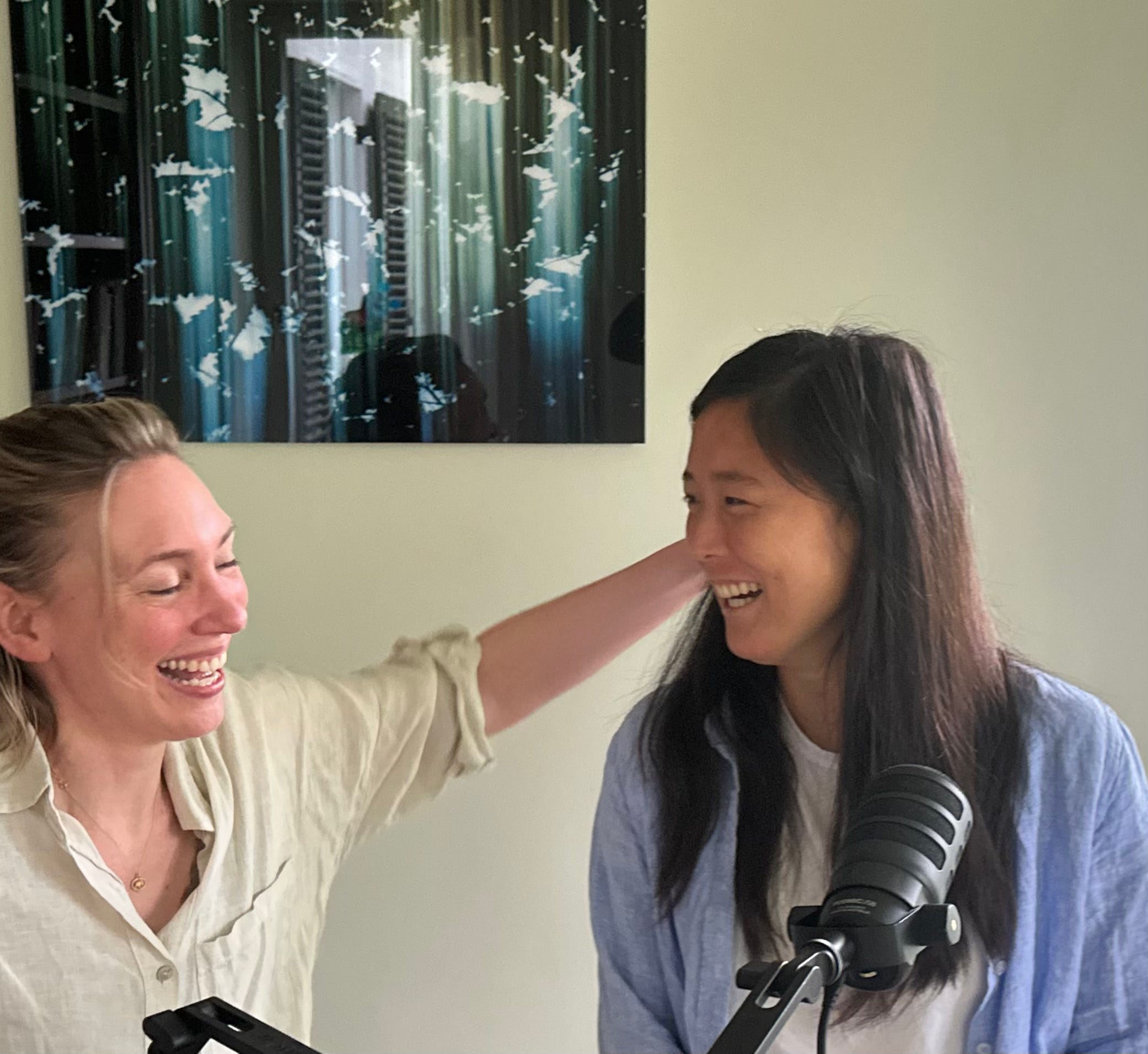
3w ago01:04:12Tap to summarizeWhy is there a different Chinese medicine paradigm that’s labelled “traditional”? Why do people in the West only tend to discover it when they’re confronting chronic illness? Does it ask us to adopt an alternative metaphysics?Allie Tao is a Chinese Medicine practitioner in Portland, Oregon. She didn’t set out to join the healing professions like the rest of her family, but her own journey of cultural analysis and engagement, illness and recovery conspired to lead her there.I was fascinated to talk to Allie about how human health is conceived in Chinese Medicine - being constituted of mind and matter, patterned in ways that reflect all of nature, and accessible through symbolic thinking. What I learned doesn’t seem at odds with Newtonian causality or the principles of biomedicine. But it is broader, and incorporates more of the experience of consciousness.Like most of my excursions on this podcast, this is a short and amateurish glance into a big topic. It was some unusually helpful and challenging grist for the mill.Outro: “Cutting up an Ox”, by Chuang Tzu, translated by Thomas Merton, read by Allie Tao This is a public episode. If you would like to discuss this with other subscribers or get access to bonus episodes, visit carrie802897.substack.com
Transcribe →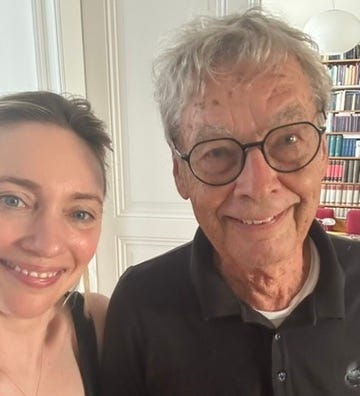
# 21 - German Romanticism, a Legacy of Beauty and of Hungry Ghosts (with Helmut Schneider)
Jun 2600:57:26Tap to summarizeWhat is the connection between Turner’s ethereal paintings of the Rhine and today’s nativist stories, in Germany and across the pond? How is it that the Romantics venerated individual sensitivity and universalist ideals, and yet prominent Romantic thinkers were so often beguiled by authoritarians? Why did Fascists find it so easy to repurpose this soft, dreamy material for their own ends?Thomas Mann was scathing about it: he famously described the Nazi project as German Romanticism “breaking out into hysterical barbarism.” Whether or not the average person in Germany is aware of this line of thinking, I do think some glimmer of it echoes in the plain, functional aesthetic - a fear that next to something pretty or moving could be the abyss. This has always struck me in contrast to the British nostalgia for frills and bunting, or the catchy sentimentalism of American Country music. People in Germany flirt with the vibe of course, in the ubiquitous opera houses, at Oktoberfest and with garden gnomes - but it has to be historic or formalized or a bit silly, and so ultimately deniable.Helmut Schneider is Professor Emeritus for Modern German Literature at Bonn University (with stints abroad, explaining this material to the anglosphere), so he seemed like a good person to answer such questions. His own interest in the period was fuelled more by the beauty of the language, the poetry in particular, than by its historical or political dimensions.But I was particularly struck by one of his psychological observations: that the Romantics’ preoccupation with the internal, with feeling, particularity, mysticism, and Nature writ large made them uninterested in institution building, or the frictionful mechanics of government. As a result, they were susceptible to anyone promising them a safe container for their solipsism. Kind of obvious and tracks to the stereotype at an individual level, but I’d never thought it through. It’s a squeamischness about mixing one’s creative labor with the outside world, whether in technology, commerce or politics. But failing to participate in shaping a society that values and protects what they contribute is a problem for any sensitive free spirit.The uncategorizable Goethe provides a possible answer, in an early 19th century survey of mediveal German art (that had been looted out of Church and feudal settings by the French). Against his contemporaries’ calls for a German Louvre, Goethe argued that the art should remain distributed, embedded in its historical locals and accessible to the population. Instead of a great central insitution, he advised the Kaiser that the way to elevate regional treasures was to strengthen their connectedness, into a web of culture that would incorporate the characters of particular settings. It was through greater communicative connection that the work would become an organic whole, greater than the sum of its parts.Music outro credit: "Mondnacht" — music by Robert Schumann, text by Joseph von Eichendorff. Performed by Dietrich Fischer-Dieskau (baritone) and Günther Weissenborn (piano). This is a public episode. If you would like to discuss this with other subscribers or get access to bonus episodes, visit carrie802897.substack.com
Transcribe →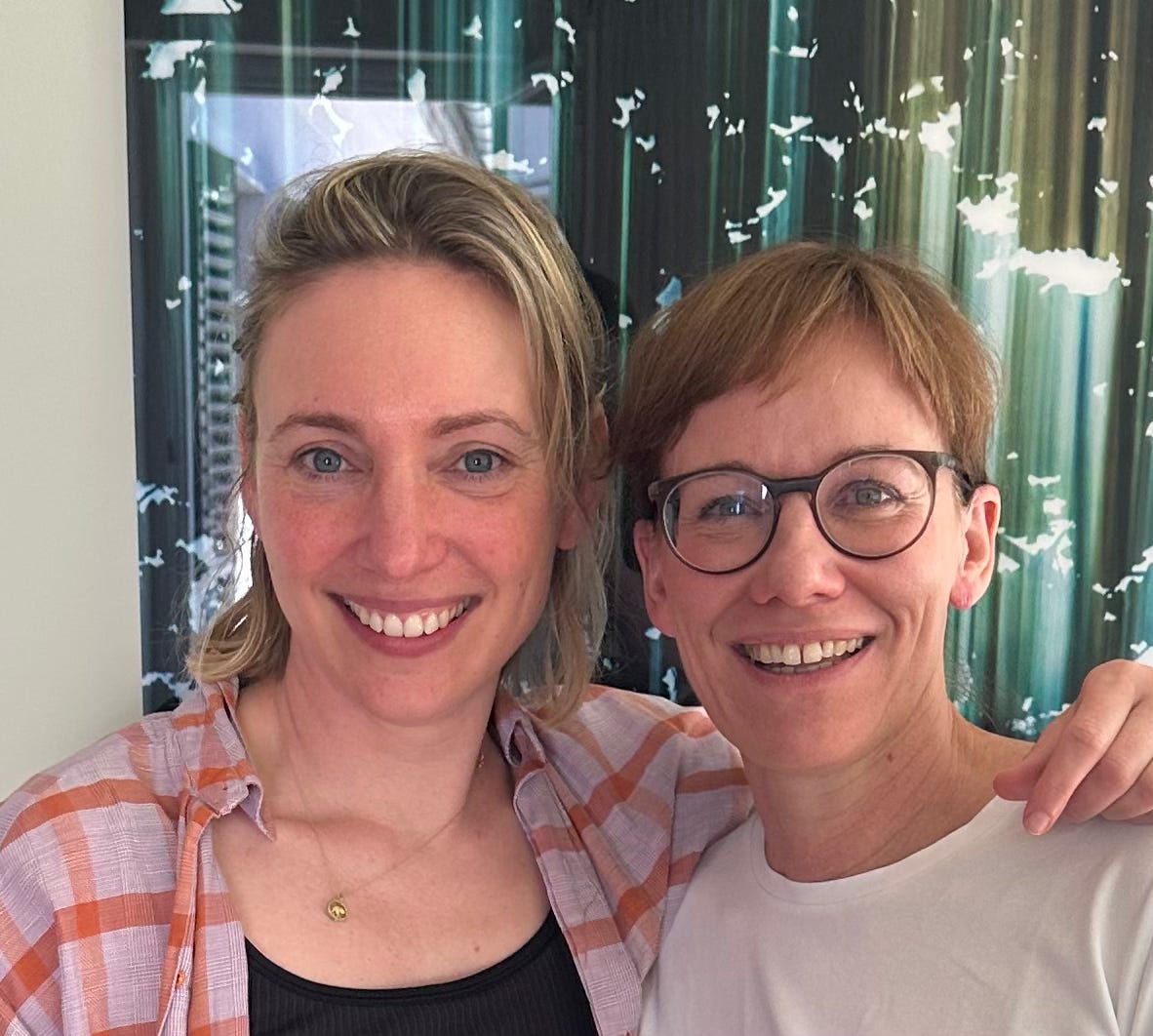
#20 - Re-visioning breast cancer care (with Bettina Wolfgarten)
Jun 901:01:25Tap to summarizeDr. Bettina Wolfgarten is a third generation radiologist specialising in breast cancer. As we unpack what this means, it turns out the technology has changed so much that the job would be unrecognizable to her grandfather. But the throughline remains strong, in Bettina’s telling: a fundamental drive to look into the body as deeply and precisely as possible, embracing emerging technologies in an entrepreneurial way. The courage required to be decisive, and the importance of human trust even when the work is deeply technical.What stands out is how Bettina insists that the way she and the team (including her husband, indefatigable Dr. Matthias Wolfgarten) work should always help the whole person. Their combined practice and complementary offering at Forum Wolfgarten seeks to model what humane, holistic care along the entire patient journey could look like. Beyond their clinical work, they have founded the inter-disciplinary non-profit f.em to promote education, best practices, and civil society engagement at the interface between acute healthcare and healing.It’s truely astonishing what Bettina and Matthias do every day to better diagnose and cure this disease, which affects 1 in 8 women. It’s a passion project of theirs to enlist everyone else to help patients not just to survive, but to experience treatment in an environment of trust, and then to re-enter their lives and thrive again. This is a public episode. If you would like to discuss this with other subscribers or get access to bonus episodes, visit carrie802897.substack.com
Transcribe →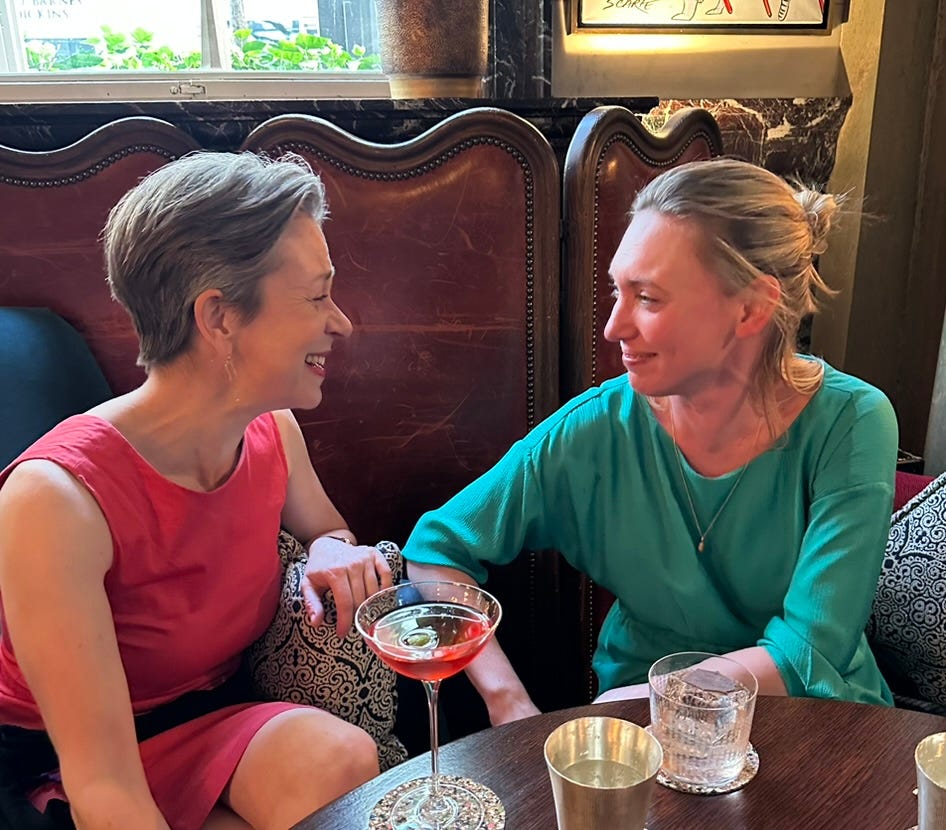
#19 - Marie & me (a reverse interview)
May 1901:28:16Tap to summarizeMy very dear friend Marie-Theres Strauss challenged me to trade seats for this one. I think I agreed to talking about the pod, but ended up answering questions about myself.Marie felt that anyone following these conversations is entiteld to know more about where I am coming from. So it’s a bit different and I’m not sure my bio is inherently interesting, but I’ll offer it.What is true though: I believe in live dialogue as a uniquely rich format for learning because there are two subjectivities involved. People always communicate at multiple intellectual, emotional, and embodied levels, briefly mixing their worlds with a third, shared reality. That’s what makes talking to another human being different to chatting with an LLM… Engagement goes both ways. We can be intrigued, or triggered, or bored, or actually inspired. If the conversation is any good, it isn’t controlled by either of us. This is a public episode. If you would like to discuss this with other subscribers or get access to bonus episodes, visit carrie802897.substack.com
Transcribe →
#18 - Tango: the generous performance of gender (with Soroa Lear, again)
Apr 2300:49:32Tap to summarizeWhy do people enjoy conventional couple dances even when they eschew conventional gender roles in real life? Is there some broader virtue that is cultivated in this highly codified, chivalrous language? What’s satisfying about setting aside important aspects of identity for the duration of a dance, and instead, pracitcing a kind of whole-body-listening with a stranger?Soroa Lear is a professional dancer, though she’ll hasten to say that Tango is not her area of expertise. I’ve spoken to her about free-form dancing more generally (episode #4). This conversation is a follow-on from that, in response to popular demand :) This is a public episode. If you would like to discuss this with other subscribers or get access to bonus episodes, visit carrie802897.substack.com
Transcribe →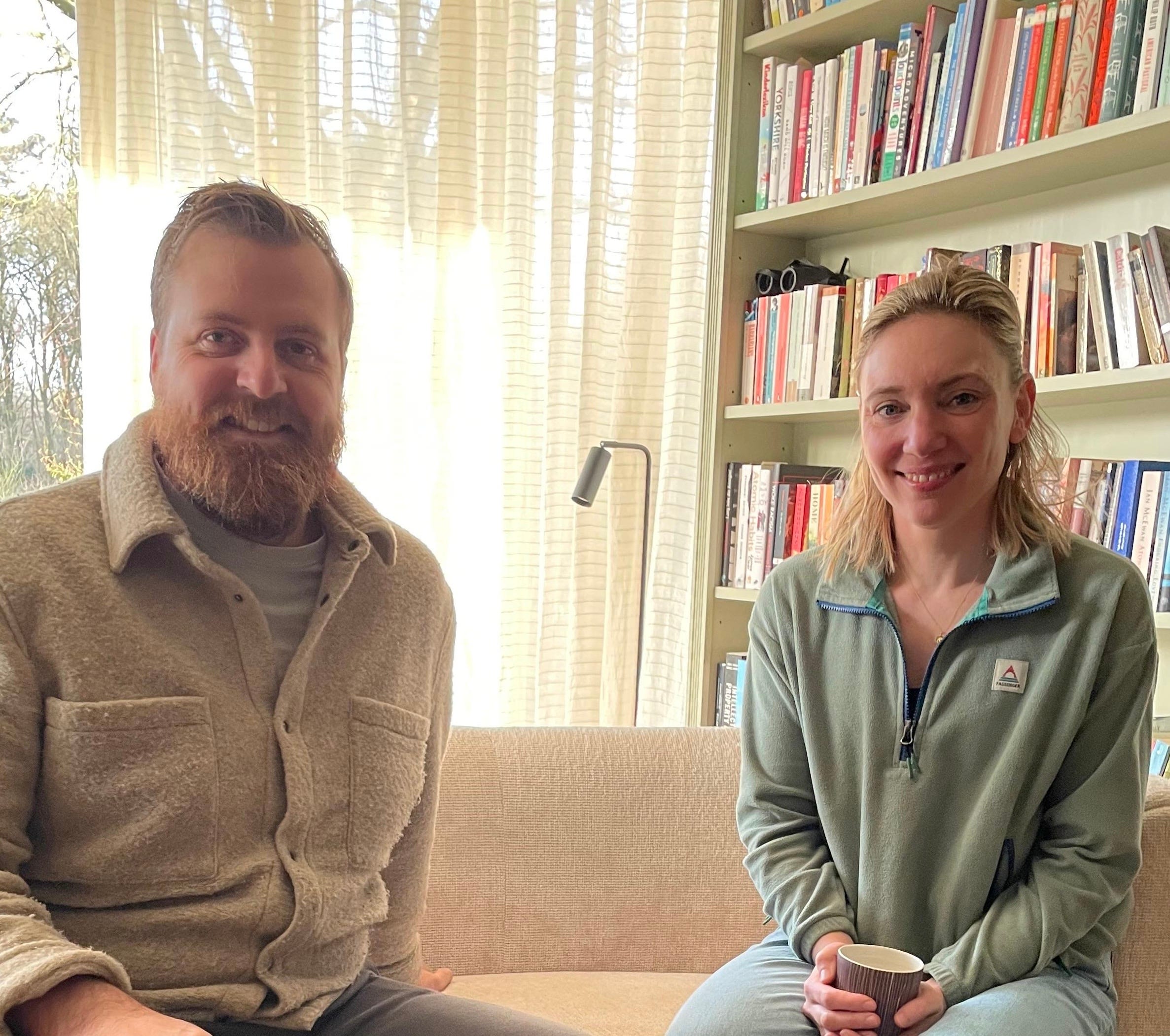
#17 - Non-dual reality: the experience & the science (with James Cooke)
Apr 1200:48:41Tap to summarizeWhat are the stories we tell about the boundaries of Self - and why should we interrogate them with science, contemplative practice, and psychedelics?Dr. James Cooke believes that any deep first-principles understanding of the human condition requires us to tackle the fundamental construct of separateness. He’s not denying that everyday narratives of reality are predictive, rather he’s interested in the psychological wellbeing that exists on the other side of these stories of self.James is a neuroscientist and director of a new contemplative science research programme at Oxford University. He also teaches contemplative practices that draw from non-dual traditions, as well as being an author and podcaster. This is a public episode. If you would like to discuss this with other subscribers or get access to bonus episodes, visit carrie802897.substack.com
Transcribe →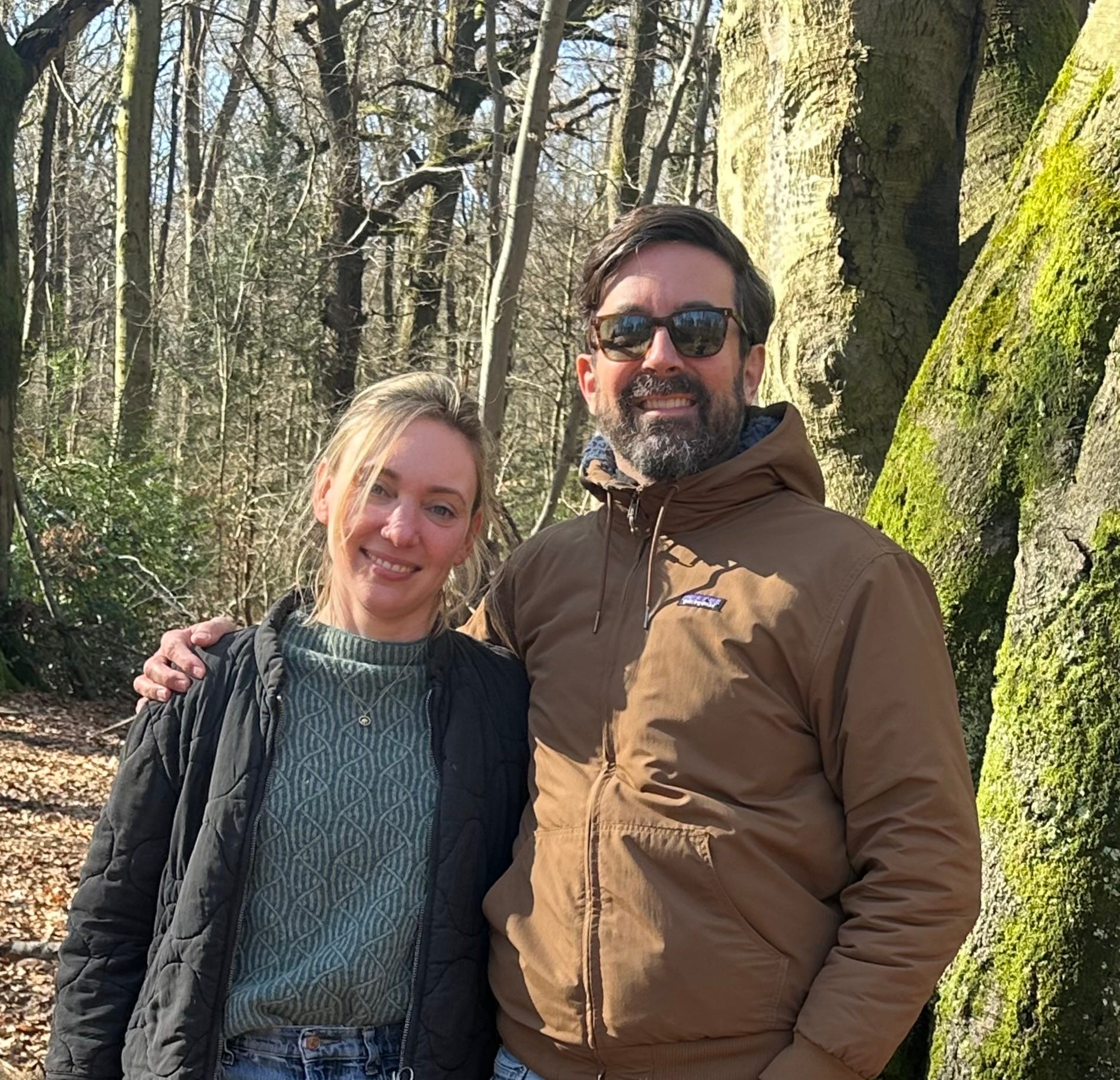
#16 - Wolfgang, death doula
Mar 2500:41:46Tap to summarizeNobody isn’t going there, nobody’s parents aren’t going there—and yet so many of us show up at the threshold surprised and unprepared.Modernity seems at a loss when it comes to the dying process. Among the oldest evidence of human meaning making are artefacts to mark this passage, but today we often find ourselves without any conceptual frame that dying doesn’t break. It’s outside the event horizon.Wolfgang Schmidt Ulm Dos Santos is a trained Death Doula. He’s done many other things - men’s fashion, startups - but it is in this work that he now finds joy. We’re old friends, and it was wonderful to hear him speak about this unexpected calling. Not entirely inappropriate in the run-up to Easter perhaps.To see how an appreciation of mortality is at the root of both the contemplative and the poetic impulse, and maybe all true delight, here’s One Or Two Things by Mary Oliver. In the conversation, we touch briefly on Rilke’s Todeserfahrung. 1 Don’t bother meI’ve justbeen born.2 The butterfly’s loping flightcarries it through the country of the leavesdelicately, and well enough to get itwhere it wants to go, wherever that is, stoppinghere and there to fuzzle the damp throatsof flowers and the black mud; upand down it swings, frenzied and aimless; and sometimesfor long delicious moments it is perfectlylazy, riding motionless in the breeze of the soft stalkof some ordinary flower3The god of dirtcame up to me many times and saidso many wise and delectable things; I layon the grass listeningto his dog voice,crow voice,frog voice; nowhe said, and now,and never once mentioned forever,4which has nevertheless always been,like a sharp iron hoof,at the center of my mind.5One or two things are all you needto travel over the blue pond, over the deeproughage of the trees and through the stiffflowers of lightning --- some deepmemory of pleasure, some cuttingknowledge of pain.6But to lift the hoof!For that you needan idea.7For years and years I struggledjust to love my life. And thenthe butterflyrose, weightless, in the wind.“Don’t love your lifetoo much,” it said,and vanishedinto the world.”― Mary Oliver This is a public episode. If you would like to discuss this with other subscribers or get access to bonus episodes, visit carrie802897.substack.com
Transcribe →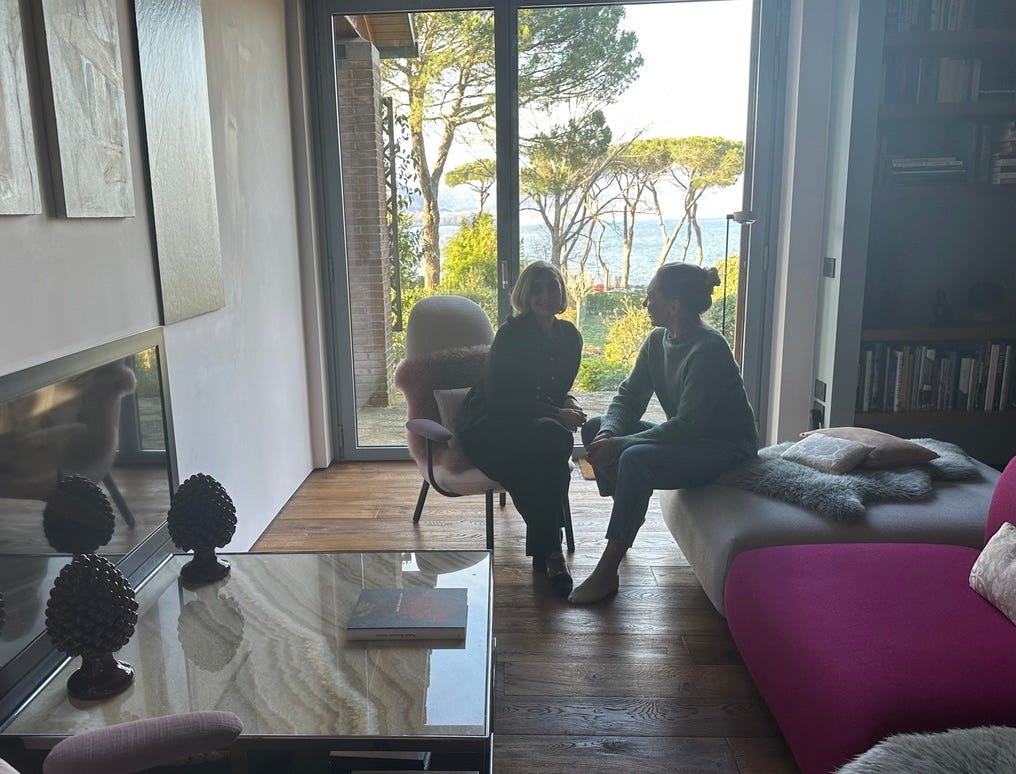
#15 - Archetypes (iii): Penelope’s Odyssee (with Marzia Santori)
Mar 1100:42:24Tap to summarizeWe continue the conversation with the Odyssey myth. Marzia interprets the story of Odysseus (Ulysses) as Penelope’s dream of individuation.I enjoyed this archetypally Jungian move. Rather than the story be about the return of the hero protagonist after the Trojan war, the entire thing is dreamed up by his wife, Penelope, known as the faithful spouse who for twenty years awaits his return to Ithaca. In fact, Odysseus is a projection of her “animus” - her masculine aspect - which through encounters with various female characters eventually returns and is reunited with her. In this telling, as Marzia says, “fidelity is not fidelity to a man, it is fidelity to herself.” A thought provoking perspective. Marzia Santori is a practicing Jungian psychoanalyst in London and Rome, as well as teaching at the CG Jung institute in Zurich. An economist in her previous life, she worked in the finance industry before turning to the Unconscious.This is Part (iii) of a 3 part mini series. Archetypes Part (i) discusses the concept and its application in analysis in general, Part (iii) is Marzia’s interpretation of the Odyssey with the help of an expansive Penelope archetype.(With apologies for the suboptimal sound quality this time) This is a public episode. If you would like to discuss this with other subscribers or get access to bonus episodes, visit carrie802897.substack.com
Transcribe →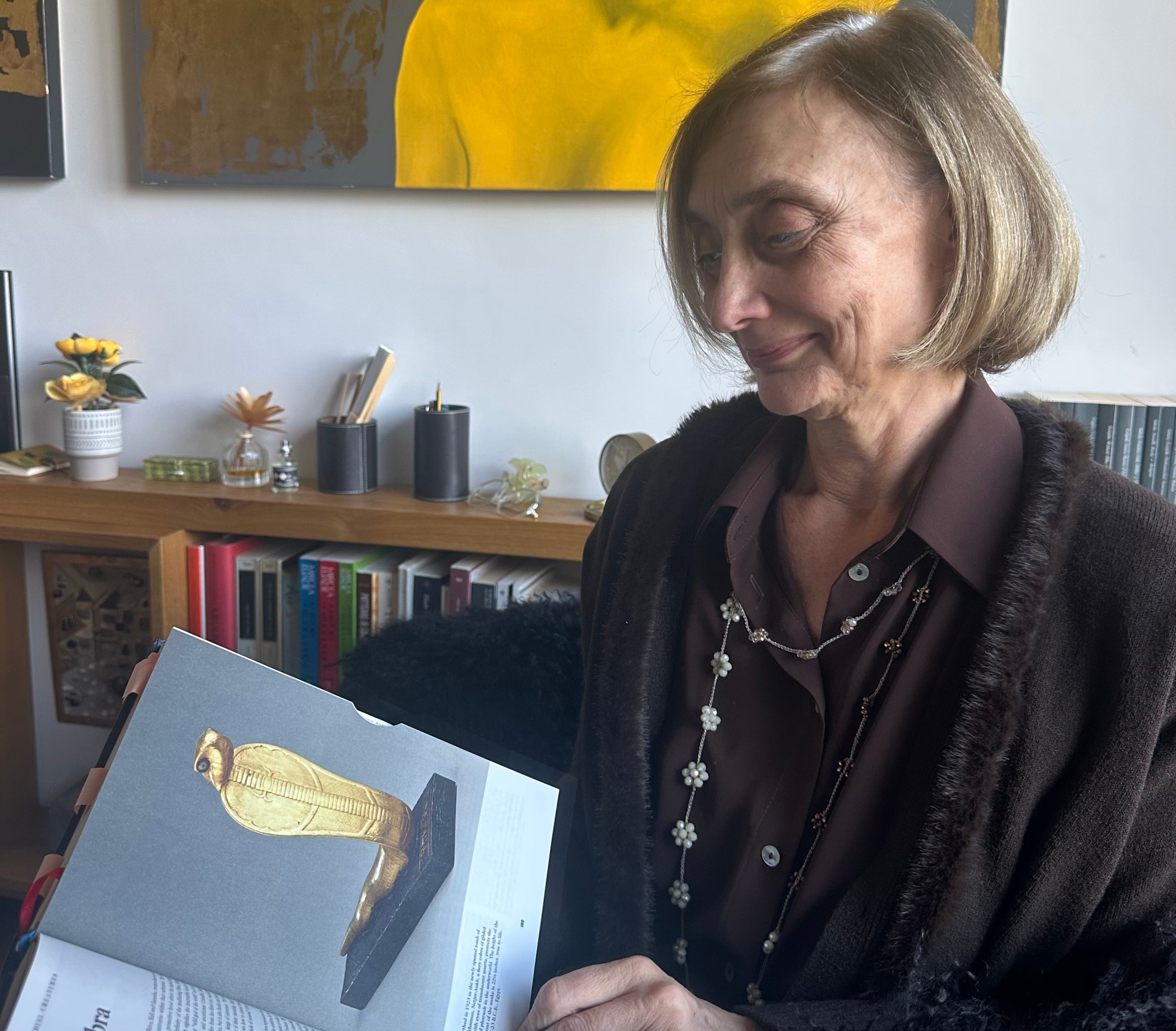
#14 - Archetypes (ii): a Snake Dream (with Marzia Santori)
Mar 1100:42:01Tap to summarizeContinuing with the theme of archetypes, Marzia suggested that we talk about the symbol of the snake, working through association and the real example of a snake dream of one of her clients (to which of course that client had consented).We talk about why Jungian Psychoanalysts pay such close attention to dreams, whether they contain messages from the unconscious mind, and how archetypal dreams can be a bridge to instinct. If you are categorically impatient with other people’s dreams then perhaps this one isn’t for you, if you’re intrigued then maybe it is.Marzia Santori is a practicing Jungian psychoanalyst in London and Rome, as well as teaching at the CG Jung institute in Zurich. An economist in her previous life, she worked in the finance industry before turning to the Unconscious.This is Part (ii) of a 3 part mini series. Archetypes Part (i) discusses the concept generally. Part (iii) is Marzia’s interpretation of the Odyssey myth as Penelope’s dream, thereby giving an entirely unexpected flavor to the Penelope archetype.(With apologies for the suboptimal sound quality this time) This is a public episode. If you would like to discuss this with other subscribers or get access to bonus episodes, visit carrie802897.substack.com
Transcribe →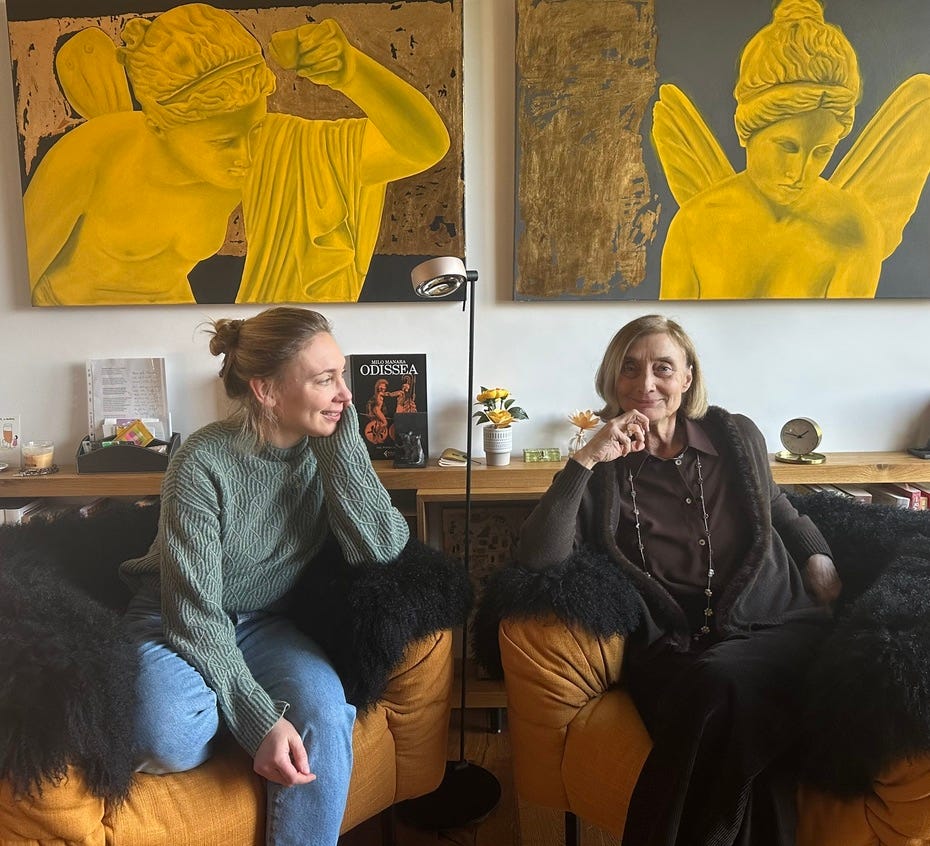
#13 - Archetypes (i): what are they? (with Marzia Santori)
Mar 600:52:30Tap to summarizeWhen are we in contact with an archetype—and when are we merely stereotyping, denying ourselves the insight of a full human archetypal pattern? What if we’re stuck in one aspect of an archetype, with “success” thinkable only along one narrow trajectory, but many ways to fail? Is there such a thing as a flexible hero?In this episode, we look at these questions through concepts as different as those of God, Chair, Mediterranean Mother and Hero (as told in the Odyssey).Marzia Santori is a practicing Jungian psychoanalyst in London and Rome, as well as teaching at the CG Jung institute in Zurich. An economist in her previous life, she worked in the finance industry before turning to the Unconscious.This is Part (i) of a 3 part mini series. Archetypes Part (ii) discusses the snake archetype through dream analysis. Part (iii) is Marzia’s interpretation of the Odyssey through the archetype of Penelope.(With apologies for the suboptimal sound quality this time) This is a public episode. If you would like to discuss this with other subscribers or get access to bonus episodes, visit carrie802897.substack.com
Transcribe →