
Podcast
The Climbing Majority
Hosted by Kyle Broxterman · EN
Most climbing media focuses on the edges of the sport—the most elite athletes and biggest achievements. But climbing has grown far beyond that. The Climbing Majority exists to give voice to everyone else: dirtbags, weekend warriors, route developers, living legends, and world-class climbers flying under the radar. This podcast explores what climbing actually means—the partnerships, the risks, the identity, and the pursuit of meaning beyond the grades.
30episodes
Episodes
Newest firstAll episodes
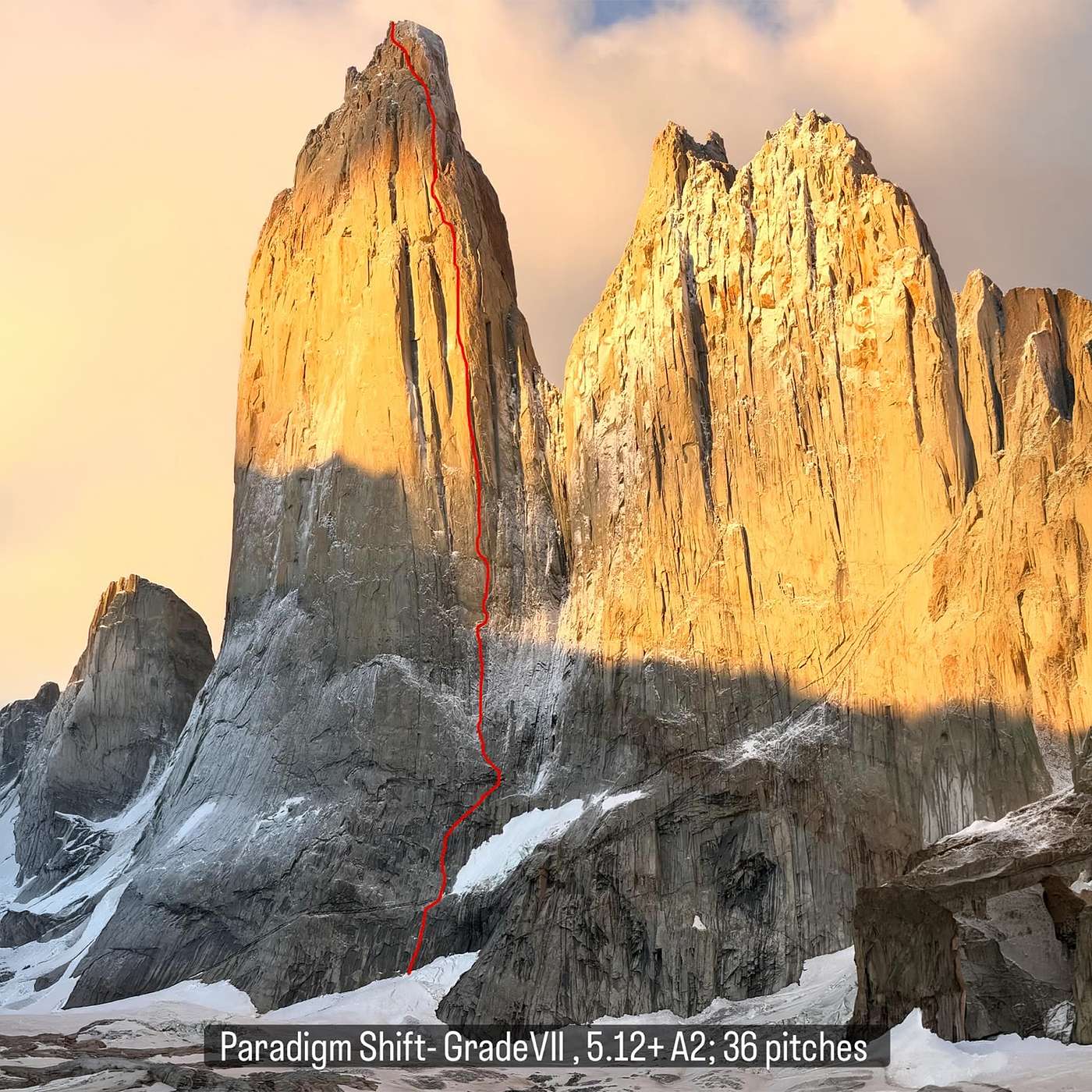
125 | Myles Moser & Harry Kinnard: 71 Days on Patagonia's Central Tower - First Ascent of Paradigm Shift [Part 1]
1w ago01:44:23Tap to summarizeThe Central Tower of Torres del Paine in Patagonia has been on the radar of many elite climbers ever since Tyler Karow's viral YouTube vlog documenting his ascent of the South African Route during an unprecedented long weather window. This past winter, several teams from around the world came down to test themselves on the slightly overhanging 4,000ft thumb of granite. You've probably heard of Tommy Caldwell and Siebe Vanhee's remarkable 24-hour free ascent of the South African Route, or the first all-female ascent by Belen Prados, Caro North, Amelie Kühne, and Julia Cassou. While climbing icons were making headlines, Myles Moser and his team were just around the corner making history of their own.Nearly 15 years ago, Myles and Amy Ness established Plate Tectonics, a grueling 3,300ft Grade VI 5.12 C1 on the East Face of the North Tower — a route they were both lucky to survive. The North Tower offers a remarkable view of the Central Tower, and it was from that vantage point that Myles first began imagining a new line up its unclimbed east face. That vision finally came true this past winter.Myles approaches new routes with a very specific style: ground up, capsule style. Once they leave the ground, they does everything possible to never come back until the route is finished — bringing everything they needs to live on the wall for up to a month, dedicating every waking second to pioneering a masterful, safe, repeatable, and free-climbable route up an unclimbed tower of granite. It's an approach that reflects Myles' blue-collar work ethic and a depth of passion for route development that's only found in the most elite climbers in the world. It took two expeditions over two years, $60K of personal funds, and a cumulative 71 days on the wall to establish his new route up the Central Tower. Together with Hugo Perez, Kellen McGrath, Trevor Anthes, and Harry Kinnard, Myles successfully completed the first ascent of Paradigm Shift — Grade VII 5.12+ A2, 4,000ft.This team is not sponsored. Every person on this expedition contributed their own money, gear, and time to make it happen. Which is exactly why this route — and their remarkable collective effort — has gone largely unnoticed in the wider climbing community, overshadowed by the catchy headlines of sponsored athletes. In alignment with the purpose of this podcast, I'm here to tell their story.If you've been following the show for a while, you'll remember episodes 67 and 68 where I last spoke with Myles. If you haven't heard those, I highly encourage you to go back and check them out — they add real context to who Myles is and the depth of experience he brings to Patagonia's big walls.This is part 1 of 2 of my conversation with Myles Moser and Harry Kinnard.#patagonia #firstascent #bigwallBoth Myles and Harry have written remarkable journals from their time on the wall — filled with personal anecdotes and intimate moments not fully shared in this podcast. If you'd like to read them, they're available to Patreon subscribers.Help Support The Show & Unlock The Ad-Free Podcasthttps://www.patreon.com/c/TheClimbingMajorityPodcast/membershipResourcesMyles' IGhttps://www.instagram.com/mylesmoser1987/Harry's IGhttps://www.instagram.com/karry_hinnard/Trevor's IGhttps://www.instagram.com/wildincognito/Kellen McGrath's IGhttps://www.instagram.com/dirtbag.chiq/Cover Photo Credit: Trevor Anthes
Transcribe →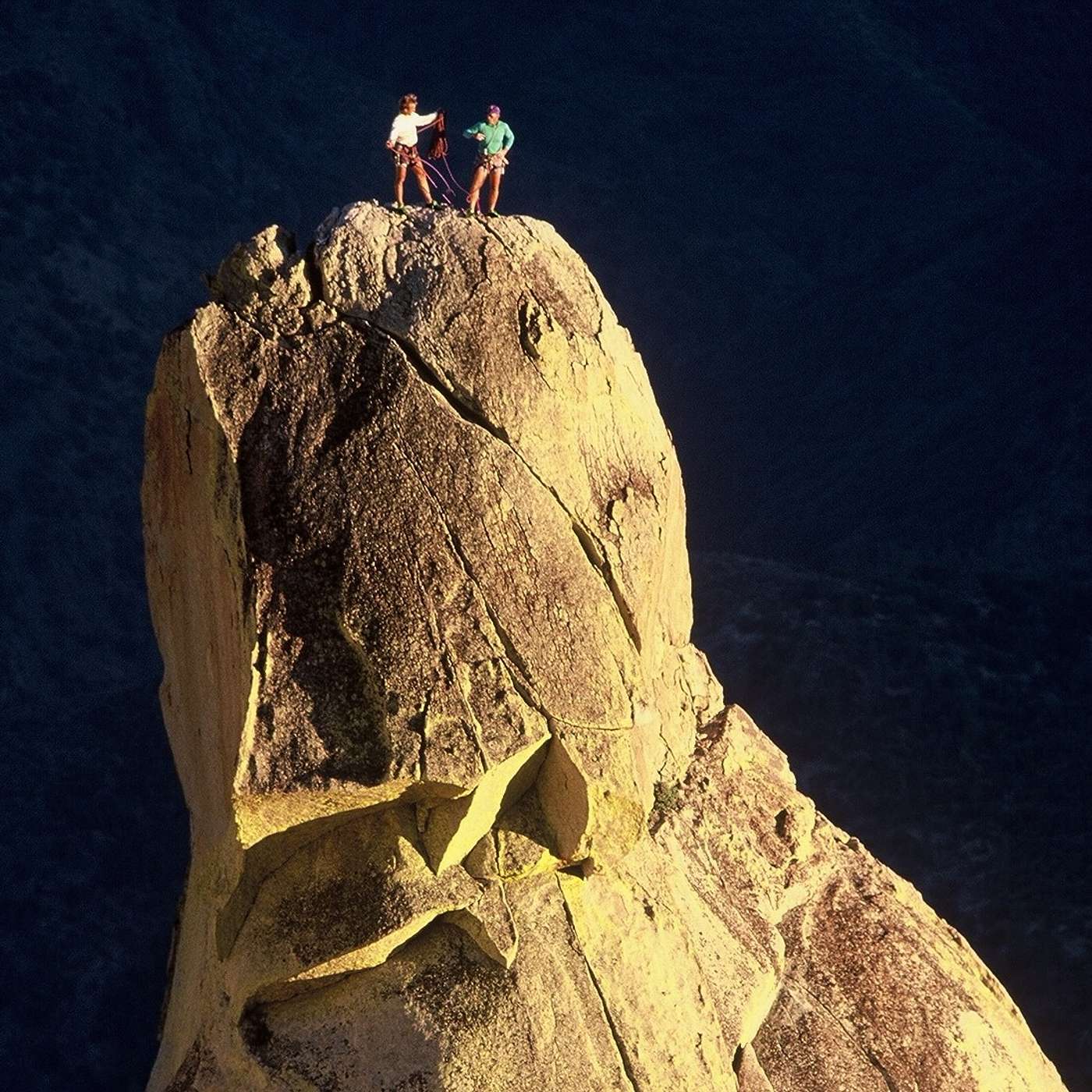
124 | Patrick Paul: Stories From A Southern Sierra Pioneer - First Ascents, Close Calls, & Life Transformation
3w ago02:27:01Tap to summarizeThe Southern Sierra is the quieter, less-traveled tail end of California's Sierra Nevada range — running from Sequoia and Kings Canyon National Parks down through the Kern River drainage to where the range finally peters out into the Tehachapi Mountains. It's a land of dense pine forests, hidden granite formations, deep river canyons, and small mountain towns like Kernville, Springville, and Porterville tucked into its foothills.For climbers, this region is a genuine treasure trove that remains largely under the radar. The Needles are the crown jewel — a cluster of striking granite spires rising out of pine forest above the Kern River, home to some of the finest crack climbing in California. Dome Rock offers accessible multi-pitch classics. Deeper into the range you find places like The Fin at Castle Rock, Homer's Nose, Hermit Spire, and countless other obscure formations that have been quietly developed over decades by small groups of locals. The rock is high-quality granite, often steep, often demanding, and almost always uncrowded.Culturally, the Southern Sierra has always attracted a specific kind of climber — someone drawn to first ascents, comfortable with long approaches, willing to work for solitude, and less interested in the spray culture of more famous destinations. The area saw a renaissance in the late 1970s and early 1980s when climbers from Los Angeles started making pilgrimages up to Kernville and Porterville, discovering that the Needles and surrounding formations offered climbing that rivaled anything in Yosemite — just without the crowds. Patrick Paul found himself right in the middle of this renaissance and became a pioneer in his own right, establishing 54 first ascents across the Southern Sierra over his 50 year career.In this conversation we go back to Patrick's tumultuous upbringing and how a single trip to Joshua Tree became the catalyst for an entire life pivot — one he's convinced saved his life. We dig into stories from his years on the rock, including run-ins with icons like Randy Leavitt, Lynn Hill, and Fred Beckey, and several close calls: an earthquake mid-approach, expanding flakes on Homer's Nose, and a moment when his main partner Richard Leversee saved Patrick from certain death when Patrick leaned back away from an anchor without being tied in.#livinglegend #firstascentsHelp Support The Show & Unlock The Ad-Free PodcastResourcesSome of Patrick's stories can be found in this book:Patrick's Facebook
Transcribe →
123 | Mark Hudon: Yosemite Legend - 54 Years of Climbing, Ego, & Partnerships
Jun 2902:17:17Tap to summarizeMark Hudon is a Yosemite legend whose work in the late 1970s and early 1980s helped push big wall climbing into a new free climbing era. Often partnered with the equally groundbreaking Max Jones, Mark became known for his bold, ground-up style—blending meticulous preparation with a willingness to test the limits of free climbing on terrain that had previously only been aided. Few climbers have shaped as many eras of the sport as Mark Hudon.Mark was born three years before El Capitan was first climbed. That kind of historical proximity gives him a perspective on climbing's evolution that almost nobody else alive can offer—and that's exactly where this conversation starts. We dig into what the lives of Royal Robbins and Warren Harding actually represented, why their conflict mirrors the tensions we still see in climbing today, and why Mark thinks ego is at the root of most of it.We talk about how ego in climbing has evolved—for the sport and for Mark personally—why partnerships have been the single most important element of his climbing life, and what it actually looks like to build a life around climbing without letting climbing become your entire identity. Mark built a coffee roasting company from scratch, lived in a van for ten years, spent winters in Baja, and at 70 years old remains fit, healthy, and largely injury free. He values experiences over trophies and partnerships over pride.We also explore his remarkable relationship with Jordan Cannon—how they met, what they gave each other, and why Mark considers Jordan as close as family. And we close out talking about Mark's recent pivot to public speaking and his desire to help people acquire more agency over their own lives—a philosophy that, it turns out, he's been living since he was a teenager in New Hampshire learning to climb on granite.#livinglegendThanks to our sponsors!LIVSN DesignsCheckout Their Ecotrek Trail Pants HEREUse Code "TCM15" At Checkout for an extra 15% OFF Your OrderHelp Support The Show & Unlock The Ad-Free PodcastResourcesMark's WebsiteMark's InstagramMark's YoutubeThis article by Mark Hudon "Long, Hard and Free" inspired a whole generation of climbers, including Todd Skinner and Paul Piana, and laid the groundwork for the game that is Yosemite big wall free climbing.Long Hard & Free
Transcribe →
122 | Bryce Ungersma: A Debrief of The Nose on El Cap - Systems, Gear Beta, & What's Next
Jun 1501:11:55Tap to summarizeOn May 12th, 2026, Bryce and I took our first steps onto the most iconic big wall route in the world—The Nose on El Capitan. Three days later we woke up on the summit of 3,000 feet of vertical granite after a clean, smooth, and successful ascent. This conversation is our debrief. Bryce has done the Nose twice now. I had never set foot on El Cap. The experience gap between us was real, and we talk openly about how that shaped the dynamic—how Bryce became my cheat code for this objective and how I showed up as prepared as I could be without ever having practiced the systems in a real setting. We cover where we each were in our lives leading into the climb, what preparation actually looked like with two weeks of limited communication. We get into the practical stuff; how much water and food we brought, portaledge decisions, hauling systems, and how we chose to break up the wall across three days. We walk through navigating other parties on route, the King Swing, Changing Corners, and the moments that tested us most. And we close out talking about how we are going to approach our NIAD (Nose in a Day) attempt in the fall of 2026.#aidclimbing #bigwall #yosemiteThanks to our sponsors!LIVSN DesignsCheckout Their Ecotrek Trail Pants HEREUse Code "TCM15" At Checkout for an extra 15% OFF Your OrderHelp Support The Show & Unlock The Ad-Free Podcast
Transcribe →
121 | Brent Barghahn: Avant Climbing Innovations - Gear Design, Onsight Climbing & Magic Line
Jun 102:28:38Tap to summarizeBrent Barghahn is a tinkerer first and a climber second and understanding that order tells you a lot about him. Since he was a child Brent saw the world through the lens of design, building gadgets to solve the problems he found along the way. He even had a charge account at his local hardware store that was funded by his parents. That same instinct to build, solve, and design has followed him through his life. He spent five years at Black Diamond as a product designer where he helped shape the equipment that we use every time we climb, with one of his highlight contributions being the trigger keeper we now see on large C4 cams.While Brent lived in his van in the Black Diamond employee parking lot, he spent all his free time climbing and managed to tick his way into the elite tier of climbing athletes. With accomplishments like rope solo NIAD, an onsight of Ecstasy, and ground up Golden Gate. This conversation goes deep on what it actually means to approach climbing as a maker rather than just a performer. Brent talks about onsight threshold climbing, his term for the style of climbing he values most and why he thinks redpointing has become a party trick that the media celebrates at the expense of something he feels to be more meaningful.We talk about the Flip-Stop—the product that started Avant—which was born from a frustrating session on Cobra Crack. Brent explains why he built Avant as a hobby business on purpose, why he describes his twelve-product lineup as solving problems that big brands ignore and the four words he uses to describe why he climbs: puzzles, community, solitude, and toil.Brent is one of those rare people who exists at the edge of the elite climbing community without being a professional climber by his own definition and he's made peace with that in a way that feels on purpose rather than resigned.Topics include: onsight threshold climbing, redpointing vs onsighting, Flip-Stop carabiner stabilizer, Avant Climbing Innovations, rope solo NIAD, onsight of Ecstasy, Magic Line 5.14c, trad climbing gear design, climbing ethics and style, ground up vs rap in debate, route development, climbing community building, bouldering for trad performance, and what it means to climb at the elite level without going pro.#eliteclimber #ethics #tradclimbingThanks to our sponsors!LIVSN DesignsCheckout Their Ecotrek Trail Pants HEREUse Code "TCM15" At Checkout for an extra 15% OFF Your OrderHelp Support The Show & Unlock The Ad-Free PodcastResourcesAvant Climbing InnovationsAvant Climbing Innovations YoutubeAvant Climbing Innovations IGBrent's Personal Climbing Blog
Transcribe →
120 | Zach Dreher: An Epic Patagonia Adventure - Big Walls, Wingsuits, & Russians
May 1801:50:11Tap to summarizeZach Dreher started highlining in Flagstaff until climbing came into his life, at which point he made a complete pivot with eyes on big walls. After only a year and a half into his climbing career he began cutting his teeth in Yosemite and created a huge foundation of experience with multiple big wall ascents and NIAD runs; all with the vision of even bigger international objectives. Zach made his living as a masonry worker, kept life simple, lived in a van, and saved until he could buy his first investment property. Now he's building wealth and has created a self-supported life around climbing.This episode follows an unpublished trip report that Zach's climbing partner Will Fazio route about their recent successful ascent of Royal Flush [1,200m 5.12 A0] on Cerro Chaltén (Fitz Roy) one of Patagonia’s most elusive big wall lines. With initial goals to move as quickly as possible they arrived with minimal supplies, but quickly started to feel the weight of the commitment above them. At a pivotal moment, when Will and Zach were deciding whether or not to continue a Russian team of four climbing below them offered to team up for a 6 - person big wall push to the summit and they excitedly agreed. Zach and Will had just joined Boris, Vladimir, Ilya, and Konstantin on their push to become the first people to wingsuit and base jump off of Cerro Chaltén.Topics include: team dynamics on big objectives, managing doubt and morale under pressure, partnership philosophy in the mountains, and Patagonia big wall logistics.#bigwall #alpineclimbing #mountaineering #rockclimbing #patagoniaThanks to our sponsors!LIVSN DesignsCheckout Their Ecotrek Trail Pants HEREUse Code "TCM15" At Checkout for an extra 15% OFF Your OrderHelp Support The Show & Unlock The Ad-Free PodcastResourcesZachWillThe Russian TeamKonstantinBorisVladimirRoute Information
Transcribe →
119 | Steph Abegg: The Beta Queen - Passions, Partnerships, & Publications
May 401:54:36Tap to summarizeIf you don't already know who Steph Abegg is, I can almost certainly say that you've used her work. Her detailed route topos, trip reports, and beta overlays appear all over the internet covering climbs from the North Cascades to Red Rocks. For nearly 20 years, she's been quietly building one of the most comprehensive free climbing resources on the internet—not for profit, not for sponsorship, but because she genuinely loves documenting routes and helping people have better days in the mountains. She's what the climbing community needs more of: someone creating value without asking for anything in return.This is Steph's second time on the show. Three years ago, she had just landed a data science job and bought a house in Estes Park. Now she's unemployed, living in a Transit van, and writing a book of her favorite climbs across North America. What happened in between is a story about rejection, redirection, and choosing passion over security—even when it doesn't make financial sense.#femaleclimber #rockclimbingThanks to our sponsors!LIVSN DesignsCheckout Their Ecotrek Trail Pants HEREUse Code "TCM15" At Checkout for an extra 15% OFF Your OrderHelp Support The Show & Unlock The Ad-Free PodcastResourcesSteph's Website (Donate HERE)Steph's IG
Transcribe →
118 | Phillp Setter: Shenanigans, Mt. Yamnuska, & How To Live A Full Life
Apr 2002:41:00Tap to summarizePhilip Setter is an insurance broker and software entrepreneur from Canada who's been climbing for over a decade. He is known to quietly solo some of the gnarliest ice the Canadian Rockies has to offer and has an affinity for chossy, runout, dangerous, and psychologically demanding routes. Phil has a tangible passion and enthusiasm to extract the most out of life. Whether its in business, his partnerships, or in climbing he gives everything 100%. Part of life's meaning for Phil is triumphing through adversity and the shenanigans he seems to always find himself in provide the perfect place for him to create the memories and stories that will last a lifetime. But what's the difference between shenanigans worth pushing through and those that become reckless? What does it mean to build a life that holds space for risk while being responsible to the people who depend on you? Expect to learn about Phil's framework for ice climbing risk assessment, how he tore his A2 pulley and how peptides accelerated his recovery, what it's like selling life insurance to climbers who might not want to admit they're doing something dangerous, why many accomplished climbers have something else in their life besides climbing, how he works on setting boundaries, how we define success & failure, the role vices play in our lives, and much more…#iceclimbing #tradclimbing #mountaineering Thanks to our sponsors!LIVSN DesignsCheckout Their Ecotrek Trail Pants HEREUse Code "TCM15" At Checkout for an extra 15% OFF Your OrderHelp Support The Show & Unlock The Ad-Free PodcastResourcesPurchase Life Insurance For Climbers (Canadians Only):Phil's IGPhil's Youtube
Transcribe →
117 | Drew Brodhead: SLCA Coordinator - Anchor Maintenance & Climbing Advocacy
Apr 602:05:06Tap to summarizeDrew Brodhead is the Staff Advocacy Coordinator and Anchor Maintenance Coordinator for the Salt Lake Climbers Alliance, one of the most respected local climbing organizations in the country. With 18+ years of climbing experience and SPRAT Level 3 certification, Drew leads a professional anchor maintenance program that rebolts routes across the Wasatch Range April through November. This episode explores what it actually means to professionally maintain climbing infrastructure, the ethics of rebolting existing routes, and why Drew believes climbing is a privilege—not a right.We discuss Drew's philosophy that if it's scary, leave it the same; if it's dangerous, change something—a quote from Boone Speed that guides how SLCA approaches rebolting decisions. Drew explains the difference between maintaining safety and preserving the climbing experience, why once bolts are placed they become community property, and how first ascensionists who refuse to allow rebolting create liability when climbers get hurt on deteriorating anchors.We dig into the tension between access and advocacy, including the Logan Canyon rebolting controversy where an individual's well-intentioned work triggered land manager scrutiny because of poor communication with the climbing community. An example of how one mistake can ripple across the entire country.Topics include: SLCA anchor maintenance program structure, SPRAT Level 3 certification, rebolting ethics, Half Dome Northwest Face, Logan Canyon access issues, land manager relationships, Protect America's Rock Climbing Act, nonprofit economics, Bears Ears advocacy, and community stewardship.#Access&AdvocacyCover Photo: @emilytrombly---Thanks to our sponsors!LIVSN DesignsCheckout Their Ecotrek Trail Pants HEREUse Code "TCM15" At Checkout for an extra 15% OFF Your OrderHelp Support The Show & Unlock The Ad-Free PodcastResourcesLearn More About The SLCADonate To The SLCA HEREDrew's IGSLCA's IG
Transcribe →
116 | Paul Rogers: Active Duty Green Beret - Mountain Warfare Training & A 2200ft Fall
Mar 2301:54:24Tap to summarizePaul Rogers is an active duty US Army Special Forces (Green Beret) officer who previously served as the commander of the Special Operations Mountain Warfare Training Center (SOMWTC), the specialized schoolhouse responsible for training all military mountaineers for US Special Operations Command (USSOCOM). This episode explores what it actually takes to train elite operators for mountain warfare, why these skills matter in modern combat operations, and the staggering complexity of preparing soldiers to fight enemies in mountainous environments where the terrain itself is trying to kill you. Paul walks through the history of Special Forces mountain warfare dating back to World War II, why unconventional warfare and violent conflict occurs disproportionately in mountains, and how US Special Operations Forces are trained to operate there. We discuss the different levels of mountain operator certification (basic, summer, winter), what the 7-8 week intensive courses actually entail, the 2-to-1 instructor-to-student ratios required for safety, and why many instructors are pursuing IFMGA guide certifications to become legitimate mountain guides. Finally, we dive into Paul's own 2200-foot fall on Wilson Peak's North Face in Telluride, Colorado, where he hit a buried rock while ski mountaineering, tomahawked 400-500 feet, nearly came to a stop, and then was swept over multiple cliff bands by an avalanche of his own slough. He ended up partially buried 2200 feet below with a collapsed lung, broken ribs, broken hands and wrist, a compound fracture with bone sticking out of his knee, and severe internal bleeding from his intestines separating from the mesh holding them in place. His ski partner and fellow Mountain Warfare instructor Bobby executed a technical rescue—solo downclimbing through hazardous terrain to reach Paul, stabilize him, and coordinate helicopter extraction with San Miguel County Search and Rescue. Bobby would later receive the Soldier’s Medal (nation’s highest award for heroism during non-combat operations) for his actions that day.Topics include: Special Operations Mountain Warfare Training Center, Green Beret mountain training, unconventional warfare in mountains, Afghanistan Takur Ghar 2002, foreign internal defense, instructor qualifications, IFMGA guide certification, Dunning-Kruger effect in training, ski mountaineering accidents, Wilson Peak North Face, 2200ft fall survival, avalanche burial, and technical mountain rescue**The views and opinions on this podcast are those of the speakers and do not necessarily represent the views, stances, or policies of any of the entities they may represent.**#military #alpinism #mountaineeringWatch the full episode on Youtube ---Thanks to our sponsors!LIVSN DesignsCheckout Their Ecotrek Trail Pants HEREUse Code "TCM15" At Checkout for an extra 15% OFF Your OrderHelp Support The Show & Unlock The Ad-Free Podcast
Transcribe →