← The Code To Winning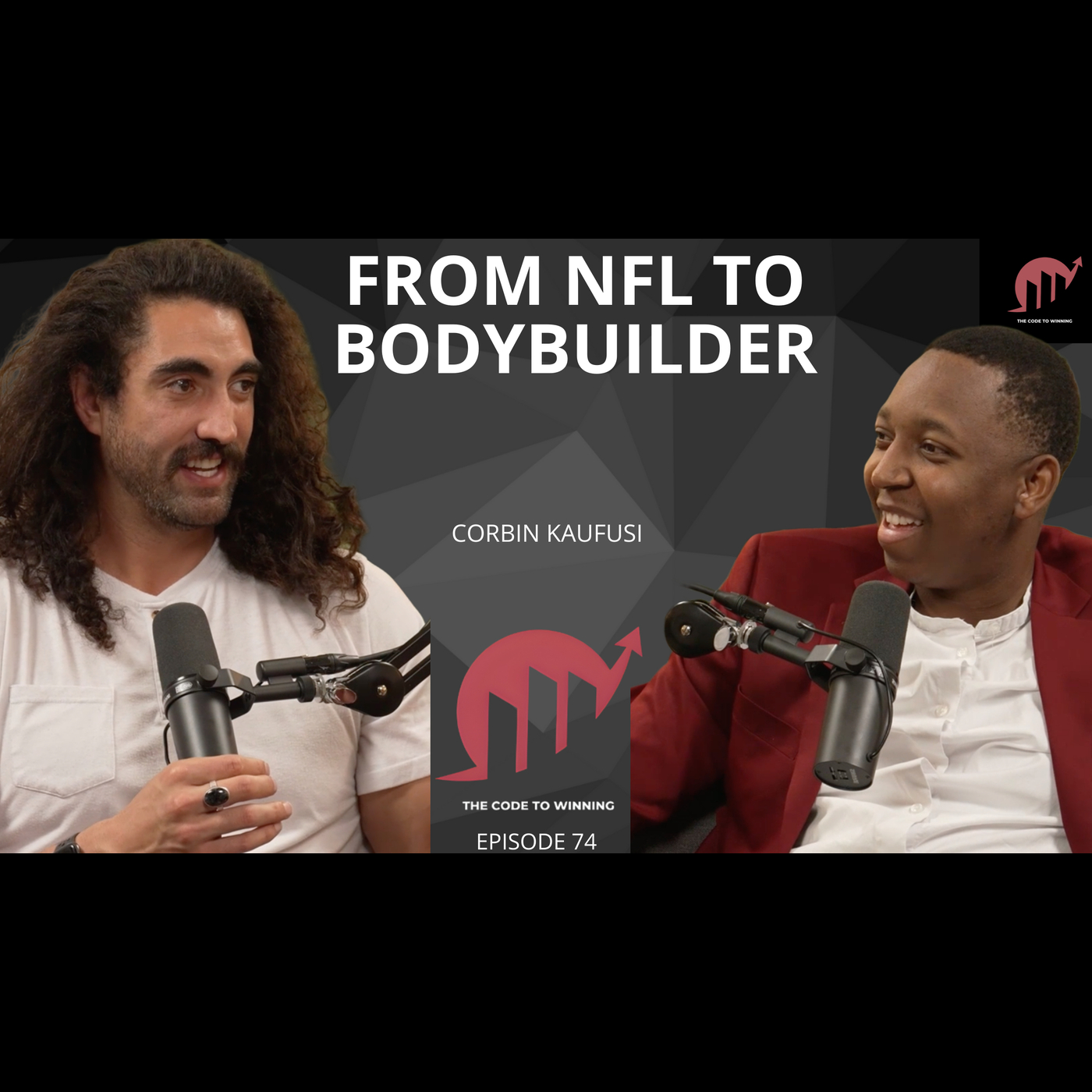
The Code To Winning
FROM BYU TO THE NFL TO BODYBUILDING | CORBIN KAUFUSI’S REINVENTION || CORBIN KAUFUSI || EPISODE 074
00:42:29
Loading summary
Transcript184 lines
- [00:00]
A
Football players specifically don't understand the level of jump and, like, almost the intellectual side. At the next level, like, from high school to college, it's a jump. But I'd say from college to the NFL was probably like three to five times bigger than high school to college because you're literally in, like, you know, your meeting room for hours a day going over stuff. So, for example, when I was in college, we had probably five plays. We ran my senior year as a defensive guy, and then my first week in the NFL, we learned 20 plays. And so I was. It was just like such a jump in volume, you know, I wasn't used to trying to understand that as quickly, but I was grateful for those that helped me to do it. You know, I had, like, a lot of whiteboard and stuff. You're making flashcards at night. Like, you think it's all physical until you get there. Then everyone's like, oh, my gosh, I gotta study.
- [00:44]
B
Sometimes as fans, we become entitled to the fan that, yes, they are part of our team, but not really understanding the concept that, hey, these people are experiencing pain far greater emotionally compared to what we are, and just missing enough. And can you add a bit more on that?
- [00:59]
A
Yeah, I think a huge part of that, you know, professional players, that's your job. And so a lot of people think. Think, oh, every professional player, when they get injured, is taken care of. It's like, that is a huge red flag because now you're battling to not only come back from injury, but now you're basically blacklisted in a way from every team that says they've been injured. So it's almost like now your resume has a big old eye for injury on it if you've had a big injury. So, for example, I had a few surgeries. Part of the reason why I wasn't drafted. I had three surgeries my senior year. And so going into that, like, every team I had to go to because of those three surgeries, they'd make me go to the hospital and get, like an hour's worth of MRI on all those things that I had repaired the code to winning.
- [01:39]
B
Insights we need today to seize the world tomorrow. If you're curious in learning a bit more about finding out about a story of a gentleman who is in football, you know, has also has his experience playing in the NFL, currently transitioning to bodybuilding as well. So if you're interested in those fields, want to learn more about being a professional athlete, what it takes as well. This is the episode for you. We're Going to just dive in a bit deep, discuss a bit more, talk about the entrepreneurial space, the journey, faith, identity, all these different things as well. So without further ado, the man has joined himself, joined us in studio. Corbin Kao Fusi. How you doing, sir?
- [02:20]
A
I am great. Thank you so much.
- [02:21]
B
Awesome stuff. Yes, sir. So, yeah, can you just, just tell us a bit more about yourself?
- [02:28]
A
Yeah. Just a quick summary. I, I grew up here in Utah, born and raised and then went to college at byu, played a little basketball and football. Came from a pretty big family. And both like there's seven. Seven total. And then everyone's pretty big in General. I'm about six, 10, so I'm the tallest.
- [02:45]
B
That's awesome.
- [02:46]
A
And then six, eight brothers. Six, one sister. Little sister's the run. She's five, seven. But yeah, anyways, went to BYU and then after BYU, played a little bit of a professional ball in the NFL from start up the Saints, went to the jets for a few years with, a few years with my brother, which was super fun, and then ended up the Niners and then played a contract in that UFL league and then decided to come back to Utah and start something new, you know, move on to the next chapter. So it's been fun.
- [03:14]
B
And how is those experiences? Obviously you've, you've experienced three different camps and how, how has that been for you?
- [03:22]
A
It was an incredible experience because you get to see just the differences between them, you know? You know, you don't try to compare, but you always do just because you've experienced them each differently. And so the neat thing is everywhere there's great people, like everywhere I got to. And I got to be around greatness, which was really cool. I got to learn so much. And so I was really grateful for that.
- [03:45]
B
No, and so did you, before you joined any of these teams, did you have a football team you supported?
- [03:52]
A
Not really. Like a little bit. My dad played at the Eagles for a little bit, so growing up, that was kind of the team I always liked. But I was more of the nerd kid. I wasn't really the football kid. My older brother, like, he grew up knowing football inside and out, loved the Denver Broncos was his team football fantasy. Yeah, exactly. I couldn't tell you a thing. You know, I, I love to go to the games to eat the food and like yell loud. Did I know what was going on? Not really. But yeah, I was kind of the, the nerdy kid for a while. So. Didn't have a team specifically.
- [04:22]
B
No, that's because the reason I Like asking that question sometimes, you know, in sports, people might end up having a preference or teams that they supported before then. And obviously, you being a. At least in three different teams, experience three different camps, three different managers, three different cultures. Would you say that there was any one in specific you can obviously identify and say it or not. That kind of stood out for you.
- [04:45]
A
Specifically, out of those three, I really. They all had very cool things, but I guess I enjoyed the most and learned the most when I was at the Niners in San Francisco. And it was interesting because even just going to San Francisco at the time, it was during COVID and a lot of people were like, oh, it might be tough moving out there. You know, they had a lot of strict lockdowns and things like that. And I ended up loving it out there, and the people were awesome. It was the organization where I felt like there was the most alignment between the players, the coaches, and the front office organization and the owner. So, you know, sometimes you go to places and a couple of those things are aligned, but some aren't. And so the experience kind of wavers. But that was probably the more full experience where they all aligned. And so you felt like everyone was on the same page.
- [05:30]
B
Okay. No, I lived in. In the Bay Area for.
- [05:33]
A
Oh, okay. Yeah.
- [05:34]
B
I don't know if, you know, Tracy.
- [05:35]
A
Tracy. Trying to think.
- [05:37]
B
It's in between San Francisco and Sacramento, so it's literally.
- [05:41]
A
Oh, okay. Yes.
- [05:42]
B
It's Bay Valley in a way. So if, you know, like, Pleasant Grove.
- [05:46]
A
Yeah.
- [05:46]
B
If you know, like, what's the place we've been golfing. Livermore.
- [05:52]
A
Okay. Yeah.
- [05:52]
B
And then you go further, I like, towards Hayward and like.
- [05:56]
A
Oh, okay. I know what you're talking about. Yeah.
- [05:57]
B
So that's that area as well.
- [05:59]
A
But how long were you there for?
- [06:01]
B
Three, four years.
- [06:02]
A
Okay. Yeah. So you got to know the area well.
- [06:04]
B
Yeah, no. Matter of fact, I think, like, my. My wallet. It still has my Tracy thing, even though I live in Utah right now. But. Yeah. Oh, yeah, no, that's. That's. It's. I like that part of. Of California. I think sometimes LA can get a little crowded. LA is a little different, but, like, the Bay has got a different feel about.
- [06:21]
A
Oh, totally different, you know, And I grew up loving Southern California. That was like the family vacation drive place. But I had never known Northern until I had gone and lived there. And I loved it. Yeah. Just. I lived in Santa Clara, so just drove everywhere, you know, to see all the sides, all the parts of, like, nature that they had up there. It was Beautiful.
- [06:40]
B
Oh, Santa Clara. That's San Jose. That's where the stadium's at. Yeah, because the stadium is in San Jose, but it's right, it's like right.
- [06:46]
A
On the edge of San Jose and Santa Clara. So it's like literally just right in the middle.
- [06:51]
B
Okay. No, that's, that's fascinating. How was the schedule? Like, how was training like on a, on a, on a weekly basis? How many times you guys go training?
- [07:00]
A
Every day? Yeah. So technically, and this is like in season because I guess we have a ton of different schedules depending on the time of the year. But when you're in season, everything is just very. I think we start. You start like your first meeting at about 7am and then you basically have meetings until you go to practice at around 11 and then practice lunch and then you have film and from probably like 1 till 5 or something like that. And then there's always more film that could be had after that depending. But yeah, it was very, a very strict schedule. But I kind of loved it, you know, it kind of. You definitely felt like a professional with the amount of that was going on. And you had to be there for it, you know, you had to earn your money's worth, for sure.
- [07:46]
B
No, that makes sense. So even when you say every day, even on a Sunday, but Sundays. Yeah, the matches, right?
- [07:52]
A
Yeah. Sunday's usually game day. Like usually Tuesday in the NFL is the off day. But the off day comes with like, you can still go in and get treatment and whatnot. But that's like, okay, there's not exactly meetings. Like there might be a lift or something, but no meetings on that day.
- [08:09]
B
Okay. Okay, that makes perfect sense. I've always just been curious. I like the day to day basis and stuff because I mean, if you do every day, they try to make sure you get your money's worth, you know.
- [08:19]
A
Oh, no, absolutely. Like, I did not know. I didn't study a ton of film in college as like I did, but not compared to the NFL where, you know, I could sit and study for an hour and think, oh man, I'm a good studier. In college for, for film, football, film, NFL, they could, they could watch the same play for an hour and before they move on to the next one. And it's like, what a totally different depth of looking at things. So.
- [08:42]
B
Yeah, I mean you often see those when, when I watch some, some, some sports movies. Like, I don't know if it doesn't remember the Titan, whatever it may be. Sometimes you watch when they watch that. But not just that like when you start seeing set plays and all these different st. So much goes into like professional sports that people. Because as spectators are you like, oh, you should have gotten that. But not knowing that, like, listen, there's only one way when you counter or when you're attacking, but we sometimes you have to also try and read what the opponent's move is going to be. It's almost like playing game of chess.
- [09:15]
A
Oh, exactly.
- [09:16]
B
How much of it is more like what they do and like what you do?
- [09:20]
A
I guess every week they come up with a specific game plan for the team we're facing.
- [09:24]
B
Really?
- [09:25]
A
Yeah, every week. Each brand new. And a lot of it is just very specific. So if they have a player that's considered like, you know, a really good player on the defensive line, I was an offensive lineman. So it's like someone like Aaron Donald, your whole game plan that week is around how are we going to stop Aaron Donald? And like, how are we going to help from this other position and this. And all the plays we're going to call are going to be across from him. And so everything is just meticulously planned out like a chess match, thinking, okay, and if we do this, then they're probably going to switch it like this. So we have to have kind of a counter for that. And so.
- [09:59]
B
And how, how do, like football athletes are receptive to all this instruction? Because it can get overwhelming just listening to all this stuff. Oh, how good is it being in terms of being receptive?
- [10:10]
A
It can be hard, like, because a lot of people, football players specifically, don't understand the level of jump and like almost the intellectual side. At the next level, like from high school to college, it's a jump. But I'd say from college to the NFL was probably like even bigger, three to five times bigger than high school to college, because you're literally in like, you know, your meeting room for hours a day going over stuff. So, for example, when I was in college, we had probably five plays. We ran my senior year as a defensive guy. And then my first year, my first week in the NFL, we learned 20 plays. And so I was. It was just like such a jump in volume, you know, I wasn't used to trying to understand that as quickly, but I was grateful for those that helped me to do it. You know, I had like a. Bought a whiteboard and stuff. You're making flashcards at night. Like you think it's all physical until you get there. Then everyone's like, oh my gosh, I gotta study.
- [11:07]
B
Yeah, no, I like That I like that. And so obviously the, the transition in, into that. And which other league did you go play for after you were down in the NFL?
- [11:19]
A
Yeah, I went and played for that, the ufl.
- [11:22]
B
So is that the rocks one or he's.
- [11:24]
A
Yeah, it's kind of like the XFL USFL mixed together. So yeah, it was interesting. Like my agent's like, hey, I, you got drafted into this league if. And it's a two year deal. And I was like, I'll look into it. And it was actually really fun. Totally different than NFL, but a good time.
- [11:40]
B
In what way?
- [11:41]
A
Definitely not as that professionalism level like wasn't to the same, I'd say standard where you'd still go to meetings and stuff, but the meetings weren't to that same standard. And part of it like I guess reflects the size of the leagues, you know, like how much the leagues are worth, money wise. So it's like, okay, the NFL is worth billions of dollars, so the expectation is a lot higher where it's like, okay, this is a new league, they're not making a ton of money, but there is some money. It is a professional level. And so there's not the exact same expectations that you'd expect from the NFL.
- [12:15]
B
Yeah. Okay. And what's the closest team for the UFL like to into in Utah's proximity?
- [12:23]
A
I. I don't even know. That's a great question, I guess because they started putting them in a lot of like the Midwest cities. So there's some in like Michigan and I remember there was a bunch in Alabama and stuff like that. I, I was on a team in Memphis for a little bit. But yeah, it was fun to see. I'd never seen that area of the United States. So no good time?
- [12:47]
B
No. That's awesome. That's awesome. So now I want to talk about the transition. When, when did you start to become like a bodybuilder? Are you, are you also that in personal trainer or just the bodybuilder?
- [12:57]
A
I do some training and it kind of just varies. Like I do some training for, for like youth and stuff that want to do like football specific or basketball specific. Just because I love being able to, you know, kind of pass on. It's like, oh, I spent all this time learning this skill set, you know, if I can pass it on to anyone, great. But then same thing with the bodybuilding. I grew up loving it. It was kind of my secret obsession because it was also my dad's and my dad immigrated from the islands. The bodybuilders were the, like, people that were nice to him, he said, so, wow, instead of staying out of trouble, getting into trouble, they're like, hey, come live with us in the gym. And so they just took in the little island boy. And so my dad, you know, even in, like, his mission journal, he has a bunch of pictures of Arnold stickers, like, in it and stuff. So he loved that stuff and kind of handed it on to me.
- [13:41]
B
Wow, that's awesome. No, no, that's just fascinating. So are you. Do you compete at a. At a professional level, like, in terms of, like, Olympia stuff, or do you just, like, bodybuild?
- [13:52]
A
I definitely don't compete at the Olympia level. There are definitely. I don't know if that's still a dream, but at one point it was where it's like, I'd love to be a pro bodybuilder, you know, but definitely changing as, you know, as life changes. But I do compete still. I competed in my first show last year, and it was more of a bucket list thing. I didn't know if I'd do it again, but I kind of fell in love with it, the whole process. And pushing my body to that extent was something that I was like, wow, I would love to try this again. So.
- [14:21]
B
No, that's awesome. Is that, like your. What's your current profession right now? Because I know you're bodybuilding right now, but, like, what field are you?
- [14:28]
A
Yeah, so I kind of do a few different things. And so I work with kind of Asana and Cold Plunge Nordic Spa place called Loyally, that's down in Orem, and then they're expanding to Salt Lake and stuff. And so I'm helping there kind of manage and then with expansion and with events, because it's a part of. I love sauna and Cold Plunge. Like, I've been going to the river in the mountains, all for, like, the winter, since I was in high school type of thing. And so it's kind of like a lifestyle thing that I really have a passion for. So I do that. And then I also work with a lot of, like, brands with ambassadorship programs and stuff like that.
- [15:03]
B
No, we should, we should talk about, because we have, like, something called the Winning Store, which is just focusing primarily on, like, athletes, influencers, pro athletes and stuff like that. But yeah, we'll. I'll talk to you about that as well. Yeah, I wanted to mention, you know, when you said Cold Plunge, I'm glad you mentioned that. Like, I want to talk, like, how. How dangerous is it, though? Like, when people just get in cold water. Like, is that a myth? Is that a mis.
- [15:30]
A
Totally, yeah. Like, I guess with anything can be dangerous with certain circumstances. Like if you're gonna just jump into the middle of a lake, a frozen lake, and you've never had cold exposure before, you know, like, you're going to like freeze up, you know, you lose your breath and you don't know how to use it. So it's like, that could be dangerous. But that's also not the smartest time to do it. But I'd say to anyone it is an incredible thing to like get into is kind of that cold exposure, cold plunging because of the way your body reacts to it.
- [16:01]
B
No, the reason I was asking you that, I've watched things in some videos or reels of people in Russia. There'll be like a. A big hole and then some guy just jumps under and then they try to take him out another thing. But then because of the current and conditions, they get swept away. But then, like, even if they try to stop them, like their body is frozen up and it's all these different stuff, like the heart just like there's many different components. But yet again, it's like what you mentioned, you preempted that you said literally, like, if you just jump in something without preparing, because I think cold plunge, you first, like, get your feet in, kind of laid down. So an instant shock, right?
- [16:43]
A
Yeah, exactly. And it's kind of like the intention of it, like, okay, are you doing it for the physical, like, health benefits of it, or is it more like for an adrenaline type of thing with your friends, you know, Because I've definitely done that where I'm like, get with my buddies, like, let's go jump into frozen water, you know, and we're not thinking about how it's going to affect our health. We're just like, oh, let's do it for fun. But now it's more of a introspective. Like whenever I go to cold plunge, there's definitely an intention behind it and trying to get to my mind and body to a specific state.
- [17:12]
B
No, that's awesome. What are the benefits, though, of cold plunging?
- [17:16]
A
There's a ton. And I guess some of the main ones that I look at, there's definitely like your parasympathetic system gets used to turning on type of thing. And so that kind of connects where that you get that shiver, right? And then it's almost like your body normalizes. So in the cold plunge, you start super cold and then you kind of get like shivery. But Then all of a sudden it just goes blank. And. And it's like, once your body, your body knows what to do, the body's incredible. So when it gets put into those shocking situations, it teaches it to react. And a lot of times with that reaction, it releases growth hormone and other things to kind of get you to a point where you can handle it. And so training your body to that extreme teaches it to be okay with that type of stuff and it gives it a better reaction as well.
- [18:02]
B
Interesting. Interesting.
- [18:04]
A
No.
- [18:05]
B
And then what's the recommended time that you'd say somebody should cold plunge? I'm curious about those topics.
- [18:11]
A
No, yeah, there's a certain stuff, people.
- [18:13]
B
Just jump in and then they just take an Instagram video. I'm like, okay, like, tell me more, you know.
- [18:18]
A
Yeah. And it kind of varies for what you're looking for. And so there's times where I go before the gym and if I'm going to go before I work out, I'm going to do only like a 90 second plunge. So I'm just going to go sit, get my body cold and it just freezes over. And then I don't heat up after that. I just go straight to the gym and get going. And that's where you get probably the. I think it's the biggest, like growth hormone response.
- [18:41]
B
Oh, wow.
- [18:42]
A
Out of that kind of a plunge. It's just that quick one in and then out and then you go work out and it's pretty crazy how it feels. And then if I'm doing it more for recovery, I will get in the cold plunge and then go to the sauna and do about three rounds of that with three, two to three minutes in the cold plunge and then five plus minutes in the sauna.
- [19:01]
B
With that though, with the whole cold plunging thing, is it very similar? Because I often hear people and experts stress on the importance of taking daily night cold showers. Yeah, doesn't matter like how warm your body is because sometimes you're all sweaty, your body's extremely warm and it could be a bit of a shock. Is cold plunging similar to cold showers or do they both serve different purposes or they're very similar.
- [19:27]
A
Oh, very similar. In fact, I'd say cold showers are like the precursor, like the effects for a cold shower. It's like a 10% of the effects of what the cold plunge does type of thing, but it's on the same wavelength. So it's like, okay, you know, the cold shower right before you sleep is supposed to help. If you do a cold plunge session before you sleep. It's crazy. It'll help you sleep a lot better. Your circadian rhythm becomes so much more ingrained.
- [19:55]
B
There's a lot of health benefits to it. Like, every time I keep seeing this stuff, like, it's just important. And so, like, do you guys sell the cold plunges or how to.
- [20:03]
A
So it's like a. It's almost like a place you. It's a spa. So you go in and there's 12 cold plunges, all different, like, temperatures. And then there's saunas, two big saunas. One of them is like, here in Orem, we have like the biggest Finnish sauna in the whole US and it can hold up to 60 people, but they keep them at around 195 degrees. And so you just go back and forth and so, yeah, you just kind of check in, you go do your session and then you check out type of thing.
- [20:28]
B
Okay. Isn't that extreme conditions from a sauna to, to a cold plunge? Yeah, but is that the whole purpose of it?
- [20:36]
A
Exactly. It's to get just that nervous system to go back and forth, like teaching it how to do it. Because it's like one of those things. If you push your body, it's crazy how it react and it usually comes with a bunch of benefits. So going between those, you know, those extremes helps with that.
- [20:53]
B
Can you, can you share one of those benefits? I'm curious, like, what. Because 195Fahrenheit, that's.
- [21:01]
A
Yeah.
- [21:02]
B
Oven temperature.
- [21:03]
A
Oh, yeah. And you're in there and they're just pouring, you know, water on the rocks and you're just breathing it in. But I'd say, like, it definitely helps with recovery. Helps with, you know, muscle recovery. And that's why, that's kind of the main reason I do it with the sauna a lot after, like, I won't cold plunge as much after a workout, but I'll sauna because it helps that blood flow. And as your blood flow keeps going, like, that's what helps with the response to like muscle tears, injury, anything like that. Anything for growth involves blood flow.
- [21:36]
B
I like that. No, because when I, when I go to the gym and there's a sauna and there's a steam, I usually like the steam because I, I prefer that level of sweating. Very good for the paws and your skin a lot of different.
- [21:49]
A
So cleansing.
- [21:50]
B
It's very, very cleansing. And then when it's just like when you just. Especially when you just feel it just burning through you, I'm like, oh, yes. And it's Very relaxing for me. Yeah, I don't know what it is. It's the sauna. Sometimes I find a little harder for me, pretty personally breathing, whereas steam, I can breathe in, like, that air and I can just, like, just relax. I can literally be in a state of meditation and. And I just, like, think my problems away, you know, I'm just in there.
- [22:16]
A
Exactly.
- [22:16]
B
You know. So do you guys have steam rooms.
- [22:18]
A
There or is it just. It's a sauna, but it's a Finnish sauna, and so they take pride in the steam of it. So in a lot of places here, you know, traditional US saunas, they don't love when people throw water on the rocks and it's a dry sauna where there's. Even though it's a dry sauna, the rocks are meant to be thrown steam. So you can get it up to over, like, 200 with the steam. And sometimes there's some essential oils where you just feel that. Exactly what you were saying in the steam room, where you can breathe it type of thing. You don't feel that dryness. And it's more about that heat. And so I'm a huge fan of that.
- [22:50]
B
Yeah. Awesome. Now, just about a bit on your. On your heritage as well. Obviously having a Tongan ancestry and, like, lineage as well, how is identity played a big role in. In your life as well?
- [23:07]
A
Ooh, identity. It's been huge because I think one of the greatest things we come to earth to find, you know, we come through birth, is to who we are, who you are. That's the greatest adventure of life. And that it's forever changing, forever growing. But your heritage definitely plays a piece of that. And learning about that and what, you know, the history of, you know, your family and what they went through to bring to where you're at definitely plays into your story. You know, it's kind of that background, that lore of who you are, where you came from, where you know, I'm a big believer where the presence, the eternal present is the key. You know, if you can stay present, that's where you find a lot of happiness, success, all these great things. But learning from the past, you know, knowing it and learning from it is a huge part of finding a lot of joy in the presence. I feel like.
- [24:01]
B
That'S facts. No, that's for real. That's for real. And how often do you go to Tonga?
- [24:05]
A
I've actually never been really. I've always wanted to. And it's. It's kind of hard to get to. You have to take about it's like a full 24 hours of travel from here to New Zealand to Fiji, from Fiji to another place. And then a boat ride from Tonga to whatever island you're on type of thing.
- [24:24]
B
Oh, yeah, because Tonga's multiple islands, right?
- [24:26]
A
Yeah. Yeah. It's like hundreds of little islands type of thing.
- [24:30]
B
Okay.
- [24:31]
A
But I'm hoping to in the next few years. Like, me and my brothers, we've always put it on the places we gotta go to, so.
- [24:38]
B
No, that's awesome. And how many. Only one of your brothers was in the NFL with you, and your dad's got NFL experience, so there is, like, a cultural, like, NFL like, line within your family?
- [24:49]
A
A little bit. Yeah.
- [24:50]
B
What did your brother play for?
- [24:51]
A
He played. He got drafted by the Ravens, and then he ended up my team. Oh, Ravens guy. Okay. Yes. He was drafted to Baltimore, and then after Baltimore, he went. He was there for three years. He was at the jets, and I was with him for two of his three years at the jets, and then he ended in Green Bay with the Packers.
- [25:08]
B
Is that the one in the group chat with us?
- [25:10]
A
Yes. Yes. Yeah, he's hilarious. Oh, my gosh. He's. He's my big brother and just. He's the man.
- [25:18]
B
No. Yeah. No, Ravens is. Well, the reason why Ravens is my team. When I first came to the US I had. I figured I had to, like, try and go for one team. Like, you know, just try and figure one out. I'm like, ah, you know, I'll just watch whatever. And then I saw this one, like, quarterback from Louisville. I'm like, yo, it's a cheat code. Who the hell?
- [25:39]
A
Oh, my gosh. I know, right? Like, it's like one of those things you. You see, like, the videos when he was younger, and you're like, that's the same guy. Like, it took me so long to remember that. Like, Lamar Jackson's that kid in those videos. Crushing me. I had no idea.
- [25:55]
B
It's. It's like magic what he does, you know, like, when he just does the whole, like, oh, spin and all the things, and he just keeps, like, bettering his game. And so. So he. When he was drafted there, was he drafted around the same time Lamar Jackson was there?
- [26:08]
A
I'm. I am trying to remember.
- [26:10]
B
Lamar, I think, got drafted 20, 17, or 16.
- [26:14]
A
Yeah, he might have. My brother might have barely missed him because he was there 20. He got drafted there in 2016, I believe. Yeah. And then he was there 26. He got hurt. My brother was injured for the first two years because. Broke his leg. And so, yeah, he didn't even get to play, like, much the first.
- [26:31]
B
He got drafted, then broke his leg.
- [26:33]
A
Yeah. Before the season started, you know, and like, camp before the season.
- [26:38]
B
That's so painful.
- [26:39]
A
Oh, yeah, yeah.
- [26:40]
B
What happened?
- [26:42]
A
It was just one of his guys behind him rolled up on him, you know, just. He was playing. Boom. And then, you know, guy fell behind him and fell on his leg and. Yeah, just kind of like the same thing that happened to that. Do you know who Cam Scatter Boo is? Same thing. Yeah. Where his, you know, his. Dislocate your ankle so your foot's like, sideways type of thing.
- [27:03]
B
Because NFL players can be heavy sometimes.
- [27:05]
A
So, like, oh, super. Like, I was really heavy when I played. I was about 365. So.
- [27:15]
B
That sounds painful. That sounds absolutely painful. What's. What's your. How old are you right now?
- [27:23]
A
30. How old am I? Yeah, I'm 32.
- [27:27]
B
Okay, so you're roughly, like, the same age. And you don't ever plan on, like, going back into, like, obviously professional sports in terms of, like, one of the XL UFL and stuff like that, are you?
- [27:37]
A
Yeah. You know, if I went into professional sports, it'd probably be a different sport, but, yeah, I think the door on football is closed because. And I'm grateful for it, you know, it's one of those things I got to do as much as I wanted to, but I have other passions, and I'm excited to follow those, which are. Bodybuilding is one of them, you know, And I guess, like, I don't know, it's just fun to figure out who you are, you know, for me, most of my life was on a football schedule. You know, even summers, I couldn't do things because of football. And I was used to just everything was around your training type of thing. And so it's fun to come back and be like, what do I like to do on my free time? You know, what do I enjoy? I love being outside nature, so I've gotten into hiking a ton, stuff like that, you know, snowboarding, longboarding. All these random things that I never did when I played because they're all, you know, X. You could get injured type of thing. But it's fun to kind of see life through a different lens now.
- [28:36]
B
You know, we obviously, we touched on the injury part. It's always so sad when professional athletes, like, get injured and we always look as fans look at. In the spectrum of my fantasy selection. Oh, we look at it like, oh, we need you for the team. But I don't think we take for a moment to think about the actual athlete because of all the journey, not just like in pro sports, in the NFL, it's. It's a whole journey. It's like from high school, primary school, high school, college, all these things come down to those moments of playing those 17 games a season. And so being out is just a, a hit, a blow to all the effort that has been put in, all the 10, 000 hours accumulated over time.
- [29:27]
A
Yeah.
- [29:28]
B
And so I think sometimes as fans, we become entitled to the fan that, yes, they are part of our team, but not fully understanding the concept that, hey, these people are experiencing pain far greater emotionally compared to what we are in just missing in our fantasy. Can you add a bit more on that?
- [29:45]
A
Yeah, I think. And I think a huge part of that is, you know, professional players, that's your job. And so a lot of people think, oh, every professional player, when they get injured is taken care of. It's like that is a huge red flag because now you're battling to not only come back from injury, but now you're basically blacklisted in a way from every team that says they've been injured. So it's almost like now your resume has a big old eye for injury on it if you've had a big injury. So, for example, I had a few surgeries, right? Part of the reason why I wasn't drafted. I had three surgeries my senior year. And so going into that, like every team I had to go to because of those three surgeries, they'd make me go to the hospital and get like an hour's worth of MRI on all those things that I had repaired. Because you're, you're kind of like the piece of meat for them. And if it's not healthy, you know, then it's not going to produce what they want type of thing. And so when guys get injured, like, yes, it's so sad for them that they can't play. But I think a lot of the fans don't understand, like their whole career is affected by the injury. Like what they're looked at by teams and their coaches and stuff like that, because it's almost like your value goes down. It's like, oh, it's almost like driving a car off the parking lot, brand new. It's like the depreciation of it. Boom. Immediate. And so that's how an injury is. And so it's a huge more. It's more than a mental thing because it affects your livelihood. You know, I know plenty of players that hide Their little injuries because they don't want the team to find out. Because if the team finds out you have a little injury, they're gonna immediately start looking for someone to replace you.
- [31:24]
B
That's so crazy. It almost seems like you're just like a subject.
- [31:28]
A
Yeah, yeah, you kind of are. And it's one of those things, like, I didn't get. My brother and my dad used to tell me about it, but they're like, you won't get it till you're there, but you literally just have to be okay with whatever happens. Like, if you overthink anything, you will drive yourself into just. Just a crash in your mind. Because, you know, it's just so. There's so many things that you could overanalyze or look negatively at. And so it's like you just do what you can and let whatever happens happens and roll with it.
- [31:59]
B
No, when you said that, it's so true. It's about value. Because obviously it's the same thing in all the sports that I end up watching. Because. And sometimes when. When it's a big enough injury, it can have an impact where it opens up room for more injuries because it hasn't fully healed.
- [32:16]
A
Exactly. The timing of coming back. The coaches want you back as fast as you can, but are you even healed enough to perform, or will it cause another injury?
- [32:24]
B
Especially in American sports, where it's almost like, you need to get back. You need to get back. And if you're not, you get hounded by ESPN analysts. They're like, oh, he's useless. He's injury prone. He's this thing. He's that thing.
- [32:33]
A
Oh, exactly.
- [32:34]
B
That keeps dropping your value.
- [32:35]
A
Exactly. It's just the value. Like, what you're valued as an athlete, you know, And a lot of times we only see the. The athletic value of them. And so when they're injured, their athletic value just gets shot, you know?
- [32:48]
B
What's the most common injury you felt like people were hiding?
- [32:51]
A
Oh, I'd say a lot of partial tears in your knees. Stuff like that. Like a partial MCL tear, Partial acl, partial mcl. Because.
- [33:01]
B
Painful, man.
- [33:02]
A
Yeah. Like, you'll see guys in the locker rooms, just in the stalls taping up as if, like they're the doctors themselves. And then they put pants over it so you can't see it. So the coaches can't see, but it's like they're secured a little bit better playing through injury. Wow.
- [33:18]
B
Yeah. Because the last thing you want is these things occurring. Because I even heard that while in soccer, it's very common European soccer way. Some players even play with injuries.
- [33:28]
A
Yeah. Oh, yeah. I would say in the NFL, most guys are facing some sort of injury, like most of them just because the nature of the sport.
- [33:38]
B
Yeah, it's very physically demanding.
- [33:40]
A
Yeah. Like have some form of injury. They say that all NFL players, when you leave, are handicapped to some degree because of, you know, the injuries from the NFL.
- [33:52]
B
That sounds bad. Sorry, I'm laughing.
- [33:54]
A
No, it's. Yeah, it's hilarious. But it's true. It's like, wow, I never thought it. Like, that's like as straight as my pinky goes. You know, there's just little things that I'm like, oh, playing definitely took its toll, I guess.
- [34:05]
B
But yeah, I know that they've been speaking about those injuries. They've been very cautious and careful with head injuries especially as well.
- [34:13]
A
Yeah.
- [34:14]
B
You know, so they also made a research and study that those that are doing boxing and those that take hits in the NFL, they could be potential like, side effects in the long run with the brain injuries.
- [34:29]
A
Yeah, absolutely. Yeah, I totally believe it because it's just like, it's just putting yourself through a little car crash every day, you know, and there's some joy in it, but there's definitely consequence to it.
- [34:40]
B
Yeah. When you put it that way, it's crazy because that's exactly what it is. You get like 300, 400, 500 pound. 400 pound men that are attacking and you gotta, you keep getting it.
- [34:49]
A
Oh.
- [34:50]
B
As well. So yeah, you hit, but you have to be careful of how you're being hit.
- [34:54]
A
Yeah. And it's almost like you have to be ready for those hits. And so I actually used to start off my practice, I'm like the very first time I can hit my head as hard as I can on someone, like a block or something and just ring myself up. I'll be good for the rest of the practice.
- [35:10]
B
Interesting.
- [35:11]
A
Yeah, so it's almost like instead I zing myself up with a nice hit to the head on someone on my first play, so that the rest of practice I kind of had an even level of it where it's like sometimes if you get caught off guard by a big hit, it can definitely just like take you out for a while. Wow.
- [35:30]
B
Yeah. No, that's the thing. And I think with the whole like, even when you say all these players are fake, I mean, I've got injuries and, and experiencing that to some degree, I would assume. It's so hard hearing analysts that keep talking about, you gotta toughen up, you gotta Toughen up, like, you know, oh, the league is now soft, and all these different stuff.
- [35:49]
A
Oh, yeah.
- [35:49]
B
Isn't that just very discouraging sometimes?
- [35:51]
A
Yeah, it's. It's one of those things where. But I. I definitely understand, you know, from their perspective. And I just. I just always think in my mind, well, if they had seen, you know, what some of these other guys, like, if they were in their shoes and saw, then they'd probably have a totally different perspective. But it is interesting to see, you know, see people go after some of these players when they don't know the full circumstance of what it means. You know what I mean?
- [36:19]
B
No, that makes perfect sense. That makes perfect sense. So when we look at Corbin, like yourself right now, where do you see yourself in the next 10 years?
- [36:32]
A
I just see myself living an abundant life of just. When I say happiness, I would describe it as I'm doing what I love with people I love, and that's all that matters. And it's almost like even now, I can live that way, like, that kind of mindset. But I feel like in 10 years, I'd love to see that more fully evolved, you know?
- [37:01]
B
No, that's legit, man. No, I think it's so hard because, you see, we say 10 years, but I'm afraid of blink because there'll be five, and then I blink again, then it's 10 with how quick things have been going, because when I. Yeah, 2015 just feels like yesterday, 2016, especially, AI taking over. People obviously, like, really utilizing the tool as much as possible. No, I'm grateful you got to mention that. I'm grateful you got to share your experience, because, I mean, at the same time, like, I don't think people fully understand the competitive nature just to make it in the NFL. It is extremely competitive.
- [37:40]
A
Yeah, very, like. And I'm just grateful I was just a small piece in the puzzle for a little bit of it, but it was definitely just. They're professionals for a reason. You know, it is the highest level of competition, and that's why I loved it. I wouldn't. I wouldn't exactly say, like, you know, I grew up a nerdy kid. Football. I didn't love football, but I loved competing, and that's what the NFL, like, taught me, how to compete at the highest level, to push yourself at the highest level, to compete. And so, yeah, it was a neat experience, for sure.
- [38:14]
B
And are you in any foundations and organizations to try and either help kids get in the NFL or people that are, like, get connections with agents in the NFL? Like, what are you currently in right now that's involved in that department?
- [38:27]
A
No. Yeah. And so my brother and I, so our agent, he just started like a part of an agency, and we know people in other agencies as well. And so whenever there's kids that have questions and stuff, especially with the way NIL works now, and it's almost like, man, you're getting paid younger, so they're going to have a lot of good things when they're younger. And a lot more problems come up, too. You know, a lot of those problems you don't face until you get paid. And so helping them whenever we can, that's our. That's our biggest thing. Like, I love when I can live in a way where I can just help others, you know, and there's nothing. You don't have any intent on getting anything in return. It's just like, how can I help someone else? And so that's what my brother and I try to do. And part of that, too, is we're involved with a financial program that does, like, family office work for, you know, athletes and other business owners and entrepreneurs because, you know, taxes and things like that are things that athletes need to learn more about to help protect them, you know, in the future and to get everything that they've earned.
- [39:32]
B
No, I love that. And is your agent from Utah, California? Okay. Southern Cali.
- [39:38]
A
Southern California, yep.
- [39:40]
B
Okay.
- [39:41]
A
But he grew up here in Utah.
- [39:42]
B
So how did he get a hold of you? How did he get in contact with you?
- [39:44]
A
So just kind of family. It's one of those things. I have a cousin that was playing. I guess he's technically a great uncle, but he was playing in the NFL. He was at the Niners and Seahawks. Now he's a coach now. Awesome dude. But he was like, hey, this is my agent. And he's also an agent for a few other guys we know. And so it was neat to meet with him and see that we aligned. You know, it's always just about finding the right people. If you can do that, you can find the people to build with, then that's most the problem solved.
- [40:13]
B
Was he both you. You and your brother's agent?
- [40:15]
A
Yeah. Yeah.
- [40:16]
B
Are you guys still your agent, even though you guys are no longer in the league or.
- [40:19]
A
Yeah, like, technically, he's still your agent type of thing. And I don't know when that. But to me, he's just like such a cool dude. Like, he's more like family now. Like, I love whenever we get to just connect with him on more than even more so outside of football, like, it's fun to begin to connect him. We don't even talk about football. You know, we talk. We talk about fishing a ton, you know, stuff like that.
- [40:39]
B
No, that's. That's legit, man. That's legit. Usually, as we conclude, we always ask the question what winning means. Because the code, winning is obviously insights they would need today to seize the world tomorrow. Corbin, today, with all your experience, expertise, example, on and off the field, a different journey, all the stuff that you've accumulated and experienced, what does your definition for winning mean?
- [41:09]
A
For me, winning is never quitting. That if I look back on my entire career, anything in my life that was worthwhile, that means something to me. I didn't quit and I haven't quit a lot in my life because that was a family motto. Kofusi's never quit. But I can see now, looking back, that man not quitting was winning because you can't lose until you quit. Really. You know, nothing stops until you stop it. And so that's what quitting is. But if you're never going to stop it, then you're always going to be winning. No matter how the dips are low, you're still an opportunity to win.
- [41:49]
B
Love that so much. Corbin, if you could let our guests or viewers know where they could get a hold of you if they want to reach out to you, either through bodybuilding, learning, advice, getting in contact with the stuff you guys do for your foundation, what's the best way to be able to contact?
- [42:04]
A
For me, it's just Instagram. I'm on there. Corbin, underscore jk. And yeah, I'm on all the other things too, as well. LinkedIn and whatnot. But I'd say Instagram is where I contact people the most.
- [42:15]
B
The coach winning insights you need today to seize the world tomorrow. Corbin Kousi, great honor, sir.
- [42:21]
A
Thank you, bro. Appreciate you, man.
- [42:24]
B
Thank you very much.