← The Code To Winning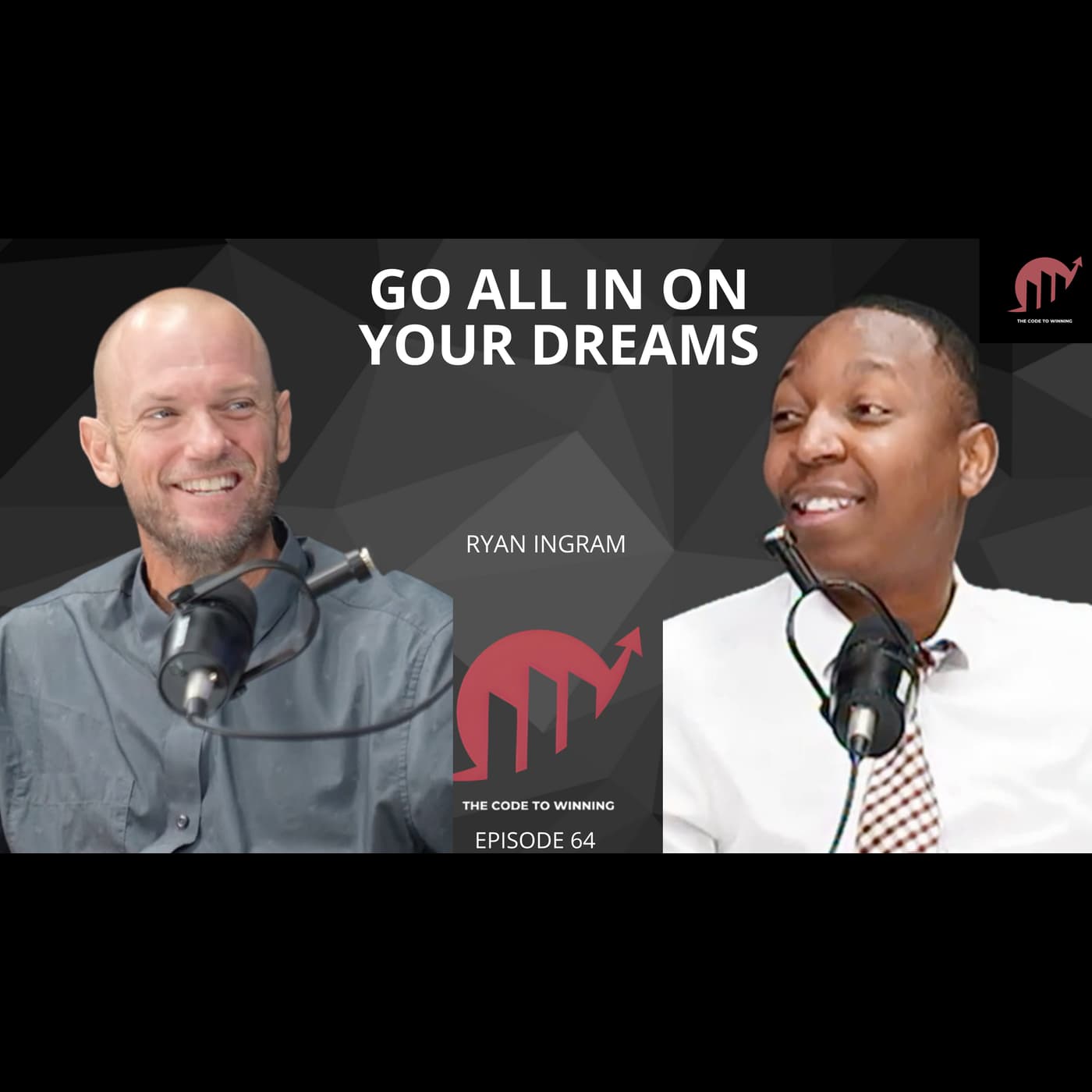
The Code To Winning
GO ALL IN ON YOUR DREAM: FROM TALENT SHOW TO HOLLYWOOD RED CARPET || RYAN INGRAM || EPISODE 064
00:51:56
Loading summary
Transcript214 lines
- [00:00]
A
Got my bike, rode back there. I had my tape cassette. As I'm going into the talent show auditions, they were wrapping up and I'm like all sweaty and I'm like, yo, can I do my dance? And they were like, yeah, absolutely. And so that was it, man. A lot of people to this day tell me I was the first person they saw do the moonwalk and a backspin, like live in person. And that set it off for me at 10 years old. Once I heard the crowd go crazy while I was on stage, it was like, give me more of that. All those 90s dances like MC Hammer and Rob Bass and Young MC, all of that stuff was popping. And all the Running man and the Roger Rabbit and all those freestyle dances, those social dances back then, I lived to do that at the school. And then every time we would go, me and a couple other guys at the school that would do it, I mean, we became famous for it was.
- [00:46]
B
Coming ever so popular.
- [00:47]
A
Golden era.
- [00:47]
B
Golden era as well, like the Tupacs and biggies were also coming out, like the Ice Cube, all these different guys, Puff, everything was just coming out like early around that time. Golden era, it's a gold rush. And like music and cultures kind of like forming and stuff like that. How did you end up like utilizing, capitalizing on that opportunity?
- [01:05]
A
Well, live a life you love, right? And I realized in there, in that program that I'd made that decision from 11 years old because I was too scared about what other people thought of me. So when I got out of that program, I thanked Miles and then said, I'm moving to la. Because at the time I didn't realize, like we had it all here. I thought there was no opportunities. Next thing you know, I'm DJing the red carpet at the FOX Teen Choice Awards.
- [01:34]
B
Unbelievable.
- [01:35]
A
Yeah. And they just picked me off my photo. They didn't even pick me for my DJ skills. They picked me because I was like this young, spry 19 year old kid that looked like, you know, and it was real crazy. This is where I found out how like fake the industry is. They had me in the middle of the sun with records that were warping from the sun and. And then they had CD controllers under the table that I would have to actually do the mix on and then get up and act like I was mixing. While the vinyl is getting warped by.
- [02:04]
B
The code to winning insights you need today to seize the world tomorrow. Today again we have a very unique guest, a different industry, super exciting to dive in, learn a bit more, understand the market of Being a dj, an mc. If you want to learn a bit more about that or even. Yeah, the historical context, the background, this is the episode for you. He goes by the name of Ryan Ingram. He's also the CEO and founder of Ingram Entertainment, which does specialize in top notch entertainment services for private, corporate and luxury events here in the beautiful state of Arizona in Phoenix. And so, yeah, if you're curious to learn more about the background of it. My man, your guy, my guy, Ryan Ingram. How are you doing today, boss?
- [02:52]
A
I'm doing very well. That was awesome.
- [02:54]
B
Thank you, sir.
- [02:54]
A
Can I, can I get that snippet please? Can I use that for my DJ intro? Yeah, all right, that's going, I'm putting that on the right. That's, yeah, that's getting mixed in. That intro was phenomenal. Thank you.
- [03:04]
B
No, I appreciate that. I often love topics like this almost. I think almost all my friends have been like MC for their weddings or like best man and stuff like that. But I often feel whenever I come across like experts like you, I want to try and always see what I can do to get better at that especially so I want to try and figure out your experience. How did you start in this field before you became an owners company?
- [03:29]
A
Well, I started in the elementary school talent show.
- [03:32]
B
Okay.
- [03:33]
A
Basically when I was 10, so I'll never forget too. So at the time this is like 88, probably 87. I was in class and it's the end of the day and I hear all the announcements. Talent show auditions today. Immediately after school, bring your dance routines, your come, your comedy, your, you know, whatever you got. And I had, I had no idea. And I typically, and I always would ride my bike to school, but that day I didn't. I like my friends and I walked and you know what I mean? So I ran home after school, got my bike, rode back there, I had my tape cassette and as I'm going into the talent show auditions, they were wrapping up and I'm like all sweaty and I'm like, yo, can I do my dance? And they were like, yeah, absolutely. And so that was it, man. As soon as I, A lot of people to this day tell me I was the first person they saw do the moonwalk and a backspin like live in person. And that set it off for me at 10 years old, once I heard the crowd go crazy while I was on stage, it was like, give me more of that.
- [04:48]
B
No, I loved you there. And I think it's so important, I don't know, confidence at a young age because when you realize, wow, actually people like what I do. Yeah, it instills a bit of confidence. What happened for you in that specific scenario?
- [05:02]
A
Well, it was wild because at the time, I just loved to do it, and I had a really big family and I was the first born, so all my aunts and uncles loved to dance, and they were all into, like, back. Back in the day, like, Flashdance and Beach street and all those movies were like, kind of forming, like, hip hop culture and pop culture at the time. So I was always just performing for them. So when I did it on stage and then the whole crowd went, well, I had no idea that was actually gonna happen. Like, you know, and it's like, I remember it to my bones. Like, the whole room went crazy when I hit that moonwalk. And, yeah, it set my life. I mean, I'm still. I'm 48 years old in October. I'm still chasing that dragon. You know what I mean? It's. It's amazing.
- [05:44]
B
I love that. I love that. And you never. You'll never forget that moment. You know what I'm saying? People never forget that. Like, that moment, you know, when they're like, oh, my gosh, like. Because it's such an invigorating and exciting feeling when, like a standing ovation at age 10, it's so hard to process it. But, yeah, it's so hard to even, like, try and, like, live by that because you're like, oh, I'll never probably even get that same feeling. But you keep chasing because it's such a. Considering the circumstances are you understand what I'm saying?
- [06:09]
A
No, for sure. And so every single year until I graduated high school, I did the talent show. I had one show a year, guaranteed, right? All the school dances and stuff like that. I mean, that's pretty much like, what I live for. So then when I got to middle school, we would have four school dances a year, and those would be. That's my time, right? And so that's like when all those 90s dances were. This is like the early 90s. And so all those 90s dances, like MC Hammer and Raw Bass and Young MC, all of that stuff was popping and all the. The Running man and the Roger Rabbit and all those freestyle dances, those social dances back then, I lived to do that at the school. And then every time we would go, me and the couple other guys at the school that would do it, I mean, we became famous for it. And then when I got to high school, other schools would have us come perform at their pep rallies. It's crazy. Yeah.
- [07:01]
B
No. Every time I just think about that, wasn't that also the time where hip hop was coming ever so popular?
- [07:06]
A
Golden era.
- [07:07]
B
Golden era as well, like the two parks and biggies was a coming out, like the Ice Cube, all these different guys, Puff. Everything was just coming out, like, early around that time. Golden era, It's a gold rush. And, like, music and culture kind of, like forming and stuff like that. How did you end up, like, utilizing. Capitalizing on that opportunity?
- [07:26]
A
Well, so.
- [07:29]
B
Because he's super young at that point still.
- [07:31]
A
Yeah. I mean, on the baseball team, I had my buddy. My partner in crime, Josh Royal. His mom is Carol Royal. She's the owner of Royal Dance Works.
- [07:42]
B
Okay.
- [07:42]
A
And so we had a family friend. Ashley has the back. Ashley Wilkins. She was like 3 years old when I was 10. And she was always doing the recitals at that show. So we would be in the crowd. I didn't know Josh Royal at that point, but when we would go to Royal Dance Works to watch Ashley perform, our family friend, Royal Dance Works had this group of dudes, and they were phenomenal. And they were street dancers, but they were doing the choreography, and they were electric, and the room would go crazy. And I always wanted to be up there with them.
- [08:12]
B
Right.
- [08:12]
A
So while I'm in high school on the baseball team, I'm telling everybody I'm not gonna be at practice on Wednesday. Cause I'm auditioning for the talent show. And Josh Royal's like, dude, I'll do it with you. I was like, bro, you cannot dance. You don't know. I've been doing this since I was, you know, little. Like, this is. I'm not playing. Right? This is not. And he's like, dude, my mom owns Royal Dance Works. I was like, what? Next thing you know, those guys are helping us put our routines together.
- [08:36]
B
Okay.
- [08:37]
A
Right then. So Josh and I are ripping the talent show. And those guys from Royal Dance Works shout out to Northside Crew. They're still my buddies now. Right. Those are my mentors back then. And they were. And at the time, there was no such thing as, like, hip hop in the dance studio. You. Everything was like street jazz. But these guys were teaching and they were calling it hip hop. So I thought. But it was that it really was more like MTV choreography.
- [09:02]
B
Okay, Right. Okay.
- [09:05]
A
So. But it was. I mean, they were amazing at the. And so senior year, they take. Carol Royal had Dance International, and they would take auditions from dancers from all over the country. And they would only take 40. And you had to be Proficient in all the styles. Jazz, tap, ballet, and then hip hop. I could only do the hip hop. I wasn't trained in the studio. I could only do those routines because I'd been doing all that stuff since I was like 10.
- [09:29]
B
Makes sense.
- [09:30]
A
So Carol, after my senior year, she's like, hey, we're going to London and Paris. You want to come? You don't have to do the other numbers. All you can do is the hip hop numbers. And I was like, mom, can I? And she, my mom, like, it was like her dream come true. Right. So Tony and all those guys, they were actually in Splash dancing at the show in Vegas. The show Splash in Vegas at the time. So they were choreographing the routines. And here I am, 18 years old in London and Paris doing these routines in this foreign exchange program with these guys that are pros in Vegas. So when I came back from that freshman year of college is like, no, I'm doing this. So I started training with them. I started really diving into it. The very next year I became an instructor at Betty Johnson School of Dance. And then, I mean, the rest is history.
- [10:23]
B
Unbelievable. And I think like that experience at such a young age, like traveling especially, I mean, they did a stat. I think only like 33% of Americans even travel outside. Like just like border, you know, and you got that in like when travel.
- [10:38]
A
Was 18 years old.
- [10:39]
B
18 years old, you know, and to.
- [10:41]
A
Go perform hip hop, that's an American born culture in London and Paris and exchange with those guys.
- [10:46]
B
Exactly.
- [10:47]
A
But there was actually there were pioneers that. Because at that time the other countries were, were respecting the culture way more than like the masses were here. So a lot of people that were, that were pioneers, like in the 70s, they're getting paid to teach out in like China and London. So I was, while I was in London, I was taking like locking classes with like original founders of the dance.
- [11:12]
B
That's crazy.
- [11:13]
A
That. Yes. And so how long were you in.
- [11:15]
B
London and Paris for?
- [11:16]
A
It was a two week trip.
- [11:17]
B
Okay. Did you end up trying to go back there and like do more work and other stuff like always?
- [11:21]
A
No. When I. When. So that when I got back, my fire was lit to put the hammer down and do something with this. Because I'd been doing it ever since I was 10. Here's another funny story. By the time I was 11, I had a real big popular following at school with all the girls that love dance. All the guys on my baseball team couldn't stand it.
- [11:44]
B
So you're trying to say in a Humble way that you're a ladies man.
- [11:47]
A
Not necessarily, but they loved that I could dance, you know what I mean? Because at that time we're not, you know what I mean? It's like we're not even in puberty yet, you know what I mean? And so I was just popular because I could do all of the stuff that was in pop culture. Right. And since girls appreciate dance more and all the guys were. Can I swear in here the guys were calling me terrible names.
- [12:09]
B
Yeah.
- [12:10]
A
So I basically stopped dancing. I would only do the talent show.
- [12:18]
B
Because you were getting bullied.
- [12:19]
A
I was getting bullied by my friends.
- [12:20]
B
Getting name calls. Yes.
- [12:21]
A
All of that sort of stuff.
- [12:22]
B
Dancing. This thing. You must be fa. This thing.
- [12:25]
A
So I didn't, I didn't go pursue it in the studio when I was a kid because of that.
- [12:29]
B
Okay.
- [12:30]
A
Because. You know what I mean? Because I was bullied by my friends and I, I let what they say affect me.
- [12:35]
B
Exactly.
- [12:36]
A
So when I was. Now I'm coming back from Paris and I'm realizing like I'm. I'm taking advice from my 11 year old self from those 11 year old kids. And so that's when I decided to like, you know, really go for it.
- [12:49]
B
So when you, when you were in college at that point in time and you experienced that thing, did you end up finishing college degree? No, I dropped out immediately. When you came back?
- [12:58]
A
Well, I had a mentor and I was, at the time I was teaching, I was teaching about 13 classes a week and I was running a mobile DJ business with Miles Gilbert from SKM Entertainment and he was teaching me how that industry works. So I was already full time in my field at like 20 years old, 19 years old. And I was learning more from my mentors than I was in college. And Miles offered to pay half of a personal development class for me. It's called the Landmark Forum. And basically like the mission of the Landmark Forum is to like live a life you love. Right. And I realized in there, in that program that I had been. I'd made that decision from 11 years old because I was too scared about what other people thought of me. So when I got out of that program, I thanked Miles and then said, I'm moving to la because at the time I didn't realize like we had it all here. I thought there was no opportunities like you were either dancing for the Phoenix Suns, the Mercury, or like you were like a background dancer at and you're getting paid minimum wage. I was making more as a teacher in the studio than I could Be working for the Suns or the wnba. I mean, it was like a minimum wage job.
- [14:12]
B
Yeah.
- [14:12]
A
And I did it one season just to get the experience. But after that, that's like, oh, that was actually when I came back from la. So I move out to la.
- [14:22]
B
When. Which year was this? When you moved down there?
- [14:24]
A
This would have been 2000. 99. 2000.
- [14:26]
B
Okay.
- [14:27]
A
I graduated high school in 96.
- [14:29]
B
Okay.
- [14:29]
A
So, yeah, I dropped out of college. I was going to be the first person in my family to be able to earn a college degree. My parents and my aunts and uncles had been setting up funds for me. So I write and then I had to say, hey, I'm not going to get a degree, but I'm going to make you guys proud, I promise. And they were for it, even though they hated it. It was like a, it was a real come to Jesus moment with my whole family. But they knew I was passionate about it and they were like, all right, buddy, let's see.
- [14:56]
B
You know, so now run us through. Like now that you, you're going back to la, what was the first thing you did when you arrived there was try and find the connections, try and start the business.
- [15:04]
A
What was like one of my, one of my friends, he was already out there. He had an agent and he had, he had been out there for about a year and he was doing a lot of daytime TV shows. He was like being cast as an extra on Young and the Restless and he was doing commercials and he had had an agent and hopefully not the.
- [15:21]
B
Bold and the Beautiful, who knows?
- [15:26]
A
So he, he gets me hooked up with this hip hop group in LA called Culture Shock. So I got, I became a part of Culture Shock. Right when I moved out there. I got an agent, DDO agency. And then, oh, Kevin Columbus, he was one of the dudes. Kevin Columbus is another og. He's like OG Popper. And so he helped, he helped me get my agency and helped me get in with Culture Shock. And so I immediately started booking gigs. And so next thing you know, I'm DJing the red carpet at the Fox Teen Choice Awards.
- [16:01]
B
Unbelievable.
- [16:02]
A
Yeah. And they just picked me off my photo. They didn't even pick me for my DJ skills. They picked me because I was like this young, spry 19 year old kid that looked like, you know, and it was real crazy. This is where I found out how like fake the industry is. They had me in the middle of the sun with records that were warping from the sun and then they had CD controllers under the table that I would have to actually do the mix on and then get up and act like I was mixing while the vinyl is getting warped by the sun. Meanwhile, like, Britney Spears, all of those people, you know, I'm seeing all of them in the green room. I ran into Aaliyah in the green room. Britney Spears, like Justin Timberlake, insect. All of those people.
- [16:42]
B
That's probably before Aaliyah passed.
- [16:44]
A
That was right before then.
- [16:44]
B
That was right before she passed in 21,001. Ish. 2002 around there.
- [16:48]
A
Yeah.
- [16:49]
B
Wow.
- [16:50]
A
That's.
- [16:50]
B
So you literally got to experience Hollywood firsthand and you got to see that. The phony industry, you got to see all the different stuff, but, like, boy, did I.
- [16:59]
A
The story gets better.
- [17:01]
B
Please. Oh, I want to know more.
- [17:03]
A
Yeah, for sure.
- [17:04]
B
Sir. Yes, sir. Let's go.
- [17:06]
A
So my buddy was a really good looking, handsome kid.
- [17:09]
B
Like you.
- [17:09]
A
Yeah, just like you. Except he was blonde. Except he had blonde hair and blue eyes. Otherwise, everything else was the same. And so that's what. And so he. I was. I was trying to get booked for, like, the Janet tours, like, all of that stuff that was going on. So I was always showing up to the classes where those choreographers were teaching. And those would be, like, every dancer in the west coast would go. It was. It was like an audition, but it was just class. Like, we all paid 25 because Wade Robson or Brian Friedman or one of those guys as the choreographers, right? So my buddy would come with me because there would just be beautiful young girls all over that room. I mean, 90% of the room would be. And so he would just sit and watch and get phone numbers. Right? He would love coming with me to those classes. One day we're walking out this tall, handsome, good looking dude. It's like, hey, you have the look, man. Can you sing? And my buddy could not. But he's like, yeah, I can harmonize a little bit. And he's like, yeah, we got a boy band. Like, I could just see you on the COVID of our group right there. And he's like, yeah. So anyway, they put him in the group on his looks alone, and they had three other dudes singing all the harmony parts. And so since I was his roommate and I was new, they're like, hey, they were using me. Cheap labor. You want to choreograph? So I started mixing their shows, I started choreographing their numbers. I started giving those guys dance lessons because none of them really, they could sing, but they didn't have any stage presence. None of them had any swag. They could just sing. And so one of the guys got kicked out of the group because of the image, because he was gay. So they're like, we can't have a gay dude in the group, and you can't hide it. Like, they try to have him hide it. Turns out the guys that are running our group are legit Bloods. Okay, but they're the executives.
- [19:00]
B
One of the gangs.
- [19:02]
A
Yes. Well, next thing you know, I'm in the group, and there's four of us and we're recording demos.
- [19:10]
B
You took the place of the gay person, right?
- [19:12]
A
I took. Well, they needed to have a dynamic performance.
- [19:14]
B
Okay.
- [19:15]
A
So they put me in as, like, the bad boy of the group because I could emcee and I could freestyle dance, and I was very confident. Even though I'm a nice guy, they marketed me as the bad boy. So they would make me grow my hair out a little bit, and then, like, I would literally drive to Compton with, like, a weave, and she would cornrow my hair to my head. They would tape my ears back for photo shoots. Next thing you know, I'm in Magic Johnson Records. Next thing you know, we're auditioning for Arista, for Sony. We're auditioning for all the record label deals that B2K was going for at that time. So, like, Marcus Houston and everybody from Belle Biv Devoe that was producing B2K. We were the white version of what B2K was doing.
- [19:58]
B
Interesting.
- [19:59]
A
And we were being run by Bloods, and it was their concept. And so next thing you know, I'm on stage at the Nutty Professor 2 DVD release party at the House of Blues, and we're performing and Jamie Foxx and all of that part of Hollywood is in the crowd.
- [20:16]
B
That is crazy.
- [20:18]
A
Next thing you know, my buddy's doing drug runs with them guys in the group, they're manufacturing ecstasy in the park in their apartment. They're. They're. They're buying our studio time off of stolen credit cards. We go to these clubs in Compton. No one would mess with us. Everybody would just be, like, rolling out the red carpet for us. Everywhere we would go.
- [20:40]
B
Because you're associated with the Blood, because.
- [20:42]
A
Of who these guys were. I would have people that would, like, disrespect me. They would see Malik walk up, they'd their pants.
- [20:50]
B
That's intense.
- [20:51]
A
And so Malik used to tell us the craziest stories about these freak offs he would go to and how he would get down with Alyssa Milano and him and all his buddies were getting with all of those celebrities and we thought he was so full of shit. We're like, you are not banging Alyssa Milano, bro. And he's like, dude, I swear, like, he. Like, we would. You know, he would be going to town. And so I could. And it felt like I couldn't believe half of what they said. But now, knowing what we know, he wasn't lying at all, right? He wasn't lying at all. And so every. So all of these things would be pro, you know, get promised or whatever. And, you know, now I'm auditioning for Magic Johnson, and now I'm auditioning with the guy who produced Backstreet Boys and NSync. And the next thing you know, they're flying us out to Mike Tyson's house to audition for Rodney Jurgens.
- [21:45]
B
Because one in Vegas.
- [21:46]
A
Yeah. So Rodney Jurgens and Mike Tyson are buddies, and Rodney Jurgens is the. Is Dark Child. Dark Child remix. So he produced Destiny's Child and all of that. And he produced Michael Jackson's Invincible album. He produced Justin Timberlake's first solo album, Crazy. So Rodney flies, like 12 acts out to Mike's house because he's looking for new talent. And I didn't believe it until we get there, because I don't. I don't. I'm believing nothing they say and only half of what I see at this point, right? Because it is so foul at this point in the game. We have a demo tape. There's four black dudes singing all the harmonies on it. Our lead singer, and then we're. And then they're the show tracks. My mic is only on for when I'm doing my MC parts. So we're Willie. We're Will. We're Willie Manilli, bro. We're Milli Vanilli. The white version of it, right? And. And then I'm seeing how they produce their show and how all of these background vocals are like the way they produce their shows. And everything was so crazy, bro. And next thing you know, we're pulling in the gates at Mike Tyson's house, and Rodney Jurgens is right there, and there's people from H town there, and there's beautiful female singers there, all coming to audition for Rodney. And I gave it a thousand percent. I figured I've been eating shit in la, I've been doing all of this stuff. This is our break, right? This is finally going to be the payoff. It's the opportunity I still had seen. I still am thinking, like, because you hear all those before you, they made it stories, right? And how Jim Carrey's Sleeping in his car and all of that stuff. So as all of this stuff is going on, I'm like, dude, this is just part of it. And then once you make it, then you get to write your own ticket. But I still wouldn't compromise. I still had too much integrity. And we were butting heads a lot, and I would be the only guy that would stand up in the.
- [23:39]
B
Butting heads with who? The executives and stuff.
- [23:41]
A
Yeah, the gangsters.
- [23:43]
B
But yet it's very risky, butting heads with them because, yeah, he would say.
- [23:47]
A
Stuff like, don't yell at me, Ryan, because I get passionate, you know, and I stand up for what I think is right. I mean, it was getting. It was getting really risky. So next thing you know, we're at Mike Tyson's house, and I'm giving it a thousand percent. And Rodney turns around and he's like, y' all let me down. You guys had an opportunity of a lifetime, and no one showed up. And then he looks at me and he goes, you're the only star in this room. Everyone in your group needs to do what you're doing. So the guy who's worked with any and everybody is just edifying me to the core. And the light bulb went off in my head, and I was like, oh, so I don't need Hollywood at all. Packed up my stuff, snuck back to Arizona.
- [24:30]
B
Did you let them know that you were leaving?
- [24:31]
A
No way. They would not let me leave. They put so much money into us. They put so much money into us at the time.
- [24:38]
B
But that's dangerous, wouldn't you say?
- [24:39]
A
Yes, it was. My dad's a Vietnam war veteran. We were living on the north side of town. I was sleeping with a shotgun under my bed for the first few months while my buddies who I had left behind are still in the group.
- [24:50]
B
Sounds like a bloody movie. No, no.
- [24:56]
A
The guy who used to drive us around in our cars, like, because we would roll everywhere in Navigators and Escalades, and they would be our entourage, and we. You know what I mean? We would be the center of that group. And we had. We had backup everywhere. So one. One of the dudes, Reggie's, who drove our car, he got murdered a week after I left. Murdered and robbed a week after I left. Talk about confirmation. You're doing the. You know, so I came back here. I started an after school program. I started Ingram Entertainment. I started my dance program, Automatic Response. Few years later, we're back in Hollywood auditioning for MTV's America's Best Dance Crew.
- [25:33]
B
Wow. Wow. And what what's, what was the time frame between then? Do you remember?
- [25:37]
A
So I moved back. Yes, I moved back at the end of 2000. I was living in my parents house when the towers hit. Maybe it was 2001. I think I moved back at the beginning of 2001. So I had moved back in after I told my parents, hey, I'll make you proud. Now I'm back living with them after this whirlwind of a thing.
- [25:54]
B
And you're in Arizona, obviously.
- [25:55]
A
And I was back in Arizona. Yeah.
- [25:57]
B
And so when you're now back in Hollywood as well, back in like Los Angeles and stuff, when was the time you decided, listen, I want to try and take this thing and make a business out of it as well? What was that?
- [26:07]
A
Well, I was. So after I'd moved back from la, I was kind of in this. What should I do? I had all of this stuff popping here and I had hundreds of students everywhere, especially coming back from LA and all the success we had with our group. I was teaching at all the dance studios, I was teaching at the community. I had this whole network under me, but I kept feeling this pull, Should I move back to la? Should I, should I go give it another shot? Because things had kind of smoothed out and then my car died right while I was thinking that. And I didn't have enough money to fix it or get a new car. And I was working for Bally's Total Fitness at the time. They had an after school hip hop program and they were in like 60 schools. And so I was kind of running that for Bally's. So I'm riding my bike with my boombox on my handlebars to go teach these classes for Ballys. One of the school districts calls me and is like, hey, we want to continue this program, but we don't want to work with Ballys anymore. We want to work with you. So my parents helped me put an RFP together. Within a couple weeks, all the schools terminated their contract with Bally's and signed with us. And then Now I have 60 schools and 15 instructors working for me and I'm buying a 4Runner.
- [27:27]
B
Wow.
- [27:27]
A
Right? And we are, we are teaching authentic, real hip hop culture in an after school youth enrichment program here in Arizona. The way it should be done.
- [27:36]
B
Where did you learn the business aspect of things? Because you were passionate and you were talented, you had all this different stuff. Yeah, I think it's important because sometimes you get people that have talent like that and then they end up starting something, then it just becomes bankrupt because of just the back office, balancing a few stuff, marketing this thing, salaries. Where did you learn that?
- [27:54]
A
I didn't, I still don't really know it that well. I really survived off of just pure passion and always trying to over exceed expectations and honoring my word. So my parents helped me. My dad was in corporate America. He started doing all the RFPs, which were requests for. Requests for proposals for the school district.
- [28:13]
B
Yeah.
- [28:14]
A
So he would do the contract stuff, my mom would all do the administrative stuff. And then me and the dancers, we would go blow up the show at lunch. We would go do a free show at lunch and then hand out flyers. And then next thing you know, we got like 20 to 30 kids a class times 60 schools.
- [28:31]
B
And when you were choreographer at this time, like you were teaching kids and people just to do hip hop dances as well? Yeah, for what though? What? Like for their performance. For what?
- [28:40]
A
Well, so in the dance studio world there are, have you seen you know the show Dance Moms? Have you seen like any, seen any of that?
- [28:47]
B
I've seen a bit of, I've seen a few.
- [28:49]
A
So in the dance studio world, like the performers that are like at Royal Dance Works and I'll name drop all of these like Betty Johnson School of Dance, Bender Performing Arts.
- [28:59]
B
So I want to do John. I was trying to find out was it like you got served, stomp a yard, step up, what was.
- [29:05]
A
So those are Hollywood versions. So. So there's, there's two, there's two lanes. There's hip hop culture, which is street, and It's B boys, DJs, MCs and graffiti writers. Right. And that's, that's street culture, hip hop culture. Then there's hip hop industry, which is basically culture vultures. All these dance studios all over America are having hip hop classes, but they're actually not teaching hip hop. I was about to say, yeah, they're not teaching this. So since I came from this and I had all this integrity built into me from that personal development program I did when I decided to pursue all of this, we are like I went to Kevin Bender at Bender Performing Arts and I was like, hey, we are not teaching hip hop. And if you want, if I am going to teach here, I need to teach the hip hop culture and they let me do it. And so by 2012, I'm helping the Herberger Institute of Fine Arts design their curriculum in urban movement, which is a four year program. You can get a four year degree in urban movement, which is what I dropped out of ASU to go figure out on my own.
- [30:14]
B
That's. It's crazy. And that's, that's what's gonna be my next question. I feel like because you were in the actual field and street and learn likes through the street dancing right now, when they teach hip hop stuff, sometimes it may be so theory based and like, you know.
- [30:29]
A
Yeah.
- [30:29]
B
Historic context rather than actually getting people into the grassroots and understanding like how it is to actually like, you know, because you broke it down, you're like, that's Hollywood's version of hip hop. That's not like the same actual stuff that you were doing. And I feel like sometimes there's so much of theory of like this is hip hop study this thing. I started that thing, it became this thing in east coast, blah blah, blah. Before it went to the west, then it went to all the like the world. That's what theory is, you know?
- [30:51]
A
Yeah, for sure.
- [30:52]
B
And so what was it that, that they added in that degree that was a little different, like what is usually taught and other stuff because of your history.
- [30:59]
A
So I mean even now you can go in dance studios and you'll see like the progressions and the foundation that we made up were to kind of gear putting the foundation of like top rocks and footwork and stuff into the way the studios do their classes. So in a studio setting, you're gonna walk across the floor, you're gonna do a lot of different progressions, you're gonna warm up, you know what I mean? So we take those formats but then you build the street elements with inside that. So we're gonna walk and then you hit the top rock right here. Right. Hit the Latin step right here. Kick outs, six step Zulu spin, baby. Freeze. Back up, boom. Next progression. So excuse me. So we would just kind of take the format on how they would break dance down in the studio. And then you take this raw street format and. And I didn't learn hip hop like that. I learned hip hop like once you master this move, we'll show you another move and there's no money involved. Yeah, it's like a martial art being hand down. Shout out to Fear of Styles Crew and B Boy House. Right? Furious Styles Crew. They. They're a real hip hop crew that came started out here in 93 and they're the reason we know hip hop culture as it is. So they were my mentors in the street dance of it.
- [32:12]
B
That's, that's.
- [32:13]
A
And so I was saying, and then I was saying to the studio owners, these are the guys that need to be in the studios. Not these ballet teachers. How come a ballet teacher can sub my class but I can't sub a ballet teacher's class? Like there's something wrong here.
- [32:30]
B
That is fascinating. Yeah, yeah.
- [32:32]
A
So we, I've, I was from the beginning, from the early 2000s, I've been the. This is culture vulture. This is what hip hop really is. And I got even some of my original mentors in the studio. We had falling outs in the beginning because I kind of was now dissing them because it's like, dog, you're not really teaching hip hop, you're teaching street jazz.
- [32:52]
B
And so you know, with you only focus on doing stuff within Arizona right now because you have such experience, like with all the stuff you've done, California and all that, you want to just stay within the jurisdiction of Arizona.
- [33:04]
A
I kind of have like some national. I like there's a company in Denver that books me. There's people that bring me out to Minnesota. You know what I mean? Florida.
- [33:17]
B
Yeah.
- [33:17]
A
You know what I mean? So I've done shows in Germany. Right. So I pretty much. And this is all like to wrap back around like at 48 years old. Like I've never had a steady job, but I'm a successful full time dad. I work just a couple days a week. I charge my. What I do own is my own time in my life.
- [33:35]
B
Love that.
- [33:36]
A
Right. I don't have any overhead. I charge whatever I want when I'm available for. You know, at this point now I didn't do that at the beginning. At the beginning I just did what I had to do to get this merry go round moving. So now it's at the point where I'm basically a full time entertainer and I coach my kids little league and I teach dance and I coach breaking in our, in our homeschool co op. So what I'm really doing is like sharing all the gifts God seated in my heart with other people. And my calendar is full and I'm always getting. And I'm always thanking God and asking God for opportunities to serve other people. And so the more he gives me, the more I give.
- [34:14]
B
You know that folks, that is the code to winning. And I think I want people to understand that more than anything.
- [34:20]
A
That's in fact. Yeah.
- [34:22]
B
Every time I interview people and stuff like that. And it's. It's story that matters more than anything. It's. Are you actually happy in what you do? Like are you free? You know, happiness and freedom is the code of winning.
- [34:34]
A
I'll cry right now. I'm a full time dad. And like, look at how crazy the time is, right? And look at how many people are struggling and suffering and my days are full of stuff like this and being with people and loving people and sharing gifts. Like we were at the batting cages with my daughter's team. It's all volunteer work for like two hours before this. And then I'm gonna go home and we're gonna practice for two hours. Cause we got the state tournament on Saturday, you know, and it's, it's crazy. I probably donate more in services than I actually get paid for at this point in the game.
- [35:06]
B
Yeah, that's, that's crazy. That's powerful. And now, even with your profession.
- [35:12]
A
What.
- [35:13]
B
Advice would you give for those in the entertainment industry? Because sometimes you have to lower your morals and like you're. Oh, well, sometimes they, they don't have to. They.
- [35:21]
A
You think you have to.
- [35:22]
B
Exactly. So that's why I had to quickly rephrase that. Don't clip me. I'll edit to don't. No, that's perfect. Thank goodness. But like, yeah, what, what advice would you give for those? Because I watched the Katt Williams interview with Shannon Sharp. I don't know if you've watched that one.
- [35:37]
A
Yeah, for sure. Definitely. I love that stuff, bro. Yeah. What advice would I have to give is honor. Honor those things God put in your heart and treat people with respect. And when you're, when you're doing things in the service of other people, that's where the abundance truly lives. Most people are self serving and so they're living in a scarcity and lack mentality.
- [36:02]
B
Right.
- [36:03]
A
If you look at. And so my buddy and I were talking about this, like, what are most DJs trying to do? They're trying to be the center of the show. But I'm not here for me, I'm here for you. And so like on your wedding day, on your bar mitzvah, how many times in your life do all those people from your family travel from all over the country to be together? So we got four hours to make this unforgettable.
- [36:28]
B
And you're right, sometimes it's about them. Like, yo, listen, I'm dj. This thing, that thing, we're introducing that thing, that thing. You know what I'm saying?
- [36:34]
A
Right? And I don't want people to buy it. And it's like, dude, it didn't even come from you, comes from God anyway, right? So that's another thing that is also in hip hop because it's street culture. So it actually is born out of scarcity and lack. And it's become this ultimate manifestation of transferring that energy into a force for good. So if we operate from that abundance and love mentality, use my talents to bring people together to serve and love other people. You'll never have, you'll never run out of work. But if you're doing it to get paid, sure, you might make a lot of money, but that's all the reward you're going to get.
- [37:10]
B
But it's that scarcity mindset again when you're like, listen, I got to put food on the table, so let's just get to get paid. Rather than seeing that, listen, there's a bigger picture out there, you out there. And, and you know, as a saying that I have in my religion, it says if you're in the service of your fellow beings, you're only in the service of God as well.
- [37:25]
A
Yeah.
- [37:25]
B
Because service brings true happiness. And whenever I've experienced tragedy or pain, whatever it may be, I would go to my dad, who's one of my mentors, and he always says, listen, go out there, just go to church and just continue to serve people. And the minute you start serving people, you just, you, you putting yourself selflessly there. And that kind of helps you draw that connection. Whether you believe in a God or not, a higher power or like the universe, whatever it may be like, is a higher energy out there. You are in the service of that. And I like that so much. What advice though would you give those that, that try to understand how to bring the best out of an event or an occasion?
- [38:06]
A
Yeah. Well, one, it's not about you, it's about other people. And number two, you're there to create a space where people feel safe and self expressed. Right. You're there to create this unity and synergy. Your skills are one part of it. So what I would say is the best way is to become the best version of yourself. Find peace within yourself, find love within yourself, forgive yourself, work on yourself. And then when your cup is full, start giving to other people. And a good way to fill your cup is to serve other people. Right? So my, my, I, I've always just been like that. Like, look, look who, look who God has put in my path this whole time. So when I was a kid, let's cut back to this, okay? I was a kid, I'm in elementary school. We had a PE teacher. He was an awesome mentor for all of us at the school. Mr. Wooldridge, right. I love that guy. P.E. was my favorite class because of Mr. Wooldridge. And he made Me, the athlete, and gave me the mentality I am I have today. So I had this question. How come it seems like Mr. Wooldridge is the only guy who cares about all of us in the school? Why are people being teachers if they don't really like kids? Hmm. Right. And so I wanted to be a teacher at that point. And my mom said, you could be a teacher, but you're not going to make that much money. So what God seated in my heart was like a love to, like, take care of people and bring people together and mentor kids. So what has been in my lap has been hundreds and thousands of kids since the last. In the last 20 years.
- [39:55]
B
Fascinating.
- [39:56]
A
Do you see? You know what I mean?
- [39:57]
B
Everything.
- [39:57]
A
So it's not even about me. So what.
- [40:01]
B
What.
- [40:01]
A
What can I do to help God?
- [40:07]
B
You know, it's. What's. It's funny. I was doing multiple different stuff, and it. The reason why I just froze right there. It's. It's so crazy how everything happens for a reason. How God, like, works and mistakes. I mean, I finished my. My degree, I studied economics, and I did like two internships in the way in the east coast, like in the financial district in Manhattan, New York. I've lived in both California, the Bay Area, like, doing, like, sales because I love it so much. And I think earlier, like last year, because I kept doing a lot of these interviews, but every time I do interviews, I'm so. I'm so passionate, dedicated in that because, like, I'll go to a state like this, but then I go back, I rehash. I see what I could do better. I like the stuff. I looked at the. Watch it again. I try to tell people, like, I prefer these edits. I'm so involved in it because I want, like, people's stories out there.
- [40:57]
A
Yeah.
- [40:58]
B
And then one of my friends, one of a friend, like, brought it up, like, last year is like, listen, you're doing sales, like, you're doing, like, lots of money. You're doing these side hustle. You're doing that thing like you. Everything is working fine because I can always do the side houses. I'm great at that.
- [41:10]
A
Yeah.
- [41:10]
B
But then they said something like, listen, you connecting with great people with great stories. Go 100 in, like, stop worrying about, like, your listeners that things are that thing. Yes. I'm monetized by YouTube and I've been like, you know, And I did that.
- [41:27]
A
Yeah.
- [41:27]
B
The craziest thing is that ever since I've been doing that, I've been getting people coming to me say, listen, yeah. Do you want a sponsorship for your show? Do you want this thing? Do you want that thing? Are you monetized? They try and put it on this platform. We'll pay you that thing. And it's so crazy because it's like, what stops people from reaching, like, their goals and stuff like that is the fact that they have. You said scarcity mindset. And it shocked me because it's so true. You keep thinking, I need to put food on the table, right? When are we ever giving ourselves to God? When are we saying, listen, God, I'm going to do my best. I want to try and pursue your work and your glory, but also serve society? When are we. When am I going to put myself out there where I can actually, like, do your will and also, like, become happy in the process? And I just had to share that with you. Some great, amazing.
- [42:09]
A
Yeah, for sure. Yeah. And it's so funny how this just has opened up today too, you know, And I've been leaning into this a lot more lately, and the more I lean into it, the better it gets. So you have to share it, you know? And I appreciate you sharing that, too. I mean, that's amazing. And more if you look at what's. There's all these high performers, there's. No one has a problem with making money, but how many people have a problem with being happy and feeling fulfilled? Most any of these conferences you go to, I work all these conferences. I'm doing the events on the conferences. They all have a. They all make millions, Hundreds of millions of dollars, billions of dollars. And they're never happy until they start becoming in service of other people and.
- [42:53]
B
They agree that you want more, you're not happy. And then it's like a status.
- [42:56]
A
Every single one of those guys has that same exact story. I made billions of dollars and I was still empty inside.
- [43:03]
B
So, yeah. Wow, that's. That's fast. And the authenticness of you, because I was like, hey, listen, so what are you doing right now to upscale the business side? And you're like, I'm learning as it goes by. You know what I'm saying? It's worked so far. When do we have real convos? Because everyone always has transactions and like numbers and this thing and it's like the next number, the next zero. But it's like, you go home, like, where's your wife? Like, where are your kids? Like, where's your family?
- [43:34]
A
You know, what would your kid want? Dude, that the house was so dope. I just wish you were in it more now. Do you know what I'm saying? Or thanks for all the time. We had everything we needed and I got all your time, you know, because we're never going to get it back. And I know how lucky I am to like I'm, I know how rare it is to live like this, you know, but I did it from honoring what God put in my heart and not trying to please what other people thought, including my own family.
- [44:05]
B
And that's hard sometimes.
- [44:07]
A
Yeah, but that, that, that drum was beating and I, and instead of pushing it down, I realized like if I don't do this now, I'll regret it for the rest of my life and end up just like everybody else. Because at that time when I did that course I was like 20 years old. Everybody else in that course was our age now.
- [44:28]
B
No man. And it's not going to it as well. Like you know, you, as you do these private events and in these like different settings as well. Well, what are some of the, the, the different like unique settings that you make it a memorable experience for people. Like what do you guys do uniquely in your company?
- [44:46]
A
Well, I think like as far as from a DJ aspect. So I'm a full time like all three. I'm proficient at emceeing and hosting, dancing and choreo choreographing and then DJing. So when you have one those three talents pretty much in one person who's there in service of other people. I'm always just reading the room and giving people what they need, not what I think the biggest, the biggest hang up I see with people that are in, in my industry is their ego. I don't want to play that. That's not my identity. I'm not going to dance like that. I'm not a clown. Right. I'm not going to talk like that. There's so much what people have and because they're afraid to look bad or they're afraid to judge themselves or they're going to be judged by other people instead of just like giving freely all of yourself to serve people. So if we're at a dance and they want deep house music all night long, that's what we're doing. If they want to do the Cupid shuffle and the Macarena and shout and then I'm sweating. Yes, yes, all of that stuff. So this is what open format is. Read the room and give them what they need.
- [46:05]
B
Gosh. I want to talk to you after you. Your models give the people what they want. You know what I'm saying?
- [46:11]
A
It's not even what they want. Sometimes it's what they need.
- [46:13]
B
So when you run for office, make sure I'm your vice president, you know what I'm saying? Because I can't run.
- [46:17]
A
Because, I mean, dude, how many times am I at an event where some girl. So for you, for you, the patrons at this event, this happens all the time. Thousands of people in the room. The energy is amazing. But you want to hear your song. You're not even present to what's going on here because you only care about hearing the song you just thought of right now. And you're going to flash it in the DJ's face like, play Bad Bunny, bro. I'm doing just fine with that. Turn around and see what's happening out there. Enjoy the party and put your phone down. Why don't you let me play the song you forgot you loved?
- [46:59]
B
Good, good mindset right there. It's crazy. I was looking at my time, like, how the heck is the 55 minutes? That's a good conversation right there. No, no, I appreciate that, dude.
- [47:09]
A
Likewise.
- [47:09]
B
No, no. So, and as we conclude, I often. What advice then also would you give just life advice? I don't. I don't want to just give any specific thing. I just want to say life advice and leave it there. Because I felt like this is such a life and a transformational paradigm shift kind of conversation we had.
- [47:26]
A
Yeah, definitely.
- [47:26]
B
Because as much as we touch on dj, we touch on very important things about just enjoying it.
- [47:30]
A
And I use all of this to do that for people. Because how many people on the softball team are going to go be college softball players? How many people in my dance class are going to become professional dancers? How many people on the baseball team are going to go play in college? Right. But you can take these principles with you and apply it to your life. So what advice do I have for people? Stop getting caught up in the material false fronts of the world. Most people are concerned about what kind of car they're driving, what they look like, how much money's in the count, and they're not being in service of other people. If you notice now, like, when we, when we take our kids out, there's a. A lot of kids aren't even being parented. So. So what are you doing here? What are we. What are we doing here? You. You're at a job. You don't like to have someone else raise your kids, and now you know what I'm saying? So my, my advice to people is start doing stuff that's like, wholesome and fills you up and is like tied to the family. There's like a lot of like, it's like shallow. I think it's shallow. It's like, it doesn't seem like a lot of people are being good brothers and sisters. They're more achievement driven. It's like, it's like always focusing on the goal, never settling into the present right now because we have everything we need right now.
- [49:01]
B
Wow.
- [49:01]
A
What do you and I need more right now?
- [49:03]
B
Connection.
- [49:04]
A
Right.
- [49:05]
B
Happiness. That's powerful. You know, Ryan, the coach, winning, obviously it's very important because you tell people the insights they need today to seize the world tomorrow. In your personal definition. As we conclude the last and final question, what does winning mean to like Ryan Ingram.
- [49:26]
A
Living a life you love, feeling proud of the person you're becoming, being in service of other people and not having to worry, taking care of your health, taking care of your mindset, having a healthy body. I mean, okay, 48 years old, I'm not on testosterone. I'm not on any of these. I eat well, I exercise. I can still sprint faster than I could in my 20s because how awesome does it feel good to have a body that works? How good does it feel? That's what I'm saying. How good does it feel to have a body that works? We don't have to settle for what everybody else is doing. Most people, how many 48, 50 year olds can still sprint full speed? Just stuff like that. That's winning to me. I'm 48, I can still sprint full speed. Is that too simple?
- [50:27]
B
Now many are out there trying to probably get an asthma pump when they say take more than two steps as it's a lot, you know, for real. It's so funny how simple things like that.
- [50:38]
A
Yeah. And, and, and like if I get injured or whatever and I don't get to do it, I miss it. And I know you're right. So then when my body's healthy, it's like I honor it and I cherish it.
- [50:47]
B
I love that, you know. Very powerful. Ryan, if you could let our viewers know if the way they could get a hold of you, there's a social media if they want to learn a bit more about the business the that you do. If they want to try and hire you for an event, can you let our guests or viewers know as well?
- [51:00]
A
Yes, ladies and gentlemen, you can find me@ingramevents.com. you can go ahead and fill out the contact page there. Give me your name number. If you have an event, what type of event you're throwing. I'm on Instagram also, as the party Wizard. We have a lot of content going up. We have events that we're throwing, Actually, all these private events that we're doing. I've had this, like, desire in my heart. Like, why does only the hundred people that are paying this bill get to experience this? So we're starting to produce more public events that have that private event caliber of entertainment that'll be open to the public. So that's that's coming around. So party wizard, Instagram.
- [51:37]
B
Ingramentertainment.com the man, the myth, the legend, the man, he is the DJ that the world needs, the entertainer, the most genuine guy you'll come across in this very studio, Ryan Ingram. Thank you. You very much.
- [51:50]
A
My pleasure, brother.
- [51:50]
B
Thank you.