← The Colion Noir Podcast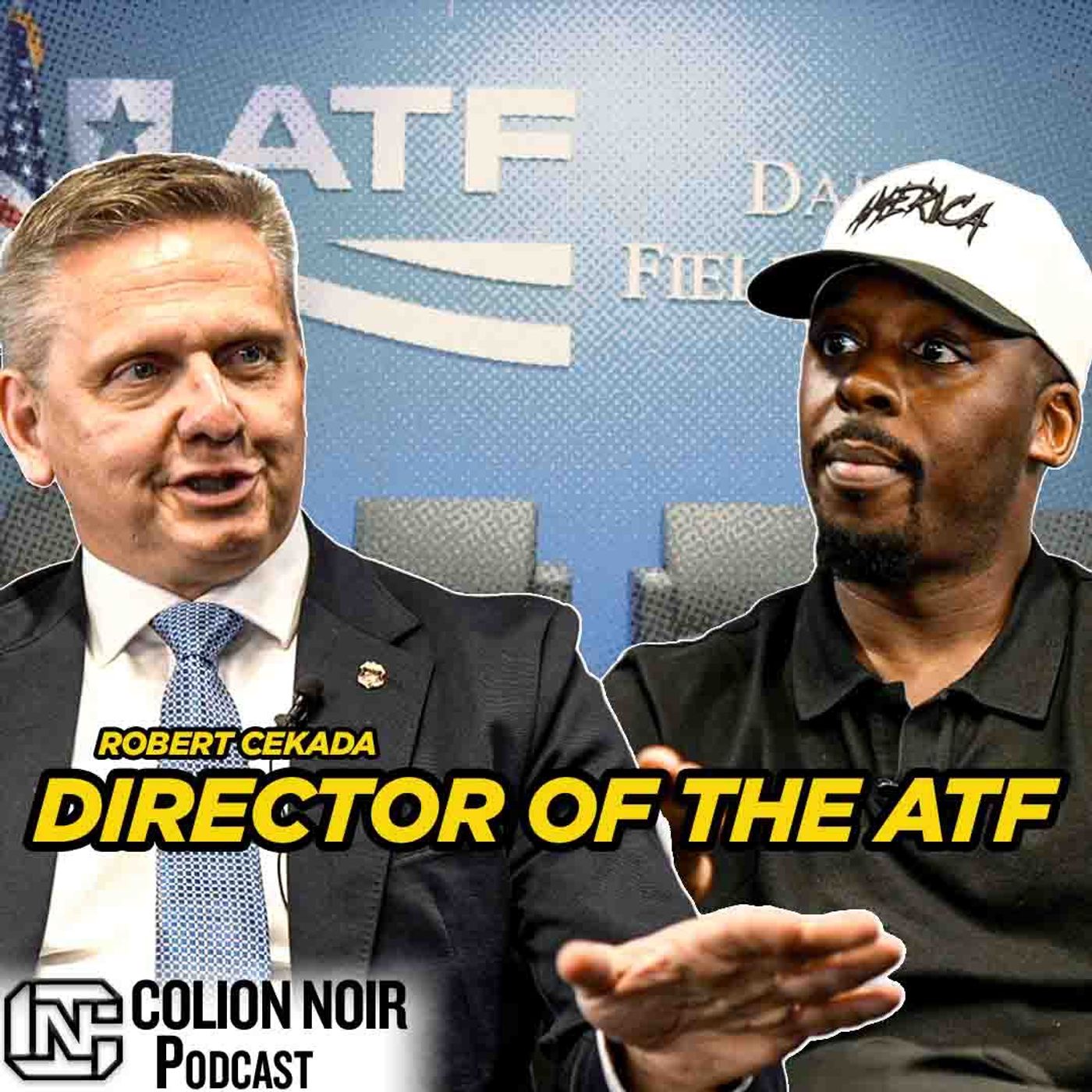
The Colion Noir Podcast
Robert Cekada: Director of the ATF
00:48:59
Colion sits down with the new director of the ATF.
Loading summary
Transcript43 lines
- [00:00]
Rob Sacoto
Know, one of the discussions that I was brought into was, hey, what are your thoughts? I said, well, thank you for inviting me. I said, but here's the issue. I own these, and I didn't manipulate them or add accessories. I bought them like this from an ffl, paid for them. I paid tax. Not an NFA tax, but I paid tax, and I don't want to pay another damn tax. You know, they, of course, didn't agree with me and thought that stabilizing firearm equipped with a stabilizing brace had only one purpose, to be used to kill people. Right. And I didn't agree. I don't agree till today. I think that as we've discussed before, any tool, any object, can be used in a malicious way. And I didn't want myself to be painted as someone with a propensity for violence just because of the type of firearm I chose to buy.
- [00:52]
Podcast Sponsor/Host
This episode of the Coleon Noir Podcast is brought to you by Vedder Holsters.
- [00:56]
Podcast Host/Interviewer
Welcome to another episode of the Coleon Noir Podcast. And this is. Is a special episode because he, who needs no introduction, I guess, would you say that. Would you say. Would you consider yourself infamous at this point?
- [01:09]
Rob Sacoto
I would say up until about 10 days ago, probably no one knew who Rob Sacoto was. I think over the last 10 days, that's probably changed a little bit. But, you know, I like to believe I'm still the same guy who started in law enforcement 32 years ago, 34 years ago.
- [01:26]
Podcast Host/Interviewer
I'm sorry, so what made you. So what made you say, all right, I'm going to make the decision and I'm going to do this. I'm going to become the head director of the atf considering. Go ahead.
- [01:36]
Rob Sacoto
Yeah. So that wasn't necessarily my choice, but I will tell you. So I started working with ATF while I was a task force officer, a detective in New York City in 1994. And there I developed an expertise working on gangs, who in particular, if you remember the crime rate in New York City at the time was 2,200 homicides, if not higher, and most of it was related to gang activity and drug trafficking. So we had limited success in the city with our state courts. Where we actually started taking background was when we partnered with our federal partners, and we ended up bringing cases to the federal system, in particular doing RICO cases on the different gangs. So at the time, I remember the gangs would frequently go in and out of the boundaries of our precincts that we were assigned to, and your commander was like, hey, I don't care what's going on the next precinct, he's focused on reducing crime in his. So very frustrating for a young guy like me who, you know, I wanted to keep chasing these guys wherever they were, taking their crews and committing more violence. So I went from a unit that was assigned to a precinct to then a citywide gang unit, which was actually our street crime unit at the time. And then that became the first NYPD gang unit we called. It was a citywide anti gang enforcement unit. So we had full city jurisdiction which then that gave me some more freedom to work these cases. But we still didn't have the bang for our buck in the courts because the courts often it would take someone three or four times before of convicted federal, sorry, felony convictions before they would actually get any jail time. Meanwhile, they're causing terror throughout the city. So the federal government, the rules were much tougher and they held people accountable. If you had three felony convictions and you got caught with a federal crime, you're going to spend 15 to 25 years in prison. And people were afraid of that, which in turn for working gang investigations was great because I put you at the bench and we start talking about what the future looks like you for you 25 years later. People more often than not would cooperate no matter how bad they said they were, how they would go down blazing. No, when it came down to themselves, people talked their way into taking care of themselves and their families and worked with us. So I became an agent down the road and little by little, I was just happy to be an agent. I didn't want to promote, but you know, over the years you work for someone who was a great boss and then you work for someone who wasn't a great boss. And you sit there, you're like, I could do better. And you little by little volunteer for these positions which end up moving you in different places around the country. Long story short, we end up in the last, the last administration where I ended up going from the deputy system director overseeing Central, which was the 20 or so states in the middle portion of our country, to the executive assistant director for operations where I saw operations, field operations all over the U.S. our intelligence operations and also our enforcement programs and services which oversaw the regulatory side as far as the National Services center, the NFA branch and all this stuff. But I quickly learned that although I was in this position, I only had limited authority because I have a couple bosses above me, right? And things that I stayed focused on was keeping our agents strictly focused on violent crime investigations, where I thought, although a very Small agency. That was our mission. And really, despite others might not liking to hear this, we're the only federal agency that's out there with a directive to. To go out and combat violent crime. And that's our core mission. Violent crime committed by people who are prohibited from carrying a firearm. Gangs, cartels, robbery crews, home invasion crews, people who use arson to commit crime, people who criminally use explosives. Just like firearms. Right? Taking a legal product and using it illegally to commit crimes and expand your territories. And we stayed focused on that really well. And then obviously, the last administration had their own agenda, and that agenda included coming up with tweaks in the regulations that I'd like to believe most folks had an intention, they thought in their minds that, hey, if we do this, we'll help keep communities safer. But I do think there was a distinct group that used that excuse of public safety being their concern to. To impose stricter regulations on America's gun owners and on the industry. And for me, that's a backwards recipe, right? I think that is. That is something like if we were to compare apples to oranges, lowering the speed limit from 55 or 65 to 35 just to give out more tickets to scare the people that are already going the speed limit versus the person that chooses to go 100 miles an hour because they're going to do it anyway. So although I push back on a lot of these things, again, a lot of times folks were like, hey, thanks for your input. And they went forward with their path. And, you know, that's a path that was pushed by the administration. People are handpicked by the administration. So not surprising, but disappointing, right? Because what it did was really hurt ATF's ability to work with the community. The way we developed great partnerships over the years, the federal firearms licensees and the federal explosives licensees have a great relationship with us and have for many years, despite what people believe. And, you know, it was our job not to find frivolous ways to put people out of business. Our job was to bring people into compliance and explain what a complicated handbook would mean and say, hey, look, pay particular attention to X, Y and z. Because although you may be completely trying to have a successful business, people target businesses based on where their proximity to certain neighborhoods are, in certain border towns so that they could source firearms for illegal purposes. Those are. That's our first line of defense. Those folks reach out to us, and I can't name anyone for their own safety. We have a very good line of communication. We talk on a regular basis. The Industry operations investigators and agents get calls on a regular basis. Hey, I'm not sure what's going on. Person came in, looked a little fishy, started talking fishy. They don't seem to know much about firearms, but they're asking for a particular firearm. And we share with the community what, for example, the cartels are looking to source. And they do source them on a regular basis throughout the United States. Used to just be on the border, but now it's all over the U.S. so, you know, once the administration changed over, initially I was like, hey, this is great. You know, we worked for the Trump administration previously. They knew what ATF was about when it came to violent crime. They knew that in most judicial districts, ATF brings 65 to 70% of the violent crime cases that are prosecuted federally come from us. Imagine that an agency with less than 2,500 agents partnering with our state and local partners is making an impact like that around the country on violent crime. You didn't know it because we do a terrible job telling our story.
- [09:20]
Podcast Sponsor/Host
So I've got to give a quick shout out to Vetter Holsters. They're now sponsoring the podcast. I've been using their light tuck Kydex inside the waistband holster. And what I really like is how adjustable it is. You can tweak the ride height and can't to get it exactly how you want. Plus they've got holsters for over 450 gun models in 75 different colors. So you can pretty much find whatever you need. But here's the thing that really sets them apart. Their customer service. I've heard so many stories about how they've gone above and beyond to make sure you're happy with your holster. And with a lot lifetime Warranty and a 30 day money back guarantee, it's clear they stand behind their products. If you're in the market for a great holster, check them out@betterholsters.com but of
- [09:59]
Rob Sacoto
course, in short order, I learned that people were really upset with us so much. Really. And I get it. Right? Look, I think we all saw it coming. I remember sitting with our special agents in charge and they were very vocal about, hey, we don't believe in this enhanced revocation policy. We don't believe in stabilizing brace. We don't believe in engaging the business. We don't think it's giving us what we need to continue making the positive impact on reducing violent crime. But again, everyone was mad. No one had the ability to change the outcome of what was going on. So when the new Administration came in, and I realized that ATF has a lot of enemies now at the door. And there was a conversation early on in February where, no offense, my friend Cash, who I have a great relationship with, you know, Cash talked about bringing a thousand agents over to the FBI that caused a huge kerfuffle with our folks about a month later. Then it was, no, we're getting merged with the DEA. Then we were going to cut $500 million almost from our budget, which would have resulted in 14, 1500 people being without a job. And I said, wait a minute, okay, There's a lot of things that were out of our control that get screwed up. But if ATF gets eliminated, someone else is going to have to do our job, right? And it's going to be people, one of the other federal agencies, I won't name them, who don't know the industry, they don't know the firearms industry, they don't know the explosives industry. But they're going to be given the same test, and it's going to be handled without the passion that the people have in this agency. The impact that we were making on violent crime would be gone. Right? So I said, man, I'm going to fight hard. And I had the opportunity to speak to folks in the administration, and I knew nothing about Congress, the folks in Congress or in the Senate. And I just started cold calling people and saying, hey, would you talk to me? Because I'd like to understand your perspective and tell you what I'd like to do and what we're really working on. And little by little, we made visits with everyone, and the narrative started to change within doj, the White House, and they realized ATF brings a lot to the table. But we had a lot of things to fix. We started as soon as the President came out with the Second Amendment executive order. We immediately started making changes even before I was the Deputy director. So, for example, I put an immediate pause on the enhanced revocation policy because I didn't have the authority to eliminate it. I wasn't the director. Okay. We looked at things that were really annoying America's communities, the gun communities, the industry. And frankly, even people who didn't weren't necessarily gun enthusiasts, but, you know, they just were curious about why our position was a certain way. So I looked at the things over the years where we would have a ruling, for example, on a classification for a firearm that was done behind closed doors. And even agents were not involved in those discussions. So we were confused about some of the classifications in the field. And I Said, man, if we're confused, how do I expect the American public to understand that? So we established, under my direction, a classification firearms classifications board, which was. Would start out in our tech shops, where the experts on the firearms enforcement officers work. But they don't get the final say. They get to do an analysis, making a recommendation. And that board goes all the way up to me at the director level. There's some really novel and innovative designs that people have tried. And they're on the line, right? They're on the line. That line was not set by me. That line was set by Congress and enacted by the president at the time. But it's a fine line. And there's a lot of decisions that were made without the public being involved. Because they were so nuanced, they kept it indoors. We're not doing that anymore.
- [14:07]
Podcast Host/Interviewer
Okay?
- [14:07]
Rob Sacoto
The ones that are crystal clear that the public can say 100%, Rob and his guys, we understand. We don't like it, but we understand because it falls within the law, we'll do those without a lot of public feedback. The ones that are so innovative and novel, we're going to end up putting out for public notice and comment. We want to hear from everyone's perspective. We will not reveal anyone's proprietary designs or anything like that because we want to protect innovation. But I think it's important for the public to understand and for us to understand the public's perception as to, hey, where's ATF coming for on this? And also, there's a lot of experts in the public that could also provide some feedback to atf, because I think together we could make some better decisions to be transparent and allow people to fully in the right place with the law, to not be worried about, hey, am I gonna get in trouble one day? Depending upon who's running this country.
- [15:00]
Podcast Host/Interviewer
So, like, from a. So from the brace standpoint, for instance, so for somebody out there who's. Who's kind of online, I get this question a lot. A lot. Like, so can I have a brace? Can I not put a brace on my gun? Where, for somebody asking that question, what kind of answer could you provide for them?
- [15:14]
Rob Sacoto
Yeah. So here's the challenge we have right now. So the law reads pretty clearly, but folks don't like the law, to be honest. Right? And I hear that all the time. I've heard it from folks on the Hill asking me to change the law. And I said, I can't. I said, that's your job. Right? So bottom line, Look, ATF's not offended if the Law gets changed. The law gets changed and we'll adjust fire. But right now I think the safest place for folks to be and they're not gonna like this answer is if you have a rifle and your rifle has an overall length that's under 26 inches and under 15, for example, 15.9 inches, you're technically, and it's designed to be shouldered, you're technically having a short barrel rifle. And I think what I want to be clear with, it's not think. ATF is not pursuing America's gun owners who are attaching a stabilizing brace and shouldering a rifle that may or may not be a short barrel rifle. I think people want me to give a clear answer to say, no, no, you're good. The problem is I can't really do that because the law reads the way it is. Although we will not be proactively sending agents to you, if you run afoul with the local law enforcement or federal agents, for example, you bring yourself on the radar for something else and they end up executing a search warrant at your house. It is possible that your firearm is sent to ATF for classification and they would review each firearm case by case basis and say it is or it isn't based on what the law defines. And you could be in a position that a U.S. attorney's office will say, hey, we want to charge this person. Now, I think that every U.S. attorney's office, just like ATF, we have a capacity on how many cases we could bring on, hence why we don't have our agents working on that. Right. We're working on people that are actually using firearms to commit violent crimes, not America's gun owners that are enjoying shooting a firearm equipped with a brace that is considered technically a short barrel rifle. I fell in this spot myself. I had two 119 millimeter Angstadt arms carbine with a stabilizing brace. But it fell within the short power rifle because I always shouldered it, I never used the grip right. And I had another 300 blackout, same thing with like a seven and a half inch barrel. And I thought I was fine. Well, I learned in the last administration that was not fine. And you know, one of the discussions that I was brought into was, hey, what are your thoughts? I said, well, thank you for inviting me. I said, but here's the issue. I own these and I didn't manipulate them or add accessories. I bought them like this from an ffl, paid for them. I paid tax. Not an NFA tax, but I paid tax. And I don't want to pay another damn tax. They of course didn't agree with me and thought that stabilizing firearm equipped with a stabilizing brace had only one purpose, to be used to kill people. Right? And I didn't agree. I don't agree until today. I think that as we've discussed before, any tool, any object can be used in a malicious way. And I didn't want myself to be painted as someone with a propensity for violence just because of the type of firearm I chose to buy.
- [18:41]
Podcast Host/Interviewer
So what do you think from your perspective and your vantage point and your experience in dealing with them, how do you think they arrived at the idea and the concept that this thing, this plastic thing is somehow making the gun more dangerous or seemingly more dangerous? Or is it just kind of just this umbrella approach to just firearms in general in the hands of citizens?
- [19:03]
Rob Sacoto
I think that at the time, my perspective, and I was not involved in many of the conversations, some of these were thought of outside of atf, brought in from frankly the administration and the Office of Gun Violence Prevention. Look, there was people who were involved in some of those groups that they were victims of crimes or had family members that were victims of crimes. And you know, from their perspective, they either believed or were convinced to believe that hey, these types of firearms have only one purpose. And it's hard, right? It's hard to argue with somebody who lost a child or was a victim themselves. So out of respect, you let people have their own opinions on things, but when folks have their own opinion that really is not supported by fact. And folks won't like this answer, but I'm going to give it to you. You know, when we trace firearms every year that are used in crimes, we have a very good idea of which firearms are used the most to commit violent crime. And I understand from the victim's perspective, it doesn't matter if that particular type was used once or thousands of times, they're tied to the victim and they're upset and they don't want to hear our side of it. I get that. But I have to look at the overall public and if I have any credibility to say I want to keep the public safe, I have to really tie it to where the problem is. And when I look at it, handguns are predominantly used in violent crimes. Why? Concealability, right? Even a short barreled rifle, not that easy. I've tried, trust me, Texas, Florida, places like that, you can do it, but it's not easy. And then trying to draw it and get stuck in your jeans all kinds of problems. When you look at our charts that talk about the caliber types of weapons, the far right shows the least number, right? And the far right contains your 556762 to include the short barreled rifles. That's not to say they were never used in a crime. I'm not trying to minimize it, but I'm trying to be realistic. So again, I think the focus should not be on the particular firearm. It needs to be on the people who are breaking the law and using that firearm criminally. And we need to hammer those guys in our prosecutions and later in our sentences because that's what deters others from following that same path. We saw this in the 90s when I was a cop in New York and again, I talked about 2000 plus homicides. How do we knock that down? Bringing these guys federally, charging them appropriately, putting good cases forward, getting convicted and serving 25 or 30 years. I know people don't like, there's people that don't like that either. Oh, that's someone's dead. I agree. But they committed a horrible crime. They need to be held accountable. So other people think twice about committing the same crime. Not redirecting that to people who are not committing the crimes is not the right math in my opinion.
- [21:47]
Podcast Host/Interviewer
So I do have a surface question because it's something that I deal with quite a bit because I travel a lot the idea. So for instance, if I do have an SBR or suppressor or something to that extent, is there anything in the works or are there any talks about being able to make it a lot easier to travel across state lines with those without having to submit a form and wait.
- [22:08]
Rob Sacoto
So there is a, A, an NPRM that's proposing this reg. That's proposing, instead of waiting to get an approval from ATF to travel across state lines where your possession of that firearm would be covered based on the fact that you're making a, instead of waiting for an approval, you're making a notification to atf. So that is in the NPRM stage, not finalized. But if that regulation makes it through the process, it becomes a final rule. Yes, that will be a lot easier because you won't be waking waiting for a response. Especially if you have, for example, a hunting trip, short notice that you want to jump on. You won't have to worry that hey, I'm not missing out on my trip and I might get in trouble with ATF or someone else. You'll be covered because your notification will be documented electronically and you'll be good to Go.
- [22:58]
Podcast Host/Interviewer
Gotcha. Gotcha. So how do you see. Because, you know, in prior administrations, the atf, under prior administrations, you know, we're dealing with. It was almost kind of us. Us against them. Right, right. And I know a lot of it stems from people just not really knowing much about the atf. And I'm including myself in that.
- [23:17]
Rob Sacoto
Right.
- [23:17]
Podcast Host/Interviewer
At the same time, is there anything that. That you think the public would be surprised about with respect to. To the ATF and the ongoings, the type of people that work there that you think the public generally doesn't know about and probably should?
- [23:31]
Rob Sacoto
Yeah, sure.
- [23:31]
Podcast Host/Interviewer
That would change perspectives.
- [23:32]
Rob Sacoto
I'll give you two perspectives. We have a lot of folks that work for us, not just agents. Right. So, for example, the NFA processing times, whether you like the NFA or not, right now, it's a law. We can't do anything about it. Right. So we have a very. Although I appreciate the budget we get, it's very tight budget. There's not extra money in there to do much modernization, but we have good people. So the folks that worked at our NFA branch, they were dissatisfied as well. Prior to the zero tax in 2023, you're waiting 14 months to get a stamp. I never purchased a suppressor or attempted to register any firearm prior to that because I was like, hey, I can afford to buy a suppressor. I don't need the layaway plan. Right. So not knocking anyone who does, but I was like, I want to buy it and walk out of there. Very shortly after I purchased it, our folks were frustrated with that themselves. And the team there did a deep dive of the process. Hey, why are we doing it this way? And what can we do to cut down the times? They went in there, they knocked out all of the steps that were completely unnecessary. But there were things that we were doing and doing for 20 years. And, you know, it is. People don't like to change, right? So they knocked us down. We went from 14 months to the summer, late summer of 2024. They told me, hey, boss, I think we can get this down in a couple weeks. So I didn't know if I believed them. Right. But they initiated it. And that winter I decided to use some money I saved for the holidays. I didn't tell anyone anything. I bought my first suppressor for my rifle and it took me two weeks. I got my tax stamp back. I was ecstatic, right? Because I was okay. I didn't ask for any money. Grabbed my paperwork and speeded along, but two weeks was pretty good. From 14 months that about a month later my son turned 21 years old. And when my son turned 21 years old, he decided he's going to buy his himself rifle and a suppressor, a better one than I had by the way. So he submitted his paperwork and 48 hours later he had his suppressor, his stamp back for his suppressor and his short barrel rifle. So I was completely impressed because again, my folks didn't know that his paperwork submitted either. So I started hearing this over and over from the average American citizen and people were really ecstatic with that. And it was nothing other than people who really cared and tried to come up with a better service. But we've changed everything we could internally, people, processes. So when the administration changed over in 25, I still wasn't satisfied. Right. So we actually called Doge in on ourself. I said, hey, I think we can do better here, but I don't know what can be better. Right. So I was really hoping Doge would have said something that, hey, you guys completely missed this particular process. You can knock down just to minutes versus hours. So Dosh came back in writing and said, hey, your people have done everything they could to improve this process. There's nothing else you could do. But you need to modernize the computer system because it's old, it's over 15 years old. I'll give you an example. The world operates, I believe, on Java 18 or 19. Today we are on like Java 8. And that's a budget thing. Right. And you know, systems, systems cost money. And it's not only buying a new system this year, you have to maintain it.
- [27:08]
Podcast Host/Interviewer
Yeah.
- [27:09]
Rob Sacoto
And I think that, you know, again, whether people like the fact that there's an NFA or gca, we have it for now. And while we have it to ensure that we have a service that protects all the information that's in there from all of everyone's personal identity and to ensure that the system is modern so that you could walk out of the store potentially within minutes of getting your background check. We can do that, but we have to make an investment. And if we say ATF is the enemy, is the enemy, and we can't give them a budget, then we're never going to be able to invest in that. That system, to be frank, ties into the other systems. Right. The backbone is all together. So the tracing center where we trace firearms used in crimes, which I know some folks don't like either, but there's more to that that people should know about. There's a lot of misnomers out there about a registry. There is no registry. I know that there's stories about that every day and people want to get everyone upset about that and that's. It's just not true. Like if you called me today and say, rob, I lost my staccato pistol. I need to make model serial number so I can report it to the pd, I'd say, sorry, I can't do that. So unless you know what FFL you bought it from, you're out of luck. So we don't try to circumvent that. You know, we have. You've seen some of the proposed regulations we have in place for the 4473s. I mean, maintaining the out of business records and look again, we'll see where that takes us. I think there's room to adjust fire there and still be able to carry out the public safety mission tied to traces. But I think that bottom line, to do the things that were also talked about in there where we would be purging records that were over a certain number of years, if that reg was pushed forward to do that, kind of like we would on a gang database, you know, after five years of no activity, we. We're required by law to pull people out. I can't do that with a system that's antiquated and doesn't actually have all the images. So we have to make an investment to not only keep us safe with what we use it for, but also to protect the American citizenry that owns firearms so that nobody misuses that database in the future.
- [29:19]
Podcast Host/Interviewer
So do you think there is some credence and let's say somebody comes up and says, well, I hesitate to want to give more budget for you to update and modernize the system because yeah, right now things look like they're positive. Things look like they're going in a direction we'd like them to do. But what if there's another regime change? I say regime, but you get what I'm saying. Sure, administration change. And they're not as pro when it comes to the second amendment. So I'm hesitant to want to go full bore and say, all right, I'm going to help support ATF do a better job of what they're tasked to do in terms of fighting violent crime and catching those people. But I'm worried about next administrations coming in and them being more anti and more kind of us against them. Focus. More so than the kind of more symbiotic relationship that I think you're trying to foster now.
- [30:09]
Rob Sacoto
Yep. So I have a couple things to say on that. So first, I think some of what's happening right now, people are impatient and in some aspects I won't name anyone. There is a circular firing squad of the conservative folks who are attacking one another. And in my opinion that is going to lead to another administration coming in and changing things. I think that people don't understand. I can propose regulations all day, but people could take me to court. And if I don't have good standing and an administrative record to show why I'm looking to change a particular regulation, you can't just change it because you want to. So for example, if currently we get two and a half more years of continuing to do a great job on reducing violent crime, holding violent criminals accountable and improving systems, and we can show that the regulations that actually make it through the process and become final regs, you have an administrative record that folks can argue and say, no, no, what Rob Sacotta did has caused crime to go up. Okay, well, you have to be able to prove that because if you go before a judge, a judge is going to look for corroborating evidence to show that they are correct in their statement. And if the government or the defense says, hey, that's not true, let me show you these numbers, that reg won't get overturned. So some of the changes that Chief Counsel Leiter and the team have worked on have been very thoughtful because we don't want to make a frivolous change. I'll be frank on the out of business records. Right. Folks would like it to go down to five years or zero years. The problem is this. We had 20 years before and for years it wasn't a problem. It transitioned to basically forever. Now. Right. If we go below, for example, let's say we go below 20 years where we were before. I have data that shows how many traces actually come back and help law enforcement identify people that were directly involved in a crime or provided a firearm through a store purchase to a person who shouldn't have had that firearm and the numbers are pretty strong in favor up until that 25 year mark. After that it dips down pretty fast. Now, occasionally we have something in the 30 year range that we get to trace back in 20 minutes to a heinous crime. So you don't want to minimize that. But there's a balance right of where that value is lost. And we hope to hear from the public to hear what their thoughts are. But here's the challenge. If people don't think it through and we go Try to go lower than the 20 years, you lose your back at lifetime. If you get it to 25, it's 25. And the second portion of the proposal is to purge the old records, thereby really eliminating any way of putting together any sort of database down the road. Even if a new administration tried to go down that path, and if we were to do that, and if there was another Republican administration that came in four more years, that's six and a half years of an administrative record you can build up to show this didn't negatively affect law enforcement's ability to identify criminals that are involved in firearms trafficking or involved in violent crime and would still preserve the integrity of the American gun owner without this fear of a database. But that takes. That takes some understanding and also some investment to be able to do that. Because the way the records are, for example, we don't just have the 4473, as we also have the A and D books. And, you know, an A and D book, when inventory comes in, it comes in. And however it comes in, it doesn't get sold in order usually. So. So there's. It's not. It's not something we. It's not insurmountable. But I will be frank. I'm not an expert in this area. We'd have to bring people in that could help us come up with a good system to meet these challenges and provide the American people a product that's worthy of the government.
- [34:09]
Podcast Host/Interviewer
So fair enough. Fair enough. So if you were going to ask the public, Right. To help do your job better, Right. What would that thing be like if there was something at the top of your brain that says, all right, I wish the people in the community understood this and that this could help us do not only just a better job at what we're tasked with doing, but then also create a better relationship with the public itself, what would that thing be?
- [34:35]
Rob Sacoto
Yeah, I think that we. Look, first of all, we got to do a better job. I have to teach or not teach. Teach isn't the right word. But to share with the American public what we do every day, you know, people don't know the American public. I think there is examples that are used, and it's like, in any case, right, the people who are convicted of a crime don't like to admit they committed a crime. I think most of America's prisons are filled with people that believe they're completely innocent. But I will say to be fair, because I don't want anyone listening thinking that I don't have A human heart or brain. Look, there's things that we should focus on and there's things we don't need to focus on. I think the limited amount of personnel that ATF has, agent wise, specifically, we need to be focused on the offenders who are violent and the people that are trafficking firearms to those people and to, frankly, the cartels in Mexico. You know, we have a small workforce. Every city I go to asks me for more agents every day. Every U.S. attorney calls me, yells at me to move agents from one city and give them all of my agents. Not because we're going out there and taking guns from the American gun owner. It's because our agents, I believe, are best suited to work with our state and local partners shoulder to shoulder. Why? Most of us were cops before, so we're not afraid to be on patrol in the neighborhoods. We know how to work with the community, to focus on the violent offenders, not treat the entire community like they are the bad folks. Look, there's a lot of good folks. As I mentioned, I worked in the housing projects in Harlem and Brooklyn and the South Bronx. And most of the people were really good. They just were. They were in a bad situation. You know, some either were born into a household with a really tough situation or a bad economical situation that they couldn't get out of it. But they weren't bad folks. They were just stuck there. You know, I didn't have to walk out of my house past drug dealers every day or people with guns in the lobby. These kids do. And that has an effect on you, right? So when we work with the community, there's positive impact long term. And in particular, what folks might not know atf, what we're doing is in addition to our undercover agents, who I think are the best in the country, especially in what we do with outlaw motorcycle gangs infiltrating street gangs, infiltrating people who are trafficking firearms and explosives. Nobody does it better than ATF Home invaders. Our folks are targeting these people who are doing home invasion robberies. And some people may say, well, who cares? They're robbing drug dealers if they get the right house.
- [37:11]
Podcast Host/Interviewer
That's true.
- [37:12]
Rob Sacoto
On a lot of occasions, they go to the wrong house and they torture or kill people who are completely innocent because they really believe that these folks have money or drugs hidden somewhere. And it happens all over the country. And our folks are great at it. The other thing that people may not know is the United States has invested in atf, where we just opened up our Forensic Crime Gun Intelligence laboratory in Wichita and What we've done for the last couple decades is built a. It's the National Integrated Ballistics Information Network. So, basically, shell casings from crime scenes from around the country are pumped into the system from police departments or ATF locations around the country. And we try to identify where else that bullet may have tied to. Why? Because, okay, maybe there's one casing found in this parking lot outside. One victim, no cameras. Nobody was around when that person was shot and killed. But we upload that into nibin, and it turns out that a firearm was used in a neighborhood where somebody was practicing their. Their. Their skills on a stop sign. And they fire five or six shots that are recovered, entered into the system. But we not only have that, we have a ShotSpotter system. Or we have. What was the system you and I were talking about in the hallway? The license plate readers.
- [38:31]
Podcast Host/Interviewer
God damn, I forgot it, too. Flock.
- [38:35]
Rob Sacoto
Flock. Flock's a good example, right? Flock captures these guys who think, hey, I'm just shooting at the stop sign. No big deal, right? But what it does is it gets that license plate, that car description, and we get those casings, it matches it to the shooting where we have a homicide. Now we take those casings. Another thing our lab developed. Not DNA. DNA was a tool that was developed by other law enforcement. But atf, over the last seven years, has developed a way to preserve the DNA and shell casings that are recovered in the street, the grass, the bushes, several days later. We used to. In 2017, you were able to get DNA off of a firearm or a fire cartridge casing less than 2% of the time. We didn't spend time on it. NIBIN we invested in. And fingerprints weren't great, but we tried those two. DNA now comes back 70% of the time with the shooter's DNA. And we've broken down also, if it used to be that if you. Let's say you and I both touched a firearm, it would come back and say, DNA mixture inconclusive because they couldn't break down who was. Well, we could break that up to four different persons. DNA. Now, with a high level of certainty that when this stuff's presented in the courts, people plead guilty because they don't want to challenge this in court. So that helps us when, for example, you get a car full of gang bangers in a car, everybody's got a gun on them, but before the cops roll up with their body cams, they all dump the guns on the floorboards. Okay, great. You could take them to jail if you can't Tie the guns to any one of these guys, they're going to beat the case in court. Not anymore. And so between DNA nibid and tracing, that laboratory is going to be taking on 12,000 cases for our state and local partners around the country to help work with them to identify people responsible for violent crime. So I tell you again, that's our focus, violent crime. Our focus on the industry side is to get the FFLs into compliance. If you're screwing up something unintentionally and it's not a malicious effort to violate the Gun Control act or to traffic firearms, if that's what it is, that's clear, you're not going to be in business for much longer. Right. We're not taking a blind eye to people who are committing those types of violations. But if you make a mistake, our job is to teach you how to do that better. Because again, we don't get a bonus for putting somebody out of business. We should be putting someone out of business if they're in conspiracy, in a conspiracy with someone to traffic firearms. And I didn't get a chance to mention, but for example, Mexico, just this, in this last year and a half since President Trump has been in office, we've interdicted about 5,100 firearms prior to them being trafficked into Mexico. And these are not just pistols, they're mainly belt fed.
- [41:29]
Podcast Host/Interviewer
Yes, I've seen some of this and
- [41:32]
Rob Sacoto
I will tell you, and the industry members who manufacture some of those were very concerned. We met with them and they've been great partners to us to try and help us identify, you know, who is involved with these things. But we also had some dirty ffls I won't name. I've named one by accident before, but I won't name him, his active case. But these are legitimate cases, completely dirty, charging, you know, basically $5,000 more than the retail price per firearm because they know the cartel is going to pay for it. Right. So, but again, how do we know other FFLs tell us about these things? Because they want to live. Right? Because they know if firearms are involved in violent crime, either they or the manufacturers eventually will be targeted and try to be held accountable instead of the criminals being held accountable. You know, I recently was grilled by some folks in the house who, who try to blame everything but the criminals. And to me, you know, people think I'm playing, you know, both sides here. I'm telling you, I've consistently been doing this for 34 years. I stay in the focus of the people who commit the crimes, need to be the folks we focus our energy on, not folks that are law abiding citizens. We get nothing out of that other than we lose all of their support.
- [42:52]
Podcast Host/Interviewer
So I'll end with this, this one last question, and it's kind of amorphous a little bit, but let's say you find yourself in a situation where you have to balance the effectiveness of solving crime in one respect, but it starts to kind of infringe on the two way rates. Like how do you personally balance that out?
- [43:14]
Rob Sacoto
So I think, look, I'm very fortunate. I have a good team of people that I've assembled here. Most of us in atf, which is a small agency, as I said multiple times, we know each other. So I brought in people that don't all necessarily think like me, but they're people who have the courage to at least tell me what their thoughts are. Robert Leiter, chief counsel and his team, they have no problem sharing their thoughts. Right. And look, the bottom line as far as I'm concerned is I'll give you an example. Last administration, and we weren't able to change it until the end of the last administration. There is an industry member that was trying to bring in M1 carbines and M1 Garand rifles, a large number. And the executive at the time was not the director. To be fair, the executive at the time felt, no, we don't need any more guns in this country. So my first comment is who the hell are you to decide that, number one? And when was the last time an M1 carbine or an M1 garand was used in a violent crime? Right. So much so that I actually pulled the numbers to show them that hey, there's nothing to support that these weapons are a threat to the American public. So that's the kind of stuff we're not going to get involved in. These are things that I think if we get to a spot where we have a public safety problem we're trying to deal with and we don't know what the best answer is and someone's proposing a regulation for it, I think what we would do not think, I know we would not impose any final rule just to do it. We would bring it out to the public. Hey, we have this as an option. We want to hear your thoughts. And I think the difference is that again, we recognize my agents using the laws that are on the books. There's a lot of U.S. attorney's offices that want to use those laws to hold people accountable. That's our best tool. Adjusting regulations that are People, whether it's this administration or another, are trying to make up for the law not being adequate. That's not the way to do this. The only reason we had the authority to make regulations, it was supposed to be to remove ambiguity and to give the public clarity. I think that has been stretched over the years to try and almost impose our own ability to make laws. We can't do that. So that's a tough balance of, you know, of exposure, explaining to people where we sit and what the options are. But I think that's been part of the problem. Nobody wanted to talk to the public or to the 2A community, excuse me. Or to the gun control groups and say, hey, here's a problem we're having. The answer should be this. And we got to figure out a way as a group to get to. Yes, the only way you do that is by having tough conversations. That means getting yelled at, at some conversations, but that's fine.
- [46:08]
Podcast Sponsor/Host
So I lied.
- [46:08]
Podcast Host/Interviewer
This is the last question. So are there any plans for you to sit down and talk with the anti gun side of the conversation as well?
- [46:15]
Rob Sacoto
Yeah. So I'll be frank. I think they're upset with me and that's fine. I never played games with anyone. We reached out last year in 2025 because I hadn't heard from anyone in the gun control groups from the time President Trump became president. And I was wondering what was going on because we had both sides would talk to us and we may not agree, but we should still be talking. So we reached out and I thought for the most part we had productive conversations. Not necessarily in full agreement on anything, but I do think it's important to talk whether we agree or not. I think most Americans are way closer to where we should be than we're not. But to be frank, I think on both sides, there's organizations that are pushing for us to be a part and it makes money for people to do that. And I do think there's some reasonable solutions and we should stay focused on starting with holding the people responsible who commit violent crimes. I get it. People don't want to have people put in prison for crimes. But I'm sorry, if you're committing violent crimes, you need to be in prison at least for the period of time the courts have established is adequate.
- [47:30]
Podcast Host/Interviewer
Fair enough. Fair enough. Well, I'll say this much. I never thought in a million years I'd have a director sitting across from me willingly wanting to have the conversation that we just had. So I definitely tip my hat to you in that regard. I truly appreciate. I think the gun community in itself truly appreciates it, even though there may be some people who never believe a word you say. But I think it's important. I think the dialogue needs to happen. I think the symbiotic relationship needs to happen in terms of creating that perfect balance which, you know, there's no perfection but being able to accomplish a balance between what your job is and then our rights. But then I also think there are a lot of. I think the vast majority of people in the community truly want to stop the violent crime, too. So I think, like you said before, that I think there are more people who are closer to being aligned than opposed. So I thank you for just having the conversation at this.
- [48:24]
Rob Sacoto
Well, I thank you for having me, and I look forward to, hopefully, further dialogue. I'm sorry, you're stuck with a New Yorker that talks with his hands and talks a lot. I look forward to having further discussions because I really do believe the more we're talking about this, we could shed some of the negative connotations with firearms ownership and again, find ways to focus our efforts on holding people, the appropriate people, responsible and reducing crime together. Because we all live in the same communities. None of us want to be victims.
- [48:56]
Podcast Host/Interviewer
Yeah, absolutely. Well, thank you very much.
- [48:58]
Rob Sacoto
Thank you, sir. Appreciate you, sir. Thank you.