← The Colion Noir Podcast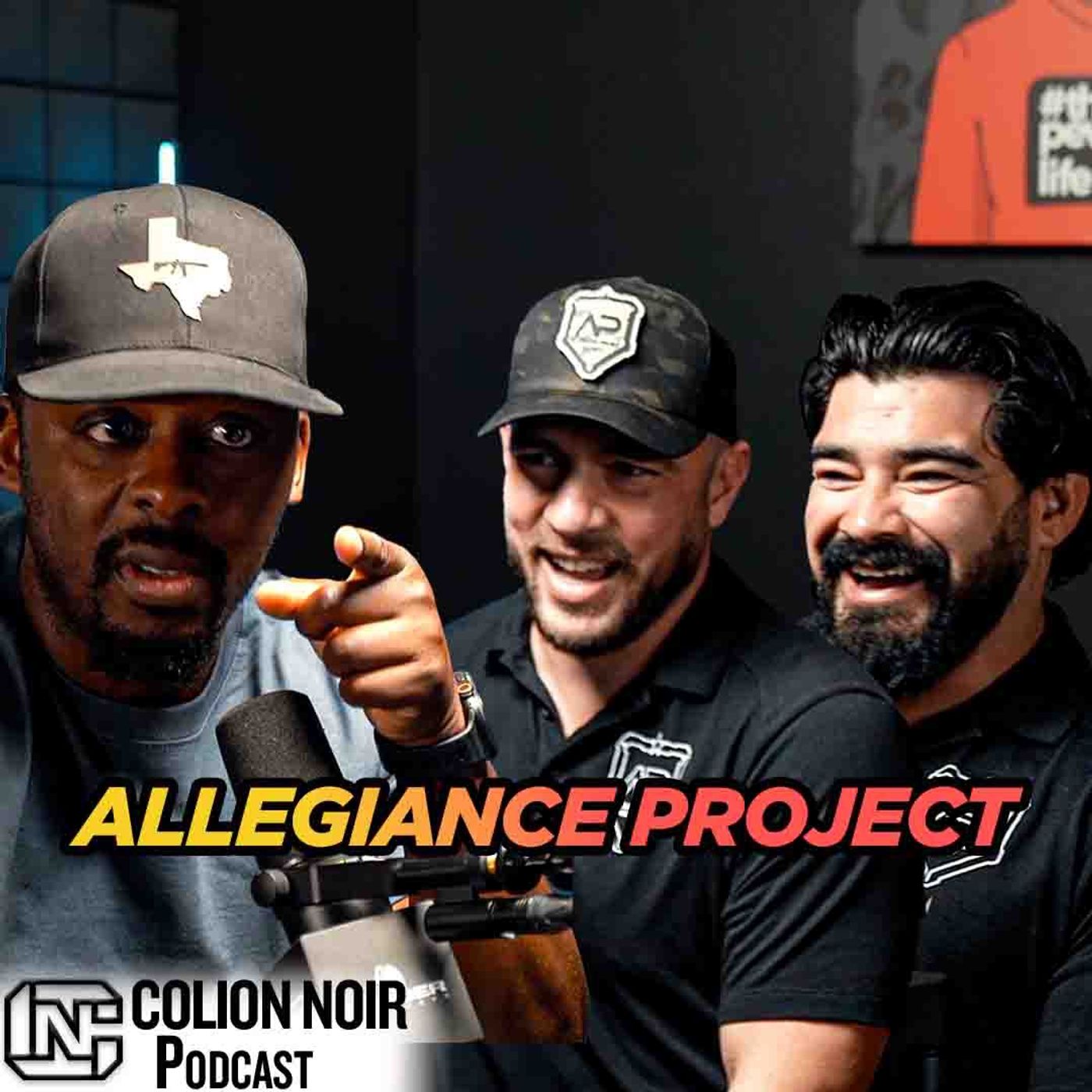
The Colion Noir Podcast
The Allegiance Project
00:44:16
Today’s guests are Matthew Easter and Luis Saucedo of Allegiance Project. Matthew founded the organization to tackle two major challenges at once: keeping schools and churches safe while giving veterans meaningful careers and mentorship opportunities. Luis is a 21-year Army veteran and former special operations leader who now oversees security operations, bringing decades of combat, training, and leadership experience to protecting communities across Texas.
Loading summary
Transcript204 lines
- [00:00]
A
With respect to. I did always have a question about suppressors and running suppressed. Is that something that you think is necessary for the type of job that you got? You and the guys that will be working for you and doing these things, do you think that's necessary or is
- [00:15]
B
it something for, you know, DPS and state laws? Security officers can't run rifles.
- [00:20]
A
Why aren't they allowed to? What's the reasoning and basis for that?
- [00:23]
B
You know, it's because they're not Texas peace officers and they don't have the training required to be able to carry a long gun, which I would say that some.
- [00:33]
C
Most of our guys probably have more time behind a longer.
- [00:36]
A
Makes no sense to me. Like they can't carry.
- [00:38]
B
Yeah. And then. And then you have to think it's. It's obviously way more accurate. So if you're responding to an active threat, your chances of hitting innocent life is way lower with the rifle than it is with a pistol.
- [00:50]
A
Maybe a lot of it is perception. Right. There's something about bad black.
- [00:55]
C
Big bad, but bad.
- [00:56]
A
Careful, careful. This episode of the Coleon Noir podcast is brought to you by Vetter Holster. All right, welcome to another episode of the Colonial Noir podcast. Because you're not in frame, you're good.
- [01:08]
C
Like,
- [01:11]
A
so why did it call you Sauce?
- [01:13]
C
So my last name's Saucedo and everything in the army is like.
- [01:17]
A
I thought it was gonna be like
- [01:18]
C
a little bit more like, so. No, I get the cool stuff, though. It was just like, so. For the first part of my career, it was fat Sauce because I was the skinnier of the brothers. Me and my brother are both in the Ranger regiment. And then he was smart Sauce and then it became hot Sauce. Just. We'll leave that at that.
- [01:33]
B
And then he's a good looking guy
- [01:35]
C
now with everybody, it's like, it's just Sauce because nobody wants to pronounce it, I guess. So everything is dumbed down. So not a fan. The other story is kind of one of those things. It's like, not safe for work.
- [01:48]
A
You're safe here.
- [01:48]
C
Yeah. It's a trust circle. Are we, though?
- [01:52]
A
I mean, a little bit. Everything's live right now, but I mean.
- [01:55]
C
Yeah, right. Yeah.
- [01:56]
B
I found that out on a podcast one time.
- [01:58]
C
Like, oh, yeah, we're shooting this live.
- [01:59]
A
I was like, oh, go right. No delay, no nothing.
- [02:03]
B
No.
- [02:04]
A
So speaking on that. So they call you Teriyaki sauce.
- [02:06]
C
That would be an interesting one. I think I need to do something to get that though. Like stab somebody with some chopsticks. They're like, oh. Oh, he's teriyaki sauce now. Why'd you look at me?
- [02:17]
A
Collins said chopsticks.
- [02:20]
B
What do you mean?
- [02:23]
A
But no, man. Really appreciate having you guys here. So talk to me a little about Allegiance. Allegiance Project. Let's start with that. Let's just start overarchingly with what you guys do so that people kind of have some framework and then kind of go into guys background.
- [02:36]
B
Yeah. So the Allegiance Project Foundation I founded is a 501C3, and essentially it hires veterans for school security, provides the training, funding, support that schools need through donor links, that kind of thing, offsetting a school's cost so that way they can afford better security officers. So the. The whole mindset behind this was, you know, obviously, aside from all the reasons why an organization like us needs to exist. My wife is an elementary school teacher.
- [03:06]
A
Yeah.
- [03:07]
B
So school safety hits really close to home.
- [03:09]
A
Yeah.
- [03:10]
B
After the events of Uvalde, we watched police response collapse in real time. And then lawmakers did what they do best. They pass mandates.
- [03:19]
A
Yeah.
- [03:21]
B
So they passed. Every school needs armed personnel on site, emergency operations plans, active shooter policies, everything a school should have. But they didn't pass the funding to make that a possibility.
- [03:35]
A
A lot of people forget that part.
- [03:37]
C
Right.
- [03:37]
A
Like a lot of stuff isn't. Isn't exactly cheap.
- [03:40]
B
No.
- [03:40]
A
Right. Especially when you start going into the training component and all the liability components and stuff like that. So is that. So this started. What was Uvaldi the catalyst or. Yeah, that was the catalyst. Okay. Yeah. Because. So from your perspective, you know, Monday morning quarterbacking type stuff. What. What do you think was the fundamental breakdown there, overarching? The.
- [04:04]
B
The big breakdown came in training with law enforcement and then available training for schools on what to do in an active shooter event. And then schools knowing what's in their EOP, having the right protocols and policies in place, SOPs so that way every staff member understands why it's important to keep locked. You, you know, lock doors. Yeah, because that's how the shooter got in. It was a rock propped open on the side of the building so a teacher could grab something and either forgot about it or was still out and about.
- [04:35]
A
Gotcha.
- [04:37]
C
I have a tact. The tactical overview on that just because of my background and that's what he brought me in for. A lot of what I saw there was the. Almost the a guy found out that he wasn't about that life at the door and. Which is a terrible place to find that out. So a lot of what we do. When he says hiring veterans, a lot of the Guys come from. Guys that are coming in are starting to come from a special operations background. G. What over. So we're trying to give them that place to go, and what a good thing. So when people are transitioning out, we're giving these special operations guys somewhere to say, hey, you don't have to put. Put down the gun. Now. It's like, you can do it on your own term, but we're going to give you another mission. So when I saw that at the door, somebody who was not prepared for the eventuality that I'm going into a room, somebody's dying, and it's probably. It might be me, because it's one of those things where they got to drop on you. Anybody does cqb, that's a. You are going, you're rushing. It's a tst. There's somebody in there, they got a gun and they're aiming at that door. It's the somebody found out, hey, I don't. I don't want to die right now and finding out at the worst possible time. So what. A lot of what we like, what we train and like to do is we're taking these special operations guys who made that decision 20 years ago, 10 years ago, and have rushed through door after door after door knowing that. So now we're taking these guys and saying, hey, now that guy found out. It found out long ago that he was going to do this. So the guy that we're putting in there is going to rush that room, whether it be by himself with a friend, he doesn't care. He's going to go in and because it's. This is what he did. This is what he does. He's about that life and he's been about it. So that's one of the tactical component we. I saw the breakdown with. In the tactical moment of this is why we're bringing these guys in.
- [06:30]
A
You want to know when I found out I wasn't about that way? I did a CQB course. Oh, yeah, I did. I did a straight up. It was all airsoft, right? It was room clearing, all that. And it started off fun. It was like, oh, this is pretty cool. You know, you're learning. You learn corners and moving and. And then it hit me midway through, wait a minute. There's somebody on the other side of this door.
- [06:53]
C
And he knows you're there already.
- [06:54]
A
He knows you're coming. There's a chance. If I'm lead on this, the chances of me getting shot, it's almost. It's expected almost right That's a different mentality, it's a different mindset and I think it is prudent for people to understand. Like you kind of alluded to it, right. You kind of alluded to the idea that the mindset was already there was already determined 20 years ago. Right. Because they've been down range and they'd had to do it over and over and over and over again. Whereas in the opposite side of things. And this may be an unfair, fair assessment, I'm not really sure. But with cops, that's not typically the mindset. Yeah, right. I mean, at least from, from what I can gather. So besides, besides. So where do you, how do you kind of create that kind of almost symbiotic relationship between the cops and then what you guys are doing as far as having somebody trained already there who's, who's done this time and time again? How does that relationship, how do you see that relationship working?
- [07:52]
C
So we actually, actually kind of had a proof of concept recently. So in Prosper, there was a swatting incident where somebody called into the police, Prosper police and said, and this was on a Sunday, said that there's a shooter in the church. And it was a. On the, it was on the non emergency and it was, they called as the shooter. They were like, I'm the shooter.
- [08:14]
A
Gotcha.
- [08:15]
C
And so I mean I'm the one working there today. It was just, it was a fluke that I think I wasn't supposed to pick up that shift. Pick end up picking that shift. So I'm in there and I see two officers come in with long rifles. And what's funny about this situation is my kids, my wife and kids were there. They were, I had, I have seven kids. They were all. Every single one of them was there. Two of them were in the, the children. I just put two of them into the children's. So I'm armored, got all my security stuff. And that's one of the things. It's like, hey, come enjoy the. Come enjoy this. Like I'm here, might as well be here too. So I watch 2 PD come in with long rifles and they're searching. And immediately it's, this is wrong. This like this whole situation is wrong. So I pull my pistol, I look over and I was like, what's going on? And he just yells, active shooter. And the first thing I do, dive right into the sanctuary. And I'm like, everybody get up. Everybody get out. Luckily they had had some training done that got them everybody out. That sanctuary was out in 45 seconds. But then becomes the clearance. Now we have to actively go and search out that guy. Usually with guards, with guards, level three guards in Texas, there's a stigma about it. They're not trained. They don't know how to do this. Immediately. Probably I'm sitting there and I'm like, okay, bring two of them with me. I. I'm going to go in first, doors on the right. I run the rabbit. We got three open breaches. Somebody stay in the hallway. Start giving CQB style or military style orders. Pretty Much brings me back to I'm a. I'm a squad leader, team leader in the regiment. I'm overseas. And through the clearance, I'm speaking the same language that they kind of learned we're going through. So you have these guys that have all of a sudden run into this security guard that's doing all this stuff. Midway through, one of them, luckily, he was attack officer, too. He goes, who are you? And I was just like. I was like, I'm the guy here right now. He's like, no. He's like, what did you do before this? So I told God.
- [10:20]
A
He's Jason.
- [10:21]
C
He's just like, yeah. He was just like, who are they? Who's this church hiring, like, a bunch of mercenaries?
- [10:28]
B
That's the idea.
- [10:29]
C
It's so. It's funny because at that point, they kind of knew, oh, this guy knows what he's doing. And they were not afraid to run. Me and him were saying, cutting it down, going through kind of just that whole CQB style of, hey, hold this. I'm going to. You know, I'm peeling, right? I'm running the rabbit. I need you to just step in. Seamless talking. We're marking everything. And so that was one of the things that we're training to, is that we're taking these veterans that have already done all this and then integrating with it. Because there's a point where the police, the officer was like, oh, no, this guy knows what he's doing. Okay, we're safe to bring him along. Because a lot of the times they just say, hey, secure the site. Like, push out. We don't want you to get in the way.
- [11:11]
A
Yeah.
- [11:12]
C
Now with our company, it's. And now they know our name, too. It's no. If this guy's in here, he's probably a pro, and we're gonna get behind him. So. But very odd. I'm leading a stack with a pistol, and there's two.
- [11:25]
A
There's two.
- [11:25]
C
Three long rifles behind me. And these guys were fantastic. I will hand it to them that they had had some decent training, decent enough. Not as much as, you know, you want them to have, which is another issue within the law enforcement community is that, like, hey, like, why aren't we giving these guys CQB training? Like, not so much patrol. Because they're the first ones that were there. It wasn't the TAT team that showed up. They were 20 minutes late. Everything would have already been said and done then. So it's funny that, like, there's this guy with a pistol running with a bunch of rifles, and they're. I'm leading the stack down the way, and it's, you know, you take one guy, one. One guy. The unfortunate or fortunate thing that he was, that was his first week on the job. And so, like, we're trying to. He would run in the middle of the room. I'm like, stop that. Don't go in the middle of that room. Or it's like, okay, well, he's going to run in this real mood. I just got to step to the side. So if anybody starts shooting, they're going to hit him first. But I think that's the proof of concept for the company, is that we're putting these guys in and they know what they're doing. Like, so when push comes to shove, they're going to be at the front of that stack. They're going to help with the. They're going to help with the police, or they're going to lone wolf it. They're going to like, hey, I got to go find this guy. Because with that active shooter scenario, like, you got to. Somebody's got to confront him. Maybe you don't win the gunfight, and that's part of that mindset thing. Maybe I don't win the gunfight. Maybe I do. Maybe I do die here. But he's got to concentrate on me first, like, and he's got to get through me. And then there's people coming behind me. So the more we're talking about, I'm giving them seconds, minutes to get there, to help us out. And that's like, again, the mindset thing. I made the choice long ago that, like, if I enter into that situation, I've already done, like, I'm bought and paid for already. Like, so I'm just. Now I'm just trying to buy everybody else time to get to that. That point, get there, to that situation.
- [13:19]
A
Gotcha. So for like. So say, for instance, you have. Like, this isn't universal across the board, right? No, clearly don't Have. What would you say to somebody who, let's say to a cop, for instance, who might have to find himself in a situation like Uvalde where he is stacked. He's the first, he's the first guy there. He drew the unlucky card, right. And he, he doesn't, he doesn't have the experience, he doesn't have the know how. From a mentality standpoint, like what would you tell someone? Would you tell a guy like that in that moment? How would he approach that situation?
- [13:52]
C
Training, like the, you know, be a pro, be, do, do the training first. Get yourself out to courses, figure out if that's what you want to do because that's. It is very, it is very different coming across that threshold and knowing that there's a guy in there. I mean, you put small rooms, you put somebody into a small room or you put two or three guys into a small room and they're all got guns, everybody's shooting, somebody's getting hit.
- [14:19]
A
Yeah.
- [14:20]
C
So what I would tell them is that like a, like that's a. The training, get yourself prepared for that, mentally make yourself ready for that eventuality. Because it's a profession of arms. This you like, when I was in the regiment, every morning or every evening when we got up, we got up to go do missions. I put my kit on, I put my guns on, I brushed my teeth, I ate. I like got the mission set on the other side of it. There was a guy doing that, he was getting up, he was doing that and, and both of us put uniforms on and said, hey, we're going to meet at this place in this time. Or there's an eventual. This, this is going to happen. We're going to go on this battlefield and we're going to fight each other. Yeah, someone's dying, someone's going to die here. So you have to, I think cops really have to kind of get that mentality into them is like, there's, I put this gun on, there's a chance I'm not coming home. There's a good chance I'm not coming home. And always think about that. And then at the threshold, it's, you know, everyone else before self. Like you have to be selfless. You have to realize, I'm probably, I'm alone here. I gotta set like, I gotta be that guy. I gotta be the hero. I gotta, I gotta step through that threshold no matter what happens. Because again, when you're doing that, I'm not buying time for myself. I'm already bought and paid for and you gotta come in with that, that mentality. I'm buying time for everybody else around me, time for my buddies to get there to back me up. Like I'm buying time for this guy to shoot at me or to worry about me in that room. Maybe I, maybe I scare him away, maybe I hit him. Maybe he decides that this isn't what I wanted to do either and he runs. But it's saving. You're buying that saving grace for everybody else behind you.
- [15:56]
A
Yeah. Always said, you know, like the thing about concealed carriers and things of that nature, people who don't want to carry guns. Right. And people who are against it, like, well, here's the thing, there's somebody else with a gun there and they're shooting at him and they're shooting back at him. Guess who they're not shooting at?
- [16:10]
C
Everybody else.
- [16:11]
A
Right. So that gives you that opportunity, that time to get out of there if need be.
- [16:15]
B
Yeah. And just overcoming that mentality that, oh, I have a gun so I'm safe, I don't need to train with it. Like we see that across the board. It's not just civilians. A lot of law enforcement too. We did a training with some school marshals over in the north DFW area and some of our guys were OP4 on this and they were, you know, responding to an active shooter. And the cop goes in, did a decent job pying around the a door, entry was clean, got shot immediately. And he kind of chuckles and laughs it off and says, oh well, I only pull out my gun once a year to do my qual. Like your job is protecting children. And I think you have to have that mindset where you have to be a professional in everything that you do. If not, there's a huge disconnect.
- [17:00]
A
So I've got to give a quick shout out to Vetter Holsters. They're now sponsoring the podcast. I've been using their light tuck Kydex inside the waistband holster. And what I really like is how adjustable it is. You can tweak the ride height and can't to get it exactly how you want. Plus they've got holsters for over 450 gun models in 75 different colors. So you can pretty much find whatever you need. But here's the thing that really sets them apart. Their customer service. I've heard so many stories about how they've gone above and beyond to make sure you're happy with your holster. And with a lifetime Warranty and a 30 day money back guarantee, it's clear they stand behind their products. If you're in the market for a great holster, check them out@betterholsters.com. yep. Yeah, that's crazy. I shot immediately
- [17:42]
B
and we had a good guy in there shooting, so.
- [17:46]
C
Yeah, yeah, right. You got to think about those shots too. Like even in that training, you got to take the training seriously. Like you can't laugh it off. And then like again, you're a professional at arms. You're gonna live and die by this gun. Like so why you need to be the best at with it. That is your tool, that's your sword, your modern day samurai, you need to be the best at it as you can. And then you think about like sim rounds I always used to go into when we did some round training. You know, you go in there, you're doing rep after rep, you're getting hit and people are like, okay, where'd you get hit? Stuff like that. But you got to think about what that bullet's gonna do. Like I get hit in the thigh, I'm probably never walking. Like I'm never gonna walk right again. Like I get hit in the pelvic girdle, you know, that's game over. I get hit in the arm, probably never using that arm again. Life changes completely. So you gotta realize that like every rep you do is a chance to just get better at that, at your skill set. So. And I think a lot of police officers get really into the mundane ness of it. Like, oh, I'm just, I'm just doing this it's job. I'm just doing this it's job. And you really like to quote J.D. shipley, you've got to be a pro. Like you just got to be a pro.
- [18:48]
A
And I think that's the one thing too is you know, with being a cop and just purely from observation, because I'm not a cop, but you know, I got a lot of friends who are cops. I've done ride alongs and things of that nature. And it's, it's, it's crazy because you go day, you can go days and days, nothing happens. And then all of a sudden it's a hundred. And you don't never see it coming. It's like, oh, like this is this, this has gone to fast. Yeah, right. And so it's like you have to be, there's no warm up, there's nothing like you have to be able to just turn it on and flip a switch. From the standpoint of like, okay, this is serious, people might die, I might die. I have to do what I have to do.
- [19:23]
C
Yeah.
- [19:24]
A
And so. And then in verse two, I've been. I did some munitions training where I was on the. I was the guy. I was the criminal on the inside that they were stacking up against. And I remember thinking, you know, in that time, I'm waiting for him. Right. And I'm trying to game the whole. It's all on camera, too, so. And I gamed it the first time. Right. I kind of gained it, kind of prepped. I knew it was coming. And, you know, I kind of. I kind of got him off a little bit. I was like. And then I pissed them off, and then they stacked against me. And then when they stacked and really came in that room, it's a. For somebody on the opposite side of that door holding a gun, it's like, yeah. I mean, get a shot off and get. Get one person hit. But it happens so fast. Yeah, it happens so fast. Before you can think about it, you get bullets pumped into you without even thinking about it.
- [20:09]
B
Yeah. Yeah.
- [20:10]
A
And so that. That's. I think that, you know, it's a weird dynamic how that kind of works in terms of the advantages on that side versus the advantages on the other side.
- [20:18]
B
Yeah. And I remember you talking about that when you did that. That sim training in that coffee shop.
- [20:24]
A
Yes.
- [20:24]
B
Where you had that guy just draw out of nowhere and just your reaction, you're like, hey, this happened so fast, and that's exactly how it's going to happen. So you have to train into that.
- [20:32]
A
Yeah. No, and the thing is, it's also too. You know, I knew it was coming. Right. I knew exactly. I knew the scenario. I kind of. I could anticipate a little bit something's going to happen. I know exactly what it is, but I know something's going to happen. So I'm subconsciously already kind of on edge. I'm kind of prepped up and ready to go. But I've been in situations in real life where I'm going about my life and I hear something that I think is a gunshot and I'm out and about. I remember there's a. There's a second or two. Your brain is trying to orient what the heck is going on, and you. And you're trying to figure it out, and it's almost like a pause, and then you're like. And then. And then it kind of kicks in and it turns out to be nothing.
- [21:07]
B
Right.
- [21:08]
A
But in my mind, I go, what if it is something? And I'm like, there's that second there, right, where you're trying to figure. Your brain is trying to process the reality of it. Because I'm thinking you go in a coffee shop just to get some coffee like you always do, and all of a sudden, as an active shooter. Yeah. Your brain has to kind of process that and then to throw you into that reality. And so I'm like, man, like, training is really that important, so that it almost becomes a subconscious skill set where it's just kind of like, this is what you do because you've done it so many.
- [21:34]
C
Yeah, it's that every rep where it just becomes a. Like, they call it a battle drill with something that military calls it a battle drill, but it's something that you've done so many times that it's just natural reaction then move. You know, taking contact is just. All of a sudden, it just. Everything just kind of kicks into gear. And I think that goes along with, again, like, being the pro, getting the reps in, like, going. And you can't. I think the first time. And any vet will tell you the first time they got into a firefight, it was just like. Like, you're like, oh, crap. But then you start getting used to it. Start getting used to it. Start getting used to it.
- [22:08]
A
You know how crazy that sounds?
- [22:09]
C
Yeah, I know, right? It is. It's, like, wild. The first one I had ever gotten into, I. So I didn't even know what was going on. Like, it happened, and I just kind of snapped to. And I'm shooting, and somebody's grabbing me, pulling me down into, like, behind a car, because I'm just standing out in the middle of the open. So, like, it's. It's one of those things that, like, I was young and didn't know it yet, but then after my crew, like, after, you know, 20 years of doing it, it's just. Everything's automatic. And so I think anytime anybody who tried, anybody who has a gun and wants to carry it for safety, protection, stuff like that, women, everybody, you need to just be a pro with the tool. Like, it's a tool. You got to be a pro with it. So you're doing those dry fires. Every morning, I get up and do about 100 dry fires and just make sure that the draw is the same. Everything's the same. All my setup's the same, just where the gun is, just kind of knowing what that feeling's like to pull a gun. So then when it happens, then you're. Yeah, everything's just on automatic.
- [23:10]
A
Yeah. Because even sometimes when I go out and I train, when I'm doing my kind of training. Like, after we film gun reviews and stuff, I'll stay after a little bit and do some training, do run some drills. And it's like, I have to keep reminding myself because I'll do it. I'll mess up. I'm like, I'll stop midway through. And I'm like, you don't get to do that in real life. You know, like, you know, if I actually had to go to my gun and my shirt gets hung up on it.
- [23:29]
C
Yeah, that's.
- [23:30]
A
That's. That's the end. That's it. Yeah. Like, I don't get to go.
- [23:32]
C
All right, hold on, hold on.
- [23:33]
A
Reset the timer. Yeah, Right?
- [23:35]
B
There's a reset button in real life.
- [23:36]
A
Yeah, yeah. And it's. And I mean, it's the reality of it, right? Because we don't get to train against real people shooting at us, right? So it's kind of like we almost start to gamify it a little bit and. But it's like, like you said before, it's like making sure you stay within that mindset of, like, no, like, I'm training for something real. I don't get to do. Do overs. This is what happens. And so I try to keep myself in that mindset whenever I do go out and train, because at the end of the day, like I said, I can't. My shirt gets hung up. I don't draw as fast as I think I would. I forgot those are not around in the chamber. If I decide, you know, if something like that happens, you know.
- [24:10]
C
Yeah, just like.
- [24:11]
A
Yeah.
- [24:12]
C
You always get people who say that. Like, do you keep around in the chamber? I was like, yeah. Oh, yeah. All the time. Like. Like. Because that's like a worst nightmare. I think I have dreams about that where you pull your gun and just click, and you're just like, yeah, game over.
- [24:24]
B
Or you have that trigger that weighs a thousand pounds. In the dreams, I've actually had that.
- [24:28]
A
Yeah, yeah, yeah. Yep, yep, yep. So from this perspective, from what you guys are doing, have you. Sorry about that. Have you. Of course. Have you guys received any pushback?
- [24:41]
B
No, No. I mean, schools want us because what we're essentially doing is we're helping them compliant with state mandates.
- [24:46]
A
Okay.
- [24:47]
B
And private schools actually want us even more because they don't have that funding allocated from the state, which now is up to $35,000 a school. Initially, it was $15,000 a school school. So they're making improvements, but the. The gatekeepers are always the administrators. So the superintendent, if he has a buddy in law enforcement. Or if they, you know, their. Their budget's just this. They're going to contract the lowest.
- [25:13]
A
Gotcha.
- [25:13]
B
You know, mall cop they can find to just be compliant and just check that box. So that's why, like, that's where the importance comes from with being able to offset a school's cost. So that way they're not looking at the budget. Like, we've already solved these problems in these other areas, and we partner with people that will help minimize their costs for normal things like IT support, merchant services, or any kind of licensing for their tech stuff. So we partner with people to be able to bring them in and assess where the school is paying money for X, Y and Z, how we can mitigate those costs. So that way, affording quality, you know, security officers isn't something that's out of the realm of their possibility.
- [25:59]
A
Gotcha. Gotcha. The. From the. When the new question I was asked was about the. How you guys choose the particular, basically guns that you guys choose to utilize in this type. Is there a difference in setup in the way you approach the weapon system that you use for, you know, protecting schools, protecting. Protecting shirts. Does it vary or is it pretty consistent?
- [26:20]
B
I mean, all of them should have lights on them. Like, yeah, like, he. He realized that in this last situation, he's like, every guy needs to run lights.
- [26:28]
C
Yeah. You ever tried to clear back of a sanctuary and it's. The lights are down and every. Like, because they were in the middle of seeing at that point in time. And then it's the, like, the pucker factor on that is because you're immediately like, well, I ran in. It's immediately like, okay, he's not here. Maybe he ran into the back. And it's by myself. And he can't wait. That's not something. I'm gonna sit there and wait. So, you know, I'm going in, and immediately it's like, all right, here's like, turn my light on. And here we go. And you're going in like one man clearing something, which you don't do great, but it's. You're trying to make it work. But weapon systems. Yeah, definitely lights. I think a lot of guys have gone to red dots, which is like the easy button for. I think it's. Once you start training for it, you can find the red dot.
- [27:11]
A
Yeah.
- [27:12]
C
So much easier than iron sights. Everybody else, iron sights. And you're like, front sight, front sight, front sight. And I missed.
- [27:18]
A
I think iron sights on handguns are way easier than iron Sights on rifles? Oh, yeah, I think so. People think I'm crazy when I say that, but I'm like, give me. I can, I can. I think I can manage with. But then I'm also talking about the type of distances I'm shooting with a hand.
- [27:29]
C
Oh, yeah.
- [27:30]
A
Rifle. Right. But I know for me, give me a red dot on my fault day long.
- [27:35]
C
Oh, yeah, it's easy. Just place red dot on chest. Yeah. But one of the other things we do too is we make sure. So sometimes you'll see some wild stuff, you know, out in the security world where it's like they're carrying something just, you know, that John Wick might carry. And it's like one of those things. It's like, well, that race gun's cool on the range, but it doesn't like a certain kind of ammo and you put that certain kind of ammo in it or something like that. So it starts getting hung up. So it's one of those things where it's like we provided many form and we're like, hey, try and true stuff. That's something that's going to work.
- [28:07]
B
Yeah.
- [28:08]
C
That you're. That's going to work every single time. Because that's what you want as your carry gun. As a gun that you like. I go to the range and I have crazy guns and sometimes they don't work. And it's on the range, it's just like, oh, yeah. Okay. So now it doesn't like any this. Am I going to go get it again? There's no, there's no redo button.
- [28:26]
A
Yeah. But that's. That's stuff you get to learn because you shoot.
- [28:29]
C
Yeah.
- [28:29]
A
Right. Because a lot of people don't realize that. A lot of people will make decisions about the guns that they buy and not realize that this is. This is a good gun. It's cool gun. But it's kind of a range gun, right? Yeah. Because it is a little finicky sometimes. Yeah. Shoots great.
- [28:44]
B
But when it works exactly right.
- [28:47]
A
Versus something that's tried and true that, you know, runs every single time. But you're only going to know those nuances by going, yeah. Basis.
- [28:55]
B
That actually happened to one of our guys during in. We were an assessment.
- [28:58]
A
Yeah, we.
- [28:59]
B
So we. We put all of our guys through a physical and shooting assessment before.
- [29:02]
A
Before we. Hi.
- [29:03]
B
You know, bring him on board. And his gun kept jamming and malfunctioning because he had kind of tricked it out. He's like, well, this is cool. I used to work on a range and I was an instructor, it's like, yeah, but now you're not just an instructor on a range, and that can't happen. So he bought a new gun.
- [29:20]
A
Yeah.
- [29:20]
C
Even if you were an instructor, like, that's like, you don't want that happening in front of you. It could happen in front of your friends, but then, like, there's a. They're definitely, like, not nice paperweight guy.
- [29:31]
A
I tell people, I try to tell people, like, if you can't afford it and you can make the time for it, take just one dynamic tactical class.
- [29:38]
C
Oh, yes.
- [29:39]
A
Take your gun that you like the most. And you. Because you truly do not know your gun until you take a course. Right now that's, you know, if you actually go down range, that's a whole different story. Right. But from a civilian standpoint. Right. Taking a dynamic course, I think allows you to run because your body does certain things you don't. That you're not going to realize you do under the pressure of a course versus being on range.
- [30:02]
B
Yeah. Right.
- [30:03]
A
And so you may hold your gun a little bit differently because now you're doing. Trying to do things faster, you're on the clock, you know, something like that. You don't realize, oh, I'm holding up by my slide lock or my slide release right under pressure. But when I'm on the range and everything's fine, it's not an issue.
- [30:16]
B
Yeah. Yeah.
- [30:17]
A
And then also you start seeing, oh, this gun doesn't really run after 200 straight rounds of shooting. Right. Yeah, you know, things like that. And so I think, I think people should just take one.
- [30:29]
C
Yeah.
- [30:29]
A
You'll be surprised what you learn.
- [30:31]
B
Absolutely.
- [30:32]
C
Guys come in and it'll be. I'm always just like, not that I'm a fan. Like, not that I'm like repping them or anything, but it's like Glock, like, is the AK of pistols. Like, I could do anything to this guy. Beat somebody with this gun. It'll fire, like, afterwards, like, be like, let me get a little of this, like, you know, gore off of this, and it'll be good.
- [30:52]
A
Seriously. Sorry about that, guys.
- [30:55]
B
No, you're good.
- [30:58]
C
But yeah, like, Glock is just the, the. The will work when you need it to all the time. So. And the Gen 6 is.
- [31:06]
B
Yeah, the Gen 6s are actually really cool. We saw them first at shot show and those things are slick. And he ended up getting one, so now I have to get one.
- [31:14]
A
So I actually don't have a lot of. I don't have a lot of trigger time as of Right now, behind it, on. On the gen 6s.
- [31:21]
C
So they did everything that you would have done.
- [31:24]
B
You would have done the gen 5.
- [31:25]
C
Yeah, yeah. Like, everything you would have done to it, like taking it to a shop, like, okay, I got this gen 5. Now what do I need? I need to, you know, it's like motorcycles. I got to buy more stuff for it. It's like $600 gun now.
- [31:37]
A
Now it's like 1200.
- [31:38]
C
Yeah, exactly. Your wife's angry. More gun.
- [31:41]
A
Yeah.
- [31:42]
C
But it's. It's funny because the. They did everything trigger. The trigger feels nicer. The. The body feels real good. They flared the mag wells out. They put the notch underneath the trigger well so that your hand fits. It's great.
- [31:56]
A
I love it. People are gonna hate me when I say this, though.
- [31:59]
C
Oh, yeah.
- [31:59]
A
I've kind of gone away as, like, from my trust, like from Glock in the sense of. I love the Echelon.
- [32:06]
C
Yeah.
- [32:06]
A
I. To me, it kind of. That's one of the first guns where I felt like I got it from a traditional strike bar polymer gun where I'm just like. I don't feel like I can do anything else. Just put it right down on it. I'm happy and I'm good.
- [32:17]
C
Yeah.
- [32:18]
A
But it. Essentially, it's kind of. But again, a lot of the other. All these guns are kind of predicated on the formula of what started. Yeah. In a lot of ways. So, you know, there's something to be said about that. Now, with respect to. I did always have a question about suppressors and running suppressed. Is that something that you think is necessary for the type of job that. That you got? You and the guys that will be working for you and doing these things. Do you think that's necessary, or is
- [32:44]
B
this so per, you know, DPS and state laws? Security officers can't run rifles.
- [32:49]
A
Okay. So.
- [32:50]
B
Yeah. Yeah, you're. I mean, we'd make fun of someone if they ran a suppressor on their. On their handgun.
- [32:55]
C
Yeah. I think, like, if you see like, a security guard take out his gun and like, start doing this, like, where's the. Where's the paper on the ground? Where's the plastic on the ground? What's going on? Like, who did we hire? So it's one of those things where it's like, that's like suppressors on pistols is. Yeah. When for rifles, though, I think. Yeah, that's a needed thing. If, you know, if DPS would ever authorize that, that'd be great.
- [33:21]
B
I hear that they're working.
- [33:22]
A
Why aren't they allowed to. What's the reasoning and basis for that?
- [33:25]
B
You know, it's because they're not Texas peace officers and they don't have the training required to be able to carry a long gun, which I would say that some.
- [33:35]
C
Most of our guys probably have more time behind a long gun. In fact, it's coming out of the military, especially, like special operations. It's funny because everybody's like, oh, especially Rangers. They'll be like a lot of people. Like, oh, you know, a lot of. So I shot in the amu. So I was in the army marksmanship unit for part of my time. That's where I really learned how to shoot a pistol, like, from. So Dan Horner was on the. Was on the team with me, a bunch of those guys. And so I was in the itg. So we would go and shoot. Shoot on Dan, like on Curling Range, which was the action actions range. And Dan's there and he taught me so much about pistols, just how to shoot. It was. And it was nice to have him. Like, he. We knew each other for a while. It's nice to have him on the range. I could just ask him, oh, what do you think about this? And be like, oh, I don't. You know, I like that. Great resource to have for two or two years. Like, people paid, you know, hundreds. The units pay hundreds of thousands of dollars that man, just to, like, learn how to shoot. But it's. It's funny because people say, oh, Rangers, you know, you're skilled at your arms. We didn't start carrying pistols until, like 2014. Like, and that's not something we trained a lot on. Rifle. On the other hand, surgeons, every single one of them, surgeons on it, rifles, machine guns, just artist with them. Pistols. People will be like, oh, like, you're a Ranger. You need pistols. I was like, I had to go somewhere else to learn to do that.
- [34:59]
A
No, seriously, people don't understand how hard shooting pistols are. Yeah, no, it's like, they're easy to carry on you.
- [35:04]
C
Yeah, yeah.
- [35:05]
A
But they're hard as hell to shoot compared to, say, a rifle. I tell people if I can carry rifle on me everywhere when I get a rifle.
- [35:10]
B
Yeah, absolutely.
- [35:11]
A
But it's just not just. That's not possible.
- [35:14]
B
Yeah, right.
- [35:16]
A
But yeah, yeah. The idea of that. Yeah. Just makes no sense to me. Me, like, they can't carry.
- [35:20]
B
Yeah. And then. And then you have to think it's. It's obviously way more accurate. So if you're responding to an active threat, your chances of hitting innocent life Is way lower with a rifle than it is with a. With a pistol.
- [35:33]
A
So kind of really goofy, the thought process behind why they would have to. And I don't know if maybe a lot of it is perception. Right? There's perception.
- [35:43]
C
Bad black. Big bad book. Bad black.
- [35:45]
A
Careful, careful.
- [35:47]
C
Bad black. Rifle. Except rifle.
- [35:53]
A
But no, I do, I really do. I agree with. I think it is a perception thing. I think it's just kind of. Handguns have that kind of feel. Goody. Oh, yeah. Handgun, like. And it's like, rifle. It's like. Well, I mean. Yeah, it's because it's better at doing the job we needed to do.
- [36:06]
B
Yeah. And if they look at the statistics of, okay, in an active shooter event, you're way more likely to miss a target with a handgun. Maybe they would reconsider that.
- [36:15]
A
Yeah.
- [36:16]
B
So we've seen a lot of police videos recently where people have backed away at a target shooting with their eyes closed.
- [36:24]
C
And specifically, there's one out there that we were sharing the other day, and I was like, look at this.
- [36:30]
B
It's, you know. Yeah. You know, having the handgun is great and it's concealable. It's lightweight. But being able to run rifles, it's. It's pretty essential because you, you have to be able to meet force with force.
- [36:42]
A
Yeah. Yes. And I think there are something to be said said about somebody who has to deal with, you know, coming up, dealing with somebody who has a rifle and you have a handgun. I think even just mentally, it's kind of like, damn, I got to deal with this. Right? Yeah.
- [36:56]
B
And distance, too.
- [36:57]
C
Yeah, I think that. And that's just the, Like, I think Texas is pretty forward about it. Like, they're, they're progressive in that sense. Like, I think it'll come along eventually. It's the whole Second Amendment thing. Like, yeah, it's. It's there. Like, how do you. Like. Yes. I think a lot of it, too, is just like, we want them. I. I would like to see that. But again, that goes with the training, too. Like, I need these guys, like, the guys that we're hiring. I want them trained. And. But that's what the pistol. That's with any gun. Like, one of the, One of the scariest realizations I've done a lot of shooting was that day in the church when I told everybody I should have gone to the front and told everybody to get out, but I didn't because I was worried. I was like, I'm going to go inside. I was like, everybody get out. And everybody stood up and started going in different directions. And immediately I was just like, I haven't trained for something like that. Like people running like this. And I'm just like. I was like, okay, I don't have a shot anywhere. So it's one of those things where it's just like, you think about, like, scenarios like that. Like if you were to shooting anywhere and all of a sudden shooting is. What is it? Nobody gets down. Everybody starts running different ways.
- [38:07]
A
And, well, I'm black, so we get down.
- [38:09]
C
Yeah, yeah, I'm Hispanic. So immediately I'm like, I got a card, I gotta call my citizen. It's so. But it's one of those things. It's like you train for. You train for certain scenarios, but you don't realize, like, how hectic that scenario is gonna be. Because in combat, like, everybody there had a gun. So if I just, I see a gun and everybody's getting out of the way, we just like exchanging shots.
- [38:32]
A
You know, that's actually, that's an interesting thing. Point out. I never, I never thought about it from that perspective. Right. Like, there's so much more you have to account for in civilian. In the civilian world than you would in the military world.
- [38:41]
C
One of the biggest things too is that you got to think about the guy who's going there to do harm has zero liability because he thinks he's not going to make it out of it. So, like, I mean, he's already, he's already committed federal crime. He's going to jail.
- [38:54]
A
Yeah. Like here to shoot people.
- [38:56]
C
His best case scenario is he doesn't live through that. So the, the issue with the training and everything like that too, is like how we train our guys and we tell our guys too. It's like, you're the good guy, though. You're going to get sued if you hit anybody. Like, if you hit you. And even if you were doing the best job, you're stopping everybody. You hit a parishioner, you're getting sued. The church is getting sued, Our business is getting sued. Like, everybody's getting sued. So it behooves, and this is anybody, anybody who goes out and carries a gun needs to train in situations like that, needs to teach themselves to shoot in stressful situations. Because even if you're the guy that's out there, you're carrying a gun, you pull it out, you shoot somebody. You get into exchanges with a guy, but one of your rounds goes straight and hits, like, you know, the McDonald's attendee. Like that McDonald's attendee just got a payday Yep.
- [39:43]
B
Yeah.
- [39:43]
C
And so being accountable for all your shots, training that, Training that into, like, into your systems. One of my favorite drills is like, we were talking about cold shooting. Cold Man Card. Man card is hard, and it is a fantastic drill. And it really teaches you that first. That first, like, explain Mancraft. So I think it was. It's Achilles tactical and it's basically, I think you got from compressed, you have one second to get a shot on, like on a SE Zone steel. And then I'm pretty sure it's from like 25 yards. And then.
- [40:17]
A
Not close.
- [40:17]
C
Yeah. No. And then it's again, you pull from. You have 1.5 seconds to pull from holster and you got 1.5 seconds. Get one round on season hit. And it's got to be that. And then it keeps going. They have a rifle. I think they've got like a different one that's like a pro card. They got different. I just saw it. I started doing. I started doing it at the range and I'm like. I'm sitting there and I'm like, I gotta practice this. Like, this is not easy.
- [40:44]
A
Yep. No lies told. So real quick, let's go. Before you guys go, is there anything that my audience, people watching this, is there anything they can do to kind of help push things along for you guys and just help contribute, if anything?
- [40:58]
B
Yeah. So you can go to our website, allegiance project.org and you can become a monthly supporter. Like, that helps us out huge. Being able to push funding into the nonprofit is key. And if you need security, you can go to allegiance project.com. we're also putting on an event this October that people can join. It's going to be the Moog Mile.
- [41:19]
C
Yeah. So Mogadishi Mile. We're putting the first one on in Corinth. So it's like right down the road, but it's the anniversary of Gothic Serpent, so they put one on at Fort Benning. Rangers run and kit, and it's Takumaray. Everybody who died, you know, passed away on that day. So Ranger Regiment thing. So three Rangers is a organization that pretty much they put together Rangers for life. So they really help out. Got Rangers coming out, veterans coming out, getting them set up, making sure that they're. They're cared for as they transition out. And that's one of the things. That's one of my big things that we do. So we're putting that on. It's a run. We're gonna. We're gonna have a good time. Corinth, Harley Davidson, American Harvey Davidson really Did us American Eagle, Harley Davidson really did us a solid by putting us up there and, and like donating their space for that. So yeah, we're getting that together and
- [42:16]
B
it's going to be a shared event with Three Rangers Foundation. So that way every dollar that we get is a 50, 50 split. So we're supporting Rangers and then we're supporting schools at the same time. And then, you know, just, it's an act of remembering the, the fallen. So it's, it's going to be a great event. I think it's going to be a lot of fun. We'll have food, you know, guest appearances, that kind of thing. Music is, is, is what we're gearing towards. We're still working out all the details, but if people want to sign up to get more information, they can go to the our, our nonprofit website and then go to the get involved page and it has a section for Moog Mile.
- [42:55]
A
Okay, absolutely.
- [42:57]
C
So and then one of the things too is that we're hiring, we're always hiring. So veterans, they want to come in and you feel lost, you need, you need a little bit of purpose and you want to get back with the guys like come on down, we'll help you out, we'll get you hooked up, we'll give you something. I think that's big for me is that mental aspect of still having a purpose while transitioning the military. I've only been out for like a year and a half and then we also help with other organizations that help me help out us and we send veterans to is the Talent to Reach foundation which is a non profit for special operators to get them kind of really set in. And then Invicta, who did a fantastic job on TBI issues because TBI issues is like a huge deal with this. So along with our company being hiring and then people coming and helping out that those are organizations that have given to me personally and us as a whole. Whole. And so like look them up, go help them out. If you're a veteran, like look those organizations up and really get that help.
- [44:00]
B
And you can find them on our resources page. So we have a full page for resource resources for veterans in the DFW area in Texas and then like nationally.
- [44:09]
A
So. Okay, well thank you very much guys.
- [44:12]
C
Thank you, brother.
- [44:14]
B
Yeah, appreciate. This is awesome.
- [44:15]
A
Absolutely.