← The Commercial Break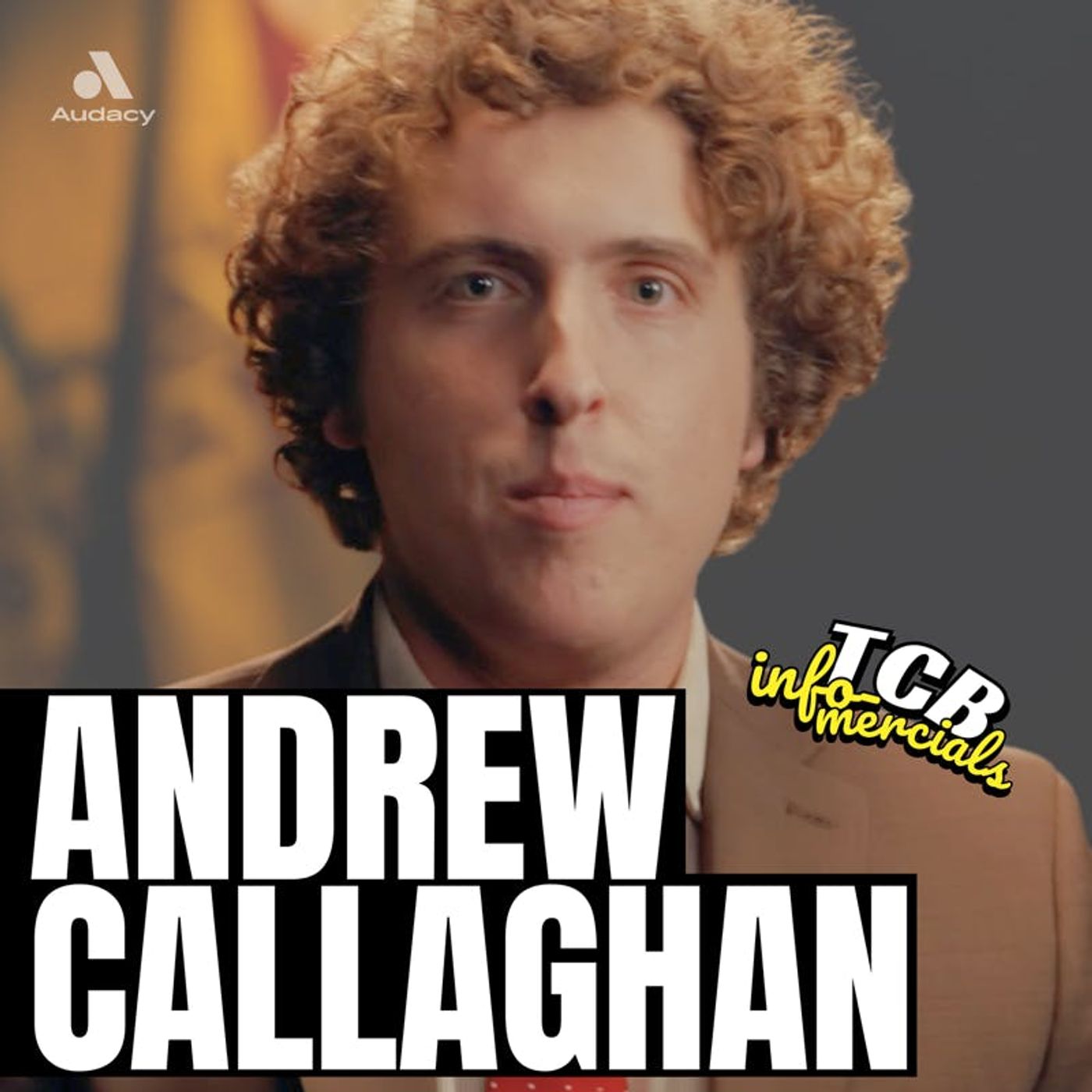
The Commercial Break
TCB Infomercial: Andrew Callaghan
00:50:19
Episode #690: Andrew Callaghan is a true gonzo journalist. Putting himself in the middle of the stories he covers, Andrew has become a leading independent documentarian in the age of "emerging media". With a sly sense of humor and self awareness Channel 5 news (The Youtube Channel he created) is shining a light on the hidden corners of American culture. Bryan & Krissy talk to Andrew about his self funded, directed and produced film "Dear Kelly". Follow Andrew Callaghan on Instagram Watch Channel 5 News on YouTube Support Andrew's Work On Patreon "Dear Kelly" Premiere Tickets Watch episode #690 on Youtube Text us or leave us a voicemail: +1 (212) 433-3TCB FOLLOW US: Instagram: @thecommercialbreak Youtube: youtube.com/thecommercialbreak TikTok: @tcbpodcast Website: www.tcbpodcast.com CREDITS: Hosts: Bryan Green & Krissy Hoadley Executive Producer: Bryan Green Producer: Astrid B. Green Voice Over: Rachel McGrath To learn more about listener data and our p...
Loading summary
Transcript244 lines
- [00:01]
Brian Greene
Hey, it's Friday crazy night let's go Friday crazy night Gonna dance, dance, dance all night yeah, one more time. Friday crazy night Gonna dance, dance, dance all night and be sure to have.
- [00:22]
Andrew Callahan
A wild, wild weekend wherever you are.
- [00:30]
Brian Greene
On this episode of the Commercial Break.
- [00:33]
Andrew Callahan
Podcasting has definitely softened the barrier between consumer and creator in a way that's never been done before, which in a lot of ways is cool. Like, for me, it's been great. I'm not even a podcaster, but social media has allowed me to be closer to my fan base and have like, you know, a more organic feedback loop to where, like when I ask people, yo, what should I cover? Next thing you know, I got 500 suggestions. That was impossible even 15 years ago.
- [00:53]
Brian Greene
Yeah.
- [00:54]
Andrew Callahan
So I'm not going to dog on it too much, but I do think that, like, Trump being on these podcasts was a way of communicating, like, yo, Trump is your friend. Like, this could be you here with us.
- [01:03]
Brian Greene
The next episode of the Commercial Break starts now. Oh, yeah. Cats and kittens, welcome back to another episode of the Commercial Break. I'm Brian Greene. This is my dear friend and the co host of the show, Chris and Joy Hoadley. Best to you, Chris.
- [01:21]
Chris Hoadley
Best to you, Brian.
- [01:22]
Brian Greene
Best to you out there in the podcast universe. I'll start it off saying it right now, ahead of time, as all the kids like to say. Trigger warning. On this episode, TCB Infomercial with Andrew Callahan from Channel 5 News. All Gas, no breaks, quarter confessions. He is a journalist of our time. He is a new media journalist doing a vlog and YouTube. YouTube doing it really well. I think he's one of the, I'll say this, I think he's one of the more important documentarians of our time because he kind of, he just gets into the heart of it. He has a good way of summing things up. And if you haven't seen Channel 5 or all gas, no Breaks, I highly recommend that you go check out the channel. This will be a show where we definitely talk about politics because Andrew's new movie, Dear Kelly is out right now. He had a previously a movie with HBO films called this Place Rules about the lead up to the January 6th thing that happened. I don't know, some people call it a riot, some people call it a tour. But anyway, he had an excellent HBO documentary and now he has self produced, self directed, or Channel 5 has directed a movie called Dear Kelly where he takes it even a step further trying to get into the head of people who have kind of become extreme, who have become super tribalist. And that is not uncommon in our culture today. And I watched Dear Kelly. I got a screener of it. He was nice enough to send it to me. It's out available now. Go to the Channel 5 YouTube page. You can just, you know, go to. I'll put a link in the show notes so you can. You can see it. But Dear Kelly is an excellent movie. It follows around a guy named Kelly who Andrew met chasing kind of Trump and the MAGA crowd around for eight years now. And he met this guy and he really wanted to understand why Kelly had gotten so radicalized so quickly. Seemingly normal guy. And he really gets to the bottom of it. He gets to the heart of it. And then he takes it even a step further by trying to help Kelly piece his life back together. Kelly has lost his family, he has lost his friends, he has lost his house, his job. And I think. And I'd like to talk to Andrew about this and get his thoughts. I have that kind of this unscientific theory that the tribalism that we experiencing today on both sides has a lot to do with a pandemic that is happening called loneliness, desperation, and the need to feel like we're a part of something.
- [03:52]
Chris Hoadley
Yeah. Belong somewhere.
- [03:54]
Brian Greene
And I think Kelly kind of is this in action. This my theory in action, because that's where Kelly finds himself. He loses his house and he finds himself in a really bad way, and he kind of buries himself into a lot of theories and political talk and political action that he feels there's a bad guy and he can help take that bad guy down. But that bad guy is very nebulous. It's just a thing. Right. And so, you know, while we tend not to talk about politics on the commercial break, we've loosened those rules up a little bit. And there's some of you that don't like that. And I get that. So I'm letting you know know right now, this is not the episode for you.
- [04:31]
Chris Hoadley
We're not talking about ice penises.
- [04:33]
Brian Greene
Yeah, we're not talking about ice penises today. No ice penis today. We're going straight. We're going straight for it. But I really feel like Andrew is an important journalist. I think the Dear Kelly is an important movie. And when given the opportunity, I, of course, wanted to invite him onto the show just to talk to him. So this will be a more serious episode of the commercial break. This will be the one. The one episode. Okay. I promise we'll get back to ice penises tomorrow. So Dear Kelly, Channel 5. All gas, no breaks, quarter confessionals, all of that stuff. Andrew has been a journalist since he was a wee bitty little kid in high school. Full ride to Loyal University, a media scholarship, a journalism scholarship. And he has done something very interesting. He is one of these people who is out there. You know, we talk a lot about new media and the fact that there's going to be possibly Joe Rogan sitting at the White House press briefings and how this was the podcast election and all of this. Andrew is very much, I think, a part of this and maybe one of the first to do it, I think, pretty impartially and really, really well to get in there and to document our culture as it's happening without a lot of judgment and put his finger on what's going on. So love him or hate him, Andrew Callahan. And I like him. Andrew Callahan is coming up from Channel 5. It's a new movie. Dear Kelly, we're going to talk all about it. Why don't we do this? Let's take a break, Chrissy.
- [05:58]
Chris Hoadley
Okay.
- [05:58]
Brian Greene
And through the magic of tele podcasting. Wha.
- [06:05]
Andrew Callahan
Bam.
- [06:06]
Brian Greene
You just turned off the show. Wha bam. I just heard half our audience leave. We'll get through it together. I promise. This is worth the why. This is worth the listen. I promise we'll take a break. We'll be back with Andrew.
- [06:21]
Podcast Announcer
Did you know that we have a phone number? Well, we do, and you should call us. Nobody's gonna answer, but you can leave a voicemail for us that we may or may not play on the show. And if that's not the vibe, then just send us a text. Okay? Our number is 212-4333, TCB. So get texting and give us something to talk about, please. We need it. While you're doing that, you can also follow us on Instagram hecommercial break and on TikTok CB podcast. And as always, check out our website, tcbpodcast.com for all of our audio and video content. Speaking of video, we are also posting full video episodes@YouTube.com TheCommercialBreak so go watch them, please. Anyway, now let's hear from our sponsors and get back to the good stuff.
- [07:12]
Brian Greene
Andrew, thank you so much for joining us today. We're really grateful for your time.
- [07:15]
Chris Hoadley
Thank you, Andrew.
- [07:15]
Brian Greene
Thank you.
- [07:15]
Andrew Callahan
Hey, it's a pleasure to be on the commercial break podcast. Thanks for having me. Great time over there in Atlanta. It's a great city.
- [07:21]
Brian Greene
It is a good. Yeah, it is a great city. You were just doing a. Were you talking about at the underground screamo scene here?
- [07:29]
Andrew Callahan
At one point I did an interview with a 15 year old YouTuber named Ginterviews. And like, I get a lot of press requests, but that just like jumped out because he was like 15 year old Atlanta independent journalist. I was like, let's go. He FaceTimes me. He's like wearing braces and he's telling me, he's like, bro, you got to come to the underground screamo rave scene here in Atlanta. He's like, we have 50 person screamo concerts in the underground society beneath the state capitol. And I was like, oh shit, yeah.
- [07:55]
Chris Hoadley
Like at underground Atlanta.
- [07:58]
Brian Greene
Did he get. Did you go? Did you actually go or just do the FaceTime with him?
- [08:01]
Andrew Callahan
It was only 48 hours ago that I learned about this, so I haven't gone yet, but I'm sure that I'll sometime soon.
- [08:06]
Brian Greene
All right, you, you, you come here and I'll take you to the best burger place in the world. Let's go. Okay, Andrew, Quarter Confessions, all gas, no breaks. Now Channel five. You of course did the incredible documentary with. It was really good. I thought it did a better job of any of the. There was so much press and there was so much material and so much documenting of what led up to the January 6th event. Whatever, you know, if you're on one side, it's a tour. If you're on the other side, it's a riot. Whatever you think about that, it certainly was a moment in history that you probably will never forget where you were when you're watching those images go down. And you did such an incredible job of documenting that in a way that even though I know that you and I wanna talk about this too, even though in a way you had to spin it a little bit, it really was. You did a great job of catching the mood of the moment, documenting the culture and the attitudes that were going on right in the emotion and the heat of it without getting caught up in it. Is that a difficult thing to do?
- [09:08]
Andrew Callahan
Yeah, I mean, it generally is, but it's sort of like the 10,000 hours thing when it comes to those kinds of events. Sort of practice makes perfect. Probably. It was hard to keep my composure when I started my career, like around 2018, but after you go to, you know, 50 right wing conspiracy rallies in a row.
- [09:25]
Brian Greene
Yeah.
- [09:26]
Andrew Callahan
You might as well just be going to like IHOP or something. I mean, you just like, everything's normalized. But yeah, I mean, to be fair, I am proud of the HBO project. Like, I didn't Want people to come away from Dear Kelly thinking, oh, my God, this guy hated his directorial debut.
- [09:40]
Brian Greene
Yeah. I didn't, I didn't come away from that with a feeling. I came away from it with a feeling that. And when Dear Kelly is his brand new documentary that has been self produced and self directed, which is so fantastic. But at the beginning, you kind of preface it by saying, hey, listen, HBO made me do some outtakes, some spin outtakes that were on there, but I didn't come away with a feeling that you weren't proud of it. I just. I came away with the feeling that you wanted to come clean a little bit.
- [10:07]
Andrew Callahan
Yeah. And to clarify that, that those orders weren't coming from hbo. They were coming from. Absolutely. Which was Tim and Eric's production company. It was hbo. We didn't even really come into contact with them until three months before the movie was like, you know, gonna be released.
- [10:21]
Brian Greene
Yeah.
- [10:21]
Andrew Callahan
They were just like, this is great. HBO was great to work with the entire time. They still are. You know what I mean? Yeah. But it was more of the studios that funded the film were very concerned about being seen as being on the wrong side of history. Ironically, if you were to look back at, you know, this place rules. Even if you were to look back at it without the editorial notes, you would say, this is a strongly anti January 6th movie.
- [10:42]
Brian Greene
100%. 100%.
- [10:44]
Andrew Callahan
There was so much, like you said, so much press around it, and there was a lot of posturing as to who was going to make the most elite hit piece about that.
- [10:52]
Chris Hoadley
Right?
- [10:54]
Brian Greene
Yeah, 100%. Did Tim and Eric like, is that Heidecker?
- [10:59]
Andrew Callahan
Yeah.
- [10:59]
Brian Greene
Okay. And so they just felt strongly that they wanted to make it clear that this was not in favor of the January 6th events.
- [11:10]
Andrew Callahan
Well, politically we're a bit different. Like, they're more liberals and I'm more of like a leftist, if that makes sense.
- [11:14]
Brian Greene
Yes.
- [11:15]
Andrew Callahan
You know, I don't. I don't believe that you need to necessarily editorialize or like punch down on a lot of conservative people who have been kind of caught up in the political propaganda of the day. I felt like they. And they were okay to work with, but it was more like they felt like we had to draw an extreme line in the sand, like denounce Alex Jones before showing him on camera. I'm like, I think it's enough to, you know, drink Jameson shirtless and have him say a bunch of crazy stuff.
- [11:38]
Brian Greene
Yeah.
- [11:39]
Andrew Callahan
I don't think you need to add in this, like, mean spirited jab. But that's just it's also a generational gap, too.
- [11:45]
Brian Greene
Sure.
- [11:45]
Andrew Callahan
You know, because there was this idea, I think, around 2016, that if you censor people online and if you limit the spread of their voice, their ideas will go away. And you saw that a lot of early censorship on Facebook and Twitter, when it was a Jack Dorsey company, it was like, all right, a lot of these, these flat earthers, these QAnon people, the Trump crowd, we're gonna. We're gonna push them gradually off these platforms in the hopes that their movement will become smaller. But what it actually did is it moved them into more concentrated, tight echo chambers amongst each other. And, you know, that created. We're kind of paying for those mistakes now.
- [12:17]
Brian Greene
I totally agree with you, Dear Kelly. So you. So you do a great, incredible job of documenting what leads up to these events. And Dear Kelly is part two. But it's almost. I don't know, it's almost like a prelog. You are getting. You answer the question. What happened? Now you want to answer the question? How did we get here and in Dear Kelly? I think you do. I think this is really an important piece of film, if I'm being real honest. I don't want to be hyperbolic about it, but it's important because I think you do the best job yet that I have seen of understanding why this tribalism and extremism is happening. I have had this unscientific theory for a long time that loneliness, desperation, and a feeling of wanting to belong to something has been causing this. And you and Kelly, is this in action, it's this in real life, and you really get to the bottom of it. Is what drove you to follow Kelly?
- [13:19]
Andrew Callahan
Well, it kind of actually all started back at the Flat earth conference in 2019 that I covered in Dallas for All Gas, no Breaks. So I post a video of people at the rally talking about various Flat Earth concepts. And most of the comments on Instagram would be making fun of them, being like, I can't believe they think this. But then at the end of every comment section, on every single post, there'd be a comment or two that would say, like, this is my brother. I haven't seen him in five years. He hasn't been the same since that workplace accident.
- [13:43]
Brian Greene
Wow.
- [13:43]
Andrew Callahan
He lost his pension or got taken off a workman's comp and fell off the deep end. Or, man, this is my best friend. You know, he's been an alcoholic or a divorce or. You know, it's very common with older. Older dudes, too.
- [13:53]
Brian Greene
Yeah.
- [13:54]
Andrew Callahan
And so I had it. I Had it in my head for a long time that a lot of the people that you'd see who are the most angry at these kinds of, you know, fringe events are. Had some deep personal tragedy in their life prior to even getting politicized at all. I just never had enough time to actually spend with someone to show that theory in action. And this Place Rules was filmed over the course of two and a half months where I was popping from political flashpoint to political flashpoint, capturing, like, the raw group energy of the crowds at that time. But with Kelly, I had four years to film this documentary.
- [14:24]
Brian Greene
Wow.
- [14:25]
Andrew Callahan
And so I really got to get into the nitty gritty of what that process looked like, not with an emphasis on what particular media he consumed, because that's a lot of times people fall into that trap. Oh, he's a radicalized by this particular platform, like Infowars or something, but way before that, what conditions primed him to be. To be a candidate for radicalization.
- [14:46]
Brian Greene
And he loses his family and he loses his home, and he's, you know, falls victim to unscrupulous lenders. And I also have this unscientific theory, and I think this would hold true for a lot of people our age. Right. Which is when you get older, you become a little bit more isolated. You don't go to as many social events. Life, it gets harder to make friends. And so if you are in a position where. Where you lose things and you lose people and you lose friends and you lose material things, Loneliness is a pandemic. It's a pandemic that I think affects and. But this also goes. This is also true for young men too, I think, especially men, is that, you know, when you're lonely and you don't have anyone to reach out to, and then you. Someone reaches out, or you find something that you connect with, there is a real sense of belonging, and now you have something to fight against. You're fighting the good fight. And I wonder how you feel. Andrew, I, you know, you do such a great job of kind of humanizing Kelly, and I think that's. We need more of that because these are our friends and our neighbors. These aren't strangers. Our friends are neighbors and our family members. I wonder how you feel. I feel that at some point people are going to come home. You know what I'm saying? People are going to come down off the ledge and we are going to have to kind of like, I don't know, deprogram a little bit. We're gonna have to welcome them. And I Fear that all the judgment on both sides is making that really hard to do. What do you. How do you feel about that?
- [16:17]
Andrew Callahan
I think 2028 is kind of the goalpost year because Trump's in office now. So a lot of these people, like, on the Kelly side of things, they don't have that underdog complex that put the battery in their back for so many years.
- [16:29]
Brian Greene
Yes.
- [16:30]
Andrew Callahan
If he does good things for the country, if the bottom line is improved for the working people of America, we're going to report that, too. I hope that happens. I'm not the kind of person who's just so anti Trump that I won't give him credit for positive change in the country. I hope that happens.
- [16:43]
Brian Greene
I agree with that 1,000%.
- [16:45]
Chris Hoadley
Yeah.
- [16:46]
Andrew Callahan
These people will calm down. They'll have access to mental health services. On the other hand, if that doesn't happen, it's also a positive because they're like, oh, we put all this energy into getting this guy in office and nothing good happened. So 2028 is the year. Not only that, these people will either realize that they were doing the right thing or got lied to, but we'll also have fresh primaries for the left and right. So we'll have new personalities, just a total clean slate. Obviously. Obviously, the Democratic Democratic Party is basically irrelevant now.
- [17:14]
Brian Greene
Yeah.
- [17:14]
Andrew Callahan
I'm not even sure they'll have a ticket in the next election. So I think it'll be like conservatives versus independents versus leftists. It'll be great.
- [17:20]
Brian Greene
You feel that strongly that the Democratic Party will fall apart over the next couple of years?
- [17:25]
Andrew Callahan
I think it already has.
- [17:25]
Brian Greene
I think I agree with you.
- [17:26]
Andrew Callahan
Last win. I mean, they're so tapped out from. From the youth and the things that regular young Americans want, which is like being able to afford a house. You know, not everybody's so pent up about what Trump is saying. Most people aren't even politically involved. They like sports and not having to pay a bunch of money for stuff.
- [17:43]
Brian Greene
Fair enough. When you. When in the run up to the election, did you get the sense that Trump was taking this away?
- [17:49]
Andrew Callahan
Honestly, I'm not gonna lie to you. I wanna sound like I'm smart and be like, yeah, I knew it. I thought Kamala Harris was gonna win.
- [17:55]
Brian Greene
Well, I mean, I think that was just the general mood in the room. Right. I think even Trump thought Kamala Harris was. Yeah. But little did we know, there was this kind of undertow that was going on with, I think, people that did not squarely fall in the Democratic, in the Democrat big D camp that they were swinging a different way because they felt like they were left out of the conversation. And I also believe that Trump showing up in new media. New media, whatever that means. Podcast. Podcast. Right, Exactly. It's a podcast presidency. Right. That. That had a big sway on what happened at the voting booth, that people, young people who listen to podcasts, decided that if my favorite podcaster is on board with Trump, I am also on board with Trump. Give it a try. Right? It's something. It's something new. Why not be a voter? Did you get that same sense?
- [18:46]
Andrew Callahan
Yeah, I think the podcast thing was definitely like a campaign psyop to make people think like, oh, this guy's my friend. Because podcasts are already the home of all parasocial relationships as it is. It's just a true thing because podcasts are so organic and long form. You know, it kind of is a little bit depressing sometimes when you're, like, in the car with someone that you're friends with and they play a podcast and they're kind of laughing along, like that's their actual friends. Yeah, it's kind of a sweet thing, but you just think to yourself, like, man, these guys don't even know you exist. Yeah, I always just feel like, man, that's kind of depressing. That's how I feel about comedic and like, more. More bro y podcasts. Like, yeah, what's up, homies? We're in this. And I'm like, yo, this is so crazy because, like, I don't know, it just. Podcasting has definitely softened the barrier between consumer and creator in a way that's never been done before, which in a lot of ways is cool. Like, for me, it's been great. I'm not even a podcaster, but social media has allowed me to be closer to my fan base and have like, you know, a more organic feedback loop to where, like, when I ask people, yo, what should I cover? Next thing you know, I got 500 suggestions. That was impossible even 15 years ago.
- [19:45]
Brian Greene
Yeah.
- [19:46]
Andrew Callahan
So I'm not gonna dog on it too much. But I do think that, like, Trump being on these podcasts was a way of communicating, like, yo, Trump is your friend. Like, this could be you here with us.
- [19:55]
Brian Greene
Yes. A hundred percent. I think you nailed this. You know, podcasting in general is a lonely venture because there's no one responding to you. I mean, you can get certainly good phone calls and all the other stuff, but you're talking into a microphone and you make an interesting point. What's happening on the other end of that microphone? I have no fucking clue. Do people think I'm their friend? Are they taking me seriously? I don't know. And I think. I think you're right about this. Is that this long form, kind of freewheeling, pseudo science, pseudo spiritual bro sphere that's going on certainly helped push Trump over the edge. How are you? How do you feel about Trump giving the new media podcasters a seat at the table when it comes to the White House press briefing room?
- [20:38]
Andrew Callahan
I mean, I think it's great, given the fact that the mainstream press has given him such an unfair shot. I mean, however you feel about Trump, the way they've treated him has been unbelievable. If you look at the way they treat the Biden and Harris campaigns versus Trump, it's like they give him nothing but fluff questions on the liberal side, the moment Trump's in there, they're just dogging on him all the time. At least this press briefing room will now have an opportunity for there to be more organic conversations. I mean, I hope it's not just packed to the brim with manosphere influencers, but if he does open it up to, like, a wide spectrum of independent media like myself and others, that would be sick. That would be fantastic.
- [21:14]
Brian Greene
Would you take a seat at that. That conversation? I think you would be so good at that. How did you get so fucking smart? Dude, I'm being. I'm asking, like, a serious question. What was your childhood like growing up?
- [21:25]
Andrew Callahan
So I grew up in Philadelphia till I was, like, 11. I grew up in, like, center city, around North Philly, in Paramount, and then I moved to Seattle when I was 11. And then. Yeah, I mean, I've always been like. My mom always took me to libraries and was. Encouraged me to be curious and talk to new people, but really, I had this high school teacher named Calvin Shaw who was my journalism professor, and he really, like, taught me that it was cool to be, like, smart and actually be curious about things.
- [21:48]
Brian Greene
Things.
- [21:49]
Andrew Callahan
Because before then, I was only into, like, skateboarding.
- [21:50]
Brian Greene
Yeah, Mr. Shaw. Yeah, Mr. Shaw.
- [21:55]
Andrew Callahan
For that. I was only into, like, skateboarding, rapping, writing graffiti, just, like, around trying to steal beer, things like that. You know, like regulars, regular kids. Freshman year, like, you know, how do we steal as much as many beer kegs at the same time as we can? And then he taught me, like, yo, you can live just as crazy of a lifestyle without the risk and without the. The consequences. And you can, you know, be a journalist and go wherever you want and go to the craziest places in the world and get rewarded for it, you know. And I was like, damn. For real? And he would let me leave school for hours at a time as long as I could report back by the final bell at 3:30 and show him substantial progress on a feature article. No way. He was sick. And then he left the same year that, that I left in 2015 while I graduated. I didn't, you know, drop out. But yeah, I don't know where he's at now. I think he's in Hawaii. I haven't even talked to him since. When somebody helps you so much in life, you almost don't even want to tell them how much they help you sometimes.
- [22:46]
Brian Greene
Yeah, yeah. There's another, there's an old saying that I like that is just some don't meet your heroes. Don't remember your heroes. Don't meet your heroes. But, but Mr. Shaw, if you're out there, I mean, what, he lets you go out of school as long as you were back by the 3:30 bell. What a fucking rock star. That must have had a huge impression on you as a young man. Like, hey, I can. He's let, he, he sees something in me. He's giving me the faith, he's giving me the trust to go out there. My teachers wouldn't even let me out of the front row. I mean, honestly, they wouldn't let me out of the front row.
- [23:17]
Andrew Callahan
He was also like a, he was like a young teacher. Like he was like 37, you know what I mean? Which for like the school, that's pretty young, you know.
- [23:23]
Chris Hoadley
Yeah. I connected with you.
- [23:25]
Andrew Callahan
So like he, he would, you know, it wasn't like I had, it was some like 65 year old professor, you know, like, you know, this guy was cool as hell. And I remember he saw me because I was drawing these stickers on, on pieces, you know, like graffiti stickers on shipping labels on the back of class. Yeah, he like, he came up, he's like, andrew, I know what you're doing. He's like, you might think this is cool now. This is going to be some loser shit when you're 20 years old. He's like, I had so many friends. Take this route. Get out of here. Go to the Occupy tent city, the Occupy Seattle tent city and come back with a story. And I was like, well, holy shit. He was like Spider Man's editor in chief, but not mean.
- [23:58]
Chris Hoadley
Yeah.
- [23:59]
Brian Greene
Wow. That is fucking incredible. That is amazing.
- [24:02]
Chris Hoadley
Teachers can do that.
- [24:03]
Brian Greene
Teachers can do that. And we need more of the teachers like Mr. Shaw. Unless you of the teachers like I had, which are basically nuns that would whack you across the knuckles if you looked in the wrong direction. I mean, I went to Catholic school growing up, and it was just. It was a totally different experience.
- [24:15]
Chris Hoadley
Yeah, you had a bad experience.
- [24:16]
Brian Greene
Yeah, I had a bad experience. Well, I don't. The Catholics haven't had a great run with children. You know what I'm saying? I'm just throwing that. Just throw that out. There is Mr. Shaw. Then tell me about you. So you went to Loyola University down in New Orleans, and then you started. Is that when you started in earnest kind of getting out there?
- [24:34]
Andrew Callahan
Yeah, my first day of freshman year at Loyola. Like, I always knew I wanted to be a journalist, so I signed up for this student newspaper called the Maroon. And it was actually, like, not the most gratifying experience because I wanted to be a gonzo journalist, like, through and through, from Mr. Shah's class on. And also, Vice was in their heyday back then, and they were making journalism cool again for the first time in decades, so they were already laying the foundation. And so, like, probably, if you would have asked me when I was 18, what do you want to do? I'd be like, I want to be a Vice reporter.
- [25:03]
Brian Greene
Yes.
- [25:03]
Andrew Callahan
They would end up kind of selling out by the time I graduated. But digressing, first day I start working for the Maroon, and I'm telling. I'm telling my editor in chief about all these stories I want to do. Like, I want to do something about, you know, voodoo practitioners in New Orleans or the post Katrina gentrification or, you know, all this shit, the history of the streetcar. And he's like. I just remember he sent me an email in all caps, and he said, not relevant.
- [25:24]
Brian Greene
Whoa.
- [25:25]
Andrew Callahan
And I was like, what do you mean? And he told me. He's like, this newsroom has a hierarchy. You're a freshman at this. This is your first week writing for the school newspaper. If you want enough clout in the newsroom to pitch your own stories, you have to just do these bulletins for, like, a year straight. So I had to write about stuff like, English department tries to seek new writers. The Pope visits campus. Hoverboards banned due to safety concerns. School safety officers voice their concerns about vaping in classrooms. Like, straight up boring shit. Yeah, it wasn't until, you know, sophomore, I think, actually, at the end of that freshman year, I quit the newspaper and I hitchhiked alone around the whole country by myself all summer. Just frustration with the newsroom. I was like, you know what? Fuck this. I'm going to Create my own gonzo path by any means. And then I realized at the end of that 90 day hitchhiking voyage, like, you know what? The job at the school newspaper isn't half bad. I'm just going to try to put my foot down and really write what I want about.
- [26:19]
Brian Greene
Sure.
- [26:19]
Andrew Callahan
Write what I. Yeah. So then I got back the next year, my sophomore year, for the school newspaper and I started popping off my own stories. And then, you know, I continued to write for the school newspaper for the rest of college.
- [26:29]
Brian Greene
You are like Hunter S. Thompson, but much more, much more clear. Much more clear headed. You hitchhiked across the country.
- [26:38]
Andrew Callahan
Yeah.
- [26:40]
Brian Greene
So you must have some story. Tell us. Yeah, you must have some story. I mean, Chrissy and I, we, we know a lot of hippies, right? And so we've seen our fair share of hitchhikers and every hitchhiker has a great story. What is the shadiest situation you got yourself in?
- [26:55]
Andrew Callahan
I mean, definitely the scariest situations. I mean, being mistaken for a prostitute at certain trucks. Yeah, those situations are kind of scary. But most people, when they realize you're not a gay prostitute, they get so embarrassed and ashamed that they pretend like they're just joking and they drop you off. It goes pretty well. Definitely the scariest one, just the most viscerally scary one is when a guy picked me up in Tifton, Georgia, which as you know, is Tifton.
- [27:21]
Brian Greene
Yes, Tifton's a truck stop. That's what it is.
- [27:23]
Andrew Callahan
And just he doesn't say a word the whole drive. No. And that was the weirdest one. He was like, he had these wraparound kind of like redneck shades, giant red beard, and was just chewing dip and not saying a word. You know what I mean? He was like, where are you going? And I told him where I was going. I think it was like Macon. And he's like, all right. And didn't say anything. That just scared me because most of the time people are so curious like, oh my God, you're hitchhiking. What's.
- [27:46]
Brian Greene
Yeah, what are you doing?
- [27:47]
Andrew Callahan
Absorb some of your information and figure out what's up with, with you. He just had no curiosities and I, I thought I was going to die the whole time. But then he, he was like, right here is good. I was like, let me out. I don't know why that's so bad.
- [27:59]
Brian Greene
He was trying to decide the whole time whether or not he was going to hit on you. He's like, is he or is he not? Are you guys, are you gay? Because if you are, we can stop, pull over, and have sex. And if you're not, I'm just joking.
- [28:13]
Andrew Callahan
I'm just dropping the funniest prank in Georgia.
- [28:16]
Brian Greene
Yeah, I'll drop you off right here. So, yeah, Tifton, Georgia. That is a truck stop.
- [28:22]
Chris Hoadley
Was it mostly truckers?
- [28:24]
Brian Greene
Yeah, mostly. Truckers have picked you up, huh?
- [28:26]
Andrew Callahan
So, ironically enough, people think that truckers are like the number one hitchhiker picker uppers. But with the. With the. The unions have modernized the trucking equipment a lot.
- [28:34]
Brian Greene
Yeah.
- [28:34]
Andrew Callahan
So now the insurance companies have basically made it so they can't pick up any hitchhikers. They have 24. Seven live feeds connected to their dash cams.
- [28:41]
Brian Greene
I do know this. Yeah.
- [28:43]
Andrew Callahan
They're not always being watched. But if you. Let's say you're in the Teamsters union or you work for a major trucking company, they can. Can to. They can, like, use satellites to. To see your feed at any given time. And if they catch you with a lot lizard or a passenger or doing snorting Sudafed or drinking a beer or even driving more than nine hours at a time or something like that, they will instantly fire you.
- [29:04]
Brian Greene
Yeah.
- [29:04]
Andrew Callahan
And so the only truckers that can pick you up are owner operators, Meaning, like, you somehow have created your own lane, like I have to, where you own the loads you're hauling, which is super rare, but you can spot them because they always have insane trucks. Like, they have trucks, they're painted in colors that no company would approve.
- [29:21]
Brian Greene
Right about this, like. Yeah. Lightning bolts across the side. Yeah.
- [29:25]
Andrew Callahan
Flames and half naked girls and no company name. You're like, all right, this guy will pick me up.
- [29:29]
Brian Greene
Yeah. So it was like multi, you know, like they cost a million dollars. Those huge trucks that have apartments in the back those aren't owned, but usually by the companies. My brother's a teamster, he works for in the movie business, and he drives trucks. That's what he is. He's a fueler. Right. He goes and he refuels everybody around the. The movie scene. And he tells me that the Teamsters, they have, you know, chips or whatever they have at any given moment, they know where he is and what he's doing, and that's just part of the gig. So. Yeah, I can understand that. So I. I think it takes real balls to hitchhike, actually. I've done it once, and it was the scariest. And there was two of us, and it was the scariest experience I had ever had. And I had had some really scary experiences, and I just Got. I was like, yeah, I don't think I'm. I don't think I'm in for this. I don't think I'm down for just riding. No, I wasn't cut out for it. But it didn't, it didn't help that the guy was a total, the driver that picked us up was a total maniac with a lot of road rage.
- [30:22]
Andrew Callahan
I'm just curious, what state were you in when you had that experience?
- [30:24]
Brian Greene
We were in Colorado. When we had that experience, were you.
- [30:27]
Andrew Callahan
Guys in the mountains or in the, in the plains?
- [30:29]
Brian Greene
We were driving from Denver north.
- [30:31]
Andrew Callahan
So you guys weren't in the mountains?
- [30:33]
Brian Greene
No, we were not in the mountains.
- [30:34]
Andrew Callahan
Yeah. Ironically, whenever you cross to a certain elevation or like, you know, whether it be the mountains or the west coast, the culture of hitchhiking changes.
- [30:42]
Chris Hoadley
Oh yeah.
- [30:43]
Andrew Callahan
You know, because like if you were to take the 101 from Seattle down the Pacific coast to Santa Barbara, you're gonna have the best time. It's super safe. Because hitchhiking is a culture there. It's also a culture in the mountains between like Aspen and Vail and towns like that and Basalt. But dude, as soon as you hit flat land, the hitchhiking culture becomes pretty sketchy.
- [31:02]
Brian Greene
It's a little bit different.
- [31:03]
Andrew Callahan
The people who pick you up in Arkansas, like, it's just, it's either people who's like, who think you're addicted to drugs and, and they have like a, like a son or a niece or nephew who's also strung out.
- [31:13]
Chris Hoadley
They want to help you.
- [31:14]
Andrew Callahan
Like you, you want me to take you to the church, like stuff like that? Yeah.
- [31:17]
Brian Greene
Save your complex, pick you up. Yeah, yeah. Someone who's savior complex or wants to preach about God for you for 35 minutes.
- [31:23]
Chris Hoadley
Or have sex with you.
- [31:24]
Brian Greene
Yeah. Or have sex with you or all.
- [31:26]
Andrew Callahan
Those things at the same time.
- [31:27]
Chris Hoadley
Yeah, yeah, true.
- [31:29]
Brian Greene
I'd be lucky if at that age I would have been lucky and anybody wanted to have sex with me. Tell me, tell me about. So, so you go from. You do these like quarter confessions, right? Which is you down in New Orleans and you're kind of cutting your teeth and getting this very unique style of interviewing people, which I would say you're kind of a non obstructionist. You ask a question, you let someone hang themselves with their own words, so to speak. I don't want to say hang themselves always. It doesn't always happen at that time.
- [31:54]
Andrew Callahan
That was accurate. Yeah, yeah.
- [31:56]
Brian Greene
And so now. Yeah, now you're. Now you. Now you're a noted journalist Right. So I think now you know how to operate very well with the microphone and around whoever it is you're interviewing to get what you want out of them or to get them to give you whatever's going on in their head.
- [32:12]
Andrew Callahan
Right.
- [32:13]
Brian Greene
What happened with no Gas? With All Gas no Brakes, which was just I think probably what a lot of people would have started knowing you from.
- [32:22]
Andrew Callahan
I mean, you know, All Gas no Brakes was like the peak fame for the COVID era suit man personality that I developed. So whenever I first started working for All Gas, no Breaks, it was my idea, my concept. But the, the company that funded it, that provided the funding was a parent company called Doing Things Media. It's actually based in Atlanta and they run a network of meme pages, like I think someone called them the Meme Illuminati. So they are able to create viral sensations out of, you know, different pictures they source online. It's a pretty fascinating, like it's almost like a startup for the meme sphere.
- [32:56]
Brian Greene
Very interesting.
- [32:57]
Andrew Callahan
Okay, so they work out. They worked out of a wework in Buckhead, so I went down and met them.
- [33:01]
Chris Hoadley
I know that one well.
- [33:02]
Andrew Callahan
Yeah, yeah. So they pretty much, you know, you know, I'm talking about.
- [33:05]
Brian Greene
Yeah, we do.
- [33:06]
Andrew Callahan
So they agreed to pay me $45,000 a year and buy me a $20,000 RV and hire my friends. So it was a really good deal to start off with. Absolutely the fact that like I had minimal a small following from quarter confessions that I was able to transfer to All Gas. But generally like it was still like amazing. You know, I thought it was very gracious. They took a big risk. The show grew at an unprecedented rate.
- [33:29]
Brian Greene
It was amazing to watch that thing explode.
- [33:32]
Andrew Callahan
I remember that it took six months, man. It went from like, you know, we're talking 10,000 viewers to like 10 million viewers in a very short period of time. And obviously we were doing Merch Drop, so we dropped, you know, T shirts and hoodies and stuff and we'd be making like multi million dollars off these merch drops.
- [33:48]
Brian Greene
Jesus Christ.
- [33:49]
Andrew Callahan
Really? All of a sudden, you know, what I was being offered by them to start off with seemed relatively unfair, of course, given the fact that they weren't helping to produce the show at all. I was doing the planning, the travel, the accommodations, the editing, the deliverables. All they were doing is using their pages to kind of market the show and also providing the base level funding for the RV stuff. So I basically asked for 20% equity and they approved. They were like, you know what, we'll give you 20%. And so I was happy with that for a very long time. Now we signed a movie deal with A24 and Tim and Eric's company to make this place rules.
- [34:24]
Brian Greene
Yes.
- [34:24]
Andrew Callahan
And they wanted us to have a four month period that we blocked off just to make this place rules. So they said, okay, we want. During the 2020 election, this is what A24 said. They said, we want you to only make content for the this place rules for the film. You can't make any digital content for all gas, no breaks.
- [34:41]
Brian Greene
And so doing. Fair enough. Yeah.
- [34:44]
Andrew Callahan
Doing Things Media said, yo, actually Andrew's in a 360 full management contract, so you can't tell him to not make digital content for us. So it became these sort of two corporate entities battling over who I was gonna make shit for.
- [34:58]
Brian Greene
Right.
- [34:59]
Andrew Callahan
And so Doing Things Media told me, you're gonna lose your job if you don't simultaneously produce digital content for us during the shoot schedule for the film.
- [35:07]
Brian Greene
Whoa, whoa.
- [35:09]
Andrew Callahan
And I was like, yeah, what do you do?
- [35:12]
Brian Greene
Yeah, you know what?
- [35:13]
Andrew Callahan
Okay, I will do that if you bump my profit share from 20% up to 50%. So that's 50% profit share for this duration of time plus the salary. And they immediately fired me.
- [35:25]
Brian Greene
No shit. They immediately fired you. Okay, so you're getting like, we have experienced this in our own podcast universe, the many machinations of working in the quote unquote entertainment industry. Right. Is that there? Everybody wants a piece of you. Everyone wants you to work for a little bit less. Everyone wants to take a little bit more. That is a really tough position to put you in, especially since all gas, no brakes is probably the best thing that this company has going besides their meme pages. And to fire you because you just needed four months off really takes some fucking balls, actually.
- [36:03]
Andrew Callahan
Yeah. And a lot of it had to do with the fact that. So the CEO of Doing Things Media, his name's Reed, he's actually a cool guy. He was the one who took the chance, I really don't think. And I, I'm actually on good terms with him now. I think that looking back, he would have granted me that 50% share and he. But he was partnered up at the time with a guy named Max who. And we called him Hollywood Max. I'm actually in the building right now where I first met Hollywood.
- [36:28]
Chris Hoadley
Oh my God, full circle.
- [36:30]
Andrew Callahan
And so I remember he. And I remember we were, when I first met him, we were on the highway passing like the Hollywood Hills and he, he points to the hills and he goes you see that little dot on the mountain? He goes, that's Justin Bieber's house. He goes, how fat's going to be in 10 years, Andrew?
- [36:46]
Brian Greene
Oh, God.
- [36:47]
Andrew Callahan
So it was like, seriously, you couldn't write this guy. And so I think from what I have heard from leaked messages and stuff, he communicated to Reed, the CEO of Doing Things, who owned All Gas. He said, I have so many connections in the comedy world. Andrew is a glorified mic stand. He's replaceable. We don't need him at all. And I think Reed. Reed is like, all right, well, you know, this guy's asking for a lot. You know, he's. He's going on to do Hollywood shit anyway. Let's get somebody else.
- [37:13]
Brian Greene
When this is. When did you do the flat earth thing for?
- [37:18]
Andrew Callahan
That was, I think in the November of 2019, probably six to. No, almost a year before the All Gas breakup. A year and a half.
- [37:25]
Brian Greene
So here is the. And that's like right at the. That's like coming into the heyday of All Gas. No brakes. Right? Okay. So when I first saw Andrew on one of his videos, he was doing the flat earth thing, which then led me down a rabbit hole, which then led to the second episode of the commercial. There's like a strange thing there when you. It was. You weren't an empty suit, you weren't an empty microphone, you were what was making it interesting. You were at that time you were so non obstructionist and letting people hang themselves with their own words that the comedy and the clarity came through. And the way that the show was edited was so brilliantly done that it was like these, you really are gonzo journalists, but you're getting a point across somehow way, shape or form through all this chaos. And that's what I really appreciate.
- [38:13]
Andrew Callahan
Thank you. I also did the editing too, so that was particularly puzzling.
- [38:16]
Brian Greene
No way. Really?
- [38:17]
Andrew Callahan
When you. Yeah, but when you have like people who don't create art and content managing, people who do, they just, they don't understand the streamlined creative process. They don't know how that works. They think that they can sort of just like replace one crucial part of the operation with someone else they know and things will still flow. But the thing is, people aren't mathematical like that.
- [38:37]
Brian Greene
No.
- [38:38]
Andrew Callahan
And you know, they, they attempted to find new hosts for All Gas jailbreaks, but by the time they were going down that road, I had already leaked the information to the New York Times about what had happened. And you know, that got reported on. So I didn't even really need to like, SK. Wait a beat until I launched Channel 5. I launched Channel 5 two months after all gastro breaks ended.
- [38:59]
Brian Greene
And did you find that most of those people jumped right, right over to Channel 5?
- [39:03]
Andrew Callahan
Every single person. You know what I mean? And like I said, I did. I've had great conversations with Reid since then. And, you know, I think we both made some mistakes there. Obviously I felt like their mistake was a bit more significant, but my, I guess ultimatum style. Marketing. Not marketing. My. The ultimatum that I present.
- [39:20]
Brian Greene
Negotiating. Yeah, the negotiation.
- [39:22]
Andrew Callahan
My negotiation style was a little bit abrasive. And I was 21.
- [39:25]
Chris Hoadley
Yeah.
- [39:26]
Andrew Callahan
So probably if I was an adult now, I would have softened it a little bit. But I was like, you know, I was like, I deserve 50%. You guys don't do anything. Like, I think I didn't need that slip in any of those, like, personal attacks.
- [39:37]
Brian Greene
Yeah. But you know, you're. You're 21. We all. If I could go back to 21 and do business all over again, I'd probably still have four of the jobs that I lost over the period of time. Because that's.
- [39:49]
Chris Hoadley
You learn from it.
- [39:49]
Brian Greene
Yeah, you learn from it. And that's what, you know, as we grow, that's what we learn. We go through these iterations and we decide, oh, remember that conversation I had last time with Reed? Maybe I shouldn't make that same mistake again with HBO somewhere down the line. So tell me about Dear Kelly. What is the plan for Dear Kelly? How can we help you?
- [40:08]
Andrew Callahan
I mean. Yeah, so Dear Kelly is just my first self funded, independently distributed film streaming at www.dearkellyfilm.com Links in the show notes. I think it's been up for like 10 days. We got. Or almost two weeks now. We got 35, 000 rentals, which is sick as hell.
- [40:23]
Brian Greene
Holy nice working.
- [40:25]
Andrew Callahan
We're breaking straight to consumer records. The dream is to eventually shop it to a streaming service after we've recouped the initial budget.
- [40:32]
Chris Hoadley
Yeah.
- [40:33]
Brian Greene
Are there any interested. Have you. Do you have any fish? You don't have to tell me all the. The details. I know that's highly classified. Do you have any. Do you have any nipples?
- [40:40]
Andrew Callahan
It's only classified if you work for them. I haven't even had any of these. Any of these conversations yet because like I told you, you know, a lot of these content people who work in the business side of things, they don't even care if it's good or bad. They just want to see numbers. Yeah, that's when you say, hey, guys, a hundred Thousand people rented this. I'm probably gonna wait till we hit a hundred thousand rentals, and then I'll be like, Yo, Netflix, 100,000 people signed up just. Just to see this movie. Imagine how many would sign up for your whole service.
- [41:06]
Brian Greene
Yes, you are smart. He has learned. He has learned, Chrissy. And now we need a new manager. We're going to hire Andrew to manage our next contract negotiate. Andrew, you have done something quite amazing, my friend. We are big fans of Channel 5. I am a big fan of the movie. Dear Kelly, I do believe this is an important piece of film that people should watch. We all need to understand each other a little bit. It's. There are some true bad guys on both sides of the aisle. True bad guys that have no one's best interest at heart. This is not Kelly, and it's not most of the people, I don't think, definitely. Do you agree with that?
- [41:45]
Andrew Callahan
I definitely agree. And, you know, growing up in Seattle, kind of in a progressive bubble, I didn't really understand the mentality of a lot of conservative people until I went to school in the South.
- [41:53]
Chris Hoadley
Yeah.
- [41:54]
Andrew Callahan
And I kind of felt like I was doing this to teach the progressive crowd a little bit of something as well, which is if you have this utopian vision of a new America where everyone is, you know, have access to, you know, equal services and everything's great, you have to also consider what to do with the tens and tens of millions of people in Kelly's position who don't want the future that you want and have valid grievances, especially when it comes to economic stuff that need to be addressed. And also have crippling mental health conditions.
- [42:23]
Chris Hoadley
Pretty much, which is a big problem. Yeah.
- [42:25]
Andrew Callahan
Whether or not they're born with them genetically or it comes as a result of stress imposed by life, there needs to be a clear plan in place to provide mental health services to these people.
- [42:33]
Chris Hoadley
Yeah.
- [42:34]
Brian Greene
You know, there's an interesting experiment that was done a long time ago, and I think it's been repeated many times. They give a rat cocaine. They put a cocaine and food in a bottle, and they say they give them unlimited access to it. And the rat continues to go back to the cocaine until it dies. Then they put a couple of rats, a family of rats, and they give cocaine and food in a bottle. And very rarely do any of the rats go to the cocaine. And the reason concluded would be community people around them, other rats around them. They have some source of solace. They're not lonely. They don't find themselves in a position to get that kind of high because they get it from interaction. And so I think what I take part of what I take away from Dear Kelly is that there are a lot of people out there who are feeling lonely and they're getting some of that interaction and some of that love from the podcast, from the tribalism, from the extremism on both sides, and that we all probably should, you know, put down a fucking Instagram and give our friends a call and say hello.
- [43:32]
Andrew Callahan
Yeah, definitely. I think that's. That's another great thing, too. If you have a family member or friend that's in Kelly's position, definitely don't ostracize them or make them feel even. Even worse than they already do about humanity.
- [43:44]
Chris Hoadley
Right.
- [43:44]
Brian Greene
Yeah.
- [43:45]
Andrew Callahan
I mean, there's so many. There's. There's this big drive to exile and alienate people in that, you know, in the rabbit hole and be like, you're crazy, man. You're a piece of shit. You voted for a fascist. I don't even want to talk to you. Yeah, evidently, that's made things worse. So this is a call for understanding and conversation.
- [43:59]
Brian Greene
I love it. I love your positive spin on this, Andrew. We. You're welcome back here any. And every time that you have something new coming out or we'll just check in with you in a little while. I wish you the best of luck with Dear Kelly.
- [44:12]
Chris Hoadley
Come to Atlanta.
- [44:13]
Brian Greene
Come to Atlanta.
- [44:14]
Andrew Callahan
Come in.
- [44:14]
Brian Greene
And I got an email. I'll hit you up. Yeah, email me and I promise you I'll take you for the best burger in the country.
- [44:19]
Andrew Callahan
All right. Appreciate you guys.
- [44:20]
Brian Greene
Andrew, thanks. Thank you so much.
- [44:22]
Andrew Callahan
Hell, yeah.
- [44:24]
Podcast Announcer
Have you got a hankering down deep in your soul to tell us what's up? Well, I am encouraging you to do just that. Text us at 212-4333, TCB and tell us what's going on. Give us the haps. Tell us the dirty secrets of your life. That's all we've ever wanted to hear. You can also leave us a voicemail at the same number that. That's 212-433-3822. And also follow us on Instagram at the commercial break and on TikTokcbpodcast. And if you wanna see any video episodes, you can go to YouTube.com thecommercialbreak and they are all right there. And if your hankering is not to tell us what's up, but it's for a new sticker, I'm sure there's probably one on the website, go to tcbpodcast.com click contact us and find I want my free sticker. I know you can do it and I can't wait to hear your thoughts on anything and everything. Love you. Bye.
- [45:22]
Brian Greene
Andrew Callahan, Channel 5 News. Wow. I so enjoy my conversation with him.
- [45:28]
Chris Hoadley
Perspective and very interesting.
- [45:30]
Brian Greene
Very interesting.
- [45:31]
Chris Hoadley
Talk to.
- [45:32]
Brian Greene
I don't care who you voted for. I think that we can all agree he's got some. He's making some incredibly intelligent and prescient points and the movie is really good. Dear Kelly. And if you haven't watched this place rules, watch that. Subscribe to Channel 5. Do all of that stuff. Listen, Andrew is a super nice guy. He's very young. He has got an incredible career ahead of him. I think we just talked to a future media heavyweight for sure, if he's not already. So many people, you know, are into his, his work. I know.
- [45:59]
Chris Hoadley
I love him forging his own path, too.
- [46:01]
Brian Greene
Yeah, I think that's the best thing about Andrew is that he's forging his own path. He's learning his own lessons, he's doing his own thing. And he's at 28 years old, I think. I think he was born in 97. What is that? One plus four? Carry the three. I don't know. He's. He's very young. Okay. He's a very young guy. Oh, he's like 20. Yeah, he's 20 something. Anyway, the kid is young and. Well, the guy is young and he is doing great work, so.
- [46:24]
Chris Hoadley
But he's still been doing it for so long.
- [46:26]
Brian Greene
He has. Well, Mr. Shaw was letting him do it at 13 years old or whatever. We didn't even get into the whatever. Seek a sibling induced blah, blah, blah.
- [46:35]
Chris Hoadley
Yes.
- [46:36]
Brian Greene
Yeah, we'll have to ask them that the next time he comes. Anyway, you must go watch, Dear Kelly. You must Links in the show notes. See, that wasn't that bad, was it? We didn't bash on Trump. We didn't bash on anybody.
- [46:54]
Chris Hoadley
Brought up some interesting points, too, about the mainstream media, the way that they've treated each side.
- [46:59]
Andrew Callahan
Yes.
- [47:00]
Brian Greene
And I agree with him wholeheartedly. Not sure I, I'm 100% on board with podcasters in the front row of the pinthouse press.
- [47:08]
Chris Hoadley
I still think it's great, too. I've said it since the beginning. But it does depend on who. Who it is.
- [47:13]
Brian Greene
Yes, 100%. Yeah. And, and Andrew said as much. And so I, I can, I can agree with that. I can agree with that. If it's Andrew Media. If it's Andrew, I'm all about it.
- [47:22]
Podcast Announcer
Please.
- [47:23]
Brian Greene
If it's Alex Jones, probably not, not gonna be so excited about it anyway. Tcbpodcast.com that's where you go for more information about the show. All the show notes, all the links to all of our guests information, all of their to do's, all of their events, all of their tickets, Andrew's movie, it's all there. Just check out the show notes on each particular page. You can go to the website, check that out. All the audio, all the video right there from one location. Also hit the contact us button. We give you free swag. No muss, no fuss. Give us your physical address and we will send you a sticker, a hat, a T shirt, a cup, a mug, a broken sock from Brian.
- [48:05]
Chris Hoadley
Sock with a hole.
- [48:05]
Brian Greene
A sock with a hole. These don't have them but man, I, I go through more socks. Really I do. I'm a heel walker. I'm a heel walker. So yeah, I can, I can't keep a pair of socks more than two weeks. We have to buy socks like Amazon has is on subscription. I just keep getting socks and I go through them. I throw away more socks than I know what to do with anyway. TCB podcast.com you know how to do it. 212-4338-2382-2212-4333 TCB questions, comments, concerns, content, ideas. We do take them all. Voicemail or text message will get back to you. Add the commercial break on Instagram, TCB podcast on TikTok and YouTube.com they commercial break for every single episode of the commercial break now available on video and this episode included. You want to see Andrew's young smiling.
- [49:04]
Chris Hoadley
Face at his brand new headquarters.
- [49:06]
Brian Greene
And his brand new headquarters. Check that out. All right, well best of luck to Andrew on his movie Chrissy. That's all I can do for now.
- [49:12]
Chris Hoadley
I think so.
- [49:13]
Brian Greene
I love you.
- [49:14]
Chris Hoadley
I love you.
- [49:14]
Brian Greene
Best to you and best to you out there in the podcast universe. Thanks for sticking with us. Until next time we do say, we must say we will say goodbye. Sa. I have it.
- [49:59]
Andrew Callahan
Sa.