← The Commune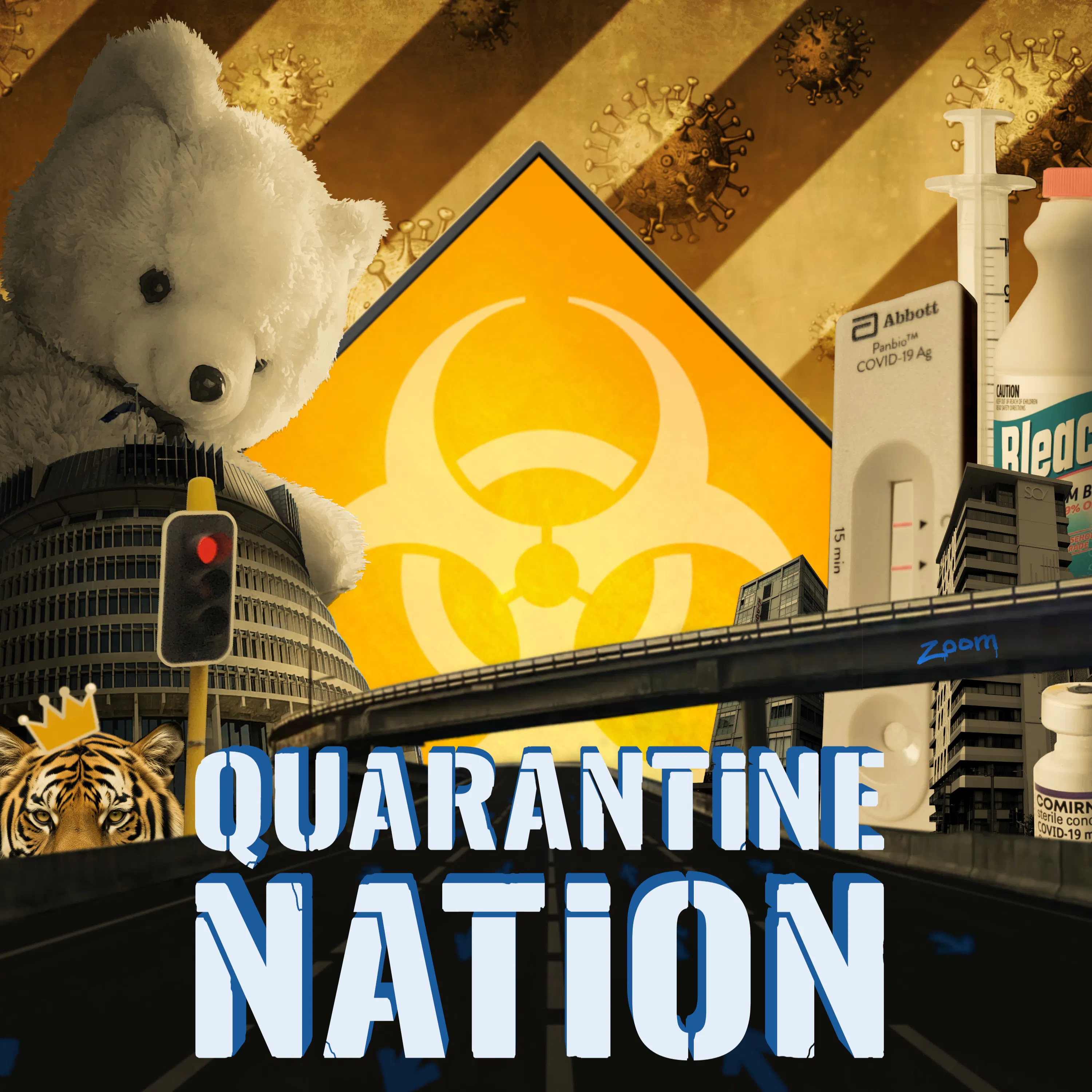
The Commune
Introducing: QUARANTINE NATION Ep1
00:48:56
A lethal virus. A drastic lockdown. A nation turned upside down. Try the new series from the makers of The Commune.
Loading summary
Transcript274 lines
- [00:00]
A
Hi, Adam here. If you liked the commune, there's a new eight part series Eugene and I have been making for staff over the past year, which you might be interested in. It's called Quarantine Nation and, well, rather than giving anything away, we're just going to drop the first couple of episodes into this feed and see if you like it. So, without further ado, here's episode one of Quarantine Nation, made with the support of Nzonair.
- [00:31]
B
If someone was ever making the movie of the pandemic, this might be one of those opening scenes.
- [00:37]
A
On a Grey Wednesday in November 2019, a small crowd gathered in a park in Wellington in Aotearoa, New Zealand. It was a low key event, but the Prime Minister, Jacinda Ardern, was there and some of her cabinets. Also present an esteemed historian, civil servants, including a senior official called Ashley Bloomfield, some iwi representatives, some local MPs, plus some epidemiologists, people who are expert in diseases and how they spread. One of them was this guy.
- [01:12]
B
So you've got enough there, have you?
- [01:14]
C
Yeah.
- [01:15]
B
Ok, that's good.
- [01:16]
A
That's Michael Baker and. And this was before he became famous enough in New Zealand to be thanked by strangers in the street and also to receive death threats. Anyway, the gathering at Pukeahu War Memorial in Wellington was to unveil a plaque marking the centennial of New Zealand's experience of the devastating 1918 influenza pandemic.
- [01:40]
B
And we'd been advocating for having a proper influenza memorial. This virus swept through the country in six to eight weeks and it killed almost 1% of people.
- [01:50]
A
It's estimated 9,000 New Zealanders died in the outbreak, a quarter of them mori. But plans for the centennial memorial got delayed and the unveiling finally happened on November 6, 2019. The memorial read in part, e korera warato e warewaretia te reo mori for they will never be forgotten. The Prime Minister read from an account by someone who was there in 1918.
- [02:20]
D
Everyone was sick, no one to help. They were dying one after the other.
- [02:25]
A
The organisers had also pinned up reproductions of antique public health posters with the advice that had guided our great grandparents through one of the most lethal events in New Zealand history.
- [02:37]
D
Influenza.
- [02:38]
B
Cover each cough and sneeze with a handkerchief. Avoid crowds.
- [02:42]
D
Do not spit on floor. If possible, walk to work.
- [02:45]
A
The plaque was unveiled, the ribbon was
- [02:48]
B
cut by Jacinda o'. Dern.
- [02:51]
A
But what stayed with Michael Baker from that day was something that happened shortly after the unveiling.
- [02:57]
B
We were sort of mixing and mingling afterwards with some of the cabinet ministers and local MPs, they were fairly dismissive. They said, oh, we're not going to get another pandemic like that, are we? And, and I remember looking up at the sky and if someone was ever making the movie of the pandemic, this might be one of those opening scenes. You almost imagine that you're going to see some early premonition.
- [03:25]
A
Perhaps a cloud passes in front of the sun, a mirror cracks for no reason, or there's something up with the animals.
- [03:33]
B
Maybe the carcass will be flying backwards or something because.
- [03:36]
A
Yeah. November 6, 2019. While senior politicians are chatting at the unveiling of a plaque in Wellington commemorating a tragedy from long ago, we now know that 10,000 km away in the city of Wuhan in Hubei Province, China, this is almost exactly the moment when a virus that had previously only been passed between animals made one of its first leaps into humans. And six weeks later, this as yet unnamed virus would cause an identifiable cluster of cases linked to a food market that sold wild animals that were kept alive in cages of a new serious respiratory illness.
- [04:19]
B
At that very moment, COVID 19 SARS COV2 was emerging in China and starting to infect people.
- [04:26]
A
And within a few months. Good evening on March 19, 2020. Cabinet met this afternoon to one minute before midnight.
- [04:40]
C
From 11:59pm tonight, the Prime Minister shut the gates. We will close our border to any
- [04:46]
D
non residents attempting to travel here.
- [04:49]
A
Tourists, international students, migrant workers, all no longer welcome.
- [04:55]
C
New Zealand shutting its BoR. That's huge. Obviously never happened before in the country's history, but by the standards of world news, at this moment, it's just another day. All over the planet, a virus is spreading. People are dying and countries are scrambling to respond. In China, Italy, Spain, Iran, places where the virus got an early start, deaths are already in the thousands. Other countries have much lower death tolls. 14 in Sweden, 149 in the US 214 in the UK. But even there numbers are climbing fast. Other countries again are more like New Zealand and are just getting started. First ever. Covid cases have recently been recorded in France and Tanzania, in Uganda and Bolivia, in Guernsey, in Vatican City. And world leaders and international health officials are responding in a variety of ways.
- [05:55]
A
It's one person coming in from China
- [05:57]
B
and we have it under control.
- [05:59]
A
Go home and stay home. This is what we all need to be doing.
- [06:03]
C
Some countries are in lockdown, others are thinking about it. Others have already said they're just not going to do that.
- [06:10]
D
The country's not imposed lockdown measures, but the city of Stockholm will make efforts to stop crowds in restaurants and other establishments.
- [06:19]
A
As viral spread goes, Aotearoa is a bit of a late starter on March 19, 2020, the day Ardern announces the border is shut. It's just three weeks since our first reported case and two weeks since the first reported case of community transmission. In total, 28 people have it that we know of and no one has died.
- [06:40]
C
But the sudden slamming shut of our border makes it pretty obvious that New Zealand may soon be looking at a lockdown of its own. And the decisions that are taken over the coming days will change the country forever.
- [06:59]
A
So here in episode one of Quarantine Nation, we're going to figure out how on earth we got here. What was the path from the complacency of November 2019 to the panic of March 2020?
- [07:13]
B
The year is 2020 and a deadly pandemic is raging all across the.
- [07:19]
A
We are locked inside.
- [07:20]
B
We are terrified.
- [07:21]
D
We are baking sourdough.
- [07:24]
A
Okay, a quick word about our theme music. You'll meet the composer later in this episode. He's a bit of a genius who wrote a COVID 19 song that went viral. So, yeah, we asked him to write our theme tune. And honestly, the chorus is a banger.
- [07:36]
D
We've been living on zoom in our
- [07:38]
B
living room since the lockdown was declared
- [07:43]
D
Society's upended Our commitments are suspended it's
- [07:46]
B
all unprecedented and nobody's prepared for a quarantine nation Cause the government ordered that
- [07:52]
D
the borders close It's a quarantine nation
- [07:56]
B
how do we stop the spread? Nobody knows in the Quarantine Nation it
- [08:03]
A
started in China but now it's here
- [08:06]
B
in the Quarantine Nation. The global situation demands an escalation in the Quarantine Nation.
- [08:13]
A
Oh yeah. I'm Adam Dudding.
- [08:21]
C
And I'm Eugene Bingham. And like, Jack just sang it. This is Quarantine Nation, an eight part, mostly serious history of New Zealand's pandemic years, produced for stuff by Te purongo Productions. Episode one, Contagion as we record this, it's early 2026, almost six years now since Jacinda Ardern shut the border and New Zealand started picking its path through a global pandemic. Some of us would rather forget about the whole thing. It's left a lot of scars. Perhaps better to let it rest for a few decades than let the historians pick it apart. But you know, as much as we might wish it, speaking of COVID 19,
- [09:01]
A
New Zealand's Covid years aren't over yet
- [09:04]
D
very, very much suffering hospitality since the
- [09:06]
C
COVID 19 lockdowns when Covid hit during
- [09:09]
A
COVID because of COVID the COVID overhang
- [09:11]
D
the impact of COVID we've had a
- [09:13]
B
massive post Covid hangover with post Covid Covid hangover Massive Covid hangover.
- [09:17]
C
As you've seen, it doesn't matter what subject the economy, employment, healthcare, education, politics, the prevalence of conspiratorial delusions, the price of butter, the state of our mental health, price of flights to cargo, the state of our individual relationships, careers and health. Wherever you look, you'll find traces of our time with COVID which is why we thought now is the right time to look back and take a closer look at what happened.
- [09:40]
A
So the day Jacinda Ardern shut the border, Eugene and I were both working in the Auckland offices of the national media company staff. COVID 19 was becoming the only story in town. So we decided to launch a daily podcast focusing on it. Self isolation's gonna be a chill. The pitch was cheap and cheerful. We'd round up the day's headlines from home and abroad, chat with some staff colleague about their latest Covid story, and then directly interview someone notable or a scientist or politician or whatever.
- [10:09]
C
But also, we wanted to leave a bit of space for the stranger and funnier elements of this global catastrophe. The comedy songs and silly videos that were springing up the new lockdown fads like baking sourdough or binging terrible Netflix shows. A bit of chat about those quirky conspiracy theories that seem to be floating about more than they used to. That was the plan. And that's roughly what happened.
- [10:34]
D
Coronavirus New Zealand A Daily Stuff Podcast
- [10:38]
A
welcome to Coronavirus nz. I'm Adam Dutting.
- [10:42]
C
And I'm Eugene Bingham.
- [10:43]
A
We launched the podcast with the highly imaginative name Coronavirus NZ a few days later. Right now, we're recording from my spare room and half the equipment is borrowed from Eugene's trail running podcast. And we kept making it. From our respective bedrooms in different corners of Auckland, all through lockdown and beyond, we track the serious stuff.
- [11:03]
C
So there are 11 new cases of coronavirus in New Zealand.
- [11:06]
A
The less serious stuff. An Australian astrophysicist has been admitted to hospital after getting four magnets stuck up his nose. But the podcast was also a bit of a diary of one of the strangest times in our lives, in everybody's lives.
- [11:21]
C
I'm getting used to hearing Adam's dog barking and the kids coming in.
- [11:24]
A
Back then, things were moving so fast, it often felt impossible to get a sense of the bigger picture. So in this 2026 podcast, we're leaping back into those strange days to see if we can make a bit more sense of it this time round. And this time we were actually able to leave our bedrooms. So we've also caught up in person with some of the people who shaped the country's Covid response.
- [11:47]
B
We went 10 out of 10 straight away. If you can slow the transmission, you can manage it better.
- [11:52]
A
As well as those whose signs saved lives. So the DNA molecule is pulled through a hole or who explained the science to the rest of us.
- [12:00]
D
Alright, so what is a vaccine? So a vaccine is really just taking.
- [12:04]
C
We talked to the people who'd kept us informed about what was happening around the MOTU and decided to make a
- [12:09]
A
documentary about the lockdown as well as
- [12:11]
C
people who inspired us.
- [12:12]
A
The first thing I did was buy an electric piano.
- [12:16]
C
Well, who cheered us up.
- [12:17]
D
And I'd smeared lipstick all over my face and had my tiara sort of falling off.
- [12:22]
A
And we heard from people whose lives would be changed by Covid, sometimes in deeply unpredictable ways.
- [12:30]
B
It got mentioned on the BBC.
- [12:32]
A
I think there's a movie in Ireland
- [12:33]
B
that wanted to use bits of it.
- [12:34]
D
So we made 10 peanut butter and jelly sandwiches so we could walk through the nights.
- [12:39]
A
There was a loud crack and Monty, well, Monty was another statistic of COVID
- [12:46]
B
Look, I don't need a medal and I don't want you guys to, you
- [12:49]
A
know, suggest that I should get one, but if we're going to really understand the story of New Zealand's pandemic and that path towards slamming the border shut, we're going to have to rewind just
- [13:00]
E
a little
- [13:02]
A
to a time when no one on Earth had yet heard of a virus called SARS CoV2 coronavirus and the respiratory disease it caused, which would eventually be named coronavirus disease 2019. COVID 19 for short.
- [13:16]
D
COVID 19.
- [13:17]
E
COVID 19. COVID19.
- [13:20]
C
The last moment of innocence was December 2019.
- [13:24]
D
Late 2019 was a wonderful time, because in December 2019 I turned 50.
- [13:30]
C
This is Hilary Barry, the TV presenter.
- [13:33]
D
So for my 50th, I decided that we would have an overseas trip with
- [13:39]
E
the kids in December.
- [13:41]
C
We'd just come to the end of the horrific measles epidemic in samoa. And that's Dr. Helen Pertussis Harris, a vaccines researcher at Auckland University.
- [13:52]
A
I'd just completed what would be the
- [13:55]
D
last in person who meeting and had
- [13:59]
A
met some of my kids over there
- [14:00]
C
to do a little holiday in France.
- [14:03]
A
December 2019.
- [14:05]
B
I've just come back from the Edinburgh
- [14:09]
A
Fringe Festival performing a show over there.
- [14:12]
C
This is Jack Buchanan, an actor and musician and yes the composer of our. Awesome. Thank you.
- [14:18]
B
And I've just done another show in
- [14:19]
A
Wellington and I've moved back to Auckland
- [14:21]
D
and I'm looking for work.
- [14:23]
A
I'm unemployed but optimistic.
- [14:27]
E
So by the end of 2019 I had a big focus on the extractive industry's transparency initiative.
- [14:33]
A
You know that voice. Helen Clark, New Zealand prime minister for nine years, head of the United Nations Development Program for eight and since 2017 she's been doing this and that.
- [14:44]
E
I'd just taken on being the chair also of the Partnership for Maternal, Newborn and Child Health. I was co chairing a Lancet World Health Organisation UNICEF commission on Children's health which was about to report had a lot of things on the go like that.
- [15:01]
D
Yeah I was a sister at that point so I managed a team of about 30.
- [15:06]
A
This is Jenny McGee, a Kiwi born nurse who'd been living in London for 15 years and who at the end of 2019 was working in intensive care at St Thomas Hospital.
- [15:16]
D
St Thomas Hospital, big hospital in central London. In December we launched our plastic report.
- [15:22]
A
And this is Dame Juliet Gerrard who was then chief science advisor to Jacinda Ardern. A job with a seriously wide brief from advising the Prime Minister on plastics,
- [15:33]
D
a long term strategic piece to make sure that we did a better job with our waste plastic to responding to
- [15:38]
A
a disaster like the lethal eruption of Whakare White island that same month.
- [15:42]
D
The eruption happened at 2:11 today. Obviously dropped everything and spent the week in the bunker supporting the volcanologists to get the advice into the response for recovery of those bodies. So it felt like we'd had a pretty intense year and were hoping for a wee break over Christmas.
- [16:00]
B
You know we're doing the stuff that we do, social services, housing.
- [16:03]
A
This is Hone Haruera, the famous activist and in December he was doing the sort of stuff he usually gets up to in Tetai Tokoro, helping people who
- [16:12]
B
don't get assistance from social services people living on the margins running our own rebel rugby league competition.
- [16:19]
D
So I was on maternity leave during that time.
- [16:22]
C
And last new voice for now, this is Professor Gemma Geegan, a Scottish born microbiologist specialising in viruses who in December 2019 wasn't just the mother of a nine month old. She was also on the brink of relocating her young family from Sydney, Australia to Ootiporti, Dunedin in New Zealand after being offered a position at Otaga University.
- [16:44]
D
We were getting ready to move countries again. And kind of oblivious to what was to come really.
- [16:50]
C
And Gemma can place the precise moment that her 2019 pre Covid state of innocence ended forever.
- [16:57]
D
It was New Year's Eve 2019. I have very vivid memory of this because we were actually Indonesian for Christmas and it was just about that time that New South Wales had really bad bushfires and the sky in Dunedin was kind of orange because of the smoke. We were brand new parents trying to make it to midnight, watching TV and I was doom scrolling Twitter because Twitter was still cool then. And I remember seeing the a PROMED memo. Promed is this entity that alerts the world to new cases of an infectious disease and often they don't amount to anything. But I remember seeing this. Someone had retweeted it and it said four cases of an undiagnosed pneumonia at Wuhan Central Hospital. And you know, didn't really think much of it. But then in the next few days there seemed to be a lot more traffic around this because cases were beginning to climb. Chinese health authorities are still working to identify the virus behind a pneumonia outbreak in the central city of Wuhan. By the time I got back to Sydney, I was getting calls. Health officials have ruled out common respiratory diseases such as influenza, avian influenza and another virus. And they added that no obvious human to human transmission happened.
- [18:23]
A
Juliette Gerrard, Jacinda Ardern's chief science advisor, gets a bit of the break she'd been hoping for over Christmas. She spends it on Great Barrier island, but she still keeps one air on the news. And for a while the top story is those Australian bushfires.
- [18:38]
D
Lots of people were really focused on the sky going a funny orange colour. So the sky had gone orange and something was up in Wuhan, so I didn't have much more informed knowledge than that.
- [18:49]
B
In central China a man has died
- [18:51]
A
following an outbreak of an unknown pneumonia
- [18:54]
B
like virus, which officials say comes from
- [18:55]
A
the same family as the deadly SARS virus.
- [18:58]
E
We began to see what was happening in Wuhan.
- [19:02]
A
Helen Clark, with her close interest in frankly most things happening in the world, has been keeping an eye on this new virus out of China from the moment it was was first reported in late December.
- [19:14]
E
So by the time I left to go to the World Economic Forum in Davos, which I've been doing for a lot of years now, in mid January we were well aware that something was happening in China which was of potential great significance.
- [19:32]
D
It's been confirmed that a new virus that has killed three people and has been spread spreading across China can be passed from person to person, not just from animals.
- [19:41]
A
Back in New Zealand, Juliet Girard receives a worrying phone call.
- [19:46]
D
The time that I became acutely aware that it could be different from some of the other diseases that bubble up and then disappear again was when I got a call from the chief science advisor for the uk, Patrick Valance. He was just doing the ring round to see what everybody else was hearing and they had a lot of preparatory work done in the UK on what to do in the event of a respiratory virus pandemic. I rated his opinion very highly because I'd been to visit that team and we talked about this exact scenario.
- [20:15]
B
The outbreak centres on the city of
- [20:17]
A
Wuhan, where the source is thought to
- [20:19]
B
be a seafood market.
- [20:21]
D
There's a few things that people who know about pandemic diseases fret about, and one is when medical staff start getting sick. And those sorts of things were starting to happen. So that was early January, and after that we kept in close touch, we being a small group of international chief science advisors, tonight at six health checks
- [20:42]
C
at Heathrow as a precaution against the spread of a new virus from China.
- [20:47]
E
When I was at Davos, at the end of one of the health related meetings I was at, we were asked, would you like to stay on to hear about the emergency committee meeting of the whole on the COVID 19 virus?
- [21:00]
D
The world Health Organization was starting to put out alerts, so there was this growing sense that something big might happen, but no real sense of how likely that was.
- [21:11]
E
By that week, Wuhan had finally been shut down and we began to see those quite dramatic hospital scenes. So from then on, I knew this was serious.
- [21:24]
C
The main symptoms include difficulty breathing, fever
- [21:27]
B
and coughing, but in vulnerable people, especially
- [21:30]
C
the elderly, it can lead to organ
- [21:32]
B
failure, pneumonia and death.
- [21:34]
C
Our medical correspondent conversations are kicking off inside New Zealand too. Part of the purpose of being a science advisor to the PM is that you can tap your networks to pull together the information and opinions and advice that the government might need. So a tribe of experts began to coalesce. There are modellers, people crunching the numbers to make predictions about how the disease might behave if and when it arrived. That includes people like Michael Baker.
- [22:00]
B
Yeah. I was invited to join the COVID 19 Technical Advisory Group and it had its first meeting at the end of January. My impression overall at that stage was the Ministry of Health was not doing very much about this particular threat and that I did find quite alarming. The big unknown was how controllable was this virus because we knew it was going to sweep the world. There were lots of very good papers coming out by the end of January
- [22:28]
C
saying that Juliette Gerrard is also talking with Sean Hendy, a physics professor at Auckland University.
- [22:35]
D
I knew Sean anyway. He was a colleague and a friend and he had done some work thinking about how we might prepare for a pandemic. Modelers are very good at just putting a few numbers together and coming up with some scenarios. So he was calling me saying, these scenarios don't look good.
- [22:52]
C
And Julie is also talking regularly with various science communicators, people who could help keep the media and the general public up to speed.
- [22:59]
D
Kia ora, everyone. We're seeing lots of feedback and questions coming through on social media about COVID 19. Early on, Michelle Dickinson had a big role. We did a Facebook video with the PM. So I'll start with that. COVID 19 is a virus. It's part of a coronavirus family and there are lots of viruses that had an extraordinary number of views just to try and get the information that had been synthesized by the WHO out of Wuhan out to the public in an accessible form. And then Suzie Wiles, obviously, Sean Hendy, Michael Baker, that was in the early days. And then the tribe grew as we moved through. Lots of the science communicators had quite different takes on the early days because everything was so uncertain. It was chaos, chaotic set of conversations with a mountain of different people.
- [23:47]
A
There might be some chaos, but there are also some clear lines about who pulls the levers of power.
- [23:53]
D
So the person who had legal powers is Ashley Bloomper.
- [23:56]
B
My name is Dr.
- [23:57]
D
So as director General of Health, he had very specific powers given to him
- [24:01]
A
in legislation, other big calls, borders legislation. That's down to the political leadership.
- [24:09]
D
Obviously. I had the ear of the pm, which gives you influence, and with that comes a direct line to lots of other senior officials who need to be in that loop. I sucked up as much information as I could from as many people as I could and then I kept key people informed. So Ashley.
- [24:27]
A
Ashley Bloomfield, Director General of Health, Caroline. Caroline mcilnay, Director of Public Health, Ian Ian Towne, Chief Science Advisor to the Ministry of Health. Brooke Barrington, Head of the Department of the Prime Minister and Cabinet, dpmc, Raj Raj Nana, Ardern's Chief of Staff and
- [24:44]
D
whoever else needed to know. Depending on the day and day by
- [24:47]
A
day, it's becoming clearer that this disease is not going to be something that just bubbles up and fades away. Now to growing concerns about the deadly coronavirus officially hitting the US.
- [24:59]
E
According to the CDC, the man in his 30s flew home to see by the end of January, I think the 30th of January. Dr. Tedros.
- [25:08]
A
Helen Clark's referring to Dr. Tedros Ghebreyesis, Director General of the WHO, was able
- [25:14]
E
to get a recommendation from the emergency committee of the WHO that there should be a public health emergency of international concern declaration issued.
- [25:24]
A
For Michael Baker, watching things unfold from New Zealand, this declaration of a public
- [25:29]
B
health emergency of international concern, a PHEIC
- [25:33]
A
or fiac, is a big deal and not a moment too soon.
- [25:38]
B
If they'd wait any longer, it would have been really alarming.
- [25:41]
A
China was reportedly very slow to hand over crucial data to the who. Clark agrees. The FIAC arrived late.
- [25:49]
E
It took a trip to China to remove obstacles to that and that was a week of inaction which the world didn't need.
- [26:02]
C
By now, the virus has properly touched down in Britain.
- [26:07]
D
It's inside this hospital in Newcastle where two patients from the same family are now in isolation and being treated by specialist NHS staff. The race is on to work out who's had contact with the infected patients.
- [26:20]
C
Covid's just arriving in the uk, but Jenny, the Kiwi born intensive care nurse working in London, she's just leaving. Every northern winter she pops back to New Zealand for a few weeks of summer with family. And at this point, travel from the UK to New Zealand is still pretty normal. Once here, though, she's keeping an eye on the UK.
- [26:40]
D
I am on lots of WhatsApp groups with my colleagues and so when I was in New Zealand, there was lots of chat about what was going on. The first cases of COVID were coming into the uk.
- [26:51]
C
A few days later, New Zealand announces some travel restrictions on people arriving from China. And a few days after that, February 5, New Zealand arranges a repatriation flight, bringing New Zealanders trapped in Wuhan back home. It's about this time that a brand new word enters the world's lexcon.
- [27:10]
A
We have a new name for the coronavirus.
- [27:13]
E
The World Health Organization has officially called it COVID 19, CO for corona, VI for virus, D for disease and 19
- [27:20]
A
because it started last year. By now the whole world is talking about COVID But Clark says the gravity of that WHO declaration, The FIAC of January 30th just wasn't being taken seriously enough.
- [27:35]
C
40,000 people have been infected worldwide.
- [27:38]
E
February was the critically lost month when there was the fiac, as we call it, for short declaration. But no one really reacted much.
- [27:48]
A
On 19 February, Clark and others working on a children's health initiative are at lunch with Dr. Tedros and and we
- [27:56]
E
asked about what was happening with COVID 19 and he said to us, and this had a chilling effect on me, he said, quote, there is a narrow window of time to avert a pandemic, but it is closing fast. That was the 19th of February. We went away thinking this looks bad
- [28:20]
C
because the genetic code of the virus was swiftly made public. New Zealand is able to start testing for cases here the moment they start arriving in late February. Virologist Gemma Geegan is still settling into her new job in Otago, but she has a ringside seat to the science.
- [28:37]
D
We were in this position where we could look to see what's happening around the world and it suddenly became very clear that genomics could be done so rapidly that the insights that you gain from genomics could be used to make decisions. And so when we had our first case at the end of February, ESR were able to generate that genome straight away.
- [28:59]
C
And one of the people at ESR who was assembling the equipment, the ingredients and know how required to pull the virus apart and take a look inside
- [29:06]
D
was, I'm Lauren Jelly, I work at the PHF Public Health Forensics, formerly known as esr. I'm the technical lead in clinical virology.
- [29:16]
C
But before she got to work on sequencing the full genome, Lauren was racing to prepare some of New Zealand's very first polymerase chain reaction tests. Pcr. The first PCR was ready by early February and at this point it was a seriously manual and complicated process, made even harder by the fact that Lauren had to put on all sorts of equipment and use a special high risk lab to deal with this alarming new bug.
- [29:42]
D
You know, it's a novel virus. We've got no vaccine, we've got no antivirals, so it was a high risk sample and we took it into PC3.
- [29:52]
C
PC3, that's Physical Containment 3, a lab that's made to handle really serious pathogens.
- [29:58]
D
We've got our own breathing apparatus, we've got the safety cabinet all set up, plus you actually have to get changed before you go in and shower out as well. And you know, you're holding in your hand this sample and it's like, this could just change New Zealand. If this is positive, it means that it's here, you know, Actually, that very
- [30:19]
C
first time in early February, as Lauren and her colleague raced against the clock to get the test done in time for a scheduled press conference, was actually negative.
- [30:28]
D
Phew.
- [30:29]
C
But within a couple of weeks, that changed. Eventually, after dozens of negatives, a test came back positive. Covid was Here.
- [30:38]
D
Yeah, I think everyone was just a bit sad. Yeah. Just knowing what was going to come.
- [30:46]
A
Yeah. So late February, New Zealand discovers that the virus has officially arrived here. Someone who'd been in Bali returns a positive test.
- [30:55]
C
Welcome, everybody. You will now have learned that New Zealand has become the 48th country to identify a case of COVID 19.
- [31:06]
A
Helen Clark would later co chair an independent international panel looking at the nitty gritty of the world's early response to COVID 19. And she says, even though New Zealand was getting a lot right, including progressively tightening the border, at this point, we, along with so many other countries, are still underestimating the virus.
- [31:27]
E
Our own country, like many, was still in a state of denial about the severity of what could happen on 28th February, when our own Ministry of Health issued a press statement saying the first case of COVID 19 has been detected in New Zealand. It is not expected to lead to widespread community outbreak.
- [31:50]
C
It's very unlikely that we'll get a sustained community outbreak.
- [31:53]
E
What were they thinking? What was the world thinking? This was a respiratory virus. It spreads through people breathing the same air. That's the state of denial the world was in. So February was a lost month. And then we were in full panic mode by mid, late March.
- [32:19]
C
But before we get to the panic mode of mid, late March, there's something that didn't happen in late February 2020 that's worth talking about. Juliette Gerard explains.
- [32:29]
D
It's in that window. We dodged a bullet. Lots of university programs in New Zealand have collaborative programs with the University of Wuhan. And we were expecting a cohort of students in from Wuhan. And so I remember talking to Ian Town about students due to come from Wuhan, and we should be alerting people to that.
- [32:52]
C
Ian Town, remember, is the chief science advisor to the Ministry of Health. But then, luckily for us, Wuhan locked itself down before those students could come to New Zealand.
- [33:04]
D
But if you play out that sequence differently and Wuhan hadn't locked down or the whole thing had happened a few weeks later, we would have been one of those first countries. And so our first stroke of luck, I think, was the timing, meaning that we didn't get our cohort of Wuhan students tweak.
- [33:20]
C
Some of the timings, the date of first cases in China, say, or the timing of the Wuhan lockdown in late January, and the New Zealand pandemic could have played out so very differently. Just imagine if instead of starting with a slow trickle, New Zealand had had a huge and early influx of infected people.
- [33:41]
D
If students had arrived and brought the virus, we could have been Italy. So it's dumb luck at the beginning of a pandemic. Who flies where, when? And we had a stroke of early luck, I think.
- [33:50]
C
Yeah, Italy. The number of cases in Italy soared by 50% on Sunday to more than 1,700. Along with Iran, Italy was one of the very first countries outside Southeast Asia to be hit hard by Covid.
- [34:04]
B
The Italian Prime Minister has announced restrictions
- [34:06]
A
on movement across the entire country.
- [34:10]
C
And it was in Italy that we saw some of those first horrifying images of nurses and doctors in hazmat suits working in hospitals that had become utterly overwhelmed by a flood of patients struggling to breathe. Italy is now a laboratory for how to stop this virus and ease the pressure on doctors like Elena. So now we're into March. The whole world is in turmoil. New cases are trickling into New Zealand. And on March 5, we learn there's someone here who actually caught it from another person inside New Zealand community transmission.
- [34:50]
A
It could still be difficult, though, to calibrate the balance between freaking out and chilling out. After all, everyone got in a flap about SARS back in 2002, and sure, SARS did kill 774 people across 29 countries, but it was eventually totally snuffed out. New Zealand never saw a single case. So we can perhaps go easy on Jack Buchanan. The actor and musician who's just back from Edinburgh, is in Auckland flatting and working on a show for the Fringe Festival. It's a band called Banana Terracotta Pie performing downbeat acoustic covers of songs by the American heavy metallers System of a Down.
- [35:30]
D
So, yeah, we're performing at the Dogs
- [35:32]
A
Bollocks in Grafton on Newton Road. And we were making jokes in our
- [35:37]
D
show about coronavirus because we thought that would was really topical and funny and ha ha ha, isn't it scary? But it'll never make it here.
- [35:45]
A
So everyone can, you know, get up
- [35:47]
D
from their seats and form a mosh pit. It'll be fine, don't worry.
- [35:51]
C
Jenny McGee, the nurse, she doesn't know if New Zealand is going to be fine or not, but either way, she wants out. She's itching to get back to the uk, where the outbreak is well underway.
- [36:02]
D
I guess a lot of people in my team wanted to run away from what was going on. You know, people were scared. Cause it was a new illness and it was highly infectious and people were dying. But I just had this real sense of like, it was like a novelty and I wanted to get back and be part of that. It was going to be big and I. I'm always up for the challenge and especially in ICU and especially as a nurse. So it was really hard being on the other side of the world and I wanted to be back and be part of it.
- [36:31]
C
So by March 10, Jenny is on a flight back to the UK, heading right for one of the epicentres of a global outbreak.
- [36:39]
D
I don't remember having to mask up on those flights. I don't think that was a thing at that point. I think there was a couple of signs saying, if you're symptomatic.
- [36:47]
C
As March grinds on, it's becoming increasingly obvious that the storm overseas is going to reach us in some form or other. We're even imitating some of the silliest stuff that's happening in other countries. Here's Australia.
- [37:01]
E
Tensions flared at WOOLWORTH Chullora around 7
- [37:04]
D
o' clock this morning when three women became involved in a toilet paper tussle. I just want one pack. No, not one bag.
- [37:12]
C
And here's the us.
- [37:13]
D
Americans are not only buying out of panic, they actually need more. People are no longer going to the restroom at school or work while we're home. 24. 7. Toilet paper maker Georgia Pacific estimates we're using 40% more.
- [37:30]
C
And, yeah, the hoarding wars have begun and New Zealand wants to join in.
- [37:34]
D
Foodstuff says some Pack N Save stores
- [37:36]
C
had an increase in sales of 50%
- [37:39]
D
with queues of shoppers out the door.
- [37:41]
C
But New Zealand scientists, health officials and politicians have much more than toilet paper shortages on their mind. They're looking overseas to see all the different paths that New Zealand might take through this pandemic. Yeah, it's officially a pandemic now. As Helen Clark explains, On the 11th
- [37:58]
E
of March, when Dr. Tedros was getting so little response to the international emergency,
- [38:03]
B
we have therefore made the.
- [38:05]
E
He used the pandemic word.
- [38:07]
B
COVID 19 can be characterized as a pandemic.
- [38:11]
E
Now, the pandemic word had no legal meaning in the international health regulations under which the WHO operate with respect to pandemics. But. But it needed that word to galvanize world attention, because who relates to a fiac.
- [38:29]
B
We have rang the alarm bell loud and clear.
- [38:51]
C
Figuring out the best path for New Zealand isn't simple. There are so many unknowns. Juliet Gerard's team had a shared document where in those early weeks and months of 2020, they'd made a list of things they didn't know, but would like to.
- [39:06]
D
So my memory of that window is frantically trying to get answers to questions. So what sort of virus was it? Could you catch it without symptoms? Did it affect kids? What about pregnant women? All the different possible estimates of R0.
- [39:22]
C
R0 is a measure of how far and fast an infection will spread. If it's bigger than one, your outbreak is going to grow and what that
- [39:30]
D
might mean for cases and what that might mean for fatalities. The shape of the curve. So even if people got mildly sick and only a few of them got very sick, if they all got sick at once, that was a drama. So the shape of this curve that Sean and others were modelling was critical.
- [39:48]
B
Yeah. Within a couple of weeks we decided we were going to build some more sophisticated models.
- [39:53]
A
This is the Shaun Juliette's talking about, her friend and colleague Sean Hendy, the physicist who's been developing mathematical models predicting possible trajectories when an infection arrives in the community. And there was a moment in mid March when some of Shaun's modeling felt all too relevant to his own life. At a time the world learned about COVID super spreading events.
- [40:15]
B
What's going on is most people aren't infecting others. There's a small number of people who infect a large number of people. And so we needed to put that into the modelling.
- [40:22]
A
So Sean Hendi's quite focused on the mathematics of these super spreaders, such as a South Korean church congregation where hundreds
- [40:30]
B
of people had been infected by one person.
- [40:32]
A
But New Zealand was still completely open and he'd got his hands on some tickets to a play.
- [40:37]
B
And there I was at this play called Black Tyres. It was actually an amazing play. I'd love to go see it in less stressful circumstances. But it's about a cross cultural wedding. The kick is that actually the audience are part of the wedding. So we're all seated around tables and the cast come around and treat you like you're a member of the family. So everybody's getting kissed. And I thought if I was going to construct a way to spread this virus as efficiently as possible, I'd send an infected person to one of the performances. It would get into the cast, who would then give it back potentially to the audience. So that's when I really started thinking about, ok, we're really going to have to think about, you know, the types of events we're holding.
- [41:19]
C
Juliet, meanwhile, is on a very steep learning curve.
- [41:23]
D
It was frantic information gathering and at the same time we started to pick up reports from different countries about how well the world was coping when the virus arrived.
- [41:37]
C
The Ministry of Foreign affairs and Trade, MFAT is compiling reports from all over the world and passing them on.
- [41:43]
D
So we could very quickly see different countries had different policies and different results which suggested there was a policy lever that you could use. And it was a window where people assumed we were on the path of Italy and the uk and a fast dawning that there were options out there in places like Hong Kong, Singapore, Taiwan, who were getting a different result and a pivot from where we were to where we ended up. With the benefit of hindsight, you would call that we moved from flattening the curve to elimination. That's not the language we used at the time.
- [42:17]
C
Just before Juliet gets to this next bit, we could do with a quick explainer of this thing called flattening the curve. And throughout the pandemic, there was one scientist who became a champion explainer, Norton University microbiologist called Suzy Wiles. So here's Susie explaining to us for perhaps the 4 millionth time in her life what flattening the curve means.
- [42:39]
D
The idea here is that if you don't put in some measures that will slow down the number of cases arising, it will very quickly overwhelm your ability to look after people. So if you have a rapidly escalating number of admissions to hospital, as we saw in many countries, then really quickly you have to start taking over beds in every ward. Right? So flattening the curve was all about how can we slow things down to keep the number of daily cases within our capacity to look after people?
- [43:09]
C
Right. So that's flattening the curve. Back to Juliette Gerard.
- [43:14]
D
Everyone around the world was talking about flattening the curve. It became clear that flattening the curve wasn't going to work in any modern health system, because too many people were going to get sick at once and overwhelm the health system. And, of course, once the health system's overwhelmed, you get a lot more deaths because nobody comes in the ambulance when you have your heart attack, so you don't survive it. All those sorts of incidental deaths that are nothing directly to do with the disease but to do with health system collapse. So when we looked at those curves, the New Zealand health system in particular, but all health systems, flattening the curve wasn't going to work. We needed to do something more drastic.
- [43:51]
A
Michael Baker was also thinking about drastic things.
- [43:55]
B
The big moment for me was when I read the report of the WHO China Joint Mission on coronavirus disease in China. And what it showed was that China had done what everyone thought was the impossible, and that's to stop a respiratory pandemic in full Flight. They did extreme, what we call public health and social measures in Wuhan. And what they documented was that the epidemic curve had risen to over 75,000 cases and then it plateaued and then it started to decline. And so that was very convincing. So that said this disease can be eliminated even when it's got already very active transmission. So I became an extreme convert to elimination at that point.
- [44:44]
D
Yes. So I think by March, it's becoming clear we have a window of opportunity to lock down early and the choices become quite simple, really. If you look around the world, you can wait until your health system is overwhelmed and lots of people are very sick and dying and then lock down, or you can lock down before that happens. And so that's a fairly simple choice when it distills down to that. A lot of work went into framing that choice, but that was the choice we had and we didn't have a health system that was going to cope. It was almost a slow dawning at fast pace. There wasn't one moment where we said, right, we can do it. It was an accumulation of evidence that made it clear that there was a fork in the road and you could go hard and go early, as it ended up being called, or you could just wait and take it on the chin.
- [45:33]
B
Our group, we were commissioned by the Ministry of Health to do some work around this and we did the first modelling of what an uncontrolled pandemic would do in New Zealand. And my colleague Nick Wilson led that work. And we delivered in early March an estimate that we might expect around maybe 50% of the population to get sick and around 8 to 14,000 people dying in that first wave of infection. We did produce some higher estimates, but they were based on less likely scenarios. There were many unknowns at that stage, but at least it gave an idea that fed into thinking.
- [46:14]
A
Since early January, the government had been activating or inventing various committees and groups with long names. There's an intersectoral Pandemic group, a board, a working group, a Committee for Domestic and External Security Coordination, a National Health Coordination Centre and a National Crisis Management Centre. And as the days march on, more and more of the government's levers are being pulled. March 11, a new website has launched, covid19.govt.nz March 14 cruise ships are banned. March 16 new arrivals to New Zealand are required to self isolate.
- [46:47]
C
March 17, a $12 billion wage subsidy package is announced.
- [46:51]
A
March 18 a huge Unite Against COVID 19 public information campaign is launched on March 19.
- [46:57]
C
Like you heard at the top the border is closed.
- [47:00]
A
We don't quite know it yet, but New Zealand is less than a week away from entering one of the most stringent COVID lockdowns on the planet and nothing will ever be the same again. It was around about $15,000 of work that I lost within a few hours.
- [47:21]
B
It feels like this sort of survivor guilt because they are all completely scarred by it. We've issued a clear warning to those
- [47:26]
E
intending to travel out of town that
- [47:28]
B
they should change their plans immediately.
- [47:30]
C
There is real and genuine struggle in New Zealand right now.
- [47:33]
B
I say that you're a terrible reporter.
- [47:35]
A
That's what I say.
- [47:36]
C
That's next time on Quarantine Nation. Kia ora Eugene here. That was episode one of Quarantine Nation. Like we said, there are eight episodes, so if you want to hear them all, just search for Quarantine Nation on your favourite podcast app and hit subscribe
- [47:52]
A
the year is 2020 and a deadly pandemic. You've been listening to the first episode of Quarantine Nation, an eight part series produced for Stuff by at Purongo Productions. For more about Quarantine Nation, as well as links to feature articles and extended videos of some of our key interviews, go to www.stuff.co.nz qn. The series was researched, written, hosted and produced by Adam Dudding and Eugene Bingham of Te Purongo Productions with additional research by Connor Scott. Thanks to RNZ for use of its news reports to Te Karere and the TVNZ Digital Production Library for coverage of the Influenza memorial to Stuff for letting us rummage through the archives of the Coast Coronavirus NZ podcast as well as cna, BBC, abc, CBS and Sky News uk. Theme tuned by Jack Buchanan Additional music from the Audio Network editing by Toby Longbottom, mixing by Andrew McDowell of Digicake, graphics by Phil Johnson and photography by Abigail Dougherty, Chris Skelton and David Unwin. Social media and video editing by via Digital at Staff thanks to Executive Producer Chris Reid, Content producer Dave Hull and Senior Legal Counsel Charlotte Currie. Quarantine Nation made with the support of NZ On Air.