
Podcast
The Compliance Guy
Hosted by Sean M. Weiss · EN
Sean is the host of “The Compliance Guy” a live production dedicated to the intersection of regulatory compliance and the business of medicine. The show provides timely, accurate, and easy to digest information to healthcare professionals.
The show features interviews of industry leaders, government officials, and others helping to shape the healthcare landscape.
Sean M. Weiss (AKA – The Compliance Guy) has been an industry respected name for more than 25-years. A physician and health system advocate, Sean engages with clients to ensure a “level-playing-field” and due process when allegations and/or accusations of impropriety are leveled by a payor or government investigation agency.
When Sean is not engaging in administrative, civil and criminal matters on behalf of more than 30 nationally recognized law firms and clients, he is serving as a third-party compliance officer for a dozen organization across the country ranging in size and specialty to ensure a “Culture of Compliance”!
Sean is a proud member in good-standing with the National Society of Certified Healthcare Business Consultants (NSCHBC), American Health Lawyers Association (AHLA), National Alliance of Medical Auditing Specialists (NAMAS), and the American Academy of Professional Coders (AAPC). Sean holds (CHC, CEMA, CMCO, CPMA, CPC-P, CMPE, CPC, CMC, CMIS, CMOM) national certifications from the Health Care Compliance Association, The National Alliance of Medical Auditing Specialists, The American Academy of Professional Coders and Practice Management Institute.
42episodes
Episodes
Newest firstAll episodes
Season 9 - Episode 404 - Joe Rivet, ESQ - The Complexities of Regulatory Compliance
Jan 2200:42:12Tap to summarizeSummaryIn this episode of The Compliance Guy, Sean Weiss interviews Joe Rivet, a healthcare attorney with extensive experience in federal matters, including prior authorization processes and the No Surprises Act. They discuss the potential changes in legislation regarding prior authorizations, the challenges faced by physicians in getting necessary treatments approved, and the implications of recent Supreme Court rulings on healthcare legislation. Joe shares insights on navigating appeals, the importance of advocating for patients, and the complexities of the IDR process.TakeawaysPrior authorization processes are being scrutinized for their impact on patient care.The proposed 'Doctors Know Best' bill aims to empower physicians.Advocating for patients is crucial, especially in off-label drug use cases.The No Surprises Act has significant implications for healthcare providers and patients.There is a lack of private right of action under the No Surprises Act.The IDR process is complicated and often exploited by private companies.Medical necessity determinations can be challenged, even after prior authorization approval.Physicians should not accept denials without exhausting all options.Recent Supreme Court rulings have clarified the limitations of private actions in healthcare disputes.Transparency in enforcement actions is needed for better accountability in healthcare.
Transcribe →Season 9 - Episode 403 - From Prosecutor to Defense Counsel
Jan 1500:45:13Tap to summarizeSummaryIn this episode of The Compliance Guy Podcast, host Sean Weiss speaks with Evan Gottlob, a former federal prosecutor turned defense attorney, about the complexities of regulatory compliance in healthcare law. They discuss the decision-making process behind prosecutions, the impact of indictments on healthcare professionals, and the importance of protecting whistleblowers. Evan shares insights on civil investigative demands and the drivers behind False Claims Act cases, emphasizing the need for organizations to build a culture of compliance to prevent legal issues. The conversation highlights the challenges faced by healthcare providers and the legal landscape surrounding compliance and fraud.TakeawaysProsecutors must ensure they have a strong case before charging individuals.Indictments can have devastating effects on healthcare professionals' careers.The grand jury process is often biased towards the prosecution.Complex white-collar cases can be easier to present due to more evidence.Civil Investigative Demands (CIDs) can lead to criminal investigations.Whistleblowers play a crucial role in exposing fraud in healthcare.Organizations must take employee concerns seriously to prevent retaliation.Building a culture of compliance is essential for healthcare organizations.Legal representation is critical when facing investigations.The healthcare industry is plagued by significant fraud and waste.
Transcribe →Episode 358 - #TerryTuesday - It's All About The Documentation!
Mar 26, 202500:20:45Tap to summarizeSummaryIn this episode, Sean and Terry discuss the importance of maintaining high standards of medical record documentation, regardless of whether patients are cash pay or insured. They emphasize that documentation integrity is crucial for all patients and should not be compromised based on financial status. The conversation also touches on recent telehealth updates and the implications of documentation in legal contexts.TakeawaysMedical record compliance is essential for all patients, regardless of payment method.Telehealth services have been extended, highlighting ongoing changes in healthcare delivery.Documentation integrity is critical in avoiding legal issues and ensuring patient safety.Providers should not differentiate the quality of care based on a patient's insurance status.Federal standards exist for documentation that apply universally to all patients.Medical records must support diagnosis and treatment justification, irrespective of payment type.Providers should treat every document as a potential legal document.The integrity of medical records is vital for continuity of care among providers.Documentation should be accurate, complete, and timely to avoid confusion.Healthcare professionals must prioritize patient care over financial considerations.
Transcribe →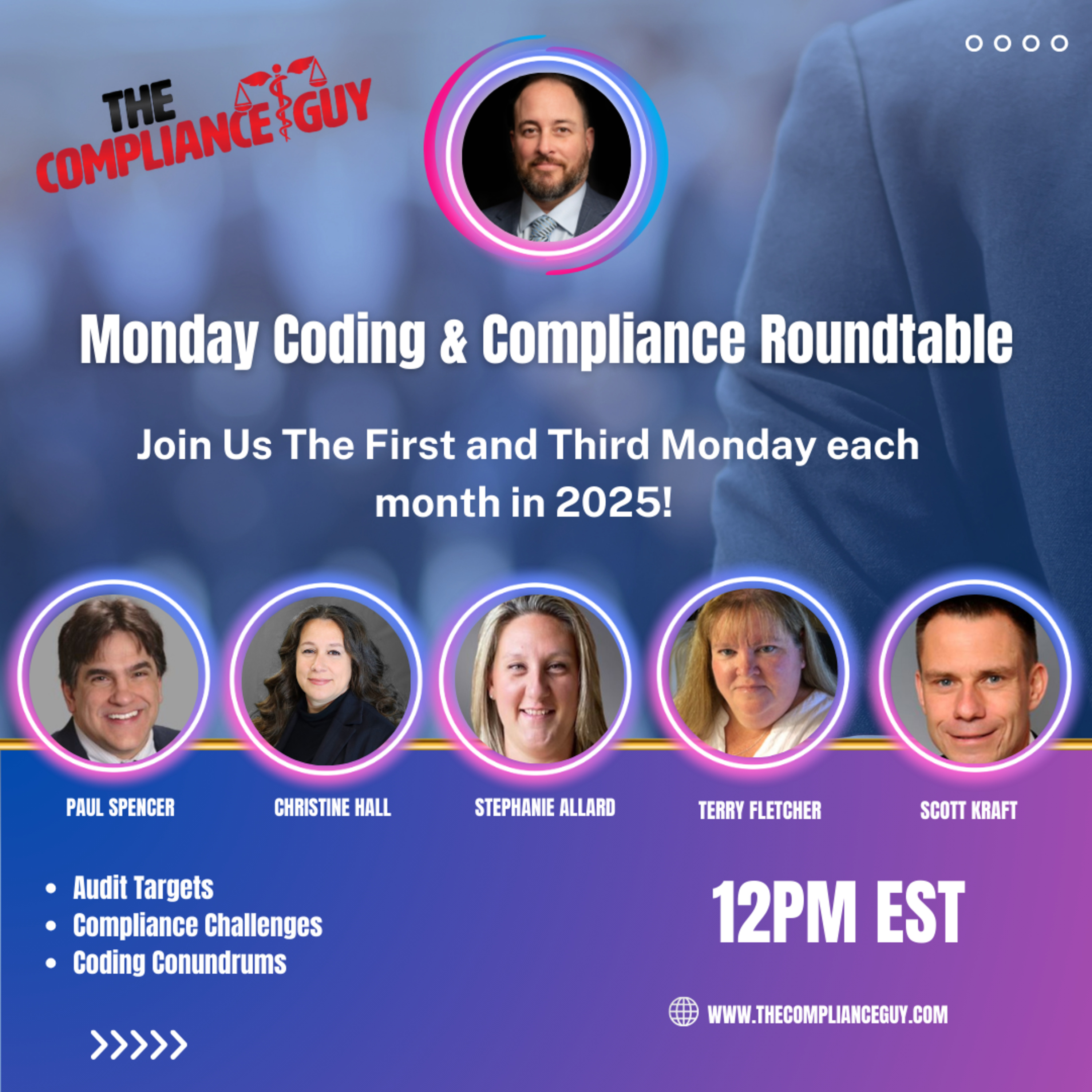
Episode 357 - Monday Auditing, Coding and Compliance Roundtable
Mar 26, 202501:00:59Tap to summarizeSummaryIn this episode of the Compliance Guy Monday Auditing, Coding, and Compliance Roundtable, the panel discusses various topics including updates on telehealth regulations, challenges in behavioral health documentation, privacy concerns under HIPAA, security risks associated with remote work, the complexities of split shared services, and the implications of United Healthcare's contract requirements for access to electronic medical records. The conversation emphasizes the importance of compliance, accurate documentation, and the need for robust security measures in healthcare practices.TakeawaysTelehealth guidelines have been extended until September 2025.Behavioral health documentation must reflect specific patient goals and progress.Privacy concerns are heightened with the accessibility of behavioral health records.Remote work poses significant security risks for patient information.Split shared services require clear documentation of who provided care.UHC's contract demands raise questions about patient consent and privacy.Healthcare providers must ensure compliance with HIPAA regulations.Documentation should accurately reflect the services provided to avoid audits.The practice of medicine is non-standardized, complicating compliance efforts.Insurance companies' access to medical records can lead to potential misuse.
Transcribe →Episode 356 - #TerryTuesday - Upcoding of Services and The Risks Associated with Bad Documentation
Mar 12, 202500:29:31Tap to summarizeSummaryIn this episode, Sean and Terry discuss the complexities and challenges surrounding upcoding in medical billing and auditing. They explore the implications of upcoding, the importance of accurate documentation, and the consequences of non-compliance. The conversation also touches on prescription drug management and the nuances of E&M coding, emphasizing the need for healthcare providers to adhere to regulations and ensure that billing practices reflect the services rendered. The episode concludes with a reminder of the importance of compliance in the healthcare industry.TakeawaysUpcoding is a significant issue in healthcare billing.Accurate documentation is crucial to avoid legal issues.Providers must ensure that billing reflects actual services rendered.Prescription drug management requires clear connections to services provided.Incident to services can complicate billing practices.Healthcare providers should avoid adding incidental services to visits.The risk of upcoding can lead to severe consequences for practices.Regular audits can help identify and correct billing issues.Education on coding practices is essential for compliance.Healthcare professionals must stay informed about regulations and guidelines.
Transcribe →Episode 355 - The Wild World of Healthcare Compliance
Mar 12, 202500:59:35Tap to summarizeSummaryThe conversation delves into the evolving role of artificial intelligence (AI) in healthcare, particularly its implications for compliance, documentation, and evaluation and management services. The speakers discuss the benefits and challenges of AI, emphasizing the need for providers to understand its limitations and the importance of maintaining accurate documentation. They also explore the complexities of billing for evaluation and management services, highlighting the risks associated with improper documentation and the scrutiny from insurance companies.TakeawaysAI is significantly impacting healthcare, especially in diagnostics.Providers must ensure they understand AI's limitations and capabilities.Compliance and documentation are critical when using AI tools.There are many pitfalls in AI that providers need to be aware of.Patients have the right to opt out of AI-assisted documentation.The importance of accurate documentation cannot be overstated.Modifiers like 25 and 59 are often misused in billing.Commercial payers are becoming more aggressive in audits.Public comments can lead to better regulatory outcomes.Documentation manipulation is a serious concern in healthcare.
Transcribe →Episode 354 - Andrew Livingston - AI In Healthcare - Opportunities and Challenges
Mar 6, 202500:43:36Tap to summarizeSummaryIn this conversation, Sean and Andrew Livingston explore the transformative role of artificial intelligence (AI) in healthcare. They discuss the potential benefits and challenges of AI, including its applications in diagnostics, mental health, and the importance of data privacy and regulation. Andrew shares insights on AI hallucinations, the need for transparency in AI decision-making, and the tools available for leveraging AI in writing and content creation. The discussion emphasizes the balance between innovation and regulation in the rapidly evolving landscape of AI in healthcare.TakeawaysAI is not a solution for everything and should amplify doctors' abilities.Hallucinations in AI can lead to misinformation and require careful validation.AI can help personalize healthcare by analyzing individual data.The role of AI in diagnostics is significant, especially in early cancer detection.Mental health applications of AI can fill gaps in care due to professional shortages.Data privacy and security are paramount when using AI in healthcare.Over-regulation of AI could stifle innovation and drive talent away.Transparency in AI decision-making is essential for trust and accountability.AI can serve as a second set of eyes for healthcare professionals.The future of AI in healthcare requires a balance between innovation and regulation.
Transcribe →Episode 353 - #TerryTuesday - The Importance of Authoritative Documentation in Healthcare
Mar 4, 202500:27:53Tap to summarizeSummaryIn this episode, Sean Weiss and Terry Fletcher discuss the complexities of healthcare compliance, emphasizing the importance of understanding various regulations, authoritative documentation, and the necessity of thorough preparation for audits and investigations. They highlight the challenges faced by medical practices in navigating compliance issues and the critical role of state regulations in healthcare. The conversation underscores the need for healthcare professionals to dig deeper than just relying on CPT codes and to be well-informed about the various guidelines and policies that govern their practices.TakeawaysHealthcare professionals often lack understanding of compliance requirements.CPT codes are just one part of a larger compliance framework.State regulations can supersede federal guidelines in healthcare.Authoritative documentation is crucial for defending practices.Audits are becoming increasingly common in healthcare.Relying solely on CPT can lead to compliance issues.Healthcare providers must be prepared for inquiries from payers.Understanding acronyms like E&M and CMS is essential for providers.Consultants play a vital role in navigating complex regulations.Continuous education and awareness are necessary for compliance.
Transcribe →Episode 352 - #TerryTuesday - Navigating HIPAA In A Post-COVID World
Feb 26, 202500:27:12Tap to summarizeSummaryIn this episode, Sean and Terry discuss the evolving landscape of healthcare compliance, particularly focusing on HIPAA protections and the implications of the Cures Act. They explore the changes in regulations post-COVID, the importance of safeguarding mental health information, and the need for practices to stay updated with compliance policies. The conversation emphasizes the complexities of navigating healthcare regulations and the necessity for clear communication and understanding within the industry.TakeawaysTerry and Sean both experienced health issues recently, leading to a brief hiatus.There has been a noticeable change in HIPAA protections since COVID, with some practices not updating their policies.Certain medical records, especially in behavioral health, require extra protections under HIPAA.The Office of Civil Rights oversees HIPAA violations, not just Medicare.Explicit consent is required to disclose mental health information under HIPAA.The 21st Century Cures Act has implications for patient access to medical records.There are limitations on disclosing information that could lead to a patient being jailed.Practices need to ensure their staff is aware of updated compliance policies.HIPAA protections extend beyond the office and into patient interactions in public spaces.The healthcare industry is highly regulated, and changes in administration can impact compliance policies.
Transcribe →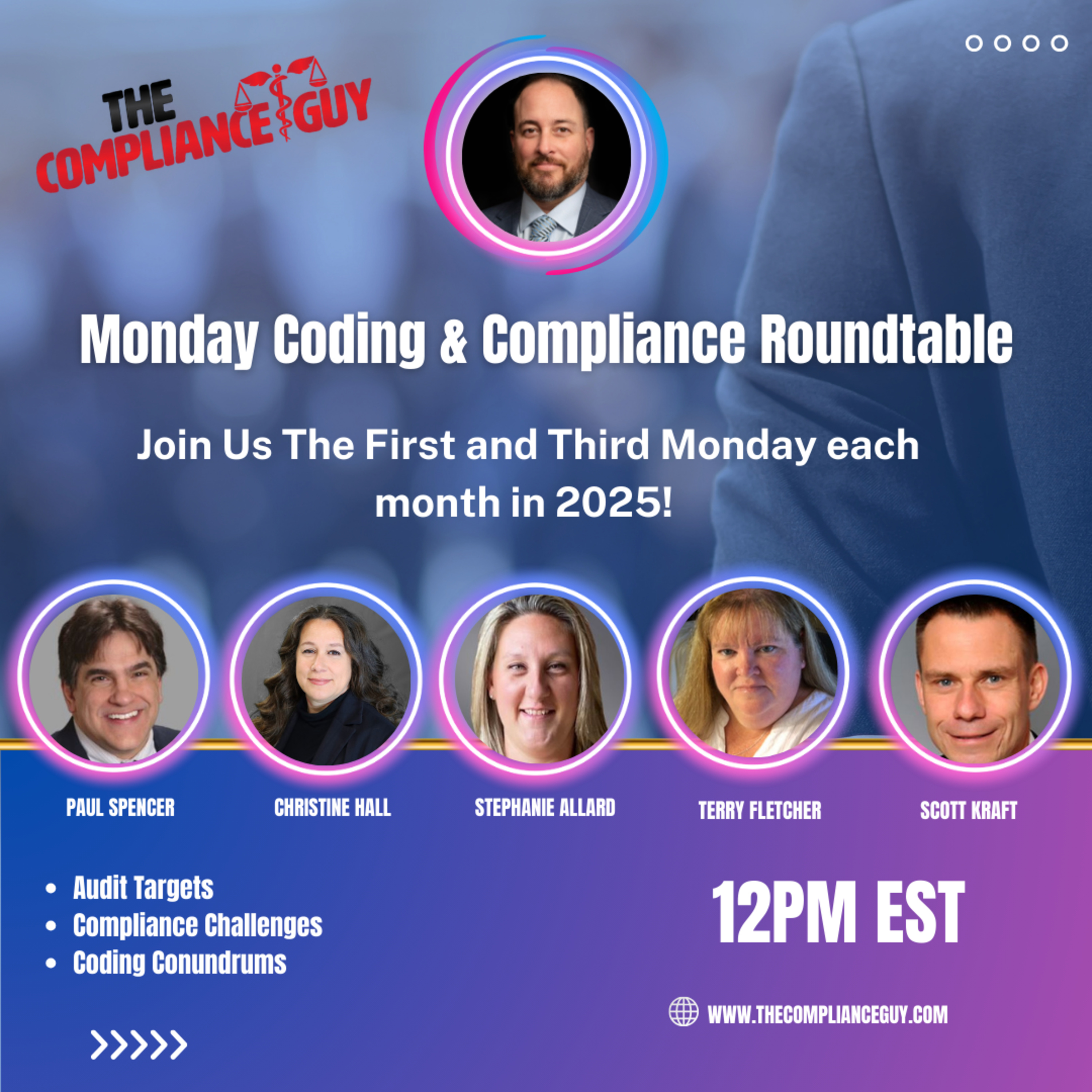
Episode 351 - Monday Auditing, Coding and Compliance Roundtable
Feb 26, 202501:01:14Tap to summarizeSummaryThe conversation explores the evolving landscape of telehealth, focusing on recent regulatory changes, challenges faced by Congress in legislating telehealth, and the implications for patient care. The panel discusses the importance of documentation, access to services, and the need for guardrails to ensure quality care. They also highlight the historical context of telehealth and its restructuring during the COVID-19 pandemic, emphasizing the need for clarity in its implementation moving forward. The conversation delves into the complexities of healthcare compliance, focusing on the challenges of time documentation, the implications of macro time statements, and the necessity for effective communication between departments to ensure compliance and quality patient care. The speakers emphasize the importance of understanding the nuances of documentation and the need for a collaborative approach to workflow processes in healthcare settings.Takeaways Telehealth regulations are changing, impacting patient access. Congress is struggling to address telehealth legislation effectively. Quality of telehealth documentation is often inadequate. Access to telehealth services remains a significant issue. Telehealth has been a part of healthcare for decades. The pandemic accelerated the adoption of telehealth services. Patients often prefer in-person visits for social interaction. There is confusion about telehealth benefits and coverage. Specialty care access has improved through telehealth. Guardrails are necessary to prevent abuse of telehealth services. Accessibility to healthcare services is crucial for all patients, especially seniors. Time documentation in healthcare can lead to significant challenges and misunderstandings. Macro time statements can degrade the quality of medical documentation. Providers should focus on medical necessity rather than just time spent with patients. Compliance and workflow processes must be integrated to avoid issues in healthcare delivery. Departments within healthcare organizations need to communicate effectively to ensure compliance. Auditing practices should be mindful of the nuances in time documentation. Healthcare providers should avoid using canned statements that do not reflect actual patient care. Collaboration among departments can lead to better compliance and patient outcomes. Healthcare organizations should consider hiring compliance consultants for a comprehensive review.
Transcribe →