
Podcast
The Crown Refs Podcast
Hosted by Paul Diasparra · EN
The Crown Refs Podcast is the ultimate audio experience for basketball officials looking to elevate their craft, build confidence, and achieve long-term success on and off the court. Hosted by Paul Diasparra, this podcast helps referees master their skills, refine their judgment, and develop a strong officiating mindset. It features top names in officiating like Joey Crawford, Roger Ayers, Dee Kantner, Maia Chaka, Lisa Mattingly, Tyler Ford, Penny Davis, Reggie Greenwood, Scott Foster, Al Battista, Crystal Hogan, Bo Boroski, Gary Vee, Clarence Armstrong, and more. #Servethegame
21episodes
Episodes
Newest firstAll episodes
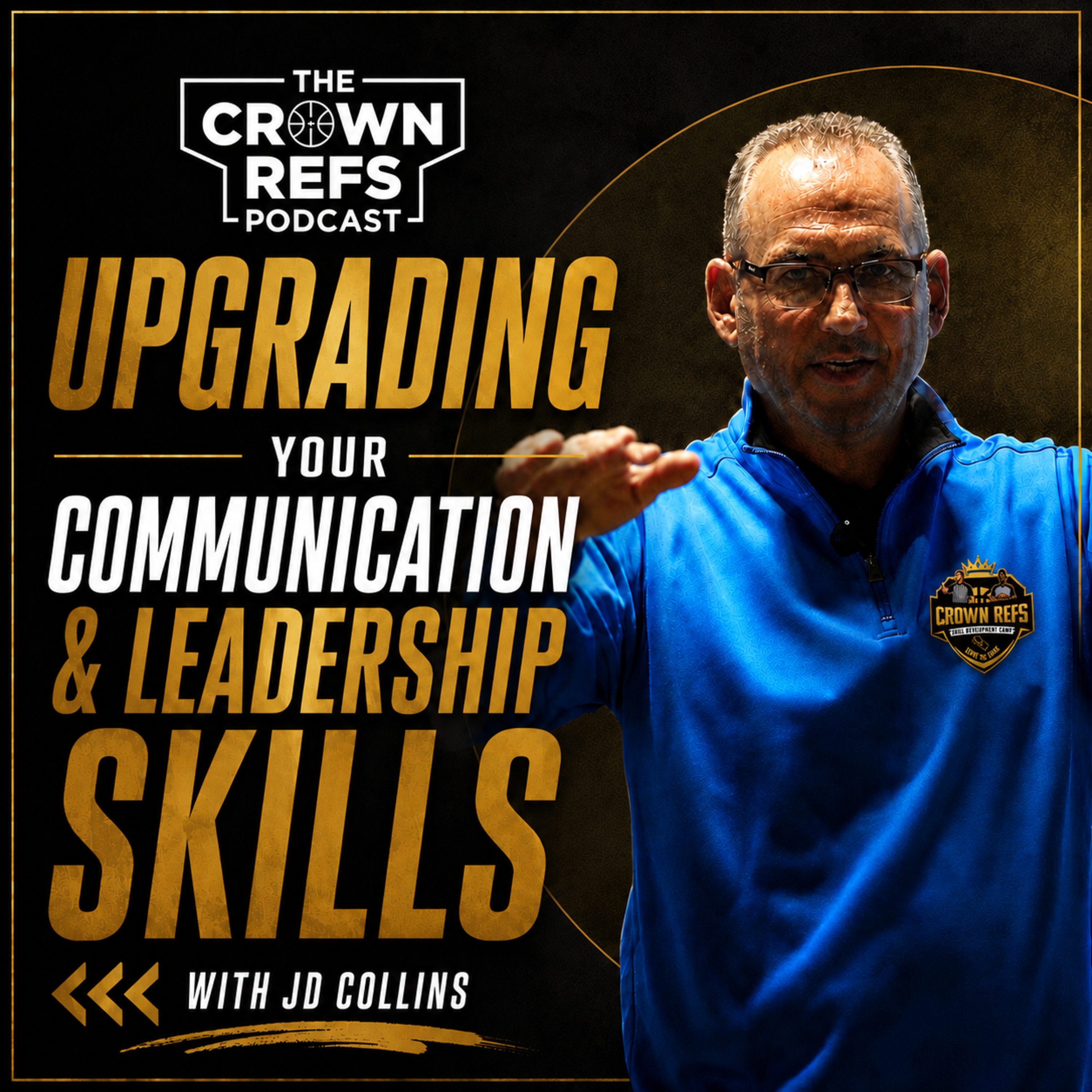
#433 Upgrading your Communication & Leadership Skills | w/JD Collins
3w ago00:53:48Tap to summarizeRecorded at the 2026 Crown Refs Skill Development Camp, this episode features former NCAA Men’s Division I National Coordinator and Final Four official J.D. Collins delivering a powerful presentation on communication, leadership, mentorship, trust, and personal responsibility. Through detailed stories from his career, J.D. explains how officials can build stronger relationships, handle pressure, protect their reputation, serve others, and become the type of leader people trust both on and off the court.👑 Identify Your “Why”Understand what truly drives you to officiate—and why money, power, pride, and ego cannot provide lasting fulfillment.🗣️ Communicate With ExcellenceOnce the whistle is blown, the official becomes a communicator. Learn how focus, body language, clarity, and self-control shape credibility.🤝 Build Meaningful RelationshipsRelationships with partners, mentors, and coordinators are not created overnight. They are built through consistent performance, honest communication, trust, and follow-through.🧠 Find Mentors at the Level You Want to ReachDo not wait for someone to discover you. Take ownership, make the connection, ask questions, and find people who can challenge your thinking.✅ Create AccountabilityA valuable mentor should be able to tell you the hard truth—and still leave the conversation knowing the relationship is strong.💬 Use the Phrase “Are We Good?”Learn how this simple question can repair conflict, close difficult conversations, and preserve relationships with partners and mentors.🔒 Protect Your Information and ReputationNot everyone in officiating is a close friend. Learn why discretion matters, why officials often talk too much, and how controlling what you share can protect your career.🏀 Stay Fully Invested in Every AssignmentAs you advance, never relax when working a lower-level game. Bring even greater focus and effort so nobody can question your commitment.⚖️ Ask Whether Your Actions Were EffectiveBeing strong is not enough. Every decision, response, and interaction should fit the game and be defensible to your coordinator.📋 Understand What Your Coordinator WantsDifferent conferences and supervisors have different expectations. Learn why successful officials adapt without losing their identity.🌊 Absorb Chaos, Create Calm, and Provide HopeGreat officials and servant leaders bring stability into difficult moments. They do not add to the chaos—they help others move through it.❤️ Lead Through ServiceThink beyond your own advancement. Use your time, talent, experience, and resources to help others and strengthen the people around you.🎯 Be Excellent in the Final MomentsJ.D. explains why officials must be strong throughout the game—and nearly perfect when the final two minutes arrive.Biggest Nuggets:Your advancement is your responsibility.Not everyone who criticizes you is your enemy.Not everyone who helps you is your friend.Sometimes the smartest response is to stay silent.Relationships must start, develop, and finish—just like a play.Your body language often reveals more than your words.Coordinators usually know more than officials think they know.The hardest conversations can strengthen relationships when handled correctly.Trust is built through consistency—not one great game.Great leaders absorb chaos, create calm, and provide hope.
Transcribe →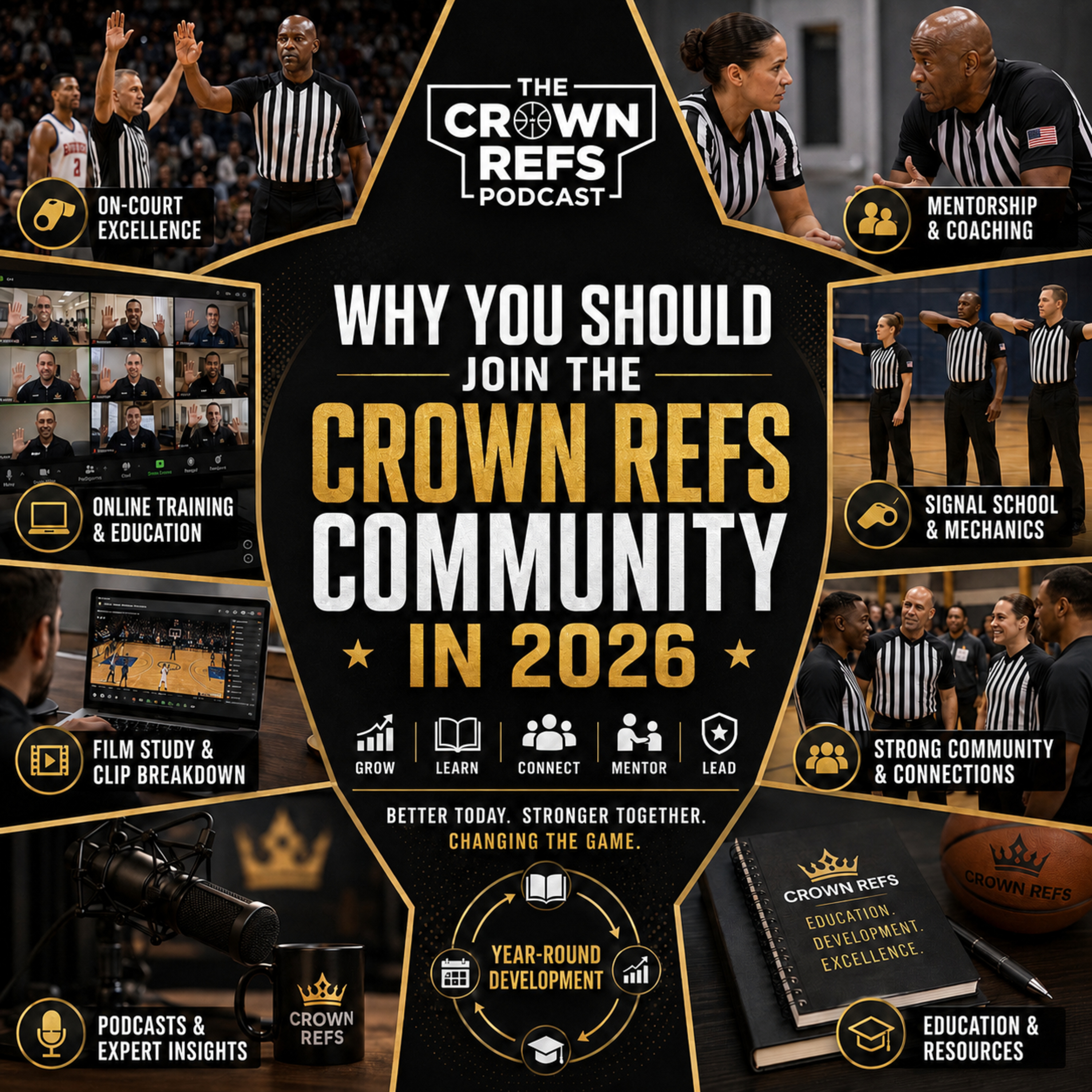
#432 Why YOU should Join the Crown Refs Community in 2026 | w/Chris Griffin | Austin Basketball Officials Association
Jul 401:03:54Tap to summarizeIn this episode, we break down "Why You Should Join the Crown Refs Community in 2026" and highlight the richness, depth, and year-round value built into the Crown Refs ecosystem. What started as weekly content in 2018 has grown into a full training community for officials who want more than surface-level advice — with a Patreon content library built like a “Netflix for referees,” daily social content, Signal School, Rapid Responses, rules reviews, film breakdowns, camp education, community discussions, and a Discord family of 500+ officials sharing plays, questions, resources, feedback, and support.We also take a deeper look at the mentorship side of Crown Refs, including our structured membership tiers, live Zoom trainings, one-to-one coaching, camp discounts, communication/game-management training, signal refinement, rules study, health and mindset development, and the ability to connect with officials across every level of the game. This episode shows why Crown Refs is more than a content platform — it’s a 12-month development program, a positive brotherhood and sisterhood, and a place where officials can sharpen their skills, build confidence, find support, and grow on and off the court.💪🏽Join our Community🔗Patreon.com/crownrefs/memberships
Transcribe →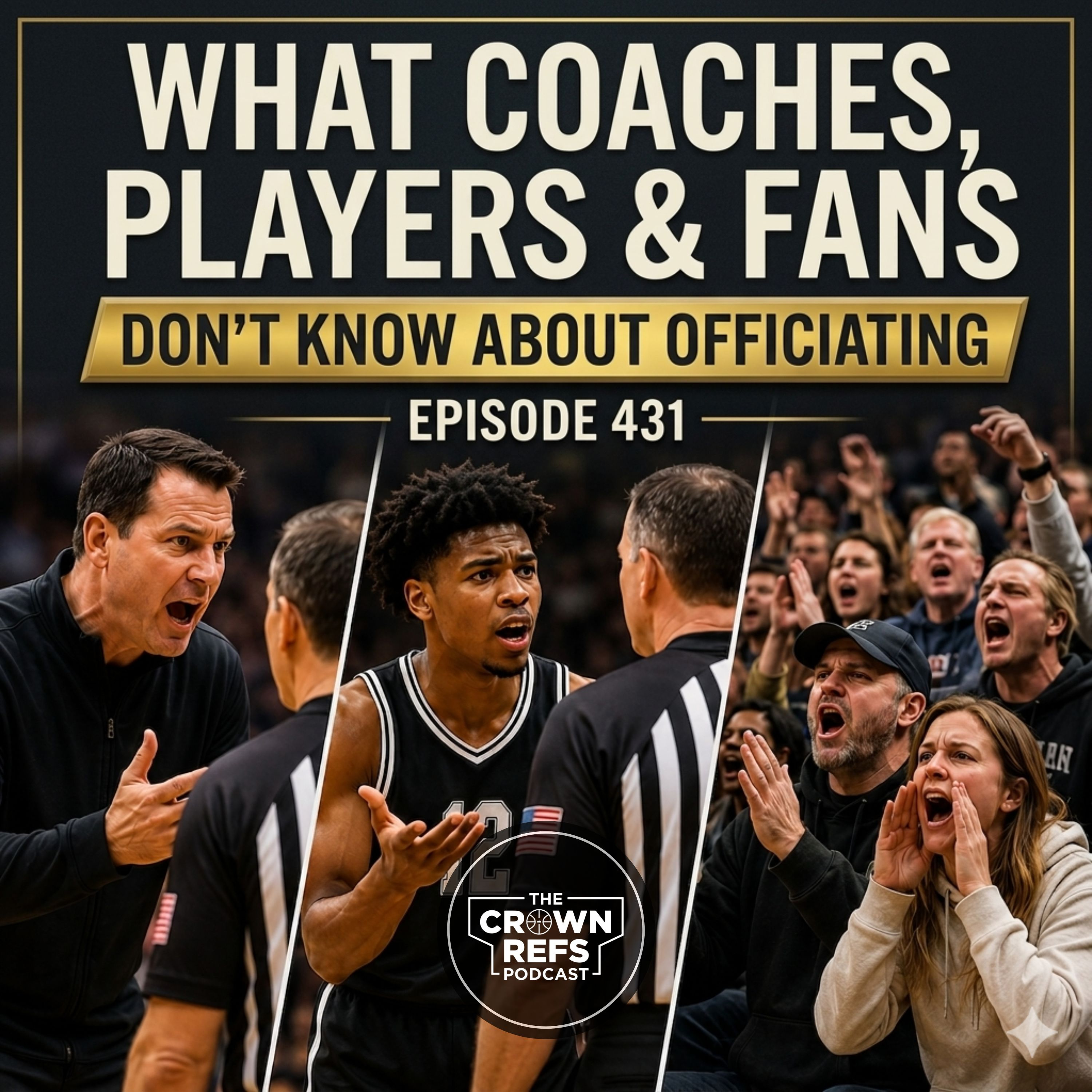
#431 What Coaches, Players, & Fans don't know about Officiating
Jun 2000:45:41Tap to summarizeIn this episode of the Crown Refs Podcast, I join The Game Time Guru Podcast for a wide-ranging conversation about the officiating profession and the people behind the whistle. Topics include the origin story of Crown Refs, why there is an ongoing official shortage, how referees prepare for games, the role of film study in accelerating development, and why positioning, whistle timing, signals, communication, and court presence are critical skills for every official. The discussion also explores how officials work together as a crew, how they evaluate performance, and why adopting a next-play mentality is just as important for referees as it is for athletes and coaches.The episode's biggest takeaways center around improving the relationship between officials, coaches, players, parents, and fans through greater understanding, respect, and communication. Paul shares insights on how coaches can have more productive conversations with officials, why emotional intelligence and professionalism matter, and how mentorship, accountability, fitness, and continuous learning contribute to long-term success. Whether you're an official, coach, player, parent, or sports fan, this episode offers a unique look inside the officiating world and provides valuable lessons on leadership, resilience, preparation, and serving the game. 👑🏀
Transcribe →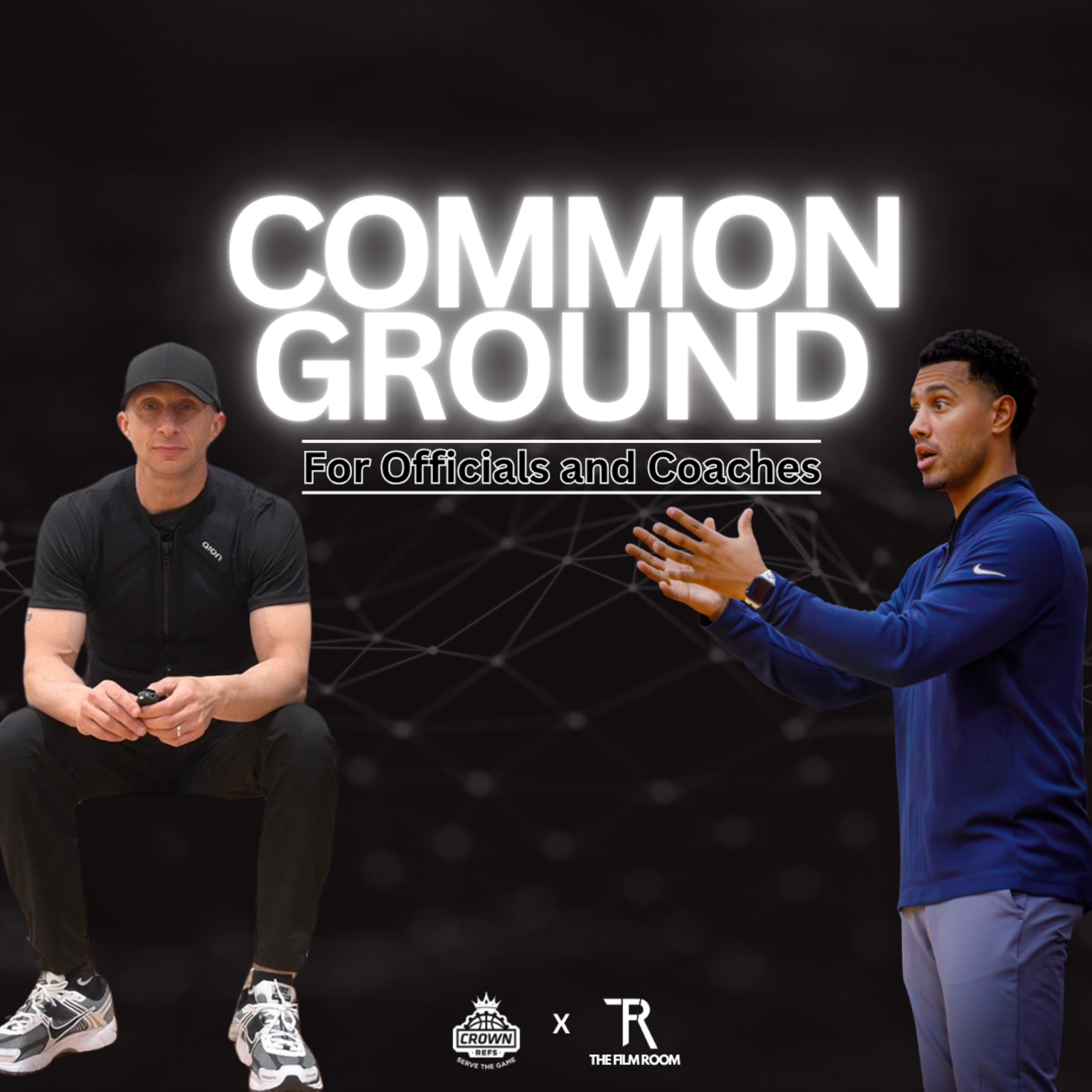
#430 Common Ground for Officials & Coaches | w/Austin McBeth | Creator of The Film Room
Apr 2701:54:17Tap to summarizeWhat happens when a coach, a former D1 athlete, and a veteran basketball official sit down and actually watch game film together? This episode features Austin — former Iowa State basketball and football player, high school head coach, and creator of the fast-growing YouTube channel The Film Room — in one of the most honest coach-referee conversations you’ll hear.Austin brings real game film from his season and asks the hard questions coaches are always thinking but rarely get answered: What actually makes a screen illegal? When does a roll man become a cutter — and does that distinction even matter to an official? Why does the same contact get whistled in the second half when it sailed through the first?It all gets broken down through a live film review of borderline screens, wash-outs, hand checks, and driving fouls — drawing the line between what’s technically illegal and what actually rises to the level of stopping the game.The biggest takeaways from this episode go beyond any single call. Austin makes a compelling case that understanding how officials see the game makes coaches better, not just more tolerant of officiating. The episode also challenges the idea that knowing a team’s scheme helps officials — arguing that preconceived notions actually hurt judgment and that every play has to be evaluated in isolation.They dig into Rule 10-14 on hand checking, the “wash out” screening technique showing up at every level, why defensive effort makes illegal contact more visible to officials, why proactive communication from refs can prevent problems before they escalate, and why coaches should always bring one specific play instead of a halftime summary when they want real answers. Essential viewing for coaches, players, and officials who want to stop talking past each other and actually understand what the other side is seeing.💪 Join the CommunityPatreon.com/crownrefs
Transcribe →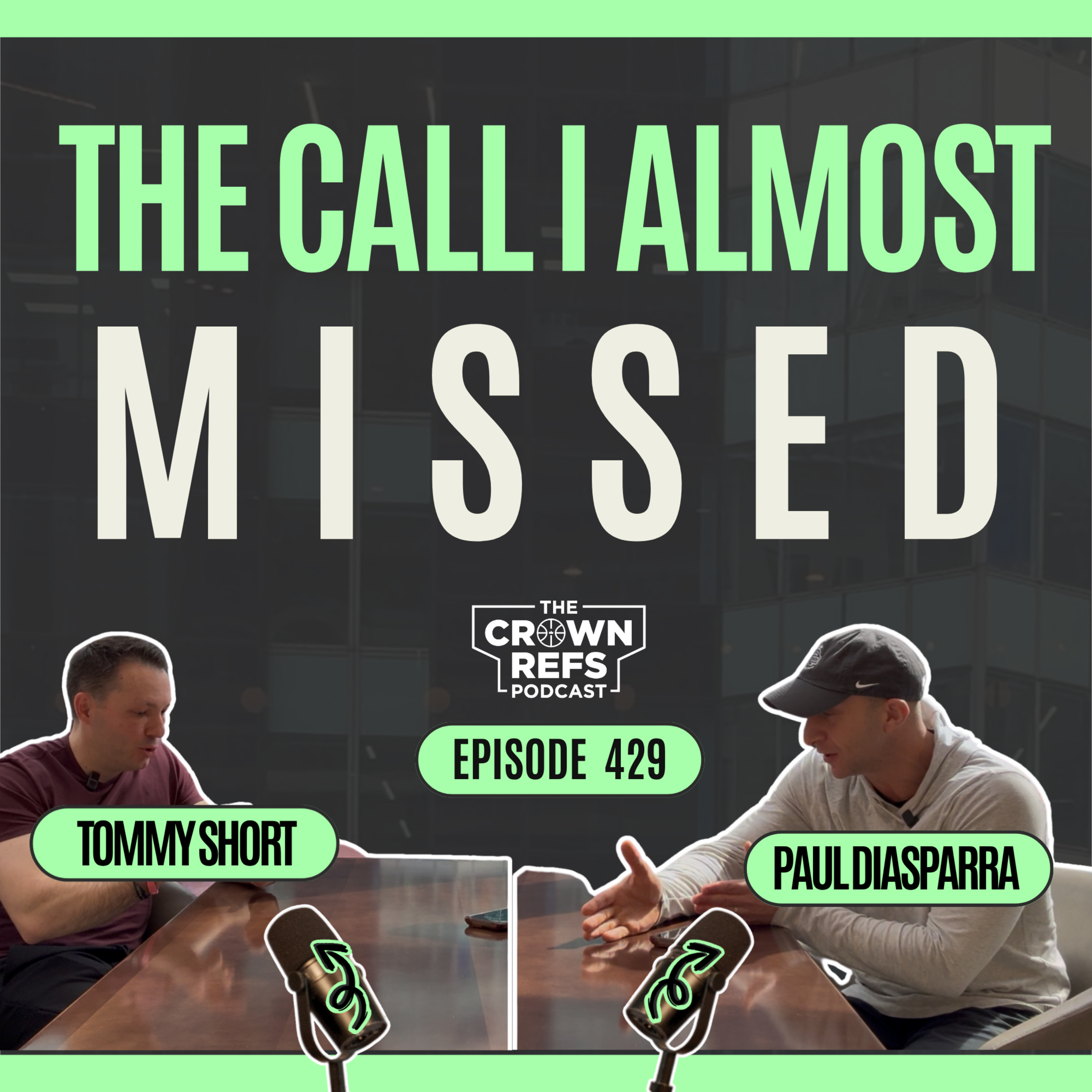
#429 The Call I almost Missed | A year without a cell phone | Tommy Short | Former Pac-12 Official, Author, Speaker
Mar 2801:15:51Tap to summarizeTommy Short is a former NCAA Division I men’s basketball official who built an impressive career working across multiple conferences before making the rare decision to step away in his mid-30s — not because he was “done,” but because he was crystal clear on his priorities. In this in-person sit-down in Times Square, Tommy rewinds the story from his early days getting started at 18, the mentors who shaped him (including John Adams), and the moment he realized he didn’t want to become a “FaceTime dad.” He shares why walking away at the peak of his officiating trajectory was one of the hardest — and best — decisions he’s ever made.In this episode, we cover:A year without a cell phone — why he did it, what it taught him, and how it changed his relationship with presenceInternal stillness — what it is, why officials need it, and how to develop it under pressureDecisiveness + leadership — owning calls and making hard decisions when everything’s loudTough conversations — feedback, accountability, and how elite crews communicateThe “boring” habits that create excellence — sleep, preparation, discipline, and consistencyThe book + key takeaways — what he wants you to do with these lessons starting now⛺️ Register for the Crown Refs Skill Development Camphttps://stan.store/crownrefs/p/crown-refs-skill-development-camp-tmq5jdse🤝 Join the Community Patreon.com/crownrefs
Transcribe →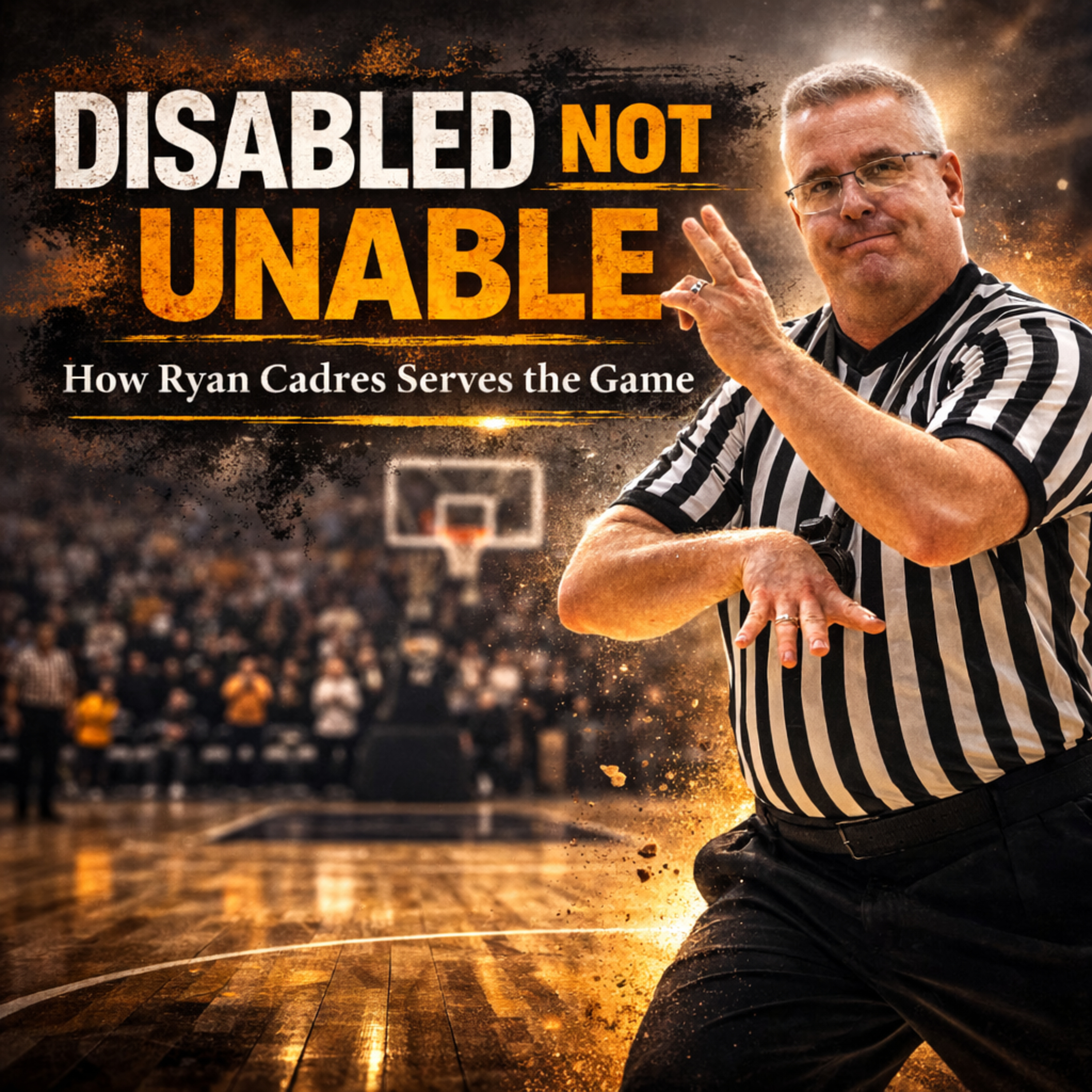
#428 Disabled, Not Unable | with Ryan Cadres | IAABO Board 54 President | Cerebral Palsy Awareness Month
Mar 2100:55:48Tap to summarizeIn this moving episode, Ryan Cadres joins the Crown Refs Podcast in honor of Cerebral Palsy Awareness Month to share his powerful journey through officiating, leadership, and life. A 27-year official, current president of IAABO Board 54 in Massachusetts, and longtime varsity girls basketball referee, Ryan opens up about what it has meant to navigate the officiating world while living with cerebral palsy. He speaks candidly about confidence, courage, trust, and the emotional weight of being seen as “different” before ever blowing the opening whistle. Ryan reflects on the hardships he’s faced — from insensitive comments and whispered judgments to moments of real pain and doubt — while also showing how officiating has become one of the greatest therapeutic outlets in his life, a place where he feels strong, capable, and fully himself.The conversation is filled with meaningful takeaways far beyond basketball. Ryan shares how he adapts mechanics and movement to fit his body, why trust from assigners and partners has meant so much throughout his journey, and how he has turned his story into a mission to advocate for others with disabilities. He also discusses his annual awareness efforts each March, the fundraising he’s done for United Cerebral Palsy, and the message behind his growing platform: there is a major difference between being disabled and being unable. This episode is about far more than officiating — it’s about resilience, perspective, humanity, and the reminder to be kinder, more thoughtful, and more understanding toward every person we encounter. Ryan’s story will challenge you, inspire you, and leave you with a deeper appreciation for courage, both on and off the court.To Support Ryan's missionhttps://www.customink.com/s/2026-cerebral-palsy-awareness-month⛺️ Register for the Crown Refs Skill Development Camphttps://stan.store/crownrefs/p/crown-refs-skill-development-camp-tmq5jdse🤝 Join the Community Patreon.com/crownrefs
Transcribe →
#427 Raising the Standards | The Rocky Road to Good Sportsmanship | with Brenda Hilton | Officiallyhuman.org
Mar 1400:58:17Tap to summarizeBrenda Hilton returns to the Crown Refs Podcast for a thoughtful conversation about her pioneering work through Officially Human and the long-term mission of restoring respect for sports officials. Brenda shares the evolution of the organization from its early days to its current nonprofit model, reflecting on the growing reach of its message, the importance of fundraising with purpose, and the latest initiatives helping humanize officials across the country. A major highlight of the conversation is the launch and success of Officially Human’s new activity book, a creative and impactful tool designed to introduce young people to officiating, explain multiple sports in a kid-friendly way, and show a new generation that officials are real people with stories, purpose, and value. The episode also touches on Officially Human’s expanding partnerships with college conferences, digital learning programs, downloadable resources, and its broader vision for 2026 and beyond.The conversation goes far beyond updates, though, and gets into the heart of the officiating experience today. Brenda and Paul discuss the ongoing decline in sportsmanship, why abuse toward officials has not improved, and how money, pressure, and youth sports culture continue to make the environment harder for officials at every level. They explore the importance of mentoring, why younger officials need support and real development instead of simply being thrown onto courts and fields, and how proactive game management and stronger communication with coaches can protect both officials and the game itself. The episode also highlights the power of positive messaging, the need to celebrate respectful interactions in sports, and the role content creators and organizations can play in changing the narrative around officiating. This is a meaningful, future-focused episode about leadership, advocacy, creativity, and why the fight for better sportsmanship matters now more than ever.⛺️ Register for the Crown Refs Skill Development Camphttps://stan.store/crownrefs/p/crown-refs-skill-development-camp-tmq5jdse🤝 Join the Community Patreon.com/crownrefs
Transcribe →
#426 Rapid Responses 14 | The Heavy-Duty Toolset for Stronger Communication | Read the article on SubStack
Mar 700:30:05Tap to summarizeRapid Responses 14 is a heavy-duty toolset built to help officials communicate with coaches more effectively and manage games with confidence. This episode goes beyond quick one-liners — it lays out a complete game management system for handling everything from demands for explanations to bench decorum, exaggerated complaints, and attempts to divide the crew.Inside, you’ll hear practical rapid responses and frameworks that help you set boundaries, stay professional under pressure, and keep the game moving — including: how to stop coaches from holding up play to vent, a four-step approach to assessing behavior over time, stronger language swaps that instantly raise your credibility, and proven lines for foul-count complaints, “didn’t you hear the slap,” cross-court yelling, and criticism of your partner.The episode also covers bigger mental skills: separating personal relationships from professional responsibilities, using “go narrow” to regain control of vague complaints, sending teams to the bench when temperature rises, and staying emotionally disciplined when profanity or negativity shows up. The result is a clear, repeatable playbook that helps you become a tactical communicator who can handle any coach in any gym — while protecting the crew, the players, and the integrity of the game.📖 Read full article https://crownrefs.substack.com/p/rapid-responses?r=2gcoxy⛺️ Register for the Crown Refs Skill Development Camphttps://stan.store/crownrefs/p/crown-refs-skill-development-camp-tmq5jdse🤝 Join the Community Patreon.com/crownrefs
Transcribe →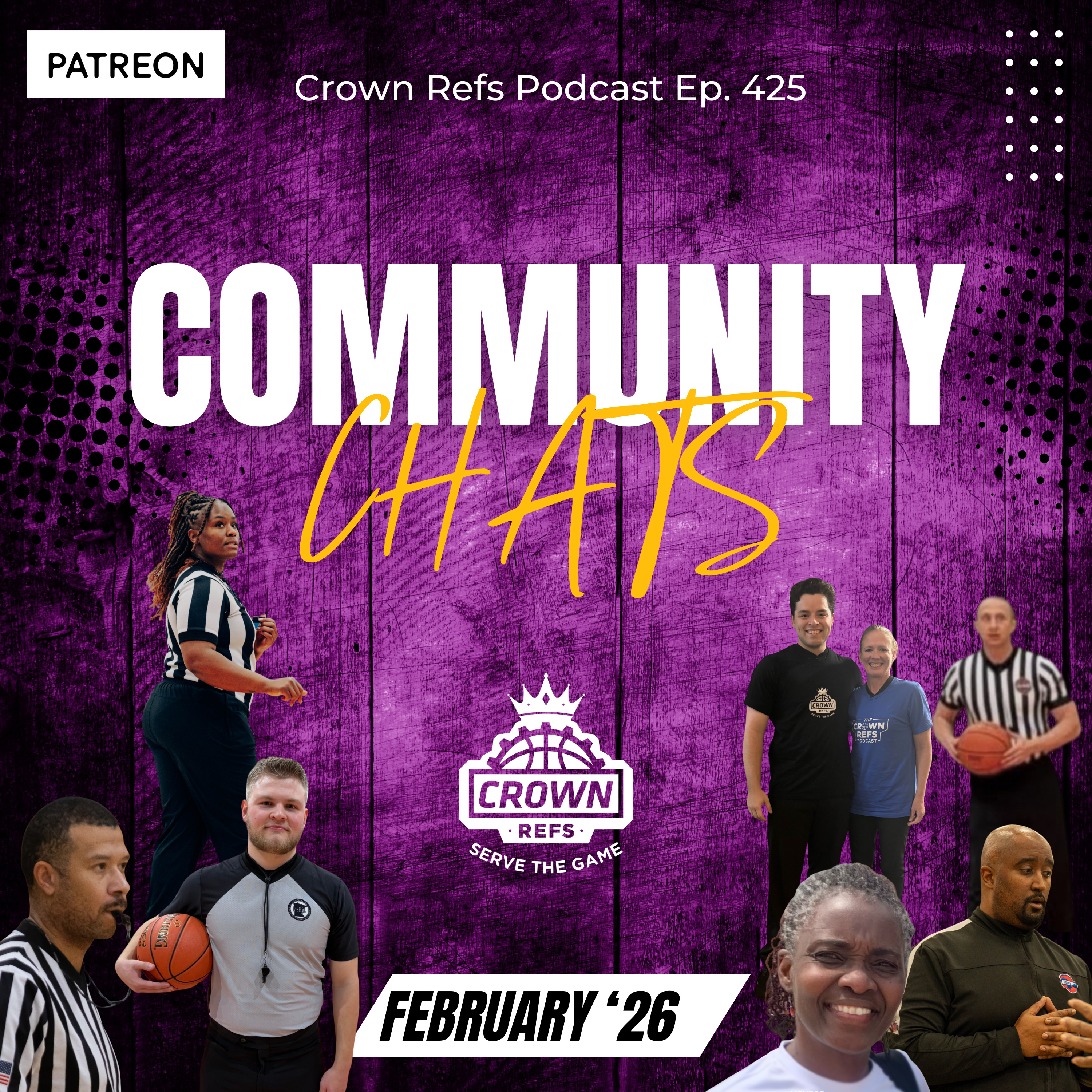
#425 Community Chats 4 | February "26
Feb 2801:00:05Tap to summarizeIn this community chat, we connect with officials from across the country—talking weather cancellations, getting back on the floor, and sharing real-game updates from recent varsity and college assignments. From there, we get into coach management: why predicting “this coach never says a word” is a trap, why every official’s experience can be different with the same coach, and how to be ready when the “quiet one” suddenly becomes vocal. We also dig into mindset—moving toward problems instead of avoiding them, reframing coach encounters as opportunities to lead, and focusing on the kind of rapport that matters most: respect earned through professionalism and performance.Then we go practical with mechanics and crew habits that level up your game. We break down double whistles (post and hold, no prelim signals, give it to the primary, and get together when it’s travel-before-foul), patience with the whistle, and why three-person often means less rotating—not more. We also share a cleaner halftime model—stop broad summaries and go play-by-play on specific moments—plus the growth formula: master the rules, get intentional reps, capture film, and review quickly to accelerate. The conversation closes with reminders about being firm without being emotional, supporting partners through tough nights, and staying grounded in peace and positivity while serving the game.⛺️ Register for the Crown Refs Skill Development Camphttps://stan.store/crownrefs/p/crown-refs-skill-development-camp-tmq5jdse🤝 Join the Community Patreon.com/crownrefs
Transcribe →
#424 quiet CONFIDENCE | Handling Coaches, Critics, & Pressure
Feb 700:24:10Tap to summarizeIn this episode, Paul sits down for a wide-ranging conversation that traces his journey from physical education teacher to multi-level basketball official — and ultimately to building Crown Refs as a global education and mentorship platform. He opens up about his early years in officiating, the mistakes and gaps that shaped him, and how struggles with game management and coach communication became the catalyst for the Rapid Response system. Paul also reflects, quietly but honestly, on navigating early resistance and criticism as the platform grew — choosing humility, consistency, and purpose over ego, and trusting that impact would win out over time.The discussion dives into practical, on-court teaching: how to communicate rulings without over-talking, why conviction matters more than convincing, and how to balance rulebook language with coach-friendly explanations. Paul breaks down some of the hardest calls in the game, shares insights on anticipation and positioning, and explains why modern officiating requires both technical sharpness and emotional intelligence. The episode closes with a look ahead at the Crown Refs Skill Development Camp in Fort Wayne, highlighting a holistic approach to growth — signals, movement, communication, leadership, and character — all grounded in the belief that the best officials keep getting better, one possession at a time.⛺️ Register for the Crown Refs Skill Development Camphttps://stan.store/crownrefs/p/crown-refs-skill-development-camp-tmq5jdse🤝 Join the Community Patreon.com/crownrefs
Transcribe →