Podcast
The Curious Bartender Podcast
Hosted by Tristan Stephenson · EN
Long-form conversations with the leading minds in drinks, spanning history, science, culture, and craft, with bestselling author and bartender Tristan Stephenson.
44episodes
Episodes
Newest firstAll episodes
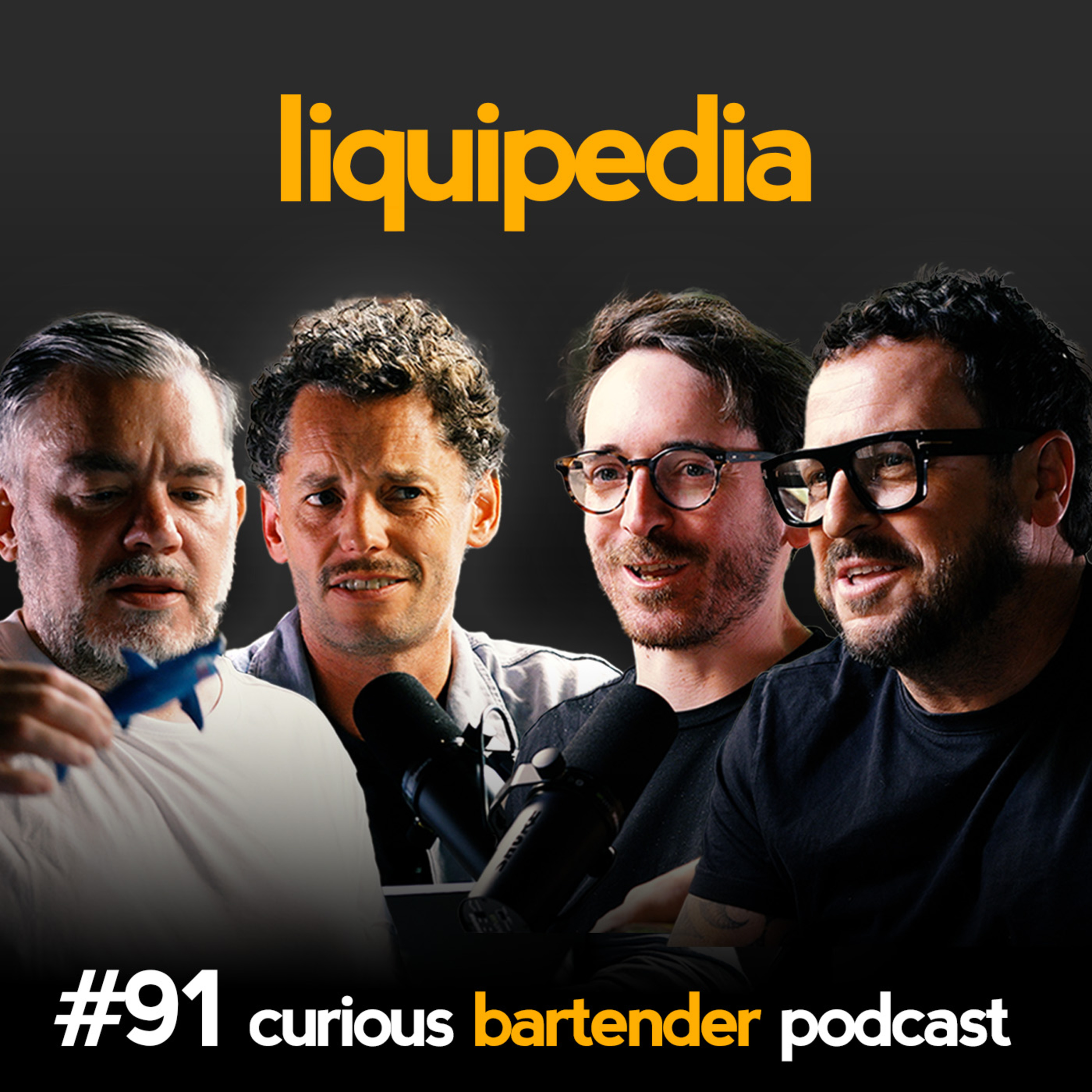
#91 Liquipedia Live – Tree Shrews vs Andre the Giant, Getting Drunk on Sweat, Champagne Tower Architecture, How Old is Water, Ian Fleming, Drinking Rocket Fuel, Soju & Swimming Pools
2d ago01:54:03Tap to summarizeWe're doing something different this time: a special edition replaying the Liquipedia seminar we delivered live at Tales of the Cocktail 2026 in New Orleans, sponsored by Belvedere — forty-five increasingly unhinged questions about liquids, alcohol and drinking, answered (mostly correctly) in just under two hours. Jake Burger returns as the show's first repeat guest, joined by Mike Foster running the questions and Matt Pomeroy handling demonstrations, both from Belvedere. We test whether vacuum ice buckets actually chill wine faster than a plain ice bucket, work out why Bloody Marys taste better at 35,000 feet, and establish that you'd need roughly half a million licks — or five thousand people — to get drunk off other people's sweat. We go deep on water's age (some of it in your glass may predate the sun), whether climate change is quietly reshaping the world's great spirits regions, and why a Malaysian pen-tailed tree shrew is pound-for-pound a more accomplished drinker than Andre the Giant. There's a live blind taste test where Jake and Tris try to identify beer brands purely by the sound of the bottle opening, a full run-through of the maths behind why champagne towers waste hundreds of litres of fizz, and a proper history detour into the life and death of Mad Jack Mytton, the Regency-era MP who rode a bear into a dinner party and set fire to his own nightshirt to cure hiccups. We track down the world's most expensive liquid (spoiler: it's either horseshoe crab blood or deathstalker scorpion venom, depending how you count), debunk the myth that Ian Fleming actually drank his martinis at Dukes, and finally solve the mystery of why Jack Daniel's and Coke gets that strange white foam that no other whiskey and cola does. We close out with the story of Alfred Barnard, who visited 162 distilleries by horse and carriage in two years, and the real reason 19th-century restaurants had to lock up the Worcestershire sauce.A few sound and video issues in this episode due to the intoxicated state of the producer and cast. Hope you enjoy it though!
Transcribe →
#90 David Wondrich – Cocktail History: The Only William, Savoy Without a American Bar, WW2 Supply Officers, Business Cards, Unmarked Graves, America's Love of Ice
1w ago01:38:12Tap to summarizeDavid Wondrich is a drinks historian and author of Imbibe!, Punch and the Oxford Companion to Spirits and Cocktails, and The Comic Book History of the Cocktail. The conversation runs from a $3,000 freelance gig in December 1999 to four centuries of drinking history. Wondrich left academia, almost by accident, to become Esquire's drinks editor, and that training in chasing sources and revising a story when new evidence turns up has shaped every book since.We get into how The Comic Book History of the Cocktail came together and what a graphic novel forced him to cut that a straight history wouldn't. From there we go back to the beginning: what punch actually was before it became shorthand for a bad party bowl, the unresolved fight over where the word "punch" comes from, and the likely, disputed origin of "cocktail" itself. We spend real time on the people usually left out of the story: William Schmidt, "the only William," New York's most famous 19th-century bartender, buried without a headstone; and Ned Stokes, who reinvented American bar service after doing time for murder. Along the way: the birth of the American ice trade and why George Washington's "wine and bitters" might be an early cocktail. We didn't get past the early 20th century, so we'll be back for a part two, picking up the mid-century, the dark ages of the cocktail, and tiki.🍋🟩 Fever-Tree - For the very best mixers that taste pretty damn good even by themselves☕ Algebra Drinks - The world's best coffee liqueur (partly because it's low in sugar - get 15% off at http://www.algebradrinks.com with the code CURIOUS15🌾 Belvedere Vodka - Organic vodka, with substance, made from Polish rye and absolutely no additives.🍷 Denver & Liely - The best glassware on the planet - get 15% off at http://www.denverandliely.com with the code CURIOUS15📷 Follow me on Instagram - https://www.instagram.com/tristanstephenson/📚 I've written quite a few books on spirits and cocktails - https://www.thecuriousbartender.com/
Transcribe →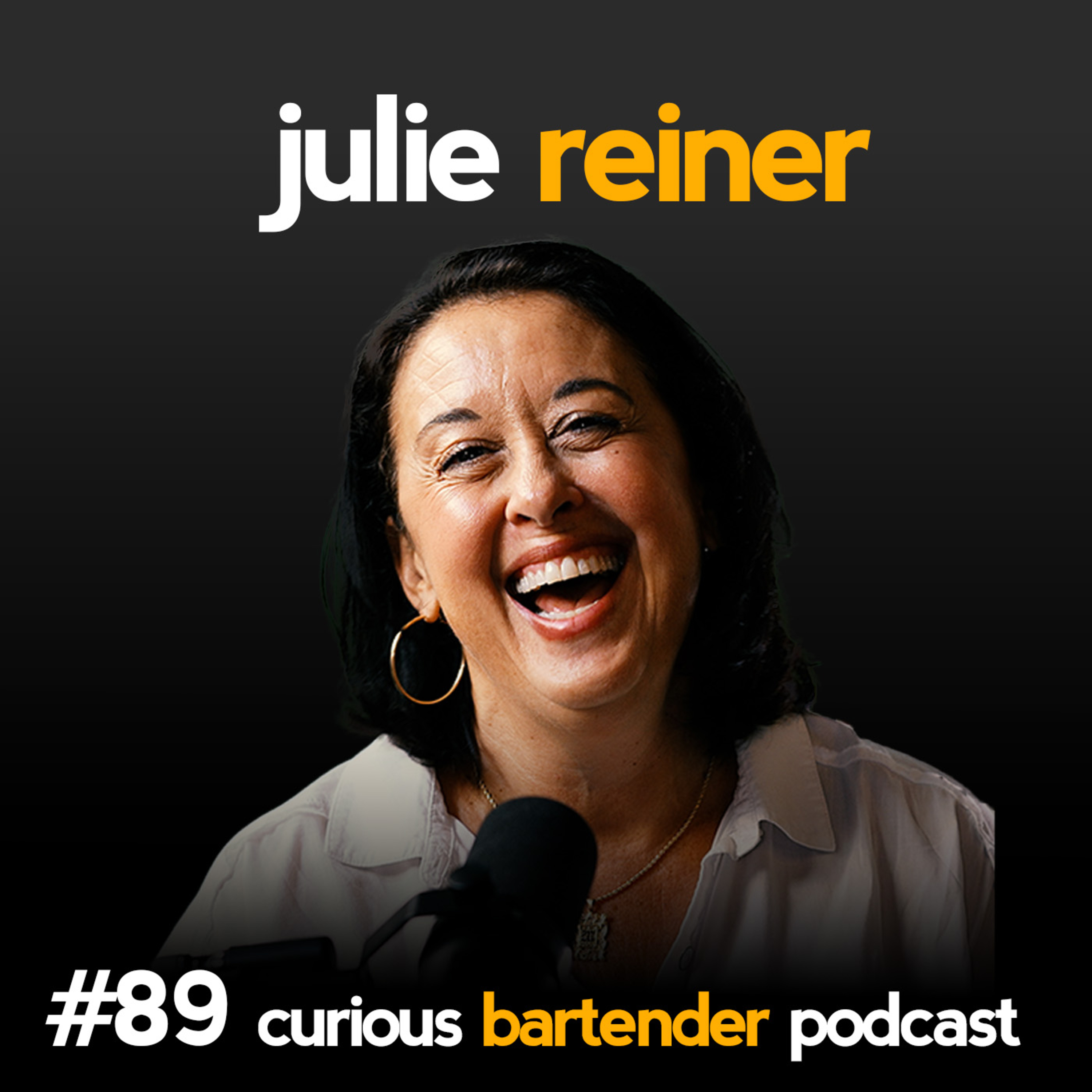
#89 Julie Reiner - NYC, Clover Club, Pegu Club, Cocktail Renaissance, Milady's
2w ago01:05:07Tap to summarizeJulie Reiner arrived in New York in 1998 after a stint bartending in San Francisco, following her wife to a city she'd always wanted to live in, and found a scene stuck on sour mix and nothing fresh, years behind the coast she'd left. In this episode we trace the accidental, instinct-led arc of one of modern cocktail culture's defining bar owners: from cocktail waitressing in Waikiki and freewheeling San Francisco service through to Flatiron Lounge in 2003, the bar that introduced her to jiggers, consistency, that spearheaded the culinary cocktail movement, and that ran almost entirely on female talent in a scene that had never seen anything like it. We talk about the partnership with Dale DeGroff and Audrey Saunders that led to Pegu Club — a training ground that sent bartenders like Phil Ward, Sam Ross, Toby Maloney and Jim Meehan on to shape the industry's next chapter — and the move to Brooklyn for Clover Club, built around a 130-year-old antique bar and a classically-focused menu, nominated five years running before finally taking Best American Cocktail Bar. We get into the ventures that didn't survive too: the ahead-of-its-time tropical concept Lani Kai, and Leyenda, built around Ivy Mix's expertise in agave spirits, which closed after a ten-year run. We finish talking about Milady's, the revival of a beloved 70-year-old Soho dive bar, why nostalgia has to be earned rather than just served up, and how, after roughly ten bars and twenty-five years, she's settled into running the ones she loves rather than chasing the next opening.
Transcribe →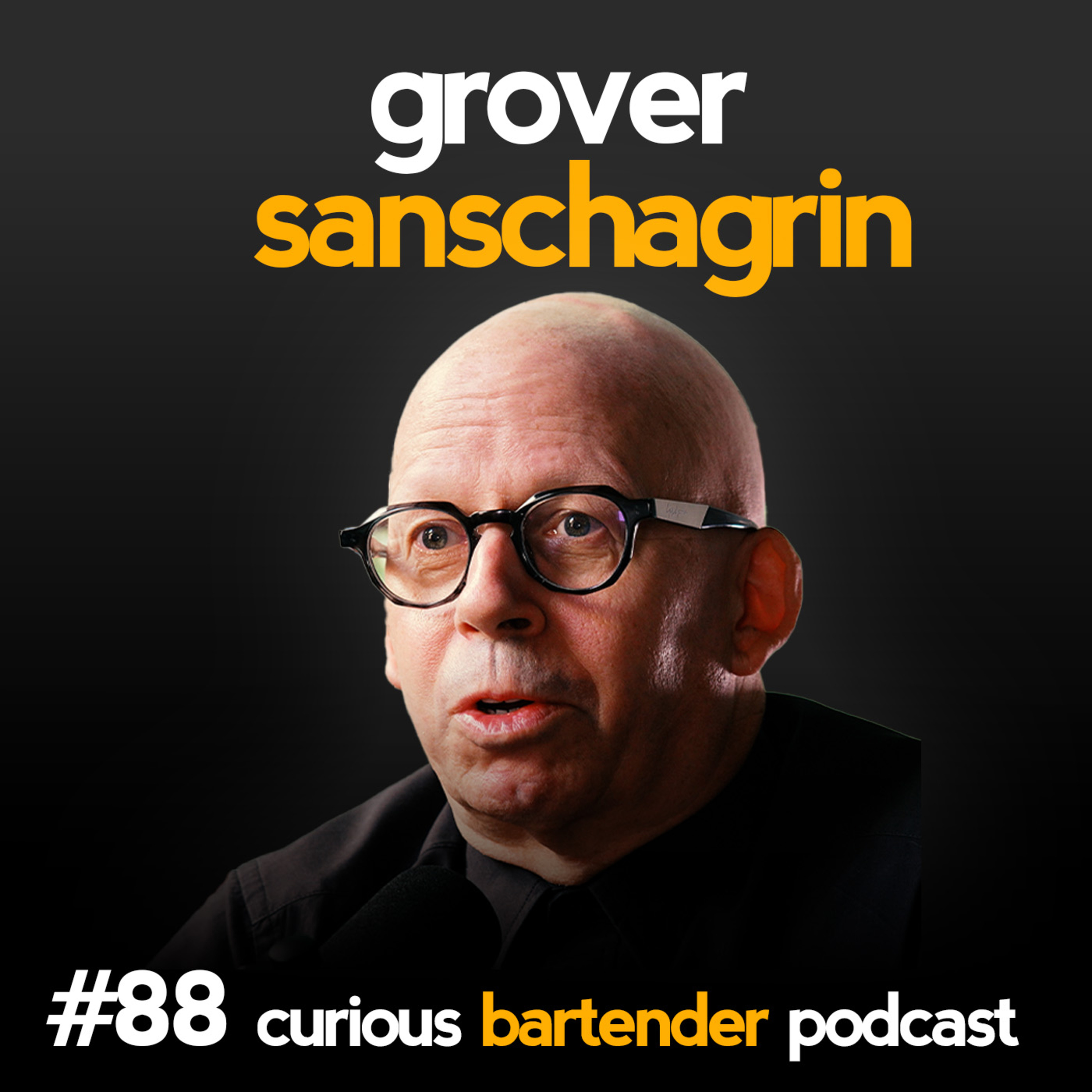
#88 Grover Sanschagrin - Agave Matchmaker, CRT, Additives, Lawsuits, Police Raids, Agave Syrup
3w ago01:17:43Tap to summarizeGrover Sanschagrin is the co-founder, alongside his wife Scarlet, of Agave Matchmaker — the platform, formerly known as Tequila Matchmaker, that has spent over a decade cataloguing how tequila and other agave spirits are actually made. Grover found tequila through Scarlet, who discovered it while working as a journalist in Mexico City, and the pair went on to live in Guadalajara, at the heart of Mexico's tequila region, for eight years, visiting hundreds of distilleries and eventually building an app now used by over 400,000 people to navigate a notoriously opaque category. Grover walks us through how additives — both the legally permitted abocantes (glycerin, caramel colour, oak extract, sugar syrup) and a wider set of undisclosed synthetic ingredients — found their way into a huge share of the market, which by his and Scarlet's own estimate runs as high as 85%, and how their attempt to flag which products were additive-free grew from a simple checkbox into a full verification programme built on sensory training and, eventually, laboratory testing. That work made them two of the most influential, and for parts of the industry most uncomfortable, voices in tequila, and in March 2024 their home in Guadalajara was raided by federal agents while they were thousands of miles away in New York — an experience Grover walks us through in detail. Their legal situation is still working its way through the courts, so there's a fair amount here we've had to leave out or keep light on for now, and we've deliberately avoided naming the parties involved directly. Grover also gives us his read on the recent wave of US class-action lawsuits alleging that some major tequila brands, including names linked to Diageo, Costco and Michael Jordan, fall well short of their 100% agave claims, and we close out talking about where tequila and the wider agave spirits category — now expanding well beyond Mexico's borders — goes from here, plus a look at Rispetto, his own traditionally-made agave syrup.
Transcribe →
#87 Daniele Biondi - Indiana Jones of Rum, Clairin & Haiti, Viche & Colombia, Hampden, Velier, Luca Gargano
Jul 2002:17:28Tap to summarizeDaniele Biondi is one of the world's leading experts on the rum category. Working with Luca Gargano at Velier, he is one of the key figures behind the international rediscovery of Haitian clairin, the new wave of Colombian sugarcane spirits, and a driving force behind the Hampden Estate story. He's been working with rum since the 90's but over the last 15 years particularly, Daniele has spent much of his time travelling to the world's least-documented rum-producing regions — Haiti, Colombia, the Philippines, and more — searching out distilleries that, in his words, "aren't on Google." These distilleries are often so numerous and geographically dispersed that it bodes the question - have we actually seen or tasted much of the world's rums?Daniele began his career bartending in Milan in the late 1990s, and found there was almost no reliable information on the category available anywhere so he began researching obsessively. That personal research project became, in February 2007, one of the first rum blogs in Europe: not just a blog, but a functioning reference work, a "kind of Wikipedia" for rum at a time when the internet had almost nothing on the subject. It grew past 3,000 readers before he even realised it was a significant following, and led directly to him becoming president of Italy's Rum Club.From there, his path diverges from almost every other rum communicator working today. Rather than build a personal media brand, he was recruited into an EU-funded Caribbean producers' association and spent years as a full-time, on-the-ground rum educator — travelling constantly (by his own account, "14 islands in 14 days," well over 100 days a year in some markets), running tastings, PR and trade negotiations, and building direct relationships with producers across Italy, France, Spain and the UK. Then came the discovery work most people do associate with him, even if they don't always connect the name to it: it was Daniele who, in 2012, first went looking for Haiti's undocumented clairin distilleries — "not on Google" — and helped bring what's now a globally recognised spirit category into being. He did the same, more quietly, in Colombia, surfacing viche and the Afro-Colombian women producers behind it, and again in the Philippines, discovering a young distiller working in methods inspired by Hampden. And alongside Luca Gargano, he's been one of the central figures shaping Hampden Estate's modern reputation and the whole aged-clairin project — categories and products that are now widely celebrated, even if the person who did much of the groundwork isn't always credited alongside them.That's arguably the throughline of Daniele's career: he's one of the most consistent, sustained driving forces in modern rum education and discovery over the last two decades, and by his own description, one of the least self-promotional. He calls Velier "a dependent bottler" rather than claiming credit, describes his own day-to-day as "90% of my time on Excel," and treats the travel and discovery as the job itself rather than a platform. He's recognised within the trade — but given the scale and duration of what he's actually built, still arguably deserves to be a much bigger name than he is.Side note: he also wrote the introduction for the Italian version of my rum book.The conversation ranges from muddy backroads in rural Haiti to the fermentation room at Hampden, and from the mechanics of ester chemistry to why flavour is ultimately an emotional, personal experience.With thanks to our sponsors:Fever-Tree Mixers for the best fizzy liquids goingBelvedere for additive free, organic Polish vodka🥃 Get 15% off the world's best drinking vessels at Denver & Liely using the discount code CURIOUS15 at checkout☕ Get 15% off the best coffee liqueur I have tried at Algebra Drinks with code CURIOUS15📷 Follow me on Instagram📚 I've written quite a few books on spirits and cocktails
Transcribe →
#86 British Rum Special - Dropworks, Outlier, J. Gow: History, Production, GI, Tasting, Rum Market, Future of Rum, British vs. Caribbean
Jul 1301:46:57Tap to summarizeWe sat down — hungover, under-slept, and drinking before nine in the morning — with three of the people actually building British rum from the ground up: Lewis Hayes of DropWorks, Collin van Schayk of J. Gow, and Gergo Murath of Outlier. Between them they cover the full range of what this young category can be — Lewis running Europe's largest rum distillery out of Sherwood Forest with England's first copper double retort still, Collin fermenting wild yeast isolated from orchids beside a 2,000-litre pot still on an uninhabited Orkney island, and Gergo repping Outlier's wine-yeast, high-gravity, unfiltered rum out of the Isle of Man after thirteen years behind some of London's best bars. We trace how strange it is that Britain drank rum for centuries without distilling a drop of it until 2012, and dig into what's actually stopping British rum from having an identity yet — the fact that of roughly a hundred brands calling themselves British rum, only a third are fermenting and distilling here, and what a Geographical Indication might do about that. We get into the guts of production — dunder, backset, battonage, cane honey, double retorts versus double pot stills — and challenge the assumption that British ageing must be slower or lesser than tropical: DropWorks is releasing gold-medal-winning rum at a single year old, while J. Gow has just put out the oldest UK-distilled rum in existence, an eight-year-old matured through Orkney winters that regularly bottom out at two degrees. We talk about Haiti and clairin as a model of rum untouched by commoditisation, about the uncomfortable history British producers have to reckon with honestly, and about whether the long-promised rum boom is finally, slowly, arriving — and why slow might be exactly what keeps it from crashing the way gin did. Along the way we taste through six rums, including a whiskey-cask DropWorks expression built to provoke whiskey drinkers, And Outlier rum finished in Sauternes casks, and J. Gow's newest wild yeast release. We close by asking where each of them sees British rum in ten years — and get answers ranging from international distribution to a British "Japanese whiskey" moment.📷 Follow me on Instagram📚 I've written quite a few books on spirits and cocktails🥃 Get 15% off the world's best drinking vessels at Denver & Liely using the discount code CURIOUS15 at checkout☕ Get 15% off the best coffee liqueur I have tried at Algebra Drinks with code CURIOUS15
Transcribe →
#85 Dré Masso - 30 Years of Bartending, Creating Altos, Henry Besant, LAB Bar, Nusa Caña, Dick Bradsell, Potato Head
Jul 601:52:04Tap to summarizeDré Masso is one of the most consequential figures in the modern cocktail world — a British-Colombian bartender whose career has stretched from the epicentre of 1990s London to a beach club in Bali and a cantina in Cartagena. We cover the moments that shaped him: growing up watching his Colombian mother work bar and restaurant shifts, the revolution quietly being assembled at the Atlantic Bar & Grill under Dick Bradsell, formative years at LAB with Douglas Ankrah, a brief stint at Jamie Oliver's landmark restaurant Fifteen, and the Lonsdale Bar meeting that sparked a creative partnership with Henry Besant. We get into the tequila pilgrimage that changed everything — six months following Julio Bermejo around San Francisco, a 2004 trip to Mexico he describes as the best of his life, and the extraordinary story of how a visit to Destilería Colonial and an impromptu tasting session with maestro Jesús Hernandez became the birth of Olmeca Altos, now one of the biggest tequila brands in the world. Dre speaks honestly about the commercial reality of co-founding a brand as a bartender, the grief of losing Henry Besant in 2013, and how that loss collided with a new chapter running Potato Head's sprawling Bali beach club alongside one of the most visionary entrepreneurs he has ever encountered. We close with a tasting of Nusa Cana rum, a deep dive into the forgotten history of Batavia Arak, and Dre's plans for what comes next, including a very public desire to get back behind the stick.With thanks to our sponsors:Fever-Tree Mixers for the best fizzy liquids goingBelvedere for additive free, organic Polish vodka
Transcribe →
#84 Jörg Meyer - Gin Basil Smash, 50 Best Bars, Le Lion, German Bar Scene
Jun 2901:31:36Tap to summarizeJörg Meyer is the founder of Le Lion — Bar de Paris in Hamburg, one of the most consistently recognised cocktail bars in the world and the birthplace of the Gin Basil Smash, a drink he created in 2008 that now accounts for upwards of 25,000 pours a year at Le Lion alone and has become one of the few genuine modern classics produced outside London and New York. In this episode we go deep on the full origin story of that drink: the Whiskey Smash he fell for at Pegu Club in New York, the G'Vine recipe booklet with a basil garnish that caught his eye, the batch of basil he borrowed from a restaurant warehouse next door, and the blog post on July 10th 2008 that set the whole thing in motion. We talk about the strange position of being a committed classicist who loves two-ingredient drinks and measures success in restraint... and yet being best known for a vivid green herb cocktail that outsells everything else on the menu by a considerable margin. Along the way we get into the surprisingly technical world of basil sourcing (500 kilograms a year, with quality varying dramatically by country of origin), why over-muddling produces a drink that tastes of chlorophyll rather than basil, and what a gin fizz served at Bar High Five in Tokyo taught Jörg about the cost of too much lemon. We also get into the World's 50 Best Bars list in considerable depth — Jörg was on it for seven consecutive years, peaked at number 16 in 2013, and has since developed a very clear-eyed view of what the list actually is, how it can be gamed, and why being on it can sometimes be more damaging than helpful for small independent bars. Elsewhere we cover the Diageo World Class competition and what happened when Jörg started asking questions about how it was being run in Russia, the business mechanics of Le Lion right now (sales up 30% without a price increase), the Le Lion summer pass modelled on an 80s German youth leisure scheme, and a Midori cocktail that a Ueno San of High Five in Tokyo served him with barely concealed contempt. We end on Germany's bar scene — where it came from, where it is, and Jörg's honest and slightly uncomfortable answer to the question of what Germany uniquely contributes to global cocktail culture.📷 Follow me on Instagram - https://www.instagram.com/tristanstephenson/📚 I've written quite a few books on spirits and cocktails - https://www.thecuriousbartender.com/
Transcribe →
#83 Bruce Russell - Wild Turkey, Rye, Barrels, Blending, Custodianship, Bourbon Glut, Jimmy Russell, Eddie Russell, Vintage Bourbon
Jun 2201:58:02Tap to summarizeThis week we're filming on location at Wild Turkey in Lawrenceburg, sitting in the old station house with Bruce Russell — third-generation whiskey maker and associate blender, grandson and son of the two living legends whose names hang over the place: Jimmy Russell, the longest-tenured master distiller of any spirit, and his son Eddie. Bruce was headed for a career in robotics until a summer giving distillery tours, and one quietly devastating afternoon when his introverted father walked his tour and told him he didn't know much of anything, redirected the whole course of his life. We get into what it means to carry a name like Russell, the freedom in being told you'll never be Jimmy or Eddie so you'd better be yourself, and the uncanny way personality and palate skip a generation. We discover Jimmy's handwritten 1950s notebooks and the by-hand, by-feel craft that's quietly vanishing, chase the elusive "Wild Turkey Funk" of vintage bourbon and ask whether it can ever be made again. We don't dodge the state of the market — the glut, the overproduction, the correction coming around 2029-30, and why the big houses ride out storms that sink smaller players. There's plenty for the nerds: angel's share losses of 75 to 90 percent on the oldest barrels, the freakish top floors at Camp Nelson where the highest-proof whiskey somehow tastes the best, and how a single recipe becomes Jimmy whiskey or Eddie whiskey depending only on the warehouse. We trace the rise of rye, the difference between Wild Turkey's stewardship and the offence of Russell's Reserve, and the tight, almost familial culture binding the Kentucky distilling families. Along the way we taste through some genuinely rare liquid: Bruce's first solo project - Austin Nichols Gold Foil 16 Year Old - a sneak peek of Russell's 13 made for Eddie's 45th anniversary, then onto the near-mythical Russell's 1998, and hear how Generations brought all three Russells together for what turned out to be the last whiskey Jimmy actively worked on. We finish on a Wild Turkey that travelled to Japan, took on a second life at Chichibu, and came back tasting like nothing any of us expected.
Transcribe →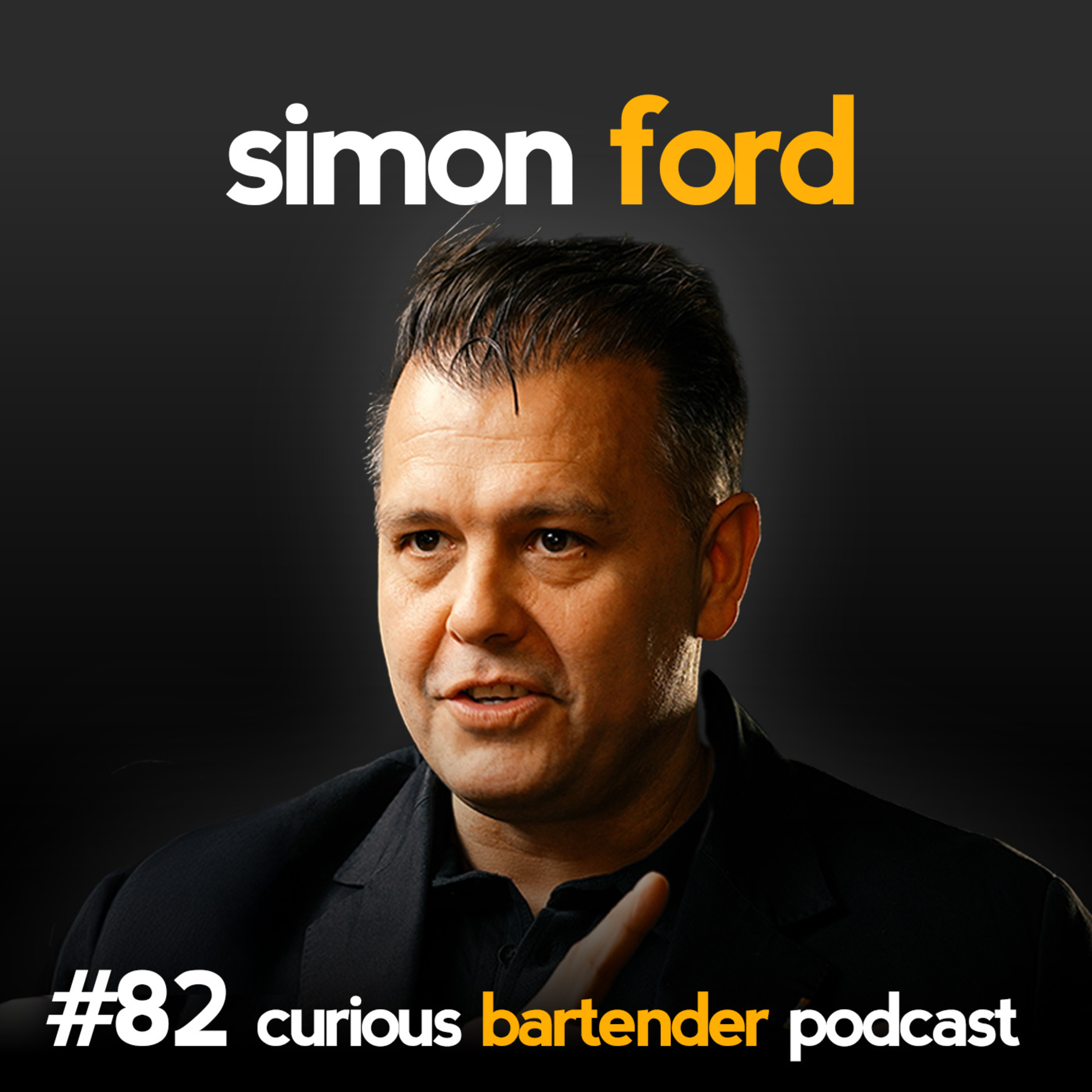
#82 Simon Ford - Ford's Gin, Plymouth Gin, 86 Co., Martinis, London, NYC, First Brand Ambassador, Tales of the Cocktail,
Jun 1502:15:22Tap to summarizeSimon Ford is the co-founder of The 86 Co. and creator of Ford's Gin, and the man widely credited as the first brand ambassador the modern spirits industry ever produced (though he's not so sure about that). In this episode, we trace his career from a London wine shop job secured despite admitting he didn't actually like wine, through his years at Ideal Brands working on Absolut alongside Nick Blacknell, Dick Bradsell and Wayne Collins, to opening the celebrated Koba bar in Brighton and the call that sent him off to launch Plymouth Gin around the world. We follow Simon through his years as Plymouth's North America ambassador, the move to New York in 2006 at the height of the craft cocktail renaissance, and the senior Pernod Ricard directorship he turned down to build something of his own. We dig deep into the founding of The 86 Co. in 2012 alongside Employees Only's Jason Kosmas and Dushan Zaric — the survey of 149 bartenders that shaped Ford's Gin, the 90-plus formula iterations before Simon was satisfied, the moment Dale DeGroff invested on the spot after tasting it at the distillery, and the blind taste test at Pegu Club where Audrey Saunders put Ford's up against 14 other gins and Simon picked it out. We cover the famously oversubscribed Tales of the Cocktail launch party in 2013 (which I was at), the 2019 acquisition by Brown-Forman — including the full story of how it came together and the day Simon fell fully clothed into a pond on the Louisville campus — and the unvarnished realities of scaling a spirit brand from nothing. The episode closes with Simon's current projects: a campaign to revive sloe gin, a new Ford's innovation in development at Thames Distillers, and the annual Ford's Gin party at Tales of the Cocktail.🥃 Get 15% off the world's best drinking vessels at Denver & Liely using the discount code CURIOUS15 at checkout☕ Get 15% off the best coffee liqueur I have tried at Algebra Drinks with code CURIOUS15
Transcribe →