← The Daily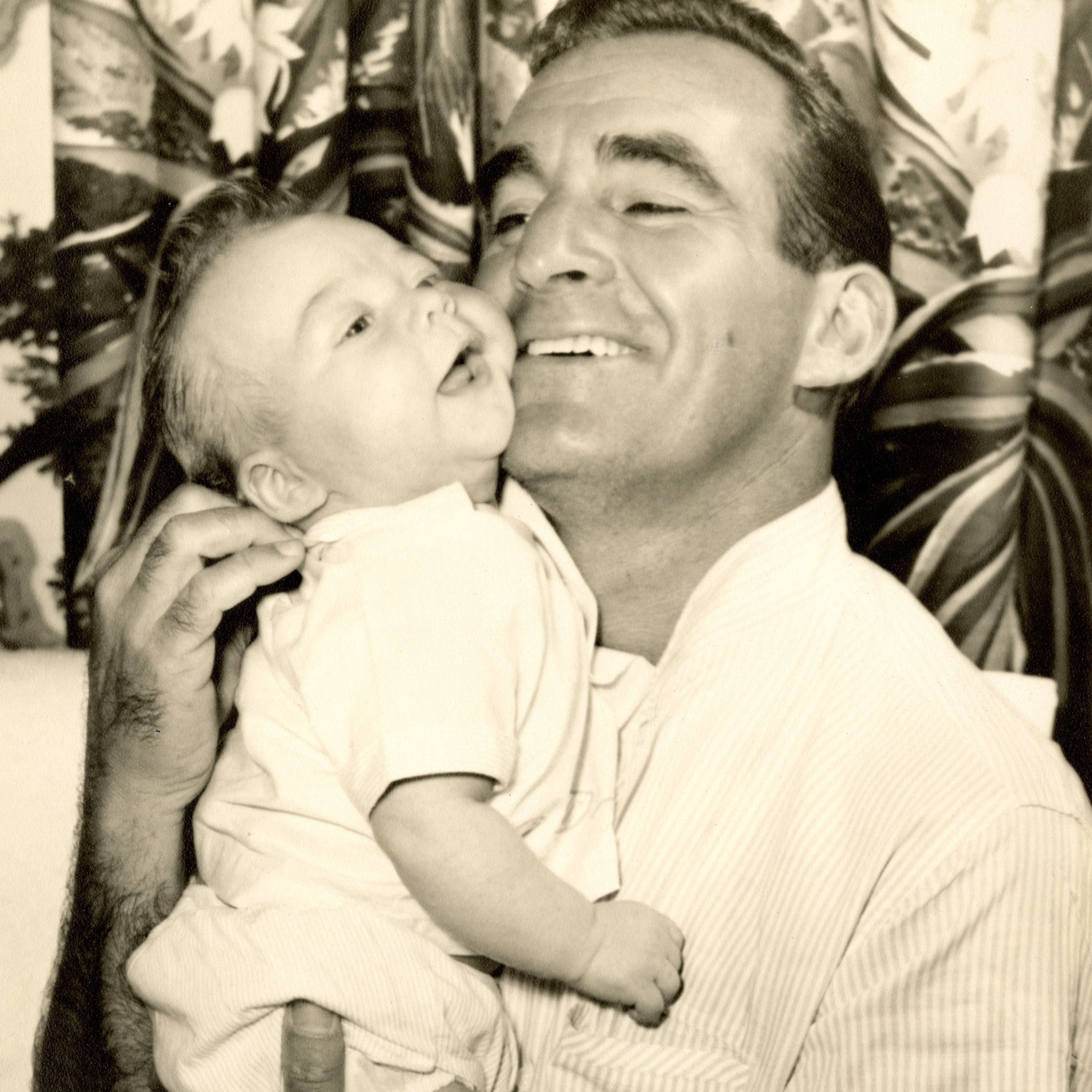
The Daily
Can a Bad Man Be a Good Father?
00:46:48
The writer Tom Junod has spent a career crafting profiles for men’s magazines like GQ and Esquire, often of famously complicated men like Norman Mailer, Kevin Spacey and Tony Curtis. But another man loomed behind Junod’s interest in these figures, informing his own sense of masculinity and manhood: his father, Lou. Lou Junod was handsome, charismatic — a man who seemed like a celebrity, even though he wasn’t famous. He was also mysterious, a keeper of secrets that have continued to reverberate through his son’s life. On today’s episode, Michael Barbaro talks with Junod about his new book, “In the Days of My Youth I Was Told What It Means to Be a Man,” which is part memoir and part detective story, as well as a powerful meditation on fatherhood.
Loading summary
Transcript153 lines
- [00:00]
Capital One Savor Card Announcer
Brought to you by the Capital One Savor Card. With Savor, you earn unlimited 3% cash back on dining, entertainment and at grocery stores. That's unlimited cash back on ordering takeout from home or unlimited cash back on tickets to concerts and games. So grab a bite, grab a seat and earn unlimited 3% cash back with the saver card Capital One. What's in your wallet? Terms apply. See capitalone.com for details.
- [00:27]
Michael Barbaro
From the New York Times, I'm Michael Balbaro. This is the Daily on Sunday, the writer Tom Juneau is a student of flawed men. In a long and varied career in American magazines, at places like GQ and Esquire, Tom profiled complicated figures like Norman Mailer, Kevin Spacey, and Tony Curtis. But in all of those profiles, another flawed man loomed in the background, one who informed how Tom thought about the very nature of masculinity and manhood. And that was his father, Lou, a man who had a life full of secrets. Tom's relationship with his dad is the subject of his new book, which is part memoir and part detective story. It's called in the Days of My Youth. I was told what it means to be a Man. And it's a powerful meditation on what we need from a father, what we inherit from a father, and how we somehow make peace with the gap in between those. Today on Father's Day, my conversation with Tom junot. It's Sunday, June 21st. Tom, Michael, welcome to the Sunday Daily.
- [01:57]
Tom Junot
It's so great to be here.
- [01:58]
Michael Barbaro
It's an honor to have you. Can I ask you to read from the eulogy that you read at your father's funeral?
- [02:09]
Tom Junot
Sure.
- [02:11]
Michael Barbaro
I believe it's on page four.
- [02:13]
Tom Junot
Yeah. So the eulogy had a title. If you're going to be a bear, be a grizzly. And that was one of my dad's sayings. My father, dad, Pop Pop, was not like other fathers. He was not like other people, period. A lot of people have told me that he's with Jesus now. Well, with all due respect, I have my doubts. Unless, of course, Jesus has shaved his beard, ditched the sandals, and is drinking a martini at the el Moroc circa 1955 with Frank and Eva. This is not to say my father was not a believer. He had a whole belief system. He believed in a lot of things. And what he believed in, he believed in. Absolutely. He believed that there was not a person in the world whose appearance could not be helped by exposure to the sun or what he called a fresh burn. He believed that there was not an ailment in the world that could not be cured by salt water. He believed that the way Rhett Butler treated Scarlet was the way all women should be treated. And that Clark Gable was robbed when he didn't win the Oscar for best actor in 1939. He believed that the lottery was a game of skill rather than chance and that he had won it twice, but for some reason had neglected to turn in the ticket. And he believed to the very end that he was going to win again. And then, as he said, then I'll teach you how to live.
- [03:49]
Michael Barbaro
I mean, just from those brief words, it's very evident that your dad was a larger than life character.
- [03:57]
Tom Junot
Yeah, well, so, you know, he had all these maxims, he had all these ideas about how men should be and. And he lived by them. And that's the thing about him. So it's not just that he thought that every man should have a fresh burn, theoretically. And he didn't just say, wear white to the face or a turtleneck is the most flattering thing a man can wear. I mean, he followed all these things religiously and they worked. I mean, that's the thing, I think that you have to understand with my dad is that it all worked. I mean, if he walked into a restaurant, you know, every.
- [04:42]
Michael Barbaro
What am I seeing?
- [04:43]
Tom Junot
Yeah. So you saw a guy who was wearing a blue shirt with a white collar, you know, high to the face, a big fat knot, cufflinks, Florsheim shoes, skin the color of mahogany or A1 steak. So it's any sort of synonym that you can figure out for brown. He was that. And then. And then he had eyes the color of chartreuse. I mean, they were the greenest eyes I've ever seen in any human being. They were on fire. And they were kind of beautiful and entrancing and kind of terrifying at the same time.
- [05:28]
Michael Barbaro
I feel like I'm. I'm looking at Frank Sinatra.
- [05:31]
Tom Junot
Yeah, I mean, so I saw Frank Sinatra once. And that's all you saw were his blue eyes. They were burning like gas jets. And that was the same with my dad. All you saw was his dark skin
- [05:46]
Michael Barbaro
and his insanely green eyes behind this very masculine appearance.
- [05:52]
Tom Junot
Sure.
- [05:53]
Michael Barbaro
You have said are some very specific ideas that your dad had about masculinity. It wasn't just a veneer, it was a whole philosophy. So tell me about that.
- [06:08]
Tom Junot
Well, so it wasn't just clothes, you know, it was also some very specific ideas about manhood and how a man should be. Well, number one, always look a man in the eye. Number Two, always have a firm handshake. Number three, always opened the door for a woman. And then they got a little bit like, after sort of. Sort of the basics, they were complex. There was one time that he told me basically his overall rule for seducing women. And it was, tell a smart woman she's beautiful, and tell a beautiful woman she's smart. So he had a lot of tips, and they were all acted on. They were all part of who he was.
- [07:01]
Michael Barbaro
Where do you think that these lessons about manhood came from? Upon what was it modeled? As best you could tell?
- [07:11]
Tom Junot
As best as I could tell, it was modeled on the movie stars of the late 1930s.
- [07:18]
Michael Barbaro
Not his dad.
- [07:20]
Tom Junot
Definitely not his dad. When we were growing up, my brother, my sister and I, we would always ask him, you know, dad, tell us about your dad. And he would say in the way he spoke, I never had a father. And then one of us would say, wait a minute, dad. You know, your father calls, you know, every couple of months to ask for money. And he would just look at us and repeat, I never had a father. But he would go to the movies, you know, when he was growing up in Brooklyn, and he absorbed everything. He absorbed how to dress from Fred Astaire. He absorbed how to talk from Cary Grant. He absorbed how to treat women from, you know, from Clark Gable. And he was a student of all that. I mean, the thing about my dad. So he was like. He was a rough kid growing up in Brooklyn, but by the time I knew him, he had expunged every bit. Bit of his Brooklyn accent. And a lot of that was because when he was In World War II, he was wounded. And then instead of being shipped back to the front, a lieutenant heard him sing and put him in a show. And so he became, you know, a crooner singing in a traveling army act called For Men Only, which is almost too on the nose. It really is. And when my dad came home from World War II, he tried to make it as a singer and did not. But one of the things he still did was go down to the basement and tape himself singing to instrumental records.
- [09:29]
Michael Barbaro
And for an audience of himself.
- [09:31]
Tom Junot
Himself for an audience of himself. Just one look and then I knew that all I longed for long ago
- [09:56]
Michael Barbaro
and so he behaved the way a crooner, in his mind, was supposed to be.
- [09:59]
Tom Junot
He behaved the way a crooner was supposed to behave. But he crooned his daily language. I mean, he was a crooner even when he was talking. It was all, you know, a mechanism of seduction. Of some kind. He would stand in front of the mirror. In the morning. I'd be on my way to school, and I'd go in to say hello or goodbye. And he would be standing there in his black bikini in front of this enormous mirror in his room, and he would say, look. Look at this body. Have you ever seen a body like this? And he had a body. I mean, he was built like Charles Atlas.
- [10:41]
Michael Barbaro
How did all of this philosophy manifest in the kind of father that he was to you? What kind of dad was he?
- [10:50]
Tom Junot
He was actually a really good dad in a lot of different ways. He was attentive. He was prescriptive. He taught me how to play football. He taught me how to box. He would kiss me hard good night on my head. Or in the morning when he went away on a trip. You know, he was a super attentive dad. At the same time, he was terrifying. Like, I was terrified of my father. He was not a violent person around the house. But the amount of force that his presence had was just the kind of thing where you felt like if you came too close to him, it was like going too close to the sun, that you would be obliterated. The toughest thing about growing up with my dad was having this warm, overwhelmingly, you know, demonstratively loving person who, at the same time, was a person I could not be in the same room with, especially when I was, like, five, six, seven years old, you know, without crying.
- [12:14]
Michael Barbaro
Hmm. And what specific behavior would make you cry?
- [12:18]
Tom Junot
I mean, there was a. There was definitely a time when I was so given to tears that my father, at dinner time would sort of make it a game. Tommy, why aren't you finishing that steak? And I would. You know, my lip would start quivering, and I would cry. And I think it was just. There was a power imbalance that. That was really just tough to deal with.
- [12:48]
Michael Barbaro
So here's the disconnect that I have, having read your book. This intimidating guy, he sells purses.
- [12:57]
Tom Junot
Yeah, he was a handbag salesman.
- [12:59]
Michael Barbaro
Square that well.
- [13:01]
Tom Junot
So he didn't make it as a singer, and he hadn't gone to school past eighth grade. And he had really nothing but his looks and his charm. And one of his army buddies had gotten a job in the leather business as a salesman, and he took my dad under his wing, and they went out on the road together. And, you know, my father quickly became the. To the degree that there were legendary handbag salesmen. He was the legendary handbag salesman.
- [13:40]
Michael Barbaro
Legendary for what?
- [13:42]
Tom Junot
Legendary for two things. Legendary for, you know, being big Lou, that was his. Even though he was, as he would say, 6ft in shoes, meaning he was about 5, 10. He was big, Lou. But he was also known for seducing women.
- [14:03]
Michael Barbaro
So he was selling handbags and he was seducing buyers.
- [14:08]
Tom Junot
But his sex appeal was the thing that it not only made him the celebrity that he wanted to be, but also made him money. I mean, my father was an extremely successful handbag salesman. And I think that, like, his earnings topped out in the early 70s or the mid-70s at around $250,000 a year, which in the mid. For 1974, that was big money.
- [14:41]
Michael Barbaro
Huge money. I mean, I'm gonna say 3x that given inflation today.
- [14:46]
Tom Junot
Exactly. I mean, I think that he was. I think that he was promiscuous. I think that he was a drift. You know, if he was a philanderer, he was a driven philanderer.
- [14:58]
Michael Barbaro
And this is a deliberate, intentional word you're using. He's married. He's married to your mom.
- [15:03]
Tom Junot
He's married to my mom from as long as he was alive. You know, in my world, I was born to a marriage that stayed together until both of my parents passed away. He's described, you know, often in the press about the book as a philanderer. And I guess that's the right word, but it seems almost too mild for what he was.
- [15:30]
Michael Barbaro
Correct me if I'm wrong, but you come to understand all of this not just through youthful intuition, but as you write, through a pretty big moment of discovery.
- [15:44]
Tom Junot
Yes.
- [15:46]
Michael Barbaro
So tell me the story of how you come to understand that your dad's masculinity and his virility is. Is not just an external identity, but something he is. He's acting on in ways that are perhaps not meant for you to have understood.
- [16:06]
Tom Junot
The thing about my dad was he presented himself in a very forthrightly sexual way. And it wasn't like that was simply for show. My father had an affair with my first friend's mother when I was three years old. And I knew it.
- [16:30]
Michael Barbaro
You knew it?
- [16:31]
Tom Junot
I knew it.
- [16:31]
Michael Barbaro
Somehow.
- [16:32]
Tom Junot
Somehow I knew that something was. Was wrong, something was off, something that made my mom unhappy. That was always sort of the compass needle. I talked to you before about always crying around my dad and that I felt, you know, sort of powerless around my dad. The way that I tried to deal with that was to try to, like, figure out my dad. And so, you know, I never stopped sort of spying on him, snooping around. And then When I was 16, my father came home with something that he had Never had. So my father was not, like, an organized guy. And he kept all his work stuff in, like, a manila envelope, handwriting scrawled all over it. One day he comes home, and all of a sudden he looks like every other guy on the Long Island Railroad. He comes home with a Samsonite briefcase. And the minute I saw the Samsonite briefcase, I did not think, oh, my dad's like a normal guy now. I said, there's something inside that Samsonite briefcase.
- [17:45]
Michael Barbaro
And you wanted to figure out what it was.
- [17:46]
Tom Junot
And I was driven to figure out what it was. And one night he was going out to the track with my mom, which he frequently did, and I went into his closet. I pulled out the briefcase and looked at it and wondered whether I should open it because I knew that things were about to change. Right there, my heart was beating. And then I opened it anyway.
- [18:13]
Michael Barbaro
And what'd you find?
- [18:14]
Tom Junot
There was this huge stack of really extreme pornography in Super 8, a celluloid format for watching home movies. And there were these two gigantic rubber dildos.
- [18:39]
Michael Barbaro
It's like a whoa moment.
- [18:40]
Tom Junot
Yeah. And you watch the Super 8? I watch the Super Eights. And it's on an old, you know, movie projector that we used to watch home movies on. And I'm watching this really extreme pornography.
- [18:55]
Michael Barbaro
It's extreme.
- [18:57]
Tom Junot
It was subjugation porn.
- [19:00]
Michael Barbaro
You're a teenager.
- [19:01]
Tom Junot
I'm 16, just turned 16.
- [19:04]
Michael Barbaro
And so you've never seen anything like this?
- [19:06]
Tom Junot
I've never been kissed. I didn't know anything. And it jams in the projector. And I smell the smoke.
- [19:16]
Michael Barbaro
Oh, my gosh.
- [19:17]
Tom Junot
And it burns and it breaks. It snaps.
- [19:19]
Michael Barbaro
Oh, my God.
- [19:22]
Tom Junot
And so that presented me as a son with a problem like, what do I do? I rewound it meticulously. I spent hours, hours rewinding it. So that.
- [19:40]
Michael Barbaro
Because you're terrified of him.
- [19:41]
Tom Junot
I'm terrified of him. And I didn't want him to know my secret, which was that I knew his secrets. And, you know, I went from thinking that my dad was sort of a charming thief. Like somebody that would be in a movie played by Cary Grant or David Niven to a hitman.
- [20:08]
Michael Barbaro
Just help me understand that. I mean, you, by this point, do seem to have understood, even from toddler days.
- [20:16]
Tom Junot
Yeah.
- [20:16]
Michael Barbaro
That your dad was sleeping around.
- [20:19]
Tom Junot
Sleeping around. Yeah.
- [20:20]
Michael Barbaro
But this does. What?
- [20:25]
Tom Junot
It made me wonder if my dad, at some level, was bad.
- [20:34]
Michael Barbaro
Did it cross your mind to talk to your mom about this?
- [20:37]
Tom Junot
It crossed my mind, but then I knew that it was the nuclear codes to my family. I mean, I don't think my parents marriage would have survived. I don't know if I would have survived. I mean, that's the whole thing about secrets. You really don't know what's on the other side of them. Well, they enlist you in them. And I was enlisted in that particular secret. I sort of got bonded to my dad through the secrets that sort of upset me most. When I was 20, you know, I went out on a date with my dad and a buyer with whom he was very clearly having an affair with.
- [21:20]
Michael Barbaro
What was that like?
- [21:22]
Tom Junot
It was at once of concern because it was another thing I had to keep from my mom. And also, I'll just say it, it was like one of the most glamorous nights of my life. We went out to see Woody Allen at Michael's Pub. We walked my father's date and her sister in law, who was sort of like my date, you know, back to the Plaza. And it was my first night in New York City. And I was sort of. I was as swept away as the two women were. So my dad presented himself as a paragon of masculinity. But masculinity to my dad didn't just mean being able to handle yourself with your fists. It didn't just mean looking sharp. It didn't just mean having a firm handshake. You know, it meant having sex. That is the thing, I think, that distinguished the way I grew up from a lot of other people who had sort of macho dads. I had a macho dad who was forever on the make. And that was the difference.
- [22:45]
Michael Barbaro
And wanted you to be on the
- [22:46]
Tom Junot
make and wanted me to be on the make.
- [22:48]
Michael Barbaro
As your father gets older, what's your relationship to him? And these secrets that he may or may not understand you possess that are bringing you closer to him, but also clearly have left you wary of him.
- [23:08]
Tom Junot
You know, I became in some ways his protector. He did not age well. And he went from being a guy who made $250,000 a year to a guy who had. He had lost everything. And how did he lose everything? He was a terrible gambler. And he was even worse. He was even a worse investor in the stock market. I mean, he was the most confident man I had ever come across. And that itself was like seductive and powerful. And then he became a guy whose pockets were lined with regrets. I mean, he was one of these guys. That's all he did was talk about woulda, coulda, shoulda. And so in 1996, I was writing for GQ. I wrote this story called My father's fashion tips, which was a way to sort of allow him to expound his principles and his maxims and introduce those to, you know, the wider reading public. The reason I did it was as a gift to him. I wanted to make him the celebrity that he never was. But. And there's always a but, I think in all of these stories. I did that story to corner my dad with a tape recorder between us. And so I finally had the chance to talk to him about all this stuff. And, you know, so I found out that he had an affair with not just Zsa Zsa Gabor, but with the Gabor sisters. I found out one Gabor. Not enough. Not enough. He talked about the affair that he had with my first friend's mother, Valerie Shockett.
- [25:20]
Michael Barbaro
The one you sensed when you were three.
- [25:21]
Tom Junot
The one I sensed when I was three. Then he told me about something that happened to him that at once ennobled him as, like, a tragic character and also made me wonder if I really knew him at all.
- [25:58]
Michael Barbaro
We'll be right back.
- [26:08]
Capital One Savor Card Announcer
Brought to you by the Capital One Savor card. With Savor, you earn unlimited 3% cash back on dining, entertainment and at grocery stores. That's unlimited cash back on ordering takeout from home or unlimited cash back on tickets to concerts and games. So grab a bite, grab a seat, and earn unlimited 3% cash back with the saver card. Capital One what's in your wallet? Terms apply. See capitalone.com for details.
- [26:33]
Michael Barbaro
This podcast is supported by the Propane Education and Research Council. America's energy security is on thin ice. We're challenged by an overburdened electrical grid, rising energy costs, and disruptive severe weather. You could wait until one of these stops you cold. Or you can make a power play with propane. It's affordable, abundant, safe and made in the US Propane is reliable energy even when the grid isn't. Visit propane.compowerplay to gain the ultimate energy advantage.
- [27:05]
Podcast Sponsor Announcer
This podcast is supported by Only Fantasy on Audible. From the earliest days of the Internet, people have shared content online. But then came a platform that promised to put creators in charge of their own destiny. While you've heard of OnlyFans and its creators, Only Fantasy is here to challenge what you think you know about the platform. In this new investigative podcast, journalist Leon Nayfak teams up with comedian and OnlyFans creator Gracie Kanan for a one of a kind exploration into the current state of human connection. Listen to Only Fantasy wherever you get your podcasts or binge all episodes ad free. Right now Only on Audible. Start your Audible subscription in the Audible app, or on Apple Podcasts.
- [27:42]
Michael Barbaro
Tom, describe this information your father shared with you that, for lack of a better word, clearly changes your life and changes your view of him.
- [27:51]
Tom Junot
Sure. So this was my last day with him. For this story. I had taken him out to the Dune Deck Hotel on Dune Road in West Hampton, which was sort of his refuge when I was growing up. He would leave the house, our house, around 4 or 5 o', clock, you know, dressed in his sort of uniform. He'd wear an orange alpaca sweater and white ducks, which were white pants. And he would go out for, you know, for a drink at this hotel. And so I took him there when I was doing the story for gq. And there was a moment where I felt. I felt that I didn't have to ask any more questions. I felt like I was done. And then that night when we were at the hotel, an 81 year old woman asked him for his phone number when we were out at dinner, which was just. He was 77 at the time, so it was just a beautiful. It was just a beautiful moment. But the next morning, I asked him, I said, dad, you know, when that woman asked you for your phone number, is that what it was like when you were in your 30s and 40s and even 50s? And he shook his head and he said, tommy, Tommy, Tommy, I'm not pulling your leg. There was a time that I couldn't walk down Fifth Avenue without being propositioned. And I said, gee, dad, do you take any of them up on it? And his answer was, not all of them, you know, And I said, okay, dad, how many? I'm not telling you. I'm a gentleman. Okay, dad, give me a percentage. Oh, I don't know, 25%. That led me to the next question, which is, did you ever fall in love with one?
- [29:52]
Michael Barbaro
Mm.
- [29:53]
Tom Junot
And there was a pause, and then my father looked at me and held out a finger and he said, one. I asked, who is she? What's her name? What happened to her? And he said, she died. He said she fell down the steps of her home in Florida, and she was a married woman. And it was the central tragedy of my dad's life. It was the thing that I didn't see coming. Like, I think I saw the porn and the dildos coming more than I saw that coming.
- [30:41]
Michael Barbaro
That he could be deeply.
- [30:42]
Tom Junot
That he could be deeply in love and have loved and lost. That he had something happen to him that couldn't be just sort of shuffled away like any of his other lovers.
- [30:58]
Michael Barbaro
Did you end up putting the story of this great love of your dad's life in the piece about him that ran in gq?
- [31:07]
Tom Junot
No, I didn't put that story in there. I didn't put any of the secrets that he shared with me at the Dune Deck that weekend in the story.
- [31:20]
Michael Barbaro
You spared him.
- [31:21]
Tom Junot
I spared him. And I put in the secrets that he wanted everybody to know. The secrets of grooming, the secrets of hygiene, the secrets of dressing. Everything else I kept to myself.
- [31:36]
Michael Barbaro
A final tribute.
- [31:37]
Tom Junot
A final tribute to a diminished man. To a man who was a diminished man. And it was intended as a gift to him. And it worked as a gift to him. And the piece became one of the most popular pieces I had ever written. There was a photo of my father in it in a tuxedo, drinking a martini. And it wound up in the window of the B. Altman on fifth Avenue.
- [32:07]
Michael Barbaro
The department store.
- [32:08]
Tom Junot
The department store.
- [32:10]
Michael Barbaro
He was immortalized in a way.
- [32:11]
Tom Junot
I thought my job was done.
- [32:14]
Michael Barbaro
And he passes away 10 years later, age of 87. That would be the moment for most people where their relationship with their father, their mother, their parent more or less comes to an end. Right. You have a bunch of secrets. They've died with him. They're probably gonna die with you. But as you write, it's this precise moment when you actively start to seek out a very big and new chapter in your relationship with your father. And what made you do that?
- [32:54]
Tom Junot
So I orchestrated my dad's funeral service. I hired a shantuze from New York City to come and sing I'll be seeing you. Instead of, you know, Christian hymns, I selected Sinatra songs for everybody to sing at the funeral. I gave the eulogy that I spent, you know, a long time preparing.
- [33:20]
Michael Barbaro
Right.
- [33:20]
Tom Junot
I got the last word. I, I'm, I'm done. And then at the end of the funeral, this beautiful woman stands up that I didn't really even, like, notice her presence. I was so involved in what I was doing. She's the only black person at the funeral. She's six foot tall. She's wearing a black leather jacket. She's wearing blue jeans cut to Capri, pant length. She has these gold sandals on with five inch heels. And she stands up, she turns around, she brings her hands down on the lectern and she says, can we all just agree that this was a man?
- [34:15]
Michael Barbaro
Wow.
- [34:17]
Tom Junot
And that's throws. That throws me.
- [34:20]
Michael Barbaro
And so you discover yet another woman.
- [34:22]
Tom Junot
So there's an. So there's another woman that your woman has. There's another woman. She was a person who was in the handbag business. She's not the woman that he was in love with. She was just another woman that he had a long affair with. And once again, it was something that eventually set me on the path of trying to find out everything about him.
- [34:46]
Michael Barbaro
How did you actually go about investigating the parts of your dad's life that you didn't know? Because by this point, you know a great deal.
- [34:53]
Tom Junot
Yeah, a lot. Basically, the way I did it was, you know, I tried to call people who were connected with my dad, either sexually or physically, through the business, through the handbag business. I mean, to the extent that I went and went out to California and found the woman with whom he had an affair when I was three years old. But the biggest thing that I did was try to find out more about the 1.
- [35:29]
Michael Barbaro
The great love who died.
- [35:30]
Tom Junot
The great love died. And that was the hardest part as well. Why? Because she had children. She had four children. I looked at the notes that I had written to myself when I first found out the name of the one. And her name was Peggy Monahan. And when I found out her name, I found out the name of her children. And in one note that I wrote to myself, I asked myself, I say, you know, my father, 40 years ago, invaded this family's life, and it had a tragic ending. Do I presume to do that again?
- [36:29]
Michael Barbaro
And why. Why did you want to invade this same family again, just like your father?
- [36:38]
Tom Junot
Because when I first started doing my research into the book, I spoke to the children of my father's best friend in Florida. His name was Frankie Klein. He was my dad's wingman. He was one of my dad's best friends. And, you know, they had met Peggy Monahan. They had seen Peggy Monahan. They had seen Peggy Monahan with my
- [37:02]
Michael Barbaro
father in this secret life in Florida. While we're back up here.
- [37:08]
Tom Junot
Yeah. One of Frankie's daughters said, I always knew that it was a forbidden love. And then another of Frankie's daughters called up one day and said, listen, there's something I need to tell you. And what she needed to tell me was that Peggy had a child by my dad, or was rumored to have had a child by my dad. I didn't know which one, but I took it upon myself to find out,
- [37:43]
Michael Barbaro
because suddenly you have a sibling.
- [37:48]
Tom Junot
It was such a powerful urge because I knew what my dad's secret life had done to my family. And I had an idea what my father's secret life had done to the Monahan family. And I was driven by this urge to put it all back together again. And I took it upon myself to do that.
- [38:28]
Michael Barbaro
We are going to take one more quick break. We'll be right back.
- [38:41]
Capital One Savor Card Announcer
Brought to you by the Capital One Savor card. With Savor, you earn unlimited 3% cash back on dining, entertainment and at grocery stores. That's unlimited cash back on ordering takeout from home or unlimited cash back on tickets to concerts and games. So grab a bite, grab a seat, and earn unlimited 3% cash back with the Savor Card. Capital One what's in your wallet? Terms apply seecapitalone.com for details.
- [39:07]
Michael Barbaro
This podcast is supported by the Propane Education and Research Council. America's energy security is on thin ice. We're challenged by an overburdened electrical grid, rising energy costs, and disruptive severe weather. You could wait until one of these stops you cold, or you can make a power play with propane. It's affordable, abundant, safe and made in the US Propane is reliable energy even when the grid isn't. Visit propane.compowerplay to gain the ultimate energy advantage.
- [39:38]
Podcast Sponsor Announcer
This podcast is supported by OnlyFantasy on Audible. From the earliest days of the Internet, people have shared content online, but then came a platform that promised to put creators in charge of their own destiny. While you've heard of OnlyFans and its creators, OnlyFantasy is here to challenge what you think you know about the platform. In this new investigative podcast, journalist Leon Nayfak teams up with comedian and OnlyFans creator Gracie Kanan for a one of a kind exploration into the current state of human connection. Listen to Only Fantasy wherever you get your podcasts or binge all episodes ad free right now only on Audible. Start your Audible subscription in the Audible app or on Apple Podcasts.
- [40:15]
Michael Barbaro
So Tom, after you discover that you might have a sibling you didn't know about and you realize how deep this urge is to figure it out, what do you do?
- [40:29]
Tom Junot
Well, I sent out an email and letters to some of the children saying in that email, hello, my name is Tom Junow. You don't know me, but my father was in love with your mother. Your mother and my father had a long affair and I've been given to understand that your mother was the love of my father's life.
- [41:04]
Michael Barbaro
What did they communicate back to you?
- [41:07]
Tom Junot
Well, the first person in the family that I met was named Tommy and we met on New Year's Eve 2016. We went to a bar in Queensland and Tommy was basically trying to suss out, you know, my Motives in contacting him and in pursuing, you know, because I told him I was writing a book. He asked if he could go outside and smoke a cigarette. And I said, sure. And we went outside, and the minute he turned around and lit up the cigarette, he looked at me and he goes, it's my sister, isn't it? And I said, yeah. And he's like, I knew it. And then he said, but here's the thing. You can never tell her.
- [41:59]
Michael Barbaro
So you're being asked to keep yet another secret, but you decide not to. You do reach out to her. Why?
- [42:11]
Tom Junot
Because I couldn't live with nothing finding her. I couldn't live with it. I couldn't. I had started trying to, you know, trying to put the pieces back together. And the idea of not completing that task while knowing that there was someone out there, I just couldn't. I couldn't. I couldn't abide by it. And I didn't think ultimately it would be anybody's decision but hers. And so in 2018, I decided to approach her. And her name is Liz Ann, and she owns and runs and cooks in a food truck at the University of Connecticut. And one day, I decided to approach the food truck. And I've done a lot of interviews, and I've done even pretty scary interviews. I've knocked on any number of doors, and nothing ever in my entire journalistic career scared me more than walking up to Liz Ann's food truck and introducing myself. And she asked me, how can I help you? And I said, liz Ann, I'm Tom Junot. And she has this beautiful, beautiful smile. And she was smiling, and then the smile disappeared. And she looked at me, and she looked at me, and then the smile came back, and she said, what the hell are you doing here?
- [44:03]
Michael Barbaro
Did she know?
- [44:04]
Tom Junot
I think she knew. I certainly did. There is something about seeing somebody who is related to you that is hard to describe. When I first saw Lizzie's picture on her Facebook page, it's not that I identified her. It's not that I was able to say, oh, yeah, we have the same nose, or we have the same smile lines, or our smiles are similar. It was beyond that I recognized her, and I think that she recognized me as well. I mean, it took a while, but it just turned out to be one of the most remarkable experiences of my life. Not just because we found each other, but we had lost. We each had lost something enormous. In May of 2022, I lost my sister Kathy. She died in July of 2023. Lizzie lost her brother Michael, and on Christmas Eve, 2022, she called me to tell me that she had gotten the results of the ancestry test back.
- [45:32]
Michael Barbaro
You had lost siblings and you had gained siblings.
- [45:35]
Tom Junot
Yeah. And so in that moment, we each had lost family and we each had found each other. But there was something else about it. I felt like I had settled finally what I'd never been able to settle in my life, which is, you know, my feelings about my dad and my knowledge about my dad.
- [46:01]
Michael Barbaro
Well, how does this settle? Well, I'd like to and not disrupt. Despite a lifetime of betrayals that ends with arguably the greatest betrayal of all.
- [46:12]
Tom Junot
Yes.
- [46:13]
Michael Barbaro
A secret family, a secret child.
- [46:15]
Tom Junot
Right.
- [46:16]
Michael Barbaro
A great love who he paraded around Florida.
- [46:20]
Tom Junot
Right.
- [46:21]
Michael Barbaro
In a pretty cavalier way when he was allegedly off selling purses. Who knows what he was doing?
- [46:27]
Tom Junot
Right.
- [46:27]
Michael Barbaro
Wasn't taking care of you in those moments. And we haven't talked about how much he was or wasn't a father to this sister. But are you not at all angry?
- [46:42]
Tom Junot
So anger doesn't come easy to me with my dad. And not long after it was confirmed that Lizzie and I are brother and sister. I was taking a ride on a winter day in a bus to LaGuardia Airport, and I sat next to a woman who asked me, had the misfortune, to ask me how my holidays were.
- [47:12]
Michael Barbaro
Let me tell you about my holiday.
- [47:14]
Tom Junot
So I told her everything. So she listens to the whole story. And then she says, can I ask you one question about your father? And I'd like to read the passage in the book where I answer her. Why aren't you angry at him? She asks. She waits for an answer, so I try to think of one. Why did I do the gentlemanly thing and buy her a coffee when I bought mine? Because of my dad. Why has the discovery of Lisanne come to mean so much to me? Because of my dad. Why do I love music so much? Because of my dad. Why do I love language so much? Because of my dad. Why am I a writer in the first place? Because of my dad. I took so much from him. I owe so much to him. And when I respond to the world, I am often responding through him, for better and for worse. He taught me how to live, man, and he gave me permission to enjoy life. He might not have been a good man, but he was an elemental one. And I feel his presence when I eat, when I drink, when I make love, when I breathe. Anger never had a chance.
- [48:56]
Michael Barbaro
If anger isn't the right word for the way you feel about your dad right now, what is the right word or words that you feel about your dad right now?
- [49:09]
Tom Junot
I couldn't have written this book without loving him. And there's a part of me that doesn't want to say it, but. But that's where it is. I am ambivalently still in love with my dad.
- [49:33]
Michael Barbaro
Well, Tom, thank you for being here, for talking about your dad and for the gift of this book. And happy Father's Day to you.
- [49:42]
Tom Junot
Thank you very much, Michael.
- [49:48]
Michael Barbaro
Today's episode was produced by Tina Antolini. It was edited by Wendy Doerr and engineered by Daniel Ramirez with production assistance from Dalia Haddad. It contains music by Dan Powell. That's it for the Daily on Sunday, I'm Michael Balbaro. Happy Father's Day. See you tomorrow.
- [50:18]
Capital One Savor Card Announcer
Brought to you by the Capital One Savor Card. With Savor, you earn unlimited 3% cash back on dining, entertainment and at grocery stores. That's unlimited cash back on ordering takeout from home or unlimited cash back on tickets to concerts and games. So grab a bite, grab a seat and earn unlimited 3% cash back with the Savor Card. Capital One, what's in your wallet? Terms apply. See capitalone.com for details.