Loading summary
Transcript56 lines
- [00:00]
Planned Parenthood Announcer
This podcast is supported by Planned Parenthood Federation of America. As a listener of the Daily we know you want the facts. Fact one, some lawmakers are making it harder for Americans to access health care. Two, A new policy threatens to prevent patients from using Medicaid insurance for life saving care at Planned Parenthood health centers. This could mean cancers going undetected, STIs left untreated, and patients not receiving care they need. 3. 3. Planned Parenthood will not back down, but they need your help. Donate@PlannedParenthood.org defend from the new York Times.
- [00:37]
Rachel Abrams
I'm Rachel Abrams and this is the Daily. Over the weekend, the United States military pulled off a stunning rescue behind enemy lines in Iran. The mission to save an injured airman was as complicated as it was daring. Today, my colleague Eric Schmidt explains how the US Pulled it off and why this victory may be short lived. It's Tuesday, april 7th. Eric Schmidt, welcome back to THE Daily.
- [01:23]
Eric Schmidt
Thank you.
- [01:24]
Rachel Abrams
So over the weekend, the administration pulls off this operation that seems like it could have been ripped from a Hollywood movie. Right. And we're going to get to the details of it. But before we do, Eric, just set the stage for us and tell us what was happening in the war in the days leading up to this rescue mission.
- [01:41]
Eric Schmidt
Sure. So by Friday, it was the end of the fifth week of the air campaign that Israel United States was waging against Iran. In retaliation, Iran had closed the Strait of Hormuz. That sent gasoline prices here in the US Skyrocketing and economic reverberations across the globe. And in the polls, the war was also unpopular. But the administration was trying to sell the point that they were winning. This was a successful military campaign and that the United States had actually achieved air dominance over Iran, meaning that they
- [02:13]
Rachel Abrams
controlled the airspace over Iran. That's what our military was saying.
- [02:16]
Eric Schmidt
That's right. And then early Friday, we got the news that an American warplane had actually been shot down over Iran, the first time that had happened in the, in the war. And so this was a real jolt that. Wait a minute. You know, we've been hearing from the administration that everything's United States has such control over the skies that they can fly just about any mission. Then suddenly we hear about this F15E Strike Eagle plane getting shot down.
- [02:41]
Rachel Abrams
And what was the plane doing in Iranian aerospace to begin with?
- [02:45]
Eric Schmidt
So we don't know exactly what its mission was, but most likely it was carrying out a mission to strike one of these many military targets. It's a heavy duty bomber, drops bombs, 2,000 pounds or more on targets. And so it's been one of the world workhorses of this campaign.
- [03:01]
Rachel Abrams
And who was in the plane, Eric?
- [03:03]
Eric Schmidt
So the F15E is a two seat plane. You have a pilot in the front and then the officer behind him is called a weapons systems officer. These are both Air Force pilots, fairly experienced. So early Friday morning over on this F15E gets hit and they immediately eject from the plane. The first thing that happens in an ejection is the canopy of their plane pops off. They then eject one after the other, but it's a few seconds apart. So when they parachute down, they could be miles apart. They don't land in necessarily the same place. The winds could be different. There's all sorts of variables that make it difficult to, to determine exactly where they land. So once this happens, the military is immediately alerted that there's a problem on the ground and they go into search and rescue mode. Now, these aviators are wearing special vests in their flight suits that have communications on them. They have a special beacon they can use to signal their location. And within about six hours, the pilot is scooped up, you know, by search and rescue teams, came under fire, but they were able to get him out of Iranian territory and back to Kuwait.
- [04:13]
Rachel Abrams
And the other guy though, at this point, what does the military know about him?
- [04:18]
Eric Schmidt
So the problem with a weapons systems officer was hours went by and they had no contact with him.
- [04:24]
Rachel Abrams
So they don't know if he's injured, they don't know if he's dead, they don't know that he's captured, they don't know anything.
- [04:28]
Eric Schmidt
Exactly. And they're worried about that. But this is how pilots are trained. They want to get to someplace safe and someplace where they can communicate their position without being detected. What we now know is that he climbed this 7,000 foot ridgeline even though he's injured.
- [04:46]
Rachel Abrams
7,000ft?
- [04:47]
Eric Schmidt
Yeah, he's scrambling up, you know, this rugged mountain space. And this is in southwestern Iran. Again, it's now in daytime and he is scrambling up, but he's also conscious that he doesn't want to be seen or detected. So he eventually makes it up to the top, even though he's kind of bloodied and injured. He makes it up to the top of this ridgeline, he finds a crevice to hide in.
- [05:07]
Rachel Abrams
Wow.
- [05:08]
Eric Schmidt
So meanwhile, the military still doesn't know where he is, and they enlist the CIA to help them. The CIA has all sorts of super duper technology, including some, it seems to be possibly very secret surveillance drones that would Help them locate the aviator, where he may be. And sure enough, they do, and they pass along that location to the Pentagon. At right about the same time, the aviator, who's been his mountain hideout, he surfaces to communicate on his beacon. Think of it as a super duper beeper that will communicate a signal, an encrypted signal to the Americans looking for him.
- [05:53]
Rachel Abrams
Okay, so at this point in time, Eric, obviously this airman is trying to evade capture by the Iranians, but can you just explain the stakes of that a little bit?
- [06:02]
Eric Schmidt
So the stakes are huge for both sides, for the US they're following through on their credo to leave no service member behind, and they'll basically pull out all the stops to do it. For the Iranians, however, this would be a huge propaganda coup if they can capture an American airman and. And bring him back to Tehran and parade him in front of the cameras. Here would be another way that they could push back by saying, we've got one of your service members, and we're going to use him in leverage with whatever bargaining we go forward with. And this matters so much that the Iranian regime put a huge bounty out for anybody who could help locate the airmen. By some accounts, it was as much as $60,000 for people if they could turn in information to the Iranian forces who are searching for him now.
- [06:46]
Rachel Abrams
So it basically sounds like this is a race against time at this point. The airmen knows that he has to evade capture. The Iranians know that the US Is probably looking for him, and the US probably knows that the Iranians are trying to grab him, right?
- [06:59]
Eric Schmidt
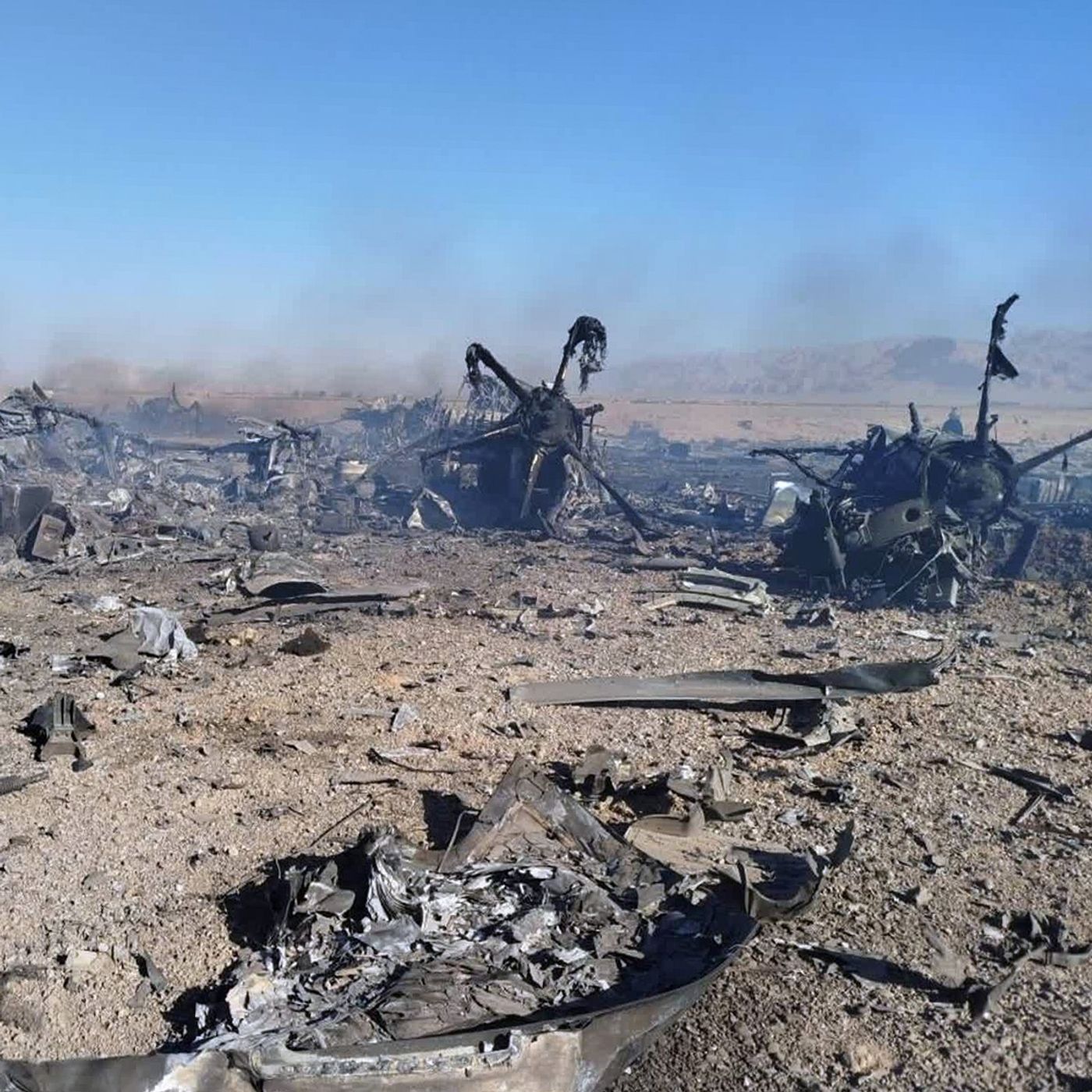
That's right. So both sides kind of marshal their resources. The Iranians send out multiple search parties looking for this guy. Again, they've offered this bounty. So everybody's on the lookout for some kind of American airman in a, you know, or a parachute or any signs of life from where this guy is. On the other hand, the Americans, they mount this massive operation. Dozens of aircraft. They get Seal Team 6 and other special operations guys mustered. They got to try and get in, locate this guy, and get him out before the Iranians on the ground can reach him. And so they come up with a deception plan because they're trying to buy time for this military search and rescue force to get there on the scene. So again, the CIA comes back into this picture here, and they basically start putting out word covertly that they've already recovered this guy, and he's over here, miles and miles away from the actual location. What they're doing, the whole objective here is to confuse the Iranians on the ground to think, you know, where is this guy? Is he over here? Is he over there? We see bombings happening all over the place. We hear these messages that are fake messages saying, you know, the Americans have got this guy. He's coming out by the coastline. No, no, he's over at this mountain line. It's all to buy time for this big rescue force that now knows where the guy is hiding. They just have to get there in time to grab. So the United States sends in under the cloak of darkness these two C130 cargo planes that are specially made to land in austere land airstrips. And inside the aircraft are several small helicopters. Because, remember, this guy's up on top of a 7,000 foot mountain. They don't have time to hike up there, and they can't land anything in that. So they have to get a special helicopter that's small enough to get to this area and fly up. So off they go up the mountain, and sure enough, the aviator is there. He's waiting for them. They come in, their guns are firing to keep anybody else away. They pick him up, and it looks like this amazing drama that's now gone on for over 24 hours may finally be over. I'm actually getting texts from sources saying, we've got him, he's safe, he's recovered, and we're about to publish our story when somebody else says, whoa, wait a minute, there's a problem. There's a serious problem. The problem is as these C130 planes are maneuvering to try and take off again, getting. They've gotten all the helicopters back in, everything's ready to go. The nose gear gets stuck in this kind of sandy, dirty soil. It's apparently kind of wet as well, and so they can't move it. So after all of this, these planes are stuck in the mud, essentially stuck in this dirt.
- [09:43]
Rachel Abrams
They're physically stuck. They can't move it.
- [09:44]
Eric Schmidt
They're physically stuck. They can't move it. They're trying to figure out, finally they just say, we can't do this. We have to go to plan B. And in this case, it means they're going to send three new planes, different planes in to basically get the commando team as well as the downed airmen. And so this means that the Americans have to buy themselves more time. And what they do until these new aircraft can arrive is they basically create a ring of fire around this air base where they're basically blasting away from high altitude bombers anybody that gets near it. So the replacement planes finally arrive. They were able to load up the commandos, get the airmen on board, and off they go. One, two, three in succession. One plane takes off, then about 15 minutes, the next plane takes off, and finally the third plane takes off. The last thing they do, the military does is they have to destroy these aircraft that they originally flew in on, the ones that got stuck in the sand, the helicopters that came with them, because they've got all this sensitive technology on them that they don't want to fall into Iranian hands. So this is kind of the irony of all this. At the end of the mission, they actually bomb the planes that were helping to rescue. Wow. But by now, the three aircraft are airborne and they're on their way to Kuwait. The airman is being treated aboard, and soon he and the pilot who they've obviously been treating will be on flights to Germany in a medical hospital there. So the successful rescue gave President Trump a huge victory, which he touted at a Monday press conference at the White House. And we're here today to celebrate the success of one of the largest, most complex, most harrowing combat searches, I guess you would call it, a search and rescue mission ever attempted by the military. Where he praised the military, he praised the CIA. So in a breathtaking show of skill and precision, lethality and force, America's military descended on the area, talking about only the American military could have pulled off such an amazing rescue operation, rescued the stranded officer, destroyed all threats, and exited Iranian territory while taking no casualties of any kind. But despite this, this still leaves a very unpopular war that's created all kinds of economic consequences around the world and obviously in the United States. And it still leaves many of the President's strategic goals unfinished.
- [12:23]
Rachel Abrams
We'll be right back.
- [12:30]
Eric Schmidt
Foreign
- [12:34]
Planned Parenthood Announcer
this podcast is supported by Planned Parenthood Federation of America. As a listener of the Daily we know you want the facts. Fact one, Some lawmakers are making it harder for Americans to access health care. Two, A new policy threatens to prevent patients from using Medicaid insurance for life saving care at Planned Parenthood health centers. This could mean cancers going undetected, STIs left untreated, and patients not receiving care they need. Three, Planned Parenthood will not back down, but they need your help. Donate@planned parenthood.org defend this podcast is supported
- [13:10]
Capital One Announcer
by the Capital One Venture X Card. Venture X offers the premium benefits you expect, like a $300 annual Capital One travel credit for less than you expect. Elevate your earn with unlimited double miles on every purchase, bringing you one step closer to your next dream destination. Plus enjoy access to over 1000 airport lounges worldwide. The Capital One Venture X Card what's in your wallet? Terms apply Lounge access is subject to change. See capitalone.com for details. With no fees or minimums on checking accounts, it's no wonder the Capital One bank guy is so passionate about banking with Capital One. If he were here, he wouldn't just tell you about no fees or minimums. He'd also talk about how most Capital One cafes are open seven days a week to assist with your banking needs. Yup. Even on weekends, it's pretty much all he talks about in a good way. What's in your wallet? Terms apply see capital1.com bank capital1 NA member FDIC
- [14:10]
Rachel Abrams
so Eric, the United States and the Trump administration are obviously touting this rescue operation as a huge victory. How are the Iranians viewing it?
- [14:19]
Eric Schmidt
Well, the Iranians are also touting it as a big victory for different reasons. Of course. They were successful in shooting down the first American combat plane, no doubt about that. They also basically demonstrate that the Americans don't fully control the airspace, as Secretary Hegseth has talked about this air dominance, that they are still able to launch ballistic missiles and drones. And in fact, some of our other reporting has indicated that the Iranians are still able to fire off about 15 to 30 ballistic missiles every day, as well as as 50 to 100 drones one way attack drones. So they still have significant capability, whether it's to fire at American warplanes or to fire at energy infrastructure around the neighboring Gulf countries. It's still a significant problem. And thus it shows the Iranians still have some will to fight and some capability to fight.
- [15:09]
Rachel Abrams
Given all of that, what does it tell us about what the United States has actually accomplished in the war? Because right now this is week six, and I bet that a lot of people had either assumed or understood that the United States had destroyed a lot of Iran's military capabilities that, as you've said, seem to be working to some extent.
- [15:28]
Eric Schmidt
That's right. So you've got a military campaign that, by many measurements is actually succeeding. The United States military, along with Israel, has been able to destroy or degrade much of Iran's missile program, much if not most of its drone program, its navy, and its air force. But two things can be true here. You can still have a resilient Iranian military that's able to pop off missiles and drone when it wants at the same time, where the American military has badly degraded what the regime can do long term. But the political Goals, the political and strategic goals are not necessarily on track. The president has given contradictory explanations as to what his end game really is here. And at his news conference, even as he was touting the success of this rescue mission, he angrily lashed out and threatened the Iranians to basically say the entire country can be taken out in one night and that night might be tomorrow night, basically threatening to bomb bridges and power plants and, you know, who knows what else if they don't come to the bargaining table and have a resolution to this by sometime on Tuesday night.
- [16:36]
Rachel Abrams
That is such an existential threat that he is making. I feel like this rescue mission, this victory that he just had, has almost emboldened him in some way just listening to some of these threats.
- [16:47]
Eric Schmidt
Well, you know, it's interesting because a lot of us thought that it would actually chasten him, it would kind of show him the risks of this kind of military operation when so much of the success of it hinged on the rescue or not of this one airman. But I think you're right, Rachel, that he has basically taken this and said, you know what, this amazing American military machine that I have, they can do just about anything. And I'm going to take this rescue operation and I'm going to double down now and I'm going to increase the threats and use this bombing power that I have to go after this infrastructure that's supposed to not just the military, but millions of civilians across this country. These power plants, for instance, are used both by the military as well as just regular civilians. And many legal experts say this would be unlawful, this would be against international law to carry out these kind of strikes.
- [17:37]
Rachel Abrams
Before this plane went down, Eric, on Friday and this rescue mission happened, so much of the reporting on the war focused on whether there could be some kind of an off ramp. And I wonder if both the United States and Iran are claiming victory right now after this rescue mission. Isn't that some path to an off ramp?
- [17:56]
Eric Schmidt
It's possible. Certainly in listening to the President at the news conference, he is still at least saying he wants a diplomatic resolution to this. And in fact, Iran on Monday submitted a new 10 point proposal that included terms that would allow for some kind of protocol for safe passage through the Strait of Hormuz, but would also include the lifting of sanctions against Iran. Now, Vice President J.D. vance is going to be traveling to Europe this week, so it's possible he could be involved in meetings if these negotiations were to get further along. But much of this is still unclear. And a lot of experts that we talk to still believe that negotiations are a long ways off.
- [18:34]
Rachel Abrams
So where we stand right now is that the President has set a deadline, as of now, it's Tuesday evening, for the Iranians to either capitulate and accept a US Proposal for ceasefire or face a barrage of attacks on its infrastructure. And how should we be thinking, Eric, about where that leaves us in terms of what stage of the conflict we are currently in?
- [18:57]
Eric Schmidt
Well, I think if we were to be hopeful, we could say maybe we're on the brink of some kind of resolution where both sides could try and claim something out of this. But I think we're still a long ways away on some of these key issues. And the President seems to be moving in the direction of escalation, of threatening more bombing, even if it takes days or weeks. The Iranian regime, however, believes they're in the driver's seat right now. They have the leverage by still holding on to the Strait of Hormuz, that economic bottleneck that they have grasped so quickly. And by being able to shoot down an American warplane, by able to continue to fire at energy infrastructure around the region, they've demonstrated that even though they're badly degraded in terms of military equipment, they still can launch a punch every now and then. And so I think both sides are hardening their positions at a time when at least the public rhetoric is to try and find an off ramp.
- [19:49]
Rachel Abrams
This rescue operation, as we have described it, could not have been more cinematic. And also it is coming at a time when the administration is really struggling, I think, to sell this war to an American public that is looking at the gas pump and seeing prices go up and up and up and wondering, why are we doing this? And so it feels like you could not have handed the White House a better narrative than this one. This unbelievably heroic story that shows American military might, ingenuity, bravery that, as we said, could have been ripped from a movie.
- [20:23]
Eric Schmidt
I think that's right. And I think the White House and the Pentagon are going to try and milk this for as long as they can. The success of this operation is cinematic and the rescue of an American airman are dramatic. But in the end, look at what you're left with. You're still left with the Straits of Hormuz, closed economic hardship throughout. You're still left with a hard, lying government that thinks it's winning, not losing. And you're still left with this fundamental problem of how do you deal with this nearly thousand pounds of highly enriched uranium that's buried deep underneath the Isfahan site? And what do you do with that? The President said on Monday that that is still his main goal to prevent Iran from obtaining a nuclear weapon, but he has not laid out any of the objectives on how you do that. So even with the military success overall, and even with this very successful rescue of these two airmen on administration is still left with a lot of really difficult problems to address.
- [21:30]
Rachel Abrams
Eric Schmidt, thank you so much.
- [21:32]
Eric Schmidt
Thank you. Foreign
- [21:48]
Rachel Abrams
we'll be right back.
- [21:51]
Planned Parenthood Announcer
This podcast is supported by Planned Parenthood Federation of America. As a listener of the Daily we know you want the facts. Fact 1 Some lawmakers are making it harder for Americans to access health care.
- [22:03]
Rachel Abrams
2.
- [22:04]
Planned Parenthood Announcer
A new policy threatens to prevent patients from using Medicaid insurance for life saving care at Planned Parenthood health centers. This could mean cancers going undetected, STIs left untreated, and patients not receiving care they need. 3. Planned Parenthood will not back down, but they need your help. Donate@planned parenthood.org defend this podcast is supported
- [22:27]
Capital One Announcer
by the Capital One Venture X card. Venture X offers the premium benefits you expect, like a $300 annual Capital One travel credit for less than you expect. Elevate your urn with unlimited double miles on every purchase, bringing you one step closer to your next dream destination. Plus, enjoy access to over 1000 airport lounges worldwide. The Capital One Venture X Card what's in your wallet? Terms apply Lounge access is subject to change. See capitalone.com for details. With no fees or minimums on checking accounts, it's no wonder the Capital One bank guy is so passionate about banking with Capital One. If he were here, he wouldn't just tell you about no fees or minimums. He'd also talk about how most Capital One cafes are open seven days a week to assist with your banking needs. Yup, even on weekends it's pretty much all he talks about in a good way. What's in your wallet? Terms apply. See capitalone.com bank capital1na member FDIC
- [23:28]
Rachel Abrams
here's what else you need to know. Today, four astronauts and the Artemis 2 spacecraft made history on Monday afternoon when they officially reached the farthest distance from Earth that human beings have ever traveled. The astronauts passed 248,655 miles, the record set by the Apollo 13 mission in 1970. And they passed behind the far side of the moon, seeing parts of it never before observed with human eyes. And welcome to Today on this Monday morning. We are so, so glad you started your week with us. And it is good to be home.
- [24:04]
Eric Schmidt
Yes, it is good to have you Back at home.
- [24:06]
Rachel Abrams
Savannah Guthrie returned to the Today show for the first time since the disappearance of her mother, Nancy, in February. Guthrie did not make explicit references to her mother, who police believe was kidnapped from her home, but she became emotional when she greeted fans who waited for her outside of Rockefeller Center. These signs are so beautiful. You guys have been so beautiful. I've received so many letters, so much kindness to me and my whole family. We feel it. We feel your prayers.
- [24:36]
Eric Schmidt
So thank you so much.
- [24:52]
Rachel Abrams
Today's episode was produced by Ricky Novetsky and Rochelle Bonga. It was edited by Mark George with help from Lisa Chow, research help from Susan Lee. Contains music by Marianne Lozano and Dan Powell. Our theme music is by Wonderly. This episode was engineered by Alyssa Moxley. That's it for the Daily I'm Rachel Abrams. See you tomorrow.
- [25:35]
Planned Parenthood Announcer
This podcast is supported by Planned Parenthood Federation of America. As a listener of the Daily we know you want the facts. Fact 1 Some lawmakers are making it harder for Americans to access health care.
- [25:47]
Rachel Abrams
2.
- [25:47]
Planned Parenthood Announcer
A new policy threatens to prevent patients from using Medicaid insurance for life saving care at Planned Parenthood health centers. This could mean cancers going undetected, STIs left untreated and patients not receiving care they need. 3. Planned Parenthood will not back down, but they need your help. Donate@plannedparenthood.org defender.