Loading summary
Transcript107 lines
- [00:00]
Podcast Sponsor/Announcer
This podcast is supported by the Capital One Venture X Card. Venture X offers the premium benefits you expect, like a $300 annual capital one travel credit for less than you expect. Elevate your earn with unlimited double miles on every purchase, bringing you one step closer to your next dream destination. Plus, enjoy access to over 1,000 airport lounges worldwide. The Capital One Venture X Card what's in your wallet? Terms apply. Lounge access is subject to change. See capitalone.com for details.
- [00:34]
David Marchese
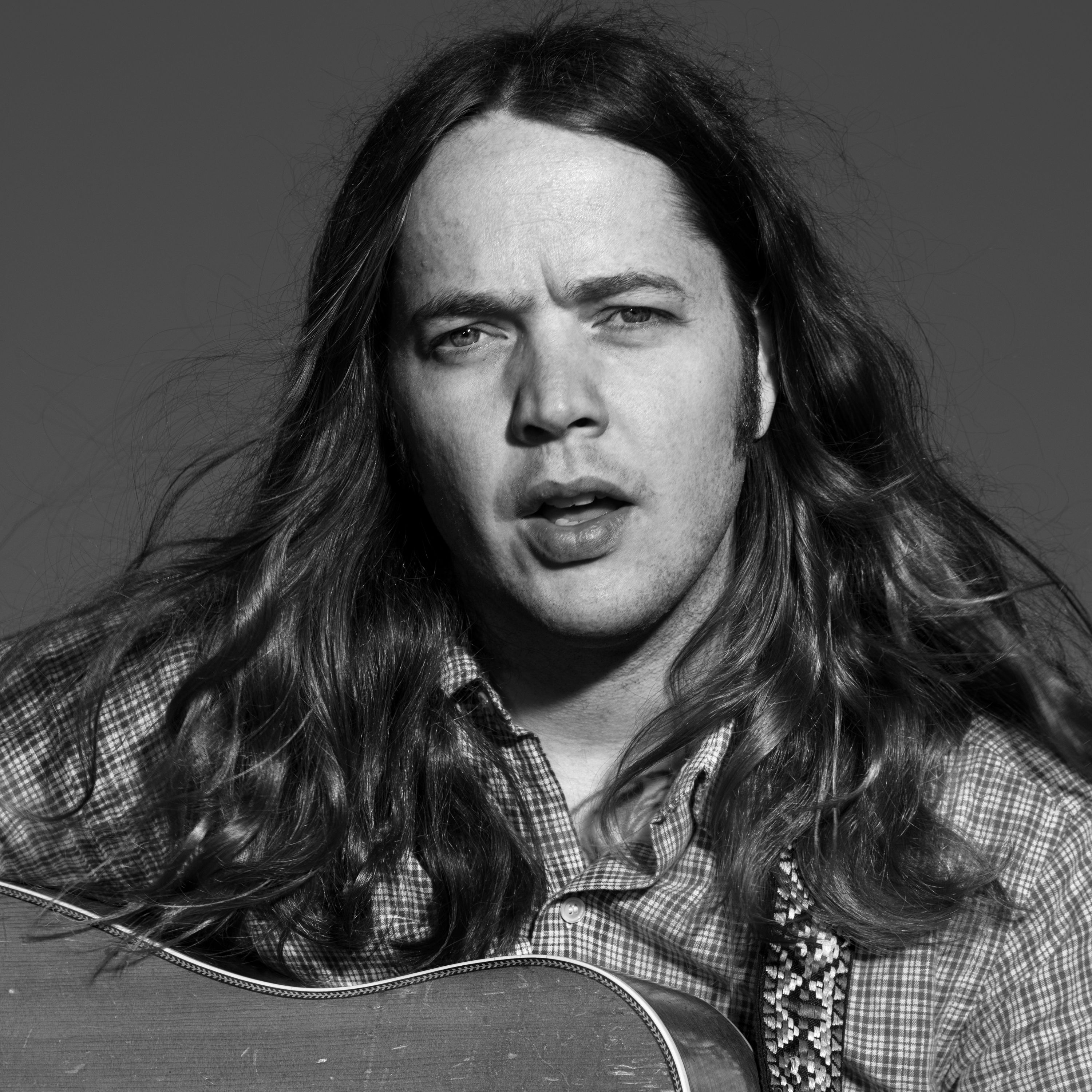
I'm David Marchese and today I'm talking to musical sensation Billy Strings. At 33 years old, Strings is bringing his blend of music influenced by bluegrass artists like Doc Watson and Bill Monroe and jam bands like the Grateful Dead to sold out arenas across the country. He grew up in Michigan, surrounded by poverty and heavy drug use. His new album, so Much for Goodbyes is inspired by his mother who who died about a year ago of an overdose. One of my favorite tracks, mill Town Flood is a melancholy story song which is built on strings, beautiful guitar playing,
- [01:11]
Interviewer Assistant/Producer
and it looks like it's raining.
- [01:16]
David Marchese
That guitar playing I got to witness firsthand in our second interview, which you'll want to stick around for. Here's my conversation with Billy Strings. But first a quick message. If you're not a subscriber, we have some news for you. You can now explore the Times for free without paywalls during your first month in the New York Times app. Just download the app and we hope you enjoy it. Okay, onto the interview. Thank you for taking the time to do this. I appreciate it.
- [01:51]
Billy Strings
Yeah, of course.
- [01:52]
David Marchese
You know, I wanted to ask, so you're playing all these sold out shows across the country this summer and later in the summer you're even doing your own festival. It's pretty wild for someone who got their start playing bluegrass music and still plays music that's so informed by traditional bluegrass music to like just have achieved what you've achieved. Was there a moment for you that stands out as sort of representing when you realize like, oh, this has actually gotten really big?
- [02:22]
Billy Strings
Yeah, I went from playing in my bedroom to playing in coffee houses and pubs and restaurants and stuff like that. And eventually I was able to put in my two weeks at my day job, which was working at a hotel up in Traverse City. And at that point I, I thought, man, if I never get any bigger than this, I'd be happy. I'm making a living playing music. I remember when I put out my first record, Turmoil and Tinfoil, I never thought about how the record would be, like, good for my career. I Was just trying to record these songs. I wrote down a bunch of stuff that was personal to me, and it was kind of like writing in my diary or something. And I. I just wanted to make this art. And I was really focused on that. And then I remember when we actually sold some records and I was like, whoa. It was just kind of a. A big eye opener to me. I never thought about the record helping to further my career.
- [03:23]
David Marchese
Can you tell me about the title of the new album, so Much for Goodbyes? What does that mean? Where does it come from?
- [03:30]
Billy Strings
Yeah, my mom passed away last June, just over a year ago. I was actually on my way to a show in Kentucky and I just woke up the next morning on the bus and my wife came back and she told me the news. And to me it was this kind of sad thing, you know, this idea that I didn't get to say goodbye. But when I told my manager about the title, he's kind of like, man, I like that, you know, because it's not really goodbye. She's in everything and she's everywhere. And I'm her. One of her greatest creations, you know, she was so artistic and so creative that. And she made me and my brother and sister. And so I like the idea that it can kind of be taken both ways, you know, so much for goodbyes. Like, I didn't get to say goodbye, but also so much for goodbyes because it's not really goodbye.
- [04:30]
David Marchese
I'm sorry for your loss. If you don't mind me asking, how did your mom pass away?
- [04:37]
Billy Strings
She struggled her whole life with different kinds of substance abuses. And I think she had a lot of unresolved trauma that she never really had, like, proper therapy for. And I think that was her way of kind of getting through some of that, was medicating herself. And so she had an illness that eventually she succumbed to. So she died of an overdose. And it was a shock to me because I had no idea that she was using again. And she seemed to be doing really well. And her addiction has caused a lot of trauma and stuff in my own life. And she's kind of like a conundrum because she's such a beautiful, amazing, artistic, and just an amazing person. I've never met anybody like her. You know, we always talked about having her make the art for the next record cover. She was an artist. She always was making art. These little shadow boxes and mixed media art. And she would always be collecting kind of these little trinkets and pieces of junk and stuff. And she would take all this forgotten, rusty, old crap and glue it together to make something beautiful. So even before this record was, before I had any of the songs for it, she was gonna make the next record cover. That was our. Our goal and our dream. And I told her, you know, you can make the next record cover, you know, with your art. And we did. We got to make her piece of art. The record cover, which I was really, really stoked on. It was actually the piece that she was working on the night she died. It was the last thing she touched.
- [06:32]
David Marchese
Are there songs on the album that allow you to feel like you're saying things to her that you would have said that you didn't get a chance to say?
- [06:44]
Billy Strings
Yeah, I think the big one on this record when it comes to that sort of thing is it's called Still I Crash. And I wrote that song not too long after she died, and that's the one that's pretty blatantly kind of me talking to her, you know, just wondering where she went. Asking her where. Where did she go and why, and explaining the fact that I feel like I have to learn how to walk again like a child and. Yeah. Just how difficult it is to be here without her.
- [07:28]
David Marchese
Yeah, it's hard. You know, my mom died two years ago. She had had als, and then she. Did they call it medical aid in dying. Like, you know, she decided she didn't want to be around anymore and suffer, so she had someone come and help her. But I. I was able to say what I wanted to say to her because we knew when it was gonna happen. But then my dad died at the end of April. It was sort of like your mom. Completely unexpected. I had a hard relationship with him, but just when you don't. When you don't have the chance to say things that you feel like you wanted to say, it's like an open wound that you're not sure when it's gonna close. Whereas with my mom, I feel like there aren't unanswered questions or there wasn't anything left unsaid. So the grief feels very, very different.
- [08:15]
Billy Strings
Yeah, absolutely. It's. It's not better or worse either way, I don't think. And it's just one of those things we have to learn to live with, you know, and try to just remember who she was and. And. And love and cherish her memory and live up to her wildness. You know, she's inspired me to really let loose and let my freak flag fly a little bit more, you know, live more the way she lived than Trying to be so cautious all the time. You know, I feel like I've always tried to stay out of trouble and do the best I can to just not get myself hung up. But my mom would just live life to the fullest constantly. And so she. You know, she inspires me to kind of live a little bit more on the wild side, you know?
- [09:14]
David Marchese
And how does playing music help process the feelings that you have, whether it's about your mom or anything else?
- [09:23]
Billy Strings
Well, it's always been my coping mechanism and survival strategy and my medicine, you know, and playing bluegrass music is. It's like a portal back to my childhood, back before I knew anything dirty about the earth. I think it's a way for me to go back to a time that was just beautiful and full of light and, you know, it can give me deja vu, stuff like that. You know, growing up, playing music with my dad and then songwriting and stuff like that, it's kind of my cathartic and therapeutic way of dealing with things. I think sublimation is one of my main characteristics that I do in life. I just try to. Instead of letting this hard stuff drag me down, I try to just make art from it. Make lemonade, if you will.
- [10:25]
David Marchese
You know, when you were a kid, I know, you know, sort of maybe a chaotic way that you grew up in Michigan, you mentioned your mom's substance abuse problems, and you referred to your dad, and he is your dad, but technically speaking, it's your stepfather, right, because your biological father died when you were really young from an overdose. It just sounds hard. But how did music fit into your family life? Like, what role did it play for you growing up in the family?
- [10:58]
Billy Strings
You know, My biological father died before I ever knew him. I was two years old. And so when I say my dad, I'm speaking of Terry Barber. And he taught me how to tie my shoes and wipe my ass and how to play guitar and all that. And I think early on, it was a way for me to bond with him, and the better I got, I kind of, you know, would get attention from that, and I think I. I liked that. So I just kept trying to get better and better and make him proud. And I still do that to this day. I mean, even back when my mom was still alive, anytime I would reach some sort of milestone, you know, I remember one of the last ones was when I played with Bob Dylan. You know, I'm calling my mom right before walking on stage, and I'm like, you're never gonna believe this. I'm getting ready to go play with Bob Dylan. But back when I was a kid, before any of the fame and all this stuff, it was just kind of our way of life, you know, I mean, it was like. It's just what we did. We just played music around my house. It was. If I wasn't playing old bluegrass tunes with my dad, I was listening to my mom playing Beatles records and stuff like that. And I remember being a little kid, you know, this is kind of a good portrait of how my mother was. I was probably maybe 7 years old, and she was playing the Beatles, the White Album, backwards for me. Listening to Revolution number nine, Right.
- [12:35]
David Marchese
For secret messages or something.
- [12:37]
Billy Strings
Yeah, she was backwards, masking, kind of showing me all how this stuff works. And I was just a little kid, you know, what the heck. But music was always. Yeah, it was always a big deal.
- [12:51]
David Marchese
You know, what you just described sounds very buoyant and positive, and that was a natural part of how you were growing up. But then there was this sort of other, darker side. Was it hard for you to make sense of the light and the dark in your family at the same time? Or was it just. That's just what you knew and so you didn't really think about it?
- [13:12]
Billy Strings
Well, I mean, early on, it wasn't so bad. You know, I think by the time I was old enough to kind of remember stuff like 4 years old or so, my parents were doing pretty good. There was just some bush lights and, you know, a few joints here and there. It wasn't anything hard or crazy. So my early childhood was really beautiful and surrounded by music and friends, and we had food in the cupboards. You know, we lived in a trailer, but it was a nice trailer. And we got out of the trailer park and we got this place over in Muir, and, you know, we had a swimming pool, and my mom was digging in her garden, and things were good. And then it just started to go downhill. By the time I was 10, 11, 12, we moved into this other house that was a lot more kind of run down. And I think my dad lost his job, and we just started struggling a lot more financially. That was at the same time that my parents were kind of falling into this addiction. And then after quite a few years of that, you know, I just moved out. I moved out of my mom's house when I was 13, and I was trying to, like, guilt trip them into seeing what they were doing, you know, I mean, there wasn't any food. There was. My house was no longer a home. So I. I took off. My friend Brad came and picked me up in his truck, and I went and stayed in his basement for a while. And I was playing in a heavy metal band at that time, and I kind of was just couch surfing. And when I realized that me moving out wasn't going to change anything, that's when I was like, oh, no. I actually. Now I'm actually kind of homeless. You know, when I moved out, I was trying to cause a big scene to try to guilt trip people into realizing what was going on, but it didn't work. So then I had to just figure it out. But eventually, you know, I never disowned my parents or I never, like, cut ties with them. And it actually became this kind of era of I was a young teenager and I was starting into trying things myself. And eventually it became a really cool party house because I could show up there with several carloads full of miners and a bunch of half gallons of whiskey and stuff. And like, we can party at my house, my mom's, you know, and they couldn't tell me no. My dad would always be like, you're not having all these minors drinking here. I'm like, okay, well, what are you gonna do? Call the cops? You know. So I eventually just started partying with them. And, you know, when you lose people to addiction like that, especially as a young kid, you almost wonder why or what it is that's so powerful that basically took them from me. I mean, I remember a time that's actually what the song Turmoil and Tinfoil is about. I was staring right at my mother. She's sitting right there. But I missed her. She's not herself anymore. Her soul and her beautiful vibrancy is gone. It's just this kind of gray shell of a person that is really sick. So, you know, you wonder yourself, what is this stuff all about? So, you know, I was 16 the first time I smoked meth with my mom. And around that time is when I, you know, I was probably 15 when I started doing coke. And by the time I was 16, I was doing speed and trying crack and stuff. And then a couple years later after that, I kind of got wondering about my father, my biological father. I never knew him. And I always kind of thought, man, he must have loved heroin more than me. So I always wondered what was so good, that it was better than me. So that's when I, you know, would try heroin and stuff like that, because I just had to see what it was all about. And so, I don't know, I got a lot of that stuff out of my system early on, and I think it was a good thing. I never really got hooked on anything Because I was always surrounded by tweakers and junkies and stuff. So I saw how bad these people's lives were, and I never wanted to let myself get that far. So if I tried anything out of curiosity, I would try it once, and I would leave it alone for a while, you know?
- [18:07]
David Marchese
But when you were younger and partying with your parents, I would bet that there was some part of you inside that felt conflicted about it or felt uncomfortable with it. Did you and your mom and your dad ever talk about that period in your life when you were sharing that kind of stuff?
- [18:25]
Billy Strings
No, it was just what it was. I mean, sometimes, you know, we'd get high, and I would play guitar with my dad until the sun came up. I mean, hours and again. Now we're bonding again, and that felt good.
- [18:40]
David Marchese
You know, you had this odd situation where you're playing guitar with your dad, and you were getting praised for it, and you were getting attention for it, Even if sort of, like, the circumstances in which it was occurring were kind of rough circumstances. But when did you realize that you were actually good at guitar? Not just that you could pick a tune, but that you had a real gift for it?
- [19:05]
Billy Strings
I mean, that was early on. I. I started playing when I was about four years old. By the time I was six or seven, I could carry a tune, and. And I was my dad's rhythm player. He would play all the lead and do all the fancy picking and singing, and I would hold down the rhythm for him. So by the time I was six or seven, I knew how to lot of bluegrass songs. And one of the biggest moments for me was I was sitting in my dad's bedroom with him, As I would basically every night, sitting there, playing two guitars, and he was teaching me the song beaumont rag. And we would play the tune, and I would mess up the second part every time. And, you know, I stopped us right in the middle of the song, I said, stop. Why don't you just play it and let me listen? So that's what we did. I just listened to him playing it, and instead of trying to count, you know, 1, 2, 3, 4 on the D chord and 1, 2, 3, 4on the A chord, I listened to what he was playing. I listened to the melody. So then I was like, all right, let me try it again. And instead of counting, I was just. I heard the melody. I heard what he was doing.
- [20:22]
David Marchese
Yeah, he was cueing you, right?
- [20:24]
Billy Strings
Exactly yeah. And so that. And then I nailed it. And he was awful proud. He called my grandma, made her listen on the phone. And that was a big moment for me because he was awful proud and I was proud. And that's when this sort of this listening thing started. When I was able to listen to the music more intently and I could tell what chord was coming next. I used to think I was magic or something. I mean, I had no concept of music theory or anything. But my dad would play, you know, maybe a G chord and then he would play a G seventh and my ear would just lead me to the. I'd be like, well, the next chord's probably going to be a circle. And then it would be, I think bluegrass and folk music and hillbilly music like that, it's kind of better to learn it that way than to try to learn it from some academic point of view. It's better to learn it on the back porch and to let it just get under your skin, because then it's not some equation, it's a feeling. It comes from your soul.
- [21:36]
David Marchese
Was there a time when you started to really think that music and pursuing music could be a way into a different kind of life than the one you were living? Did you think of it as a way out?
- [21:49]
Billy Strings
I never considered that growing up in the area that I did and just growing up the way that I did, seeing music as a career, it just kind of seemed like a really far fetched idea. Although when I was younger, like middle school and stuff, I mean, I used to think I was going to be, you know, the next Jimi Hendrix or something. I used to dream about being a big rock star. But as I got a little older, I sort of realized that, like I said, it's far fetched, you know, but I never thought of it as a career until I started kind of. I went out and did some open mic nights out there in Traverse City just for fun, just because my friends and I would be at home and let's go to the bar and, you know, I could sign up and play a few tunes. And this was before I was even old enough to be in the bar. And I'd go up there and play a few tunes flat, pick a little number and people would. I'd get a standing ovation. And I started to realize, wow, this flat picking stuff, this bluegrass stuff, really gets people out of their seats. I mean, it's always been to me, just something that I did around the house with my dad or whatever, something that I like because it brings me Back to my childhood, but people really react to it. And that's when I started to kind of realize, man, maybe I do have something here. And it's kind of like, wow, these people never heard of Doc Watson before or what, you know?
- [23:24]
David Marchese
Well, but as someone who knows about the predecessors, who knows Doc Watson, who knows Tony Rice or. One of my favorite players is Clarence White. You ever listen to him?
- [23:35]
Billy Strings
Of course, yeah.
- [23:37]
David Marchese
Beautiful player. Those are some of the greatest musicians who have ever lived who played this incredibly beautiful music with such skill and heart. And they never attracted tens of thousands of people to arenas or had sort of the. The mass success that you've been able to have. Do you ever wonder, like, why you and not them? You must wonder about that, right?
- [24:07]
Billy Strings
Yeah. I mean, on one hand, I don't know.
- [24:12]
David Marchese
Right.
- [24:13]
Billy Strings
At a certain point I stopped, you know, like, wearing a suit and combing my hair back with pomade and trying to pretend like I was born in the Appalachian mountains and my, you know, daddy was a coal miner and kind of doing this whole Civil war reenactment. And I started just being myself. And I also allowed the other influences from other kinds of music that I enjoyed. Know, I enjoy everything from hip hop to jazz and classic rock and heavy metal and, you know, death metal and hardcore. And I played in heavy metal bands and stuff. So I. I feel like my whole brain is just this kind of musical goulash that's just all mixed together. And when I stopped trying to just be one thing and I just allowed myself to enjoy and basically accept all of those influences in my own music, I feel like there's a very broad spectrum of people that what I do can attract everyone from metalheads to old bluegrassers to people that are into more improvisational music like the Grateful Dead. I mean, I got people from young teenagers to 70, 80 year old people in my crowd, and I play a little bit for all of them. I also, I've just always paid attention to. At least when I started to have a career in music, I paid attention to the marketing side of it too. The way that different bands from different genres would promote themselves. You know, bluegrass is an old tradition and it's stayed kind of in the past in a lot of ways. You know, I remember when I was coming up a lot of the flyers for a concert or something. It would look like. Look like an elementary school newsletter, you know, Meanwhile, I see these rappers and stuff when they promote a concert. They have a video and everything. It looks like a movie, you know, and so I thought, man, we should do that or we should kind of mix these different ideas from different genres and stuff and just mix the way that different artists promote themselves and try to bring that over to the bluegrass scene.
- [26:41]
David Marchese
There is like a community of people who are Billy Strings fans. I know that outside some of the shows, there's like a. What do they call it? Like a shakedown street kind of situation where people are selling. I don't know what they sell, grilled cheese sandwiches or whatever, selling weed and stuff like that. What do you think that community is looking for when they come to a Billy String show?
- [27:04]
Billy Strings
I think that's a big part of the experience. It's not just the music. It's the camaraderie between all the friends that show up. And we never play the same song the same way once. All these parts are not worked out exactly. A lot of it is very improvisational. So we have the way the song goes and we get that. But in the middle, every solo is different every time. And sometimes we get into parts of the show where it's a very long improvised piece and that's where the audience and the band kind of come together to make this one big reciprocal thing. I've always kind of felt like the audience is in charge of the show. The more energy they give us, the more we can give back. And they start kind of being able to press on the gas or the brakes or steer us in different directions because we're just kind of vibing off what they give us.
- [28:01]
David Marchese
I was reading an article about you, and I think it talked about how before shows you used to get real anxious and have real stomach pain. Is that still an issue for you?
- [28:13]
Billy Strings
I definitely get nervous before a show. Sometimes moments before I'm walking on stage, I feel like I might pass out or I feel really light headed and weak and I just gotta kind of stumble up on stage and get into the first song or two. And halfway through the show I'm like, I'm the complete opposite. I have all this energy. I feel great. I feel super confident, almost cocky even, you know, to the point where I just. I start having a lot of fun. And it's just the people's smiles that I think bring it out of me. And there is that sort of expectation from the crowd to do something amazing and also that expectation from myself to always do better than I did the night before. Because this is my livelihood and this is my life. And at a certain point deep in the back of my mind, I'm scared that this is all going to go away at some point and maybe I'll have to go back to the way life was when it was really hard and surrounded by, you know, there's this little devil on my shoulder that tells me I don't deserve any of this and thinks that I should be in some little trailer somewhere addicted to drugs or something and not a penny to my name. So it does feel like I'm kind of playing for my survival a lot. Each time I walk on stage, I'm playing for so that I don't have to go back there. I want to play a good show so that people will come next time. There's a lot riding on it, you know.
- [29:57]
David Marchese
Does having a kid has that changed the pressure you put on yourself as far as music?
- [30:04]
Billy Strings
Yeah, I used to put too much pressure on myself and to the point where I would strangle the life out of the music. I would. It was the most important thing to me. You know, my music, it's everything from a career to a reason not to just let my life go off the rails and listen to that little devil on my shoulder. But when my son was born, I kind of. I had a big change in perspective. And now I'm kind of just free to go sing and play. If my family's okay, then I'm free to go play and sing. And I'm singing from a place of joy, my belly now. And I have this little cosmic listener that I can sing to and sing for no matter what. And now I have an actual reason to go sing and play. When I leave my house to go on tour, I'm on a mission to provide for my family. I'm not just out there to stoke my ego.
- [31:17]
David Marchese
What was your. What is or was your parents relationship with your fans and with the scene around your music?
- [31:26]
Billy Strings
Yeah, the last few years of my mom's life, she got really involved with my fans and the. That whole lot scene. I mean, she loved it. She. That's kind of what she grew up with, going to concerts and hanging out and stuff. So she would go out there and mingle with those folks all the time. She had many different dear friends that she met at the shows and she would do things like take videos of them explaining what my music meant to them, and she would send them to me and stuff. She would always tell me, like, you have no idea how many people you've touched and how much your music means to these people. And I'm kind of like, you know, just blown away by that, you know,
- [32:14]
David Marchese
But I wonder if that was maybe a tough Situation for her to be in also. Because of the partying?
- [32:19]
Billy Strings
Yeah, I wondered about that. But at a certain point, you know, people are going to do what they're going to do. And that's kind of one thing I learned from this whole thing is you can't change somebody's life. You know, people are going to do whatever they're going to do, and you got to just love them for who they are and accept whatever happens, you know?
- [32:45]
David Marchese
Do you think that's true? People are gonna do what? Whatever they're gonna do.
- [32:49]
Billy Strings
I do.
- [32:50]
David Marchese
You can't change.
- [32:51]
Billy Strings
I mean, you can change for sure, but you gotta want to be the one to do it. I'm just saying I can't impose my will on somebody else to expect them to change. I don't think that's a possibility. I've always just wanted my mom and dad to have a good life and for my mom to have a garden. And for them, you know, they're getting older. My mom was 64. I thought, you know, in my mind it's like I just want them to grow old and start being these boring old people that, you know, go up north every once in a while and sit at home and watch the Andy Griffith show or whatever. But that's what was in my mind, not theirs. You know, my mom was living her best life. You know, she was out there having a good time right up until the end, which, again, is still inspiring to me in a way, you know, where she just. She didn't want to grow old. She'd rather kind of run and gun right until the end.
- [33:53]
David Marchese
You know, you mentioned a couple times, you know, this idea of not wanting to go back to the life you had, but if the music had not taken off, what would a good life have been for you?
- [34:08]
Billy Strings
Just working a job that I didn't absolutely hate. Just making enough to have some food in the cupboards and a roof over my head. And not being a drug addict, I think, would be good enough.
- [34:25]
David Marchese
But it turned out pretty well.
- [34:27]
Interviewer Assistant/Producer
Yeah.
- [34:28]
Billy Strings
Yeah. Like I said, I got a lot of stuff out of my system early on. And so now I'm 10 years sober from alcohol. And I'm definitely drawing a line in the sand here. All this generational trauma has to stop with me. And I'm going to give my son a life very different from mine. I've even since my son was born, I kind of stopped smoking weed, too. So I've been totally sober for, like, almost a year now. Except for now. I like coffee. I never was a coffee drinker before.
- [35:09]
David Marchese
As far as vices go, I think. I think you're allowed that one.
- [35:13]
Billy Strings
Yeah. I wake up and my wife always makes a pot of coffee. And man, I'm to the point now where I'm. I go to bed excited about that cup of coffee in the morning.
- [35:24]
David Marchese
It's good to have something to live for.
- [35:26]
Interviewer Assistant/Producer
Yeah.
- [35:27]
Billy Strings
Yeah, it's good. I understand why people are into that stuff now.
- [35:32]
David Marchese
But, Billy, I really appreciate you speaking with me today and talking with me about the tougher stuff. And I think we're going to talk again maybe in a week, week and a half, something like that. But you're going to play a couple of tunes for us. I think you'll have your guitar with you.
- [35:48]
Interviewer Assistant/Producer
Awesome.
- [35:49]
Billy Strings
Hey, thank you. I'll see you soon.
- [36:03]
Podcast Sponsor/Announcer
This podcast is supported by the Capital One Venture X Card. Venture X offers the premium benefits you expect, like a $300 annual Capital One travel credit for less than you expect. Elevate your earn with unlimited double miles on every purchase, bringing you one step closer to your next dream destination. Plus, enjoy access to over 1,000 airport lounges worldwide. The Capital One Venture X card. What's in your wallet? Terms apply. Lounge access is subject to change. See capitalone.com for details.
- [36:33]
David Marchese
This podcast is supported by the American Petroleum Institute.
- [36:37]
Billy Strings
Energy security affects how Americans live, work, travel and stay connected. America has abundant oil and natural gas, but resources alone are not enough. The country needs modern infrastructure like pipelines and transmission lines that can affordably and safely bring energy to families, communities and businesses. That's how to build a stronger, more reliable energy system for the future.
- [37:01]
David Marchese
Learn more@energysecurityframework.org this podcast is supported by bank of America Private Bank. Your ambition leaves an impression. What you do next can leave a legacy.
- [37:14]
Billy Strings
At bank of America Private bank, our wealth and business strategies can help take your ambition to the next level.
- [37:21]
David Marchese
Whatever your passion, unlock more powerful possibilities@privatebank.bankofamerica.com what would you like the power to do? Bank of America Official bank of the FIFA World Cup 2026 bank of America, our private bank is a division of bank of America, NA Member, FDIC and a wholly owned subsidiary of bank of America Corporation. Hi Billy, how are you?
- [37:45]
Billy Strings
Good. How's it going?
- [37:46]
David Marchese
Billy, thank you for taking the time to speak with me again today.
- [37:49]
Billy Strings
No problem.
- [37:50]
David Marchese
I thought, you know, maybe just here at the top you could play a traditional tune for us. I was thinking maybe something like the Train that Carried My Girl from Town.
- [37:59]
Billy Strings
Sure, I could give it a try. Sam,
- [38:39]
Interviewer Assistant/Producer
Where was you when the train left town Standing on the corner with my head hanging down Wish to the lord that the train would wreck Kill the engineer and break the fire hey, the train that carried my girl from town hey, he he he where was you when the train left town? Standing on a corner with my head hanging down if I had my gun I'd let the hammer down I'd shoot the rounder took my girl from town Me, the train that carried my girl Oftentimes. Well it's ashes 2 ashes and dust 2 dust can you show me the woman that a man can trust? There goes my gal Someone bring her back she stuck her hand in my money sack hey, the train that carried my girl from town hey, hey hey, hey. Well, the rations on the table or the coffee's getting cold Some daddy founder took my jelly roll hello, Santra. Give me six or nine I want to talk to that little girl of mine hey, the train that carried my girl from town.
- [41:10]
David Marchese
Hey. Sounds good. Thank you very much. That was great.
- [41:14]
Billy Strings
Yeah, I haven't had coffee yet.
- [41:17]
David Marchese
I couldn't tell when you were starting out playing what were some of the elements of bluegrass playing in particular that you found trickiest. I mean, because it. There's the speed, there's this precision, the articulation. It's not the easiest style of music to play. Well, what was the stuff that you kind of had to really practice at the most?
- [41:37]
Billy Strings
Well, when I first started playing, you know, I just played rhythm, and my dad played all the lead, so I would play, You know, while my dad
- [41:54]
Interviewer Assistant/Producer
was going,
- [41:59]
Billy Strings
Stuff like that. And I was just a rhythm player for a long time. And I think that it sort of gave me a quite a bit of time to just sit and listen. While I was playing the chords, I could listen to what the melodies were doing, and I could have those kind of seeped into my brain, you know? And it wasn't until a little bit later on that I kind of started to try to take some breaks on some stuff and try to learn how to play, pick the tunes and everything. I mean, I remember when I was a little kid, when I first started playing, I used to just play on two strings a lot, And I would just notice these different. That's all you need right there. When I was. I mean, I must have been, like I said, like, five years old, just learning how to play guitar, and I would just sit there and do that. Sometimes I get into a pattern, And I just. Man, it sounded so magical to me. It sounded huge and like a symphony or something. You Know, in my head, and it just. It's just two strings, you know? But I was just hearing these different intervals of. All you do is change one note, and it gives it such a different emotion. Sounds kind of hopeful or something. Sounds kind of like. I don't know. I don't know if this is going good. No, it sounds kind of like resolved. It's like, well, whatever.
- [44:18]
David Marchese
You know, when we were talking last time, you mentioned that one of the first instances where you really felt proud about your guitar playing was when you were playing Beaumont Rag with your dad and he was sort of, like, cueing you with the melodies. Would it be possible to sort of demonstrate what you were talking about there? Like, how. How he was using the melodies to help you understand where to come in?
- [44:42]
Interviewer Assistant/Producer
Yeah.
- [44:45]
Billy Strings
So Beaumont Reg. When I was playing it as a kid, see, I got this little thing here that's called a capo. It's kind of like a cheater.
- [44:56]
David Marchese
It changes the keys without having to change the chord shapes.
- [44:59]
Billy Strings
Right, right. Yeah. So I didn't use one on this tune. I played open like this. And I would play. So that was my part. My dad would take his capo and play up here out of a C position, but still in D. And so what he would play is. And so on. So when I was first learning that tune, you know, I was trying to count, okay, one, two, three, four. One, two, three, four. 1, 1, 2, 3, 4, D. 2, 3, 4, A, 2, 3, 4, d. And then G. And I would get messed up during that part because I've never been good at counting anyways, or math or numbers or anything like that. So we were playing the tune, and I just asked my dad to stop. I said, well, right in the middle of the song, I just stopped and I said, listen, you just play it and let me listen to it. And so he played it, And I started hearing what he was doing. I wasn't counting. I was listening, you know, And then he goes. And then on the second part, he would go. So I know when he goes, That's my time to go to the G chord. And I started just hearing these little things. You know, I didn't know it, but he would play that chord with that note in it, and my ear just would automatically lead me to. So I started using the music as a roadmap instead of trying to count.
- [48:06]
David Marchese
And I know you still practice and take lessons occasionally. Like, what are things that you're trying to get to in your playing now that you're consciously working on?
- [48:18]
Billy Strings
Oh, I don't Know, I'm just. I feel like I've just played so many gigs and stuff. I just hear myself play so much. I get sick of it, you know, Like, you know, bluegrass is a lot
- [48:35]
Interviewer Assistant/Producer
of,
- [48:38]
Billy Strings
like using this much of the fretboard.
- [48:40]
David Marchese
Yeah.
- [48:41]
Billy Strings
I mean, I'll occasionally. I'll occasionally slide up here and get a little stuff, but there's no money past the fist fifth fret. And I've just kind of started to try to learn some different styles of music that I never really got into, you know, studying with my guy Rob that I've been kind of taking lessons with for the last couple years. I mean, he's got me playing like,
- [49:24]
David Marchese
Sa.
- [49:53]
Billy Strings
You know, like Bach and just trying to expand my horizons, I guess.
- [50:01]
David Marchese
Billy, can you maybe just to close things out, maybe you can play us out with another traditional song, something like Little White Church.
- [50:11]
Billy Strings
I could probably try that one.
- [50:30]
Interviewer Assistant/Producer
There's a little white church in the valley that stands in my memories each day and it sings I can hear the bells ringing Though I am at many miles away and many times on Sunday morning the whole countryside would gather there they would all kneel down by the altar as they lifted up their voice in prayer oh, the church in the valley Little white church Is the place I love so well well, I'm sad and lonely yes, I'm sad and lonely for the little white church in the deep. They would sing the old song rock of ages oh, Christ, let me hide myself in thee and I I know their troubles are flying over dark and stormy sea Their troubles have all ended Happy together we shall be they are waiting watching up yonder for the coming home of you and me oh, the church in the valley Valley that little white church Is the place I love so well I'm sad and lonely Yes, I am sad and lonely for the little white church in the dell I'm sad and lonely yes, I'm sad and lonely for the little white church in the dell.
- [52:53]
David Marchese
Well, I really want to thank you for bringing your guitar along today and playing for us. I appreciate it.
- [52:59]
Interviewer Assistant/Producer
Yeah, no problem.
- [52:59]
Billy Strings
I usually don't make any good music until after 3pm thank you again for
- [53:04]
David Marchese
taking all the time.
- [53:05]
Billy Strings
No problem.
- [53:06]
David Marchese
And good luck with everything.
- [53:07]
Billy Strings
Thank you. I appreciate it.
- [53:13]
David Marchese
That's Billy Strings. His new album, so Much for Goodbyes is out August 28th. To watch this interview and many others, you can subscribe to our YouTube channel@YouTube.com betheinterview podcast. This conversation was produced by Seth Kelly. It was edited by John Woo, mixing by Sophia Landman Original music by Diane Wong and Mary Lozano Photography by Philip Montgomery. The rest of the team is Priya, Matthew White, Orme, Paola Neudorf, Jo Bill Munoz, Eddie Costas, Jeremy Rocklin, Gaby Contreras, Kathleen o' Brien and Brooke Minters. Our executive producer is Alison Benedict. Next week, Lulu interviews actor Matthew Reiss, star of the Emmy nominated show Widow's Bay. I'm David Marchese and this is the interview from the New York Times.
- [54:15]
Podcast Sponsor/Announcer
Brought to you by the Capital One Savor card. With Savor, you earn unlimited 3% cash back on dining, entertainment and at grocery stores. That's unlimited cash back on ordering takeout from home or unlimited cash back on tickets to concerts and games. So grab a bite, grab a seat, and earn unlimited 3% cash back with the Savor Card. Capital One what's in your wallet terms apply. See capitalone.com for details.