← The Daily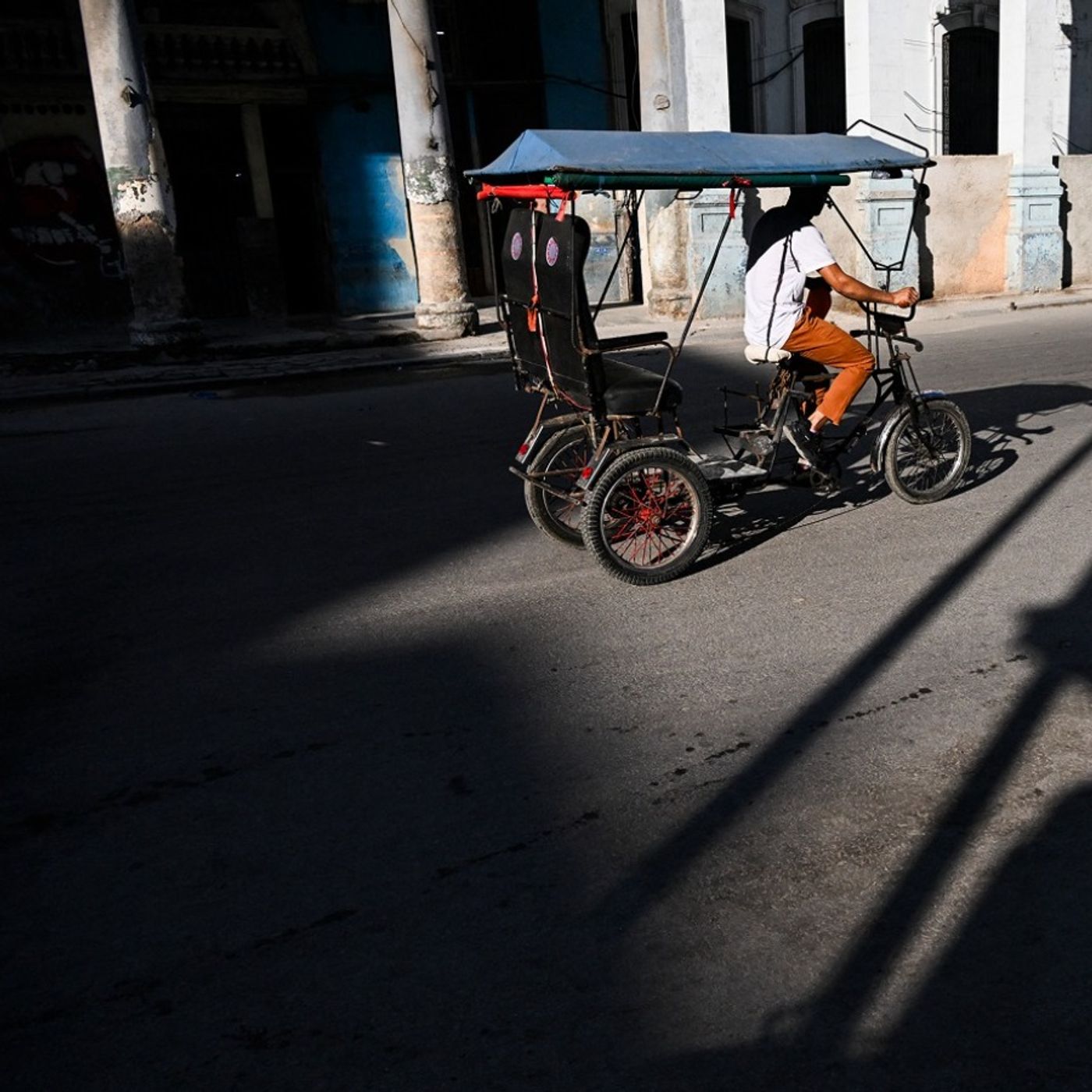
The Daily
After Venezuela, Is Cuba Next?
00:31:53
For more than six decades, the United States has tried to topple the regime in Cuba. After ousting President Nicolás Maduro of Venezuela, who was one of Cuba’s closest allies, the Trump administration is closer than ever to forcing radical change on the island. The New York Times reporters Frances Robles and Michael Crowley discuss how the latest escalation is pushing Cuba to the brink, and whether this time the United States will get what it wants.
Loading summary
Transcript109 lines
- [00:01]
A
Alaska is a killer's playground. ID presents a new documentary event from executive producer Octavia Spencer.
- [00:08]
B
Only the frozen land knows the truth of Alaska's lost women.
- [00:12]
A
A shocking investigation leads to a sadistic.
- [00:15]
C
Killer witness somebody being killed on video.
- [00:17]
A
But his arrest is only the beginning of a far deeper horror. Are there more Alaska native women that are victims? Lost Women of Alaska, a new documentary event February 25th on ID or stream on HBO. Max from the New York Times, I'm Natalie Kitroweff. This is THE Daily. For more than six decades, the United States has tried and failed to topple the regime in Cuba. But after ousting Cuba's closest ally, Nicolas Maduro, and pushing the country into dire economic crisis, the Trump administration is closer than to forcing radical change on the island. Today, my colleagues Francis Robles and Michael Crowley on how this latest escalation is pushing Cuba to the brink and whether this time, finally, the US Government will get what it wants. It's Tuesday, february 17th. Frenchie, it's wonderful to have you here on THE Daily.
- [01:41]
C
Thanks for having me.
- [01:42]
A
So I think it's fair to say you are the New York Times Cuba whisperer. You've been covering Cuba for how long? Decades.
- [01:50]
C
Decades. I actually looked it up today. I wanted to see what was my first article about Cuba. And it was the summer of 1993.
- [02:01]
A
Wow. So you obviously have seen this country go through crisis after crisis in that time. But I think there is something about this moment that feels different, at least for me. Looking at what's playing out on the island, does that feel right to you?
- [02:21]
C
100%. I interviewed an economist who told me a funny joke that says, how come Cubans have such short index fingers? Well, I don't know. Why? Well, it's from banging their finger table for years, saying next year we'll be having roast pork and Havana at Christmas. They've been saying this for 60 years, that this is the last year of the Cuban regime. But then this time, all the people that I interview, very serious people, academics, economists, people who have written books on the subject, they all say the same thing. They say, you know what? This time it might actually be true. And the word that you hear over and over again is unsustainable. This current situation in Cuba is unsustainable.
- [03:06]
A
And what's unsustainable about it? What are the people that you're talking to say?
- [03:09]
C
The big issue right now, Cuba produces about 40% of the oil that it needs for domestic purposes. And so it was receiving the other 60% either from Venezuela or from Mexico. Now it is getting zero of that.
- [03:25]
A
Acute fuel shortages have gotten even worse after US President Donald Trump announced two.
- [03:30]
C
Weeks ago that that he'd impose tariffs.
- [03:32]
B
On any country sending oil to Cuba.
- [03:36]
A
The standoff between the two countries is raising fears over a full blown humanitarian crisis.
- [03:42]
C
And so you're starting to see buses are not going to be able to.
- [03:47]
B
Run at the same time.
- [03:48]
C
Hospitals have already shut down in the.
- [03:50]
A
Last days and schools and universities have had to reduce their teaching schedules to save fuel.
- [03:56]
C
They're announcing that banks will only be open by certain days.
- [03:59]
A
Everyone's riding tricycles now. The car business is falling.
- [04:02]
C
AP they're going to get to a point where they don't have the gasoline to deliver food to the store. So what are people supposed to do? I'm going to look for a better.
- [04:13]
A
Life because things here are really bad.
- [04:16]
C
That's the big thing that people are wondering how long does this go on for and how bad does it get before somebody cries uncle?
- [04:28]
A
Right. You're saying basically that a corner has been turned in Cuba after years and years of suffering. There may be a kind of change coming. And what we understand from your reporting and from honestly the public statements of the administration is that this crisis that Cuba is facing now is intentional. It's the result of a carefully planned policy. Right. By the Trump administration. Can you just lay out for me why, why has the US Been so dead set on toppling the regime in Cuba?
- [05:03]
C
I guess it comes down to the simple fact that the United States government does not want a communist regime in their backyard. I mean, a one party state, a centralized economy, lack of basic freedoms, jailed dissidents. This is the antithesis of what the United States represents and what it wants in the Western Hemisphere.
- [05:27]
A
Right.
- [05:28]
C
And so you have to turn the clock back to 1960. Fidel Castro wins in 1959, but it's in 1960 that he announces, you know, his intention, his sort of socialist zeal.
- [05:57]
A
Cuba goes on a patriotic binge after the government seizes the four of US.
- [06:02]
C
Companies and he starts confiscating lots of industries, oil refinery, the sugar industry, the telephone company, banks, never mind private property, you know, people's houses. So that gives the United States the reason, you know, oh, oh, you're going to confiscate our oil company. Well, watch this. So this is where the United States government really starts its very aggressive state stance against Cuba and its quest, its decades long quest to topple this regime.
- [06:39]
A
Right. The assault has begun on the dictatorship.
- [06:42]
C
Of Fidel Castro in 1960. One, we invaded Cuba, landing over thousand men at the Bay of Pigs in what was absolutely disaster for the United States. Short time after that, the Kennedy administration made a full embargo on Cuba, and that meant cutting off any kind of ability Cuba would have to buy anything on the international market.
- [07:10]
A
So near total isolation.
- [07:12]
C
Yes, near total isolation.
- [07:16]
B
It shall be the policy of this nation to regard any nuclear missile launched from Cuba against any nation in the Western Hemisphere as an attack by the Soviet Union on the United States, requiring a full retaliatory response upon the Soviet Union.
- [07:34]
C
And then, 1962, Cuban Missile Crisis. You know, we almost went to nuclear war with Cuba because it was discovered that Cuba had allowed Russia to place nuclear missiles on the island. And so that was an incredibly tense moment. During all this time, the CIA is trying to kill Fidel Castro left and right. I mean, there's, you know, lots of lore about poisoned cigars and things of that nature. And he always survived. They always came out standing. And one of the reasons they did, I think it's really important to underscore that one of the mechanisms that the Cuban government had was migration. It was an escape valve. Whenever things got too hot, when the discontent got to be too much, when it was clear that people were really unhappy, Fidel Castro would open the doors and let people out. And so, for example, in the spring of 1980, you had a major incident that was known as the Marielle boat lift.
- [08:37]
A
Today, 23 boats filled with over 800.
- [08:40]
C
Cubans reached key West, Florida. It started with a protest at the Peruvian Embassy, and it ended with 125,000 people getting on boats and literally just sailing to South Florida. The President has literally opened the floodgates, placing no limitations on the number of Cubans entering the United States.
- [09:04]
A
And you're saying Fidel Castro actually encouraged this? He said, please leave. These boats can go wherever you want them to. Don't stay here.
- [09:15]
C
That's absolutely right. You know, for many, many years, until fairly recently, maybe about a decade ago, it was very difficult to leave Cuba. You had to get an exit card to go. And so this was his blanket exit card for everybody. People's families were coming from the United States with boats to pick people up, like, okay, we can go. Let's go. He also emptied prisons and mental institutions. But the thing that's really important to note is that it's a technique that the Cuban government has used periodically for the past 66 years.
- [09:47]
A
Got it.
- [09:48]
C
But it wasn't the only way that they survived. The other thing that was a really Important issue was that they were able to turn to the Soviet Union, and the Soviet Union kept Cuba afloat, but the Soviet union collapsed in 1991.
- [10:03]
A
Right.
- [10:03]
C
And that launches a really, really horrible time for Cuba, which is known as very euphemistically as the quote, unquote, special period. And it's a time of really severe food shortages, just a lot of suffering throughout the entire island. In fact, it launches another migration episode. So it's just yet another moment in this history where everybody thought, wow, it can't get worse. Look at how bad this is. This is absolute chaos. Everyone was convinced that it had to be the end.
- [10:37]
A
In just thinking about the history that you've sketched out here, it feels like at every turn, the US Thought that it was creating the conditions that would internally, you know, force people to rise up inside of Cuba, that it would force change from within by creating this pressure cooker. But the Cuban regime responded to that by saying, well, it's not a pressure cooker if we have a valve. And that valve is sending people to the United States, basically exporting the people who are most likely to push for change from within.
- [11:15]
C
That's absolutely right, Natalie. You know, and the end result of that is this huge Cuban American community in South Florida that has become a really powerful movement that has congresspeople who have always helped dictate Cuba policy. And you have a lot of people who were supporters of this idea that the US had to play a key role in helping topple the Castro government.
- [11:45]
A
So back in Cuba, the regime has survived this special period, but they've lost their biggest benefactor in the Soviet Union. So what do they do?
- [11:55]
C
Well, when you lose your sugar daddy, you gotta get yourself another one. So when Soviet Union fell, they started relying on Venezuela. Venezuela kept them afloat for almost 25 years. The other thing they did was open to tourism. So let's, if you'll allow me to jump forward in time a little bit, President Obama decides that he's going to try the exact opposite of what everybody else tried. You know, so everybody else is trying to suffocate Cuba to get them to fold. He's like, you know what? We're going to do the opposite. We're going to let people visit. We're going to let private businesses get licenses to do business there. They were hoping that the opening of Cuba will allow it to fall.
- [12:37]
A
Right.
- [12:38]
C
We'll get all the Cubans on the island to say, wait a second, you mean there's an Internet, there's cell phones, you know, I want A piece of that. And so from about, let's say, 2015, 16, 17, you see this big boom in tourism, and that's another point where people think, oh, yeah, now the Cuban government is really gonna end, because there's no way that people in Cuba will see how the rest of the world lives. Right, and be able to stick it out with this government.
- [13:07]
A
The idea from the Obama administration at the time was, okay, sticks have not worked in Cuba for, like, half a century, so we should try something else. And that something else should be exposing Cubans to the benefits of capitalism.
- [13:23]
C
That's exactly right. It didn't exactly work because the Cuban government saw it as a Trojan horse, and they put up a lot of obstacles to that opening. So other than a few years of a lot of tourism, the economic opening never really happened.
- [13:37]
A
Right.
- [13:38]
C
But when Trump comes along, he basically says, okay, well, that's enough of that, you know, so he reverses just about everything that President Obama had done, you know, and he puts back in travel restrictions, restrictions on sending money to Cuba, restrictions on doing business there, and he takes things very much back to the traditional Republican we're going to choke these people until they fold strategy.
- [14:05]
A
So back to sticks, basically.
- [14:07]
C
Back to sticks. That was always going to be Trump's plan. And what's interesting is, you know, the Trump administration ended, Biden took his place, and he didn't change that much, to be honest. A lot of these measures stayed in place, but then Trump won again. And you get the sense that this administration decided that this is our shot, that this is going to be the administration that succeeds where so many before them failed. And what they've done has really brought the Cuban government to its worst crisis that it suffered in its 67 years in existence. Its future has never been more precarious.
- [15:01]
A
After the break, we get inside the Trump administration strategy with my colleague Michael Crowley. We'll be right back.
- [15:14]
B
This podcast is supported by the American Petroleum Institute. Energy is all around today. America's natural gas and oil keeps the country moving, growing, and building, and makes every day a little easier. But energy demand is growing, and the infrastructure built today will help secure a more affordable, reliable future with enough energy to go around. When America builds, America wins. I'm Jonathan Swan. I'm a reporter at the New York Times. You know, when people think about the media, your favorite podcast, you know, cable news panels, and different things, I think it's fair to say that myself and my reporting colleagues at the New York Times exist at the more unglamorous end of that Spectrum. Our job is to dig out the facts that provide a foundation for these conversations. These facts don't just come out of the ether. It requires reporters to spend hours upon hours talking to sources, digging up documents. Also, if the story is a story that a powerful person doesn't want in print, there's threats of lawsuits and all kinds of things. So it's a really massive operation. There aren't that many places anymore who invest at that level in journalism. Without a well funded and rigorous free press, people in power have much more leeway to do whatever the heck it is that they want to do. If you think that it's worthwhile to have journalists on the job digging out information, you can subscribe to the New York Times, because without you, none of us can do the work that we do.
- [16:45]
A
So, Michael, our colleague Frenchie Robles just told us that the Cuban regime is more vulnerable than it's ever been because of the policies that the Trump administration has carried out. You cover the administration's foreign policy. So take me inside that story. What are you seeing?
- [17:02]
B
Well, this is very much by design. You know, the Trump administration, until now, has not talked a lot about Cuba, but has always had big plans for Cuba. And I think it's important to understand how much this is coming from Marco Rubio. Rubio is driving this, and we may be approaching an end game that Rubio has worked towards for decades now.
- [17:28]
A
Okay, so Rubio is absolutely central. You're saying, why is this his singular obsession? Just tell me what his motivations are.
- [17:38]
B
You know, let's start with his background and origins. Rubio is Cuban American. His parents fled to the United States from Cuba before Castro took power in 1959, but were very strongly anti Castro. So Rubio grows up in a community of Cuban exiles, and he makes it really his signature issue as he dives into the politics of South Florida, where Cuban exiles who are vituperatively opposed to the Cuban regime have enormous influence. And Rubio has made his opposition to the Cuban government and his efforts to promote its overthrow central to his political identity for his entire career. And maybe the most vivid detail to underscore that is that when Rubio himself ran for president in 2016. Thank you.
- [18:34]
A
Thank you.
- [18:35]
B
He announced his campaign at what is known as the Freedom Tower in Miami.
- [18:41]
A
In this very room, five decades ago, tens of thousands of Cuban exiles began.
- [18:46]
B
Their new lives in America, which was the first stop for those Cuban refugees to sort of announce their arrival in the U.S. and if America once again accepts the mantle of global leadership by.
- [19:00]
A
Ending the near term total disregard for the erosion of democracy and human rights.
- [19:05]
B
Around the world, especially Cuba, Venezuela, Nicaragua.
- [19:09]
A
It's interesting. You're saying his career was forged inside this Cuban American community that Frenchie told us this as well, has been both powerful and very keen on toppling the Castro regime. This is Rubio. This is his people.
- [19:25]
B
That's right. This is at the core of his personal and political identity. And I think that for him, possibly even more than for President Trump, getting rid of the current Cuban government would be a sort of crowning legacy achievement that would make him feel like his political career had all been worth it. It's all been kind of working toward this, if he can get it.
- [19:54]
A
And obviously, now he has the reins of US Foreign policy as Secretary of state, as national security adviser. So how have you seen this play out for him?
- [20:06]
B
Well, you've seen this incredible focus by the Trump administration on the Western Hemisphere and in particular, Latin America. And Rubio really spearheaded the Trump administration's pressure on Venezuela's leader, Nicolas Maduro, which ultimately led to Maduro's capture in early January. Now, this actually goes straight to the Cuba question that we're talking about. I know from my reporting that Rubio has made a very explicit connection between bringing down Maduro and bringing down the Cuban government. The thinking is that Venezuela and Cuba became very close allies over the past few decades. The Cubans provided Venezuelans with military training and intelligence, and the Venezuelans were shipping large amounts of oil to Cuba. Cuba doesn't have a lot of oil suppliers. So Rubio's calculus was, if you can get rid of Maduro and cut off those Cuban oil supplies to Havana, that is a huge blow that brings you a lot closer to bringing down the Cuban government.
- [21:22]
A
You're saying that Rubio wanted to oust Maduro because he's not in favor of this regime, obviously, but also he sees this as a way of weakening Cuba. Frenchie had told us that Cuba had come to rely on Venezuela for oil. And so by getting control of Venezuela's oil, Rubio thinks that he can directly impact the Cuban regime.
- [21:44]
B
That's right. I think for Rubio, probably the most important thing about what's happening in Venezuela right now is that we have forced Venezuela to stop shipping oil to Cuba.
- [21:57]
A
Right.
- [21:58]
B
And to lose such a key nearby ally and an oil supplier in Venezuela is a major development and a really bad one for the Cubans. On top of that, the Trump administration is pressuring other countries to not step in and come to the rescue of the Cubans. And in late January, President Trump issued an executive order threatening tariffs against any country that supplied Cuba with oil. So now we have already seen another major blow for the Cuban government, which is that the president of Mexico has said that she has suspended oil shipments to the island. And Mexico had actually overtaken Venezuela recently as the island's top supplier. So that's the second major supplier to the Cuban government that has stopped sending oil just this year.
- [22:46]
A
Right. It's just a major loss for the Cuban regime. And having covered Mexico as the bureau chief there, I can say that the president, Claudia Scheinbaum, just. It must have been an incredibly wrenching moment for her. She's a leftist. She's the daughter of Marxists. I mean, she led student protests in the 60s. She has been an outspoken supporter of the Cuban government. And I can imagine that she's looking at this situation where she's really between a rock and a hard place. I mean, Trump's not giving her or any country much of a choice here.
- [23:23]
B
You're absolutely right. But I think what we're seeing is the reality today that American economic might, coupled with President Trump's willingness to use that economic power in ways that other presidents have not. And then I think this long, slow dimming of the glamour of the Cuban revolution and Fidel Cash Castro and the impact he had on people around Latin America, I think that it's probably a little more doable than it was, say, a generation ago.
- [23:53]
A
Right. The Castros are no longer in power. It's been a long time since the revolution. I mean, things have changed on the island, too. You're right.
- [24:00]
B
Yeah. Yeah.
- [24:02]
A
So I think that brings us to the present day where this policy has now really put Cuba in this extremely difficult situation where conditions on the ground are just very dire. No oil is coming in, and this island seems close to an all out humanitarian crisis. My question is, how in the minds of Marco Rubio and President Trump do you get from a humanitarian crisis to regime change? Like, what's the calculation there?
- [24:35]
B
It's not easy. And, you know, honestly, it's not clear to me that they have it entirely figured out because there's just not a simple way to do this. You know, it's very clear that Rubio in particular wants to see this regime brought down and consigned to the dustbin of history. But at the same time, I think Rubio recognizes that this is not something you can do overnight for a bunch of reasons. And, you know, one of them is that it comes with real risks. I've been talking in my reporting to a lot of people who track Cuba extremely closely, and you know, what they warn is that this is a monolithic, brittle political system. There's no political opposition because the government there has been repressive for so long. It's going to be really hard to find some kind of a opposition leader who could take over or even to do some kind of a short term transition to a different government. And if you bring down the entire government without something to replace it, you risk total chaos, violence, mass migration from Cuba toward Florida, a lot of conditions that would put the Trump administration in a very uncomfortable position of having to make choices about what they do next. So the question is, is a way that you can kind of engineer a soft landing?
- [26:07]
A
What would that look like, Michael? A soft landing? I am wondering what the best case scenario the Trump administration imagines here. Like, are they looking to find a partner within the Cuban regime that they could work with to kind of negotiate change? Someone like Delsey Rodriguez in Venezuela, the former vice president to Maduro, who's now leading the country and working with the US Is that the best case here?
- [26:36]
B
Well, it could be. But the experts that I talk to say in the words of one of them, it's a fool's errand to try to find Adelsey Rodriguez in Cuba.
- [26:46]
A
Why?
- [26:47]
B
Because of the nature of their political system. Number one, it's very unlikely that you would have somebody who was willing to kind of step out of the political culture and allow themselves to be seen as a sort of a American puppet. At least in Venezuela, you have a substantial part of the population that has some sympathy for the United States, but there's just going to be very little of that in Cuba. The other problem is that it's a question of what you would want from the Cubans. And Rubio gave an interview over the weekend that gave us some clues as to what they might be thinking. And he said that it's really important that Cuba's government agree to some significant changes to its state run socialist economy. He really emphasized the economy over the political system. But he has made clear many times over the years that other deals the US has struck with the Cuban government, which in his view have led to very incremental reforms, were almost worse than nothing. You know, Rubio's reaction is that that's the Cuban government being dishonest, playing for time, making promises it has no intention of keeping and eventually reneging on.
- [28:07]
A
Well, and to be fair, it's true that this regime is absolutely expert in buying time. That is what they have done over and over again. This is a pattern, a well established pattern.
- [28:18]
B
That's absolutely right. So that leaves you with a situation where it looks like the Cuban government would have to essentially agree to its own demise to get Trump off its back. And that seems very unlikely. I mean, it's basically suicidal. Again, you know, I'm talking to many people who followed the Cuban leadership over the years, and they say that they. They just can't imagine that happening now. At the same time, if this economy and society is totally collapsing around them, and who knows, maybe at some point you start having popular protests that could convince them to make a deal like that. But that's a very extreme situation.
- [28:56]
A
Michael, given those complications, can we actually just drill down on what Trump wants here? Big picture? It's not as if Cuba has a ton to offer at the negotiating table with the U.S. yeah, we know for Rubio, this is personal, but my impression is that outside of the large Cuban American community in South Florida, not. Not many Americans see toppling the Cuban regime as a huge priority. So what does Trump care about here?
- [29:25]
B
It's a great question. I think that most of the time, very few Americans are thinking about Cuba and don't really care that much about it. But having said that, I still think there's little doubt that if President Trump were to bring down the communist government of Cuba implanted by FIDEL Castro almost 70 years ago, and he was able to do it without destroying Cuba along the way, I really think that that would be widely regarded around the world as kind of a historic triumph. He will have solved a foreign policy problem that many presidents before him were stymied by going back to Dwight Eisenhower. And even those Americans who aren't thinking about Cuba 99.99% of the time, if they were to hear that there had been a breakthrough, that the communist government was stepping down or had paved the way for its own replacement in some credible way, I think it would have a real power.
- [30:33]
A
Well, Michael, thank you so much.
- [30:36]
B
Thank you for having.
- [30:48]
A
We'll be right back. Hi, I'm Solana Pine. I'm the Director of video at the New York Times. For years, my team has made videos that bring you closer to big news moments, videos by Times journalists that have the expertise to help you understand what's going on. Now, we're bringing those videos to you in the Watch tab in the New York Times app app. It's a dedicated video feed where you know you can trust what you're seeing. All the videos there are free for anyone to watch. You don't have to be a subscriber. Download the New York Times app to start watching. Here's what else you need to know today. On Monday, a federal judge ordered the Trump administration to temporarily restore displays about George Washington's ownership of enslaved people at the site of his former house in Philadelphia. Last month, National Park Service workers arrived at the site and took down displays and video exhibits describing the nine enslaved people Washington kept there while he was president. The Park Service said the displays were taken down to ensure, quote, accuracy, honesty and alignment with shared national values. In her order, the judge wrote that anyone who visits the president's house and doesn't learn about founding era slavery would get a, quote, false account of this country's history.
- [32:10]
B
And I love the smell of napalm in the morning.
- [32:15]
C
Smells like.
- [32:19]
A
Victory. The actor Robert Duvall died on Sunday at the age of 95. He was known for a delightfully wide range of leading and supporting roles, from a principled cowboy to a Mafia consigliere. Nobody has ever gunned down a New York police captain. Never.
- [32:38]
B
It would be disastrous. All the five families would come after you, Sonny. The Corleone family would be outcasts in.
- [32:43]
A
A prolific career spanning more than six decades. Duvall was nominated for seven Academy Awards and won once.
- [32:51]
B
I don't know why I wandered out to this part of Texas is drunk and you took me in and pitted me and helped me to straighten out.
- [32:57]
A
Marry me for his performance as a boozy, washed up country star in Tender Mercies.
- [33:04]
B
You see I don't trust happiness.
- [33:06]
A
I never did, I never will. His signature was immersing himself so deeply in every role that he almost seemed to become his characters. To prepare for his films, he spent time with police detectives, hung out with an ex convict and sang with a country band.
- [33:23]
B
This character's like Shakespeare, I think.
- [33:26]
A
Duvall's own favorite role was none of his major big screen characters.
- [33:30]
B
I said let the English play Hamlet in King Lear. That's wonderful. I'll play Augustus McCrae. I mean, he's like a modern day knight.
- [33:37]
A
It was as Augustus McCrae, a Texas Ranger, in Lonesome Dove, a miniseries based on a Larry McMurtry novel. Today's episode was produced by carlos prieto, olivia natt, claire tennisketter and astha chaturvedi. It was edited by liz balin and paige cowett. Contains music by rowan niemisto, alicia ba itoub and marion lozano and was engineered by chris wood. That's it for the Daily I'm Natalie Kitralath. See you tomorrow. They say if you want to go fast, go alone. But if you want to go far, go together. At Amica Insurance, we're built for our.
- [34:38]
B
Customers and prioritize your needs.
- [34:40]
A
Visit amica.com and get a quote today.