← The Daily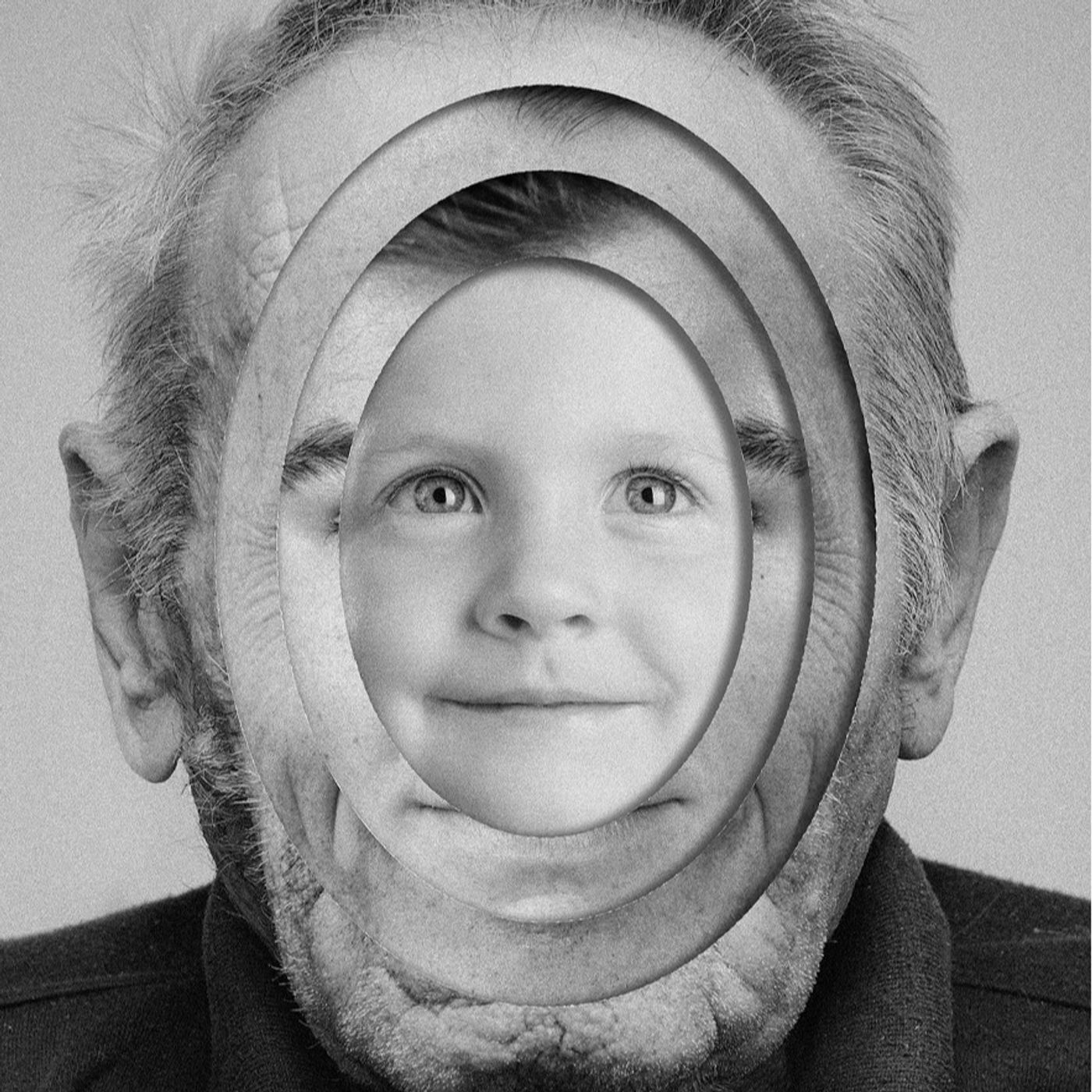
The Daily
Can We Reverse Aging?
00:28:38
The quest for a “cure” for aging — a way to remain youthful, even as we get older — is a project as old as humanity. It’s also a big business; products, therapies and treatments intended to moderate or reverse aging are part of a $2 trillion global wellness market that’s only getting bigger. But there have been some recent breakthroughs in the science of longevity that could be pivotal for the field. These discoveries have to do with cellular rejuvenation, which is the idea that scientists could take a cell that has aged, and make it function like a younger version of itself. On this episode of “The Sunday Daily,” the host Rachel Abrams talks with Susan Dominus, a staff writer at The New York Times Magazine, about this new research, the scientists behind it and who is funding this scientific quest for longer lives.
Loading summary
Transcript84 lines
- [00:00]
Commercial Narrator
Your gut isn't just about digestion. It's the command center of your whole body. New olly precise probiotics are made with clinically studied strains to provide targeted benefits beyond digestive health. By supporting your metabolism, skin health, or stress response, start giving your body what it needs. Shop precise probiotics with skin stress or metabolism support at your nearest Walmart. These statements have not been evaluated by the Food and Drug Administration. This product is not intended to diagnose, treat, cure, or prevent any disease.
- [00:31]
Rachel Abrams
From the New York Times, I'm Rachel Abrams, and this is the Daily on Sunday. Since the beginning of time, humans have quested for the fountain of youth. And these days, people are pouring billions and billions of dollars into products and therapies and treatments that are intended to reverse aging. And now scientists may have gotten closer than ever before to treatments that could restore our youth. Today I talk with my colleague Susan Dominus, who spoke with some of those scientists about their research and where the money that is funding it is coming from. It's Sunday, May 17th. Sue Dominus, welcome to the Daily.
- [01:22]
Susan Dominus
Thank you so much for having me.
- [01:23]
Rachel Abrams
So, sue, you cover the intersection of culture and science, and recently you have been focused on a very particular pursuit by a very particular group of people who are really interested in living longer. So I want to start with something very basic, which is what is longevity science?
- [01:42]
Susan Dominus
So longevity science can be described in a bunch of different ways. I mean, there obviously are people who are researching peptides and who are selling supplements and who are urging health interventions, but it's basically the science of how we can live longer and how we can slow aging. And the research that I have become particularly interested in is something known as cellular rejuvenation.
- [02:07]
Rachel Abrams
And just explain what that is.
- [02:08]
Susan Dominus
So cellular rejuvenation is basically this idea that we can take a cell that has aged and make it function like a younger version of itself. And one of the reasons why we believe this can be made to happen is because of something that happens every single time a baby is born.
- [02:29]
Rachel Abrams
And what is that?
- [02:30]
Susan Dominus
Well, let me ask you a question. Why is a baby born young?
- [02:38]
Rachel Abrams
I feel like this is a trick.
- [02:40]
Susan Dominus
I know it seems intuitive, but it's actually not. Because although eggs and sperm are relatively protected from aging, a sperm cell, for ex, does still bear the signs of aging that it inherited from the man who created it. And you can imagine that if that was true for every embryo that formed, that it inherited signs of aging, that eventually that aging would accumulate and accumulate and the species would go extinct. So it's actually been found that shortly after a sperm joins with an egg, there is this fascinating process by which the embryo essentially sheds the markers of aging that it inherited. And it is not at its youngest point, at the second that that, you know, embryo has formed or that zygote has formed, it actually takes a little while, and it sheds aging over a period of time, and then it starts at what's considered ground zero for aging.
- [03:49]
Rachel Abrams
You're saying basically, an embryo ages backwards
- [03:52]
Susan Dominus
In a way, for a moment, yes. And then it starts to acquire signs of aging. And so what scientists are trying to do is harness that process in a way that can be useful for human health.
- [04:11]
Rachel Abrams
Okay, so they're trying to replicate what happens briefly when an egg is inseminated. How far has science come on this front?
- [04:19]
Susan Dominus
Actually, pretty far. In 2006, a researcher named Shinya Yamanaka at the University of Kyoto realized that by applying these unbelievably powerful genes that are highly expressed in embryos to the aged skin cells of a mouse's tail, he was able to revert those skin cells to basically back to their embryonic form.
- [04:41]
Rachel Abrams
That sounds incredible.
- [04:43]
Susan Dominus
It was a big enough deal that he won the Nobel Prize for it.
- [04:46]
Rachel Abrams
Ah, okay. Well, there you go.
- [04:47]
Susan Dominus
But people weren't sure whether this discovery would ever have any application for human health, because they knew that these genes were also associated with explosive cell division. In other words, cancer. And, in fact, some researchers in Spain decided to see what would happen if they applied the Yamanaka factors to the body of a mouse. And what happened was that the cells of the mouse reverted back to this embryonic stage of development, which is fresh and young and wonderful. But the cells also became unspecialized.
- [05:23]
Rachel Abrams
What do you mean by unspecialized?
- [05:25]
Susan Dominus
Basically, they forgot how to do their jobs. They stopped being a heart cell or a skin cell, and they reverted back to embryonic form and eventually developed into these monstrous tumors called teratom, like these bits of various tissues, skin and hair and teeth, and their organ function fell apart. So it was fatal for these mice.
- [05:50]
Rachel Abrams
Okay. So clearly, despite the fact that there has been a Nobel prize awarded in this arena for progress, this is not a slam dunk. We are not at the precipice, necessarily, at this moment of rejuvenating cells.
- [06:02]
Susan Dominus
Well, in 2006, certainly, we could rejuvenate cells, but not in a way that was going to be helpful for humans. So. So people just thought, too dangerous, too cancerous, too messy, probably not useful. Let's move on to other things. When it comes to longevity, until a scientist at the Salk Institute named Juan Carlos Ipsizua Belmonte did some remarkable research in 2016.
- [06:26]
Rachel Abrams
And tell us about him.
- [06:27]
Susan Dominus
He's a fascinating guy. He grew up in real poverty in Spain, picking fruit to support his family, was briefly a professional soccer player in Spain, and then ended up in school and, and had a natural talent for science and was very interested in regeneration. He was very interested in a particular salamander that can regenerate its tail, for example, if you cut it off, including the part of the spine that's in the tail. And he was interested in ways of creating organs or healing organs so that they could be in better shape for transplant. That was his background. And he was very interested in his Yamanaka factors, those powerful genes we talked about earlier that Yamanaka used to rejuvenate the older skin cells of a mouse's tail. So he thought, okay, well, clearly we don't want to apply them in a way that's going to revert our specialized cells back into being stem cells or stem cell like cells, mainly because we don't want those nightmare tumors showing up in our bodies. We don't want the cells to forget how to do their jobs. Our organs would cease to function. So he thought, what if we just applied a little bit of the Yamanaka factors? You know, maybe we could take the cell not all the way back to its earliest stage, but maybe we could take it back to being like a teenager in its prime somewhere along the way.
- [07:47]
Rachel Abrams
So he's like tweaking the formula here.
- [07:49]
Susan Dominus
Basically, he tweaked the formula and kind of turned down the volume, you could say. And he applied the Yamanaka factors to mice that had been genetically tweaked to suffer from a disease that made them age very, very quickly. And he found that he was able to extend their lives significantly. I mean, you could see it in the mice. They looked younger, they had less gray in their fur, their muscles were stronger, they healed more quickly from wounds, and they were kind of rejuvenated and overall friskier. And, you know, the story goes that the lab technicians thought the old mice had been replaced by younger mice.
- [08:32]
Rachel Abrams
That sounds very promising. So then what happens from there?
- [08:35]
Susan Dominus
So then the race is on to try to figure out how to use it in a way that is safe for humans. And I think most people in the field would agree that the next big breakthrough in the field comes from a very well known longevity researcher, who's also somewhat controversial, named David Sinclair.
- [08:54]
Rachel Abrams
What's his deal. And why is he so controversial?
- [08:57]
Susan Dominus
So Sinclair is a professor of genetics at Harvard Medical School and he, many of his colleagues would agree, has done really important research in the field of longevity. He's had very important breakthroughs. But he's also somewhat controversial, as I mentioned mentioned, because he's so enthusiastic about this research that at times his peers fear that he has maybe oversold the promise of where the science is. Right now he is one of the important co founders of the most important academy of longevity researchers. But he was also asked to step down from running it after he had circulated on social media a press release from one of his biotechs that claimed that science had proven that there was a supplement that would reverse aging in dogs. And you know, his peers did not feel that the research supported that. And he wrote a bestselling book that is super fascinating and holds a lot of really high level science in it. It's called Lifespan why We Age and why we don't have To. And you know, that subhead contains the kind of promise that makes his peers a little bit uncomfortable. It's also unusual, let's say, for a Harvard scientist to co found, as Sinclair did with his girlfriend, a kind of wellness platform that relies on, let's say, non mainstream practices like energy healing. There's still also a lot of discussion about a compound that he was a huge advocate of, known as resveratrol, that Sinclair maintains research shows can slow aging. But other people who tried to replicate the science did not meet success. And that biotech behind resveratrol was sold to GlaxoSmithKline, which is, you know, a major pharmaceutical company, for a small fortune. But they eventually stepped away from pursuing resveratrol. So he's made a lot of important scientific breakthroughs. He's also made some choices that many of his colleagues are uncomfortable with, let's
- [11:00]
Rachel Abrams
say, okay, so he's got a reputation for maybe getting over his skis a little bit, but also an innovator in this field.
- [11:08]
Susan Dominus
Correct. And recently he's received a lot of recognition for a big break he had in the field of cellular rejuvenation. He had sort of a similar idea to the one that Juan Carlos Ipsizua Belmonte had, which was, can we find a way to tone down the power of these Yamanaka factors? And his innovation was to say, well, what if we just dropped one of those factors? Let's only use three of them and not use the one that's most associated with cancer risk. And what if we applied three to, let's say, the damaged eye cells of mice. And what he was able to do was restore the vision of mice whom they'd blinded using this technology of cellular rejuvenation. And they did not find cancer growth in these mice. And it was a breakthrough, and it suggested that we can use the power of this kind of technology or medicine without necessarily incurring the risk.
- [12:08]
Rachel Abrams
But obviously, of course, we know that mice studies are not human studies. So how is the science applicable to what these folks are trying to do with people?
- [12:17]
Susan Dominus
It's a great point. Mice trials often don't translate into humans. So they went to the next level, which was they tested the same process in monkeys. Very small study, very small numbers, but they were satisfied that that was one more level of proof that this could be done safely, hopefully. So after these studies, which were very small, are done in monkeys, Sinclair's biotech, which is called Life Biosciences, is able to get FDA approval to start a safety trial in humans to use the cellular rejuvenation to try to reverse blindness in humans who are suffering from glaucoma and another illness known as ni.
- [12:58]
Rachel Abrams
So clearly this man is at the forefront.
- [12:59]
Susan Dominus
He's definitely at the head of the pack in getting this science into actual human trials. Whether that will be true for long, I don't know because there's a lot of interest in this field and there is a lot of money being thrown at a lot of other biotechs who are doing everything they can to catch up.
- [13:22]
Rachel Abrams
And we are going to talk about all of that and who is funding this research? After the break. We'll be right back.
- [13:39]
Commercial Narrator
Your gut isn't just about digestion. It's the command center of your whole body. New Ollie. Precise probiotics are made with clinically studied strains to provide targeted benefits beyond digestive health. By supporting your metabolism, skin health, or stress response, start giving your body what it needs. Shop precise probiotics with skin, stress or metabolism support at your nearest Walmart. These statements have not been evaluated by the Food and Drug Administration. This product is not intended to diagnose, treat, cure or prevent any disease.
- [14:08]
Susan Dominus
I'm Robin and I am excited to open my Crossplay app. I'm challenging John, my colleague at the New York Times.
- [14:15]
Rachel Abrams
Robin played the word grunge, which has a G, which is four points. She got that triple word multiplier.
- [14:21]
Susan Dominus
I am going to take facts and make it faxes for 30 points.
- [14:25]
Rachel Abrams
I might just take another two letter word here with whoa gets me at 23. I think this will put me back in the lead? If my maths are mathing, I like
- [14:33]
Susan Dominus
to play it more from a strategic point of view and see where I can block the other player from scoring high.
- [14:39]
Rachel Abrams
I'm pretty competitive. It's fun to beat friends and co workers. And also you get to learn new words.
- [14:44]
Susan Dominus
Crossplay, the first two player word game from New York Times Games. Download it for free today. I think he thinks he has this in the bag, but I'm not so sure.
- [14:55]
Rachel Abrams
So sue, obviously a lot of people want to live longer and healthier lives. There are many different wellness industries devoted to this topic. But when it comes to longevity science specifically, who is backing all of this research?
- [15:09]
Susan Dominus
The short answer is billionaires. You know Sam Altman of OpenAI has invested something like $200 million in a biotech called Retro Biosciences. The very wealthy Brian Johnson, who's a major tech vc has made longevity science a kind of spectacle sport. He's injected himself with the plasma of his son, which is just one of a few crazy kind of science capers he's undertaken. You have Peter Thiel, the billionaire who founded PayPal, talking about wanting to be cryogen preserved. You have Larry Ellison, another billionaire and co founder of Oracle, almost turning the island of Lanai that he purchased into a wellness mecca. And then there is what is thought to be the single biggest biotech startup in history at its launch, which is Altos Labs, one of his major investors is Jeff Bezos.
- [16:04]
Rachel Abrams
And as part of your reporting you actually visited this lab. What were you hoping to find out?
- [16:08]
Susan Dominus
I was trying to get a sense when I visited Altos of where they were pursuing the science. What was their hope? How big was their ambition? Are these people who were talking about we're going to extend life by 20 years or are we just hoping to improve health across the board? Were they coming up with alternatives to the Yamanaka factors? Were they finding other ways of modifying their power? Those are some of the questions that I had. So I went to visit their lab in San Diego. They actually have several campuses, but I went to the one in this beautiful biotech park basically and I was met there by Juan Carlos Ipsua Belmonte.
- [16:49]
Rachel Abrams
Belmonte, the Spanish scientist who first adapted the Yamanaka factors?
- [16:53]
Susan Dominus
Yes. They were able to recruit him and so many others that their success in that way has been described as one of the single biggest academic migrations in a field to private industry. And they were able to do that reportedly by offering something like million dollar salaries to principal investigators. Were being Offered huge resources, lots of Runway time, and very high salaries.
- [17:17]
Rachel Abrams
So what did you see?
- [17:18]
Susan Dominus
You know, I saw this beautiful, sunny, bright light lab. I put on a lab coat, and they seemed to be interested in showing me all the ways that they were using technology to do fast and highly predictive research.
- [17:35]
Rachel Abrams
What do you mean by that?
- [17:36]
Susan Dominus
So a lot of the research that's done for ultimately human health is conducted on mice. And unfortunately, the vast majority of those findings do not actually translate into human applications. What works in a mouse does not always work in a human. So ALTOS is trying to improve the predictive ability of whatever research it's conducting by finding alternatives to animal models. So one of the things they showed me was a petri dish that had, rolling around in it, what looked like a few grains of rice, but in fact, they were like almost mini human organs. I was looking at very tiny, tiny replica of human brains that had been essentially grown from stem cells and had many of the kinds of cells in it that you would find in a human brain. Just to give you a sense of how complete these kinds of replica are, if you were to look at an organoid of a human heart, it would actually beat.
- [18:38]
Rachel Abrams
Hmm.
- [18:39]
Susan Dominus
So they can manipulate those and do research on them more efficiently, because they're made from human stem cells. So they're not looking, you know, it's as close to our biology as they're going to get. And they also talked a lot about a virtual cell they had created, which requires huge amounts of AI, but allows you to do millions of experiments that otherwise would take years. And they can just sort of program in what if A mixed with B, add C, what would happen? And do that basically over and over and over again at high speed.
- [19:12]
Rachel Abrams
So what did you make of all of this after you got this tour and saw all these innovations?
- [19:16]
Susan Dominus
You just get a sense of the vastness of the investment and the range of creativity that they're trying to apply and just the resources that they can use. So, for example, one of the things that they are doing is trying to rejuvenate human livers. And in order to do that, you have to keep the liver viable long enough for the research to work. And so far as I understand it, they've been able to do that for a longer period of time than has been done before, which could have huge consequences for liver transplants, apart from whatever they find out about cellular rejuvenation.
- [19:52]
Rachel Abrams
And did you get a sense about what they're hoping to accomplish a little bit more broadly, like, beyond just the liver? Are they trying to get people. Is all of this research to help people live to 300 years old or what do they tell you about their goals?
- [20:05]
Susan Dominus
Well, that's a great question because Ipsissua Belmonte has been quoted saying that it's possible that the first person who will live to be a 150 has already been born. But that is not the messaging that I was getting from Altos. The person who is their CEO, Hal Barron is very well regarded in the field and I think he is trying to keep expectations reasonable because much better to over deliver and under promise than the other way around. And although I don't know this to be true and I can't really speak for him, I think the idea we're trying to make people live to be 150, it makes a lot of people uncomfortable also, you know, it raises all kinds of other questions that maybe they don't want to have to get into. But it is also possible that they just think look, we'll be really happy if we can extend human health and lifespan by two or three years. That would be revolutionary. That would be surpassing even what would happen if we could cure cancer. So I think that they are trying to distance themselves from this idea of we don't have to age. We could maybe live forever, we could live to be 150. That was not the messaging I was getting at all.
- [21:13]
Rachel Abrams
It sounds like they're being really cautious, right? Like they're almost positioning themselves as kind of the anti David Sinclair just in terms of trying to come off as a little bit more sober.
- [21:21]
Susan Dominus
I think it's also possible that Hal Baron really does think it would be a miracle if we could merely extend, you know, human lifespan by three or four years. Or as he put it, if we could extend the health of a woman's ovary by just a few years, think about how life changing that would be for many women. So I think that he really does think it would be miraculous to accomplish those things and maybe just doesn't see the point in pie in the sky predictions that may never come to pass.
- [21:53]
Rachel Abrams
Well, whether it's two years or 100 years, there are obviously some implications of living longer lives and we're going to talk about those after the break.
- [22:13]
Commercial Narrator
Your gut isn't just about digestion. It's the command center of your whole body. New olly precise probiotics are made with clinically studied strains to provide targeted benefits beyond digestive health. By supporting your metabolism, skin health or stress response. Start giving your body what it needs. Shop precise probiotics with skin stress or metabolism support at your nearest Walmart. These statements have not been evaluated by the Food and Drug Administration. This product is not intended to diagnose, treat, cure or prevent any disease.
- [22:41]
Susan Dominus
Criticism has been a huge fuel for
- [22:43]
Commercial Narrator
me, like a creative writing prompt.
- [22:45]
Rachel Abrams
If you couldn't tell, that is Taylor Swift. Who hasn't sat for an interview like this in a long time. I'm John Caramanica, one of the critics behind the New York Times 30 Greatest Living American Songwriters Project. We interviewed some of the songwriters on our list and these are not ordinary conversations. Watch all the video interviews for free and check out the entire 30 Greatest Living American Songwriters project at nytimes.com 30 greatest or in the app. Okay, so sue, we have talked about the science. We have talked about the billionaires who are funding the science. We have talked about the competition. But what about us regular people? What can we reasonably expect to get from all of this within our lifetimes?
- [23:27]
Susan Dominus
Perhaps? Well, you will not be surprised to hear me say that the answer is we don't really know. But even within the realm of possibility, there are kind of two versions. You know, there are the people who are hoping that cellular rejuvenation will be something that can really dramatically change our lifespan and our health span, how long we're healthy. Right? Like maybe we can just keep keep reapplying cellular rejuvenation and people will end up living to be 150 or even beyond that seems far fetched to me. But there are actual scientists who think it's not outside the realm of possibility at some point. And then there is the more realistic expectation which is, well, let's start with glaucoma. Is it possible that in the next decade even we could have a safe and effective treatment that relies on cellular rejuvenation to treat it? Y. I think that is within the realm of possible. That's why these trials are happening. Could that then be applied to organs so that people live a few more years? We're not expanding lifespan in some dramatic way, but we are curing disease so that people can be healthier for longer. And ultimately the goal is for people to live as healthy lives as possible. That might be longer, but just to have less suffering so that those end years are less painful.
- [24:58]
Rachel Abrams
You know, in this country at least, so much medical innovation is funded by the private sector. And as you told us, a lot of the money that is coming into this field is coming from high net worth individuals. So I wonder, does that matter at all, that distinction? Or is this just what you might expect in the United States when you have a group of people with money and interest and resources to put behind this kind of study.
- [25:22]
Susan Dominus
It's a little bit hard to know because I think there's never really been the intersection of billionaire investors in healthcare that also overlaps so much with, like, you know, control over technology and information access and privacy. You know, it's. It's very uncharted territory. But, you know, obviously industry has always been, you know, pharmaceutical companies have always been behind many of the great breakthroughs that happen. So it's not like our medical care is divorced from profit. Far from it. To be clear, you know, there these billionaires are investing huge amounts of money in R and D in the hopes that they can make a profit from it as well. And the only way they'll be able to make a profit from it is if the medical treatments are eventually widely available to the general population.
- [26:07]
Rachel Abrams
Even if longevity science ends up revolutionizing the way that we age, we are also dealing with declining populations in many parts of the world. Right. Like, there is a real question, some might describe it as a crisis, about how we are going to take care of our older generations when we do not have young people to do that. So if you're talking about making people live for longer and longer, what are the implications of that for our society beyond just the scientific and the health and the medical?
- [26:36]
Susan Dominus
Yeah, many philosophers are weighing in on this kind of question. I mean, there are their economic questions. You know, our entire Social Security system is not designed for people to live to be 110. So what does that do to that economy? Philosophically, what does it mean when people are holding on to jobs for longer than they used to? Does that mean that there's less innovation, less freshness? People who are champions of longevity science would say, now remember, people are not just living longer and living longer in unhealthy lives. They are living longer and healthier. That's the goal. And so they presumably maybe would be creative and nimble and active and engaged for many, many more years of their lives. And if we do have a population decline, maybe we need people be able to function in a healthy way for longer to fill all those roles, to keep the economy hustling along. It only becomes a crisis if there's a shortage of young people to pay for the medical care of these older people. But if they're healthier longer, then that issue is not as pressing.
- [27:43]
Rachel Abrams
Oh, my God. Are you saying I'm going to have to retire at a hundred now? Because I'm going to have to keep working to sustain myself. So I. Because I'm so healthy, I'm going to want to travel and do things, and I will not be able to not work.
- [27:53]
Susan Dominus
I think we haven't quite figured out the math on that yet. Yeah.
- [27:56]
Rachel Abrams
You know, so when we first started talking about doing this story, one of the first discussions we had here at the Daily was like, don't we all already know how to live longer? Like, you eat well, you exercise, you don't stare at a screen all day. There's some very basic things that people know. But like so many other parts of our health, we want solutions, pharmaceutical solutions, to basically account for the fact that we might not be taking care of ourselves the way that maybe we could, but for whatever reason, we can't or won't. I'm thinking, for example, about GLP1s, right? Like, GLP1s are a shortcut to allow people to live much healthier lives. And this is. Seems like another way to kind of hack our bodies so that we maybe don't have to treat them as optimally as we should.
- [28:46]
Susan Dominus
Yeah, it. It is fascinating to me. I agree. Because one of the things that Hal Barron said to me is we know that we can kind of reverse aging in people because we already know how to do it. And the way that we know how to do it is through diet and exercise. To which I wanted to say, then why again, do we need to invest billions in this? It is kind of amazing how much we know exercise and diet and sleep and also sociability really do matter for people's general health.
- [29:13]
Rachel Abrams
Right.
- [29:14]
Susan Dominus
I mean, my family feels very fortunate because my parents are now 88 and a few years ago, although my mom, I think, is kind of knock on wood, a super ager. And maybe, maybe my dad is, too. But a few years ago, my siblings and I were starting to notice that he, you know, we could see that he was aging in, you know, in all kinds of ways. And then he and my mom joined one of these retirement communities that exists on the campus of a college. And suddenly they were socializing all the time, and they were going out to dinner and they were. My dad was taking an art history class, and now he runs a film series. And my siblings and I. I feel he literally has been rejuvenated by this experience. It's been fascinating to watch, but not everybody does have that kind of luxury. And just as you say, we now know if GLP1 show us anything, it's that eating right is not just a matter of, you know, just try to eat less. It's just not that simple. Or there are, you know, there are food deserts and vegetables are in short supply. People are lonely and, you know, are under stress, and that makes it hard for the them to sleep well. So it's true that if this research could create some of those effects in a more accessible way, in a way that's affordable, and that really does allow people to live longer, healthier lives with shorter periods of suffering, that really could be transformative.
- [30:42]
Rachel Abrams
Sue Dominus, thank you so much.
- [30:45]
Susan Dominus
Thank you so much for having me.
- [30:49]
Rachel Abrams
Today's episode was produced by Luke Van der Plug with help from Tina Antolini. It was edited by Wendy Dore and engineered by Rowan Niemisto. It had production assistance from Dahlia Haddad and contains music by Dan Powell and Marianne Lozano. That's it for the Sunday Daily. I'm Rachel Abrams. See you tomorrow.
- [31:20]
Commercial Narrator
Your gut isn't just about digestion. It's the command center of your whole body. New Ollie. Precise probiotics are made with clinically studied strains to provide targeted benefits beyond digestive health by supporting your metabolism, skin health or stress response. Start giving your body what it needs. Shop precise probiotics with skin, stress or metabolism support at your nearest Walmart. These statements have not been evaluated by the Food and Drug Administration. This product is not intended to diagnose, treat, cure or prevent any disease.