← The Daily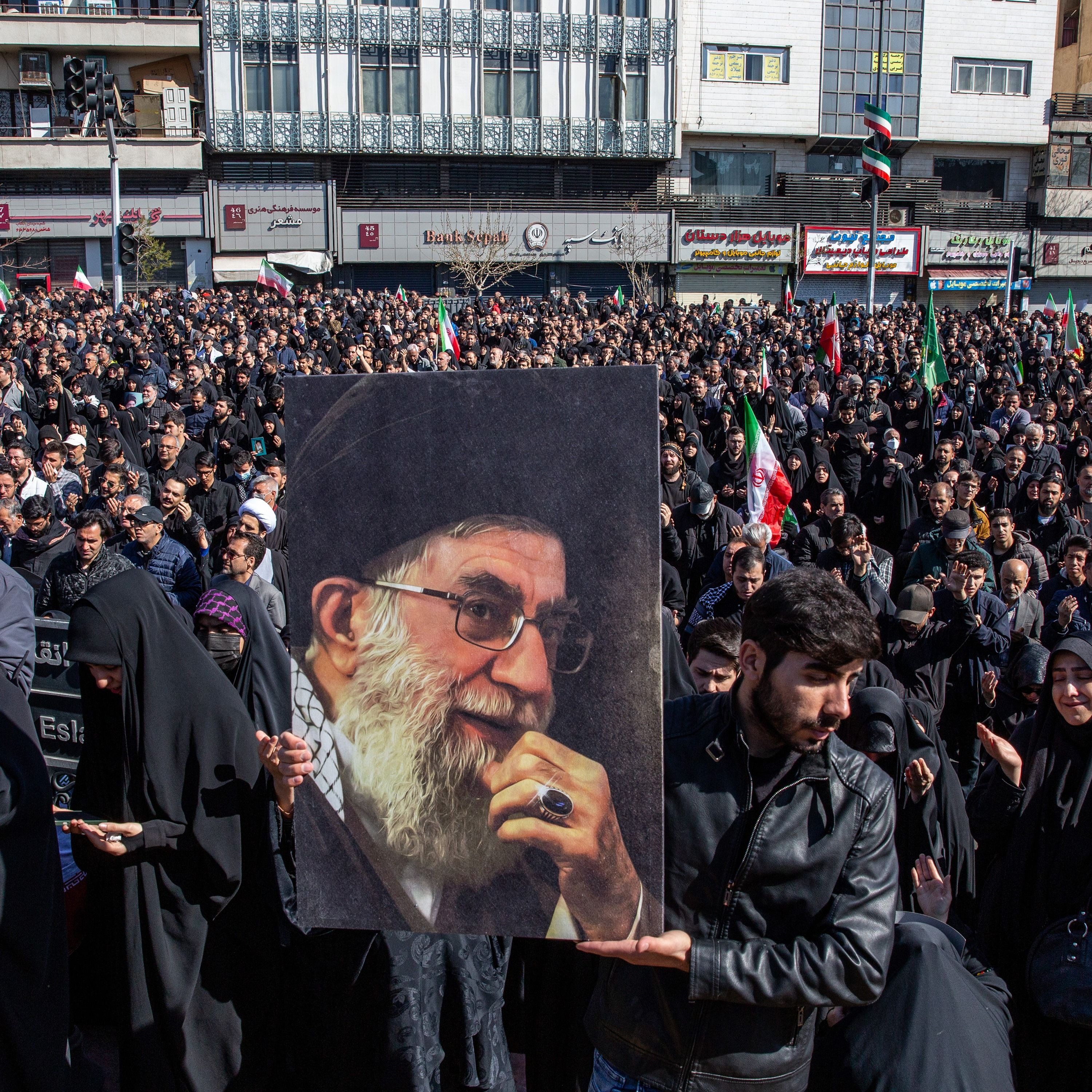
The Daily
Celebration and Mourning: Inside an Iran at War
00:35:28
The United States and Israel continued to strike Iran with missiles for a second day on Sunday, destroying more power centers of the Iranian regime and, according to rights groups, bringing the civilian death toll over 100. Iran responded with retaliatory attacks. At the same time, all eyes were on the Iranian government and the millions of citizens who have long opposed it. Farnaz Fassihi, who covers Iran for The New York Times, brings us the view from a pivotal moment inside Iran.
Loading summary
Transcript87 lines
- [00:00]
A
A biotech firm scaled AI responsibly. A retailer reclaimed hours lost to manual work. An automaker now spots safety issues faster. While these organizations are vastly different, what they have in common sets them apart. They all worked with Deloitte to help them integrate AI and drive impact for their businesses. Because Deloitte focuses on building what works, not just implementing what's new. The right teams, the right. The right services and solutions. That is how Deloitte's clients stand out. Deloitte together makes progress. From the New York Times, I'm Michael Balbaro. This is the Daily. On Sunday, the United States and Israel pounded Iran with missiles for a second straight day, destroying more and more power centers of the regime and according to rights groups, bringing the civilian death toll there to well over 100. Meanwhile, Iran unleashed a wave of retaliatory attacks that proved deadly. Three US Troops were killed in action, becoming the first Americans to die in the war as one nation.
- [01:27]
B
We grieve for the true American patriots
- [01:30]
A
who have made the ultimate sacrifice for our nation. But increasingly, all eyes were on the Iranian government and the millions of citizens who have long opposed it. And the looming question became whether a weakened Islamic republic could actually be toppled by its own people. Today, my colleague Farnaz Fasihi brings us the view of this pivotal moment from inside Iran. It's Monday, march 2nd. Farnaz, thank you for making time for us on a Sunday. Really appreciate it.
- [02:21]
B
Thank you for having me, Michael.
- [02:22]
A
So, Farnaz, for the people of Iran and for the massive diaspora of Iranians who live outside of the country, including you, Sunday today, as we speak, is one of those hinge days in history. There was a before and there was an after. And right now, the after is a world in which Iran's supreme leader, who has been in power for over three decades, has been killed and is no longer in power.
- [02:54]
B
It's one of those historic days that I think if for every Iranian, whether you're a supporter of the government or you're an opponent, whether you live inside or you live outside, this is a new day. This is a new Iran. From the moment we started hearing about Mr. Khamenei being potentially killed, my phone started buzzing. I was getting text messages and phone calls from my friends and family members. And I was also getting text messages and calls from some of my sources in Iran who were asking me, do you know anything? Is the news true? Is he gone? What have you heard? No matter what side of the divide you are on, this was a monumental moment. And today, Iranians Woke up to the first day of history without Mr. Khamenei in power. And we don't know exactly what that's going to mean yet. But this figure who has loomed very large for almost four decades over the fate of Iranians is gone. Some Iranians were celebrating. People were pouring to the streets. I had several video calls with several people I know in Tehran who turned on the camera and showed me cars honking on the streets, people cheering. There were fireworks, people sticking their heads out of the windows and chanting, freedom, freedom. And this visceral scream, Like a scream of relief almost. And for the diaspora, it was scattered all over the world. It was a similar feeling. I watched a group of family members congregate on FaceTime. Some were in the US some were in Europe, some were in Iran. And everybody did a video call and some of them were crying. They were just these tears of relief and shock and joy even. And then they celebrated with shots.
- [05:19]
A
Wow.
- [05:19]
B
And there was a lot of cheers.
- [05:21]
A
And when you say diaspora, you quite literally mean families who were once together in Iran and presumably scattered to the winds across the world once the Islamic revolution came in 1979.
- [05:36]
B
Exactly. It feels like a dream for many Iranians that once they used to all live a few blocks from each other and have multi generational family gatherings. And under Mr. Khamenei, many of them have not been able to return to Iran. And many families have just scattered like stardust all over the world and separated from each other.
- [06:00]
A
So that's clearly the segment of Iranians, both inside and outside the country, who may be on the celebratory side of the spectrum in the 24, 48 hours since he was killed. What about those who support him? Presumably you've been talking to them as well. What would you characterize as their reaction?
- [06:20]
B
For Mr. Khamenei's supporters, this feels like a big loss. His supporters started to come out into the streets in large numbers and going to mosques and praying and crying. It feels like the ground is shifting under them. Not only have they lost a religious figure that they revered and believed in, but they've also lost a political leader of a system that they have ideological loyalty to. It feels like that is in jeopardy, that they don't know whether this Islamic republic that they believe in and they support is going to survive or not without him. And, you know, this is the reality of Iran, Michael. This polarized society.
- [07:42]
A
Right.
- [07:43]
B
And one wonders, whatever comes next, whatever form of government comes next, how are you going to bring these two sides anywhere close to each other? Or is that even possible?
- [07:54]
A
Right. Because the people doing shots in their homes, uncorking champagne, those people would seem to have a very hard time reconciling their reactions and their whole worldview with those who are clinging to photos of the now late Supreme Leader in the streets.
- [08:14]
B
Exactly. I don't know how these two sides are going to reconcile.
- [08:17]
A
If you had to estimate Farnaz, how big would you describe both of those camps as? The supporters, the mourners versus the dissidents, the opponents, those celebrating his death?
- [08:31]
B
I would say that the overwhelming majority of the population in Iran are opponents of the regime, about 80%. And the core supporters are about 20%. And I think we can sort of draw this conclusion from voting patterns in the past couple of years when there's been presidential elections or parliamentary elections, Iranians who are hardcore believers of the regime have gone to polls. Around 20% has been 20% of the population.
- [09:05]
A
Got it. So you're extrapolating from that, which seems quite reasonable.
- [09:08]
B
Right. We can, I think, draw from that. And also, like in January, literally every small and big town all over Iran saw protests against the government, including the religious sort of stronghold of the government, where there were lots of people out calling for the end of this Islamic regime. If we look at the demographics of the protesters who were killed in January, they're from all ethnic groups from a large geographic area in Iran and different socioeconomic backgrounds.
- [09:42]
A
Well, because his death is so fresh and the reactions as you are describing them, are so different. Let's talk about this man who is inspiring such profound reactions, Khamenei, and why he inspires such strong reactions.
- [09:59]
B
Mr. Khamenei is the second supreme leader of Iran. The first was founding Supreme Leader Ayatollah Ruhollah Khomeini. He came to power in 1979 after the Islamic Revolution that toppled the monarchy.
- [10:14]
A
Twelve days ago, the Ayatollah was operated on in an attempt to stem intestinal bleeding. Early yesterday, he suffered a heart attack. He whispered Muslim prayers and died. Iran has named a successor to the Ayatollah Khomeini. Less than a day after the Ayatollah's death in a Tehran Hospital, 49 year old Ali Khamenei was today chosen Khomeini's religious successor by Iran's Council of Senior Clerics.
- [10:43]
B
It is widely expected that Mr. Khamenei succeeded him. In 1989, Ayatollah Khomeini unleashed anti Western
- [10:51]
A
passions throughout the Islamic world. Today, there were thinly veiled hopes that his successors would be less Effective, if not more friendly.
- [10:59]
B
And it is said that while the first supreme leader led a revolution, Mr. Khamenei led a state. He really is the ruler who made sure that the Islamic Republic went from a revolutionary idea into a state that entrenched power. The Islamic Republic of Iran that we know today, that has influence over proxy militant groups and, you know, has a nuclear power and missile and military power, was all the vision of Mr. Khamenei. Not only was he the religious leader of Shias around the world, but his Iran would also be this country that led anti imperialism, anti Americanism, anti Israel. Exactly. In one of his notorious quotes, he said, the reason Hamas now has rockets and can attack Israel is because of us. We enabled them to go from rocks and arrows to missiles and guns with our training and with our funding. And of course, the thing that he is known for is his role in domestic repression. For a few days, it looked like
- [12:13]
A
the start of a second revolution on the campus of Tehran University, demanding political and social reform.
- [12:22]
B
But the response was swift and violent. Mr. Khamenei had absolute power. He is known for never giving an inch to calls for reform sent in
- [12:33]
A
to crush this youthful idealism.
- [12:36]
B
Not the police or army, but a
- [12:38]
A
militia called the Basij Defenders of the
- [12:41]
B
Fundamentalist Revolution, sidelining political opponents.
- [12:45]
A
This government won't allow us to say what we want.
- [12:50]
B
Jailing dissidents.
- [12:51]
A
The government's response has been violence. Armor clad police attacking protesters from the
- [12:56]
B
backs of speeding motorcycles, calling for brutal and lethal crackdowns on protesters.
- [13:03]
A
These are some of the most recent images coming out of Iran. The regime cut off the Internet in Iran on 8 January, hoping to prevent coverage of its crackdown on protesters, including
- [13:15]
B
the recent wave in January where he personally ordered the shoot to kill order
- [13:21]
A
that we think killed thousands.
- [13:22]
B
Exactly. He ordered security forces to open fire on unarmed protesters with lethal force. And as a result, over three days, a massacre happened because Mr. Khamenei did not tolerate dissent and and wanted to suppress any cause of change.
- [13:42]
A
Activists now say that more than 6,000 people were killed in Iran's recent crackdown on nationwide protests. And they warned that number could rise. And yet, despite the Supreme Leader's success in holding back protests by being so repressive, what we know, we've talked about it a lot on the show, is that behind the scenes the regime is getting weaker and weaker because the United States and Israel, which grew increasingly tired of Iranian state sponsored terrorism, especially after October 7th, they basically say enough is enough. They start unleashing waves of attacks against Iran. All of which would seem to make the regime very aware that its situation had become precarious. But over the past couple of days, we now know, because the Supreme Leader was taken out with relative ease, it doesn't seem like they were being all that careful or cautious.
- [14:43]
B
This was a surprise, Michael. Nobody thought that they would find Mr. Khamenei above ground and in his compound during a time where US Military had amassed warships and fighter planes all around Iran. But at the end, he was sitting in his office at 9:30am and next door to him was a high profile meeting of big. Basically all the senior military commands strategizing for the war.
- [15:15]
A
And why, though, why were they so accessible to these attacks that, like you said, everybody seemed to know were coming?
- [15:22]
B
Well, I think that it's possible that they got a little complacent, that they got a little sloppy. I think that they calculated that strikes would happen in the middle of the night, not at 9:30, 10am on a workday where lots of children were in school and people were at work. And they thought that they had a window to congregate and plan for attacks that they thought might be imminent in the middle of the night. And I think they miscalculated briefly.
- [15:51]
A
Fascinating.
- [15:52]
B
And what many Iranian officials now say is that Mr. Khamenei had refused to leave his home and his compound and had indicated to people around him that if he's going to get attacked and war starts, he would rather become a martyr. I think that in his mind, his legacy would be better protected if he was seen as somebody who was not in hiding, was not afraid. Whereas if he would have the fate of Venezuela's Nicolas Maduro and get captured, or if his regime would be toppled, he would be humiliated. Right. So I think there was this desire by him to have the kind of ending that he envisioned and he wanted.
- [16:32]
A
Right. Which may be Iranian propaganda after the fact that. Or may contain some shred of truth on the subject of the regime's sloppiness or complacency. Just how many of its leaders did the US And Israel kill? And for those of us not as familiar with Iran's government, how big a blow to the regime does it represent?
- [16:55]
B
It represents a massive blow to the regime. Putting Mr. Khamenei aside, they killed the commander in chief of the Revolutionary Guards, the defense minister and some other senior officials. But Mr. Khamenei had planned for this possibility. He had instructed everyone in leadership roles to name four layers of succession.
- [17:23]
A
So they planned for the idea that three of every position in the government might end up being killed in what ended up being this weekend's attack, and there would still be someone to succeed that person.
- [17:34]
B
Yes, exactly.
- [17:36]
A
Wow. So, at this moment, and we're talking to you around 3pm Sunday, what is the state of that succession in the Iranian government?
- [17:46]
B
The state moved very swiftly to project a sense of control and orderly transition. While they name a successor for the supreme leader, that seems to be where things are standing.
- [17:58]
A
Okay, well, that's the projection of a transition, but it's. Is the regime actually in control of Iran? And how do we know?
- [18:11]
B
Right now, as of Sunday afternoon, the regime is still in control of Iran. We haven't seen any major defections. They are still in control of security on the streets. Their security apparatus are all over the capital. They've set up checkpoints and stopping cars and doing surveillance. They also seem to have maintained their military ability to retaliate and strike, still launching a barrage of ballistic missiles at US Military targets. They are attacking Israel, and they are firing off missiles and drones to Arab countries in the Persian Gulf.
- [18:54]
A
So the succession is working to the extent that the people who Khamenei wanted to be in place in the event of this attack are still the ones doing the job. They're pressing the button, they're firing the missiles. They're making sure the country is retaliating.
- [19:08]
B
They wanted to make sure that there's no power vacuum. And at the moment, we're not seeing any evidence of a power vacuum. Hmm.
- [19:18]
A
I mean, the reason that matters so much, of course, is because President Trump has been so explicit about his goal here, regime change. He wants the people of Iran to anticipate a power vacuum and to fill it and to topple the regime.
- [19:36]
B
Well, the majority of Iranian people have said that they want this regime toppled, that they want a new Iran. But right now, I think the priority for many Iranians is to find safety under bombs and to make sure that their families are safe and they survive. And they're scrambling to find food and gasoline and shelter. We haven't really seen yet a massive domestic uprising, but it's only day two, and we don't know what's possible.
- [20:08]
A
Right. Think about what was done on day one. Right?
- [20:10]
B
Yeah. They took out Mr. Khamenei on day one, and they're still continuing to strike. I think it's going to take some time to figure out what's going to happen in Iran and whether or not this regime will survive.
- [20:36]
A
Well, after the break, we're going to talk about what it might look like if the regime does not survive and what it would take for it to be toppled by its own people. We'll be right back. This podcast is supported by the American Petroleum Institute. Energy is all around today. America's natural gas and oil keeps the country moving, growing and building and makes every day a little easier. But energy demand is growing and the infrastructure built today will help secure a more affordable, reliable future with enough energy to go around. When America builds, America wins. This is A.G. sulzberger. I'm the publisher of the New York Times. I oversee our news operations and our business, but I'm also a former reporter who has watched with a lot of alarm as our profession has shrunk and shrunk in recent years. Normally in these ads we talk about the importance of subscribing to the Times. I'm here today with a different message. I'm encouraging you to support any news organization that's dedicated to original reporting. If that's your local newspaper, terrific. Local newspapers in particular need your support. If that's another national newspaper, that's great too. And if it's the New York Times, we'll use that money to send reporters out to find the facts and context that you'll never get from AI that's it. Not asking you to click on any link, just subscribe to a real news organization with real journalists doing firsthand fact based reporting. And if you already do, thank you. Farnaz. I want to return to a number you mentioned much earlier in this conversation. 80%, 80% of Iranians in theory, seem to oppose the regime and could be ready to help topple it if at the end of this military bombardment, the regime is in a shambles. So let's talk about that possibility based on what? You know, what would it take for the opposition in Iran to become organized and confident enough to try to do what President Trump is encouraging them to do and that many of them have long wanted to do, which is take down this regime.
- [23:12]
B
For the Iranian people inside Iran to be able to mobilize in a way that they would play a central role in toppling the regime, there has to be strategy and planning and some sort of unity from opposition leaders inside the country and outside the country, and also a sense that the regime and its oppressive tools and its means of crackdown and killing have been significantly weakened or disassembled. Otherwise, if people just come to the streets again, as they did in January, and they're unarmed, they risk lethal crackdowns and death and killings again.
- [23:55]
A
Understood. But do you see any evidence that The US And Israel, in the targets that they've chosen and that they've struck, are trying to assist the opposition and trying to disassemble the tools of oppression that you just mentioned.
- [24:11]
B
We do. I think the difference in this current war, in comparison with the June war with Israel, is that the targets have expanded to not just military missiles and nuclear sites, to structures and buildings and institutions that the government used to oppress and repress.
- [24:33]
A
Like what?
- [24:34]
B
Like the Revolution Court today was attacked, and this is a court that's highly notorious, that tried and prosecuted political cases and dissidents. They attacked the state broadcasting, which is a tool of propaganda. And they also went after two military bases belonging to the Revolutionary Guards and their underlings, Basij, the volunteer plainclothes militia that we see shooting and killing and beating protesters. And they decimated those two bases. So there is some evidence, at least, that the target is widening. And it certainly seems that the goal of the United States and Israel is to facilitate regime change on the ground,
- [25:20]
A
which may or may not ever come to pass, of course. And if there won't be any kind of a revolution here, is there Faranaz, a leader within the regime that the US That Israel might find tolerable, who they see as somebody who could in theory satisfy what remains of the regime, its loyalists, potentially be acceptable to the opposition, and that the US And Israel and its leaders feel they can do business with basically the kind of person that the US Found in Venezuela after it arrested Nicolas Maduro.
- [26:00]
B
It's interesting you bring up Venezuela, because Iranian sources were telling me that one of the conversations they're having in private about succession and about planning amongst themselves is the question of who will be the Del C of Iran, referring to Venezuela's vice president. And some of the names that have come up are technocrats and former generals of the Revolutionary Guards who are sort of seen as centrists, pragmatists, people who maybe would be open to a change of course. One of the names is Ali Laurajani, the head of the National Security Council, who's effectively running the country right now, General Mohammad Baghel Khali Baf, a former Revolutionary Guards commander who's the speaker of the parliament and has a role in commanding the war. Now, he's also one of the names that I have heard. I've also heard the name of former President Hassan Rouhani, who's a kind of a moderate cleric, but he's sort of been outcast from the close circle of Mr. Khamenei. So these are some of the Names I've heard. But I want to mention here that for that 80% who want wholesome change and for the opposition and dissidents, no figure that is associated with the Islamic Republic's regime is going to be acceptable, because every single one of these people was part of a system and had a role in those oppressions and killings and repressions that have been part and parcel of this government for 47 years.
- [27:37]
A
Right.
- [27:38]
B
But the question is whether the U.S. and President Trump will ultimately decide that he doesn't want to risk instability in Iran, he doesn't want to risk civil war, and would rather engage with someone from that system that would be willing to make concessions or not.
- [27:55]
A
Right.
- [27:56]
B
And we heard President Trump say today that he's open to speaking to Iran's new leaders and that he's heard that there are some options for succession. So I think he's kind of signaling to the Iranian regime that if you do have a character who is willing to give me what I want and make the kind of concessions that I want on nuclear and military and missiles
- [28:18]
A
and policies, then I will back that leader.
- [28:20]
B
If not back him, at least I'll engage and entertain the possibility of that leader. That will be detrimental to the aspirations of democracy and freedom for the Iranian people. But politics are, in a very real
- [28:33]
A
sense, that would be at odds with regime change. And so President Trump is going to have to decide what really matters most to him, changing the regime or creating a stable Iran. Those may be in conflict.
- [28:45]
B
Right. And, you know, I think it would be hugely disappointing to many people in Iran, both inside and outside, because, you know, President Trump, for all the reasons we talked about, about sort of the 80% that are celebrating the events in Iran and the war, he's seen as a figure who has helped their aspirations for change right now. But I think that that could quickly change and they may feel betrayed if the US strikes a deal with the successors of Mr. Khamenei.
- [29:16]
A
Well, no matter who leads Iran next, I wonder if the events of the past few days more or less guarantees that its government is really never the same, even if it's an insider from the regime running it. And by that I really mean it's hard to fathom Iran returning to the system of proxies and state sponsored terror that really defined Khamenei's 35 years in power for the simple reason that over time it resulted in his own death. It made the US and it made Israel believe that the only way to solve the problem was to take out the leader.
- [30:02]
B
I think The Islamic Republic as we knew it is over. Wow. I think the state that Mr. Khamenei ran, which was hostile to the U.S. hostile to its Arab neighbors, hostile to Israel and defined militancy and terror and hostage taking and repression of its own citizens, is not sustainable. It's not sustainable and cannot survive in the new realities of the Middle east where we've seen Israel sort of prioritize its safety and survival above all else. Post October 7th. I don't think it is an Iran that will be tolerated by its restive population that want change. And given all the attacks we've seen in the region and against Arab states, I don't think Iran's neighbors will tolerate that kind of a state and this feeling that they're at risk of being attacked and sort of an unpredictable government next door that nobody knows what it will do and how it will react. And I don't think the United States will necessarily tolerate it either. So I think all, all the odds are stacked against the Islamic Republic continuing as it has been for the past 47 years.
- [31:19]
A
Well, just to end Farnaz, I wonder to that point what members of the Iranian opposition and the expat world diaspora, you, even what you're allowing yourself to hope for and to dream of for Iran in this moment of such extraordinary flux and fear, but also possibility.
- [31:49]
B
I'm Iranian American, and on Friday I thought that the possibility of ever visiting Iran, of visiting my father's grave site or seeing my elderly relatives was a distant dream. Today I have hope
- [32:10]
A
of returning, of returning a pretty modest goal.
- [32:15]
B
You know, that's what a lot of Iranians who've been exiled and who can't go back say. They say that it's pretty bare minimum to want to see your relatives and visit your home country. And it's a right that has been robbed from many people. And I think many Iranians the world over have a glimmer of hope.
- [32:37]
A
Well, let me ask about a perhaps less modest set of possibilities. I'm thinking about the people who were taking shots on Saturday. I mean, what do they dare to think about beyond just visiting relatives back in Iran?
- [32:58]
B
They dare to dream of a free Iran where political prisoners are free, where young people who take to the streets to demand for a better living are not shot and killed and people are not struggling to make ends meet because it's a resource rich country where parents are not mourning their children. Watching the videos of people taking to the streets and chanting freedom, freedom. In reaction to Mr. Khamenei's killing. It may sound to an American or Western audience that this is a modest aspiration. But I think for the Iranian people who have sort of long aspired and worked toward having a free, democratic, secular country, this is a big dream. And as a reporter who's covered Iran for three decades, I never thought that I would be writing this news or, you know, reporting this. So I looked at the front page of the New York Times today with the headline and thought, wow, this is a headline and a story I never thought I would write in my lifetime. Yeah.
- [34:24]
A
Well, Farnaz, thank you very much. We really appreciate it.
- [34:27]
B
Thank you for having me, Michael.
- [34:32]
A
In an interview on Sunday night with the Times, President Trump said that the American military assault against Iran could last up to four to five weeks. When pressed on his plan for who should lead Iran's government, the president offered several seemingly inconsistent visions. One scenario, he said, was that the United States identified a cooperative leader from inside the regime. Another scenario, he said, was that Iran's elite, elite military forces would simply lay down their weapons and surrender to the people of Iran. We'll be right back. I'm Kevin Roos. I'm Casey Newton and we're the hosts of Hard Fork, a show from the New York Times about technology and the future. About the future that's already here, Kevin. Every week on the show we bring you news from the front lines of tech, interviews with key newsmakers, wacky experiments that we get up to, and we just generally have a lot of fun. Yeah. So whether you're curious about developments in AI or just what's happening on TikTok, we are here for you. So that's hard for you can find it wherever you get your podcasts. Here's what else you need to know today. The Constitution can't be changed by statute. The Constitution says no declaration of war without Congress. The president has called this war against Iran. On Sunday, congressional Democrats questioned the legality of of President Trump's military strikes against Iran, saying that it was a clear cut case where he needed Congress's approval but failed to seek it. One of those Democrats, Senator Tim Kaine of Virginia, has introduced a resolution seeking to end the use of American military forces in Iran. The president not only did not come to Congress to seek a debate or vote, he acted without even notification. To the vast majority of us, this is an illegal war. And as markets opened on Sunday night, oil prices rose 10%, highlighting the economic risks of the conflict in Iran. The U. S. Israeli attacks on Iran could severely restrict oil and gas supplies around the world, even if the disruption is brief. It will almost certainly make energy more expensive. Expensive around the world. Today's episode was produced by Jessica Chung, Mary Wilson and Claire Tennisgetter. It was edited by Liz o' Ballin and Paige Cowett. Contains music by Elisheba Itupe and Dan Powell. The episode was engineered by Chris Wood. That's it for the Daily I'm Michael Balvaro. See you tomorrow. It's tax season, and at LifeLock, we know you're tired of numbers, but here's a big one you need to hear. Billions. That's the amount of money and refunds the IRS has flagged for possible identity fraud. Now here's another big number. 100 million. That's how many data points LifeLock monitors every second. If your identity is stolen, we'll fix it. Guaranteed. One last big number. Save up to 40% your first year. Visit lifelock.com specialoffer for the threats you can't control. Terms apply.