← The Daily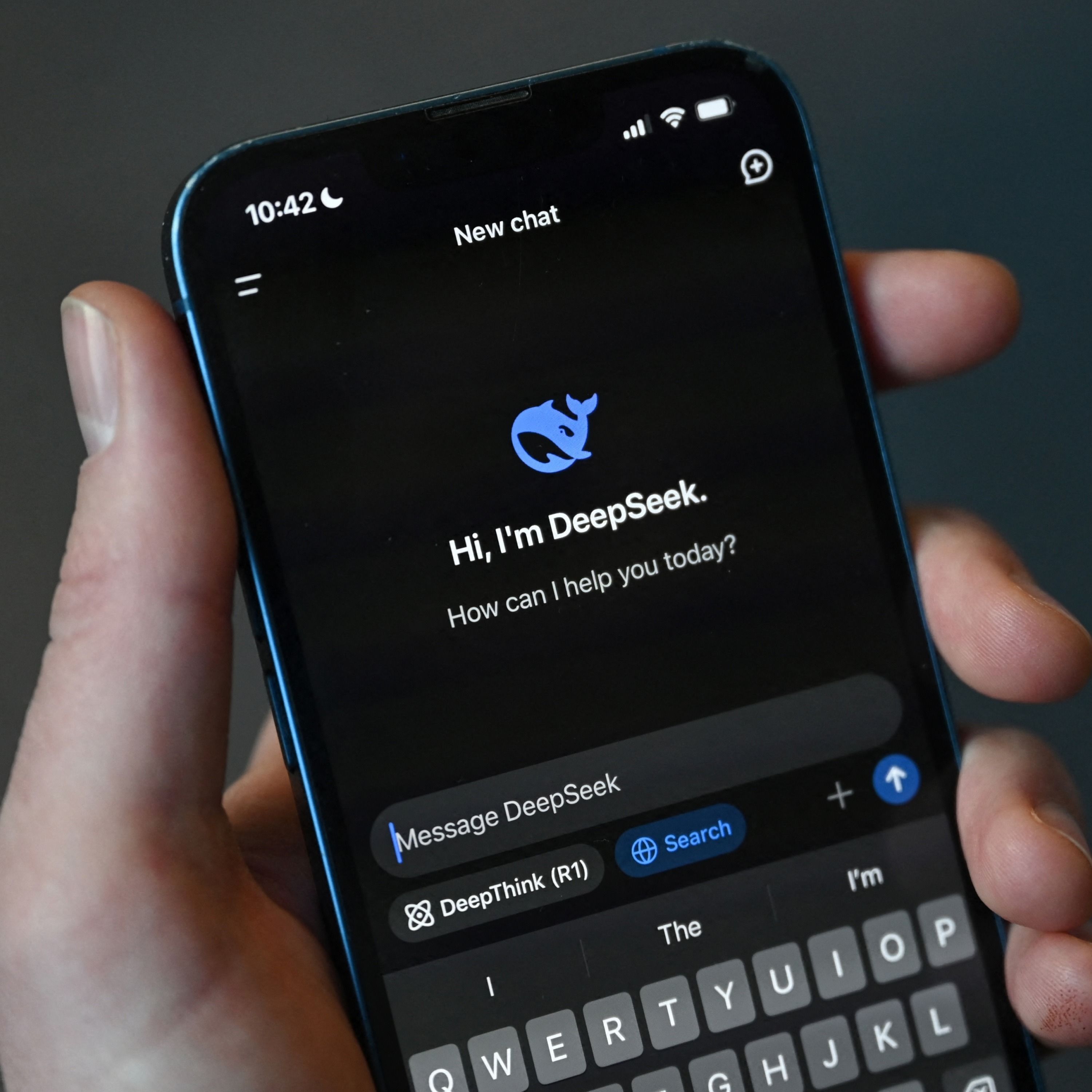
The Daily
China Challenges Silicon Valley for A.I. Dominance
00:23:16
Financial markets went into a panic last week over an obscure Chinese tech start-up called DeepSeek. The company now threatens to upend the world of artificial intelligence and the race for who will dominate it. Kevin Roose, a tech columnist at The Times, discusses how DeepSeek caught us all off guard.
Loading summary
Transcript63 lines
- [00:00]
Tracy Mumford
Hey, I'm Tracy Mumford. You can join me every weekday morning for the headlines from the New York Times.
- [00:05]
Kevin Roos
Now we're about to see a spectacle.
- [00:07]
Natalie Kitroeff
That we've never seen before.
- [00:08]
Tracy Mumford
It's a show that catches you up on the biggest news stories of the day.
- [00:11]
Jonathan Swan
I'm here in Red Square.
- [00:13]
Tracy Mumford
We'll put you on the ground where news is unfolding.
- [00:15]
Natalie Kitroeff
I just got back from a trip.
- [00:16]
Kevin Roos
Out to the front line and every.
- [00:18]
Tracy Mumford
Soldier and bring you the analysis and expertise you can only get from the Times newsroom.
- [00:23]
Kevin Roos
I just can't emphasize enough how extraordinary this moment is.
- [00:27]
Tracy Mumford
Look for the headlines wherever you get.
- [00:29]
Kevin Roos
Your podcasts from the New York Times.
- [00:33]
Natalie Kitroeff
I'm Natalie Kitroweff. This is the Daily. Last week, financial markets went into a panic over an obscure Chinese tech startup called Deepseek. That company now threatens to upend the world of artificial intelligence and the race.
- [00:55]
Kevin Roos
For who will dominate it.
- [00:58]
Natalie Kitroeff
Today, my colleague Kevin Roos, a tech columnist and the co host of the podcast Hard Fork on how Deep Seek.
- [01:05]
Kevin Roos
Caught us all off guard.
- [01:18]
Natalie Kitroeff
It's Monday, February 3rd.
- [01:27]
Kevin Roos
Hi, Kevin.
- [01:28]
Hello. So great to be here.
- [01:30]
So let's jump in. Kevin, how did this giant AI tech freakout begin? Tell us that story.
- [01:38]
So the freakout really started in earnest with a Chinese AI company called Deepseek. And Deepseek had released a new AI model. You know, models are released all the time. Generally they don't make international news. But this model was different in a few ways. Deepseek released its new Chatbot app, which is said to perform as well as ChatGPT. One of them was that it just appeared to be a really good model, like better than the leading Chinese models at the time. And on par or close to on par with the leading American models. A new AI king was crowned today.
- [02:19]
Jonathan Swan
Well, at least for now.
- [02:21]
Kevin Roos
And so the Deep seek app unseating OpenAI's ChatGPT goes to number one on the App Store charts. It vaults ahead of ChatGPT in all these better known apps. Now, the most stunning thing here isn't necessarily that China has developed a pretty good AI app. It's how cheap it is. And the more notable thing, the thing that really caused the American AI industry to start to panic was how cheaply this model appeared to have been built.
- [02:51]
How cheap are we talking?
- [02:53]
So we think that this model cost Deepseek about $5.5 million to train. Now, that might sound like a lot of money, but it's really not compared to what many of the American AI companies are spending. Meta said that it was spending $65 billion. $65 billion. Microsoft says it plans to spend about $80 billion. Microsoft said it was spending 80 billion. And some of the world's most prominent technology leaders pledging to invest an initial 100 billion. And OpenAI had just announced this giant partnership where they were planning to spend up to half a trillion over the next four years, as much as half a trillion dollars to build the infrastructure for AI.
- [03:37]
Whoa.
- [03:38]
Yeah, it's wild. And on top of that, Deepseek says that they built their model without access to the latest and greatest American AI chips, which up until now were thought to be necess to build the most powerful models.
- [03:54]
Jonathan Swan
A lot of people put a lot.
- [03:55]
Kevin Roos
Of money into AI, and now they're wondering if that money is needed the way that some of these American companies have said it is. Exactly. And so investors start saying, wait a minute. If it only costs $5.5 million to train a leading edge AI model, then what the heck are all these American companies doing spending hundreds of millions of dollars or even billions of dollars to train roughly models? Tech stocks plummeted Monday as investors raised concerns about advancements in Chinese artificial intelligence. And so the stocks of many of the American tech companies start to fall.
- [04:37]
Right.
- [04:40]
And so after all of this, people in the American tech industry start asking questions like, who is Deep Sequel? And how are they getting these incredible models with so little money spent on them?
- [04:57]
Okay, we're going to get to those questions of who this company is and how they did this, but I just first want to dig into the anatomy of the market panic. What are the real fears driving this?
- [05:11]
So it depends who you ask, because there are a couple kind of overlapping panics that are starting to happen around this time. Of course, again, there's the investor panic. I mean, imagine if you had your whole portfolio invested in American AI companies. It would be like if you just bought like a very high end sports car, like a Lamborghini, and you had been driving it around and were so proud of how fast it could accelerate and how well it handled. And then like some random guy shows up with like a soapbox car made of balsa wood, and it can go just as fast as your car, you'd be like, yikes, what the heck? Why did I just spend all this money on this Lamborghini?
- [05:54]
Yeah. And should I maybe be investing in balsa wood cars?
- [05:57]
Yes. And then of course, there's the geopolitical freakout, because Deepseek is a Chinese AI company and there has been this race happening between primarily the US and China for years about AI and AI supremacy. Who was going to be able to build the most powerful AI models before the other one? And that is a very important question for things like assessing the future of military conflict. If one country's AI is way better than another country's AI, they might have an advantage. In fact, the US has banned the export of the most powerful AI chips to China for exactly this reason, to try to sort of hobble the Chinese AI companies to keep them from catching up when it comes to building the bleeding edge models that could become very important. So instead, Deepseek had to kind of make do with these like, Kirkland signature chips that are, you know, pretty good, but they're not the best. And so that, combined with the amount of money spent, really made people say, how do they pull this thing off?
- [07:02]
Kevin, it certainly seems that at least based on what Deepseek is saying, it has managed to pull off a pretty impressive feat here. But I'm wondering, can we trust what the company says? Can we trust their claims about how they pulled this off?
- [07:20]
Yeah. So there are a lot of people who are skeptical of what Deepseak has claimed. In particular, the cost of the model, $5.5 million, might not be the real figure. It doesn't include all of the research and the engineer salaries and things that went into that. So that the real cost is probably significantly higher than that. But there are questions about, you know, did they smuggle in very powerful chips that would have actually allowed them to build a model this good? You know, is there something going on? Is the Chinese government funneling money to them and not telling us about it? So there are lots of theories. But then as time wears on and people who are experts in this stuff start digging through the details, they're coming to the conclusion that, well, yeah, maybe the cost is a little higher than Deep Sea claims. Maybe they have a few more chips than they're telling us about. But in general, this seems like they actually just did build a really good model using some very clever engineering techniques.
- [08:19]
Okay, so let's talk about those engineering techniques. I mean, how actually did Deepseek do this? Make a chatbot on a shoestring budget, potentially with second rate chips.
- [08:31]
So because Deepseek did not have access, we don't think, to the most powerful chips that American companies are using, they had to kind of get clever about becoming more efficient with their model. I won't bore you with the technical details. It includes terms like mixture of experts, architecture. But basically, they were able to use some Clever tricks to squeeze the most power out of the chips that they did have.
- [08:58]
And it occurs to me, Kevin, that this company was operating under a lot of constraints. And it sounds like that may have forced the engineers to think about how to tackle this problem differently. As in, it seems possible that not having these critical ingredients actually bred innovation.
- [09:16]
Yeah, I mean, there's this saying in the tech industry that constraints inspire creativity, and that is definitely true here. Deepseak did not have access to the best American AI chips. They did not have the largest budget or the most sophisticated team, but they were really scrappy and smart. They had a lot of really good young engineers, and they were able to pull this off.
- [09:45]
So, Kevin, how do the big American tech companies contend with that? I mean, what do they say to investors who are wondering about whether maybe these companies have been throwing money away when some of this work on these AI models could have been done much more cheaply?
- [10:02]
So what the AI companies in America are saying in response to this market panic is, look, we've still got to build these big, expensive supercomputers to stay at the forefront of AI, to have the best models. And if we take the techniques that Deep Seq has now shown are possible, these efficiency gains, we could have them too. Think about how powerful our models would be if we put a billion dollars into the same kind of model that Deep Seq was able to make for much less. So that is what the American AI companies are saying. But I think there are real questions among investors about whether the scale of investment that they have been planning is really necessary.
- [10:44]
And for you, Kevin, I mean, obviously you've been covering this world for a very long time. Does that show you that more money doesn't necessarily mean more innovation in the world of AI, where more money has been kind of a given, you know, as an assumption of what's needed? I mean, does it actually suggest that maybe smaller, as you said, scrappier startups could make huge gains in this world?
- [11:10]
Yeah, I think it threw into question this fundamental assumption that only the big dogs could play in AI, Right? You had to be Microsoft or Amazon or Google if you wanted a chance to build the state of the art AI models. And I think what the Deep Seek story suggested is that there may be a whole other world of competitors out there trying to stay close to the frontier, and that they might not have to have the resources of one of the world's largest corporations to do it. But there was one other piece of this that I think really suggests that the AI race has entered a new phase, which is that Deep Seek did something that a lot of American companies have been hesitant to do, which is that they released their AI models as open source software, meaning that anyone on the Internet can download and use, can make their own versions of, can adapt, can tweak. It is software that can be reused and remixed and improved upon by anyone. And so when Deepseek released its models this way, they really sent a message to the world that says we are serious here about competing and we're so serious that we're going to give away our models for free so that anyone who wants to can make them better. And so all of a sudden it just flipped the entire AI race onto its head and really sent it into a new gear.
- [12:45]
Natalie Kitroeff
We'll be right back.
- [12:51]
Kevin Roos
This podcast is supported by Oracle AI.
- [12:54]
Natalie Kitroeff
Requires a lot of compute power and the cost for your AI workloads can spiral. That is unless you're running on OCI Oracle Cloud Infrastructure. This was the cloud built for AI, a blazing, fast enterprise grade platform for your infrastructure, database, apps and all of your AI workloads.
- [13:10]
H
Right now, Oracle can cut your current cloud bill in half if you move to OCI. Minimum financial commitment and other terms apply. Offer ends March 31. See if you qualify@oracle.com NYT oracle.com NYT.
- [13:24]
Jonathan Swan
This episode is supported by Wealthfront. Your cash could earn 4% APY from partner banks until the moment you need it, with free instant withdrawals to eligible accounts every day. Go to wealthfront.com thedaily for a free $50 bonus with a $500 deposit when you open your first cash account. That's wealthfront.com the daily this has been a paid ad from Wealthfront Cash account offered by Wealthfront Brokerage llc, member finra, sipc. Wealthfront Brokerage isn't a bank. The APY on cash deposits as of December 27, 2024 is representative, subject to change and requires no minimum. Funds in the cash account are to partner banks where they earn a variable apy.
- [13:59]
Kevin Roos
Kevin it sounds like Deep Seek has already or is about to really change the landscape of AI. And my question is, is that good? Like for people like you and me? I mean maybe you more than me who use chatbots for consumers.
- [14:20]
So it's a complicated question to answer because there are ways in which it is probably good and ways in which it is probably bad. The case that this is a good thing is that in general when you make things cheaper, they can be accessible to more people. I mean, remember, Deep SEQ is not just free to use in the app or on the website. It was also released as open source software, meaning that anyone with an Internet connection can download it and install it on their own computers or maybe tweak it to serve their own purposes. So if you are a person who wants to use AI, maybe you have a small business or maybe you just want to use this to help you write letters or emails. Maybe you're a student who wants to use this, you can now access a very powerful model for free. Maybe you are a developer or a startup who wants to build your own AI tools. Well, now you have this Deep SEQ model that you can kind of take off the shelf as open source software and build, build your own version of it or run it on your own hardware. And so the people that I talk to in the tech industry who are at startups or smaller companies are very excited about this. This is a great development for them. And it also means that if you are a person who worries that all the AI power is going to go to a few huge companies, then the democratization of AI through open source models like Deep Seq is probably makes you feel optimistic. So that is the positive case for this. But there are also a lot of people who are really worried about what Deep Seek has done. I think the Deep Seq moment has really sparked a lot of new fears about how quickly this whole field of AI is progressing. I mean, just in the last few years, the leading AI models have gone from maybe being as smart as the average high school student to as smart as a college student, to now being able to complete a lot of tasks that would have taken a PhD to complete. So these models are just getting much better very quickly. And a lot of folks in the AI community are just nervous about that. They say things like, well, maybe we're going to get an AI that is as smart as the smartest humans in just a few years. And we don't really have a playbook for dealing with technology that is more intelligent than us. And so there are people who worry about these sort of runaway AI scenarios where you get super intelligent AIs that can sort of take control or maybe even harm humans. But even if you're not a believer in that kind of superhuman intelligence risk, there are just a lot of questions about whether we as a society are ready for advanced AI. Are we ready for the possibility that it could eliminate jobs? Are we ready for the possibility that it could really lead to a proliferation of misinformation or propaganda or even automated cyber attacks and things like that? So all of that is swirling around the conversation about Deep Seek because we have just accelerated the AI race again. And now it is not just American companies competing with each other over who is in the lead of that race. China has also stepped in, and there's a lot of fear and anxiety about what happens if we fall behind.
- [17:45]
Kevin, if this really is that important of a moment in the global AI arms race, how should we expect the United States to react? I mean, does the U.S. government just ban this thing? You know, we saw TikTok banned because it was owned by a Chinese company. Is that the move here?
- [18:05]
Well, it may well be, because if you're a person who believes that TikTok is a national security threat, there's nothing about Deep Seq that is less of a threat. Right? It is a Chinese company. It is subject to all the same laws and censorship guidelines as other Chinese software companies are. So, for example, if you ask Deep Seek to tell you what happened at Tiananmen Square or to say something mean about Xi Jinping, the leader of China, it won't do it. And I would not be surprised if in the coming weeks and months, we do see lawmakers in the US saying, wait a minute, we passed a law to ban TikTok, why are we not also passing a law to ban deepseek? So I think that's one potential outcome here. But there's a key difference, which is that TikTok is not open source software. You cannot download TikTok and create your own version of it. And so already the Deep Seq models have been downloaded and recreated all over the world by lots and lots of different people and companies. And so I think what the Deep Seq story suggests is that it is going to be quite challenging to contain the spread of powerful AI without some big moves.
- [19:18]
Kevin, if we really are past that point, you know, of containment here, if we're off to the races, does it matter that this innovation happened in China by a Chinese company? I mean, isn't this bigger than that at this point?
- [19:33]
So there are people in the American tech scene who are calling this Deep Seat moment the Sputnik moment for the AI race. Because just as the launch of Sputnik by the Soviet Union kicked off the 20th century space race and created sort of profound fear and anxiety among Western nations about whether they were behind their biggest political adversary when it came to technology, a lot of people are looking at this moment with Deep Seek as kicking off a new era in the AI race where we really want to stay ahead of China. And there are people who say that having a lead in AI, if you are the United States, even if it's just a lead of a couple months or a couple years over your political adversaries, is very important. And that may be true. But people who study AI, people who look at this industry closely, who are paying attention to the trends in AI, believed that these models would become cheaper and cheaper over time, as well as becoming more powerful over time. So this really fits neatly with a lot of what people had been predicting for years now. They might not have predicted that this sort of moment would happen from a Chinese AI company. They might not have predicted exactly what the breakthroughs would be that allowed for the models to get cheaper. But this is in keeping with the overall trend in AI that we have seen over the past few years, which is that the models keep getting better and they keep getting more efficient.
- [21:05]
In a way, it kind of follows the normal progression of any new product. Right. Like, at first it's expensive, and then more and more competition leads to innovation. The thing gets cheaper, Everything becomes more democratized.
- [21:18]
Yeah. So that is what happened here, but just maybe a little faster than people had expected. But I think the larger point is that these systems are now improving so rapidly and in so many places all at once that I think it is only a matter of time before nearly everyone in the world has access to very powerful AI models. And I just think that world looks a lot different than the one we live in today.
- [21:50]
Kevin, thank you so much.
- [21:52]
Thanks for having me.
- [21:57]
Foreign we'll be right back.
- [22:07]
Jonathan Swan
I'm Jonathan Swan. I'm a White House reporter for the New York Times. I have a pretty unsentimental view of what we do. Our job as reporters is to dig out information that powerful people don't want published, to take you into rooms that you would not otherwise have access to, to understand how some of the big decisions shaping our country are being made. And then painstakingly to go back and check with sources, check with public documents, make sure the information is correct. This is not something you can outsource to AI. There's no robot that can go and talk to someone who was in the Situation Room and find out what was really said. In order to get actually original information that's not public, that requires human sources. We actually need journalists to do that. So as you may have gathered from this long riff, I'm asking you to consider subscribing to the New York Times. Independent journalism is important, and without you, we simply can't do it.
- [23:04]
Natalie Kitroeff
Here's what else you need to know today. On Saturday, President Trump declared tariffs of 25% on all goods from Canada and Mexico, with a partial carve out for Canadian energy and oil exports. He also announced an additional 10% tariff on products coming in from China. The tariffs are set to take effect at 12:01am Eastern Time on Tuesday and have raised concerns of an escalating trade war with America's largest trading partners. Those countries responded swiftly to Trump's announcement. The Canadian government detailed its own retaliatory 25% tariffs on more than $100 billion worth of U.S. goods, including everything from American made honey to tomatoes and whiskey to refrigerators and toilets. President Claudia Schoenbaum of Mexico said she would unveil her country's response on Monday while China's Commerce Ministry promised to bring a legal case at the World Trade Organization and, quote, corresponding countermeasures. President Trump acknowledged on social media that his tariffs could cause, quote, some pain, but said it would be, quote, worth the price that must be paid. And In a new effort to tighten the immigration system, the Trump administration is ending temporary protected status for 300,000 Venezuelan migrants in the United States. According to government documents obtained by the Times, the move could make those migrants vulnerable to potential deportation in the coming months. The designation of temporary protected status was meant to protect migrants fleeing dangerous situations in their home countries, but Republican critics have said it allowed migrants to stay in the United States for much longer than intended. Today's episode was produced by Shannon Lynn Claire Tennis Guetter, Alex Stern and Caitlin Oliver O'Keefe, with help from Will Reed. It was edited by Mark George and Chris Haxel with help from Paige Cowett, contains original Music by Pat McCusker, Marion Lozano and Dan Powell and was engineered by Alyssa Moxley. Our theme music is by Jim Brunberg and Ben Landsberg of Wonderly. That's it for the Daily I'm Natalie Kitro f. See you tomorrow.