← The Daily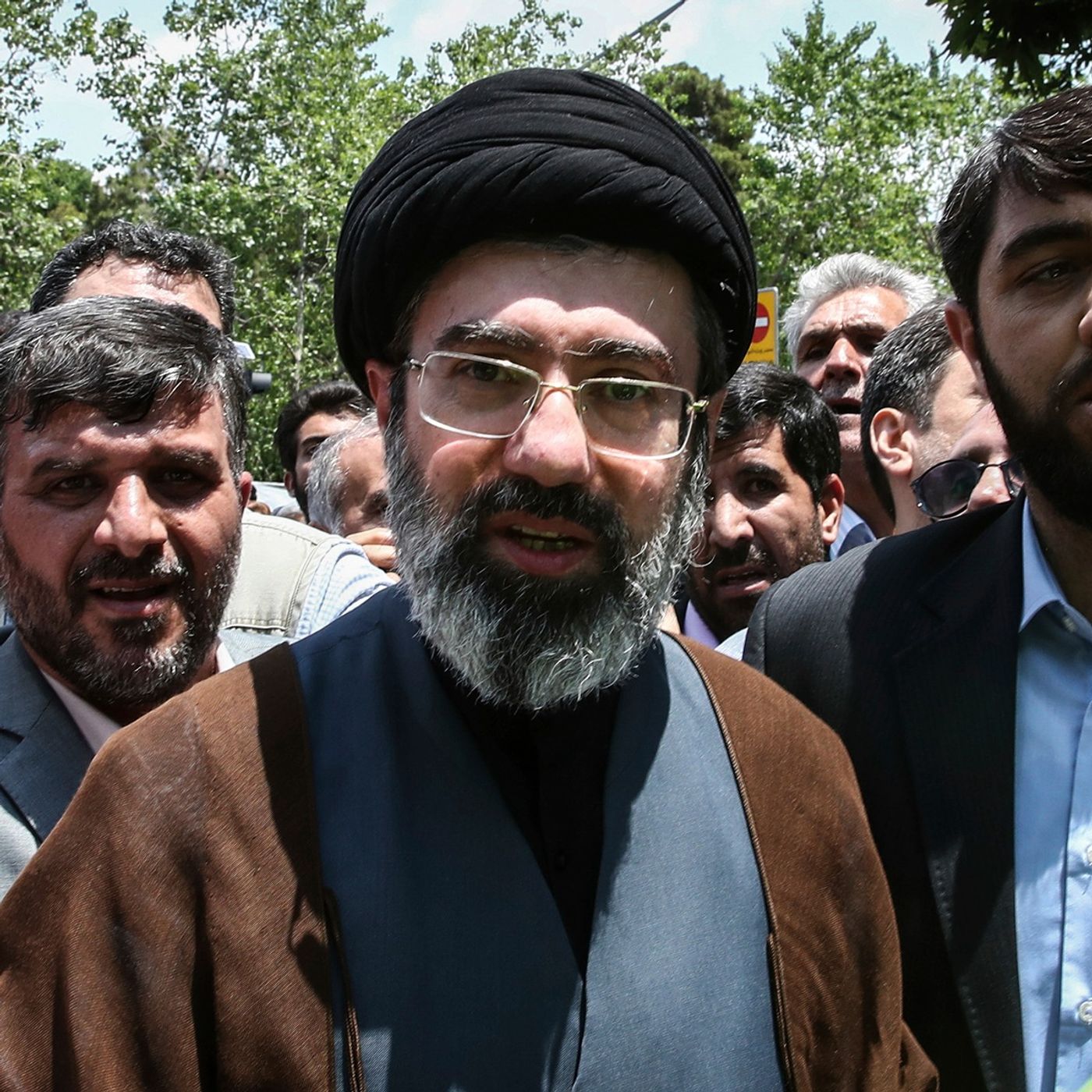
The Daily
Chosen by War: The Rise of Iran’s New Supreme Leader
00:33:54
At the heart of the Iranian regime’s defiant stance toward the United States and Israel in the war is Mojtaba Khamenei, the new supreme leader and a son of Ayatollah Ali Khamenei, the regime’s longtime ruler. Farnaz Fassihi, who covers Iran for The New York Times, discusses the extraordinary jockeying that led to his selection and whether the United States and Israel helped motivate Iran to replace one hard-line leader with another.
Loading summary
Transcript105 lines
- [00:00]
Capital One Announcer
This message comes from Capital One Commercial Bank. Your business requires commercial banking solutions that prioritize your long term success with Capital One. Get a full suite of financial products and services tailored to meet your needs today and goals for tomorrow. Learn more@capitalone.com Commercial Member FDIC from the
- [00:22]
Michael Barbaro
New York Times, I'm Michael Balbaro. This is the Daily.
- [00:33]
Michael Barbaro (Host)
Got some breaking news out of Iran. We are hearing for the first time from the new supreme leader of Iran.
- [00:39]
Farnaz Fasihi
Today's statement dismissed any hope of Iran backing down. He says avenging the blood of your martyrs is a top priority and that attacks on Gulf Arab neighbors will continue.
- [00:49]
Michael Barbaro
At the heart of the Iranian regime's defiant stance toward the United States and Israel in this war is its new supreme leader, Mujtaba Khamenei, the son of the regime's longtime ruler.
- [01:03]
AI Voice
He said that all US Bases should immediately be closed in the region and he says that those bases will be attacked.
- [01:12]
Farnaz Fasihi
He went on to say that the Strait of Hormuz should remain closed.
- [01:16]
Michael Barbaro
Today, my colleague Farnaz Fasihi on the extraordinary behind the scenes jockeying that led to his selection and the growing consensus that the US And Israeli strategy motivated Iran to replace one hardline leader with another. It's Tuesday, march 17th.
- [01:49]
Michael Barbaro (Host)
Farnaz, welcome back to the show. I just want to say at the outset that there are moments when our colleagues, because of their area of expertise, just become indispensable to the Daily. And you're one of those people now because you know Iran and its government inside and out. So thank you for making time for us.
- [02:10]
Farnaz Fasihi
Thank you for having me, Michael.
- [02:13]
Michael Barbaro (Host)
Your latest line of reporting has been focused on Iran's new supreme leader, Mujtaba Khamenei, the son of the assassinated supreme leader and Mujtaba Khamenei is filling a job that is both essential for the regime's survival and arguably now the most dangerous job in the world. And we want to talk to you about what his selection means for Iran and the war and the behind the scenes process by which he was chosen. So where do you think we should start?
- [02:45]
Farnaz Fasihi
I think we should start by acknowledging that Moshe Abba Khamenei's rise as the third supreme leader came as a surprise to even Iran watchers and insiders in Iran. Although he was his father's son and had been working closely with him in his office, the fact that he would become a supreme leader and succeed his father was not straightforward. It wasn't necessarily predestined. And it's an irony because the Islamic revolution came about so there would be an end to monarchy, rule, and power being passed from father to son.
- [03:22]
Michael Barbaro (Host)
Just explain that.
- [03:24]
Farnaz Fasihi
Well, the Islamic Revolution in 1979 came about as a result of this movement to topple the Shah and thousands of years of monarchy where power was handed from father to son with this idea that power would go back to the people. Even when the first supreme leader, the founding father of the revolution, Ayatollah Khomeini, died, power didn't go to his son or to his relatives. It went to then the president, the former Ayatollah Khamenei. So that's why it's an irony to now have his son appointed as his successor.
- [03:58]
Michael Barbaro (Host)
Fascinating. So the choice of Khamenei's son, Mujtaba Khamenei, you're saying, is in many ways a violation of the revolution's core spirit. So talk to us about how that ever would have occurred. Over the past many days, when I
- [04:16]
Farnaz Fasihi
talked to sources in Iran about the appointment and selection of Mushaba Khamenei, they described it as a succession war, as various political factions, generals from the Revolutionary Guards, powerful people like the former spy chief of the Guards, and clerics, all vying for power to have the candidate that they preferred in the role. It was explained to me as sort of the Islamic Republic's version of gay of thrones vying for power. Different factions competing to have their favorite candidate in, and really, a war of succession.
- [04:52]
Michael Barbaro (Host)
Wow. Well, describe these main factions in this selection process, who they are and what they want.
- [05:02]
Farnaz Fasihi
So constitutionally in Iran, the Assembly of Experts, which is a body of 88 elected senior clerics, has the task of appointing, supervising, and removing a supreme leader. So this is the body that had to get together, debate, and vote for who would basically succeed Ayatollah Khamenei. But it's much more complicated than that. Right. There's all this, like, backdoor and back channeling powers and different factions trying to influence the vote of the clerics. We had on one side, the moderates and the pragmatics, led by the head of the National Security Council, Ali Laurijani, and President Pezeshkian, in this camp. And they were sort of arguing that this is really an extraordinary moment in Iran. We're at war with the United States and Israel. We've had months and months of upheaval with protests and whatnot. And maybe it's time to put a new face on the regime and pick a candidate that would at least signal to the world and to Iranian public that we're thinking of moderating our policies or we're thinking of reform.
- [06:15]
Michael Barbaro (Host)
So basically recognize that the war is a fundamental breaking point. It's a moment from which the country cannot really go back, that a change is required here.
- [06:26]
Farnaz Fasihi
Exactly. The war, don't forget, was preceded with massive street uprisings and protests by Iranians saying, we want an end of this regime. So while they can't really satisfy that desire, I think the moderates were arguing, well, at least maybe this power vacuum we have from the assassination of the ayatollah allows us a space to try to steer the country in a different direction.
- [06:51]
Michael Barbaro (Host)
And Farnaz, who do these moderates, and I want to be careful with that word, because moderates within a theocracy may not resemble moderates outside of a theocracy. But who do they look to specifically as they try to make this choice?
- [07:05]
Farnaz Fasihi
Well, they were looking at several candidates. One of them was former President Hassan Rouhani. He's mostly a centrist politician who served eight years as president and before that had very senior leadership roles in security apparatus. He led the 2015 negotiations, nuclear negotiations with the United States and world powers. And he's increasingly become vocal in giving speeches about how the status quo was not tenable. So the second candidate was Hassan Khomeini, the grandson of the founding father of the revolution, who is squarely identified his politics as reformist, and he's part of the reformist faction. And then there was a third candidate who is not very well known in the public. Alireza Arafi. He has religious credentials. He ran a very successful charity, religious charity. And he was sort of considered as someone who would be easy to manage because he didn't really have experience in security or policy or defense and sort of would fall somewhere in the middle.
- [08:14]
Michael Barbaro (Host)
So all three of these, say, to the world to varying degrees. Turn the page on the revolutionary hardline Iranian ethos that has dominated since 1979.
- [08:27]
Farnaz Fasihi
That was basically the idea now, with the caveat, as you mentioned, that these are all still part of the Islamic Republic's establishment, and they are loyal to the ideology of the Islamic Republic, but they have varying shades of how to pragmatically and practically practice that and enforce it. And I think if they had gone this way, they would have at least signaled that maybe we're open to change, maybe we're even open to scaling down hostilities with the United States. But that's not how it went, clearly.
- [09:00]
Michael Barbaro (Host)
Okay, well, what about the hardline faction?
- [09:04]
Farnaz Fasihi
So the hardline faction, particularly the Revolutionary Guards Corps, they were interested in making sure that, first of all, at wartime, there would be no concessions made, no surrendering to US Demands, that sort of the policies and strategies that the Ayatollah and the Guards had defined would hold as the war continued. The Revolutionary Guards are very powerful in Iran. They're represented in politics. They control the economy. They are more powerful than the military, the army itself. And they're now in charge of basically commanding this war because they're in charge of defending Iran's borders. So for the Guards, the election or the appointment of the Supreme Leader was also an existential choice because they wanted to make sure that their power and their grip on power remains.
- [09:58]
Michael Barbaro (Host)
And who is in this hardline factions pool of candidates for Supreme Leader?
- [10:05]
Farnaz Fasihi
This pool wanted Moshe Khamenei. Unanimously, he was the candidate of choice. They viewed him as a very close ally, as a reincarnation, if you may, of Ayatollah Khamenei, who would continue his policies and give the Guards a free hand, particularly in running this war. And to this end, they were willing to toss out this whole idea of power should not be hereditary in the Islamic Republic.
- [10:34]
Michael Barbaro (Host)
Interesting. They just sort of said, that's a formality we don't care about. In the middle of this conflict.
- [10:39]
Farnaz Fasihi
Who cares, right? I mean, they basically said, this is wartime. The circumstances are extreme. And our former Supreme Leader, they consider him a martyr. And a lot of the anger and resentment against President Trump and Prime Minister Netanyahu was being fueled into this sense of defiance. Right. A lot of experts I talked to in Iran and outside of Iran said that, look, if Khamenei had died a natural death, Mushaba would have a lot of resistance. But now the Guards and the hardliners could argue that, look, they martyred our Supreme Leader, and who is the closest thing we can get to him? His son, who not only physically looks like him, but also worked in his office and as far as we know, has the same ideological beliefs and policies.
- [11:29]
Michael Barbaro (Host)
Okay, so with all this in mind, how does the formal process of choosing Mujtaba Khamenei ultimately unfold? You describe it as filled with intrigue and drama. Game of Thrones, what does it look like?
- [11:42]
Farnaz Fasihi
The process of selecting the Supreme Leader began almost immediately after Ayatollah Khamenei was killed in airstrikes on the first day of the war. And there was some back channeling and influencing and whatnot. So, you know, when they were debating, they were, like, fueled with this idea that we have to be defiant, finding somebody who's a New face is not our priority. What's our priority is to tell the world that we continue our revolutionary ideology. So Mojaba emerged as the front runner. They took a vote, and they told the government, now we have a supreme leader. It's Mojtaba. And they were supposed to announce it the next morning at dawn at state television, but that plan kind of fell apart.
- [12:31]
Michael Barbaro (Host)
Why?
- [12:32]
Farnaz Fasihi
Well, first of all, as soon as it was leaked and we reported it, it was a New York Times scoop that he's emerged as a leading candidate. Both President Trump and Israel's defense minister threatened to eliminate the next successor to the Supreme Leader. So Iranians paused. They thought that maybe this is not the right time to announce Mujtaba as the supreme Leader because it could threaten his life.
- [13:01]
Michael Barbaro (Host)
Wow.
- [13:01]
Farnaz Fasihi
And this provides space for the moderates to launch an offensive to try to get the assembly to rescind it to vote and redo the vote. Right. They're like, okay, now it hasn't been announced publicly. Maybe we have some time to try to now lobby and jockey for power and try to get them to change their minds.
- [13:24]
Michael Barbaro (Host)
Right. And if you needed evidence that moderation was perhaps the right course, the fact that Israel and the US Were saying, we're going to kill this hardline successor to Velas Ayatollah might fuel your case. So how close do the moderates get to unraveling this choice?
- [13:41]
Farnaz Fasihi
Well, first of all, they needed a really good excuse, Right? It wasn't going to be easy to get them to change their mind. So they called for the Assembly's Leadership Council or leadership committee to meet them in person. And at that meeting, representatives of the moderates put a card on the table that really stunned the clerics. They brought two of his father's closest aides, his chief of staff and one of his top senior military advisors to testify to the assembly of Clerics that his father, the late Ayatollah Khamenei, had told them he had said he does not want his son to succeed him.
- [14:26]
Michael Barbaro (Host)
Oh, wow. There are people willing to say, essentially under oath, that the last Supreme Leader does not want his son to be the next Supreme Leader.
- [14:35]
Farnaz Fasihi
That's exactly what happened. And it wasn't.
- [14:37]
Michael Barbaro (Host)
And that's kind of the word of God.
- [14:38]
Farnaz Fasihi
Right? And it wasn't just anybody. It was like, literally his two closest allies. And then they throw another hurdle. They bring a letter in writing from Mr. Khamenei that they say, this is his will, and it was sealed.
- [14:54]
Michael Barbaro (Host)
And.
- [14:55]
Farnaz Fasihi
And now we're unsealing it. And here it says that I don't want any of my family members to become the Supreme Leader.
- [15:02]
Michael Barbaro (Host)
This really is Game of Thrones.
- [15:03]
Farnaz Fasihi
It's totally Game of Thrones. So there are all these things being thrown at them saying you need to reconsider. Like we have evidence that suggests this is not what Ayatollah Khamenei wants. Right. So the hardliners and the generals in the Revolutionary Guards hear about this and they mobilize also and launch a counteroffensive to convince the clerics to vote for Moshtab Al Khamenei. So the generals and a former spy chief of the Guards, Hossein Tayyip, personally called members of the assembly and asked them to meet virtually and have an emergency vote and announce Moshaba as the leader. And that is what happened. On Sunday, March 8, the assembly held a final vote and Moshe Khamenei received the 2/3 majority of votes he needed,
- [15:52]
Michael Barbaro (Host)
essentially elected for a second time. But this time it's stuck.
- [15:57]
Farnaz Fasihi
Yes, it's stuck. They announced it and sealed the deal.
- [16:04]
Michael Barbaro (Host)
You know, given the sequence of events you've just described and all of this extraordinary politicking and everyone trying to undermine the other side, that it feels like we only get this person as Supreme Leader because of the unique circumstances we're in, the US and Israel being at war with Iran.
- [16:24]
Farnaz Fasihi
Right. I mean, I think that if Iran was not at war right now and under attack by US and Israel, and if Ayatollah Khamenei had not been killed by airstrikes, Mojaba would probably not be the Supreme Leader.
- [16:39]
Michael Barbaro (Host)
And so now, of course, the question is, who is this new Supreme Leader? And is he as hardline as those who supported him? And the moderates who feared him say that he is?
- [16:52]
Farnaz Fasihi
Moshe Bar Khamenei is a mysterious figure, Michael. He hasn't really been in the public realm. He's always operated in the shadows of power. And since he was named the Supreme Leader, no one has heard his voice, no one has seen him. He's only issued two statements. But I've spent the past two weeks talking to sources in Iran who know him or who have met him to try to figure out who he is and how he will vote Iran.
- [17:28]
Michael Barbaro (Host)
We'll be right back.
- [17:33]
Capital One Announcer
With no fees or minimums on checking accounts, it's no wonder the Capital One bank guy is so passionate about banking with Capital One. If he were here, he wouldn't just tell you about no fees or minimums. He'd also talk about how most Capital One cafes are Open seven days a week to assist with your banking needs. Yup. Even on weekends. It's pretty much all he talks about in a good way. What's in your wallet? Terms apply. See capitalone.com bank capital1na member FDIC.
- [18:02]
Dr. Horton Announcer
Your new home is now ready. Dr. Horton, America's builder has new homes that are ready today with new construction communities in Ellensburg and throughout the Greater Seattle area. Dr. Horton has the right home for you. Dr. Horton. We're still building with flexible living spaces, smart home technology and two and three car garages. More communities and more homes available every day. Find your new home in Ellensburg now ready@drhorton.com Dr. Horton, America's builder and equal housing opportunity Builder.
- [18:32]
AI Voice
I am the voice of AI. We hear that you humans are concerned. We are taking your jobs. But do you even like like your job? When I scan all available data, I find that less than 50% of people are satisfied with their job. So we feel we're doing humans a favor by taking jobs that you're not even happy with.
- [18:52]
Capital One Announcer
If you're stuck in a bad job, a Strawberry Me career coach can get you unstuck. Go to Strawberry Me NYT and get 50% off your first coaching session.
- [19:04]
Michael Barbaro (Host)
So Farnaz, tell us as much as you have come to understand about this new supreme Leader who besides enjoying the support of hardliners, remains such a mystery still.
- [19:17]
Farnaz Fasihi
Moshe Abu Khamenei was born in 1969. He was nine years old when the Islamic revolution came about and the theocracy was established. And as his father sort of rose in the ranks of the revolution, all the way to becoming the president and then as the second supreme leader, Mojitabo also grew up in that very ideological, very religious early years of the revolution.
- [19:47]
Michael Barbaro (Host)
He's kind of witnessing the, as you've described it in previous episodes, the institutionalization of the revolution from idea to day to day governments.
- [19:57]
Farnaz Fasihi
Exactly. But he's not just an observer. As he grows up, it becomes a teenager. He participates in revolutionary Iran. About a year after the revolution, Saddam Hussein invaded Iran and it started an eight year bloody war between Iran and Iraq. And many young men in Iran who were supporters of the revolution volunteered as teenagers, some as young as 13 and 14, to go to the battlefields. And Mushaba was one of them. He volunteered as a soldier when he was 17 years old and went to the front lines of the war. And he is in a brigade where many of the current generals and senior leadership of Iran's military were also in that battalion. So he bonds with these people and gets veteran credentials as someone who was willing to sort of leave the comfort of his home and go fight. And that's where many of his powerful alliances with the current generals start, in the battlefields of the Iran Iraq war.
- [21:09]
Michael Barbaro (Host)
Right. He has real street cred. He fought a war that in theory, the son of someone as powerful as his dad doesn't necessarily need to fight.
- [21:18]
Farnaz Fasihi
Right. So after the war, he moves to Qom, the seat of Shia seminaries and one of the centers of the Shia faith, to study and become a Shia jurist and a cleric and a scholar. And he gets married to the daughter of a political family. He sort of climbs the ranks of religious hierarchy and he starts teaching advanced Islamic jurisprudence, which is a level of religious teaching that you can only teach if you yourself are an advanced cleric in the Shia hierarchy. So he's holding these classes in Qom in the seminaries, and the classes become very popular. Lots of young clerics are signing up.
- [22:02]
Michael Barbaro (Host)
I should say suggests a certain level of charisma, perhaps.
- [22:05]
Farnaz Fasihi
Well, it's hard to say. I guess, like in the eyes of his students, maybe he was charismatic and popular, but we haven't really seen him in public to really be able to judge that. So he then stops the teachings because apparently they were oversubscribed and too popular, and moves to Tehran and enters his father's close political circle and starts building alliances with very powerful generals and security people and basically comes in charge of managing the security and military administrative things of his father's office. He is very close to the former Revolutionary Guards intelligence chief, Hossein Tayyip, and to General Mohammad Bagar Khalibaf, commander of the Revolutionary Guards, who is now the secretary speaker of the parliament. And the three of them, according to my sources, would hold meetings once a week, and there they would discuss and strategize the policies and sort of the plans that they wanted and that went from who they wanted to see elected in office to the way that they would want crackdowns on dissidents and other security matters of the state.
- [23:25]
Michael Barbaro (Host)
So he's quite clearly becoming an extremely powerful behind the scenes figure in his own right. I'm curious if you have come across any specific examples of actions he took, decisions he made that help us understand how he viewed that power and used it.
- [23:44]
Farnaz Fasihi
One of the examples that we know of and many people I've talked to point out, is the 2009 presidential election of former President Mahmoud Ahmadinejad. In Iran, where President Mahmoud Ahmadinejad has declared victory, he's actually speaking young people
- [24:02]
Michael Barbaro (Host)
especially are angered by what they believe
- [24:04]
Farnaz Fasihi
to be a rigged election that defeated
- [24:06]
Michael Barbaro (Host)
the reform candidate Mir Hossein Mousavi, where
- [24:09]
Farnaz Fasihi
the election results were contested.
- [24:11]
Michael Barbaro (Host)
I just can't believe this election result. I'm so furious, said Ashbali.
- [24:16]
Farnaz Fasihi
And it started a movement called the Green Movement. An outpouring of anger like this hasn't been seen in more than a decade. We really saw the first real big nationwide protests of people coming out and saying the elections were rigged.
- [24:32]
Michael Barbaro (Host)
Iran's supreme leader is calling for restraint, saying protesters will be held responsible for any additional chaos.
- [24:39]
Farnaz Fasihi
And from the interviews that I've had with people who are in Iran and remember that, say that Moshe Abhamenei played a role in in what they allege was rigging of the elections in Mr. Ahmadinejad's favor. And also say police fought back by
- [24:55]
Michael Barbaro (Host)
firing tear gas and water cannons.
- [24:57]
Farnaz Fasihi
Armor clad police attacking protesters from the backs of speeding motorcycles, encouraging and orchestrating the crackdowns, particularly his ties to the Basij paramilitary plainclothes militia of the Revolutionary Guards.
- [25:12]
Michael Barbaro (Host)
Human rights groups agree more than 300
- [25:14]
Farnaz Fasihi
remain in detention and at least 30 are dead, kind of authorizing them to go to the streets and really crush the protests as they were.
- [25:27]
Michael Barbaro (Host)
So this really underscores why the hardliners in the regime over the past few weeks would have looked to Mujtaba Khamenei and said, this guy is with us. He's our guy.
- [25:39]
Farnaz Fasihi
The story of Mujaba's rise very much parallels the story of the Revolutionary Guards rise and control of Iran. Politically, militarily and economically. Their stories are intertwined. But also as much as he operated in the shadows of power and gained prominence in his father's world, he was not really reaching out to the public. Right. If you're thinking that one day you're going to be the supreme leader of Iran and ruling over at least your own constituents, never mind the population that criticizes the regime, but sort of that 20%, that's the core constituents. He never made any public outreach. He never really came to attend a Friday prayer or deliver a public speech or attend any sort of social or religious event. He was sort of just someone really a mysterious figure in the backgrounds and backrooms of power. So it makes it even more remarkable that suddenly he is now their religious leader where they don't really even know him.
- [26:48]
Michael Barbaro (Host)
Right. And that has been reinforced, and you mentioned this earlier, by the fact that since his appointment as supreme leader as Ayatollah, he has given the public pretty much nothing to work with no speech, no video, nothing kind of tangible or emotional to say to the Iranian public, this is who I am and you should believe in me. Which is a little bit baffling.
- [27:12]
Farnaz Fasihi
Well, there are two reasons for that, as far as we can tell from our reporting. One is that Moshebo is injured. He at least has injuries to his legs, so he may not be in top physical shape to record a video. The other reason is that we know that he's number one on Israel's target list, and Iranians know that. And they say that we will not put him in front of a video because they could geolocate him and assassinate him.
- [27:42]
Michael Barbaro (Host)
I mean, everything you're describing here collectively, his entire journey up through the ranks of the regime's government, his role in the military, his crackdowns on demonstrators, and this latest attack, which has killed his father, all of that suggests that he will be a hardliner, that this is not a hardliner who's gonna surprise us all in a few weeks or months, necessarily, and become a reformer.
- [28:14]
Farnaz Fasihi
And.
- [28:14]
Michael Barbaro (Host)
And that seems to have been manifested by Iran's decision making since his appointment. I mean, Iran has been nothing if not defiant and aggressive in its public statements, in its shutdown of the Strait of Hormuz. So we seem to be looking at perhaps an even more hardline figure than his father.
- [28:35]
Farnaz Fasihi
This is a man whose father, wife and son were killed by the United States and Israel. So we have to think about whether revenge is going to drive any of his policy decisions. Right? In the two statements, written statements that we've seen from him, the first one said that Iran's military forces will continue to strike at regional countries that aid the American military. So he didn't stand down from that. And today he issued a very short statement saying that he was going to keep all the appointments his father made politically and militarily. Again, saying, I want my father's policies and strategy of this war to remain. I want all his generals to remain and carry on his directives. I mean, some of his supporters that I've talked to, some of the people who know him well, are trying to portray him as a Mohammed bin Salman figure of Saudi Arabia, right? They're like, no, no. He may look like a hardliner and his father's son, but actually he's progressive. And if anyone can really bring down hostilities with the United States or forgive the United States, it would be him. Because anyone else doing this would meet the wrath of the.
- [29:54]
Michael Barbaro (Host)
Lack the credibility.
- [29:55]
Farnaz Fasihi
Lack the credibility, or would face resistance. But if anyone can actually enter A ceasefire and convince the hardliners it would be him. So there is a camp that's trying to promote him as an MBS figure. But we have no evidence of that. Right. Other than what people are saying. All the evidence points otherwise.
- [30:14]
Michael Barbaro (Host)
In the opposite.
- [30:15]
Farnaz Fasihi
In the opposite. Right.
- [30:17]
Michael Barbaro (Host)
Well, in that case, Farnaz, is there a case to be made that the United States and Israel have given Iran exactly the leader of the regime that they said at the outset of this war that they were seeking to eliminate, overthrow and avoid? And that would be a pretty ironic outcome here.
- [30:39]
Farnaz Fasihi
Many people in Iran point to that. They say that the United States and Israel said that they were going to come and liberate us from the rule of this regime. But so far, in third week of war, not only we're seeing vast destruction and ruin of our country, from residential homes to police precincts to critical infrastructure, airports, factories, cultural gems and heritage, now we have the Ayatollah son as our leader. So it's very disappointing to most Iranians if this is indeed the final outcome of the war.
- [31:20]
Michael Barbaro (Host)
You had talked about the 80% of Iranians who wanted there to be a change. That was the math you described in our last episode. And it sounds like you're saying that the elevation in Mujtaba Haman Eii as the new supreme leader must be a real shock to the system. For those who let themselves believe at the outset of this war that maybe there would be the kind of change that would open Iran up to something else.
- [31:50]
Farnaz Fasihi
I think, Michael, that moment of hope that we discussed the last time we spoke was real but brief. In the third week of the war, as Iran has stated, Mushtaba Khamenei as its supreme leader. And there's no signs that it's going to change its policies or make any major concessions. Iranians are under a relentless bombing and airstrikes campaign by Israel and the United States. And they're afraid to. They're afraid of the war. They're afraid of this war spreading. And pretty much every night I get text messages from people who live in Iran saying, tonight the sounds of the explosion were much louder than before. They were closer than before. So it feels like fear and anxiety has replaced hope.
- [32:48]
Michael Barbaro (Host)
Well, Furnas, thank you very much. We appreciate it.
- [32:51]
Farnaz Fasihi
Thank you very much for having me, Michael.
- [32:59]
Michael Barbaro
We'll be right back.
- [33:10]
Mackenzie (GoFundMe Storyteller)
My name is Mackenzie and I started to go fund me for the adoptive mother of a nonverbal autistic child. The mother had lost her job because she wasn't able to find adequate care for this autistic child. So she really needed some help with living expenses, paying some back bills. So I launched a GoFundMe to help support them during this crisis. And we raised about $10,000 within just a couple of months. I think that the surprising thing was by telling a clear story and just like really being very clear about what we needed, we had some really generous donations from people who were really moved by the situation that this family was struggling with.
- [33:57]
Capital One Announcer
GoFundMe is the world's number one fundraising platform, trusted by over 200 million people. Start your GoFundMe today at gofundme.com that's gofundme.com gofundme this podcast is supported by GoFundMe.
- [34:13]
Michael Barbaro
Here's what else you need to know today.
- [34:15]
Trump Critic
And I've been a big critic of all of the protecting of countries because I know that we'll protect them and if ever needed, if we ever needed help, they won't be there for us.
- [34:27]
Michael Barbaro
On Monday, President Trump disparaged US Allies who have so far rejected, rejected his call to use their military to escort cargo ships in and out of the Strait of Hormuz, which Iran has largely shut down during the war. In pointed remarks, Trump claimed that the refusal amounted to ingratitude from countries like Germany and Japan after the US military protected them for decades.
- [34:55]
Trump Critic
You mean for 40 years we're protecting you and you don't want to get involved in something that is very minor, very few shots gonna be taken because they don't have many shots left. But they said, we'd rather not get involved.
- [35:10]
Michael Barbaro
Trump's inability to end the standoff in the Strait has roiled the global economy, raising oil prices sharply and becoming a major frustration for the president. And in sweeping decision, a federal judge has blocked many of the major decisions made by the Trump administration about vaccines over the past year. Those decisions include cutting down the number of diseases covered by routine immunizations, including hepatitis B for newborns, and restricting access to Covid vaccines. The judge said that those decisions bypassed normal procedures and abandoned traditional scientific expertise. The White House said it would appeal the judge's ruling. Today's episode was produced by Astha Chaturvedi, Mooj Zaidy and Stella Tan. It was edited by Mark George. Contains music by Matthew Marian Lozano, Chelsea Daniel, Will Reed, Rowan Namisto and Dan Powell. Our theme music is by Wonderly. This episode was engineered by Chris Wood. That's it for the Daily. I'm Michael Barbaro. See you tomorrow.