← The Daily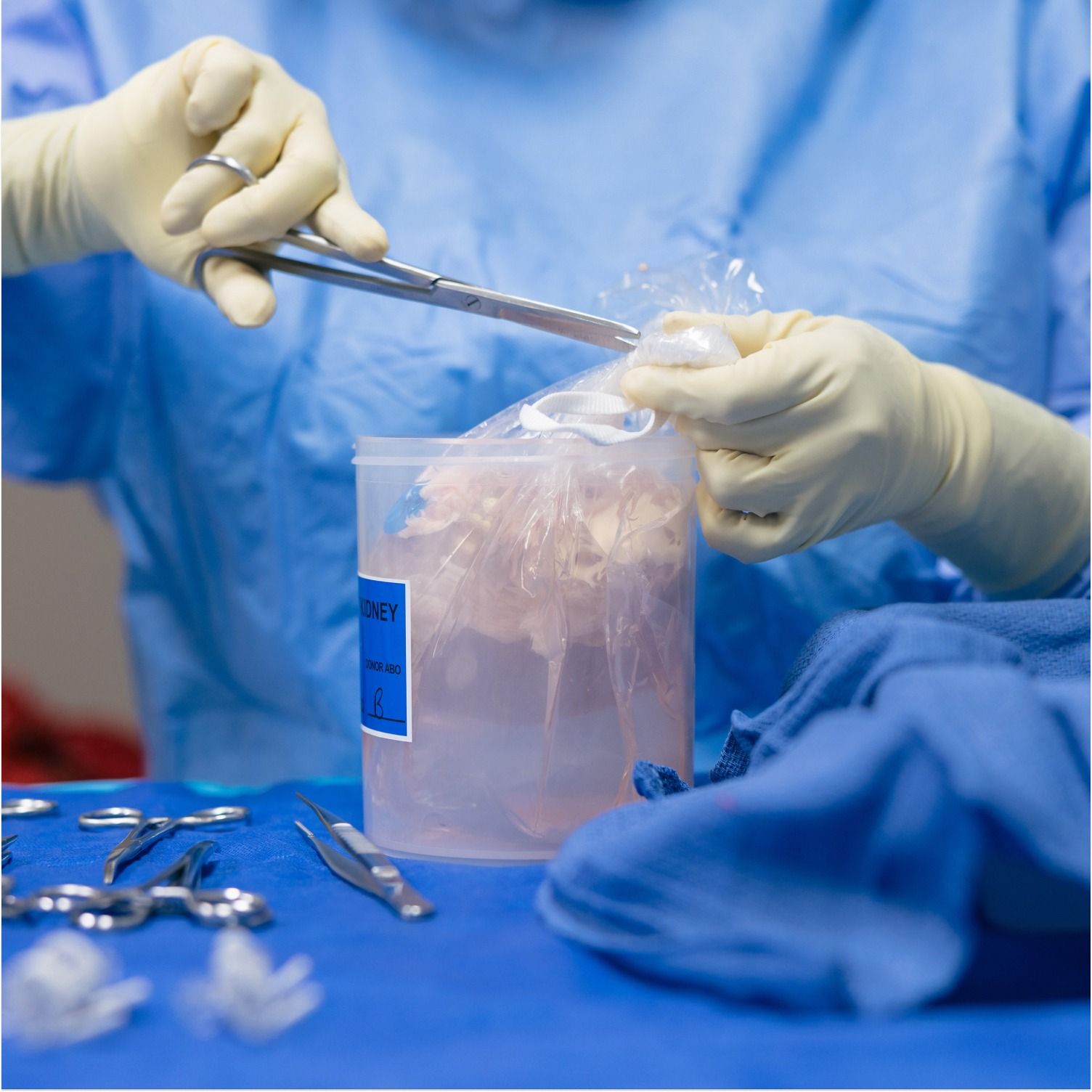
The Daily
Close Calls and Skipped Lines: The Fraught State of Organ Donation
00:30:00
A major investigation from The Times has found that government pressure to perform more organ transplants is creating greater risk for donors and threatening the overall fairness of the system. Brian M. Rosenthal, an investigative reporter at The Times, explains what he’s uncovered.
Loading summary
Transcript119 lines
- [00:00]
Capital One Advertiser
Brought to you by the Capital One Savor Card. With Savor, you earn unlimited 3% cash back on dining, entertainment and at grocery stores. That's unlimited cash back on ordering takeout from home or unlimited cash back on tickets to concerts and games. So grab a bite, grab a seat and earn unlimited 3% cash back with the saver card Capital One. What's in your wallet? Terms apply. See capitalone.com for details.
- [00:26]
Michael Barbaro
From the New York Times, I'm Michael Balbaro. This is the Daily. A major investigation from the Times has found that government pressure to perform more and more organ transplants is creating greater risk for donors and threatening the overall fairness of the system. Today, my calling investigative reporter Brian Rosenthal on what he's uncovered. It's Wednesday, July 30th. Brian, thank you for coming into the studio.
- [01:22]
Brian Rosenthal
Thanks for having me.
- [01:24]
Michael Barbaro
Tell us about how this investigation that.
- [01:27]
Brian Rosenthal
You have now been up to for.
- [01:29]
Michael Barbaro
Many, many months began.
- [01:32]
Brian Rosenthal
So it began when I got a vague suggestion from a source that I should look into the organ transplant system.
- [01:42]
Michael Barbaro
Something presumably not on your radar.
- [01:44]
Brian Rosenthal
Not at all. And so I ended up going to this conference, the American Transplant Congress, in Philadelphia last summer. And it was a gathering of thousands of doctors and researchers talking about all aspects of the transplant system. You know, these conferences are not the most exciting events in the world. It was a lot of minutiae, a lot of technical terms. But then I attended one panel that really stuck with me.
- [02:12]
Michael Barbaro
Why?
- [02:13]
Brian Rosenthal
The panelists were speaking in really stark terms about the dramatic failings of the transplant system. One panelist was talking about how we violated trust in the system. We violated transparency. She said we have a system in chaos. And I wanted to learn what that was about.
- [02:36]
Michael Barbaro
Right. That's a pretty damning assessment of a system that I think most of us from a distance, think of as very noble.
- [02:45]
Brian Rosenthal
Exactly. So I started to investigate. I ended up embedding with two organ procurement organizations. These are the organizations that coordinate transplants. And I saw a lot of good things. The transplant system performs thousands of life saving transplants every year. But pretty quickly I also started hearing about problems in the system, problems with both how we obtain organs and how we allocate them to recipients who need transplants.
- [03:18]
Michael Barbaro
Hmm. So at both ends, basically, of the system, the beginning and the end.
- [03:21]
Brian Rosenthal
That's right. And in short, I learned that there are significant problems with how patients who donate their organs are treated and, and also problems with the fairness of how organs are allocated to recipients. And I came to understand that these problems were linked.
- [03:42]
Michael Barbaro
How so?
- [03:43]
Brian Rosenthal
Well, both problems Come back to a push in the transplant system to increase the number of transplants.
- [03:50]
Michael Barbaro
And who's making that push?
- [03:51]
Brian Rosenthal
The government.
- [03:52]
Michael Barbaro
Okay.
- [03:52]
Brian Rosenthal
It all started with an executive order that was issued by President Trump back in 2019.
- [03:59]
Michael Barbaro
So in his first term.
- [04:00]
Brian Rosenthal
That's right. So for years, there has been a long waiting list. There are more than 100,000Americans right now who need a transplant. And so the government, under President Trump's first administration, really tried to tackle that problem by pushing the system to recover more organs and coordinate more transplants, do better, do more. Correct. And one of the biggest proponents of reforming the system was Trump's health secretary, Alex Azar. This was personal to him. His father had been waiting for a kidney, and he had seen the system as being insufficient. And so he and President Trump ordered a number of reforms. And the big one was a really explicit threat to the. The organ procurement organizations which arrange all these transplants, saying that if you do not increase the number of transplants, you are going to lose your contract. You're not going to be able to work in this space anymore.
- [05:03]
Michael Barbaro
Wow.
- [05:03]
Brian Rosenthal
Yeah. It was a very direct threat to the existence of these groups. And so they reacted by becoming much more aggressive in pursuing organs and coordinating transplants.
- [05:17]
Michael Barbaro
So help me understand how the government's desire to kick this system into higher gear and ultimately, of course, save more lives, how that starts to do the two things that you described a bit earlier. And let's start with the getting of the organ, since it comes first in the process.
- [05:35]
Brian Rosenthal
So let me explain how the system works, please. There are these organ procurement organizations that I mentioned. They are nonprofit groups that exist in every state, and they have employees in hospitals basically looking for people who are dying and might be candidates to donate their organs. So people who have been shooting victims or drug overdose victims or motor vehicle crashes who are in the hospital, who are nearing death, the organ procurement organizations are going to try to pursue their organs. And there are basically two different ways that they can do that. The normal way, the way that happens more often, is when the patient becomes brain dead. This is a patient who has lost all functioning in their brain permanently. It's irreversible. It's confirmed by scientific tests. And the organ procurement organizations can keep their organs viable on machines until they're ready for a transplant. But that is really the extent of what happens in that case, is that.
- [06:44]
Michael Barbaro
The most common form of death, at which point organs are harvested, it's the.
- [06:50]
Brian Rosenthal
Most common form of donation. And it used to be the only form of donation.
- [06:53]
Michael Barbaro
Okay.
- [06:54]
Brian Rosenthal
But more recently, and especially after this executive order, there has been a growing use of another type of organ donation called donation after circulatory death.
- [07:06]
Michael Barbaro
Donation after circulatory death. And what is that? How is it different from getting an organ when someone's brain dead?
- [07:12]
Brian Rosenthal
It's a totally different process. So usually the patient is in a coma, they have some level of brain activity, but a doctor has determined that they will never be able to survive without life support. And so the family can authorize the withdrawal of life support in order to donate organs. And, and if that happens, the patient is taken to an operating room, the life support is withdrawn, they wait for the patient's heart to stop, which means they have died by circulatory death. And then after that, they remove the organs.
- [07:46]
Michael Barbaro
So how has this effort from the federal government to get more organs and more transplantations been affecting this second pathway that you've just described?
- [07:59]
Brian Rosenthal
There's been a huge increase in donation after cigarette or death since these regulations came into effect. Usage has tripled. And that's great for the people who have received the organs. Some 40,000 people who needn't a transplant have gotten one. But doctors say that there have also been problems. And the reason why is that donation of Soka toy death is just much less black and white than donation after brain death. So one of the key things with donation after circulatory death is you're supposed to identify a patient who is on life support and has no chance of recovering. But that's a medical judgment call. Right. And what we have found in our reporting is that a growing number of patients who are being pursued for organ donation are actually ending up showing signs of recovering.
- [08:52]
Michael Barbaro
In other words, they were not headed for death.
- [08:55]
Brian Rosenthal
Correct.
- [08:56]
Michael Barbaro
That's a really bracing thing to hear. Just explain and maybe give an example of what you're talking about.
- [09:02]
Brian Rosenthal
So the best known case happened a few years ago in Kentucky. It was a man who had suffered from an overdose. He had fallen into a coma. He was not expected to recover. And so his family had authorized the, the organ procurement organization to pursue his organs via this type of donation.
- [09:22]
Michael Barbaro
And he was not brain dead.
- [09:24]
Brian Rosenthal
Correct. And so they started testing his organs, they started lining up recipients for his organs, lining up people to do the surgery. And while they were doing those preparations, he started opening his eyes, he pulled his knees to his chest, and this was noted, but kind of dismissed as meaningless body reflexes. And so they continued moving forward. They took him into the operating room. They were about to withdraw his life support, wait for him to die and take out the organs. And all of a sudden, one of the doctors said that they were not comfortable moving forward. And we actually have reporting that the procurement organization wanted to keep moving forward, but the doctor refused, and she put her foot down, and the patient was returned to his hospital room, where, unexpectedly, he recovered. Years later, he is still alive after being minutes away from dying in the operating room.
- [10:26]
Michael Barbaro
Wow. Clearly, it's very alarming that a medical team almost withdrew his patient's life support, but in the end, they didn't. That seems important to highlight.
- [10:37]
Brian Rosenthal
Yeah, that's absolutely true.
- [10:38]
Michael Barbaro
So how frequently is a situation like that occurring where they get real close to withdrawing life support and it turns out there are signs of life?
- [10:50]
Brian Rosenthal
Well, there's no official count of that, but here's what we do know. After this case was reported, the federal government did an investigation in Kentucky, and they looked at 350 cases where plans to retrieve organs were canceled at the last moment. And what they found was that in 73 of those cases, they stopped at the last minute. But they should have stopped much sooner because the patient was showing signs of regaining consciousness sooner, and those signs were initially ignored.
- [11:26]
Michael Barbaro
So what have you come to understand about why a group of doctors and nurses would be missing signs of life? I keep thinking about anytime I've been in a hospital and there are machines after machines on the wall telling you about people's vital signs. So this seems a little hard to understand.
- [11:47]
Brian Rosenthal
Well, the vital signs are staying consistent because they're on ventilators, they're on machines. You're really looking for signs of brain activity. And it turns out that that can be quite subtle. And so, yes, doctors are supposed to be looking for these signs, but instead of doing that, once the patient has been authorized for organ donation, the system kind of sees them as an organ donor.
- [12:16]
Michael Barbaro
They put on blinders.
- [12:17]
Brian Rosenthal
That's exactly right. We talk to nurses, doctors, organ procurement employees all around the country. They who all said that this system is not working as well as it should. And we confirmed a dozen cases in which patients endured either premature or bungled attempts to retrieve their organs separate from those in Kentucky. Correct.
- [12:41]
Michael Barbaro
Huh.
- [12:42]
Brian Rosenthal
In nine other states, different types of patients and different types of mistakes.
- [12:48]
Michael Barbaro
I mean, how should we think about this? Because at the end of the day, these almost horrifying outcomes were averted. We don't know. And maybe it's not knowable whether anyone had their life support withdrawn when they might have made a full recovery.
- [13:07]
Brian Rosenthal
We don't know. I think it's impossible to know. But I can say that we did speak with a lot of doctors and nurses who felt that that has happened. And they say given how much this donation type has increased in the last few years and the subjectivity, they think it's hard to imagine that this has not happened.
- [13:28]
Michael Barbaro
And how much do all the folks that you've spoken to who are involved in this attribute what you're describing to the federal government asking, demanding, really more organs?
- [13:41]
Brian Rosenthal
Almost everybody blames those regulations. They say that ever since they've gone into effect, the organ procurement organizations have become very aggressive, that they want to get as many organs as possible, they want to save lives, and that as a result, they're pushing the limits.
- [14:03]
Michael Barbaro
Good intentions in this case, they seem to be saying, are leading to greater risk.
- [14:09]
Brian Rosenthal
And remember, that is only the first half of the problem. Our reporting also found that these regulations have had an effect on the fairness of who gets all of these organs.
- [14:24]
Michael Barbaro
Which is what we're going to talk about after the break. We'll be right back.
- [14:41]
Capital One Advertiser
Your home is an active investment, not a passive one. And with Rocket Mortgage, you can put your home equity to work right away. When you unlock your home equity, you unlock new doors for your family, renovations, extensions, even buying your next property. Get started today with smarter tools and guidance from real mortgage experts. Find out how@rocketmortgage.com Rocket Mortgage LLC, licensed in 50 states nmlsconsumeraccess.org 3030.
- [15:10]
Michael Barbaro
You just realized your business needed to hire someone yesterday. How can you find amazing candidates fast? Easy. Just use Indeed. Join the 3.5 million employers worldwide that use Indeed to hire great talent fast. There's no need to wait any longer. Speed up your hiring right now with Indeed and listeners of this show will get a $75 sponsored job credit. To get your jobs more visibility at indeed.com NYT just go to indeed.com NYT right now and support our show by saying you heard about Indeed on this podcast. Indeed.com NYT terms and conditions apply. Hiring Indeed is all you need. So, Brian, explain how these pressures from the federal government to get more organs, which you've already described as influencing the first half of this process, the getting of the organs, how they have exerted pressure on the second half, the process of placing organs into the patients who need them.
- [16:07]
Brian Rosenthal
So basically these regulations have led the procurement organizations to try to allocate as many organs as quickly as they can, and that has led them to look for ways to cut corners and to not follow the rules. So you've probably heard of the Organ waiting list. But there actually is not one official list of everybody in the country who needs an organ. It's not like you're number 1000 today and you'll be number 999 tomorrow. There is a pool of people who need an organ, and every time an organ becomes available, there is a unique list that is generated for that organ of the people who, first of all are the best match, who are the right size, who are the right blood type, who are close by, and also who have been deemed by the system to be most deserving of that organ.
- [17:06]
Michael Barbaro
And how is that determination made?
- [17:07]
Brian Rosenthal
It's an algorithm, and the biggest factors are how long you've been waiting and how sick you are.
- [17:13]
Michael Barbaro
Seems pretty straightforward. Basically, anytime an organ, a liver, a kidney, a heart, becomes available, you're saying the system creates this smaller list from the pool you just described.
- [17:26]
Brian Rosenthal
Exactly. And so once that smaller list for that specific organ is created, it is the job of the procurement organization to go down the list, starting with the very first person on the list. And it's spelled out, actually how they do that. They don't contact the patient. They contact the patient's doctor. The patient's doctor has 30 minutes to respond yes or no. If they say no, which does happen, the procurement organization is supposed to go to the second person on the list and make that offer. They've got 30 minutes to respond, then they go to the next person. And the underlying principle of all of this is fairness, which is extremely important to the system. I mean, you can imagine if we didn't have rules, the best heart could go to the wealthiest donor to the.
- [18:12]
Michael Barbaro
Hospital, the member of the board.
- [18:13]
Brian Rosenthal
Correct. It's also worth noting that following these steps is federally required. These steps are spelled out in regulations.
- [18:21]
Michael Barbaro
Okay, so back to our thesis here. How has this new push from the federal government to do more in this space influenced the fairness of this all?
- [18:33]
Brian Rosenthal
So instead of calling number one on the list, taking the chance that they say no, then having to call the next person, maybe they'll say no. Instead of waiting and going through that process, they have come up with a new plan called out of sequence allocation, which is when they simply call up a hospital that they have a relationship with and say, hey, we have an organization. You can put it into any one of your patients.
- [19:01]
Michael Barbaro
And what did you find in your reporting about how frequently this alternative process is happening?
- [19:07]
Brian Rosenthal
So today, nearly 20% of organs do not go to the people at the top of the list. And back in 2020, it was only 3%.
- [19:16]
Michael Barbaro
Wow.
- [19:17]
Brian Rosenthal
I heard many, many stories about people being skipped over. And one that really stuck with me was about a teenager named Marcus who lives in Michigan. Marcus has been fighting kidney trouble his whole life. He'd been waiting for nearly a decade for a transplant. And he had a unique medical condition, which meant that he was not a match for very many organs.
- [19:44]
Michael Barbaro
Okay.
- [19:45]
Brian Rosenthal
And then last spring, his doctor called to say that there was a match. He was on the top of the list. This kidney had been in Illinois. It was supposed to be used in another procedure, but that had fallen through. And so Marcus was next up. He and his family were really excited. They rushed to his hospital in Michigan to prepare for the surgery, but the kidney did not go to him that night, and it didn't go to the next person on the list or the next person after that. Wow.
- [20:22]
Michael Barbaro
That very much sounds like a list being ignored, Skipped. So what did you find actually happened there?
- [20:31]
Brian Rosenthal
Well, the procurement organization, knowing that the kidney was already at the University of Illinois, ended up saying to that hospital, hey, why don't you keep it? Just give it to whichever patient you want. And they ended up putting the kidney into a patient who had only been waiting for a few months. They were number 3,000, 558 on the list.
- [20:56]
Michael Barbaro
That's stunning. And I want to better understand it. In your reporting, did you come to the conclusion that the procurement organization was worried, for instance, that transporting this kidney from Illinois to Michigan was going to take so long that the kidney would deteriorate? I mean, was a factor like that at play?
- [21:18]
Brian Rosenthal
So they said they had to place this kidney quickly, that kidneys are only viable outside the body for a certain amount of time, which didn't really seem like a reasonable explanation.
- [21:30]
Michael Barbaro
Why?
- [21:31]
Brian Rosenthal
Well, Illinois is not that far away from Michigan. The kidney had only been outside the body for about nine or 10 hours at that point, and kidneys remain viable for up to 48 hours. And so they had plenty of time to send that kidney down the road. In fact, Marcus doctor had even called and offered that he would drive down and pick it up himself.
- [21:53]
Michael Barbaro
Wow. From Michigan to Illinois to get it from Marcus.
- [21:57]
Brian Rosenthal
That's right. But the OPO had decided that they just wanted to give it to the University of Illinois and be done with it.
- [22:05]
Michael Barbaro
So that makes me wonder, what, if any, ramifications are there for a procurement organization like this one that breaks the federal rules, skips the line over someone like Marcus? Does it face any consequences?
- [22:20]
Brian Rosenthal
So every time there's a violation, the case is flagged for review. But what we found in Our reporting is that basically nobody ever gets in trouble for this. More than 99.5% of the time, the case is closed without any action. And the reason for that is that the transplant system basically polices itself and it has no incentive to penalize one of its own members.
- [22:47]
Michael Barbaro
What was the reaction from Marcus's family to this sequence of events that you just described?
- [22:54]
Brian Rosenthal
Well, they didn't know about all that information. I just told you. They knew that they didn't get the transplant.
- [23:00]
Michael Barbaro
Right.
- [23:01]
Brian Rosenthal
They didn't know that they'd been skipped. And so I went to their house and met with them and told them everything that we knew. It was heartbreaking. And we told them where that kidney had ultimately gone to. And the family was just devastated. Marcus's mom actually said to me, what made them decide that Marcus wasn't good enough for that kidney. For everyone in Marcus family, this is just very hard to make sense of.
- [23:33]
Michael Barbaro
How is Marcus now?
- [23:35]
Brian Rosenthal
So Marcus was ultimately able to get a transplant a couple months after this all happened. He did get a kidney, but it was not as good of a kidney. It came from somebody who was older that wasn't as perfect of a match.
- [23:50]
Michael Barbaro
As the one he didn't get.
- [23:52]
Brian Rosenthal
Correct. And so that kidney is not doing so well. In fact, it's not really functioning at all. And he is gonna have to get back on the transplant list and wait for a new one.
- [24:04]
Michael Barbaro
That's really heartbreaking. Brian, putting aside for just a moment the specifics of this kidney and of Marcus, is there evidence that when procurement organizations skip the line, they're more effective at getting organs placed in patients?
- [24:25]
Brian Rosenthal
No, there is not. In the transplant system, there is a closely Watts metric called the discard rate, which is the percentage of organs that are recovered that do not end up getting transplanted. And you would expect that if the skipping the line is so effective at getting more organs placed, then the discard rate would be going down. And that is not happening. The national discord rate is not going down. And in fact, the procurement organizations that are skipping the list the most do not have a lower discord rate than the ones that are not skipping the list as much. And it also leads to some measurable bias.
- [25:07]
Michael Barbaro
Explain that.
- [25:08]
Brian Rosenthal
Well, when procurement organizations skipped the list, our reporting found that organs disproportionately go to white men, to Asians, and to people with college degrees. As one doctor put it to me, this is why we have policies in place to root out these biases and make sure that the system is fair.
- [25:31]
Michael Barbaro
I'm curious what the Federal government's response has been to your investigation. Because what the reporting clearly demonstrates is that the actions of the first Trump administration is encouraging these procurement organizations to increasingly ignore the lines and be much more aggressive with how they're trying to procure the organs. And since Trump is now president again, are you finding that the regulators working for him are defensive of the system, or are they open to the idea that the actions they took in the first term have now created a set of problems?
- [26:14]
Brian Rosenthal
The Trump administration has been very responsive to our findings on both of these issues. When we contacted them about the issue of line skipping, they immediately sent a letter to the transplant system saying that this was a big problem and that new policies needed to be written to address these issues. And as for the aggressively procuring organs from donation after circulatory death, they have cracked down on. On the procurement organization in Kentucky, and they have ordered the transplant system to write new guidelines around donation after circulatory death nationwide.
- [26:56]
Michael Barbaro
Wow. They're taking it very seriously.
- [26:58]
Brian Rosenthal
Yes, and they're being pushed to take it very seriously by Congress.
- [27:02]
Michael Barbaro
The Subcommittee on Oversight and Investigations will now come to order.
- [27:07]
Brian Rosenthal
So last week in the House, there was a hearing of the committee that oversees the transplant system.
- [27:13]
Michael Barbaro
The New York Times has written on chaos in the waiting list.
- [27:16]
Brian Rosenthal
And lawmakers in both parties were mentioning our reporting, a recent investigative report highlighting.
- [27:23]
Michael Barbaro
One of the most horrific cases of patient abuses.
- [27:27]
Brian Rosenthal
We're asking hard questions of the transplant system officials.
- [27:31]
Capital One Advertiser
Were those protocols in place?
- [27:33]
Michael Barbaro
They were.
- [27:33]
Capital One Advertiser
And why were they not followed?
- [27:35]
Brian Rosenthal
And we're calling for reform.
- [27:37]
Michael Barbaro
If you see a patient crying, if you see these kind of neurologic responses, the process should be immediately stopped. Do you agree? I agree. You know, it strikes me that a lot of people listening to this conversation are gonna remember, as I have, that I'm an organ donor. I mean, I have it right here on my driver's license. The heart. A lot of us are organ donors proudly. And in becoming an organ donor, we have entrusted ourselves, our organs, perhaps even the process by which our life ultimately ends, to this system that you have been investigating. So should what you have found here change how we think about that decision? Being an organ donor?
- [28:29]
Brian Rosenthal
I think that being an organ donor is. Is a beautiful gift. And the whole system is based on that act of giving. It's a system that saves thousands of lives every year. But, you know, as we've talked about today, the system is also under strain. And it seems like this is a rare issue where there is bipartisan support toward the idea that something needs to be done, and it's never going to be perfect. This is a system that will always have people making tough decisions under pressure. But we'll see if these fixes can help, because what everybody wants is to honor that tremendous gift of organ donation.
- [29:17]
Michael Barbaro
Oh, Brian, thank you very much.
- [29:20]
Brian Rosenthal
Thank you.
- [29:29]
Michael Barbaro
We'll be right back.
- [29:45]
Jasmine Uloa
My name is Jasmine Uloa, and I'm a national politics reporter for the New York Times. I grew up in Texas, on the border with Mexico, and I've been reporting in the Regency since I was in high school. Now I travel the country looking for stories and voices that really capture what immigration and the nation's demographic changes mean for people. What I keep encountering is that people don't fall into neat ideological boxes on this very volatile issue. There's a lot of gray, and that's where I feel the most interesting stories are. I'm trying to bring that complexity and nuance to our audience, and that's really what all of my colleagues on the politics team and every journalist at the New York Times is aiming to do. Our mission is to help you understand the world, no matter how complicated it might be. If you want to support this mission, consider subscribing to the New York Times. You can do that@nytimes.com subscribe.
- [30:39]
Michael Barbaro
Gun injuries are the leading cause of death for children and teens in the United States. Some people avoid talking about gun violence because they don't think they can make a difference. But every conversation matters. When it comes to gun violence, we agree on more than we think, and having productive conversations about gun violence can help protect children and teens. Learn how to have the conversation@agreetoagree.org, brought to you by the Ad Council. Here's what else you need to know today. The gunman who killed four people in a midtown Manhattan office building on Monday was carrying a note that criticized the National Football League, the apparent target of his shooting, and claimed that he had developed a degenerative brain disease from playing the sport. Police said that the shooter's plan to target the NFL was thwarted after he entered an elevator bank that did not have access to the league's offices. And Representative Marjorie Taylor Greene of Georgia, a close ally of President Trump, became the first member of her party in Congress to call Israel's conduct in Gaza a genocide. In a post on social media, Representative Green said that the October 7 attacks against Israel were, quote, horrific, but so is the genocide, humanitarian crisis and starvation happening in Gaza. Today's episode was produced by Olivia Natt and Anna Foley. It was edited by Patricia Willins and Brendan Klinkenberg. Contains original music by Dan Powell, Marion Lozano and Rowie the Misto and was engineered by Alyssa Moxley. Our theme music is by Jim Runberg and Ben Landsberg of Wonderland. That's it for the Daily I'm Michael Bavara. See you tomorrow.
- [32:52]
Capital One Advertiser
Your home is an active investment, not a passive one, and with Rocket Mortgage, you can put your home equity to work right away. When you unlock your home equity, you unlock new doors for your family renovations, extensions, even buying your next property. Get started today with smarter tools and guidance from real mortgage experts. Find out how@rocketmortgage.com Rocket Mortgage LLC licensed in 50 states nmlsconsumeraccess.org 3030.