← The Daily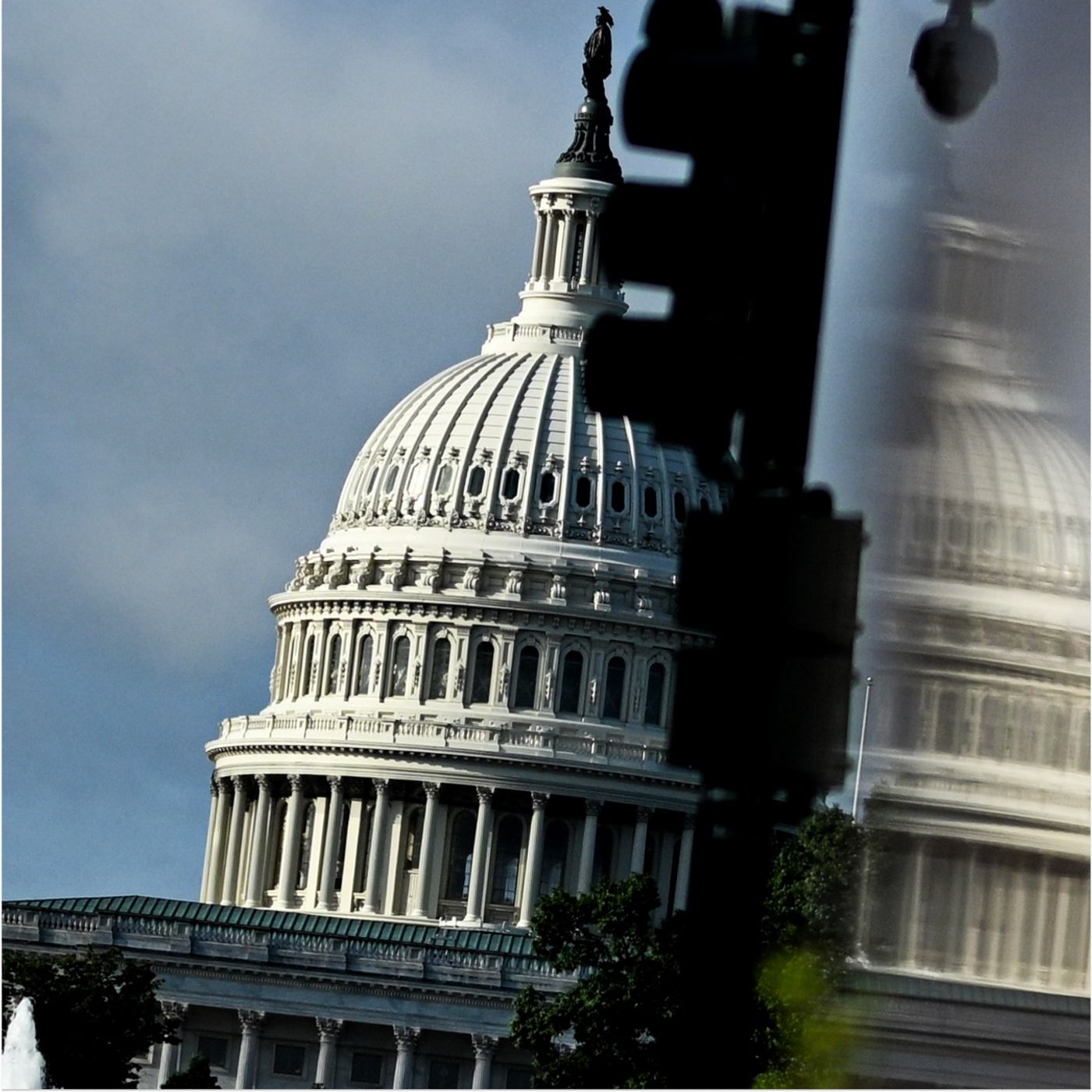
The Daily
Congress Just Gave Away Its Power to Trump
00:25:18
Last night, President Trump achieved a major victory: persuading both chambers of Congress to cancel billions of dollars in spending that they had already approved. In the process, the Republican-led Congress is giving President Trump the power that it, and it alone, is supposed to have.
Loading summary
Transcript93 lines
- [00:00]
Ezra Klein
Do you own a business that's ready to thrive? It's time to let Intuit QuickBooks take things like unpaid invoices and tracking expenses off your plate so you can take things to the next level. QuickBooks is a powerful AI driven all in one business solution that can help with day to day tasks like invoicing expenses and taxes. QuickBooks can help you unlock the growth in your business so you can get back to enjoying your business. Manage and grow your business all in one place. Intuit QuickBooks your way to money. Get 90% off for 3 months. Limited time only terms and conditions apply.
- [00:34]
Michael Balbaro
From the New York Times, I'm Michael Balbaro. This is the Daily Late last night, around midnight, President Trump achieved a major victory, persuading both chambers of Congress to cancel billions of dollars in spending that they've already approved. In the process, Congress is giving the president the power that it and it alone is supposed to have. My colleague Katie Edmondson explains. It's Friday, July 18th.
- [01:26]
Katie Edmondson
Katie. Congress has just within the past few hours done what very few institutions in government do, which is voluntarily give up power delegated to it by the Constitution. Basically, it has voted to give away its own authority.
- [01:50]
Unnamed Analyst
That's right. I mean, what we're talking about here specifically is, is Congress's spending authority, their power of the purse. And what we are seeing them do is go through this process called the rescission process. And that is when Congress decides essentially to claw back or cancel money that lawmakers already approved to be spent. And in this case, what we're talking about specifically is $9 billion for public broadcasting and for foreign aid. And $9 billion, is that a ton of money? No. When it comes to the grand scheme of the federal budget, it's actually a minuscule pot of money that we're talking about.
- [02:30]
Katie Edmondson
Right.
- [02:31]
Unnamed Analyst
But the reason that it really matters why we're talking about it right now is really what you just said, Michael, because this was not Congress's idea. In fact, Congress voted earlier this year to approve that funding.
- [02:45]
Katie Edmondson
Right.
- [02:45]
Unnamed Analyst
The reason why they're acting now to try to cancel that pot of funding essentially is because President Trump has asked them to. And that is pretty unusual, Right? These are normally decisions that are left to Congress that Congress makes because again, the Constitution vests the legislative branch with the power of the purse. And it's a hugely important power. It is what really makes them a co equal branch of government.
- [03:12]
Katie Edmondson
Right. And so the idea that Congress would, at the request of the executive, undo its own previously approved spending just violates many kind of principles of how we think about the separation of powers. Has this actually ever happened before?
- [03:32]
Unnamed Analyst
So the last time we saw a major package like this get approved by Congress was actually in the 90s, but it was really a fairly bipartisan endeavor. This was a time period in which Republicans and Democrats in Congress sort of in lockstep with President Bill Clinton, agreed that they needed to find spending cuts and worked together in a bipartisan way to identify those cuts and push them across the finish line. That's obviously a very different scenario than what Michael, you and I are talking about right now, which is a Republican president asking a Republican Congress to approve these types of rollbacks that Democrats absolutely despise.
- [04:16]
Katie Edmondson
Right. So talk about why this is happening the way that it is right now, a Republican president asking Republicans in Congress to do his bidding and in the process give up their own previous spending decisions.
- [04:34]
Unnamed Analyst
Well, Michael, if you remember during the beginning of the the second term where we are today, you're seeing the White House put forward a very aggressive view over what their powers over spending should be. Right. We saw almost immediately President Trump issue a number of executive orders unilaterally freezing or halting money that Congress had appropriated.
- [04:58]
Katie Edmondson
Right. Which raised all kinds of legal problems. And in several cases, federal judges jump in and said, you can't do that. Once Congress approves funding, the executive can't just come in and freeze it. You have to do this the right way. And that unfroze the money.
- [05:15]
Unnamed Analyst
That's right. And to be clear, the White House still maintains to this day that that is a right that they should have, that they should be able to unilaterally freeze spending that Congress already approved. But in this particular case, there was a lot of, I think, political momentum in the Republican Party behind the doge effort to sort of slash and burn their way through the federal government. And so this time, the White House said, all right, we're going to bring this to Congress and we are going to ask Congress to codify some of these spending cuts that we've already made because we'd like to get formally their sign off on it.
- [05:54]
Katie Edmondson
Right. And make sure that they're actually legally official.
- [05:57]
Unnamed Analyst
Yes, that's right. And White House officials want to make sure this package succeeds. And so White House officials deliberately choose to target get programs and specific funds that they know Republicans don't like, such.
- [06:13]
Katie Edmondson
As funding for PBS and npr.
- [06:16]
Unnamed Analyst
That's right. There are a number of Republicans on the Hill who have felt that NPR has become too partisan, has veered to the left. Don't feel that taxpayer funds should be steered toward npr. So that becomes sort of a politically easy target for the White House. And there are also a number of Republicans in recent years on Capitol Hill who feel that investments in foreign aid, investments in sort of classic US Soft power abroad, have not really served the nation well. And so a lot of public health programs get wrapped up in this rescissions package.
- [06:51]
Katie Edmondson
Essentially, the White House is trying to make this as easy as possible for Congress to do what it might instinctively not like doing.
- [06:58]
Unnamed Analyst
That's right. And so it pretty much glides through the House in June, but then it lands really with a thud in the Senate where almost immediately you have a number of Republican senators start to express some deep misgivings about this package. And so they summon Russ Vogt to the Hill. And Russ Vogt, of course, is the budget director at the White House. But I think more importantly, he is really the man behind the scenes driving these aggressive efforts to slash federal spending. And he is also really the face of this argument that the White House has been putting forward that the executive branch has broad authority to cancel funds that Congress has already approved.
- [07:44]
Katie Edmondson
So what occurs during this hearing?
- [07:46]
Russ Vogt
The hearing of the Senate Appropriations Committee will come to order.
- [07:52]
Unnamed Analyst
So this hearing with Russ vote takes place in the Senate Appropriations Committee. And the Senate Appropriations Committee is home to the lawmakers who set the levels of federal funding every single year. They decide how much money the government should be spending and where that money should be steered to.
- [08:12]
Katie Edmondson
I'm here to testify in the administration's 9.4 billion rescissions package.
- [08:16]
Unnamed Analyst
And Republicans on that committee gave him a pretty tough grilling.
- [08:20]
Russ Vogt
I am puzzled why you would be cutting funds that the president signed in March as part of the continuing resolution.
- [08:30]
Unnamed Analyst
And they're raising a number of issues.
- [08:33]
Russ Vogt
When you look at pepfar, you are eliminating a lot of the prevention programs.
- [08:41]
Unnamed Analyst
For example, there is a proposed cut to pepfar, which is a long running AIDS treatment and prevention program.
- [08:50]
Russ Vogt
We've seen literally 26 million lives saved.
- [08:55]
Unnamed Analyst
And one of the things that Senator Susan Collins of Maine, the chairwoman of the Appropriations Committee wants to know is if we approve this request, are you going to cancel some of the funding for these life saving medicines that we send to African countries?
- [09:12]
Russ Vogt
We can't tell in looking at the information that you've given us because it's not specific whether the rescission would harm our efforts to prevent the spread of tuberculosis or polio or malaria.
- [09:30]
Unnamed Analyst
They want to have a better sense of exactly what programs he plans to cut, which is information they say he didn't provide to them in the first place, which has deeply upset them.
- [09:41]
Katie Edmondson
We have identified the extent to which all of them are funding liberal NGOs doing activities that the American people wouldn't support, and that just because they're in the PEPFAR account shouldn't make them immune for a rescission. Right, because he's just said to them, cut $9 billion, not said line by line by line. What cuts would actually occur?
- [10:04]
Unnamed Analyst
Well, he gives specific programs, numbers for specific programs that he wants to cut. But it's not the type of granularity that senators want to see, and it's not the type of granularity that we've seen in the past when this process has played. And then you have a number of senators who are bringing up sort of their pet concerns.
- [10:23]
Katie Edmondson
We have Native American radio stations in South Dakota. They get their funding through npr.
- [10:29]
Unnamed Analyst
For example, Senator Mike Grounds, who is a South Dakota Republican, is very concerned about protecting the tribal broadcasters in his state.
- [10:38]
Katie Edmondson
They're not political in nature. These are the folks that put out the emergency notifications.
- [10:44]
Unnamed Analyst
He says that there are a number of tribes in his state and rural areas that rely on public radio for emergency information.
- [10:51]
Katie Edmondson
Would you work with us to try to find a way in those states that have got these types of radio stations to help them survive?
- [10:57]
Unnamed Analyst
And he's looking for some sort of assurances that that funding will be protected.
- [11:01]
Katie Edmondson
Yes, Senator. I think it's an important aspect of this. Our view is that we've structured.
- [11:06]
Unnamed Analyst
This goes on and on and on.
- [11:09]
Katie Edmondson
So this testimony suggests that the White House may have somewhat miscalculated in their belief that all the programs that they're asking Congress to rescind are actually unpopular.
- [11:23]
Unnamed Analyst
That's right. I think you start to see how important a number of these programs actually are, even to some of these Republican senators.
- [11:31]
Russ Vogt
Director Vogt, I know it's been a long afternoon for you. I hope that the questions that you have heard today have helped give you a better understanding of the depth of concerns about this rescission from members on both sides of the aisle. This hearing is now adjourned.
- [11:57]
Unnamed Analyst
So the hearing ends. And it's clear that there is a lot of angst internally among Republican senators about approving this request. But like many pieces of legislation that President Trump has demanded Congress pass, there's sort of a sense of inevitability about this package ultimately passing.
- [12:17]
Russ Vogt
I know we are approaching the hour for the vote on this motion to discharge this rescission package. I just want to take a couple minutes I'm going to be voting.
- [12:27]
Unnamed Analyst
And so it's all the more striking, I think, when you see Senator Lisa Murkowski of Alaska take to the Senate floor ahead of the vote and she says that she is going to oppose it.
- [12:41]
Russ Vogt
There's a good reason, I think, that we haven't seen a successful rescissions package before the senate in almost 33 years. It's because we've recognized that, hey, that's our role here. That is our role here when it comes to the power of the purse. And so I have several concerns, specific concerns about this package.
- [13:06]
Unnamed Analyst
And she uses really stark language to explain why she says this is about our own authorities, our constitutional power of the purse.
- [13:16]
Russ Vogt
We're lawmakers, we should be legislating. What we're getting now is a direction from the White House and being told this is the priority we want you to execute on it. We'll be back with you with another round. I don't accept that. I'm going to be voting no.
- [13:42]
Katie Edmondson
She seems to be kind of mourning the fact that her fellow senators and House members are giving up this power.
- [13:53]
Unnamed Analyst
It is a somber moment, but the Senate passes it anyway. There are only two Republicans who vote against it, Senator Murkowski and Senator Susan Collins of Maine. And that sends it back to the House where it clears the House. And essentially President Trump has gotten exactly what he asked for.
- [14:19]
Michael Balbaro
We'll be right back.
- [14:22]
Unnamed Analyst
Foreign.
- [14:26]
Ezra Klein
Do you own a business that's ready to thrive? It's time to let Intuit QuickBooks take things like unpaid invoices and tracking expenses off your plate so you can take things to the next level. QuickBooks is an all in one business solution that can help with those day to day tasks like invoicing and expenses. Manage and grow your business all in one place. Intuit QuickBooks your way to money. Get 90% off for 3 months limited time. Only terms and conditions apply.
- [14:52]
Sydney Harper
Hi, this is Sydney Harper and I help make the daily one night, it's 10pm My colleagues working on the next day's episode are looking for a speech, this piece of tape that they really need to make the episode sing. They've tracked it down to a university library and that library happens to be close to my house. So I hop into a car, I head across town, I get to the library, they're about to close. I I'm copying the tape, uploading it on my computer, sending it off to my colleagues working on the episode. It makes it into the show the next day. It really helps make it shine. The whole effort is a success. And I'm telling you this because I don't think people realize that that level of teamwork and dedication goes into every episode that you hear on the Daily. That sort of collaboration takes people, it takes resources, it takes support from subscribers. So that's why I'm asking you to subscribe to the New York Times so we can keep bringing you the Daily every day.
- [15:51]
Katie Edmondson
Katie, we've been talking about all of this as the Republican controlled Congress giving up power to the President. But the other way of seeing this is that the President is requesting and obtaining that power in the most legal means possible. This all started with the President and Russ votes saying, we can just stop this funding. But they're not doing that this time. They're going to Congress and saying, we're asking you to cut this funding. We know you passed it, cut it. And Congress is doing that. So if you're in Congress, if you're a Republican in the House or Senate, isn't this an improvement over what the White House had been doing before? They're playing a role at least?
- [16:37]
Unnamed Analyst
Well, I think that's right. And part of the genesis of this idea of sending a rescissions package up to the Hill actually came early earlier this year when Doge and the White House were making a lot of unilateral moves to freeze funding. And Republican senators were very upset about it at the time. And they were saying, we feel like we're completely cut out of the process. We feel like we don't know what's going on. And so that's where this idea of let's have Congress vote on this really came into play. It was to give these very unhappy Republican senators a sense that they actually had a stake in this process as opposed to what had been previously happening, which was just the executive branch acting in a unilateral way.
- [17:22]
Katie Edmondson
Right. One man's version of you're giving UP power is 50 members of the Senate, for example, saying, no, we're legitimizing Doge. It's now being done through us. Therefore, in a sense, they're more empowered.
- [17:38]
Unnamed Analyst
Well, and again, if you go back to the targets of some of these cuts, right, you will talk to a number of Republicans in both the House and the Senate who are only too happy to cast a vote to gut, for example, public broadcasters. And I think another area where senators felt like maybe they had a little bit more power in this process is that they were able to negotiate with the administration over which programs, to a certain extent, could be spared some of these Deep cuts.
- [18:08]
Katie Edmondson
And were some meaningful programs spared in those negotiations?
- [18:12]
Unnamed Analyst
They were. For example, Republican senators actually were able to protect pepfar, right, the AIDS prevention program, from being cut to the tune of about $400 million. If you remember Senator Rounds, who during that hearing with Russ Votes, said that he was concerned about how tribal broadcasters would be impacted. He says he was able to secure some sort of assurances that they would be protected. Michael, I think it's important to say that we actually don't know how real those assurances are and that the head of a native broadcasters association actually said that she has deep misgivings about whether that will ever come to fruition.
- [18:53]
Katie Edmondson
Right.
- [18:53]
Unnamed Analyst
But the bottom line is you were able to see some Republican senators insert themselves a little bit more in this process to try to shield sort of their pet projects from the worst of these cuts.
- [19:05]
Katie Edmondson
Right. If you're a skeptic of this, and if you're worried, as Lisa Murkowski and Susan Collins are, about the role of Congress, the key word here is a little bit right. These lawmakers, to the degree they're having a say, are ultimately, you could argue, having a say in their own diminished role in this process. And they're creating little carve outs to spare their own previously approved spending, which ultimately is kind of breathtaking. If that's a victory in Congress. Now to save a local radio station from the President cutting what you yourself have already approved, that says a lot about Congress's very small power now.
- [19:52]
Unnamed Analyst
I mean, not that long ago, being an appropriator being put on the Appropriations Committee was considered one of the highest honors you could earn in Congress. Right, because it was considered such a privilege to be able to dictate exactly how federal funds were going to be spent, where they were going to be steered to. This was a jealously protected right. And Michael, I think it's important to note, right, only two Republican senators voted against this package. But we actually heard a lot of these concerns from Republicans who ultimately did support the package.
- [20:29]
Katie Edmondson
And I do so with reservation.
- [20:33]
Unnamed Analyst
The speech that I just can't get out of my head actually came from the chairman of the Armed Services Committee, Senator Roger Wicker from Mississippi. He went to the Senate floor and he described this request from the White House, and he said that it, quote.
- [20:49]
Katie Edmondson
Concerns me as, as perhaps approaching a disregard for the constitutional responsibilities of the legislative branch under Article 1. In this situation, it will amount to the House and Senate basically saying, we cede that decision voluntarily to the executive branch.
- [21:14]
Unnamed Analyst
We cede that decision voluntarily to the executive branch. And Michael, he voted for it, right?
- [21:21]
Katie Edmondson
So he ceded it voluntarily.
- [21:23]
Unnamed Analyst
Yes, that's right.
- [21:24]
Katie Edmondson
There are also members who are very concerned, as I am, about this process and who are requesting of the administration, if we do this again, please give us specific information about where the cuts will come. Let's not make a habit of this. Let's not consider this a precedent.
- [21:43]
Unnamed Analyst
And look, I think we are going to potentially see this playing out over and over again. And the reason that I think that is because Russ Vogt, the budget director, has said that he intends to keep sending these types of rescissions packages up to Capitol Hill, that he wants this to be an ongoing process.
- [22:03]
Katie Edmondson
However, in the spirit of seeing this from multiple perspectives, if you're going to view this from the perspective of the president, Katie, this looks like an extremely effective version of government. We have spent, you and I, so much time talking about a version of Washington where Congress and the President are at odds. Nothing gets done. And I think if we're being honest, when Trump won a second term, and we knew he was gonna have a narrow majority in Congress, we imagined that he was gonna have to keep working around Congress constantly. He was gonna govern by executive order. And yet here we are. He gets this massive tax package through both chambers of Congress. He is getting this rescission package through both chambers of Congress. He has turned Congress into a very effective, some would call it, compliant partner in government. And if you're used to thinking that Washington can't get things done in this version of government and Trump's version of government, it can.
- [23:10]
Unnamed Analyst
Yeah. I mean, I think what we are seeing really unfold is Trump's maximalist vision of executive power really come to life, and that even beyond that, that Republicans in Congress are really willing partners in making that vision come to life. Right. I think, Michael, you know, it's kind of a joke on the Hill at this point. Anytime that there is a Republican who seems to be hold out on any sort of piece of legislation, whether it was the reconciliation bill or the rescissions package, the joke is always, it's not a question of if they're going to fold, it's a question of right when they're going to fold. It feels inevitable at that point. So I think if you're looking at this from the perspective of wanting to have an expansive executive branch, then of course, it's a huge success. But from where I sit on Capitol Hill, if you talk to any member of Congress, they would tell you the last thing they ever wanted to be or ever dreamed of becoming. When they ran for Congress was becoming a rubber stamp for the executive branch. And at that point, I suppose you could argue what's even the point of having a Congress? What's the point of having an Appropriations Committee if you're simply going to let the White House set the funding levels and decide what to fund and what not to fund?
- [24:44]
Katie Edmondson
Well, Katie, as ever, thank you very much.
- [24:47]
Unnamed Analyst
Thanks, Michael.
- [24:55]
Katie Edmondson
Foreign.
- [24:59]
Michael Balbaro
We'Ll be right back.
- [25:06]
Ezra Klein
Do you own a business that's ready to thrive? It's time to let Intuit QuickBooks take things like unpaid invoices and tracking expenses off your plate so you can take things to the next level. QuickBooks is a powerful AI driven, all in one business solution that can help with day to day tasks like invoicing expenses and taxes. QuickBooks can help you unlock the growth in your business so you can get back to enjoying your business, manage and grow your business all in one place. Intuit QuickBooks your way to money. Get 90% off for three months. Limited time. Only terms and conditions apply. If you find yourself bewildered by this moment where there's so much reason for despair and so much reason to hope.
- [25:46]
Katie Edmondson
All at the same time, let me say I hear you.
- [25:49]
Ezra Klein
I'm Ezra Klein from New York Times Opinion, host of the Ezra Klein Show. And for me, the best way to.
- [25:54]
Katie Edmondson
Beat back that bewildered feeling is to talk it out with the people who.
- [25:57]
Ezra Klein
Have ideas and frameworks for making sense of it. There is going to be plenty to talk about. You can find the Ezra Klein show wherever you get your podcasts.
- [26:12]
Michael Balbaro
Here's what else you need to know today. On Thursday night, President Trump said he would authorize his attorney general to release grand jury testimony from the Jeffrey Epstein investigation, a decision he hopes will satisfy supporters who are furious at the White House over its handling of the matter. Administration officials have long promised to release FBI files related to the convicted sex offender. But then they reversed course, fueling conspiracy theories of a government cover up surrounding Epstein's crimes and his death.
- [26:51]
Katie Edmondson
And I want to let you know something that I found out just last night. Next year will be our last season. The network will be ending the Late show in May. And yeah, I share your feelings.
- [27:06]
Michael Balbaro
In a decision that shocked the world of tv, CBS said that it was canceled, canceling the most watched show in late night tv, the Late show with Stephen Colbert, for what it said were purely financial reasons. On Thursday, a visibly disappointed Colbert addressed the news on his show.
- [27:29]
Katie Edmondson
It's not just the end of our show, but it's the end of the Late Show. On cbs I'm not being replaced. This is all just going away. And I do want to say today's.
- [27:41]
Michael Balbaro
Episode was produced by Rob Zypko, Jessica Chung and Shannon Lin. It was edited by Rachel quester and Liz O', Valin, contains original music by Marion Lozano and Pat McCusker and was engineered by Alyssa Moxley. Our theme music is by Jim Brunberg and Ben Landsberg of Wonderland. That's it for the Daily I'm Michael Balboro. See you on Monday.
- [28:16]
Ezra Klein
Do you own a business that's ready to thrive? It's time to let Intuit QuickBooks take things like unpaid invoices and tracking expenses off your plate so you can take things to the next level. QuickBooks is an all in one business solution that can help with those day to day tasks like invoicing and expenses. Manage and grow your business all in one place. Intuit QuickBooks your way to money. Get 90% off for 3 months limited time. Only terms and conditions apply.