Loading summary
Transcript99 lines
- [00:00]
Podcast Announcer
This message is brought to you by Apple Card Spring always feels like a reset, clearing things out, simplifying what you don't need. Apple Card is built with that same idea in mind. No annual fee, no late fees, and no foreign transaction fees. No fees, period. Get started and apply in the Wallet app on your iPhone today. Subject to credit approval. Variable APRs for Apple Card range from 17.49% to 27.74% based on creditworthiness rates as of January 1, 2026. Existing customers can view their Variable APR in the Wallet app or@car.apple.com Apple Card issue by Goldman Sachs Bank USA Salt Lake City Branch terms and more at applecar.com.
- [00:42]
David Marchese
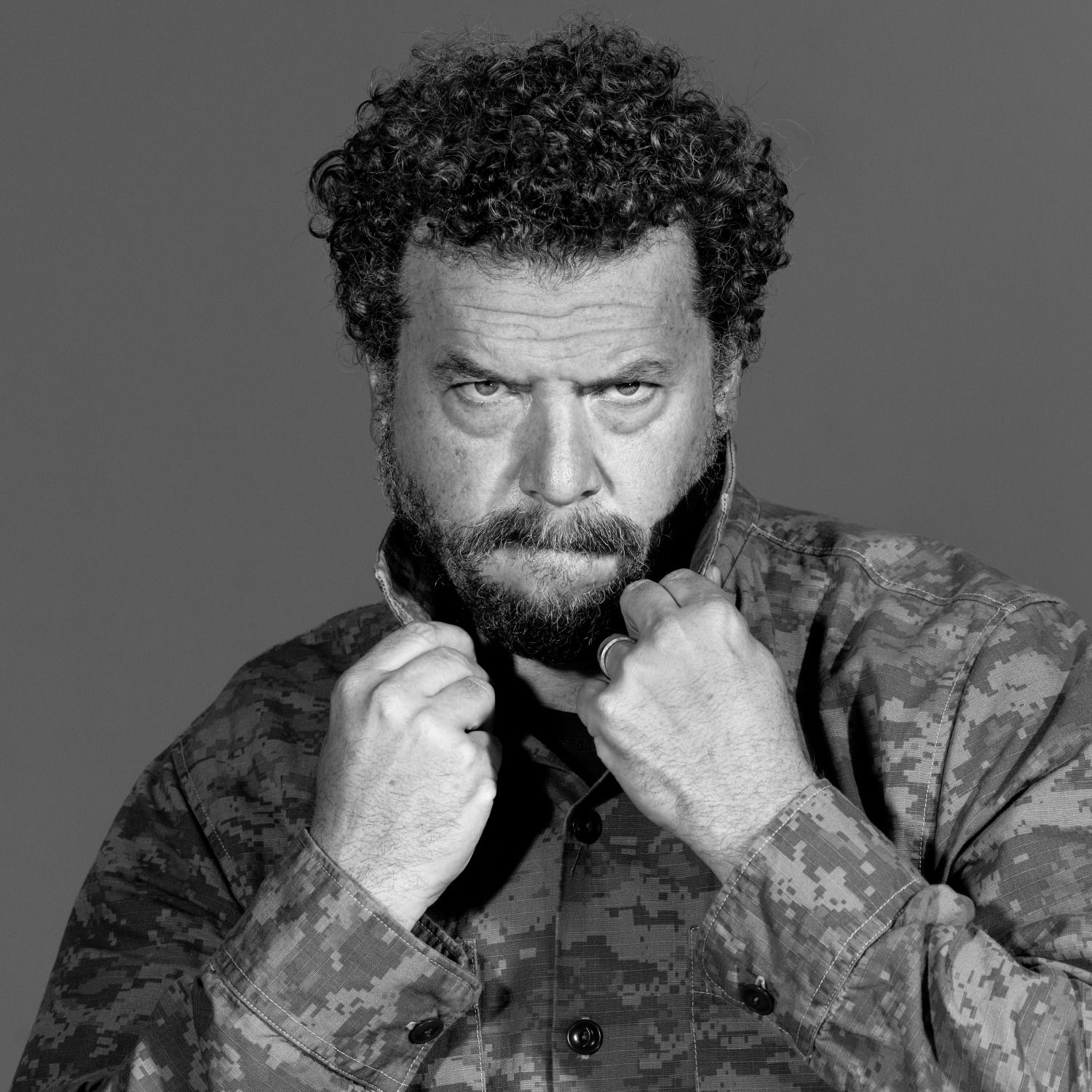
From the New York Times this is the interview I'm David Marchese. Danny McBride's great HBO shows. I'm talking about Eastbound and Down, Vice principals and the Righteous Gemstones, all of which he co starred in and helped to create, weren't just satirically sharp, hilariously profane, and sneakily heart tugging. They also worked as almost anthropologically detailed studies of a certain type of modern American manhood. McBride's antiheroes in all of those shows were arrogant, insecure, unapologetic, vulgar, status obsessed, and nursed all kinds of petty grievances. They were also widely beloved. Now he's applying his gift for satire and character studies to short stories with his first book, the forthcoming Thrilling Tales of Modern Men. Some of the stories fit pretty neatly into the McBride canon of wounded men who lash out, a canon that also includes his work co writing the rebooted Halloween horror films. Other stories tip toward a quieter emotional depth, albeit a depth still laced with obscenity and the occasional violent outburst. But they're all undeniably the work of a storyteller interested in entertaining while also poking at what makes men tick and then go boom. Here's my conversation with Danny McBride. Danny, thank you for taking the time to speak with me today. I appreciate it.
- [02:12]
Danny McBride
Oh, thanks for having me on. I appreciate it.
- [02:14]
David Marchese
You know, reading the stories in the book, Thrilling Tales of Modern Men, you know, to me they feel like they are very much Danny McBride stories, like they only could have come from you. There's the specific use of language, obviously, the sense of humor, even sort of like the explosions of violence here and there. It kind of, you know what I'm talking about.
- [02:35]
Danny McBride
Yep.
- [02:36]
David Marchese
But the overarching themes of the book, they speak to my mind very clearly to one of the great themes of this moment. Right. Which is, you know, what people call like a crisis of masculinity do you have a sense of why that feels like a particularly acute problem now?
- [02:56]
Danny McBride
I mean, maybe it's because everyone says that there's something wrong with men now, but, you know, I don't know. I think it's probably, you know, maybe it's even that we're this generation that's like grown up so heavily on media, you know, I mean, like being a kid and growing up in the 80s, it's like you are 100 being sold. Machismo, action. Kill them all. Let God sort them out. Like that was sort of pounded into anyone's brains that came up on cable television or, you know, watching movies. And I think it took me a little while to realize when I got older, like, oh, the movies are just. That's not really real life. That's not really how things work. And maybe there is just this kind of slow awakening of like, yeah, I guess everything I've been told isn't necessarily how it's supposed to be or how it goes. And then it's kind of that awkwardness of you sort of then finding out what is important to you or how. What your values are, what your morals are, what kind of person you want to be.
- [03:53]
David Marchese
There's one story called the Institute of Men, which is about a guy who goes to like, sort of a creepy hair growth clinic, and he has to take this intake survey that has some pretty. For what he thought was a medical procedure, some sort of strangely emotionally direct questions. I want to ask you a couple of those questions.
- [04:13]
Danny McBride
Okay? Wow, how clever of you. Here we go.
- [04:18]
David Marchese
One of the questions was, when was the last time you were in a physical altercation?
- [04:24]
Danny McBride
It was. It was a long time ago. It was in. I feel like it might have been 2000. I got into a scuffle with an ex girlfriend's boyfriend who was being abusive. And I went to go pick her up and I got into a fight in the middle of Burbank.
- [04:40]
David Marchese
How did the fight go?
- [04:41]
Danny McBride
You know, it was actually very exciting. What ended up happening was, this is crazy. So this girl broke my heart. I was a young man. This was like my first real serious girlfriend. All through college, we moved out to LA together. She got mixed up with another guy. She. She wanted to end it with that other guy and he wasn't happy about that. She called me up and said, hey, can you come pick me up? I'm at this guy's place and he's giving me a hard time. So, you know, me and two of my roommates, we're all guys who Went to art school. Like, nobody hears a bruiser. Nobody hears a scrapper. We're not. We're not trained for this. So I'm like, you know, but I'm. My heart's broken, and I have to. I'm like, we gotta go get her. You know, like, come on, let's go. And, you know, we're just, like, looking around like, do we have weapons? You know, it's like, I take like a. You know, we. It's like a golf club here, you know? So we. We. We drive in my Hyundai Elantra to Burbank to where. This is where she's going to be. And she's waiting outside, and the guy's with her. And the dude is, like, 6 5. He's, like, massive. And my first instinct was like, damn, dude's strong. Like, she went for a really strong guy after me, and I, you know, we just kind of standing there. And so then I finally get out of the car. My buddies, who I thought were going to get my back, just stayed in the car. And I'm like, hey, all right, let's. Let's get her. Come on, get in the car. Leave her alone. And I look back to my buddies, and my one buddy rolls the window down and just, like, hands the golf club out the window. I wasn't even asking for the golf club. But then I just. So I just took it because I wasn't sure what to do. And then that escalated things because the guy's like, what are you going to do with that golf club? And I was kind of like, well, I'm not really sure what the plan was for the golf club. I guess, hit you with it. I don't know what's. I don't know what's happening right now. And he came at me, and so I did. Oh, my gosh, the golf club, and swung and hit. I aimed for his knees, and I hit him with the shaft. And it just easily broke across his knees. Didn't slow him down at all. And I'm just. Hold the handle for the golf club. And he just looks at me, and it's just like, what the hell? So then he socks me. We're on the ground, we're tussling. Wow. And then the girlfriend comes in. She pulls him off by his hair, you know, we all get back in the car and take off. My nose is bleeding. We rescue her and go. That was the last physical fight I was in.
- [06:53]
David Marchese
That was a good story. Also, I hate to implicitly endorse physical violence as a means to solving any sort of problem. But then you were like the good guy in that story.
- [07:04]
Danny McBride
We had to. Someone to stand up for what was right.
- [07:07]
David Marchese
And then another one of the questions in the story that the character is asked is, when was the last time you cried? Do you have an answer to that one?
- [07:17]
Danny McBride
Oh, God, when was the last time I cried? You know, it probably wasn't, honestly, too long ago. Like, it doesn't take much these days. Like, this is like, my son just graduated from eighth grade, and there was like, you know, which isn't even that big of a deal, but there was a ceremony, and they put together this little slideshow that is just like the, you know, just the cut in science lab and stuff. And I definitely found myself there, like, oh, damn, I hope the lights don't come up. Right now. I'm welling up. I'm leaking here.
- [07:47]
David Marchese
But just to connect this a little bit to some of the themes in the book, I feel like a lot of the characters in the stories, they're basically struggling to find purpose in their life, or they're looking for meaning, maybe because they feel emasculated or because they feel anxiety about their status or whatever the reason might be. Where do people find meaning and purpose, do you think?
- [08:13]
Danny McBride
You know, when I was a kid, I. I grew up going to church. You know, we went to church all the time. My, my. You know, I've talked about this before. Like, my mom was, like, a puppet minister. Like, my parents are really involved. And, you know, after my parents got divorced and I was in sixth grade, we really just stopped going to church, you know, and so now I have kids, and, you know, church isn't really a part of our life either. And I started thinking, like, man, there's all these, like, basic things I learned from going to church. Just basic morals and values that are like, oh, I'm like, for granted that my kids are just going to pick all that stuff up just from the world around them. But, you know, they're really. They're not. You know, you do have to think about that and. And, you know, I think it's a dangerous time, honestly, with how much influence, you know, these phones and what people can be getting exposed to without really realizing it and how even just the algorithm can be tainting what you think is right and wrong or, you know, all the stuff that everybody's afraid of.
- [09:08]
David Marchese
Yeah. Can you tell me a little bit more about your mom's puppet ministry? I mean, maybe I'm betraying my own ignorance here, but I wasn't really aware that that was a thing until I.
- [09:18]
Danny McBride
You seem like you'd be really into puppet ministry.
- [09:21]
David Marchese
I actually like puppet ministry, but it's puppets of the band ministry. It's a kind of.
- [09:26]
Danny McBride
Yeah, exactly. That's it. They're on for you. It's pretty different, but.
- [09:29]
David Marchese
Yeah, tell me about that. What was that?
- [09:31]
Danny McBride
Well, you know, when I was a kid, we went to this little Baptist church in Spotsylvania, Virginia, and both of my parents were pretty involved with the chur. My mom bought these puppets, and then she would write these plays, and she would, like, do the children's sermons during church. And so on Sunday mornings, we would load the stage up and the puppets into the car and go to church early to help her get it set up. And then before the big sermon would happen, my mom would go in there with a few other people that were voicing these other puppets, and they would do these little morality tales about why you shouldn't steal or. Or covet what your neighbors have. Just the most basic stuff. But we bought. I remember our family. We didn't have a computer or anything. My mom bought a typewriter, and I used to watch her. I was pretty young. This is probably like third or fourth grade. But I'd watch her, like, in the kitchen with that typewriter, typing up these scripts for these puppet ministries. There to be two or three pages long, simple stories. But that had a massive influence on me when I was a kid. I just. I thought it was cool that she was creating something in our, you know, kitchen, this place where we all hang out and just watch tv, and she creating something. And then two days later, I'm in the middle of church, like, watching people react to something that she created, it always had an impact on me.
- [10:49]
David Marchese
And you think that's part of why you got into storytelling?
- [10:51]
Danny McBride
I think it was. I mean, I wasn't participating in those stories, but even just participating in the sense that I would help set the stage up, and there was this anticipation of, like, oh, I wonder what they'll think about this one this week. I just. I don't know. There was something about it that I just found fun to know that there was something concocted for the benefit of other people and then wondering how they would react to it. I kept those puppets for a long time. They were. I didn't know what to do with them. They're kind of creepy. So they were, like, in Tupperwares in my house in Virginia. And then finally, after years and years, I gave them to my sister because she had been asking for them. I don't know what she does with them. I'm not sure if she's doing her own puppet shows for the enjoyment of herself at the house or what. I don't know. It's kind of a weird thing to get rid of, though. I mean, like, you have these puppets that your mom had when you were a kid. You can't. Just the idea of them just sitting in a dumpster somewhere is heartbreaking. So then they just become, you know, some massive part of your. Of your closet that you're like, why? Why can't we put anything here? And you're like, well, that's where all the puppets are buried. We can't put anything else there.
- [11:55]
David Marchese
Just because it's been rattling around in my head since you said it. When I said I didn't know about puppet ministries, and you said something like, you don't seem like somebody who would know much about that. Was I supposed to be insulted by that? I don't know.
- [12:07]
Danny McBride
No, no, not at all. I don't know what type of person should know about puppet ministry. You, I guess. Me, right? Do I F profile?
- [12:16]
David Marchese
100%. Then you said you. You stopped going to church. Why did your family stop going?
- [12:23]
Danny McBride
You know what's really interesting? They, you know, we. There. There, you know, this was back in the 80s, and, you know, divorce wasn't as, like, accepted as it was now, especially not in the church. And, you know, it was my first taste of sort of the hypocrisy sometimes of the people that can go to church. And, you know, here it was like our family was so involved with the church and my parents divorce, and my dad's in Florida. My mom's raising me and my sister by herself. And, you know, we're going to church, and they're all just, like, whispering behind her back. And so I think it became an uncomfortable place for her. And so she stopped going and would drop me and my sister off each Sunday. And then I think after a few weeks of that, we were sort of like, I think we're good with church. I think we've got it. We'll take care of ourselves now.
- [13:09]
David Marchese
Yeah. Did that mean you stopped being a believer or you just stopped going to church?
- [13:13]
Danny McBride
No, I don't think it made me stop going to church. I mean, it's different when you're a kid and you're taken to church. You're not really thinking whether you believe or not. You're just kind of going because your parents are making you go, you know, and I think that I took a lot of those beliefs for granted. And then I think as I've gotten older, I definitely think about spirituality a lot. I think about. I wonder where we're from and where we're going, if we're going anywhere. I don't feel like I have the answers, and so I'm just very open to what. What other people's answers could potentially be.
- [13:43]
David Marchese
It's funny, you said when you're a kid and you would go to church, you're not really thinking about, like, whether you believe or not, but I had the opposite experience. My mom was Jewish. My dad was. Well, he converted to Judaism, but he's Italian, Roman Catholic. And so sometimes I would end up at Mass, and sometimes I would be at temple. And I really remember thinking, is any of this true? Like, they're saying this one thing over here, and in the other place I'm going, they're saying a totally different thing.
- [14:09]
Danny McBride
They're not saying both sides.
- [14:09]
David Marchese
They're not both. Right. You know?
- [14:11]
Danny McBride
Yeah. I spent most of my time in church, like, drawing pictures over the minister's face in the programs. Like, I wasn't really. I don't think I was getting. I wasn't soaking the whole message in, I don't think.
- [14:22]
David Marchese
Yeah, I know you said your folks divorced, but are there ways in which your dad was an influence on the kind of work that you ended up doing or even the kind of person you became?
- [14:34]
Danny McBride
Maybe just because he was a piece of shit? Maybe he's inspired a lot of these jackasses I've played. No, I'm just kidding.
- [14:40]
David Marchese
You're not kidding?
- [14:45]
Danny McBride
No. I mean, he wasn't much of a storyteller, except for maybe the stories he would tell me and my mom and my sister about what he was up to.
- [14:52]
David Marchese
Wait, what kind of stories was your dad telling you?
- [14:55]
Danny McBride
Nothing. Nothing cool. Nothing good.
- [14:59]
David Marchese
And I just want to go back to the church influence for a second. How much was Righteous Gemstones kind of an outgrowth of that?
- [15:07]
Danny McBride
You know, it was. You know, I left Los Angeles in 2017. Like, my son was about to go into kindergarten, and I just sort of was looking around the city, and I, like, wasn't sure how I was going to raise my kids there. Like, you know, we lived up off of Mulholland behind walls, and, you know, I remember my son was asking me, you know, I want to learn how to ride a bike. And my thought was, like, why? Like, you're never going to ride a bike ever down Mulholland. Like, that's silly. But it got me thinking about, like, well, do I want to try to give them something similar to what I had? Do I want to, like, see what be like for them to live in a smaller town, live somewhere where they can ride a bike down the road? And so my wife and I, you know, that's what brought us to Charleston. And I just started kind of looking around and seeing all the churches that were in Charleston. I mean, there were so many. And obviously in Los Angeles, you don't see them quite as much, you know, and every other radio station here is like a religious radio station, it seems like. And it had just been a long time since I had, you know, been back and lived back in the South. And it just got me thinking about when I was a kid and going to church. And I just got curious of, like, how church had changed, like, how it was different from when I was a kid. And I started doing kind of research, and that's when I started finding out the, like, mega churches that were around here locally. And it just became fascinating to sort of dive in and. And see how different everything was.
- [16:24]
David Marchese
Now, you know, it's easy, I think, to, you know, point at things to do with the church and say, like, well, this is. This is hypocrisy, or this is really just about money. But did you find that when you were doing the research you just described, were there any sort of more positive realizations you had or did you connect with anything in the research that you wrote?
- [16:45]
Danny McBride
Oh, I connected with a lot of it. I mean, I. Yeah, tell me about that. As we were. As we were writing, you know, I just started. You know, I was reading the Bible. I was, like, looking for everything of, like. Of just immersing myself in this world. And you start kind of looking at the Bible that way, you're like, wow, this thing, at the end of the day, it's a bunch of stories that are passed down for generations and generations and generations that are sort of like, this is what people think you need to be able to do to have a good life, you know, to survive. I love it. I love looking at it that way and thinking about it like that. You know, I don't think there's inherently anything wrong. Obviously, going to church, it's like, you know, the times I've been here with my kids, it's like, there's a sense of community. It's awesome. You know, it's like, it's nice that people are positive. I think, like, everything, it's just all depends on the people that you Know that you happen to be around when you go, like, I mean, you know, you could have the greatest church in the world, and if the people in charge are assholes, then, you know, it's not going to be the same as going to another church where maybe they're not.
- [17:46]
David Marchese
What was the most interesting feedback you got about righteous gemstones from a churchgoer?
- [17:51]
Danny McBride
You know, we surprisingly had a lot of people that went to church that watched the show. And I think, I bet, yeah, part of it was like, you know, one of my, like, rules in the writer's room was that I never wanted religion to be the butt of any jokes. Like, I didn't want belief to be what we were making fun of. Like, that felt too easy. It felt cheap. You know, I actually went around before I did the show. I went and I interviewed like a bunch of different mega church pastors. I didn't tell them what I was working on, but I just kind of like, you know, and everybody was always gracious. People open up their doors to me. I would. And I wasn't asking questions about religion. I was asking questions about the business of it. Like, when it's time to expand or when it's time to do another one or when to shut one down. Because it's interesting. It is. Like, you know, they were. You would think that, all right, well, they would decide to put a church somewhere because, you know, there's no churches in that town. They. They were like, no, it's the exact opposite. You put a church where there's already a bunch of people going to church because, you know, you have the audience there. And so even thinking about planting churches in such a business way, I don't know, that was sort of. That felt rich and that felt like what I wanted to make the show about. But in doing that, you know, I met all these different pastors and talked to people and I always wondered when it was over with, like, if they put two and two together or what they thought of it. And there was one time where I was out and I ran into one of the pastors I talked to and he just came up to me and like, whispered in my ear and said, I can't tell anyone. I watched it, but you nailed it. And I was just like, oh, great.
- [19:20]
David Marchese
Yeah, you're supposed to feel good or bad about that.
- [19:25]
Danny McBride
It's like, awesome. Got it.
- [19:27]
David Marchese
You were briefly a substitute teacher.
- [19:29]
Danny McBride
I was, yeah. There was a brief moment where all was lost in Los Angeles and I moved back to my parents house and I was substitute teaching by Day and bartending by night. And yeah, that was where I got the idea for Eastbound was just, you know, I'm sitting here in these local high schools in Spotsylvania, Virginia, trying to kind of convince these kids that I'm not like the rest of the teachers, that I'm trying to do something with my life, that I'm trying to be famous in Hollywood. Would the kids don't care.
- [20:03]
David Marchese
Were you a good teacher?
- [20:05]
Danny McBride
You know, I thought I was good, you know, probably not great. Probably not what they were looking for. All the kids cared about then was just like, what kind of car you drove. That was it. They all wanted to know. And the moment I told them it was a Hyundai Elantra, I think I lost all of their respect.
- [20:20]
David Marchese
So when you were in LA and it was after, you know, Foot Fist way kind of, you know, you got your, yourself in the door. And then you started to make your name really with some of the R rated comedies, right, Like Pineapple Express or this is the End. And people talk about how Hollywood doesn't really want to make those kinds of comedies. Now it's basically R rated comedies. But you seem to be able to do the work that you want to do and write the stuff that you want to write. Do you have any sense of being inhibited in any way or do you ever feel like someone's sort of looking over your shoulder or giving you notes about that kind of stuff?
- [21:01]
Danny McBride
You know, my experience is never, I've never gotten a note to sort of like, don't make this R rated, don't make this R rated comedy. Don't have this point of view. I mean, I think for comedy there was definitely an awakening. And as I think with all things, it's like, you know, different generations come up and different things are important to different generations. I think that's what it's all about, you know, and with movies especially, it's like, you know, there was a time in the 50s where it was only just westerns and then there was only just musicals. And you know, in the 80s, suddenly it's only like teen movies and action movies. It's like movies always go through that. And I just think that, I think that that younger generation that kind of came up like, you know, after this height of these R rated movies. It just wasn't what I think that they were interested in. Or maybe that's what Hollywood thought, I don't know.
- [21:49]
David Marchese
Do you have a sense of what your son, for example, is interested in when he wants to, to see something
- [21:54]
Danny McBride
and laugh he, it's YouTube. I mean, like, you know, I have a hard time getting him to watch movies. He just doesn't want to. We'll go, I'll try to drag him to the theater, but if it's in the house and it's an hour and a half, like, good luck. It's like, you know, it's constantly like me policing him. Like, no, no, no, get back here. Get back. Finish this. You have to finish this part. I just think that they, there's so much stuff that's competing for their attention. When we were kids, it was movies. There was like, like 12 channels on the TV. You kind of, you, you know, you got what you got. And now everything is so customized and, and YouTube is pretty amazing. I mean, every time my son or my daughter get a new interest, like, boom. There's a million things that they can watch of people who have that same interest or are explaining how to get into that thing. And I, I don't know, I find it kind of fascinating.
- [22:45]
David Marchese
Do you find the prospect of raising a, a boy or a girl, like, more? I have two girls, but does it feel more difficult to raise a boy or raise a girl?
- [22:55]
Danny McBride
You know what? None. They haven't felt more difficult. They're just totally different, you know, they, they really are. My, my son is more like my wife and my daughter is more like me. My daughter's 11, my son is, he's 14. And it's been so much fun. And I'm sort of a SAP already right now. I'm already counting down like, oh, I only got four more summers until he's in college. And so I'm always just trying to part of their life as much as I can. I know how fast all of this is going by and you know, I didn't have both parents around the whole time I grew up. And yeah, I just want to make sure that, you know, both of my kids get out of childhood and feel like there were people there rooting for them and supporting them, you know, the entire time.
- [23:41]
David Marchese
Yeah, you know, I was talking to somebody at a party not that long ago and he has a, maybe a 13 year old son. And I'm just very curious about it because like I said, I only have girls. And I was asking him about phone stuff and he was explaining how it's just a constant negotiating phone time and stuff like that is just a constant battle they're waging and how draining and irritating it is. And I said, well, what about the pornography aspect of it? Do you have to talk to Him. And he sort of paused for a second, and then he said, I just think he's not interested. Yeah. You have the one teenage boy in America who's not curious.
- [24:21]
Danny McBride
We don't. You know, I've kept my kids, both of them, off of phones.
- [24:24]
David Marchese
Oh, really?
- [24:25]
Danny McBride
They both have Apple watches, and they. They think they're the nerdiest things ever, so they never wear them. So I've kept them off of it. And now we have computers in the house that they'll use, but I have the computer, like, right downstairs, so I can see what the hell's going on. But, you know, my son plays video games. I'm sure that, you know, I mean, his friends have phones. He has access to all the stuff. But I just wanted to make sure that they weren't coming up thinking that this is something you have to have glued to you. You know, I don't. I don't. I don't think it's something that everybody needs to carry around with them all the time. I mean, it's nice to be able to get in touch with them if they're at a friend's house or know what they're up to, but not at the expense of, like, them all just sitting around a friend's house, all staring at their phones and not hanging out, you know, not making memories, not getting out in the world.
- [25:13]
David Marchese
After the break, Danny and I talk about how you can get away with anything when it comes to violence. And in horror movies, we're just coming
- [25:20]
Danny McBride
up with cool ways to kill people. And, like, nobody's upset about it. It's. You're just allowed to.
- [25:46]
David Marchese
I think it's fair to say that a lot of your work broadly falls under the category of satire. And something that I've seen people talk about, you know, since 2016, is, you know, the ways in which satire has maybe become more difficult in the Trump years because, like, it seems hard to outdo the world when you're trying to think of something that seems over the top or unbelievable or outlandish. Is that something that you find yourself. Yourself coming up against? Like, how to calibrate what the satire is in a world that can seem so insane.
- [26:23]
Danny McBride
You know, I mean, the world is always going to probably seem insane because it's, you know, no matter what time period you're in. I'm sure, you know, I'm sure that after the Civil War, people were like, damn, this is insane right now in America, like, I bet you that it always feels like that. To an extent. Extent. I feel like the way that you go around it is. I think sometimes if your satire is just about the anxieties of what's happening today, then you might not be hitting upon a truth that's, like, universal, you know, to me, I like going after character, human flaws as opposed to just the flaws of just this moment. So the idea of sort of like, you know, guilt, shame, you know, feeling inadequate, like, these things, I think are timeless.
- [27:08]
David Marchese
Do you just generally think we're fooling ourself into thinking we're dealing with new problems? And actually it's just that we're dealing with them for the first time and the problems themselves are not new?
- [27:20]
Danny McBride
I would agree with that. I mean, obviously, every, you know, every time period has their unique problems, and, you know, those problems sometimes evolve from things that have been around for a long time. But I do think. I mean, this is. Look, we're all the age we are right now, for the very first time, dealing with the world the way it is now for the very first time, time for us, you know, And I think that that's a lot of that is that I think even just the idea, you know, as, like, my generation is getting older and even the generation below mine, you know, it's like there's never been, like. I was thinking the other day about, you know, YouTube. There was like a. A single that showed up on my wife's iPhone, and it was like, I guess a new song. And I was like, YouTube's been around since the 80s. It's like that is like a. You know, it's like 26. That's like. Like, you know, some 46 years that would have been, like when we were kids, like, you know, listening to a band that was around in the 1940s. The. The. The scope of the time. Like, we have access to so much that we didn't have access to when we were kids. And we're just the. All the culture has been preserved. I don't think that other generations have had easy access to stuff that was made so long ago.
- [28:29]
David Marchese
I think there can be a concern, too, that that easy access actually can mean the culture feels more static, too, because that can sort of, like, crowd out space for newer, younger stuff to come through.
- [28:40]
Danny McBride
I totally agree. I think that, you know, it does feel like the culture is a little flat, like, you're not seeing the decades, like, be as distinct as they used to be, you know, And I think that that probably does have something to do with the fact that we're just. We have so much stuff that it becomes hard for newer people to be able to like find that space. I mean, I look at it even with like t. You make this thing, you put all this energy into it. You never even experience it with the audience. You don't ever get that final like, oh, did it work? Did it not work? And then as soon as your last episode airs, there's 20 new shows that are on, you know, and then those will go through and then there's 20 more. It just constantly. Nothing has its moment in the sun. And I think that's probably just because of the world we live in. There's just so much stuff out there, old and new.
- [29:29]
David Marchese
I just think if you're lamenting the fact that the stuff just. It doesn't get a moment in the sun, wait till your book comes out.
- [29:37]
Danny McBride
That's what I've been hearing
- [29:40]
David Marchese
also. It's funny. I don't mean this as a dig, but just on the idea of culture recycling or sticking around. It's like you rebooted the Halloween movies totally.
- [29:52]
Danny McBride
Well, David Green came to me with that. And look, I'm a die hard. I have my opinions. But as David came to me was like, they want me to reboot Halloween. My first thing was like, don't do it. No way. Don't do it. And he's like, well, I think I'm going to. Then it was like, okay, then I have to do it with you to make sure we don't mess it up. So at a certain extent, yes, we're contributing to the repackaging of old things, but we're trying to at least put some integrity into it.
- [30:26]
David Marchese
You know what I was curious about? In the same way that I asked whether or not you ever got notes about like, you know, the comedy. Do you ever get notes when you're making a horror film about something being over the line? Maybe it's the second Halloween movie you did, but there's one scene where Michael Myers like cuts off a guy's tongue and I was like, I'm out. I can't. That is too much for me.
- [30:47]
Danny McBride
You know, I always thought that is, you know, look, I love horror movies. I love them. That's always what I would rent at the video store. I would just go through that R rated section of all the. From Chopping Mall to Phantasm. I love horror, but it is funny. Writing comedy and then writing horror where people can get offended from jokes, obviously. I mean, it happens all the time. So sometimes when you look at things that way of like, oh, will this be offensive? Will this not Be offensive. But for some reason, with horror, there's none of that. You're just like, we're just coming up with cool ways to kill people. And, like, nobody's upset about it. You're just allowed to. But you want to say the wrong joke and you might get in trouble.
- [31:28]
David Marchese
Yeah, but, you know, Walton Goggins called you. I saw somewhere that he called you the funniest person he's ever met.
- [31:34]
Danny McBride
Oh, that's very nice of him.
- [31:36]
David Marchese
Who's the funniest person you've ever met?
- [31:39]
Danny McBride
Oh, that's tough. I mean, you know, look at. I'm biased. I'm going to say my daughter Peanut. She really is one of the genuinely funniest people I've ever met before. She is like, there's no filter on her. She's 11 years old. She says whatever she wants. She doesn't listen to anything that her parents say. And she is just legitimately funny. She came to the set of Gemstones when we were shooting the Civil War episode, and she saw the dead bodies and the blood there, and she was like, what is this? You know, And I'm like, this is. This is fake blood. This is like when we have people die on sets, we're not killing them for real. This is like, obviously someone pretending. And she was like, putting the pieces like, oh, okay, well, can I get some of that blood? Can I take some of that home? And so our prop master teacher, Tim, he made this big. This big bottle of peanuts Blood and gave it to her. And then like the next day, me and my wife are downstairs and we hear like, hey, guys, come upstairs, come upstairs. And we come in and she's like, staged a death scene in the shower. There's like blood everywhere. And she's like laying there. It's like. At this point, I think she's like. She was like nine. You're like, what. What is going on in your brain? That this is what you're. What you're doing. And then since then, that blood has gotten a lot of use.
- [32:50]
David Marchese
Do you ever wonder where some of your stories come from? And I don't mean so much something like righteous gemstones where it seems like there's. It would be easy to make like a one to one correlation. Like, you know, you learn some things about the church and it ended up manifesting in this story. But I'm thinking of something like a story in the book. Like, is it called Mr. Lip Trap Sword? Which is basically about a. An evil sword that kind of possesses as people. Where do you think something like, that arises from, you know, the first time
- [33:21]
Danny McBride
I even was kind of messing around with even this format was when I was writing vice principals. You know, we wrote both of those seasons at the same time. You know, no matter how much you love the characters of the story, after 14 months of it, you're sort of like dying to just write about anything else. So to keep myself sane, when I was doing that, I just. Just took loose leaf paper, and every morning I would just get up and I would just, like, write three to five pages handwritten, about anything I wanted, not for anyone to see or to do anything with, but just to give my brain a chance to kind of, like exercise and feel like I had written something else so I wouldn't get stale. So I did that for that whole entire year. I filled up all these books full of all these kind of beginnings of stories or just a scene from something and, you know, with no. No emphasis put on it at all. And most of it was pretty shitty. Most of it wasn't worth anything. But there were several that were. They're like, oh, this is a cool idea. I'd like to do more of this. And so I think with this stuff, it really was that I was that indulgent with it, where I would just have short starts and write things, and if the next day I wanted to keep writing on it, I would, and if I didn't, I wouldn't.
- [34:34]
David Marchese
You know, Something else that stands out in the book for me is the way in which. Which characters share across the stories, you know, a sense of envy. They're comparing themselves too much to other people in their lives, and it's like they don't know what they really want. They just kind of know that they want what other people seem to have. How do you think in. In life people do figure out what they want? Is it all just copycatting someone who seems more successful?
- [35:04]
Danny McBride
You know, that's a good question. I mean, I don't know. Maybe it is. I mean, I mean, a character that's jealous to me, just inherently feels juicy. I mean, that's one of those flaws that it says so much about someone because it shows what's important to them and how they look at themselves and feel like they're not complete. And so I think that a character who's jealous or envious, it's such a rich place to start because you're getting a lot of their character out by just what it is that they feel like they should have. It says so much about who they are.
- [35:35]
David Marchese
Well, how do you figure out what you wanted to do in your life.
- [35:39]
Danny McBride
I'm lucky because this is just always what I wanted to do with my life. I mean, ever since I was a kid, I just really like telling stories. You know, I have, like, notebooks from when I was, like, in fifth and sixth grade of me, like, writing stories and, you know, these spiral ring notebooks, like, they were all garbage, was all ripping off other stuff. Like, I. I wrote a. I think I was in sixth grade, I wrote something called K9 that was basically just Cujo. I just, like, just, like, made my own version of it. But I always just wanted to do this. I movies in my backyard when I was, like, in middle school and high school with just neighborhood friends. And even when I went to college, I went to the North Carolina School of the Arts to learn filmmaking there. And I feel grateful for that because I didn't waste any time trying to figure it out. I've just spent all my time just trying to execute.
- [36:24]
David Marchese
Yeah, well, I think it's a real gift to have that sort of clarity about what you want to do, but the even greater gift is that you were then able to do it. Do you have any sense at all of what you might be doing if, you know, just your career hadn't worked out the way it has?
- [36:44]
Danny McBride
Puppet ministry. Maybe I could have been a Nepo baby and just rolled into that. Probably. I kept those puppets.
- [36:54]
David Marchese
Danny, thank you for taking all the time to talk with me today. I really appreciate it.
- [36:58]
Danny McBride
Oh, I really appreciate it. Thanks for reading the book. I appreciate it so much.
- [37:05]
David Marchese
That's Danny McBride. His new short story collection, Thrilling Tales of Modern Men, is on sale June 23rd. This conversation was produced by Wyatt Orme. It was edited by Allison Benedict. Mixing by Sophia Landman. Original music by Diane Wong and Marianne Lozano. Photography by Philip Montgomery. The rest of the team is Priya Matthew, Seth Kelly, Paula Nud, Joe, Bill Munoz, Leland James, Mark Zemel, Kathleen o' Brien and Brooke Minters. Our executive producer is Alison Benedict. Next week, Lulu talks with comedian Robbie Hoffman about how growing up Poor as one of 10 children in an ultra orthodox Hasidic family, has informed her comedy.
- [37:46]
Danny McBride
I don't think being offended is the worst thing. I think being poor is offended. Some people expect to go through a life of not being offended.
- [37:55]
David Marchese
I. I guess not me.
- [37:57]
Danny McBride
I was born offended.
- [37:59]
David Marchese
I'm David Marchese, and this is the interview from the New York Times.
- [38:11]
Podcast Announcer
This podcast is supported by Doctors Without Borders. Today, more than 117 million people are displaced worldwide, uprooted by war, conflict and political upheaval when people are forced to leave everything behind. Doctors Without Borders provides independent care where it's needed most. Their teams are on the ground responding to emergencies and providing essential medical aid. Without Borders, you can help save lives. Donate today atdoctors without borders.org thedaily.