← The Daily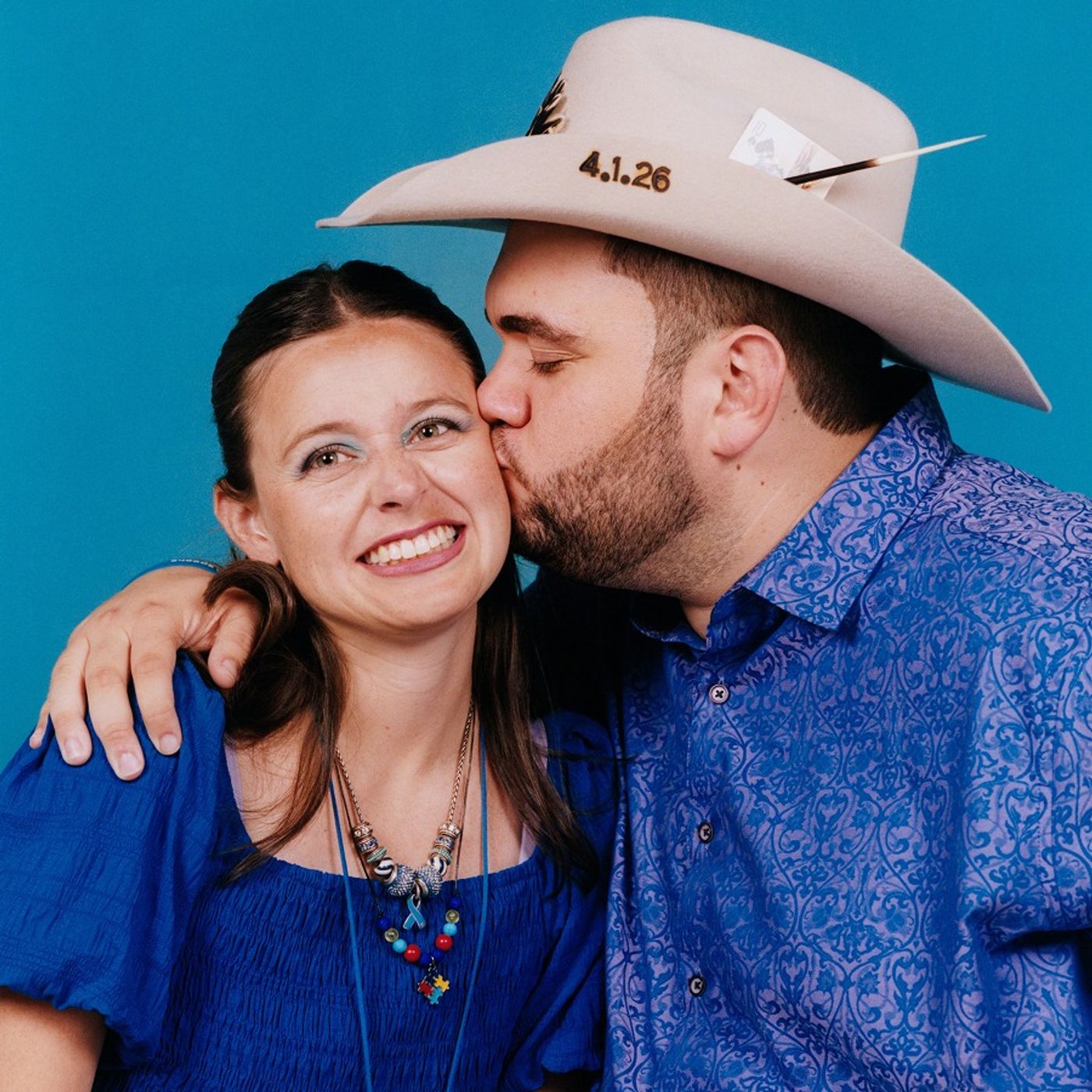
The Daily
Dating on the Spectrum
00:35:43
The reality show “Love on the Spectrum” — which just released its fourth season — has become a big hit; it’s currently one of the most watched shows on Netflix in the United States. The show follows autistic adults as they search for love. “Love on the Spectrum” is unlike much of reality television — a genre known to subject its cast members to drama and humiliation for entertainment’s sake. Instead, the show captures a dating world that has more heartwarming moments than histrionics, and is sensitive and nuanced in its portrayal of neurodivergent people. On today’s episode of “The Sunday Daily,” Rachel Abrams talks with Anna Peele, a contributing writer for The New York Times, about the show’s origin story and why it has resonated with so many people.
Loading summary
Transcript196 lines
- [00:00]
Apple Card Announcer
This message is brought to you by Apple Card Spring always feels like a reset, clearing things out, simplifying what you don't need. Apple Card is built with that same idea in mind. No annual fee, no late fees, and no foreign transaction fees. No fees, period. Get started and apply in the Wallet app on your iPhone today. Subject to credit approval. Variable APRs for Apple Card range from 17.49% to 27.74% based on creditworthiness rates as of January 1, 2026. Existing customers can view their Variable APR in the Wallet app or@car.apple.com Apple Card issue by Goldman Sachs Bank USA Salt Lake City branch terms and more@applecar.com from
- [00:37]
Rachel Abrams
the new York Times I'm Rachel Abrams and this is the Daily on Sunday Today. The reality show Love on the Spectrum, which follows autistic adults as they search for love, has just released its fourth season. The show has largely attracted praise for its realistic its sensitive portrayals of neurodiverse people, and it's become one of the most popular and unlikely hits on Netflix today. Anna Peele, a contributing writer for the Times, talked with the creator and the cast of Love on the Spectrum about the show's origin story, the nuanced criticism, and why it has resonated with so many people. It's Sunday, April 19, Foreign. Welcome to the Daily thank you so
- [01:34]
Anna Peele
much for having me.
- [01:35]
Rachel Abrams
You are a culture writer, but you are also a reality TV expert, which I like to think of myself as a reality TV expert just based on how much I watch. But you have actually spent a lot of time reporting and writing extensively about reality tv. So just to start the conversation, I wonder if you could, for people who have not seen this show, tell us a brief overview of the premise of Love on the Spectrum.
- [01:57]
Anna Peele
So Love on the Spectrum follows mostly young people who are on the autism spectrum. While they learn to date, often for the first time, the show will set them up, they'll matchmake them, sometimes they'll follow them to speed dating events or things like that. It's incredibly popular, it's one of the biggest shows on Netflix, and it's so unique to have a show that is actually socially responsible but is also scratching the itch that people have to watch reality dating series.
- [02:25]
Rachel Abrams
This show is noteworthy for approximately 1 million reasons, but not the least of which is that reality TV is a genre of television that is arguably the most exploitative. The premise of so many shows is that people debase themselves for your amusement, and this show has the potential to be an absolute Train wreck of a show, right, like this is walking such an ethical tightrope. And what you're saying is that not only does it succeed in walking that tightrope, but it is a commercial success because it is heartwarming, because it makes people feel good.
- [02:58]
Anna Peele
With other dating series, I think that even if viewers say, oh, I'm watching for the romance, I want people to get together. The moments that are really sticky are often the most dramatic and as you said, exploitative. And what people say is, oh, the people who go on those shows signed up for it. So whatever happens to them, they deserve it. This, I think people genuinely want the best for the people on the show and I think that the people who are making the show want the best for the people who are on the show. And that's not always the case when you're producing reality television.
- [03:28]
Rachel Abrams
Okay, so let's talk about how the show came to exist. What is its origin story, if you will.
- [03:34]
Anna Peele
So Love on the Spectrum wouldn't exist at all if it weren't for one person. His story, his skills, his very unusual path to making Love on the Spectrum are as unlikely as the show itself becoming the hit that it is. Hi, Kian.
- [03:55]
Kian O'Clery
Hi.
- [03:56]
Anna Peele
How's it going?
- [03:56]
Kian O'Clery
Good, how are you doing?
- [03:58]
Anna Peele
Well, thank you. So his name is Cian o'. Clery. He's an Australian documentarian and he got his start in the industry working on huge blockbuster films.
- [04:10]
Kian O'Clery
My first job in film was. Oh, the Moby Dick one, or do you want me to talk about the cat training one?
- [04:16]
Anna Peele
One of his first jobs was as an assistant cat wrangler working on the Babe sequel.
- [04:21]
Kian O'Clery
We had I think eight or nine of us working in the cat department and we had 110 cats. So it was a lot.
- [04:29]
Rachel Abrams
Not just a cat wrangler, an assistant cat wrangler.
- [04:32]
Anna Peele
You got to work your way up in the cat wrangling business.
- [04:34]
Kian O'Clery
I mean, I just kept then getting roles on big films as, you know, a production runner or a director's assistant. All quite sort of, I guess the word is menial, right? Like non creative roles on big films.
- [04:48]
Anna Peele
He worked on the Matrix, he worked on Syriana, he was on Notting Hill.
- [04:53]
Kian O'Clery
At that point I wanted to, I thought I wanted to make films, feature films.
- [04:57]
Anna Peele
You know, Keon told me that at that point in his life he was really figuring out what he wanted to do in the industry which relied a lot upon what he would actually be good at.
- [05:06]
Kian O'Clery
I'm actually a very self critical person and if you want to make a feature, you need to write a script. Whenever I try and start it, I would just hate myself so much I had to stop, which is kind of sad, but that's the kind of truth of it.
- [05:24]
Anna Peele
And he didn't really figure that out until he got this unexpected role while working on Baz Luhrmann's film Australia.
- [05:31]
Kian O'Clery
I was Baz Luhrmann's driver. So again, I'm not doing anything creative, but, you know, I'm sort of at the hub of things, you know, Baz,
- [05:39]
Anna Peele
he had a lot of downtime while working on the movie and he wound up picking up a spare video camera and he just started shooting behind the scenes footage, which Baz saw and loved.
- [05:49]
Kian O'Clery
Baz used to say to me, it's like you're invisible. Which I thought was actually a really nice thing. And he meant it as a compliment that, you know, I was able to get really close in on, you know, him working with the actors on these sets with a camera filming and kind of people wouldn't really even notice me. And so I was able to capture this really great intimate footage.
- [06:12]
Anna Peele
So they wound up cutting it together. An editor on the film helped him and. And then Keon used that footage to make a big career pivot into reality television. So he was working on shows like Dancing with the Stars, Australia. He was on Married at First Sight Australia. And then there was one show that wound up being incredibly important in his career path, Farmer Wants a Wife.
- [06:46]
Kian O'Clery
So I was working on, I don't know what season it was. A Farmer Wants a Wife. And we had our farmer and we had three ladies who were. Who liked him.
- [06:55]
Anna Peele
So one of the women who was competing for the love of a farmer started acting strangely and Kian was producing her and he started to see that she wasn't making any sense.
- [07:07]
Kian O'Clery
I actually think she was actually becoming psychotic.
- [07:10]
Rachel Abrams
Like, actually she was speaking and like not being nonsensical.
- [07:13]
Anna Peele
Yes.
- [07:15]
Kian O'Clery
So as soon as that became clear, it was, you know, let's work this out, let's look after her mental health. Obviously we weren't filming at that point with her.
- [07:25]
Anna Peele
And someone working in post production was watching all the footage, saw how Kian was dealing with her and that he had immediately recognized that she shouldn't be filming. So. And then got her out of there.
- [07:36]
Kian O'Clery
She saw the way I was talking to this young lady. As you know, it seemed like she was. Wasn't doing so great.
- [07:43]
Anna Peele
And this producer recommended Keon to direct this project that offered unprecedented access into a locked psychiatric ward.
- [07:55]
Rachel Abrams
I'm sorry, what?
- [07:56]
Anna Peele
I know Liverpool is One of the biggest and busiest hospitals in the country. I'm exhausted. It's called Changing Minds. It was produced by the Australian Broadcasting Corporation. Over the next three nights, this series will take us inside.
- [08:11]
Kian O'Clery
Previously, I'd directed, like, segments or, you know, a particular cast member for a show, but this was, like one docu series, three parts, directing, the whole thing. So this was my first kind of real directing assignment, in a sense. So it was a big deal for me.
- [08:27]
Anna Peele
When Cian gets into this role, he's never directed anything before, like, as a lead director. And it's also something with a huge social responsibility.
- [08:37]
Kian O'Clery
There were people in psychosis. There were people with extreme depression. I mean, you know, I was interviewing someone several hours after they've attempted to take their own life in the emergency department. I mean, it was quite. Actually some really quite heavy stuff, you know.
- [08:52]
Rachel Abrams
Okay. I mean, I think it's probably pretty obvious, but just to state the obvious, working on reality television does not, to me, seem like something that prepares you to just start filming in a psychiatric ward.
- [09:03]
Anna Peele
I don't think anything could prepare you to start filming in a psychiatric ward. But it uniquely worked with Cian's skill set because he's the kind of field producer who is not trying to be directive, which is very unusual in field producing.
- [09:18]
Rachel Abrams
What do you mean by that?
- [09:19]
Anna Peele
When I was reporting Enter the Villa, somebody who used to be a field producer said, we are the manipulators. Those are the people who are talking to the cast members. They're trying to get information from them. They're encouraging them to act. And Cian is being invisible. You know, he's using his superpower.
- [09:37]
Rachel Abrams
The issue of consent, though I can imagine that that was probably one of the biggest, thorniest issues in everything he had to navigate on that show. How did he approach that?
- [09:47]
Anna Peele
It was handled very sensitively.
- [09:49]
Kian O'Clery
You would often see people come into the wards really unwell and then hopefully leaving at the end, going back to their families being well again. And so the consent process involved people double, triple consenting.
- [10:02]
Anna Peele
He would try and get consent before, but often people were in psychosis, he would talk to their family members, if they had them, and then he would speak with them after they were out of psychosis. But they didn't get to see the footage. So they had to trust Kian to put themselves out there when they're, like, really, really unwell to the point where they had been hospitalized.
- [10:22]
Kian O'Clery
And so we lost a lot of stories. People, you know, like, actually, I don't want you using that footage of me telling You I was Vladimir Putin or that I was Jesus Christ or. There was a lot.
- [10:34]
Rachel Abrams
And what was the argument for why they should allow themselves to be exposed in this way?
- [10:39]
Anna Peele
Because people don't understand if they don't see. Keon believed that it was really important for the public to see people who society might believe don't have a future, but see them when they do get treatment and when they are properly cared for, that they can get better.
- [10:57]
Rachel Abrams
That sounds like something that would have made quite an impression on a person in his position. But how does he get from there to Love on the Spectrum?
- [11:06]
Anna Peele
Yeah. So there was one more step in between Changing Minds and Love on the Spectrum.
- [11:11]
Kian O'Clery
How many jobs would you say you've applied for? Oh, we're in the hundreds at this point.
- [11:17]
Anna Peele
He executive produced this show called Employable Me with the same team who did Changing Minds. It was a documentary series about people with disabilities who were looking. Looking for meaningful employment.
- [11:29]
Kian O'Clery
I'm Rowan. I'm 21, and I have autism. Tell me, why do you want a job, Rowan.
- [11:35]
Anna Peele
And many of the people who Kian wound up working with on Employable Me had autism Spectrum disorder.
- [11:42]
Kian O'Clery
The series we were making was about people looking for a job, but we did hear very often about people's want and desire to find love, and there wasn't any support in that area.
- [11:54]
Anna Peele
And he just loved how honest they were, how unfiltered they could be, how they might say things that so many of us are thinking or feeling.
- [12:04]
Kian O'Clery
I'd always wanted to make a dating show that felt really real and kind of just truthful and honest and didn't necessarily have all the bells and whistles of a competition.
- [12:16]
Anna Peele
And so Kean wanted to make an honest, unfiltered dating show.
- [12:22]
Kian O'Clery
And so that was, I guess, the kernel of the idea was, hey, there's this population of people who are wanting love. Maybe this would make for a great doc series telling these stories and kind of helping people find each other.
- [12:36]
Anna Peele
And so they pitched it to the Australian Broadcasting Corporation, and they greenlit it. So now that it's greenlit, the big question is, how does Kian make this show?
- [12:49]
Rachel Abrams
I have the exact same question, and we will talk about that after the break.
- [13:03]
Anna Martin
I'm Anna Martin, the host of the Modern Love Podcast. In every episode, we peek into an intimate corner of someone's life and learn about what love means to them.
- [13:15]
Anna Peele
35 years with another person, I've never spent that much time with anyone else.
- [13:20]
Rachel Abrams
So we both kind of said, I love you pretty fast.
- [13:22]
Kian O'Clery
As long as they keep the dance up.
- [13:24]
Rachel Abrams
I'll keep the dance up.
- [13:24]
Kian O'Clery
And she felt the same way. An instant connection.
- [13:27]
Anna Martin
It's a window into how real people navigate all kinds of love. I mean, romantic, family, friendship, dog based. They are stories of life changing moments, small joys, big revelations.
- [13:43]
Kian O'Clery
My advice is that it's okay if it's hard.
- [13:45]
Anna Peele
A lot of the way that you manifest your love for your children is through cooking.
- [13:49]
Rachel Abrams
And I remember just looking at them in awe, almost like, wow, you know, so much that I couldn't even dream
- [13:56]
Christine (Abby's mother)
of knowing about my brother.
- [13:58]
Anna Martin
You can listen to Modern Love wherever you get your podcasts.
- [14:04]
Rachel Abrams
Okay, so Anna, after Keyon gets the green light, he obviously has to figure out how to actually go make the show. Tell us about the process.
- [14:12]
Anna Peele
So he started casting the same way that he was casting Employable Me.
- [14:16]
Kian O'Clery
We started to put the word out with all the kind of various grips and orgs that we had already worked with. And there was definitely hesitation. There was.
- [14:26]
Anna Peele
But unlike Employable Me, which had a lot of buy in from the beginning, there was some skepticism because it's a reality dating series.
- [14:33]
Kian O'Clery
I guess it's understandable in that some shows out there that are in the reality dating space aren't necessarily the most positive or people who are part of those shows can sometimes come across badly. And I guess there was skepticism of how we were going to tell the stories.
- [14:50]
Anna Peele
They had the same questions that anybody would have, which is, is this going to be exploitative? Is this going to be for neurotypical people to gawk at people with autism? But Kian explained to them, no, we want this to be for a diverse audience. We want to show the diversity of the autism spectrum. We want this to be an empathic, supportive, good hearted show. And then after he got the buy in from the autism groups, of course he had to get the buy in from the participants families. And basically it just came down to people trusted Cian to be the one to tell the story.
- [15:25]
Rachel Abrams
Which strikes me as really kind of a feat because just to put it bluntly, how on earth does this man who has worked on shows like Dancing with the Stars, convince people that he is going to make, what, the only reality dating show that doesn't actually exploit people?
- [15:42]
Anna Peele
Well, what's interesting is that I think when you talk to Keon, you just see how gentle he is and how much he acknowledges that he doesn't know everything, which I think is how they kind of sell people to get on these shows. But he talks about how he wants to go on the journey with these people and he wants to tell their individual stories. And those stories are about finding love, but it's also about familial love. It's also about putting yourself out there and trying new things and the joy of kind of working through discomfort and learning something new.
- [16:16]
Rachel Abrams
He did basically the classic journalistic thing of convincing somebody earnestly that you really want to tell their story. You are not trying to use them or exploit them or humiliate them.
- [16:26]
Anna Peele
Yeah.
- [16:26]
Rachel Abrams
Is there an example that really illustrates this that you could give us?
- [16:30]
Anna Peele
So after two seasons in Australia, Netflix, which had aired the Australian version on the platform, commissioned an American version. And so one of the first people who Keyan considered casting was Abby, who became one of the most beloved cast members on the show and who I actually traveled to LA to speak with in February. So I'm recording. Is that all right? Kian first started talking to Abby back in 2020 after seeing her perform an arts event for people with autism.
- [16:58]
Christine (Abby's mother)
Do you remember? You were talking and he was on Zoom with another lady. We were sitting in the desk.
- [17:04]
Anna Peele
What did I say?
- [17:06]
Christine (Abby's mother)
He was asking if you wanted to date and have a boyfriend.
- [17:09]
Anna Peele
And he started talking to her mom about whether she wanted Abby to go on the show because her mom had to consent for Abby.
- [17:18]
Christine (Abby's mother)
Abby can't advocate for these kinds of things, really. I mean, she can tell me yes and no, but the nuances or the deeper meanings are sometimes hard for her to process or express.
- [17:28]
Anna Peele
She had already seen Love on the Spectrum Australia. She thought it was a really positive, wonderful show.
- [17:33]
Christine (Abby's mother)
I was concerned, and I said to Keon, I love your show, but I don't think Abby's right for it.
- [17:40]
Anna Peele
And I said, but Abby has language processing issues. And she was like, she's not gonna be verbal in the same way that the really wonderful Love in the Spectrum Australia cast members had.
- [17:52]
Christine (Abby's mother)
Keon said to me, we want more diversity of the spectrum. Of the spectrum. And he said, we want to tell her story. And that's when I felt safe enough for her to jump in.
- [18:09]
Anna Peele
And so Kian said, no, we want to show Abby and Abby's story. And so the combination of Abby potentially finding love and people understanding her daughter, which is really all she wanted, and the trust in Keyan just made her say yes.
- [18:27]
Rachel Abrams
So what happened after she said yes? What was the next step?
- [18:30]
Anna Peele
So the next step was Kian going to Los Angeles to film with Abby and Christine, and the first day just didn't go well.
- [18:38]
Christine (Abby's mother)
Abby, can I tell the story about being in your bedroom when we were shooting, or do you want to tell it.
- [18:42]
Abby
We can tell it together.
- [18:45]
Anna Peele
So Abby was sitting there. It's a sit down interview. They only do one with each cast member every season.
- [18:51]
Christine (Abby's mother)
First day of shooting.
- [18:52]
Abby
First day of shooting, I was in
- [18:53]
Christine (Abby's mother)
my bedroom in my room, and I was completely zoned out because.
- [18:59]
Anna Peele
And Abby just didn't want to do it. She was yawning, she was asking if she could leave, which of course she was free to.
- [19:06]
Christine (Abby's mother)
They've been shooting for 60 seconds. And I, obviously I wasn't in the room, but I could hear her and I started to cry in the other room. And I thought, what have I done for her to put her in a situation where she can't verbalize?
- [19:22]
Anna Peele
Christine is in the other room listening, crying, thinking, what did I get my daughter into? Why did I put her into a situation where she's not able to communicate? And so she thought that this was over.
- [19:33]
Christine (Abby's mother)
And a week later they called back and said, we want to come back. And Phil mab be just at home walking around doing her thing. We're just going to follow her. And I was kind of like, seriously?
- [19:44]
Anna Peele
But the next day Kian came back and he was like, abby, just go do whatever you would normally be doing.
- [19:50]
Abby
So he.
- [19:51]
Anna Peele
And then the cinematographer just hung back and they just observed Abby was her true self.
- [19:57]
Christine (Abby's mother)
Abby was doing impressions of Bruce the shark from Finding Nemo because he has an Australian accent like Keon. And Keon said, are you making fun of me in my accent? And she said, yes.
- [20:10]
Anna Peele
And what's interesting is not just that it worked for the show, but that Abby and Christine learned that Abby is much better at talking and communicating when she's in movement. Was that the first time you learned that or is that something you knew from before and then you just. No, I.
- [20:25]
Abby
That's from the first time I knew.
- [20:27]
Anna Peele
Oh, wow.
- [20:27]
Christine (Abby's mother)
It really was. It was one of those moments, a cathartic moment of like, how did I, her primary caregiver, miss that?
- [20:36]
Anna Peele
Yeah.
- [20:37]
Christine (Abby's mother)
And the show taught me that.
- [20:39]
Rachel Abrams
I didn't think it would be so clearly. It sounds like Cian is helping some of these people who have talked to you feel seen. He's making them feel comfortable. He's reassuring their families. But I'm sure there's also this question of, like, what happens in post production? Right. Like, what happens to the footage and what happens if there is material that, for example, the participants might feel uncomfortable having shown on television? Right. Like, they don't have final cut.
- [21:05]
Abby
Right.
- [21:05]
Rachel Abrams
They can't demand that stuff be excised. So how is that handled?
- [21:10]
Anna Peele
Well, the Same way that people in Changing Minds didn't get to see the footage before it aired. Nobody on the show gets to see the show before it premieres on Netflix. And so it's a process that starts while they're actually filming, when Kian's checking in, when Kian's making sure they're comfortable, when Kian's making sure that they're okay. Even before they get there, they're making sure that any accommodations that people need are happening. So, for example, at the St. Pete
- [21:38]
Rachel Abrams
Pier, Madison is waiting for her date to arrive.
- [21:42]
Anna Peele
A cast member named Madison went out on her first date with someone named Brandon.
- [21:47]
Abby
I'm Madison. Nice to meet you.
- [21:48]
Kian O'Clery
Nice to meet you, too.
- [21:49]
Anna Peele
And Brandon is sensitive to noise, so they'd cleared out half the restaurant so nothing would trigger him.
- [21:56]
Kian O'Clery
I'm getting distracted because of a few noises in the background. Brandon, it's a bit noisier than we expected. Let us know if you want to move outside. Okay? Okay.
- [22:07]
Anna Peele
But then there was a baby crying on the other side of the restaurant, so far away, and he just folded forward onto the table. He was so uncomfortable. He just couldn't continue the conversation with Madison.
- [22:19]
Kian O'Clery
Just afraid the noise may probably grow, and then something unexpected might happen, and then I'd be scared.
- [22:26]
Anna Peele
Keene kept checking in with him and asking, do you want a break? Do you want to stop? They're always asking them if they want to stop filming. And eventually he did. And it's something that I've heard from neurotypical viewers. Oh, my gosh. Like, that made me so uncomfortable. That was exploitative to show him in that moment. But it was a subject of a big debate among the creative team. They were deciding, should we show this moment? Is it too much? Is it putting Brandon in a position where we're showing him, like, not in a good light? And then they realized, okay, people might understand that people with autism have sensitivity to sound, but you don't really get what that means. If you see it, then you understand it. And so they talked to Brandon and his mother. They described the scene to him. Obviously, he had experienced it, and they said, yeah, use it.
- [23:16]
Rachel Abrams
And how did they feel after watching it? Did you talk to them about that?
- [23:20]
Anna Peele
We emailed, and Brandon and his mother, when they saw the footage, were really happy with it. They were really proud of Brandon. He'd gone through something uncomfortable and difficult, and he'd continued the date. And I think it's important to note that Brandon felt discomfort not from watching himself. He felt discomfort in the moment from the noise but the footage itself was not distressing to him. That made him happy to have somebody
- [23:46]
Rachel Abrams
see him and what this was like for him.
- [23:48]
Anna Peele
Yeah.
- [23:51]
Rachel Abrams
So did everybody that you talked to feel this positive about their experience?
- [23:56]
Anna Peele
I talked with almost every cast member who has been on Love on the Spectrum, and everyone said that they're glad that they did the show. And Keyan told me that no one has ever told him that they regretted being on it. But there was one person I spoke with who had a more nuanced view of her time on the show.
- [24:12]
Rachel Abrams
Okay, so who is she?
- [24:14]
Anna Peele
Thank you so much for getting on and talking with me. I'm really excited that you're gonna be part of this.
- [24:19]
Abby
Yeah, me too.
- [24:20]
Anna Peele
Kailyn Partlow was a cast member on season one of the American Version. She does say that she is happy that she went on it. She now has a following. She is an autism therapist. She wrote a book called Life on the Bridge that just came out in March.
- [24:36]
Abby
Despite having a wonderful career, my personal life is very empty.
- [24:42]
Anna Peele
But she talked about the fact that the thing that happens for other people on the show, some other people, which is finding these romantic connections or even just social connections, did not happen for her.
- [24:54]
Abby
I don't know that Love on the Spectrum is really achieving all that it looks like it is achieving. Which is not to say that it's not doing good or that it's not a net positive, because it certainly is. However, I just don't know that it's resulting in this wonderful interconnected life in the way that people may think that it does.
- [25:10]
Anna Peele
She also talked about what makes a quote, unquote, good cast member.
- [25:16]
Abby
It's tricky because with casting, I think they're looking for people who are also kind of bubbly and exuberant to a certain degree.
- [25:23]
Anna Peele
She thinks that people who are less predictable, more charismatic. Honestly, the kinds of people who make good reality TV are also the kinds of people who are thriving on Love on the Spectrum.
- [25:37]
Abby
I don't know. One time I had talked about myself not making great reality television because while my story may be unique, it's not like viewers are sitting on the edge of their seats wondering, oh, my God, is she gonna put her hands down his pants? No one is wondering that my behavior was, I think, maybe too predictable too, to make good, entertaining television.
- [25:55]
Rachel Abrams
So in her mind, who's getting excluded from that?
- [25:58]
Abby
They're looking for people who have the ability to communicate decently well on camera. So you're already.
- [26:04]
Anna Peele
Kaylin noted that people who are non speaking or who use devices to communicate have not been featured on the show. And Love on the spectrum does say that they're trying to increase casting to tell the breadth of stories that there are about autism, because there are countless ones. But Cian acknowledges, you know, there are people who require 24 hour care who have autism. Not everybody is able to date, and not everybody wants to date people who
- [26:31]
Abby
prefer to be alone and prefer not to go out or to meet new people. And I think that's a large portion of the autism spectrum are not going to be good candidates for this.
- [26:40]
Anna Peele
So they're just not going to be able to tell every kind of story.
- [26:44]
Rachel Abrams
Right. Because autism is a huge spectrum. Like, it would make sense that not everybody who's autistic would be good for a reality show, Just like the same that not everybody in the general public would be good for a reality show. But what she's saying it sounds like is that therefore, for a show about dating with autism, it could only be so representative.
- [27:04]
Anna Peele
I think that that's true. And I think that even as the show's creators say that they are trying to increase the kind of stories that they're telling, there is a limit to that.
- [27:16]
Rachel Abrams
All of that makes sense when you remind yourself that this is, at the end of the day, a commercial venture. Right? It has to have an audience. It has to get, you know, a distributor. It has to have somebody pay for it. And I wonder if what she's basically saying is that that requires inherently casting that flattens the human experience. You're only casting for a certain type of person. Keyan clearly wants this to be an uplifting show.
- [27:39]
Christine (Abby's mother)
Right?
- [27:39]
Rachel Abrams
He wants the stories to make you feel good. And so that premise is going to lead you to a certain type of people that does not necessarily make the universe of people as three dimensional as we know that human beings are.
- [27:53]
Anna Peele
Well, no reality show shows a person in their full humanity as a human being. But I do think that this show does not shy away from the really difficult moments. But yeah, at the end of the day, this is a show that has a comedic tone. As you said, it is an uplifting, inspiring show. And there have been charges from some viewers that it is infantilizing. People were selling T shirts that said Tanner, who was a cast member in a few seasons. It said, tanner is my spirit animal. And is that good? I don't know. In some ways that's dehumanizing. But Kaelyn pointed out that, well, who would Tanner be to those people if he wasn't on this show?
- [28:37]
Abby
Nobody would be anyone's Spirit animal. If this didn't exist, he would just be another weirdo, for lack of a better term, who works at a hotel, and nobody would give him a second glance.
- [28:47]
Anna Peele
Now he's a person with fans. He's a person with a much larger social world. And, yeah, the show does provide a platform to people, and it really expands our universes.
- [28:59]
Abby
I don't know, maybe it just shines a light on the fact that acceptance in modern society is kind of contingent on some of these more palatable. And is that the fault of the show? I don't know. Is that the responsibility of the show? I tend to think not. I think it's more a product of the way our society functions, and the show shines a light on it. And so it's easy for critics to point at the show and say, you guys are the problem when they just turned on the light, you know?
- [29:24]
Anna Peele
Right.
- [29:25]
Abby
And it's like, also, we're watching, like,
- [29:38]
Rachel Abrams
We'll be right back.
- [29:46]
Abby
Hi, I'm Juliette from New York Times Games, and I'm here talking to fans about our games. You play New York Times Games?
- [29:52]
Anna Peele
Yes, every day. There's this little tab down here called Friends, so you could add your friend.
- [29:56]
Kian O'Clery
That feels new to me.
- [29:58]
Christine (Abby's mother)
It is.
- [29:58]
Kian O'Clery
It's nice to have the social aspect.
- [30:00]
Rachel Abrams
Oh, my God. And you have all their times. That's crazy, right?
- [30:03]
Anna Peele
You can look at spelling bee, wordle Connections.
- [30:06]
Rachel Abrams
Oh, my God.
- [30:07]
Christine (Abby's mother)
Amazing love that I have to get the app.
- [30:09]
Rachel Abrams
New York Times Games subscribers get full access to all our games and features. Subscribe now@nytimes.com games for a special offer. Anna, I think the elephant in the room here is that there are a lot of unkind people in the world. Right? Like, there are a lot of people who would or maybe even do watch the show and laugh at these folks on Love on the Spectrum. And you wrote about this show for the Times Magazine, and one of the things you talked about was how Keon referred to one cast member as being a, quote, comic genius without even realizing it. And that really gave me pause because I remember just thinking, if that is the case, does that mean that we are laughing with him or does that mean that we're laughing at him? And I wonder, with humor specifically, knowing that these folks on the show, often in their own lives, felt like the butt of the joke or felt like outsiders and felt ridiculed. How is humor treated? Specifically? Like, how does Cian think about that line between laughing with somebody and laughing at somebody?
- [31:12]
Anna Peele
The balance between being laughed with or laughed at is something that Cian and the team are thinking about constantly.
- [31:18]
Kian O'Clery
You know, there's a lot of humor in the show, and I don't know how we navigate it. I think it's just more of a gut instinct feeling of, you know, on the day. But specifically in the edit, I think that's where it really kind of. You really have the chance to sit with something and make sure that it feels okay.
- [31:39]
Anna Peele
That's another source of frequent debates where there's something where they're like, okay, is this too far?
- [31:45]
Kian O'Clery
Yeah, I don't think there's been a time where someone has said that feels a little bit too much where we've kind of said, no, just keep it. It's good. It makes for good content. But that's the thing too.
- [31:55]
Anna Peele
There are people who maybe don't realize what's funny about them, but then in watching the show and getting positive feedback and seeing what people laugh at, they learn to enjoy that. Cast members talked to me about the joy of becoming a meme and the joy of having their lines quoted back to them and the joy of seeing themselves, even though they weren't planning those as comic moments at the time. I think that they love that people are experiencing them comedically.
- [32:27]
Rachel Abrams
You know, Anna, something that I just keep thinking of as we're talking is this idea of representation, like that thing that Kaelyn said about who would Tanner be if he wasn't on this show? Because when you're talking about representing people in media who often do not have that much visibility, I think if you look at history, the first win is just getting represented at all. Right. And then the second win is getting represented fairly. Like I think if you looked back on early depictions of black people or Jewish people or pick a marginalized group in this country, at least if you looked at early examples of them in film and television, I think you would find a lot of examples that people now might consider offensive or cringe. And that makes me wonder whether this show, whether love on the spectrum, with so little to compare it to, with so few people with disabilities represented, relatively speaking, in other film and television shows, I just sort of wonder if you think that this show will stand the test of time. Like, how will we look back on this?
- [33:28]
Anna Peele
Well, I think the difference between this and the marginalized groups that you mentioned is that I think you were talking about things that were scripted and this is actually real people's lives in a very intimate way. But there is something about, you know, this is a show where the two co creators, neither one of them has autism, so that's something to think about. Although Kian was diagnosed as being neurodivergent after starting the series, and his co creator, her son was diagnosed with autism while they were filming the first season. And so there are these connections that they didn't even realize that they had to this group. But when you look at a show where there's constant affirmative consent with the cast members about whether they want to keep filming, when you hear that cast members want to keep going back and that even people who had their issues with the show, like Kalyn, one of the things she was disappointed in was that she wasn't asked back. I think that that's why viewers feel so good when they watch it. Like, everyone feels good at every stage. Like, if it feels good to make it, it feels good to consume it.
- [34:43]
American Petroleum Institute Announcer
Hmm.
- [34:43]
Rachel Abrams
You know, just to be totally candid, I am 39, I'm single, I'm dating in New York, and I'm watching the show in preparation for talking to you, and I'm just so floored at how directly people are communicating. I'm watching people and I'm thinking to myself, oh, my God. Oh, my God. All so many people want in the world who are dating and single is for somebody to know what they want and mean what they say. And that's what I'm watching. I'm literally watching a show where people are doing that. And it just struck such a chord in me. And I think probably so many people who find themselves reflected in the dynamics of this show and find things that are so relatable in the dynamics of the show, even if the actual experience of these people is so different from their own lives.
- [35:28]
Anna Peele
Well, I think that's what Keyan sought to make when he was doing this. He saw that there wasn't that, at least in the world of reality dating shows, which I think are reflective of the world of actual dating today. And the unlikeliest person created the unlikeliest show.
- [35:47]
Abby
Yes.
- [35:48]
Anna Peele
Where, like, we're finding humanity and connection on reality tv, and it's authentic, even though it's a TV show. It's so funny that you talk about seeing this show and wanting to be in a world that's more like the show when it was created by Kian as something that was about a really specific community. But like you said, it's something that anybody can find themselves in.
- [36:21]
Kian O'Clery
I don't know if I should say. This is kind of embarrassing. I have nightmares that I am back to being a cast driver, and I'm, like, driving a bus around with cast and crew on a film and this never happened. And I never got to a point where I was, you know, directing anything or telling these stories. I'm just really thankful to be able to make something in this world of film and television that sometimes gets a little cynical and to be able to make something that people engage with that is also has a bit of purpose behind it. I need to just keep reminding myself of that because it is pretty special to be able to do this. And it's because of the cast, you know, it's because of the wonderful people that they are and letting us tell their stories.
- [37:11]
Rachel Abrams
Anna Peel, thank you so much for joining us.
- [37:13]
Anna Peele
Thank you so much for having me, Rachel.
- [37:18]
Rachel Abrams
Today's episode was produced by Luke Van Der Plug with help from Tina Antolini. It was edited by Wendy Dore, and our production manager is Franny Kartoth. Contains music by Marian Lozano and Dan Powell and was engineered by Sophia Landman. Anna Peale's book is called Enter the the Unauthorized Reality Behind Love Island. That's it for the Daily I'm Rachel Abrams. See you tomorrow.
- [37:51]
American Petroleum Institute Announcer
This podcast is supported by the American Petroleum Institute. Energy demand is rising, and the infrastructure we build today will power generations to come. We can deliver affordable, reliable and innovative energy solutions for all Americans. But we need to overhaul our broken permitting process to make that happen. It's time to modernize and build, because when America builds, America wins. Read API's plan to secure America's future at permittingreformnow.org.