Loading summary
Transcript99 lines
- [00:00]
A
This message is brought to you by Apple Card Spring always feels like a reset, clearing things out, simplifying what you don't need. Apple Card is built with that same idea in mind. No annual fee, no late fees, and no foreign transaction fees. No fees, period. Get started and apply in the Wallet app on your iPhone today. Subject to credit approval. Variable APRs for Apple Card range from 17.49% to 27.74% based on creditworthiness rates as of January 1, 2026. Existing customers can view their variable APR in the Wallet app or@car.apple.com Apple Card issue by Goldman Sachs Bank USA Salt Lake City branch terms and more@apple car.com
- [00:37]
B
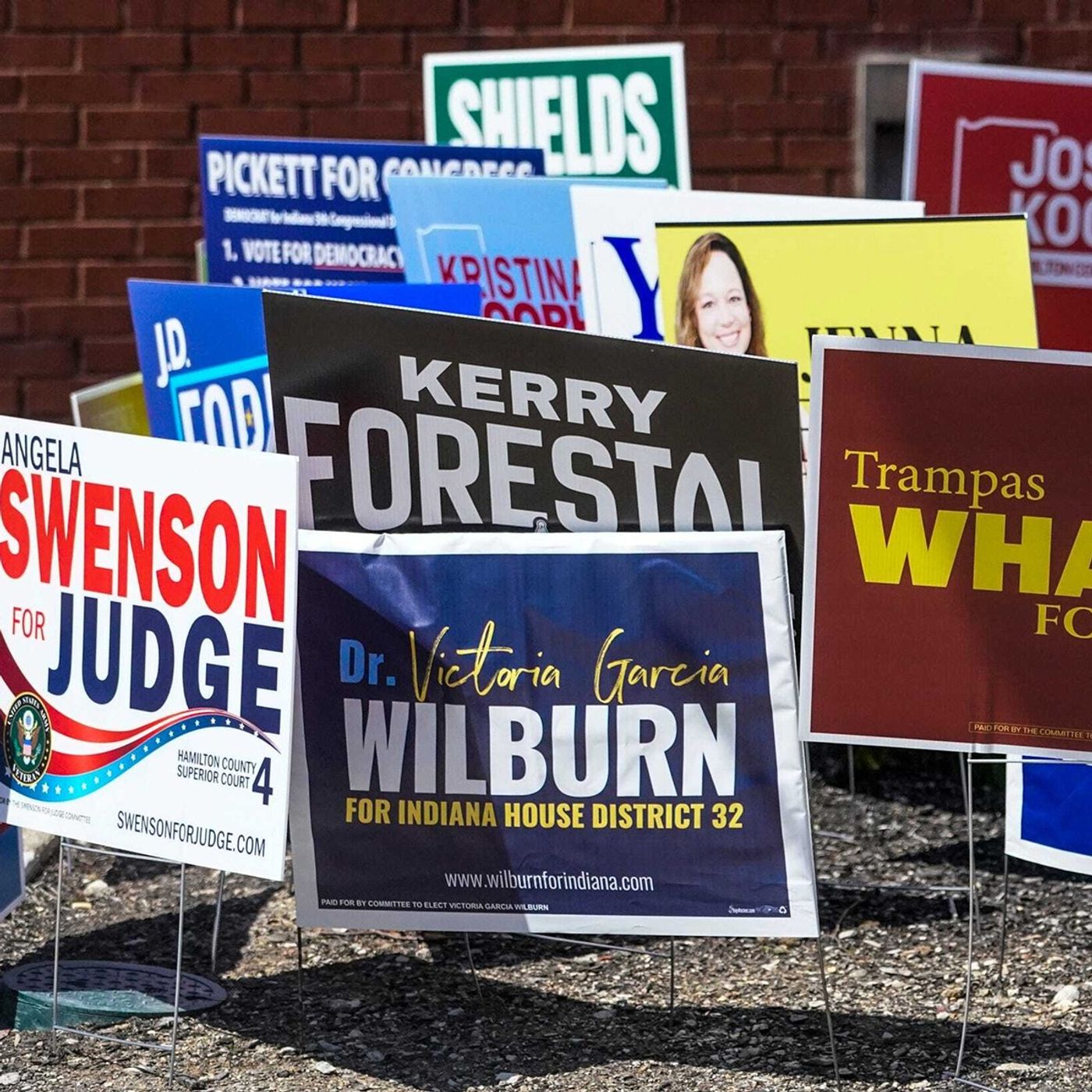
from the new York Times, I'm Michael Balbaro. This is the daily. In primary elections across the country. Starting over the next few weeks, the Republican Party will test its voters appetite for revenge while the Democratic Party will test its voters appetite for change. Today, Shane Goldmacher, Lisa Lair, and Reed Epstein on how to understand key elections from Michigan to Kentucky. It's Tuesday, may 5th. Lisa Reid, Shane, welcome to the first midterm election roundtable of 2026.
- [01:39]
A
Thanks for having me.
- [01:40]
C
Very exciting.
- [01:41]
D
Michael, it's great to be here.
- [01:42]
B
Okay, we're bringing you three together for this conversation because arguably the most intense phase of the primary season is about to get underway over the next few weeks, literally starting today. Tuesday, Democratic and Republican voters will start to pick their nominees in races all the way up and down the ballot and on both sides. The contests are gonna start to tell us a bigger story about where the two parties are as they seek to control the country's direction in the second half of the second Trump presidency. Where do you wanna start this conversation?
- [02:17]
A
Well, I think it's helpful to get a sense of the overall landscape now that we're less than six months out from these midterms. And I think it's helpful to start with Republicans because really when you look at these races, it's not a question of whether these midterms will be bad for Republicans. It's a question of how bad they will be.
- [02:34]
B
Levels of badness.
- [02:35]
A
Levels of badness. And that is because the president is deeply unpopular. He's waging a war that is deeply unpopular. And on economic issues, which was really a central reason why voters elected the Trump administration, we have no indication that voters feel better about the cost of living of basic goods. In fact, there's tons of economic data that shows they feel worse about things like housing and groceries and gas. That's for the general election before we get to that point, how the general election dynamics shake out and the degree of badness will be shaped by what happens in these primaries that we're now about to enter the heaviest period of.
- [03:12]
C
I mean, look, when I've been talking with Republican strategists, what they say about this sort of really bad moment for the party, the best thing is that it's still May, that there are many months until October and then November, when the voters actually cast back ballots for whether it's a Democrat or a Republican. This fall, their frustration has been that Donald Trump has not been focused on turning the tide on the issues that are going against the Republican Party. Right.
- [03:35]
B
In fact, he's been anything but focus. As, as Maggie Haberman and Jonathan Swan told us about a week and a half or so ago, he's pretty actively disinterested.
- [03:43]
C
Yeah. Instead, what he's focused on in the upcoming elections in these primaries is a revenge tour. When you look at a suite of races in May, I mean, these are a pretty remarkable set of primaries where President Trump has laid out one singular criteria. Will you be loyal to him? And if you have crossed him before and not done his bidding, he wants you out. And he wants people in some of whom he has personally recruited who he believes, once in office, will vote lockstep with him into the future. And you can see that best in three states, Indiana, Kentucky, and Louisiana.
- [04:24]
B
And, Shane, of this suite of Republican primaries you just mentioned, where do you want to begin?
- [04:30]
C
I think you should start with the races that are on Tuesday in Indiana. And this is really an unusual level of campaign for a president to be involved in. We're not talking about congressional primaries or U.S. senate primaries. We're talking about more than a half dozen state senators in Indiana whom Donald Trump is trying to get out of office. And the reason he is opposed to them is that they refused to go along with his effort to redistrict this state and carve up two Democratic seats last fall. And in his frustration, he said, everyone who opposed this needs to be voted out.
- [05:08]
B
You had one gentleman, the head of the Senate, I guess, bray, whatever his name is. I heard he was against it. He probably loses next primary, whenever that is.
- [05:18]
C
And that was eight Republican state senators, one of whom retired, and the other seven, he and his political team and his allies, they've recruited, they have funded, they've run ads.
- [05:27]
B
I'll certainly support anybody that wants to
- [05:29]
C
go against it entirely to basically exact vengeance on people who refused to go along with what Donald Trump wanted last Fall read.
- [05:37]
B
Just to remind folks what happened that was so offensive to Trump in Indiana. He asks the Indiana state legislature to redraw that state's maps in order to pick up a couple more Republican seats, which inevitably means delete Democratic seats. And under normal circumstances, Republican controlled legislatures have performed that role for Trump.
- [06:06]
D
Well, they did it in Texas, in Missouri, in North Carolina. Indiana was one place where the Republican leaders, leaders in the state Senate, resisted Trump's effort.
- [06:16]
B
Why?
- [06:16]
D
I mean, they objected on political and moral grounds. Right. They didn't think it was the right thing to do. They didn't think it was good for their politics, and they didn't want to be seen taking orders from Donald Trump in Washington, in the Indiana state House.
- [06:30]
B
So this was a rare moment where Republicans out in the world said no to President Trump in the Indiana state legislature.
- [06:39]
A
That's exactly right. And in some ways, I think that incident underscores the potential political peril that Republicans now face. Part of the reason they said no is that redistricting was unpopular with their voters, including with Republican voters. And in the polling we saw, which was limited because this is, you know, a state House issue, what voters said is they would prefer that their representatives in the state House focus on cost of living issues. And instead they were forced to have this whole dust up over redistricting.
- [07:09]
B
Not important to Indiana voters.
- [07:11]
A
Not only is it not important, Indiana voters said, we actually don't like this. And now they're caught in these very expensive races against the president over this issue that voters didn't really want in the first place. I think it is worth dwelling for a brief second on the money. Normally, a race like this, a state House race, you're talking $150,000, $200,000 maybe. We're now seeing millions of dollars flood into these races, which is really unusual.
- [07:39]
B
Shane, give me one example of an Indiana state lawmaker who Trump has decided to go after and the opponent that he, as you said, hand picked in order to try to take that lawmaker out in these races.
- [07:53]
C
Yeah. So one of the people that's being targeted, I spoke with recently named Senator Travis Holdman, and his complaint is basically, look, they're dumping millions of dollars into these races. And you know what they're not spending money on? Targeting the loneliness, vulnerable Democrat in Indiana who is on his way to skating toward reelection. So instead of actually spending money to beat that Democrat at the ballot box, they're spending money to punish Republicans who refuse to redraw that district out from under him. The recruiting efforts here have Been scattershot at times. One of the challengers to one of these state senators was endorsed by Donald Trump before announcing his campaign, announced his campaign, then withdrew a couple weeks later, had second thoughts, flew to Washington, met with Donald Trump, took a picture with him behind the Resolute desk in the Oval Office, and then jumped back into the race. So, look, this has really become a test for Trump of his power within the party. And he knows his power in the country is directly related to how loyal the Republicans have been to him for the last 10 years. And he wants to give no inches, even down at the state legislative level.
- [09:00]
B
Right. And I just want to make clear to listeners why, even though this is, of course, a bunch of state lawmakers, this has huge impact on who controls Congress. We just had a Supreme Court decision weakening the Voting Rights act that has unleashed a new wave of redistricting battles across the country. And Trump is basically saying to future state Republican lawmakers who might think twice about complying with his desire to redistrict, if you do that, I will take you out. Which I'm gonna guess means that in any of the states that the president now wants to redistrict ahead of this year's midterms, Republicans are gonna see what's happening in Indiana, and they're gonna be very likely to redistrict exactly the way the president wants and make this a structurally harder election for Democrats than it might have been before.
- [09:54]
A
It's also a bit unusual because I don't think it just sends a mess state legislatures. Right. It sends a message to Republicans in the Senate and the House. And typically, midterms for the party in power, midterms in a president's first year, they always lose seats. That's just what's happened. 18 out of 20 of the past midterms, you know, they've lost seats. And what presidents sometimes do in that situation, knowing that they're likely to lose seats, is give their members of Congress from their own party a little wiggle room to break with them on certain issues so they can get that political distance and perhaps convince voters that they're more independent and that they. That voters can cast a ballot for them, even if they don't like the party in power. And what Trump is effectively saying here is he is gonna give Republicans in the House and the Senate very little wiggle room.
- [10:38]
B
So, Reid, what is the next race? We should talk about where revenge is on the ballot and Trump is trying to exercise his power in these primaries.
- [10:47]
D
Well, the next race is in Kentucky, where The primary's in a couple weeks, and one of the incumbent congressmen named Thomas Massie, has been a bit of a thorn in Trump's side for a while. He's a very conservative Republican, but he has opposed Trump on things like the big beautiful bill on the Epstein files now on the Iran war. And Trump and his political team recruited an opponent for him in the primary, a former Navy SEAL named Ed Gowrine. And Trump recently traveled to Kentucky to campaign against Massie.
- [11:22]
B
Thomas Massie is a disaster for our party.
- [11:27]
D
He has done a lot of posting on social media about Massie.
- [11:31]
B
He's got one thing going. He went to a good college, but I know a lot of stupid people that went to a good college calls him a loser, a disaster. I mean, it's very unsparing the way
- [11:42]
D
Trump talks about Congressman Massie and Massie. I think he told our friend Shane here that he agrees with Trump on 90% of the things and has pushed back on 10%. And to Trump, that's not good enough.
- [11:53]
C
I mean, Massie really stands alone among Republicans running for reelection, being vocally critical of Donald Trump.
- [12:01]
B
Well, you know, I vote with my party 91% of the time.
- [12:04]
C
And, you know, Reid made reference to this. Yes, he votes with them 90% of the time. But he's like, mocking him when they're
- [12:10]
B
protecting pedophiles, when they are blowing our budget, when they are starting wars overseas. I'm sorry, I can't go along with that.
- [12:18]
C
And back home, he says, look, if they're bankrupting the country or covering up for pedophiles or starting another war or spying on you without a warrant, I'm sorry, that's when I deviate from the point party. He takes some joys in mocking the Trump administration when he disagrees with them.
- [12:34]
B
Even the most ardent Trump supporters understand sometimes he gets bad advice.
- [12:39]
C
And the stuff we were talking about, about making an example, he's explicit about that. He sees his race as an opportunity for others in the party to maybe step out when they do disagree with Donald Trump. And so the stakes are beyond an extremely safe Republican primary seat. It's about will the party continue to side with Trump even when they quietly disagree with him.
- [12:59]
B
Right. In fact, I spoke to him about this on the Hill during the Epstein documents release. He would like to make the point that there can be, should be, and will be a space to criticize this president. And he wants to be the guy there holding that umbrella up in the air 100%.
- [13:16]
D
The thing to add to that is like his predecessors in this space of Republicans who have made a lot of hay criticizing Trump from Congress. Those folks tend not to have long careers in Congress. Liz Cheney. Adam Kinzinger. Don Bacon from Nebraska is retiring this year.
- [13:34]
C
Marjorie Taylor Greene.
- [13:35]
D
Marjorie Taylor Greene. They can get a lot of attention. They do a lot of cable tv, and then they get voted out.
- [13:41]
B
Okay, finally, on the Republican side, there's the president's efforts to oust a foe in Louisiana. Shane, can you quickly tell us what's happening there?
- [13:51]
C
Yeah. This is Senator Bill Cassidy, who's actually quite different than Massie. Cassidy is running for reelection despite having voted to convict Donald Trump of impeachment in 2021 after the riot at the Capitol. And Cassidy had made a lot of efforts to get closer to Donald Trump ahead of this reelection bid to atone. To atone. Right. He has crossed him, and he is a physician. And he has been opposed at times to RFK and his vaccine skepticism, but ultimate. He voted to confirm Kennedy as HHS secretary. But the original sin of voting to convict Donald Trump of impeachment is not something that the president has forgotten. And so he has endorsed a primary challenger to Cassidy, a congresswoman named Julia Letlow. And even so, Cassidy has not run as an anti Trump Republican. Cassidy's touting his credentials and what he's done to pass the president's agenda in the Senate. So Louisiana is a little different in that it is not a test of is there real anti Trump sentiment in the party, but it is a test. Can Trump punish again somebody who has crossed him?
- [14:58]
B
And from where I sit, this race seems important because the Senate has been, and this is all relative, the last holdout when it comes to unconditional loyalty to Trump as an institution. Now, that doesn't mean it hasn't backed a lot of his agenda, but it has counseled him at times to drop a nominee. It has put up some resistance here and there. And so I wonder if taking out Cassidy does help us understand what seems inevitably to be the complete magnification of not just the House, which has gone very far to the right, but also eventually the Senate.
- [15:38]
C
I mean, we have been moving there slowly over time, and I don't think it's gonna be happening suddenly. But if you look at how willing the Senate was to break with Trump when he first won, when Mitch McConnell was outspokenly critical to now, it's a pretty big shift.
- [15:55]
B
When I look at all these Republican primary races from Indiana to Louisiana, I'm struggling to see any real risk for the president in intervening in These primaries, his picks overall, in Republican primaries, they tend to do really well. These are red states where the winner of the primary, if it's his pick, almost certainly goes on to win the general election. There's not really competition from the Democrats. So what's the downside here?
- [16:23]
C
I mean, there's the risk, of course, of losing. Right. When you are spending your political capital trying to impose a loyalty test, if you are unsuccessful, if Cassidy somehow wins reelection, then you've lost the ability to impose discipline on your own party. So there are always risks to intervening. But look, for the last 10 years, Donald Trump's record has been pretty darn strong in Republican primaries.
- [16:47]
A
Well, I think you're right. There's no real direct political risk. But I do think there's a risk when you're less than six months out from what is, you know, broadly expected to be a very competitive midterm. And part of the risk is we are here sitting, talking about these primary races where the President is trying to extract pound of flesh. Yeah, right. Instead of issues that are more top of mind for voters, like cost of living concerns or even, you know, how the war in Iran will wind down. So I do think in some ways it's a distraction from these other issues that voters care a lot more about.
- [17:23]
D
It's also a distraction from other races that are competitive general election contests. Right. He's not talking about defeating Jon Ossoff, the Georgia senator who's up for reelection. He's in these races that are sort of mostly safe Republican seats, trying to exert control of the party as opposed to concerning himself with which party will control the House and Senate in the fall.
- [17:53]
B
All right, well, we're going to take a quick break, after which we will discuss the Democratic side of these primaries.
- [17:59]
D
Wait, can I say we'll be right back? I've never gotten to say that before.
- [18:04]
B
Sure, Reed, you can say it.
- [18:06]
D
We'll be right back.
- [18:27]
B
This podcast is supported by the American Petroleum Institute. Energy demand is rising, and the infrastructure we build today will power generations to come. We can deliver affordable, reliable and innovative energy solutions for all Americans. But we need to overhaul our broken permitting process to make that happen. It's time to modernize and build. Because when America builds, America wins. Read API's plan to secure America's future at permitting reformnow.org My name is Jasmine
- [18:59]
E
Uyoa, and I'm a national politics reporter for the New York Times. I grew up in Texas on the border with Mexico, and I've been reporting in the region since I was in high school. Now I travel the country looking for stories and voices that really capture what immigration and the nation's demographic changes mean for people. What I keep encountering is that people don't fall into neat ideological boxes on this very volatile issue. There's a lot of gray, and that's where I feel the most interesting stories are. I'm trying to bring that complexity and nuance to our audience. And that's really what all of my colleagues on the politics team and every journalist at the New York Times is aiming to do. Our mission is to help you understand the world, no matter how complicated it might be. If you want to support this mission, consider subscribing to the New York Times. You can do that@nytimes.com Subscribe.
- [19:54]
B
Welcome back, Lisa, Shane and Reid. Lisa, I'm going to ask you to talk us through the marquee Democratic primaries that are unfolding over the next few months and what you think the big story is of those contests.
- [20:10]
A
Well, look, Democrats came out of their 2024 defeat, which was very devastating for the party, with a real sense that they were a party in crisis. And poll after poll reinforces that. You just see large swaths of voters saying that they don't like their own party, they don't know what their party stands for. And this is a party that really is in the wilderness. And I think you see those divides in the party playing out on a couple of really big fronts. In contested primaries across the country, there's debates over generational change. I think there's a real sense in the party grassroots that they need new leaders. And while the party is unified over fighting President Trump, there's real divides over how to do it, what strategies to use, and how fiercely to oppose every single element of this Trump administration.
- [20:56]
B
Right. Sounds like you're saying bad news for Republicans, which seems sort of inevitable in these midterms. Lisa, like you said, does not necessarily guarantee good news for Democrats who are themselves in the middle of their latest existential identity crisis.
- [21:10]
A
And I think that identity crisis just exploded in Maine where you had this primary between Governor Janet Mills. Honestly, if this president and this Congress
- [21:19]
B
were doing things that were even remotely acceptable, I wouldn't be running for the US Senate.
- [21:24]
A
A two term governor, an eighth generation Mainer, the pick of Chuck Schumer, who's the Democratic leader in the Senate.
- [21:31]
B
The establishment candidate.
- [21:33]
A
Yes, the establishment candidate and a very well known brand in Maine Democratic politics.
- [21:38]
C
My life's work has prepared me for
- [21:40]
B
this fight and I'm ready to win
- [21:42]
A
this election will be a simple choice.
- [21:44]
B
Is Maine going to bow down or stand? Stand up.
- [21:47]
D
I know my answer.
- [21:50]
A
And she was facing a very fierce challenge from Grand Platner.
- [21:55]
D
What I love most about Maine of the people, I have never met people who are more hardscrabble, even in a place that requires you to work like two or three different jobs. We have watched this state become essentially unlivable for working class people, and it makes me deeply angry. My name is Graham Platner and I'm running for US Senate in Maine, who's
- [22:16]
A
a total political unknown. The only elective office he's ever held was being chair of the planning committee for his thousand person town in coastal Maine. He's an oysterman. He's fashioning himself as a working class candidate who understands authentically the kind of economic struggles we've been talking about that many voters face. And poll after poll just showed Platner blowing Mills out of the water, Just leading her by 20 points, by 30 points. And basically, I headed up to Maine for a four day reporting trip on this primary. And as I was headed to the airport on the end of this trip, the news broke that Janet Mills was not even gonna go to the primary, that she was dropping out of the race. The reason she gave was that she had simply run out of money to run an effective campaign against Platner. But there was also a sense that he was unbeatable for her in a way that I think really reflects what the Democratic Party base wants right now.
- [23:12]
B
Right. This all just happened in the past week or so that you were actually in Maine and that Mills dropped out. And it felt like this political earthquake in the middle of the primary season. Because Maine is not just any state in these midterms. It's one of the few states where Democrats think they could flip a seat currently held by a Republican senator and help them win control of the Senate this fall. And for Democratic leaders, it's been very bracing. Mills dropping out because they are very anxious about Graham Platner.
- [23:46]
A
They are. Look, this is someone who has a pretty long documented history of very controversial comments online. After he served as a combat soldier in Afghanistan and Iraq, Platner said that he was suffering from PTSD and anxiety and depression. He was drinking too much. And he took to Reddit and posted a lot of comments that one would think would be very objectionable to Democratic voters. He used disparaging language about race and gender and sexuality. He questioned reporting rape in the military. And beyond all his comments, it also was revealed that he had a tattoo on his chest for 20 years, that was a Nazi insignia, which he said he didn't know what it was at the time. He's gotten it covered up. But these are a number of issues that one would think would be almost disqualifying in a Democratic primary. But I the fury at the party establishment is so great that Democratic voters in Maine appeared willing to take a chance on this untested candidate rather than stick with their two term Democratic Governor Reid.
- [24:53]
B
I want to represent the Democratic establishment's view of what just happened in Maine. It begins with the Democratic Party leadership, including Minority Leader Chuck Schumer, saying we know what works in a general election. And what we know is that the slightly more milquetoast candidate, Governor Janet Mills, can win statewide. And Mills has been vetted and we know her risks. And you, all the angry base, you want to pick someone who's not vetted and that means that you may be consigning us to losing this general election. Why would you do that? Pick someone safe.
- [25:36]
D
And that has been the Schumer MO for almost 20 years. And what we are hearing from voters, from candidates, from sitting senators is that they don't want this anymore. And some of them are coming out so far and saying like they don't want Schumer to be the leader of the party in the Senate anymore. He is in his 70s and he certainly does not present as somebody who is a man of the moment. Right. He famously carries a flip phone. He has his glasses down at the end of his nose. He's not somebody who kind of fits the moment that Democrats believe that they're in. That requires maximum opposition to what Trump is doing.
- [26:24]
B
I was just saying there's nothing wrong with having glasses near the end of your nose.
- [26:28]
A
There is also something more existential going on here as well, I think. And I've, when I talk to some of these senators who are concerned about how Schumer is leading the party, part of what they say to me is that we don't know actually what makes for the best Democratic candidate in this moment. And we, rather than put a finger on the scale, let it happen. Yeah. To sort of pick the person who traditionally would have prevailed in a general election. Let's let the voters decide and let's let our voters, these Democratic voters, guide the party into the future.
- [27:03]
B
Shane, where else are we seeing the framework that we just talked through in Maine playing out in these Democratic primaries?
- [27:10]
C
I think now the marquee Democratic primary is going to be in the Michigan Senate race where you have Three different candidates that sort of represent three very different paths that the Democratic Party could go going forward. And they are running against a Republican who almost won last time. So a candidate who has cleared the primary field while they have this ugly race between these three candidates. On the left, you have Abdul Al said he is a sort of outspoken progressive and running on this idea that the way to win voters, even in a swing state now is to lean into progressivism. On the other side of the spectrum, you've got a congresswoman, Haley Stevens, who's a moderate, and she's saying the way to win these races is the way you've usually won these races, by running to the middle. And I. I'm the kind of candidate who can do that. She's not been formally backed by Chuck Schumer, but there's been lots of chatter that the Schumer world would like Haley Stevens to be the nominee. And then you sort of have a third option in Mallory McMorrow, who is a state senator and has been sort of a fixture on cable news, is a very good communicator. And she said, I'm not quite as left as El said on these issues. I'm not quite as right as Hailey Stevens on other issues. But by the way, I'm absolutely opposed to. To Chuck Schumer remaining as Senate leader, using that as a sort of leverage point in a primary to sell herself.
- [28:36]
A
And I think the other thing that's important about Michigan here is, like, Maine, this is a place where Republicans feel that they have a strong candidate. They're putting up Mike Rogers, a former FBI agent, a former U.S. representative who narrowly lost his last Senate run in 2024. And a lot of how he runs and how fiercely he attacks his opponent depends who that opponent ends up being. I think when Republicans at the political landscape and all the obstacles that they face, the one area where strategists are slightly hopeful is their ability to run against the Democratic brand and paint Democrats, as they have successfully in 2024, as out of touch with sort of mainstream American voters, you know, too liberal or disconnected. And so these controversies in the past of candidates like Platner give them potential fodder to run on that kind of a message, does it?
- [29:30]
B
Or do these outsider, authentic, flawed candidates make it harder for Republicans to run against the Democratic brand? Because these people are themselves kind of running against the Democratic brand.
- [29:43]
C
I mean, we don't know yet, right? We don't know which particular issues the Republicans are going to pick up on, right? Are they gonna pick up on Some old Reddit posts from Graham Platner, or are they gonna run against him on an ideological issue that he's a Bernie Sanders and out of touch with the average Maine voter? We don't know yet at how they're going to campaign against these candidates. What we do know is that the Democrats are going to have a hard time winning the Senate. And in order to win the Senate, they basically have to win all of these races. Right. They have to hold the two vulnerable seats they have up, and then they have to flip four Senate seats. So Graham Platner in Maine would only be one of them, and the other three would be even harder. They'd all have to be in states that Trump has won every single time he's been on the ballot. And so the High Wire act for the Democratic Party is okay. If you lose any of these people, there's basically no shot at winning the Senate this year.
- [30:39]
D
You know, we've seen in Democratic primaries in past years when candidates have sort of said things online or in person that they regret heading into elections, that the attacks on them play very differently in Democratic primaries than they do in general elections. The Democratic primary voter tend to be pretty high information voters, at least in Maine. They knew these things about Graham Platner before Janet Mills put them in television ads. And the ones who were supporting Platner had decided they didn't care about them. Now, that picture will be very different in a general election where the electorate is much bigger, you have more sort of independent voters involved, and the attacks on him will be much sharper and more enduring when coming from the broader Republican political apparatus than they've been in the primary.
- [31:32]
B
Just to wrap up this conversation, it feels like the universal theme across all these primaries is anger. Trump's got his anger at his opponents. He wants to take them out. He hopes that will lead to more favorable congressional maps in the midterms. Democrats are trying to figure out how to handle the anger among their voters and whether to respond to it by picking angry candidates angry at the establishment. So how are you thinking about which of these angers might prevail?
- [32:00]
C
I mean, I think if you're a betting person, betting on Donald Trump's anger aligning with the anger of voters has been a good bet in Republican primaries for a really long time. There's not a record of this level of anger in Democratic primaries. Right. For years and years, Democrats looked up to Nancy Pelosi. Right. She's an icon. They're not happy with the Democratic leadership now in a way that is new and different. And we are not sure how that's going to play out both in the primaries and then eventually in the bigger fight, which is the general election, and whether that translates into candidates that are stronger or weaker or compelling or not. There's a big fight in the party about even what to stand for at all this year. Can you just be anti Trump and is that anger is tapping into the voter's anger here actually the way to win this year, not to be angry at your own party, but to tap into the anger at what's happening in the country and present people like that to get back power.
- [33:01]
A
And I also think it underscores that as much as we've been saying that these midterms favor Democrats, that all the atmospherics favor Democrats, there is this deep measure of unpredictability in both parties when voters are this angry, can be really hard to sort of cast out how they're going to behave and who they're going to punish.
- [33:23]
B
Well, Lisa, Shane Reid, thank you very much.
- [33:27]
D
Thank you, Michael.
- [33:28]
C
Thank you.
- [33:29]
A
Thanks for having us.
- [33:43]
C
We'll be right back.
- [33:46]
D
If you find yourself bewildered by this moment where there's so much reason for despair and so much reason to hope all at the same time, let me say I hear you. I'm Ezra Klein from New York Times Opinion, host of the Ezra Klein Show. And for me, the best way to beat back that bewildered feeling is to talk it out with the people who have ideas and frameworks for making sense of it. There is going to be plenty to talk about. You can find the Ezra Klein show wherever you get your podcasts.
- [34:18]
B
Here's what else you need to know today. On Monday, the four week old ceasefire in the Middle east appeared to falter shortly after the United States announced it had guided two American ships ships through the Strait of Hormuz. Iran launched missiles and drones against American warships and commercial vessels. None of the Iranian attacks were successful, but the US Said it sank six Iranian speedboats that threatened American ships. At the same time, Iran launched attacks against the United Arab Emirates, according to officials there, striking a major oil storage zone. It's unclear for now whether the Iranian attacks mean that the war has now resumed. Today's episode was produced by Caitlin o' Keefe and Nina Feldman. It was edited by Rachel Quester and MJ Davis Lynn and contains music by Alicia Shuba, YouTube and Dan Powell. Our theme music is by Wonderly. This episode was engineered by Alyssa Moxley. That's it for the Daily. I'm Michael Barbara. See you tomorrow.