← The Daily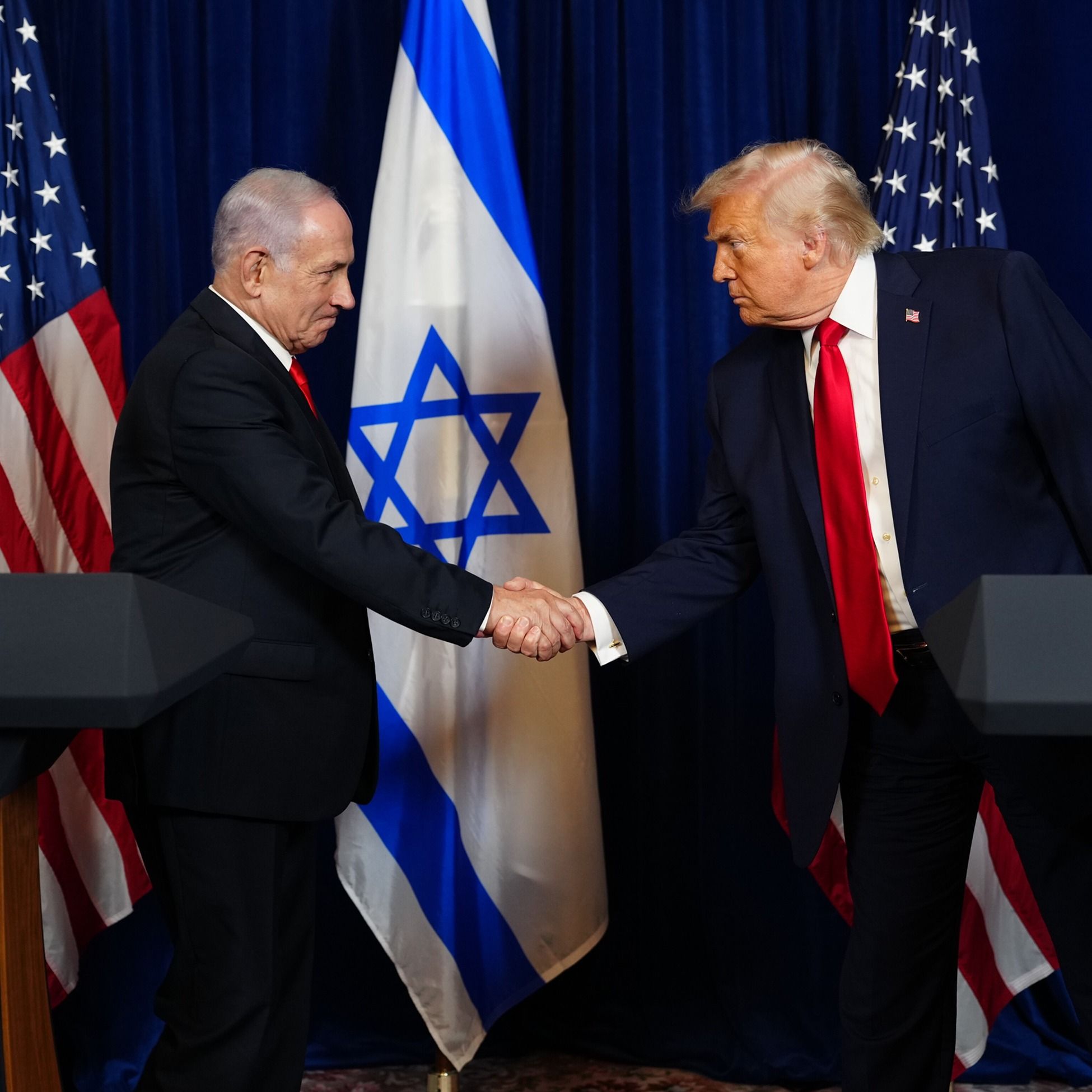
The Daily
Did Israel Push Trump Into War?
00:37:36
The U.S. decision to strike Iran was a victory for Israel, which had been pushing President Trump for months on the need to hit the country. Now, Israel’s role in spurring the operation has become a point of political tension. The New York Times journalists Mark Mazzetti and Ronen Bergman discuss what we know about the extraordinarily close cooperation between Israel and the United States.
Loading summary
Transcript106 lines
- [00:00]
Natalie Kitroeff
This podcast is supported by Planned Parenthood Federation of America. As a listener of the Daily we know you want the facts. Fact 1 Some lawmakers are making it harder for Americans to access health care.
- [00:12]
Mark Mazzetti
2.
- [00:13]
Natalie Kitroeff
A new policy threatens to prevent patients from using Medicaid insurance for life saving care at Planned Parenthood health centers. This could mean cancers going undetected, STIs left untreated, and patients not receiving care they need. 3. Planned Parenthood will not back down, but they need your help. Donate@PlannedParenthood.org defend from the new York Times, I'm Natalie Kitrov. This is the Daily Mr. President, did Israel force your hand to launch these strikes against Iran? Did Netanyahu pull the United States into this war?
- [00:47]
Mark Mazzetti
No. I might have forced their hand six
- [00:49]
Natalie Kitroeff
days into the war. The role that Israel has played in driving President Trump to attack Iran and has become a major point of political
- [00:58]
Mark Mazzetti
tension based on the way the negotiation was going. I think they were going to attack first and I didn't want that to happen. So if anything, I might have forced Israel's hand.
- [01:10]
Natalie Kitroeff
The key questions have been to what extent is a foreign country shaping the actions of the US Commander in chief?
- [01:18]
Mark Mazzetti
We knew that there was going to be an Israeli action. We knew that that would precipitate an attack against American forces. And we knew that if we didn't preemptively go after them before they launched those attack, we would suffer higher casualties.
- [01:30]
Natalie Kitroeff
And how did Trump get on board with something no American president had ever agreed to, waging a joint war with Israel against Iran?
- [01:40]
Ronan Bergman
Have we now delegated the most solemn decision that can be made in our
- [01:45]
Mark Mazzetti
society, the decision to go to war to another country?
- [01:50]
Natalie Kitroeff
Today, my colleagues Mark Mazzetti and Ronan Bergman on what we know about the extraordinarily close cooperation between the US And ISRA and how that partnership affects the end game in Iran. It's Thursday, march 5th. Mark, Ronan, we wanted to bring you both onto the show because you've both been covering this conflict in Iran. Ronan, you from Israel, and you, Mark, on the DC Side. You are writing a book together. You are often reporting partners and it is so wonderful to have you both here today.
- [02:32]
Mark Mazzetti
Thanks for having us.
- [02:32]
Ronan Bergman
Thanks, Nathalie. Pleasure.
- [02:35]
Natalie Kitroeff
So, Mark, you told us when you were on the show a few days ago that part of the lead up to the war in Iran involved Israel's Prime Minister Benjamin Netanyahu lobbying hard for it with President Trump. And over the last few days, the extent to which Netanyahu may have been a driving force behind this Conflict has become a much more central question here, and we want to go deep on that today to try to answer the unanswered questions, questions about how much Israel is actually determining the shape of these attacks, which have now continued into a fifth day, and the degree to which this war is about what the US Wants versus what Israel wants. How should we think about that?
- [03:16]
Mark Mazzetti
So publicly, over the last few months, we've seen President Trump take this sort of circuitous path to war. Does he really want to strike? Does he want a deal? Does he want peace? Who knows? So it's been very unclear which direction this was going. But I think the real story is that behind the scenes, this was every day pushing closer to war. And also behind the scenes, the constant was the pressure of Prime Minister Netanyahu to get Trump there. And that issue blew up this week. And after Secretary of State Marco Rubio told reporters that, in essence, the war began because Israel was going to begin it and that the United States needed to protect itself from possible Iranian attack. So, in other words, Israel was driving this and the US Was responding as if there was no choice but to join the war that Israel started.
- [04:17]
Natalie Kitroeff
Right. These comments by Rubio were seized upon. They were immediately controversial.
- [04:23]
Mark Mazzetti
Right. Because it already touches a point that many, particularly in President Trump's party, have criticized, this idea that Israel and Netanyahu are getting the United States into wars in the Middle east, ultimately driving American foreign policy. So Ronan and I have been covering this issue for a long time, and we've written over the years about how Netanyahu has been pushing American presidents towards war with Iran for many years. We're talking about George W. Bush, we're talking about Obama, we're talking about Joe Biden, we're talking about Donald Trump.
- [05:03]
Natalie Kitroeff
Yep.
- [05:04]
Mark Mazzetti
The dynamic has changed in the last year and a half, where we now have two American wars in Iran, because Netanyahu began to see the costs of going to war with Iran is lower, and therefore, that helps sell the United States getting involved.
- [05:23]
Natalie Kitroeff
Got it. And to understand that new dynamic as you've described it, where should we start? Where does that story begin?
- [05:30]
Mark Mazzetti
Well, I think you could begin at the beginning of the Trump administration. So in January 2025, Trump comes in, and Netanyahu once again begins this pressure campaign about a war in Iran. And remember, these two men have a history of mistrust. Remember, Bibi in 2020 congratulated Joe Biden on winning the election that Donald Trump thought was stolen. So Trump was angry about that. So there is a history of mistrust. Here. So when Trump comes in in January 2025, he sort of inherits planning that Netanyahu was already doing about in a war with Iran.
- [06:10]
Natalie Kitroeff
Okay, and tell me about that planning that was already underway, Ronan, what do we know about it?
- [06:16]
Ronan Bergman
So this was a rolling plan towards an attack that called for, in the first time in history, a joint US Israeli strike on Iran that would involve the Israeli intelligence and the almighty power of America together. Something that Netanyahu always, always, this was his dream. He thrived for that. And everybody told him, this will never happen. And then someone said to President Trump, this is April 2025. Listen, we are being dragged into war that we don't want, and we want an agreement.
- [06:57]
Natalie Kitroeff
You're saying that when Trump came to office, there were already these plans afoot that involved a joint US Israel attack that Trump then has to contend with. And in April of last year, he said no.
- [07:12]
Ronan Bergman
Yes, at the beginning, he doesn't want that. And he says to Netanyahu, stop, don't.
- [07:18]
Mark Mazzetti
Now, Trump said no, Just like every other American president this century had said no to Netanyahu.
- [07:24]
Natalie Kitroeff
Right.
- [07:24]
Mark Mazzetti
And as Ronan says in April, he tries to put a stop to it.
- [07:29]
Natalie Kitroeff
But obviously, then a few months later, we do see these strikes on Iran's nuclear site. So Trump at some point changed his mind. What happened? How did Bibi succeed where he'd failed with previous presidents?
- [07:42]
Mark Mazzetti
So after Trump says no in April, the planning continues in Israel to do strikes in Iran without the United States joining in, or maybe just in a defensive role. And this proceeds all the way to June, when Netanyahu launches the war. And a day after the conflict begins, Trump is watching how it's playing. He's watching Fox News. He's watching the sense of, is this successful?
- [08:10]
Natalie Kitroeff
Meaning, is it being received well?
- [08:13]
Mark Mazzetti
Is it being received well? Does it seem to be going well? And as we reported last year, decides the United States is going to join, that Netanyahu had begun something that Netanyahu himself said only the United States can finish, because the United States has military capabilities, specifically these bunker buster bombs that can hit deeply buried sites. And so if this thing is gonna actually be brought to its conclusion, the United States has to get involved. And that's ultimately what convinces Trump to join the strikes last June, hit the three nuclear facilities, and then declare them, in Trump's words, completely and totally obliterated.
- [08:58]
Natalie Kitroeff
Right. And both he and Bibi come out and say that they have successfully dismantled the sites and they have set Iran's nuclear program back a generation. So how did we then get from Trump okaying that kind of limited strike that was declared so successful to now this much more extreme campaign that is aimed at dismantling an entire regime, even
- [09:25]
Ronan Bergman
before the planes, the bombers turned back to the US and he already has the bda, the battle damage assessment, and Bibi saying, we've removed the threat from the nuclear project and the missile project for generations. But he didn't have that and it was not true. High ranking military officials told us in real time the tactical achievements of both militaries were as expected. But nobody expected that this limited campaign would remove the threat. Because if it removed the threat, what are we doing now? Like, you remove the threat and then it comes back after eight months.
- [09:58]
Natalie Kitroeff
But just to be clear, what you're saying is they did not actually set Iran's nuclear program back a generation and that the threat was very much still present and everyone knew that.
- [10:08]
Ronan Bergman
Yeah. And the Israeli BDA said that in a good day, maybe they withdrew parts of the nuclear plan in maybe up to a year, maybe in some other parts in months. So the problem was not the achievements versus the targets, but the statements from the leaders who said it's obliterated and it was not.
- [10:32]
Mark Mazzetti
But nevertheless, in Trump's mind, this issue is largely settled. He does the strikes, he declares the sites obliterated, moves on. But Netanyahu doesn't move on because, as Ronan says, in Israel, there's a view that there needs to be at least another round. The sites aren't obliterated. There's still the issue of Iranian missiles. So this doesn't go away for the Israelis. And in the months after the June strike, you see the pressure campaign continue at a low level where Israeli officials are discussing with the US Military and others about the need for another conflict in Iran. And this ultimately gets really to Trump in late December when Netanyahu comes to Mar a Lago and basically makes the case for another war.
- [11:29]
Natalie Kitroeff
And what is the case that Netanyahu makes at that point?
- [11:34]
Ronan Bergman
So the case that he's making to the president is one. But let's first talk about the case that he's making to the Israeli military and maybe the possible additional motives behind of what he's saying. Sure, he is giving the Israeli military an order to get ready to another massive strike in Iran, either with the US or without the US somewhere between April to June 2026. That's back in November, October, November. And also he saw, I am sure he saw the timeline of 2026. Elections are coming. Netanyahu is lagging Much behind in all the polls. The attack on Iran in June did not bring the expected votes in the polls. All of that together, he is getting the military ready to attack. And with that preparation, he comes to Malagu.
- [12:34]
Natalie Kitroeff
And what you're saying is that he is convincing the Israeli military building a plan to go forward with this as he goes to meet with Trump. So with all that in mind, what happens when Bibi gets to Mar a Lago? What does he say to Trump?
- [12:50]
Ronan Bergman
He says, we have work to do. China is resupplying Iran with the necessary component for the production of ballistic missiles. Russia is helping them. They are rearming, they are regrouping. We need to attack them again. We would be more than happy if it's a joint US Israeli strike. But even just an Israeli strike, I am asking the President blessing to a strike, at least an Israeli strike and a help in the defense of Israel from ballistic missiles between April and June 2026.
- [13:26]
Natalie Kitroeff
So Netanyahu is saying there is an imminent threat to Israel posed by Iran. First of all, is that true, Mark? And second of all, he's not at this point talking about any direct threat that Iran is posing to the US at this time, Right? That's not part of the case.
- [13:46]
Mark Mazzetti
That's correct. Iran does not have any missiles capable of hitting the United States.
- [13:51]
Sponsor/Advertisement Voice
And.
- [13:52]
Mark Mazzetti
And Netanyahu is making the case that the missile production has continued apace since the June war, and it poses a direct threat to Israel. Now, I think the question of imminent is always one that needs to be sort of unpacked a little bit. Right? I mean, Iran launched missiles at Israel after Israel began the war in June. Right. So the question is, is it imminent because Iran is about to launch another war? I don't think Bibi was making that case at all. But there's no question that the capabilities of Iran pose a direct threat to Israel.
- [14:28]
Ronan Bergman
May I just add here that I think that Iran didn't pose a threat to the U.S. but Bibi keeps reminding Trump that it did pose a very personal threat to Trump, that Israeli intelligence was able to identify a conspiracy to kill Trump ordered personally by the Supreme Leader.
- [14:52]
Natalie Kitroeff
Right.
- [14:52]
Ronan Bergman
This was, of course, disrupted by Israeli intelligence who told the FBI and American officials about that. But that left a very personal point from the point of view of the president. Look, this guy tried to kill me.
- [15:06]
Natalie Kitroeff
And you're saying Bibi is reminding Trump of that? These guys tried to kill you, remember?
- [15:11]
Ronan Bergman
Yeah. And they did. It was real, and Trump remembers.
- [15:15]
Mark Mazzetti
And another case that Netanyahu is making to Trump is that Iran is weak right now and the time is to strike. He's basically arguing that Iran's proxy forces, like specifically Hezbollah, has been largely destroyed. Their missile launchers and their missile sites were hit hard in June. And remember, also, this is the beginning of mass protests happening on the streets of Tehran that the government has to put down. So this is a moment of weakness for Iran that it looks like Netanyahu at that time is just trying to seize.
- [15:56]
Natalie Kitroeff
There's an interesting contradiction here, right? I mean, the first argument Bibi's making is Iran poses an imminent threat, AKA Iran is strong. The second argument is Iran is weak, so we should strike them while they're down. I mean, both of those reasons end in we should strike Iran.
- [16:14]
Mark Mazzetti
Yeah, I think that's fair to say. I mean, Netanyahu is arguing that, again, primarily because of these missiles that Iran is trying to build and is building, that if we wait three, four months, it'll be even more dangerous to strike. So this is the moment to do it. And the regime itself is distracted and weakened by the events of the last year and a half.
- [16:39]
Natalie Kitroeff
Got it. And how does Trump respond to this argument?
- [16:44]
Mark Mazzetti
So he doesn't close the door on a possible strike in 2026. And so Netanyahu leaves Florida thinking that it's at least on the table for some time in the future. And then just a few days after that, Trump authorizes the military operation in Venezuela to capture Nicola Maduro and his wife in Caracas and take them to the United States. And the significance of this is that Trump sees military operations that can be done quickly, cleanly, with relatively little risk. And he is emboldened by the Venezuelan operation, and it sort of colors his view of where military force can be used and elsewhere around the world, including Iran.
- [17:33]
Natalie Kitroeff
I wonder, Ronan, if Netanyahu is also looking at this moment, at the extraction of Maduro as a sign that Trump is willing to go very far and be very aggressive now on the global stage. I wonder if he sees it as an opportunity.
- [17:47]
Ronan Bergman
I believe that, and this is just an assessment that if Prime Minister Netanyahu concludes anything from this event is that he would be finding President Trump in a mood, that he's omnipotent and just with the flipping of his fingers, he can order a history changing maneuvers.
- [18:11]
Natalie Kitroeff
Right.
- [18:12]
Ronan Bergman
So he will be more sensitive to anyone. And I'm not sure just Netanyahu. I'm talking about American politicians as well, who say, listen, you can succeed when where all the previous American president failed, especially Obama, and you can do it. You have the guts. And Netanyahu sees himself as the person who can whisper to the president here, you can do something that all the previous presidents of the United States failed. You are the man, you will have the guts, you will have the kahunas to go for this one strike, one big attack that would take down this horrible regime once and for all and do what they needed to do. And they were afraid. But you, you, Mr. President, you will not. You are not afraid.
- [18:57]
Natalie Kitroeff
And then soon after the Maduro capture, we get the January protests in Iran, which Trump reacts to by promising to help the protesters with possible American strikes. We all heard that. So how does that fit into this story, Mark?
- [19:15]
Mark Mazzetti
Well, now there's a whole nother factor, which is that these protests suggest that the Iran regime is weak. And I think in Trump's mind, it's this idea of the United States can intervene to bring down or at least weaken the Iranian government to help the protesters. So all of a sudden, the pivot for justification goes to helping protesters. And Trump says publicly, as you said, that, you know, the United States might use its military to intervene on the behalf of the protesters.
- [19:47]
Natalie Kitroeff
Right.
- [19:47]
Mark Mazzetti
But then something very interesting happens. On January 14, Netanyahu calls Trump and basically says, don't do anything yet in Iran, cuz we're not ready, we, the Israelis, are not ready for a strike. There's, as Ronan said earlier, the original plan was April to June 2026. Right. We're now early January and any preparations that were being made were not mature. And so the argument is you've gotta wait.
- [20:17]
Natalie Kitroeff
Trump doesn't strike in January. Right. We know that they wait until February to do that, which suggests that he did heed Netanyahu's warning. And all of this, what you've described, really suggests that Israel and the US Are very clearly coordinating on all of this. It's not just Trump telling Netanyahu, yes or no, giving his blessing or not. In this case, Netanyahu has quite a bit of influence on what kind of path both sides are going to take here.
- [20:50]
Mark Mazzetti
Yes. And from, you know, this period in mid January, you start seeing planning happening at a lower level with the militaries moving towards what would be a joint operation, a joint strike between Israel and the United States. So the protesters opened the door here in Trump's mind for US Military action. But pretty soon afterwards, the seed has been planted for a larger US Israeli operation to go after the entire regime. And so, looking forward to today, we see that Netanyahu ended up getting far more than he ever wanted back in December, he got a US Led war in Iran.
- [21:41]
Natalie Kitroeff
Okay, so by this point, I now understand why Netanyahu wanted this and how he made his case to Trump, how he was perhaps more successful than he even bargained for. What's less clear to me is why exactly Trump got on board this time around, why he went this far, what he calculated was in it for the
- [22:03]
Mark Mazzetti
US We've spent a lot of time over the last week trying to answer those questions and to sort of get to the matter of what led Trump to war. And the answer is that there were a lot of factors behind the scenes that led him to his decision and the deliberations that ultimately centered around the question, what's in this for the United States?
- [22:38]
Natalie Kitroeff
We'll be right back.
- [22:41]
Sponsor/Advertisement Voice
Today's episode is supported by the Persistence Lab, a podcast from AbbVie. The show explores what happens when science meets real human resilience. Each episode highlights a challenge in medicine or healthcare, and the people who refuse to give up hear from scientists, experts and patients as they share important moments and motivations that inspire progress and contribute to the future of care. If you're curious about what's really happening behind the scenes in health and science, search the Persistence Lab. Wherever you listen to podcasts, this podcast
- [23:13]
is supported by Edison Electric Institute. Behind every moment, there's a team working to make it happen. Deepening connections, strengthening the energy grid, and preparing for tomorrow. We are America's electric companies and our commitment is provide energy as affordably as possible, build a stronger tomorrow, and deliver for the people who depend on us, America's electric companies, the energy of every day.
- [23:41]
Support for this podcast comes from GoodRx. Tired of paying too much for prescriptions? GoodRx can help you take control of your health and your budget. GoodRx lets you compare prescription prices at over 70,000 pharmacies and instantly find discounts up to 80% plus access, telehealth and wellness tips all in one place. GoodRx is not insurance, but even if you have Insurance or Medicare, GoodRx may beat your co pay, save time and money on prescriptions. Go to goodrx.com thedaily
- [24:12]
Natalie Kitroeff
so Mark Ronan, I assume that as Trump was considering a potential attack on Iran, he was hearing from advisors from allies around the world about just how risky that would be. You said these were complicated deliberations. What do we know about them and what do they tell us about where all this is headed?
- [24:34]
Mark Mazzetti
We certainly know that President Trump was presented by his military advisors, namely Chairman of the Joint Chiefs of Staff Dan Kaine a set of not only options for what he could do in terms of striking Iran, but also what the potential repercussions are. And from our understanding, General Kaine gives a quite sober assessment of, especially if there is a large scale attack, what the implications repercussions might be. American service members killed, economic disruptions, potential destabilization of the entire Middle East. Of course, if you were to overthrow the regime in Iran, obviously large scale casualties in Israel. So these are things that were presented to President Trump as he was making his decision.
- [25:23]
Natalie Kitroeff
They run those war games.
- [25:24]
Mark Mazzetti
You're saying they run the war games on the other side, even though they're are these potentially negative consequences. No one among his close advisors seemed to be telling him this is a bad idea. He's getting mostly support from his advisors. We report that J.D. vance, the Vice President, who has been skeptical of American military interventions, tells the president, listen, I don't know if this is a good idea, but if we're going to do it, go big, Right? So you have this idea being reinforced in the President's mind that military action should take place. Remember, there's another track going on where Jared Kushner and Steve Witkoff are negotiating over the future of Iran's nuclear program. And they're basically reporting back saying, we don't think there's a deal here because there's no space for a deal between Israel, the United States and Iran that's gonna satisfy everybody. We report that one of the few people who suggests that this is a bad idea is Tucker Carlson, who meets with the President at least three times. And he is making the case that this is an enormous mistake. And of course, he's got a long history of criticizing the role that Israel plays in American foreign policy.
- [26:43]
Natalie Kitroeff
Right. And at the same time, it sounds like Trump is not concerned with the potential reaction within his own base to another foreign war.
- [26:55]
Mark Mazzetti
I think that, you know, Trump has said in his public comments, boiling it down, you know, the MAGA movement is me, and what I say and do, the people of this movement will support. So this idea that the MAGA wing of his party is against seemed to not factor significantly in Trump's thinking in the lead up to this conflict.
- [27:21]
Natalie Kitroeff
It is possible, right, that he's not just not worried about potential political downsides, but that he sees political upsides here. I mean, if you look at the possible best case outcome here, and I know we are far off from that, but just as a way of understanding the best version of a rationale for what we're seeing, a World in which Iran's ability to attack its neighbors and repress its people is significantly degraded. A world in which Iran becomes potentially less openly hostile to the US Less of a chaos agent in the Middle East. That could be a world changing development. Right?
- [28:00]
Mark Mazzetti
Yes. And on the issue of Iran, Trump compares himself to his predecessors. Right. All these presidents before me left this regime in place. And in the last couple weeks, we've sort of heard the administration and Trump himself kind of road test different ideas for what is the real reason for this war. And we heard an imminent threat from Iran's ballistic missiles that could hit the United States that he said in the State of the Union, that's not true. Okay. At least they can't do it anytime soon. Right. Steve Witkoff said Iran can have a bomb in a week. That's not true. Right. And then finally, after the strikes began and Trump made his recorded message on Saturday morning, he basically made this case of, listen, this is a regime that's been carrying out terror for 47 years, that has been left in place, that has a history going back to the takeover of the American embassy in 1979, the killing of hundreds of Marines in 1983 in Beirut, and it's time someone dealt with it. And that's sort of where he landed at the end here, which was that this regime is a bad actor and it needed to go.
- [29:09]
Natalie Kitroeff
Okay, I want to ask. We've obviously seen that while there have been many factors that brought Trump to this decision of going to war, Netanyahu has been a driving force. He has constantly been in Trump's ear pushing for this, and he has followed through on his promise to be a full partner in it. And we've seen that over the last several days. Now that we are five days into this war, what do we know about how aligned Netanyahu and Trump are right now?
- [29:39]
Ronan Bergman
So, on the operational level, the working level, we have dozens of American fueling tankers taking off from Ben Gurion Airport every minute to help the Israeli Air Force in its war effort. So on the working level, it couldn't be more close and more extensive. But I think that while they are aligned and closely synchronizing, this is the point where their path and goals and targets and interests might diverge because Trump is looking for a very short war. And Israel, they say that they need two more weeks. And also, how do you end it?
- [30:22]
Natalie Kitroeff
What you're saying is that the two sides, US And Israel, they may begin to diverge in terms of how long each side wants to stay in this conflict, with potentially Trump favoring getting out of it early and Israel pushing for a longer engagement. And I feel as though part of the issue for Israel, but also for the rest of us, is that Trump hasn't really laid out a coherent vision for how this ends. He has called and talked to several different reporters, media outlets on this question recently, including our Times colleague Zolan Kano Youngs, and he's been unclear about what he sees as the best resolution for this conflict and how to get there. He has said he wants the Iranians to rise up and take over their government, but he's also suggested that he's open to negotiating with whatever's left of the Iranian regime. Those are conflicting and confusing messages about what the US Actually wants here, and
- [31:22]
Ronan Bergman
also the conflicting and confusing messages from Israel, because Israel is also saying, we are doing this in order to prepare the ground for the Iranian people to go back to the streets and revolt and demonstrate. But what does that mean? Like, if they go, then Israel will send an attacking chopper to each street to fight against the Basij, who are going to butcher them, or the US Would do that. What does that mean? And also, Israel is fighting the missile project and the nuclear project, but how is this connected to support of the protesters? I really don't understand where President Trump is going, and I don't really understand what's the goals from Israel, except for inflicting as much damage to the military sides of the regime.
- [32:06]
Natalie Kitroeff
What do you guys actually think the end games are here, the actual endgames for both sides, for the US And Israel?
- [32:14]
Mark Mazzetti
I'll speak from the American side and just say it is incredibly unclear what the goals are, because the administration has not done a good job explaining what the goals are. Is it regime change? Is it a narrow effort to destroy Iran's military capabilities? To me, the most telling comment of the last week came when President Trump said, well, we had some people in mind to lead Iran, but they're all dead now. So that implies that the people they were considering were close enough to the supreme Leader or to the leadership that they got killed in strikes among the senior leaders of Iran, suggesting that what was envisioned is not wholesale change, but something like removing the top leaders and calling the war a success and moving on. And then that goes to Ronan's point. So just how does that help Iranian protesters? This has been a muddle over the last week of exactly what the goals of this war are.
- [33:20]
Natalie Kitroeff
And I'd imagine those goals could also change, especially for Trump, if he starts to worry about this War becoming really costly and unpopular.
- [33:31]
Mark Mazzetti
Yes. And I think for Netanyahu, the concern is that Trump would see chaos and economic disruption and the stock market cratering and want to stop the war sooner rather than later. And Netanyahu, because of all the history we've just discussed, wants to have a more definite resolution to this conflict. But so far, I need to say that despite predictions that Netanyahu and Trump's alliance would collapse, it hasn't. The two have remained in lockstep since the war began. And for Netanyahu, that might be the most significant thing.
- [34:14]
Ronan Bergman
From the point of view of Netanyahu, I think so far so good. The region, the whole world see the close cooperation between the two militaries of US and Israel and how close these countries are together.
- [34:30]
Natalie Kitroeff
Right.
- [34:30]
Ronan Bergman
But that also bears the seeds for risk to Israel because with respect to the cooperation, it sometimes meet with realities of the area. And the reality of the area is that nothing is really solved with the help of the US Like Hamas is still in control of Gaza, still aspiring to execute another October 7th. Hezbollah is still the most powerful military force in Lebanon that just launched missiles at Tel Aviv yesterday. In Iran, the regime is still in place, and they still have the 450kg of enriched uranium to almost military grade. They still have the centrifuges, they still have the missiles. So even with the support of the U.S. nothing is solved. And we are still living in a very risky region that every minute sits on a barrel of explosives that can re explode every minute.
- [35:30]
Natalie Kitroeff
Right. You're saying that even in this new world where you have the US And Israel going after Iran, striking Iran, going to war with Iran together, that lockstep cooperation hasn't yet at least yielded the kind of solutions that actually would make things better for Israelis, better for the
- [35:56]
Ronan Bergman
region, and better for the Iranian public. It's just the hammering of Iranian nuclear sites and the missile sites and the air defenses and the killing of people. And some of them were very, very bad people that had the citizens of Iran blood on their hands and American blood on their hands. Exploding the American embassy in the 80s. But what's next? Is it solved? Like, are we looking at the beginning of a new horizon to the Middle East? I'm not sure at all, because the regime is still there and the problems are still there and they are not yet solved. And this cannot be solved just by words. I assume that by the end of this week, or maybe a little later, the President of the United States will declare victory. He would say we removed the threat. It's obliterated whatever phrase he uses. But is it? I don't see anything solved. I see only more potential difficulties and challenges here.
- [37:17]
Natalie Kitroeff
Well, Mark, Ronan, thank you both so much.
- [37:20]
Mark Mazzetti
Thank you.
- [37:21]
Ronan Bergman
Thanks Natalie.
- [37:40]
Natalie Kitroeff
We'll be right back.
- [37:43]
Sponsor/Advertisement Voice
We all have moments when we could have done better. Like cutting your own hair. Yikes. Or forgetting sunscreen so now you look like a tomato. Ouch. Coulda done better. Same goes for where you invest. Level up and invest smarter with Schwab. Get market insights, education and human help when you need it. Learn more@schwab.com this podcast is supported by E Trade from Morgan Stanley. Now that E Trade is part of Morgan Stanley, there's even more to love. Get the freedom to invest on your own with $0 commissions on stocks, options, ETFs and mutual funds, plus account types for every investor. And when you're ready save, speak with a pro to help guide you on your financial journey. Discover more ways to make the most of your money and get up to $1,000 when you open a brokerage account with a qualifying deposit today. Learn more@etrade.com offer terms and other fees apply. Investing involves risks. Morgan Stanley Smith Barney LLC Member SIPC E Trade is a business of Morgan Stanley.
- [38:42]
This podcast is supported by Hulu's paradise
- [38:45]
Mark Mazzetti
hey, it's Sterling K. Brown from the Hulu original series Paradise. The next chapter begins as Xavier's search for his wife takes him above ground and what he finds will change everything. It was never just about the bunker. Tune in and discover the truth lies outside Paradise. The official podcast is now streaming and stream paradise on Hulu and Hulu on Disney.
- [39:10]
Natalie Kitroeff
Here's what else you need to know today. On Wednesday, the U. S. Israeli bombardment of Iran became a wider international crisis. NATO was drawn into the conflict when its air defenses shot down an Iranian ballistic missile headed toward Turkey. A NATO member. A US Submarine destroyed an Iranian warship off the coast of Sri Lanka, killing dozens who were on board their navy.
- [39:37]
Mark Mazzetti
Not a factor. Pick your adjective. It is no more.
- [39:40]
Natalie Kitroeff
During a news conference, U.S. defense Secretary Pete Hegseth said that the attack demonstrated the rail reach and resolve of the US Military as it seeks to decimate Iran's military.
- [39:52]
Mark Mazzetti
An American submarine sunk an Iranian warship that thought it was safe in international waters. Instead, it was sunk by a torpedo. Quiet Death, the first sinking of an enemy ship by a torpedo since World War II.
- [40:09]
Natalie Kitroeff
Finally, Iran's leaders appeared close to naming a new supreme leader, likely the son of the late Ayatollah Khamenei, who was killed last weekend. But Israel's defense minister said that if the next supreme leader followed the same ideology as Khamenei, he would become, quote, a target for elimination. Today's episode was produced by Ricky Novetsky, Caitlin o' Keefe and Stella Tan. It was edited by Devin Taylor and and Paige Cowett with help from Chris Haxel. Contains music by Dan Powell and Rowan Niemisto. Our theme music is by Wonderly. This episode was engineered by Alyssa Moxley. That's it for the Daily I'm Natalie Kitroeff. See you tomorrow.
- [41:05]
Sponsor/Advertisement Voice
Planning for retirement and all the things that go with it can be stressful. That's why Fisher Investments partners with you to understand your goals and needs so that they can build a tailored plan that helps you achieve a comfortable retirement. Whether you need help with financial planning, estate planning or Social Security, Fisher has specialists to help Fisher Investments. Now that's clearly different. Money management. Learn more@fisherinvestments.com Investing in securities involves the risk of loss.