← The Daily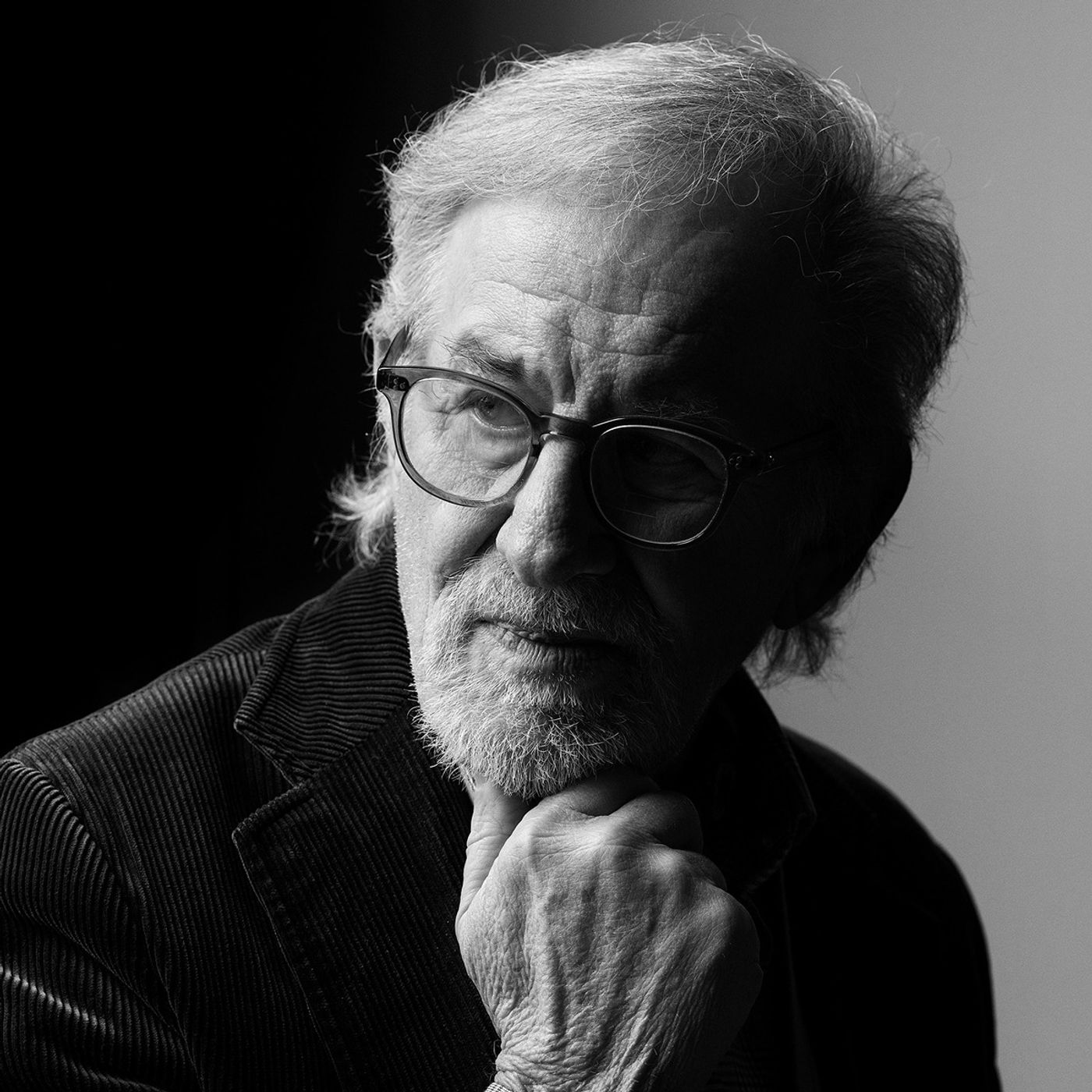
The Daily
Do Aliens Exist? Steven Spielberg Believes They Do
00:38:38
Almost 50 years ago, Steven Spielberg directed “Close Encounters of the Third Kind,” the story of an average man who discovers that humanity may not be alone in the universe. Over the decades, Spielberg has directed several movies about what would happen if humanity made contact with aliens. Would the aliens be kind like the title character in “E.T. the Extra Terrestrial”? Would they be cruel like the murderous aliens of “War of the Worlds”? And regardless of what the aliens were like, would we humans be ready to receive them? Spielberg returns to the question of whether we’re alone in the universe, and what it might mean if we’re not, with his new film “Disclosure Day.” Today, he sits down with Rachel Abrams, a host of “The Daily,” to talk about the film, and about what he has learned over five decades of making movies about aliens.
Loading summary
Transcript224 lines
- [00:00]
Alexa
Say hello to a new kind of AI Assistant. With Alexa, staying informed is just the start. It tracks prices and alerts you when they drop, helps you plan around your actual schedule and budget and remembers what you've told it. So every conversation picks up where the last one left off, no matter where you're chatting. For people who like to stay ahead, it's the assistant that keeps up free with prime. Learn more@Amazon.com Alexaplus do you want to check any shots?
- [00:27]
Steven Spielberg
Do you want to check your shots?
- [00:29]
Rachel Abrams
If you. Steven Spielberg, want to take a look?
- [00:32]
Steven Spielberg
Let's see your shot.
- [00:33]
Rachel Abrams
Oh, there we. Okay. So what do you think of that?
- [00:35]
Steven Spielberg
It's a good shot. I mean, it's like a nice framing.
- [00:38]
Rachel Abrams
Does it convey seriousness like serious journalism?
- [00:40]
Steven Spielberg
Yes, I like seeing all of this. Oh, you don't have me like that. Do you ever push back? Back? What was that great line of Tootsie, you know, how far back do you have to go to make it look good? What about Cleveland?
- [00:57]
Rachel Abrams
From the New York Times, I'm Rachel Abrams and this is the Daily on Sunday. Steven Spielberg, the name is synonymous with big Hollywood blockbusters. Just to rattle off a few of them, Jaws, you're gonna need a bigger boat. E.T.
- [01:16]
Paul Tanorio
e.T.
- [01:16]
Rachel Abrams
Phone home. Indiana Jones. That belongs in a museum. Jurass. This week he's got a new movie out, his 35th. It's called Disclosure Day. And it returns to questions that Steven Spielberg has picked at throughout his entire career. Do aliens exist? And if they do, how will we react to them? What are you gonna do? Full disclosure to the whole world all at once. Steven Spielberg is here with me today to talk about Disclosure Day, his fascination with aliens and what he is watching on Instagram. It's Sunday, June 14th. Steven Spielberg, welcome to the Daily. Thank you so much for joining us.
- [02:05]
Steven Spielberg
Thank you.
- [02:06]
Rachel Abrams
So congratulations on your new film, Disclosure Day. I won't give too much away, but it is a movie about the government's efforts to hide information about aliens from the public. It was inspired, as I understand it, by reporting at least in part in the New York Times about a secret government program that studied what people might refer to as UFOs. The New York Times is out this morning with new details about an upcoming and long awaited report, a shadowy office in the Pentagon that ran from 2007 to 2012. According to the New York Times, it examines so called anomalous aerial vehicles. The Pentagon. Everybody in their dentist must be pitching you a movie idea. So what was it about this article in this moment that made you think I Have gotta make a movie about this.
- [02:52]
Steven Spielberg
Well, long before that story, and it was a great story in 2017, I believe.
- [02:56]
Rachel Abrams
Yes.
- [02:57]
Steven Spielberg
There had been so many more videos backing up eyewitness testimony and creating more credibility among the witness base. Once the smartphone came into real existence with the iPhone, everything kind of changed. There was just a lot of information. People were starting to come forward. And, you know, the witnesses have been coming forward ever since Roswell. So it's not that Everything started in 2017, I guess, when Helene Cooper and Ralph Blumenthal and Leslie Keane wrote their story, all of a sudden, because it was the New York Times, because they gave the story such prominence, everybody suddenly started to wake up. From the National Enquirer sensationalized reportage about UFOs, suddenly, this was an August paper, perhaps one of the greatest papers giving us this information.
- [03:57]
Rachel Abrams
We prefer the greatest, but thank you.
- [03:58]
Steven Spielberg
Yes, yes, the greatest. But I really feel that things started to get into the mainstream. And then after that, there was a lot. A lot of documentaries were being made, and I saw all of them, every doc made about this. And you can't make a doc unless people come forward. Now, it's not under oath, but a lot of people from Congress, from the military started coming forward.
- [04:23]
Rachel Abrams
Well, to that point, there are some very famous whistleblowers that have come forward, as you're saying. There was one actually, in Helene Cooper's story that you mentioned. And I did wonder, in addition to watching all these documentaries, and it sounds like coming to the belief that aliens were real, perhaps more so than when you made earlier Alien films, did you actually talk to any of those whistleblowers in preparation? Did you try to reach out to anyone?
- [04:46]
Steven Spielberg
I actually purposely stayed away from that.
- [04:48]
Rachel Abrams
Really? Why?
- [04:48]
Steven Spielberg
Because I wrote a story. My story is a science fiction story. The foundation upon which I built my science fiction story is a very, very credible foundation, just based on everything that I've absorbed over many, many decades, but especially over the last decade. And there is a consistency in the reporting. There is circumstantial evidence from tens of thousands, if not hundreds of thousands of people who have claimed, not just in America, but all over the world, to have seen something or met people who have had seen things.
- [05:23]
Rachel Abrams
I mean, you sound very much like you believe aliens exist. That is what I'm getting from you in this conversation. And I'm recalling that in preparation for this interview, I listened to a bunch of your interviews, and I heard you say once that Close Encounters, when you made that movie, it was about what you hoped was in the Universe.
- [05:40]
Steven Spielberg
Yes.
- [05:41]
Rachel Abrams
And now you're at the point where it sounds like you very much believe that this exists. What would the younger Spielberg have thought, listening to you now as such a believer, that this is what actually exists in the universe?
- [05:51]
Steven Spielberg
Well, the younger me wouldn't have been exposed to the incredible plethora of visual documentation of what's been going on. Seeing is believing. Until I see something myself and why I have not seen a ufo, I don't understand why they haven't come to me yet. I mean, I feel like their agent. I have not had any sightings whatsoever. However, having said that, so much of the believers, I now believe the believers.
- [06:25]
Rachel Abrams
You know, it's interesting that you frame it that way, because disclosure day. One of the big themes, if I may say so, is about faith. Does God love us? I don't mean does he love us? I know he does. Does he love only us? And it's not just about believers, but it's also about faith in something higher than yourself. It's about faith in humanity and the ability of other people to deal with difficult circumstances. Because Genesis says that we're his supreme creation. But do you think it's possible that on Earth. What Genesis. It says we are God's supreme creation on Earth. You could have just made a movie about aliens. You could have made a fun summer blockbuster. And I wonder why you chose to engage with that theme specifically.
- [07:16]
Steven Spielberg
I just feel. I felt that this was an opportunity to talk about the loss of community and therefore the loss of human connection. This film is more about humanity and the things that divide us and what could be occurring that possibly could bring us a little closer together.
- [07:41]
Rachel Abrams
Such as aliens being real.
- [07:43]
Steven Spielberg
Well, such as realizing that the thing that we need to preserve in our society more than anything else, which is something which I believe is as fragile as democracy, is empathy. And that our two characters. Josh o' Connor plays Daniel Kellner and Emily Blunt plays Margaret Fairchild. There is a very large emphasis put on their superpowers.
- [08:10]
Rachel Abrams
You know, I mean, you've been driving like a maniac the last few days. You know, how do you know that? I just know things. It's just something.
- [08:16]
Steven Spielberg
And their superpowers are not being able to fly.
- [08:18]
Rachel Abrams
No, of course not.
- [08:19]
Steven Spielberg
Their superpowers are really being able to look at somebody, and in six seconds, you know that person intimately. Wow.
- [08:26]
Rachel Abrams
You were in jail. It must have been so.
- [08:27]
Steven Spielberg
Hey, hey.
- [08:29]
Rachel Abrams
You see what I mean? It's crazy.
- [08:31]
Steven Spielberg
And I just have seen this draining out of us. And I thought that I wanted to do a story about how to bring humanity together again.
- [08:41]
Rachel Abrams
You know, I understand that you're commenting on the divided political time that we live in.
- [08:46]
Steven Spielberg
It's not even a political time. It's a divided social time.
- [08:48]
Rachel Abrams
Divided social time. Has that affected you personally? Have you lost relationships? Are you making this in any way reflective of what you personally have struggled with as we have become more divided?
- [08:58]
Steven Spielberg
It's not that I've lost relationships. I just, you know, I just, I believe in people and I believe in people who I don't agree with. If we took two soccer teams where they take it very seriously, you could have nothing but rivalry and you could be hooligans against each other in loss or in victory. But there are certain things you agree on. The lager in the pub you drink after a game where you can bury your disagreements and just celebrate the fact that you're alive on the planet. I mean, I mean, that is something that I'm missing today.
- [09:34]
Rachel Abrams
And arguably, I think I've heard you talk about movies this way. Movies are something that obviously bring people together. And so I wonder if that's sort of like if you're thinking not just about the themes of faith in your film and the importance of faith in terms of bringing people together, but the actual going to see a movie and losing yourself and forgetting what's going on in the outside world. I feel like I see a bit of a through line here.
- [09:56]
Steven Spielberg
Yeah, well, I've been saying like a broken record that, that movies build community. So does theater, so do concerts. You know, community is when we all come together. We don't know each other, but what we do know is we are having a similar reaction to what is being shown to us, what is being unspooled, what is being presented, performed for us. And it absolutely is one of the. That is one of the greatest uniters of any culture on the face of the planet.
- [10:30]
Rachel Abrams
We'll be right back.
- [10:42]
Alexa
Say hello to a new kind of AI Assistant. With Alexa, staying informed is just the start. It tracks shopping deals before they end, manages your schedule, books, reservations, and remembers what matters to you. So you're always a step ahead. Free with prime. Learn more@Amazon.com Alexa I'm Paul Tanorio.
- [11:01]
Paul Tanorio
I cover soccer for the Athletic.
- [11:02]
Amy Lawrence
And I'm Amy Lawrence. I cover football for the Athletic.
- [11:05]
Paul Tanorio
Whatever you call it. The biggest competition in the sport is happening right now. And the athletics World cup coverage has everything you need to follow the tournament.
- [11:14]
Amy Lawrence
There's 48 countries taking part from the tiny island of Curacao to the five time champions Brazil. Even if you don't know your offside from your onside. If you're eager to know more about the teams, the matches, all the stories on and off the pitch, we've got you sorted.
- [11:28]
Paul Tanorio
Maybe you're the kind of person who's already up early every weekend waking the neighbors when your favorite club scores. We'll make sure you get equipped with more information, more insight than anyone you know.
- [11:38]
Amy Lawrence
We've got more than 70 obsessive reporters on the ground covering the ins and outs from every game.
- [11:44]
Paul Tanorio
I almost forgot to mention the best part, Amy. Free access to the Athletics World cup coverage in our app.
- [11:49]
Amy Lawrence
Download the Athletic app and see you there.
- [11:56]
Rachel Abrams
You know, I heard you once tell a story about your experience with Vietnam that I think really crystallizes how you believe that movies could take you out of the world for a short period of time. I'd love it if you could tell that story.
- [12:10]
Steven Spielberg
Well, it was just that I was in line to watch Dr. Strangelove. I was in high school. Vietnam was on television every night on all three networks, so it was something you couldn't get away from. Friends of mine had been called up and I was waiting in line in the rain, San Jose, to watch Dr. Strangelove, and I heard a honking. I turned away and my dad was half in the street with his window rolled down, gesturing frantically for me to come over. And I ran over to the car and he just looked like the Grim Reaper. And he just had just handed me this letter from Selective Service. And I opened it up and it just basically was the letter from the draft board asking me to report for my first physical. And I was shocked. It was a death sentence. I couldn't believe what was happening. My dad opened the door, assuming I was going to leave the line and drive home with him, and I said, no, I want to see the movie. And I took the letter, though, with me and I went back in line and all I could think about was going to Vietnam. And then the movie. I got my seat, lights went down, Dr. Strangelove began. I shouldn't tell you this, man, Drake, but you're a good officer and you have a right to know. It looks like we're in a shooting war.
- [13:22]
Rachel Abrams
Hell, all the Russians evolved, sir.
- [13:26]
Steven Spielberg
In about five minutes into Strangelove, I forgot my dad had ever pulled up in the car. Gentlemen, you can't fight in here.
- [13:31]
Rachel Abrams
This is the war room.
- [13:33]
Steven Spielberg
And the movie complete, completely swarmed all of my five senses. I didn't even think about the letter that was in my pocket. Until I was halfway home on a bus.
- [13:58]
Rachel Abrams
The way that that movie overwhelmed you made you forget for however long it was that what was going on in the outside world. I think it's fair to say that that is something that you have tried to recreate as a filmmaker, if I'm not mistaken. And I want to talk about you as a filmmaker more broadly. When we were preparing here at the Daily to talk to you, we got into a very spirited debate about what makes a Spielberg film a Spielberg film. Is it awe and wonder? Is it normal people in extraordinary circumstances? I mean, you've literally made so many different types of films and then we. That you are probably the foremost expert on Steven Spielberg and what makes a Steven Spielberg movie Spielbergian. So could you just articulate that for us and settle this?
- [14:42]
Steven Spielberg
Well, that would require me to suffer a blow to the head, have amnesia, and then have to go into a theater and watch the movies that I forgot I made.
- [14:50]
Rachel Abrams
Oh, come on. Really?
- [14:51]
Steven Spielberg
It would be very difficult. You know, it's not a formula. It's not a chemistry set I haul around with me. And it's not alchemy. You know, movies are not alchemy. They're not part of it. Science, the craft of it is science based on the technology of filmmaking. But it's movies for me anyway. It's 80% intuition. And so, you know, I feel that when I'm making movies, the first thing I look for is a very compelling premise. And the second thing I look for is a character that we can hitch our wagons to.
- [15:23]
Rachel Abrams
Okay?
- [15:24]
Steven Spielberg
And not necessarily a star you hit your wagons to, but just a really great character. It could be a wonderful brand new actor that we've never seen before, but someone that we could identify with. And then you're on a. A journey with those characters. And if you trust the characters and you bond or imprint on them or bond with them close enough, you trust them. And trusting a character allows you to trust the ride they're taking or the adventure they're on, or the problems they have to solve, or the survival that means life or death. And then you can be so compelled to attach yourself to a personality in your movie that that should take you right to the end.
- [16:04]
Rachel Abrams
I would like to tell you because you're making me think of this. My dad used to be a screenwriter. He used to teach film and he has taught your movies in class. And one of the things he taught was the first 10 minutes of Indiana Jones and the Last Crusade, specifically for the reasons you're mentioning. Just the idea, the World is very clear, and the dynamics between these characters are very clear. The father, son dynamic, specifically dad, was important.
- [16:29]
Steven Spielberg
Then. Wait. Count to 20.
- [16:31]
Rachel Abrams
No, dad, you listen.
- [16:32]
Steven Spielberg
Junior.
- [16:33]
Rachel Abrams
One, two, three, four. In Greek,
- [16:39]
Steven Spielberg
ena.
- [16:39]
Rachel Abrams
Theo. Was that the goal there was to just lay out, here's everything you're going to get from this movie in the first 10 minutes, which, by the way, you do in other films. I feel like your opening sequence often establishes so much of what will bring us along for that ride.
- [16:53]
Steven Spielberg
That was very personal. That was maybe the most personal Indiana Jones film for me in terms of plot structure. The most personal Indiana Jones film for me was Temple of Doom, because I met Kate.
- [17:03]
Rachel Abrams
And that is Kate Capshaw, of course, the actress.
- [17:05]
Steven Spielberg
Yes. I said to George, I would direct the first three.
- [17:08]
Rachel Abrams
Is that right?
- [17:08]
Steven Spielberg
Without even knowing I was going to meet the love of my life on the second one. But I feel that I've been, You know, I've spent a lot of my life working out my relationship with my father.
- [17:18]
Rachel Abrams
Right.
- [17:19]
Steven Spielberg
And when he passed, he was 103. And before he passed, we had 23 wonderful years together. But there were years before that of kind of, I would call it a mild estrangement. And I was always trying to work out where I was in that relationship with my dad. And I insisted, when George Lucas presented the MacGuffin, that I want to make an Indiana Jones movie. George said, they go after the cup of Christ. They go after the Holy Grail. I thought that was great, but I suddenly realized, oh, my God, it's metaphorical. Why don't we have Indy's father, the person that's been doing all the research on the Grail, and Indy's been estranged from his father, and they kind of have a meeting of the hearts. They meet halfway. I can almost reach it, dad. Indiana, Indiana.
- [18:14]
Rachel Abrams
Let it go.
- [18:18]
Steven Spielberg
The grail of that relationship was really the understanding and the communion the father and son have by the third act of Last Crusade.
- [18:26]
Rachel Abrams
I wonder whether at this point in your life and career, there are other things that you would like to work out in film. And sort of what stage you're at with that now is. Film is therapy. I guess I should say, yeah, film is therapy.
- [18:39]
Steven Spielberg
Sometimes I'll go into a movie consciously saying this film. Like when I made the Fabelmans, I said, well, somebody's gonna have to write a check for $40 million of therapy for me. I didn't pay for it.
- [18:51]
Rachel Abrams
You could afford to be a little encouraging.
- [18:53]
Steven Spielberg
About what?
- [18:55]
Rachel Abrams
About him making movies.
- [18:56]
Steven Spielberg
Well, I didn't say that. Maybe he's moved on.
- [18:59]
Rachel Abrams
On from what?
- [19:00]
Steven Spielberg
He hasn't picked up his camera once since we got here. He'll be going to college in September. Maybe his feelings about it have changed. He's growing up. I'm enthusiastic about that.
- [19:09]
Rachel Abrams
Filming is what he loves. Oh, Jesus Christ.
- [19:11]
Steven Spielberg
I'm sorry, guys.
- [19:12]
Rachel Abrams
Can we please just stop talking about me? I'd think that you, more than ever. It was autobiographical.
- [19:16]
Steven Spielberg
Oh, yeah, totally autobiographical. Very, very accurate to my. My own memory of my experiences, my relationships with my sisters, my mom, my dad, all that. But, you know, sometimes I don't know I'm working out anything until I'm right in the middle of the process, right in the middle of the movie, and I suddenly. It'll remind me of something when I was a kid that, oh, I'm dealing with something that I've buried for 60 years and, wow, it's back. And maybe I can deal with it here. But I don't set out unless it's consciously to make a film like the Fabelmans or even help design the story of Last Crusade. I don't set out to practice, you know, self therapy. I set out to tell a really good story that's gonna get people really excited and make them wanna go to the movies to see it.
- [20:02]
Rachel Abrams
But you have said before that you've tried to. In some of your films. You have recreated trauma as a way to maybe get power over it. If. Am I describing that?
- [20:12]
Steven Spielberg
Well, I think what you're referring to is sometimes things that terrified me as a kid.
- [20:17]
Rachel Abrams
Yes, Yes.
- [20:17]
Steven Spielberg
I can almost. I can make scary movie like Poltergeist. Right. Which I produced and wrote.
- [20:29]
Rachel Abrams
They're here.
- [20:31]
Steven Spielberg
I can make a really scary movie like that because of all the things that go bump in the night that terrify me and then suddenly feel really good that I got some control over my fear. But now I've disseminated my fear on a lot of people I'll never get to meet. And like with Jaws, you know, I didn't mean to make a movie that scares people out of the water, but it did. I've always been afraid of the water. And I think I wouldn't have said yes to direct Jaws had I not had such a fear of the water.
- [21:03]
Rachel Abrams
And did. Did Jaws help you with your fear of the water?
- [21:05]
Steven Spielberg
No, I'm just afraid not. But it sure didn't help a lot of other people that saw the movie. Watch it starboard.
- [21:17]
Rachel Abrams
One of the reasons why I think this is so interesting is I happen to be in the middle of Lena Dunham's Memoir. And she talks about something very similar, about how basically traumatic things happened to her. And she felt if she could recreate them on screen, she would get some kind of control over it in a way that would help her work through it, if you will. And I wondered, is this something that. I mean, you must have had so many interesting conversations with other filmmakers, artists. Have you heard this before, this idea?
- [21:42]
Steven Spielberg
I have. I have heard this before when we sit around painting models at Guillermo del Toro's house on Saturday or Sunday mornings. It's all directors.
- [21:50]
Rachel Abrams
I'm sorry, this is a what? This is a regular del Toro.
- [21:52]
Steven Spielberg
It's a regular thing we do. We paint monsters. These are plastic, porcelain, sometimes even metal die cast. We hand paint the models, and we talk about movies. It's usually six to eight directors. And we find that we have so much in common in our business and our profession, within the gestalt of who we are and why we do this. And it all comes out in the wash of painting models.
- [22:19]
Rachel Abrams
So what is the why? And why do painting the models help you with this?
- [22:23]
Steven Spielberg
It's kind of a Zen thing, in a way. You know, it's sort of, you know, you're focusing on painting, but you're also really engaged in conversation. It's like how I imagined the New Wave in Paris might have been with Truffaut Anduel. Just everybody sitting around, you know. And these filmmakers hung out together and they talked about the stuff that nobody else can relate to. And it's a great way of sort of cleansing yourself.
- [22:48]
Rachel Abrams
If you ever want the Daily to be a fly on the wall at one of these salons, we would love to be there. I'm asking you a lot of questions about things that you have learned, lessons you've taken from one thing or another. At some point in your life. You became Steven Spielberg, who many people consider to be the greatest filmmaker on Earth. You became like a living legend to folks. And I bring that up because I think a lot of people, maybe people early in their career, understand that the way that you get better is by having people challenge you. Right? You have longtime collaborators. But I wonder how, putting modesty aside for a moment, do you think about your. How your stature affects how people interact with you, how people challenge you? And just generally, how do you continue to grow when you are at the level that you are at?
- [23:35]
Steven Spielberg
Well, it was a hindrance to me at the beginning of my career because everybody felt so open and free to help me. Cause I was young. I was 22 years old when I directed my first television show. And the help was fantastic. When I made my first film, Sugarland, I had a lot of help from the actors, from Goldie Hawn, from the crew. They were all there to help me. They asked me questions, they gave me suggestions. Then Jaws was made, and Jaws was a phenomenon. And all of a sudden, all that input stopped. I started to make Close Encounters. And everybody was quiet, as if I knew what to do, as if I knew I had all the answers. I didn't have all the answers. I was desperate for collaboration, for opinions. Everybody assumed I knew everything, didn't need any help. I solicited. I went around asking people questions.
- [24:24]
Rachel Abrams
Were they honest?
- [24:25]
Steven Spielberg
Yeah, I think so. But they were intimidated. It takes a lot of work to build a team that will be honest with you. And that's why I've had the same people in my. For so many decades, you have said,
- [24:40]
Rachel Abrams
I believe that one of the reasons that you wrote Disclosure Day is because you felt that this was the last shot. You would have to get this story, to tell this story in a certain way or the right way. I wonder, given all of the movies that you have made, all of the things you have tried to tell us about ourselves and the society that we live in, is there something that you feel like you still want to say that you have not said yet?
- [25:05]
Steven Spielberg
Let me answer that question as honestly as I know how. Until I find something that delights me and intrigues me and scares me, I won't know what it is yet that I have to say until I discover it by jumping blind off a cliff, which I do about every other film I jump into, you know? And that's when I figure out that I could use this as a vehicle, as a kind of medium to say something. But I don't ever make a movie where I don't feel I have. Every movie I made, I feel like I have something to say, but I really only know what that something is. Once I blindly jump off the edge and I get myself very, very involved in that story, then it sometimes comes to me, sometimes it doesn't.
- [26:01]
Rachel Abrams
I'm curious about the audience. What do you think about the ways that the audience has changed besides just attention spans? Like, I am curious, do you think that audiences expect something different when they come to see a movie and how that changes your storytelling?
- [26:16]
Steven Spielberg
I don't think it changes the storytelling. All I can do is tell the stories I know how to tell and hope there's an audience for them. But I don't adjust myself to a
- [26:24]
Rachel Abrams
new generation, if I may Push back slightly on this. In preparing for this, I watched Close Encounters, and I obviously went to Disclosure Day. And the thing that I found so striking was that Close Encounters opens more slowly. The storytelling feels more slow at the beginning, whereas in Disclosure Day, you are dropped right in the middle of the action. And to me, I felt like this was a reflection of specifically attention spans. Is there something to be said about how quickly or slowly you are making your films? I mean, how could you not, basically, given the world that we live in?
- [27:01]
Steven Spielberg
Well, I consciously wanted to start Disclosure Day as if we were starting with a third act and then editing a fourth, fifth, and sixth act.
- [27:12]
Rachel Abrams
You're coming right free here. What do you mean by that? Especially for people that haven't seen it,
- [27:20]
Steven Spielberg
because the movie starts in mid scene, mid action, middle, and the movie starts with essentially an abduction.
- [27:28]
Rachel Abrams
Yep.
- [27:31]
Steven Spielberg
That's not reflective of me trying to appeal to a more impatient generation of moviegoers. It was basically the biorhythm of the movie that I sat down to write. I wrote it that way because I felt like we have been awaiting answers about where's the truth? Where has the truth been about, you know, communication or the government hiding the fact that there is interaction between species, and maybe we've been interacting for 80 or longer years and so. And that, to me, felt like it was already on a fast track. It was already moving for eight decades, very, very quickly, and now it was coming to a head that was dictating how fast I started this closure Day, not trying to appeal to a generation that wants. That has a need for speed.
- [28:20]
Rachel Abrams
My colleague Wesley Morris recently did quite a masterful, I thought, profile of you.
- [28:24]
Steven Spielberg
It was amazing.
- [28:26]
Rachel Abrams
Yeah. Yeah. He is incredible. And he wrote about in this profile not just how the audience has changed in terms of attention span. And I understand your answer that you really. You can only make the movie that you know how to make. Right. But Wesley also wrote about how you two spent a lot of time together. You went to see a play.
- [28:44]
Steven Spielberg
Yes.
- [28:45]
Rachel Abrams
And he wrote about your deep appreciation for the audience reactions to this play.
- [28:50]
Steven Spielberg
Right. And.
- [28:50]
Rachel Abrams
And it made me wonder how you would describe the different experience of seeing a movie alone, as, of course, so many of us now do when we watch it on our TVs, or, dare I say it, our iPhones, perhaps. What do you.
- [29:07]
Steven Spielberg
Perish the thought?
- [29:09]
Rachel Abrams
I have a case to make for the iPhone, by the way, but I'll get to it.
- [29:11]
Steven Spielberg
It's okay when the movie's been out for a year, but.
- [29:14]
Rachel Abrams
Or older.
- [29:15]
Steven Spielberg
Right, or older.
- [29:16]
Rachel Abrams
But go ahead but what do you. So what do you lose when you don't watch a movie surrounded by other people?
- [29:21]
Steven Spielberg
Well, it's not what I lose because I can watch a movie alone in a sense. When I watched Dr. Strangelove, it was a full house when I was 18 years old. But I felt like I was alone watching it because it had affected me and it excluded everybody in the theater and I was all by myself. That's how deeply the film had grabbed up all of my attention. But then when I. At the end of the movie, I realized that people were having similar reactions all around me. I suddenly had strangers who were allies in my experience of what that film, how that film affected us.
- [29:53]
Rachel Abrams
And what did that mean to you?
- [29:54]
Alexa
To.
- [29:54]
Rachel Abrams
To be surrounded by people that agreed with you in some way?
- [29:56]
Steven Spielberg
It felt great. Just. Yeah. The agreement isn't done verbally. You don't get into conversation. Sometimes you talk, but you feel it. It's a psychic thing. It's a thing that you sense. All of us can sense an audience. When you see a comedy with 500 people and they're all laughing, it is one of the greatest, most fun loving things you could do for yourself. The same thing happens, I guess, when you're in a rock concert, when you're watching somebody perform, it is just infectious. You don't get that feeling watching a music, but you get that in a stadium. You get that in a venue, even with a couple hundred people, it's just completely contagious. And so there's a contagion that happens when we're in a pod altogether, reacting and having an experience. And it doesn't preclude watching something by yourself. I'm just saying that it's an additive. It's. It larges the experience makes it bigger than life. When you watch a movie with people.
- [30:57]
Rachel Abrams
You have been a fierce advocate for people going to the physical movie theater. Of course, listening to you talk, I wonder if you are in some way nostalgic for a time when there weren't as many choices. Even though choices, of course, give people many more opportunities to tell stories.
- [31:13]
Steven Spielberg
Yes. Yeah, I'm not really nostalgic for that. I'm really not. I love the options. I love the amount of choices out there. The only negative thing about it is you can get sucked down the rabbit hole.
- [31:28]
Rachel Abrams
But also the options are the reason why people aren't going to the theater, right?
- [31:31]
Steven Spielberg
Well, no, not so much that. Yes. I mean, everything's a distraction. But don't forget what a distraction television was in 1950. There has been a pitch battle for the audience between television and movies, between the small screen and the ginormous screens. This has never changed. This is nothing new. The difference now is there are so many more options than just watching television.
- [31:55]
Rachel Abrams
What is something that you love that people might not expect because it is not a movie? Something on YouTube? Something on one of these new ways that people are consuming content?
- [32:07]
Steven Spielberg
I. I love watching food on. On. On Instagram?
- [32:11]
Rachel Abrams
Yeah. Wait, wait. Can you explain more? What. What do you mean by that?
- [32:13]
Steven Spielberg
I love watching food stuff.
- [32:15]
Rachel Abrams
Food stuff I like.
- [32:16]
Steven Spielberg
I. I'm a foodie.
- [32:17]
Rachel Abrams
Okay.
- [32:17]
Steven Spielberg
So I'd like nine different ways you can make a taco.
- [32:20]
Rachel Abrams
Okay.
- [32:20]
Steven Spielberg
You know what I'm saying?
- [32:21]
Rachel Abrams
Yes.
- [32:22]
Steven Spielberg
I just, I just, I get a. A little bit down. That's the rabbit hole that pulls me down.
- [32:28]
Rachel Abrams
The headline here is that Steven Spielberg likes ASMR food videos.
- [32:31]
Steven Spielberg
I do.
- [32:32]
Rachel Abrams
What is it about them? Is it the craft that pulls you in or do you just want to know how to make tacos?
- [32:36]
Steven Spielberg
No, it's the imagination it takes to do something I've never seen before. And now I've made some of this stuff.
- [32:42]
Rachel Abrams
You've made? Which stuff? The videos. The short videos.
- [32:45]
Steven Spielberg
I've watched and tried to replicate it and replicate it and some of it is not as good as it looks.
- [32:51]
Rachel Abrams
But yes, as all of us have experienced. Yes.
- [32:54]
Steven Spielberg
I mean, my wife right now is into something about dribbling a hot fudge over potato chips and making an open faced sandwich out of it. I'm not ready for that yet. But she's been threatening to make it for the last week.
- [33:13]
Rachel Abrams
We'll be right back.
- [33:27]
Alexa
Say hello to a new kind of AI assistant. With Alexa, staying informed is just the start. It tracks prices and alerts you when they drop, helps you plan around your actual schedule and budget, and remembers what you've told it. So every conversation picks up where the last one left off, no matter where you're chatting. For people who like to stay ahead, it's the assistant that keeps up free with prime. Learn more@Amazon.com Alexaplus I gave my brother
- [33:53]
Rachel Abrams
a New York Times subscription. We exchange articles and so having read
- [33:58]
Steven Spielberg
the same article, we can discuss it.
- [34:00]
Paul Tanorio
She sent me a year long subscription so I have access to all the games.
- [34:03]
Rachel Abrams
The New York Times contributes to our quality time together. It enriches our relationship.
- [34:09]
Steven Spielberg
It was such a.
- [34:10]
Paul Tanorio
Such a cool and thoughtful gift.
- [34:12]
Rachel Abrams
We're reading the same stuff, we're making the same food.
- [34:15]
Steven Spielberg
We're on the same page.
- [34:17]
Rachel Abrams
Learn more about giving a New York Times subscription as a gift@nytimes.com gift. Stephen, thank you so much for all of this. We, if I may call you Steven. I should have asked you the beginning of this.
- [34:29]
Steven Spielberg
Why not? Please call me Stephen.
- [34:32]
Rachel Abrams
We had envisioned in just the last remaining moments that we would do a little lightning round of questions.
- [34:37]
Steven Spielberg
Okay.
- [34:38]
Rachel Abrams
Okay, so if you'll indulge us, what are the best and worst Steven Spielberg movies according to your children?
- [34:46]
Steven Spielberg
I don't think my kids have ever had a worst. I mean, my kids like my movies.
- [34:50]
Rachel Abrams
They do like your movies, but they
- [34:51]
Steven Spielberg
haven't seen them all. And they'll tell me, this is not
- [34:54]
Rachel Abrams
what I expected you to say. Because everybody's killed children. No matter how accomplished they are, they think, oh, it's just what dad does. It's like nothing.
- [34:59]
Steven Spielberg
I'll tell you what my kids do. When my kids were 6, 8, 10 years old, and I'd bring them to the set because my whole family. Kate, would bring the whole family, too. Anywhere I was shooting, the family would live there. And my kids were so bored by my job, they come on the set and the first thing they'd say is, when do we get to leave?
- [35:18]
Rachel Abrams
You're kidding.
- [35:18]
Steven Spielberg
No, I'm not kidding. Because one of my kids said to me, they said, because we just waited an hour. And then when you said, action, it only lasted two minutes. And now you put the camera somewhere else and it's gonna be another hour. You know, it's the waiting part that they hated. The only film I remember them not wanting to leave the set was Jurassic Park.
- [35:38]
Rachel Abrams
Oh, wow.
- [35:39]
Steven Spielberg
Because we had the. We had the 35 foot T. Rex, completely auto animatronic, designed brilliantly by the brilliant Stan Winston. They couldn't get enough of that.
- [35:50]
Rachel Abrams
What is a movie you might redo differently if you had the chance?
- [35:53]
Steven Spielberg
Hook.
- [35:54]
Rachel Abrams
Why? I'm doing a really good job with this lightning round, but why now? I need to know.
- [35:58]
Steven Spielberg
Not enough of a second act. That was compelling enough for me.
- [36:01]
Rachel Abrams
Interesting.
- [36:02]
Steven Spielberg
I thought it had a great beginning and a great ending and it didn't have a middle.
- [36:05]
Rachel Abrams
More meat in the middle. Okay, what movie do you regret? I don't know if you pass on movies, but what movie do you regret? Just not doing these. You could have done the most.
- [36:12]
Steven Spielberg
I didn't pass on it. I helped develop Rain man with Dustin Hoffman and Tom Cruise. I brought the original writer back on the project, Ron Bass, and I worked with him on a couple of drafts. I was all ready to make the movie. And then something came along in my life and I needed to drop out of that film to help my friend. And that's the only movie that I ever had a chance of making that I was sorry I didn't take. But I thought Barry Levinson did a brilliant job making it into his movie.
- [36:40]
Rachel Abrams
Riskiest casting decision that paid off.
- [36:43]
Steven Spielberg
Riskiest casting decision paid off. I think any time I've made a film with children because they're real people. And I think the riskiest casting decision I probably made was that paid off as Drew Barrymore in et.
- [37:00]
Rachel Abrams
Favorite movie in the last few years, in recent years.
- [37:04]
Steven Spielberg
It's gonna have to be one battle after another.
- [37:07]
Rachel Abrams
Why is that?
- [37:09]
Steven Spielberg
It was just an intoxicant. It was about something. About something important. But it never let me go. It had such a hold on me.
- [37:17]
Rachel Abrams
This question is not original, and it is probably only for me, but was ET slimy or dry?
- [37:25]
Steven Spielberg
What's a wild question? ET was a little moist, but never slimy.
- [37:31]
Rachel Abrams
A little moist, but never slimy. Was that an actual directive you gave?
- [37:33]
Steven Spielberg
E.T. was only dry when E.T. got sick.
- [37:36]
Rachel Abrams
Right, right.
- [37:37]
Steven Spielberg
And E.T. was dry.
- [37:38]
Rachel Abrams
Okay. Moist, but not.
- [37:39]
Steven Spielberg
I've never been asked that question before, ever.
- [37:42]
Rachel Abrams
So basically the answer is in the middle. So all the friends I have argued with about this over the years, everybody's a little. Right. This is. Come to the Daily for questions you've never been asked before.
- [37:51]
Steven Spielberg
I've never been asked this question.
- [37:52]
Rachel Abrams
Which of your films do you like watching the most? And is there a movie that you find it hard to watch?
- [37:57]
Steven Spielberg
It's very hard for me to watch Schindler's List. I don't watch a lot of my own movies. I don't. Once I make them, I kind of move on to the next one. But the film I. I do enjoy watching. Cause I've Never let my 7 kids watch without me in the room because I'm so afraid they're gonna think that ET's really dying. When ET comes back to life, I'm always right there with my kids saying, don't worry. It's gonna be okay. And I think et.
- [38:20]
Rachel Abrams
Et okay. Do you think that there will be movie theaters in 50 years?
- [38:24]
Steven Spielberg
Yes, I do. I think there'll be movie theaters in 50 years. And I think they will be extraordinary new ways of delivering entertainment through new technology.
- [38:35]
Rachel Abrams
Final question for you. And this is probably not a lightning round question, but it is something that a lot of people are thinking of. You are a person who spent a lot of time thinking about complacency in the face of existential threats. It's very much part of War of the Worlds HG Wells book that you quote from for your film, of course. And the number one, perhaps existential threat that people might be talking about in Hollywood, I would imagine, is AI. And I'd love to ask you both what do you think the best use of this technology is and how do you think it will actually be used and if you use it?
- [39:10]
Steven Spielberg
Now, let me just tell you something I'm embarking on right now. I've been very critical of AI Because I don't want AI to ever replace human beings in creative roles.
- [39:19]
Rachel Abrams
Sure.
- [39:21]
Steven Spielberg
But I don't know enough about AI to really be able to answer that question comprehensively. And I am spending part of the summer being AI trained by whom? I don't want to say by who, but I am learning about AI. I'm going to do a deep dive on AI Before I really get any more or less critical of it. I need to know more about it. And that's what I'm doing this summer. I just want to know in general about what is AI really all about.
- [39:52]
Rachel Abrams
God, you and all of the rest of us. I hope that you will come back and tell us what you learned, because I'm sure we could all use it. But in the meantime, this has been such a pleasure and thank you so much for being here.
- [40:02]
Steven Spielberg
It's been great talking to you. This has been a blast for me.
- [40:05]
Rachel Abrams
I'm glad to hear that. Today's episode was produced by Alex Barron and edited by Wendy Dore, with help from Paige Cowett and Michael Benoit. It contains music by Dan Powell, Marian Lozano and Diane Wong and was engineered by Nick Pittman and Sophia Landman. If you'd like to see a video of the of my conversation with Steven Spielberg, you can find it at the New York Times website. Our video was produced by Mustafa Mirza, Peter Colpart and Devin Greenleaf and edited by David Herr. Cinematography by Luke Piotrowski, Zach Caldwell, Andrew Smith and Thomas Trudeau, with production assistance from Michael Cordero. Sound recorded by Nick Pittman and engineered by Alyssa Moxley. That's it for the Daily I'm Rachel Abrams. See you tomorrow.
- [41:13]
Alexa
Say hello to a new kind of AI Assistant. With Alexa, staying informed is just the start. It tracks prices and alerts you when they drop, helps you plan around your actual schedule and budget, and remembers what you've told it. So every conversation picks up where the last one left off, no matter where you're chatting. For people who like to stay ahead, it's the assistant that keeps up free with prime learn more@Amazon.com AlexaPlus.