← The Daily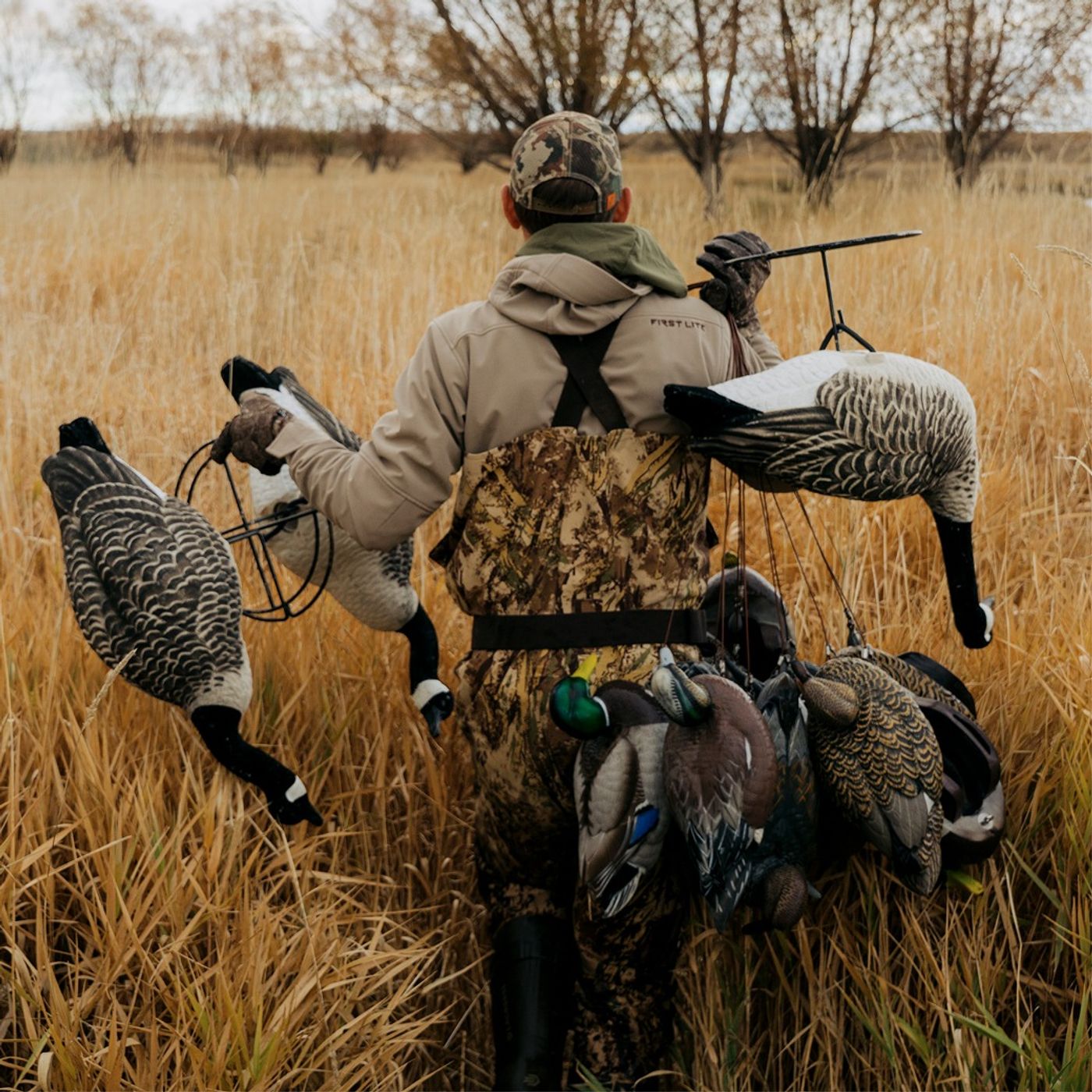
The Daily
Eating What You Kill This Thanksgiving
00:56:52
Here at “The Daily,” we take our annual Thanksgiving episode very seriously. A few years ago, we rang up an expert from the Butterball Turkey Talk-Line, who told us that yes, in a pinch, you can cook a turkey in the microwave. Last year, we invited ourselves over to Ina Garten’s house to learn the timeless art of holiday entertaining (Ina’s tip: flowers that match your napkins complete a table.). This year, determined to outdo ourselves, we traveled to Montana to hunt our very own food. Our guest, Steven Rinella — perhaps the country’s most famous hunter — is an avid conservationist and a lifelong believer in eating what you kill. What first drew us to Rinella was the provocative argument he put forth in his best-selling book, “Meat Eater.” “To abhor hunting,” he wrote, “is to hate the place from which you came, which is akin to hating yourself in some distant, abstract way.” So, a few weeks ago, we spoke with Rinella at his podcast studio in Bozeman, Mont, about the forces th...
Loading summary
Transcript411 lines
- [00:01]
McCormick Turkey Gravy Announcer
Five minutes is all it takes to add the iconic flavor of McCormick turkey gravy to Thanksgiving dinner. That's five minutes you could spend reading the WI fi password off the router for your nephew.
- [00:11]
Michael Barbaro
Okay, you ready? 5, 9, dash dollar B pound. Oh, sorry. Hashtag.
- [00:20]
McCormick Turkey Gravy Announcer
When you share Thanksgiving with family, every minute counts. So take five to bring McCormick's classic savory turkey gravy to your table. Learn more and find great last minute recipes@mccormick.com holiday.
- [00:37]
Michael Barbaro
Do you just want me to run through the different sounds? Okay, so, yeah, a simple quack is just. And then a lot of times this morning, to grab those ducks attention, I was doing five to seven quacks in a row. So, yeah, it's just like music. You're one with the duck. I try to be. I try my best. When most of us sit down today for Thanksgiving dinner, if we're being honest, we're not really thinking all that hard about where the food on the table actually came from. It came from the grocery store. And to the degree that we did think about where it came from, maybe we shopped the local free range organic aisle. Still, it came from the supermarket. But for Steven Ranella, the question of where his food comes from is almost a religion. Renella is a lifelong hunter, perhaps the country's most famous hunter, who shares his passion for eating what he catches through a growing media empire that includes a Netflix show and a podcast, both called Meat Eater.
- [02:03]
Steven Rinella
If you're just by yourself and you kill a moose in September. Yeah. How long can one guy live off that moose? You know, if that's all you're eating? You know, probably three months.
- [02:18]
Michael Barbaro
He's also written more than a dozen books, ranging from a history of the American buffalo to a series of cookbooks that explain things like how to gut a caribou or make a wild goose pastrami. But what really defines Rinella's work is an argument, and an argument that some might find kind of counterintuitive that killing animals can be part of loving nature, that reverence for the natural world is intimately bound up in the act of hunting. And so I was curious, as somebody who relies exclusively on the grocery store, what would it be like to visit Rinella and go on a hunt with him and then eat what we kill? From the new york times, I'm michael barbaro. This is the daily today. We're my hunt with steven rinella. It's Thursday, november 27th, thanksgiving day. Steve, Michael Barbaro.
- [03:34]
Steven Rinella
Michael, nice to meet you.
- [03:35]
Michael Barbaro
Tremendous honor. We meet Rinella at the meat eater headquarters in Bozeman, Montana.
- [03:41]
Steven Rinella
Yeah. I'll show you around a little bit.
- [03:42]
Michael Barbaro
He gives us a little tour.
- [03:43]
Steven Rinella
We have a. The kitchen space.
- [03:45]
Michael Barbaro
We see his test kitchen. Oh, that's a giant meat grinder.
- [03:48]
Steven Rinella
Wow.
- [03:49]
Michael Barbaro
His industrial sized meat freezer.
- [03:52]
Steven Rinella
This is like Giannis's elk bones on the way.
- [03:55]
Michael Barbaro
Should we go to the studio? Into his podcast studio, which I would describe the decor of as extremely carnivorous.
- [04:03]
Steven Rinella
This is a beaver behind you. Yeah. This is like what the whole country was built on. I mean, like that. The beaver skin trademark. Um, that's a muskox hide.
- [04:13]
Michael Barbaro
That's huge.
- [04:14]
Steven Rinella
Yeah, it's a sound deadener. These are. These are tan skunks. Okay. A thing I've always been. I pay a lot of attention to the fur trade. This right now is the hot ticket item in the fur trade.
- [04:26]
Michael Barbaro
Skunk.
- [04:27]
Steven Rinella
Yeah. You know why?
- [04:29]
Michael Barbaro
No. The.
- [04:30]
Steven Rinella
The hats that Orthodox Jews wear for. For. For holidays.
- [04:34]
Michael Barbaro
Yes. They're very extravagant. They're beautiful.
- [04:37]
Steven Rinella
The hip thing right now, the hip thing is to have those white. To have them made from those white skunk hairs.
- [04:46]
Michael Barbaro
I think of the Orthodox community as being kind of trend proof, but no, they're not.
- [04:49]
Steven Rinella
There's a trend. It's hot.
- [04:52]
Michael Barbaro
Okay. So thank you for the tour. Thank you for having us.
- [04:55]
Steven Rinella
Of course. Thank you. I appreciate you coming in, especially coming all this way to come to me.
- [04:59]
Michael Barbaro
So you have had a really interesting journey, in my estimation, to become the person that you are now. You're kind of an evangelist for hunting, champion of hunting. As a way.
- [05:11]
Steven Rinella
I'm like an explainer of.
- [05:14]
Michael Barbaro
Yeah, okay.
- [05:15]
Steven Rinella
Yeah. Explainer of.
- [05:17]
Michael Barbaro
Champion of it. As a way of connecting with the land, showing reverence for the land, and as you've put it, understanding the connection between human beings and the natural world. You grew up in rural Michigan.
- [05:32]
Steven Rinella
That's right.
- [05:33]
Michael Barbaro
Talk to me a little bit about some of these formative early hunting experiences.
- [05:39]
Steven Rinella
That you have to do that. Right. I got to go back one little generational bit. My dad was born a long time ago. Like, he fought in World War II. Okay. So my dad was raised by Italian immigrant grandparents. He was born in the south side of Chicago. He grew up in a world very, very removed from rural American life. But then when he got home from World War II, and this is a thing that he was one of those outdoorsmen that kind of was born of that experience. They had been out, you know, for over a year. You'd been out camping out, hanging out with guys wearing wool clothes, and he was they just got into it. Then when they came home, that's just what they did. There was even a comment a guy editor of a sporting magazine had made is like, how could you, how could you train an entire generation of men to, to shoot and camp and not expect them to become hunters? So he became a hunter, like out of that world.
- [06:34]
Michael Barbaro
I never thought about that.
- [06:35]
Steven Rinella
Yeah, like, so I got it from him. Like, I never decided. I never thought, oh, I should become a hunter and fisherman. It was just what we did. I did all the, like, I had all the normal stuff. I had friends, I liked music. Alongside it all was like this, this like obsession, a family obsession with hunting and fishing.
- [06:55]
Michael Barbaro
Do you remember an early experience of hunting that stays with you?
- [07:00]
Steven Rinella
Yeah. We would strike out on bikes to 22s and go hunt squirrels. But we had so much woods around and we thought it was like public, but it was just that we just went on everybody, everybody's land.
- [07:13]
Michael Barbaro
Why hunt a squirrel?
- [07:14]
Steven Rinella
Oh, they're great.
- [07:15]
Michael Barbaro
There's not that much meat.
- [07:16]
Steven Rinella
No, there's a lot.
- [07:17]
Michael Barbaro
There is.
- [07:18]
Steven Rinella
Yeah, there's a lot.
- [07:19]
Michael Barbaro
And what do you do with it?
- [07:20]
Steven Rinella
Oh, it's, it's, it's like it's thinking man's chicken, man. It's like, it's, it's the same color. My mom would. There was a real wild game craze back then. It was like the whole era was like the cream of mushroom era. So my mom would take a crock pot and fill it full of parted out squirrels. So two front legs, two back legs, and we trimmed the saddle. You'd call it the saddle. It'd be like the loin pieces. You'd like take a scissor and run it up the ribs. And so you got like the French call it a saddle of a hare, right. And you put it in a crock pot, fill it with cream of mushroom soup, and then turn that crock pot on. And then the minute you could pick all the meat off, you'd pick all.
- [07:59]
Michael Barbaro
The meat off, thinking man's chicken.
- [08:03]
Steven Rinella
If you enjoy food and you don't have a set rigid idea of whatever, you kind of like, like meat's supposed to be like this. If you just kind of like, like food and like novel things. Most people that do that, like squirrels, they're very good.
- [08:17]
Michael Barbaro
I had no idea.
- [08:17]
Steven Rinella
Yeah.
- [08:18]
Michael Barbaro
At this stage of your life, are you eating everything you hunt?
- [08:21]
Steven Rinella
Yeah, we ate a lot of stuff. We fried a lot of stuff. Yeah. You wouldn't have thrown. That would not be a thing. Like not a thing to Hunt and not consume. I remember.
- [08:32]
Michael Barbaro
Would it be a sin?
- [08:34]
Steven Rinella
Yeah, sin. Like, you know, I was raised in a Christian household. We wouldn't have talked about waste in terms of sin. But I remember one time in the woods, I remember my old man finding someone had dumped a bunch of wood ducks that they hadn't cleaned properly in this.
- [08:52]
Michael Barbaro
That they had hunted but not cleaned.
- [08:54]
Steven Rinella
Yep. Garbage bag. It was where everybody would haul their yard waste. And I remember my old man finding a garbage bag that had a bunch of improperly clean wood ducks. And it was this dude renting a house down the lake from us. I remember my wet. My dad went. Banged on his door and had words with him. It was like.
- [09:09]
Michael Barbaro
Well, just.
- [09:10]
Steven Rinella
He.
- [09:10]
Michael Barbaro
He would have seen that as so problematic.
- [09:12]
Steven Rinella
Why wasteful? Like, that was the thing. I. I was trying to explain everything.
- [09:17]
Michael Barbaro
These animals lived and died for nothing. If no one was gonna.
- [09:20]
Steven Rinella
It was like, you didn't waste stuff, man.
- [09:22]
Michael Barbaro
After being immersed in this environment, did you just say to yourself, I want to grow up and be a hunter?
- [09:27]
Steven Rinella
Oh, yeah. Well, no, because I just was. I never thought. I never thought about it. I never stopped for a minute and then restarted.
- [09:37]
Michael Barbaro
You just were a hunter.
- [09:38]
Steven Rinella
It just like, was never like, I want to get into this. It was just. That was just the main thing. Always the main thing.
- [09:46]
Michael Barbaro
Was it like the most romantic thing a kid could possibly be doing? I mean, you've explained that it's just kind of a default fact of life for you. But it sounds like it, even at a young age, is bringing you tremendous pleasure.
- [10:00]
Steven Rinella
Yeah. Identity became like an identity. And then I felt the thing, too, is through that I. I fell in love with the history of it.
- [10:09]
Michael Barbaro
And how did you know the history of it? Like, you're reading.
- [10:11]
Steven Rinella
That's what I got into. Like, I would just. I would read. That's what I would read. That's the main thing I would read.
- [10:16]
Michael Barbaro
What was the seminal childhood book of.
- [10:18]
Steven Rinella
Hunting Trap Lines North. I would check it out at the library, and then I'd recheck it out, and I'd recheck it out. If you went to that book now and found that in the Twin Lake Library, it. Dude, if you went. It'd be just my name again and again, like on that book.
- [10:30]
Michael Barbaro
Just what. What stands out from that book?
- [10:32]
Steven Rinella
It's like.
- [10:32]
Michael Barbaro
And just. Just briefly describe it.
- [10:34]
Steven Rinella
Okay, I. Again, all that hunting and stuff, what I wanted to do was I wanted, like, hunt and trap for a living. So, like, you know, people know all these names. Daniel Boone, for instance. Like, people think of Boone as an explorer, a pioneer, like he wouldn't have thought of himself that way. Boone was a market hunter. Boone hunted for the markets. He trapped beaver, he trapped otter. He trapped. He hunted bears for the bear grease market, bear oil, bear bacon, market deerskin trade. Like that's what Boone did. Like Boone did that for a living. All the things he's known for came out of the fact that that's what he did for a living. So as I got into it, I would just read about people that that's what they would do and that would generally force you backward in time. So I just read about trappers, I read about hunters, commercial hunters, professional hunters, because that's what I wanted to be.
- [11:26]
Michael Barbaro
So my understanding is that even as you're aspiring to the hunting life, you see that life early on as at odds with the whole idea of environmentalism and conservation.
- [11:42]
Steven Rinella
At that time, being in high school, I confused the environmental movement with the animal rights movement.
- [11:50]
Michael Barbaro
Which upset you because.
- [11:51]
Steven Rinella
Well, it upset me because the, the, the animal rights movement was at that time working very aggressively to ban hunting practices. And they were having success at it.
- [12:02]
Michael Barbaro
You thought they were the enemy.
- [12:04]
Steven Rinella
Yeah, 100%.
- [12:05]
Michael Barbaro
Because they were going to prevent you.
- [12:06]
Steven Rinella
They were going to destroy our lifestyle from hunting. The environmentalists were going to destroy our lifestyle as a 17 year old. Right. We started a group. You started, our group was Hate Hunters against Teenage Environmentalists. And we even like won the Can.
- [12:23]
Michael Barbaro
Drive Hunters against teenage Environment.
- [12:25]
Steven Rinella
I'll show you the shirt. I still have the shirt. I somehow. Because you couldn't Google stuff. I guess I somehow got it. My buddies and I got it. Whatever. We got it. That it was that that was the environmental movement, was the animal rights movement. We conflated them. But same time I remember there's this big woods. We always would hunt. They were going to go in and log this woods and these guys came in and marked all the wildlife trees with an orange ring. I remember me and my brother Danny sitting there matching paint. Like, I'm not kidding you. Matching paint to get that color and then putting it in a sprayer and going out and marking shitloads of extra trees.
- [13:09]
Michael Barbaro
Why?
- [13:09]
Steven Rinella
Cause we didn't want them to cut the trees down. But we're like, we're gonna save the trees. But we hate environment. We didn't know what we were talking about. We were just idiots.
- [13:19]
Michael Barbaro
You obviously get to a place where you feel that hunting and environmentalism, hunting and conservationism are actually really wedded. Tell me that story, how it is, how you go from a kid Wearing the hate T shirts to suddenly seeing that hunting is environmentalism, which is ultimately where you land. So what is it that happens?
- [13:40]
Steven Rinella
Probably the mo. The most impactful thing that happened. Well, a handful of things. The buddies I grew up around. Okay, guys that would have laughed at hate. We kind of didn't know what you could do for a living. So a lot of the people in my circle were like, I'm going to be a wildlife biologist, because then you could be outside. Or I'm going to be a game warden. So they start going into wildlife and fisheries management and imagine like the, the. The awakening, and you all of a sudden start understanding ecology.
- [14:11]
Michael Barbaro
Right.
- [14:11]
Steven Rinella
And, and, and then like conservation history. Out of that. One of my peers that goes into wildlife management, like, introduced me, for instance, to Aldo Leopold's the Sand County Almanac, which is probably. Which. Not probably, which is the most influen conservation environmental text.
- [14:29]
Michael Barbaro
That's kind of a cornerstone of the movement.
- [14:31]
Steven Rinella
Why it's the most influential is because it was written for rednecks, like what we were. It was written by a guy who knew what it was to chop a tree down, who knew what it was to raise a crop, who knew what it was to hunt deer, who knew what it was to kill something and then regret killing it. Like, he was talking to his people and he was saying, there's a thing, it's ecology. We need to know about it. Like, it's our history. We're. No one's going to save this but us. No one understands it and loves it like us. So it was like.
- [15:04]
Michael Barbaro
So he assigns a special place to the hunter.
- [15:07]
Steven Rinella
Yes.
- [15:07]
Michael Barbaro
This role of stewarding the land.
- [15:12]
Steven Rinella
Yeah. For many, many people. And this is an old book by this time, he introduces this idea of the hunter conservationists, and he introduces this idea that's like the days of us being conquerors and destroyers had to end. Right. It had to end.
- [15:35]
Michael Barbaro
Right. Like Daniel Boone is known, and you've written about this as somebody who may not have meant to, but ends up laying waste to entire.
- [15:42]
Steven Rinella
He killed what he loved species. He killed what he loved. And he would have told you the same thing. That's why he always had to go more and more west. He had to go more and more west to get out of the areas that him and his peers had decimated.
- [15:55]
Michael Barbaro
And Leopold is saying, no, we'd always.
- [15:57]
Steven Rinella
Had in this country, like, you have like, a preservation mindset, as exemplified by a guy named John Muir. Like, John Muir would look at a beautiful landscape and he'd say, no one should touch this, you can look at it for a minute, but don't touch it. Humans are evil. Preserve it. Rose. Theodore Roosevelt, Aldo Leopold presented a conservation viewpoint that would be that man is going to engage with the natural world. We are going to be part of the natural world. We have to be. Are we going to do this in a way that strengthens the integrity of these natural systems where we're going to interact, or are we going to interact in a way that destroys these systems? Elder Leopold was speaking to the people that are going to interact with the systems. He introduced people to the idea of ecology, that natural systems rely on all of their parts. Right. He was like, it's time for us to treat this as a thing we love or else we're gonna lose it. And so reading that it was, you identify with it 100%, man. Cause he like understood people that were out on the land. Like reading this book hit like a. I didn't even appreciate it till way later in life, like how much that hit because I understood what he was talking about. And then I read many books of people that were very uneas with hunting. Like Barry Lopez. Arctic Dreams had a huge impact on me. Barry Lopez very uneasy with hunting.
- [17:22]
Michael Barbaro
Why?
- [17:24]
Steven Rinella
Obvious. Because you're taking life. You're taking life. He's like a Zen Buddhist. You're taking life.
- [17:30]
Michael Barbaro
That brings me to what you become at this stage of your life. You're in college, right? After college you get an mfa.
- [17:44]
Steven Rinella
Yeah.
- [17:45]
Michael Barbaro
And you start writing. You start writing.
- [17:48]
Steven Rinella
But then I knew I was going to be a writer.
- [17:49]
Michael Barbaro
Right. So you're not just going to be a hunter, you're going to be a hunter who writes about.
- [17:55]
Steven Rinella
Yeah, because, because I was gonna be a trapper, but fur prices were so bad that it was just, it was untenable. But I had a knack for writing. I thought I was going to round out my income as a trapper by writing how to instructional trapping articles.
- [18:13]
Michael Barbaro
So it's a great plan.
- [18:16]
Steven Rinella
Yeah, I was gonna write. I was gonna write like, you know, late season muskrat techniques through, for, through the ice. Right.
- [18:23]
Michael Barbaro
Well, I want to talk about, I want to talk about.
- [18:24]
Steven Rinella
That's how I got, that's how I like began to, to write. But by the time I was finishing college, I wanted to be like a writer. Writer. Yeah.
- [18:32]
Michael Barbaro
Well, I want to talk about your writing because you do a lot of really interesting writing that very much embodies this lifestyle you have. You write a book about recreating this famous epic 45 course meal from a famous French chef using Ingredients that you have scavenged out in the world, including of course, wild game. You write a book about buffalo and then you write what I consider to be your manifesto, meat eater. And I think it's beautifully written. And you describe for people like me who aren't of and from the hunting world and the hunting life what is so visceral and romantic and also at times complicated, difficult about hunting. And there's a passage I want to read. Let me read it to you.
- [19:26]
Steven Rinella
Let's hear it.
- [19:28]
Michael Barbaro
I was hungry in the wilderness and here came a few tons worth of caribou. 50 yards out and closing fast. In a moment like that, there's no time for emotional dawdling. It's time for unerring judgment. It is a time for speed, both mental and physical. It is a time for action and precision and discipline. It is a time to do what millions of years worth of evolution built us to do.
- [19:52]
Steven Rinella
And.
- [19:53]
Michael Barbaro
And in the act of doing it, you experience the unconfused purity of being a human predator, stripped of everything that is non essential. In that moment of impending violence and death, you are gifted a beautiful glimpse of life. I want you to explain this idea because this is the part of the hunting life that I think those of us who don't hunt with any regularity probably struggle to understand.
- [20:18]
Steven Rinella
Yes.
- [20:19]
Michael Barbaro
Can you just explain that?
- [20:20]
Steven Rinella
Yeah. I have had the good fortune of taking many, many people out on their first hunting trip where they've gotten their first animal almost to the person. It's cathartic. People cry. It's a thing that happens if someone kills their first deer as an adult. They cry no regret, never regret. But it's like something is clicking with them about cycles of life and death. I never had that because I started so young. I deliberately started my kids very young to where nothing would surprise them. I later thought about that more when I had a chance now and then to hunt out with like indigenous hunters and gatherers in other parts of the world. You know what's absent, like in their hunting practices. Remorse absent. And these are people who for generations have hunted and fished for their living. There is like, it is joy and it is a lack of remorse. You feel honor, but like no remorse. It is taking life to them is life. It just is. It's like I continue on.
- [21:39]
Michael Barbaro
Is that the life you're describing when you say you're gifted a glimpse of life?
- [21:42]
Steven Rinella
Yeah. It's like that's how you stay alive. Like that is. That's the difference. And for ancestral humans, for wildlife, there's like death is you not killing.
- [21:54]
Michael Barbaro
Death is you not killing.
- [21:55]
Steven Rinella
Yeah. Because you starve. Right. Not me now, but I'm just talking about, like, why do you not see signs of remorse or compassion in wildlife? Why do you not see signs of remorse or regret with indigenous hunter gatherers? Because they've always seen with incredible clarity that. That taking of life, that killing gives life, gives life to them and their families.
- [22:23]
Michael Barbaro
That relates to something else. You write in this book I consider to be your manifesto. Why do you think so many people feel so disconnected from this thing that's so visceral for you? Do you think it's just as simple as the fact that we now all rely on vast industrial slaughterhouse operations to get our food? Because we all go into grocery stores and buy our food? You write about this. You said people have no problem eating their food. That proxy executioners.
- [23:01]
Steven Rinella
I'll never forget that phrase, hypocrisy. Kill. Like the thing I always think about. If I'm weighing the morality of this or if I'm like, analyzing my world and analyzing my food. It's like you ask yourself a simple question as much as it's possible. Put yourself in the shoes of an animal that will ultimately be consumed by a human. Would you rather jump into and live the life of something born on a slab of concrete and, like, fed every day and optimized. Yeah. And like your. Your inputs are optimized for your outputs, and it's like a done deal. When you hit 1100 pounds, you're dead. Right. Or imagine the life of a thing that is unaware. Like, unaware and then one day, just powder. Lights out in the woods, man, that wild life, for me as a human, trying to understand, like, that wild life is more beautiful and that wildlife is better.
- [24:06]
Michael Barbaro
What you're saying is there's virtue in consuming an animal that has lived a rich and full and varied life on their own terms?
- [24:19]
Steven Rinella
I believe so. There is a tremendous beauty in wildlife living in wild places. We culturally honor it. We build vacations around going to look at it. So when you're eating a thing that lived that life, that lived that, like, beautiful, wild, free life, it's just better. It's just different.
- [24:44]
Michael Barbaro
Right? It's the ultimate free range.
- [24:45]
Steven Rinella
Yeah. It's like nothing to regret here, man. It's a beautiful place, it's a beautiful animal. It lived a beautiful life, and now it's supporting us and we're going to support its environment so it can make more. It's just. It's tidy.
- [25:01]
Michael Barbaro
In writing about hunting, you, you deliver an interesting and pretty stark judgment of those who would judge hunters like you. You write, to abhor hunting is to.
- [25:14]
Steven Rinella
Hate something about yourself.
- [25:16]
Michael Barbaro
You're right. To abhor hunting is to hate the place of which you came, which is akin to hating yourself in some distant, abstract way.
- [25:26]
Steven Rinella
Yeah. So human history on our continent goes back somewhere around 20,000 years. Those people were all hunters. They hunted for a living. They were hunters here on this continent that only ended a couple hundred years ago. That's what's always had to. That's how people in what is now North America survived. They hunted. If they didn't hunt, they died. They were hunters. No matter how you define. Like, if you brought someone from outer space and they could come down and sort of get. Offer you, like, a little bit of an analysis of hunters, and they were to look at the scope of human history, and you're saying, hey, explain humans to me. The. The outer space person would look and be like, man, they're mostly hunters. Well, not lately. Right? That's what. That's, like, what we did. So how is it. How could it be that we've, like, shed all that? We haven't shed all that. So when I say that someone, like, abhors, the practice is like, dude, look at yourself. Where are your eyes? They're centered on your head, so you have really good depth perception. Why do you have canine teeth? It's like, you're not that far away from this.
- [26:36]
Michael Barbaro
But the abhorring, that's real. What you're identifying here, there's a cultural chasm right between the way you grew up and the way so many of us now see ourselves and how we see our relationship to food. And why is it the case that this thing that is so essential to you and that is at the heart of how you identify yourself has become so rare?
- [27:00]
Steven Rinella
I could answer that in 10 ways. Let me hit you with one.
- [27:03]
Michael Barbaro
Sure.
- [27:04]
Steven Rinella
Just to consider. If every American tomorrow went out and killed a deer, it'd be a real problem. We'd have a 200 million deer deficit. So it just became besides human will, besides what we want to do, it became impossible. It became impossible. It had to be, like, if you look at it, like, ecologically, it had to be. As the population exploded and as we destroyed all of our landscape, or much of our landscape, it had to be that we quit. That's the whole point of the agricultural revolutions, allows people to live close together. There was a reason why in, like, in Native America, the land had a carrying capacity. Human populations in, like, historic North America were the size they were, because that's how much you could fit there. That's how much you could extract from wildlife resources. And then we discover other ways. And so you can't anymore. You can't anymore. And even, like, think I've always felt was everybody can't do it, but I wanted everyone to understand it.
- [28:10]
Michael Barbaro
So, like many people in this world, you simply want to be understood.
- [28:12]
Steven Rinella
Yeah, I want to be understood. And also you want people to recognize this is the thing we haven't touched on yet. As I learned conservation history and I learned the outsized role of hunters in the conservation story, I also felt like we deserve more credit than we get. Right. And I was like, you should thank me. Now that I know what I know and you don't know, I know that you owe me a thanks. You owe me a debt of gratitude because by buying my hunting licenses and participating in things I participated in, like, we saved American wildlife.
- [28:49]
Michael Barbaro
Right. And I didn't really know this or understand it very well until I read your book and read many of your writings, although I should have known this, that hunting licenses contribute directly to the funding for American conservation.
- [29:03]
Steven Rinella
Yeah.
- [29:05]
Michael Barbaro
Steve, you've written many, many poetic passages about the act of hunting. And I want to, as we wrap up our conversation, return to one of those writings. And if you don't mind, I'm gonna ask you to read this.
- [29:21]
Steven Rinella
Oh, wow.
- [29:22]
Michael Barbaro
You got a great reading voice.
- [29:24]
Steven Rinella
I've learned to see the earth as a thing that breathes and writhes and brings forth life. I see these revelations as a form of grace and art, as beautiful as the things we humans attempt to capture through music, dance, and poetry. And as I've become aware of this, it has become increasingly difficult for me to see hunting as altogether outside of civilization. Maybe stalking the woods is as vital to the human condition as playing music or putting words to paper. Maybe hunting has as much of a claim on our civilized selves as anything else.
- [30:06]
Michael Barbaro
It's really beautiful.
- [30:07]
Steven Rinella
Oh, thank you.
- [30:08]
Michael Barbaro
It makes me want to go hunting with you.
- [30:10]
Steven Rinella
Oh, really?
- [30:11]
Michael Barbaro
Yes. Well, I want to talk about this. Tomorrow morning, very early, you are taking me and my colleagues out hunting. And just to explain, because this episode is going to be running on Thanksgiving, we're not going to be hunting turkeys. No, you were very clear about that.
- [30:29]
Steven Rinella
You can hunt turkeys here in the fall, but. But we hunt them in the spring. It's just like almost like culturally in the spring, during their breeding season, we hunt just the males, and you hunt the males when the males are out, gobbling and you can call them in and just very selective. Just get the males in the fall, guys will hunt. You can hunt them, but you, you risk killing the females. I don't like. Weirdly, I've never killed a turkey in the fall. I've killed many, many turkeys in the spring. I don't hunt them in the fall. So what's also fun, I love this little fact. The pilgrims, they're probably eating foul waterfowl. Migratory waterfowl, 100% deer, probably seafood, most certainly geese. If you look at all, if you look at all the journals and stuff, they were eating migratory waterfowl.
- [31:22]
Michael Barbaro
So we're hunting duck.
- [31:24]
Steven Rinella
Y. You will see ducks for sure. And you will eat ducks.
- [31:28]
Michael Barbaro
I promise we'll eat them together. All right, well, we'll see you at dawn. Till then, thank you.
- [31:35]
Steven Rinella
Thank you.
- [31:36]
Michael Barbaro
Appreciate it.
- [31:54]
McCormick Turkey Gravy Announcer
What makes a memorable Thanksgiving? Friends and family sharing stories and dishes by candlelight. The smell of fresh turkey, stuffing or mashed potatoes brought to life with McCormick Gravy. In 135 years, McCormick has seen a lot of Thanksgivings. And while there's no one perfect meal, you know it's special when you're there. McCormick Turkey Gravy is the delicious flavor that completes your holiday meals. With a prep time of just five minutes, it might be the easiest way to make Thanksgiving memorable. Learn more@mccormick.com holiday.
- [32:28]
Michael Barbaro
Hey, it's Vaughn Vreeland from New York Times Cooking. Colder weather is here, and I'm no meteorologist, but I think the forecast says you should bake with us. These are deluxe cookies. Do you guys want to try this? Oh, my God. I could eat 5 billion of these. Mixing bowl to to cooking your mouth in about 30 minutes.
- [32:47]
McCormick Turkey Gravy Announcer
Ooh, look at this color.
- [32:49]
Michael Barbaro
Smells so good.
- [32:51]
Steven Rinella
You better cut because this is gonna get messy.
- [32:54]
Michael Barbaro
Listen, even if there's sweaters in your oven right now, I promise at New York Times Cooking, we have a recipe for everyone. So come bake with us@nytcooking.com. Oh, yeah.
- [33:10]
Steven Rinella
Wait, you guys got coffee already in the room. Oh, the room coffee.
- [33:15]
Michael Barbaro
Yep.
- [33:15]
Steven Rinella
There he is.
- [33:19]
Michael Barbaro
Oh, man, is it nice out. Prepare for the worst. Embrace the 50°5am weather. The next morning, Steve picks us up in his very large pickup truck. You are the picture of promptness to drive us out to the duck hunting spot.
- [33:37]
Steven Rinella
Unseasonably warm.
- [33:38]
Michael Barbaro
And the only question is, will the ducks notice?
- [33:42]
Steven Rinella
They might get down to an area like this and the weather is suitable, and then they'll just hang.
- [33:49]
Michael Barbaro
So doesn't it seem like duck hanging weather?
- [33:53]
Steven Rinella
Yeah, very duck hang weather.
- [33:54]
Michael Barbaro
Why would you flee this weather?
- [33:55]
Steven Rinella
Yeah, Because I do. We should go back north. It's too hot.
- [34:04]
Michael Barbaro
Okay, so can you just, just explain where we're going? You picked us up at our hotel in downtown Bozeman. Yep.
- [34:11]
Steven Rinella
I have a buddy. There's a property over here owned by a guy named Mark Pierce. He's a friend of mine. He's a big wetlands duck conservation guy. That's his thing, the way he, like, you know, they run cattle out there, they farm out there. But he is like his. Manage his land management, his wildlife first, Ducks first.
- [34:36]
Michael Barbaro
Why did you want us to be hunting at this hour? Because it's 5:20 in the morning.
- [34:42]
Steven Rinella
So there's the main movement that ducks will make like all day. The big movement that ducks will make is at daybreak sometime in the morning in the cold, gray light of dawn. To quote Robert O. Kean Jr. They, they like to float. They like to fly then. So that's why you want to be out there. And the other thing is, it's just like, there's like a tradition component. Like even if someone said they're like, man, they're not really going to fly till 9am Right. You just kind of would feel like.
- [35:16]
Michael Barbaro
Lazy bugs.
- [35:17]
Steven Rinella
Yeah, you'd feel like a real loser. It's just like, like I like hunting turkeys almost morning anything. And we kill a lot of turkeys between 10 and noon. But it's a sin to not be out there at daybreak.
- [35:35]
Michael Barbaro
And I suppose this is old hat for you, but is this drive and the whole getting there process still filled with a lot of excitement for you every time you hunt?
- [35:45]
Steven Rinella
Oh, yeah. No, it's always, it's. There's always an anticipation of what's going to happen or there's always like an element of mystery. It's like asking. It's like asking a question. You know, one time I was writing something about fishing. I was saying like, every cast, like you're asking a question, you know, waiting for the answer. So.
- [36:10]
Michael Barbaro
All right, so we're now off the main road.
- [36:11]
Steven Rinella
Yep. And we're. We're kind of in the agricultural area. And this is ground out here that won't get developed ever.
- [36:18]
Michael Barbaro
So we're just pulling out into the tall grass here.
- [36:21]
Steven Rinella
Yeah. And like, and there's crop fields all around us, but we're kind of down in the. We're down in the channels of water at this point.
- [36:28]
Michael Barbaro
We're about 25 minutes outside of Bozeman, and it's so dark, we could honestly Be anywhere. It's quite beautiful just to see this all on the car lights.
- [36:36]
Steven Rinella
Yeah. And it's fun when you go somewhere new or you. You don't know where you're at in the dark. And as it gets light out, you get to be like, oh, I'm completely disoriented.
- [36:43]
Michael Barbaro
We pull into what looks like a grassy meadow and we all get out, and then we meet Max Bardow. Steve, how's it going?
- [36:50]
Steven Rinella
Good, good, good. This is Max. Did you meet everybody?
- [36:53]
Michael Barbaro
Max works with Steve on his TV show as a videographer, but he's here this morning because he's a very good duck hunter who brought all this gear with him, along with a very important member of our hunting party, his dog Ruby.
- [37:08]
Steven Rinella
Yeah, this is Ruby.
- [37:10]
Michael Barbaro
Hey, you're fine. And then suddenly it's very busy. Max and Steve are unloading a ton of stuff from their trucks.
- [37:18]
Steven Rinella
Are you gonna wear waiters, Steve? Yeah.
- [37:20]
Michael Barbaro
Let's go.
- [37:20]
Steven Rinella
Okay. If you want to get real serious, I'll give you a big headlamp.
- [37:24]
Michael Barbaro
I mean, wow, look at this thing. It's like a brass lamp, I think, fixed to a hunting cap.
- [37:33]
Steven Rinella
It's called a raccoon light.
- [37:34]
Michael Barbaro
And of course, they're gathering their guns and their ammo.
- [37:38]
Steven Rinella
Well, it's shotgun. Can't hunt ducks with a rifle.
- [37:41]
Michael Barbaro
Now, just to be clear, I am here observing. I'm not going to be shooting a gun today.
- [37:45]
Steven Rinella
And even, like, all this stuff is regulated. So this is called a 12 gauge shotgun. When hunting migratory waterfowl, you have to put a thing in here called a plug that prevents you from putting more than two shells in the magazine.
- [37:59]
Michael Barbaro
So this is a pile of plastic decoy ducks. There are a shocking number of duck decoys, and goose decoys use them to.
- [38:10]
Steven Rinella
Fool real ducks, which is kind of crazy to me.
- [38:13]
Michael Barbaro
I always make the joke whenever, like, the ducks don't come in, I always say, well, yeah, we got a pile of plastic out there and four human beings trying to hide themselves. You know, like, no wonder they're not coming in.
- [38:24]
Steven Rinella
They're like, that don't look good.
- [38:25]
Michael Barbaro
Nope. And pretty soon we're all walking out into the grassy darkness.
- [38:35]
Steven Rinella
Yeah, please.
- [38:36]
Michael Barbaro
You can just grab them by the handles. Yep, like that Morning witness day. Yeah. So we're setting up for the water. How deep is it? It's like just below my knees here.
- [38:54]
Steven Rinella
So what we're doing is we're putting decoys here to show that there's ducks congregating here. But then, but then the main pocket. You want them to be in is right there. And that puts them more out in front of you.
- [39:05]
Michael Barbaro
So basically right here in this. Now in this vacuum is where you hope the duck is going to come.
- [39:10]
Steven Rinella
Yeah, like, like kind of good landing areas.
- [39:13]
Michael Barbaro
Right where you just toss that rock.
- [39:16]
Steven Rinella
Yeah, right across that rock. I got it.
- [39:19]
Michael Barbaro
It's kind of cool to now see them spread about suddenly. Looks like there's a lot of ducks in this pond, even though they're fake. Steve, can you just describe this structure that we're gonna be going into?
- [39:36]
Steven Rinella
Yep. This is a very nice hunting blind.
- [39:43]
Michael Barbaro
It's like a. It's like a very elaborately camouflaged shoe box.
- [39:47]
Steven Rinella
Yeah. It's got a bench to sit in. It's got a little gun rack. And then it's picture just like. Yeah, a shoe box big enough to hold seven people, ideally five people packed very tightly. We're challenging the space, but it's big. Mainly it provides a structure that you can affix all this vegetation to.
- [40:08]
Michael Barbaro
Yeah, I think it's like thoroughly layered with hay brush.
- [40:13]
Steven Rinella
It's meant to blend in. Yeah.
- [40:15]
Michael Barbaro
If you didn't know it was here, it wouldn't be here.
- [40:18]
Steven Rinella
Ducks can see color. They're. They can be very hard to trick. And so this just allows you to stay concealed.
- [40:24]
Michael Barbaro
That's a dog box. Yeah.
- [40:29]
Steven Rinella
That'S for his dog. That can't.
- [40:31]
Michael Barbaro
That's. So your dog is counted by. Yeah, she loves it. Like it's crazy. If I don't bring her, she is so teed off at me. Just like. So we pile into this duck blind. So you mind if I go in?
- [40:45]
Steven Rinella
No, no.
- [40:47]
Michael Barbaro
Steve plants himself at the far end of the blind and Max is at the other end. So you're.
- [40:56]
Steven Rinella
What's that?
- [40:57]
Michael Barbaro
See that's loaded now.
- [40:59]
Steven Rinella
Yeah. This is the safe. Do we have everybody within ear shot? Cuz you're not shooting. There's not a lot to know about, but I really can't think of any way you'd get shot. Don't.
- [41:13]
Michael Barbaro
Don't get shot.
- [41:14]
Steven Rinella
Yeah. Don't stand up unexpectedly. You don't have shotguns so you can't really do any damage. Yeah, never mind. I can't picture a world in which you'd get hurt. Don't jump out of the blind. But you, you can't because Max is on the end. There's nothing to do.
- [41:33]
Michael Barbaro
And after all the work of placing the decoys and getting the dog into the dog blind and all of us humans and our gear into the duck blind, there's nothing to do but wait. So it's now about 6:30am and first light is emerging. And the silhouettes of the mountains now appear with the sun behind them. Oh, and that's our first actual real bird sighting. Just flew right over us. I think that was a goose. What was that? That was me blowing my car. Max has with him a variety of duck calls. These little wind instruments that are hanging around his neck. Do you see that duck swimming there? Yeah, that's a Drake mountain. He blows them occasionally to attract the birds right now. And he's really, really good at it.
- [42:39]
Steven Rinella
Hey, Max, what was League of Light? Oh, we got two minutes.
- [42:43]
Michael Barbaro
Now that we're settled, Steve and Max become very conscious of the time you.
- [42:50]
Steven Rinella
Can legally hunt ducks 30 minutes before legal sunrise. There's a doc.
- [43:00]
Michael Barbaro
And Max lets Steve know officially that they're good to go.
- [43:06]
Steven Rinella
Here comes duck right here.
- [43:08]
Michael Barbaro
And Steve shoots a bird right out of the sky. It all happens so fast. You just shot and killed the very first duck you saw of the morning.
- [43:30]
Steven Rinella
No, no, we saw a lot of ducks this morning.
- [43:32]
Michael Barbaro
No, you just.
- [43:33]
Steven Rinella
That was the first duck at legal light.
- [43:36]
Michael Barbaro
And you hit it.
- [43:40]
Steven Rinella
Yep, we hit one.
- [43:48]
Michael Barbaro
The dog returns to the blind with the duck in its mouth. That's the most efficient thing I've ever seen. Ruby Kennel. Max tucks the duck onto a little shelf in front of us, and right away, Steve starts to spot more and more birds flying overhead.
- [44:04]
Steven Rinella
Look at all those ducks.
- [44:05]
Michael Barbaro
Look at this. And the rest of the morning proceeds just like that. There are these very long periods of silence. Some hits and some misses.
- [44:22]
Steven Rinella
You know those people that make those rugs and they put an imperfection in there so that it's not insulting to God. You know, like, Max has this little thing where he'll do a miss now and then. What was that?
- [44:36]
Michael Barbaro
You making fun of me because I missed? No, he's calling you godlike, and we're just kind of hanging out together.
- [44:42]
Steven Rinella
Well, no, he doesn't want to seem pompous to God in the eyes of God, so he misses them inside this.
- [44:49]
Michael Barbaro
Incredibly tiny duck blind in the middle of this gorgeous grassy wetland.
- [44:54]
Steven Rinella
As they better understand bird vision, there's this idea that iridescence is like glowing neon. That this in their vision is like, you know, like very. They're very tuned into that iridescence.
- [45:14]
Michael Barbaro
And I start to feel this camaraderie. We're all now in league together. And then every so often, Max and Steve become extremely focused once again on the sky. Everyone gets serious. Right side, right side, right side. And then another duck is down hey, girl. Max returns to the blind with the bird. And he holds it out to me. Michael. Wow.
- [45:47]
Steven Rinella
He's very pretty.
- [45:48]
Michael Barbaro
Yeah, you can just grab him like this. Grab him. He's a little wet, but. Wow. I've never held a duck in my hands before, living or dead. Wow. He's got so many different colors on him too. It's still warm. I'm holding this still warm duck with his beautiful feathers. Dark green, dark blue. It's kind of white, fringed at the edges. Steve, I'm feeling the things now.
- [46:18]
Steven Rinella
What are you feeling?
- [46:19]
Michael Barbaro
I'm feeling all the things. Oh, really?
- [46:21]
Steven Rinella
I mean, you feel something?
- [46:24]
Michael Barbaro
This creature in my hands that was alive 10 seconds ago and is now still warm. And I'm feeling all the feelings that you write about. It's like, it's beautiful, it's sad. It's.
- [46:41]
Steven Rinella
Like regret.
- [46:43]
Michael Barbaro
Do I feel regret like you?
- [46:45]
Steven Rinella
Are you like. Man, we shouldn't have done that.
- [46:47]
Michael Barbaro
No, that's not. That's not the first. That's not the feeling I have. I just feel connected to this thing. That's what I feel. I feel connected to it in a way that's kind of hard to explain.
- [47:00]
Steven Rinella
Like my daughter, she'll want to lay them a certain way. She kind of smooths them out.
- [47:07]
Michael Barbaro
Wow. I feel like this is changing my relationship to the sky. I'm just like scanning the sky, looking for any sign of wings because they come so quickly. By 9am There is a row of eight birds lined up inside this duck blind. Can I stand up, Steve?
- [47:36]
Steven Rinella
Yeah. We're done.
- [47:37]
Michael Barbaro
And Steve calls it we're done. So that's it. We're done. Eight ducks, two hours.
- [47:46]
Steven Rinella
Is that what it was?
- [47:47]
Michael Barbaro
Yeah. After the break, our hunting expedition concludes in Steve's kitchen. Mom making Thanksgiving dinner looks like so much work. How do you make it taste so good?
- [48:13]
McCormick Turkey Gravy Announcer
Well, the prep is just as crazy as it looks. But here's a little secret. The gravy McCormick tastes great on almost everything.
- [48:20]
Michael Barbaro
How about the mashed potatoes? Oh, come on. Too easy. Turkey?
- [48:26]
McCormick Turkey Gravy Announcer
Yep.
- [48:26]
Michael Barbaro
Green beans, stuffing, rolls.
- [48:31]
McCormick Turkey Gravy Announcer
McCormick Turkey Gravy is a favorite around here. It's quick to make and as you can tell, it's delicious on a lot of dishes. It wouldn't be Thanksgiving without it. Learn more@mccormick.com holiday I gave my brother.
- [48:43]
Michael Barbaro
A New York Times subscription.
- [48:45]
Steven Rinella
We exchange articles and so having read.
- [48:47]
Michael Barbaro
The same article, we can discuss it.
- [48:50]
Steven Rinella
She sent me a year long subscription so I have access to all the games.
- [48:53]
Michael Barbaro
The New York Times contributes to our quality time together.
- [48:56]
Steven Rinella
It enriches Our relationship. It was such a cool and thoughtful gift.
- [49:01]
Michael Barbaro
We're reading the same stuff. We're making the same food. We're on the same page.
- [49:06]
McCormick Turkey Gravy Announcer
Learn more about giving a New York Times subscription as a gift@nytimes.com gift.
- [49:16]
Michael Barbaro
Okay, so we're on our way to Steve's, where the ducks await us, and we're gonna pluck them, butcher them, eat them. There's no question this is Steve's house because there's a beautiful set of antlers hanging over the garage. I think it's actually a full skull. It's a huge full skull with antlers just like the meat eater logo and.
- [49:47]
Steven Rinella
A lot more antlers as we approach the front door.
- [49:49]
Michael Barbaro
Oh, the door's open. Literally open door, which is very welcoming.
- [49:58]
Steven Rinella
Hi there.
- [50:00]
Michael Barbaro
The whole family's here. So we arrive at Steve's house. Okay, I'm Michael. Hi, Michael. I'm Katie. And we meet his wife, his three kids, plus their friends. Hi, everybody.
- [50:15]
Steven Rinella
We'll go this way to start.
- [50:17]
Michael Barbaro
Okay.
- [50:18]
Steven Rinella
You want to wear. Do you want latex gloves? You good?
- [50:21]
Michael Barbaro
I think. I think I'm okay. Just doing it with my bare hands.
- [50:24]
Steven Rinella
Okay, the bare hand.
- [50:25]
Michael Barbaro
We're in your.
- [50:26]
Steven Rinella
In the garage. We could do it inside, but we'll do it out here.
- [50:30]
Michael Barbaro
That makes sense to do it on the ground. So when you put your. You put your outside here in the garage.
- [50:34]
Steven Rinella
Usually inside, sometimes. What up with feathers out here.
- [50:39]
Michael Barbaro
So here are our four ducks.
- [50:40]
Steven Rinella
Yep. Want to see how to do it?
- [50:43]
Michael Barbaro
Yeah, I would like you to show me.
- [50:44]
Steven Rinella
Okay. So.
- [50:45]
Michael Barbaro
So you're just grabbing all the feathers on the chest and just pretty gently ripping them off.
- [50:49]
Steven Rinella
See, those are. Those could be teeth marks from the dog or pellet.
- [50:55]
Michael Barbaro
Why does it feel like you're so. My. My plucking is so insufficient.
- [51:00]
Steven Rinella
Oh, it's a learned thing. It's like. It's like blowing on a call. Like, the first time sucks, and you get better and better at it.
- [51:09]
Michael Barbaro
All right, I. I think I'm ready to face your judgment.
- [51:14]
Steven Rinella
You're not close yet.
- [51:16]
Michael Barbaro
Like, keep going, bud.
- [51:18]
Steven Rinella
Yeah, in the end. In the end, you'll get it where you can. You just kind of go like this. You don't need to do the back.
- [51:24]
Michael Barbaro
Okay.
- [51:25]
Steven Rinella
Unless you want a whole roaster to bring home.
- [51:28]
Michael Barbaro
Can you take duck interstate? Yeah.
- [51:31]
Steven Rinella
Well, you got. You got to decide, like. Well, I would give you this one, because this one's perfect. So we would pluck this, leave a fully feathered wing, and you can walk right on the plane with it. You don't need to check it. They might detect an organic mass, as they call it in TSA land. But you're not. There's no problem. You would feel like, no, I have a frozen. I have frozen food. And you're fine. If you'd like this to bring home, because that's a perfect spasm. Look at that thing.
- [51:54]
Michael Barbaro
It's beautiful.
- [51:55]
Steven Rinella
Looks like something out of Christmas Carol, don't it?
- [51:57]
Michael Barbaro
Yes, it does.
- [51:58]
Steven Rinella
Yeah.
- [52:00]
Michael Barbaro
With just a couple of palette marks, I think I'm getting the neck of my thumb.
- [52:08]
Steven Rinella
No, you're looking good now. So that's what you're after. And we can even clean that up more with blowtorx. But. So that's with a blowtorch. So just take this very. From a distance. Burn those little hairs off.
- [52:29]
Michael Barbaro
Is this the right distance?
- [52:31]
Steven Rinella
Just. Just enough where you watch them just get zapped. All right, let me go get the top.
- [52:36]
Michael Barbaro
Is this.
- [52:37]
Steven Rinella
Yep. Just real light. Don't cook it. Yeah, you're doing good. Then we wash them. They'll look real.
- [52:48]
Michael Barbaro
Did not expect to be using a blowtorch.
- [52:53]
Steven Rinella
Okay, see this? See this breastbone come in like that. Then you know when you see chicken tenders on a menu and kids want to order them, that's that. That's a duck tender.
- [53:10]
Michael Barbaro
That's that kind of classic duck fat.
- [53:11]
Steven Rinella
See, that's. That's good stuff. Okay, good.
- [53:14]
Michael Barbaro
Yeah. Head to the kitchen.
- [53:16]
Steven Rinella
Yep.
- [53:16]
Michael Barbaro
And then we move from the garage into the kitchen. You kind of have an indoor kitchen and an outdoor kitchen.
- [53:25]
Steven Rinella
Yeah.
- [53:26]
Michael Barbaro
And that.
- [53:26]
Steven Rinella
That's nice because it's covered, you know.
- [53:28]
Michael Barbaro
In winter's long, where Steve has been preparing this wild game feast using every imaginable cooking method, he is using a smoker.
- [53:40]
Steven Rinella
Oh, dude, that's overdone. Ah, dammit.
- [53:43]
Michael Barbaro
Apparently we've overcooked the turkey. The wild turkey, as is Thanksgiving tradition. Yes, yes, it's totally true. He's using an open fire that's like.
- [53:52]
Steven Rinella
That sous vide goose. And then you're putting it on a rack just to, like, crisp it up.
- [53:56]
Michael Barbaro
Put on top of an open. This is a rack on an open fire.
- [53:59]
Steven Rinella
Yep. He's cooking it on a fire.
- [54:00]
Michael Barbaro
And one by one, these dishes emerge. There's black bear that he hunted in Alaska. There's wild turkey and Canadian goose from a hunting trip with his kids. And of course, the duck.
- [54:14]
Steven Rinella
Like, the best way to get it. The skin crisp.
- [54:18]
Michael Barbaro
This is the duck skin.
- [54:20]
Steven Rinella
Is to put it as soon as you start the burner. So put them on there now. And. And don't.
- [54:27]
Michael Barbaro
He.
- [54:28]
Steven Rinella
Don't preheat it. Like, lay them on there.
- [54:29]
Michael Barbaro
Okay. I'm going to put the skin down.
- [54:31]
Steven Rinella
Skin down. You know what I'm saying? Like, if you put it on there when it's hot, it does. It doesn't. It doesn't get as crispy, and it, like, instantly, like, puckers up. We want to do it. Oh. From there in the oven, flip it and then into the oven. 400.
- [54:53]
Michael Barbaro
In the oven.
- [54:53]
Steven Rinella
Outside for a quick second.
- [54:56]
Michael Barbaro
Is this time to tell you how anxious I get about whether I'm overcooking meats?
- [55:01]
Steven Rinella
Oh, the duck.
- [55:01]
Michael Barbaro
The duck.
- [55:03]
Steven Rinella
Not long. Okay, we'll eat that real rare. The black bear that I took out, that has the bone sticking out of the end. That, and I've had trichinosis from black bear. That.
- [55:13]
Michael Barbaro
That's good to know.
- [55:14]
Steven Rinella
You have to cook the same way. Like, in the old days, you had to cook pork really well.
- [55:17]
Michael Barbaro
Yeah. That was cooked in the oven for quite some time.
- [55:19]
Steven Rinella
I saw him with the thermometer, checking it. Oh, it's like. It's like 20. 20 degrees above what it needs to be.
- [55:25]
Michael Barbaro
I learned my lesson. So now the duck is out of the oven. Pretty remarkable that that thing was flying above our heads. That solved it four or five hours ago. And then we sit down at Steve's dining room table, and all this meat that Steve has been cooking is laid out in front of us. This is a remarkable bounty you've prepared for us. This table is filled with meat.
- [55:53]
Steven Rinella
It's light on veggies, but what we have.
- [55:55]
Michael Barbaro
I would say it's very light on veggies.
- [55:56]
Steven Rinella
What we have here. Try one of these. These are good. So we grill carrots and then pickle them.
- [56:01]
Michael Barbaro
All right, where should we start?
- [56:02]
Steven Rinella
I ruined turkey.
- [56:04]
Michael Barbaro
So we'll start with the worst.
- [56:05]
Steven Rinella
We'll start with the ruined turkey. Terrible.
- [56:08]
Michael Barbaro
It's delicious.
- [56:09]
Steven Rinella
Neutral.
- [56:10]
Michael Barbaro
Mm.
- [56:10]
Steven Rinella
Very dry.
- [56:12]
Michael Barbaro
I think my mother's done worse than this. So this is the bear.
- [56:15]
Steven Rinella
This is black bear.
- [56:17]
Michael Barbaro
I can definitely say I've never eaten bear before.
- [56:19]
Steven Rinella
Yeah.
- [56:20]
Michael Barbaro
Tastes like.
- [56:21]
Steven Rinella
You'd never know it was bear meat.
- [56:22]
Michael Barbaro
Tastes like lamb or beef.
- [56:23]
Steven Rinella
Yeah, it's lamb. Like, this is fine about you. Never. You never flag it as unusual.
- [56:29]
Michael Barbaro
Now, is the sous vide and grilled.
- [56:33]
Steven Rinella
No, that's the can of goose.
- [56:35]
Michael Barbaro
That's good.
- [56:36]
Steven Rinella
And you can dress it up all kinds of ways.
- [56:38]
Michael Barbaro
It's really tender.
- [56:39]
Steven Rinella
Yeah.
- [56:40]
Michael Barbaro
I'm very excited to try the duck.
- [56:44]
Steven Rinella
It got cold.
- [56:47]
Michael Barbaro
Got cold.
- [56:48]
Steven Rinella
It took a long time. Nothing wrong with cold duck.
- [56:51]
Michael Barbaro
It's great. It's fatty, juicy, cold. I mean, just to take it back to our original conversation, it's extremely gratifying to consume food that you yourself have participated in. Hunting, defeathering, butchering, cooking. It's like 100% start to finish your food.
- [57:21]
Steven Rinella
You're the only person ever touched it. You ever think about that? No one's ever touched that except us.
- [57:26]
Michael Barbaro
Yeah.
- [57:27]
Steven Rinella
First person, only person.
- [57:29]
Michael Barbaro
Yeah. It's like I feel a certain level of possessiveness over this food I don't think I've ever felt before. It's not anonymous.
- [57:35]
Steven Rinella
Yeah. You know, then you get into freezer, freezer hoarding and stuff like that.
- [57:39]
Michael Barbaro
Or.
- [57:41]
Steven Rinella
You get really weird or weird to your family about it and everything. There's a thing that happens. Just talk to my wife about it sometimes.
- [57:52]
Michael Barbaro
Steve, I just wanted to thank you for the time you spent with us, for the lessons you've taught us, and express my gratitude. Happy Thanksgiving.
- [58:00]
Steven Rinella
Oh, Happy Thanksgiving to you.
- [58:02]
Michael Barbaro
Appreciate it. It was a really special day for us.
- [58:03]
Steven Rinella
Thank you very much.
- [58:04]
Michael Barbaro
A really profound experience.
- [58:08]
Steven Rinella
Next time you see a goose flying by, you'll be like, now that is.
- [58:12]
Michael Barbaro
What that tastes like.
- [58:12]
Steven Rinella
When you see a goose in a golf course, you're like, now that bird is a worthwhile bird.
- [58:29]
Michael Barbaro
Today's episode was produced by Tina Antolini. It was edited by Wendy Dore. Our field engineer was Afim Shapiro, and the episode was mixed by Alyssa Jane Moxley. It was fact checked by Susan Lee. Contains original music by Daniel Powell and additional music by Mar Marian Lozano. Special thanks to Ben Calhoun, Paige Cowet, Katie Finch, Malia Wolin and Phil Taylor. That's it for the Daily I'm Michael Balboro. Happy Thanksgiving and see you tomorrow. Is this sanitary if I ask to try one of these? I've got a duck call you can try. That is sanitary.
- [59:12]
Steven Rinella
Yeah, got it.
- [59:16]
Michael Barbaro
No, just. Just. Better. I want one. Good call. Ducks are like, not coming. Whatever that is, that's not.
- [59:43]
McCormick Turkey Gravy Announcer
Happy Thanksgiving from McCormick. If you haven't picked up McCormick Turkey Gravy Mix yet, there's still time. It only takes five minutes to make. It might just be the rich, savory difference that takes your meal from good to great. Discover flavorful inspiration@mccormick.com holiday.