← The Daily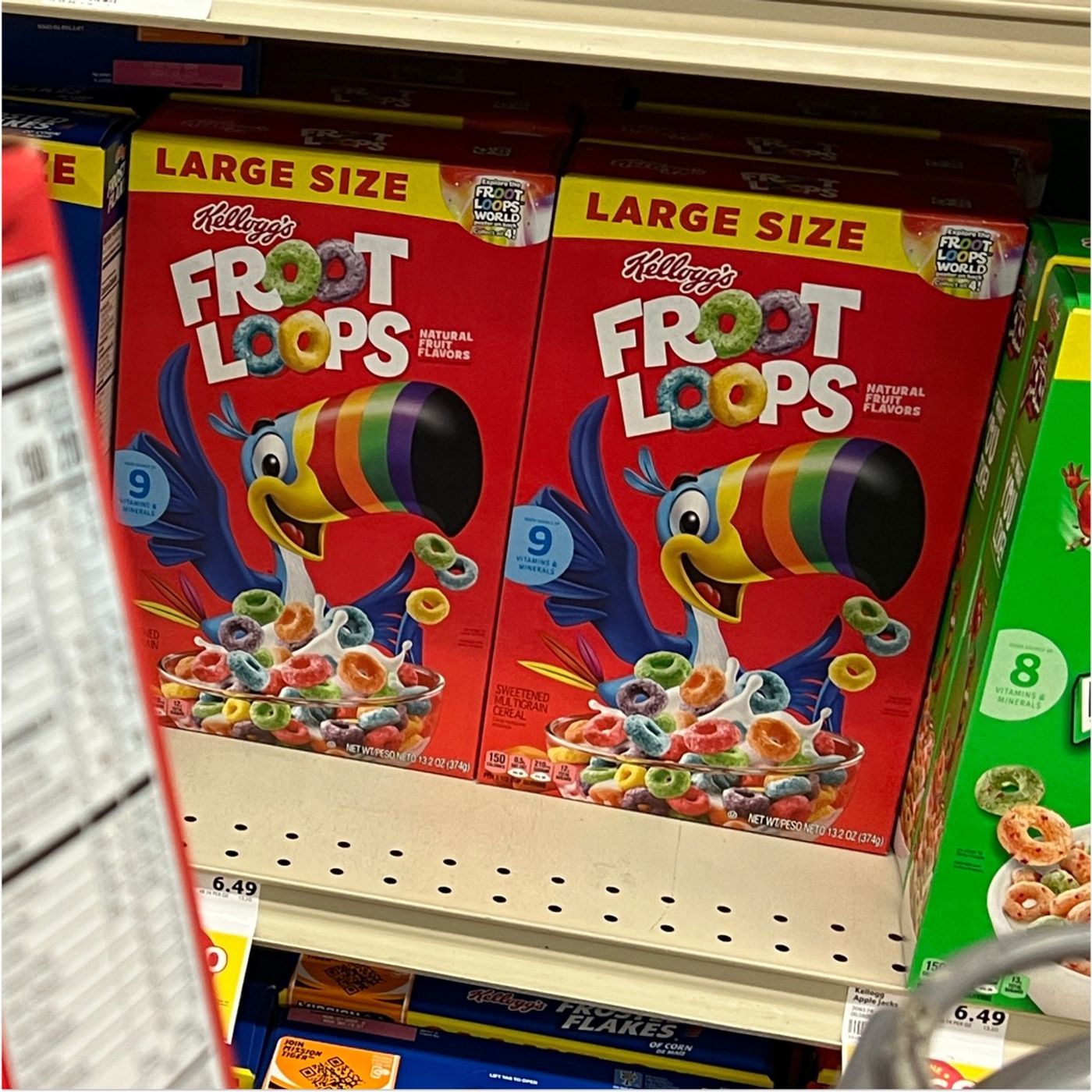
The Daily
Faded Froot Loops and Dull Doritos: Is Big Food Losing the War on Dyes?
00:29:58
The summer, some of the biggest food companies in America have announced that they plan to stop using artificial food dyes. It’s a move that would transform the look of some of the best known brands. Julie Creswell, who covers the food industry, explains how the health secretary, Robert F. Kennedy Jr., got the food industry to commit to a change that it has resisted for years — and that could be bad for business.
Loading summary
Transcript87 lines
- [00:00]
Julie Cresswell
Brought to you by the Capital One Savor Card. With Savor, you earn unlimited 3% cash back on dining, entertainment and at grocery stores. That's unlimited cash back on ordering takeout from home or unlimited cash back on tickets to concerts and games. So grab a bite, grab a seat and earn unlimited 3% cash back with the saver card. Capital One what's in your wallet? Terms apply. See capitalone.com for details.
- [00:27]
Natalie Kitrowa
From the New York Times, I'm Natalie Kitrowa. This is the Daily. All right, Blue.
- [00:39]
Julie Cresswell
This morning, changes are coming to some of your favorite snacks.
- [00:43]
Natalie Kitrowa
This summer, some of the biggest food companies in America have announced that they're planning to stop using artificial food dyes.
- [00:50]
Julie Cresswell
It's not just one company making this big announcement. Kraft Heinz, one of the nation's largest food companies. General Mills, the maker of cereal including Cinnamon Toast Crunch, iconic products like Kool Aid and Jell O, poised for a new look. Dozens of the top ice cream makers have agreed.
- [01:07]
Natalie Kitrowa
It's also those jet popped marshmallows as well as Crisp. It's a move that would transform the look of some of the most iconic brands that we buy.
- [01:16]
Julie Cresswell
Everyone is saying we just don't need these artificial dyes anymore, especially.
- [01:24]
Natalie Kitrowa
Today. My colleague Julie Cresswell on how the health secretary Robert F. Kennedy Jr. Got big food to commit to a change it resisted for years and that could be bad for business. It's Monday, July 28th. Julie, welcome to the show. This is your first time on the Daily right?
- [01:57]
Julie Cresswell
It is. I'm so excited to be here.
- [01:59]
Natalie Kitrowa
We're excited to have you. So you cover the food industry, which with RFK Jr. Now overseeing the Food and Drug Administration, is facing a lot of potential change. And we saw our first major example of that recently when these big food companies came out and said they're going to eliminate artificial dyes from from their products. How big of a deal are these announcements? Just put this into context for me.
- [02:27]
Julie Cresswell
This is for the American food system, one of the biggest changes we've seen in decades, period. No other administration, Republican, Democrat, has gotten the food industry to agree in mass to sort of make a significant change like this ever. If this works, this administration and Kennedy actually do have the opportunity to really reshape the American food system.
- [02:58]
Natalie Kitrowa
Right. I mean, he famously says he wants to make America healthy again. Exactly where does his war on these artificial dyes fit in with that?
- [03:08]
Julie Cresswell
He sees artificial dyes as part of the bigger picture around chronic disease. The whole issue with artificial dyes is they sort of fall in that spectrum of processed foods in America that he sees as not good for Americans and particularly American youth. But this idea of making American healthy again, and especially by going after artificial dyes is not new. Vani and I are both food bloggers, and she does investigations, and we were just alarmed by what we uncovered. Basically, these companies, these are American. You've had a lot of these mom fluencers and people within the movement that have been focusing on artificial dyes going back at least a decade. I'm here for all Americans who don't know the truth about our food industry.
- [04:05]
Natalie Kitrowa
So I started a petition having petitions.
- [04:07]
Julie Cresswell
Signed by people and taking it to Kellogg's and taking it to Mars and trying to pressure them to remove artificial dyes.
- [04:16]
Natalie Kitrowa
And what were the arguments they were making about why this should happen?
- [04:20]
Julie Cresswell
You know, there was a number of arguments that they were making. So what is wrong with artificial food dyes? Well, first of all, they're made in a laboratory with chemicals derived from petroleum. One is, these are dyes that are made from petroleum. The same type of ingredients like gasoline, asphalt, and tar. They're not from natural ingredients at all. A second argument is, you know, these dyes are used largely in foods that are geared and marketed towards children. And they produce bogus studies that say these food dyes are healthy because their marketing survey says that the neon colors make kids want to buy it. You know, adults aren't sitting down to a big old bowl of Fruit Loops. You know, it's geared to speak for yourself, Julie. Well, we've all been there, but, yeah, these are food that children want to eat because they're bright, they're colorful, they're fun. And, you know, marketing executives inside all these companies know that. But one of the strongest arguments lodged against these artificial food dyes really has to do with the health implications of kids consuming them in large amounts. Artificial food dyes have been proven to increase hyperactivity in children, to negatively affect. And those concerns have been echoed more recently by RFK Jr. It's very clear that dyes, all of them, are linked in very, very strong studies to adhd.
- [05:51]
Natalie Kitrowa
And are those claims actually true, Julie? Like, what do we know about the science there, about the evidence?
- [05:58]
Julie Cresswell
There's not a huge body of evidence, and there's been no research showing a causal relationship between food dyes and adhd. There was one study, though, that did start to get a lot of attention and helped kind of kick off this push against artificial dyes. You know, that occ around 2007 in the UK when they do something called The Southampton study, basically, they started giving children drinks. Some had artificial colors in them, and then another group that didn't, and they sort of watched their behavior. And the children that were given the drinks with Red 40 or other artificial colors in them started showing more hyperactive behavior than the others. And that's what ultimately led the European Union to take sort of a tougher stance or a harder look at these artificial colors.
- [06:42]
Natalie Kitrowa
And so in the eu, when you say they started to take a harder stance, what does that mean? What did they do?
- [06:47]
Julie Cresswell
So one of the things the European Union did is in 2010, they started putting warning labels on foods and beverages and snacks that had these certain. They call em the Southampton six. It's six specific artificial dyes that they believe are linked to behavioral issues. And now if you buy a packet of candy that is made or contains One of these Southampton 6 artificial dyes, they have a warning label on it that says something to the effect of this product could cause behavioral issues with children. Besides the warning labels on certain foods, you know, there are certain artificial colors like Red 3 that have either been banned or severely restricted in other countries because of their links to possible carcinogen and cancer in male rats. In fact, the evidence linking red dye 3 to cancer was compelling enough that the EU banned it back in the early 1990s. But in the US it took took us much longer. The FDA just this year passed a ban on red 3, and it doesn't go into effect until 2027.
- [07:54]
Natalie Kitrowa
So it sounds like even though the body of evidence itself isn't entirely conclusive or as robust as it could be, you're saying there's these other countries that are taking a much more aggressive stance on this. Why is that? Why hasn't the US Gone that route?
- [08:11]
Julie Cresswell
The EU takes an approach with regulation is sort of like what's best for the consumer. So if you're introducing a new ingredient in Europe, let's say the European Union, you know, you're going to have to produce a bunch of scientific documents and papers and research that basically says, you know, that this ingredient is not going to cause harm to the consumer. You know, and then the European regulators are going to weigh about that. They're going to think about that before any new ingredient gets introduced there. It's something called the precautionary principle. Here in the United States, we tend to take sort of more of a what's good for industry approach. Big Food here is a very powerful force, you know, very powerful lobbying. They've got their people that have been in and out of the fda, they put their people on research groups and boards. And so I think the, the regulatory framework and the ability for companies to introduce new ingredients at least is, is a little, is a little looser. There's a little bit more self, a little bit more, trust me, built into the system here in the United States. But American food companies have taken steps in the past to remove artificial colors from their foods. And basically it was a bust.
- [09:33]
Natalie Kitrowa
Why?
- [09:36]
Julie Cresswell
So back in 2015, there was a movement here in the United States, again, a little bit of writing off of the European Union. You had a push to get big food to change its ways to dump some of these artificial colors.
- [09:51]
Natalie Kitrowa
I love bright, fruity tricks.
- [09:53]
Julie Cresswell
Trix. And so at the time, you had companies like General Mills, which makes Trix breakfast cereal.
- [09:59]
Natalie Kitrowa
General Mills announcing all phase out artificial.
- [10:02]
Julie Cresswell
Colors come out with products that had no artificial colors. General Mills could not find good alternatives for blue and green pieces in his Trix cereal. So the company is getting rid of those colors. Other colors, such as red, won't be as vibrant and people didn't really want it. General Mill says customers have been asking for the old formula to come back. Consumers were writing in saying that the new colors made them depressed. So what do you think?
- [10:32]
Natalie Kitrowa
You think it was the kids or the adults complaining about grownups?
- [10:37]
Julie Cresswell
They didn't want to eat this cereal. A cereal company is bringing its old school cereal back. General Mills Trix cereal will once again be made with artificial dyes and flavors. And Mars big candy company Mars. It does some consumer analysis. And basically its conclusion from looking at and talking to consumers is that people in the EU were much more willing and actually wanted to have artificial colors taken out of their candy there, while people in the US were like, do not touch my M&Ms, right?
- [11:10]
Natalie Kitrowa
Don't mute my reds.
- [11:12]
Julie Cresswell
Don't make take away my blue M&Ms, you know, without a doubt. And so they reached a conclusion that after doing this research that they weren't going to touch M&Ms. And other, you know, bright treats and candies that Americans wanted to have remain the same.
- [11:34]
Natalie Kitrowa
It sounds like taking the dyes out of food, according to the companies, would probably reduce their sales. Companies say, we've tried this. It didn't work.
- [11:43]
Julie Cresswell
Generally speaking, yes.
- [11:44]
Natalie Kitrowa
What's the conclusion that the companies draw about why Americans are, you know, less into the natural, muted look of food?
- [11:56]
Julie Cresswell
There's a whole ton of like, sort of food science around colors and how people interpret them. You know, there's a saying that, you know, we eat with our Eyes, Sure. When you see a bright colored chip or a bright colored candy, your mind is telling you sort of your palate, this is going to taste strong. This is going to taste spicy, this is going to taste salty. You know, you have already in your head what that's going to taste like before you put it in your mouth. And I think so. American food companies are trying to figure out where that balance is because they've got decades of background and research that say bright colors sell. And sales are just one part of the concern inside these companies. The other part of the concern is expenses. You know, the long and short of it is moving away from artificial colors, which are really inexpensive. That is going to drive the costs up for the company. You know, and then one of the biggest issues for food companies right now is matching those colors. You know, what we've created in America using artificial colors is a palette of colors that just don't exist in nature. Blue. Oh, really tough for food manufacturers. You know, a blueberry, which everybody's like, oh, we've got blueberries. When you squish a blueberry, it's red, it's not blue.
- [13:19]
Natalie Kitrowa
Wow.
- [13:20]
Julie Cresswell
Even greens, you're like, oh, we've got kale, we've got spinach. Yes, there are greens that occur in nature, but those greens are very tricky to deal with. They degrade very, very quickly, very easily. One of the issues with natural colors is they're very sensitive to heat and light. Think of your. Your Gatorade in a clear bottle. One of my kids loves the blue Gatorade in a clear bottle. If you switch to natural colors, you may have to one switch your packaging. You know, you may not be able to have a clear bottle because now you're going to expose that natural color to light. The greens or the blues may separate. So when you pick that off the shelf, maybe the top of it is clear, but the bottom is where you've got your color sentiment now. And then on top of that, it also is going to change your manufacturing processes for these companies. You know, artificial dyes can sit in tanks for weeks, years, who knows, you know, they're fine. But when you start to deal with natural colors now, you may have to refri. And in order to achieve anything close to the colors that we've sort of achieved with artificial colors, you may have to use 10 times the amount of carrot juice or beet juice to get the colors that you want. You may have to reformulate your Lucky Charms or your Froot Loops in terms of just the actual ingredients. If you Start to add these different colors to it.
- [14:42]
Natalie Kitrowa
This is just much more complex than I think I could have possibly imagined before you just laid that out. And I have to say I am personally disturbed and saddened to learn that a cool blue Gatorade doesn't occur naturally in our world. It sounds like companies also don't want to do it because they say it also increases our costs. So there's this like one, two punch, fewer sales, higher costs.
- [15:08]
Julie Cresswell
Right. And all of this is coming at a really tough time for big food. Almost across the board, you've seen volumes of their cookies and their chips decline, I think after about two years. Food inflation, you know, there's a lot of Americans that are just either buying less of what they were buying before from these big food brands, or in some cases, they're increasingly trading down to private label store brands who know what the less expensive versions of those foods. You know, on top of that, we also are seeing the fallout. I think it's still early, but everybody's watching the rise of these weight loss drugs. You know, your Zempex, your GLP1s. And there's lots of research behind that that says when Americans or go onto those drugs, they definitely eat less of these processed foods.
- [16:00]
Natalie Kitrowa
Wow.
- [16:00]
Julie Cresswell
And so food companies are looking at these big changes around their ingredients at a time when they're just also seeing sales and volumes of their foods falling off.
- [16:14]
Natalie Kitrowa
Okay. So these are the forces that RFK Jr. Is contending with when he comes into office. This powerful food industry with little incentive to change. A regulatory environment that gives companies quite a bit of power. So how is it that Kennedy, less than a year in office, has been able to actually effectively fight these forces.
- [16:35]
Julie Cresswell
To go after big Food? You know, he sort of knew he couldn't use the usual playbook. Right. Regulation. Right. Creating a rule, having everybody weigh in on it, including food companies and lobbyists. It would have gone down in sort of a big battle of my science versus your science likely would have ended up in court. He'd be gone. No change would happen. So in order to really get change to occur here, he decided to take a very novel approach.
- [17:11]
Natalie Kitrowa
We'll be right back.
- [17:15]
Julie Cresswell
Your home is an active investment, not a passive one. And with Rocket Mortgage, you can put your home equity to work right away. When you unlock your home equity, you unlock new doors for your family. Renovations, extensions, even buying your next property. Get started today with smarter tools and guidance from real mortgage experts. Find out how@rocketmortgage.com Rocket Mortgage LLC, licensed in 50 states. Nmlsconsumeraccess.org 3030 hi, this is Lori Liebovich, editor of well, at the New York Times.
- [17:49]
Natalie Kitrowa
There's a lot of misinformation in the.
- [17:51]
Julie Cresswell
Health and wellness space.
- [17:52]
Natalie Kitrowa
But at the New York Times, no.
- [17:54]
Julie Cresswell
Matter what the topic, we apply the same journalistic standards to everything we write about, whether it's the gut microbiome or how to get a good night's sleep. Even if we're talking about something like is it bad for me to drink coffee on an empty stomach? Everything that our readers get when they.
- [18:12]
Natalie Kitrowa
Dig into a well article has been vetted.
- [18:14]
Julie Cresswell
Our reporters are consulting experts, calling dozens of people doing the research. It can go on for months so that you can make great decisions about your physical health and your mental health. We take our reporting extra seriously because we know New York Times subscribers are counting on us. If you already subscribe, thank you. If you'd like to subscribe, go to nytimes.com subscribe.
- [18:43]
Natalie Kitrowa
Julie, before the break, you said that RFK Jr. Had come up with this novel approach to get food companies to finally eliminate artificial food dyes from their products. Tell me about that strategy.
- [18:56]
Julie Cresswell
So what he did was take much more of sort of a peer pressure approach to regulation on artificial dyes. In April, he puts out an announcement basically saying that we're going to be banning certain dyes, popular dyes that are widely used in the American food system. And he holds this press conference. Let's join me in welcoming a warrior for America's children, RFK Juice. You know, when Kennedy comes up on stage, I was talking with my staff about these petroleum based dyes and I said if they want to eat petroleum, they ought to add it themselves at home. They shouldn't be feeding it to the rest of us. And he and other health care leaders on stage lay out the plan to get artificial dyes out of our food system. And I want to commend food companies for working with us to achieve this agreement or this settlement. You know, they say they've got all these companies on board, but what's missing, you know, who's not there are any food companies.
- [20:04]
Natalie Kitrowa
And is that weird?
- [20:06]
Julie Cresswell
It's really weird. You know, this is a big announcement and it's normally something that you would have, you know, a few company executives up there smiling for the cameras and shaking hands and showing that they're on board with this scene. Today we're going to take some questions from the press. You know, you actually see a reporter and there's reporters that notice that there's no. Food companies that are there. And they ask. Kennedy, you mentioned the goal is to work with the food industry to get most of the major synthetic food dyes out. You know, like, are the food companies really okay with this? What sort of agreements do you have? What is the plan if the food industry does not voluntarily agree to do that? And what are the next steps in if you can't get agreement within the industry? Thank you. Well, here the industry has voluntarily agreed. And. And basically he says, yeah, we have this understanding. It's happening. We are going to work with the industry. They've shown a lot of leadership on this.
- [21:00]
Natalie Kitrowa
He says they are on board.
- [21:02]
Julie Cresswell
Yes.
- [21:03]
Natalie Kitrowa
And are they?
- [21:05]
Julie Cresswell
Not really, no. What's happening behind the scenes? I spoke with a person close to the administration shortly after the announcement, and basically what they had was a soft agreement from one company.
- [21:22]
Natalie Kitrowa
Wow. A soft agreement from one company is. Not everyone is lined up behind this. So did RFK Jr just bluff?
- [21:31]
Julie Cresswell
He did. He bluffed. And what he hoped was or was sort of banking on was that this one company in the industry, they would not say who it was, but that they expected an announcement to be made within a couple of weeks of the press conference conference, and that that would be the beginning of sort of the whole industry toppling over.
- [21:50]
Natalie Kitrowa
And it seems like his bet on that domino effect happening actually paid off. How did that exactly go down?
- [21:57]
Julie Cresswell
It starts with PepsiCo, which makes Doritos and Cheetos and all these popular snacks. And. And the executives mention that they're going to start to move a number of their chips. Lays chips are going to have no artificial colors in them by the end of this year. And then you get to like, June and Kraft Heinz comes out, say, we are going to be rid of artificial dyes in our foods and beverages and whatever by the end of 2027. Even more recently, you know, the cascade and the domino effect is happening. More companies, you know, Nestle, General Mills, Smuckers, W.K. kellogg, which is Froot Loops, which is these cereals that says it too, will be out of artificial colors in its foods and cereals and products by the end of 2027.
- [22:47]
Natalie Kitrowa
I'm just struck by the avalanche, the cascade you described of announcements of these food companies saying we are willing to change. Why? Why are they doing this if the thing they're responding to is really just soft power on the part of RFK Jr.
- [23:05]
Julie Cresswell
It's soft power, but it's power. And I think this administration, more so than past administrations, causes a lot of fear. Right. You've seen where if they don't like something you're doing, they can come down and they can make your life really, really hard. And I think there's an element of the food industry saying, okay, artificial dyes, we don't like it, it's gonna cost us money. And maybe we will, maybe we won't change. We'll see how that plays out. But if it makes them happy, we say we're gonna change it. And hopefully they leave us alone. Because there's other, like, sort of, like, big game here or bigger issues. Right. If this administration comes out and says less sugar, less fat, less salt, that will really throw this industry into, you know, a downward spiral that's even harder.
- [23:55]
Natalie Kitrowa
Than dyes to remove from this stuff.
- [23:57]
Julie Cresswell
Much more difficult, and would absolutely impact sales, you know, so. So there's a little bit of an element here of, I think, like, pacify this administration, give them a win, and hope that you can fly below the radar for the next few years in a big way.
- [24:15]
Natalie Kitrowa
To your point, though, I have to imagine that one pitfall of this strategy is that there are no new regulations here. Obviously, RFK Jr. Is just relying on his own persuasive power, or perhaps the company's not wanting to get on the wrong side of the Trump administration. But that means this push doesn't actually have any real teeth.
- [24:38]
Julie Cresswell
That's right. Indefinitely, skeptics or critics will note this industry said and looked into making these changes a decade ago, and many of them didn't.
- [24:49]
Natalie Kitrowa
Right.
- [24:49]
Julie Cresswell
You know, so there's definitely a group of people that worry that we could get to the end of 2027, and most of our major food, beverages and snacks still contain artificial colors. But that's where for the industry, though, there's another aspect of this, which is the emerging state laws that could actually be a bigger problem for them.
- [25:14]
Natalie Kitrowa
What are those state laws? Tell me about the.
- [25:16]
Julie Cresswell
Stephen. A number of states, including California, Texas, West Virginia, that are actually creating laws around artificial colors that are much more stringent, that are actual, you know, in some cases, bans. In other cases, Texas wants warning labels. They're creating a set of rules for the food industry that's going to cause it significant problems because, you know, the industry is very much worried about a pattern patchwork quilt of rules, as they like to say, if you are M and M Mars. Now, if you're making your candy and you're selling it in Texas, you're gonna have to have a warning label, but not in New Mexico. You know, it's really difficult and confusing for them. But those are actual rules that could create more change than this administration can with this voluntary movement.
- [26:07]
Natalie Kitrowa
The fact that it's Texas and like West Virginia that's doing this, adding regulations on this stuff is, is surprising. I mean, those are red states, not places that I would necessarily expect to be leading the pack on food regulation.
- [26:22]
Julie Cresswell
Right. I mean, obviously you have California, you know, a much more liberal, left leaning state, which has been ahead of all of this. But it also shows, I think, the power, the political power of the MAHA movement that you have Texas, that you have West Virginia, sort of these deep red states that are basically saying we're going to regulate artificial dyes in a way that the federal government is not doing.
- [26:50]
Natalie Kitrowa
I want to step back here for a minute and just ask what you think RFK is really up to here. I think it's clear he's trying to bypass the bureaucracy, force companies with the soft power to make these pretty radical changes to the way our food looks. But even if he does succeed, if you make Fruit Loops less colorful, less neon, maybe you on the margins do some good if the research is right. But are you fundamentally changing the big health issues that he and other people care about?
- [27:32]
Julie Cresswell
So if you talk to nutritionists or health experts, they're sort of one of their biggest criticisms of going after food dyes. There's a little bit of a so what ism here, right? There's really no studies that say food dies equals obesity, food dies equals diabetes. Right. So they're sort of like, great, fine, you get that out of the system. But it's not really attacking your core mission statement, which is that, that chronic disease. But then there's another sort of line of thinking around all of this is whether in making these foods and snacks and drinks less pretty, less bright, are you in a roundabout way tackling the bigger issue, which is the chronic disease, which is the obesity, which is the diabetes? And especially when we're, when we're talking about children, if children who were drawn to brightly colored cereals and consuming boxes of them, you know, now eat less or eat smaller portion sizes of them, are you now tackling the bigger issue around sugar, salt, saturated fat, portion control? You know, we're really talking about retraining America, retraining the American mindset, the connection between our eyes and our palette. And, and you know, if we say, I don't want this, I'm going to eat less of this, that could be a win. That could absolutely be a win in terms of our overall intake of ultra processed foods.
- [29:20]
Natalie Kitrowa
Julie, thank you. We really appreciate your time.
- [29:23]
Julie Cresswell
Thanks for having me.
- [29:36]
Natalie Kitrowa
We'll be right back.
- [29:43]
Julie Cresswell
Hey, it's Lauren Dragan from Wirecutter, the product recommendation service from the New York Times, and I test headphones. We basically make our own fake sweat and spray it over and over on these headphones to see what happens to them over time. We're gonna put on some noise canceling headphones and see how well they actually block out the sound. I have 3,136 entries in my database.
- [30:02]
Natalie Kitrowa
Kids workout.
- [30:04]
Julie Cresswell
What version of Bluetooth? At Wirecutter, we do the work so you don't have to. For independent product reviews and recommendations for the real world, come Visit us@nytimes.com Wirecutter.
- [30:15]
Natalie Kitrowa
Here'S what else you need to know today. On Sunday afternoon, President Trump announced that the US and the European Union had reached a trade deal setting a 15% tariff on most goods, including cars. The agreement is in line with a deal that Trump recently reached with Japan, and it brought an end to months of tense negotiations with some of America's closest allies and trading partners. But the new rate was a big increase from tariffs that had previously been in place and was much higher than Europe had been pushing for. And Israel said that it paused military activity in parts of Gaza on Sunday to allow international aid in as outrage grows over the severe hunger facing Palestinians in the enclave. Israeli forces suspended operations in at least three areas of Gaza and plan to designate secure routes for the United nations to deliver aid, according to the Israeli military. The UN Says more than one in three people in Gaza has not been eating for multiple days in a row. And according to Gaza's health ministry, more than 50 Palestinians have died this month from starvation. Today's episode was produced by Ricky Novetsky, Shannon Lynn, Rob Zipko and Caitlin o'. Keefe. It was edited by Liz o' Brien Balin, Patricia Willins and Lisa Chow. Fact Checked by Susan Lee contains original music by Marion Lozano, Dan Powell and Diane Wong and was engineered by Chris Wood. Our theme music is by Jim Brunberg and Ben Landsberg of Wonderly. That's it for the Daily I'm Natalie Kitrowet. See you tomorrow.
- [32:20]
Julie Cresswell
Can you guess where a large part of your Uber fare goes out of control? Insurance Costs Rideshare drivers have significantly higher coverage requirements than taxis, limos and personal autos, making the industry a prime target for nuisance lawsuits even when the rideshare driver isn't at fault. Fraudulent claims and inflated settlements drive up insurance costs more and more every year, and riders pay the price. Learn more about how rising insurance premiums impact you@uber.com fair-insurance.