← The Daily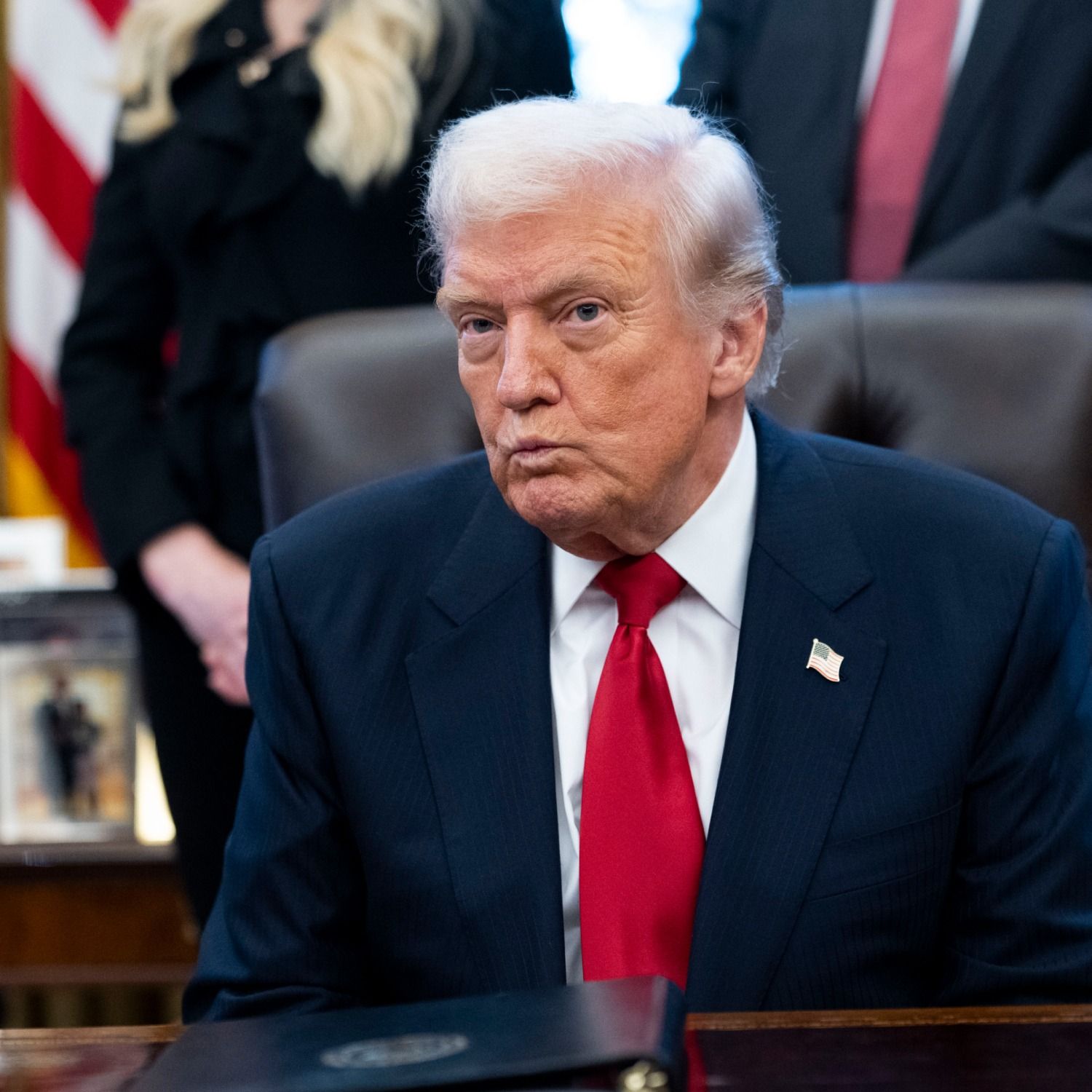
The Daily
‘He Knew’: What Epstein Said About Trump in New Emails
00:28:16
Thousands of pages of newly released emails between Jeffrey Epstein and his associates have put the convicted sex offender’s relationship with President Trump back in the spotlight. David Enrich and Michael Gold, who have been covering the story, explain what the new documents tell us and discuss whether they could prompt the release of the rest of the Epstein files.
Loading summary
Transcript78 lines
- [00:00]
NRDC Sponsor
This podcast is supported by nrdc, the Natural Resources Defense Council. NRDC combines the power of 3 million supporters with 700 staff, scientists, lawyers and advocates to take on the biggest threats facing our planet. They've protected endangered species, blocked harmful oil and gas pipelines, and won landmark cases that safeguard clean air and water. Be part of their next victory for Daily listeners. Donate at nrdc.org daily and your gift will be matched five times.
- [00:34]
Rachel Abrams
From the New York Times, I'm Rachel Abrams, and this is the Daily Thousands of pages of newly released emails between Jeffrey Epstein and his friends and associates have put the financier's relationship with President Trump back into the spotlight. Today. My colleagues David Enrich and Michael Gold on what these new documents tell us and whether they could trigger the release of the rest of the Epstein files. It's Thursday, November 13th. So, David, you're back on the show to talk to us about the latest chapter in this ongoing saga about the relationship between Donald Trump and Jeffrey Epstein. And and today, Wednesday, it seems like there was a very meaningful update to our understanding about that relationship. But can you just break it down for us? How significant were the revelations that came out today?
- [01:37]
David Enrich
Extremely significant, I would say.
- [01:39]
Rachel Abrams
Okay, walk us through what happened.
- [01:42]
David Enrich
So we woke up this morning to the news that Democrats on the House Oversight Committee had released three emails from Jeffrey Epstein's email account in which he and others were talking about Donald Trump. And the emails appeared to show that Epstein, Epstein recognized that he had some important information about his relationship with Trump and Trump's relationship with women or girls. And just as we were all starting to kind of decipher the cryptic wording in those messages, the Republicans on The House Oversight Committee 1 upped their Democratic counterparts and released additional Epstein related emails, many of which are also about Donald Trump, or at least mentioned Donald Trump. And so we've been spending what feels like an eternity today going through these emails one by one, reading them, trying to make sense of them and trying to understand their implications for Trump and his administration.
- [02:37]
Rachel Abrams
Okay, let's go one by one and start with the beginning of the day. The first emails that you saw, can you tell us what those emails were?
- [02:46]
David Enrich
Sure, I can read them to you. I've got them in front of me if you want me to.
- [02:49]
Rachel Abrams
Yes, please.
- [02:50]
David Enrich
Okay, so there's three of them. The first is from April of 2011. And this is a time, just contextually, when Epstein had recently been released from house arrest as part of his punishment for having solicited prostitution from a minor. He's seeking to kind of repair his reputation. And he's thinking about trying to get his guilty plea overturned. And he writes to his longtime associate, Ghislaine Maxwell, I want you to realize that the dog that has not barked is Trump. And then there's a victim's name redacted. She spent hours at my house with him. He has never once been mentioned. Ghislaine Maxwell responds, I have been thinking about that. And Trump at this point is a reality TV star in 2011 who has these vague and kind of unrealistic presidential ambitions. But it's a little unclear why at that point, Epstein thought that the information he had on Trump was relevant. And so we are all left wondering exactly what this means.
- [03:48]
Rachel Abrams
And just so I understand, the dog that hasn't barked is Trump means or implies that there's some kind of information that hasn't been made public public. And so this email is interesting because it suggests that Epstein knows things about Trump. Do I have that right?
- [04:05]
David Enrich
As best we can tell, yes, that is right. Epstein appears to believe that he has some information on Trump that has not yet become public and that could be useful to Epstein, or at least he's.
- [04:15]
Rachel Abrams
Trying to portray that he does.
- [04:17]
David Enrich
Yes, that's right.
- [04:18]
Rachel Abrams
So what's the next email?
- [04:20]
David Enrich
So the next email is from December of 2015, and it's between Epstein and a journalist named Michael Wolf, who is quite a prominent journalist who had clearly spent a lot of time with Epstein. And this takes place right as CNN is planning to air a debate involving the Republican presidential candidates, including Trump and Wolf. He says he hears that CNN is going to ask Trump about his relationship with Epstein. Epstein then responds, if we were able to craft an answer for him, what do you think it should be? Wolf then responds to that in a very telling way, which is, I think you should let him hang himself. If he says he hasn't been on the plane or to the house, then that gives you a valuable PR and political currency. You can hang him in a way that potentially generates a positive benefit for you, or if it really looks like he could win, you could save him generating a debt. And so he's floating this idea that Epstein has enough of the kind of the goods on Donald Trump that he can almost cultivate him as someone who's in his debt and that he can then presumably cash out debt in at a relevant point in the future.
- [05:29]
Rachel Abrams
Michael Wolff, of course, is a journalist who's authored multiple books about President Trump. What do you make of the fact that it seems like he is giving Epstein PR advice in this Moment.
- [05:40]
David Enrich
This is not the way that journalists traditionally operate. We regard sources as sources, not as clients. And it appears that he is giving not just some advice to Epstein, but really kind of sitting alongside him, coaching him on how he can use information that he has on a major party presidential candidate as leverage. To say this is a violation of traditional journalistic ethics and standards would be an understatement.
- [06:09]
Rachel Abrams
Aside from the questionable journalistic ethics of Michael Wolf, this exchange seems to suggest something similar to the first email you read, right? That Epstein has something on Trump, or at least is trying to show that he does. But just to be clear, we don't know what, if anything, Epstein actually had over Trump. We know that he was making it seem like he had some kind of leverage, but we don't actually know whether he had any information that Trump would have legitimately been concerned about. Right.
- [06:38]
David Enrich
Well, I'm not sure that is right. Look, the relationship between Epstein and Trump, we know a lot about it now in 2025, but back a decade ago, we knew next to nothing about it. And what we now know is that Trump in the 80s and 90s and into the early 2000s was pretty good friends with Epstein, and they were moving in the same social circles. They were both pursuing, at points, some of the same young women. So, you know, at this point in Trump's career, in 2015, he is obviously very well known. But a lot of the things that have come to define him and his relationships with women, such as the E. Jean Carroll allegations or the Access Hollywood tape, all of that stuff was in the future at this point. And so I think from Epstein's perspective, the fact that he has a lot of experience having been around Trump and seeing him interacting with women, I think that that is the kind of thing that Epstein, sitting there in 2015, can see as potentially very useful information that he could use to gain some sort of leverage over this guy who is all of a sudden a leading candidate to become President of the United States.
- [07:43]
Rachel Abrams
Okay, tell us about the final email that House Democrats released on Wednesday morning.
- [07:47]
David Enrich
Yeah, so this one is maybe the most cryptic of the bunch, but this is another email from Epstein to Michael Wolff. It's written in early 2019, so several months before Epstein was arrested for the final time. And what we see in the email is there's apparently a victim's name which is redacted. Then it says, Mar a Lago. Then there's something else that's redacted, and then it says, trump said, he asked me to resign. Never a member ever of Course, he knew about the girls as he asked Ghislaine to stop. And so there's a certain amount here that we know contextually what he's referring to. And Trump has said publicly that he severed ties with Epstein because Epstein, quote, stole a girl from Mar a Lago. And that's a reference to Virginia Giuffre, who was a spa assistant at Mar A Lago, who became one of Epstein's victims. And Trump has said repeatedly that he threw Epstein out as a member of Mar A Lago. And so this is very clearly Epstein telling Wolf, for reasons that are not entirely clear, that Trump had full awareness of what Epstein was doing. And the fact, apparently the fact that he and his associates were recruiting young women and perhaps girls from Mar a Lago into their sex trafficking operation.
- [09:06]
Rachel Abrams
Is Epstein basically saying here, Trump is lying because I was never a member to begin with of Mar a Lago. So therefore, if he says that he kicked me out, that's not true.
- [09:14]
David Enrich
He's saying that. But to me, the bigger sentence is, of course he knew about the girl. And obviously, Trump has denied having any knowledge of the sex trafficking operation. And so this would appear to be a refutation of that argument. Now, again, it's very important to remember that Epstein is a notorious liar and manipulator. And so we really just don't know if this is true. But it clearly shows that Epstein is telling other people that Trump had knowledge about what was going on. And again, it's not clear why he was telling this to Michael Wolff. We've obviously tried, tried to speak to Michael Wolf and everyone else who we're writing about in these emails today. Wolf has not responded to our requests today. Others have also not responded, and some have just declined to comment.
- [10:01]
Rachel Abrams
You mentioned Ghislaine Maxwell, who is currently serving prison time for helping Epstein with his sex trafficking operation. And earlier this year, she told the Justice Department that she had never seen Donald Trump in a, quote, inappropriate setting. Does anything in these emails contradict that statement?
- [10:19]
David Enrich
I'm not sure I would use the word contradict, but there's certainly some tension here. I mean, in the 2011 email that Epstein sent to Maxwell, he refers to an unknown victim as having spent hours at my house, meaning Epstein's house, with Trump. And Maxwell responds to that. I have been thinking about that, and that certainly implies that Maxwell knew about something that was going on with Trump. There are potentially some, I guess, plausible explanations that in which that does not contradict what she said this summer to the Justice Department. But there's Certainly on their face does seem to be some tension.
- [10:53]
Rachel Abrams
Okay, so you've just walked us through the three emails released by Democrats. What happened next?
- [10:58]
David Enrich
What happened next is that the Republicans on the House Oversight Committee released, by our best count, more than 20,000 pages of emails from Jeffrey Epstein's Gmail account, where, frankly, I would say we're maybe a third or a quarter of the way through going through all these emails. And so I do not know what the totality of it is going to show. But so far, the main takeaway is that it's really clear that for years after Trump severed his ties with Epstein, Epstein was still really focused on Trump. And it seemed like for at least two reasons. One is that he was trying to hurt Donald Trump. He was disparaging his businesses. He was disparaging Trump's character. But secondly, especially in later years, Epstein appeared to think that he had some potential leverage over Trump at a time when the federal government, which was run by Donald Trump, was criminally investigating Epstein. And so we see emails where Epstein is calling Trump a dope and demented, but we also see emails where he is urging his lawyer or his financial advisor to dig into Trump's finances.
- [12:11]
Rachel Abrams
We know from other reporting that Epstein was constantly trying to portray himself as having access to people that maybe he didn't actually have access to or he wasn't as close with as he portrayed. And it seems here, in all these emails that we've seen so far, that he's trying to leverage the perception of his proximity to Donald Trump. Right. And I just wonder, based on what we know about how transactional Epstein was, how much stock should we put into the way that Epstein is portraying his relationship to Donald Trump?
- [12:41]
David Enrich
Well, I don't think anyone should ever put much stock into what Jeffrey Epstein says or writes. He is a complete liar with a really clear pattern of manipulating people for his own gain and exaggerating his connections to powerful people. That said, we have, through our reporting and other news organizations reporting, we've clearly established over and over again that Trump and Epstein were quite close for a period of time. But to me, the takeaway of these emails is not so much what they reveal about Epstein's relationship with Trump, as much as they reveal that Epstein, who is always an opportunist and always looking for an edge over people, was doing that here with Trump. He could sense, I think, that the walls were closing in on him and that his life, his freedom were on the line, and he was desperate to find any edge, any advantage he could grab. And one of those edges was Trump. It was this long ago relationship, but it still in Epstein's eyes had value to him as he tried to evade the criminal justice system.
- [13:49]
Rachel Abrams
David, thank you so much.
- [13:51]
David Enrich
Thank you, Rachel.
- [13:58]
Rachel Abrams
After the break, I talked to our colleague Michael Gold about the fight on Capitol Hill over the Epstein files and the push to release even more documents. We'll be right back.
- [14:21]
NRDC Sponsor
This podcast is supported by nrdc, the Natural Resources Defense Council. Remember seeing plentiful bees buzzing in gardens, Watching monarch butterflies migrating through your town, skiing on snow that fell reliably each winter? These are the moments NRDC is fighting to preserve for future generations. Donate and join NRDC's 3 million supporters helping them defend the environment in and out of court. Daily listeners will have their gift matched five times@nrdc.org daily.
- [14:54]
Capital One/Schwab Sponsor
We all have moments when we could have done better. Like cutting your own hair. Yikes. Or forgetting sunscreen. So now you look like a tomato. Ouch. Coulda done better. Same goes for where you invest. Level up and invest smarter with Schwab. Get market insights, education and human help when you need it. Learn more@schwab.com this message comes from Capital One Commercial Bank. Your business requires commercial banking solutions that prioritize your long term success with Capital One. Get a full suite of financial products and services tailored to meet your needs today and goals for tomorrow. Learn more@capitalone.com Commercial Member FDIC.
- [15:41]
Rachel Abrams
Michael Gold, thank you so much for joining us. From what looks like a phone booth on Capitol Hill. Is that where you are?
- [15:47]
Michael Gold
Yes, I'm in a phone booth. Basically it's a closet, more or less.
- [15:51]
Rachel Abrams
Well, thank you for finding a quiet space for us. We wanted to talk to you after we've just talked to David Enrich about what we learned from these more than 20,000 pages worth of emails from Jeffrey Epstein. And I want to ask you, somebody who's been covering the saga from Capitol Hill, to explain to us why these emails have been released and where exactly we are in the long journey of trying to get all of the Epstein files released.
- [16:18]
Michael Gold
So the story here on Capitol Hill actually begins months ago in July. And at the time, a lot of lawmakers here were very unhappy that the Trump administration had backtracked, in their view, on a promise to release the files. And so two lawmakers, Representative Ro Khanna, a Democrat from California, and Thomas Massie, a Republican from Kentucky, decide that they're going to introduce a bill that would force the Justice Department to release the Epstein files. At the same time, there's a lot of skepticism that this bill will actually ever come to a vote. And so Democrats on the House Oversight Committee use the committee to begin forcing subpoenas to on the Epstein investigation. And it eventually expands to include Republicans who want to see additional subpoenas and are interested in getting more information released. So you have a bill that would force the Justice Department to release the files and an investigation coming out of the Oversight Committee that's a larger investigation into Jeffrey Epstein, Ghislaine Maxwell, and how the Trump administration handled the case.
- [17:15]
Rachel Abrams
So just to be clear, there are two parallel efforts going on here. One is to get the DOJ to release the files, and the other one is from this House Oversight Committee to get more information about Jeffrey Epstein and his relationship to these powerful figures, including President Donald Trump.
- [17:32]
Michael Gold
That's right. And one telling detail, I think, about this whole saga that gets us to today is that Speaker Mike Johnson does not want to support this bill. He opposes a bill that would force the Trump administration to do anything on the Epstein files. But as he is opposing the bill, he points to this investigation the Oversight Committee is doing frequently and says, well, this is the avenue that we need to take if we want to get full transparency here.
- [17:54]
Rachel Abrams
Okay, so the read on this is basically that Johnson is supportive of the House Oversight Committee's efforts, but not supportive of the efforts to force the DOJ to turn over other documents, right?
- [18:07]
Michael Gold
That's right. And so, because the White House and Republican leadership are opposed to this bipartisan bill, Thomas Massie and Ro Khanna file what's known as a discharge petition. And the shorthand for a discharge petition is that if 218 members of the House, which is a majority of the body, agree on any one particular issue, they can force the House to vote on a bill. And so Speaker Johnson essentially says, we don't need to do this. We don't need to force a vote that would circumvent leadership. We can look at the Oversight Committee and their investigation, and they'll do the work for us. And what ends up happening is the Oversight Committee gets all of these documents from Jeffrey Epstein's estate, and it's the information in those materials that they end up releasing today.
- [18:49]
Rachel Abrams
So let's just pause for a second. The Democrats released three emails first before this trove of 20,000. So why did they choose to take that step?
- [18:59]
Michael Gold
So if you ask them, they'll tell you that they got these particular documents a few days ago. It took them time to go through and redact information and decide that these needed to come out today. That's the stated reason. But I think there's also political dynamics at play, as there often are here on Capitol Hill. Today is the day that the House is voting to end the government shutdown. And House Democrats are really unhappy with the deal that the Senate made. They think it makes them look weak, that they didn't get what they wanted. And the release of these emails, intentionally or not, has changed and shifted the conversation on Capitol Hill so that the Epstein saga has become the focus again. But it's very clear that Republicans, President Trump, and the White House all want to be talking about the fact that Republicans ended the shutdown without Democrats having to make major concessions. And instead, a significant amount of their time today has been spent talking about Jeffrey Epstein and his relationship with President Trump.
- [19:49]
Rachel Abrams
So if Republicans had an incentive to keep the focus on the end of the shutdown, why did they then release 20,000 plus files on Jeffrey Epstein?
- [20:00]
Michael Gold
So, earlier this morning, House Republicans and the White House argued that Democrats were cherry picking documents and selectively choosing documents from this trove in order to present a specific narrative. And so they released 20,000 documents from the Epstein estate to make the point that there's way more in the files than just these three emails. Throughout their investigation, House Republicans have been making the case that their Epstein investigation is not just about Trump, but about a host of political elites and powerful figures, including President Clinton, who they've repeatedly focused on.
- [20:32]
Rachel Abrams
But as we just learned from David Enrich, the 20,000 documents did have a lot in there about President Trump and basically just like, reinforce the idea that Epstein was fixated on Trump in many ways and raised a lot of questions about the relationship between these two men. So if the intent was for Republicans to detract attention away from the singular relationship between Trump and Epstein, it does not seem like that, at least today, had that desired effect.
- [21:00]
Michael Gold
That's right. And I think it was always going to be hard to change the focus away from Epstein's relationship with the president, because if you remember how we got here in the first place, is that the Justice Department, after promising to release these files and insisting that they would release these files, decided not to. And so there were always questions about Trump's relationship with Epstein and. And what might have been in the files. But there was a sense in which today was always going to be about Epstein in some way anyway.
- [21:24]
Rachel Abrams
How so?
- [21:26]
Michael Gold
So, seven weeks ago, an Arizona Democrat named Adelita Grijalva won a special election to fill a seat that was left vacant after her father died in office. And during her campaign, Grijalva said that as soon as she got to Capitol Hill, one of the first things she would do is sign on to this discharge petition.
- [21:42]
Rachel Abrams
And that is the thing that you mentioned earlier, where if enough people sign on, they can force a vote that bypasses the speaker on or not to release the Epstein files, correct?
- [21:53]
Michael Gold
That's right. When Grijalva won, it looked like this petition might finally succeed. The problem was that when Grijalva won her election, the House was in recess and Speaker Mike Johnson refused to seat her until the recess was over, which would not happen until there was a deal to end the shutdown.
- [22:10]
Rachel Abrams
So obviously, Wednesday was the day that she was going to be seated. The shutdown was finally ending. What happens next?
- [22:16]
Michael Gold
So Speaker Johnson says that he'll swear Adelita Grahalva in at 4pm on Wednesday and that sets a deadline. At this point, the discharge petition has 217 signatures. Grijalva would be the 218th of the people on the petition. Four of them are Republicans. That's Thomas Massie and three Republican women, Nancy Mace, Lauren Boebert and Marjorie Taylor Greene. Essentially, this 4pm deadline kicks off a last minute pressure campaign by the White House who had been lobbying these Republicans for months to pull their names from the petition. But this doesn't work. They all say they're going to stay on the petition. And at 4pm today, Adelita Grijalva gets sworn in and the first thing she does after she finishes is signs this petition.
- [22:56]
Rachel Abrams
So what happens next? How quickly might we actually see the DOJ documents?
- [23:00]
Michael Gold
So that's one of the interesting things about this effort here. You know, theoretically we could see a vote on the House floor sometime in December. It could be earlier, depending on how the speaker decides to maneuver here. But even if this bill comes to House floor and passes in a vote, which it probably will because it already has the support of the majority of the House, the legislation would still have to go to the Senate, which might not even ever have to take it up. And if it were to somehow get passed by the Senate, then it would get sent to the President, who it seems very clear from his public remarks, would probably veto this and send it back to Congress.
- [23:36]
Rachel Abrams
So what you're saying is basically this could die in the Senate, but even if it didn't die in the Senate, even if it got to the President's desk, what would the point of that be? He's not going to push this through.
- [23:46]
Michael Gold
Yeah, it's a great question. And I think one of the outstanding things that a lot of people Here are wondering is why the White House whipped so hard against this once it became obvious that this effort would succeed. I think a lot of this is about politics. It's embarrassing to the White House to have members of the president's own party vote for a bill that essentially rebukes his administration and tries to compel them to do something that they insisted they wouldn't do. And because so many on the right have been clamoring for the release of the Epstein files, there was always a sense that if this actually ever came to the floor, it would not be just a simple majority vote, but that a lot of Republicans would feel like they had no choice but to support it, to keep their base happy. And that is a difficult position both for Republicans and for the president to be in because it makes it look like the president is losing favor with members of his own party.
- [24:35]
Rachel Abrams
Obviously, there is a long history of Republicans who go against President Trump getting defenestrated from Washington. But Republicans also just lost a bunch of elections last week. The president's approval is very low. Lawmakers are very aware that Jeffrey Epstein is an issue that has divided the MAGA movement and President Trump's supporters. And it's an issue where many of Trump's supporters want a lot of transparency. So wouldn't you expect to see more Republicans voting to release these documents?
- [25:08]
Michael Gold
I think we will see more Republicans than the four who have already signed on to this effort vote to release these documents. You're right to say that lawmakers, especially Republicans on Capitol Hill, are often worried about invoking the wrath of the president, especially as we head into midterm elections and as we head into primary season. But I think there's a different and important political calculation here. On the one hand, there's voting with the president and voting against the president, but on the other hand, Republicans don't want to be seen as recording a vote that would shield Jeffrey Epstein from further transparency.
- [25:41]
Rachel Abrams
But the Epstein story just hasn't gone away, has it? It is a story that has dogged President Trump. And just to step back for a minute, I kind of wonder why you think that is. Why is this a story that just won't go away?
- [25:54]
Michael Gold
The story of Jeffrey Epstein is one that prompts a lot of questions about the kind of things that President Trump has put at the heart of his campaign, about whether there is a powerful group of elites whose interests are perceived as being more important than the interests of the people. Trump ran on a campaign of ending the deep state of draining the swamp, but now he's in charge. And he's the one who appears to be shielding these files and keeping them out of view of the American people. I think it's an example of a time when President Trump has tapped into these cultural forces, but now that he's in the highest office of the land, they are turning in a direction that he didn't expect.
- [26:34]
Rachel Abrams
Michael, just step back for a second and talk about the larger context this is all happening in. It feels as though the lesson over and over again in recent elections has been that the electorate, the American people, care about affordability. They care about the cost of living. They care about health care. We saw Democrats win big up and down the ballot recently also about affordability. In many respects, President Trump won the most recent presidential elections in large part because people cared about the economy more than any other issues that the Democrats were pressing. So it feels really remarkable that after all of this, Democrats are focusing on Jeffrey Epstein. So what do you make of that?
- [27:20]
Michael Gold
I think for Democrats, they are connecting this issue to affordability. You know, they've been saying for a while that President Trump and Republicans are protecting the interests of elites, of billionaires and that they're not looking out for the regular people. And they see the Epstein issue as part of that, as another case of President Trump protecting billionaires rather than providing transparency that people really want. But the other thing here is that this issue is one of the first times that Democrats have successfully been able to split Republicans and to divide some of them from President Trump. And so even though they just had these big wins in New Jersey and Virginia and New York that many attributed to a message of affordability, this is a case where they can't resist an opportunity to poke at the Republican Party, make them look weak and put them on the defense.
- [28:13]
Rachel Abrams
Michael Gold, thank you so much.
- [28:15]
Michael Gold
Thank you.
- [28:29]
Capital One/Schwab Sponsor
We'll be right back.
- [28:40]
NRDC Sponsor
This podcast is supported by nrdc, the Natural Resources Defense Council. The Trump administration is gutting environmental protections on a scale never seen before, opening wilderness to drilling and weakening endangered species protections. NRDC is pushing back. They won nearly 90% of resolved cases filed during Trump's first term. That's real hope. Help them protect the planet for future generations. For Daily listeners, donate@nrdc.org daily and your gift will be matched five times.
- [29:12]
Capital One/Schwab Sponsor
We all have moments when we could have done better. Like cutting your own hair. Yikes. Or forgetting sunscreen. So now you look like a tomato.
- [29:23]
NRDC Sponsor
Ouch.
- [29:23]
Capital One/Schwab Sponsor
Coulda done better. Same goes for where you invest. Level up and invest smarter with Schwab. Get Market Insights, education and human help when you need it. Learn more@schwab.com in 10 minutes or less. The Opinions podcast brings you a fresh way to understand the news with voices from New York Times Opinion.
- [29:48]
Michael Gold
I've got a break for you. I'm actually going to tell you some good news today.
- [29:52]
Capital One/Schwab Sponsor
One idea, one analysis, one perspective at a time.
- [29:56]
NRDC Sponsor
Featuring David Brooks, Tressi McMillan Cottom, Michelle.
- [29:59]
Rachel Abrams
Goldberg, Thomas Friedman and many more.
- [30:02]
Capital One/Schwab Sponsor
Find the Opinions in your podcast player.
- [30:10]
Rachel Abrams
Here's what else you need to know. Today, the House gave final passage to a spending package to reopen the government, triggering the end to the longest running shutdown in the nation's history. The vote came on day 43 of the shutdown and days after eight Democratic senators broke their own party's blockade and joined Republicans in allowing the spending measure to move forward. It was the first time the House had held a vote in nearly two months. And the American penny died on Wednesday. It was 232 years old. The cause was irrelevance and expensiveness. The Treasury Department said nothing could be bought anymore with a penny, not even penny candy, and the cost to mint the penny had risen to more than 3 cents. The final pennies were minted on Wednesday afternoon in Philadelphia. Today's episode was produced by Rob Zipko, Alex Stern and Rochelle Bonja. It was edited by Paige Cowett and Lexi Dio, contains music by Dan Powell and Marion Lozano, and was engineered by Alyssa Moxley. That's it for the Daily. I'm Rachel Abrams. See you tomorrow.
- [31:34]
NRDC Sponsor
This podcast is supported by nrdc, the Natural Resources Defense Council. NRDC leverages the full power of the law to challenge corporations or government agencies illegally destroying the environment. Their legal team has blocked harmful oil and gas pipelines, stopped toxic mines and protected endangered species. Join the 3 million members backing NRDC's team to defend the environment for future generations. For Daily listeners, donate@nrdc.org daily and your gift will be matched five times.