Loading summary
Transcript150 lines
- [00:00]
Capital One Announcer / Anna Martin
Brought to you by the Capital One Venture X card. If you love to travel, Capital One has a rewards credit card that's perfect for you. With Venture X, earn unlimited double miles on everything you buy and turn all of your purchases into extraordinary travel. And you get premium benefits at a collection of luxury hotels when you book through Capital One Travel. Plus, you'll get access to over 1,000 airport lounges worldwide. Capital One what's in your wallet? Terms apply. See capitalone.com for details.
- [00:31]
Natalie Kitroeff
From the New York Times, I'm Natalie Kitroweff. This is the Daily Seemingly overnight, Americans have become obsessed with pumping as much protein as possible into every drink, snack and meal imaginable. Today, food writer Elizabeth Dunn explains how we arrived at this latest nutrition craze and whether protein maxing has gone too far. It's Tuesday, August 26th. Elizabeth, welcome to the show.
- [01:17]
Elizabeth Dunn
Thanks for having me.
- [01:18]
Natalie Kitroeff
Today we're gonna be having a conversation about protein because let's be honest, we are in our big protein era. It's everywhere. You simply cannot escape the protein boom. And it's gotten to the point where we need to talk about how and why this happened.
- [01:37]
Elizabeth Dunn
So I have been writing about food for about 15 years, and for most of that time, the stories that I was working on were about things like food, fine dining trends or celebrity chefs. But in the past couple of years, it's become increasingly clear to me that people really don't care as much about those stories anymore. Like when I go to a cocktail party or a dinner party and somebody finds out that I write about food, what they'll want to know about isn't whether I've been to noma. They want to know about protein.
- [02:10]
Natalie Kitroeff
Wow.
- [02:11]
Elizabeth Dunn
Yeah. And I'm not surprised because as you say, protein is everywhere.
- [02:16]
Natalie Kitroeff
Here are seven different ways you can get in 50 grams of protein in 30 seconds or less. Nine slices of Kirkland uncured Black Forest ham.
- [02:25]
Elizabeth Dunn
If you open your social media feed, if you're like me, if you want to eat more protein, start snacking on chicken, okay? You're going to see influencers sharing their favorite protein powders or giving you high protein recipe ideas.
- [02:38]
Natalie Kitroeff
Everything I eat in a day as.
- [02:39]
Elizabeth Dunn
An active 27 year old trying to get at least 130 grams of protein in every single day. And I did. And then in the grocery store or convenience stores, protein loaded foods are really everywhere. Charlie the Tudor here reminding you to take a protein break. People are eating more naturally protein rich foods.
- [02:56]
Natalie Kitroeff
You guys know Greek yogurt is a daily staple. For me. It is Delicious. I love these two in particular.
- [03:01]
Elizabeth Dunn
Plus you can make some, like, meat sticks or cottage cheese or Greek yogurt. But then there's also protein being jammed into all of these foods where you wouldn't traditionally find it. As the protein queen, I do need to try Khloe Kardashian's Protein Popcor. These legendary chips. 20 grams of protein. Frosted lemonade, protein soda. 90 calories, 20 grams of protein per can. And in my reporting, I found that over the past decade or so, the number of food and beverage products hitting the market with a high protein claim has quadrupled. Wow.
- [03:38]
Natalie Kitroeff
Can I just say, like, I don't even try to buy these products, and they somehow end up in my grocery cart, and I go home, and all of a sudden I have, like, protein oatme. Like, really burly oatmeal. It's crazy.
- [03:51]
Elizabeth Dunn
I mean, it's hard to resist. They're everywhere. And the marketing claims and the health claims are loud. And so it really has kind of taken over our packaged food landscape.
- [04:00]
Natalie Kitroeff
And the increase that you've described in terms of the products that it's in is pretty remarkable. I want to start by just asking you to tell me, what is protein? Actually, break it down for me.
- [04:14]
Elizabeth Dunn
Protein is a macronutrient, which means it's a nutrient that our bodies need in large amounts to function. Carbohydrates are another macronutrient, and fats are the third macronutrient.
- [04:25]
Natalie Kitroeff
Got it.
- [04:26]
Elizabeth Dunn
And what makes protein a little bit different than carbohydrates and fat is it's not only a source of energy, it's also something that our bodies use to build and repair tissues, like muscle.
- [04:37]
Natalie Kitroeff
Sounds important.
- [04:37]
Elizabeth Dunn
Exactly. We really need it. We need it almost every day to be healthy. But when it was first discovered in the 19th century, nobody was really concerned about people being deficient in it. I mean, unless you were hospitalized or you were malnourished, or you were living in a developing country where you didn't have access to sufficient food, it was pretty much assumed that you were getting as much protein as you needed.
- [05:02]
Natalie Kitroeff
So it was, as we said, important. But it had nothing approaching the kind of main character energy that it's acquired today.
- [05:09]
Elizabeth Dunn
Absolutely not.
- [05:10]
Natalie Kitroeff
And so what changed?
- [05:14]
Elizabeth Dunn
That's a story that plays out over several decades. In the beginning, protein supplementation was really only used by bodybuilders. So back in the 1950s, you started to see protein powders hit the market, and that was for this very niche group of people who were really trying to bulk up in an unusual way. But protein didn't really blow up for the mainstream market until the 1990s. And there were two things happening in the 90s that contributed. General Nutrition Centers has the key to help unlock your potential. One is that fitness culture had really gone mainstream. So bodybuilding had gone mainstream. But also people were incorporating fitness into their lives in a really different way than was the case back in the 1950s and 60s. But I'd say the really big inflection point was when protein started to be understood as a tool for weight loss.
- [06:08]
Capital One Announcer / Anna Martin
The spotlight is on Jenny Craig bars. They're a good source of calcium and protein.
- [06:13]
Elizabeth Dunn
And there were a lot of different diets at that time that relied on eating high amounts of protein, small amounts of carbs, in order to get you to lose weight. So if you're watching carbs and going.
- [06:23]
Natalie Kitroeff
High protein, go kfc.
- [06:25]
Elizabeth Dunn
And that was really different than the conventional approach of counting calories to lose weight. So I remember the Atkins Diet. South beach diet was another big one at the time.
- [06:34]
Natalie Kitroeff
And obviously Atkins and South beach have faded from the forefront of the national consciousness. RIP but even though those two diet fads go away, protein doesn't.
- [06:48]
Elizabeth Dunn
Yeah, the diet fads themselves change, but the interest in protein never really goes away. And it really surges during the pandemic. That's a time when not only are we all, as we all remember, at home all the time, staring at our phones, sure we have a lot of time to obsess about things like what we're eating and cooking, but we're also generally more concerned about our own health and wellness. So I think not only did people spend a ton of time online, but the topics around health and wellness and longevity became much more mainstream and appealing to people. And it's a time when you start to see these influencers emerge who are promoting the power of protein. I truly cannot stress enough that starting your morning with a protein rich breakfast.
- [07:49]
Natalie Kitroeff
Will change your life.
- [07:51]
Elizabeth Dunn
And you have really all kinds of people online promoting protein as the key to a healthy diet. Right now I'm preaching the gospel of a smoothie. I've got two scoops of protein powder. They're like 20 grams of protein each, so that's like 40 grams of protein. One avocado collagen powder, creatine colostrum. There are the Make America Healthy Again influencers. People like Alex Clark. There are definitely the CrossFit Bros. My.
- [08:19]
Natalie Kitroeff
Name is Drew and I eat 300 grams of protein daily while training for four hours. Here's how I do it.
- [08:23]
Elizabeth Dunn
Protein is Protein.
- [08:24]
CrossFit Influencer / Protein Enthusiast
Protein equals gains.
- [08:28]
Elizabeth Dunn
Let's fight the patriarchy by fixing your form. There are the strength training feminists. What we aren't going to do is tell the world that muscle is inherently masculine because it's not.
- [08:38]
Natalie Kitroeff
Muscle is human. Strength is human.
- [08:41]
Elizabeth Dunn
That show you how protein is really going to help you get to your most empowered self. At this point, people are talking a lot more about the importance of protein to build muscle, and they're also talking about protein in the context of longevity. So the protein is going to be a substance that helps you improve your health and not only lose weight, not only gain muscle, but also being the best physical version of yourself. Welcome to the Huberman Lab podcast, where we discuss science and science based tools for everyday life. And the two biggest and most influential names here are Peter Attia and Andrew Huberman.
- [09:24]
Natalie Kitroeff
Okay, tell me about them. Who are they? What are they all about?
- [09:27]
Elizabeth Dunn
Today we talk about all those areas of health, starting with the very basics, such as how to evaluate one's own health status. So Huberman is a professor of neurobiology at Stanford.
- [09:38]
Natalie Kitroeff
Okay.
- [09:38]
Elizabeth Dunn
And he hosts a very popular podcast that's all about self optimization. Huge listenership. Peter Attia also hosts a very, very influential podcast.
- [09:48]
Peter Attia
So it turns out there's a real critical window in which we are malleable. So depending.
- [09:53]
Elizabeth Dunn
He's a doctor, though, and his focus is on longevity.
- [09:56]
Peter Attia
If you're under 20, 25, you are still in that time of your life when you are able to reach your potential. So.
- [10:04]
Elizabeth Dunn
And these two guys are training is really extraordinarily influential in the nutrition space right now, the wellness space. They're sort of a term that I've heard thrown around Huberman husbands.
- [10:15]
Natalie Kitroeff
What is that?
- [10:16]
Elizabeth Dunn
These are guys whose whole personality is listening to Andrew Huberman.
- [10:20]
Natalie Kitroeff
But what does it mean for it to be your whole personality?
- [10:23]
Elizabeth Dunn
You're basically living your entire life in a very methodical way where every moment you're trying to maximize your health.
- [10:33]
Natalie Kitroeff
Right.
- [10:33]
Elizabeth Dunn
They are probably taking Omega 3 supplements. Maybe they're using AG1, which is that greens powder that Andrew Huberman actually advertises on his podcast. A lot of very intentional workout routines. They're wearing oura rings for sure. Oh, I can't tell you the number of times that I've been out with friends and people reference Andrew Huberman's podcast, Peter Attia's book, which is called Outlive. They really create a movement around the idea that you can tweak your diet, your exercise, your sleep, and create the optimal version of yourself.
- [11:12]
Natalie Kitroeff
And protein is a Big part of.
- [11:14]
Elizabeth Dunn
That protein is a big part of it for both of them.
- [11:16]
Natalie Kitroeff
How so? Like how does it come into play?
- [11:18]
Elizabeth Dunn
Well, so they both believe that you should be exercising every single day, sometimes for multiple hours a day, in order to achieve your best self.
- [11:27]
Natalie Kitroeff
Oh my God. Who has the time?
- [11:29]
Elizabeth Dunn
Well, when you do a podcast that's all about this, I think you build in the time, right?
- [11:33]
Natalie Kitroeff
Sure.
- [11:34]
Elizabeth Dunn
So in their worldview, people are exercising really quite a lot. And when they do that much exercise, you really have to eat a lot of protein to be able to support the muscle that you're building and the muscle that needs to get repaired from all the exercise.
- [11:49]
Natalie Kitroeff
Why are they saying you have to be exercising that much?
- [11:53]
Elizabeth Dunn
So in Peter Attia's view, the goal at midlife should be to build so much muscle that as we naturally lose muscle as we age, you end up in your 80s and 90s with enough muscle left that you're still gonna be able to like pick up your grandkids and get out of bed, bend over and stand back up. And so he calls for this very high amount of exercise to sort of bulk you up as you're younger and therefore you'll end up with a longer, what he calls health span.
- [12:27]
Natalie Kitroeff
It's like an insurance policy.
- [12:29]
Elizabeth Dunn
It's an insurance policy and it is one that I will say is really based on science. These guys are always citing peer reviewed science. They are themselves doctors and scientists. So there is good backing for this way of thinking about how much exercise you could be doing.
- [12:43]
Natalie Kitroeff
Honestly, I'm intrigued to be a part of this club. How much protein do I need to consume according to these guys?
- [12:52]
Elizabeth Dunn
I think the easiest way to think about this is to tell you first how much protein the nutrition establishment would recommend that you consume. Okay, so the recommended daily allowance for protein, this is going to be a little math, is 0.8 grams per kilogram of body weight per day. Okay, so if you weigh 150 pounds, that worked out to 54 grams, which is about eight eggs.
- [13:15]
Natalie Kitroeff
Got it.
- [13:16]
Elizabeth Dunn
It's a lot, but it's doable. And remember that you get protein in other foods that you eat too. So the average person is going to be able to hit that amount of protein without trying to specifically eat protein. Right now Peter Attia and Andrew Huberman are looking for their adherence to eat two or three times as much protein. So that's more than 20 eggs, a lot of eggs. And that's for 150 pound person. Imagine if you are a weightlifter, bro, and so you're £250, the numbers go up and up. And so under this higher protein regime, it's actually quite hard to get as much protein as they're trying to get without also eating an extraordinary number of calories.
- [14:00]
Natalie Kitroeff
Sure, unless you want to eat like five omelets a day or whatever, and.
- [14:03]
Elizabeth Dunn
Some people certainly do, but it's hard to stick with. And it really does start to nudge up against the upper limit of what you want to be consuming, calorie wise, and frankly, how much food you can even really stomach.
- [14:18]
Natalie Kitroeff
Okay, so there's a problem to solve here. How do you get that much protein without over consuming calories?
- [14:25]
Elizabeth Dunn
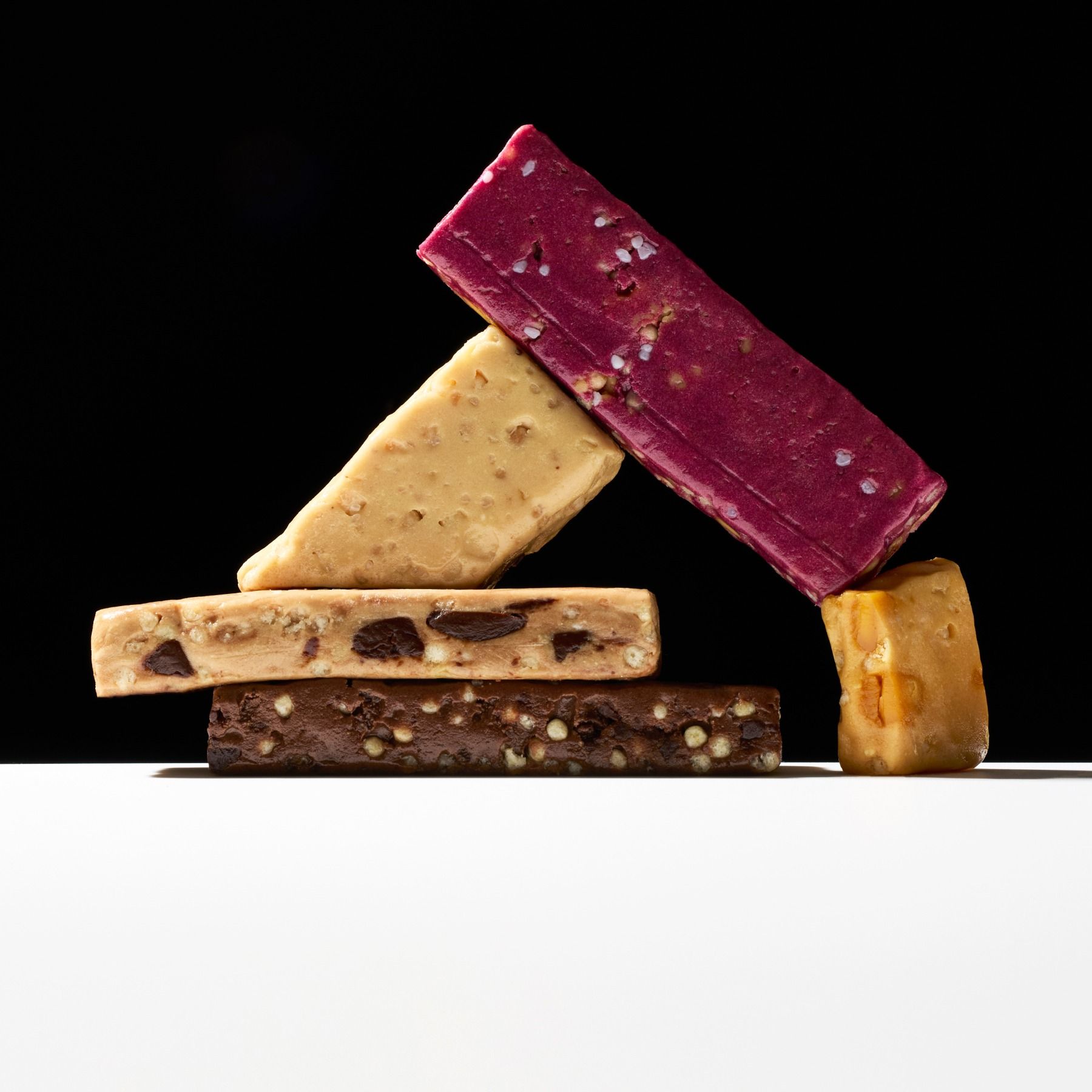
Yes. And the quest for that golden protein to calorie ratio culminates in what is the platonic ideal of the protein bar? The David Bar.
- [14:36]
Natalie Kitroeff
I have seen it. The gold wrapper. Very flashy.
- [14:39]
Elizabeth Dunn
You have definitely seen it. It is very flashy, and it is everywhere. And I think how the David bar ended up everywhere says a lot about the protein craze. Right.
- [15:00]
Natalie Kitroeff
We'll be right back.
- [15:15]
CrossFit Influencer / Protein Enthusiast
This message is from Saatva. Come Labor Day, the days grow shorter and we fall back into our regular routines. But for Team USA athletes training for the Olympic and Paralympic Games, Milano, Cortina, 2026, it's go time. Time for longer days, harder training, and deeper restorative sleep that's essential to their recovery. Saatva is proud to help as official mattress and restorative sleep provider of Team USA, you can enjoy that kind of sleep, too. Visit saatva.comnyt to save $625 on $1,000 or more.
- [15:49]
Natalie Kitroeff
Hey, I'm Joelle.
- [15:51]
Elizabeth Dunn
And I'm Juliette from New York Times.
- [15:52]
Natalie Kitroeff
Games, and we're out here talking to people about games.
- [15:55]
Elizabeth Dunn
You play New York Times Games? Yes, every day. Do you have a favorite connections? It just makes you think. I feel like it gives me elasticity. Create four groups of four. Hmm. This is actually a pretty cool game.
- [16:07]
Natalie Kitroeff
What's your favorite game?
- [16:07]
Peter Attia
The crossword.
- [16:08]
Natalie Kitroeff
The crossword.
- [16:09]
Peter Attia
I do it with my brother. We get Thursday sometimes, but I don't.
- [16:12]
Natalie Kitroeff
Think I couldn't do Thursday on my own.
- [16:13]
Elizabeth Dunn
I feel like I'm learning. I feel like I'm accomplishing something. I like the do, do, do, do, do do do. When you finish it, my family does wordle and we have a huge group chat. Like my grandma does wordle. Your grandma does wordle? Oh, every day, yeah. Do you have a wordle hot take?
- [16:30]
Peter Attia
You should start with the word that's.
- [16:31]
Elizabeth Dunn
Strategically bad to make it more fun. All of these games are so fun because it's like a little 5 to 10 minute break. I love these games. Yeah. New York Times games subscribers get full.
- [16:42]
Capital One Announcer / Anna Martin
Access to all our games and features.
- [16:44]
Elizabeth Dunn
Subscribe now@nytimes.com games for a special offer.
- [16:51]
Natalie Kitroeff
Okay, you said the David Bar is the platonic ideal of a protein bar. So tell us about it.
- [16:57]
Elizabeth Dunn
The David Bar hit the market late last year, and it was invented by a guy named Peter Rahal. And Rahal has a pretty interesting backstory. A little over 10 years ago, he invented a different protein bar called the RX Bar. The way that that came about was that he was working in transportation logistics, so basically trucking. He was really bored. He got really into CrossFit and he started noticing that all of the bars that were for sale at his CrossFit gym just weren't moving. Nobody was buying them. And the reason was because people who do CrossFit tend to do, or did at the time, the Paleo diet. And in the Paleo diet, you're really not supposed to eat processed foods. So these ultra processed protein bars on the shelf at the gym, they weren't selling. And he thought, well, I could just make a Paleo compliant protein bar.
- [17:47]
Natalie Kitroeff
A more natural protein bar.
- [17:49]
Elizabeth Dunn
A more natural protein bar. So he gets together with a friend, they both put in 5,000 bucks. They start making these bars out of nuts and egg whites and dates and stuff like that, literally in his mother's basement.
- [18:03]
Natalie Kitroeff
Wow.
- [18:04]
Elizabeth Dunn
Selling them at CrossFit gyms. And less than five years later, they sell this company for $600 million.
- [18:11]
Natalie Kitroeff
Unbelievable payday. From what? 10k investment from the two of them to 600 million.
- [18:18]
Elizabeth Dunn
Yeah, it was quite the coup. So he obviously becomes an extraordinarily rich person. He could have easily retired, but a couple of years ago, he gets the itch. Like he says, he wants to be back in the game. He wants to be back in the bar game. So he starts thinking about what he can contribute to the space today. And where his mind goes is protein. And what he realizes is the world has really moved on since the days of the RX bar. That bar was 12 grams of protein today. That's not cutting it. So what he sets his sights on is creating a bar with the highest possible amount of protein in it.
- [19:00]
Natalie Kitroeff
It's like this guy's in the protein arms race, like the Manhattan Project for protein over here.
- [19:07]
Elizabeth Dunn
It's very 2025. So he thinks what he can add to the protein bar is to make a bar that has not just more protein than any other bar, but has a better protein to calorie ratio than any other bar. So he wants to pack as much protein into every calorie as possible.
- [19:27]
Natalie Kitroeff
And how exactly do you do that? How do you cram all of that protein in without adding calories?
- [19:34]
Elizabeth Dunn
What you're trying to do is minimize any calorie in that bar that isn't from a source of protein. So he finds a co founder, a guy named Zach Rainen, who has experience in keto cookies, and they start putting together the idea for this bar. So they start with what are some pretty typical sources of protein. They have milk protein and collagen and whey protein concentrate and things like that. They also add a whole bunch of zero calorie or low calorie sweeteners, which are pretty typical in protein bars. That's a way to make it sweeter without adding a lot of calories. But their really big breakthrough is in the fat. So protein bars need fat in order to not just be like a pile of dry, nasty protein. Typically, protein bars use plant oils of various kinds to supply that fat. But where David really innovates is that they find this substance called epg.
- [20:29]
Natalie Kitroeff
What is epg?
- [20:30]
Elizabeth Dunn
I'm so glad you asked. EPG is a modified plant fat that moves through your digestive system mostly undigested. So that means that it delivers 92% fewer calories than, like, a normal fat.
- [20:46]
Natalie Kitroeff
Can I just say, I don't exactly jump at an ingredient that moves through my digestive system totally unimpeded. Like, that's. That is a red flag for me.
- [20:56]
Elizabeth Dunn
Maybe for you, Natalie, but for Peter Rahal, it is not. For Rahal, he sees this as the secret to cracking the code to creating a bar that delivers more protein per calorie than anything else on the market. So last September, he brings this thing to market. It is a smash hit. According to the company, they start launch day with 40,000 people on their email list.
- [21:20]
Natalie Kitroeff
Whoa.
- [21:21]
Elizabeth Dunn
They sell a million dollars worth of bars in the first week.
- [21:24]
Natalie Kitroeff
Geez.
- [21:25]
Elizabeth Dunn
Yeah. And they are on track, they say, to sell $180 million worth of bars in 2025. I should mention that they've got some pretty important supporters who are really helping to publicize the bar and to get it attention on social media. And that's Andrew Huberman and Peter Attia, those two influencer podcasters who are really big on protein, who we talked about earlier in the show. They're both deeply involved in the company. They're both investors, and Peter Attia is the company's Chief Science Officer Huberman is actually quoted on the company' saying, and I quote, there is no better bar on the planet when it comes to getting more protein with fewer calories. And it tastes absolutely delicious. And Atia.
- [22:12]
Peter Attia
So today marks the launch of David.
- [22:16]
Elizabeth Dunn
Posted on Instagram before the David bar even launched.
- [22:20]
Peter Attia
High protein, low calorie bar, obviously sweet, tastes great.
- [22:26]
Elizabeth Dunn
Talking about how amazing he thinks it is and why everybody should buy it.
- [22:30]
Peter Attia
It's the product that I needed. It's the piece of my portfolio that missing because prior to this, I could basically only travel with jerky.
- [22:37]
Elizabeth Dunn
So if I was stuck, it seems like they feel that the bar is really doing something that is revolutionary and important.
- [22:44]
Natalie Kitroeff
And how much protein is this thing packing?
- [22:47]
Elizabeth Dunn
So the Rx bar, you'll remember Rahal's original bar was 12 grams of protein in about 200 calories. The David bar offers 28 grams of protein in 150 calories. So it's really quite an improvement.
- [23:03]
Natalie Kitroeff
An upgrade.
- [23:04]
Elizabeth Dunn
Yeah. And the bar turns out to be so popular that their new problem becomes how to get enough epg, that secret ingredient. That secret ingredient. So the secret ingredient is made by this tiny Indianapolis based company called Epigee, which owns the patent to this modified plant fat, epg. And in May, David decides that in order to really shore up their access to EPG and and potentially to keep others from using it, they should buy the company. So they buy Epigee in May, and now the patent and the ingredient is theirs.
- [23:43]
Natalie Kitroeff
So they don't just discover the secret ingredient, they buy, they own the secret ingredient.
- [23:49]
Elizabeth Dunn
Exactly. And to be fair, EPG was on the market before David started using it. There were a few products globally that included epg. They were sort of low calorie desserts was the typical thing. But it was not a mainstream ingredient.
- [24:03]
Natalie Kitroeff
And the point of owning EPG for the company, it would seem, is controlling the supply of this thing that allows you to get to that gold standard we've been talking about, that perfect ratio where you can cram as much protein as possible into this product without also over consuming calories. This is it.
- [24:24]
Elizabeth Dunn
Exactly. And it allows the company to do two things. One is to increase their own supply of EPG so that the David Barr universe can expand indefinitely. And it also keeps potential competitors from having access to it. So it's sort of a win win for them.
- [24:39]
Natalie Kitroeff
Okay, so now they control this thing. You said that the David universe might just keep expanding. What would that look like?
- [24:47]
Elizabeth Dunn
So we don't know yet exactly what they have in mind, but from What I've seen from spending time with the company, it seems like what they're focused on is not so much building a bar company, but building a protein platform. And the reason I say that is the second product that they've put up for sale on their website isn't another bar. It isn't a powder. It's frozen cod. Frozen cod. The instructions they give are thaw and boil. And this is really just evidence of the company's commitment to this high protein paradigm.
- [25:24]
Natalie Kitroeff
Okay, I have what at this point might seem like a pretty basic 101 question here, which is, is this even good for us?
- [25:34]
Elizabeth Dunn
What, like eating this much protein?
- [25:36]
Natalie Kitroeff
Yeah, like, is it good to eat this way? You know, like the human body has been working on a certain, you know, rhythm and with certain inputs for a very long time. Is reformulating that to prioritize protein this much, even like a positive.
- [25:53]
Elizabeth Dunn
Well, it's unlikely that eating too much protein is actually gonna harm you. Like, unless you have a specific kidney issue, we can eat a lot of protein and it's not gonna be bad for you. But I think the larger question is, what is it that you're not prioritizing? If you're prioritizing protein to this degree, so what other nutritional compromises are you making in order to consume so much protein? So one thing that I find quite interesting about the David Barr is that ultra processed, it's the definition of an ultra processed food. And it's incredibly popular at a time when this other major food trend has been unfolding, which is people becoming increasingly skeptical of and worried about ultra processed foods.
- [26:37]
Natalie Kitroeff
Sure.
- [26:37]
Elizabeth Dunn
But here, because of the protein, the ultra processed nature seems to get a pass. And I think zooming out beyond the David Barr specifically, we talked at the beginning of the show about all of the different places that you now find protein that you wouldn't traditionally find it. So I think it's a real question whether the people choosing those foods are choosing them for the protein content and whether they're eating foods that aren't necessarily as nutritious as they might otherwise because they're chasing the protein.
- [27:07]
Natalie Kitroeff
I ask you this with the understanding that the David Bar is selling like crazy, that it is very popular, that the protein obsession is widespread. It just help me understand the appeal. Like, where's the pleasure in it? I mean, protein bars and boiled cod are not exactly my idea of like a yummy meal, you know, And I just feel as though what we've been talking about is pulling apart our food into these essential inputs. But where's the fun in that? Where's the joy?
- [27:42]
Elizabeth Dunn
I think for certain people, although there isn't joy in a gustatory sense of eating these protein bars, there is a lot of joy in the process of optimizing, in this feeling that by consuming foods like the David bar, we're moving ourselves just incrementally closer to a physically perfect version of ourselves. And there is a community that has been established around that, and it is a hobby or sort of a pursuit that I think does bring people a lot of joy.
- [28:20]
Natalie Kitroeff
Right. And I guess what you did tell us was that part of this is, at least from the influencer's perspective, about making ourselves strong enough so that when we're older, we can, you know, lift our grandkids into the air, play with them, run around, and certainly there would be joy in that.
- [28:37]
Elizabeth Dunn
Absolutely. And I also think that eating protein has become something more like an identity or a lifestyle. People seem to get a sense of belonging from the types of diets they follow. There's sort of a tribal quality to it. So I think there's an element to this that's also about fitting in with a group and finding your identity in a group of people with shared nutritional goals.
- [29:04]
Natalie Kitroeff
Right. I mean, you feel like you're with your people, your tribe, or like religion almost.
- [29:10]
Elizabeth Dunn
It's interesting that you say religion, because when I talk to people about what they eat, which is something that I do a lot in my line of work, there's something about the way that people talk about their diets these days that has this almost evangelical quality to it. People really buy into the diets they choose and they build community around them in a way that is almost like a faith based activity. And like religion, nutrition fads have their own profits. And like religion, nutrition fads have this sort of path to righteousness laid out where if you live in a certain way, according to certain principles, you will achieve this kind of nirvana that goes way beyond losing weight or gaining muscle. And it feels to me that for some people, that's what they're really getting out of this.
- [30:12]
Natalie Kitroeff
Suddenly, protein is seeming kind of spiritual.
- [30:16]
Elizabeth Dunn
Not for all of us. For a lot of people, eating protein is still about trying to pack on a couple pounds of muscle, trying to stay full until dinner. But, yeah, I think for some people it is.
- [30:34]
Natalie Kitroeff
Elizabeth, thanks so much.
- [30:37]
Elizabeth Dunn
Thanks, Natalie.
- [30:40]
Natalie Kitroeff
We'll be right back.
- [30:48]
Capital One Announcer / Anna Martin
I'm Anna Martin, the host of the Modern Love Podcast. In every episode, we peek into an intimate corner of someone's life and learn about what love means to them.
- [31:00]
Elizabeth Dunn
You know, I can tell you 35 years with another person, I've never spent that much time with anyone else either.
- [31:06]
Natalie Kitroeff
So we both kind of said I love you pretty fast.
- [31:08]
Elizabeth Dunn
My advice is that it's okay if it's hard.
- [31:11]
Capital One Announcer / Anna Martin
You can listen to Modern Love wherever you get your podcasts.
- [31:19]
Natalie Kitroeff
Here's what else you need to know today. On Monday night, President Trump removed one of the Federal Reserve's board members, Lisa Cook, in an extraordinary and legally dubious maneuver. Trump pointed to allegations that Cook may have falsified records to get favorable terms on a mortgage. He said those accusations had compromised Cook, who's the first black woman to serve on the board. But the president hasn't made a secret of the true reason for his growing anger towards the Fed. For months, he's been loudly criticizing the nation's central bank for keeping interest rates higher than he wants. Cook hasn't been charged with any wrongdoing, and she could seek to challenge her dismissal, which could set up a landmark legal battle over the president's authority. And 20 people were killed in Gaza on Monday when two Israeli strikes hit a host. Among the dead were medical workers and five journalists working for outlets that included Reuters and the Associated Press. The Israeli military said it had carried out a strike in the area of Nasser Hospital, but didn't say what the target was. The office of Prime Minister Benjamin Netanyahu put out a rare statement expressing regret for the strike, calling it a quote, tragic mishap and saying Israel values the work of medical staff and journalists. At least 192 journalists have been killed in the war in Gaza. The Israeli government has prohibited international journalists from entering Gaza to report freely, leaving the world to rely on Palestinian journalists to understand what's happening on the ground in Gaza. Today's episode was produced by Ricky Novetsky, Alex Stern, Claire tennisgetter, Anna Foley and Caitlin o'. Keefe. It was edited by Brendan Klinkenberg and Paige Cowett and was engineered by Alyssa Moxley. That's it for the Daily. I'm Natalie Kitroeff. See you tomorrow.