← The Daily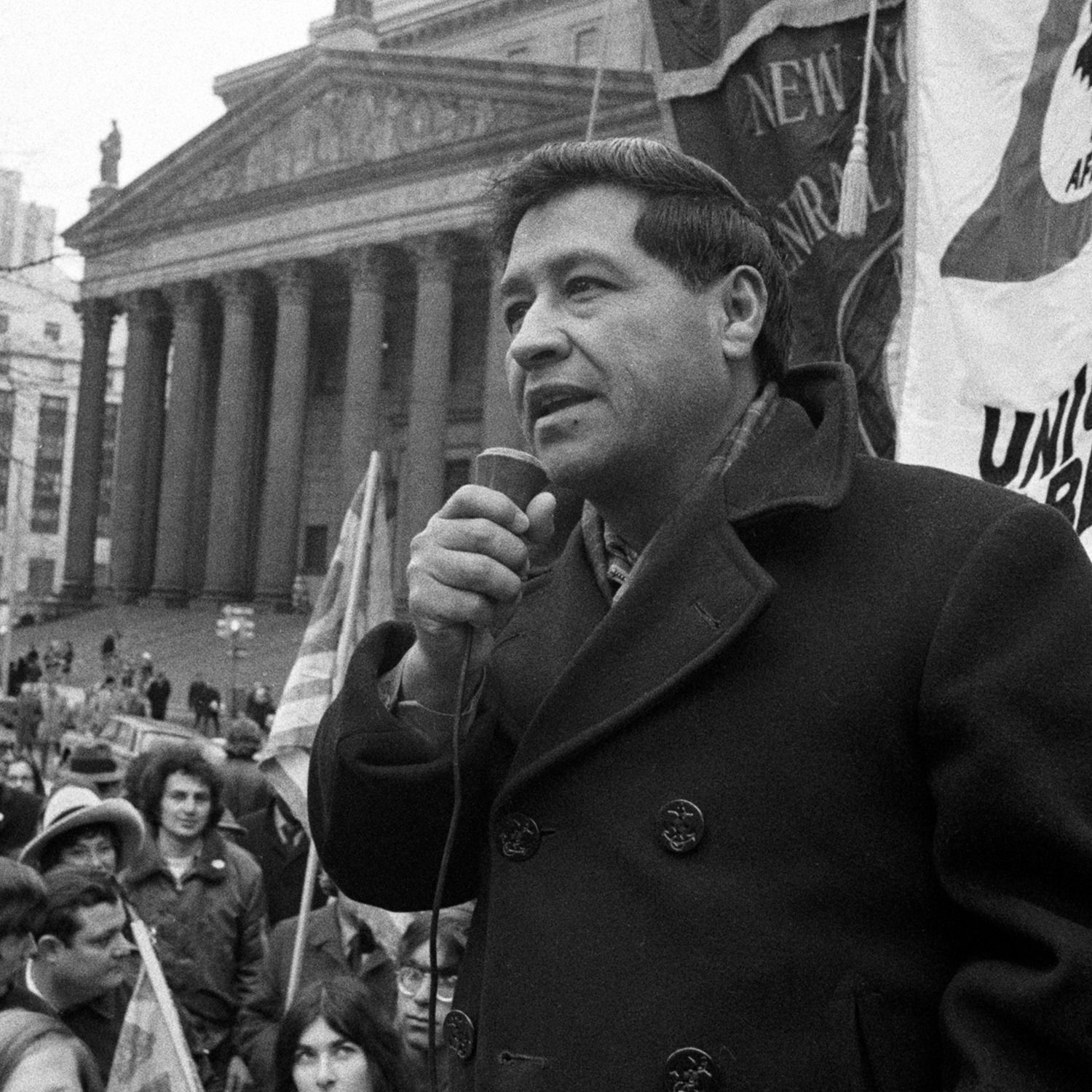
The Daily
How Cesar Chavez Abused His Power
00:43:50
Warning: this episode contains mentions of suicide. The civil rights icon had a history of sexually abusing women and girls, which the Times reporters Manny Fernandez and Sarah Hurtes spent five years investigating. They spoke to “The Daily” about how they uncovered the story.
Loading summary
Transcript226 lines
- [00:02]
Manny Fernandez
In theory. I knew that this kind of thing can happen in any family. Upstanding citizens are always turning out to be secret criminals. And I wouldn't even call my cousin Alan an upstanding citizen. But it's one thing to know and another thing to understand.
- [00:16]
Sponsor/Ad Voice
Alan, murder me.
- [00:19]
Manny Fernandez
What the hell was Alan thinking? From Serial Productions and the New York Times, I'm Em Gessen, and this is the Idiot Out. March 26th. Wherever you get your podcasts
- [00:32]
Natalie Kitroeff
from the New York Times, I'm Natalie Kitroweth. This is the daily.
- [00:41]
Sarah Hertz
Breaking news.
- [00:42]
Ana Marguia
The New York Times just publishing shocking
- [00:45]
Sarah Hertz
new allegations made against late labor leader
- [00:48]
Natalie Kitroeff
Cesar Chavez after a Times investigation revealed allegations of sexual abuse against one of America's most important civil rights icons. This really is a re imagining a whole legacy, and it's going to. The entire country has started to reckon with a new reality.
- [01:07]
Ana Marguia
They covered up the late civil rights
- [01:08]
Natalie Kitroeff
leader's name with cement, removed the image
- [01:11]
Ana Marguia
of Cesar Chavez from several commissioned pieces of art.
- [01:14]
Sponsor/Ad Voice
A statue at Cesar Chavez Plaza is now wrapped up in plastic you see here.
- [01:19]
Natalie Kitroeff
And a history that's now been rewritten.
- [01:22]
Sarah Hertz
California officially renaming the holiday formerly known as cesar Chavez Day.
- [01:27]
Ana Marguia
March 31st.
- [01:29]
Sarah Hertz
Now to fall Farm Workers Day.
- [01:32]
Natalie Kitroeff
Today, on what would have been Cesar Chavez Day in California, we talked to the reporters who broke the story, Manny Fernandez and Sarah Hertz, about the women at the center of it and what it took to uncover a secret that they'd carried for more than 50 years. It's Tuesday, March 31st. Manny and Sarah, welcome to the show.
- [02:02]
Manny Fernandez
Thank you for having us.
- [02:03]
Sarah Hertz
Hi. Thank you.
- [02:05]
Natalie Kitroeff
So you two just came out with this bombshell that was years in the making, this reporting showing that Cesar Chavez sexually abused young girls and women in his movement. And we wanted to talk to you both about how this story came to be and why it came about now. And Sarah, you were integral to all of this, but, Manny, the reporting really started with you. So let's begin there. How did this start?
- [02:34]
Manny Fernandez
It starts in 2021, and I was sort of just getting settled as the LA bureau chief when a biographer of Cesar Chavez named Matt Garcia wrote an email. And the email from Matt Garcia was basically sort of saying, you know, hey, guys, I didn't really write about this in my book, but there are some things with Cesar Chavez and girls that you guys should look into. You know, he had touched on the fact that Cesar Chavez had had some affairs in his book, but he was hearing from people saying that there was more than that. And we get a lot of tips.
- [03:19]
Natalie Kitroeff
Right?
- [03:20]
Manny Fernandez
I chase a Lot of tips.
- [03:21]
Natalie Kitroeff
And what did you think about this one when you got it?
- [03:25]
Manny Fernandez
I wasn't sure what to make of it. I was just sort of like, huh, maybe there's something there, maybe not. But it was certainly worth looking into.
- [03:32]
Natalie Kitroeff
Worth looking into, of course, because of who Chavez is, this monumental civil rights activist in the Latino community. Manny, can you just tell me what did the name Cesar Chavez mean to you at this point?
- [03:49]
Manny Fernandez
I mean, I am from Cesar Chavez country. I'm born and raised in Fresno, California. And you can't grow up in Fresno and be from a Mexican American family and not have Cesar Chavez as just part of the weather of your life.
- [04:08]
Natalie Kitroeff
Hmm. Part of the weather.
- [04:10]
Manny Fernandez
Yeah. I mean, he's just like. It's not just like streets murals and things like that. It's just that there's a. It runs a lot deeper than that for me personally. My grandparents on both sides of my family started out as farm workers. On my mom's side of the family, my grandparents, they met on a garlic patch outside of Fresno in the 1940s, and they were both 16. And my grandmother's line that I have never stopped repeating is she would always say it was love at first smell. And so, like, there's just that, like, I mean, that backstory. Like, I mean, that's part of my DNA.
- [05:06]
Cesar Chavez
All my life, I have been driven by one dream, one goal, one vision to overthrow a farm labor system in this nation that treats farm workers as they were, not important human beings.
- [05:21]
Manny Fernandez
Cesar Chavez is, like, as important to the Southwest as maybe MLK is to the South.
- [05:31]
Cesar Chavez
Farm workers are not agricultural implements. They are not beast of burden to be used and discarded.
- [05:39]
Manny Fernandez
He drew public attention to the conditions that farm workers were working in.
- [05:45]
Cesar Chavez
Thousands of farm workers live under savage conditions.
- [05:48]
Manny Fernandez
Some of them were living in basically
- [05:50]
Cesar Chavez
sheds and amid garbage and human excrement.
- [05:54]
Manny Fernandez
Some of them were being mistreated.
- [05:56]
Cesar Chavez
Our underage children, some of them were
- [05:59]
Manny Fernandez
not being paid for the work they were doing.
- [06:02]
Cesar Chavez
No one even knew their names. We had all lived through the fields or our parents had. We shared that common humiliation. The only answer, the only hope was in organizing.
- [06:24]
Manny Fernandez
So he is on the front lines bringing the world's attention to how much farm workers are being paid, how they're being treated.
- [06:35]
Cesar Chavez
We have looked into the future, and the future is ours.
- [06:38]
Manny Fernandez
He helped create America's first successful union for farm workers. He led pickets and great boycotts.
- [06:51]
Cesar Chavez
Boycott against the win. The yellow wine, the grapes and the lettuce is very effective.
- [06:56]
Manny Fernandez
And marches.
- [06:58]
Cesar Chavez
Chavez and friends began their walk from The Sunny Cedar border checkpoint.
- [07:03]
Manny Fernandez
But in a larger sense, he was this symbol, this, like, spokesperson to tell literally the world, and especially America, the work of these farm workers. There is a nobility and a dignity to it. Their lives matter, and these dreams of these people matter.
- [07:31]
Natalie Kitroeff
So all of that to say this tip that you get, this story you're looking into, is not just another run of the mill story for you?
- [07:40]
Manny Fernandez
Yeah, I mean, this is important to me. Like, the stakes are high, but again, I am chasing down a tip at this point.
- [07:50]
Natalie Kitroeff
Right.
- [07:50]
Manny Fernandez
There may be a story here and there may not, but I wanted to talk to the women who were rumored that Cesar Chavez did something to them and hear from them. What is the deal? What happened? You know, nobody wants to take down a hero, but I think we need to know who our heroes are. So in this tip from Matt Garcia and in a conversation we have later, he's talking to me about a private Facebook group for people who used to march with Cesar Chavez, people who were former union activists. And they're exchanging memories and they're saying, hey, who remembers the lyrics to that one song we used to sing? And things like that. And shortly before Cesar Chavez's birthday, which is March 31, and it's a state holiday in California, there's this post. And the post is from a woman named Deborah Rojas. And she writes a message. And as part of that message, she basically says, wake up, people. This man you march for every year molested me. And that post stays up for a few days, and then she takes it down. And so I called Deborah Rojas on the phone, but she made it clear that she was not ready to talk. And then one night, sort of late, I get a call, and it's Deb.
- [09:30]
Natalie Kitroeff
And what does she say?
- [09:31]
Manny Fernandez
I can tell that she's been drinking, and she's sort of calling me to say, you know, do you really want to tell my story? You don't want to tell my story? They're going to come after you. They're going to come after me. She believed that the idea of taking down Cesar Chavez would ignite so much anger that people would come after her and her family. The anger would be so high from Chavez supporters.
- [10:00]
Natalie Kitroeff
The they is Chavez supporters.
- [10:03]
Manny Fernandez
Yes. And it's actually even she believed that people close to Chavez did not want this story to come out.
- [10:13]
Natalie Kitroeff
It sounds to me like what Deb is doing here is stress testing you in a way, like she's sussing you out. She's asking, do you have the stomach for what it would mean to Tell my story.
- [10:24]
Manny Fernandez
Yes, that's exactly what she's doing. And what she's doing is she is struggling with, do I come forward or do I not? And that struggle, I could hear it, I could see it. Do I. Do I hold this in or do I speak it? And she was struggling with that in that moment. And a short time later, she blocks me on her phone.
- [10:59]
Natalie Kitroeff
That sounds like a dead end. How do you proceed?
- [11:02]
Manny Fernandez
One of the things that happens is eventually Sarah gets involved.
- [11:08]
Sarah Hertz
I get a call from my editor, who tells me that they want to send me to LA to help out on this investigation. So I work in the International Investigations Team. I'm based in Brussels, and I have a background in working in complex investigations. And I also have a background in sexual violence and conflicts. And so I fly to la.
- [11:35]
Manny Fernandez
So we were a team, and I shared my notes with Sarah, and we started reaching out to a number of women.
- [11:44]
Sarah Hertz
We decided that we're going to broaden the search, just interview as many members of Cesar Chavez movement as possible.
- [11:55]
Manny Fernandez
And there was another woman whose name I had, and that other woman is Ana Marguia. And over time, we went to go see Deb, and then we went to go see Anna. And over the course of the reporting, I start developing that journalistic relationship with Deb, and Sarah starts developing a closer relationship with Anna. And these two women, Anna and Deb, they know each other. They're friends. They grew up together. They talked to each other when they were teenagers. They know each other quite well. And so after months and months, I'm sitting down with Deb, and I say, do you think, would you go on the record if Anna would? And Deb's like, yeah, I think I would.
- [12:55]
Sarah Hertz
And that's eventually what happens. Both individually decided to go on the record with their names. So I guess we're gonna do it, like, from the beginning. And Anna agreed to have her voice recorded.
- [13:12]
Natalie Kitroeff
Hmm.
- [13:14]
Sarah Hertz
How are you feeling?
- [13:19]
Ana Marguia
Yeah, today I woke up achy today. Yeah.
- [13:24]
Sarah Hertz
So Anna is 66 years old. She currently lives in Bakersfield in a house with her husband, and she has three children. And in many ways, her story is tied to a place Chavez established for his movement in the mountains outside la, a place called La Paz. You moved to this community called La Paz?
- [13:49]
Ana Marguia
Yes, I was 10. We were. My dad was in charge of, you know, like, just basically getting the property ready.
- [13:57]
Sarah Hertz
La Paz was his movement's headquarters. And Anna's family, they were the first to move there and to set up the place for Chavez.
- [14:08]
Ana Marguia
So when we moved up there, my Family, for a while, was the only family there. You know, they had the old hospital and the houses, and it was just
- [14:21]
Sarah Hertz
this very eerie, isolated place. It was formerly a hospital for tuberculosis patients.
- [14:28]
Ana Marguia
Hospital. So when we.
- [14:30]
Sarah Hertz
Where there was lots to explore. And she loved it initially, you know,
- [14:35]
Ana Marguia
I was a tomboy, so I liked doing, you know, all that stuff. Going out and playing in the creek and taking hikes on the mountainside.
- [14:47]
Sarah Hertz
And, you know, she loved the mountain caves where she could go by ponds or creeks and. And play in the water. She also liked how spooky and weird her new environment was. This old, desolate hospital with a former wheelchair that she could spin on.
- [15:09]
Natalie Kitroeff
It was kind of a wonderland for her. It sounds like it was.
- [15:12]
Sarah Hertz
It was kind of a wonderland. I think she just enjoyed being carefree. She just enjoyed being a child.
- [15:21]
Ana Marguia
It was a very good place for me.
- [15:27]
Sarah Hertz
Were you proud to be part of this union?
- [15:30]
Ana Marguia
Yes, yes. I, you know, I enjoyed. Was something, I guess it was instilled in me for my dad, you know, going out and helping other people and doing good for people.
- [15:46]
Sarah Hertz
Her father, he was very invested in Cesar Chavez movement. In fact, she basically met Cesar Chavez through her dad when her dad married a volunteer in that movement. And so Cesar Chavez attended the wedding as her dad's best man.
- [16:05]
Natalie Kitroeff
Wow.
- [16:06]
Sarah Hertz
And she remembers attending that wedding.
- [16:09]
Ana Marguia
I didn't know it at the time who he was, but that was the first time. And I just knew that from pictures I had seen.
- [16:18]
Sarah Hertz
So Anna was very much a child of this labor movement. She understood its significance from a very early age, and she picked up on how important her family's role was in building this community in La Paz. As soon as they moved in, really,
- [16:36]
Ana Marguia
I thought it was a good thing. But through the years, as I got older, in my younger teen years, it got difficult. We felt stuck because there was really nobody there.
- [16:52]
Sarah Hertz
Now, the only thing is that this environment was very isolated. There wasn't much going on outside, and also not many people living with her.
- [17:03]
Ana Marguia
My dad, because my father was always gone. He was an organizer, so he was always gone.
- [17:09]
Sarah Hertz
Her father, he was never around because Cesar asked him to go on tour with him. He was always on picket lines. He was always helping Caesar getting contracts unionized for the farm workers. So her dad was always on the move. Her stepmom was sometimes there, but also gone at times. And she just felt that it became increasingly lonely.
- [17:36]
Natalie Kitroeff
Right. It sounds like she's surrounded by all of these people, including her father, who are dedicating themselves to this higher calling, to this movement that they truly believe in. But what that does is kind of make the child make Anna a second order priority.
- [17:53]
Sarah Hertz
Absolutely. And she tried to fill that loneliness by working herself as part of this union.
- [18:02]
Ana Marguia
So I would go to school and come home and go work for a time. I worked, you know, in the purchasing, making sure that we had enough office supplies, ordering office supplies. I worked in accounting for a while. Then I started working in Caesar's office.
- [18:22]
Sarah Hertz
Cesar moved in about a year and a half after Anna's family had moved into this community. And she had seen him by then and knew how important he was. He was often surrounded by his bodyguards, whom he employed, you know, after he started receiving quite a lot of death threats. So she could sense the presence of an important man. So when Cesar started asking her to work in his office, that felt very special. When did that start?
- [18:59]
Ana Marguia
I think I was, like, about 13, 12 and a half. 13 years old. So I would do, like, basically filing, typing letters, just, you know, simple stuff like that that I could do.
- [19:12]
Sarah Hertz
She was very proud to say that she could mimic his signature to help
- [19:17]
Ana Marguia
answer fan mail, because I would send his pict. So I would practice writing. And so then I would sign, because at one point it got, like, too much.
- [19:29]
Sarah Hertz
So I would sign or work on the switchboard.
- [19:33]
Ana Marguia
I enjoyed it. It was a board with a bunch of cables. And it reminded me of character that Lily Tomlin played as a switchboard operator.
- [19:46]
Sarah Hertz
Gradually, he starts inviting her in his office to just have these one on one talk. And Anna says that they talk a lot.
- [19:57]
Ana Marguia
I had a really hard time talking to people. I had a hard time talking to my dad. I had a hard time talking to my stepmother. I didn't have a good relationship with either of them at the time. And he was one adult that I could confide in that I knew he wouldn't tell my father, you know, what I was feeling, Somebody that I learned to trust that I could talk to.
- [20:21]
Sarah Hertz
And so Anna tells him how lonely she feels in this community, Things that went on at school, how lonely she feels at school.
- [20:31]
Ana Marguia
Like, if something happened at my house, you know, with my dad, how lonely
- [20:35]
Sarah Hertz
she feels in her home, and how would he respond to those things?
- [20:42]
Ana Marguia
He would just listen and try and be understanding and.
- [20:47]
Sarah Hertz
And Cesar, in exchange, tells her that he, too, feels lonely.
- [20:51]
Ana Marguia
And he would say how lonely he was and how hard it was that he always had to have people with him. And it was so bad that, you know, sometimes he couldn't even go to the bathroom by himself. There would have to be security outside, right Outside the bathroom with him.
- [21:11]
Sarah Hertz
And I feel very sorry for him,
- [21:13]
Ana Marguia
you know, that that sucks.
- [21:14]
Sarah Hertz
She also feels connected to him. What was it like for you, you know, to have this man share so much with you?
- [21:23]
Ana Marguia
I felt very special that he made me feel like I was somebody. And that's something I dealt with. You know, I've dealt with a lot in my life. But, yeah, we used to talk, Just talk.
- [21:42]
Sarah Hertz
And at the time, Caesar is already starting to be known in the movement as someone who does yoga, who enjoys meditation, but also as someone who sees himself as a bit of a healer. He by then starts going around his community and saying that he can heal people with migraines by putting his hands on them. And so he starts doing that with Anna. He places her on the yoga mat in his office. He tells her that this is a way to relax.
- [22:17]
Ana Marguia
The first time, it was like we were talking, and he told me to close my eyes, and he was trying to show me pressure points and to show me how to meditate and relax.
- [22:32]
Sarah Hertz
But it starts like that, and then
- [22:35]
Ana Marguia
he would start kissing on me. And I was very surprised when that happened. I. I didn't understand.
- [22:47]
Sarah Hertz
It is on the yoga mat, while showing her these pressure points on her hands on her body, that he starts kissing her.
- [22:57]
Natalie Kitroeff
How old is he at this point?
- [23:00]
Sarah Hertz
Cesar is about 44 and Anna is 13. Did you understand what kisses were or, like, how.
- [23:10]
Ana Marguia
Not at that time. It was just, you know, not anything intense at the beginning. Eventually, it got more. More kissing. And pretty soon it moved on to other. Other things.
- [23:30]
Sarah Hertz
And it transforms into something where he regularly calls her to his office to be physical with her.
- [23:40]
Ana Marguia
I felt. I felt I had. Who was I going to turn to once it got past that? When it got past the point when he took me to that Matt to have intercourse? I mean, I didn't have. I don't know who I would talk to. Yeah, I had no one to turn to. And it kept on. And he would tell me not to tell anybody, to keep it a secret. You know, my friends would be jealous, so I kept it to myself.
- [24:22]
Natalie Kitroeff
And where were her parents in all of this? Did they know what was going on?
- [24:29]
Ana Marguia
I mean, my dad was gone.
- [24:30]
Sarah Hertz
Yeah.
- [24:31]
Ana Marguia
He gave everything to the movement.
- [24:34]
Sarah Hertz
She says that she didn't feel like she had the space to tell them.
- [24:40]
Ana Marguia
You know, I didn't know how he would react because he was Cesar's compadre. I didn't know if he would be mad at me. I didn't even know if he would believe me. And I didn't want to find out.
- [24:57]
Natalie Kitroeff
What about the others that were in this community in La Paz? Did they get suspicious about this? Did it raise any red flags for anyone else?
- [25:06]
Sarah Hertz
No. Even though she had to pass by several people to enter his office where he would then lock the door.
- [25:13]
Ana Marguia
I mean, come on, I'm a 13 year old girl going into his office and spending half hour, 45 minutes an hour there, just when he's supposed to be so busy. How could they not know?
- [25:30]
Sarah Hertz
But then one day I was on
- [25:33]
Ana Marguia
my way to Caesar's office and I ran into Debbie because Debbie's on the
- [25:37]
Sarah Hertz
path to Cesar's office. She runs into Debbie, who's 12 at the time, when Anna is 13.
- [25:45]
Ana Marguia
And I ran to her, well, where are you going? And I told her where I was going and she looked at me like, like what? I'm like, yeah. And so we started talking.
- [25:57]
Sarah Hertz
They quickly realized that they're both going to his office and doing the same things.
- [26:04]
Natalie Kitroeff
Oh, wow.
- [26:06]
Ana Marguia
We looked at each other and we said, wait, you know, we both said the same thing. Oh, he told me not to tell anybody because they would get jealous.
- [26:13]
Sarah Hertz
And, and so it felt really like a sort of relief to have someone to finally be able to share her
- [26:22]
Ana Marguia
secret was, you know, her and I would talk to each other because we were the only ones we could talk to. You know, we felt safe with each other.
- [26:36]
Sarah Hertz
But it doesn't change Ana's dynamic with Chavez. He continued to keep her close and over the next few years he would bring her with him often on tour.
- [26:52]
Ana Marguia
And I thought that was the coolest thing, you know, because I got to meet Joan Baez.
- [27:06]
Sarah Hertz
She is also accompanying him in the summer of 1975, where Chavez and his organizers are preparing this long march broken up over multiple days through California.
- [27:18]
Cesar Chavez
After almost 20 years of union organizing in California, Cesar Chavez has won his biggest victory.
- [27:25]
Sarah Hertz
And they call it the Thousand Miles March.
- [27:27]
Cesar Chavez
It's a very long march and it's going to be difficult. But we're determined that if we're going to get the message to every single
- [27:33]
Sarah Hertz
worker, and the goal is to draw public attention to their recent victory that gave farm workers the legal right to unionize in the state of California, that
- [27:44]
Cesar Chavez
we have to walk, we can't fly and we can't drive because driving and flying is just too rapid.
- [27:50]
Sarah Hertz
And so Anna is joining him in the middle in Fresno with Debbie, her friend.
- [27:57]
Ana Marguia
It was exciting because, you know, we were participating, to me, we were participating in something really good.
- [28:05]
Sarah Hertz
Yeah.
- [28:05]
Ana Marguia
So Debbie and I, you know, we traveled with Cesar and his guards, we stayed in the same houses. It was fun. I mean, it was. We were always in that circle with Cesar. Made us feel very special.
- [28:21]
Natalie Kitroeff
It sounds like he's really at the peak of his influence, Chavez and of his movement success. Like, I assume the girls can feel that as they're with him, that adoration he's being showered with.
- [28:36]
Sarah Hertz
Absolutely. It definitely has an impact on them in the way that their secret is even more tightly held. Because here they are, these two girls from farmworker's family who seem to think that they're nobodies in contrast to this great hero of the people.
- [28:54]
Ana Marguia
Why would I want to destroy the cause for me? Me, for my life, how it affected my life. I was nobody. I was just a kid.
- [29:21]
Natalie Kitroeff
We'll be right back.
- [29:28]
Manny Fernandez
This podcast is supported by the American Petroleum Institute. Energy is all around Today, America's natural gas and oil keeps the country moving, growing and building and makes every day a little easier. But energy demand is growing and the infrastructure built today will help secure a more affordable, reliable future. With enough energy to go around when America builds, America wins.
- [29:56]
Sponsor/Ad Voice
The right technology can strengthen human judgment. That's why Deloitte brings together AI and data analytics with multidisciplinary teams who can help you connect the dots across your enterprise. From risk to operations to customer needs. So opportunities don't slip by and surprises don't spread. Because the smarter your systems, the sharper your instincts. That's how technology makes people better at what they do best. Deloitte Together makes Progress. Learn more@deloitte.com Together makes progress.
- [30:27]
Ana Marguia
This podcast is supported by MIDI Health. Are you in midlife feeling dismissed and unheard by the healthcare system? You're not alone. For too long, women's midlife health issues have been trivialized and ignored. It's time for a change. It's time for midi. MIDI is the only women's telehealth brand covered by major insurance companies, making expert care accessible and affordable. MITI's clinicians provide one on one consultations where they truly listen to your unique needs, offering data driven solutions tailored for you. At MITI, you'll feel seen, heard and prioritized. Visit joinmidi.com to book your insurance covered virtual visit. That's joinmitti.com Mitti the Care Women Deserve
- [31:06]
Natalie Kitroeff
so when does Ana start to break free of Chavez?
- [31:11]
Sarah Hertz
Was a long process. It took several years, but it begins the same year as the March.
- [31:19]
Ana Marguia
No, it was my 15th birthday. He asked my parents if I can go with him to a fundraiser In Bel Air.
- [31:27]
Sarah Hertz
And it's when she traveled to Bel Air at a fundraiser's house.
- [31:32]
Ana Marguia
I think I was looking for him, and I walked into the kitchen.
- [31:38]
Sarah Hertz
She stepped in on him kissing another woman. And she tells me that she felt disgusted by that and had the sense of feeling betrayed because he always made
- [31:51]
Ana Marguia
it seem like I was the only special one in his life. I finally had somebody there that wanted just me.
- [32:03]
Natalie Kitroeff
And why do you think it was this moment that hit her so hard? Like, what about it do you think really shook her in this way?
- [32:12]
Sarah Hertz
I think that she realized something that she probably knew but hadn't quite come to grasp is that she wasn't someone whom he loved or whom he saw himself being with. She was just someone who he was using. And she starts pulling away.
- [32:35]
Ana Marguia
Our relationship eventually started to break down some, you know, because he. I guess he started saying he couldn't control me as much as I got older, you know, I would speak out more.
- [32:50]
Sarah Hertz
She spends less and less time with him. She eventually decides she wants to leave the community for good.
- [32:56]
Ana Marguia
I needed to get away. I needed to get away, so I left.
- [33:02]
Natalie Kitroeff
That's gotta be a freeing moment for her.
- [33:05]
Sarah Hertz
But it's not. She ends up becoming rapidly hooked to heroin. So while it's supposed to be a moment of freedom, it's supposed to be a moment where she's finally not under the grip of this one man she is starting to use.
- [33:24]
Ana Marguia
Tried a couple of times even to OD intentionally. And I went to La Paz because my family was there so that I could try and get away, get clean from my heroin use.
- [33:36]
Sarah Hertz
She decides that the only safe place to go is to the only family that she knows, which is, you know, the family living in La Paz, but also the man whom she had trusted. So she goes back, and once she arrives, Cesar Chavez summons her to his office. He summons her the way he did it when she was a child. He calls her house and he says, you need to come to my office.
- [34:07]
Ana Marguia
And so I went. You know, I didn't think anything of it. I went.
- [34:12]
Sarah Hertz
But unlike all the other times, he's not alone. He's with a bunch of board members who are around Caesar and who all surround her and who start verbally attacking her.
- [34:26]
Natalie Kitroeff
Saying what?
- [34:27]
Ana Marguia
Saying that they didn't want me there.
- [34:30]
Sarah Hertz
She's a danger to the community.
- [34:33]
Ana Marguia
They didn't want me bringing in drugs
- [34:35]
Sarah Hertz
there, that she's bringing in drugs.
- [34:38]
Ana Marguia
Told me to get out, that she
- [34:39]
Sarah Hertz
is no longer welcomed.
- [34:41]
Ana Marguia
I was devastated, you know, to me, you know, I gave my life for this cause. And I never asked for anything back. And the one time I went to ask for help, I was treated. I was being thrown out like trash.
- [35:02]
Sarah Hertz
And she never talked to him again.
- [35:14]
Natalie Kitroeff
So that is obviously a very devastating story, incredibly difficult to hear and to think about. I want to just pull back and ask, to what extent is Ana's experience reflective of broader patterns that you all uncovered in this reporting?
- [35:37]
Manny Fernandez
Ana's story matched the other stories we were hearing from other women. The way that Cesar Chavez sort of created that special bubble for Ana to make her feel special, to have her work for him and do different tasks, and to spend time together alone in the office, that matched up with how he treated Deb. The same sorts of things that he was doing with Ana, he was doing with Deb. So we've now talked to seven women with a range of allegations against him of sexual abuse, sexual assault and sexual harassment. And what we've heard from talking to those women as well as others is that he would sometimes have consensual affairs with adult women, and he would have also non consensual sexual encounters with adult women as well.
- [36:42]
Natalie Kitroeff
And one of the most prominent examples of that is Dolores Huerta, right? A civil rights icon in her own right, who also came out to say that she too was a victim of sexual abuse at the hands of Chavez. This is a 95 year old woman.
- [37:02]
Manny Fernandez
This is Dolores Huerta. This is Cesar Chavez's top female partner in the entire movement that he created. This is the woman who coined Si se. This is perhaps the most famous Latina activist in America. We sat down with her for two hours and she told us, Cesar Chavez sexually assaulted me and he also manipulated me into sex in a hotel room. And she told us both of those sexual encounters led to pregnancies and she had those babies in secret. And she has held onto this secret for 60 years. We have not independently verified what Dolores told us. However, it does match a pattern that we've heard from several women about how Cesar Chavez operated.
- [38:07]
Natalie Kitroeff
And what about that concern that Deborah shared with you early on, that her story might prompt this wave of anger towards her from people close to the movement? Has that materialized?
- [38:19]
Manny Fernandez
No, it hasn't really. They've been flooded with support. I think in many ways, like some of the backlash that they feared in coming forward has actually been directed more towards Cesar Chavez and any sort of public displays of his name and his face. I graduated from Fresno State University. There was a statue of Cesar Chavez on campus. After our story published, people at first put a black cloth over it, and then they put a plywood box over it to cover the statue. And now that statue has been removed. Similar things have happened in other cities across California, across the country. His name has been removed from buildings, but street signs. I have received emails and texts and phone calls from people who are Mexican American, who tell me that they were just devastated, that it was painful for them to read this. It was painful for them to lose a hero. I think the country is in the middle of reckoning with his legacy.
- [39:47]
Natalie Kitroeff
Manny, I want to ask. These women had kept this secret for decades and decades, 60 years in one case. And Cesar Chavez died in the 90s. So why did they decide to come forward now after all these years?
- [40:08]
Manny Fernandez
You know, I was talking to Deborah the other day after the story published, because she was hearing or seeing in the media this sort of question of why now? And Deborah said, why not now? And I think her point was sort of like, there was never a perfect moment for Deborah to do this. And Deb said, he has been a shadow over my life, and I want it to end its time.
- [40:37]
Natalie Kitroeff
Sarah, what do you think about that question about why now for Ana?
- [40:43]
Sarah Hertz
I think for Ana, there are several factors that come into play. It's not just one big reason. The first one is her dad.
- [40:53]
Ana Marguia
I didn't want my dad to be so disillusioned by this movement, by this man that he worked so hard with to help bring about change for the farm workers.
- [41:07]
Sarah Hertz
About a year and a half ago, her father passed away.
- [41:11]
Ana Marguia
You know, he died thinking this man did a good thing.
- [41:15]
Sarah Hertz
And so that was one of the reasons why she thought it was okay to tell her story. It made it easier.
- [41:23]
Natalie Kitroeff
Oh, wow.
- [41:24]
Sarah Hertz
And so there's that. And then there's also this one moment that she describes where she went back to La Paz when it had opened as a public monument, as a place where people could visit, learn about Cesar Chavez's life, about the movement's history. And she had decided to go back. And there she saw pictures of Caesar, pictures of the people in his movement, until she came upon his office.
- [41:54]
Ana Marguia
And his office, they have it now behind a glass wall. And it was set up how he had it.
- [42:01]
Sarah Hertz
And as she looked at the office,
- [42:03]
Ana Marguia
right in the corner was the mat, the yoga mat.
- [42:08]
Sarah Hertz
She saw the yoga mat.
- [42:10]
Natalie Kitroeff
Oh, God.
- [42:12]
Ana Marguia
I was like, I can't believe they put that there. It's brought back so many memories. I was like, I didn't go back anymore.
- [42:22]
Sarah Hertz
It's just so unique, so rare to have a place where someone was abused, to be on display to the wider public. At the same time, she also has come to realize that her life didn't necessarily have less value than the leader, than his, than Cesar Chavez.
- [42:40]
Ana Marguia
You know, I'm sorry to his family, the Chavez family, for doing this to their dad. And I just want them to know that, I'm sorry, but I couldn't hold it anymore. It's time. People need to know. They need to quit worshiping this person. He's just a man. He's not the Causa. There were many men, women, and children that sacrificed for this cause. And many lives, many lives were changed because of the cause, not because of the man. It's time for the people that he hurt to speak out. Now. I don't have to look at his name on a street every time I drive by
- [43:46]
Sarah Hertz
now.
- [43:48]
Ana Marguia
I can breathe easy. I don't have to carry this secret anymore. That's all.
- [44:08]
Natalie Kitroeff
Well, Manny, Sarah, thank you both so much.
- [44:12]
Manny Fernandez
Thank you. Thank you for. For having us.
- [44:15]
Sarah Hertz
Thank you.
- [44:23]
Natalie Kitroeff
We'll be right back.
- [44:32]
Sponsor/Ad Voice
My name's Hannah Dreier. I'm an investigative reporter at the New York Times. So much of my process is challenging my own assumptions and trying to uncover new information that often goes against what I thought I would find. All of my reporting comes from going out, seeing something and realizing, oh, that's actually the story. And that reporting helps readers challenge their own assumptions and come to new, new conclusions for themselves. This kind of journalism takes resources. It takes a lot of time. It takes a lot of reporting trips. If you believe that that kind of work is important, you can support it by subscribing to the New York Times.
- [45:17]
Natalie Kitroeff
Here's what else you need to know today.
- [45:19]
Manny Fernandez
If a country wants to send some oil into Cuba right now, I have no problem with it.
- [45:24]
Sarah Hertz
Do you worry that that helps?
- [45:26]
Natalie Kitroeff
The White House signaled it was softening its effective oil blockade on Cuba, allowing a Russian tanker full of oil to reach the island.
- [45:35]
Ana Marguia
We allowed this ship to reach Cuba
- [45:36]
Natalie Kitroeff
in order to provide humanitarian needs to the Cuban people.
- [45:40]
Ana Marguia
These decisions are being made on a
- [45:41]
Sarah Hertz
case by case basis.
- [45:43]
Natalie Kitroeff
The move comes after the administration has been blocking energy shipments to Cuba since January and threatening to punish any nation that sent fuel there. Russia said it had discussed the shipment in advance with the US and that it had a duty to support Cuba. Today's episode was produced by Olivia Natt, Lindsey Garrison and Rob Zipko. It was edited by Michael Benoit and Liz o', Ballin, original music by Dan Powell and contains music by Pat McCusker, Marion Lozano and Elisheba Etuk. Our theme music is by Wonderly. This episode was engineered by Alyssa Moxley. That's it for the Daily I'm Natalie Kitroweff. See you tomorrow.
- [46:41]
Manny Fernandez
It's tax season, and at Lifelock, we know you're tired of numbers, but here's a big one you need to hear. Billions. That's the amount of money and refunds the IRS has flagged for possible identity fraud. Now here's another big number. 100 million. That's how many data points LifeLock monitors every second. If your identity is stolen, we'll fix it. Guaranteed. One last big number. Save up to 40% your first year. Visit lifelock.comspecialoffer for the threats you can't control. Terms apply.