← The Daily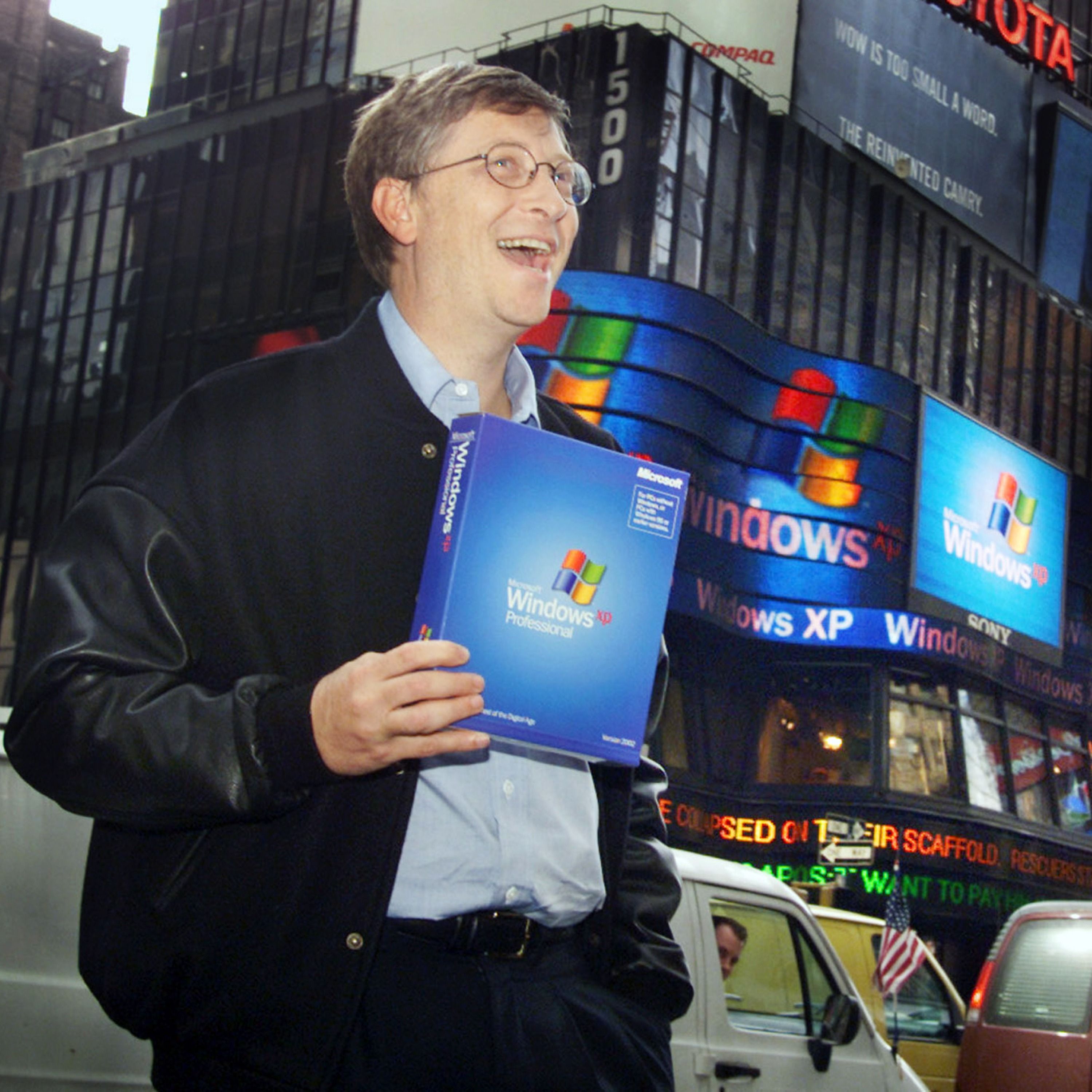
The Daily
How One Tech Monopoly Paved the Way for Another
00:24:37
In a landmark antitrust ruling against Google last week, another case was at the heart of the story — one from the 1990s. Steve Lohr, who covers technology and the economy for The Times, explains the influence of United States v. Microsoft and what lessons that case might hold for the future of Big Tech today.
Loading summary
Transcript98 lines
- [00:00]
Wix Advertiser
How many times have you wished you could be in two places at once? With wix, you practically can. Wix's website builder is packed with powerful AI tools to make running your business online easier. Build a full site just by talking with AI, get an AI agent to manage your sales and marketing, or work like a 10 person team, even if it's just you. So you don't need superpowers to get everything done. You just need Wix. Try it now for free@wix.com.
- [00:32]
Sabrina Tavernisi
From the new York Times, I'm Sabrina Tavernisi and this is the Daily A landmark antitrust ruling against Google last week had at its heart the story of another case, one from the 1990s. Today, my colleague Steve Lohr on the influence of US v. Microsoft and what lessons that case may hold for the future of big tech. Today, it's Wednesday, August 14th. Steve, welcome to the show.
- [01:27]
Steve Lohr
Nice to be here. Thank you.
- [01:29]
Sabrina Tavernisi
So Steve, we wanted to have you on the show because last week we finally got a decision in the big case involving Google. And that was of course the case where the Department of Justice was arguing that Google was a monopoly. And as we now know, the judge in the case agreed. So just to start refresh our memories about this case, this is the first.
- [01:49]
Steve Lohr
Big anti monopoly case against a modern tech company. There are others in the works. There's Amazon, Apple and Ameta, and those are to come. But this is the first salvo in this standoff between the antitrust enforcers and the big tech companies. This one was actually filed in the Trump administration, but picked up with eagerness by the Biden administration. And it centers on search. And the allegation here is that Google used its monopoly power to shut off competition and control distribution of its search engine to the disadvantage of everyone else.
- [02:23]
Sabrina Tavernisi
Right. And the way it did that, according to the government, was by paying companies like Apple, like Samsung, to be the default search engine on their platforms. The doj, of course, said this is illegal. Google's response was in essence, no, this is just good business. These platforms want us there because we're the best and our customers see that.
- [02:46]
Steve Lohr
That's right. But the judge ruled in favor of the Department of Justice. And one of the things I think is quite interesting about it is the continued repeated references in the ruling to this case from the 1990s, US v. Microsoft. It's really clear that this is a template that the judge is working from. You know, this case that was the last time the government took on a big tech company and won.
- [03:12]
Sabrina Tavernisi
And Steve, we are very Lucky to have you in studio with us today because you actually covered that case for the times back in 1998. So there's no one better to help us understand how that moment connects to this one. So let's start with a basic explanation of that Microsoft case. What do I need to know about.
- [03:33]
Steve Lohr
Was a huge trial. This was the big showdown in the Clinton administration between the Department of Justice and Microsoft, which was by far dominant technology company of its day. Just to paint the picture here, I mean, in the early and mid-1990s, it is the personal computer era. Microsoft Windows operating system runs on more than 90% of the personal computers in the world. It shapes people's computing experience. And it was more than that. They dominated this industry in a way that if you were a personal computer maker, you had to deal with Microsoft on their terms. And the reason why I, Bill Gates at the time was, I think, neck and neck with Warren Buffett to be the richest man in the world. All of that was because of the Microsoft control of the personal computer industry. And what really showed the reach and power of Microsoft and Bill Gates, both as an economic force and a cultural force, really came in 1995 with the introduction of a new version of windows called Windows 95.
- [04:40]
Bill Gates
Bill Gates is on his way into millions of American homes through the windows Windows 95, one of the most hyped consumer products ever.
- [04:50]
Steve Lohr
The debut of Windows 95, as nerdy as it was, was a cultural event.
- [04:55]
Bill Gates
Welcome, Microsofties. Nice to have you all here. Actually, I'm here to tell you about this Windows 95.
- [05:00]
Steve Lohr
Let me give you an idea.
- [05:01]
Bill Gates
Give me an idea how powerful Windows 95 is. It is able to to keep track of all of OJ's alibis at once. Pretty amazing stuff.
- [05:11]
Steve Lohr
The product was launched with an event hosted by Jay Leno of the tonight show.
- [05:15]
Bill Gates
Well, Windows 95 is so easy, even a talk show host can figure it out.
- [05:23]
Steve Lohr
As the product went on sale, the lights of the Empire State Building were changed to mirror the company's red, green, blue and yellow logo.
- [05:31]
Wix Advertiser
Wow.
- [05:32]
Bill Gates
This is Jennifer Aniston. I'm Matthew Perry. We're here to see Mr. Bill Gates about a possible starring role in the video guide to Microsoft Windows 95.
- [05:39]
Steve Lohr
Microsoft even had a tutorial on how to use Windows that starred Jennifer Aniston and Matthew Perry, who were the two lead stars of Friends, which was the most popular TV show at the time.
- [05:50]
Sabrina Tavernisi
Taskbars and email and shortcuts. Oh, my.
- [05:53]
Bill Gates
Taskbars and email and shortcuts all month.
- [05:56]
Steve Lohr
And Microsoft had been Pumping this for.
- [05:58]
Bill Gates
Months, millions of computer buffs swarmed into stores to buy the software package that's described as the dawn of a new era in personal computing.
- [06:07]
Steve Lohr
And the company then announced that it sold a million copies in the first four days. So it's hard to understate just how pervasive Microsoft and Windows were at the time. In the midst of Microsoft's dominance, something else is emerging, and it's the early commercialization of the Internet. And remember, most people got on the Internet with what was called dial up service. It was literally you connect to a telephone landline, you know, this symphony of the calling sounds and then the bzz, you know, loading early web pages could, you know, you could go off and get a cup of coffee and come back. It slowly came from the top of the screen and gradually filled. I mean, it is an experience that today would be so broken, no one would hesitate for a moment just to junk it.
- [07:03]
Bill Gates
But what you did see, an attractive, easy to use shop window, a gateway to the riches of the Internet. This is a browser.
- [07:11]
Steve Lohr
What you did see is if you typed into that small rectangular box at the top, the browser box typed in an address ending with.com or.org. it brought you someplace for nothing. Anything was accessible anywhere in the world. And you could see that this is where you get, finally, a commercial potential challenger to Microsoft.
- [07:39]
Bill Gates
What could possibly threaten the survival of the world's largest software company? It revolves around a part of the Internet called the World Wide Web, and.
- [07:46]
Steve Lohr
It'S this little startup company called Netscape. Netscape was the first commercial pioneer of Internet browsing software that was at all successful.
- [07:58]
Bill Gates
Netscape is engaged in a battle over whose software programs will be used to access the Internet. So far, Netscape is winning. Its Netscape Navigator browser program dominates the market.
- [08:10]
Steve Lohr
The founding software is written by two guys at the University of Illinois Urbana Champaign, the National Computing center, one of whom is Marc Andreessen, who is much better known now as one of the leading venture capitalists in Silicon Valley.
- [08:23]
Bill Gates
At 11am this morning, Netscape stock went public and Wall street went bonkers. Initially offered at a price of $28 a share, Netscape shot up to 72 within minutes.
- [08:33]
Steve Lohr
And so this company, which is basically founded in the spring of 1994, hits an IPO in August of 95, which is just, you know, rocket speed. And the IPO is extremely successful. And so we have this entity that starts to just take off like wildfire. It is this first commercial wave of the Internet and Microsoft isn't there. I mean, this is something outside their realm. And so Gates, who's very technical, writes what becomes a famous memo for internal circulation within Microsoft called the Internet tidal wave. And he basically says it's an incredible opportunity as well as a challenge for us and identifies Netscape as this competitor born on the Internet and their chief target.
- [09:25]
Sabrina Tavernisi
So what does Microsoft do?
- [09:26]
Steve Lohr
Microsoft essentially goes to war with Netscape. It starts by developing its own browser, which it calls Internet Explorer. But for years, it's clearly an inferior product to Netscape's Navigator. But Microsoft's tactics don't stop there. Microsoft then bundles Internet Explorer into its dominant product, Windows. It charges nothing for it, so it gives it away for free, undermining Netscape's ability to charge for its browser. And then it goes out and uses its dominance in the personal computer industry to arrange contracts that make it very difficult for PC makers to feature Netscape on their personal computers.
- [10:10]
Sabrina Tavernisi
So really kind of bare knuckle tactics by Microsoft. What does Netscape do?
- [10:15]
Steve Lohr
Netscape still kept doing well into 1996. They had over 80% market share of the browser business. But the Netscape executives sort of see what's coming. Microsoft is chipping away at Netscape's lead in the browser market. It has improved its browser. Microsoft has bundled it into Windows. It's clear that on the current path, Netscape is in real trouble. And so the leadership of Netscape talks to its outside lawyer, says, look, do your research, put together a document that we can show of all the misdeeds here and the chronology of what our rise and what Microsoft has done, and we'll take it to the Justice Department. And that white paper is over 220 pages, and it's pretty detailed. They take this white paper to the Justice Department, and that is the beginning of a landmark antitrust case, which is U.S. v. Microsoft.
- [11:16]
Sabrina Tavernisi
We'll be right back.
- [11:20]
Wix Advertiser
This podcast is supported by the American Petroleum Institute.
- [11:23]
Steve Lohr
Energy demand is rising, and the infrastructure.
- [11:26]
Wix Advertiser
We build today will power generations to come.
- [11:29]
Steve Lohr
We can deliver affordable, reliable, and innovative energy solutions for all Americans. But we need to overhaul our broken permitting process to make that happen. It's time to modernize and build. Because when America builds, America wins. Read our plan to secure America's Future@ permitting.
- [11:48]
Sabrina Tavernisi
Reformnow.org I don't know about you, but.
- [11:51]
Wix User
When I'm using AI for my business, I don't need it to tell me what to do. I know what I want. I just need help making it happen. With wix, I finally have an AI tool that gets things done the way I want. I just have to describe the type of website I need, and it's ready. I can even ask it to manage my inventory, plan my next marketing campaign, or help out my customers. Wix gives me AI wherever I need it. Try it out@wix.com.
- [12:21]
Sabrina Tavernisi
So tell me about this case, US v. Microsoft.
- [12:24]
Steve Lohr
So in May 1998, today we are.
- [12:26]
Bill Gates
Taking another step to keep our marketplace competitive.
- [12:31]
Steve Lohr
Janet Reno, who is the head of the Justice Department, has a splashy news conference announcing they are taking on Microsoft in a huge antitrust case.
- [12:41]
Bill Gates
Microsoft's actions have stifled competition in the operating system and browser markets. But most importantly, it has restricted the choices available for consumers in America and around the world.
- [12:53]
Steve Lohr
Months later, when the trial begins, it is pandemonium. I mean, everybody's there to cover it. I was told that at the New York Times. There are only three trials where we have written about every day that ran for any length. I mean, one was the Microsoft trial, the other was the O.J. trial, and the third was the Lindbergh kidnapping trial.
- [13:10]
Wix Advertiser
Wow.
- [13:11]
Sabrina Tavernisi
So it was a big deal.
- [13:12]
Steve Lohr
Exactly. And the trial lasted for over eight months. There's 76 days of testimony. It really kind of boiled down to two essential allegations were the contracts that Microsoft had with personal computer makers and others and abuse of their monopoly power by restricting the distribution for Netscape's browser. And was bundling Microsoft's browser, Internet Explorer, with its monopoly product, Windows. Was that illegal?
- [13:41]
Sabrina Tavernisi
And how was the government making that case, Steve? What was it arguing exactly?
- [13:45]
Steve Lohr
This was the first real email trial. The Justice Department had gathered troves and troves of memos of meetings and of email from inside Microsoft. And that gave you a glimpse inside how the company operated in a way just, you know, never would have happened before. In this email evidence and in notes that were taken at private meetings, you had the kind of phrasing like, cut off their air supply, you know, crush them, knife the baby.
- [14:16]
Sabrina Tavernisi
Wow.
- [14:17]
Steve Lohr
The tone of this, you know, showed the kind of unrestrained competitive culture within Microsoft. They were doing everything they possibly could. We have to leverage Windows more because we're not going to just win with Internet Explorer because it's not that good a product yet. All of this kind of came out in the email.
- [14:36]
Sabrina Tavernisi
Okay, so there are these aggressive emails with this very kind of remarkable language. What else did the government introduce at.
- [14:45]
Steve Lohr
The very start of the trial?
- [14:47]
Bill Gates
I understand that you're one of the co founders of Microsoft, is that correct? Yes. What's your present title? Chairman and CEO.
- [14:55]
Steve Lohr
There was excerpts of videotape deposition testimony from Bill Gates, and he came off as. He was nitpicking.
- [15:04]
Bill Gates
Actually, in this last answer, I used the word believe. So you're changing the question. Well, if believe and conclude is different for you, I'll ask it both ways. Yeah, it's very different.
- [15:14]
Steve Lohr
It was uncooperative.
- [15:15]
Bill Gates
I do recall receiving this memorandum through email.
- [15:19]
Steve Lohr
Email?
- [15:20]
Bill Gates
No. You don't recall receiving this email? No.
- [15:23]
Steve Lohr
They showed him emails. He didn't remember any of this stuff.
- [15:26]
Bill Gates
What non Microsoft browsers were you concerned about in January of 19? I don't know what you mean. Concerned. What is it about the word concerned that you don't understand? I'm not sure what you mean by it. Is the term concerned a term that you're familiar with in the English language? Yes. Does it have a meaning that you're familiar with? Yes.
- [15:51]
Steve Lohr
But you have to understand that the reputation of this guy and he had appeared a lot in public before, is super smart on it, totally up to speed on everything. And this came off as dishonest and it undermined the credibility of the Microsoft case and put together it was pretty damning.
- [16:14]
Sabrina Tavernisi
And perhaps even the nature of the arrogance of the deposition sort of like spoke to the monopoly.
- [16:20]
Steve Lohr
Yeah, no, that's right. That's right.
- [16:22]
Sabrina Tavernisi
And how do Bill Gates and Microsoft respond? What were they arguing?
- [16:27]
Steve Lohr
That what they were doing was good for consumers. What's free pro consumer. I mean, what's better than that? They were innovating and you know, the government and others shouldn't get in the way. And their strongest pushback was on the bundling because if they couldn't bundle anything they wanted to in their operating system into Windows, that was government meddling in product design.
- [16:56]
Sabrina Tavernisi
And the government should not be anywhere near this.
- [16:58]
Steve Lohr
Exactly. Microsoft said this was going to be a terrible precedent, that it could essentially allow government to meddle in the innovation economy, which Microsoft was at the forefront of. And they felt so strongly about this, they cast the issue in no uncertain terms. At one point, Microsoft's executive said, we can bundle anything we want to Windows, including a ham sandwich.
- [17:21]
Sabrina Tavernisi
So it sounds a lot like the way Silicon Valley and the tech industry talks today about their mission. Right. I mean, you know, when people criticize the tech industry, they say we're just trying to be good and we're just trying to do great things and help the world innovate. And it sounds a lot to me like the arguments that are being made today. You know, the government can't understand the amazing things we're doing and should not stand in our way.
- [17:47]
Steve Lohr
Yeah, you Know, the broad phrasing of this is we're changing the world, as opposed to saying, you know, we are digital tool makers, which they are. But if that's the case, then it invites outside scrutiny and regulation.
- [18:04]
Sabrina Tavernisi
How does all of this ultimately shake out? What happens in the end?
- [18:10]
Steve Lohr
I mean, after this lengthy trial, we get a ruling from the judge, and he sides with the Justice Department that Microsoft has abused its monopoly power and has repeatedly violated the nation's antitrust laws. And the judge fairly quickly approved the Justice Department's preferred remedy, which was to split Microsoft into two companies. One would be the Windows operating system, and the other would be its Office suite of software products, Word, PowerPoint, Excel, and those would be separate from Microsoft Windows. Now, Microsoft resisted and said a breakup would be disastrous and is opposed, absolutely opposed to a breakup. And that breakup never happens. First, an appeals court overrules it and sends it back to the district court. But what ultimately ends this case is a change in the political environment. The Bush administration takes over from the Clinton administration. They're less aggressive about antitrust, and their Justice Department is ordered to engage in settlement talks with Microsoft, and they settle the case.
- [19:19]
Sabrina Tavernisi
Does that mean they threw everything out?
- [19:21]
Steve Lohr
No, the court rulings still stand, the findings of facts and the conclusion of law. It was a big loss for Microsoft, but it wasn't this catastrophic breakup of the company or could have been catastrophic breakup of the company that they had, you know, deathly feared. And you had restrictions placed as part of the settlement. You had restrictions placed on the kinds of contracts, for example, that Microsoft could impose on industry partners so the PC makers could feature any software they wanted to on Windows. And the other thing was access to some of their technology. One of the concerns and the threats the rest of the software industry is, you know, if Microsoft doesn't like you, your stuff isn't going to work very well on Windows. And so this, it wasn't all opened up, but some of it was.
- [20:17]
Sabrina Tavernisi
So this was not a remedy on the scale of a breakup. What was the ultimate effect of this case in the end?
- [20:25]
Steve Lohr
People debate that to this day. I mean, on one side you have people say that had made no difference whatsoever. Market sources were at work, the Internet was developing and opening up, and that the browser competition would have taken care of itself one way or another, and new innovators would have come in. And for Netscape, you can argue that the ruling and the outcome of the trial were too little, too late. By that time, Microsoft had really taken the upper hand in the browser market, and Netscape was eventually sold to America Online, and Netscape as a company, went away. So if this door opening was too late for Netscape, in a sense, it still happened. And four months after the Microsoft trial began, a small startup called Google was founded. It had a thing called a search engine. It had no business model. It had, you know, but the door was open.
- [21:27]
Sabrina Tavernisi
Amazing.
- [21:27]
Steve Lohr
A lot of people think Microsoft became a less aggressive, less utterly unrestrained entity than it was, and that kept the door open for newcomers like Google.
- [21:43]
Sabrina Tavernisi
I mean, it just all comes full circle here. Google sprouted from the ground that had been made fertile by the court case against Microsoft. It really opened the door for new companies. And here we are today, once again kind of in the same boat. But it's Google this time, not Microsoft.
- [21:59]
Steve Lohr
Yes. And you can look at Google search engine as the equivalent of Microsoft's Windows operating system.
- [22:05]
Sabrina Tavernisi
Okay, so stepping back here for a second, we know that the Microsoft case was one of the primary influences on the judge who just declared Google a monopoly. We're still waiting, of course, to see what remedies that judge ultimately recommends. But I wonder how you think the Microsoft case might shape where that judge lands in the end. Like, what clues does it give us here?
- [22:30]
Steve Lohr
Well, we have a whole separate hearing on remedies, and there's a lot of proposals. Everything from just restricting certain contracts, banning those kinds of payments, to having to split off either its Android operating system or its Chrome browser. We have no idea. But what I think you have here is a signal of what kind of behavior in this environment is going to be viewed as suspect and what you should avoid. And again, a lot of debate about these antitrust cases, whether they're worthwhile or not. But I think what you do have is a sense of some restraining influence on these dominant companies, some pulling back, and some opening of the door to opportunity for innovators. And we don't know what the future is going to look like or who is going to benefit. I mean, one irony is that a winner could be Microsoft. It has the most directly competing search engine to Google with Bing. But I think the broader implication is the uncertainty of. Of new innovation and trying to keep the door open for the kind of things you may not have thought about, Just as nobody thought Google would become what it did when it was founded in the midst of the Microsoft trial, you don't know what the future is going to hold, but you want that window of opportunity, that door to be open so that whatever comes, it has a better chance of success than it might have had otherwise.
- [24:06]
Sabrina Tavernisi
Which is fundamentally what these cases are about.
- [24:09]
Steve Lohr
Exactly.
- [24:14]
Sabrina Tavernisi
Steve, thank you.
- [24:16]
Steve Lohr
Thank you.
- [24:26]
Sabrina Tavernisi
We'll be right back.
- [24:28]
Wix User
Ever see an idea so clearly in your head but struggle to find the time to get it all done? Wix helps you go from eh, I'll get to it to done. Build a full site just by describing your idea. Let an AI agent handle daily tasks, plan your next marketing campaign or help out customers so you can grow your business the way you want without it taking over your life. Try it out@wix.com the holidays mean more.
- [24:56]
Wix Advertiser
Travel, more shopping, more time online and more personal info in more places that could expose you more to identity theft. But LifeLock monitors millions of data points per second. If your identity is stolen, our US based restoration specialists will fix it, guaranteed or your money back. Don't face drained accounts, fraudulent loans or financial losses alone. Get more holiday fun and less Holiday work with LifeLock. Save up to 40% your first year. Visit LifeLock.com SpecialOffer terms apply.
- [25:26]
Sabrina Tavernisi
Here's what else you should know today. On Tuesday, Hamas announced that it would not take part in a long awaited round of ceasefire talks with Israel planned for Thursday, despite stepped up pressure from the US to reach a deal. A representative for Hamas in Lebanon said in an interview that Hamas had decided not to participate because its leaders did not think the Israeli government had been negotiating in good faith. The decision came after the Times reported that Israeli Prime Minister Benjamin Netanyahu had quietly added new conditions that negotiators fear have created extra obstacles to a deal. Netanyahu's office has denied denied that he added new conditions and said that he was simply seeking to clarify ambiguities. Today's episode was produced by Ricky Novetsky, Rochelle Bonga and Sydney Harper with help from Nina Feldman. It was edited by Mark George, contains original music by Diane Wong, Alicia Bitu, Dan Powell and Pat McCusker and was engineered by Alyssa Moxley. Our theme music is by Jim Brunberg and Ben Landsberg of Wonderly. That's it for the Daily I'm Serena Tavernisi. See you tomorrow.
- [27:01]
Wix Advertiser
How many times have you wished you could be in two places at once? With wix, you practically can. Wix's website builder is packed with powerful AI tools to make running your business online easier. Build a full site just by talking with AI, get an AI agent to manage your sales and marketing, or work like a 10 person team even if it's just you. So you don't need superpowers to get everything done, you just need Wix. Try it out for yourself@wix.com.