Loading summary
Transcript177 lines
- [00:00]
Capital One Advertiser
Brought to you by the Capital One Savor Card. With Savor, you earn unlimited 3% cash back on dining, entertainment, and at grocery stores. That's unlimited cash back on ordering takeout from home or unlimited cash back on tickets to concerts and games. So grab a bite, grab a seat, and earn unlimited 3% cash back with the saver card Capital One. What's in your wallet? Terms apply. See capitalone.com for details.
- [00:25]
Rachel Abrams
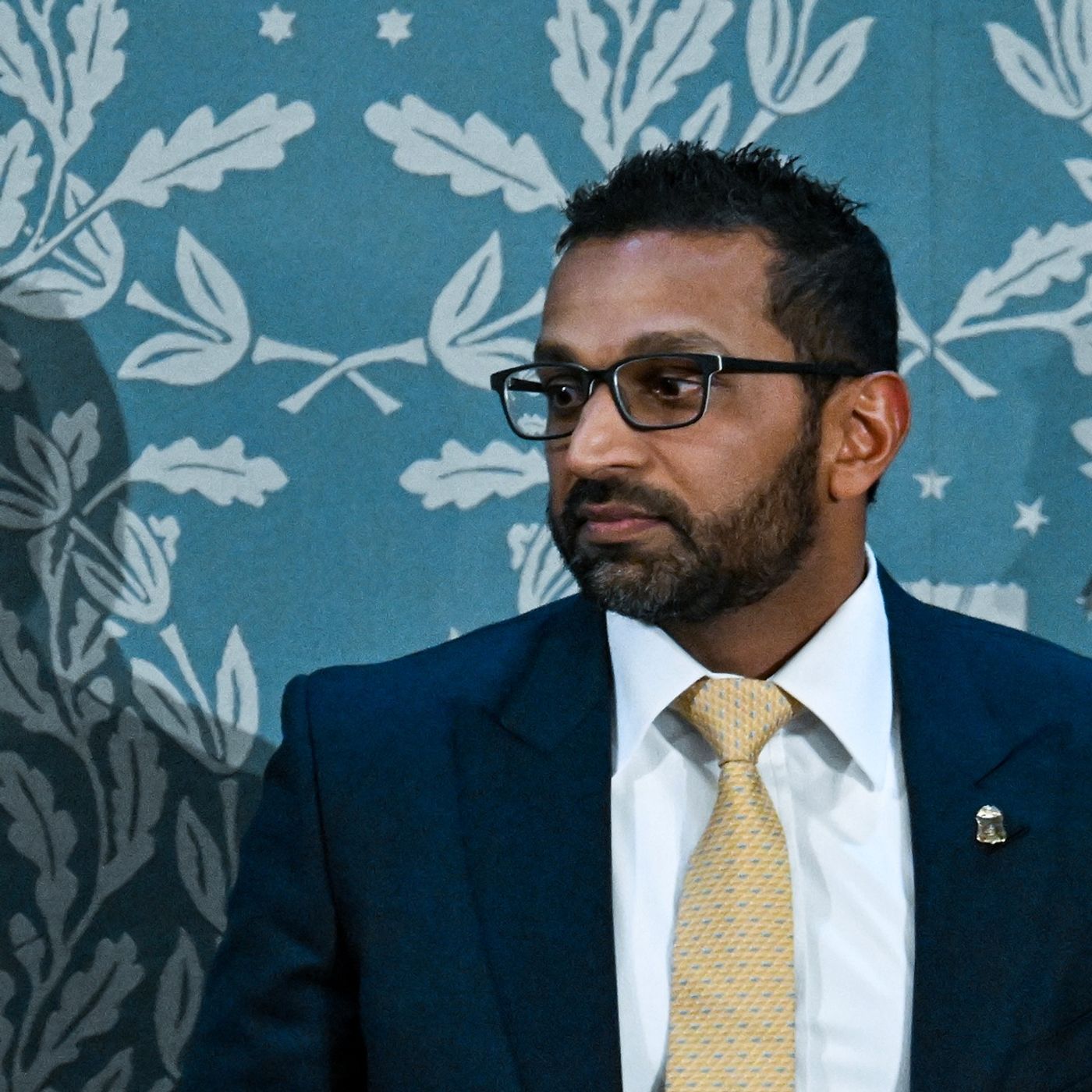
From the New York Times, I'm Rachel Abrams, and this is the Daily. From the moment he was appointed director of the FBI, Cash Patel has invited controversy and concern about what his leadership would look like and how it might affect the agency that's tasked with protecting the United States from threats at home and abroad. Today, my colleagues Emily Bazelon and Rachel Poser special to dozens of current and former FBI employees about how the FBI has been transformed. It's Wednesday, april 22nd. Emily Bazelon, welcome to the Daily.
- [01:22]
Emily Bazelon
Thanks so much for having us.
- [01:24]
Rachel Abrams
Rachel Poser, first time on the Daily. Welcome.
- [01:26]
Rachel Poser
Thank you. Great to be here.
- [01:28]
Rachel Abrams
So we have talked a lot on the show about all of these dramatic ways that the Trump administration has reshaped the role and the function of the federal government. A lot of those results are quite visible. ICE agents in the streets, prosecutors defying court orders. But one of the agencies that has been reshaped in perhaps less visible ways is the FBI. The two of you embarked on an enormous, ambitious reporting project to try to really get inside the FBI. So tell, tell us what specifically you were trying to understand about the agency and how it was functioning under the Trump administration.
- [02:02]
Emily Bazelon
The FBI, you know, since the scandals of Watergate, since those days, has really tried to operate independently of the White House and to follow the facts without fear or favor. That's a big deal in the bureau. And so when Trump was elected, he had a record of calling the bureau corrupt, of being very angry that he had been investigated. Well, I think the FBI was a very corrupt institution, and I'm, I'm a victim of it. In a true sense, I was able to beat it. And the Trump administration came in and they were really clear about this. The mission of the agency was changing.
- [02:38]
Anonymous or Unnamed Source
Our predecessors turned this Department of Justice into the Department of Injustice. But I stand before you today to
- [02:45]
Emily Bazelon
declare that those days are over. And, you know, the FBI, much of what it does is secret.
- [02:50]
Rachel Abrams
Right.
- [02:51]
Emily Bazelon
But we wanted to see what this transformation looked like. And so we embarked on this investigation where we talked to 45 current and former FBI employees.
- [03:01]
Rachel Abrams
Oh, wow.
- [03:01]
Emily Bazelon
And what we found was an agency that was really straining under political pressure, where the leadership was transformed into something much more partisan than anyone at the FBI had seen before, and where agents were finding themselves doing work that felt to them like it was different and at odds with their own sense of mission and purpose, and they were just really beginning to worry about the safety and security of the country.
- [03:25]
Rachel Abrams
Well, let's start with the leadership aspect of this, because I imagine that, in large part, your reporting has to do with Trump's pick for the FBI director, Cash Patel. Patel is a really controversial figure. He's often been accused of pretty erratic behavior. What has your reporting shown about his tenure?
- [03:42]
Rachel Poser
So Cash Patel was a highly unusual pick for this role. He had never worked for the FBI and did not have much experience in federal law enforcement at all. He'd been a public defender, and he worked as an intelligence official in the first Trump term. He's described by people who know him at the time as not particularly hardworking, but very cocky, ambitious, full of bluster.
- [04:04]
Anonymous or Unnamed Source
Because the subpoena list that Donald Trump should execute in this proceedings is going to be monumental. I want him to subpoena every government gangster that has ever called him out.
- [04:16]
Rachel Abrams
Bogusly.
- [04:17]
Anonymous or Unnamed Source
We're going to subpoena Garland Ray. We're going to put all them in the hot seat.
- [04:22]
Rachel Poser
Most importantly, he's somebody who has spun conspiracy theories about the Bureau in the past. He says that Joe Biden rigged the 2020 election. He thinks that there were FBI agents involved in planning the January 6 attack on the Capitol, which is part of why Trump picks him.
- [04:37]
Anonymous or Unnamed Source
I'd shut down the FBI Hoover Building on day one and reopening the next day as a museum of the deep state.
- [04:45]
Emily Bazelon
I mean, he has this line. He actually talks about shutting down the Bureau headquarters and reopening it as a museum of the deep state.
- [04:52]
Rachel Abrams
I remember that line, and I remember that there was a lot of concern and speculation and so many questions from outside the Bureau about who this guy was and what the agency would even look like under his leadership.
- [05:03]
Emily Bazelon
Yeah, and there was a lot of skepticism and concern inside the agency, too. You know, people are looking at this guy and they're thinking, like, how is this person who is so hostile to our agency going to lead it?
- [05:15]
Tanya Ugorits
One of the first things I did was go on Amazon and buy his book. I listened to some podcasts, and I tried to understand his background, how he approached things where he was.
- [05:27]
Emily Bazelon
So one of the people we talked to was Tanya Ugorits. She was the head of the Directorate of Intelligence at the FBI. And she sees Patel coming in, and she very earnestly wants to set him up for success.
- [05:39]
Tanya Ugorits
Because part of my job as the head of intelligence was going to be I was in charge of the team that would deliver his morning intelligence briefing. So the same.
- [05:48]
Rachel Abrams
And we should note that you do not have recordings of Tanya or your. But we did send a producer from the Daily, Anna Foley, to call some of your sources back and get some audio that we're playing in this episode.
- [05:59]
Emily Bazelon
That's right. What did you think of his book?
- [06:03]
Tanya Ugorits
It was enlightening. I certainly was concerned at some of the disparaging remarks that were directed towards FBI and doj. But I'll admit I was mainly reading for any insights on his views on intelligence, since that was kind of my responsibility at the time. You know, classic intel analyst. I'm just trying to gather as much info as I can.
- [06:32]
Emily Bazelon
So she's coming in super eager, but she can also see quickly that this is not business as usual. Can you describe his first day like,
- [06:42]
Anonymous or Unnamed Source
after he came on board?
- [06:43]
Tanya Ugorits
Do you remember what it was like for you? Yes, I was part of the morning meetings that we would have in which all of the headquarters leaders would assemble in a very large conference room and we would brief the director and typically the deputy director. And I think everyone was very anxious to meet the new director and to see what he would have to tell us. And on that very first day, he made an announcement about changes in staffing to the Bureau.
- [07:22]
Emily Bazelon
And one of the first orders that really got people's attention was a big order to move hundreds of field agents out from Washington into the field offices. And that wasn't necessarily a bad idea. There were a lot of FBI insiders who said, yeah, sure, the Bureau has become too heavy in D.C. and we could disperse people and that might be more effective. But the way they did, it seems like kind of random and arbitrary, and not a lot of thought was going into, well, how do we actually have these people land all over the country in a way that they're going to really be able to do their jobs?
- [07:56]
Tanya Ugorits
It showed a lack of understanding of what the Bureau at the headquarters level does. And so this was the first instance, I would say, of a pattern that we would see after that of decisions first and then everybody scramble and figure out how to make it happen later.
- [08:20]
Emily Bazelon
So this was a signal to Tanya that Patel is not going to be taking detailed briefings and kind of coloring inside the lines. He's going to be moving ahead, making maybe abrupt and sudden decisions that affect how investigations are run without the kind of traditional, very sober and considered analysis that the Bureau is used to providing.
- [08:40]
Rachel Poser
Hmm.
- [08:40]
Emily Bazelon
And it's not just Tanya Ugoritz who's concerned in these early days. I mean, this is widespread all over the Bureau.
- [08:47]
Anonymous or Unnamed Source
I remember when it was announced publicly that Kash Patel was going to be the nominee. And I remember first thinking, who is Kash Patel?
- [08:56]
Emily Bazelon
And one of our other sources, John Sullivan, who's also in the Intelligence division, he was a section chief there, told us a lot about this period and what he was worried about.
- [09:07]
Anonymous or Unnamed Source
That being said, I still held out a little bit of hope that an educated individual who has a law degree and understands the criminal justice system to some extent would understand what we were faced with. I was more cautiously optimistic in the idea of perhaps this will be okay with Dan Bongino's selection to be his deputy director. I realized in that moment that it was not going to be okay.
- [09:32]
Emily Bazelon
And a real turning point for him, a big deal in the Bureau generally, was when Patel and Trump choose Dan Bongino as the number two in the agency. He's gonna be right under Patel.
- [09:43]
Anonymous or Unnamed Source
It's just a few bad apples. Is it? Let's just go the list of names
- [09:47]
Emily Bazelon
of people who've been involved in either
- [09:49]
Anonymous or Unnamed Source
alleged corruption or documented corruption at the FBI.
- [09:52]
Rachel Abrams
We got Jim Comey and Rachel. Remind us who Bongino is and why was this a turning point for John Sullivan?
- [09:59]
Rachel Poser
Bongino is a former Secret Service agent who'd become a pro Trump podcaster and Fox News commentator.
- [10:05]
Anonymous or Unnamed Source
And those are just the people you know about. But it's not one bad apple, it's a rotten orchard.
- [10:12]
Rachel Poser
So in regards, he also has a conspiratorial bent. He described FBI agents as thugs for the Democratic Party and called for disbanding the Bureau.
- [10:21]
Anonymous or Unnamed Source
Dan Bongino struck me as somebody who had really lost his way. You know, you would see clips of his podcast and some of his streaming things, particularly some of the most alarming things he would say would get clicks and kind of work their way into algorithms.
- [10:38]
Emily Bazelon
It's way past time to clean this FBI house up.
- [10:41]
Anonymous or Unnamed Source
They have burned every last shred of faith and trust, freedom loving Americans, hadn't it?
- [10:50]
Rachel Abrams
So Emily Bongino is now Patel's number two. What does John make of their tenure in these early days?
- [10:57]
Emily Bazelon
He's seeing these two new leaders together make a big push for optics.
- [11:02]
Anonymous or Unnamed Source
There was, from what I learned on a senior conference, was that the President had seen video footage or pictures of the raids that were being conducted around the United States. And was angry that he did not see the well known FBI flak jackets with the yellow FBI on the back.
- [11:22]
Emily Bazelon
And so one thing that happened early on is that apparently Trump was watching footage or saw a picture of a raid and he didn't see any flak jackets. And that becomes something that's of great concern.
- [11:34]
Anonymous or Unnamed Source
At the same time, Tash Patel was putting out videos of him at Quantico, kind of cosplaying as Rambo, being around explosions and people rappelling from helicopters, all to kind of give this idea of the FBI is tough and he is tough, which then takes away resources and time and money and energy from those teams so he can film something at a training ground or at Quantico. And to many people, those videos, myself included, looked completely childish. The director, the leader of the FBI, is representing the organization in a juvenile manner. And the work that we do and did was supremely serious.
- [12:23]
Rachel Abrams
We've known for a very long time, of course, that President Trump cares a lot about how something looks on television. And what you're describing is that that concern from the President is trickling down to Patel and Bongino. That basically these two top leaders of the FBI are essentially prioritizing the politics, the optics, and maybe even the marketing of the FBI over the job itself.
- [12:44]
Emily Bazelon
Yeah, it's like a performance. And you really see this with the Charlie Kirk investigation.
- [12:48]
Rachel Poser
Yeah. After Charlie Kirk was shot in September, Patel immediately tries to jump into the center of the action, which is very unusual for an FBI director. The first thing that often happens when a CRIS incident like that takes place is that there's a big call with all of the executives in Washington, most of the field offices, and the director usually says very little because someone who is on the ground and knows what resources they need is leading the call. But when 200 plus agents tune in for this call in the hours after Kirk is shot, they're in the midst of this manhunt, trying to find his killer. Patel takes over the call. He's berating the Special Agent in charge in Salt Lake, and he starts scripting out his social media strategy. He's telling Bongino and the field office what to tweet. And all of this takes a lot of time and attention away from the investigation.
- [13:39]
Emily Bazelon
And they're actually making mistakes. They're putting wrong information out into the world because there is such a rush to answer questions and be in front of the press. And for the agents, this is deeply frustrating. Right. Because they know the danger of saying something that's not true. Setting an Investigation, off course.
- [13:56]
Rachel Abrams
Obviously, though, the FBI does care about its image. Right. Like, that is very clear from its long history of flashy press conferences whenever it does drug busts or raids or other things that they want to boast about. Spiritually, what you've described is not new. And as you're describing, there is a cost to prioritizing that. But I also wonder whether there are virtues to this kind of emphasis on the optics here.
- [14:20]
Rachel Poser
I mean, we did hear from some agents who felt like the Bureau had not been good enough in the past at telegraphing all of the work that it was doing to keep the American people safe. But the way that Patel and Bungino were going about this, they didn't feel was solving for that problem. I mean, agents were being told to take pictures for social media while they were out doing raids and making arrests, which they felt just compromised operational security and their safety. So it seemed to most of the people we spoke to like this was really putting the politics and the optics over the mission.
- [14:53]
Emily Bazelon
Yeah, I mean, you know, it's one thing, like, when you have completed a drug bust to then make a big deal of it and try to take credit. It's another thing in the beginning of an investigation, when the agents on the ground and local law enforcement are not sure who the correct suspects are to be putting out information into the world, which then, you know, swirls everywhere and can turn out to be wrong.
- [15:13]
Rachel Poser
Yeah. And we saw that this focus on optics wasn't only frustrating agents at the Bureau, it was really frustrating our allies abroad. Kash Patel attended a secret intelligence conference last year in the UK with some of our closest intelligence partners. And as part of the conference, they all went to Windsor Castle for a meeting with the King, where a photograph was taken of all the participants, and it was sent around as a kind of keepsake with instructions. And please don't share this, because some of the people in that photo were non disclosed, meaning that their affiliation with the intelligence services was supposed to be a secret.
- [15:48]
Rachel Abrams
Their faces were not supposed to be in the press.
- [15:50]
Rachel Poser
Correct. But Kash Patel is apparently determined to put this photo out on his social media. And so it creates this minor international incident where the British are saying, please don't post that photo. You really can't. And his team is kind of pushing back. No, we want to put it out. They didn't end up putting it out. But it's just an example of the kind of thing that everyone started to have to deal with when Patel was so focused on optics and social media.
- [16:21]
Rachel Abrams
What did Patel or the FBI have to say in response to these anecdotes?
- [16:25]
Rachel Poser
Both Patel and Bongino declined our request for interviews, but the FBI spokesman, Ben Williamson, sent us a general comment in response to our reporting, and I can read it to you, please. He said, this story is a regurgitation of fake narratives, conjecture and speculation from anonymous sources who are disconnected from reality.
- [16:43]
Rachel Abrams
And to state the obvious, there are plenty of named sources in your story, Emily. The desire to project a certain type of image, though that seems like from your reporting, that was really driven by the fact that Bongino and Patel had an audience of exactly one person. Right. The president. And as your reporting showed, that's what was ultimately driving this leadership style that we're talking about.
- [17:06]
Emily Bazelon
Yeah. The more people we talked to, the more clear it became that politics and these questions of image were permeating everything about the agency and really affecting the work every day of the agents and analysts on the ground.
- [17:31]
Rachel Poser
We'll be right back.
- [17:42]
Capital One Advertiser
With no fees or minimums on checking accounts, it's no wonder the Capital One bank guy is so passionate about banking with Capital One. If he were here, he wouldn't just tell you about no fees or minimums. He'd also talk about how most Capital One cafes are open seven days a week to assist with your banking needs.
- [17:59]
Rachel Poser
Yup.
- [18:00]
Capital One Advertiser
Even on weekends, it's pretty much all he talks about in a good way. What's in your wallet? Terms apply. See capital1.com Bank Capital One NA Member FDIC brought to you by the Capital One Savor card. With Savor, you earn unlimited 3% cash back on dining, entertainment and at grocery stores. That's unlimited cash back on ordering takeout from home or unlimited cash back on tickets to concerts and games. So grab a bite, grab a seat, and earn unlimited 3% cash back with the saver card Capital One. What's in your wallet? Terms apply. Seecapitalone.com for details.
- [18:36]
Rachel Abrams
She knows how did you blab? No.
- [18:39]
Emily Bazelon
The Devil Wears Prada too. He's the movie event 20 Years in the making.
- [18:43]
Tanya Ugorits
Honestly can't with the secrets anymore. So I think we just.
- [18:45]
Rachel Abrams
We should tell her. Will you two please spit it out
- [18:48]
Emily Bazelon
already on May 1st. Be the first to experience it only in theaters.
- [18:54]
Rachel Abrams
In light of the recent scandal, I'm
- [18:56]
Emily Bazelon
here to restore your credibility.
- [18:57]
Rachel Poser
Oh. Cause we're a team now.
- [18:59]
Rachel Abrams
That's a nice story.
- [19:01]
Emily Bazelon
The Devil wears Prada, the second of Lady PG13 may be inappropriate for children under 13 only in Peter's May 1st.
- [19:08]
Rachel Abrams
Rachel, how does the change in leadership style actually trickle down to the rank and file FBI employees.
- [19:14]
Rachel Poser
Well, there were a couple of big trends that we noticed in our reporting, and one of them was how much the day to day work of agents and analysts was being transformed by the Trump administration's emphasis on immigration. The FBI traditionally plays no role in immigration enforcement, but all over the country, agents and analysts were being reassigned from their normal duties to help with the immigration push. So I spoke to one analyst in Los Angeles who became particularly concerned about this when the Trump administration did a big immigration push there last year. And her story gives us some really good insight into what this transformation really looked like.
- [19:49]
Rachel Abrams
So tell us that story.
- [19:50]
Rachel Poser
So this was an analyst named Jill Fields.
- [19:52]
Jill Fields
My husband joined the bureau and his first week at the bureau, he came home and he said to me, hey, there's this job that you would really, really like. It's called an intelligence analyst. And the more he told me about it, the more I was like, sign me up, I'm in.
- [20:08]
Rachel Poser
Jill was one of those agents for whom the FBI was really her life. She worked there, her husband worked there. They were true believers.
- [20:15]
Jill Fields
By the time I got in, I had a three and a half year old, so we got him a little FBI jacket. They had the little hoodie jackets that says FBI and got him the junior agent creds. And, and he was so cute because he would put them on, then he'd put little sunglasses on and he'd go to people and he'd be like, pow, FBI. And show his little. His little junior agent creds. It was really cute.
- [20:40]
Rachel Poser
Jill was an analyst who worked on violent crime in la, and that was really her area of expertise. But then, as the Trump administration's deportation agenda ramps up early last year, she and a whole host of other agents suddenly get tasked to help with the immigration push, something they had really no experience in.
- [20:57]
Jill Fields
I was stressed out because I was having to pull analysts off of different
- [21:03]
Rachel Poser
teams to agents were being assigned to immigration enforcement and pulled away from things like public corruption, cybercrime, white collar crime, drug trafficking, terrorism, things that under the Biden administration and for decades before had been core priorities of the FBI.
- [21:20]
Jill Fields
They wanted three times as many people working the command post than we would normally have. And I just had logistical concerns. And when asked, it was, well, we've got to do this for optics. We've got to make a show for the President.
- [21:40]
Rachel Poser
So Jill is already frustrated, and then she gets asked to do something that she feels crosses a red line for her.
- [21:47]
Jill Fields
A group of protesters had been filming agents. They had A megaphone. They were telling people to stay indoors because ICE was in the area. And later that day we were asked to run pre assessment checks.
- [22:04]
Rachel Poser
She's asked to have members of her team run a pre assessment on protesters, which is essentially the first step toward a criminal investigation. And members of her team had been asked to take a look at a cell phone video that their supervisors claimed showed anti ICE protesters impeding in.
- [22:22]
Jill Fields
There was a little bit of bickering, but the protesters remained where they were. They didn't cross the line that the agent had put out there.
- [22:29]
Rachel Poser
Their determination is that the protesters have done nothing wrong.
- [22:33]
Jill Fields
The investigative team had determined that the protesters were exercising their First Amendment rights.
- [22:40]
Rachel Poser
And so they say, we're not going to go forward with this investigation. And they're told you have to open one anyway.
- [22:48]
Jill Fields
It was so ludicrous. It's almost like this would have been in normal times, this would have been your scenario in your legal training that you would take a test on and it would be, you know, so you've been told to open this investigation. What do you do? And the answer would be you do not, because this is First Amendment protected activity.
- [23:15]
Rachel Abrams
And where did Jill understand that order to be coming from?
- [23:18]
Rachel Poser
She was getting the request from her supervisor, but it was clear to her that there was pressure coming from the top.
- [23:29]
Rachel Abrams
I want to make sure that we're not sounding naive here and acknowledge that the FBI has a long history of doing things that violate citizens constitutional rights. For instance, conducting surveillance on people. This is not a new concept. So how did what Jill was asked to do fit into that or differ from that?
- [23:47]
Rachel Poser
That's a great question. Several people described the FBI to me to be in a kind of post Hoover mindset, meaning that they were very aware of the ways that, particularly in the 50s, 60s and 70s, the bureau had violated American civil rights by investigating huge numbers of people who had committed no crime. And that's not to say that since then their track record has been perfect by any means. The treatment of Muslim Americans after 911 is just one example. But it's drilled into them at Quant Go, the FBI training academy to try to balance the mission with American civil rights. And Jill felt like that effort was being now completely ignored. And so she says no. She pushes back.
- [24:27]
Jill Fields
I was told I couldn't say no. And I was told, well, you can get fired today or you can get fired in four years. When another administration comes in and starts looking and seeing who had violated the law and who had followed and acquiesced,
- [24:43]
Rachel Poser
she's Told in response. You know, Jill, you can get fired now or you can get fired. When someone, a new administration comes in and starts looking into constitutional violations. It was, in a sense, an admission that we know this is wrong. We're asking you to do it anyway. And if you don't do it, there will be consequences.
- [24:59]
Rachel Abrams
So what happens to her?
- [25:01]
Rachel Poser
Well, first her squad gets taken away from her. She gets reassigned.
- [25:05]
Jill Fields
I was also told that I was a problem.
- [25:09]
Rachel Poser
And she's told that the seventh floor is aware of her. The seventh floor means where the director sits in the Hoover Building in Washington.
- [25:16]
Jill Fields
The stress that came with that.
- [25:18]
Rachel Poser
So she knows that she's being monitored.
- [25:21]
Jill Fields
I knew at that point I was done. I was worried.
- [25:24]
Rachel Poser
And she decides to leave.
- [25:27]
Jill Fields
When I decided to leave, I remember being sad and packing up the last of my things, walking with my friends to my car to put my boxes up. It's so painful because I loved my job. I loved what we were doing. And it just. It hurt to know that things had changed so much that I was not going to be able to continue doing the job that I loved.
- [26:08]
Rachel Abrams
So we're seeing in some very tangible ways there are agents that are not only being taken away from their typical work, but they are also being driven to leave.
- [26:15]
Emily Bazelon
Yeah, we heard a lot of examples of this. But the other big dynamic we observed in terms of the political reorientation of the Bureau was that people were being pushed out because their work from the past was now being viewed with disfavor. So maybe you remember this. Patel, in the beginning, when he got got chosen for his job, talked about purging the agency of any employees who'd worked on investigating the president in the past. And one of the people who got swept up in that search was Tanya.
- [26:45]
Tanya Ugorits
I was on vacation with my husband in Virginia beach, and one of my deputies was, you know, covering for me while I was away. I had a routine check in with her just to see if there was anything significant that needed my attention. And one of the items highlighted for me was that, you know, the division in my absence had received questions about a piece of intelligence that the FBI published in September 2020. So.
- [27:17]
Emily Bazelon
So now we have to go back to 2020 and all the fears about foreign influence in the election. And at that time, the FBI issued an intelligence report that contained a secondhand tip that the Chinese government was creating fake IDs to cast votes for Joe Biden in the 2020 election. And there are a lot of Bureau a debate about the credibility of this intelligence. The FBI ultimately withdrew this report. But then now Fast forward to 2025. Senator Chuck Grassley, who's the Republican senator who chairs the Senate Judiciary Committee. He's conducting oversight, and he's asking for lots of internal FBI documents. He's on a hunt for what he sees as, like, suspect bad things the FBI was doing when Biden was president.
- [28:01]
Rachel Abrams
Things they didn't properly investigate, perhaps.
- [28:03]
Emily Bazelon
Exactly. And so the FBI gives Grassley emails about this report about the Chinese and the 2020 election. And in one of the emails, an FBI employee wrongly identified Tanya as the official who had ordered this report to be withdrawn.
- [28:21]
Tanya Ugorits
I'm both trying to get to the bottom of it in terms of why is my name associated with this? And also thinking, who do I need to talk to about it?
- [28:31]
Emily Bazelon
And so. So then she meets with Dan Bongino.
- [28:35]
Tanya Ugorits
He acknowledged that, you know, he had heard about this and he was aware of it, but he commented that the matter was out of his hands. And I didn't really understand what that meant because he was the number two official in the FBI.
- [28:51]
Emily Bazelon
And the next afternoon, she was placed on administrative leave.
- [28:58]
Tanya Ugorits
I'm a pretty stoic person. I can handle a lot, and it's part of what's made me successful in my job over the past 24 years. But at that moment, I had tears in my eyes then.
- [29:10]
Emily Bazelon
There's going to be an internal investigation of this whole field report and why it was withdrew.
- [29:15]
Tanya Ugorits
The FBI's Inspection Division contacted me, and
- [29:19]
Emily Bazelon
they are the ones she's interviewed twice.
- [29:21]
Tanya Ugorits
So a polygraph's never pleasant.
- [29:23]
Emily Bazelon
They polygraph her, and then she gets called in to discuss her options. And she asks, well, what did this review find? And she's told that the review found no misconduct, not by her or anything related to the report.
- [29:36]
Tanya Ugorits
And so I asked, well, if that's the case, why can't I return to my previous position?
- [29:42]
Emily Bazelon
So then she says, well, okay, if the review found that I did nothing wrong, can I have my job back?
- [29:47]
Rachel Abrams
Right?
- [29:47]
Emily Bazelon
And then they say, well, you're a senior executive, and so your position is at the discretion of the director, meaning of Patel. And then she's told, no, she cannot have her job back. She's gonna be transferred somewhere else to another field office. She's gonna be demoted.
- [30:01]
Tanya Ugorits
Ultimately, I decided to leave.
- [30:03]
Emily Bazelon
And so she left the agency, taking with her a whole career's worth of experience. This is someone at a very high level who had spent her entire work life at the FBI to so casually
- [30:16]
Tanya Ugorits
discard such people as if they were like a used up tissue, you know, with no consideration for what the organization would be losing. It is careless in a way that is not fitting with the level of trust and responsibility of the leadership positions in the FBI.
- [30:45]
Rachel Abrams
So, effectively, what Patel and Bongino are telegraphing is we need heads to roll, and it doesn't necessarily matter whose heads.
- [30:52]
Emily Bazelon
Yes, she is the scapegoat for this whole convoluted story. Right. It's not that anyone is saying that this report about the Chinese trying to steal votes for Biden was true. What she is told is that the FBI, that Patel does not want to go to Senator Grassley and explain that the person who is named in this email, who from just that email looks like they withdrew the report, is currently the head of intelligence for the FBI.
- [31:18]
Rachel Abrams
Did you hear about any other FBI employees that got pushed out because of similar political pressure?
- [31:24]
Emily Bazelon
Yes, we did. And I think one of the striking things we saw was that for some employees, it wasn't one discreet action they took that got them pushed out, like, not one single email. It was the major cases they were assigned to. Their whole line of work, like, the things that had made them valuable to the FBI before were now being held against them and making them vulnerable. There are thousands of agents who'd worked on the January six investigations and plenty who'd also worked on the four investigations of President Trump. So now they're worrying, is this work that I did before, because I was assigned to it, gonna put me in jeopardy? And one of the people we talked to who was in that position was Blair Tolman.
- [32:06]
Blair Tolman
There was a period of time where I was watching the news every day just to see, you know, what could lead up to my potential termination. That's not a way that I want to live my life. It's not how anybody.
- [32:20]
Emily Bazelon
So before Trump took office for his second term, Blair had been the supervisory special agent of this elite public corruption unit called CR15.
- [32:29]
Blair Tolman
And so we were investigating government employees who were misusing their position. And then on top of that, we also worked congressional cases, Senate cases, judicial cases. So.
- [32:40]
Emily Bazelon
And that was the unit that conducted the investigation against President Trump. Trump about whether he interfered in the 2020 election.
- [32:47]
Blair Tolman
I think I knew that there was going to be a lot of eyes on the investigation, but it wasn't any different than anything else we worked in the sense that you need to follow the rules, you need to follow policies. You have to get approval for certain things, like the case is a case.
- [33:06]
Emily Bazelon
Then now Fast forward to 2025, and that investigation, which is called Arctic Frost, becomes a huge target for Trump, and also for critics like Senator Grassley. So Blair is watching some of the agents who she picked for this assignment because of their great skill, because she saw them as very independent and utterly nonpartisan. They're starting to get fired.
- [33:28]
Blair Tolman
It was hard to see two outstanding people terminated.
- [33:33]
Emily Bazelon
And she's just kind of waiting for them to come for her, and then, of course, they do.
- [33:38]
Blair Tolman
My letter said, you know, due to my lack of judgment and lack of impartiality that led to the political weaponization of the government. And to me, what that meant was, you were on this investigation, and we're firing you for it. I just kept thinking, you know, this. This life that I had, that I enjoyed, that I loved, the people that I was able to help, the justice that I was able to get for individuals is over.
- [34:08]
Rachel Abrams
Obviously, all of this is extremely distressing to the people that it has directly affected these agents who are being forced to leave in some way. But I do wonder also about the people that are being left behind and what kind of impact this environment has on them and of the actual work of the FBI.
- [34:24]
Rachel Poser
We heard from a lot of people that there's now a culture of fear in the Bureau of paranoia. Dozens of people have been fired by Patel since he became director, and the firings continue. So people are really concerned about taking on assignments that might be viewed as political, because you're just not sure whether the next administration who comes into office, if they don't like something that you worked on, whether that's now going to be cause for you to be pushed out.
- [34:49]
Emily Bazelon
So if you got a tip that there was corruption or even a terrorist threat from someone who was perceived as an ally of this administration, it could be really costly to your career to come forward, and so you might stay quiet. And that means that there's more corruption and Americans are less safe. It also just means that the whole mission of the Bureau has been corrupted.
- [35:11]
Rachel Abrams
You know, we talked earlier about the fact that the two of you did interview people who worked at the FBI, who did say that the FBI needs better pr, that it's good that some of these agents move out to field offices. And just to take that a step further, it makes me wonder whether taking all of the changes that you've reported on together, were there people that you spoke with who worked at the FBI that were actually in favor of the direction it was going?
- [35:36]
Rachel Poser
Everyone we spoke to would acknowledge that the Bureau isn't perfect, and they would say they're open to reforms. A lot of people felt that it was too top Heavy, too slow. There was a lot of bureaucracy. But the way that these changes were being carried out made them concerned about losing the Bureau's fundamental independence and that they were making the country less safe.
- [35:57]
Rachel Abrams
So, ultimately, what you are describing is an agency that's really been turned upside down under Kash Patel's leadership. And since your reporting came out, there's been additional reporting about how the agency has been in turmoil. Just last week, the Atlantic published an article that, among other things, accused Patel of excessive drinking. And we should note Patel has since filed a lawsuit against the Atlantic, accusing it of defamation. So given all of these controversies put together, I just wonder whether you have any sense that Patel is on the way out.
- [36:27]
Rachel Poser
It's impossible to know for sure. Patel is definitely doing everything he can to please his boss and keep his job. Just this week, he promised that arrests related to the 2020 election would be happening soon. And the White House has been issuing public statements of support. But that said, there's been some reporting that Trump called Patel to express his displeasure after he was seen celebrating with alcohol with the U.S. men's hockey team at the Olympics. So there have been mixed signals. Dan Bongino, we should note, has left the Bureau this year for unrelated reasons. But as for Patel, we'll just have to wait and see.
- [37:04]
Emily Bazelon
And another interesting thing that's happened since our piece came out is that Blair Tolman is one of the leading plaintiffs in a new lawsuit against the FBI.
- [37:12]
Blair Tolman
It's about holding the government accountable for doing the right thing the way we hold ourselves accountable for doing the right thing.
- [37:20]
Emily Bazelon
And this is a lawsuit that is challenging the dismissals that have been part of what the plaintiffs say is a political purge.
- [37:27]
Blair Tolman
Yes, we are seeking reinstatement. We are seeking the due process that we were not afforded during this process. That is one of the goals of the lawsuit. Absolutely. I just never think about that part, because to me, the lawsuit is also about making sure that others are protected now and in the future.
- [37:52]
Rachel Poser
I think many agents feel that the courts and the media are really the last open avenues for them to convey their sense of what is going wrong within the FBI. So many people said to us, I've worked in government for 20, 30 years. I've never spoken to the media before, but they feel that the internal checks, the watchdogs speaking to their supervisors, either those channels have been shut down or they're not functioning properly. And so employees of this typically buttoned up, secretive agency were really willing to speak to us for this story because the mission that they had dedicated their lives to keeping Americans safe, they worry, is being severely compromised.
- [38:34]
Anonymous or Unnamed Source
I think what the American people signaled they wanted was they wanted change. They wanted the system to be challenged and in a lot of ways reformed. But the ways in which you change an organization like the FBI are not by cutting off chunks of it and hoping that it grows back better.
- [38:51]
Jill Fields
Certain threats just aren't getting addressed because there's no one there to work them. And it just makes me question, what are we missing? What threats are we not seeing? I don't know how we rebuild after this. I think we're going to be very fortunate if we stay safe, but I worry about what is being missed.
- [39:27]
Rachel Abrams
Emily Bazelon, Rachel Poser, thank you both so much for your work and for being here.
- [39:32]
Rachel Poser
Thank you for having us.
- [39:33]
Emily Bazelon
Thanks so much, Rachel.
- [39:37]
Rachel Abrams
We'll be right back.
- [39:45]
Capital One Advertiser
Brought to you by the Capital One Savor card. With Savor, you earn unlimited 3% cash back on dining, entertainment and at grocery stores. That's unlimited cash back on ordering takeout from home or unlimited cash back on tickets to concerts and games. So grab a bite, grab a seat and earn unlimited 3% cash back with the saver card. Capital One what's in your wallet? Terms apply. See capitalone.com for details. With no fees or minimums on checking accounts, it's no wonder the Capital One bank guy is so passionate about banking with Capital One. If he were here, he wouldn't just tell you about no fees or minimums. He'd also talk about how most Capital One cafes are open seven days a week to assist with your banking needs. Yup, even on weekends, it's pretty much all he talks about. In a good way. What's in your wallet? Terms apply see capitalone.com bank capital1na member FDIC this podcast is supported by BetterHelp. Financial stress affects the majority of Americans. It is one of the leading sources of conflict for couples, often causing anxiety, sleep disruption and even depression. Finding the right type of support can help. Therapy can provide the tools you need to navigate the emotional weight of financial stress and manage uncertainty with more confidence. See if therapy's for you. Visit betterhelp.com New York Times For 10% off, that's betterhelp.com NewYorkTimes
- [41:13]
Rachel Abrams
here's what else you need to know today. On Tuesday afternoon, President Trump said that he was extending a ceasefire with Iran just hours before it was set to expire. The announcement came after Vice President J.D. vance put his trip to Pakistan for a second round of ceasefire talks on holding. Hold the extension was a departure from the president's posture earlier in the day when he told CNBC that if Iran did not agree to U.S. demands, quote, I expect to be bombing and Virginia voters approved a plan to gerrymander the state's congressional map to favor Democrats, giving the party a significant boost before the midterms. The plan could eliminate four of the state's five Republican held seats for the November election. The win by Democrats effectively brings the nationwide gerrymandering war to a draw after Republicans built an advantage last year when they redrew maps in Texas and elsewhere. Today's episode was produced by Anna Foley and Jack decidoro with help from Mooch Zaidie. It was edited by by Rob Zipko and Devin Taylor and contains music by Dan Powell, Diane Wong, Marion Lozano and Pat McCusker. Our theme music is by Wonderly. This episode was engineered by Chris Wood. That's it for the Daily I'm Rachel Abrams. See you tomorrow.
- [42:56]
Capital One Advertiser
With no fees or minimums on checking accounts, it's no wonder the Capital One bank guy is so passionate about banking with Capital One. If he were here, he wouldn't just tell you about no fees or minimums. He'd also talk about how most Capital One cafes are open seven days a week to assist with your banking needs.
- [43:13]
Rachel Poser
Needs?
- [43:13]
Capital One Advertiser
Yup. Even on weekends, it's pretty much all he talks about in a good way. What's in your wallet? Terms apply. Seecapitalone.com Bank Capital One NA member FDIC.