← The Daily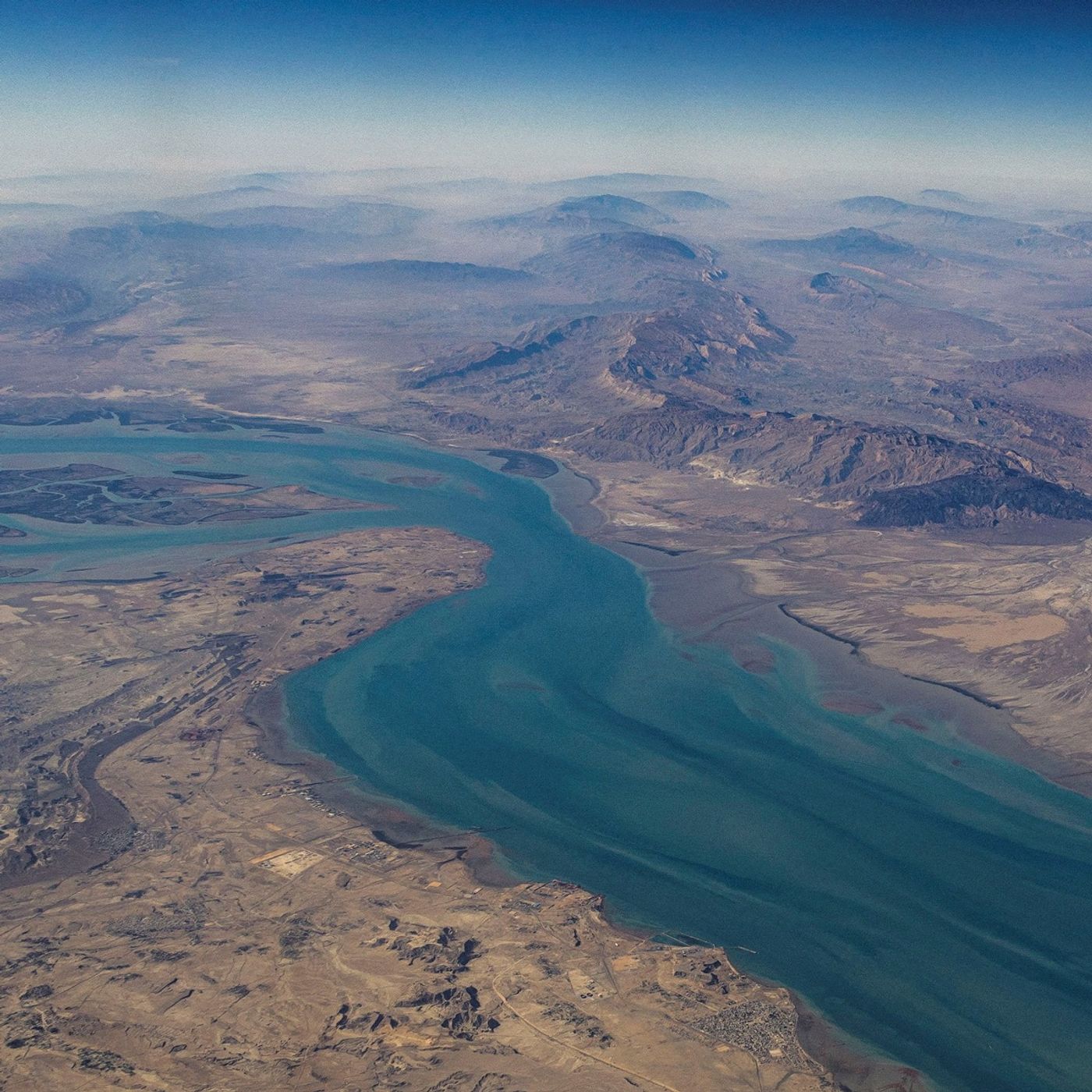
The Daily
War in Iran Triggers Chaos in Global Oil Market
00:29:21
As Iran has tightened its chokehold on one of the world’s most vital shipping routes and the Trump administration sent mixed signals about how long the war would last, oil prices have swung wildly. Rebecca F. Elliott, who covers energy for The New York Times, explains just how much the world depends on that route — the Strait of Hormuz — and how quickly shutting it down can throw global energy markets into chaos.
Loading summary
Transcript127 lines
- [00:01]
Rebecca Elliott
This break is brought to you by Adobe Creative Cloud, the ultimate creative Toolkit. With over 20 apps at your fingertips, there are always new ways to explore your creativity. Transform images with Photoshop, design graphics with Illustrator, edit videos with Premiere Pro, or animate just about anything. No matter what you want to create, Adobe has the tools you need to bring your ideas to life. It's all in Creative Cloud.
- [00:28]
Natalie Kitrilev
From the New York Times, I'm Natalie Kitrilev. This is THE Daily.
- [00:38]
Solana Pine
As the war on Iran enters its second week, concerns about a global energy crisis are growing.
- [00:45]
Natalie Kitrilev
In the last week, as Iran tightened its chokehold on one of the world's most vital shipping routes and and the Trump administration sent mixed signals about how long the war would last, oil was
- [00:57]
Senator or Political Commentator
on another roller coaster again today.
- [01:00]
Natalie Kitrilev
Oil prices have swung wildly.
- [01:03]
Rebecca Elliott
It shot up like a geyser to
- [01:05]
Natalie Kitrilev
$119 a barrel, but they surged to their highest levels in years.
- [01:11]
Rebecca Elliott
Today, oil prices closed down about 9%
- [01:14]
Natalie Kitrilev
at $86 a barrel and then suddenly plunged.
- [01:18]
Senator or Political Commentator
The war with Iran is impacting 20%, a fifth of the world's oil supply, making this the oil disruption the world has ever experienced.
- [01:26]
Natalie Kitrilev
Today, my colleague Rebecca Elliott on how the volatility has exposed just how much the world depends on the narrow waterway at the center of the growing crisis, the Strait of Hormuz, and how quickly shutting that strait down can throw global energy markets into utter chaos. It's Wednesday, March 11th. Rebecca, welcome to THE Daily first time on the show. Thank you for being here.
- [01:59]
Rebecca Elliott
Yeah, thanks so much for having me, Natalie.
- [02:01]
Natalie Kitrilev
So we are coming to you because you are, I think it's fair to say, an undisputed authority on oil here at the Times. And over the last week, the concerns over the war in the Middle east have grown to include not just a very real and dangerous conflict, but also building panic over a potential global energy crisis stemming from that conflict. And all of that worry has focused on this one shipping route that butts up against Iran, which is the Strait of Hormuz. So tell us about that strait.
- [02:34]
Rebecca Elliott
The strait sits between Iran to the north and then Oman, United Arab Emirates to the south. It is essentially a choke point through which about a fifth of the world's oil and a lot of natural gas normally goes every day. It allows oil and gas from the Persian Gulf to reach world markets. And the challenge with the strait is that it's really narrow. It's only about 21 miles wide at its narrowest point, and the shipping lanes are even smaller.
- [03:10]
Senator or Political Commentator
Oman's maritime security center says an oil tanker has been attacked in the Strait of Hormuz, injuring four crew.
- [03:17]
Rebecca Elliott
And so what has been happening since this war started is that some vessels passing through the strait have been attacked.
- [03:27]
Senator or Political Commentator
Attention all ships. Attention all ships. Attention all ships. From now on, all navigating through the Strait of Hormuz is forbidden. No ship in every town.
- [03:39]
Rebecca Elliott
And what you're seeing is that traffic through the strait has just slowed to a trickle. While this is not an officially recognized closure, shipping has been completely stalled in the strait for a combination of reasons. One, physical security. Iran has attacked a number of vessels in the region since the war started. And so people are worried for their safety, worried about, okay, what happens if there is an attack on a tanker that is filled with oil? Revolutionary Guards commander did say that they will set fire to any ship trying to pass. That is, you also have a lot of insurance companies saying, you know what? This isn't for us. Right. So it's a lot harder and a lot more expensive. Expensive to get the kind of financial backing that you would want to make this journey.
- [04:32]
Natalie Kitrilev
Okay. And you said these tankers are backed up. What's the fallout of that?
- [04:37]
Rebecca Elliott
So what you have is vessels essentially waiting stock on either side of the strait.
- [04:43]
Natalie Kitrilev
Stranded.
- [04:44]
Rebecca Elliott
Stranded tankers can't get in to pick up the oil and gas that they're meant to, and they can't get out. And so that means that a huge amount of energy is not reaching world markets. More than 80% of the oil and what is known as liquefied natural gas, this is gas that has been cooled so that it can be put on a ship. More than 80% of that from this region normally goes to Asia.
- [05:12]
Natalie Kitrilev
Wow.
- [05:13]
Rebecca Elliott
And so without being able to count on that energy arriving soon, you're starting to see price rise really dramatically. And oil prices have been really volatile since the war started. And one of the starkest examples of that happened this past Sunday evening into Monday when you saw prices swing by as much as, I think, around $30 a barrel.
- [05:44]
Natalie Kitrilev
Which is a lot.
- [05:45]
Rebecca Elliott
Which is a lot. Right. So prices on Sunday night reached above $100 a barrel for the first time since 2022, which, of course, was kind of in the aftermath of Russia's invasion of Ukraine.
- [06:00]
Natalie Kitrilev
Yep.
- [06:01]
Rebecca Elliott
And they really swung a huge amount throughout the day as people tried to figure out how long is this war going to last, how long is it going to remain difficult to get oil out of the Persian Gulf. And people trying to read the tea leaves of President Trump's remarks about the.
- [06:25]
Natalie Kitrilev
Which seemed to change every day. It seems like we Get a new piece of information from Trump, sometimes contradictory information about how long this is going to go on. Yeah.
- [06:36]
Rebecca Elliott
It's really unclear sitting here today what exactly the goalposts are. And the answer to that question means a lot for the energy market. Gasoline has gotten more expensive. Diesel has gotten more expensive in the US So it's more expensive to fill up your car than it was before the war started. And you're seeing governments in many parts of the world start to make policy changes, ration energy. Some really good examples that my colleagues have written about in the last few days is, you know, South Korea said it would cap prices at the pump for the first time in almost 30 years.
- [07:21]
Senator or Political Commentator
Wow.
- [07:21]
Rebecca Elliott
India temporarily suspended cremations using gas. So you're seeing governments basically try to fast track energy efficiency measures and kind of implement other tools meant to prevent them from running out.
- [07:39]
Natalie Kitrilev
Right. They're trying to basically limit their usage for now as much as possible.
- [07:43]
Rebecca Elliott
Exactly. Many countries that depend on energy from outside of their borders are saying we might not be able to count on getting more. So let's do the best we can with what we have now.
- [07:56]
Natalie Kitrilev
Right. And as the conflict has dragged on and on, the conversation seems to have turned much more to the possibility that what we may be looking at is a genuine oil shock, a genuine supply shock. And I think one of the main questions that people are asking is, how bad is this going to get?
- [08:14]
Rebecca Elliott
Get, honestly, anyone's guess. It is so hard to predict oil prices. And in trying to answer this question, I've been thinking a lot about the oil shocks that the world experienced in the 1970s. So 1973, Israel was in a war against Egypt and Syria. The United States backed Israel.
- [08:41]
Senator or Political Commentator
World wars among big powers are quite possible to control dwindling oil supplies.
- [08:46]
Rebecca Elliott
And in response, the Arab members of an oil cartel known as OPEC cut the US off from oil produced in that region.
- [08:57]
Senator or Political Commentator
The Middle east war produced developments all over the world. Today. The oil producing countries of the Arab world decided to use their oil as a political weapon.
- [09:07]
Rebecca Elliott
So overnight, the United States lost access to a tremendous amount of oil.
- [09:15]
Senator or Political Commentator
If the Arab countries keep that pledge, it would reduce their production by almost 50% in one year.
- [09:21]
Rebecca Elliott
Members of OPEC at the time were also raising prices. And so what you saw between October 1973 and early that following year was oil prices quadrupled.
- [09:35]
Natalie Kitrilev
Just extraordinary.
- [09:36]
Rebecca Elliott
Which is just extraordinary. And so the shocks to economies around the world were huge.
- [09:44]
Senator or Political Commentator
To increase the supply of heating oil that will be available this winter, we must adjust production schedules and divert petroleum which might normally go for the production of gasoline to the production of more heating oil. In the Dallas area today, dealers raised prices to more than 40 cents a gallon.
- [10:03]
Rebecca Elliott
Not only was energy a lot more expensive, almost overnight, there also wasn't enough of it.
- [10:09]
Senator or Political Commentator
Well, my son is trying to see how much gas we have left in the tank and whether we can make it out on the Sawmill River Parkway. So he stuck his walkie talkie antenna in the tank, which I do not see. We're gonna get out.
- [10:20]
Rebecca Elliott
And so you had fuel rationing.
- [10:23]
Adobe Photoshop Advertiser
Are you willing to slow down to
- [10:25]
Rebecca Elliott
50 miles an hour? No. Why not?
- [10:27]
Senator or Political Commentator
Cause it's stupid.
- [10:28]
Rebecca Elliott
You know, the government implemented a nationwide 55 mile per hour speed limit on US highways.
- [10:36]
Senator or Political Commentator
I've been in two gas lines already this morning. This morning? How long did you wait for the first? Been in both lines over an hour and I'm out of gas.
- [10:45]
Rebecca Elliott
Dead out really long lines to get gasoline. This is unreal. Isn't this disgusting? Why doesn't anybody contact the President? Why is he letting this happen to us? People were panicking.
- [11:07]
Natalie Kitrilev
Yeah. It's kind of wild to imagine oil rationing in the United States. Do we really think that's a possibility today? How apt is the comparison between that shock and what we're experiencing now?
- [11:21]
Rebecca Elliott
The world looks really different today than it did 50 some years ago. And that's partly to do with changes that many countries made in response to that energy crisis. You had major efforts to reduce dependency on oil, whether by figuring out how to use it more efficiently or by transitioning to alternative forms of energy. One example that I just learned about was in Japan. In an effort to try to use air conditioning less, the prime minister pushed for people to start wearing short sleeve suits. Apparently it never caught on.
- [12:06]
Natalie Kitrilev
What an image. I wish it had.
- [12:08]
Rebecca Elliott
It would be kind of an interesting look.
- [12:10]
Natalie Kitrilev
Definitely.
- [12:11]
Rebecca Elliott
You know, those are some examples of ways that countries tried to use less oil. Fuel economy standards are a legacy of, of that moment. And you also saw many places shift toward alternatives such as nuclear energy. And this is, you know, really motivated by concerns about energy security.
- [12:37]
Natalie Kitrilev
You're saying the shift toward prioritizing things like fuel efficiency in cars, toward drawing on other fuel sources, that's primarily about countries trying to secure their own energy independence, trying to protect themselves essentially from a. A repetition of what happened in 1973.
- [12:56]
Rebecca Elliott
Right. And in the U.S. one of the biggest differences is that the country went from being a net importer of oil to a net exporter today.
- [13:05]
Natalie Kitrilev
And how did that happen?
- [13:07]
Rebecca Elliott
Fracking. Drilling down horizontally under the earth and fracturing the rock to let oil and gas come up. And this really revolutionized the US oil and gas industry and helped the country become the world's top producer of oil and gas, passing Saudi Arabia, passing Russia. And this in combination with the build out of renewables in recent years, has made the country much less dependent on oil and gas from the Gulf than it used to be.
- [13:49]
Natalie Kitrilev
Basically, since 1973, the whole world, in response to that crisis, has become a lot less dependent on oil, relatively speaking. And the US in particular has become much less dependent on foreign countries for the oil that it does consume.
- [14:07]
Rebecca Elliott
That's right. Things look very different today than they did in the 1970s. Oil meets a much smaller share of the world's energy needs. That said, it still matters in big ways for the economy. Oil and gas are used for oil, a whole lot of things that we need every day. Producing electricity, producing gasoline and diesel and jet fuel. So when you don't have access to those fuels, it ripples through the global economy in ways that will get much worse the longer the strait remains effectively closed.
- [15:01]
Natalie Kitrilev
We'll be right back.
- [15:07]
Senator or Political Commentator
Friends like these the Murder of Skyler Nice is now streaming on Hulu and Hulu on Disney+911.
- [15:13]
Natalie Kitrilev
Do you have an emergency?
- [15:13]
Senator or Political Commentator
I have a 16 year old daughter. Can't get a hold of her. I am scared to death.
- [15:17]
Rebecca Elliott
We wanted to talk to Skyler's friends.
- [15:20]
Senator or Political Commentator
They're not telling the full story. The truth is gruesomely horrific.
- [15:23]
Rebecca Elliott
How could you do this to your best friend?
- [15:26]
Senator or Political Commentator
There's a darker secret that's not been said. Watch the new Hulu original series Friends like the Murder of Skylar Nese on Hulu and Hulu on Disney for bundle subscribers. Terms apply.
- [15:37]
Rebecca Elliott
I'm Robin and I am excited to open my Crossplay app. I'm challenging John, my colleague at the New York Times.
- [15:45]
Senator or Political Commentator
Robin played the word grunge which has a G which is four points. She got that triple word multiplier.
- [15:51]
Rebecca Elliott
I am going to take facts and make it faxes for 30 points.
- [15:55]
Senator or Political Commentator
I might just take another two letter word here with whoa gets me at 23. I think this will put me back in the lead. If my maths are mathing.
- [16:02]
Rebecca Elliott
I like to play it more from a strategic point of view and see where I can block the other player from scoring high.
- [16:09]
Senator or Political Commentator
I'm pretty competitive. It's fun to beat friends and co workers and also you get to learn new words.
- [16:14]
Rebecca Elliott
Crossplay, the first two player word game from New York Times Games. Download it for free today I think
- [16:20]
Natalie Kitrilev
he thinks he has this in the
- [16:21]
Rebecca Elliott
bag, but I'm not so sure.
- [16:26]
Natalie Kitrilev
Rebecca, you've made it clear that the effects of this building crisis are gonna compound, are gonna get worse and worse each day that this shutdown continues. You told us earlier that there were currently many ships just stranded waiting to pass through the Strait of Hormuz, with very few actually making it. What is the outlook for those stranded tankers? Barring the war ending, is there any way this situation changes in the strait in the near term?
- [16:56]
Rebecca Elliott
The Strait is one of Iran's very big points of leverage, and Iran has said that it will attack vessels that go through. And so it's hard to imagine the situation shifting considerably in the near term. The United States, President Trump, have floated some ideas.
- [17:20]
Senator or Political Commentator
During this brief disruption, the United States is offering political risk insurance to any tankers operating in the Gulf.
- [17:27]
Rebecca Elliott
One being providing additional insurance options will
- [17:33]
Senator or Political Commentator
perhaps go alongside of them for protection. We don't think it'll be necessary.
- [17:40]
Rebecca Elliott
The other being a naval escort for tankers through the strait.
- [17:45]
Senator or Political Commentator
And if they do anything, the price will be incalculable.
- [17:50]
Rebecca Elliott
So far, the US has not escorted a vessel through the strait, so we'll see. But remember, if you're a mariner, Iran has committed to disrupting the strait.
- [18:04]
Natalie Kitrilev
Yeah.
- [18:05]
Rebecca Elliott
Several tankers have been attacked. A shipyard worker died in Bahrain. There are huge physical risks here at the moment associated with making this journey. And I think until that changes, whatever that looks like, it's still going to be very difficult to get energy out of the Persian Gulf.
- [18:29]
Natalie Kitrilev
So what about the oil companies? Obviously, this is a huge problem for them, too. They have all this oil just sitting around and they can't get it to where it's supposed to go.
- [18:40]
Rebecca Elliott
That's right. And they're running out of places to put it. Storage tanks are filling up. And so you've started to see countries throughout the region cut back production, turn off wells and reduce refinery processing. So that means they're turning less oil into gasoline and diesel and other products.
- [19:06]
Natalie Kitrilev
And just explain, Rebecca, why it's such a big deal that they are turning off the spigot. What does that actually mean?
- [19:16]
Rebecca Elliott
It's not the same thing as turning off your faucet, where when you turn it back on, water just comes right back out again. It's called shutting in a well. When you do that, you can risk damaging the well, essentially. And so when you try to turn it back on, maybe there's not enough pressure. Not as much oil is going to come out. And so the risk is that these disruptions last longer than the war.
- [19:43]
Natalie Kitrilev
And what countries are going to be most affected by what's happening? Who's going to feel it first and most deeply?
- [19:51]
Rebecca Elliott
I'm going to oversimplify and divide the world between producers and consumers. If we're talking about the consuming countries, many of those that are going to be affected fastest are those in Asia, for example, that depend really heavily on imported oil and natural gas. And then on the producer side, it's the countries that can't get anything out. One of the countries that acted really quickly was Qatar, which is a huge natural gas producer and exporter. And within days of the start of the war, they decided to stop cooling natural gas for export. That caused prices basically immediately to rise considerably in Europe and in Asia.
- [20:46]
Natalie Kitrilev
Right. These are pretty major decisions. Right? I mean, it's not just major for the countries that produce it. It's the countries that are depending on it. It has an immediate impact.
- [20:58]
Rebecca Elliott
Absolutely. And remember, oil markets in particular are global. So even though in the United States we produce tremendous amounts of oil, we're still affected by higher prices elsewhere.
- [21:14]
Natalie Kitrilev
Right. Just because we're not dependent on the Strait in the same way, we are still affected by the disruption to it and the chaos that it unleashes on the market. And to that end, Rebecca, is there anything the administration could do to limit the potential impact of all this on consumers in the US Especially as the war keeps going on?
- [21:35]
Rebecca Elliott
The Trump administration has a few options. One of the first is what's known as the Strategic Petroleum Reserve. So going back to the oil crisis in 1973. After that, the US created a strategic stockpile of oil. And so in moments like these, the US has the option of releasing some of that oil into the market. And that has been kind of an active conversation in recent days, not just in the US but among other countries known as the G7. Another option that would have potentially limited effect would be to temporarily lift the gasoline tax, which would save people 18 cents on a gallon. So that would take some of the pressure off. And in a very extreme scenario, you could see Congress stepping in to ban oil exports. That type of a ban was actually in place until 2015.
- [22:52]
Natalie Kitrilev
Oh, wow.
- [22:52]
Rebecca Elliott
You couldn't export oil from the US and then Congress lifted that during the Obama administration as the US Became the biggest oil producer in the world, largely because of fracking. I haven't kind of heard that as being a realistic scenario or quite on the table yet, but that is the kind of extreme option that the US Might have.
- [23:23]
Natalie Kitrilev
Okay, so Not a lot on the table. And what, what is available that could make a real difference may be quite radical. What about longer term solutions here? I'm thinking about the 1973 oil embargo and how that compelled many countries, including the US to reduce their dependence on oil. Do you see this crisis as having a similar potential effect, forcing policymakers, lawmakers to rethink their energy needs, to redesign them? In other words, what do you think the long term lessons of this crisis could be?
- [24:04]
Rebecca Elliott
That's going to depend a lot on how long this situation lasts, how high energy prices get, and how long they stay there in a scenario where they remain expensive for a long time. I think that thinking about 1973 and the aftermath is instructive. Big events like this do tend to change behavior, change how people think about energy. The reaction may be different in the United States, which is very rich in oil and gas.
- [24:42]
Natalie Kitrilev
Right. And where Trump has been very adverse to these alternative fuel sources. I mean, it's hard to imagine him jumping back into renewables in a way that, that we'd been seeing in the past.
- [24:56]
Rebecca Elliott
Right. This is all happening as the Trump administration is making it more difficult to install solar panels and wind turbines and other equipment that would enable us to harness the sun and harness the wind. So I think the reaction will differ regionally, but, but in countries that are really dependent on foreign sources of oil and natural gas, they may think more seriously about, okay, how do we move to alternatives, perhaps even more quickly than we were before.
- [25:38]
Natalie Kitrilev
But you have to wonder, or at least I do, whether in this case, people, policymakers, lawmakers, just end up looking at this episode and blaming Trump and Israel for it. For all the disruption that has followed from the initial attack, this appears, I think, to many as a war of choice. And those strikes are what prompted all of this. And so it seems possible that there would be some reticence to see this as revealing some sort of structural problem and more of a willingness to see it as potentially a one off attributable to these two leaders in this moment and their decisions.
- [26:23]
Rebecca Elliott
It's certainly possible. But what I think has been very clear over the last several days and weeks is that this huge risk that energy experts have been talking and thinking about for years, the risk that the Strait of Hormuz would close, is now playing out in real time. I think it's hard to imagine that people just go back and say, okay, this is fine. People remember gas prices. It's one of those things that is in your face all the time, every day.
- [27:03]
Natalie Kitrilev
Right.
- [27:04]
Rebecca Elliott
And it's hard to imagine that especially if prices rise further and stay there for a long time, that it won't shape and change how people think about energy. It's exposing a big vulnerability in the global energy system. And we know from price shocks in the past that when events like this happen, people change. The whole world changes.
- [27:39]
Natalie Kitrilev
Well, Rebecca, thank you so much.
- [27:42]
Rebecca Elliott
Thank you for having me.
- [27:56]
Natalie Kitrilev
We'll be right back.
- [28:01]
Adobe Photoshop Advertiser
This break is brought to you by Adobe Photoshop. Here to help you make that thing only you could make here for when you've gotten amazing idea you can't wait to share and you need it to look exactly as you imagined. Photoshop gives you the ultimate image editing and design tools so you can dial in your creation perfectly, down to the last pixel, make epic images for zine covers, posters, brand graphics, social posts, or anything else you can imagine. It's your vision. Go all in. Get started@photoshop.com
- [28:31]
Solana Pine
hi, I'm Solana Pine. I'm the director of Video at the New York Times. For years, my team has made videos that bring you closer to big news moments, videos by Times journalists that have the expertise to help you understand what's going on. Now we're bringing those videos to you in the Watch tab in the New York Times app. It's a dedicated video feed where you know you can trust what you're seeing. All the videos there are free for anyone to watch. You don't have to be a subscriber. Download the New York Times app to start watching.
- [29:03]
Natalie Kitrilev
Here's what else you need to know today. The US military said on Tuesday evening that it had attacked 16 Iranian mine laying vessels near the Strait of Hormuz. Earlier in the day, Trump had threatened Iran over reports that mines were being deployed in the Strait. The news capped off a day of confusion about the viability and security of the passageway after the US Energy secretary posted on social media that a Navy warship had successfully escorted a tanker through the Strait. Oil prices plunged in a sign of new optimism about the route opening up. But then shortly afterward, a military official said that hadn't happened. The social media post was deleted and prices went back up. And on Capitol Hill, I emerged from
- [29:53]
Senator or Political Commentator
this briefing as as dissatisfied and angry, frankly, as I have from any past briefing in my 15 years in the Senate.
- [30:05]
Natalie Kitrilev
After receiving a classified briefing from Trump officials on the war, Senate Democrats warned that the administration was not close to achieving its goals.
- [30:14]
Senator or Political Commentator
We seem to be on a path toward deploying American troops on the ground
- [30:21]
Natalie Kitrilev
in Iran and demanded public hearings on the objectives and endgame for the war.
- [30:27]
Senator or Political Commentator
This is a disaster of epic proportions. It's already getting Americans killed. It's driving up prices here at home. This has just been a debacle, a
- [30:36]
Natalie Kitrilev
10 day debacle and airstrikes continued in Lebanon on Tuesday, where Israel's mass evacuation orders and bombing campaign have made the country a a new front in the expanding war. A humanitarian crisis is looming there, and the United nations has said that 700,000 people in Lebanon have been displaced from their homes. The Pentagon said on Tuesday that Iranian airstrikes had wounded 140 US service members, in addition to the seven US service members who have been killed. Today's episode was produced by Caitlin o', Keefe, Diana Wynn and Nina Feldman. It was edited by Devin Taylor and Lisa Chow and contains music by Dan Powell and Marion Lozano. Our theme music is by Wonderloo. This episode was engineered by Alyssa Moxley. That's it for the Daily I'm Natalie Kitroweth. See you tomorrow.
- [31:48]
Adobe Photoshop Advertiser
This break is brought to you by Adobe Photoshop. Here to help you make that thing only you could make here for when you've got an amazing idea you can't wait to share and you need it to look exactly as you imagined. Photoshop gives you the ultimate image editing and design tools so you can dial in your creation perfectly, down to the last pixel. Make epic images for zine covers, posters, brand graphics, social posts or anything else you can imagine. It's your vision. Go all in. Get started@photoshop.com.