← The Daily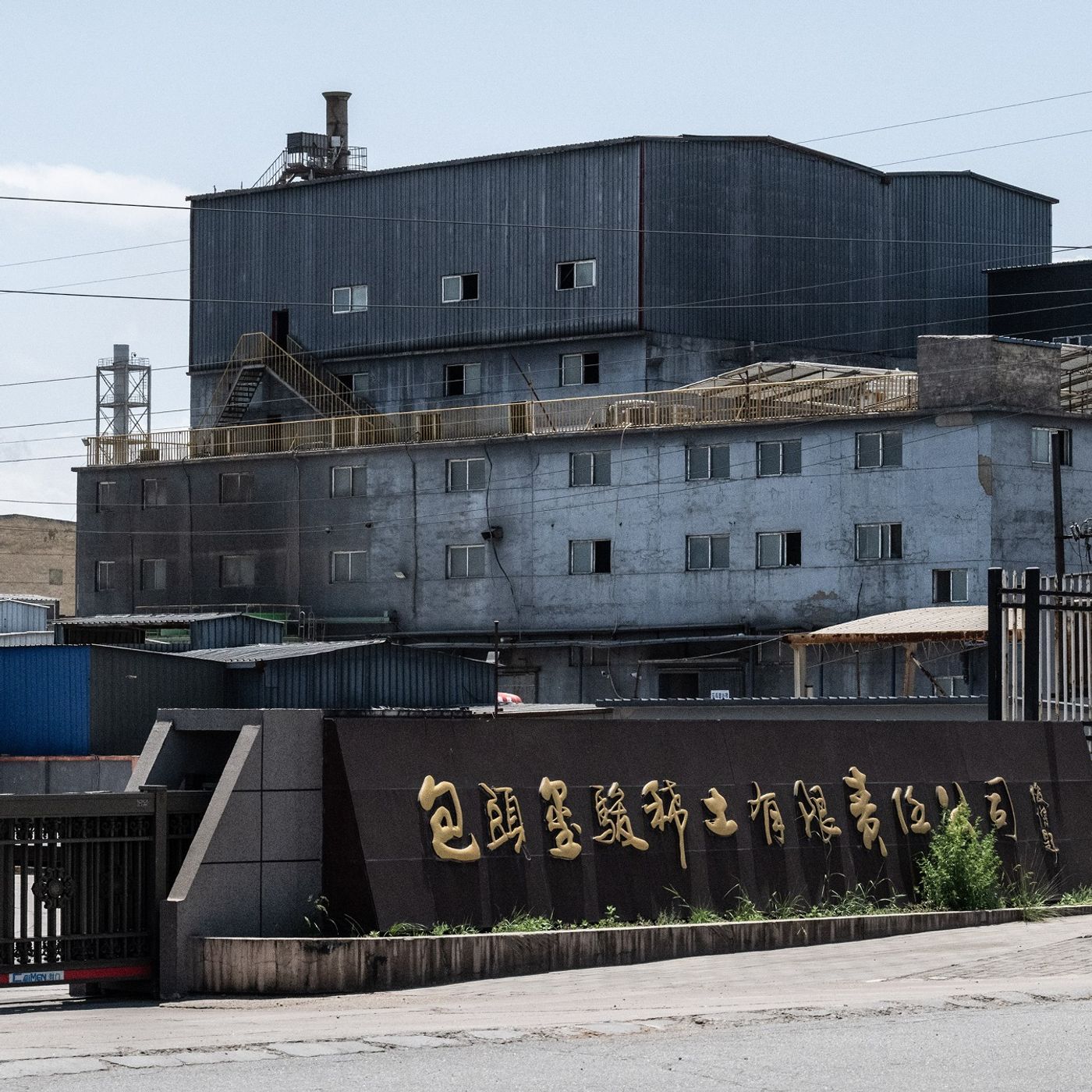
The Daily
Is China Beating Trump?
00:24:02
President Trump’s trade war against China has so far proved harder to win than his administration ever let on. And it reached new levels of tension this month when China said it would further restrict exports of rare-earth minerals to the United States and Europe. Keith Bradsher, the Beijing bureau chief for The New York Times, discusses a potential turning point in the standoff as Mr. Trump meets this week with his Chinese counterpart, Xi Jinping, in what will be their first talks since the trade war began.
Loading summary
Transcript90 lines
- [00:01]
Comcast Business Announcer
In just 12 months, Comcast Business detected 34.6 billion cyber threats. That's not just a number, it's billions of attempts every day aimed at businesses like yours. More than every person on earth, multiplied by four. But luckily, our advanced cybersecurity, intelligent networking and 24, 7 coverage is built to protect what matters most, your business. When the stakes are this high, protection isn't optional, it's essential. Get threat ready with Comcast Business. Learn how@comcastbusiness.com cybersecurity.
- [00:35]
Natalie Kitro
From the New York Times, I'm Natalie Kitro. Hev. This is the Daily.
- [00:49]
Narrator/Reporter
President Trump's trade.
- [00:50]
Natalie Kitro
War against China has so far proven.
- [00:53]
Narrator/Reporter
Much harder to win than his administration ever let on. And it's only getting worse as China undertakes its most aggressive act of retaliation to date. Today, my colleague Keith Bradshaw on a.
- [01:07]
Natalie Kitro
Potential turning point in the standoff as.
- [01:10]
Narrator/Reporter
President Trump meets this week with Chinese leader Xi Jinping in what will be their first talks since the trade war began.
- [01:33]
Natalie Kitro
It's Wednesday, October 29th. Keith, I think a lot of us, frankly, started to feel as though this trade war may have finally died down. I think we were lulled perhaps into a false sense of calm when there wasn't that much news on this for months. But then all of a sudden things seemed to heat back up again.
- [01:59]
Narrator/Reporter
So give us a sense of the.
- [02:01]
Natalie Kitro
State of the relationship right now.
- [02:04]
Keith Bradshaw
The relationship is at one of its.
- [02:07]
Analyst/Commentator
Tensest moments in years. Both sides have threatened measures bordering on economic warfare against each other. There's an urgency to resolving these issues.
- [02:18]
Keith Bradshaw
At the meeting on Thursday in South.
- [02:20]
Analyst/Commentator
Korea between the two countries top leadership.
- [02:25]
Keith Bradshaw
Here in Beijing, everyone is watching to see can they reach some kind of a deal that pulls both countries back from the brink?
- [02:35]
Natalie Kitro
And what are the main sticking points right now in these negotiations? Like what do we expect to come up in that meeting?
- [02:43]
Keith Bradshaw
The United States wants China to start buying soybeans again. China has a boycott against American soybeans right now because of its unhappiness with American policies. The United States wants China to stop shipping the chemicals that are used in Mexico and Latin America to make fentanyl. China wants the United States to allow it to buy any kinds of semiconductors it wants, including some of the most advanced semiconductors used in artificial intelligence and high performance military systems. And China in particular wants America to distance itself from Taiwan, although America depends enormously on Taiwan for semiconductors. But hanging over all of these issues is a big debate over rare earth metals. China is threatening to cut off much of the world's Supply. And it's saying that it will block any effort outside of China to manufacture rare earths and rare earth magnets in competition with China.
- [03:54]
Natalie Kitro
Can you just unpack what exactly China did? Because this was something that I think a lot of people were talking about as a major escalation. There were new restrictions right, on these rare earth minerals. These are critically important to everything from missiles to cars. We need them. And China was saying you can't have them. What exactly happened?
- [04:16]
Keith Bradshaw
Rare earths are very important these days. They are used all over the economy, whether it's cars, computer chips, fighter jets, missiles. China controls the materials, rare earth metals for making them anywhere in the world. And it has put already in April some export controls on supplying those materials. And on October 9, China said we're going to put a lot more restrictions on these. China is expanding its restrictions on rare earths exports. The new rules do three things. One, they prevent the west from being able to build its own mines and refineries and magnet factories, or at least they make it much more difficult for the west to do that. So no more using any Chinese patents without permission. No more buying equipment from China to do any of this. And China makes almost all the equipment for mining and refining rare earths or making magnets. Second, the new rules put restrictions on what you are allowed to move across any country's borders if it has Chinese magnets and rare earths inside it. And third, China is saying for the first time that it's going to restrict even more kinds of rare earths than it did the first time around last April. And so this will affect even more military production, for example, making it hard for Europe to build weapon systems for Ukraine or for Europe to protect itself against Russia.
- [06:05]
Commentator/Guest
Mr. Trump just announced a 100% add on tariff to China for their export controls on rare earths.
- [06:13]
Narrator/Reporter
And look at this sell off tonight.
- [06:15]
Keith Bradshaw
The stock market plunging nearly 900 points at the close.
- [06:19]
Commentator/Guest
This is China versus the world. They have pointed a bazooka at the supply chains and the industrial base of the entire free world.
- [06:29]
Keith Bradshaw
And that's why Treasury Secretary Scott Besant said that these new rules are a bazooka aimed at the entire world's supply chains.
- [06:37]
Commentator/Guest
And you know, we're not going to have it.
- [06:43]
Natalie Kitro
I have to say for me, this is like a control freaks approach to trade restrictions. Is this normal? Like do countries typically make their trade rules this specific, this in depth, so as to control every aspect of how a product is used?
- [07:03]
Keith Bradshaw
The United States has done this with the fastest semiconductors. So about the top 3 to 5% of the world's semiconductors do have these very restrictive rules from the United States that do track what downstream products they are later built into. What is new and different about China's rules is that China is putting the restrictions on a raw material and then saying that products that are later manufactured from that raw material are also restricted. So in a way, this is a combination of the US Rules on semiconductors combined with the Arab oil embargo in 1973 against the United States and its allies, which was aimed at halting American support for Israel at the time. So it is both a high tech restriction and in China's case, it is now also a raw material restriction, both at the same time.
- [08:09]
Natalie Kitro
Can I ask, Keith, do you agree with Besant's assessment that this is China pulling out a bazooka?
- [08:16]
Keith Bradshaw
I really do. This is China trying to make sure that it controls global commerce and can turn on and off the taps not just for goods leaving China, but for goods moving across Europe, across North America, across South Asia, you name it. This is seeking a new global level of comprehensive control out of Beijing by the Ministry of Commerce.
- [08:48]
Natalie Kitro
And how should we interpret the fact that China's decided to do this now? Is that a sign that the Chinese government has kind of reached a point of no return in these negotiations, that they're using what sounds like one of their biggest points of leverage?
- [09:05]
Keith Bradshaw
China has concluded that it benefits from taking very strong stands towards Trump and also towards Europe. This is a China that is not allowing itself to be pushed around. We've now seen top Chinese leaders line up with the leaders of Russia and North Korea at military parades twice in six weeks in Beijing and then in Pyongyang. And so China has really, in some ways, embarked on a new geopolitical stance and a new economic stance on of standing tough against the west to protect China's strategic interests.
- [09:47]
Natalie Kitro
And for the rest of us, for the rest of the world, what are.
- [09:50]
Keith Bradshaw
The implications for the rest of the world? This could be extremely damaging. Any country with an advanced manufacturing sector.
- [10:01]
Analyst/Commentator
Has to be really worried about this.
- [10:17]
Natalie Kitro
We'll be right back.
- [10:22]
Comcast Business Announcer
In just 12 months, Comcast Business detected 34.6 billion cyber threats. That's a lot. If you tried to count them all out loud, one per second, you'd be counting for more than 1,000 years. But luckily, you don't have to count them or fight them, because Comcast Business helps block billions of cyber threats every single year with advanced security solutions. So you can focus on what matters most, your business. Get Threat Ready with Comcast Business. Learn how@comcastbusiness.com cybersecurity this is Sarah Koenig, host of Serial.
- [10:56]
Sarah Koenig
I want to tell you about our new show. It's called the Preventionist and it's hosted by Diane Neary. A couple years ago, Diane got a tip about something strange happening in eastern Pennsylvania. Parents were claiming they'd walked into a hospital to get medical care for their children and then were forced to leave without them. The families were blaming this one hospital network and many of them pointed to a single pediatrician. So who was this doctor and why were all these people suddenly losing custody of their kids? From Serial Productions and the New York Times, it's the Preventionist, the story of a doctor and the rise of a powerful specialty inside pediatric Medicine. Listen wherever you get your podcasts. Eligible time subscribers can listen to the show right now on Apple Podcasts and Spotify. So head there to subscribe or listen anywhere. October 30th.
- [11:56]
Narrator/Reporter
Let'S talk about what you.
- [11:57]
Natalie Kitro
Mean, Keith, when you said this could be extremely damaging. Spell out for me what kind of damage we'd be looking at in the US with these restrictions.
- [12:06]
Keith Bradshaw
There is the immediate damage of American companies continuing to have trouble getting enough rare earth magnets just to make their day to day products. Detroit has been struggling to get enough brake motors, steering motors, power seat motors, all these different systems that require rare earth magnets. And as more of these Chinese regulations from October 9th take effect, it will become even harder for American companies, for example, even to move parts across the border from Mexico or across the border from Canada.
- [12:44]
Natalie Kitro
What about the national security implications of this? Because you've told us rare earths go into missiles, go into a ton of military equipment.
- [12:52]
Keith Bradshaw
The west is already having trouble in slowing down production of some military items because of the shortage of rare earths. The west failed to stockpile these rare earths in advance. And so the military contractors trying to supply Ukraine or trying to rebuild inventories in the west are really having trouble procuring the magnets they need. So this is a big win for Russia because the west really needs these rare earths to continue supplying military equipment to Ukraine to defend itself. And now that supply has been cut off cold by China.
- [13:39]
Natalie Kitro
Fascinating.
- [13:40]
Narrator/Reporter
This clearly has pretty big consequences for Europe, which is honestly kind of surprising. I thought this was a US China trade war. Why is China now putting the screws to Europe?
- [13:53]
Keith Bradshaw
China has a whole separate dispute going with Europe over cars.
- [13:59]
Analyst/Commentator
The European Union became very concerned last year that China had subsidized the development of electric cars and was going to flood the European market with electric cars.
- [14:12]
Keith Bradshaw
And so the European Union put tariffs in place and there was a big loophole left in these tariffs, which is that if you put a tiny gasoline engine in along with a great big electric system in these cars, then you don't pay any tariffs at all. And so China has been flooding the European market, particularly this year, with exactly that category of highly capable electric cars with a tiny gasoline engine included, and they don't face any extra tariffs. China does not want Europe to raise the tariffs.
- [14:48]
Analyst/Commentator
It does not want Europe to close the hybrid loophole. So China is putting a lot of pressure on Europe. And then finally, China has leaned towards Russia on the Ukraine issue. China wants Europe to distance itself from the United States in NATO.
- [15:08]
Keith Bradshaw
So China has a lot of incentives.
- [15:10]
Analyst/Commentator
To be very tough with Europe and has been very tough with Europe this year.
- [15:16]
Natalie Kitro
Listening to you, Keith, I have to say it does seem as though China has the ability to inflict just enormous pain with this. If China is willing to go this far in the trade war, it does seem fair to say that they have the upper hand. Am I wrong about that?
- [15:35]
Keith Bradshaw
Short term, China does have a very strong position, but there are real long term dangers to the Chinese economy in pursuing this strategy. So many multinational companies have come to rely on China for part or all of their supplies of many components, many products that you see in stores all over the United States. And as China shows that it's willing practically overnight to halt these supplies, China is damaging its reputation as a reliable supplier. European and American companies are frantically searching for ways to buy more from Southeast Asia, from India and from elsewhere. So there is a long term interest in China in not taking this too far. In fact, it's already gone far enough that they are worried in China that they may be losing their appeal as a destination for foreign investment. Who wants to build another factory in China if you're not going to be able to send the goods from that factory out of China?
- [16:50]
Natalie Kitro
It's interesting. It's like China in trying to show the world, look, you really can't live without us. You can't live without our rare earths. Beijing may actually be spurring the world to look for ways to live without it, to find a way to reduce that reliance on China for just about everything.
- [17:12]
Keith Bradshaw
That is exactly right. China is not backing down in any way. China is all in on restricting rare earths. That's a risky position to be in when you're a country like China that lives on exports. Even as the Domestic economy is a mess. So China may have overplayed its hand.
- [17:33]
Natalie Kitro
But it seems equally possible, plausible even, that the US Actually overplayed its hand because it's forced China into this point of no return where now it's pulling out the big guns, where now it's using its biggest point of leverage and forcing everyone into a corner.
- [17:57]
Keith Bradshaw
It's possible the US has overplayed its hand, but the US Is in a very difficult position because China has enormous overcapacity of factories. And just last Thursday, we had a pivotal moment. The Central Committee of the entire Communist Party said, we're going to double down on manufacturing. We want to be the country that makes everything. And that is a direct challenge to.
- [18:26]
Analyst/Commentator
The United States and Europe, which still.
- [18:27]
Keith Bradshaw
Have some manufacturing sectors, and to Japan.
- [18:30]
Analyst/Commentator
And to South Korea.
- [18:32]
Keith Bradshaw
This emphasis on making practically all kinds of advanced technology is really a worry. And so the United States is on the spot. Now, does it take a short term strategy of accepting a deal that gets it back to where it was at the start of the year, but risks.
- [18:50]
Analyst/Commentator
Further deterioration of what's left of the.
- [18:53]
Keith Bradshaw
American manufacturing sector, or does it continue to have a confrontation, but that could be very painful?
- [18:59]
Natalie Kitro
So are you saying it's possible that the US Overplayed its hand, but it had no other option?
- [19:05]
Keith Bradshaw
The US Was not in a good.
- [19:07]
Analyst/Commentator
Position to begin with, and the Biden administration had struggled with the same issue. The Biden strategy was to proceed cautiously and avoid an outright confrontation, unlike Trump. But the Biden administration also had the weakness of not really slowing down China's remarkable race towards dominance of an extremely wide range of manufacturing industries. And so the Trump administration felt a need to go considerably farther. And that has now triggered an outsized response from Beijing.
- [19:49]
Natalie Kitro
You're sort of saying it's like you're damned if you do, you're damned if you don't. If you don't go hard enough to try to combat China's dominance in manufacturing, nothing actually gets done about it. But if you do go too hard, you risk eliciting this kind of really potentially damaging retaliation.
- [20:09]
Keith Bradshaw
That's exactly right, Natalie.
- [20:11]
Natalie Kitro
But has all this poking of the bear that the Trump administration's done actually done anything to slow China's progression toward the most dominant superpower manufacturing country that we've ever seen?
- [20:28]
Analyst/Commentator
Yes, the Trump administration tariffs have resulted in a significant drop in Chinese exports to the United states, more than 20% this year compared to last year. On the other hand, China has been ramping up exports to other countries, such as Vietnam. And you get estimates that as much as 85% of China's exports to Vietnam then end up in the United States. So Chinese exporters have been very nimble in finding alternative routes through countries like Vietnam and Mexico to still reach the US Market. But the Trump administration felt it needed to do something because the US Industrial base has been rapidly hollowing out.
- [21:15]
Keith Bradshaw
And without a strong manufacturing sector, the US Cannot remain a strong country with a strong conventional military that can protect not only the United States, but other democracies around the world.
- [21:29]
Natalie Kitro
The situation you've described is one where the stakes are just incredibly high for both sides. So at this meeting between Trump and Xi this week, what should we expect to see? Do you expect a dramatic announcement or just the continuation of what we've seen before, which is incremental agreements, temporary pauses, et cetera?
- [21:54]
Keith Bradshaw
I expect a dramatic announcement of temporary.
- [21:57]
Analyst/Commentator
Agreements and incremental changes.
- [22:01]
Keith Bradshaw
I think that what we will see is a postponement, for example, of China's rare earth restrictions, but not a repeal of them. I think we are likely to see some Chinese purchases of American soybeans, but not on a scale that they previously were. One other aspect that we'll probably see is some kind of Chinese promise to limit exports of chemicals used in making fentanyl. And then we may see a promise to get together and have a more in depth conversation in China next February.
- [22:39]
Natalie Kitro
So a narrow deal perhaps announced with great fanfare.
- [22:44]
Keith Bradshaw
Exactly. The two countries leaders might be able to establish a floor for the relationship here.
- [22:52]
Analyst/Commentator
They might begin to change the trajectory.
- [22:55]
Keith Bradshaw
So that next year they can begin.
- [22:57]
Analyst/Commentator
To patch together something better.
- [23:00]
Keith Bradshaw
Because if they don't, then we could.
- [23:02]
Analyst/Commentator
Be headed for ever greater confrontation between two superpowers with enormous ability to harm each other and the entire world.
- [23:14]
Natalie Kitro
Well, Keith, thank you. Thanks for making us all smarter in anticipation of it.
- [23:20]
Keith Bradshaw
Thank you. Always good to talk to you, Natalie.
- [23:29]
Natalie Kitro
We'll be right back.
- [23:33]
Comcast Business Announcer
In just 12 months, Comcast Business detected 34.6 billion cyber threats. That's over 34 billion, meaning nine zeros.
- [23:42]
Keith Bradshaw
Nine.
- [23:43]
Comcast Business Announcer
That's a lot of zeros. Especially when one breach is all it takes to hurt your business. Luckily, Comcast Business offers advanced cybersecurity, intelligent networking and 24,7 hands on monitoring to help stop billions of attacks from burying your business in all of those zeros. Want to learn how? Get threat ready with Comcast business. Go to comcastbusiness.com cybersecurity I'm Helene Cooper.
- [24:09]
Helene Cooper
I cover the U.S. military for the New York Times. So I'm sitting in my car in a parking lot outside the Pentagon. I had a cubicle with a desk inside the building for years, but the Trump administration has taken that away. People in power have always made it difficult for journalists. It hasn't stopped us in the past, it's not going to stop us now. I will keep working to get you the facts. This work doesn't happen without subscribers to the New York Times.
- [24:42]
Narrator/Reporter
Here's what else you should know today. Hurricane Melissa made landfall on Tuesday, and it carved a path of destruction across Jamaica as one of the strongest Category 5 storms on record. It wasn't clear exactly how much damage Jamaica had sustained because of limited communications, but Jamaican Officials said that 15,000 people were in government shelters. More than half a million people, or about a sixth of the country's population, were without power. And on Tuesday, Defense Secretary Pete Hegseth said the Trump administration had launched yet another round of deadly strikes on boats that it claims were smuggling drugs, killing 14 people in four vessels. Hegseth said the strikes took place in international waters and that there'd been one survivor. The attacks bring the overall death toll in the growing US Military campaign off the Central and South American coasts to 57. Finally, Prime Minister Benjamin Netanyahu ordered the Israeli military to conduct strikes in Gaza. On Tuesday, the Israeli government accused Hamas of violating the ceasefire agreement by firing on Israeli forces and failing to return the bodies of dead hostages. Netanyahu's office said the prime minister had informed President Trump before the action was taken. Hamas denied involvement in an attack on Israeli forces and in a statement said it remained committed to the ceasefire agreement, which it accused Israel of violating. Today's episode was produced by Mary Wilson and Ricky Novetsky. It was edited by Lisa Chow, contains original music by Dan Powell, Marion Lozano and Pat McCusker, and was engineered by Alyssa Moxley. That's it for the Daily. I'm Natalie Kitro F. See you tomorrow.
- [27:15]
Comcast Business Announcer
This podcast is supported by Comcast Business. Cyber threats are rising. In just 12 months, Comcast business has detected 4.7 billion phishing attempts. Get threat ready with advanced security solutions from Comcast Business. Learn how@comcastbusiness.com cybersecurity.