← The Daily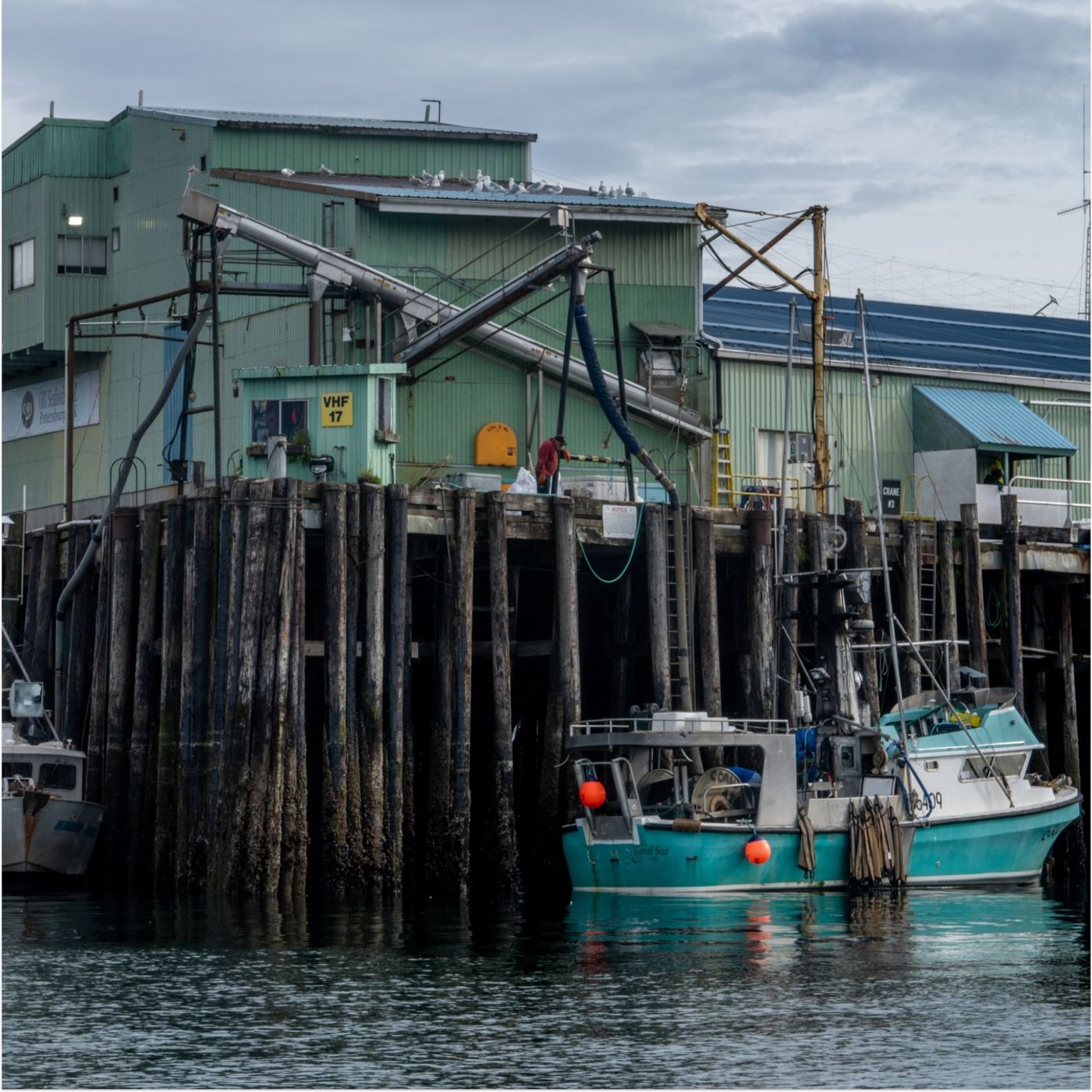
The Daily
Is Congress About to Kill This Local Radio Station?
00:32:36
From the moment President Trump and Republicans took control of Washington this year, they set out to turn their longtime threats against public media, which they see as biased, into action. Now, a piece of Republican legislation would cut more than a billion dollars from the Corporation for Public Broadcasting, which finances PBS and NPR. As the bill makes its way through Congress, those who work in public media are warning that radio stations in red, rural and Republican America will feel the deepest impact.
Loading summary
Transcript152 lines
- [00:01]
Tom Abbott
The New York Times app has all this stuff that you may not have seen.
- [00:04]
Jessica Chung
The way the tabs are at the top with all of the different sections.
- [00:07]
Michael Balboro
I can immediately navigate to something that matches what I'm feeling.
- [00:11]
Tom Abbott
I go to games, always doing the mini, doing the wordle.
- [00:14]
Jessica Chung
I loved how much content it exposed me to things that I never would have thought to turn to a news.
- [00:19]
Tom Abbott
App for this app is essential.
- [00:22]
Jessica Chung
The New York Times app, all of the Times all in one place. Download it now@nytimes.com app.
- [00:32]
Unnamed Republican Speaker
NPR and PBS have increasingly become radical left wing echo chambers for mostly wealthy white urban liberals and progressives who generally look down on and judge rural America.
- [00:53]
Michael Balboro
From the New York Times. Michael I'm Michael Balboro. This is the Daily.
- [00:57]
Unnamed Republican Speaker
For far too long, federal taxpayers have been forced to fund biased news. This needs to come to an end and it needs to come to an end now.
- [01:07]
Michael Balboro
From the moment that President Trump and Republicans took control of Washington this year, they set out to turn longtime threats against public media, which they see as biased against them, into action. And that action is a piece of Republican legislation that would cut more than a billion dollars from the Corporation for Public Broadcasting, which finances PBS and npr.
- [01:33]
Jessica Chung
Like many public radio stations, we're facing federal funding challenges that make listener support more important than ever.
- [01:39]
Tom Abbott
I hope you'll let your senators know.
- [01:41]
Michael Balboro
Public radio means a lot to the.
- [01:43]
Tom Abbott
North country and they should oppose precision.
- [01:46]
Michael Balboro
But as that legislation hurdles through Congress, those who work in public media are warning that its deepest impacts may be on radio stations in rural and Republican America. Today, my colleague, daily producer Jessica Chung, speaks to the manager of one of those stations in a conservative town in Alaska. It's Friday, July 11th.
- [02:20]
Tom Abbott
Jessica, do you hear me?
- [02:22]
Jessica Chung
Yes, Tom, I can hear you.
- [02:24]
Tom Abbott
So I don't have a camera on in the studio here.
- [02:27]
Jessica Chung
That's fine.
- [02:28]
Tom Abbott
Okay.
- [02:29]
Jessica Chung
You can just kind of stare at the top of my head. Tom Abbott is a longtime station manager at kfsk, a public radio station in a town called Petersburg.
- [02:39]
Tom Abbott
We are in southeast Alaska. We're on an island. Our population is only 3,400.
- [02:47]
Jessica Chung
Petersburg is a fishing town this time of year. The catch includes king salmon and crab.
- [02:53]
Tom Abbott
Cause it's just gorgeous. I mean, you're gonna see either sea otters or sea lions. We've got the humpback whales.
- [03:00]
Jessica Chung
Tom says it's a place that feels very remote.
- [03:03]
Tom Abbott
We also don't have any chain stores here. Everything is mom and pop. Even though if you go to the post office, you'll see a lot of Amazon boxes coming across the counter. Cause on occasion there are things that can't be found here just because it's a small market and it's a small community. And that's what brings us back around radio. That's why there's only public radio here.
- [03:23]
Jessica Chung
And if you turn the dial in Petersburg, can you hear any other radio station out there?
- [03:29]
Tom Abbott
Yeah, you can catch 88.5, which is the Lutheran Church.
- [03:33]
Jessica Chung
And that's it.
- [03:34]
Tom Abbott
Yeah, they broadcast for the shut ins that can't make it to their service on Sunday. And that's the only other service that's on the FM dial and there's nothing on the AM dial.
- [03:47]
Jessica Chung
Small rural stations like KFSK rely on federal funding to exist. And in a town like Petersburg that is conservative, a town that voted for Trump by almost 2 to 1 in the last election, people are grappling with a Republican party that is now trying to defund an important resource within the community, a radio station that a lot of people love. So I wanted to talk to Tom about what that's been like, what's at stake and just what a station like KFSK offers people.
- [04:21]
Tom Abbott
Good morning, you're listening to KFSK. It's our Tradio program for this Friday. It's the 13th of June. I'm Tom Abbott and you're not just.
- [04:29]
Jessica Chung
A station manager at kfsk. I've actually heard you on the radio and you host a show called Tradio.
- [04:36]
Tom Abbott
Well, we are here to take your phone calls if you got something to buy, sell, trade. Tell me about that tradio we started 20 years back. We had a buy, sell, trade announcement time live. And we'll take our first caller. Caller on line one, good morning. You're on Tradio, where the caller calls into the radio station. We put them on the air and they either make an announcement about an event coming up, maybe they're having a garage sale on Saturday.
- [05:02]
Earl
And we have tons of stuff, chairs, dozens of hand tools, fishing poles, sporting goods and books and movies. And you name it, we got it.
- [05:12]
Tom Abbott
Well, this week we've got a lot of fishing poles, or this week we've got a lot of baby clothes, something, whatever it may be.
- [05:19]
Earl
Yes, good morning, this is Earl. I got a 2012 Nissan Red vehicle with low mileage.
- [05:32]
Tom Abbott
We put them on the air, they make the description, they give their phone number, they give the amount.
- [05:37]
Jessica Chung
This is basically Facebook Marketplace on the radio.
- [05:39]
Tom Abbott
Exactly. And then we take the next caller.
- [05:42]
Earl
This is Merrily and I have some rhubarb that could stand some picking. So if anybody would like some rhubarb, give me a call and I can.
- [05:50]
Jessica Chung
The other week I heard that there was a lot of rhubarb and mason jar needs.
- [05:55]
Earl
I'm also looking for some wide mouth canning jars.
- [05:58]
Tom Abbott
And do you need the lids as well or just the jars?
- [06:01]
Earl
The rings would be okay.
- [06:02]
Tom Abbott
The lids, Those you replace all the time. Yeah, it's a neighborhood conversation basically. And we do it on Wednesdays and Fridays at 9am until the calls stop. And that's anywhere from 20 minutes to 45 minutes. That wraps up Tradeo for this Friday the 13th. This afternoon we'll have a rebroadcast of the Alaska Fisheries report at 12:30.
- [06:25]
Earl
And then Alex Murray.
- [06:29]
Jessica Chung
A lot of people might not understand that what you hear on the local public radio station is a combination of stories produced by NPR and D.C. and then there are also local stories produced by you in Petersburg. In other words, there's Morning Edition and All Things Considered. That's largely made in D.C. but then there's also a whole other slice of the pie. That's your local programming.
- [06:51]
Tom Abbott
Exactly. It's six o'. Clock. Good morning. You're listening to kfsk. Hope you have a great day today. There's little stuff and there's big stuff.
- [06:59]
Merrily
To those on jury duty, the April to June jurors are not needed this month.
- [07:04]
Tom Abbott
Whether it's somebody saying a happy birthday.
- [07:07]
Merrily
To somebody, Happy birthday to Dylan Swainson, Phil Smith, Gabby Ness.
- [07:13]
Tom Abbott
I mean, it's just these little things that KFSK is a big part of everybody's life.
- [07:19]
Merrily
Happy anniversary.
- [07:20]
Tom Abbott
If you jump into somebody's car, it's going to be 100.9. Everybody's listening to the same radio station.
- [07:27]
Merrily
Will have their next potluck meeting tomorrow.
- [07:29]
Tom Abbott
And so there's that. Then there's the local news.
- [07:32]
Merrily
And Representative Rebecca Hymn will be in town Monday.
- [07:36]
Tom Abbott
This morning we have our state representative is here in town this week. We had an interview on with her. We had our local fire department along with the local coast guard. There goes another one. They had a flare off the other night.
- [07:54]
Merrily
Are you an experienced flare person?
- [07:57]
Tom Abbott
No, this is my first flare. But they've been on the boat for years and I've never shot any of them off. And they said we're coming down here to do this. And I thought, well, that'll be cool. You go out and you practice shooting flares in the event that you are in a position where you need to shoot off a flare because you're either lost in the woods or you're in trouble out on the water. It became like a family fun night.
- [08:21]
Alex Murray
Are you right handed or left hand?
- [08:23]
Tom Abbott
I don't know.
- [08:23]
Alex Murray
Which hand do you write with this hand? Okay, perfect. Three, two, one, pull.
- [08:31]
Tom Abbott
Nice. So we cover that. Last Thursday evening we were broadcasting the medical center board meeting live on the radio. We're working on a Medicare interim rate review right now and we may need to replace it. And I have found through the years that we are providing a really good service when we broadcast the meeting in its entirety live so that you're not just hearing a synopsis the following morning from a reporter.
- [08:57]
Merrily
It's our call in show with local officials from Petersburg Medical Center.
- [09:01]
Tom Abbott
We had the medical center officials in the studio for a live call in program. People were calling up and asking questions going to happen to our local rural hospital if the big beautiful bill passes.
- [09:17]
Merrily
Okay. So a third of our funding is.
- [09:20]
Tom Abbott
From Medicaid into various departments.
- [09:22]
Earl
Yeah.
- [09:22]
Tom Abbott
So long term we are the source of entertainment information and emergency events. We've had tsunami warnings. There was an earthquake down on Prince of Wales island just offshore and the tsunami warning center put out a tsunami warning. The medical center was able to evacuate all of the long term care residents and got them up to the ball field. Our highest point on the island safety response to a tsunami is to get to 100 foot above sea level. And being an island, we're all on sea level. And so kfsk, our staff came in that evening and we're on the air. That was like at 2am we're calm, we're giving out. Here's the facts, this is what to do. And then people are scared and they call and they want to be reassured and hear a calming voice of someone that they know. We get people through it. The main thing is because they trust us. And it takes a lot to earn trust. And you can lose trust real quick.
- [10:51]
Jessica Chung
And I can imagine that this kind of broadcasting becomes especially important during a big moment for the community where like in the instance of a pandemic.
- [11:02]
Tom Abbott
Yes. When Covid hit our news team here and I, we decided to go live daily.
- [11:12]
Alex Murray
We are preempting the local news today for a special live show. And I'm joined in the studio today by three people from the Petersburg Medical.
- [11:22]
Tom Abbott
Center and we assembled a panel again, we made it a call in program.
- [11:26]
Alex Murray
Caller on line one. Do you have a question or comment?
- [11:29]
Earl
Hey, this is Harvey Gilliland. I'm wondering if coronavirus is exactly the same as COVID 19 and is there a Covid 18 and a Covid 20.
- [11:39]
Alex Murray
Good question.
- [11:40]
Tom Abbott
All very innocent good questions.
- [11:43]
Earl
I'm wondering when the pool is going to open.
- [11:46]
Alex Murray
Okay, Carl, can you handle that? Are you still with us? Yep.
- [11:48]
Tom Abbott
It started like that and then it became more and more and more contentious.
- [11:53]
Earl
The way I understand this is not everyone who gets this virus is going to die. This is not a panic. In spite of the media making us all terrified, this is an overkill, I think.
- [12:06]
Tom Abbott
Thank you.
- [12:07]
Alex Murray
Okay, thanks for the comment and any further comments.
- [12:14]
Tom Abbott
The phone calls went from informational questions to questioning the science that they were hearing.
- [12:22]
Earl
I know for a fact if you wear one of these masks, it cuts your oxygen level. I've seen several doctors mention that.
- [12:32]
Tom Abbott
They, they just vehemently disagree.
- [12:35]
Alex Murray
Okay, so you're not willing to wear a mask?
- [12:37]
Earl
Well, like I said, is anybody even looking at the science behind this?
- [12:42]
Tom Abbott
Because it's sort of an accusation of this is a plan to take away our freedoms. Because the city came out with a mandate that if you are in a public location, you must have a mask on.
- [12:57]
Jessica Chung
And the health experts that you guys were featuring on the show were backing that up.
- [13:01]
Tom Abbott
Yes, they were backing that up.
- [13:02]
Alex Murray
Okay, well, thanks for the call. We're going to end on that note. We have.
- [13:07]
Tom Abbott
It was a very contentious time. And then the don't tread on me flags started popping up around town and anti government feelings just really, really, really mushroomed out of control almost. And it continued to the point where Joe the news director and I came to the realization that we were no longer serving the public good by having the call in portion of it because we felt we've got a responsibility that we should not be broadcasting misinformation. And then that, that then created more backlash.
- [13:44]
Jessica Chung
And because KFSK was platforming the science, is it your understanding that up until this point, the station was largely considered neutral and of the community, but then suddenly this programming, this Covid coverage, in conjunction with this politically divided moment, it made it seem like the station was taking a side.
- [14:04]
Tom Abbott
Yeah, looking back on it, that's exactly what happened. I'd say that it became equivalent to a liberal bias, even though I don't think there's anything liberal or conservative about the American Medical association or the cdc. I don't think it's political, but that's my opinion. I think others did think it was political. And people that we thought were strong supporters of the radio station started withholding their financial support going forward. And more importantly, kind of festering that feeling and spreading it on Facebook and badmouthing the radio station. And it had an effect. We were losing members, we were losing underwriters. We lost some volunteers. I mean, it affected us financially and it affected us as staff. Personally, I think, you know, it's a small town. There were and still are friendships that have been frayed and perhaps will never recover.
- [15:12]
Jessica Chung
Fast forward to today. Can you help me understand how what happened during your broadcast of COVID relates to what's happening now with broader cuts to npr?
- [15:26]
Tom Abbott
It cemented people's opinions. I think those that maybe were on the fence or were prone to dislike public broadcasting to begin with thought that even KFSK is locally tainted. But those that were strong supporters and those that trusted kfsk, I think their relationship with KFSK got stronger. Here's the thing. I've got members donating to KFSK that dislike npr. All of them like kfsk. Those that are donating, they donate to us because they like our local service and they want to see us continue. They know that what we do is unique and vital. And they know even if they don't like npr, they know that this attack on NPR by going after CPB funding is going to hurt kfsk.
- [16:33]
Michael Balboro
We'll be right back.
- [16:37]
Melissa Clark
At New York Times Cooking, we believe that you shouldn't have to run to the grocery store every time you want to make something delicious. I'm Melissa Clark, and my recipe for the most adaptable 1 bowl cornmeal pound cake is a comforting loaf cake that you can have fresh out of the oven in under an hour using ingredients you probably already have on hand and sliced, toasted and buttered. It's practically a bread. So it gives you a pass to eat cake for breakfast. You can find so many easy, flexible pantry recipes like this one@nytcooking.com NYT Cooking has you covered with recipes, advice and inspiration for any occasion.
- [17:15]
Jessica Chung
Well, Tom, one of the reasons I wanted to talk to you is because public radio stations like yours are at risk of losing federal funding. You the House has passed a bill and now that bill is with the Senate. If this passes as law, what would happen to your station kfsk?
- [17:34]
Tom Abbott
Our service would be drastically altered. The CPB funding that we receive is 30% of our budget as public radio does. We rely on membership donations, and that is our largest single source. Our second largest single source funding is CPB funds.
- [17:56]
Jessica Chung
And without that 30% you get from the federal government.
- [18:00]
Tom Abbott
What are you contemplating as far as the expenses go? Personnel expenses are 65% of our budget.
- [18:07]
Jessica Chung
And how many personnel do you have on staff right now?
- [18:12]
Tom Abbott
5 and there's two high school kids that help us out when we're doing live broadcasts in the evenings. And going forward, I foresee KFSK eliminating all staff except for two, and both of those. I would like to see it remain two reporters. If you were to go down to one reporter, you're on an endless cycle of burnout.
- [18:40]
Jessica Chung
And is it my understanding that with 30% cut, you could still survive? Or is taking KFSK off the air an option you're contemplating?
- [18:51]
Tom Abbott
I don't think you'd ever have to go off the air because the infrastructure is here, the antenna is here, but it wouldn't be locally run anymore. It just couldn't be. Right now we have 27 individual public radio stations in the state of Alaska. I think that's going to go down to two, maybe three if this rescission goes through. It's not going to happen immediately, but it's going to go that route, and that's what's under threat here. It's not necessarily NPR going away. It won't be. NPR is not going to go away. It's 1% of their budget. NPR can certainly continue on. But many, many, many local community radio stations across the country are going to go either completely dark or dramatically reduce local services dramatically. If they want to hurt npr, they're going about it wrong. A couple of local comments that I've had of people that are like, I'm not going to renew my membership with KFSK this year because I am sick and tired of NPR. And then you explain to them that 50% of our broadcast day is local. The other 50%, maybe 20 of it, is NPR. Quite a bit of it is BBC. We have equal amounts of BBC and NPR News.
- [20:25]
Jessica Chung
So you're saying it's separate, that as you say on the radio, there's NPR programming and then KFSK reporting.
- [20:33]
Tom Abbott
Right. And what we have control over is local. I have no control over the editorial content of npr. I have no control over that whatsoever. In fact, I have myself as a station manager contacted them many times over the years with complaints. I think there are certain subject matters that are covered heavily that are not necessarily representative. They're certainly not representative of the audience that I serve.
- [21:04]
Jessica Chung
Is there a specific story that you're thinking about, maybe one that you wrote to NPR about?
- [21:09]
Tom Abbott
I don't know. What comes to mind is the propensity for the LGBTQ stories. I don't believe that the percentage of the stories that that subject matter has is equivalent to the. Certainly the service area that I have. And I'm not saying that people are not caring about others. I'm not saying that at all. I get the editorial decision on it. It's under threat. But I'm just saying what is pertinent in your personal life. And I think this holds for Kansas, Nebraska, Oklahoma, wherever you are, small town, rural areas. To me, it sounds like the editorial decisions are being made for the audiences that are in New York, Chicago, Philadelphia, you know, the big metro areas. And on occasion, there is a great story that NPR does that covers small town America or relates to small town America plenty of times. I'm not saying that they totally have a blind eye towards it. I just think the target audience that NPR has is metro areas.
- [22:24]
Jessica Chung
And what would you rather hear, get coverage by npr?
- [22:29]
Tom Abbott
What's, what's the effect of the tariffs on the farmers of America, the seafood industry of America? That would really resonate here locally.
- [22:38]
Jessica Chung
Now, to be fair, NPR does cover those stories. They feature soybean farmers. I'm looking at a story about US Shrimpers being happy about tariffs. They're covering those stories, too.
- [22:51]
Tom Abbott
I agree. And I'm the first one that I say that to somebody who comes into my office and says, hey, and they give me a complaint. I will say, well, here, here's the stories that were covered just recently. For the most part, NPR News is very, very good quality programming. It really is. I don't think NPR has a liberal bias. I do think that they could improve upon their standing with conservatives in the nation by doing a better job in their editorial decisions at times. And I know this isn't a popular thing to say among NPR stations.
- [23:35]
Jessica Chung
And what you described as feeling like there's a slant in the NPR programming, is that something that's shared by people in town? What are people in town saying about the NPR programming programming?
- [23:50]
Tom Abbott
So I wrote, it was an email blast that I went out to KFSK members. The email I sent out said, On June 3rd, the White House requested that Congress defund the Corporation for Public Broadcasting, blah, blah, blah, blah, blah. And then here's how you can help. Contact our federal delegation. And I finished it with, thank you for advocating for KFSK and for public media at this critical time. And then I got a response, and this one was interesting. It says, tom, I wrote an email to all of our representatives. One piece of advice. Some of the programming is outright offensive to a lot of people. Everyone with foreign accents is complaining about their rights. I quit listening to most of NPR simply because I'm sick of hearing about LGBTQ Rights and pride and whatever, stick to the news and solid entertainment programs.
- [24:47]
Jessica Chung
So this is interesting. This is somebody who doesn't like the NPR content, but supports your local station and thus is writing to Congress saying, please do not defund these stations.
- [25:01]
Tom Abbott
Yes. And he's one of our major donors, but also, clearly, through those comments, is kind of tired of npr.
- [25:11]
Jessica Chung
Well, what they may be responding to is a real change in how NPR has sounded in the past few years. Just before the pandemic, NPR's then CEO had made a decision to make sure that NPR sounded more like the rest of America. He emphasized the need for diversity in both its staffing and story selection. And I guess I wonder, like, shouldn't you be able to hear stories that reflect the rest of the country even as you're listening to the radio in Petersburg?
- [25:42]
Tom Abbott
By all means. Not that those are issues that shouldn't be covered. It's just how often do you cover it? And what are you not covering when you cover this, knowing that there are.
- [25:54]
Jessica Chung
Complaints from your listenership about NPR content? I mean, why can't you just, as a station manager, break away from that program and only, only broadcast local reporting?
- [26:08]
Tom Abbott
Well, that's a really good question, one that I have contemplated many, many times, and it's because I believe the service is good. It's important. In the $650,000 local budget that we have, KFSK pays NPR $7,000 for its programming. And so I don't know what percentage of that is, but that is quite small.
- [26:37]
Jessica Chung
That 7,000, just for clarification, is for programming you get to air on kfsk. That includes Morning Edition and All Things Considered.
- [26:46]
Tom Abbott
Correct. And some of the cultural programs that we get. There's no alternative. I've had people say that before to me. I mean, back when Rush Limbaugh was alive in broadcasting, they were like, why don't you carry Rush Limbaugh? It's like, because we can't. He doesn't make his program available to public broadcasting. And if he did, I don't think I could afford it.
- [27:07]
Jessica Chung
And to get the NPR content, it's only costing you $7,000.
- [27:12]
Tom Abbott
And that's just because we have a statewide group buy and NPR makes it affordable to us. I just don't think. I think it would be a big hole. I think there would be just as many people, if not more, that would yell at the radio station, well, where is Morning Edition? How come you got rid of NPR News?
- [27:34]
Jessica Chung
Well, what do you make of the argument, coming largely from Republicans, that today's Media landscape is not like it was in 1967 when the public Broadcasting act was made into law, that more places in remote areas of the country, like in Alaska, now have more access to broadband, to the Internet, to news sources, and that in this environment, it renders stations like yours more obsolete.
- [28:00]
Tom Abbott
I'll ask any one of them to come on up here and I'll send them out to places where there is no broadband and I'll take them not even three miles from where I'm sitting right now in our broadcast studio where there is no cell phone coverage. Three miles away, we have got holes where Alaskans live. They're in a media desert. It's an amazing shortsightedness to handicap an infrastructure that was put together on public dollars over 60 years and then just cut it off. It's just an irresponsible act.
- [28:41]
Jessica Chung
Republicans might say that if there truly is a demand for emergency services, local reporting, that if KFSK ever goes off the air or public media goes off the air, that the market would respond. And I wonder for you, like, I think that's naive.
- [28:59]
Tom Abbott
Why doesn't it exist now?
- [29:01]
Jessica Chung
Well, maybe because public media exists.
- [29:04]
Tom Abbott
No, I think it's because they can't make a dollar doing it. It's a losing operation. It's a public service. It is not a business. This is a nonprofit. What we're doing with $600,000 annually is amazing. The amount of service we provide is amazing. So again, they can cut CPB funding to try to hurt npr, but what they're really going to do is hurt small town service. And then here we are in Petersburg. When are you going to hear about the budget discussion that the Petersburg Borough assembly is discussing? You're going to hear about it a week after the fact on Thursday when the local newspaper comes out. And we wouldn't have our school board meetings. I don't think we'd be broadcasting the high school basketball games from out of town or in town. It's all the stuff. All the stuff.
- [29:55]
Jessica Chung
So everything that has come to define KFSK would be lost.
- [29:59]
Tom Abbott
It would be lost.
- [30:06]
Jessica Chung
I mean, given that the station is listened to by everyone in town, it seems like. And function as such a glue to the community. If KFSK went away, what would living in the town be like? Would it feel like living in a different town?
- [30:26]
Tom Abbott
Yes, it very much Would it very much Would we hear it from people that have moved away and they still listen to us. You know, they stream KFSK and they say, yeah, when I got here, it's Just not the same.
- [30:47]
Jessica Chung
Well, Tom, thank you so much for your time and, and sharing the story of kfsk.
- [30:52]
Tom Abbott
Well, thanks, Jessica. I appreciate it.
- [31:00]
Michael Balboro
Congressional Republicans face a deadline of next Friday to cut funding to public media. If they don't, the funds will be distributed as planned to public radio stations, including kfsk. Resistance to the cuts is growing among Republicans, including Senator Lisa Murkowski of Alaska, who said that the loss of funding would be, quote, devastating for our local stations. We'll be right back. Here's what else you need to know today. On Thursday, a federal judge blocked President Trump from enforcing his executive order ending birthright citizenship by certifying a lawsuit as a class action. Certified class actions are effectively the only way that federal judges can stop Trump's attempt to end birthright citizenship after the Supreme Court restricted the use of universal injunctions which other judges had used to block the order. And the Secret Service is suspending six agents involved in securing the site in Pennsylvania where a gunman tried to assassinate President Trump last summer. The suspensions range from 10 to 42 days without pay. Multiple investigations have found that there was a significant breakdown in communication both within the Secret Service and between the Secret Service and local police who were trying to secure the site. Today's episode was reported and produced by Jessica Chung. It was edited by Maria Byrne with help from Ben Calhoun. Fact Checked by Susan Lee. Contains original music by Marian Lozano, Jim Brunberg, Ben Landsberg and Dan Powell and was engineered by Chris Wood. Our theme music is by Jim Runberg and Ben Landsverk of wonderlake. Special thanks to Benjamin Muller. That's it for the Daily. I'm Michael Balboro. See you on Monday.
- [33:32]
Jessica Chung
What are you. I guess what's on the air next.
- [33:37]
Tom Abbott
Coming up in three minutes we've got our local news and then Ross Nanook III, he's gonna be playing a music show from 12:30 to 2:30.
- [33:48]
Jessica Chung
Nice. And then what will happen after?
- [33:52]
Tom Abbott
Then it's a country show by another volunteer from 2:30 to 4 and then 4:00 clock is all things Considered. We'll have KFSK local news updates at 4:30. And then in the evening it's a 21 year old hosting music from 6:30 to 9. And if you listen to his playlist, you'd swear he's gotta be 70.
- [34:14]
Jessica Chung
That's one hell of a lineup.
- [34:16]
Tom Abbott
Yeah. So we're mostly local today. That's as we are most days.
- [34:21]
Jessica Chung
Well, I'll be listening.
- [34:22]
Tom Abbott
Okay. Well, thank you so much, Jessica.
- [34:40]
Unnamed Expedia Speaker
Sasha hated sand. The way it stuck to things for weeks. So when Maddie shared a surf trip on Expedia Trip Planner, he hesitated. Then he added a hotel with a cliffside pool to the plan, and they both spent the week in the water. You were made to follow your whims. We were made to help find a place on the beach with a pool and a waterfall and a soaking tub and, of course, a great shower. Expedia made to travel.