← The Daily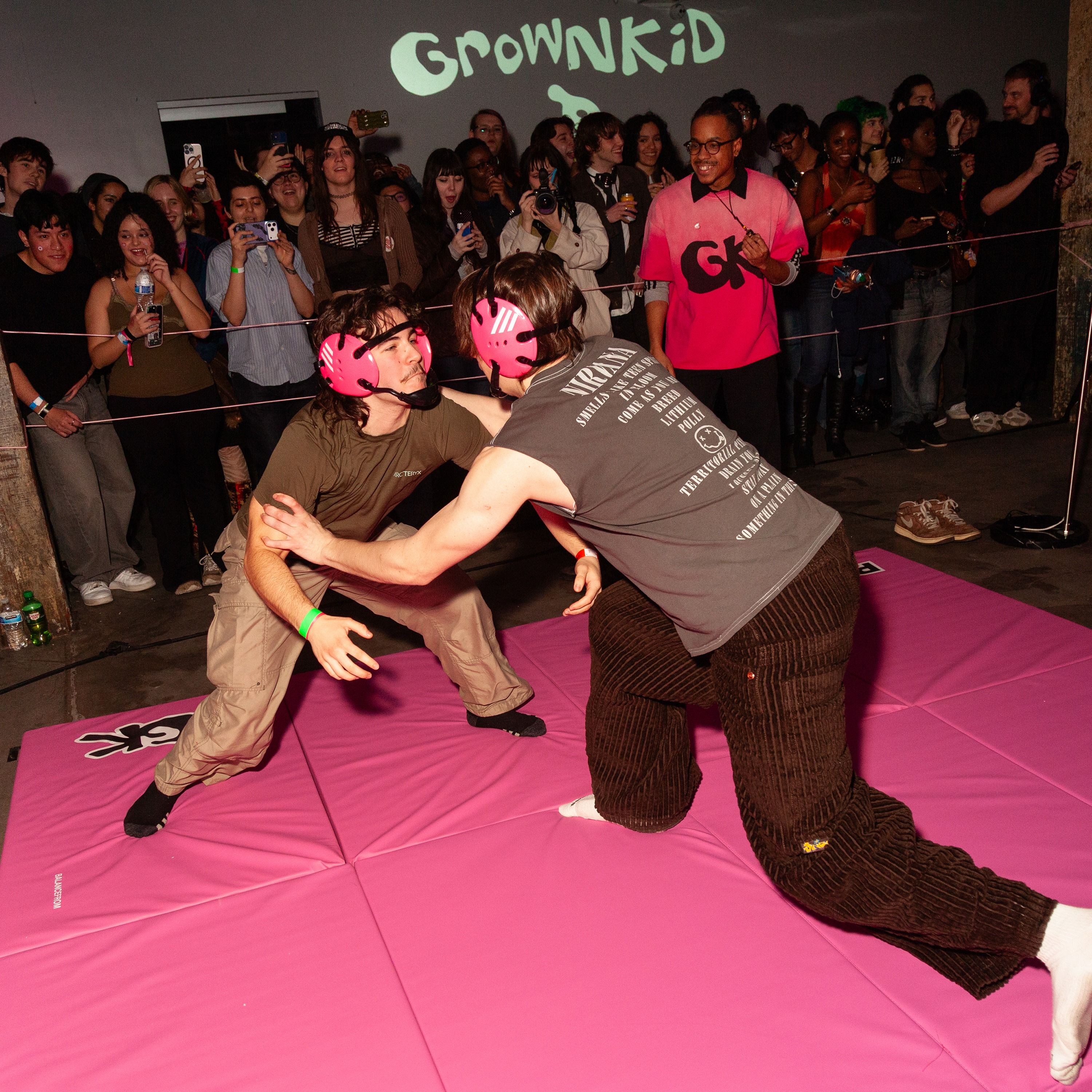
The Daily
Is the Swipe Era Over?
00:35:23
In 2012, Tinder revolutionized dating apps with its swipe feature. With the flick of a finger, singles could accept or reject a potential mate. While this innovation has worked for many, some have grown weary of the simple swipe, and long for a more nuanced way to find love. Today on “The Sunday Daily,” Rachel Abrams examines two dating tends on the rise: in-person mixers that are far from old-fashioned, and emerging A.I. technology that promises singles a ‘soul’ match. Rachel speaks with The New York Times’s dating columnist Gina Cherelus; Luke Vander Ploeg, a producer on the “Daily”; and Amanda Hess, a writer at large at The Times.
Loading summary
Transcript298 lines
- [00:00]
A
This podcast is supported by FX's love
- [00:02]
B
story, John F. Kennedy, Jr. And Carolyn Bessette. The new limited series from executive producer Ryan Murphy explores the complex courtship of the iconic couple considered to be American royalty. Their fairytale romance would become a national obsession, unfolding in front of the public eye.
- [00:19]
A
FX's love story, John F. Kennedy, Jr. And Carolyn Bassett.
- [00:22]
B
Watch now on FX, Hulu and Hulu
- [00:24]
C
on Disney for bundle subscribers.
- [00:31]
A
From the new york times, I'm rachel abrams and this is the daily. On Sunday, When Jonathan Bedeen is asked about how he revolutionized dating, he talks about taking a shower. It was 2012, he was a software developer in California, and he'd forgotten to turn on the fan in the bathroom. So he gets out of the shower and the mirror's all fogged and he swipes to clean it off. After a second, it fogs up again and he swipes again and again and again until he finally sees his face. And this gives him a world changing idea for his new dating app, Tinder, which is that users should also be able to swipe. Tinder could show you a person's face, a little bit of bio, and within seconds you could swipe yay or nay, left or right. And people loved it. Other apps copied it. And in the years that followed, swiping changed how we date. But fast forward more than a decade to our current moment and daters have turned on Jonathan's brilliant invention and they are demanding something different. Today I talk with my colleagues, dating columnist Gina Sherrillis, daily producer Luke Van Der Plug, and writer at large Amanda Hess, about dating in the post swipe era. It's Sunday, February 22nd. Gina Charles, welcome to the Sunday Daily.
- [02:12]
D
Thanks for having me, Gina.
- [02:14]
A
So you are the dating columnist at the New York Times. What does that mean?
- [02:19]
D
So for the last three years, I have been covering dating and relationships. I have a colum. It's called Third Wheel.
- [02:25]
A
Wait, are you the third wheel in the name of this column?
- [02:27]
D
Yes. Okay, so you picked it up.
- [02:29]
B
Okay, great.
- [02:30]
D
And I like to tell people that I cover the different ways people are falling in and out of love, the mischievous and exciting, confusing ways they're navigating romance. You know, we're in a loneliness epidemic. Covid changed a lot about how we live, including how we date. So the idea behind the column and focusing on dating and relationships really emerged out of recognizing that technology is evolving and so are we.
- [02:57]
A
And I imagine all of that requires you to write a lot about dating apps.
- [03:00]
D
Definitely.
- [03:01]
A
You know, it's so interesting that you mentioned the loneliness epidemic. Because I feel like when you hear about people being lonely, you hear that oftentimes hand in hand as a complaint with the state of online dating and the idea of the swipe like that. We have boiled down the grand alchemy of human emotion and falling in love to like a few seconds on somebody's profile and saying yes or no about whether this person could be your future partner. Do I is that.
- [03:29]
D
Yeah. Dating app fatigue is at an all time high, I'd argue right now.
- [03:34]
A
Why is that?
- [03:35]
D
In my reporting, what I've observed is that the price points have gone up. A lot of people have become more suspicious of the algorithms and a lot of people have become reluctant to swiping because of the options on there. They are saying that they are swiping on men who are creeps or women who are crazy, like using words like that. And I think there then comes a safety issue. There have been so many reports of people meeting up with a dating app date who turns out to be less than ideal or who harms them. And so a lot of people don't like feeling like they're being jerked around by the dating apps.
- [04:12]
A
Sure.
- [04:12]
D
Kept on there to spend their money versus actually finding love. Right.
- [04:16]
A
Because the apps, of course are businesses and therefore they are not, not necessarily incentivized to get you to stop using them, AKA by finding you love.
- [04:24]
D
No. And I mean, and I think, you know, when I'm talking to representatives of the apps, they will obviously push back on that and say, no, that's not our end goal. But that's not what it feels like.
- [04:34]
A
And I sort of wonder how you are seeing that frustration manifest and sort of what people are doing in response
- [04:41]
D
to it, the way that they're responding to it. I mean, people are falling into two camps. You have those who are taking the more analog approach. They're going offline. They want to try the dating methods that their grandparents or their parents use to fall in love and to meeting in person. Meeting in person. Right. Going out and, you know, sitting by the bar. Then you have others who even though they have, they are experiencing dating app fatigue, they do believe that the evolution in technology, artificial intelligence, can help us can improve and optimize our lives. And if we're using artificial intelligence in almost every other facet of our lives, at least it feels like that right now, then it's no surprise that people are seeing it as a useful tool to help optimize their chances at finding love.
- [05:35]
A
One thing though, I bet a bunch of people who are Listening might be having this thought of people are still going to bars, they're still going to work, they're still going to places where they would have opportunities that their parents had or that their grandparents have to meet people. So why is that different? Any different now? Why is the possibility of meeting people in those ways any different?
- [05:54]
D
Well, it's because of the presence of dating apps. It's not the only reason. But I think the way that we socialize in this century takes place in large part, online dating apps have, you know, have led to like, a loss of rejection, resilience among singles.
- [06:12]
A
What does that mean?
- [06:13]
D
The existence of dating apps almost eliminates the incentive to approach someone in person. Right.
- [06:20]
A
You could be like, oh, well, too bad I didn't get to talk to that person on the subway. I'll just go home and swipe anyway.
- [06:24]
D
Exactly. When you don't build a habit of that, it can make it really hard to then wake up one day and decide, I'm going to go out and approach a cute girl at the bar.
- [06:33]
A
Right.
- [06:33]
D
You may not be sure how you're, how you're going to be received. You may be worried that you might come off as a creep. With the existence of dating apps, you don't have an incentive to improve on your, your pickup skills or your game or your riz, whatever the kids are calling it these days. You can avoid the labor of approaching a stranger by going home and swiping for a day and feeling like you've done a long, you know, day's work of dating. I also think that dating apps, and even just online communication, text based communication and having an edit button, being able to google someone and do research on them before you send them a message or shoot your shot, I think that contributes in some ways to the way that we're losing our ability to pick up on nonverbal cues, to be able to, like, you know, understand tone when you meet someone. Picking up off that in person, I think that it can lead to a lot of misunderstanding and avoidance.
- [07:30]
A
Gina. It feels like people are really reckoning right now with the fact that while the apps might have initially made it easier or seem to have made it easier to date and find your person, a lot of people are not feeling that way. In fact, a lot of people are feeling that dating apps, for all the reasons you mentioned, have made dating a lot harder. In the face of all of these challenges, it makes complete sense to me why people are trying to find creative or different ways of meeting someone.
- [07:57]
D
Definitely. I mean, look, so many people have had remarkable success on dating apps.
- [08:02]
A
Sure.
- [08:02]
D
And it's no surprise that you have a bunch of people that are leaning into the possibility of technology, of optimizing their romantic lives and using art, artificial
- [08:12]
A
intelligence, the next phase.
- [08:13]
D
But it also makes sense that you have people searching for alternative and real life ways to make connection.
- [08:22]
A
Gina Shareless, thank you so much for being with us.
- [08:24]
D
Thank you so much for having me. This was great.
- [08:31]
A
After the break, we're going to look at some of the ways that people are trying to free themselves from swiping, either by embracing the new promise of technology and AI, or. Or by seeking out opportunities to find their soulmate in person. Coming up, our producer, Luke Van Der Plug risks getting body slammed for love. This podcast is supported by FX's love
- [09:02]
B
story, John F. Kennedy, Jr. And Carolyn Bessette. The new limited series from executive producer Ryan Murphy explores the complex courtship of the iconic couple considered to be a American royalty. Their fairy tale romance would become a national obsession unfolding in front of the public eye.
- [09:19]
A
FX's love story, John F. Kennedy, Jr. And Carolyn Bessette.
- [09:23]
B
Watch now on FX, Hulu, and Hulu
- [09:24]
C
on Disney for Bundle subscribers.
- [09:28]
A
Luke Van Der Plug, Daily Producer. Welcome to the Daily on Sunday.
- [09:32]
B
Thank you, Rachel.
- [09:34]
A
So last weekend was Valentine's Day, and we heard that you were available to go to a couple events. Tell us what you went to.
- [09:43]
B
Yeah, so I actually went to a couple of very, very different dating events.
- [09:48]
A
And you went there. Let's be clear. What were you hoping to discover?
- [09:52]
B
Yeah, so basically I had three questions I wanted to answer. Fundamentally, I want to understand how people are feeling about dating these days, why they're showing up at these events. Right. And also, are these events working for people?
- [10:07]
A
So where'd you go first?
- [10:09]
B
Hey, how you doing? Good, good. Wow, you got a self. So I heard from a colleague of mine, reporter Callie Holterman. Where are we going right now? That she was covering a very unusual singles event.
- [10:22]
C
It is Valentine's Day, and we are celebrating by going to what's been billed as a singles wrestling mixer.
- [10:30]
B
The event was called Wrestling Speed Dating.
- [10:33]
A
Wrestling Speed Dating, yes.
- [10:35]
B
Oh, my God. Do you plan on wrestling someone?
- [10:39]
D
I'm not.
- [10:40]
A
I'm not much of a wrestler.
- [10:41]
B
It was geared very specifically toward Gen Z participants. In fact, it was limited to 18 to 24 year olds.
- [10:49]
A
Wow. Okay.
- [10:49]
B
Totally capped out.
- [10:50]
A
Okay. So, Luke, just to note, you are not 18 to 24 years old.
- [10:54]
B
Correct.
- [10:55]
A
You are how old?
- [10:56]
B
I am 34 years old. I would certainly have been banned from attending this if I was not A journalist. And I also abstained from wrestling.
- [11:05]
A
Got it. You were there strictly for journalistic purposes.
- [11:08]
B
Strictly business. So we arrived at this event. It was in a sort of warehouse space in northern Brooklyn. And walking in. Wow. You sort of walk into this big, empty space. The kind of space that you might have a rave in or something like that. But in the middle of the room, there were laid out these three bright pink wrestling mats with sort of makeshift ropes wrapped around them in a very, like, DIY wworld sort of way.
- [11:41]
A
It is basically a Brooklyn warehouse version of WWE is what it sounds like.
- [11:45]
B
Yes, yes, yes, exactly. The vibe of the place feels like young.
- [11:50]
C
I see a lot of baggy jeans, a lot of dresses over jeans, one football jersey with the number 67 on it.
- [11:59]
B
And so Callie and I started mingling, talking to folks.
- [12:06]
C
Okay, wait, I'm just.
- [12:07]
B
And what we discovered pretty much immediately,
- [12:09]
A
Hinge is an evil entity. Yeah.
- [12:14]
B
Is that people are really tired of the apps.
- [12:17]
C
Everybody is figuring out their dating goals. On Hinge, they'll like you, and then you, like, talk for, like, two seconds, and then you never speak again. On Hinge, I have hinged for two
- [12:29]
B
years, and I've gone on one date.
- [12:31]
A
So tired, in fact, that they're willing to wrestle each other for love.
- [12:34]
B
Exactly. Are you guys feeling ready? Are you nervous?
- [12:36]
A
Yeah. It's my first debut match, so I'm nervous. Okay. So obviously the idea here is not just wrestling, but wrestling to meet potentially your soulmate. Are men and women wrestling each other, or how is this working?
- [12:50]
B
Right. So for people who wanted to wrestle, and it was not a requirement that you wrestle, obviously, but for people who wanted to, you mingle around the room. You look for someone that maybe you might be interested in romantically, and you.
- [13:02]
A
Or fighting.
- [13:03]
B
Or fighting. Or fighting. Yes. And you approach them, start a conversation, and just ask them, do you want to wrestle me?
- [13:12]
D
Okay.
- [13:13]
A
And so how did the wrestling actually go?
- [13:15]
B
I mean, it went really well. The wrestlers are making their way to the Mets. Everybody's gathering around.
- [13:23]
A
How are we defining?
- [13:24]
B
Well, so I thought, you know, maybe they would have a hard time finding people to actually participate, but that was absolutely not the case. The rounds filled up incredibly quickly. They're putting on their little earmuff things.
- [13:37]
C
It's called wrestling headgear.
- [13:39]
B
When it came time to actually wrestle, the participants sort of came out on the mat, corner to corner, And they really went at it. Like, there were some, like, kind of impressive, like, WWE esque, like, wrestling. Oh, she just went over his back. Leapfrog style.
- [14:03]
C
This Is vicious.
- [14:04]
B
There were flippings over the shoulder. There were sort of like leg sweep takedowns.
- [14:10]
C
Oh.
- [14:12]
B
Oh my God. That was a move.
- [14:17]
C
I've never felt better about my decision not to wrestle.
- [14:21]
B
It felt sort of like this fun mix between actual athleticism and sort of performance for the audience.
- [14:28]
A
Like, much like wwe.
- [14:29]
B
Much like wwe. It looks like the round is over.
- [14:37]
A
I mean, maybe you can't tell, but did anybody seem like they were swapping numbers or talking about going out later?
- [14:42]
B
No. We did investigate that cuz we were curious. You know, obviously people were having a great time wrestling each other, but is that actually going to lead to a romantic relationship?
- [14:50]
D
Right.
- [14:51]
B
And I think the answer was mixed.
- [14:52]
C
Did you feel any chemistry in that last one? Honestly? Yeah, I'm not going to lie.
- [14:56]
B
Honestly?
- [14:57]
D
Yeah.
- [14:57]
C
Like not interesting, but there's chemistry when
- [14:59]
D
you are literally wrestling.
- [15:01]
B
We did talk to some people who were like, you know, I wrestled, but I was not actually that interested in my partner.
- [15:06]
D
I'm actually in an exclusive relationship
- [15:11]
A
secret.
- [15:12]
B
You're here for the competition.
- [15:13]
C
I'm here for a real achique flirt, as I like to say.
- [15:16]
A
A cheeky flirt and the love of the game.
- [15:18]
B
But at the same time, do you guys feel like there will be any romance to come from this or no?
- [15:24]
D
Maybe, I don't know.
- [15:25]
A
Maybe.
- [15:26]
C
I don't know.
- [15:27]
B
Yeah, we met multiple people who found actual connections at this thing.
- [15:34]
A
And what did they say they were going to do? I mean, how do you go from something that intimate like crawling on someone else in a rink to, I don't know, having drinks of like, what do you even do after that?
- [15:42]
B
Yeah, I mean, I think the physical barrier being broken down between these people so quickly led to sort of an a skipping toward sort of intimacy that felt kind of interesting and cool. She was really good. We wrestled.
- [15:55]
C
I was okay.
- [15:56]
A
I did.
- [15:56]
D
We wrestled each other.
- [15:57]
B
She wrestled really well. Like, I remember one couple that I ran into, they were in the first couple rounds of wrestling.
- [16:03]
C
I mean, he came up to me and you know, I think we hit
- [16:06]
A
it all pretty well.
- [16:07]
B
Yeah, he actually knew jiu jitsu, so he was like, I can teach you some moves.
- [16:13]
C
I wouldn't have gone for his legs
- [16:14]
A
unless he told me to.
- [16:15]
B
So the wrestling itself happened. It was very fun, very cute. She was trying to kill me.
- [16:20]
D
I was not trying to kill you.
- [16:21]
A
Just a little bit.
- [16:22]
C
I was trying to beat him a little bit. A tiny bit. Who won in the end?
- [16:26]
A
I think she did.
- [16:27]
C
I think he did.
- [16:29]
B
And afterward they just seemed like a couple. They were sort of, like, holding hands, touching each other. Like, it was incredibly cute.
- [16:37]
C
What's the next step here? Have numbers been exchanged? Do you think you might go out after this? I don't know.
- [16:43]
D
Are you gonna ask him a number? Yeah.
- [16:44]
B
I mean, I could ask you for your number.
- [16:46]
C
Yeah, he's gonna ask me for my number.
- [16:48]
B
I'll ask him for her number.
- [16:50]
C
He'll definitely ask me.
- [16:51]
B
Yeah.
- [16:52]
A
Okay, so that was the wrestling event. Sounds like, at least for some people. Resounding success. You went to a second event. Not on Valentine's Day, right?
- [17:01]
B
Correct. Okay, I went to an event the following night, and it could not have been more different from the first event.
- [17:09]
A
What was it?
- [17:10]
B
Yeah, so I heard about this second event through a friend and a sort of wine mixer. I think what really got me interested in this particular event was the fact that tickets for women were $100 and tickets for men were free.
- [17:24]
A
Oh, my God. I think my soul just left my body. Why was it so much more for women than for men?
- [17:29]
B
I mean, I think the truth is that there are a lot more women out there interested in showing up for these dating events, and it's not as easy to get men to show up.
- [17:40]
A
Okay, so tell me about what this event actually was.
- [17:42]
B
How you doing? Is this the squirrel school thing? Yeah.
- [17:44]
A
My name's Chr. Luke.
- [17:45]
B
Nice to meet you, too. So it was held at this really gorgeous home in Bed Stuy, Brooklyn. Oh, you're the guy. I'm the guy. How are you? Nice to meet you. The host was this woman named Amari Collins. She is a wine influencer, wine caterer who runs a lot of wine tasting events around New York.
- [18:05]
A
Okay. So as you can probably tell, this
- [18:07]
B
isn't a very traditional wine tasting.
- [18:10]
A
We're gonna be going.
- [18:11]
B
The event was pretty intimate. I would guess there were around 20 people there. Maybe a little more.
- [18:16]
A
Wine for me is the vehicle to open the gates of hell for, like, people's personalities and life and, like, getting into it, swirling on into it.
- [18:27]
B
And Amari basically guided us through a series of fun little activities punctuated by just general mingling, sipping wine, snacking on delicious hors d'. Oeuvres.
- [18:40]
A
Amelia.
- [18:42]
C
That's me.
- [18:42]
D
In the moon.
- [18:44]
B
We also played this game called Confessionals, where she came around with a bag with little slips of paper inside with questions on them that we'd have to answer in front of the whole group.
- [18:53]
A
What's your favorite way someone could surprise you on a date? Oh, I think in general, just someone planning the date.
- [19:06]
B
I would say that the night fell in the sort of sweet spot between classy dinner party and raucous bachelorette weekend.
- [19:13]
A
Got it. Okay, so talk about some of the people that you met there.
- [19:17]
B
Yeah. So the demographic here was a lot different from wrestling night. I would estimate that they were anywhere from late twenties to early forties.
- [19:28]
A
Solidly millennial.
- [19:29]
B
Solidly millennial. And I would also say that whereas the wrestling event was very queer, it seemed like there was a lot of diversity in terms of gender identity, in terms of sex. This was solidly heterosexual. Men seeking women, women seeking men.
- [19:47]
A
Okay.
- [19:47]
B
And then I think one other thing that's really important to note here is I counted maybe 15 women.
- [19:54]
A
Okay.
- [19:55]
B
this event, and there were counting me five men.
- [20:00]
A
Wow. That really makes you understand why the ticket price discrepancy.
- [20:03]
B
Totally.
- [20:04]
A
So presumably you talked to some of the guests there.
- [20:06]
B
I did.
- [20:06]
A
What did they tell you about why they were there and what they were hoping for?
- [20:10]
B
Yeah. So I talked to a few fol.
- [20:13]
C
I feel like as a millennial, I'm
- [20:14]
A
just tired and stale.
- [20:17]
B
One woman really stuck out to me. Her name was Belle Levy.
- [20:20]
C
As someone in their 30s who's been in New York for almost 10 years
- [20:24]
A
and who is not from here and who has built a community, built a
- [20:27]
C
career, built everything, I'm tired to where maybe I just don't have the spark
- [20:37]
A
on the dating apps that I.
- [20:40]
B
And for her, the dating apps really didn't feel like they fully represented who she was. And showing up to an event like this really allowed her to sort of effortlessly be herself.
- [20:50]
C
And I'm a very, like, charismatic person.
- [20:52]
A
I'm bubbly, I'm loud. That's who I am.
- [20:56]
C
I am a fun person, but, like,
- [20:59]
A
I don't have the energy to portray
- [21:00]
C
that to my 400 matches on him.
- [21:04]
A
But if I meet someone in person,
- [21:07]
C
that spark is going to come naturally.
- [21:11]
A
Did you talk to any of the men? Like, why were they there? What were they hopeful for?
- [21:15]
B
Yeah, I talked to one guy there, Kevin Gao, who was just recently back in the dating world. How did you end up at this event? I know the chefs who are running it. So they're running Seagulls event, and they're like, well, Kevin, we need single dudes here especially. Right. Which I guess in New York is sort of a deficit. And he really didn't like how the apps were so focused on first impressions. First impressions. That could be deceiving. Yeah, I mean, look, I'm going to tell an anecdote about my last long term relationship. When we met for the first time at a House party. I found her cute and attractive. And when I ended up talking to her, I realized, I don't think there's any spark here. There might not be any chemistry. So we kind of were like, okay, let's nod our heads, kind of like, say, like, oh, this is a good try, and let's just move on. Yeah. We ended up matching on an app two months later. Wow. And then we've kind of met up, and we kind of rekindled and realized there actually is something here. I guess I tell this antidote of, like, I am a believer that maybe on that first impression, you might actually not have that chemistry with someone, but it is possible there actually might be something there. Right. Basically, he was saying that sometimes you need a little space and patience to figure out whether someone is actually right for you. And when you have thousands and thousands of these profiles available to you, maybe you just aren't incentivized to slow down and consider someone in the same way you might be in person.
- [22:55]
A
Okay. And so at the end of the night, did he or anybody else you talked to say that they had met somebody they wanted to see again romantically?
- [23:04]
B
So the people that I spoke to did not really seem like they had made a connection that would last after the event.
- [23:10]
A
Okay.
- [23:11]
B
But there were some people that I didn't speak to that did seem to have made a connection.
- [23:17]
A
There are some people that wrote each other's names down in the crush segment.
- [23:25]
B
So for the last event of the evening, Amari, the host, took all of these slips of paper that she had been collecting from people throughout the night where people had been writing down their crushes. And if two people wrote down each other, she called them up in front of everybody.
- [23:41]
A
And those people, we'll have to make out with each other in front of everybody.
- [23:45]
C
Shut the front line.
- [23:49]
B
And she actually told them to make out with each other.
- [23:53]
A
What?
- [23:53]
B
Yes.
- [23:54]
A
That sounds so problematic.
- [23:56]
B
Yeah. And, you know, honestly, I thought that at first, too.
- [24:00]
A
Steven. Oh.
- [24:03]
D
And Tanasia.
- [24:06]
B
But the names were called. They walked up to each other and immediately started kissing.
- [24:16]
A
Amazing.
- [24:17]
B
I mean, it was wild.
- [24:20]
D
Wow.
- [24:21]
A
Zero hesitation.
- [24:22]
C
Zero hesitation. Best night ever.
- [24:34]
A
Okay, so, Luke, what is your verdict at the end of the night? Would you go to one of these events on your own as a single man? Do you think they work?
- [24:43]
B
Let me tell you that I have been to some of these events. And so going into this one, I was wondering, like, is this gonna be, like, the same thing I did? A little bit awkward, but I don't know, after this, maybe I have a Little bit more hope for singles events and their impact on our dating crisis that we're in right now.
- [25:03]
A
A beacon of hope in the hellscape of dating.
- [25:05]
B
I will say I walked away from each of these events with, you know, a tentatively positive feeling.
- [25:13]
A
Luke Van der Plug, eternal optimist, Romantic. Thank you for joining us.
- [25:17]
B
Thank you, Rachel.
- [25:21]
A
After the break, Amanda Hess tells us how artificial intelligence is trying to find us love.
- [25:37]
B
This podcast is supported by the American Petroleum Institute. Energy is all around today. America's natural gas and oil keeps the country moving, growing and building and makes every day a little easier. But energy demand is growing and the
- [25:54]
A
infrastructure built today will help secure a
- [25:57]
B
more affordable, reliable future with enough energy to go around. When America builds, America wins.
- [26:06]
A
Amanda Hess, it is our great pleasure to have you on our new Sunday Daily Show. Welcome.
- [26:11]
C
Thank you for having me.
- [26:13]
A
We just spoke with one of our extremely adventurous producers, Luke Van der Plug, who went to two different types of in person events, one where they wrestled, one where they drank wine. You have been focused on sort of a different end of the dating spectrum, which is people who are leaning into, into technology and specifically where AI and dating intersect. You recently went and wrote about this event in California called Love Symposium. Tell us what that event was about.
- [26:42]
C
It was basically a meeting of people who are interested in optimizing human relationships. And so there were researchers there, there were people who were representatives of startups, of dating startups. We're all talking about basically the uses and in some cases the length of technology to improve human mating.
- [27:06]
A
Optimizing human relationships for human mating. What could sound more romantic? What are these people telling you exactly about how they could accomplish any of this, how they could use tech to improve finding your soulmate, finding somebody to mate with.
- [27:23]
C
What they would say is everybody uses apps to date, everyone hates them. What if we could solve the problems with the technology, with more technology, better technology that can find you a more specific match than the endless scroll of apps?
- [27:42]
A
And they presumably have a whole bunch of different ways to do this.
- [27:45]
C
That's what they say, whether that's like AI agents who can date for you or if it's like AI supercharged matchmaking.
- [27:57]
A
Have you actually had any hands on experience with any of these apps they're talking about?
- [28:03]
C
I encountered an app that's called Dataing,
- [28:07]
A
which I can imagine stands for data plus Dating.
- [28:11]
C
That's right. And one of the things that it does is it like analyzes your data about you that's in your phone. So it looked at my camera.
- [28:22]
A
It takes your. Please Go ahead.
- [28:23]
C
Yeah, I gave it permission to look at all of my photos.
- [28:27]
A
I gave my entire life away for a vague promise that it would find me love.
- [28:31]
C
Go on. And I should say, like, I am happily married and I'm not looking. But for the purposes of writing this story, I would say I created a fake profile. But I couldn't actually lie because it was looking at my photos and trying to analyze the kind of person I was and the kind of stuff I liked and what I might be looking for in a partner because most of my photos are of my two beautiful children. It surmised that I was a parent. It guessed that I was into pets, but I don't have any. It matched me with a lot of Jewish people, I think possibly because my husband is Jewish.
- [29:06]
A
Wait, I'm sorry, it matched you with Jewish people but it didn't figure out you were married? Like was I able to figure out that part?
- [29:11]
C
Well, I did lie about that part. Oh, you lied. So I thought you were a cheater.
- [29:14]
A
I should have figured out you were a cheater.
- [29:16]
C
I mean I, you know, I just smart that way. I didn't say anything either way. But I did sign up looking for matches and basically what happened was the first match that I got was a guy who lives on a different continent and also works for the app, which I think is indicative.
- [29:34]
A
They really need more users, is the idea here.
- [29:36]
C
Okay, all these companies know this. Like, this is like their biggest hurdle is like getting enough users in order to even test their premise which is that they can make more fine tuned selections between people who are dating.
- [29:49]
A
And the idea here is that they can do that for you if you give them all of the information in your phone.
- [29:55]
C
Yeah. And they're, you know, some of these apps are less than facilitating dating. They're like trying to facilitate self knowledge so that you can date better in the future.
- [30:06]
A
What does that mean?
- [30:07]
C
So there's one company that will read all of your text messages with your ex boyfriend, ex girlfriend and tell you like exactly the moment that the vibe shifted between you. It will say like who? Like who started it?
- [30:19]
A
Who started it?
- [30:19]
D
Yeah.
- [30:20]
C
It'll give you all of this insight into my worst memories. Yes. How your relationship degraded and like, I mean I don't know about you, but I don't want to know.
- [30:32]
A
But the idea is that by analyzing all this information they're going to be able to glean something about you that you yourself do not yet know. And by knowing that you are going to be able to maybe make better choices or matches for yourself.
- [30:43]
C
Yeah. I mean, I think a lot of the promise of some of these products is, like, you just have to spend less time looking through matches because the AI is going to do it for you. And you can spend more time out in the world because this AI is like trying to find a man for you.
- [31:00]
A
Okay, so you're at Love Symposium. Tell us about some of the other technological ideas that you're hearing about there.
- [31:07]
C
Some of the stuff I heard was in the future, you could have an AI avatar that dated for you. So two avatars could go on a first date so that you don't have this awkward drinks.
- [31:20]
A
Or there's a bot that represents me. An avatar that represents me. And this bot is going to have a conversation with somebody else's bot. Yeah.
- [31:27]
C
I actually don't know if they need to have a conversation or if they do, they can have, like, an understanding. I'm not sure.
- [31:33]
A
They just trade information instantly and tell
- [31:35]
C
you where to go. This is all, like, in the realm of ideas. I heard from someone who was suggesting that in the future, our lived environment could be optimized so that, let's say you walk into a bar, your agent can be sort of like, scanning the other agents and finding the people in the bar who might be compatible for you. And then perhaps it could engineer a romantic moment for you by, like, turning up the glow of the light in the bar over the person who you're meant to speak with.
- [32:08]
A
That sounds so cinematic.
- [32:10]
C
But of course, like, all of these things, like, if there are sensors that are hooked up to our AIs that are, like, changing the lighting in the bars that we were going into. This is a very extensive surveillance state. Right, right. Just, like, going even harder than we are already.
- [32:27]
B
Right.
- [32:28]
C
There were people there from a company called Keeper, which bills itself as an AI matchmaker. Keyper says that it will find your soulmate for you.
- [32:39]
A
Big promise.
- [32:40]
C
Yeah. I filled out a lot of the Keeper form just to see what kinds of things that they were asking. And for me, like, someone who is married to an individual human being, I was like, I don't know how to fill this out. Like, what's my ideal man? Men are not ideal. Women are not ideal. Like, people are not ideal. And that's not how people get together. Like, they find each other through circumstance.
- [33:07]
A
And so in some ways, ideal man is, like, a little bit limiting. Like, you might list a whole bunch of characteristics that in real life, if you met somebody, maybe they wouldn't have any of them.
- [33:16]
C
Well, these companies have a response for that as well. What is it they say? We will be able to know better than you do what you want.
- [33:23]
A
Impressive.
- [33:24]
C
Like, we'll be able to intuit something through the profiles that you're liking, through the pictures that you're rating highly as opposed to low, that you cannot articulate yourself.
- [33:36]
A
I feel like what this is all driving toward is chemistry. Right. Like, all the intangible things about a person that you're just not gonna be able to gauge unless you encounter them in the real world.
- [33:47]
C
Right, Exactly.
- [33:48]
A
I can understand the idea of an AI app helping to identify your values, perhaps things you enjoy doing. I really have a hard time imagining that it's gonna help with the thing that is a. That is that elusive, like chemistry.
- [34:02]
C
Yeah. The promise of these things is like, we found the perfect person for you.
- [34:07]
A
We looked at you. We looked inside your soul.
- [34:09]
C
Yeah.
- [34:10]
A
We looked at your soul, and this is what you deserve.
- [34:12]
C
Yeah. I mean, I think if you don't think about it in terms of solving human relationships, but instead think about it as maybe marginally improving the experience. Online dating, it can sound a lot more interesting if you are sick of swiping. It says, let us automate that for you. Like, what if we could get to the 25th man in your queue faster and then you could sort of, like, assess him and figure out whether it makes sense to go on a date or whatever. And so given that we're already, like, in this kind of technological hell, I think that's, like, you know, it's a potentially promising promise. But I'd also say that when I was at Love Symposium, like, I talked to a lot of people who live in San Francisco, like, young people who are dating who are really skeptical of AI. Like, why? Because I think they have been living and working in the tech world for, like, in some cases, their entire lives, and they are looking for some kind of escape. They were looking for more of a human touch to the extent that as the Love Symposium wore on, and it was in this co working space that had a bunch of rooms that were padded with various cushions, a group of people who attended the Love Symposium ended up taking their shirts off and wrestling in one of the rooms.
- [35:38]
A
Wrestling?
- [35:38]
C
Yeah. A bunch of guys. Okay. And so even though the Love Symposium is engaging with technology, the whole point is to be put people in a room together. And that is what is interesting and exciting to people about it.
- [35:54]
A
So it all comes full circle. Even. Even the. Even the folks in tech know that there's something ineffable about bringing people in a room together.
- [36:00]
C
Yeah. And having them wrestle, this episode really
- [36:03]
A
had more wrestling than I anticipated. Amanda Hess, thank you so much.
- [36:08]
C
Thank you for having.
- [36:14]
A
Today's episode was produced by Alex Baron and Luc Van Der Plug, with help from Tina Antolini. It was edited by Wendy Dore and engineered by Daniel Ramirez. Our production manager is Franny Kartoff. Original music by Dan Powell and Marian Lozano. That's it for the Daily on Sunday. I'm Rachel Abrams. See you tomorrow.
- [36:39]
B
Foreign. Is joining Verizon.
- [36:48]
D
That's right.
- [36:48]
B
America's best mobile network and Frontier's lightning
- [36:51]
D
fast fiber Internet are coming together.
- [36:53]
A
So whether at home, on the go or running a business, you'll have the connection you can count on to get more done.
- [36:59]
C
And for a limited time, switch and
- [37:01]
A
bundle both plans to get our best offer ever. Frontier and Verizon better together. Visit verizon.com welcome-frontier to learn more based on root metrics US root score report second half 2025 not an endorsement. All rights reserved. Results may vary. Service availability varies. Terms apply.