← The Daily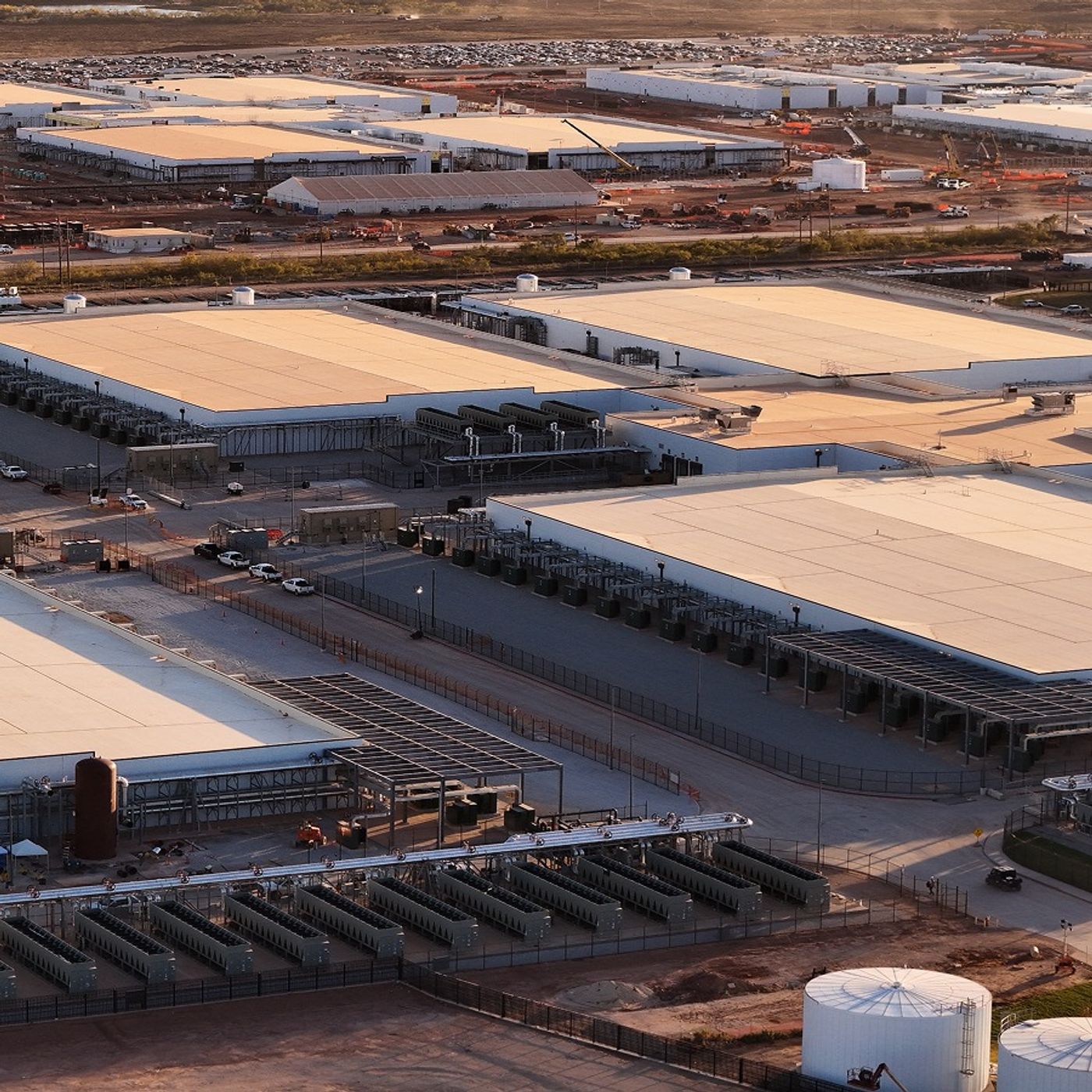
The Daily
Is There an A.I. Bubble? And What if It Pops?
00:25:01
After years of soaring optimism and colossal investment, Wall Street has begun to seriously question whether the frenzy for A.I. is justified. Cade Metz, who covers technology for The New York Times, explains why Silicon Valley companies believe so fervently in A.I. and why they’re willing to take enormous risks to deliver on its promise.
Loading summary
Transcript55 lines
- [00:00]
A
This podcast is supported by the Capital One Venture X Card. Venture X offers the premium benefits you expect, like a $300 annual Capital One travel credit for less than you expect. Elevate your earn with unlimited double miles on every purchase, bringing you one step closer to your next dream destination. Plus, enjoy access to over 1,000 airport lounges worldwide. The Capital One Venture X Card what's in your wallet? Terms apply. Lounge access is subject to change. See capitalone.com for details. From the New York Times, I'm Natalie Kitroweff. This is the Daily. After years of soaring optimism and massive investment in the AI boom, in recent weeks Wall street has begun to seriously question whether that optimism was overblown and whether we're actually in a bubble that may soon pop. And yet, despite all that hand wringing, Silicon Valley has only doubled down, projecting total confidence about the hundreds of billions of dollars it's pouring into the technology today. My colleague Kade Metz explains why why tech companies believe so fervently in AI, why they're willing to take huge risks to deliver on its promise, and whether that bet could. It's Thursday, november 20th. Kade it seems like the conversation on Wall street, among investors in Silicon Valley, even in Washington these days has gone from whether we're in an AI bubble to the general sense that yes, we probably are in some sort of a bubble. And yet the companies that you cover from your perch in Silicon Valley, they're continuing to spend huge amounts of cash on this. So explain to us, what is their justification for spending all this money?
- [02:04]
B
Well, three years after the arrival of ChatGPT, the OpenAI chatbot that really started this AI boom, this is clearly a powerful and in some ways transformative technology. It's used not only to search the Internet in new ways, it can help people do specific tasks in a faster and more efficient way than they did in the past. You see businesses adopting services that can transcribe meetings. You see other applications in healthcare. There are ways that this technology is already changing the way we live and the way we work. And, and these companies, and this is classic Silicon Valley, see much bigger transformations on the horizon. These are people, executives, these titans of industry are looking not just at what is possible today, but what they think this technology will do in the future.
- [03:13]
A
And the idea is that that future it's going to be really expensive to build.
- [03:18]
B
Well, fundamentally, this technology is expensive to build. It's a mind boggling amount of money even for people who have spent decades in the tech industry. OpenAI alone has said it's going to spend $500 billion on data centers in the United States alone to drive these technologies. Let's stop for a second and think about what that means. $500 billion in today's money could fund about 15 Manhattan projects.
- [03:53]
A
Wow.
- [03:54]
B
It could fund the Apollo program two times over.
- [03:57]
A
The program that sent humans to space.
- [03:59]
B
Yeah, exactly. And that's just the money to drive AI for a single startup, OpenAI. All told, if you look at what is being spent across the the globe, not just the U.S. we're talking about nearly $3 trillion. That's an awful lot of money for a technology that is transformative but is in many ways still speculative. Meaning what they see in the future is so big, they in many cases believe they're building what is called in the Valley artificial general intelligence. A machine that can do anything the human brain can do.
- [04:50]
A
Can we just pause? I want you to just define this term for me. Artificial general intelligence. We hear it a lot. We've talked about it on the show. It seems kind of hard to get your head around. Like, what does it mean?
- [05:03]
B
Actually, Cade, it's shorthand for a machine that can do all of the economically valuable work that people like you and I do on a daily basis. They want to essentially replace all human workers. They want to give the world a technology that can do any job. That in theory, is worth all this spending. But it's worth saying that we don't. Don't know how to get to such a goal. That is a lofty thing to reach for. But so many Silicon Valley executives remain undeterred. Mark Zuckerberg, CEO of Meta. I would guess that, like, sometime in the next 12 to 18 months, we'll.
- [05:55]
A
Reach the point where, like, most of.
- [05:56]
B
The code that's going towards these efforts is written by AI Jensen Wang, the CEO of Nvidia. If there's one thing that I would.
- [06:03]
A
Encourage everybody to do, is to go get yourself an AI tutor right away. We're going to become superhumans because we have super AIs.
- [06:10]
B
They are all making the case that this spending makes sense. The poster child of this attitude is Sam Altman, CEO of OpenAI.
- [06:21]
A
There are not many times that I.
- [06:24]
B
Want to be a public company, but one of the rare times it's appealing is when those people are writing these ridiculous openais about to go out of.
- [06:30]
A
Business and, you know, whatever.
- [06:32]
B
I would love to tell them they could just short the stock, and I would love to see them get burned on that. He has told the rest of the world to bet against his company at their own risk. And he continues to flaunt the company's spending. He and the rest of the industry are all in.
- [06:56]
A
But what they promised hasn't been delivered on the timeline that they promised. So, again, just explain why they're still going even harder at this thing if it isn't panning out yet. Obviously, they aren't trying to throw money in the trash. Right.
- [07:13]
B
Do you know about the concept of fomo? Fear of missing out. That's a lot of what is driving this.
- [07:18]
A
Do I ever.
- [07:19]
B
No one wants to miss out on what could be the most transformative technology the world has ever seen. And if you don't want to miss out on that, you have to make your bet. Now, these data centers, not only are they expensive, they take a long time to build. And so, almost by definition, you have to make a bet on something that's years down the road. But there may be a disconnect between the money that's being spent now and what is possible just a few years down the road.
- [07:53]
A
What you're saying is that the upside for these companies of taking this massive gamble on what is essentially, as you've described it, a moonshot of reaching artificial general intelligence is that you might be the company that lands on the moon. The downside, though, is what if these companies are wrong? What if there is no moon landing?
- [08:18]
B
What if there's no moon landing? Or what if only one company lands on the moon? Or what if only two land there and the rest are left hanging? This is a situation where even if somebody wins, a lot of people are going to lose. Sam Altman, the chief executive of OpenAI, said as much during a dinner I attended here in San Francisco this summer. He said rhetorically, are we in a phase where investors as a whole are overexcited about AI? In my opinion, he said, yes. Yes. He acknowledged that a lot of this spending was, at least in some ways, irrational. And he said that there would be losers in this scenario. After this dinner, which made headlines across the country and across the world, a lot of people started using the word bubble. And when I talk to people here in Silicon Valley and financial analysts and tech historians about this moment we're living through, what they often point back to is the dot com bubble of the late 90s and 2000s, when early Internet technologies showed enormous promise and the Valley started to invest enormous amounts of money in it.
- [09:43]
A
Okay, let's talk about the dot com bubble and specifically what's different and what's similar to the moment that we're in now with AI.
- [09:53]
B
Well, for people who live through the bubble, what they often think of is an enormous number of startups that were created and that went public and had huge valuations, even though they had little or no business model, certainly no revenues. And then when the market crashed, when people decided that the spending was getting ahead of what was possible, a lot of those companies went out of business. Companies like Cosmo that delivered goods straight to your door. Pets.com which sent you pet food. There are famous examples of this and that's often what people think of. But underneath that, and this is where the analogy really holds up to today, as those startups were being built, there were other companies that were building the infrastructure needed to drive the Internet, that were spending enormous amounts of money to lay the fiber optic cable that would carry all that information across the Internet to our machines. When the bubble burst, a lot of those companies went bankrupt. And that's often what people are thinking about as they look back at the.
- [11:10]
A
Dot com bubble, meaning there's a fear that the companies that are laying the fiber optics of the AI revolution, which is, you know, the analogy would say these data centers that are housing all of these chips, that those companies could go under. That's the fear.
- [11:27]
B
Just like then you have companies spending enormous amounts of money on the infrastructure needed to drive on this. The difference is they are spending a lot more today than they did 25 years ago.
- [11:44]
A
But I'm struck by the fact, Kate, that obviously the dot com bubble, it burst, but there were many, many winners, right? I mean we still have, as you said, a lot of these companies that were born in that era. So what's the takeaway there?
- [12:01]
B
This is a great point. So many of the applications that were promised by all those startups that went out of business are part of our daily lives today. Amazon delivers our pet food. Other companies deliver our real time Internet video. So many of the things that were promised then we have today and we're actually using that fiber optic cable that was laid and that sat there dormant for many years and we are now reaping the benefits. It's just that it didn't happen as quickly as a lot of people thought.
- [12:41]
A
So for Silicon Valley, it sounds like the lesson of that bubble could be very easily. Be sure some people lose in a situation like that, but broadly, the bet on the Internet was worth it. It paid off. So take the bet.
- [12:58]
B
So many people I talk to say that very thing. They point out that in the end, despite the bubble bursting, eventually everything turned out as promised. They make that analogy and that's why they're making these enormous bets today. They acknowledge there might be losers, as Sam Altman did during that dinner, but they think it's going to work out in the end. The concern, however, among some in the Valley and some in New York, where the financial analysts are, is that the risk being taken on by some companies is far larger than in the past. And if that's the case and the bubble bursts again, the fallout could be far more significant.
- [13:57]
A
We'll be right back. This podcast is supported by the American Petroleum Institute. Energy demand is rising and the infrastructure we build today will power generations to come. We can deliver affordable, reliable and innovative energy solutions for all Americans. But we need to overhaul our broken permitting process to make that happen. It's time to modernize and build, because when America builds, America wins. Read our plan to secure America's Future@ permitting. Reformnow.org say hello to the all new Alexa, our smartest, most proactive AI assistant yet. Chat naturally about anything and watch your to do list disappear. Planning date night. One conversation handles everything from dinner reservations to entertainment. It learns your style, anticipates what's next, and puts thousands of services at your fingertips. Always ready when you are across Echo Fire TV and your favorite devices. Experience AI. That's all yours. Amazon.com newalexa hey, I'm Tracy Mumford. There is a lot happening right now. The Headlines podcast from the New York Times will catch you up on the latest in 10 minutes or less. We'll take you inside breaking news and big investigations from the Times newsroom. Plus bring you the stories that make you go, huh? Whoa. I didn't know that. Listen to our show the Headlines every weekday morning wherever you get your podcasts. Okay, Kade, let's get into the scary thing that you brought up before the break, that the risks here could be much more significant. Talk to me about that.
- [15:41]
B
Well, as I discussed this with all sorts of people, including technologists, but also financial analysts, the other thing that often comes up is the housing bubble of the late 2000s, which was a much more serious thing. People generally agree that this is not what we're going through at the moment. Let's not go that far. That said, they do point out that there are elements that we're seeing now that were also present then.
- [16:15]
A
What are those elements? What's worrying them?
- [16:18]
B
Basically, this is about the enormous amount of dark debt that is being taken on to build these data centers, the enormous amount of money that's being borrowed to build them. And as you look at that debt, it's hard to know how much there is and who is holding the debt. If that debt is spread across a lot of companies, then you have more systemic risk, you have greater risk that could damage the rest of the economy.
- [16:54]
A
Right. That was the thing that made the 2008 crash so bad. The amount of debt that had piled up under the housing market. But these tech companies, they're some of the richest corporations in the world. So why are they financing the AI boom with debt? Why is that happening?
- [17:14]
B
Well, some companies are not taking on debt to do this. Some companies like bankruptcy, Google and Microsoft and Meta pull in billions of dollars in revenue every year. They can afford to essentially pay cash for these giant data centers. But there's so much interest in AI, there's so much demand for the computing power that comes out of these data centers, that we're seeing all sorts of other companies build these giant facilities when they don't have the money to do it. Even relatively big companies like Oracle, the cloud computing giant, is having to take on debt to build data centers. And then you have all these smaller companies that most people on earth have never heard of, with names like coreweave, Lambda and Nebius, definitely never heard of them. They are certainly taking on debt to do this. CoreWeave, a company based in the New York, New Jersey area, has told told financial analysts that for every $5 billion in data center infrastructure they build, they have to take on almost $3 billion in debt.
- [18:33]
A
Whoa.
- [18:34]
B
In the end, they think that they will pull in the revenues needed to pay back those debts. But ultimately, if the AI technology does not pull in the money, then you can't repay those debts. And that's when you have a problem.
- [18:51]
A
Got it. And I was struck by something else that you said, Kade, which is that when you look at the debt here, it's actually hard to know how much of it there is. What's that about? Why don't we know that?
- [19:05]
B
Well, some of the debt is taken on in the way you might think. These companies go to a bank and they both borrow the money, and you know exactly who lent it, who borrowed it, how much it is. But increasingly we're seeing other deals where it's hard to see where the debt is and how much of it there is. A lot of the money is being lent by what are called private credit institutions. Legally, you can't see inside these companies. The other thing that's happening is you're seeing the rise of these securities. They call them asset backed securities, something that came up during the housing bubble that People may be familiar with reminiscent.
- [19:55]
A
In a not great way, these securities.
- [19:57]
B
Can be bought and sold and traded, and that means you don't know in the end who is holding the debt.
- [20:07]
A
You're saying there's this idea, right, that there could be real systemic risk baked into all this debt, that the leverage in the system is just hard to pin down and so we really can't actually know at this point how exposed we all might be to it.
- [20:24]
B
That's right. The key word there is could, there could be a problem. It's hard to know, right?
- [20:30]
A
It's obviously a really murky thing. But is there anything that we know definitively about the magnitude of the debt in the system, about how big we're talking?
- [20:41]
B
As I said earlier, it's projected that companies across the world will spend nearly $3 trillion on these data centers. Analysts at Morgan Stanley project that about a third of that will be debt. $1 trillion.
- [21:00]
A
Wow. Just pulling back from what you're saying, it sounds like it's actually quite hard to know what kind of bubble we may be in right now and how bad or not bad it may be. I mean, there's the dot com example, right, which had fallout, but it sounds like was relatively contained and produced all these winners. And then there's the much riskier version of things, closer to elements of things that we saw during the housing crisis that could have a much broader effect. And because of all that's unknowable in all this, we can't really tell, is that right?
- [21:42]
B
We can't. If things do burst, it's hard to even know when that might happen. And people like Sam Altman and Sundar Pichai, the CEO of Alphabet, the Google parent company, have acknowledged this uncertainty.
- [21:57]
A
You know, there's this irony that I've been thinking about in all this, which is that in some ways the worst case scenario for the companies that are invested in the AI boom, right, is that they never actually reach AGI that point where computers replace human workers en masse, where AI becomes as smart as the human brain, or that that really takes a very long time. But I think there's a lot of us human workers who might actually view that worst case scenario for Silicon Valley as a relief. Like people might be happy generally to hear that we aren't going to be replaced en masse tomorrow. And I wonder what you make of that tension, the fact that the future that they're building toward here may not actually be a future that all that many people actually want.
- [22:57]
B
It's a great point. As we think about this moment. We need to realize the realities of this technology. It is very powerful in many ways, health care being perhaps the prime example, drug discovery. We are on the path towards some amazing things. At the same time, we're on the path towards some things that are concerning. If things don't progress at the pace that Silicon Valley says, this could cause problems across the larger economy, as we talked about, but it might give us the time we need to continue to think about all the big questions that hang over this technology and that hang over over our future. It might give us time to prepare for that future.
- [23:59]
A
Well, Kade, thank you so much.
- [24:02]
B
Glad to be here.
- [24:06]
A
On Wednesday afternoon, Nvidia announced that in the most recent quarter, its profit was $31.9 billion, up 65% from a year ago, and it reported record sales. The news buoyed its shares in aftermarket trading and was seen as a sign that jitters on Wall street over AI had been calmed, at least for now. We'll be right. Hi, I'm Megan Lorum, the director of photography at the New York Times. A photograph can do a lot of different things. It can connect us. It can bring us to places we've never been before. It can capture a story in a universal visual language. But one thing that all these photographs have in common is that, you know, they don't just come out of the ether. We spend a lot of time anticipating news stories, working with the best photographers across the globe. These are photographers who have spent years mastering their technical craft, developing their skills as visual chroniclers of our world. You know, getting certified as a scuba diver and learning how to shoot underwater to document climate change, or tremendous cardiovascular training in order to ski on the slopes next to Olympic athletes. This is an effort that takes tons of time and consideration and resources. All of this is possible only because of New York Times subscribers. If you're not a subscriber yet, you can become one@nytimes.com subscribe here's what else you should know today. On Wednesday, President Trump announced on social media that he'd signed legislation calling on the Justice Department to release its files on Jeffrey Epstein within 30 days. But Trump's signature doesn't guarantee the release of all the files. The bill contains significant exceptions, including a provision that allows records to be withheld if they jeopardize an active federal investigation. Last week, Trump demanded that the Justice Department launch an investigation into Democrats mentioned in some of the files, and Attorney General Pam Bondi said she'd started one that could give the administration another reason to withhold documents. And in a remarkable hearing on Wednesday, a federal judge grilled government prosecutors pursuing charges against former FBI Director James Comey, revealing serious vulnerabilities in their case. In response to the judge's questioning, Lindsey Halligan, the U.S. attorney handpicked by Trump to bring the case, admitted she'd never shown the second and final version of the Comey indictment to the full grand jury before the four person signed the charging document. Comey's lawyers immediately seized on that irregularity, saying it justified dismissing the case entirely. The judge didn't immediately rule on Comey's claim that the case had been filed as an act of retribution by Trump, but he seemed to be leaning in that direction and in favor of throwing out the charges altogether. The dismissal would be a humiliation for Trump's Justice Department in a prosecution that's appeared to be slapdash from its very inception. Today's episode was produced by Ricky Novetsky, Shannon Lynn and Carlos Prieto. It was edited by Mark George and Lisa Chow, contains music by Dan Powell and Marion Lozano, and was engineered by Alyssa Moxley. That's it for the Daily I'm Natalie Kitroeth. See you tomorrow.