Loading summary
Transcript116 lines
- [00:00]
Apple Card Advertiser
Brought to you by Apple Card. Hey, you could be earning 2% daily cash back on that purchase and that one and even that one. That's because Apple card users earn 2% daily cash back on every purchase, including everyday items they buy online or in store when using their Apple Card. With Apple Pay, not an Apple Card customer, you can apply in the Wallet app on iPhone, subject to credit approval. Apple Card issued by Goldman Sachs bank usa. Sign Salt Lake City branch terms and more at Apple Co benefits.
- [00:33]
Quarantine Unit Patient
Good morning, everyone. It is my second day here at the National Quarantine Unit in Omaha, Nebraska, and I just wanted to give you a little tour of my room
- [00:48]
Michael Barbaro
from
- [00:48]
New York Times Reporter
the New York Times. I'm Michael Balboro. This is the Daily.
- [00:53]
Quarantine Unit Patient
So this is the door where I've only entered once because I will not be exiting.
- [00:57]
New York Times Reporter
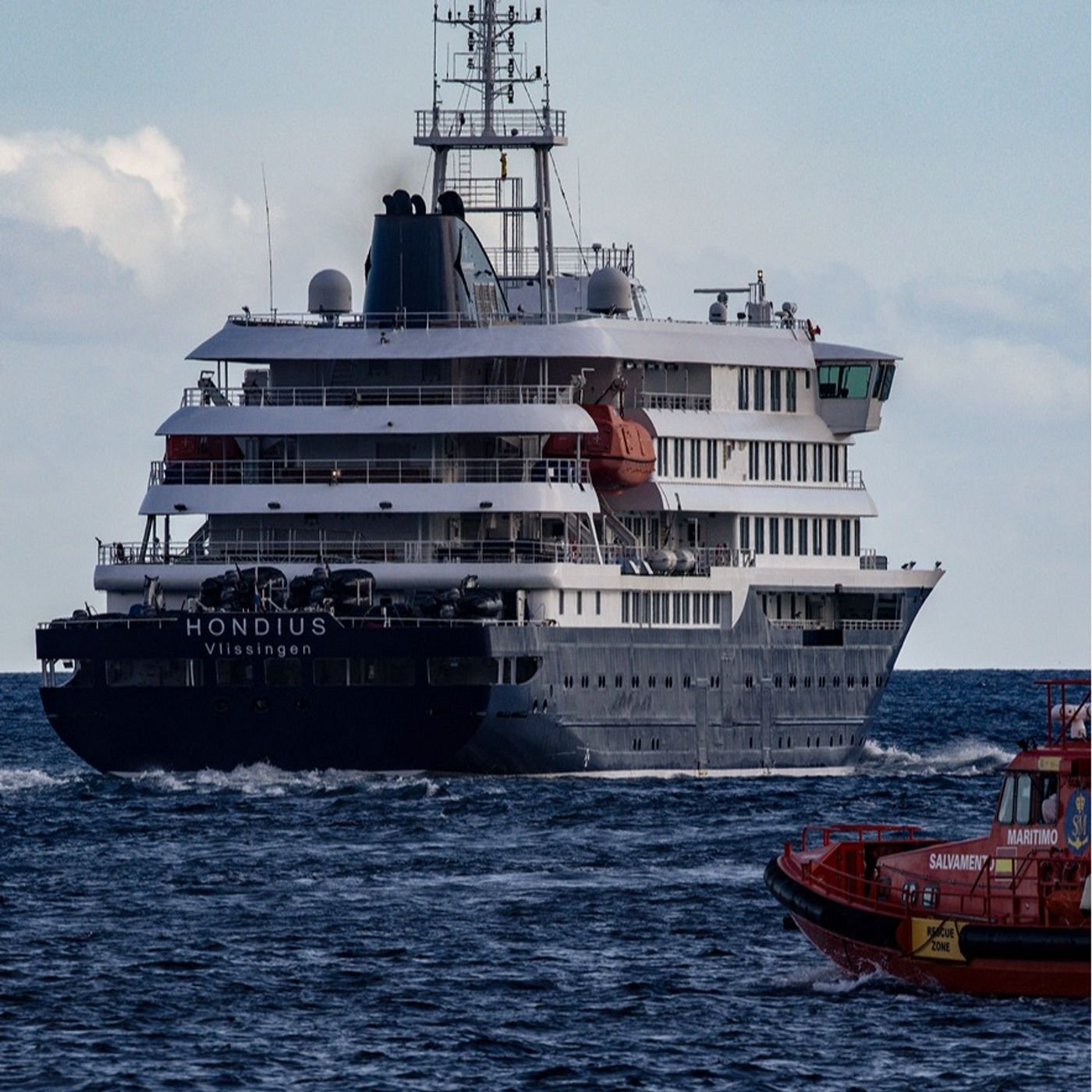
Inside a hospital in Nebraska, 16Americans who have been exposed to the Hunta virus aboard a cruise ship have begun an unusually long quarantine that in some cases will last up to 42 days.
- [01:12]
Quarantine Unit Patient
This is the one bag that I was able to bring and I shoved socks, underwear, shorts and things throughout the bag where I had space. I prioritized my electronics.
- [01:22]
New York Times Reporter
Medical officials say that precaution is required to protect the public from a little understood disease that has already proven highly fatal to those on board the ship.
- [01:33]
Quarantine Unit Patient
So my thought is I know that if anything were to happen, I can't foresee there being anywhere else to have better medical care for this specific illness than being here today.
- [01:47]
New York Times Reporter
What we're learning about that outbreak, the virus behind it, and how a public health system still reeling from COVID responded to the CRIS
- [02:02]
Quarantine Unit Patient
98.6. Now I have to put on my mask so I can show the nurses that my temperature is all Good.
- [02:11]
New York Times Reporter
It's Friday, May 15th.
- [02:19]
Michael Barbaro
Apoorvo. Welcome back to the Daily.
- [02:21]
Apoorva Mandavilli
Thanks for having me.
- [02:22]
Michael Barbaro
Always a pleasure. It feels like in our post Covid world where every virus that you hear about inevitably resurrects the ghost of the pandemic, this latest outbreak on a ship, that this has really consumed all of our imaginations and kept a few of
- [02:42]
Apoorva Mandavilli
us up at night, understandably, I mean, as you mentioned, the ship, but also a virus that most of us have not really spent much time thinking about. And we're hearing about people getting sick one after the other. The numbers are going up. We're hearing all those words, quarantine, isolation, contact tracing, death. Death. Yeah. And we have ptsd, many of us from having dealt with COVID So, yeah, I'm getting a lot of panicked messages from friends and family. My son, my daughter's best friend freaking out. Is this the next pandemic? Are we all gonna die?
- [03:15]
New York Times Reporter
You give too many people your cell phone, maybe.
- [03:18]
Michael Barbaro
And what do you tell these people when they reach out to you over the past two weeks about what began on this ship?
- [03:26]
Apoorva Mandavilli
I have said consistently the same thing over the past two weeks, which is, this is not the next pandemic. And I say that because we may not know a ton about this virus, but we know enough to know that it does not spread easily, it's not super contagious. And in fact, this is the only kind of this hantavirus that even spreads among people at all. And so there are just a lot of signs from what we know so far that do indicate that this thing is going to stay contained. But I don't want to minimize the fact that we have had 11 cases so far, three deaths, and there will probably be more cases. And this is a serious outbreak, and it's a serious disease. There's a very high fatality rate once people do get sick. And so the experts I talk to are worried, but they're worried mainly for the people on the ship, not for the rest of us. And they are also sort of relieved that this outbreak happened on a cruise ship because it means that it's a lot easier to track all of those folks and to contain the outbreak, which they're doing right now.
- [04:30]
Michael Barbaro
Mm, interesting. I don't think of that ship as being a lucky situation, but it sounds like, in a way, it was the best possible scenario for an outbreak like this.
- [04:41]
Apoorva Mandavilli
Right. From a global perspective, if you want to have an outbreak, it's best to have it on an isolated cruise ship from where you can trace people.
- [04:51]
Michael Barbaro
Well, let's talk about that ordeal on that ship with the benefit of a lot of reporting now that you and our colleagues have done. Tell us as best you can the story of what happened on that ship with this virus and ultimately what it's taught us about this disease that a lot of us didn't really know much about until now.
- [05:15]
Apoorva Mandavilli
Yeah. So the cruise ship is designed for polar expeditions, and it's set off from Ushuaia. I've been there, actually. It's a gorgeous city. It's called, literally, the End of the World because it's the southernmost tip of the Americas. And people set off on this cruise who are interested in things like bird watching and looking at the animals that live in these kinds of conditions. And this couple, this Dutch couple, we think, went birdwatching in a lot of different places in Argentina, in Chile, in Uruguay. And the World Health Organization is still trying to figure out exactly where in that process they might have become infected. But the current theory is that at least the husband, and possibly the husband and the wife got infected from a rodent and became infected with Andes virus, which is a kind of hantavirus, a species of hantavirus that's only found in Argentina.
- [06:07]
Michael Barbaro
And what's the working theory for how they would have gotten this virus from a rodent in Argentina? Like, kind of logistically?
- [06:16]
Apoorva Mandavilli
Well, we don't know exactly how, but most likely they got it by being in touch with rodent droppings or with rodent urine. Maybe they touched an object that had those things on it and then they put their fingers in their mouth. We don't know exactly how.
- [06:29]
Michael Barbaro
And Apoorva, is this any old rodent or something? Quite specific.
- [06:34]
Apoorva Mandavilli
Something quite specific. So in Argentina, it's from the long tailed pygmy rat. And there are other rodents that may transmit it, but none of them are the mouse that you might see in your house.
- [06:44]
Michael Barbaro
Got it. Okay. So this couple is exposed, we think, to this virus, and now they're on this boat, right?
- [06:51]
Apoorva Mandavilli
And then the husband starts to feel a little sick, and then he starts to get sicker. And on April 11, so 10 days after they've left Ushuaia, he dies. This is my sad duty to inform you that one of our passengers suddenly passed away last night. And they make this announcement, they tell the other passengers that we have somebody on this boat who has died. But, you know, no one panics because people do die on cruise ships sometimes, right? And this man was 70 and who knows what he died of?
- [07:25]
Michael Barbaro
Heart attack, stroke, whatever.
- [07:27]
Apoorva Mandavilli
Exactly. And so they continue on. And also remember, they're going through some very remote parts of the world. They're in the middle of the ocean, there's no land nearby. And so the body stays on the ship.
- [07:40]
Michael Barbaro
In the ship's morgue.
- [07:42]
Apoorva Mandavilli
In the ship's morgue. They continue on until April 24th. They reach St. Helena, which is an island in the South Atlantic. And when they get there, that's when the body's taken off the ship. And the wife of this guy also disembarks, along with another 30 or so people. And she then flies to Johannesburg in South Africa. She's Dutch, so she's trying to get on a flight from Johannesburg to Amsterdam, then gets so sick that she's made to get off the flight. She doesn't fly, she stays in Johannesburg and she dies.
- [08:18]
Michael Barbaro
Wow.
- [08:20]
Apoorva Mandavilli
The people on the ship also hear about her.
- [08:23]
Michael Barbaro
Now a second person has died. People on the boat understand that. Do they start to get a little bit worried?
- [08:31]
Apoorva Mandavilli
Not yet. According to the people on the ship who have talked about this, they didn't even really worry that much When a third person got sick and had to be taken off the ship. You know, a medical evacuation on April 27, they were still thinking, oh, maybe this is Covid, maybe this is a flu. It could be so many other things. You know, it's like that old adage when you hear hooves thinking horses, not zebras. No one's thinking zebra, no one's thinking some weird hantavirus that no one's heard of. But then as more people start to get sick, the ship's doctor gets sick and other patients get sick. And then Most importantly, on April 28, another person died. A third passenger died, an 80 year old German woman who had not had that much contact with the couple as far as anyone can tell. That's when everyone starts to get worried. And then a few days later, on May 2nd, when you finally have a test saying that this is a hantavirus. This particular kind of hantavirus causes a very severe respiratory illness. Basically, people start out with symptoms that seem very much like the flu, but then what they eventually die off is pneumonia. Their lungs fill up with fluid and can also send their immune system into overdrive. And so that can actually be what kills the patient in the end.
- [09:48]
Michael Barbaro
And are there any treatments?
- [09:49]
Apoorva Mandavilli
Not yet. So at this point, with hantavirus confirmed
- [09:56]
Quarantine Unit Patient
on the ship, thank you for joining us for this briefing on the hantavirus situation.
- [10:02]
Apoorva Mandavilli
That's when the world health organization gets involved.
- [10:05]
Quarantine Unit Patient
Given the incubation period of the andis virus, which can be up to six weeks, it's possible that more cases may be.
- [10:15]
Apoorva Mandavilli
All of a sudden you have this more global event and countries all around the world are paying attention.
- [10:33]
Michael Barbaro
This is when this story starts to really explode. And apoorva as all this is happening and the world is waking up to what's happening on this ship, what is the theory, especially in the public health world, places like who, about how these passengers are getting sick, I recall very amateur hour over here thinking, oh, there must be rodents on this ship. I'm sure all ships have rodents. Is that what's going on?
- [11:07]
Apoorva Mandavilli
Well, that's not out of the question, right? They could have gotten it that way. But as soon as scientists realized that this was the Andes virus species of hantavirus, for which we do know human to human transmission is possible, they immediately started considering that as a possibility, that instead of all these people getting it from rodents on the ship, there was somebody who brought it on board, like, you know, the Dutch couple probably did now. Right.
- [11:34]
Michael Barbaro
They could have been patients 0 and 1, 0 and 1.
- [11:37]
Apoorva Mandavilli
Right. And that they may have then passed it onto everybody else. And so that very quickly became a working theory. And the WHO and the European CDC and a Dutch official, you know, they were on board interviewing people, trying to figure out what was happening. And then finally, the WHO negotiates with the Spanish government to have the boat dock in the Canary Islands. The passengers get off there, and all of the health officials from various countries take the passengers to their countries, take them home for monitoring.
- [12:10]
Michael Barbaro
The question on everyone's mind from really the moment this began is just how big a risk is this virus that's quite clearly being passed around this ship? So what are these public health officials around the world saying about that risk level?
- [12:29]
Apoorva Mandavilli
So immediately, the WHO and everybody else who was actually speaking is very attuned to the fact that we all have post Covid ptsd, as do some of them, actually. This is not the start of a COVID pandemic. This is an outbreak that we see on a ship. And they immediately start saying, calm down, nothing bad is going to happen. The risk to you is very, very low. This is not the same situation we were in six years ago. The CDC actually says nothing really until May 9th.
- [12:57]
Michael Barbaro
This is America's premier public health agency.
- [12:59]
Apoorva Mandavilli
Correct. And they stayed silent on this matter
- [13:02]
Michael Barbaro
until, despite the fact that there are many Americans on that ship, despite the
- [13:05]
Apoorva Mandavilli
fact that there are Americans on that ship, despite the fact that American media is carrying news of the ship and these cases and this outbreak, nothing from them until May 9th. Here with more information is NIH Director and Acting CDC Director Dr. J. Bhattacharya. And then finally that weekend, Jay Patacharya, who is the acting director of the cdc, went on Fox and he went on CNN and he said, well, I
- [13:32]
Dr. J. Bhattacharya
mean, the thing about a cruise is it's close quarters, right?
- [13:34]
Apoorva Mandavilli
This only spreads when there's close contact. Don't worry, don't worry.
- [13:37]
Dr. J. Bhattacharya
You have to be in close contact with someone who has a lot of symptoms. There have been eight people that have been infected. The first two probably breathed mouse droppings in Argentina. And then people who were very close to them, you know, the roommates, doctors, doctor who was caring for them, they're the ones who got symptomatic.
- [13:54]
Apoorva Mandavilli
He said roommates got infected.
- [13:56]
New York Times Reporter
That's not true.
- [13:56]
Apoorva Mandavilli
It's not true at all.
- [13:57]
Dr. J. Bhattacharya
They're in their 80s also.
- [13:59]
Apoorva Mandavilli
He said a couple, they were in their 80s, which is also not true.
- [14:02]
Dr. J. Bhattacharya
Unfortunately, they died.
- [14:04]
Apoorva Mandavilli
The problem with that is that the overall message of you don't need to worry is probably accurate, but it's a lot more complicated than that. We know from previous outbreaks of this virus and even from this current outbreak that it can actually spread even when there isn't close contact. And so there was a lot of missing nuance in the communication. And it seemed like not just Dr. Patacharya and the CDC, but even the WHO, even some of these other health officials were in, trying to not get people to panic, skimming over all of those and just getting right to this is not a pandemic.
- [14:48]
Michael Barbaro
We'll be right back.
- [14:54]
Paramount Show Promoter
Beth and Rip are back in a new series, Dutton Ranch, streaming on Paramount. Kelly Reilly and Cole Hauser return, and this time they're taking on Texas as Beth and Rip begin to build a future together. Peace will have to wait as they face corruption, danger, and a ruthless rival ranch willing to protect its secrets at all costs. Legacy is a beautiful thing, but only if it survives. Dutton Ranch, starring Cole Hauser, Kelly Reilly, Annette Bening and Ed Harris. Now streaming on Paramount.
- [15:26]
Kate Kelly
I'm Kate Kelly. I'm an investigative correspondent covering money and influence for the New York Times. I remember a story that I worked on. There was a conspiracy theory about this event. At the time, I thought, that can't be true. That seems extreme. So I went about the reporting. I did a whole ton of interviews and I wrote a draft of the story. But there was a little part of me that thought, you don't quite have this. So I went back out and did some more reporting, digging into that little piece that was bugging me. And it turned out the conspiracists were essentially right because I had that extra time and I was willing to be surprised. I think I got the right story and was able to deliver that to our readers. So I'm really grateful that that open mindedness is there in me, but is also shot through our institution where the editor will say, yeah, take another two weeks and get it right. If this kind of independent journalism is important to you, you can support it and the coverage that I do by subscribing to the New York Times.
- [16:28]
Michael Barbaro
So, Apoorva, let's talk about the nuances that have been glossed over so far because in the days since this outbreak began, you've assigned yourself to read all the research on this virus. You called a lot of medical Experts, you've been trying to really objectively understand this virus and its transmissibility and risk. And so what have you found and how does that line up with how public health officials have been talking about it?
- [17:00]
Apoorva Mandavilli
What you've been hearing from public health experts is very different from how the experts that I've been calling talk about it. One thing that public health officials have been saying over and over is that this virus only spreads through close sustained contact. But actually, the best report we have of an outbreak suggests that at least sometimes you don't need close contact. So the best characterized outbreak is this outbreak that happened in Argentina in 2018. And in that outbreak, 34 people got sick and 11 people died. But the interesting thing about that outbreak is that it began with one person who got sick from rodents, went to a birthday party when they were feeling sick, and he infected five people at that party. So that this birthday party, for example, someone got infected just in passing, just passing them, saying hello. A couple of other people got infected sitting at tables at this birthday party near someone who was infected. So there wasn't this close sustained contact we've been hearing about.
- [18:05]
Michael Barbaro
So what you have found suggests a level of transmissibility that involves more casual contacts than what health officials indicated when this latest outbreak began. They seem to be suggesting you need pretty intimate contact, close contact. And what you're describing is not that, it's not that.
- [18:27]
Apoorva Mandavilli
But I do wanna be careful to say that we don't think that happens very often. I think all of these circumstances have to be just right. It seems like that only happens when somebody's on the first day of symptoms, for example. And also in that same study, the people who were sick were being treated by 84 healthcare workers. None of them got sick, even though many of them weren't wearing the right ppe. So it's not necessarily that this virus is spreading really rapidly or really efficiently. It's just that if you have all the right circumstances, it can spread by casual contact.
- [18:59]
Michael Barbaro
Well, let me get a little technical here, and I think I learned this from you during COVID What is the rate of transmissibility of this virus? What is its R naught?
- [19:10]
Apoorva Mandavilli
Very impressed that you still remember this. The R naught in that outbreak that I just described, where there were those super spreading events was 2.1, which is not super high. If you compare that to Covid. In the early days, it was probably around 3. But as the coronavirus mutated by Omicron, we were talking about an R0 of 10.
- [19:30]
Michael Barbaro
Right. One person who had Covid could basically transmit it to up to 10 other people.
- [19:35]
Apoorva Mandavilli
Right. And measles, we think, has an R naught of up to 18. So, you know, when we look at those very contagious viruses, 2.1 is not crazy high.
- [19:43]
Michael Barbaro
Right. But at the same time, that last outbreak and this new one strongly suggest a high fatality rate. Right. In that case, it was 34 people infected, 11 dead. That's about a third, roughly. In this case, you have 11 people infected so far, of which three died. Again, about 30%. That's higher than Covid.
- [20:06]
Apoorva Mandavilli
It's much higher than Covid. And that's partly why some of these public health officials are so worried, because even if it spreads rarely, it is a serious disease. It's a severe disease. But again, I want to introduce one slight note of uncertainty here, which is we may not know the exact fatality rate for this virus because if people are infected but don't have symptoms, maybe we've missed some cases in the past and we've actually overestimated that fatality rate.
- [20:31]
Michael Barbaro
That's interesting. Well, given all of this information, I. I'm quite curious if health officials around the world were able to locate every one of the boat's passengers and prevent them from infecting two additional people somewhere out there in the world, and especially those who got off the boat early before it was understood what was happening.
- [20:58]
Apoorva Mandavilli
Yeah, they have now figured out who got off the boat and who needs to be monitored. And they're in fact also trying to trace the contacts of all those people. Like if somebody got off the boat and then flew to Johannesburg and then flew elsewhere, like, who was on that flight? So we should expect to hear more about people being monitored and people getting confirmed positives as people go through the full incubation period, which for this virus can be up to eight weeks. But for most people it'll be more like 42 days, six weeks, which is quite long. It's very long for people to have to quarantine or self isolate or be monitored for symptoms.
- [21:35]
Michael Barbaro
Does that contact tracing literally involve telling people on a plane it's possible that you may have sat next to one row back from somebody who is infected with this virus.
- [21:49]
Apoorva Mandavilli
That is actually what happens. I believe, actually they're considering anybody high risk if somebody sat within two rows. The CDC's guidance of someone who was on the cruise ship. And so they are doing whatever they can to locate everybody who may have come into contact with the passengers on the cruise ship. And of course, the passengers themselves are also being Very carefully monitored.
- [22:10]
Michael Barbaro
Got it. Speaking of the cdc, what has been its track record of contact tracing in the US Specifically? And I ask that because it's not entirely a secret. You've been on the show talking about it. The Centers for Disease Control and Prevention in the US in the second Trump administration has experienced a tremendous amount of turnover, resignations, and a real sense of kind of a post Covid backlash from the folks at the White House who oversee this cdc. So how engaged have they been and effective have they been?
- [22:43]
Apoorva Mandavilli
The CDC was never on that ship. There were officials from the who, from the European cdc, from the Dutch Health
- [22:50]
Michael Barbaro
Ministry, WHO made their way onto it,
- [22:52]
Apoorva Mandavilli
WHO made their way onto it, and who were interviewing the people on the ship, asking about their contacts and so on. The CDC was not there. The CDC is not really even allowed to talk to the WHO on a regular basis, although they are doing that now during this outbreak because the US Withdrew from the who. And so I actually just spoke to a WHO official who was describing how sad it is that the CDC was not a part of it. Because they are the world's experts. The CDC is a force. This official said. We need them to tell the rest of the world about all the things that go into an outbreak. They were not really engaged until pretty late in the process.
- [23:31]
Michael Barbaro
And once they did become engaged, how did they do it?
- [23:35]
Apoorva Mandavilli
Seems like things are going well now. The CDC did go to the Canary Islands, where the boat eventually docked and the American passengers were all brought back to the US To Omaha, Nebraska.
- [23:49]
Michael Barbaro
Right. We heard from one of the people who's now in quarantine there.
- [23:52]
Apoorva Mandavilli
Correct. And so they're very closely monitoring the situation now and seem to be extremely engaged.
- [24:00]
Michael Barbaro
And if they're engaged now and it's going well, how important is it ultimately that they were a little slow out of the gate?
- [24:07]
Apoorva Mandavilli
In an outbreak, time is everything. We got lucky this time. It's a cruise ship. It's not a virus that spreads super easily. But what about next time or the time after that? If there is a virus that spreads very easily, we're not gonna have time to be slow.
- [24:21]
Michael Barbaro
Mm. So, apoorva, if we use this outbreak as a case study, and we tend to use all outbreaks in public health as case studies, what do you think officials have learned and not learned in our post Covid world?
- [24:36]
Apoorva Mandavilli
I think we've learned a lot of technical things, and I say that not just about the public health officials, but also us. Right. Like things like Arnot, we all have a better understanding of what happens during an outbreak. And so things like contact tracing and thinking about vaccines and treatments, those I think are pretty good. But I think where we really have not learned is communication, because I still don't really hear public health officials saying enough about what they know and what they don't know. What I still hear is them projecting a lot of confidence and wanting to reassure people when actually there's still quite a bit of uncertainty. I think overall they're right. I think this is not a pandemic and we don't need to worry. But I think they can still be a lot more honest about all the things that they're still learning about this virus.
- [25:29]
Michael Barbaro
Right. And in that scenario, perhaps someone from CDC comes out and says, look, we don't think the risk of this ever getting to you is high. We think it's low. But our original thinking about close contact, we might need to revise that. We still don't think it's a risk to you, but we are learning new things about this virus. You're saying essentially, treat us like adults.
- [25:53]
Apoorva Mandavilli
Treat us like adults and tell us that as soon as you find out, you will tell us. We have officials now who made it their business, who even became famous by criticizing the CDC for how it did its job before, for saying things like six feet of distance and things like that. They criticize the cdc, saying there's no evidence for those things. And yet here we are in another outbreak and those people are now in power and they're making some of the same mistakes.
- [26:31]
Michael Barbaro
Well, Apoorva, thank you very much.
- [26:33]
New York Times Reporter
We appreciate it.
- [26:34]
Apoorva Mandavilli
Thank you. It's always a pleasure.
- [26:38]
New York Times Reporter
On Thursday afternoon, U.S. officials said that they are now monitoring a total of 41 people across the country for huntavirus symptoms, including 16 people who traveled on a plane with somebody known to have been infected. We'll be right back.
- [27:03]
Apple Card Advertiser
Support for this podcast comes from GoodRx. You probably already know allergy season is here, and if so, you need to know that seasonal allergy medication starts at just $10 with GoodRx. GoodRx lets you compare prescription prices at over 70,000 pharmacies and instantly find discounts of up to 80%. GoodRx is not insurance, but even if you have Insurance or Medicare, GoodRx may beat your co pay. Get allergy savings on the GoodRx app or go to goodrx.com thedaily I gave
- [27:34]
Quarantine Unit Patient
my brother a New York Times subscription. We exchange articles and so having read the same article, we can discuss it.
- [27:42]
Apoorva Mandavilli
She sent me a year long subscription
- [27:44]
American Petroleum Institute Spokesperson
so I have access to all the games.
- [27:45]
Apoorva Mandavilli
The New York Times contributes to our quality time together. It enriches our relationship. It was such a cool and thoughtful gift.
- [27:53]
Michael Barbaro
We're reading the same stuff.
- [27:55]
Apoorva Mandavilli
We're making the same food. We're on the same page.
- [27:58]
New York Times Reporter
Learn more about giving a New York
- [28:00]
Apoorva Mandavilli
Times subscription as a gift@nytimes.com gift
- [28:06]
New York Times Reporter
here's what else you need to know today. During a hearing on Thursday, the head of the US Military's Central command, Brad Cooper, told senators that the US Military had a near perfect record of avoiding civilian casualties in Iran, a claim human rights groups and some lawmakers rejected as not remotely credible.
- [28:29]
Apoorva Mandavilli
So how do you explain the publicly available information that 22 schools have been hit and multiple hospitals?
- [28:36]
Dr. J. Bhattacharya
There's no way that we can corroborate that.
- [28:38]
New York Times Reporter
Several senators, including Democrat Kirsten Gillibrand of New York, pressed Cooper on reports, including in the New York Times, that U.S. attacks have damaged nearly two dozen Iranian schools and 17 Iranian health care facilities.
- [28:54]
Apoorva Mandavilli
Have you investigated those claims?
- [28:56]
American Petroleum Institute Spokesperson
We have not.
- [28:57]
Apoorva Mandavilli
Why have you not investigated those allegations when they're publicly being made on the COVID of the New York Times?
- [29:04]
New York Times Reporter
And Cuba says it has run out of oil, a dire situation likely to plunge the country into even bigger and longer blackouts. The crisis largely stems from crumbling infrastructure and an energy blockade imposed by the Trump administration, which is seeking political reforms across Cuba. Cuba is now without electricity for as many as 22 hours a day. Today's episode was produced by Nick Lena Feldman, Alex Stern and Jack Desadoro. It was edited by Michael Benoit with help from Lisa Chow, and contains music by Marion Lozano and Alicia Baitu. Our theme music is by Wonderly. This episode was engineered by Alyssa Moxley. Special thanks to Sonia Rao. That's it for the daily I'm michael balbaro. See you on Sunday.
- [30:16]
American Petroleum Institute Spokesperson
This podcast is supported by the American Petroleum Institute. Energy demand is rising and the infrastructure we build today will power generations to come. We can deliver affordable, reliable and innovative energy solutions for all Americans, but we need to overhaul our broken permitting process to make that happen. It's time to modernize and build, because when America builds, America wins. Read API's plan to secure America's future at permittingreformnow.org.