← The Daily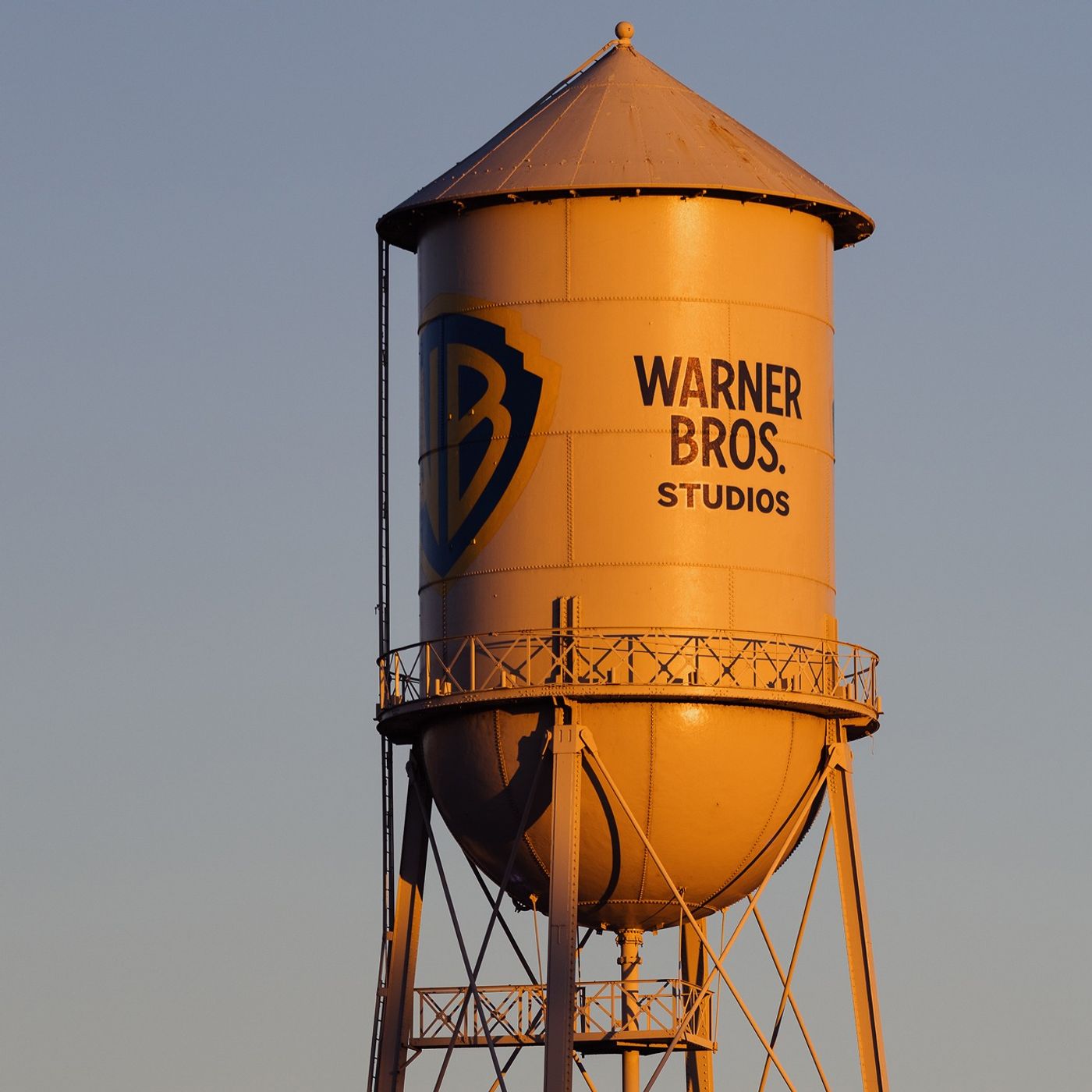
The Daily
Netflix vs. Paramount: Inside the Epic Battle Over Warner Brothers
00:39:50
Netflix announced plans on Friday to acquire Warner Bros. Discovery’s studio and streaming business, in a deal that would send shock waves through Hollywood. On Monday, Paramount made a hostile bid for the studio, arguing that the Netflix deal would be “anti-competitive.” The Times journalists Nicole Sperling, Kyle Buchanan and Lauren Hirsch discuss what it all means for the future of TV and film.
Loading summary
Transcript153 lines
- [00:00]
Michael Barbaro
This podcast is supported by Meta.
- [00:03]
Meta Advertiser
Meta's AI infrastructure is bringing jobs to local communities like Las Lunas, New Mexico. Phil, who grew up in Las Lunas, has seen the positive impact that Meta's ongoing $600 billion investment in American jobs and infrastructure will bring.
- [00:18]
Phil (Meta Data Center Employee)
I had to travel for work, missing moments I can't get back. Then Meta opened a data center and brought new jobs. Now I don't worry about missing out anymore.
- [00:28]
Meta Advertiser
Learn more about Meta's investment@meta.com buildingamerica.
- [00:34]
Kyle Buchanan
From.
- [00:34]
Michael Barbaro
The new York Times, I'm Michael Balbaro. This is the Daily.
- [00:44]
To hear the CEO of Netflix tell it his $83 billion offer to buy Warner Bros. Studios will benefit from everyone.
- [00:54]
Kyle Buchanan
We think this deal with Warner Brothers is good for shareholders. We think it's good for consumers. We think it's good for creators. We think it's great for the entertainment.
- [01:02]
Lauren Hirsch
Industry as a whole.
- [01:03]
Michael Barbaro
To hear the CEO of Paramount tell it that same offer is a monopolistic disaster.
- [01:11]
Lauren Hirsch
Allowing the number one streaming service to combine with the number three streaming service is anti competitive.
- [01:17]
Kyle Buchanan
That's like saying Coke and buy Pepsi.
- [01:20]
Michael Barbaro
Today, the blockbuster deal that is rocking Hollywood, the competing hostile takeover bid that it's inspired and what it all means for the future of TV and film and for all of us, the viewers. I spoke with three of my colleagues, Nicole Sperling, Kyle Buchanan and Lauren Hirsch.
- [01:53]
It's Tuesday, december 9th.
- [02:01]
Lauren Hirsch
I want to welcome the three of you to the first ever edition of the Roundtable Hollywood Edition. Lauren Hirsch.
- [02:08]
Nicole Sperling
Hello.
- [02:09]
Lauren Hirsch
Nice to have you in the studio. And joining us from Los Angeles and its environs, Nicole Sperling.
- [02:15]
Michael Barbaro
Nice to have you on.
- [02:16]
Peter Baker
Hello.
- [02:17]
Lauren Hirsch
And Kyle Buchanan. Thanks for making time for us.
- [02:19]
Kyle Buchanan
Hi, Michael.
- [02:21]
Lauren Hirsch
So we usually put together these panels to make sense of major moments in politics and government, but the world of business gave us a story so big and so high stakes and so theatrical that it could not be contained, I believe, to a single guest. And that story, of course, is the emerging fight over who will control Warner Brothers Studios, this storied Hollywood institution. Which is why we've asked the three of you on. And I just want to explain what each of you bring to the conversation. Nicole, you write about Netflix streaming and the business of Hollywood. Am I capturing you correctly?
- [02:58]
Nicole Sperling
Yes, that is correct.
- [03:00]
Lauren Hirsch
Kyle, you cover the movies for the Times and the actors and the directors involved in making them. You brilliantly profile them week in, week out. And you cover the awards season. Does that do you justice?
- [03:12]
Kyle Buchanan
That scratches the surface.
- [03:13]
Nicole Sperling
Thank you.
- [03:14]
Lauren Hirsch
And only the surface. And Lauren, you write about corporate mergers. And you've been steeped in the details of this particular deal.
- [03:21]
Nicole Sperling
Yes.
- [03:21]
Lauren Hirsch
Okay, so just to give us a little bit of a roadmap, we're gonna spend a lot of time in this conversation talking through the implications of Warner Brothers Discovery ending up in the hands of either of its current major suitors. But I think we have to start at the boardroom level. Cause that's literally where it begins. There are a lot of moguls and multi billion dollar media brands involved in this battle. And so we're gonna bring each of the major players on stage one by one. Kyle, give us the cliffnotes version of the protagonist of this story. Warner Brothers.
- [03:55]
Kyle Buchanan
Yeah. Warner Brothers is one of Hollywood's crown jewels. It's been around over 100 years. It was founded in Hollywood's golden age. It's made movies from Casablanca to Batman. You know, I was on that backlot the other day. And you're walking past film and TV history wherever you go. It's run by a guy named David Zaslav, who, who came over when Warner Brothers merged with Discovery. And it's been a little bit of a rocky road since that merger.
- [04:22]
Lauren Hirsch
Why?
- [04:22]
Kyle Buchanan
Well, you know, Discovery has a lot of flailing television channels at this point. A lot of cable channels, which includes cnn, that they're trying to get rid of in some fashion. So there's been an expectation that Warner Brothers Discovery would be up for sale or broken up into parts.
- [04:39]
Lauren Hirsch
And of course, one of those parts is hbo, the gold standard of television. Yes, Lauren, I think this is where you come into the conversation because the realization that Warner Bros. Discovery is going to be broken up, potentially sold, brings in our second protagonist in this story, which is Paramount. So just give us the quick backstory of Paramount's place in this showdown.
- [05:05]
Nicole Sperling
Before Paramount, Skydance, as it's now known, there was Skydance, which was run by David Ellison, the son of Oracle founder Larry Ellison.
- [05:13]
Lauren Hirsch
And really rich family.
- [05:14]
Nicole Sperling
Really rich family, which is important to this story. Larry helped finance David's acquisition of Paramount, which just closed a couple months ago.
- [05:22]
Lauren Hirsch
And we should just say that was a very small brand eating a very huge brand.
- [05:27]
Nicole Sperling
Very huge brand. It has cbs, it has the studio behind the Godfather, Mission Impossible. It's a huge company. And all of a sudden, David Ellison comes on the scene as a media mogul. But what also becomes very evident is he is a small media mogul in comparison to David Zaslav over at wbd, Ted Sarandos at Netflix. What's really important right now in media is streaming And Paramount plus, Paramount streaming business is a drop in the bucket when compared to those.
- [05:59]
Lauren Hirsch
Right. The undisputed leader of streaming is Netflix.
- [06:01]
Michael Barbaro
With about 300 million, I think Paramount.
- [06:04]
Lauren Hirsch
Plus is at about 80 million subscribers. So, so many fewer.
- [06:09]
Nicole Sperling
Right. And so key to Ellison's strategy, frankly, even before they closed, his purchase of Paramount was buying Warner Brothers Discovery. So once Warner Brothers Discovery made clear that it might be considering some kind of option, like splitting its business in half, David Ellison pounced, and he has made a number of bids trying to buy Warner Brothers.
- [06:31]
Lauren Hirsch
Great summary. And that, of course, brings us to Nicole Netflix, which clearly understands that Warner Brothers is kind of in trouble, maybe up for sale, and that Paramount has his eyes on it.
- [06:45]
Nicole Sperling
Yes. And it's the giant. It is the one that has transformed the movie industry. Netflix was the upstart. It was the disruptor. And when they came in and started streaming content, it has prompted every other studio in town to start their own streaming business, to take on their own loads of debt in order to create this huge infrastructure. And they have not been able to do it as well as Netflix has done when it comes to acquiring subscribers all over the place. They also have the ethos of they have to constantly grow, right? And they are constantly going into new areas of business. They went into games, they started an advertising tier, and they are constantly in that growth mindset. And now they feel that the best way to do so is to acquire this storied legacy studio that has an incredible library of content that Kyle mentioned earlier, and to exploit that content in the ways that only Netflix can. They have the best optimization, they have the best tech. They can do things with content that the other streaming services can't do.
- [07:49]
Lauren Hirsch
And, Lauren, why is it that amid all these offers, it's Netflix offer that Warner Brothers accepts, not Paramount's?
- [07:58]
Nicole Sperling
So Warner Brothers board ran a process and they spoke to bidders. They asked Paramount, they asked Netflix to tell them what they were willing to put up, how they were hoping to finance it. And it came to the conclusion that Netflix's offer, which was only for part of Warner Brothers Discovery, its streaming and studio business, was better for its shareholders than the offer that Paramount put on the table. Now, Paramount doesn't agree with that, Right.
- [08:24]
Lauren Hirsch
They don't agree with that so much that they're making a hostile bid for Warner Brothers Studios, which is not all that normal in this generation of business. And I want you to just quickly explain how a hostile takeover works and if it's ever seen as a good idea.
- [08:41]
Nicole Sperling
Sure. So the way the hostile Bid works is a bidder says, your board isn't all that good. They aren't doing, you know, well by you. We're going to go directly to the shareholders, and we're going to give you $30 for each share in cash. Wouldn't you rather do that than sell to Netflix? And the reason why hostile bids often don't work, and we hear a lot less about them these days, is because companies have a number of mechanisms that they can use to protect themselves. That being said, hostile bids can be successful, but they're not fun. You have a company out there screaming how terrible.
- [09:16]
Lauren Hirsch
Your board is kind of a nuclear option.
- [09:17]
Nicole Sperling
Nuclear option. And, you know, one of the most famous hostile bids that was successful was actually done by David Ellison's father, Larry Ellson, in his acquisition of PeopleSoft. So they can work. And I will tell you in my conversations today, I'm not getting the sense that Paramount is gonna be timid about its pursuit.
- [09:35]
Lauren Hirsch
This is the moment where I have to say that my favorite hostile takeover of all, and Kyle, I hope you appreciate, is Gordon Gekko's takeover of Teldar Paper. Yes, greed is good.
- [09:46]
Kyle Buchanan
Greed is good, and greed is never ending. It is utterly rapacious. And these conglomerates that are already so gigantic show no signs of slowing their appetite.
- [09:55]
Lauren Hirsch
My, my. There are producers on our team who want to make sure I have explained properly that Gordon Gekko is a character from Wall street, the Movie. Now, if you needed that explanation, I'm frankly sad for you. I want to discuss what the world looks like if either of these companies end up taking over Warner Brothers. And I think we should start with the version where Netflix takes over Warner Brothers, because that's the deal that's already been announced and is in the works. So, Nicole, what does buying Warner Brothers precisely do for Netflix and its 300 million subscribers? Given this crown jewel library that it has, how's it work?
- [10:37]
Nicole Sperling
Well, it will initially give them additional subscribers. When you include the subscribers from HBO Max, they say that they have about a 75% overlap when it comes to subs, but that still will increase their subscriber base, especially in the US where they already feel like they're pretty saturated. It also allows them to go into two different businesses that they're not currently in. Yes, they make television shows, but they don't have a television studio and they're not able to sell television shows to other entities, which is something Warner Brothers does all the time. Ted Lasso that you see on Apple tv, that's a Warner Brothers television show. So they can go into that business as well. They also are going into the domestic and international theatrical movie business, which is something they have never wanted to be in, much to the chagrin of many movie directors who want desperately to both be in theaters and beyond Netflix. Netflix has always just resisted being in theaters. Their whole thing is we want to bring our product right to the consumers right away. And this pesky business of theatrical distribution, which costs a ton of money because you have to spend a ton of money to market movies so that people will go to theaters, is inefficient, and it doesn't give consumers what they want when they want it.
- [12:00]
Lauren Hirsch
Got it. So the key thing that this does for Netflix is it beefs up its central business, its reason for being, which is streaming to people at home. Just to be very clear about that.
- [12:12]
Kyle Buchanan
There'S another way to look at it, too, and it's perhaps a less charitable one. Netflix is trying to take a competitor off of the board. That competitor is not Warner Brothers. That competitor is movie theaters. There is a lot of hand wringing in the business this week about what the loss of Warner Brothers might do for the already somewhat tenuous theatrical exhibition market.
- [12:35]
Lauren Hirsch
Well, just spell that out, because I think those of us who've come up in the kind of post theater world imagine the theater to be destined for the dustbin someday anyway. So just walk us through what this deal would do to the timeline of theater's already pretty big problems.
- [12:52]
Kyle Buchanan
Fewer movies would come out, fewer big movies, fewer small movies, movies of every stripe. And when you're starting to take those movies off the board, you are left with the really big gaps in the calendar that make it kind of unreasonable for a lot of theaters to operate. You look at Warner Brothers alone, the big hits that studio had this year, from Minecraft to Sinners to Weapons to One Battle after Another, without those movies, this year in theatrical distribution would be a disaster. And it's already not easy. The pandemic, the double whammy of the actors and writers, strikes, and yes, the seg to streaming that this deal will almost certainly hasten, just make that not so rosy future look even more discouraging. And I think that a lot of people in Hollywood don't necessarily expect Netflix to honor the initial terms of the deal, where Netflix's owner, Ted Sarandos, is saying, sure, we're still going to put Warner Brothers movies out in theaters for now, then that will evolve. Everyone can see what that writing on the wall means. And it doesn't mean lengthy theatrical windows. It means eventually those Movies are going to get to Netflix as soon as possible, and the consumer will know they don't have to see it in theaters. In fact, maybe they shouldn't go to theaters at all.
- [14:09]
Lauren Hirsch
Nicole, is that a justified fear? And let me just spell out how that fear has been expressed. There have been letters written from theater owners saying that the Netflix ownership of Warner Brothers is a disaster for them. There have been movie producers and writers, Kyle, correct me if I'm wrong, who've written a note, I believe it was anonymously, saying this would be really bad for them. The whole world of people who make movies that end up playing in a theater have been talking about Netflix buying Warner Brothers as kind of end times for the theater. And I'm curious if you think Kyle is right, that Hollywood thinks that any assurances to the contrary are meaningless.
- [14:50]
Nicole Sperling
Well, Netflix has never given any assurances that they really believe in the theatrical experience to begin with. Ted Sarandos, the co CEO of Netflix, has constantly dismissed the theatrical experience. He's called it marketing stunt. He's said it's outdated. He's constantly kind of maligned to the whole thing to a point where no one really believes him. And though now they're in this business because they have to say they're in this business in order to get this deal to close, it is not a crazy ide. They're only going to do it so that they can get the deal through and will ignore the theatrical market moving forward. I mean, let's be clear. The theatrical market and what is required to sell movies into theaters is really an inefficient business. If you have a newcomer come in and say, like, hey, look at how this movie business works. They would say, this is ridiculous. Like, you have to spend $50 million to market a movie in the US so that people will show up on opening weekend. You spe making the movie, you spend this much to market, you can know on Saturday morning if you're dead in the water and the movie's been deemed either a hit or a failure. It happens that quickly. It's like gambling with ridiculous odds.
- [16:09]
Lauren Hirsch
I can see Kyle's head exploding.
- [16:11]
Michael Barbaro
I know him to be a lover of the theatrical.
- [16:14]
Nicole Sperling
I'm also a lover of the theatrical experience, but as a business proposition, it's not a great idea. On the flip side, though, that is the way to create cultural conversation. It's the way to make something last for a long period of time. You can go out and ask lots of people what their favorite Netflix movie is. I don't think Anyone has a real answer. You can go out and ask people what their favorite Disney movie is, or you can ask them what their favorite movie was they saw in theaters last year. And even if you don't see it in theaters, you know that Barbie was on 3000 screens and was a huge deal. And then you at some point will find that movie. That whole cultural conversation really starts in the movie theater. And while it is completely inefficient, it's kind of the way it's been working all this time.
- [17:04]
Lauren Hirsch
Kyle, are you really convinced that a Netflix owned Warner Brothers doesn't really put any movies in the theater? I mean, it could in theory, very easily do both, if for no other reason. To create a cultural conversation, to create buzz. To create buzz for the story you end up covering every year, which is awards season, Oscars, Golden Globes.
- [17:24]
Kyle Buchanan
Yeah, I mean, it's been amply proven that movies that come out in theaters tend to do better once they make their way to streaming, because there has been that cultural conversation already, because it did feel like an event. Movies that just appear on streaming often make no noise whatsoever. So you would think it would be in Netflix's best interest to still put movies out in theaters. They do a very perfunctory theatrical release for their Oscar contenders, but they'd really rather people see those movies in the comfort of their own home. Those are really just on to sat satisfy Oscar rules and filmmakers who are agitating to have some sort of theatrical component. But I think once there's no more theatrical component to be had, if theaters really do go the way of the dodo, that's not going to be something that Netflix is crying about whatsoever.
- [18:12]
Lauren Hirsch
Right. And Carl, you've actually explained this to me. When you send a movie to the theater, the theater takes a lot of the money. So if you're Netflix giving up, whether it's 50 or 40 or 30% of your revenue to some theater doesn't make a whole lot of sense when your central business is sending a streaming video to my bedroom in Brooklyn.
- [18:32]
Kyle Buchanan
And I think, you know, Netflix has had movies that can and do make money if they're released in theaters. K Pop Demon Hunters had two sort of stunty weekends where it made money. Certainly the Knives out franchise, the last two of which have appeared on Netflix. Those movies can make money in theaters if they were given really robust long releases, but I don't think it's in Netflix's best interest to do so. They are perfectly willing to leave that short term money on the table if it guarantees Them a long term future where streaming is dominant above all else.
- [19:04]
Lauren Hirsch
Okay, so these are the clear downsides of the Netflix Warner Brothers deal for the creative community and the theatergoer. I want to talk about the upside for a minute. And if you're a Netflix subscriber, I wonder if you're now going to get more for your money. Specifically if you're a Netflix subscriber who also pays for something like HBO Max, which it would acquire in this deal. And I think it's safe to say I'm gonna do a very quick poll. Who among us subscribes to HBO and Netflix? Everybody.
- [19:33]
Nicole Sperling
Yes, I do.
- [19:34]
Lauren Hirsch
Yep, everybody. Okay, so in theory, you might be paying less for those two when they're housed under the same roof, right?
- [19:41]
Nicole Sperling
Yeah. That's the argument Netflix is making that that's what they will provide consumers is a cheaper price. Whether or not that's true, you know, prices keep going up, they keep raising prices on consum, so they may start with it lower and then that price may rise. It wouldn't be the first time we've seen that happen.
- [20:00]
Lauren Hirsch
Suffice it to say there will be less competition between the two of them when they're owned by the same place. If they want the price to go up, it will go up. If they want the price to go down. Exactly, it will go down. Lauren, Netflix is making a pretty interesting argument about why this merger, which puts a lot of things in one box, which is suddenly Netflix box is not monopolistic. And I wonder if you and Nicole feel free to chime on this too, can briefly summarize Netflix's case for why this is not something that the Trump administration should worry about when it comes to antitrust.
- [20:36]
Nicole Sperling
So if you look at just share of streaming, Netflix is already a giant and now it's acquiring an hbo another streamer. If you look just little pocket red flags all over the place, Netflix is arguing that's the wrong way to be looking at it. They'd say when you're thinking about what to do tonight, where you're going to watch content, you're not thinking which streamer am I going to watch? You're thinking, what am I going to consume? That could be TV on the cable, that could be TikTok, that could be YouTube. That is all different kinds of things. So it's saying that regulators, when they're looking at control of the market, should be thinking about that backdrop, not just streaming.
- [21:14]
Lauren Hirsch
Nicole, does that argument feel compelling?
- [21:17]
Nicole Sperling
Yes. I mean that is Netflix's argument. According to Nielsen. You know, they're sixth when it comes to total TV watching, YouTube is number one, and they are sixth. If they combine with HBO and HBO max, there'll be 9% of TV viewing. That still puts them in this metric beneath Disney and all of their services, which that includes ESPN and Hulu and everything like that. And basically at the same place is NBCUniversal, which counts both their linear operations, like NBC, and also their cable operations, too. So that's the way they want the regulators to analyze this. Whether or not that's the case that will be made remains to be seen. Paramount, of course, as the rival bidder, is arguing that it is of course monopolistic and that it does present a big threat.
- [22:08]
Kyle Buchanan
It's also important to note that TikTok and YouTube don't buy scripted television. When the first word of this merger leaked, I was at a poker game with a bunch of working actors and I just saw the despair on their faces. They've already been squeezed so much. You know, these are actors who live in Los Angeles who have to travel out of state and out of country, often just to work. And now there are going to be fewer places that are buying the TV shows and movies that they hope to work on.
- [22:38]
Lauren Hirsch
Okay, so we are about to take a break, and when we come back back, we're going to talk about whether the alternative deal, which is Paramount buying Warner Brothers, is any better, whether it comes to the creative community and its concerns about this deal and all the antitrust issues that it raises as well.
- [22:58]
So we'll be right back.
- [23:06]
Michael Barbaro
This podcast is supported by Meta.
- [23:09]
Meta Advertiser
Meta's AI infrastructure is bringing jobs to local communities like Las Lunas, New Mexico. Phil, who grew up in Las Lunas, has seen the positive impact that Meta's ongoing $600 billion investment in American jobs and infrastructure will bring.
- [23:24]
Phil (Meta Data Center Employee)
I had to travel for work, missing moments I can't get back. Then Meta opened a data center and brought new jobs. Now I don't worry about missing out anymore.
- [23:34]
Meta Advertiser
Learn more about Meta's investment@meta.com Building America I'm Peter Baker.
- [23:40]
Peter Baker
I'm chief White House correspondent for the New York Times. I cover the President of the United States, and I've covered every president since 1996. The pressure on an independent press today feels greater than any time I've seen it in four decades as a journalist. All that pressure, though, is just a reminder of why journalism matters. Our job is to bring home facts, help our readers understand what's happening, regardless of what the consequences may be to us. And if they punish us so be it. We will still go out there and report as honestly and aggressively and fairly and truthfully as we can. I mean, look, if the New York Times were not at the White House asking the hard questions, looking for stories behind the stories, trying to understand what's going on, it's possible these questions don't get asked. Independent reporting requires resources. You can support it by subscribing to the New york times@nytimes.com Subscribe.
- [24:34]
Lauren Hirsch
Okay. Welcome back to our Hollywood EDITION Roundtable. Nicole, Lauren and Kyle, I want you all to conjure the second possibility that it's Paramount that wins Warner Brothers. Somehow the Netflix deal blows up and what it would mean if Paramount prevails for all the constituencies that we have been talking about so far, the movie makers, consumers and regulators. So, Kyle, let me start with you. Who wins and who loses in a.
- [25:02]
Kyle Buchanan
Paramount victory here to forecast what that might look like? I'd already look at how Skydance has treated Paramount since they made that merger. You know, David Ellison has signaled a sort of willingness to accommodate Trump. He has installed Barry Weiss to run CBS News. It has taken on a little bit of a rightward slant. There's also speculation that part of the reason that Ellison wants Warner Brothers discovery at all is to remake CNN in a manner that would please Trump when it comes to the film studio. It's hard to imagine then that Ellison would be as eager to greenlight films like One Battle After Another or Sinners.
- [25:41]
Peter Baker
Right.
- [25:41]
Lauren Hirsch
One Battle for Another. The only one of the two I've actually seen is clearly a movie about a world where revolutionaries take on a Trump like administration.
- [25:51]
Kyle Buchanan
Yeah. And not shy about those things at all.
- [25:54]
Lauren Hirsch
So you're raising the specter right off the bat that a Paramount owned Warner Brothers studio becomes somewhat potentially politically neutered. And that would be a worry for the creative class in Hollywood.
- [26:08]
Kyle Buchanan
Yeah, absolutely. You know, directors have to deal with enough terrible studio notes as it is. I think anybody trying to get anything that is truly iconoclastic through this system deserves kudos. And it's only going to be all the worse if you feel like you've got to report to the president, too.
- [26:25]
Lauren Hirsch
But in terms of the movie business, Nicole, since you know very well how streaming centric Netflix is, if Paramount were to take over Warner Brothers, it would clearly want to put things on Paramount, its streaming business. But it sounds like the theater would be in less danger in that arrangement.
- [26:44]
Nicole Sperling
Yes, I think the theater would be in less danger in this arrangement. They're steeped in the traditional theatrical business model. They have said that they would release up to 30 movies a year, which is just all that the theaters want to hear. That's what they want. That helps with that cadence that Kyle was talking about. But on the flip side, there's more redundancies between those two companies. They're already laying off 4 to 5,000 employees. There's only going to be more redundancies if they buy Warner Brothers, and there's going to be a lot more layoffs in that scenario as well. So from an employment standpoint, at the studio level, you would expect a ton of people losing their jobs. Consolidation isn't good in any scenario here, and people are going to be hurt. It's either on the creative community side or on the studio executive side. There's just going to be a lot.
- [27:39]
Lauren Hirsch
Of changes, no matter who ends up winning.
- [27:42]
Nicole Sperling
Exactly.
- [27:43]
Lauren Hirsch
Lauren, what is Paramount's argument to Warner Brothers about why it should be seen as the ideal suitor for the whole company rather than for just a piece of it? The way Netflix is arranging the deal.
- [27:58]
Nicole Sperling
It has two main arguments, cash and certainty. So the bid they put out today is $30 in the hostile takeover. The hostile takeover, $30 a share to shareholders. It's clean. It's money you can put in your pocket, be done with it on the other.
- [28:13]
Lauren Hirsch
And when you say clean in your pocket, it's not, not borrowed.
- [28:16]
Nicole Sperling
So Netflix is using some stock. So there's, there's less uncertainty. You don't need to worry about whether or not Paramount's shares go up or down or how the deal performs. After it closes, shareholders can take the cash, put it in their pocket and walk away. Now, they can only do that if the deal closes. So the other thing that Paramount is pushing really hard is regulatory certainty. Larry Ellison, David's father, is close with Trump, and some people thought he may have helped the them in successfully acquiring Paramount, which faced its own challenges. So much like Netflix is going to say that you should be look broadening the market with which you look at streaming. Paramount is going to argue you need to look at the evolution of the entertainment industry. And it's now competing against big tech like Netflix, like Google, like Amazon, and it needs to be bigger in order to compete with them.
- [29:10]
Lauren Hirsch
In other words, Paramount may be making an argument who knows how compelling it will be that what the world really needs is a bigger streaming rival to Netflix.
- [29:20]
Nicole Sperling
So Paramount will say, yes, if we do this deal, we will be a very large studio. But guess what? Traditional studios are no longer the only ones making content. So look at the competition in that perspective, not just among the traditional old line studios.
- [29:37]
Lauren Hirsch
Got it. And therefore this is not anti competitive, competitive. So I'm curious, as a consumer, I think one of the curiosities we all have is which one of these companies, if they were to prevail, would make better stuff. Netflix is now kind of famous for a formula in which you get lots of stuff, but some of it ain't so good. Some of it is good, some of it's really good. What happens if they win? What happens if Paramount wins to the quotient of really, really good and garbage?
- [30:17]
Kyle Buchanan
Michael, are you familiar with a movie called Alien vs. Predator?
- [30:21]
Lauren Hirsch
No.
- [30:22]
Kyle Buchanan
There is a tagline that has outlasted this movie and that tagline is whoever wins, we lose.
- [30:30]
And, and you know, you can say, well, maybe buying Warner Brothers, which has put out some all time classics, would make Netflix movies and television a little bit better. That's possible. But it's hard to say, especially as these companies merge, what creative executives are staying on board, what redundancies start to happen, who gets absorbed into what studio and what executives can't play fair because suddenly they're, you know, rubbing shoulders with somebody else who's at their level that they don't like. It's very hard to say how this will shake out. And much as we'd like to say that this would create better content for consumer and certainly HBO itself is considered the premium destination for television, how does HBO change if it gets utterly absorbed into Netflix? And what kind of independence would HBO retain if either company acquired it? It's difficult to forecast.
- [31:28]
Nicole Sperling
And what's interesting is Netflix has always admired HBO and thought it was the gold standard that they wanted to emulate. So you could imagine that they will try and preserve it in the best way possible. But then once they realize how expensive those development processes are that they engage in in order to get the kind of prestige content that seems to beat them every year at the Emmys, they may not be as encouraged to spend that kind of money in order to make the few great show that do win those prizes every year.
- [32:01]
Lauren Hirsch
Right. Game of Thrones does not come cheap. That's just a reality. So Kyle and Nicole, what you're both saying, I believe, is that if you're Netflix or Paramount, you have some incentive not to pay top dollar for prestige television. And that of course would be sad for those of us who grew up watching not just Game of Thrones, but Sex and the City, the Sopranos. I'm on my seventh full series rewatch, so that would be sad.
- [32:35]
Kyle Buchanan
Yes, you would expect these companies to try to retain that prestige that HBO brings. But we've already seen with the last HBO merger with Warner Brothers Discovery, that Zaslav was all too willing to water down that HBO brand. I mean, how many times did that icon on your phone or your television change from HBO to HBO Max to just Max, then, then back to hbo because they couldn't come up with a coherent corporate identity. Zaslav thought that HBO was too prestigious. He wanted to water it down with all this dreck that was imported over from Discovery, all these reality shows, things you'd never see on hbo, but that he thought would open that brand up. So as much as we might like to think that these corporations have more sense than to mess with the HBO brand, Time has told us that in the name of increasing shareholder value, all sorts of misbegotten bids might be taken.
- [33:30]
Lauren Hirsch
Right. And I don't know if you agree with this, but Netflix has taught us something really important, which is that people will pay and keep paying for volume.
- [33:40]
Michael Barbaro
Over a complete devotion to quality.
- [33:44]
Nicole Sperling
I mean, Netflix wants both. They want volume, and they want quality. You know, it's very clear that they're still in the awards game. The Golden Globe announcements were this morning, and they were bested by Warner Brothers. So, I mean, they have a big awards operation. It's something they still believe in a lot, but they also want to make what's best for you. What they've always said is they compete with sleep. They want you there as often as possible. So they will give you Wednesday. They will give you the diplomat. They will give you a variety of programming, just as long as you stay on that.
- [34:21]
Lauren Hirsch
Okay, so I think we've reached the moment in the conversation where we need to give listeners a little bit of a roadmap of what to expect is about to happen and who is most likely to ultimately win control of this crown jewel, Warner Brothers. So I wonder if the three of you can venture a responsible, journalistically informed guess about whether a hostile takeover bid for the entirety of Warner Brothers Discovery might prevail. Lauren. Or if we think the existing deal in which Netflix gets the streaming and studio part of the business already announced is the likeliest outcome.
- [35:03]
Nicole Sperling
Well, to the extent that passes precedent, hostile bids more often do not work than they do. So just based on.
- [35:09]
Kyle Buchanan
Do not.
- [35:10]
Nicole Sperling
Do not. So just based off that, I would put my metaphorical money on Netflix.
- [35:15]
Okay, Nicole, the problem with that scenario is that we have an unpredictable president who's inserted himself into this process so.
- [35:25]
Lauren Hirsch
Literally, I will be involved in this decision, he said.
- [35:27]
Nicole Sperling
Exactly. So I don't know how we can use past as precedent right now because I just don't know what's going to happen. I just think I'll hold and not bet on either of you.
- [35:40]
Lauren Hirsch
But just to jump in on this, Nicole, this feels important. While the Ellisons seem to have a very strong relationship with Trump, I detected in Trump's answers over the weekend a certain fondness for the leadership of Netflix. When the president wants to make life difficult for people and he's asked a question, he usually finds a way to make life difficult for them. And I sensed a reluctance to denigrate Netflix or this deal.
- [36:04]
Nicole Sperling
Yes, I agree. And I mean, Ted Sarandos has made those pilgrimages to Mar a Lago. He went and met with Trump in November, the White House to lay out the deal for him. And I think probably explain how he would like that market that we discussed to be perceived that they're a share of television and not a share of streaming. So with all that being said, I mean, the Netflix offer has been accepted by the Warner Brothers board and they've entered into exclusive negotiations that puts them in the pole position. And the likely scenario would be that their bid goes through.
- [36:43]
Peter Baker
Kyle.
- [36:43]
Kyle Buchanan
Finally, I will say it's making for some tasty unscripted drama. I'm not eager for the season finale, but in the meantime they're keeping us fed.
- [36:54]
Lauren Hirsch
I wonder if we need to end this conversation with something a little higher altitude about where the TV movie going experience is in this moment of consolidation because consolidation is the story no matter who wins.
- [37:08]
Kyle Buchanan
Absolutely. And you know, and I think obviously, as has been borne out by this conversation, fear about the future of theatrical distribution is very justified. But I think the even bigger brained longer range take on what is about to happen is concern about the future of movies, period. I don't know that as we move into an all streaming future and theatrical continues to die on the vine, that it is in streamers best interest to invest in movies as a two hour medium. They want to capture your attention and keep you on that service for as long as possible. And by and large, a 10 hour limited series or a 20 hour reality show that costs virtually nothing is the better way to do it than a discreet piece of two hour entertainment that can be sequelized sometime far in the future, if at all. Other streamers have already realized this lesson. They're making fewer movies than they used to, including Netflix. Netflix used to put out a new movie every week. They don't do that. Anymore. I'm not sure that that would feel much more robust if this acquisition goes through, because ultimately, does it behoove them to spend $250 million on a Superman movie? Or would they rather that be a 12 episode series that will keep you on the service for 12 hours instead of just two?
- [38:32]
Lauren Hirsch
That is a profoundly sad assessment for the cinephiles out there, of which I'm sure there are many. I think for a fair number of people that's going to be sad, but it's also just their reality of being at home swimming in a sea of serial streaming shows.
- [38:55]
Kyle Buchanan
Swimming and maybe drowning.
- [38:59]
Lauren Hirsch
Laura, Lauren, Nicole, Kyle, thank you all very much. We appreciate it.
- [39:03]
Nicole Sperling
Thank you.
- [39:04]
Thank you very much.
- [39:06]
Kyle Buchanan
Thank you.
- [39:15]
Lauren Hirsch
We'll be right back.
- [39:21]
Michael Barbaro
This podcast is supported by Meta.
- [39:24]
Meta Advertiser
Meta's AI infrastructure is bringing jobs to local communities like Las Lunas, New Mexico. Phil, who grew up in Las Lunas, has seen the positive impact that Meta's ongoing $600 billion investment in American jobs and infrastructure will bring.
- [39:39]
Phil (Meta Data Center Employee)
I had to travel for work, missing moments I can't get back. Then Meta opened a data center and brought new jobs. Now I don't worry about missing out anymore.
- [39:49]
Meta Advertiser
Learn more about Meta's investment@meta.com buildingamerica.
- [39:55]
Kyle Buchanan
This is Andrew Osorkin, the founder of Dealbook. Every year I interview some of the world's most influential across politics, culture and business at the Dealbook Summit, a live event in New York City.
- [40:07]
Lauren Hirsch
On this year's podcast, you'll hear my.
- [40:09]
Kyle Buchanan
Unfiltered conversations with Gavin Newsom, the CEO.
- [40:12]
Lauren Hirsch
Of Palantir and Anthropic, and Erica Kirk.
- [40:16]
Kyle Buchanan
The widow of Charlie Kirk. Listen to Dealbook Summit wherever you get your podcasts.
- [40:26]
Michael Barbaro
Here's what else you need to nerd.
- [40:30]
Members of Congress have put language into their latest defense spending bill that would require the Pentagon to provide them with the specific orders that have led to the deadly airstrikes on boats in the Caribbean and unedited videos of those attacks. That requirement, supported by members of both parties, signals bipartisan frustration with just how little information the Trump administration is giving Congress about the controversial airstrikes, which the White House claims are killing drug dealers. And on Monday, the Supreme Court's conservative majority appeared ready to make it easier for President Trump to fire independent government officials despite laws meant to insulate them from political pressure. Under questioning from Justice Clarence Thomas, a lawyer for the president, argued that Trump's authority to fire such officials, even from independent federal commissions, was total.
- [41:34]
Kyle Buchanan
How far do you go with that? Can it be arbitrary? Completely arbitrary?
- [41:39]
Lauren Hirsch
It is conclusive and preclusive. So any review of arguably bad reasons for the president to remove an executive officer would be subject to the political process. It would not be subject to judicial review.
- [41:51]
Michael Barbaro
However, the court's liberal justices disagreed, saying that the White House argument would give President Trump far too much authority. So the result of what you want is that the president is going to.
- [42:05]
Lauren Hirsch
Have massive, unchecked, uncontrolled power.
- [42:14]
Michael Barbaro
Today's episode was produced by Claire tennisketter, Rochelle Bonga and Luke Van der Pluk. It was edited by Mark George with help from Paige Cowett, contains music by Elisheba itube and Pat McCusker, and was engineered by Chris Wood.
- [42:44]
That's it for the Daily I'm Michael Barbaro.
- [42:48]
Lauren Hirsch
See you tomorrow.
- [42:54]
Michael Barbaro
This podcast is supported by Meta.
- [42:57]
Meta Advertiser
Meta's AI infrastructure is bringing jobs to local communities like Las Lunas, New Mexico. Phil, who grew up in Las Lunas, has seen the positive impact that Meta's ongoing $600 billion investment in American jobs and infrastructure will bring.
- [43:12]
Phil (Meta Data Center Employee)
I had to travel for work, missing moments I can't get back. Then Meta opened a data center and brought new jobs. Now I don't worry about missing out anymore.
- [43:22]
Meta Advertiser
Learn more about Meta's investment@meta.com buildingamerica.