← The Daily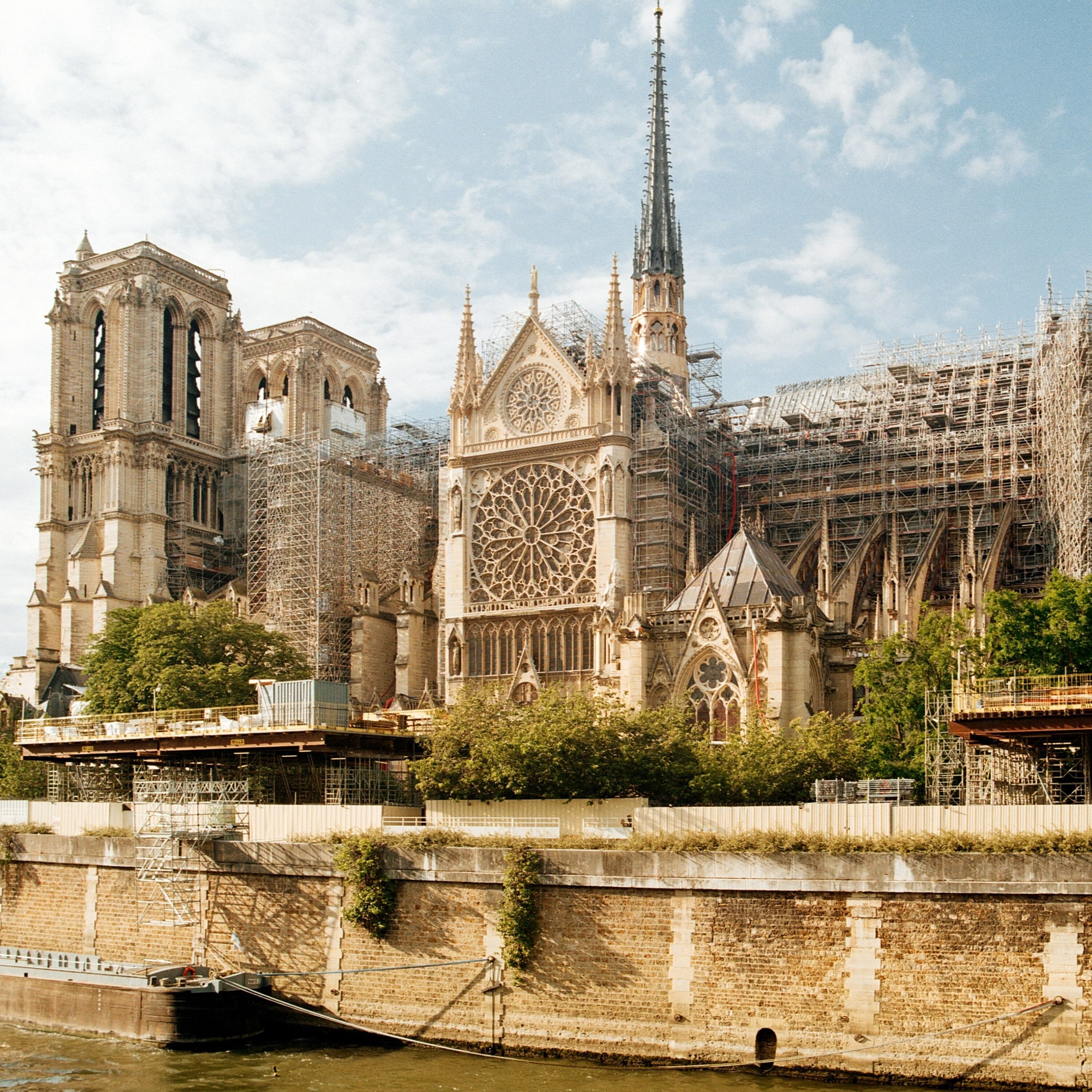
The Daily
Notre-Dame Rises From the Ashes
00:38:13
On Sunday, after a fire that many feared would destroy it, and a swift renovation that defied all predictions, the Cathedral of Notre-Dame reopened to the public. Michael Kimmelman, the chief architecture critic at The Times, tells the story of the miracle on the Seine. Guest: Michael Kimmelman, the architecture critic of The New York Times and the founder and editor-at-large of Headway.
Loading summary
Transcript112 lines
- [00:00]
Narrator
At Schwab, how you invest is your choice, not theirs. That's why when it comes to managing your wealth, Schwab gives you more choices. You can invest and trade on your own. Plus get advice and more comprehensive wealth solutions to help meet your unique needs. With award winning service, low costs and transparent advice, you can manage your wealth your way at Schwab. Visit schwab.com to learn more.
- [00:37]
Michael Barbaro
From the New York Times. I'm Michael Barbaro. This is THE Daily On Sunday, after a fire that many feared would destroy it and a swift renovation that defied all predictions, the Cathedral of Notre Dame reopened to the public today. Chief architecture critic Michael Kimmelman with the story of the miracle on the seine. It's Wednesday, December 11th. Michael, welcome to the Daily.
- [01:42]
Michael Kimmelman
Thank you, Michael. Pleasure to be here.
- [01:44]
Michael Barbaro
I'm just going to acknowledge that we have been trying to get you on the show for seven years and then two days more because over the past couple of days there's been a tremendous amount of very serious news. The government in Syria fell a closely watched manhunt for the suspected murder of the CEO of a major healthcare company. That case got cracked wide open, all of which delayed this much awaited debut of yours on the show. And today is the day you, our chief architecture critic, finally here talking about something worthy of your biography. Notre Dame, so welcome.
- [02:25]
Michael Kimmelman
Well, better late than never, I hope.
- [02:28]
Michael Barbaro
Yes. Well, just to begin, do you remember the first time you stepped inside that cathedral?
- [02:37]
Michael Kimmelman
I mean, I remember as a boy going with my family and we had come from the Soviet Union where I was unable to find milk. I was probably 8. Paris, it turns out, has milk. It was cold. But I do remember going into the cathedral and feeling somehow warmed when I went in there. So that was my first impression. I guess it stuck with me in some way.
- [03:07]
Michael Barbaro
So your memory of it is vague, but the impression I'm getting is that whatever it did to you, it did something.
- [03:14]
Michael Kimmelman
Yeah, I think it does to millions and millions of people who have no religious connection to it. It was a place that people imagined they had to go to if they went to Paris. You didn't see Paris unless you went to Notre Dame.
- [03:29]
Michael Barbaro
So let's fast forward a good deal to several years ago. Where were you when you first heard that Notre Dame was burning?
- [03:41]
Michael Kimmelman
I remember very vividly where I was. I was on my bike rushing to an appointment on the west side of Manhattan. My phone rang and it was an editor here at the Times who sounded a little frantic and told me I had to rush back and write Something because Notre Dame was burning. And I thought he was crazy.
- [04:09]
Michael Barbaro
Crazy why?
- [04:10]
Michael Kimmelman
Because Notre Dame has a giant stone building. I didn't think it could burn down, and it sounded sort of inconceivable. It's like Everest. It doesn't burn down, but the pyramids.
- [04:22]
Michael Barbaro
Do not burn down.
- [04:23]
Michael Kimmelman
There you go. And I said, I'm sorry to tell you this, but his name is also Michael. So I said, michael, that doesn't make sense. He said, I think you just better look on your phone.
- [04:35]
Michael Barbaro
Right.
- [04:35]
Michael Kimmelman
And I went to find a live feed, and there it was. I'm now turning to the back of the cathedral. It is a terrible scene here. The roof had entirely collapsed.
- [04:51]
Michael Barbaro
There are flames coming out of the.
- [04:53]
Michael Kimmelman
Back of the cathedral as if it was a torch.
- [04:56]
Michael Barbaro
It looks like the Olympic torch from the back.
- [04:59]
Michael Kimmelman
I remember standing there on the corner, just frozen, staring at this sight, which seemed inconceivable. And then Twitter was just full of pray for Paris hashtag, and everybody was suddenly fixated.
- [05:19]
Michael Barbaro
Maybe it's a sign from God.
- [05:22]
Michael Kimmelman
I don't know.
- [05:23]
Michael Barbaro
It's not normal.
- [05:24]
Michael Kimmelman
It really was as if the world had stopped. I see people crying. I see a lot of emotions, and I'm shocked myself. It's like your family loses somebody. Both my sister and I said, you know, we are actually feeling physical pain watching Notre Dame. You feel like it's part of you. And when you look at this 12th century medieval cathedral up in flames, it's like a knife.
- [05:54]
Narrator
It's very hard for me not to cry right now, so. And I've been crying on and off the whole day. It just has touched. Touched me and touched everyone in France, I think, very, very deeply.
- [06:06]
Michael Kimmelman
It occurred to me at that moment, too. That's interesting. I mean, why had the world stopped? Why did this building mean so much to so many different people? Not just people in France, but obviously all around the world? So I rushed back to my computer. I started making a few phone calls and trying to figure that out, trying to understand what the building had meant over time and to see really what the building now represented to people, what this potential disaster. I mean, it was certainly a disaster, but there was the fear, of course, that the building would disappear, that this would be the moment after almost 900 years, that we were living at that moment, when this building would go away.
- [06:59]
Michael Barbaro
Well, I'm curious when this inquiry is moving along and you're making phone calls and you're researching the history of Notre Dame and trying to understand why the feelings about its burning are so widespread and so Deep. What do you find?
- [07:15]
Michael Kimmelman
Well, I think, Michael, you have to step back and say, what is the meaning of a building? I mean, for me, architecture is really the world we built and are building. I think a lot of people have talked about it as a kind of aesthetic thing, and that is one aspect of it, for sure. And I think the conversation around architecture for a while sort of saw it as a branch of sculpture. You know, whether buildings were cool looking, they were fetishized, aestheticized. And there's definitely an aspect of that that's important in architecture. But I've always felt that really, architecture is much larger than that. Buildings are living things that exist in our lives, in our neighborhoods, communities, cities. And they're there whether we choose to look at them or not. They have to be used. And so really, they raise these questions of what do they say about us as a society? And in the case of Notre Dame, it's been speaking. It's meant things to people over generations, over centuries, for almost 1,000 years.
- [08:20]
Michael Barbaro
Well, tell us a little bit about that history, and I suspect through that we will understand what it has meant to us during that entire period.
- [08:28]
Michael Kimmelman
Well, I think, you know, the building has had a lot of meanings over time. You first of all have to see where it sits geographically. It sits at the center of Paris on an island in the middle of the Seine River. And that island is where what came to be called Paris started.
- [08:46]
Michael Barbaro
Literally.
- [08:46]
Michael Kimmelman
Literally. It had been a prehistoric settlement and then was an ancient settlement. The Romans settled there. It was a Gallo Roman town called Lutetia, occupied by the Parisi.
- [09:00]
Michael Barbaro
I didn't know any of this.
- [09:01]
Michael Kimmelman
There you go. You're welcome. I hope it's true. And then when the church was there, there was original religious buildings and sanctuaries built on the island. Over centuries, it was invaded by Vikings, and then eventually, in the 12th century, a bishop of Paris decided that they should build a Gothic cathedral there. And this was the new style. It was a little like the pyramids in the sense that these were buildings of an incredible scale and ambition and weirdness and majesty, complexity. So they tore down some of the old church buildings, which were on the east end of the island, and started erecting this building. And since then, that was in the 1160s, the building has remained the center of the city. It's essentially witnessed the growth of the city. It's been the sun around which the city has revolved. It's the place from which all distances in France are measured. Literally. There's a plaque on the plaza in front of it.
- [10:08]
Michael Barbaro
In other words, all French roads quite literally lead to this cathedral.
- [10:14]
Michael Kimmelman
That's right. In a sense, everything circulates around it. But I think also it has witnessed a lot of important events in French history. Mary Queen of Scots was married there, Napoleon was coronated there. And when the revolution happened, you had the insurgents of the revolution. They ransacked Notre Dame. It was a symbol. They hated the church. They knocked off the heads of the Old Testament figures on the front who they thought were kings, and they melted down the bells and turned them into cannonballs and coins.
- [10:53]
Michael Barbaro
It's fascinating because what could better embody the idea of a single building's importance to a place than it becomes a central target of an effort to overturn the entire system.
- [11:03]
Michael Kimmelman
Yeah. By the time of Napoleon, right after the revolution, the place was a wreck. It was a dump. It had been ruined during the Revolution, but it was also falling apart. When Napoleon decided to have his coronation there, it was so bad that he had to get a couple of architects, like very high level interior decorators to basically hang a lot of tapestries to cover up all the mess behind it, like a stage set. And then that also caused Victor Hugo, the writer, to write a book about a hunchback bell ringer in which he's heard of it. He spends a chapter lamenting what had happened to Notre Dame, that this was said, what it said about France and what Notre Dame meant to the country.
- [11:52]
Michael Barbaro
I don't think we can miss an opportunity, since you brought it with you, to read from the Hunchback of Notre Dame and understand what it was about, the way Hugo wrote about it, that inspired people to want to make it better and restore it.
- [12:11]
Michael Kimmelman
Yeah, he wrote in, shall we say, ripe prose and in long, voluptuous sentences. But I'll read you a couple. So first of all, he begins this chapter about Notre Dame. He says the church of Notre Dame de Paris is without doubt even today, a sublime and majestic building. But however much it may have conserved its beauty as it has grown older, it is hard not to regret, not to feel indignation at the numberless degradations and mutilations which time and men have wrought simultaneously on this venerable monument.
- [12:51]
Michael Barbaro
It's a call to arms.
- [12:52]
Michael Kimmelman
It's a call to arms, exactly. Great buildings, he says, like great mountains, are the works of centuries. The man, the individual and the artist are erased from these great piles which bear no author's name. They are the summary and summation of human intelligence. Time is the architect, the nation, the builder. Which I think is interesting, Michael, because that's the point. Notre Dame, for him, represented France, and so its recovery, its preservation, was about France's preservation, its heritage, its strength. Hugo had no particular patience with the church, but he believed that the building itself meant a lot to the nation. And that book came at the same time as a movement was rising in France to preserve its heritage. And those two things led to the restoration of Notre dame in the 19th century, to prevent its collapse, basically, and to restore it. And that was a key moment in the history of not just Notre Dame and Paris, but the whole idea of historic preservation globally.
- [14:21]
Michael Barbaro
It reminds me of what you said at the beginning of this conversation about architecture, is that this is not some abstract piece of architecture. It's living, it's breathing. It tells us something essential about who we are at any given moment. And Hugo, as you said, he's not saying that through an especially religious lens. He's seeing this more as a secular.
- [14:44]
Michael Kimmelman
Temple, a palace of the people. That's right. He saw it as representing all sorts of romantic ideals about the people, about community, about glory. And that book helped inspire the renovation of the cathedral in the 19th century. It was brought back. We got the spire that then became famous on the Paris skyline. Hugo's book also made it more of a attraction. People wanted to come to Paris to see the building. Eventually, Disney wanted to make movies about it. People from all over the world came. More of them then went to see the Eiffel Tower in Paris. More of them then went to visit the St. Peter's Basilica in Rome. And in that sense, it really did become truly a palace of the people. And so what did this fire say about us, about this moment? That the horror of it was that our moment would be the moment when this building across this great arc of history would disappear. What did that say about how we had cared for it? And even the fact that it was on fire was clearly an indication that we'd been derelict. It was a fire that never needed to happen. And it wasn't a great world war that had destroyed other cathedrals. It was a guy who probably left a cigarette butt lighted in the rafters and then somebody else who went to the wrong place to check out why there was an alarm. It seemed so banal, and it seemed like it said something about us in this moment.
- [16:19]
Michael Barbaro
Well, since you just brought it up, remind us how severe this fire ends up being.
- [16:25]
Michael Kimmelman
It was really severe. It started in the rafters, and the rafters are made out of oak wood, and spread to the spire, which is made out of wood too, and lead Right.
- [16:36]
Michael Barbaro
You were wrong when you were on the bike telling your editor it couldn't burn. There's a lot of wood in that cathedral.
- [16:43]
Michael Kimmelman
I was extremely wrong. And it wasn't just the roof was on fire and the spire was collapsing. It was a very dangerous and complex thing for the firemen to try to put this fire out. They couldn't dump water from above. The cathedral might collapse. It was a building they didn't want to use powerful hoses in. They had to go inside and try to put it out. There was a point at which they went into the bell towers to prevent them from collapsing. If they had, the whole building would have gone down. So what started as a fire star by cigarette butt was really a kind of existential crisis for Notre Dame and for the world.
- [17:23]
Michael Barbaro
Right. And the question immediately became, what do you do after one of the world's great, important, essential, beloved buildings is this badly damaged?
- [17:38]
Michael Kimmelman
So there were different answers to that question. And at first, it wasn't clear what would happen. There were a lot of proposals to do something really crazy on the roof, to use essentially this calamity as an opportunity. Huh?
- [17:53]
Michael Barbaro
Crazy like what?
- [17:55]
Michael Kimmelman
Well, the French prime minister hastily proposed that there be an architectural competition to reimagine the roof. That's an invitation for every wackadoodle proposal you can imagine. Architects salivate at the prospect of such a proposal. So circulating online pretty quickly were all sorts of things. Swimming pool, garden. Someone came up with the idea of, like, a giant carbon fiber gold leaf flame to replace the spire.
- [18:26]
Michael Barbaro
Whoa. That's on the nose.
- [18:27]
Michael Kimmelman
Yeah. It actually bore uncanny resemblance to the logo for a chicken wings franchise in Colorado. And there were a lot of those things. But relatively soon, cooler heads, including some prominent French architects, persuaded the French government to do the right thing, which was to restore the cathedral as it had been. And that became the mission. And Macron, the president, even while the building was still smoldering, promised that it would be restored in five years. Which back then seemed not just a Hail Mary. It seemed completely crazy, impossible to you, too, everybody. I. Yes. I thought it was nuts. I even told my editors there was absolutely no way this would happen in five years, 20 years. We'll check in in 10 years. Don't worry about this. There's nothing really to see here. And it turns out I was wrong again. And here we are, five years later. The building has been reopened. It's on time, on budget, and it's incredible. It's a kind of miracle.
- [19:55]
Michael Barbaro
We'll be right back.
- [20:02]
Narrator
With Schwab investing themes. It's easy to invest in ideas you believe in, like online music and videos, artificial intelligence, electric vehicles, and more. Schwab's research process uncovers emerging trends. Then their technology curates relevant stocks into themes. Choose from over 40 themes. Buy all the stocks in a theme as is, or customize to better fit your investing goals. All in a few clicks. Schwab Investing Themes is not intended to be investment advice or a recommendation of any stock or investment strategy. Learn more@schwab.com Thematic Investing this podcast is supported by USA for UNHCR, the UN Refugee Agency people facing war and violence are now facing winter far from home, in temporary shelters and with little to keep them warm. UNHCR works around the clock to support the most vulnerable. It's during the winter months that your support makes all the difference. Help protect refugees and people forced to flee as they face winter far from home. Your gift is matched for a limited time give now@unrefugees.org Winter.
- [21:10]
Michael Barbaro
So Michael, tell us how France did this, how they pulled this on time, miracle off?
- [21:19]
Michael Kimmelman
Well, the President Macron assigned a general to run the operation, a man named George Holland, and he ran it like a military operation. They cordoned off the cathedral. It meant you had essentially like a mystery in plain sight. You couldn't see what was happening on the other side of it. They shared what information they wanted, otherwise it was really impossible to get a look. I had wanted to embed myself there from the beginning to watch the process and to try to see what was going to happen day to day, because I thought it'd be an incredibly interesting project to follow. And they certainly weren't having any of that.
- [21:57]
Michael Barbaro
They basically told you no way.
- [21:59]
Michael Kimmelman
They were preoccupied and I understand. And they surrounded the cathedral with this wall that told you information about Notre Dame and eventually showed pictures of some of the workers. But you could never see on the other side of it. You would occasionally see stuff going on in the cranes, obviously on the scaffolding, but it was really hard to know what was going on for a long time. And finally, after five years of begging and pleading and leaning really heavily on our wonderful colleague Aurelien Breeden in Paris, we got the word in June we could come in one day next week. I didn't know what that meant, whether we had an hour or 45 minutes, whether we had two hours. We had that all day. I didn't know who we were seeing, but I packed my bags and flew to Paris.
- [22:46]
Michael Barbaro
Right. So this is not exactly living inside the cathedral as you had Originally saw, but you have this chance. So tell us about this. One day you get to go inside.
- [23:00]
Michael Kimmelman
I land in Paris. I meet Aurelian for breakfast nearby. We walk over the cathedral, and we're told we have to strip naked and put on, basically, a hazmat suit.
- [23:11]
Michael Barbaro
I'm sorry, what?
- [23:12]
Michael Kimmelman
Yeah, so I was a little taken aback, and I asked a couple times, like, naked naked?
- [23:17]
Michael Barbaro
Or like French naked, or.
- [23:22]
Michael Kimmelman
So I think what this probably was about was a holdover from the fact that there had been concerns about the lead and a component of the original construction. Right. Of the spire and the roof. And so they wanted to take extravagant cautionary steps to make sure that everyone came in and out was not taking lead out from the cathedral. But by this point, that was a moot issue. But fine, I would have done anything. So I go through a security turnstile and enter this container village, invisible from the outside almost. But there it is. Hundreds of workers, a real beehive. We're meeting the woman who's going to take us around, and we go to this construction elevator and rise up to the roof, which was incredible. Seeing Paris in a way I'd never seen it. Seeing the cathedral in a way I'd never seen it. Seeing the workers there who seemed, on the whole, remarkably happy. Are you happy you were here? An understatement. You know, construction sites are not usually happy places, particularly a lot of stress. And there was certainly a lot of stress and concern here, deadlines. But there was a really different atmosphere, a different vibe.
- [24:47]
Michael Barbaro
What was it?
- [24:49]
Michael Kimmelman
I think for all of the stresses, there was a shared feeling of a mission. People were working on something that was bigger, longer lasting themselves and that, you know, they were proud of. That's the kind of job I think I'm not gonna do again. At least not on this roof.
- [25:09]
Michael Barbaro
There are many times when I could have left, and I haven't left here.
- [25:12]
Michael Kimmelman
Right. Why? Still not born. They would go home at night and, you know, they could say to their spouses, what did you do today? I worked on Notre Dame. What did you do?
- [25:26]
Michael Barbaro
An impossible thing to match, hard to top.
- [25:30]
Michael Kimmelman
And that's something of what I felt from talking to some of these workers as well. There was a collegiality. Some of them worked for competing firms, but here they would share hammers and help each other out. We are already friendly together. They were doing all sorts of stuff. They were laying down sheets of lead. They were erecting the spire. And most interestingly to me, they were rebuilding the rafters, this complex of beams.
- [25:59]
Michael Barbaro
All that Wood that had burned exactly five years ago.
- [26:04]
Michael Kimmelman
This is beautiful. Really beautiful. So I go through this, basically a hole in the roof and enter this forest of reconstructed rafters. Very beautiful. These trusses that had been rebuilt. And, you know, it was providential.
- [26:25]
Michael Barbaro
What do you mean?
- [26:26]
Michael Kimmelman
Well, before the fire, the cathedral was in disrepair. The roof was leaking, some of that wood was rotting. Repairs had started on the cathedral. But also there were some people who tried to document the cathedral. There were a couple of French architects who'd gone up at the rafters in the spire and recorded every detail of what there was, down to the finest degree. And there was a Belgian scholar who had used LIDAR to do a digital scan of the cathedral from all different sorts of points and gathered like a billion points of data. It was amazing. Which gave the workers a map effectively of the cathedral down to the width of a pencil eraser. So the reconstruction could be extraordinarily faithful. What I learned from the workers was that each tree that had been cut down in forests across France had been specifically chosen to match the peculiarities of the beam, that it would replace the medieval beam, which had been faithfully studied before. He's basically saying they did the opposite of what the middle aged carpenters did. The middle aged carpenters, they found a tree and then they worked with that tree and looking for the tree. They looked at what they had and then they had to look for a tree where they would match what it had to. Yeah, exactly. And they had to reproduce.
- [27:52]
Michael Barbaro
I'm trying to envision people going out into the forests of France, looking at trees and saying, ah, that one is worthy of that beam. You'll remember Francois and the rafters up there cut down that tree.
- [28:04]
Michael Kimmelman
Exactly. And then the carpenters today, using the same sort of old hand tools, made sure that the contours of that beam down to all sorts of peculiarities. And the Middle Ages were exactly the same. And this wasn't just for authenticity sake. The same method. Yeah. It's incredible, really, because you're reviving ancient techniques mean not for the folklore, but also by Pasco. Yeah. There was a reason why they had 800 years. And that's pretty good. Exactly.
- [28:39]
Unknown
That's pretty good.
- [28:41]
Michael Kimmelman
Was because the previous beams had lasted for 800 years.
- [28:45]
Michael Barbaro
Huh.
- [28:46]
Michael Kimmelman
And then they had tattooed back into it the medieval carpenter's original mark. And if there had been beams that had been reconstructed in the 19th century, they added those back too.
- [28:57]
Michael Barbaro
That's extraordinary.
- [28:58]
Michael Kimmelman
Yeah. It was especially extraordinary because not just was it faithful, but it was something that the public will not see. So it wasn't done for tourists. It was about something else. It was devotional.
- [29:09]
Michael Barbaro
Devotional to the original workers and the original mission and meaning of this entire cathedral.
- [29:18]
Michael Kimmelman
Exactly. Devotional to the techniques that date back, really thousands of years. One of the things that was going on here was to help to resuscitate what are basically artisanal ancestral crafts and techniques. There's a group called the Compignon du du Voir, which dates back to the 12th century group of artisans. And there were more than a thousand applications. When the decision was made to restore the cathedral, people who wanted to participate in this project, and that was, in some ways, one of the most beautiful things about Notre Dame. One of the guys who was from that organization had said to me that it's a reminder of the dignity of labor and of craft. And I saw that in the workers themselves, because it was not just reopening a tourist site. It was reviving a whole culture. It was sustaining something that had lasted for nearly 1,000 years.
- [30:15]
Michael Barbaro
I'm curious. Once you get down from the roof and you are witnessing this exceptionally faithful devotional effort to bring the roof back to what it looked like a thousand years ago, what you saw on the interior are probably the best known portions of Notre Dame.
- [30:34]
Michael Kimmelman
So, you know, entering the cathedral was disorienting at first. First of all, it was a construction site sill. So there were, you know, people moving heavy equipment, and there's still a lot of scaffolding and tarp. But pretty quickly, it became clear to me what had happened. I could see suddenly that the cathedral was spanking clean bright. And I looked up, and there had been all these famous images of the collapsed vaults, these giant black holes in the ceiling. And now they had been repaired. Now you had a new ceiling, and it was spick and span and bright, and this kaleidoscopic light coming through these stained glass windows, which survived the fire. But what was also kind of miracle was that that work in creating those digital maps before the fire allowed the people reconstructing it to even reproduce the sound of the cathedral.
- [31:28]
Michael Barbaro
Wow.
- [31:29]
Michael Kimmelman
Because every material, every angle, every quality of the building could be reproduced. Now, one of the organists who works there spoke to me about this. A building like that is. It's a kind of organ pipe, he said. It's a volume that has a certain pitch and quantum. He said. D major sounds really good in Notre Dame. And that is often what you experience when you come in. It's not just looking at things, it's hearing them. To feel you're surrounded by a particular sound. That's what I was sensing, that the soul of the building had come back in a sense which included not just the way it looked, but the way it felt and sounded.
- [32:29]
Michael Barbaro
Well, that makes me wonder, as an architecture critic, did you have by the end of this tour, by the end of this coveted day, that you got some kind of final assessment of the experience of this restored cathedral?
- [32:48]
Michael Kimmelman
Yeah, Michael, you know, I think at this point, after nearly 1,000 years, no one really needs me to assess whether Notre Dame's a good building or not.
- [32:57]
Michael Barbaro
Three stars.
- [32:58]
Michael Kimmelman
Yeah. Honestly, it's a little shocking at first to go in. And I think some people will experience this. You know, when the Sistine Chapel was cleaned some decades ago, people had gotten used to looking at all that Roman grime and kind of, they'd become attached to that quality of the Michelangelo's, covered with dirt and looking sort of dark and mysterious, aged. Yeah. And then grime was taken off and everyone thought it looked like a Superman comic. It was just so bright. Now, of course, people have become accustomed to that. I think there may be some of that kind of adjustment.
- [33:34]
Michael Barbaro
Basically, you should prepare yourself for going inside a thousand year old building that has been power wash.
- [33:40]
Michael Kimmelman
Yes, that's exactly correct. But I think it looked obviously really remarkable. And I did come away with something not just about the building, but a feeling that the project itself represented something very moving. So few things nowadays seem sort of unimpeachable and just good. And that was the main takeaway I had about this project. It had not just gone well, but it seemed to be something that brought people together. It seemed to be something people could attribute larger meaning to.
- [34:15]
Michael Barbaro
Well, you're getting at the question I've been waiting to ask you this entire conversation, which is if architecture, as you have laid out here, tells us something about us, what did this renovation, this project, tell us about ourselves right now?
- [34:30]
Michael Kimmelman
Well, for starters, it tells us that this is not the moment when we let Notre Dame die, that we are capable of bringing it back to life. And that's a sign of hope. I mean, Notre Dame is not going to solve everyone's problems. France is still coming apart. Walk down the street, you still worry about whether there's gonna be crime and homelessness. I don't wanna overstate the case, but I do think Notre Dame reminds us that the places we build give us this sense of community. They give us a sense of each other. The coming together itself, which is what the cathedral's about, is a sign of hope for us. It's the thing that we wish we can do.
- [35:11]
Michael Barbaro
It's our best selves.
- [35:13]
Michael Kimmelman
It's our best selves, right. Notre Dame is our best selves.
- [35:16]
Michael Barbaro
And now it's in the best shape that it's ever been in probably a thousand years, if that's not a sign of human progress.
- [35:25]
Michael Kimmelman
Yeah. And, you know, I met a lot of people, Parisians, some friends of mine, who had never really thought much about Notre Dame or actually just found it an impediment on their way to work, all the crowds. And they found themselves crestfallen, shocked really, by how they felt when it burned. And I think that was the realization for many people that this building had a place in their own lives that they hadn't even understood before. It's a touchstone for our sense of our own changing, evolving lives, aging, and I think also for the passage of time in a larger sense, over the centuries to which we are connected. And the building's resurrection preserves that connection. It allows us to think we can go back. We haven't lost touch essentially with. Not just with the past, but with ourselves. Just before I left the cathedral, I was speaking with the woman who showed us around and I asked her directly, are you Catholic? And she said yes. So I said to her, what has it meant for you to be working on this project? And she struggled for like a minute to find the words and then she wept. And I thought that said it all really, that for her this was also something that she would remember for the rest of her life. That she lived at this moment.
- [37:13]
Michael Barbaro
For.
- [37:13]
Michael Kimmelman
Her, no doubt had religious meanings, but I'd like to think is the power of architecture and can sustain us at a time when we are divided and we sometimes lose hope. Maybe that was the original idea for the people who built the cathedral nearly a thousand years ago.
- [37:38]
Michael Barbaro
Oh, Michael, on that really beautiful note, thank you very, very much.
- [37:44]
Michael Kimmelman
Thank you, Michael. It's been a pleasure.
- [38:02]
Michael Barbaro
We'll be right.
- [38:12]
Narrator
At Schwab. How you invest is your choice, not theirs. That's why when it comes to managing your wealth, Schwab gives you more choices. You can invest and trade on your own. Plus get advice and more comprehensive wealth solutions to help meet your unique needs. With award winning service, low costs and transparent advice, you can manage your wealth your way at Schwab. Visit schwab.com to learn more.
- [38:37]
Unknown
Support for this podcast comes from Instagram. Are you the parent of a teen? Then you should know that Instagram recently introduced teen accounts with new built in limits and protections for teens, teens. Between the ages of 13 and 17 are now placed in Instagram teen accounts with automatic protections that include limits on who can contact them, what content they can see, and new ways to explore their interests. Teens under 16 will need parental permission to change these settings. To learn more, visit instagram.com teenaccounts this podcast is supported by BetterHelp. This holiday season, do something for a special person in your life. You give yourself the gift of better mental health. BetterHelp online therapy connects you with a qualified therapist via phone, video or live chat. It's convenient and affordable and can be done from the comfort of your own home. Having someone to talk to is truly a gift, especially during the holidays. Visit betterhelp. That's betterhelp.com thedaily for 10% off your first month.
- [39:43]
Michael Barbaro
Here'S what else you need to another day On Tuesday, Israel said it had destroyed Syria's navy during a series of airstrikes in what it described as defensive measures designed to protect itself against Syria's new government. But the attacks have defied warnings from Western governments who fear they may ignite a new conflict in the region and fear that Israel is using the fall of Syria's government as an opportunity to take offensive actions. As the Assad government fell over the weekend, Israeli ground forces advanced beyond the demilitarized zone on the Israeli Syria border, marking Israel's first overt entry into Syrian territory in more than 50 years. Today's episode was produced by Carlos Prieto and Jessica Chong. It was edited by Michael Benoit, contains original music by Dan Powell, Pat McCusker, Marion Lozano and Diane Wong and was engineered by Chris Wood. Our theme music is by Jim Brunberg and Ben Landfur of Wonderly. Special thanks to Aurelian Breeden, Segolin Lestradic and Catherine Porter. That's it for the Daily I'm Michael Valbaro. See you tomorrow.
- [41:26]
Narrator
At Schwab. How you invest is your choice, not theirs. That's why when it comes to managing your wealth, Schwab gives you more choices. You can invest and trade on your own, plus get advice and more comprehensive wealth solutions to help meet your unique needs. With award winning service, low costs and transparent advice, you can manage your wealth your way at Schwab. Visit schwab.com to learn more.