← The Daily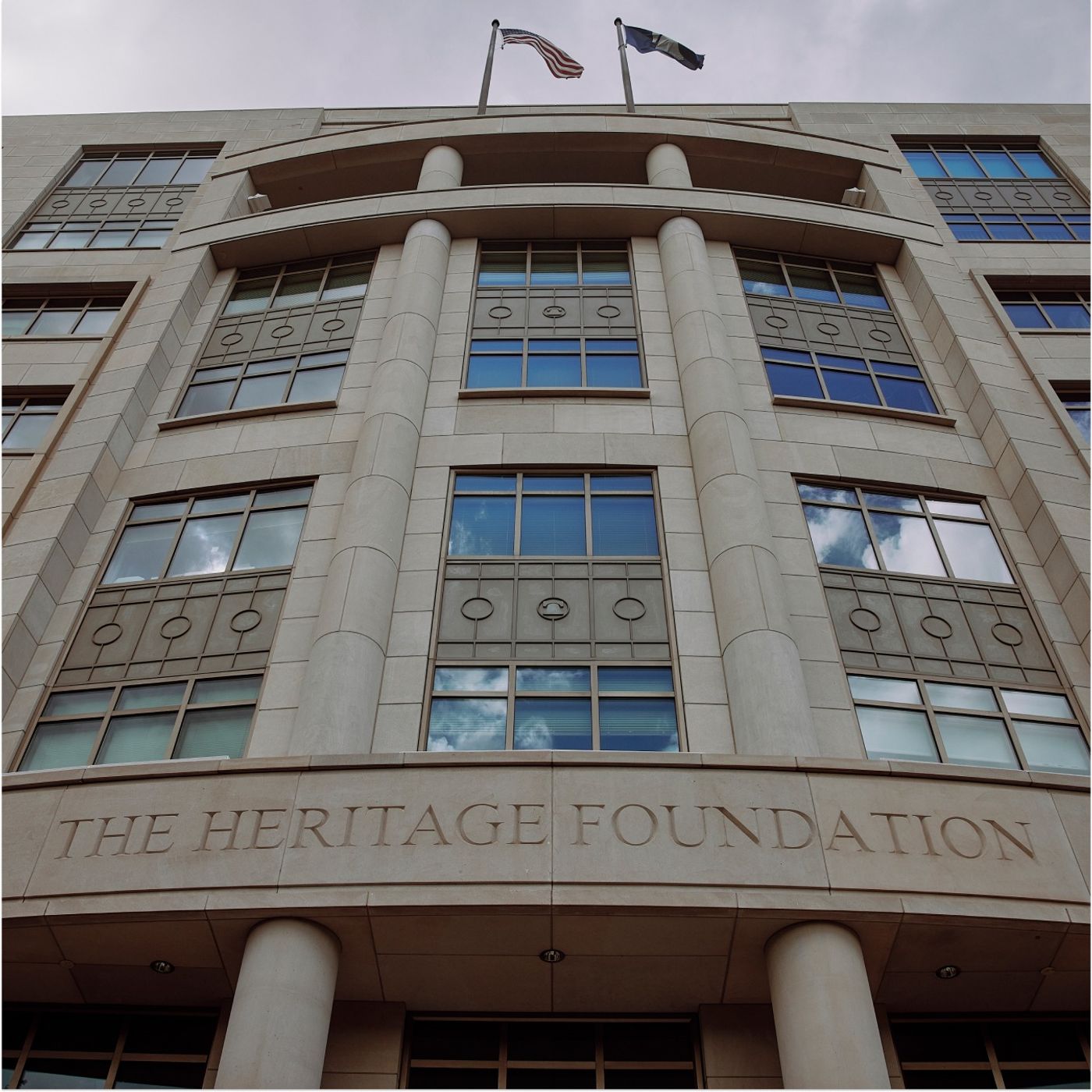
The Daily
Project 2025’s Other Project
00:29:04
During a congressional hearing yesterday, Republican lawmakers accused university leaders of failing to do enough to combat antisemitism on their campuses. That’s a claim that the university officials strongly rejected. The hearing was the latest attempt by Republicans to use what they see as the growing threat against Jews to their political advantage. And it reflects a plan that was first laid out by the Heritage Foundation, the same conservative think tank that produced Project 2025. That plan, known as Project Esther, may have once seemed far-fetched. Katie J.M. Baker explains how it has become a reality.
Loading summary
Transcript107 lines
- [00:00]
Susan Lee
I'm Susan Lee.
- [00:01]
Unnamed Researcher
I'm a researcher and fact checker with the Daily. What I do is make sure details in our episodes are accurate. For us, every single fact in an episode matters. The Daily is part of the New York Times. We do everything we can to make sure we get the facts right. Subscribers make it possible for us to do that. If you want to subscribe to the New York times, go to nytimes.com subscribe.
- [00:30]
Rachel Abrams
From the New York Times. I'm Rachel Abrams, and this is the Daily.
- [00:39]
Unnamed Committee Member
Today's hearing marks the next phase of the committee's work, an effort to understand why this wave of antisemitism was able so easily to consume the nation's universities in the first place.
- [00:54]
Rachel Abrams
During a congressional hearing on Tuesday, Republican lawmakers once again accused university leaders of failing to do enough to combat antisemitism on their campuses, a claim that the university officials strongly rejected.
- [01:07]
Unnamed Committee Member
It is time for clear action on your campuses that can be quantified and can be exemplified to the watching world around.
- [01:17]
Rachel Abrams
The hearing was the latest attempt by Republicans to use what they see as the growing threat against Jews to their political advantage. And it's a plan that was first laid out by the same conservative think tank that authored Project 2025. That plan may have once seemed far fetched, but today I speak to my colleague Katie JM Baker about how it's become a reality. It's Wednesday, July16. Katie, I think by now we're probably all familiar with Project 2025. It was the Heritage Foundation's agenda for a second Trump term. A lot of it has already come to pass, but in the background there was this entirely unrelated project from the Heritage foundation that I think a lot of people might still be totally unfamiliar with. And so what we wanted to talk to you about today, but both what it is and also how it may have been influencing our politics and our campuses in ways that a lot of people may not have even realized.
- [02:31]
Katie JM Baker
Yeah, so last October, I saw that the Heritage foundation had published this mysterious long policy paper called Project Esther online that it said was a national strategy to combat anti Semitism in the US but when you read it, it becomes clear very quickly that what it really is is a plan to dismantle the pro Palestinian movement in the US So that, as critics say, it can crush progressive movements more generally. Project Esther didn't get a lot of mainstream coverage at the time Biden was still president. And I think a lot of it maybe seemed far fetched to people. Then fast forward a few months later, Trump gets elected. And very quickly, his administration starts taking actions that they say are in the name of combating anti Semitism. And especially after they arrested Mahmoud Khalil, who was the recent Columbia graduate who had been really active in pro Palestinian organizing on campus. That's when I really started to feel like we should be tracking all of the similarities between Project Esther and the actions the Trump administration was taking.
- [03:49]
Rachel Abrams
So tell me about how you started your investigation and what did you learn about who's behind Project Esther and how it came together.
- [03:56]
Katie JM Baker
So the origins of this document really begin immediately after October 7, 2023, soon after the Hamas attack in Israel and then Israel's retaliatory war campaign. Some college campuses really quickly got very chaotic with protests and counter protests. There's students out there protesting against Israel's actions and the very large number of Palestinians, including so many women and children, who are being killed peacefully protesting to end a genocide in Palestine. And then there were Jewish students saying that Israel has the right to defend itself and that these students are being harassed just for being Jewish by other students on campus.
- [04:52]
Unnamed Committee Member
One of the protesters was brandishing a Hamas flag as a Jewish student. That's deeply upsetting.
- [04:57]
Katie JM Baker
So it was a really tense time, and there's a lot of concern over what's happening on these campuses.
- [05:03]
Rachel Abrams
It seems like every day is getting worse and worse.
- [05:05]
Unnamed Student
Jewish people are being harassed, being called.
- [05:08]
Katie JM Baker
Names, and for Heritage and some of its allies, that's what they're worried about. They're worried about what they see as anti Semitism against the Jewish students on these campuses.
- [05:17]
Unnamed Student
Do you feel safe on campus?
- [05:19]
Katie JM Baker
No, not at all.
- [05:20]
Unnamed Committee Member
I didn't want to be here.
- [05:26]
Katie JM Baker
And it's in that context that four really well connected conservative supporters of Israel meet virtually to come up with a plan, and they decide that they're going to create this task force to combat anti Semitism. And eventually that turns into Project Esther, which is overseen by this woman at Heritage vice president named Victoria Coates.
- [05:48]
Rachel Abrams
So tell me about Victoria Coates.
- [05:51]
Katie JM Baker
She is a fascinating figure because, you.
- [05:54]
Unnamed Author
Know, this kind of goes back to my first book, which is called David's A history democracy and 10 works of art.
- [05:59]
Katie JM Baker
She has a really unorthodox background for a national security advisor, which ties in.
- [06:04]
Unnamed Author
The art history piece.
- [06:06]
Katie JM Baker
She has three degrees, all in Renaissance art history, and she was planning on being an academic when I was getting.
- [06:13]
Unnamed Academic
My PhD in the 90s. Sure, there was a weight toward liberals in academia, but at the same time, the focus was on your work. Some people thought it was kind of exotic to have a conservative running around and, you know, and that was all.
- [06:28]
Katie JM Baker
Fine, and she was conservative and she'd always been conservative, but she really started to feel like it wasn't a space for her, and she felt really uncomfortable there.
- [06:37]
Unnamed Author
That was when the kind of the children, or the descendants rather, of the 1960s radicals were really taking hold. All of whom share this what I consider very noxious anti Western worldview.
- [06:51]
Katie JM Baker
She became what she says is increasingly uncomfortable with. I think she called it a noxious anti Western worldview that she felt she was seeing on the campus of the University of Pennsylvania where she was getting.
- [07:04]
Unnamed Academic
Her PhD and I've always been with missile defense.
- [07:09]
Katie JM Baker
And so she started blogging about missile defense under a pseudonym for a conservative website. That blogging leads her to working for Donald Rumsfeld and other Republican politicians before ending up in Trump's first administration as a deputy national Security advisor.
- [07:27]
Rachel Abrams
So how does she go from that to being the leader of this effort at Heritage?
- [07:33]
Katie JM Baker
Yeah, so she's a vice president at Heritage working on a variety of national security related issues. And she told me that her interest in Israel really comes from a national security perspective.
- [07:47]
Unnamed Author
Note that in the Iranian view of the world, America is the big Satan and Israel is the little Satan. The critical point being that we are both Satan and that if we allow the little Satan to be destroyed, they will hardly stop in their pursuit of the big Satan.
- [08:04]
Katie JM Baker
She's a really devout Christian and religious person, and she's had an interest in Israel specifically for a really long time. She has like, figurines of Israeli prime ministers in her office, and she recently wrote a book about the importance of supporting and defending Israel.
- [08:22]
Unnamed Author
The inescapable conclusion I reached was that even if the US Was to abandon Israel to its fate alone and retreat behind our oceans, it wouldn't save us.
- [08:32]
Katie JM Baker
So at some point last year, Harris just decides that they're going to write an actual blueprint, the one that becomes Project Esther, and Coates will oversee it.
- [08:44]
Rachel Abrams
So once Coates is actually put in charge of leading this thing, what is the next step?
- [08:49]
Katie JM Baker
So dozens of groups joined this task force. And interesting fact about it, as one of the Heritage employees said himself, was that most of them were conservative organizations or Christian organizations. And there were a few Jewish groups, but the majority of them were not Jewish.
- [09:05]
Rachel Abrams
Is it notable that most of these groups aren't Jewish, as you said, especially given the fact that anti Semitism isn't really what the Heritage foundation typically cares about. Like, I think they're generally associated with issues such as abortion, immigration, Culture wars.
- [09:21]
Katie JM Baker
Yeah. Well, when I interviewed members of the task force and Heritage, they said that they felt that legacy Jewish groups had not done enough to combat anti Semitism. And Project Esther accuses American Jews of complacency. And they're saying, we're going to take over from here.
- [09:43]
Rachel Abrams
That is fascinating, that not only is this not being done in collaboration with these legacy Jewish groups, but both very separate from them, and in some cases, Heritage is even condemning some of them. What is it that the Heritage group feels should be done to fight antisemitism that they feel that these Jewish groups have not been doing? Like, what is their strategy?
- [10:05]
Katie JM Baker
Well, their strategy is to brand a very, very wide group of critics of Israel and pro Palestinian supporters as being a risk to the very foundations of the United States and the fabric of our society. So these people and groups aren't just anti Semitic, but they're anti capitalist, anti Western, and anti what Heritage calls the shared Judeo Christian values they believe are so integral to America.
- [10:36]
Rachel Abrams
So in other words, this sudden interest in anti Semitism, it's not just about threats against Jewish people. For the Heritage foundation, they're seeing what's happening on campuses and they're reframing the debate as kind of a homegrown threat against America.
- [10:51]
Katie JM Baker
Yes, exactly.
- [10:53]
Rachel Abrams
So let's go back to the document itself and the recommendations. Well, actually, why the name? Why Esther?
- [11:00]
Katie JM Baker
So the easiest explanation here is that Esther is a famous figure from the Hebrew Bible. She's a Queen Jewish herself, who is celebrated for saving the Jewish people from destruction. Got it.
- [11:17]
Rachel Abrams
So what's actually in the document?
- [11:19]
Katie JM Baker
So Project Esther is this really long, unwieldy document. It has some errors in it, as many Jewish people pointed out after it was released. It says that Queen Esther is a figure from the Torah, which she is not. And it's divided into a few parts. It starts out by defining who the enemy is. So Project Esther defines the enemy by branding a really broad range of critics of Israel and supporters of pro Palestinian movement as what it says is effectively a terrorist support network. So they use phrases like Hamas support organization or hso, and Hamas support network or hsn. And the goal, they say in Project Esther is that in the same way that Americans think of the KKK as bad or after 911 thought of Al Qaeda as bad, they want people to hear or think of these terms when they think of the pro Palestinian movement or critics of Israel and go, these are bad people.
- [12:19]
Rachel Abrams
And I'm assuming that it's labeling people who support the Palestinian cause as connected to Hamas, because it would make the whole movement seem a lot more threatening. Right, like by connecting protesters on college campuses to the actual terror group operating in the Gaza Strip.
- [12:34]
Katie JM Baker
Yes, completely. Their goal was to get the public to perceive the pro Palestinian movement as not just as they believe, a threat to Jews, but to America itself.
- [12:46]
Rachel Abrams
So who exactly is in the so called Hamas support network, as the authors of the report describe it?
- [12:52]
Katie JM Baker
So they describe it as a network where at its core there are these well known pro Palestinian groups, such as National Students for Justice in Palestine and then also anti Zionist groups that many Jewish people are a part of, such as Jewish Voice for Peace. And these groups were all active in the protests on college campuses and they strongly deny being Hamas support organizations, to be clear. Got it. And then outside of this core of the, quote, Hamas support network, unquote, there's a network of alleged supporters. And it's a very broad network. It includes progressive philanthropic groups and progressive members of Congress like Ilhan Omar and Rashida Tlaib, who they call the Hamas caucus. And even Bernie Sanders gets a mention. As someone who is aligned with this network, I was able to review pitch materials for potential donors in which Heritage presented an illustration of a pyramid topped by what they called progressive elites leading the way. And it included Jewish billionaires such as the philanthropist George Soros and Governor Pritzker of Illinois.
- [14:08]
Rachel Abrams
So even being Jewish doesn't mean you couldn't be part of the Hamas support network. It seems like as long as you are on the left of this particular cause, this could get you that label.
- [14:16]
Katie JM Baker
Yeah, Project Esther exclusively focuses on groups on the left and democratic politicians. And for Coates and the other people behind Project Esther, once they define these groups as supporting terrorism, the natural next step is to go after them.
- [14:34]
Rachel Abrams
And to be clear, is this so called Hamas support network a literal label or is it more of a metaphor? Like, is the Heritage foundation arguing that members of this so called Hamas support network, which could include college protesters, members of the American government, are they arguing that this is literal? Like these people are actually connected to Hamas?
- [14:53]
Katie JM Baker
Yeah, they are arguing that. And there is some historical context here. There have long been bipartisan efforts to counter criticism of Israel by labeling a range of speech and organizing in support of Palestinian rights as support for terrorism. Project Esther, though, aims to go further because it equates actions such as participating in these pro Palestinian campus protests with providing material support for terrorism, which is a broad legal construct that has really serious consequences.
- [15:28]
Rachel Abrams
Right, because just to state the obvious here, once you are labeled a terrorist, as opposed to a protester exercising your right to free speech, that suddenly the government has a lot of other options to go after you?
- [15:42]
Katie JM Baker
Yeah, exactly. And Project Esther has lots of ideas of punitive actions that you can take once you deem people part of this Hamas support network. So once they're effectively part of this network, they can be deported, defunded, sued, fired, expelled, ostracized, and otherwise excluded from what Project Esther calls open society. And what I think that means is that Heritage's goal is to make it so that nobody wants to associate in any way with somebody who is critical of Israel or supportive of the pro Palestinian movement.
- [16:20]
Rachel Abrams
Did Victoria Coates actually say that to you? Like, I'm just sort of wondering whether the people behind Project Esther have made what you just said explicit.
- [16:28]
Katie JM Baker
Yes, essentially, I think there's a reason.
- [16:30]
Unnamed Academic
They all wear masks. They want to participate in this activity without there being any ramifications. And I think both clarifying, as I said, with whom they are associating and then revealing your identity when you participate in this, in this kind of activity, there can be consequences. And I would be hopeful that that would have a chilling effect on it.
- [16:53]
Katie JM Baker
She was not shy about the way that this reclassification of student protesters as effectively part of a terrorist support network can also allow Heritage to not just go after pro Palestinian supporters and critics of Israel, but other progressive movements on college campuses that they deem dangerous in a related, such as DEI and Black Lives Matter. And that type of thing happened.
- [17:22]
Unnamed Academic
You know, how did we get here as the United States, you know, the folks who defeated the Nazis? How did we get from that to what, what we're seeing on our campuses now? And that's an American problem. And that's why we wanted something like Project Esther, so Heritage could take direct action to counter it.
- [17:39]
Rachel Abrams
So it sounds like this project is laying out a step by step strategy to define a network of targets, a network of people, and then systematically eliminate or exclude them from the American system. And all of this is being done in the name of anti Semitism?
- [17:55]
Katie JM Baker
Yes. And they say in Project Esther that they want to dismantle the pro Palestinian movement and this so called HAMAS network within 12 to 24 months. And that as soon as a willing administration takes over, they're ready to go. And I think when Project Esther first came out, people thought it seemed far fetched. But then just a few months later, when Trump took office, his administration and other Republicans started calling for actions that made it look like these proposals were coming to life.
- [18:37]
Unnamed Host
We'll be right back.
- [18:39]
Susan Lee
This is Susan Burton, host of the podcast the Retrievals. Two years ago, I received an email from a listener who said the themes explored in the first season of the podcast, the dismissal of women's pain, pain a doctor didn't adequately treat, resonated with her. And she told her own story, one that was so shocking that I thought what happened to her must have been singular, an anomaly, a mistake. Then, within a day or two, I opened two more of these notes describing similar experiences. Soon I understood this was a subject that would come up again and again. Cutting someone's body open and then operating when they can feel it. That is not supposed to happen. That's something from history or from war. It can't be something experienced by a hundred thousand women a year, can it? From Serial Productions and the New York Times. It's the Retrievals, season two, the C Sections. Listen, wherever you get your podcasts.
- [19:41]
Rachel Abrams
Katie, One person I've been thinking about as you've been talking is Mahmoud Khalil, who you mentioned. He's the man with the green card who was arrested by immigration authorities because of his protest activity at Columbia University. And his situation seems to fit kind of perfectly the description of what you said that Project Esther was trying to accomplish. And I'm wondering whether there were other examples that you saw that really indicated to you that this project was coming to life.
- [20:08]
Katie JM Baker
Yeah. So, based on our own analysis, the Trump administration and other Republicans have called for actions that appear to mirror over half of the goals outlined in Project Esther.
- [20:20]
Rachel Abrams
Over half.
- [20:21]
Unnamed Academic
Wow.
- [20:22]
Rachel Abrams
We have breaking news. The Trump administration, canceling $400 million worth of grants and contracts for Columbia University.
- [20:30]
Unnamed Committee Member
Says it's freezing more than $2 billion in grants to Harvard University, citing what.
- [20:34]
Rachel Abrams
They call consistent inaction in the face of, quote, persistent harassment of Jewish students.
- [20:40]
Katie JM Baker
So Project Esther says that hsos, which means Hamas support organizations, should not be eligible for public funds. And the administration has withheld billions of dollars in grants to some of the country's top research universities, saying that they haven't done enough to get these sorts of groups off their campuses or that they haven't kept Jewish students safe.
- [21:07]
Unnamed Student
If you apply for a visa to enter the United States and be a student, and you tell us that the reason why you're coming to the United States is not just because you want to write op eds, but because you want to participate in movements that are involved, involved in doing things like vandalizing universities, harassing students, taking over buildings, creating a ruckus, we're not going to give.
- [21:25]
Katie JM Baker
You a visa in Project Esther. It says that members of HSOs should be found in violation of student visa requirements.
- [21:35]
Rachel Abrams
Video shows Columbia University student Mohsen Madawi in handcuffs. The Palestinian born green card holder, taken.
- [21:42]
Katie JM Baker
Into custody Monday by federal immigration agents.
- [21:45]
Rachel Abrams
Threatened with deportation, is a doctoral student at Tufts University. Homeland Security officials accused her of being pro Hamas.
- [21:53]
Katie JM Baker
And we've seen administration officials move to revoke student visas and deport activists who have criticized Israel administration ordering embassies to.
- [22:03]
Unnamed Student
Stop interviews for student visas. As the State Department prepares for an expanded social media screening for applicants, Project.
- [22:10]
Katie JM Baker
Esther says that social media should no longer allow the spread of what they deem to be anti Semitic content. And we've seen the administration begin monitoring immigrants and visa applicants social media.
- [22:24]
Unnamed Student
And once you've lost your visa, you're no longer legally in the United States. And we have a right like every country in the world has a right to remove you from our country. So it's just that simple.
- [22:35]
Rachel Abrams
That is certainly a compelling argument for how the actions mirror what's in the report. But just to be really clear about this, did your reporting reveal a direct connection between the project and the White House? Like, can we say definitively that the White House is actually using this as a blueprint for its policies?
- [22:55]
Katie JM Baker
No, we can't say that there's a direct connection because White House officials would not talk to me about this. And the Heritage foundation employees I spoke to acknowledged that they meet regularly with the administration and members of Congress, but they just won't comment on those closed door meetings. And they insisted they didn't know if the White House had used their document or simply came to the same conclusions. But one of the co authors of Project Esther who I interviewed said it's no coincidence to look at the changing landscape since Esther came out and to see the actions that it calls for taking place months later. And he said that it's no coincidence on a federal level, on a state level, and even on behalf of private groups such as law firms who have filed lawsuits accusing certain groups of supporting Hamas.
- [23:43]
Rachel Abrams
So basically, whether or not we can actually tie the administration to the proposal in some way directly, it seems pretty clear, as you mentioned, that the proposals in the project are becoming reality. And all of this is making me wonder. Since Project Esther was published, has there been much of a reaction from Jewish groups?
- [24:02]
Katie JM Baker
So yeah, there have been a range of responses. Most like a see, Jewish groups haven't said anything specifically about Project Esther. They're not celebrating Project Esther and thanking Heritage for solving anti Semitism. But they're also not criticizing it either. But there has been a lot of pushback from some other Jewish groups. And one interesting thing I found is that a few groups that Heritage assumed would be aligned with their mission didn't actually want to be involved at all.
- [24:30]
Rachel Abrams
Why is that?
- [24:31]
Katie JM Baker
Well, one big reason is because this document is supposed to be about combating anti Semitism in America, and yet it exclusively focuses on anti Semitism on the left, which is a problem for some of these groups I talk to because they saw Project Esther as something that would make this a partisan issue instead of a. A nonpartisan issue that everybody should get behind, not just one side or another. And then the other big reason that some Jewish groups do not want to associate with Project Esther is because of a concern that Heritage is exploiting real concerns about antisemitism to execute its own agenda.
- [25:11]
Rachel Abrams
To your point, it really does feel like if this effort to fight antisemitism was mostly endorsed by non Jews, many prominent Jewish groups, at the very least said nothing, did not endorse it or actively disavowed this effort. It does make me feel like there's something else on the agenda here.
- [25:30]
Katie JM Baker
Yeah, the document is really about a fundamental distrust of higher education. In particular, Victoria Coates has long spoken about why she left higher education and how there's this noxious, anti Western worldview that's pervasive within it. And most of their suggestions have to do with college campuses. And for years, Heritage has been railing against college campuses and saying that there are hotbeds of progressivism. So they were able to fold this fight against anti Semitism into this larger worldview that they have.
- [26:04]
Rachel Abrams
I mean, to put it another way, it feels like this document is about Jews, but it's not actually for the benefit of Jews.
- [26:10]
Katie JM Baker
I think it was best stated in an open letter from three dozen former leaders of major Jewish establishment groups. I'm just going to read from the letter. So they warn that, and I quote, a range of actors are using a purported concern about Jewish safety as a cudgel to weaken higher education due process, checks and balances, freedom of speech and the press. And the letter called on Jewish leaders and organizations to, quote, resist the exploitation of Jewish fears and publicly join with other organizations that are battling to preserve the guardrails of democracy. In other words, what Project Esther has done is take a real concern about anti Semitism and then figured out a way to take that concern and achieve many other goals that Heritage has.
- [27:02]
Rachel Abrams
I feel like, Katie, your story really filled in some blanks that I had just watching some of the actions from the administration that were being done in the name of combating antisemitism, whether it's arresting students, cutting funding, cracking down on pro Palestinian speech. Like, it just felt like a lot of this had to do with something other than combating anti Semitism. And until your story came out, I wasn't really sure what to do with that skepticism or exactly how warranted it was.
- [27:34]
Katie JM Baker
You know, there are surely people who are part of this effort who genuinely care about violence against Jewish people. And there have been examples of violence in the US Targeting Jewish people, some of them deadly. But Project Esther isn't just talking about eliminating threats of our acts of violence against Jews, which do happen in. They're going much further than that. And antisemitism is being used as a tool here by the Trump administration to demonize an entire movement and execute a much, much broader agenda that has very little to do with protecting Jewish people.
- [28:19]
Rachel Abrams
Katie, thank you so much.
- [28:22]
Katie JM Baker
Thank you for having me.
- [28:32]
Rachel Abrams
We'll be right back. Here's what else you need to know today. On Tuesday, President Trump released about half of the California National Guard troops deployed to Los Angeles to quell protests against immigration raids. The decision ends the mobilization of about 2,000 troops and marks a victory for local officials who vigorously opposed deploying the troops in LA in the first place. They said that it was an illegal act by the president. And in a rare break from President Trump, House Speaker Mike Johnson said the president should release the government files related to Jeffrey Epstein, the deceased financier charged with the sex trafficking of minors.
- [29:16]
Unnamed Committee Member
I'm for transparency. We're intellectually consistent in this weird look. Reagan used to tell us we should trust the American people. I believe in that principle.
- [29:23]
Rachel Abrams
I know.
- [29:23]
Unnamed Committee Member
President.
- [29:24]
Rachel Abrams
In an interview with a conservative podcaster, Johnson said that the Trump administration owed it to their supporters to disclose as much as possible.
- [29:32]
Unnamed Committee Member
It's a very delicate subject, but we should put everything out there and let the people decide it.
- [29:37]
Rachel Abrams
The decision not to release the Epstein files has infuriated many of Trump's supporters, who want to see for themselves what is in the documents. Today's episode was produced by Ricky Novetsky, Michael Simon Johnson and Mood Sethi, with help from Nina Feldman. It was edited by M.J. davis Lynn and fact checked by Susan Lee. Contains original music by Dan Powell and was engineered by Alyssa Moxley. Our theme music is by Jim Brunberg and Ben Landsberg of Wonderly. That's it for the Daily. I'm Rachel Abrams. See you tomorrow.
- [30:34]
Unnamed Host
Never tried upwork. Well, now's the perfect time because they're giving listeners a $200 credit. After spending $1,000 in your first 30 days, that's $200 you can put toward your next freelancer. Design help, AI automation, admin, support, marketing. Whatever your business needs. Visit upwork.comsave right now for this great offer. That's upwork.comsave to get a $200 credit to put towards your next freelancer to help grow your business. Upwork.com Save don't wait. This offer is only valid June 24th through August 5th, 2025.