← The Daily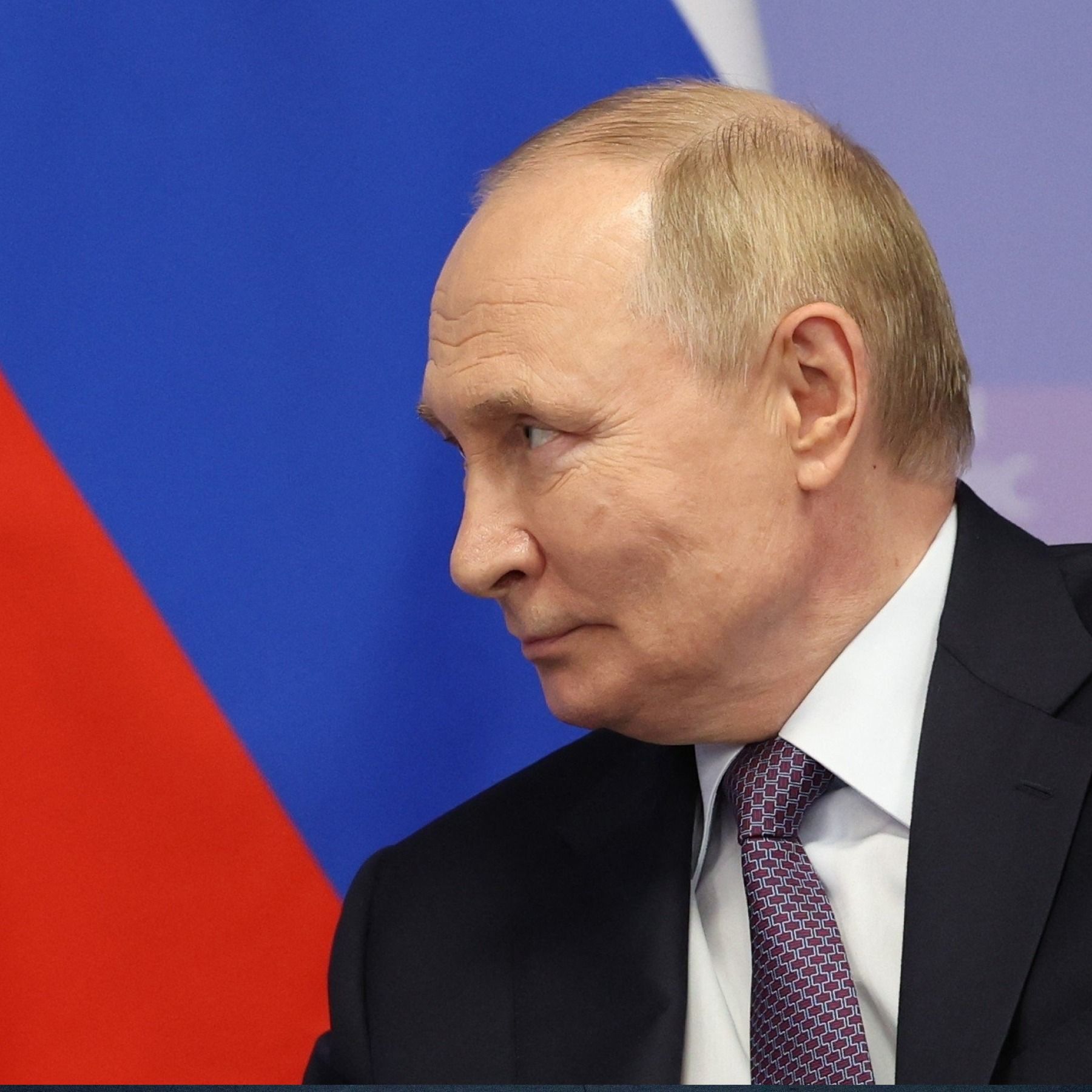
The Daily
Understanding Putin's Power
00:30:47
Over the weekend, Russia bombarded Ukraine with the largest drone assault in the war thus far. It’s the latest in a relentless Russian offensive that keeps escalating, despite President Trump’s efforts to negotiate peace. Anatoly Kurmanaev, who covers Russia for The Times, discusses the economic war machine that’s driving Russia’s success on the battlefield, and making it so hard for anyone to get President Vladimir V. Putin to back down.
Loading summary
Transcript71 lines
- [00:00]
Commercial Narrator
Brought to you by the Capital One Savor Card. With Savor, you earn unlimited 3% cash back on dining, entertainment and at grocery stores. That's unlimited cash back on ordering takeout from home or unlimited cash back on tickets to concerts and games. So grab a bite, grab a seat and earn unlimited 3% cash back with the saver card. Capital One what's in your wallet? Terms apply. See capitalone.com for details.
- [00:26]
Natalie Kitroeff
From the New York Times, I'm Natalie Kitrowev. This is the Daily over the weekend, Russia bombarded Ukraine with the largest drone assault in the war thus far. It's the latest in a relentless Russian offensive that keeps escalating despite President Trump's efforts to negotiate peace. Today, my colleague Anatoly Khmernaev on the economic war machine that's driving Russia's success on the battlefield and making it so hard for anyone to get Putin to back down. It's Tuesday, September 9th. Anatoly, welcome to the show.
- [01:20]
Anatoly Khmelev
Thanks for having me.
- [01:22]
Natalie Kitroeff
You know, I first met you in Mexico. We were both there as correspondents, but you left. And for the last couple of years, you've been reporting on Russia, which is incidentally where you grew up. And you told me at one point that you felt people had an incomplete picture of this war because they really weren't understanding the forces inside Russia that were driving Putin and enabling his ambitions on the battlefield.
- [01:50]
Anatoly Khmelev
That's right, Natalie. I think the images that the world saw in the first months, the first year of this war pointed to Russia's imminent collapse. You know, the conversations that were being had in diplomatic dinners, receptions in the west at the time were about collapse. You know, it wasn't just that the invasion of Ukraine will fail, that Russia is a state is about to disintegrate, leading to downfall of Putin and perhaps even the end of Russian nation states and the current borders as we know it. And I always felt this was triumphalist from a Western perspective, from perspective of Russia's adversaries. And they were missing the broader picture and the forces that Putin was mastering to stay in this fight. And then you fast forward to today and you see Putin hobnobin and Trump in Alaska on US Soil getting red carpet rolled out to him. You see him traveling to China and meeting with leaders of developing worlds. You see just the confidence that he exudes when he speaks. And Russia has not won. It is not about to receive Ukrainian capitulation. But Putin is acting that he's on course for victory. So I set out to try to explain to our readers what forces, what processes led Russia to be where it is today, led Putin to be where he is today?
- [03:23]
Natalie Kitroeff
And let me just say, Let me just acknowledge your reporting has really changed the way I've been thinking about this war and about Russia, because it's shown just how much Putin has turned things around and in his favor over the last couple of years. So I want to start there. What is the evidence that Putin has gained the upper hand in this war?
- [03:47]
Anatoly Khmelev
First of all, it's the territory Russia's inching forward every month. These are not major breakthroughs. But in the war of attrition, in. In a war that's largely been deadlocked, the Russian advances over the course of the summer offensive have been significant. But underneath these territorial changes, these advances lay, I think, even larger trends. And the biggest among these trends is the fact that every day more Russian troops are facing fewer Ukrainian defenders. The balance of forces is heading in the direction that is not sustainable for Ukrainian defenses at this stage. Russia has also caught up with Ukraine and in some cases overtook Ukraine in terms of production of drones. Crucial weapon of this war. And it is winning the economic war. It is raising and throwing into the war more money than Ukraine is able to. So in the war of attrition, which is, frankly, the war of resources, it's a war who can mobilize and use their resources more efficiently than the enemy. Russia is winning, which means that it's a matter of time, if the current trends continue, that Russia will achieve the victory it is looking for.
- [04:53]
Natalie Kitroeff
So you're describing success on many fronts for Russia. Let's look under the hood there. How did Putin pull this off the.
- [05:02]
Anatoly Khmelev
Two major columns of his, if not success, then his ability to stay in the fight is men and money. His ability to recruit enough men and throw men to battle and his ability to continue earning revenues. That power his war machine. And these are the two pillars that have enabled him to be war where he is today and dictate his terms.
- [05:27]
Natalie Kitroeff
Okay, so walk me through when this turnaround started.
- [05:31]
Anatoly Khmelev
The crucial moment came in September 2022.
- [05:34]
Natalie Kitroeff
Military experts say President Vladimir Putin's war in Ukraine has not gone according to plan.
- [05:41]
Anatoly Khmelev
At the time, Russia was on the verge of complete collapse.
- [05:44]
Natalie Kitroeff
Ukrainian resistance is defying expectations and complicating the Kremlin's efforts to seize the country.
- [05:49]
Anatoly Khmelev
Its forces had to retreat from Ukraine capital, Kiev. They would take in huge losses. The arm was running out of men, was running out of weapons. And it seemed like this, this war was about to end. And then Putin did something that no One expected.
- [06:21]
Natalie Kitroeff
Russian President Vladimir Putin says he has signed a decree ordering the partial military mobilization of Russia's armed for beginning today.
- [06:30]
Anatoly Khmelev
He called the first military drafts in Russia since World War II. Drafting about 300,000 men from Moscow to Siberia.
- [06:43]
Natalie Kitroeff
Anger growing and hundreds arrested.
- [06:46]
Anatoly Khmelev
This was a tremendously disruptive political event in Russia. Recruiters were just grabbing men from the streets, going to people's homes.
- [06:56]
Natalie Kitroeff
Hundreds of thousands escaping the fighting in Ukraine, fleeing the draft at home by flooding the border into Georgia.
- [07:05]
Anatoly Khmelev
Hundreds of thousands of young Russian men fled the country to avoid being drafted, dealing a massive blow to the Russian economy. It was a hugely, hugely unpopular moment in Russian society. And polls showed that this measure caused the biggest spike of discontent, the biggest spike in fear in Russian years. But Putin wrote it out. He wrote out the initial discontent.
- [07:35]
Podcast Sponsor Announcer
Russian attacks in Ukraine are getting more intense.
- [07:39]
Anatoly Khmelev
Russia has been able to make advances over the past few months. 300,000 men, despite being poorly trained, despite being inexperienced and in poor health, they were able to plug the gaps in Russian lives and stabilize the battlefield.
- [07:55]
Natalie Kitroeff
Hundreds of civilians are fleeing as Russian forces pound populated areas with mortars and artillery. So Putin drafts all these men and the move actually pays off in that it saves Russia from defeat in this really critical moment. But at the same time, Russians really hate this. They really resent the draft. I mean, even if you are leading an authoritarian system, you don't want to anger this many people. Right. It's just not good politically, and I'm assuming that it's not sustainable long term.
- [08:30]
Anatoly Khmelev
That's absolutely right, Natalie. And Putin was able to stumble upon a solution. And the solution was offering men a lot of money to fight. And in one of the most unequal countries on Earth, giving men at the margins of Russian society an opportunity to become heroes, to prove their worth to themselves, to their families and their communities. And. And combined this created a whole new recruitment strategy that allowed Putin to replace the draft with volunteers.
- [09:04]
Natalie Kitroeff
Okay, talk to me about that recruitment strategy. Just to start. How much money are we talking about?
- [09:11]
Anatoly Khmelev
We're talking about life changing money on signing up. A Russian man today would receive about $65,000 as a bonus, as a signing up bonus. Then every month he would receive about $3,000 salary. This is 10 times what Russian soldiers would be receiving before this war. This is just the beginning, Natalie. A Russian soldier would receive extra payments for absolutely everything that he does on the battlefield, from taking territory to blowing up enemy equipment, to earning medals.
- [09:42]
Natalie Kitroeff
You're saying that the soldiers get a specific amount of money for each of those things? Achievements on the battlefield come with payouts, specific payouts.
- [09:52]
Anatoly Khmelev
Absolutely everything comes with a specific payout, and this extends to injuries and death. There are very detailed specific payments associated with every injury, from losing the foot to receiving a skull injury. And even when a person dies, his family is assured a very large payout between 50 and $100,000. The bottom line is that military service, service in this war has given an opportunity to working class Russian men to earn sums that would be completely unimaginable for them in the civilian life that they would never be able to earn for the rest of their working life, career. It was a jackpot, a Faustian deal, so to speak, that gave these men tickets to the middle class in return for sacrificing their help and possibly life. And this urge has been very effectively exploited by the Russian propaganda. When you look at the recruitment ads put out by Ministry of Defense and private middlemen, there was an infamous ad recently that talked about, you know, what all men made of. Are they made from the smoothies and tattoos and piercings like. No, our men are made from bravery and courage and honor. And, you know, these are just really effective tools for people searching for meaning, searching for a purpose today.
- [11:40]
Natalie Kitroeff
And did you talk to people who had volunteered, who'd taken these payments?
- [11:45]
Anatoly Khmelev
Yes, many of them. The most striking story I heard was from a man called Vladislav who was speaking to us from a hospital bed. He lost his foot storming Ukrainian trenches earlier this year. And he's 33 years old. And before the war, he worked at a sunflower oil plant, a working class job in a provincial city in western Russia where he was earning about the equivalent of $300 a month. And he wanted something more. He wanted to become a breadwinner, to become someone respected by his relatives. And when we asked them how much money he's receiving or how he's doing, what really surprised, perhaps shocked me was just this instant recall in the way that Vladislav has been able to just rattle off the numbers that he expected to receive the money that he was convinced was due to him. It was about six and a half thousand dollars from a local governor and about 28,000 from a state insurance company, $47,000 more from a defense ministry. It was this whole list of payments from all these different agencies involved in Russia's war effort that were due to Vladislav. And even before he received this injury, the various payments associated with have completely transformed his life. And even though he will not be able to walk again, in the same way, his life will never be the same. He considered this a deal that was worth taking because it gave his family a life that he would have never been able to provide it otherwise with.
- [13:25]
Natalie Kitroeff
The story shows how the money can really just radically change a human being's fortunes. It also shows how transactional the recruitment has become. The men signing up under this new system, they aren't motivated, it sounds like, by patriotism, fealty to the cause. They're fighting for money. They're like mercenaries.
- [13:48]
Anatoly Khmelev
That's right. And this has political benefits for Putin because a man who signs up for money receives no pity, receives no consolation from a wider society if he dies. This does not cause the same level of social upheaval that would accompany the death of draftees, of men who were dragged off as street, because they all have families, they all have loved ones that are waiting for them, and consider it the state's duty to take care of them. But if you willingly sign up to fight and die in return for money. But this is a choice you made. And this explains the ease with which Putin has been able to send hundreds of thousands of men to their death.
- [14:35]
Natalie Kitroeff
So you're saying it basically is a way of potentially limiting unrest over the war. How many people, how many men has the Russian government been able to recruit with this strategy?
- [14:48]
Anatoly Khmelev
Since being introduced in late 2022, Russia has been recruiting about thousand soldiers a day.
- [14:56]
Natalie Kitroeff
Wow.
- [14:57]
Anatoly Khmelev
And this is that amount that not only has allowed Russia to replenish its losses, but also to create new units, new divisions, actually grow the size of its force beyond the initial army that invaded Ukraine.
- [15:11]
Natalie Kitroeff
At a thousand a day. We're now talking about, like hundreds of thousands of people who've been recruited like this. That's a lot of people to give life changing money to, to lift into the middle class. How on earth is Putin paying for this?
- [15:27]
Anatoly Khmelev
Well, what separates Putin from other autocrats that you and me, Natalie, have covered is that Putin understands the economy, understands the importance of the economy, and has respect for the laws of supply and demand. And he has been saving money and shielding Russian economy from the effect of his sanctions because he has been preparing for this moment for a very long time.
- [15:56]
Natalie Kitroeff
We'll be right back.
- [15:58]
Commercial Narrator
We all have moments when we could have done better. Like cutting your own hair. Yikes. Or forgetting sunscreen. So now you look like a tomato. Ouch. Coulda done better. Same goes for where you invest. Level up and invest smarter with Schwab. Get market insights, education, and human help when you need it. Learn more@schwab.com don't just imagine a better future.
- [16:25]
Podcast Sponsor Announcer
Start investing in one with betterment. Whether it's saving for today or building wealth for tomorrow. We help people in small businesses put their money to work. We automate to make saving simpler. We optimize to make investing smarter. We build innovative technology backed by financial experts. For anyone who's ever said, I think I can do better. So be invested in yourself. Be invested in your business. Be invested in better with betterment. Get started@betterment.com investing involves risk performance not guaranteed.
- [16:56]
Commercial Narrator
Ollie knows the back to school chaos all too well. Schedules, carpools, relearning, algebra 2. It's a lot for you and your crew. Ollie makes wellness an easy and delightful part of your routine. Need immune support? Kids will enjoy. Try kids multi probiotic. Is bedtime a struggle? Go with kids. Sleep for gentle support moms Support your immune system, nutrition and more with women's multi grab these products@ollie.com or retailers nationwide. These statements have not been evaluated by the Food and Drug Administration. This product is not intended to diagnose, treat, cure or prevent any disease.
- [17:31]
Natalie Kitroeff
Anatoly, you said Putin has been preparing for this for a long time and that he understands the economy. What exactly do you mean by that?
- [17:41]
Anatoly Khmelev
So Putin comes to power in 99. His ascendancy coincides with a rise in global oil prices. So all of a sudden, all these billions and billions of dollars are flooding into the country and Putin decides to avoid the fates of the previous governments. He starts saving. He institutes a very economically conservative policy implemented by western influenced technocrat economists in his government that keeps spending to a minimum. He basically tightens the purse strings and he starts running a very tight shop. So he starts this war with a very strong economic foundation and he unties these purse strings. All of a sudden, all this money that has been saved up over years, decades, starts flooding in to the country. We have seen the biggest increase in public spending in Russia since the country became Independent in 1991. The money has flooded the economy. And this money has not only propelled the war machine, it has flooded the broader economy, creating a sense of well being, keeping people content, keeping people consuming. Which means that if you're not direct involved in the horrors of the war, chances are that you're living better today than you have lived before the invasion, which has dramatically reduced social tensions in the country and the political pressure Putin may have felt to end this war.
- [19:12]
Natalie Kitroeff
Got it. Putin's been saving this whole time. And then the moment comes and he can press go on this war machine. But what about the sanctions from the US and these other countries, have those just not been that effective at hurting Russia's economy?
- [19:26]
Anatoly Khmelev
They have not been effective enough. They have not closed Russia's ability to continue selling its natural resources. And the main reason for that, Natalie, is that these very comprehensive Western sanctions have never really been accepted or picked up by the rest of the world, by the developing countries, but what we call the Global south, out of sheer self interest or perhaps sympathy with Russia's cause, they have continued doing business with Russia, which has allowed Putin to shift its customers, to find new customers in Asia to continue selling its oil and natural gas just in the other direction of the world.
- [20:08]
Natalie Kitroeff
And the countries in Asia that are buying this oil are China and India primarily, right?
- [20:14]
Anatoly Khmelev
That's right. Russia's main oil customers today are China and India. And this is a very interesting case, Natalie, because while China has for decades been a very important economic partner of Russia, before the war, India has barely bought any Russian oil. And today Russia accounts for about 40% of India's oil imports. And this very rapid change happen almost exclusively out of India's economic self interest. It is able to buy Russian oil at a cheaper price than it can get elsewhere because Russia's limited ability to find customers. And this sort of allows Russia to still sell its oil despite all the restrictions.
- [21:00]
Natalie Kitroeff
But isn't President Trump trying to put more pressure on this source of money? He just doubled tariffs on India and said it was because of India buying Russian oil. Could that put a dent in Russia's war chest?
- [21:14]
Anatoly Khmelev
Not in a major way. What we've seen so far is that India has promised to continue buying Russian oil and has rejected basically Trump's ultimatums. Trump bullying, economic bullying, you can say. And we seen that Trump's policies on tariffs on global trade are actually driving many countries, if not so where it's support for Russia, then at least tolerance of trade with Russia. But it's creating all these new economics opening that Russia is able to exploit and fund this war.
- [21:48]
Natalie Kitroeff
So if the gravy train from China and India hasn't stopped and the sanctions aren't slowing Putin down that much, how much Runway does that give him to keep fighting this war? Like, how much longer can he last? At some point does the money or do the potential recruits dry up?
- [22:08]
Anatoly Khmelev
Ukraine's biggest hope today, the biggest hope of its Western allies is that Russia will exhaust itself and run out of men and money to fight this war. But Putin is betting that he can outlast his enemies, that he has more resources and more men to fight for longer than Ukraine. At the current pace, perhaps he has another year to sustain the fighting at the current level, but he's betting it will be enough. There's a Russian proverb, actually. You know, we say in Russia, you don't need to outrun the bear, you need to outrun your friend.
- [22:44]
Natalie Kitroeff
What an image.
- [22:46]
Anatoly Khmelev
There's a lot of bears in Russia and not a lot of friends. And to paraphrase this, for this war, you don't need to outrun the bear. You need to outrun your enemy. And this is what ultimately drives Putin's decision to carry on this war despite of lack of major breakthroughs and just.
- [23:03]
Natalie Kitroeff
To pull back for a second. And do you think that Putin's strength in the war, that Russia's strength on the battlefield is affecting the way that other countries, Europe and the U.S. for example, are approaching this war and the efforts to end it?
- [23:20]
Anatoly Khmelev
Absolutely. And I think this change has massively accelerated since Trump's return to power, because until very recently, until a few months ago, the west has broadly just supported whatever Kyiv's position was. The main line was that we stand with Kyiv no matter what, we will support the government Kyiv no matter what, and whatever Kyiv wants to negotiate, that is our position under Trump. This has begun to change, and the US has forced, in a way, the other Western nations to start considering Russia's demands, to start considering Russia's position and taking that into account. And frankly, that means accepting the fact that as a country that's winning on the battlefield, it has no incentives to stop fighting until it believes that its demands have been met.
- [24:10]
Natalie Kitroeff
It's interesting. You know, I think a lot of people view the way that Trump is treating Putin's demands being very open to them as a sign that, you know, he has been friendly with Putin, he's been friendly with Russia. This is that, and it may be that. But also what you're saying is that Trump is recognizing Russia's strength in this war. He's recognizing the power dynamics that are at play here.
- [24:38]
Anatoly Khmelev
That's right. At the end of the day, Trump wants to end this war, and he recognizes that to end the war, he must take Russia's demands into account. By now, the US and gradually its European allies have accepted that Russia will keep at least some of the territory that it has conquered in Ukraine. And to convince Kyiv to accept such a deal, such a proposition, they need to provide it with assurances that it will be safe from future attack. So just in a matter of a few weeks, we have moved from complete rejection from any territorial concessions to creating Conditions that would make it bearable for the government and Kyiv to accept these territorial losses.
- [25:24]
Natalie Kitroeff
So both on the global stage and at home, Putin seems to be winning in a sense. Even though Russia hasn't defeated Ukraine, it also hasn't been crushed by the might of the Western world. But is there any downside to Putin's strategy in this war? How are you thinking about the potential risks here?
- [25:47]
Anatoly Khmelev
The cost of this war will be felt by generations of Russians to come. And we are talking about much more than just demographical losses. The loss of hundreds of thousands of Russian men who will not return from a battlefield, will not return to their workplaces, and will not create new families. There are tremendous economic and social costs of this war. Many of them are reversible on the economy. Russia has bled its industry dry to fund its invasion. It has severed its ties with the west. And it has created an economy that has become addicted to military standing. An economy where today only military production is growing at the expense of everything else, which military production that has crowd out all the other industries. A situation that we saw in the Soviet Union where tanks and bullets came at the cost of toilet paper and food. And this addiction to military spending will not disappear after the fighting stops.
- [26:52]
Natalie Kitroeff
Right. Turning off this war machine will be painful.
- [26:55]
Anatoly Khmelev
That's right. And on the social front, arguably, the consequences would be even greater. We are going to see hundreds of thousands of Russian men returning from a battlefield, expecting to be treated like heroes and expecting to continue receiving the myriad of financial entitlements that they and their families have gotten used to in the years of fighting. And it's very unlikely that the Russian society will receive them as heroes. And it's also very unlikely that the Russian state will be able to continue funding their lifestyles fighting these entitlements that they have received during the fighting. And this is likely to cause tremendous amount of social discontent. The war in Afghanistan that the Soviet Union fought in the 1980s made a great contribution to the collapse of the Soviet Union because the tens of thousands of soldiers that came back from Afghanistan did not find a place in new society, have found themselves unwanted and unable to integrate. And the force, the Soviet force that returned from Afghanistan is just a tiny fraction of the hundreds of thousands of soldiers that are currently fighting in Ukraine and will eventually come back home to build a new life.
- [28:14]
Natalie Kitroeff
You're talking about a level of social disruption, potentially that the country just hasn't seen in decades.
- [28:22]
Anatoly Khmelev
I would say so. I think it's just very difficult to predict the political cost of Russia's climb down from this war. When I'm thinking about the future of Russia as a Russian right now, to me, the irony, the evil irony you could perhaps call is that Putin is ultimately fighting this war to restore Russia to a superpower status, to make it great again. And the changes that I see, actually Russia may in the long run, very much prove to emerge a shadow of itself. It will be a country that will be a lot more internationally isolated, a lot more autocratic, and with a lot fewer means of real growth and developments. So the current stability that we see in Russia, you know, people are just walking around the streets, you know, without any concern for this war. I think there's a tsunami of upheaval that will be coming after this war is over that is really difficult to comprehend, just the scale of it or what Russian state, Russian society, Russian people are facing. So I think the victory that Putin is on course for achieving in Ukraine in the long run may really show its shallowness and confine Russia to a perpetual decline as opposed to glory that he's envisioning.
- [30:06]
Natalie Kitroeff
Anatoly, thanks so much.
- [30:09]
Anatoly Khmelev
Thanks for having me.
- [30:34]
Natalie Kitroeff
We'll be right back.
- [30:36]
Commercial Narrator
Your home is an active investment, not a passive one. And with Rocket Mortgage, you can put your home equity to work right away. When you unlock your home equity, you unlock new doors for your family. Renovations, extensions, even buying your next property. Get started today with smarter tools and guidance from real mortgage experts. Find out how@rocketmortgage.com RocketMLC licensed in 50 states nmlsconsumeraccess.org 3030 Ollie knows the back to school chaos all too well. Schedules, carpools, relearning, algebra 2. It's a lot for you and your crew. Ollie makes wellness an easy and delightful part of your routine. Need immune support? Kids will enjoy. Try kids Multi probiotic. Is bedtime a struggle? Go with kids. Sleep for gentle support Moms Support your immune system, nutrition and more with women's multi. Grab these products@ollie.com or retailers nationwide. These statements have not been evaluated by the Food and Drug Administration. This product is not intended to diagnose, treat, cure, or prevent any disease.
- [31:43]
Natalie Kitroeff
Here's what else you need to know today. On Monday, the Trump administration won two victories from the Supreme Court. In a 6 to 3 ruling, the court's conservative majority lifted a lower court order that had prohibited federal agents from indiscriminately stopping immigrants on the streets of Los Angeles based on their skin color and accents. The original order had found that such stops violated the Fourth Amendment. But The Supreme Court disagreed, and as a result, such stops can now resume, despite growing evidence that the mass agents carrying them out have repeatedly swept up American citizens. In the second ruling, Chief Justice John Roberts, acting on his own, temporarily allowed President Trump to remove a Democratic member of the Federal Trade Commission, despite statutes designed to shield such commissioners from political interventions interference. The full court is expected to issue a final ruling on the case in the coming weeks, and congressional Democrats have released the image of a sexually suggestive letter and drawing apparently signed by President Trump and given to Jeffrey Epstein for his 50th birthday in 2003. The image contradicted Trump, who's repeatedly said that it does not exist. When the Wall Street Journal first reported on the letter, which imagines a conversation between Trump and Epstein framed by the drawing of a woman's naked body, Trump called it fake and immediately sued the Journal for defamation. Today's episode was produced by Claire Tennisketter, Astha Chaturvedi, Stella Tan and Nina Feldman. It was edited by Lisa Chow of and Chris Haxel and was engineered by Alyssa Moxley. That's it for the Daily I'm Natalie Kitroweth. See you tomorrow.
- [33:48]
Podcast Sponsor Announcer
This podcast is supported by Viking, committed to exploring the world in comfort. Journey through the heart of Europe on an elegant Viking longship with thoughtful service, destination focused dining and cultural enrichment on board and on shore. And every Viking voyage is all inclusive with no children and no casinos. Discover more@viking.com.