← The Daily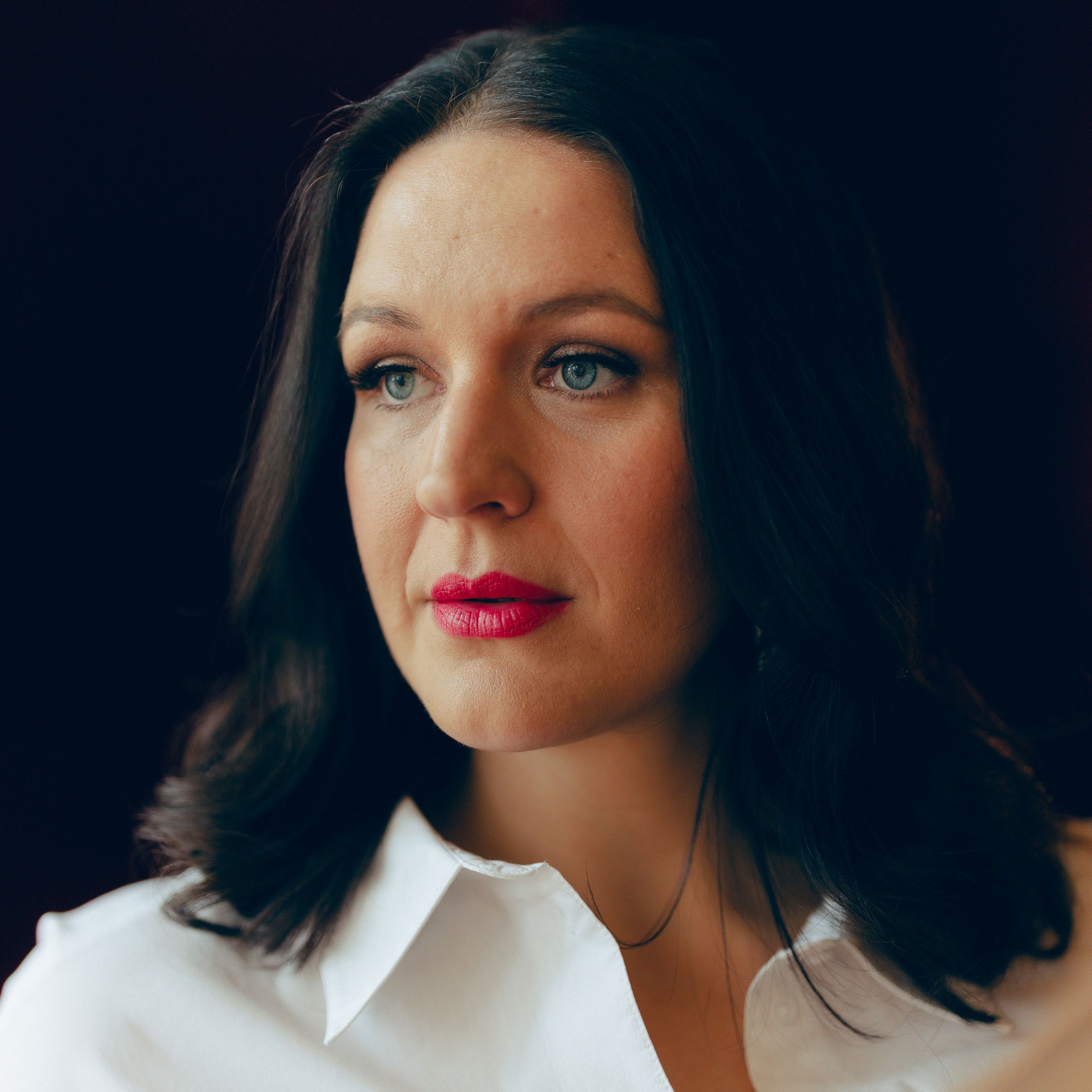
The Daily
She Risked Her Voice to Become a Mother
00:39:28
Lise Davidsen is one of the greatest opera singers of our time — a soprano with a voice so rare, critics reach back a century for comparison. This spring, she has been starring in a sold-out new production of Wagner’s “Tristan und Isolde” at the Metropolitan Opera. But she’s also at a crossroads: Her first performance as “Isolde” on the Met stage came just nine months after giving birth to twins. Today on The Sunday Daily, Natalie Kitroeff talks with the Times writer Zachary Woolfe about his recent conversation with Davidsen, and the unexpected emotional weight she felt while returning to the stage as a new mother. They discuss how a production centered on birth, death and renewal gave Davidsen a way to work through this seismic shift in her life, all while tackling the role of a lifetime.
Loading summary
Transcript166 lines
- [00:00]
Zachary Wolf
The right technology can strengthen human judgment. That's why Deloitte brings together AI and
- [00:05]
Natalie Kitroeff
data analytics with multidisciplinary teams who can
- [00:08]
Zachary Wolf
help you connect the dots across your enterprise, from risk to operations to customer needs.
- [00:13]
Natalie Kitroeff
So opportunities don't slip by and surprises don't spread.
- [00:18]
Zachary Wolf
Because the smarter your systems, the sharper your instincts.
- [00:21]
Natalie Kitroeff
That's how technology makes people better at
- [00:24]
Zachary Wolf
what they do best.
- [00:25]
Natalie Kitroeff
Deloitte Together makes progress. Learn more@deloitte.com TogetherMakesProgress from the new York Times, I'm Natalie Kitroweff. This is the Daily on Sunday. In the world of opera, Lisa Davidson is a superstar, full stop. The Norwegian soprano has been described as one of the greatest singers of our time with a one in a million voice. This spring, she's been leading a rare sold out run at the Metropolitan Opera in New York City of Tristan and Isolde, a performance that's gotten rave reviews across the board. But Davidson is also at a crossroads because nine months ago she gave birth to twins and that has her questioning her relationship to her career, her art and her expectations for what her life should look like today. I talk with writer, editor and former opera critic Zachary Wolf about his conversation with Lisa Davidson on parenthood, vocation and navigating the two while also making art. It's Sunday, April 5th. Zach Wolfe, welcome to the Sunday Daily.
- [02:04]
Zachary Wolf
Thank you for having me.
- [02:06]
Natalie Kitroeff
So I quickly just wanna say how very cool it is to be able to sit down with you and talk about this. I think of you as an encyclopedia of sorts of classical music. You've covered this topic for many years at the Times and I know from many conversations with you not just how much you know about it, but how extremely passionate you are about this world. So thank you for being here.
- [02:29]
Zachary Wolf
It's a pleasure.
- [02:31]
Natalie Kitroeff
So with that as your intro, be our guide here for those of us who aren't as tuned into the world of opera. Who is Lisa Davidson?
- [02:41]
Zachary Wolf
So when Lisa Davidson kind of burst onto the opera scene like 10 years ago, it was kind of like this comet. This is a once in a generation talent. This is a person who's not only singing beautifully, but she's singing the kind of roles that almost no one can sing. And she's singing them at a level that almost none of those people can get to. I mean, in the kind of big Wagner parts that she specializes in. She brings you back to the greatest singers of like early in the 20th century, like the kind of people you know only from recordings, but who are like the best people ever to have sung these things.
- [03:46]
Natalie Kitroeff
Was there one role that put her on the map?
- [03:49]
Zachary Wolf
So, like, a lot of the roles she sings are Wagner, but there was also this opera by Richard Strauss called Ariadne of Naxos. And that was the opera that really kind of put her on the map. She sang this and the buzz was immediately kind of worldwide that somebody was singing this part with kind of this plushness and opulence and richness that people had not heard in many, many years.
- [04:22]
Natalie Kitroeff
And what is it about her voice that makes her so special?
- [04:27]
Zachary Wolf
For parts like Isolde in Wagner's Tristan and Isolde, which she's singing in the sold out run of this new production at the Metropolitan Opera, you need this strength. So you need to basically be throwing these spears into the audience. But for Lisa Davidson, it's like these spears are made of this kind of soft light. I mean, so there's a sense of the strength and the power. And yet it's luminous. There's a softness, there's a beauty, this roundedness.
- [05:04]
Lisa Davidson
Thus.
- [05:05]
Natalie Kitroeff
Did I shoot my book?
- [05:11]
Zachary Wolf
I mean, there's people who can scream through Isolde or who can get through it, and it's pushed through and it's not pretty, necessarily. She manages to make. It's kind of like a laser, but a soft laser. It's really rare. I mean, I've never quite experienced something like it in the opera house.
- [05:50]
Natalie Kitroeff
I can imagine that being able to produce that sound. Some of it is training, right? But some of it is just like a natural gift.
- [05:59]
Zachary Wolf
There is some people who are born with the kind of materials of an amazing. And it's very mysterious. It's all interior. There are these kind of like delicate little vocal cords. And then there's like kind of the muscles that are supporting the breath, like the diaphragm and all of that sounds athletic. It's exactly the same. I mean, any athlete has to train for years and years to get there. But if you don't have that natural stuff, if you're not gifted at a certain point with something, then all the training in the world is not gonna get you there. And a lot is psychological because it's these muscles that are all. And therefore also kind of requires this like, immense confidence to walk into the Met. There's no microphones, 4,000 seats. And knowing that you have to sing this role, that all these people have heard recordings of the best singers in the world, and you have to match up to that. So the confidence that is required to kind of deploy this incredibly intricate physical apparatus is pretty incredible.
- [07:04]
Natalie Kitroeff
Okay, Zach, I want to ask this delicately. I don't mean to Timothy Chalamet this thing, but obviously we've read the coverage. The Met has been struggling. Oprah has been struggling. And I'm wondering how that dynamic bears on her stardom.
- [07:23]
Zachary Wolf
So when Timothee Chalamet got caught on this interview a little bit before the Oscars, saying that he didn't want film to become like opera and ballet, basically, like an increasingly niche art form, he got a lot of flack. But he was right. I mean, these institutions are struggling. Ticket sales are down. Sellouts like this Tristan and Isolde run are rare. And that is what makes stars like Lee's an ever more important kind of commodity. I mean, that's why the Met is putting so much on her. They're betting so much on her. In September, they're gonna be opening their season with her. She's gonna be starring when they do Wagner's four opera Ring cycle in a few years. She is the star of it. So a lot of the Mets future is sort of banking on Lisa Davidson and the health of her voice.
- [08:23]
Natalie Kitroeff
And that, I assume, is part of the reason why her decision to get pregnant was so fraught. This is something that you talked about with her at length. Can you just explain how she was thinking about having kids as she is rising in the opera world?
- [08:40]
Zachary Wolf
Well, what she said was that my
- [08:42]
Lisa Davidson
sister, she has a son, Wal.
- [08:46]
Zachary Wolf
Her two siblings had sort of had children early on. For her, I mean, the gift was her voice.
- [08:55]
Lisa Davidson
I felt that since I had the opportunity of singing and since I got this far in my career, I felt I had been given. That was my gift. You know, your thing. That was my thing.
- [09:11]
Zachary Wolf
What other people felt about having kids is what she felt about her voice.
- [09:15]
Lisa Davidson
And for many years, I was persuaded by that and very, very happy about
- [09:20]
Zachary Wolf
that because I think it's that commitment to the voice was kind of fulfilling to her.
- [09:26]
Lisa Davidson
Yeah, I've chosen it. Of course. It's not like anyone forced me, but it's been my dream. It's been what I wanted to do.
- [09:32]
Natalie Kitroeff
There's also this other aspect of this which you've described, which is the athletic nature of being a singer and using your voice at this level. And so I want to ask about the potential for pregnanc to affect that. Can you just talk about how she's thinking about that?
- [09:52]
Zachary Wolf
I think that she was. That was a huge part of not wanting to do this. I mean, the voice is internal and bodily and mysterious.
- [10:01]
Natalie Kitroeff
Yep.
- [10:02]
Zachary Wolf
So when you talk about huge hormone changes when you talk about changes of size, when you talk about the incisions of. If you have to have a C section, every single change in the body, which has kind of been intricately tricked out to work a certain way, Once you start messing with that, it could be disastrous and has been for some singers. I spoke a couple of years ago to a very eminent singer, this mezzo soprano, so a little bit lower than a soprano for whom the process of getting pregnant and having the baby caused her to lose her voice. And it's been a slow climb back to not the same level. And so there are stories like that that really hang over all women singers who are thinking of having a baby.
- [10:53]
Natalie Kitroeff
All right, given all of that, the very real potential downsides of doing this, of going forward with pregnancy, what made her change her mind?
- [11:04]
Zachary Wolf
Well, she met a guy named Ben, and he wanted to have kids.
- [11:10]
Lisa Davidson
I was like, oh, if you want kids, you should just find someone else. You know, it's a very sort of.
- [11:14]
Zachary Wolf
When did that conversation happen?
- [11:15]
Lisa Davidson
Very early, I think, because we're grown ups. Yeah, yeah, we want kids. And I was like, I don't know. But if you want, you should find someone else, because I know how important it is, if that's what you want.
- [11:27]
Zachary Wolf
Cause he said this is important.
- [11:28]
Lisa Davidson
Oh, he wanted to. And he was like, no, no, it's not that important.
- [11:31]
Zachary Wolf
He's like, okay. But she fell in love with him. And she was actually back in New York here, singing in Strauss's De Rosenkavalier. And she was singing actually the role of this woman who is first confronting the passage of. And they were walking in Central park, she and Ben. She and Ben were kind of walking in Central park while she was here in New York for the rehearsals and performances. And I think just kind of thought, well, maybe I want to give this a try.
- [12:15]
Lisa Davidson
It's something hard to know if it's because I met the right man and suddenly had the right support to think in that way at all, or if it's actually just the body saying, okay, it's now or never. And then suddenly when you think about it, it's like, okay, I want this. And then when we started trying, I was like, oh, but if it doesn't work, that's fine. I'm gonna be fine. But I was not fine at all at that point. She.
- [12:43]
Zachary Wolf
She's 39 now, so she was 36 then. And so I think there was a sense of increased urgency, obviously, to. If this is gonna be a decision that they make, it needs to happen as soon as possible, really.
- [12:59]
Natalie Kitroeff
And how did the trying work out what happened?
- [13:03]
Zachary Wolf
Not well at first. I mean, I think it was an incredibly difficult period. I mean, she spoke to me about two miscarriages that she had had.
- [13:14]
Natalie Kitroeff
Oh, no.
- [13:15]
Zachary Wolf
The first being in the fall of 2023. She was in Chicago to sing the title role in Janacek's Yanufa, which, in this terrible irony, is actually about this young woman whose baby is murdered.
- [13:28]
Natalie Kitroeff
Oh, my God.
- [13:30]
Lisa Davidson
So I think I just felt extremely empty after that. There was nothing left. I had used all my energy and all my. Everything I had, really. But the hard part was that it wasn't so easy, you know, to just say, oh, if this doesn't work, I'm fine. Because it became like an obsession. It was completely. I was like, this now. That's all I wanted.
- [13:55]
Zachary Wolf
And then a few months later, sort of in the spring of 2024, she was in Paris singing in Strauss's Zalome, which is also a very brutal and intense opera. And with that miscarriage, she didn't even miss a performance.
- [14:13]
Lisa Davidson
I just pretended like.
- [14:16]
Zachary Wolf
And doing this is like this intense.
- [14:18]
Lisa Davidson
Yeah, it was quite. But it was the same as with many things that I do. I get very, very, very, very emotional. But then to be able to cope, I just block it out, which I guess is quite human.
- [14:35]
Zachary Wolf
I think in both of these instances, she said she told almost no one.
- [14:40]
Lisa Davidson
To do my job, I have to have a very. A lot of self confidence, you know, like to go on stage. And it's important for me to, in a way, keep private life and professional life separate. But then when your private life takes up everything, it was, in a way, good to have my job. At least I could sing, if you see what I mean.
- [15:07]
Natalie Kitroeff
Yeah, I mean, I cannot imagine singing through such an intense experience with all of that pressure. Was she starting to get discouraged at this point? Like, did she think about doing ivf?
- [15:19]
Zachary Wolf
She said that they went to a fertility doctor after this had happened to just say, okay, what are our options? And it turned out that physically nothing seemed amiss.
- [15:30]
Lisa Davidson
And I was like, I don't. I'd rather not do the IVF unless I have to, because I know these hormones affect the voice and it's extremely effective on the body. So I wanted to try the natural ways as long as possible. And we continued to do that. And then he was the one who. Who did the first scan, and he was like, wait, there's two.
- [15:52]
Zachary Wolf
And he was so, like, by chance.
- [15:55]
Lisa Davidson
And he was almost as happy as us because he knew that we wanted. We wanted more than one child. So it was, it was twins.
- [16:03]
Zachary Wolf
Even, even without, they were sort of surprised to find that they had become pregnant with twins.
- [16:10]
Natalie Kitroeff
Wow. Obviously a blessing. I can imagine she's totally ecstatic. And I am thinking about the fact that now all of those questions that she had about how pregnancy would affect her voice, her gift are suddenly about to become very real.
- [16:31]
Zachary Wolf
I think that she was terrified. I mean, I think you leave to do something like this with all of these bodily changes. The thought is, okay, I'm gonna need to come back doing one of the hardest parts in all of opera. Everyone is gonna be hanging on every note. Everyone is gonna be dissecting everything that she does. So both kind of the reaction from outside and then just like, is she gonna have the same voice that she had before?
- [17:02]
Natalie Kitroeff
Let's take a quick break and we'll talk about what happened and how giving birth actually affected Davinson's career when we return. We'll be right back.
- [17:25]
AG Sulzberger
When you use the trusted investing and savings app Betterment to help grow your money, automatically you have more time for new niche Hobb, like collecting miniatures. The joy that brings helps you sleep better at night and even motivates you to always use your PM moisturizer. Now you've got a dewy glow and a sense of balance to match, not worrying where your money is growing. That's the Betterment effect. Get started today@betterment.com investing involves risk, performance not guaranteed.
- [17:57]
Kevin Roos or Casey Newton
I'm Kevin Roos. I'm Casey Newton and we're the hosts of Hard Fork, a show from the New York Times about technology and the future. That's right, Kevin Week. We come to you from the front lines of tech, giving you interviews with big newsmakers, doing hands on experiments and talking about the week that was. We're out here in San Francisco where the cars drive themselves and the code writes itself. And we are here to tell you about the future that is coming to wherever you are very soon. That's right. At least until the podcast starts recording itself, at which point you and I are out of luck.
- [18:29]
Zachary Wolf
Bruce.
- [18:30]
Kevin Roos or Casey Newton
We think that every Friday for about an hour, you should have a good time. Come hang out with your parasocial friends, Casey and Kevin, and you might learn something. You'll hear a great conversation and you'll be able to sound smart when you head into your workplace meeting on Monday morning. You can listen to Hard Fork wherever you get your podcasts or Watch us on YouTube at YouTube.com hardfork.
- [18:57]
Natalie Kitroeff
So Zach Davidson is in this moment where you left us about to give birth, and all of these issues, the excitement, the anxiety, it's all about to become very real. So let's pick it up from there. What happened?
- [19:14]
Zachary Wolf
Well, so she gives birth to twins, and thankfully they didn't need to do a C section, but she had internal bleeding right after. So there was this very scary kind of medical procedure.
- [19:28]
Lisa Davidson
Very scary. My husband was left there in the room with these two babies, and then they just rolled me out and said, she's bleeding. It was also one of those. I think everyone knew that this is an operation that is sort of straightforward, but for us, it felt like, yeah, I was scared I was never going to see them again. Mr. Min, so.
- [19:51]
Zachary Wolf
So she had taken, I think, the couple of weeks before giving birth totally off. Like, not even practicing, not even kind of like vocalizing at all. And then she said that she had taken the couple of weeks after completely off. So there was maybe like a month total in which totally no singing. Not only not performing on stage, but no singing whatsoever. And so I think that there was this sense, like, okay, you're gonna open your mouth at the end of this couple weeks and, like, what's going to come out?
- [20:20]
Lisa Davidson
And all I thought about was my voice. I was like, how is my voice gonna change? What if this happens?
- [20:25]
Zachary Wolf
She said that the minute she started back, she was fine, she sounded fine,
- [20:33]
Lisa Davidson
the voice was fine. But my head.
- [20:37]
Zachary Wolf
I think what she was not expecting was where her head was at. I mean, the emotional aspect, which was really hard.
- [20:46]
Natalie Kitroeff
What do you mean? Tell me about that.
- [20:48]
Zachary Wolf
She told me that she just felt incredibly torn about going back to singing, period. And not just leaving the house for a rehearsal, but literally going into another room to practice kind of wracked her with guilt.
- [21:01]
Lisa Davidson
I mean, I have my practice room next to living room, so there's not like it's hard to go, but I just didn't find the strength. It felt weird to leave them behind,
- [21:13]
Zachary Wolf
even to go to the practice room. Yeah, yeah.
- [21:17]
Lisa Davidson
I just wanted to be near them all the time.
- [21:20]
Zachary Wolf
Yeah, yeah, yeah.
- [21:21]
Lisa Davidson
And then singing felt like such a silly thing to do.
- [21:25]
Zachary Wolf
Right, right.
- [21:26]
Natalie Kitroeff
Singing felt like such a silly thing to do.
- [21:29]
Zachary Wolf
Even that was really hard for her, let alone, I think the sense of pivoting back to her career and being in the headspace to prepare this. I mean, I think she just wanted to be a mom.
- [21:41]
Natalie Kitroeff
And why did she have to pivot back to her career so quickly? I mean, I'm not familiar with the world of opera and its maternity leave policies, but I Mean, didn't she get.
- [21:52]
Zachary Wolf
She got some time off, but really only a few months. And that those months were gonna need to be preparation intensive because she was going to have to start rehearsals for her first Isolde in Barcelona, which she was singing in January before coming to the Met to do it here. And so the clock was ticking. She needed to reenter the practice room. She needed to start coaching this. Cause again, this wasn't a role that she had done before. This was not only something that was totally new to her, but it was one of the hardest roles in all of opera. And then when it came time these months later to. For the family to go to Barcelona to begin rehearsals, she found that leaving the hotel, leaving the apartment for rehearsal, was unbearable.
- [22:42]
Lisa Davidson
I cried, like, almost every day when I left the home, when I saw them in the break. And I felt I failed at work. I felt at home, you know, this. This completely sense of lack of being enough. And the expectations were just, like, building and building. In the beginning, I said, I'm just. There's no point. Why should I sing when I used to love it? I can't do halfway of Sudomain. I'm not. Not. Can't go on stage and be, like, practical.
- [23:16]
Zachary Wolf
She was, I think, feeling like everything on both sides of the equation was really a disaster. And singing, even the process of rehearsing, wasn't giving her the fulfillment that it had before.
- [23:31]
Natalie Kitroeff
Yeah, this thing she's describing of failing at work and failing at home, I mean, as a mom myself, I can say this is a really common experience. And so how did it go for her in Barcelona? How did the performances do?
- [23:51]
Zachary Wolf
Well, the reviews were all raves. And when you're in the opera world, everyone is sending around kind of bootleg tapes of people's performances. And so they began to.
- [24:01]
Natalie Kitroeff
I didn't know that.
- [24:01]
Zachary Wolf
Circulate. And it was completely clear that she had totally nailed it. That this was again, like kind of like an Isolde for the ages.
- [24:11]
Natalie Kitroeff
Sick is stronger. Sick.
- [24:19]
Lisa Davidson
You wish.
- [24:22]
Zachary Wolf
But she told me that emotionally she was just completely exhausted.
- [24:29]
Lisa Davidson
It was familiar in the sense that it felt like a cabin here before, in a way. And it was very scary because he was disorder. But it gave me very little, unfortunately,
- [24:47]
Zachary Wolf
compared to the way that things in the past have been.
- [24:50]
Lisa Davidson
It meant little to me to get
- [24:53]
Zachary Wolf
a huge ovation or, like, oh, to know that you've done something well or be pleased.
- [24:58]
Lisa Davidson
Absolutely. It's been my entire goal is to make yourself happy. Yeah.
- [25:03]
Zachary Wolf
Yeah.
- [25:04]
Lisa Davidson
To make sure that when I left stage, I had done My best. And that the best was what I planned for it to be. All I felt in Barcelona was relieved
- [25:16]
Zachary Wolf
I didn't fail from the outside. This was one of the great successes of recent years. The opera world is like, whew, breathing such a sigh of relief. So then it was heartrending to interview her and realize that when we were all so happy for her, she was going through this agony.
- [25:38]
Lisa Davidson
It's not that I'm not grateful. I just have to say that, yeah,
- [25:40]
Zachary Wolf
I know what you mean, because I'm
- [25:42]
Lisa Davidson
very, very, very grateful I got to do it and that I get to be here. But to be honest, it felt like I was someone else anyway. Like, I was just. Look, I remember going to a party afterwards and everyone's like, like, oh, amazing, amazing. And I thought, well, yeah, cool.
- [26:04]
Zachary Wolf
But it was not. You're dissociated a little.
- [26:08]
Lisa Davidson
And I was completely empty. I think that was because I was so tired. I mean, I sleep very little compared to what I used to do. And emotionally it was a big thing. The pressure, all these things. So it was like I was just drained.
- [26:21]
Natalie Kitroeff
And so how does she deal with that? This dual reality of everybody being dazzled and she being in agony?
- [26:29]
Zachary Wolf
I think that she managed to get through the run in Barcelona, she said, and then was sort of dragged herself to New York, which was this hugely touted, like, much anticipated new production which was going to be broadcast to movie theaters worldwide. I mean, a Met production is a huge deal. There are not new productions of Tristan and Isolde every day. This has been mounted specifically for her. So there's a lot of pressure. And she gets to New York, and I think she said things started to shift.
- [27:08]
Natalie Kitroeff
Let's take another quick break and when we get back, we're going to talk about how things changed for Davidson once she got to New York. We'll be right back.
- [27:30]
AG Sulzberger
This is AG Sulzberger. I'm the publisher of the New York Times, and I'm also a former reporter who's watched with a lot of alarm as our profession has shrunk in recent years. Normally, this is where I'd ask you to subscribe to the Times, but today I'm encouraging you to support any news organization that's dedicated to original reporting. Whether that's your local newspaper, a national paper, or the New York Times. What matters most is that you subscribe to a real news organization doing firsthand fact based reporting. And if you already do, thank you.
- [28:04]
Natalie Kitroeff
Okay, Davidson comes to New York for this new big production. How do things change for her? What Happens.
- [28:13]
Zachary Wolf
So even though she's doing the same role as she has done in Barcelona, this is a totally new production, different director, different concept, different cast, mostly. And the director has come up with some ideas that actually are kind of interesting, given what she has been going through.
- [28:30]
Natalie Kitroeff
What do you mean?
- [28:32]
Zachary Wolf
Well, the director, Yuval Sharon, decided, and this concept came about even before he knew that she was pregnant, to center the idea of kind of like pregnancy and childbirth in the opera, to basically introduce something that is not in Wagner's libretto, to emphasize his own ideas about the piece.
- [28:55]
Natalie Kitroeff
Okay, maybe here we should just quickly describe what this opera actually is about.
- [29:01]
Zachary Wolf
So it's a complicated opera, but basically Tristan is bringing Isolde against her will to marry his uncle. And she is so angry that she plots to kill them both that she wants to die and to kill Tristan as well. So she orders her maid to make this poison, but instead the maid switches out a love potion.
- [29:24]
Natalie Kitroeff
Ah, classic.
- [29:25]
Zachary Wolf
Classic. And so this starts off one of Wagner's favorite themes, which is this overwhelming forbidden love. And the way that this plays out, you can imagine it's not that great. Tristan is mortally wounded, and then he spends the whole third act kind of in this almost between death and life hallucination, waiting for Isolda to arrive. And when she finally does, he dies. And then in this kind of ecstasy, she dies too. Except that in this production, she arrives and she's pregnant. Wow. And actually the character, through a stage double, sort of gives birth and the child is carried off at the end.
- [30:08]
Natalie Kitroeff
But the baby stuff isn't normally in this opera. You're saying Wagner didn't put it in there. What was the aim of the director, as he put it in?
- [30:18]
Zachary Wolf
What the director told me is that he wanted to take this opera, which is often about kind of like this grim endpoint of this love that is death. If you love someone this much, it can only end or be consummated in death and make it more about these cycles of death. Life, rebirth, renewal. Exactly. I mean, Wagner was very influenced by this philosopher called Schopenhauer, and this idea, almost Buddhism, which was. Yes. This idea of the life cycle as going on and on and on. And actually, Tristan's mother, we know from the exposition, died in childbirth. So there is this sense of mothers and birth and death, this idea of kind of the constant becoming.
- [31:05]
Natalie Kitroeff
Right. And then there's this synchronicity of Davidson having this role as she's dealing with all of these emotions and feelings and processing over her own birth and her own motherhood.
- [31:21]
Zachary Wolf
And I think she also. I mean, the process of birth for her was fraught. She had had this internal bleeding. It was not an easy birth for her. And so she was very. She told me she was very wary about going in after having had this experience and needing to some. In some way enact it on stage.
- [31:39]
Lisa Davidson
I mean, nine months ago, it was not that long ago, and she's dying with all this blood. You know, it's. It was surprisingly close to home.
- [31:49]
Natalie Kitroeff
And do you see that emotion play out on stage?
- [31:53]
Zachary Wolf
It's incredibly moving. When she enters and is visibly pregnant and sees her dying, Tristan, she actually, as she's saying farewell, she puts his hands on her belly. So that, like, their farewell to each other is also, like, this recognition that there's going to be something that continues on after his death.
- [32:21]
Lisa Davidson
When she says, tristan ha Erwart, she holds on the belly instead, it's like
- [32:28]
Zachary Wolf
this, Tristan, not interesting, which I think is so beautiful. So the Liebestod is to.
- [32:37]
Lisa Davidson
To the new baby.
- [32:38]
Zachary Wolf
It's interesting.
- [32:39]
Lisa Davidson
It's very beautiful and very. Yeah, I thought it was really nice.
- [32:49]
Zachary Wolf
Isolde's final aria is called the Libistode, which literally means love, death. And usually it's kind of this abstract, grand aria about kind of like leaving life. And in this, because it was sort of directed toward a child, there was something that was so intimate and so fresh, it was almost like a lullaby, And begins in this small, quiet place and then goes to grandeur. So it was a staging, which was kind of the best thing that you can hope for, which is to have a way of looking at one of these works which opera lovers have listened to or seen so many times, and to kind of experience this crucial moment in a new way.
- [33:51]
Natalie Kitroeff
Oh, This all sounds incredibly intense. You said things had shifted for Davidson during this production. How? Like, what was different? And did it have to do with this intensity?
- [34:13]
Zachary Wolf
As hard as going back to work is, I think that she. She said that going to rehearsals, engaging with this character, is also a way of, like, anchoring yourself. I mean, finding a new kind of commitment to the work. I mean, a way of being engaged and moved by the work that you're doing. And she was saying that. I think the hormones began to calm down. Time is passing. And so that separation that was impossible in December became, a few months later, more bearable. Difficult, but more bearable.
- [34:50]
Natalie Kitroeff
And are her babies with her? Like, what is her interaction with them when she's on something like this?
- [34:56]
Zachary Wolf
So Ben and the kids traveled with her, and so she was living with them in New York.
- [35:02]
Lisa Davidson
It is better now. I must say that it is. I know they are fine. I know they are happy with their aunt, nanny at home, and my husband. They're very pleased when I get home. She's very cute, and I just hold on and hope they will keep being happy.
- [35:18]
Zachary Wolf
Yeah.
- [35:20]
Lisa Davidson
And, of course, anything you practice, you get better at, if you see what I mean. So that's also been practicing for me to, like, be away and then come home.
- [35:29]
Zachary Wolf
Yeah. Yeah, yeah.
- [35:30]
Natalie Kitroeff
I wonder, and I don't know if you asked for this, Zach, but if it's possible that part of the reason she may be more okay with being at work, less dissociated, is that this opera, this production, is in some really profound ways about motherhood. So suddenly, her work is focused on the thing that she wants to spend her time thinking about. Like, the two worlds have become less separate.
- [35:58]
Zachary Wolf
She said that she had been really scared about this new concept, but she said that by the end, it was really beautiful. And the. I think that being able to sort of go through that and to sort of experience, on some level, a mother saying goodbye to a child as well, metaphorically. But to be able to do that night after night, it was meaningful and I think cathartic for her. And I mean, allowed on some level to kind of work through is really complicated, difficult emotions that she had been going through.
- [36:36]
Lisa Davidson
One of the things with this old. Is this. And especially this emotional part with her that she's so emotional, but she has to be so strong. I think I recognize that. Not just because, oh, I'm so strong enough to be so cool, but because of my job. You know, we are presented with these pages upon pages with emotions, and you pour out, and then suddenly afterwards, great, have a good week. Right back to life, which is a joy, and it's a gift to be able to work with that. But it's also. Yeah, it's healing and it's tiring.
- [37:14]
Zachary Wolf
Yeah, it's challenging. I mean, it's definitely. The boundaries are what I like.
- [37:18]
Lisa Davidson
I like that that's possible.
- [37:21]
Zachary Wolf
Yeah.
- [37:21]
Natalie Kitroeff
Zach, from what you've described, this whole journey for Davidson seems to have really been about the struggle internally over whether it's possible for her to be as committed to her job and, in this case, her art, while being as committed to parenthood as she wants to be. And I'm wondering, where do you think she has landed on that question? As a parent myself, I can say the idea of landing anywhere permanently is sort of a euphemistic thought. You're kind of constantly updating and changing that stasis. But where's she at right now?
- [37:59]
Zachary Wolf
She said she's not sure. She said that she and her husband are gonna take time this summer to really think about her future and think about the way she wants her schedule to be and the way that she wants the travel to be. When you're an opera singer, you are traveling and performing constantly. It's really not this grounded thing.
- [38:23]
Natalie Kitroeff
This isn't like a normal 9 to 5 job.
- [38:25]
Lisa Davidson
She's.
- [38:26]
Natalie Kitroeff
I mean, she's living in another univers completely.
- [38:29]
Zachary Wolf
And it's hard enough when it's just you and so to really need to be taking care of baby twins as well. It's a huge thing. And I think she really wants to think about the future in a way that kind of takes into account her new family. So it's funny. I mean, the opera world is now going to be watching her in the same way that they were watching her in terms of when she was pregnant. In terms of we're counting on you. What is going to happen? Are you going to still be wanting to sing all over the place at the highest level for 10 or 20 more years? Or might she really want to ramp down a lot? I mean, she is scheduled to sing the starring role, as I said, in Wagner's Ring cycle at the Met and elsewhere. Another role that like Isolde, is one of those things that if you love opera, you're like, this is the role that she was born to sing. And so everyone is waiting for that. But then she could decide, I'm not, I don't want to do it.
- [39:31]
Natalie Kitroeff
Obviously I think what she's going through, mothers, parents in general will immediately relate to, but I actually think anyone who has gone through a profound change in their life will recognize it. You know, having a kid experiencing loss, these life changing moments where you just aren't who you used to be. All of a sudden the things that used to be important to you aren't anymore. Your focus has changed in ways that are impossible to ignore. That forces you to re acclimate to the world, to your career, to everything, to totally readjust.
- [40:09]
Zachary Wolf
And I think she totally recognizes that she does what she does on a level that is a gift. And yet I think she can't ignore that her emotional world is totally different. She said, I've changed. This is not the person that I was before. The voice has not changed, but I am a different person.
- [40:38]
Lisa Davidson
Sa.
- [41:03]
Natalie Kitroeff
Will Zachary, thank you so much.
- [41:05]
Zachary Wolf
Thank you for having me.
- [41:13]
Natalie Kitroeff
Lisa Davidson concluded her run of Tristan and Isolde last night. She's scheduled to open the Mets fall season in September as the lead in Verdi's Macbeth. Today's episode was produced by Tina Antolini with help from Luke Van Der Plug. It was edited by Wendy Doerr with help from Michael Benoit. Our production manager is Franny Carr Toth. It contains music by Dan Powell and Diane Wong and was engineered by Sophia Landman. That's it for the Daily on Sunday. I'm Natalie Kitroeff. See you tomorrow.
- [42:03]
AG Sulzberger
This podcast is supported by the American Petroleum Institute. Energy is all around today. America's natural gas and oil keeps the country moving, growing and building, and makes every day a little easier. But energy demand is growing, and the infrastructure built today will help secure a more affordable, reliable future. With enough energy to go around when America builds, America wins.