Loading summary
Transcript194 lines
- [00:00]
Podcast Sponsor/Ad Voice
This message is brought to you by Apple Card. For a limited time, when you get a new Apple card and purchase AirPods Pro 3 at Apple, you can earn back the cost up to 250 daily cash. New AirPods Pro and up to $250 daily cash back. Now that's music to my ears. Subject to credit approval, limitations and spend requirements apply. Apple Card is issued by Goldman Sachs bank usa Salt Lake City Branch Terms and more at Apple Co AirPods from
- [00:27]
Natalie Kitroeff
the new York Times, I'm Natalie Kitroweff. This is the Daily The US And Iran are each signaling that they may be making progress toward reopening the Strait of Hormuz. But they haven't reached a deal yet. And the crucial shipping channel remains shut. Hanging in the balance are thousands of crew members who have been stranded on their ships since since the fighting started three months ago. Today we hear from two seafarers who got stuck about what it's like to be trapped in the middle of this war zone and what it would mean to get everyone out. It's Friday, may 29th. Can you hear me?
- [01:26]
Captain Virendra Vishwakarma
Yeah, I can hear you. Right?
- [01:27]
Natalie Kitroeff
And yeah, okay, great. Thank you so much for taking the time to talk with us.
- [01:32]
Ong Tou Khan
Yeah, no problem.
- [01:34]
Natalie Kitroeff
So just to start, can you introduce yourself, please?
- [01:39]
Captain Virendra Vishwakarma
Yeah. My name is Captain Virendra Vishwakarma. I'm sailing on LPG tankers since last 5 years and before I was captain on oil chemical ships. I started my career in 2000, so now it's already 26 years in the shipping.
- [01:55]
Natalie Kitroeff
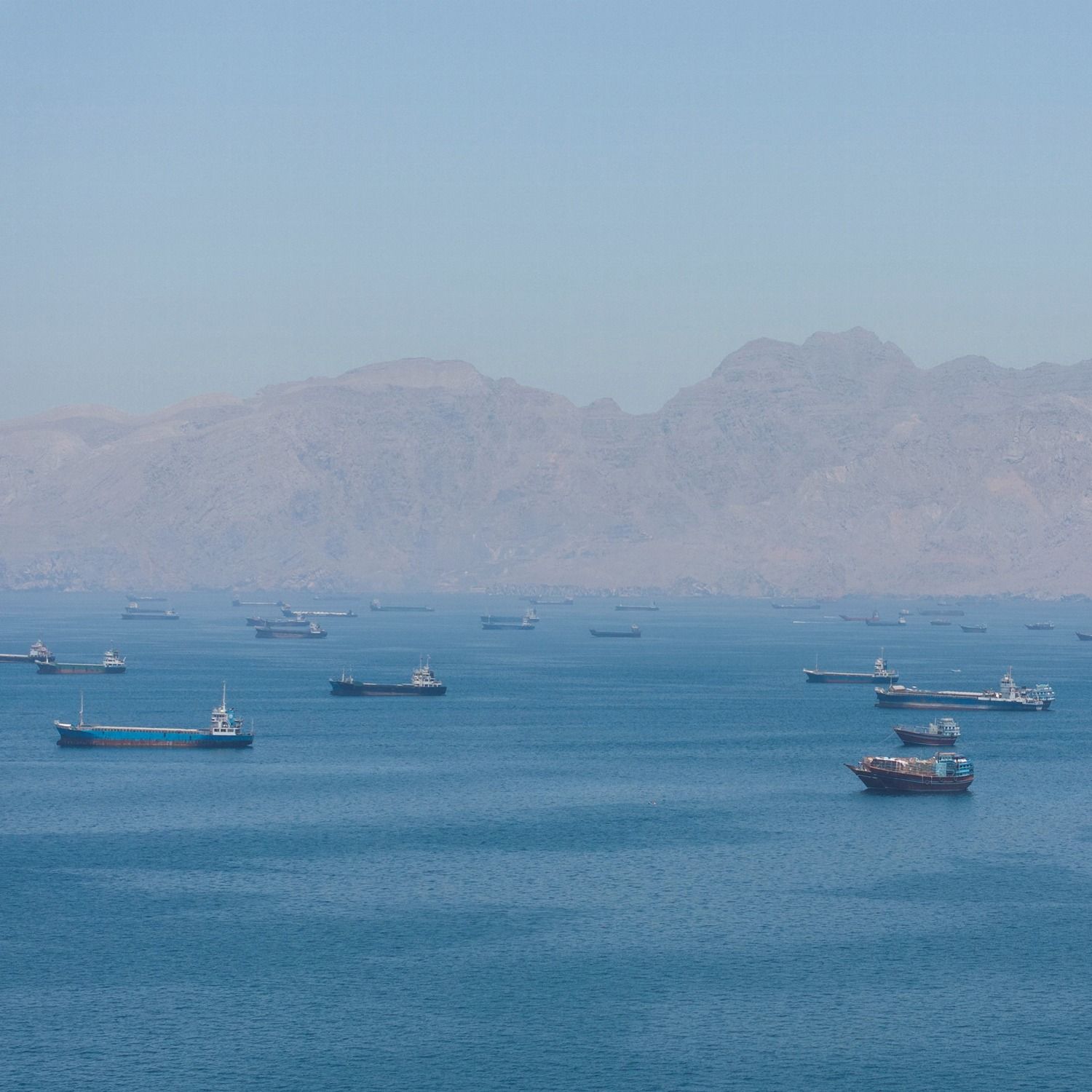
Captain Vishwakarma has sailed through the Strait of Hormuz dozens of times. But before the war began, he said the wider world didn't know much about it. It's a relatively small body of water that's basically the doorway to the Persian Gulf. At its narrowest point, it's only about 21 miles wide. But in that sliver of ocean, there's a bustling waterway. The Strait is one of the world's most critical energy corridors. It's responsible for 20% of the world's oil and natural gas supply. More than 100 ships pass through it every day.
- [02:29]
Captain Virendra Vishwakarma
We have container ships, we have cargo ships, we have crude oil, we have vegetable soil ships, we have chemical tankers. Then all these ships are carrying different things. We are taking the gas, we are taking the petrols, we are taking the gasoline. And they are taking from one place to another place and giving to the world.
- [02:47]
Natalie Kitroeff
Captain Vishwakarma's ship is an LPG tanker that's liquefied petroleum gas his ship takes it back to India where people use the butane and propane for heating, cooking and fuel for cars. He says he loves the work.
- [03:02]
Captain Virendra Vishwakarma
Yeah, because it's a good job and a prestigious job. Plus we can move the world economy.
- [03:11]
Natalie Kitroeff
The idea is basically that you're keeping the world economy moving. That's what you mean by that?
- [03:16]
Captain Virendra Vishwakarma
Yeah, that is right. Suppose if you buy a Christmas gift from China, it should reach to the New York on 24th of December. So our job is to make sure that it will reach on 24th of December, not 25th or 26th. So our importance in the world economy is if the seafarer will not take, then the whole world will be stopped.
- [03:48]
Natalie Kitroeff
So a few months back, on February 28th, it was just another day at work. His ship had made it to the port of Kuwait and his crew had started loading the butane and propane onto the ship.
- [03:59]
Captain Virendra Vishwakarma
So at 1700 hours I heard a
- [04:02]
Natalie Kitroeff
sound and that's where he was when the war started.
- [04:06]
Captain Virendra Vishwakarma
Like boom. I thought maybe the crew has banging the door. But again I hear the same thing. So I thought it could not be possible. So I went on the bridge. Bridge is the part of the ship where we navigate the ship. All the navigation equipment, all the parts are there on the bridge where we navigate. So I run on the bridge. I saw all the missiles continuously and the US base is intercepting the drones and the missiles.
- [04:34]
Natalie Kitroeff
Whoa. You could see missiles from the bridge where you were standing?
- [04:37]
Captain Virendra Vishwakarma
Yes, yes, yes. Then the debris are falling near to our vessels and the vibration was very high. All my crew were panicked then after seeing that and I was shivering. I was shivering and I was in the shock.
- [04:56]
Natalie Kitroeff
What to do, Captain, did you know what was happening? Like, did you have any idea what was going on at this point?
- [05:03]
Captain Virendra Vishwakarma
No. When the day started, we are clueless why it is happening. What is the reason behind that, where it is coming and where it is going? We don't know actually.
- [05:13]
Natalie Kitroeff
Wow.
- [05:14]
Captain Virendra Vishwakarma
So after that I informed my company and the big bosses from the company. They said that if you, Captain, feel unsafe, you take out the vessel. We are with you.
- [05:25]
Natalie Kitroeff
Captain Vishwakarma wanted to get his crew out of there and he wanted to stop loading the fuel onto the ship because if they got hit, the cargo could turn his ship into a massive bomb.
- [05:35]
Captain Virendra Vishwakarma
We have almost 6,000, 7,000 of metric ton of propane butane onboard ship. So if suppose something is fall on our ship, it will be a bigger disaster.
- [05:46]
Natalie Kitroeff
Wow. I mean you were literally worried. It sounds like at this point that your Ship could blow up.
- [05:52]
Ong Tou Khan
Yeah.
- [05:52]
Natalie Kitroeff
But when he told the terminal authorities that he wasn't going to keep loading, they pushed back.
- [05:57]
Captain Virendra Vishwakarma
Can you take the cargo?
- [05:59]
Natalie Kitroeff
They wanted him to take the cargo.
- [06:01]
Captain Virendra Vishwakarma
See if something happened then it will wipe out the full terminal and everything. Meanwhile, every 10 minutes, 10 drones, 10 missiles, they're firing.
- [06:11]
Natalie Kitroeff
He said the drones and the missiles
- [06:12]
Captain Virendra Vishwakarma
kept coming bigger than what happened in before.
- [06:15]
Natalie Kitroeff
So he eventually finished loading the cargo. It took hours and then got out.
- [06:21]
Captain Virendra Vishwakarma
And then after that we have out from that place. We go with a maximum speed. And on the way our GPS was not working. There was no GPS signal. There was nothing. We did our navigation totally on the basic what we learned in our college. Then we dropped anchor near Abu Musa island.
- [06:44]
Natalie Kitroeff
Near Dubai.
- [06:45]
Captain Virendra Vishwakarma
Near Dubai.
- [06:47]
Natalie Kitroeff
He anchored at the edge of the strait. And as the days passed, the attacks kept coming. Captain Vishwakarma said his crew watched as rockets hit an island about 10 miles away. It was engulfed in flames.
- [07:01]
Captain Virendra Vishwakarma
We are seeing the flames, we are seeing the smokes. So we are just thinking if they miss anything, it will be fire to us. Also.
- [07:10]
Natalie Kitroeff
The constant noise and vibrations were stressful. Captain Vishwakarma couldn't sleep. He said his crew was having panic attacks, worried one of those missiles could hit the ship and they were turning to him for answers.
- [07:23]
Captain Virendra Vishwakarma
If they feel unsafe, they call me Captain, what to do? But we cannot do much about that. Hmm.
- [07:32]
Natalie Kitroeff
And were you in touch with any other captains? Did you know how they were dealing with this?
- [07:38]
Captain Virendra Vishwakarma
So every day we are talking to each other. Every day we share our feelings. What are the things happening in your company and what is your crew saying so that we feel safe. Like we have one captain on other ship and he's a 56 years old captain and he every day he's calling me Captain. What is your company is doing? Because my company is little bit established company and his company is not that much established. So he asked me every day, captain, what your company is saying when you are going to cross.
- [08:11]
Natalie Kitroeff
It sounds like he was trying to get some advice from you, like some guidance about what to do in this.
- [08:15]
Captain Virendra Vishwakarma
Right, right, right. Because nobody expected this thing will be happen. But after maybe 10 days, 15 days, our hope was like gone that we are standard and nobody will going to help.
- [08:29]
Natalie Kitroeff
Did you feel as though, I mean, and it sounds like you were very much out there on your own alone.
- [08:38]
Captain Virendra Vishwakarma
Yeah, that is right.
- [08:39]
Ong Tou Khan
That is right.
- [08:40]
Captain Virendra Vishwakarma
Because if something happened, definitely nobody is going to help us. And every day my wife, my son and daughter, they called papa when you are coming back home. Every Day they call but I don't have answer to give. What answer to should I give?
- [09:00]
Natalie Kitroeff
How old are your children? What did it feel like to not be able to tell them? Papa's coming home soon.
- [09:08]
Captain Virendra Vishwakarma
My son is 10 years old and my daughter is 12 years old. Then. Yeah, I feel very bad about that. But what to do? We cannot go out from there. We are in the. You can say that in a jail.
- [09:23]
Natalie Kitroeff
You felt like you were in a jail. Like you were imprisoned.
- [09:26]
Captain Virendra Vishwakarma
Yeah. Yeah. That is. That is right. But I said, okay, I will come back safely. Don't worry. Every day I have to give these hopes to my family.
- [09:43]
Natalie Kitroeff
Captain Vishwakarma was at a loss. He couldn't leave. He'd heard of the Iranian navy firing on ships that tried. And plus he'd heard reports that there were mines in the water. He didn't know how to safely navigate out. But then the Indian navy got in touch with Captain Vishwakarma. They said, wait for our call. We'll tell you precisely how to leave. He waited anxiously for days. And then on March 23rd we got
- [10:12]
Captain Virendra Vishwakarma
the call from the naval command.
- [10:14]
Natalie Kitroeff
He got the call. It's not clear how a deal was made. But as so many other ships sat stranded Captain Vishwakarma was given a secret route. One he says he couldn't share with anyone.
- [10:26]
Captain Virendra Vishwakarma
I said, I'm ready. Give me the plan. Where to pass and what is the route to be follow. Where to go and where not to go.
- [10:32]
Natalie Kitroeff
Are you nervous, Captain? I mean I have to ask because we've heard about mines in the strait. We've heard about your experience with missiles. I mean, are you worried?
- [10:42]
Captain Virendra Vishwakarma
Yeah, definitely we are worried. We have got a chance of 90% he will die and 10% chance you will alive.
- [10:48]
Natalie Kitroeff
You thought there was a 90% chance you would die?
- [10:51]
Captain Virendra Vishwakarma
Yeah. And 10% maybe will pass.
- [10:54]
Natalie Kitroeff
Wow.
- [10:55]
Captain Virendra Vishwakarma
So I decided, okay, we'll take the 10% chance and we'll get out from this place.
- [10:59]
Natalie Kitroeff
He followed the coordinates to a spot near Oman. When he saw the Indian navy which had come to escort them out.
- [11:08]
Captain Virendra Vishwakarma
When the Indian navy came near to us, we are very happy. Our crew and everybody was very happy. Everybody was shouting. Indian navy giving the slogans to the Indian navy. As we are safely came out. They were very, very happy.
- [11:29]
Natalie Kitroeff
There was a lot of joy.
- [11:30]
Captain Virendra Vishwakarma
Including me also. Yeah. Including me also. Finally out.
- [11:39]
Natalie Kitroeff
Were you shouting too? Were you? Were you cheering?
- [11:42]
Captain Virendra Vishwakarma
Yes.
- [11:42]
Ong Tou Khan
Yes. Yes.
- [11:43]
Captain Virendra Vishwakarma
Yes. Yes. Definitely. Then our crew and everybody was coming and they are congratulating me. Captain, you have done good job. You have taken us safely. I said, see, this is my duty. I have done it, which is part of my job. So we have came out safely and we were very happy and we were really proud that okay, Indian government has done something else to take out from that place. We are finally passed and we are now safe. Then I was very happy when this I saw my family and my son is dancing when he saw me that okay, papa has came and my daughter came and just hugged me tightly. Papa and my wife too. Same thing.
- [12:41]
Natalie Kitroeff
Captain Fishwakarma's story is rare. Only a small number of ships have made it out of the strait since the war began. About 1500 ships remain stuck in the Persian Gulf with about 20,000 seafarers on board them. And even though much of the bombing has subsided after the ceasefire, new dangers have emerged. Maritime unions have received hundreds of distress calls from ships who say they're running out of provisions like food, medicine and water. Captain Vishwakarma worries a lot about that and about the fate of the thousands of seafarers that are still stranded. Captain, a final question. There are still many, many seafarers who are stranded in the Strait of Hormuz. What do you want the people who are listening to this interview to know? On behalf of these crews?
- [13:33]
Captain Virendra Vishwakarma
Yeah, on the behalf of all seafarer. The fear which we felt in last 25 days, they are also feeling the same thing and they are more than a month. I don't think they have food or maybe water. I don't know how they are surviving on there.
- [13:50]
Natalie Kitroeff
So you're worried about them?
- [13:51]
Captain Virendra Vishwakarma
Yeah, maybe they don't have foods, they don't have water to drink. You can imagine the scenario. I don't know how they are surviving.
- [14:18]
Natalie Kitroeff
After the break, we hear from one of those seafarers who's still stranded. We'll be right back.
- [14:30]
Squarespace Sponsor Voice
This podcast is supported by Squarespace. Squarespace is the all in one website platform designed to help you stand out and succeed online. They give you everything you need to offer services and get paid all in one place. And with their collection of cutting edge design tools, anyone can build a beautiful professional online presence that perfectly fits their brand or business. Head to squarespace.com NYT for a free trial and when you're ready to launch, use offer code NYT to save 10% off your first purchase of a website or domain.
- [15:03]
MIDI Health Sponsor Voice
This podcast is supported by MIDI Health. Are you in midlife? Feeling dismissed and unheard by the healthcare system? You're not alone. For too long, women's midlife health issues have been trivialized and ignored. It's time for a change. It's time for midi. MIDI is the only women's telehealth brand covered by major insurance companies. Making expert care accessible and affordable, midi's clinicians provide one on one consultations where they truly listen to your unique needs, offering data driven solutions tailored for you. At MITI, you'll feel seen, heard and prioritized. Visit joinmitty.com to book your insurance covered virtual visit. That's joinmitti.com MITI the Care Women deserve.
- [15:41]
Natalie Kitroeff
Hi.
- [15:43]
Ong Tou Khan
Hello.
- [15:44]
Natalie Kitroeff
Can you see me?
- [15:44]
Ong Tou Khan
Hello. Yes, I can see you.
- [15:47]
Natalie Kitroeff
So where are you right now?
- [15:49]
Ong Tou Khan
This is my room.
- [15:51]
Natalie Kitroeff
Can I see it?
- [15:52]
Ong Tou Khan
Of course. This is my bed and this is my living room.
- [15:58]
Natalie Kitroeff
Okay. You have a couch, you have a desk.
- [16:00]
Captain Virendra Vishwakarma
Yes.
- [16:01]
Natalie Kitroeff
What are the pictures that you have on your wall?
- [16:03]
Ong Tou Khan
This is the ceiling vessel we are taking from the calendar. You know, the calendar picture.
- [16:12]
Natalie Kitroeff
Do you have a window?
- [16:13]
Ong Tou Khan
Yeah, of course.
- [16:15]
Natalie Kitroeff
Oh, wow. So you can see outside?
- [16:16]
Ong Tou Khan
Yeah, can see outside. We can see the water, the sea. Now we are drifting near Abu Dhabi, the Homo strait. It's about 150 nautical miles far away. Everybody's stuck in here. All ships are waiting in the Pershing Gulf.
- [16:46]
Natalie Kitroeff
The Persian Gulf has been the view outside Ang TOU Khan's window for more than three months. He's far from home, he's from Myanmar, and his ship was delivering cars to the Gulf when the war first broke out.
- [16:59]
Ong Tou Khan
My job on ship is I'm a safety officer to all crew.
- [17:04]
Natalie Kitroeff
Okay.
- [17:06]
Ong Tou Khan
So I have to be strong, you know, for my crew and I have to think all the time for the safety and also my safety.
- [17:17]
Natalie Kitroeff
That sounds like a big responsibility in this moment.
- [17:20]
Ong Tou Khan
Yes. So that's why we are staying inside the shed, not going outside, because some drones maybe falling down to our shed.
- [17:33]
Natalie Kitroeff
He's constantly worried that the temporary ceasefire will break down and that the missile strikes could start again. So as the safety officer, he's checking the news a lot. But the news can be confusing. So a more direct way to understand what's happening around him is by listening to the transmissions coming in over the ship's radio.
- [17:53]
Ong Tou Khan
We open the review all the time,
- [17:54]
Natalie Kitroeff
which he does every day.
- [17:56]
Ong Tou Khan
Every day.
- [17:58]
Captain Virendra Vishwakarma
Attention all ships. Attention all shifts. Attention all ships. This is the pasav.
- [18:02]
Natalie Kitroeff
He's listened in as the Iranian military has issued warnings.
- [18:06]
Captain Virendra Vishwakarma
Warning to all ships, do not approach the Strait of Homos without permission.
- [18:11]
Natalie Kitroeff
Some of the calls he's heard have been disturbing one ship.
- [18:15]
Ong Tou Khan
They start yelling at the Iranian Navy, we want to go out, open the hormones. They're talking like that.
- [18:23]
Natalie Kitroeff
They were screaming and begging to be let out.
- [18:26]
Captain Virendra Vishwakarma
Yes, you gave me clearance. You get me clearance to go.
- [18:31]
Natalie Kitroeff
He's heard crews from multiple ships who have pleaded to leave.
- [18:35]
Captain Virendra Vishwakarma
You are running into danger. We may open fire on you. Establish communication over.
- [18:43]
Ong Tou Khan
One month ago, some of the ships going through the straight of H they
- [18:49]
Natalie Kitroeff
shot and he's heard ships being fired at for trying to leave.
- [18:53]
Captain Virendra Vishwakarma
Mayday, mayday, mayday. This is vessel Jaz Ahar now under attack.
- [19:01]
Natalie Kitroeff
Oh, my God. You could hear the gunshots on the radio.
- [19:04]
Ong Tou Khan
Yes, yes.
- [19:07]
Natalie Kitroeff
He's also heard a different kind of call for help.
- [19:09]
Ong Tou Khan
Other ship also, they are now running out of food. And also they need assistance.
- [19:16]
Captain Virendra Vishwakarma
We do not have provisions nor drinking water since last four days. And we have two crew on board who's very critical and need medical assistance.
- [19:27]
Natalie Kitroeff
Some ships are reporting that they're running out of food.
- [19:30]
Captain Virendra Vishwakarma
Any ship nearby our position, we request you to provide us provision and water. And we have a crew on board for medical emergency. We need medical assistance. Please save our lives. We are seamen. We don't attack your country's. We're not taking our buses.
- [19:54]
Natalie Kitroeff
What does it feel like when you hear stuff like that? How does that affect you?
- [19:59]
Ong Tou Khan
When I heard that they talking like that, I feel very sorry because we cannot afford to go to that ship. We cannot help.
- [20:11]
Natalie Kitroeff
It sounds like you felt a little bit powerless in that moment.
- [20:16]
Ong Tou Khan
Yes. Yes. Correct. Correct, correct.
- [20:19]
Natalie Kitroeff
Ong says his ship is doing okay for now. They were running out of some food, but they managed to resupply at a nearby anchorage in the Gulf. But the daily stress of being stranded in a war zone has been taking a toll.
- [20:33]
Ong Tou Khan
It's like house arrest.
- [20:37]
Natalie Kitroeff
He says everyone on the ship is on edge.
- [20:39]
Ong Tou Khan
You know, sometimes we are angry.
- [20:42]
Natalie Kitroeff
Yeah.
- [20:43]
Ong Tou Khan
Mentally it's a little bit aggressive because we talk all the time, but sometimes we are a little bit arguing.
- [20:53]
Natalie Kitroeff
You can see that they get angry more easily.
- [20:57]
Ong Tou Khan
Yes. Including me.
- [21:00]
Natalie Kitroeff
Including you, yeah.
- [21:01]
Ong Tou Khan
Because I feel like my mind is stuck, you know, And I'm worried about my life and my crew, my ship. I also want to go out. We want to be free. Not only me, all the crew and all other ships also. They feel like that, I think. But we cannot get out. So in our mind is hopeless now.
- [21:33]
Natalie Kitroeff
So as Ong waits in this situation he can't control, he's trying to find small ways to cope. Sometimes before bed, he reads a book on positive thinking.
- [21:44]
Ong Tou Khan
That book name is the. You're special.
- [21:47]
Natalie Kitroeff
You're special.
- [21:48]
Ong Tou Khan
Yeah, you're special.
- [21:49]
Natalie Kitroeff
And he's giving Himself, pep talks, telling himself not to give up.
- [21:54]
Ong Tou Khan
All the time. I'm talking to myself. Okay, one day I'm going out. That the hormone straight. One day. One day. One day I'm going out. I'm going out the Almost one day.
- [22:04]
Natalie Kitroeff
And he's doing the same with the crew.
- [22:06]
Ong Tou Khan
I talk to them. It's going to be okay. We were going out one day. Don't worry. It's going to be fine. It's going to be okay.
- [22:15]
Natalie Kitroeff
They're all doing their best to try to distract themselves.
- [22:19]
Ong Tou Khan
They play the basketball. We play the basketball in the cargo hold.
- [22:23]
Natalie Kitroeff
Sometimes they've played basketball in the empty cargo hold where the cars used to be.
- [22:28]
Ong Tou Khan
Sometimes we celebrate the birthday party when
- [22:32]
Natalie Kitroeff
it's a crew member's birthday. Do you have cake?
- [22:36]
Ong Tou Khan
We do.
- [22:37]
Natalie Kitroeff
They make a cake.
- [22:38]
Ong Tou Khan
It's mostly chocolate because they like chocolate. We celebrate and then we forgot where we are. And then the time is very, very nice.
- [22:48]
Natalie Kitroeff
And sometimes they sing.
- [22:51]
Ong Tou Khan
My crews are Filipino, so we sing together because my hobby is singing and listening to the music. Yeah, that's my hobby.
- [23:01]
Natalie Kitroeff
What do you like to sing?
- [23:03]
Ong Tou Khan
My favorite song in this moment is the Home. Do you know Home, the sound name? Home.
- [23:11]
Natalie Kitroeff
Is it called Home? Like.
- [23:13]
Ong Tou Khan
Yes. Home. Yes.
- [23:16]
Natalie Kitroeff
I don't know that song.
- [23:17]
Ong Tou Khan
Yeah.
- [23:18]
Natalie Kitroeff
Can you sing it for me? The song? Just a little bit so I can hear it?
- [23:21]
Captain Virendra Vishwakarma
Oh, my God.
- [23:23]
Natalie Kitroeff
Please. Yeah, I'm sure. I'm so sure.
- [23:27]
Ong Tou Khan
Okay, okay, Okay. I try. Another summer day has come and gone away Bury some wrong I just wanna go home, Baby Surrounded by a million people I save all along But I want to go home. I miss you, you know? Yeah, just.
- [24:04]
Natalie Kitroeff
That's beautiful.
- [24:06]
Ong Tou Khan
Thank you.
- [24:08]
Natalie Kitroeff
And when you think of your home, what do you think of? What comes to your mind?
- [24:14]
Ong Tou Khan
It was my mom and my. My dad and then the. They also worry about me, so they also see the news every day.
- [24:27]
Captain Virendra Vishwakarma
My ma.
- [24:28]
Ong Tou Khan
It's everyday worship for me.
- [24:32]
Natalie Kitroeff
She's praying for you?
- [24:34]
Ong Tou Khan
Yes, yes. She's praying for me every day. So that's why I want to go through that hormone straight safety and. Yeah.
- [24:50]
Natalie Kitroeff
Well, I hope you get home really soon.
- [24:54]
Ong Tou Khan
Thank you so much. I wish.
- [25:06]
Natalie Kitroeff
Since the beginning of the war In Iran, the UN says that at least 39 commercial vessels in the region have been hit by the ongoing attacks, or in some cases, what appear to be targeted strikes. At least 11 seafarers and one shipyard worker have been killed, with several others injured and missing. We'll be right back.
- [25:37]
Podcast Sponsor/Ad Voice
This podcast is supported by Nirtek ODT Remedipant. We know you didn't ask for an interruption, but migraine doesn't wait for the right moment to interrupt either. It just barges in, takes your time and throws everything off. So when migraine takes your time, take Nirtech. It's for the acute treatment of migraine with or without aura. In adults, Nirtech can provide pain relief in two hours, which can last up to two days. Ask your healthcare provider if Nurtec is right for you because your time is for you, not migraine. Don't take if allergic to Nurtec. ODT allergic reactions can occur even days after use. Get help right away for trouble breathing, rash, swelling of face, mouth, tongue or throat. High blood pressure and Raynaud's syndrome can occur. Get help for high blood pressure, numbness, coolness, pain or color changes in fingers and toes. Common side effect is nausea. For full prescribing information, call 1-833-4-NURTECH or visit nertec.com all right, back to your podcast.
- [26:36]
MIDI Health Sponsor Voice
We gave Times employees a preview of Crossplay from New York Times Games and
- [26:41]
Podcast Sponsor/Ad Voice
here's what they had to say.
- [26:42]
Natalie Kitroeff
I can finally play with other people. I'm pretty competitive.
- [26:45]
Captain Virendra Vishwakarma
It's fun to beat friends and co workers.
- [26:48]
Natalie Kitroeff
I have a J for 10 points.
- [26:50]
Captain Virendra Vishwakarma
I'm guessing Tenga is not a word. Let's see.
- [26:53]
Ong Tou Khan
Tenga is a word.
- [26:54]
Podcast Sponsor/Ad Voice
Oh, as in English. As a second language speaker, I like
- [26:58]
Natalie Kitroeff
to learn new words.
- [26:59]
MIDI Health Sponsor Voice
Crossplay, the first two player word game from New York Times Games. Download it for free today.
- [27:10]
Natalie Kitroeff
Here's what else you need to know today. Israel widened its offensive in Lebanon on Thursday, striking the capital Beirut, for the first time in nearly a month. The Israeli military said that it had struck more than 135 targets that belonged to Hezbollah in a 24 hour period. And Hezbollah continued its attacks on Israeli troops in southern Lebanon. The escalating conflict there threatens to further destabilize the talks to end the U S Israeli war in Iran. Iran has insisted that any peace deal include Lebanon and Anthropic, once a lesser known artificial intelligence company, punctuated its stunning rise with eye popping news on Thursday. It said it had reached a valuation of $900 billion after its latest funding round, overtaking OpenAI to become the most valuable AI startup in the world. It took roughly a decade for OpenAI to hit its most recent valuation of 730 billion. Anthropic surpassed that in half the time. Today's episode was produced by Caitlin O' Keefe and Lindsey Garrison. It was edited by M.J. davis, Lynn Fact Checked by Susan Lee and Will Pychl and contains music by Marion Lazott, Dan Powell and Pat McCusker. Original music by Alicia Ba Itouk. Our theme music is by Wonderly. This episode was engineered by Alyssa Moxley. Special thanks to David Boddy, Peter Evis, Christian Trebert and Jenny Gross, as well as Jatin Dua and Christy Peterson Reed. From the University of Michigan, the Daily Studio support team is Maddie Masiello, Nick Pittman, Kyle Grandillo, Efim Shapiro and Samantha Winter. Our radio team is Jodi Becker, Rowan Niemisto, Diane Wong and Katherine Anderson. Alexandra Lee Young is our deputy executive producer. Michael Benoit is our deputy editor. Paige Cowett is the editor of the Daily. Ben Calhoun is our executive producer. Special thanks to Paula S.H. schuman, Larissa Anderson, Sam Dolnick and to the founding editor of the show, Lisa Tobin. That's it for the daily I'm natalie kitroweff. See you on Sunday.
- [29:58]
Captain Virendra Vishwakarma
Foreign.
- [30:04]
Gilbert Cruz
I'm Gilbert Cruz. This week on the Book Review Podcast, our monthly book club meets to talk about Ben Lerner's new novel Transcription.
- [30:12]
Natalie Kitroeff
It's really brilliant.
- [30:14]
Gilbert Cruz
His 2014 book made the Times Best Hundred Books of the 21st Century list. So whenever Ben Lerner puts out something new, it's an event and it's something that needs to be discussed.
- [30:24]
Ong Tou Khan
We could talk about this book all day.
- [30:25]
Gilbert Cruz
It's kind of listen to the Book Review wherever you get your podcasts.