← The Daily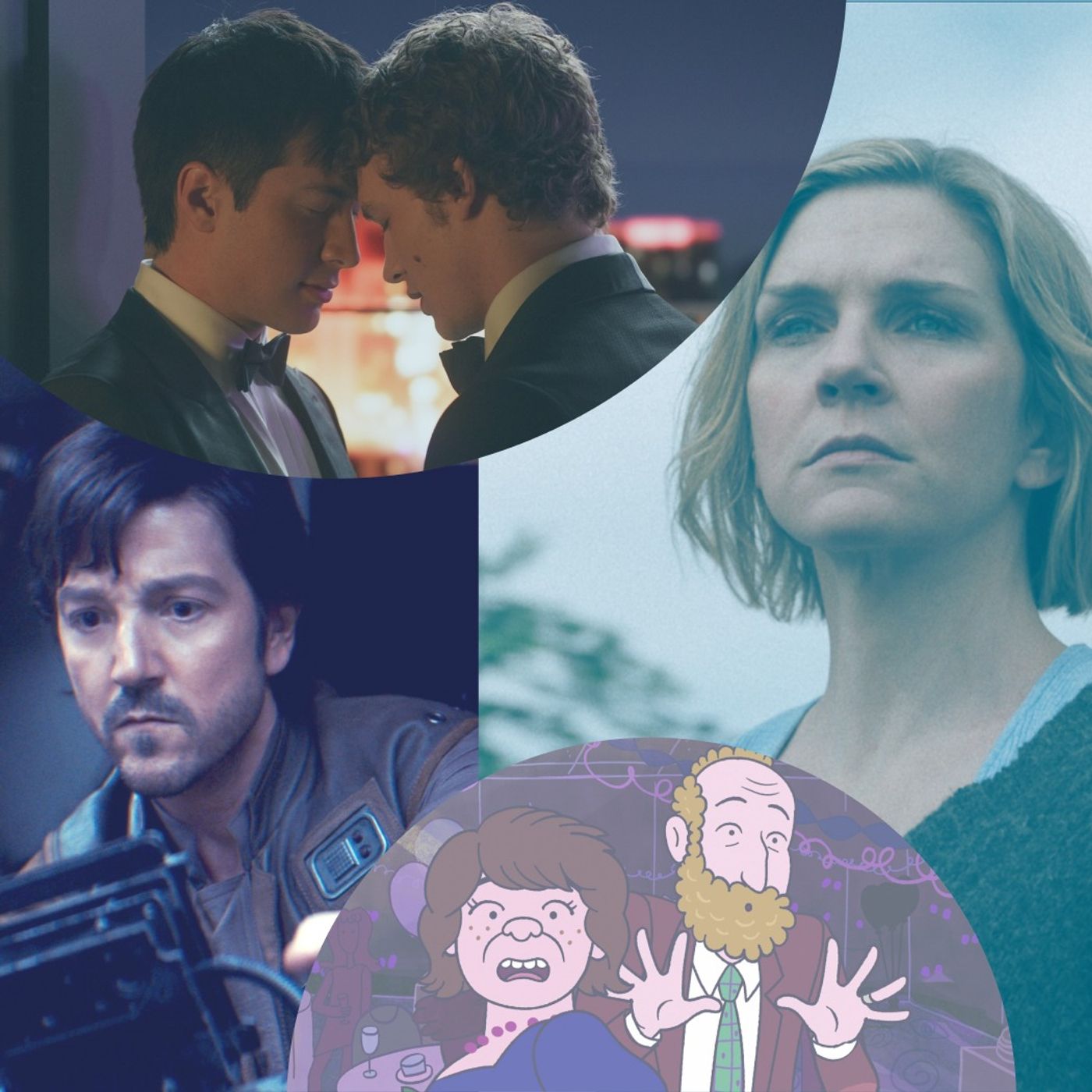
The Daily
Sunday Special: The Best TV of 2025
01:00:33
In these final weeks of 2025, The Sunday Special is looking back at the year in culture. Today, we’re talking about the TV we watched this year — the best shows, the most popular ones and the ones that allowed us to just enjoyably veg out. Gilbert Cruz talks with the TV critic James Poniewozik and the culture reporter Alexis Soloski about the year in television. TV shows discussed in this episode: “Severance” “Common Side Effects” “Too Much” “Nobody Wants This” “Dying for Sex” “The Hunting Wives” “The White Lotus” “Dr. Odyssey” “Long Story Short” “Heated Rivalry” “Andor” “The Lowdown” “Platonic” “Pluribus” “The Pitt” “Adolescence”
Loading summary
Transcript351 lines
- [00:00]
A
On January 6th, Idaho Network revisits one of the most notorious cases of the past 25 years in the new documentary event, the Cult behind the the Andrea Yates Story. When Andrea Yates drowned her five children in 2001, the world was shocked. How could a mother do something so horrific? This three part documentary exposes how the sinister influence of a cult may have driven Andrea's postpartum depression to the most tragic extremes. Don't miss the cult behind the killer. The Andrea Yates story, January 6th on ID.
- [00:38]
B
Welcome to the Sunday Special. I'm Gilbert Cruz. We're spending this last several episodes of the year looking back on some of the big cultural moments of 2025. And today we are talking about TV. Here with me to consider some of the best shows of the year as well as some of the most popular ones. And are two of my colleagues who watch a ton of tv. Jim Panowasic is our chief television critic here at the Times. Pleasure to have you back with us, Jim.
- [01:06]
C
Yeah, it's a pleasure to be back so far.
- [01:09]
B
And Alexis Soloski is one of our culture reporters. Happy to have you also back here with us again, Alexis.
- [01:16]
D
I could not be more delighted.
- [01:18]
B
I can tell. Okay, so let's start out with a little fill in the blank exercise which I'm asking everyone to do for TV. 2025 was a blank year. Fill in the blank.
- [01:32]
C
It was a year of mild improvement, I think beautiful from my standpoint.
- [01:37]
B
Okay.
- [01:38]
C
When I put together my end of the year best list, most years it is a wrestling match trying to eliminate the last few things to get the list down to 10, or some approximation of that. I would say last year, not to crap on 2024 too much, but was one of the few years where I basically 10 and I was good and one of them was the Olympics, you know, this year I think we were. I'm not gonna say that it was just blow the doors off year for television, but it was a much more normal distribution of going down to the wire and cutting things off the list. So that's a positive note for me.
- [02:25]
B
I think it is. I think it is. Alexis, you do not put together or you don't publish at least a best of the year list. I'm sure in your own mind you have a sense of how this year was. What would you say?
- [02:38]
D
Fine, fine.
- [02:41]
C
How many ends in that?
- [02:42]
D
Fine, Many. I mean, the rising inflection is key. It was fine. It was fine. It was fine. When you are out and about socializing with people and they say, what should I watch? I Occasionally had some things to tell them, which is really, it's really all I want, you know, as opposed to sort of looking scared and cornered and forgetting my own name, which is a lot of how 2024 felt.
- [03:07]
B
So both of you have been watching a lot of TV this year, and I know you've observed some trends and I think we should start by talking about those. Jim, let's start with you. In your year end list, you noted that there were a bunch of shows about conspiracies. What were they? Just rattle off some names here.
- [03:25]
C
Oh, there was. Where do I start? Common side effects. Severance, the Chair company, the lowdown, Pluribus.
- [03:33]
B
I'd love for you to talk about one because it feels not only appropriate for TV, but maybe also appropriate for the world, the country this year.
- [03:42]
C
I mean, you know, I don't need to tell our listeners probably all the reasons that conspiracy theories have had great influence in the larger world. Conspiracy theories and actual conspiracies. Conspiracy is a great engine for drama. There's somebody doing something, something is amiss. But a lot of the best shows that I watched this year and the more interesting ones in some way or another involved often a lone or close to lone protagonist trying to unravel something that went way, way beyond them. And you know, this was in an. It was in science fiction, it was in mystery. There was a lot of it in the water.
- [04:38]
B
One of the biggest shows of the year. And we just touch on this one. Cause I feel like everyone has heard a lot about Severance is sort of conspiracy at its core in some way. This was a season that came three years after the first season, a very long time. And yet there seemed to be, at least at the beginning, a ton of excitement about this one.
- [04:58]
C
Yeah, Severance is one of those streaming shows that comes around like Halley's Comet, and you need to do a refresher course whenever it comes back around. I very much liked the second season. I liked it enough to put it on my top 10 list at the end of the year.
- [05:16]
B
I suppose you're Marc S. I'm Mark W. Who are you people?
- [05:25]
D
Would you be open to using a.
- [05:26]
C
Different first name to avoid confusion?
- [05:30]
B
Welcome back, Marques.
- [05:35]
C
This, you know, truly is. Is one of the series that, that's in the. The great TV tradition of shows like Lost, et cetera, where there is both a large conspiratorial element, organization, in this case Lumen Industries, and also just a big question of what, what is the conspiracy about and what is it for and why are they pushing these buttons on these computers all days. Uh, so I was, you know, I would say, not as stellar as season one, but like a welcome payoff that made me want more, hopefully in fewer than three years.
- [06:14]
B
Yeah. Did this stick with you?
- [06:16]
D
If I can be mildly contrarian, and only mildly, because any show that makes such a place for goats is okay with me.
- [06:25]
B
Okay, we see what stuck with you as the goats. Yes.
- [06:27]
D
I tend to find the mystery box element, at least in the second season, the least compelling thing about it, which is where I often get to with mystery box shows. I'm so engaged initially, and then I just. Look, I'm a person. When I read books, I often skip to the end and then go back. So I just wanna know. I'm no longer so interested in the dragging out of what is Lumen Industries. What are they making? What are they doing? And I wish they would just solve and then we would go back to the tension, the relationships, the comedy, the melon parties, the goats. More goats. More goats.
- [07:04]
B
Yeah.
- [07:04]
C
I mean, not to get all TV history 101 on this, but I will agree to the extent that going back to Lost, if you were watching TV around that time, you recall that what we saw after lost were, like 5,000 shows that would involve some kind of convoluted mystery and puzzles and weird, random details, but sort of forgot the fact that this show needs to make you laugh. It needs to have engaging characters. It needs to, like, surprise and hit you emotionally. And for me, Severance is one of the few shows since in that mold that has done that. It is about a mystery, but I enjoy watching it for the relationships between the characters. And, you know, to me, at least, it did not lose that in the second season.
- [07:56]
B
Jim, I'd love for you to talk a little bit about a show that I was less familiar with is a show called Common side Effects.
- [08:04]
C
This was an animated series on Adult Swim that came in part from one of the makers of an animated drama that I loved a couple of years ago called Scavenger's Reign. But this one is about a mushroom. There's a mushroom.
- [08:24]
B
Say more.
- [08:25]
C
There's a mushroom. I don't have you hooked on mushroom.
- [08:30]
B
You have my attention.
- [08:32]
C
There's a mushroom in the rainforest that is discovered by this kind of kooky amateur scientist, holistic healer.
- [08:43]
D
An amateur mycologist.
- [08:46]
C
Yes, an amateur mycologist. That's. That's a type of Gryffindor.
- [08:50]
D
The dream, the goal.
- [08:52]
B
It's amazing.
- [08:53]
D
Thank you.
- [08:54]
C
And it can cure anything, which sounds fantastic, except. And Here the conspiracy element comes in. Except for pharmaceutical companies who see a tremendous threat to their business and decide to shut this down.
- [09:12]
B
Okay, Francis, can I. Can I tell you a secret?
- [09:17]
D
Yeah, please.
- [09:18]
B
Okay, just go with me for a minute. What if there were a medicine that could heal like almost anything?
- [09:24]
D
Well, yeah, that would be great.
- [09:26]
A
Sure.
- [09:27]
B
Yeah.
- [09:27]
C
Right.
- [09:28]
B
But what if they didn't want you to know about it? They?
- [09:32]
A
Sorry, who's they?
- [09:34]
B
They is Big Pharma. It's the insurance companies, the government. Think about all the people who make tons of money just from keeping us sick by keeping us unwell.
- [09:44]
C
That's the animating plot of the thriller. What gets me into it is it is simultaneously realistic and sort of hallucinatory. It also has kind of a quirky, offbeat sense of humor, which, you know, I think series like this really sort of need to avoid getting too stuffed up in their self seriousness. And also I think had a lot of relevant, seemingly timely ideas about how sick our society is and what the condition of modern life has done to us. And should we all in some way be getting back to the garden? Like, it's really kind of a show that like, you know, started head a little bit for Luigi Mangione and a little bit for RFK Jr. There was this kind of element of, you know, these sickness of society that I also thought made it intellectually interesting.
- [10:42]
B
Alexis, what was a trend that came up for you this year?
- [10:46]
D
A trend I noticed was a lot of shows trying to revive or complicate the idea of the romantic comedy. I think it's hard, I should say initially to make romantic comedy for television. There have been romantic comedies on television. Of course, there have been relationship comedies, but romantic comedies have been filmic because there's an end point. And that end point is typically marriage. Right? The couple get married, they live happily ever after. There's some great TV about what happens after the happily ever after, but it's hard to disrupt the perfection of that arc. And so it's always a challenge for romantic comedy. I think we're in a place where people are trying again. And I love to see it. Like all I want. I love love. I want to think it's possible. Not for me, but for others.
- [11:38]
B
I think it's possible. You're saying too much.
- [11:40]
D
Yeah, I don't want it, but I love to see it. And I thought that this year there were some really good attempts. I enjoyed too much, which is a Lena Dunham romantic comedy, which was on Netflix. I love Megan Stalter, who some of.
- [12:00]
B
Us, the Star of that show.
- [12:00]
D
The star of that show, who some of us will know from hacks and some of us will know from her. Demented. And I mean that in the most positive way. Comedy videos. And she plays an American who moves to England with all kinds of crazy romantic ideas of what England is, most of which are unrealized, but falls in love. Um, I met someone.
- [12:28]
B
Wow.
- [12:28]
D
You know, this is the only area where you waste no time.
- [12:32]
B
What does he do?
- [12:32]
C
Why?
- [12:33]
D
Is the first question always, what does he do? How about, how does he make you feel? What does he value?
- [12:37]
B
Okay, Jessica, I'm your mother, not your friend.
- [12:40]
D
Keep that in mind. So he's unemployed. He's not unemployed. He's an indie musician.
- [12:46]
B
And where does he live?
- [12:47]
D
Well, he lives in early indie neighborhood. You wouldn't know it. You don't know the London area I'm on. And as with contemporary romantic comedies, there aren't problems of class or religion or other external exogenous things to keep people apart. Cause it's fine. We're fine. Anyone can date anyone. And so it's the characters sort of maybe dealing a little bit with the baggage that they bring into a relationship and trying to be better partners for each other. It's very sweet.
- [13:23]
B
There were a couple of shows this year that actually sort of did deal with faith in relationships. We're gonna talk about one of them later. Cause Jim is a big fan of it. It's an animated series. But we also had on Netflix the second season of Nobody Wants this.
- [13:40]
D
Yeah, yeah. We did what nice cameos, right? It's possible that Seth Rogen works too much, but I was very happy to see him and Kate Berlant show up as Ra.
- [13:54]
B
I love you, man. I love your work so much.
- [13:57]
C
Really?
- [13:57]
B
Yeah, yeah, yeah. No. I saw the sermon you gave at Tu Bishvat at Temple Chaya. It blew my mind. It completely changed the way I mourn. I was mourning all wrong. We got you on our vision board here. Oh, my goodness. This is a show about.
- [14:10]
D
This is a show about a rabbi played by Adam Brody, who some of us maybe fell in love with on the OC how could you not? How could you not?
- [14:21]
B
I think we all did.
- [14:22]
C
Yeah.
- [14:24]
D
And then Kristen Bell plays his very much non Jewish, cool, cool blonde Goyisha podcaster girlfriend. And the first season sees them deal with the complexities of that. And the second season, for better and kind of for worse, also sees them deal with the complexities of that in a way that doesn't really move a lot of things forward. Where she has to decide if she is ready for conversion or if they're just going to hang out in this sort of no man's land where it would be very, very, very difficult for him to be a rabbi with a wife who did not convert. It's not a good look if your wife doesn't. It's like, oh, man, how are you going to sell it to anyone else if you can't even sell it at home? Like, it's not a great look if your wife doesn't convert to Judaism.
- [15:16]
B
None of it matters.
- [15:18]
C
You are my soulmate. That's it. I don't care if you're Jewish. I don't care if you're not Jewish. I choose you every time.
- [15:28]
D
I love the people in this show. I really like the vision of Los Angeles, where I am from. It makes me wonder why I left, But I wish that there had been some narrative progress. And also, I think this show, unlike the first season, eased up on its depiction of Jewish women. But I remember speaking to the creator and the showrunner for the first season. It now has different showrunners and explaining to her that slutty blonde Jews do exist. You know, like, we are a manifold. We are manifold people. Like, we're not all shrill brunettes.
- [16:07]
B
No, representation is important.
- [16:09]
D
Representation matters.
- [16:10]
C
Yeah, yeah. There was a lot of freaky stuff going on in the Bible.
- [16:17]
B
Good God, Jim. You put a show that was sort of concerned with sex in a different way on your top 10 list.
- [16:27]
C
Yes. It's Dying for Sex, a limited series that was about sex and especially about dying. It was adapted from a story about a woman who has a terminal diagnosis of cancer, played by Michelle Williams in the miniseries, who has a terminal diagnosis of cancer and sets out basically to cross off a big item on her bucket list, which is to finally have an orgasm. And it becomes both a story of, you know, the journey of the end of life, which I felt was kind of open and frank about the dying process in a way that as much death as there can be on tv, I've rarely seen.
- [17:19]
D
And when you are very close to death, your breathing goes into a cycle of deep, slow breaths and long pauses. And then eventually there is a breath out that is not followed by a breath in. And that's it. Yeah, yeah. Can you make sure that my mouth isn't open when I die? Okay, just don't bite me. Why would I bite you? I don't know why I need you to tell me this, but please say that you won't bite me.
- [17:56]
C
The final episode you know, no spoilers, but like, you can guess what happens the final episode, but was fantastic in this respect, dealing with the hospice experience and so on. But also, you know, and I realize that people are like running from this description probably right now. An incredibly funny show in a way that, you know, was honest and, you know, cathartic and daring. Michelle Williams is fantastic in it. Jenny Slade is very good. It was an example of something that I think I always look for in television, which is, you know, the. The idea that funny is not the opposite of serious. And, and that you often can and frankly often need to use humor in the service of kind of deep and powerful ideas. And, you know, sex and death didn't get much more deep and powerful than.
- [19:01]
B
Those we have talked about sex and death. I'd love to talk about sex and guns, Alexis.
- [19:08]
D
Great. I think I know where this is going. Is it going to the Hunting Wives?
- [19:13]
B
I think it is. I think it is.
- [19:14]
D
I am so excited to talk about the Hunting Wives because this pertains to what Jim is saying that I think that there is a great problem in much the by no means all of prestige and really sub prestige television this day that it forgets that maybe it should be fun. Like maybe we should have a nice time, which doesn't mean we can't deal with serious issues, but maybe entertainment should be entertaining rather than dour. And there was a show on Netflix this year called the Hunting Wives. Would I describe this show as good? Oh, no, no. Would I describe this show as fun? Oh, yes. This show is about a woman played by Brittany Snow, who is a transplant to East Texas and has to understand the manners and mores of East Texas, many of which involve suburban, wealthy suburban women getting very drunk and shooting guns and sleeping with each other. What fun. Actually, I have to go pretty soon because I promised I'd be home for dinner. Oh, come on. You got it, don't you? Yeah, but it scares me a little bit. Oh, come on, let me see it. Come on, don't be shy. Oh, look how cute. Oh, girl, you haven't even loaded this thing. You think I know how to load a gun? I'll walk you through it. I don't really. Listen, I'll take you to target practice later. Just you and me, okay? It also stars Malin Ackerman, a wonderful actress who was completely wasted on billions and she is having a great time.
- [21:09]
C
She was terrific on Trophy Wife, by the way. An unfairly maligned show, I think, but.
- [21:13]
D
I know a one season tragedy. What a show.
- [21:16]
A
What a show.
- [21:18]
D
And anytime she is on screen, you know that you are going to have a fantastic time. Because her rapaciousness, her sense of pleasure, her sense of fun, her sense of enjoyment is radical. And I would love to see more of that. I mean, this was the best of the bunch in terms of a trend, which has been a trend for many years, which is rich people with secrets often, though not always in coats.
- [21:52]
B
And I'm sorry, in coats.
- [21:54]
D
Yeah, for a while the coats were really big in these shows. Like Everyone, by which I mean Nicole Kidman would walk around in some really elegant outerwear.
- [22:04]
B
Are you talking about that one she did with Hugh Grant?
- [22:07]
D
Yes. But also the coats on Big Little Lies, which is again, like a best in class example of the genre. The coats were also very good. Like, it does get cold in California sometimes. At least foggy.
- [22:20]
C
Yeah.
- [22:20]
D
You need a layer or two.
- [22:23]
C
It'll get a bit damp otherwise.
- [22:25]
D
Yeah. But this year we had the better sister. We had all her fault. We had the girlfriend, we had the beast in me. And they were very. They were very dour. The perfect couple, I would say, was a little more fun.
- [22:38]
C
The beast in me was not exactly a laugh riot.
- [22:41]
D
No, no, no.
- [22:43]
B
You know, they didn't wear coats in the White Lotus.
- [22:46]
D
They did not wear coats in the White Lotus.
- [22:47]
B
Too warm.
- [22:48]
D
Too warm. Too warm. In Thailand.
- [22:50]
B
They did wear them in the Gilded Age.
- [22:52]
D
They did wear them in the Gilded Age, which are also rich people with secrets shows. And I really enjoy the White Lotus. I don't think that. I would argue. I don't think that any reasonable person who I love and trust would argue that this third season, which was set in Thailand, was the best of the series. It was not. It was not the best of the series, it was the worst of the series. But it's still enjoyable. It is nice to see attractive people in beautiful locations behaving badly and being absolutely miserable.
- [23:30]
C
I will say I love the first season of White Lotus and I just. I don't like its trend lines. You know, I think the second was not as good and then the third was less than that. But it does have this sort of Love Boat aspect to it, where there are multiple stories playing out in different guests and there are likely to be elements within that that you can connect to even in a more subpar season and fantastic casting.
- [23:58]
D
Speaking of the Love Boat, we haven't talked about Dr. Odyssey. One of the most banana shows of this year. Jim, did you experience was that even this year, the confusion and wonder.
- [24:09]
C
It was a long year.
- [24:10]
D
Dr. Odyssey was the Love Boat with grotesque medical procedures added on. Because of course this is a Ryan Murphy joint and Ryan Murphy adores the grotesque. But it was so stupid in it made my brain so soft. Like when you look at the diagrams of the brain, the cauliflower, the nodules, I had none of those. My brain was a beaten bag chair as I watched Dr. Odyssey and let the parade of images go by.
- [24:39]
B
I've never heard of the show doctor Odyssey.
- [24:41]
D
You've never heard of the show doctor Odyssey?
- [24:43]
B
It is possible there's too much tv.
- [24:46]
D
Joshua Jackson, who like Adam Brody is another former teen heartthrob. Yeah, I watched crew. Exactly. This one of Dawson's Creek extraction is a doctor on a cruise ship and would you believe it? But every episode there are several medical crises. The guest cast, Kate Berlant, Amy Sedaris, Margaret Cho. I believe those ladies were all in the same episode. Character actress Margo Martindale shows up. It is, it is a gift. It is a joy if you think about it for more than. Don't think about it, don't, don't do that. Just let it wash over you.
- [25:27]
B
Let's take a little break and when we come back, we're going to talk about even more shows we love this year.
- [25:42]
A
On January 6th, Idaho Network revisits one of the most notorious cases of the past 25 years in the new documentary event the Cult behind the the Andrea Yates Story. When Andrea Yates drowned her five children in 2001, the world was shocked. How could a mother do something so horrific? This three part documentary exposes how the sinister influence of a culture may have driven Andrea's postpartum depression to the most tragic extremes. Don't miss the Cult behind the Killer the Andrea Yates Story January 6th on ID.
- [26:17]
D
Hey, it's John Chase and Mari Oehara from Wirecutter, the product recommendation service from.
- [26:21]
C
The New York Times. Mari, it is gift giving time, which means I am hopeless and need help.
- [26:27]
D
You're not alone, John. We have over 40 gift guides, like gifts for people who love food. I really love this butter warmer on that list.
- [26:36]
C
I didn't even know these existed.
- [26:37]
D
It's this cute enamelware pot. If you're someone like me who explodes butter in your microwave, you can melt butter in it, but you can use it for a ton of other stuff. Making hot chocolate, warming soup, and it looks great on the stovetop.
- [26:51]
C
This is useful, but it's also good looking.
- [26:53]
D
Yeah, definitely.
- [26:54]
C
What's an easy gift for someone like under 50 bucks?
- [26:58]
D
So in our gifts under 50 guide we have this super Cute palm sized Bluetooth speaker. Comes in an array of cool colors. It's waterproof. I want one for my garden.
- [27:08]
C
Terrific. For all of Wirecutter's gift ideas and recommendations, head to nytimes.comholidayguide.
- [27:18]
B
So we've talked about a bunch of shows. I think we should really get into the ones that we just absolutely adored. Jim, you put a bunch on your best of the year. You talked about a few already. I'd love to take turns between the three of us, but mostly between the two of you talking about some of our favorites. Jim, tell us about Long story Short.
- [27:37]
C
Okay, so when I put together my best lists at the end of year, you know, there's a top 10 list. It's always a little bit of a lie because, like, really, any given year, I have like three or four shows that are my real favorites. And then I'm choosing from a grab bag of, you know, 20 or 30 other shows that could be on there. And generally, you know, of those shows, there is one that is my absolute favorite this year that was Long Story Short, an animated family dramedy. Comic drama, comedy with dramatic elements from the creator of BoJack Horseman. Everyone pick a territory.
- [28:16]
D
I want goats.
- [28:16]
C
Never get goats. Goats are not a territory.
- [28:18]
D
This game makes no sense.
- [28:19]
C
Doesn't make sense. Cause you're not listening.
- [28:20]
D
I know she's putting the pieces up. I'm listening. I just don't understand any of this.
- [28:24]
B
And your father, I think I'm understanding.
- [28:27]
D
He's being nice. He doesn't understand. He has the same glazed overlook as when we rented Farewell, My Concubine.
- [28:32]
B
I did not understand Farewell, My Concubine.
- [28:34]
C
I just said I preferred Mrs. Doubtfire. I wanna be a concubine.
- [28:37]
D
For the record, I understand the game perfectly and I think it's bad. This is why you don't play games with your family. Your family are not your friends. Bobby doesn't have.
- [28:44]
C
It's about a family told over time, jumping back and forth in their history. You might say that kind of sounds like this is us. And this was a bit of a this is us approach, but with the difference of having, you know, less reliance on big twists and melodrama. And also, long story short is just extremely Jewish. It's about a Jewish family. It is detailed and specific. This is so Jewish. Manischewitz could, like, pickle it and sell it in a jar.
- [29:22]
D
It is the gefilte fish of animated comedies.
- [29:26]
C
You know, I will say, like, I am Jewish myself. My family is not super Jewish in the way that the Family in this is. But that's not necessarily the appeal of it to me. The appeal is that I am really drawn to specificity, particularly in comedies like this, because I think that helps you develop a viewpoint. It helps, you know, the characters, it helps you create a world. You know, I watch tv. I experience art in general to take me into somebody else's experience. And it's sort of similar to me to the way that I loved Reservation Dogs, the great comedy that was set on an Oklahoma Indian reservation a couple of years ago. Here the family that the show depicts. You meet them as they're driving to a funeral. When the kids are younger, you take second exit after exit, second exit after exit. What could that possibly mean?
- [30:25]
D
Now we're lost. I'm an orphan and we're lost.
- [30:28]
C
Grief is perplexing, but I don't think one of the perplexing parts should be directions to the directions.
- [30:33]
D
If you'd followed the hearse, he was.
- [30:35]
C
Weaving all over trying to get us killed. You will later see the kids as middle aged adults with their own children. You see people age and get younger and die. And in the process, you start teasing out all the relationships that develop among, you know, just the web of this family and the slights that emerge in somebody's youth that become, you know, part of their neuroses when they're older. To me, it was. It was just. It was a beautiful, moving, often just absurdly funny way of just telling the story of how a group of people came to be who they are. And I would recommend it to just absolutely anyone.
- [31:23]
D
My family is Jewish in the way. This family is Jewish. And so initially I had a rough time with the show. I think I had to start the first episode, which is a little heavier than some of the others, a few times before I got through it. But I agree with you, it is so lovely. And as it goes on, it gets funnier. I think it allows itself to be funnier. It gets weirder. Like, this is Us. This is absolutely a show where someone would die in a crock pot fire, but on this show, that would be hilarious.
- [31:54]
C
Yes. And you're also not gonna spend like three years finding out.
- [31:57]
D
No, no. They would be making brisket for Passover. Something would go terribly wrong. It would be amazing. So I came around on this show. I'm all in.
- [32:07]
B
Is that what happened in this is Us?
- [32:09]
D
Someone died in a tragic crock pot fire? Yeah, yeah. Slow cookers.
- [32:14]
C
It was devastating for the slow cooker in this.
- [32:16]
D
Slow cookers. They're dangerous.
- [32:18]
B
Oh, my God. No, I did not stick with that show. Alexis, give us one from the year that you loved.
- [32:26]
D
I am here to talk about butts, and I am here to talk about a specific kinds of butts, and those are hockey butts. There is a show on HBO called Heated Rivalry, and its commitment to the male backside is sincere and unparalleled in recent television. It is about rival hockey players, one Russian, one Canadian, who fall not exactly in love, but definitely in lust.
- [32:59]
B
I thought, you're my chicken out.
- [33:00]
C
I'm not. I'm not a chicken, but I think we should talk. Do you want to sit?
- [33:12]
B
Not really.
- [33:15]
C
This is such a bad idea.
- [33:17]
D
And it is the steamiest show. I was trying to think what was the last show that felt like truly sexy? And I think it was normal people, but that sex was very Irish.
- [33:30]
B
Irish and sad.
- [33:32]
D
And this is not. This is not. I mean, sure, they're anguished because they're closeted hockey players, but this sex is not sad. It's also extremely specific. I was like, wow, I know exactly who is doing what to whom down to the millimeter.
- [33:49]
B
I think that is the sign of good action filmmaking. You just know where everything is located.
- [33:53]
D
You know, at any point. Yes.
- [33:55]
B
Yeah. So why do you like this?
- [33:57]
D
I often see shows where the sex feels incredibly gratuitous. And I would say this is a sexy, sexy show with so much sex. And the sex does not feel gratuitous because they. The sex is text. Like, it is about sex. It is about their desire for each other. It is about how they have sex, how they want each other, how they don't want each other. And like, Sasufi. Like, it's. It's. It's, it's. Or as we do say, Dayenu. Like, it's enough. It's enough. It's enough to tell a hot, steamy story about sex.
- [34:30]
B
I would love to talk about a show that has zero sex and zero butts. There might be some droid butts, but I can't recall precisely.
- [34:39]
D
These are not the butts you're looking for.
- [34:47]
B
I would love to talk about season two of Andor, which is my favorite show of the year. This is season two of the Disney Star Wars TV show. It is an odd thing to describe. It's a prequel to a prequel. It is a prequel to the film Rogue One, which itself is a prequel to the very first Star wars movie. And it is essentially a spy show, an espionage show set in the world of Star wars that is concerned with the rise of the galactic rebellion that we Come to see in all these.
- [35:21]
D
Movies, when do we start fighting back?
- [35:24]
B
We have.
- [35:26]
D
By walking away.
- [35:31]
C
We fight to win. That means we lose and lose and lose and lose until we're ready.
- [35:40]
D
All you know now is how much you hate you bank that you hide.
- [35:45]
C
That you keep it alive until you.
- [35:48]
D
Know what to do with it.
- [35:51]
C
And when I tell you to move you.
- [35:55]
B
It was the pinnacle of something that has dominated the culture for, I don't know, two plus decades at this point, which is IP storytelling, which is franchise storytelling. And as someone who grew up a Star wars fan, sorry, this is extremely nerdy. I was obsessed with it when I was a teenager. And I thought that when I got older, Star wars would age with me, would grow up with me, and it never did. And I felt like this was an actual moment when for one brief shining moment, Star wars was a grown up thing. It was a grown up story. This is a show about rebellion and autocracy and sacrifice and death and all. It's not about sex, but it's about a lot of adult things. And that, to me, was rare. I doubt we'll ever see something like it again. And I loved it so much. I know you did too.
- [36:43]
C
Yeah. I'm 1000% on the Andor train. And I consider just the reliance on IP to be the curse of television. We saw it in the movies and then it's jumped to tv. And this was a rare case of an IP based product that was just a great work in its own, with its own ideas. One thing I loved about it, you know, obviously it's Star Wars. There's. There's a lot of adventure, there's a lot of daring. Do, you know, beyond the politics and obviously, you know, it's just, you know, it's concern with how rebellion works, you know, just politically on a nuts and bolts level. And fighting against autocracy, you know, feels very current, but it also just has this beautiful tragedy to it, which is, you know, something it sort of borrows from, from Rogue One to an extent. Like, these are the people, you know, these are the stories of the people who do not end up getting a medal draped around them at some point later on once the rebellion has succeeded. It's about sacrifice and tragedy and, you know, that the people who will sort of toil in anonymity and never see the fruits of their labor achieved. And there's something kind of beautiful about that, you know, that didn't necessarily get that in, like the Mandalorian. No offense to Baby Yoda.
- [38:07]
B
Yeah. This conversation about andor is making me so happy. I could talk about it for another hour, but I think we should move on to another show that also made me very happy. And that's the Lowdown. This was a show that was a little late catching up to, but as soon As I watched 20 minutes of it, I fell in love. It's so funny and Ethan Hawke is so great in it. Tell us about this one.
- [38:31]
C
So the Lowdown is. How would I describe it? A political, journalistic, historical noir about Ethan Hawke's character, Lee Raybo, who is a self styled, he calls himself a truthstorian. Sorry, say again. I am a Tulsa Truthorian. A Truth Storian. What exactly is a Truth Storian? I'm glad you asked. I read stuff, I research stuff, I drive around and I find stuff and.
- [39:02]
B
Then I write about stuff.
- [39:03]
C
Some people care, some people don't.
- [39:06]
B
I'm chronically unemployed, always broke. But let's just say that I. I.
- [39:10]
C
Am obsessed with the truth. It involves an investigation that he makes into a powerful political family whose scion, played by Kyle McLaughlin is running for governor of Oklahoma. It is a thriller and a conspiracy thriller in all the ways that pay off on a dramatic level. What's really appealing about it is that it just has this great. It's like it's a caper, you know, it's this kind of picaresque story about this kind of wild eyed guy with a cause who does not always make wise decisions and you know, often gets out over his skis, but about him and the characters around him who make up this community. You know, kind of trying to make sense of what's going on and what, you know, snakes are under the carpet.
- [40:13]
B
It'S real, it's slightly shaggy, but in the most wonderful way. And it's, you know, picaresque is a great word to use. Cause it also has all these little characters that pop in and out that are sort of immediately memorable. You know the lawyer next door to the bookstore that he owns that he keeps going to in order to store stuff in his safe. The one eyed editor of a supermarket weekly played by the hip hop artist Killer Mike, you know, who has his own. Every character in this show I feel like I'm gonna remember for a while.
- [40:49]
D
Pete Dinklage shows up for one absolutely perfect, completely bananas episode as Lee's former partner. And it is indelible. This is a show that is so textured you feel like you can taste it, you can smell it, you know, what air would feel like on your skin, which is something that the creator, Sterling Harjo, is so good at that kind of specificity.
- [41:17]
B
And it's so specific also because it's Tulsa based.
- [41:21]
C
Yes. And it doesn't feel like somebody in New York's idea of Tulsa. It feels lived in. It feels like somebody has met versions of these people and captured down. Everybody has a voice, everybody has individuality. And that is a big part of the key to its appeal.
- [41:42]
B
I do feel, you know, you use the word caper, I use the word shaggy. There is a bit of a hangout feel to this. You're just following Ethan Hawke's character around Tulsa. He's getting beat up in, you know, in the classic style of many a movie. Private investigator. Alexis, I know you watched a ton of stuff this year that also had a hangout feel to it.
- [42:06]
D
I love a hangout show. I love a show where you just want to spend time with the characters. And there has been a desire to crack the friendship comedy since Friends, since Girls. I don't think a show has emerged that people feel about as strongly. And this year we had a few contenders. We had I love L. A and we had adult. And these are both shows, one set in New York, one set in Los Angeles, that are about young adults sort of learning to move through the world. They have different flavors. I love LA is sexier, it's slicker. Adult is goofier, it's squirmier. I have a feeling these both of these will be great second season shows as the writers learn to write for these particular performers. But I'm happy to spend time with these people. And another show which is not new, which is returning Platonic, starring Rose Byrne, who is fantastic, and Seth Rogen, who I think we can all agree works too much. But I love it as old friends who reunite in middle age and go on some really lame adventures throughout Los Angeles.
- [43:37]
B
I love it.
- [43:37]
C
I don't even know this is Rogan's actual best comedy on Apple tv.
- [43:41]
D
I know the studio wins all the awards, but I really think it is.
- [43:45]
C
Rose Byrne is fricking fantastic. I mean, you know, absolutely. Like, I've seen Bridesmaids, you know, I originally knew her, I think, at first from Damages. I think it really hits me watching this show, how fantastic, you know, in terms of delivery, in terms often of physical comedy, comedic actress. She is like. It's honestly one of my favorite performances on TV right now.
- [44:08]
D
As a woman, I can tell you she is still bugged about it.
- [44:11]
B
Don't woman explain to me.
- [44:12]
D
I have a woman explaining to you. All right.
- [44:14]
B
You shouldn't be explaining nothing to nobody. Listen to me.
- [44:16]
D
If you don't let Jenner and I hang out, you know what's gonna happen? She's gonna think you're hiding something, she's gonna hate me, and then you and.
- [44:20]
A
I aren't gonna be friends again.
- [44:21]
B
Okay, don't you think you're being a little dramatic? No, I don't think so. You're about to.
- [44:25]
D
She is so funny. And as a Type A adjacent lady. I am here for all the tightly wound ladies. And I'm here for all the tightly wound ladies when they unwind, often in spectacular fashion.
- [44:38]
B
Have either of you seen her movie? If I had legs, I'd kick you.
- [44:43]
D
I have not.
- [44:44]
C
No, I have not either. It's on my list.
- [44:46]
D
Sick, sick kid movies. I can't do it. I can't do it.
- [44:49]
B
I feel like I'm compiling a list in my mind of things you cannot do.
- [44:53]
C
You're not gonna double feature that in Hamne.
- [44:55]
D
Yeah. Cancer, sick and dead kids. Yeah.
- [44:59]
B
Okay, let's talk about one more Pluribus. I was a little late to Pluribus, but after only two episodes, I think I'm hooked. I think I have to see it through.
- [45:09]
C
Did you. Okay, well, let me ask you a question before I start talking about it. You came to it a little late. Did you go into Pluribus spoiled, or did you manage to be unspoiled?
- [45:17]
B
Managed to avoid it. Every time I saw the word Pluribus, I averted my eyes. I could not look at a dollar bill for. So I did not know what was going on in this show.
- [45:31]
C
God bless you that you managed that. I suppose I should say up front, like, I'm going to need to talk about what the show is about. So, you know, plug your ears. If you're somebody who's. I'm very much of the camp that a. A good story is unspoilable. It cannot be ruined by spoilers. If you feel otherwise, you know, just tune me out for a second. But Pluribus was a show that arrived with a great deal of mystery about it because its premise is so wild, essentially. And an alien RNA virus arrives on Earth by means of an intergalactic radio signal that infects most of humanity and causes them to become united in a joyous collective mind. A handful of people are left out of it. One of them is our heroine, Carol Sturka, played by the great Rhea Seehorn, who you might recall from Better Call Saul. She is an author of Romantasy fiction and a sort of misanthrope by nature, who ends up being kind of the perfect foil for this new collective of alien juiced, beatific humanity. Are you reading my mind?
- [46:46]
B
No, Absolutely not. We couldn't do that if we wanted to.
- [46:50]
D
Who is we?
- [46:50]
C
Why is everybody suddenly we sort of through line? Is Carol dealing with this new world Carol trying to figure out if there is a way to reverse this virus and restore humanity to where it was before.
- [47:03]
B
You know, we could continue this after you've had a good night's sleep.
- [47:06]
D
Who is we?
- [47:08]
B
We is us. Just us.
- [47:10]
C
Part of the thing that I think is interesting is that it's a little bit playing around with the idea of is what we've witnessed an apocalypse, There is suddenly no war on Earth. There's. There's no conflict. There's, you know, a lot of things that we say we as aspire to in humanity have been achieved by our brains being taken over. And underneath this highly entertaining, very funny, extremely well acted. I mean, it's often like Rhea Seehorn sort of giving a solo performance is a very interesting idea about collectivism versus individualism, about what happiness means, about whether it is better to be blissful and have no free will or to be discontented but an intact individual. Fascinating. You know, like severance, I think just a knock your socks off first season. I hope it doesn't take as long coming back.
- [48:09]
D
I really enjoyed it. This whole premise that the whole world is in the. I'd like to give the world a Coke commercial and you are somehow on the sidelines with a Pepsi you can't open. The way that Rhea Seehorn plays, discomfort, disgust, contempt, Just the range of faces that she has to convey displeasure is really extraordinary. And perhaps because it's only season one, I'm really. I'm really invested in the mystery. I'm here for it.
- [48:43]
B
I'd love to go to a quick lightning round. There are so many shows that came out this year. I don't think we at peak TV anymore. But that doesn't mean that there still aren't hundreds of TV shows that came out in 2025. We should just very, very briefly talk about the Pit, which is a show that earlier in the year a few of us discussed on the Emmys episode. It's coming back very soon. I'm very excited for the Pit. Its first season was one of the bigger TV shows of the year.
- [49:13]
D
I love the Pit. I think it's impeccable television. I think the. That the jury is still out, almost literally as to whether or not it is an ER spinoff. But I think that it, if anything, improves on ER in its speed, in its economy, in the ease with which it communicates its characters through action.
- [49:38]
C
Yeah, I will say, you know, I love experimentation, I love a wild idea, but there is still pleasure in just a hospital show done well.
- [49:48]
D
So well.
- [49:49]
B
We did not touch on the Netflix series. Adolescence, which was one of this summer, if I'm recalling correctly, is sort of big phenomena. I have to admit I did not watch it because it seemed like the premise would totally stress me out as the parent of a young male.
- [50:09]
C
You're not wrong. I think it would stress. My take on it was that for parents of kids, particularly male kids of a certain age, this, this was like the day after, you know, people just watched and discussed in these sort of like hushed, traumatized terms. And it's essentially a four part miniseries about an adolescent who is arrested on suspicion of murder in a case that turns out to be the result or a consequence of online bullying and social media pressures and kind of just becomes this investigation of what are the little screens in our pockets doing to all of our kids. I will say critically as a whole, it's quite an achievement. I think we haven't even mentioned that.
- [51:04]
B
I believe it was.
- [51:04]
C
Every episode was shot in a single take, which is kind of an interesting technical experiment that lends it kind of vitality. There's a bit of like an After School Special vibe to it for me. There's also a fantastic episode three that is just sort of a two hander dialogue entirely between the accused young child and a social worker basically in custody. That was just like watching a great, well produced, explosive piece of theater in front of you.
- [51:38]
B
Did you watch this one? Yeah.
- [51:40]
D
Cancer and sick and dead kids are my no go areas. So I also have not watched this, but I can tell you my kids are never getting phones. They're like, when can I have a phone? I say when you are 30.
- [51:51]
B
I totally support that. We are gonna take another break and when we come back, we're gonna end this episode as we always do, with a little game.
- [52:01]
D
Oh, yay.
- [52:02]
B
Oh, yay.
- [52:14]
A
On January 6th, Idaho Network revisits one of the most notorious cases of the past 25 years in the new documentary event, the Cult behind the the Andrea Yates Story. When Andrea Yates drowned her five children in 2001, the world was shocked. How could a mother do something so horrific? This three part documentary exposes how the sinister influence of a cult may have driven Andrea's postpartum depression to the most tragic extremes. Don't miss the cult behind the killer. The Andrea Yates story. January 6th on ID.
- [52:48]
D
Hi, I'm Juliette from New York Times Games, and I'm here talking to fans about our games. You play New York Times Games? Yes, every day. There's this little tab down here called Friends, so you can add your friend.
- [52:59]
B
That feels new to me. It is. It's nice to have the social aspect.
- [53:03]
D
Oh, my God. And you have all the Times. That's crazy, right? You can look at spelling bee wordle connections. Oh, my God. Amazing. Love that I have to get the app. New York Times Games subscribers get full access to all our games and features. Subscribe now@nytimes.com games for a special offer.
- [53:21]
B
Okay, Jim, Alexis, we're going to wrap up this episode as we wrap up every episode with a little game.
- [53:28]
D
I'm so nervous. The adrenaline is pumping.
- [53:32]
B
I have three rounds of TV related delights here for you. You're gonna buzz in when you know the answer. I don't think I need to remind you that this is as important as it gets. The stakes could not be higher here. Okay? So are you ready?
- [53:45]
D
No.
- [53:46]
B
Are you ready?
- [53:47]
D
No.
- [53:48]
C
Great.
- [53:49]
B
But will. Round one must sing tv. The television theme song, a fixture of TV for decades, went out of fashion for a time, but it has come roaring back in recent years. In this round, I'm going to play a theme song, buzz in with the name of the show.
- [54:11]
D
I'm tone deaf. This is gonna go great.
- [54:14]
B
Ears.
- [54:29]
D
Is this a good time to tell you? I'm Songblind Gilbert.
- [54:33]
C
I think that's what TV news theme.
- [54:35]
B
Like, I'm sure extremely traumatic.
- [54:37]
D
The pit. I don't know. No, no.
- [54:39]
B
Okay, the answer is the Gilded Age. It's composed by Harry and Rupert Gregson Williams.
- [54:47]
D
Apologies.
- [54:48]
B
Have to be British. They're also brothers. Okay, next one.
- [54:55]
D
Oh, I watched this, but I have no idea.
- [55:03]
B
Alexis.
- [55:04]
D
What we do with the shadows. But that's off the air, so.
- [55:06]
B
No, Also it's called what we do in the Shadows.
- [55:08]
D
Oh, my God.
- [55:09]
B
What we do with the Shadows.
- [55:11]
C
What we do with the Shadows.
- [55:14]
B
That is the theme song to Wednesday, composed by Danny Elfman. All right, the two of you are doing great.
- [55:22]
C
I need lyrics.
- [55:23]
D
Yeah, I'm a word person. It's all right, brain.
- [55:29]
B
Praise the Lord. His righteousness at hand.
- [55:35]
D
Alexis, is it Righteous Gemstones?
- [55:38]
B
It is the Righteous Gemstones, composed by Joseph Stevens.
- [55:43]
D
I got there with context clues.
- [55:46]
B
All right, next one. Alexis.
- [55:55]
D
Hunting Wives.
- [55:56]
B
This is from the Hunting Wives. This is the song King of Possibilities by Goldie Boutier. I Think she's from French speaking Canada. All right, next one.
- [56:14]
C
Clearly I've been doing a lot of skip credits this year.
- [56:18]
B
Okay, Jim, you know this.
- [56:22]
D
Jim, we're getting fired.
- [56:23]
B
You know this.
- [56:24]
D
It's been a great run at the Times. I'm sorry it had to end this way.
- [56:28]
B
This is Nicholas Britell's theme to the series andor. Oh, God.
- [56:34]
D
It's no succession theme.
- [56:36]
B
It isn't. It's from a different show. It's from a different show. Round two, which we call the gaslight zone.
- [56:47]
D
No, no, no, no, no, no. Round one was clearly the gaslight zone.
- [56:52]
B
We talked about how TV this year has felt a little paranoid, a little conspiratorial. Well, that's not just on the screen. The conversation around TV shows can also get a little conspiracy minded from time to time. I'm going to give you a real actual fan theory about a popular show from TV history and then you try to guess the show. Put your tin foil hats on, both of you. First clue. The entire show is from the perspective of one of the bar's regulars. He's always drunk when he's there, which is why everyone seems so funny. Jim.
- [57:30]
C
Cheers.
- [57:31]
B
Cheers. That is correct. Next clue. Despite being bad at his meaningless job, the main character is able to pay for his family's various misadventures because he still gets royalties from the hit Barbershop album that he was involved with. Jim.
- [57:49]
C
The Simpsons. Homer Simpson.
- [57:50]
B
This is correct. Homer Simpson. In the Simpsons the B Sharps, the main character is the airplane hijacker, D.B. cooper. Jim.
- [58:00]
C
Mad Men.
- [58:01]
B
Mad Men.
- [58:03]
D
I'm also here.
- [58:04]
B
You know you have to, but you have to press the screen.
- [58:07]
D
I did. I did.
- [58:08]
B
You did.
- [58:08]
D
I did.
- [58:09]
B
Okay, next clue. The young cast of this long running show changes so frequently because they are preyed upon by the vampire who lives in their neighborhood. Sesame Street.
- [58:24]
D
Oh.
- [58:27]
C
That'S a great one. I will never the same way again.
- [58:30]
B
Okay, next clue. The meek HR guy is actually the local serial killer.
- [58:37]
C
Jim, that's the Office.
- [58:38]
B
That is the Office. Correct. These two animated shows actually take place at the same time in a society where the rich live in technologically advanced cities in the sky while the poor live in a primitive post apocalyptic wasteland on the ground. Jim.
- [58:57]
C
The Flintstones and the Jetsons. That is canon. That is now canon.
- [59:02]
D
I believe that's actually H.G. wells, the time machine.
- [59:05]
B
Yeah, the Flintstones are Morlocks. Okay, last clue.
- [59:12]
D
Oh, good. This is when I take it all away. This is when I take it home.
- [59:17]
B
You're definitely gonna get this one.
- [59:18]
D
Okay.
- [59:19]
B
Cleia is Cassian's sister. Or maybe Dedramiro is Cassian's sister. Jim.
- [59:25]
C
Okay, that's the Andor question that I know.
- [59:28]
B
That is from Andor. That is correct. Round three.
- [59:32]
C
Good news. Round three is theme songs.
- [59:35]
D
Oh, good.
- [59:36]
B
No, great news. Round three. The greatest show of 2025 is about the series andor this is my show, and I get to pick what we do. This entire category is about the series andor.
- [59:50]
D
It was so great to be on the show. Thank you. I have to go now.
- [59:57]
B
Audiences first met Cassian andor in the film Rogue A Star Wars Story, which ends with Andor stealing the plans to what space station? Jim.
- [60:08]
C
I feel like I should just, like, get all these creatively wrong for fairness. But the Death Star.
- [60:13]
B
The Death Star. It would be weird if you got that one. Next clue. Cassian andor's native language, Canary, is based on Spanish, Portuguese, and what other language? The native tongue of composer Bella Bartok and actor Bela Lugosi.
- [60:28]
C
Hungarian. Oh, I'm sorry.
- [60:30]
B
Hungarian. That is correct. Andor showrunner Tony Gilroy was nominated for Academy Awards for both writing and directing what 2007 George Clooney drama. Alexis.
- [60:43]
D
Michael Clayton.
- [60:44]
B
Michael Clayton.
- [60:45]
D
Thank God.
- [60:47]
B
One of the best movies of the 21st century. Okay, next clue. Before he portrayed Cassie in Andor, Diego Luna had roles in films including Y Tu Matambien, frida, and what 2004 dance musical, a sequel to a classic film.
- [61:05]
D
Dirty Dancing, Havana Nights.
- [61:08]
B
Dirty Dancing. Havana Nights. That is correct.
- [61:11]
D
I do so well on questions that are not actually about andor.
- [61:15]
B
You thought you were not gonna be competitive here. Okay, next clue. Diego Luna was nominated for a Golden Globe for his performance in Andor Season 2. Who was the last actor to be nominated for a Golden Globe for his performance in a Star wars property, specifically for his role in 1977 Star Wars Episode A New Hope, which is the first Star wars, but actually is now titled Episode four because they did the prequels, which are Star wars episodes one through three. Those canonically are the first three movies in the Star wars saga, which now extend over nine films.
- [61:48]
D
I'm so glad you had an adolescence that involved being liked and dating girls.
- [61:53]
B
I had no girlfriends.
- [61:55]
C
There was, like, a question in there somewhere.
- [62:00]
B
Hold up, hold up.
- [62:01]
D
Chewbacca. It's C3PO.
- [62:04]
B
Basically. Who was the last person in a Star wars movie to be nominated for a Golden Blade?
- [62:09]
C
But I'm still saying Harrison Ford because for shrinking.
- [62:12]
B
No, specifically for his role in a Star wars movie. The answer is Alec Guinness.
- [62:17]
C
Of course.
- [62:18]
B
Okay, that is our game. Let us see what the score is. And the winner is Jim Padawazzi.
- [62:28]
D
Hooray. Hooray.
- [62:30]
B
I'm gonna open this black bag, which usually holds a mic.
- [62:33]
D
It's so sad. We've been on this show before, so I know what I'm losing.
- [62:36]
B
Jim, you have won a cheap plastic trophy with my face on it. It's called the Gilbert.
- [62:43]
C
Oh, I feel like I've won the second grade spelling bee all over again. Thank you, Gilbert.
- [62:47]
B
That makes me feel real, real good. Jim Panowasic, thank you so much for coming on to talk about best TV of the year.
- [62:54]
C
Thank you, Alexis.
- [62:56]
B
You did wonderfully.
- [62:57]
D
I wish I'd been here.
- [63:09]
B
This episode was produced by Tina Antolini with help from Alex Barron, who is also our quizmaster, and Kate Lopresti. It was edited by Wendy Doerr. We had production assistance from Dalia Haddad. The Sunday special is engineered by Sophia Landman. Original music by Dan Powell, Marion Lozano, Elisheba Itup and Diane Wong. Thanks for listening, everyone. See you next week for one final episode.
- [63:48]
A
On January 6th, Idaho Network revisits one of the most notorious cases of the past 25 years in the new documentary event, the Cult behind the the Andrea Yates Story. When Andrea Yates drowned her five children in 2001, the world was shocked. How could a mother do something so horrific? This three part documentary exposes how the sinister influence of a cult may have driven Andrea's postpartum depression to the most tragic extremes. Don't miss the Cult behind the Killer. The Andrea Yates Story January 6th on id.