← The Daily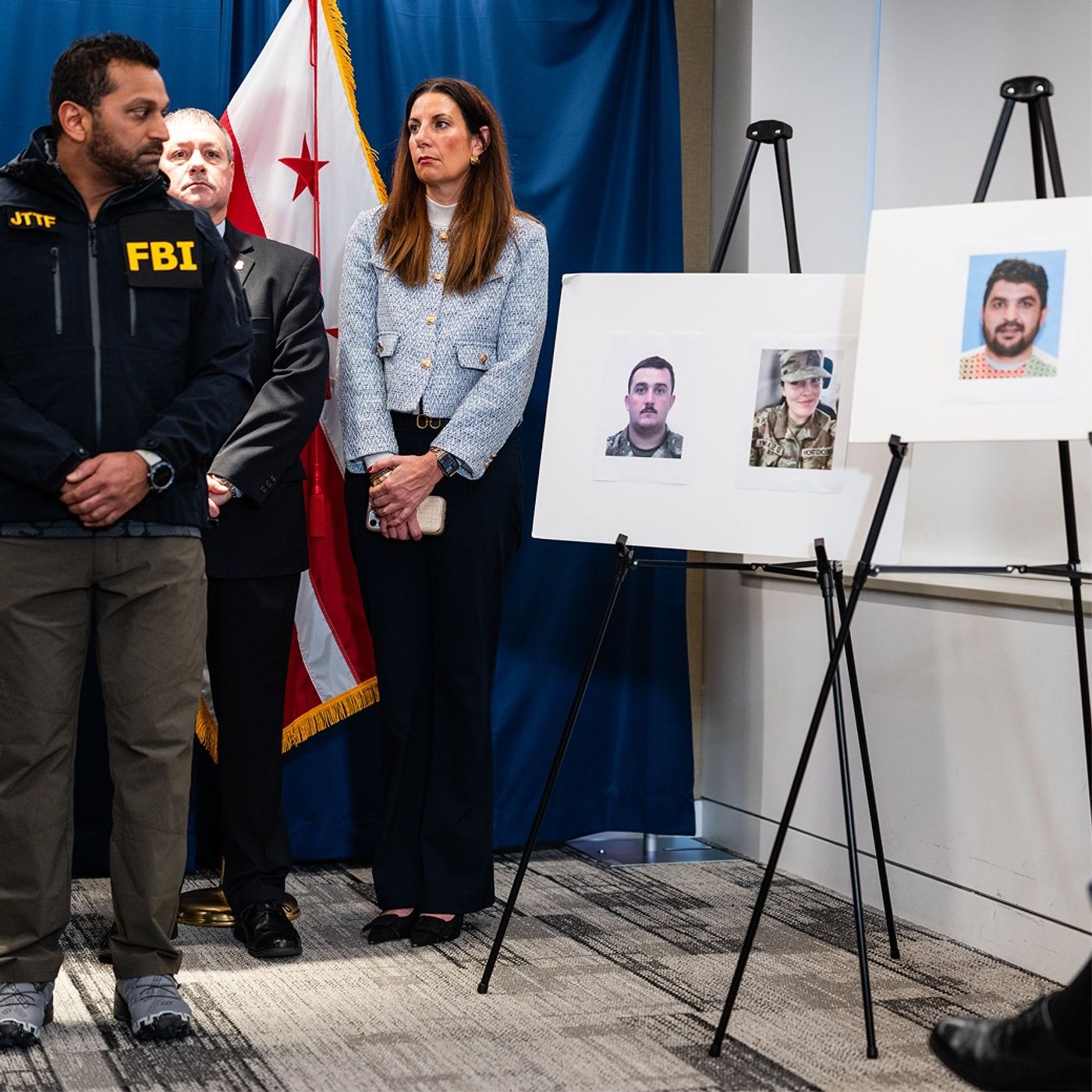
The Daily
The Fallout From the National Guard Shooting
00:29:20
What began as a horrific shooting of two National Guard members in downtown Washington last week has now led to a set of far-reaching changes to the U.S. immigration system. The suspect, Rahmanullah Lakanwal, was among the Afghans who came to the United States after the Taliban’s takeover of Afghanistan. Earlier, he served in a paramilitary unit that worked with U.S. forces. Hamed Aleaziz discusses Mr. Lakanwal’s journey to the United States, as well as the Trump administration’s wide-ranging response.
Loading summary
Transcript78 lines
- [00:00]
A
This podcast is supported by the Sierra Club. Across the country, those who take care of national parks and other public lands are facing layoffs and budget cuts, leaving public lands and everyone's access to them at risk. The Sierra Club is fighting back against these monumental attacks to protect these beloved places and the people who care for them. Join the fight because the future of public lands is worth fighting for. Donate now while all gifts are matched@sierra club.org the daily from the New York Times, I'm Michael Barbaro. This is the Daily heartbreak over the holidays. One of the two National Guard members shot in the ambush attack near the White House has passed away. Now the suspect in the days since an immigrant from Afghanistan gunned down two members of the National Guard in Washington, D.C. in response to that shooting, President Trump is ordering a review of all Afghan nationals in the US and halting, he says he has halted all asylum decisions.
- [01:02]
B
After the ambush attack on the two.
- [01:03]
A
National Guard, President Trump has ordered a sweeping new crackdown on immigration.
- [01:09]
B
He's also promising to expel millions of immigrants already here, revoking their legal status.
- [01:14]
A
That has left almost no corner of the system untouched. He claimed he's ready to expel anyone who is, quote, not a net asset to the United States. And he threatened to end immigration from, quote, all three third world country. Today, my colleague Hamid Al Azeez on the shooter's journey to the United States and the Trump administration's wide ranging response. It's Monday, december 1st. Foreign. We are turning to you because what began as a horrific shooting in downtown Washington last week has now become a set of far reaching changes to the US Immigration system which you cover for the Times, just how far reaching would you say these changes are?
- [02:21]
B
Yeah, you know, even for an administration that has rewritten all the rules on how to handle immigration, what we've seen in just the last couple days has been remarkable. They have blocked pathways for people to come to this country, to remain in the country and at the same time are going back and reviewing the records of people who are have already gained status in the United States. I haven't seen anything like this during my time covering immigration.
- [02:52]
A
That fallout, which we will discuss in detail in this conversation because it very much feels like a template for the future of immigration policy in the U.S. it feels like it very much hinges on the specific of who the shooter in this case was, where he came from, the circumstances of how he came into the US So let's talk about that.
- [03:13]
B
Yeah. The shooter's name is Rahmanullah Lachenwal. He grew up in Afghanistan during this time period in which the United States had invaded. You know, in fact, he was only 5 years old when 911 happened. And of course, we know that the United States came into Afghanistan shortly afterward. During that time, the United States relied heavily on local troops. And one of the key groups that was essential to the United States presence in Afghanistan was this group group called Zero Unit.
- [03:50]
A
Zero Unit, what is that?
- [03:52]
B
They were basically a CIA backed group that hunted Taliban members, were really highly trained, highly vetted by the US Government, essentially reported to the US Government and went after key leaders in the Taliban power structure.
- [04:13]
A
The tip of the spear when it comes to the U.S. government and military in Afghanistan.
- [04:18]
B
Exactly. And Mr. Lockhinwal was a part of that group. He was recruited by the CIA to join this unit, and his brother was a key leader in the group as well. So as a family, you know, they were really enmeshed in this organization that was essential to the United States ability to maintain security in Afghanistan. The but human rights organizations criticized the work of this Zero Unit group. They alleged that Zero Unit went further than was necessary and they called them death squats. They were conducting extrajudicial killings, killing civilians. These are all allegations that were made during this time about this group.
- [05:08]
A
And how comfortable were people like Lock and Wall Afghans in carrying out this kind of alleged brutality against other Afghans.
- [05:20]
B
Yeah. What we've learned is that Mr. Locknwal specifically really struggled with the actions that his group undertook in Afghanistan. And he expressed this to a friend in Afghanistan who actually spoke with one of our colleagues. And this friend said that Mr. Lockenwall was going through some mental health issues. And really, in his telling, this was clearly somebody who was traumatized from his experience as a part of Zero Unit. But despite that, he remained in this unit up until the Taliban took over the country in 2021.
- [06:06]
A
Well, bring us to that very dramatic moment. What happens to Lock and Wall when the US Announces it's going to withdraw, which, as we all remember, then brings the Taliban through the country toward Kabul. The Afghan military collapses in days and the US Military flees in what I think we can all agree is a kind of chaotic and somewhat humiliating withdrawal.
- [06:36]
B
For Lockenwell and other Afghans who closely helped United States government. Suddenly they become targets for the Taliban and there's this incredible pressure on the Biden administration to not leave behind those people who risked their lives in protecting the United States government.
- [06:59]
A
Essentially, they are traitors to the now re empowered Taliban.
- [07:03]
B
Yeah. And Mr. Lockenwell, along with other members of the Zero Unit were among the first people to flee Afghanistan and be brought by the United States government to America for protection.
- [07:19]
A
So he's brought to the United States by the Biden administration. What are his circumstances like? And what kind of vetting process occurs before he even gets to the US.
- [07:30]
B
So he comes to the United States as part of a program called Operation Allies Welcome. And as part of this program, the Biden administration set up layers of vetting. They collected biometrics from these people, and they ran their information through US Databases for any potential terrorism hits, criminal hits, any potentially derogatory information. And then when these individuals came to the United States, the Department of Homeland Security conducted another layer of vetting by customs and border protection officers at the airports.
- [08:12]
A
So pretty rigorous.
- [08:14]
B
Pretty rigorous. But at the same time, I think it's important to note that the agency's inspector general found that the Biden administration had allowed two people who were potential national security threats to enter the country. Despite that vetting, this was a really hurried process. This wasn't something that was planned. Years in the making, months in the making. So there were clear issues with this program. And Mr. Lockenwall comes really quickly as one of the first groups of people to arrive in the United States as part of this program. In September 2021, he settles down in Bellingham, Washington, a town that's near the Canadian border, and he's trying to find jobs there. He's a delivery driver. He's staying with his wife and five children in a apartment complex that is a place where people who are down on their luck are trying to rebuild their lives. But despite this kind of challenging circumstances for him, in April, during the Trump administration, he gains asylum.
- [09:26]
A
So he enters the US under the Biden administration, but he is officially granted asylum under the Trump administration.
- [09:33]
B
Yeah, you know, the Biden administration brought these people over from Afghanistan under a power known as parole. This is a temporary status that only lasts a few years. It did not provide these Afghans with a chance to stay in the country permanently. That was on Afghans individually in the country to figure out a way to stay here.
- [09:58]
A
And in this case, he figured it out.
- [10:00]
B
Yeah, this was clearly good news for him to get asylum, to have a chance to remain in the United States, to gain a green card, to gain US Citizenship. He was on that pathway. But the next thing we know is that he decides to drive from Bellingham, Washington, all across the country to Washington, D.C. where he finds himself in the downtown of the city, about a block or two from the White House. This is an area that has a lot of people going through it and there are restaurants and coffee shops. And he is walking on the sidewalk near a bus stop where he comes across two National Guard members from West Virginia, Sarah Beckstrom, a 20 year old, and Andrew Wolf, a 24 year old. And Mr. Lockenwell decides to pull out his gun and shoot both of them multiple times. As part of that gunfire, he himself takes on shots and he is down on the ground. These shots were heard by colleagues here at the New York Times. Our bureau is very close to the site of this shoot. And just a day later we found out that one of the guard members, Ms. Beckstrom, had died from her gunshot wounds.
- [11:32]
A
And suddenly all of these dramas are colliding. The war in Afghanistan, which Trump loathed as a forever war, and his use of National Guard across American cities, it's all colliding. And it's a very strange moment.
- [11:48]
B
Yeah, definitely. And you can see how for President Trump, this is something that he personally is tied to. And for him, I think it really confirms a lot of the claims that he's made in the past, a lot of his worst fears that an immigrant from a far flung country would come here and shoot two US Military members near the White House. And I think that's really reason for him and in his mind and his adviser's mind to undertake a crackdown on the immigration system that's unlike anything that we've seen this year.
- [12:41]
A
We'll be right back. This podcast is supported by bank of America Private Bank. Your ambition leaves an impression. What you do next can leave a legacy. At bank of America Private bank, our wealth and business strategies can help take your ambition to the next level. Whatever your passion, unlock more powerful possibilities@privatebank.bankofamerica.com what would you like the power to do? Bank of America Official bank of the FIFA World Cup 2026 bank of America Private bank is a division of bank of America, NA Member FDIC and a wholly owned subsidiary of bank of America Corporation.
- [13:21]
B
High interest debt is one of the.
- [13:22]
A
Toughest opponents you'll face unless you power.
- [13:25]
B
Up with a SOFI personal loan. A SOFI personal loan could repackage your.
- [13:29]
A
Bad debt into one low fixed rate monthly payback. It's even got super speed since you.
- [13:35]
B
Could get the funds as soon as the same day you sign.
- [13:38]
A
Visit sofi.compower to learn more. That's s o-fi.com P-O-W-E-R loans originated by SoFi bank and a member FDIC terms and conditions apply. And MLS 696891. So Hamed describe what happens to the immigration system in the days since this shooting and how the Trump administration has explained those actions.
- [14:04]
B
And they're telling top Trump administration officials.
- [14:10]
A
A 29 year old afghan who entered the United States under Biden's Operation Allies Welcome, a program following the disastrous withdrawal from Afghanistan. This is what happens.
- [14:25]
B
Including U.S. attorney Jeanine Pirro.
- [14:28]
A
This individual is in this country for one reason and one reason alone, the failure to vet in any way, shape or form this individual and countless others.
- [14:37]
B
The FBI director, Cash Patel. He was flown in by the Biden administration in September 2021 on those infamous flights that everybody was talking about. Nobody knew who was coming in. Nobody knew anything about it. His status was. And President Trump himself. This shooting was the result of a series of Biden administration failures, not only in the way that they ended the war, which President Trump has often criticized, but in the way that they let these Afghans, including Mr. Lackinwall, into the country without, in their words, the necessary vetting.
- [15:22]
A
Does the White House point to anything specific as they're critiquing the vetting process? Because, of course, as you told us a little bit earlier in this conversation, it's the Trump administration that grants that final asylum.
- [15:37]
B
Yeah, no, there's nothing specifically that they're pointing to. And when President Trump was asked about, you know, this idea that they granted this man asylum during his administration in April. April.
- [15:50]
A
Right.
- [15:51]
B
He wouldn't engage with that answer. And again, he returned to this idea that, you know, Biden brought him. And once people are brought to this country, there's not much that they can do. That's essentially what he said.
- [16:03]
A
Understood. So let's now turn to the crackdown that Trump has undertaken to the immigration system over the past few days and really understand the details of it.
- [16:16]
B
Yeah. Basically, in a matter of days, the Trump administration takes a series of actions that have just massive implications. At first, the Department of Homeland Security announces a pause on all immigration applications filed by Afghan immigrants. So for Afghans in the United States, this means a pause on their ability to seek a green card, U.S. citizenship. For them, their ability to stay in this country long term is now on hold.
- [16:50]
A
All that's just being shut down temporarily, perhaps, but. Shut down.
- [16:54]
B
Yes, exactly. And they build on that. They say they will review all asylum applications that were granted during the Biden.
- [17:04]
A
Administration, no matter which country the asylum.
- [17:07]
B
Seeker'S from, all of it. They're gonna go back and look at those applications and figure out if there were any issues with grants. And again, building on this idea that the Biden administration, in their words, did not do enough vetting.
- [17:22]
A
So suddenly we're now talking about a pause, not just in those seeking asylum from Afghanistan, but potentially thousands or tens of thousands of people seeking asylum from any country in the world.
- [17:32]
B
Exactly. So they're going back to look at those records, and they take it even a step further. They decide that actually we're going to review all green card holders from countries that President Trump already banned from travel to the United States. You know, these were countries like Iran, Eritrea, Sudan and others. So people who are already in the United States, who've gone through a lot of process, now have their applications under review.
- [18:03]
A
In a sense, this is a retrospective look back at those who have, in some cases, already been granted their green cards. They're basically saying the old system is suspect, so we will kind of reopen your green card.
- [18:16]
B
There is definitely that potential. They're going to go back and look at potentially hundreds of thousands of records.
- [18:22]
A
Wow.
- [18:23]
B
A massive review. We don't know how this is going to take shape and how they're going to do this, but they've announced that they will do this. And then on Friday, after they'd already announced that they were going to review all the people that had gotten asylum between 2021 and 2024, but now people already in the United States trying to gain asylum in the process, those applications are now on hold as well, really going after the entire asylum system. And on that same day, the State Department announces that there will be no more visas for Afghan nationals, cutting off another way for Afghans to enter the United States. In fact, a State Department cable that we obtained detailed how Afghan nationals who already had their visas granted and printed and were going to be dispersed to those Afghans, those needed to be destroyed. Wow. So they're taking every step possible to target Afghans, not only in America, but abroad.
- [19:29]
A
And not just from what you said, Afghans, but really anyone seeking asylum or a green card. In a very real sense, it feels like the entire system of giving foreigners refuge in the US for political or economic circumstances is on pause. Yeah.
- [19:51]
B
You know what's really remarkable here is this idea that, yes, we're going to pause a bunch of people from entering the United States, but we're also going to go back and we're going to review all people who've already obtained a form of status in the United States. We're going to go back and look at those records as well. So it's not Only prospective, but it's retrospective as well.
- [20:13]
A
Does this administration have a legal power to do everything you're describing? Because it is so sweeping and so retrospective?
- [20:22]
B
Yeah. These will undoubtedly lead to legal challenges, especially this idea of going back. These are people who have gone through layers of vetting, layers of interviews, use extensive interaction with the US Government that if they take action on those people, that will lead to, I think, legal action across the United States.
- [20:46]
A
So we're going to have to wait and see how this plays out in our legal system. I want to return for just a moment to Afghanistan, because as broad as some of these potential changes to our immigration system are, what stands out to me is what these changes will mean for the future of that promise that the US Made to Afghans who helped America in the war. And in the case of Lock and. Well, yes, the promise was kept, but it's clear from Trump's actions that the promise won't be kept for anyone else from Afghanistan in the future. And there's a very revealing exchange about this on social media over the past couple of days that I want to discuss with you. It begins with an editorial from the Wall Street Journal, which is a very conservative editorial board. And I'm going to read you what they wrote in this editorial.
- [21:40]
B
Okay.
- [21:41]
A
Quote, some will say that the shooting in downtown Washington means that the United States should never admit refugees like Lock and Wall, but the alternative is abandoning allies who assist Americans in war. And the editorial goes on to say, you can be sure Americans will fight overseas again, and our troops will need allies on the ground to succeed. How many, the editorial asks, will assist the US if they believe that there will be no exit for them? Basically, this editorial asks what happens when the US Just leaves people behind on the battlefield.
- [22:25]
B
Yeah. And one person who reads this editorial and disagrees with it strongly is the chief of President Trump's immigration crackdown, Stephen Miller. He went online on social media and said, quote, this is the great lie of mass migration. You are not just importing individuals, you are importing societies. No magic trick. Transformation occurs when failed states cross borders at scale. Migrants and their descendants recreate the conditions and terrors of their broken homelands.
- [23:05]
A
Will you just translate that?
- [23:08]
B
Yeah. I mean, I think what's remarkable about this tweet is that Miller is not only turning to the immigrants themselves who arrive in the United States, but he's saying that their children are a threat as well.
- [23:23]
A
Right. And I think it's worth saying just how much the Wall Street Journal editorial and Stephen Miller's statements completely talk past each other. Because the editorial is saying that American credibility and the future of our foreign policy requires us to keep our commitments to those who risk their lives for the US that it's foundational to our ability to function in the world. Miller's statement completely bypasses that and says broken people from broken societies are just an existential danger to the U.S. therefore, we can't let them in. But what Miller's argument doesn't grapple with at all is the reality that America played a part and a pretty big part in breaking Afghanistan in the first place.
- [24:15]
B
Yeah, for Miller, that's besides the point. It's not about what America owes people and countries. It's about who's good for the United States and who's not good. People who are from countries that he has deemed to be failed societies do not deserve the opportunity to come to America.
- [24:35]
A
Right. It's kind of an open embrace of collective punishment, because in Lock and Wall, we clearly have someone who, and we don't quite understand the mechanics of it, but becomes at some point in his life, radicalized. But he's just one of thousands, if not tens of thousands of Afghans who the US previously made a commitment to, to protect and bring to the US And Trump and Stephen Miller are now saying because one of them did this thing, none of them can come to.
- [25:13]
B
The U.S. yeah, exactly. I think that's right. But I also just want to point out this idea that, like you're mentioning collective punishment, these Afghans who helped the American military have been supported by veterans. You know, I've spoken with veterans who have personally tried to bring those people who helped them, translators and others to the United States, bring them to safety. I mean, the plot point of this, this idea of Afghans helping American military members has been in movies and shows. And for now, this idea of helping Afghans who helped the American military in Afghanistan, that's over.
- [25:57]
A
Just to end Hamid, I don't want to entirely lose sight of the National Guard and its place in this story. The second Guardsman who was shot remains in critical condition in a hospital. And this deployment of the National Guard in Washington remains a source of really profound controversy.
- [26:21]
B
Yeah, this idea of bringing the federal forces to the city was really opposed by a lot of citizens in Washington, D.C. But in the days since the shooting, President Trump has announced that he was planning to send 500 more National Guard members to Washington, D.C. so now this deployment, far from shrinking because of this shooting, is now going to expand because of it.
- [26:59]
A
Muhammad, thank you very much. We appreciate it.
- [27:02]
B
Thank you for having me.
- [27:12]
A
On Sunday, the Secretary of Homeland Security, Kristi Noem, told NBC News that the alleged shooter may not have become radicalized until after he immigrated to the United States. That conclusion, if true, could undermine the Trump administration's claims that the Biden administration had failed to properly vet him before he arrived into the country. We'll be right back.
- [27:49]
C
Trust still matters. Transparency still matters. Experience still matters. With Lightstone Direct, you get all three. Born in New York City, Lightstone is a $12 billion real estate institution built on integrity. Lightstone Direct brings you the same rigorous approach and the same multifamily and industrial opportunities we pursue with our own capital. In fact, Lightstone Co invests at least 20% alongside you. That's true alignment. You're an institution. It's time to invest like one. Visit lightstonedirect.com NYT for accredited investors only. All investments involve risk.
- [28:25]
A
Today we'll att attempt a feat once thought impossible, overcoming high interest credit card debt. It requires merely one thing, a SOFI personal loan. With it, you could save big on interest charges by consolidating into one low fixed rate monthly payment. Defy high interest debt with a SOFI personal loan. Visit sofi.com stunt to learn more. Loans originated by SoFi Bank NA member FDIC terms and conditions apply. NMLS 696891 here's what else you need to know today. Over the past few days, President Trump has carried out a series of profoundly contradictory actions in his war against drug cartels. Trump declared in a post on social media that the airspace above and around Venezuela, which he is accused of flooding the US with drugs, should now be considered closed. It was his latest threat against the regime of Venezuela's authoritarian leader, Nicolas Maduro. But at the same time, Trump announced a full pardon of a former president of Honduras, Juan Orlando Hernandez, who has been convicted in U.S. federal court of conspiring with local drug cartels to bring vast amounts of cocaine into the United States. Meanwhile, on Sunday, members of Congress from both parties said that the Trump administration may have committed a war crime in its offensive against boats allegedly carrying drugs in the Caribbean. According to the Washington Post, Defense Secretary Pete Hegseth gave a verbal order to kill everyone aboard such boats, leading a US Military commander to carry out a second strike to kill those who had survived an initial airstrike back in September. Do you believe if there was a second strike to eliminate any survivors, that that constitutes a war crime? It seems to, if what has been reported is accurate. I've got serious concerns about anybody in that, you know, chain of command stepping over a line that they should never step over, you know, going after survivors in the water that is clearly not lawful. Both Democratic Senator Mark Kelly of Arizona on CNN and Republican Representative Mike Turner of Ohio on CBS said that such a second strike would violate the rules of war. Obviously, if that occurred, that would be. Be very serious, and I agree that that that would would be an illegal act. Turner said that the Post reporting on the second strike would become the focus of an existing congressional investigation into the airstrikes on the boats. Today's episode was produced by Rachelle Banja and Mood sa. It was edited by Patricia Willins with help from Michael Benoit and was engineered by Alyssa Moxley. Contains music by Dan Powell, Marion Lozano and Diane Wong. That's it for the Daily I'm Michael Balboro. See you tomorrow.
- [32:01]
C
Trust still matters. Transparency still matters. Experience still matters. With Lightstone Direct, you get all three. Born in New York City, Lightstone is a $12 billion real estate institution built on integrity. Lightstone Direct brings you the same rigorous approach and the same multifamily and industrial opportunities we pursue with our own capital. In fact, Lightstone Co invests at least 20% alongside you. That's true alignment. You're an institution. It's time to invest like one. Visit lightstonedirect.com NYT for accredited investors only. All investments involve risk.