← The Daily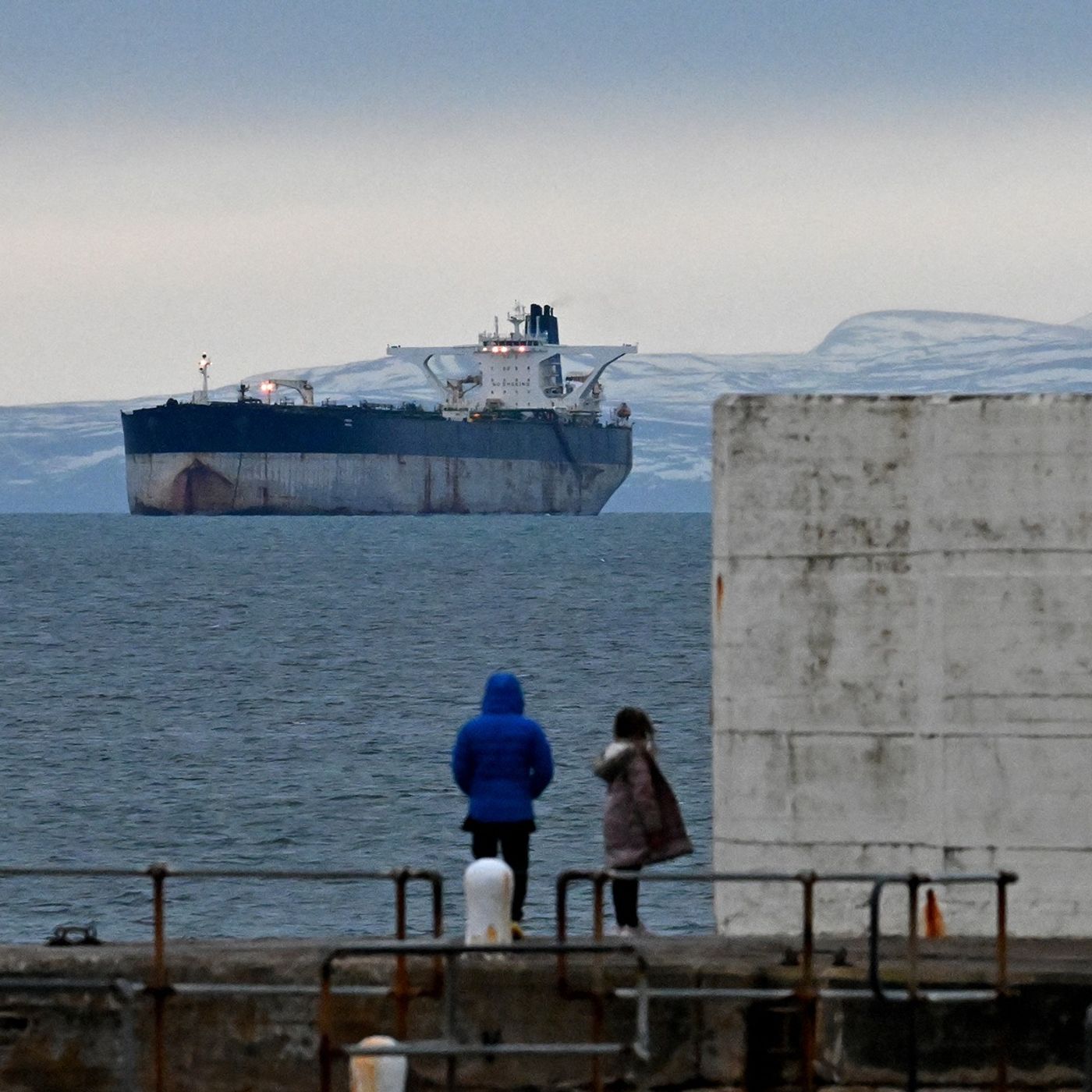
The Daily
The ‘Ghost Fleets’ Moving Oil Around the World
00:26:41
Since December, the U.S. has been stopping and seizing oil tankers traveling in and out of Venezuela. They are part of what is known as a ghost fleet — tankers that try to secretly move oil around the world, funding states such as Venezuela, Iran and Russia. Christiaan Triebert, a reporter on the Visual Investigations team, explains what these ghost fleets are and why their days might now be numbered.
Loading summary
Transcript104 lines
- [00:00]
Rachel Abrams
Brought to you by the Capital One Savor Card. With Savor, you earn unlimited 3% cash back on dining, entertainment and at grocery stores. That's unlimited cash back on ordering takeout from home or unlimited cash back on tickets to concerts and games. So grab a bite, grab a seat and earn unlimited 3% cash back with the saver card. Capital One what's in your wallet? Terms apply. See capitalone.com for details. From the New York Times, I'm Rachel Abrams, and this is the Daily. President Trump says that the United States has now seized an oil tanker off the coast of Venezuela. Since December, the US has been stopping and seizing oil tankers traveling in and out of Venezuela, largest one ever seized, actually, after President Trump imposed a blockade on ships carrying sanctioned Venezuelan oil, showing.
- [00:57]
Christiane
US Helicopters surrounding the ship.
- [00:59]
Rachel Abrams
You see that there, ships that are part of what's known as a ghost fleet.
- [01:03]
Christiane
That's the U.S. coast Guard seizing another ghost fleet tanker. This now as the US Is pursuing a third oil tanker near Venezuela.
- [01:11]
Rachel Abrams
Oil tankers that try to secretly make their way around the world.
- [01:14]
Christiane
Four vessels are now in American custody. Several more are being tracked.
- [01:18]
Rachel Abrams
It marks the fifth tanker the US has seized, a 6 6th oil tanker, now a 7th Sanction oil tanker funding petro states like Venezuela, Iran and Russia. Today, my colleague Christian Trebert on what these ghost fleets are exactly, and how their days might be numbered. It's Tuesday, January 27th. Christiane, welcome to THE Daily.
- [01:46]
Christiane
Thank you.
- [01:47]
Rachel Abrams
So, Christiane, the U.S. has been seizing and stopping oil tankers coming in and out of Venezuela for weeks now. And at first this seemed like part of a pressure campaign against President Nicolas Maduro, but then obviously the US Captured Maduro. And I think a lot of people assumed that this effort, this pressure on the ships would stop, but instead it's actually not only continued but expanded. You are the newsroom's resident expert on these oil tankers. You've been tracking all of this as part of our visual investigations team. So let's start at the very beginning. What is a ghost fleet or shadow fleet?
- [02:22]
Christiane
That's a very good question. Besides shadow fleet and ghost fleet, there's a third term which is dark fleet. So it's interesting because there's not a well defined definition. It's basically a term for oil tankers that use deceptive practices to kind of hide that they're transporting sanctioned oil, oil that's sanctioned by the United States. And these ships want to hide that they're picking up this oil and delivering this oil. Why do I know a lot about it? It's because that after the full scale invas Ukraine by Russia in February 2022, there was this same sudden surge in interest, like ghost fleet, dark fleet, shadow fleet. And my manager asked me, like, chris, can you find out what are actually the ships of this fleet? So that's how it started for me. But there are hundreds of tankers, maybe even thousands, we don't really know. And basically, these tankers are shipping sanctioned Russian oil or sanctioned Iranian oil and Venezuelan oil. They're always shipping oil for either of these three countries, and sometimes for all three. Most of the oil goes to China, and a significant portion goes to India as well. And these ships have decided to do that. There's a lot of money to make if you're shipping sanctioned oil and they're trying to hide that.
- [03:32]
Rachel Abrams
Got it. Okay. So do you have any sense, given the fact that this is literally called a shadow fleet, of how much of the world's oil is transported this way?
- [03:41]
Christiane
It's hard to say. Right, because they're obviously trying to deceive everyone that they're actually shipping this oil. But it's probably around, like, 10 to 20% of oil tankers worldwide that have engaged in this kind of activity, which is quite a bit. But given it's only related to Russia, Iran, and Venezuela, the share of the oil on the world market is about 3 to 9%, according to the data that's available.
- [04:04]
Rachel Abrams
So obviously, sanctions are meant to hurt countries economically. But what are the goals in these specific cases?
- [04:10]
Christiane
So the point of these US Sanctions is to basically limit the revenue that's going to the Kremlin to fund their war effort in Ukraine to Iran, which the US Says, you know, they're using the revenue from oil to fund their activities with Hezbollah and other activities that the US doesn't like. And the same with Venezuela. It's propping up the Maduro government at the time. But what we have seen is that they're successful in shipping this oil around the world and still earning significant amounts of money on that oil.
- [04:39]
Rachel Abrams
Basically, nobody's stopping them, even though technically there are sanctions in place.
- [04:42]
Christiane
Yes, that's exactly right. These ships have been shipping that oil, and there's not really any kind of enforcement on these ships. So the shipments of oil just continue. But all of that changed in December.
- [04:57]
Rachel Abrams
Okay, so let's talk about what happened in December. What specifically did we start seeing in December?
- [05:04]
Christiane
There's this very large military pressure campaign on the Maduro government in Venezuela by the US There's a buildup of a huge military Force ahead of, of course, Maduro's capture. But so the Trump administration said, any oil tankers that want to ship Venezuelan oil that is not going to the United States, we're going to stop these vessels, board them, and potentially even seize them. And that was not just like an empty threat. It actually started happening.
- [05:34]
Rachel Abrams
We begin with the Trump administration's dramatic escalation with Venezuela and the Nicolas Maduro regime seizing an oil tanker off the coast of Venezuela.
- [05:43]
Christiane
We saw one tanker being stopped, another tanker being stopped. Commandos took over another tanker, fast roping onto the deck and moving up to the bridge to seize, and another tanker being chased for weeks.
- [05:54]
Jonathan Swan
And this one tried to get away. It resulted in a sort of a slow motion chase.
- [05:58]
Rachel Abrams
So basically, suddenly, after years of not enforcing these sanctions, the US now seems very serious about stopping these ghost fleets.
- [06:04]
Christiane
Absolutely. And it had a very interesting effect on this very large group of hundreds, if not thousands of tankers that are part of the shadow fleet, because we saw that other tankers were going to Venezuela that kind of like turned around and were like, oh, we don't want to get boarded by a US Navy vessel.
- [06:22]
Rachel Abrams
They were spooked.
- [06:23]
Christiane
They were spooked. And at the same time, the tankers that were already in Venezuela were kind of like, we probably should stay in Venezuela and probably shouldn't leave. And then in the beginning of January.
- [06:34]
Jonathan Swan
The United States of America has successfully carried out a large scale strike against.
- [06:39]
Christiane
Venezuela and its leader, President Nicolas Maduro.
- [06:43]
Jonathan Swan
Who has been captured and flown out of the country.
- [06:47]
Christiane
The United States enters Venezuela and captures Maduro and it's chaos. And I got this call from Anatoly, our colleague in Venezuela, and he's like, hey, Chris, I am being told that four tankers have left port. And I'm like, okay, let me check. And indeed, on satellite imagery, it was visible that these four tankers had departed Venezuelan waters and were sailing north. But not only that, I also realized that besides these four tankers, there were 12 otters that just disappeared.
- [07:23]
Rachel Abrams
What do you mean by disappeared?
- [07:24]
Christiane
They disappeared on satellite imagery. They were there the day before and the next day they were gone. So it seemed all these tankers left in a coordinated effort to defy the partial blockade by the United States on Venezuelan oil experts. And one expert I talked to said, this is a zombie race.
- [07:43]
Rachel Abrams
A zombie race, right.
- [07:46]
Christiane
So when you leave altogether in a group of 16, the odds that you're going to get caught are way smaller than when it's just one vessel leaving or two vessels leaving, because the United States has a huge Military force buildup around Venezuela. But we saw that, you know, over the holidays, for three weeks, they chase one tanker. Imagine having to chase 16 of them. So the odds for these tankers leaving in a coordinated effort, the odds of being captured by the United States are way smaller.
- [08:16]
Rachel Abrams
Strength in numbers.
- [08:17]
Christiane
Strength in numbers indeed. Which is very striking that you can imagine that, oh, Maduro's being captured and all these ships are basically deciding amongst themselves, are we going to go make a run for it or not. And it seems a group of 16 indeed did. So me and my colleagues were thinking, what's going on? Where have these tankers gone and will they be able to outrun the Americans? Which would be wild, right? Because this is arguably the most powerful military in the world and are they continuing to evade these sanctions on them or will they eventually get caught? So we set out and try to find out.
- [08:55]
Rachel Abrams
We'll be right back.
- [08:58]
Jonathan Swan
I'm Jonathan Swan. I'm a reporter at the New York Times. You know, when people think about the media, your favourite podcast, you know, cable news panels and different things, I think it's fair to say that myself and my reporting colleagues at the New York Times exist at the more unglamorous end of that spectrum. Our job is to dig out the facts that provide a foundation for these conversations. These facts don't just come out of the ethereum. It requires reporters to spend hours upon hours talking to sources, digging up documents. Also, if the story is a story that a powerful person doesn't want in print, there's threats of lawsuits and all kinds of things. So it's a really massive operation. There aren't that many places anymore who invest at that level in journalism. Without a well funded and rigorous free press, people in power have much more leeway to do whatever the heck it is that they want to do. If you think that it's worthwhile to have journalists on the job digging out information, you can subscribe to the New York Times because without you, none of us can do the work that we do.
- [09:59]
Rachel Abrams
Christiane, before the break, you described this kind of cat and mouse game that the US has been playing with these ships and this question of whether the US will ultimately be successful in enforcing its sanctions, specifically with these 16 oil tankers, which, as you described, seem to have just sort of disappeared from Venezuelan waters. You had mentioned that you and our colleagues wanted to set out to find out where they'd gone. Tell us how you started doing that.
- [10:25]
Christiane
Yeah. So these ships engage in a lot of deceptive practices. And because they use these deceptive techniques. It's pretty hard. But if you know where to look, you can get some pretty good clues.
- [10:35]
Rachel Abrams
Well, how do you even know where to look?
- [10:37]
Christiane
So, for example, every oil tanker needs to send out a location signal, which is for safety. They're very big, and you know, if they don't send out a location signal and another ship doesn't see them in low visibility, for instance, it's going to be a disaster. So there's an agreement. All the bit large ships should send out this transponder signal. But the transponder signal also allows anyone on the planet to kind of see where these ships are. There's a website called Marine Traffic, and you can see thousands of vessels that you can just track in real time. But from all those 16 ships that disappeared from Venezuelan waters, we couldn't track any of them. Why? Because they either switched off their transponder signal, which means going dark, or they faked their location signal to pretend they're actually off the coast of West Africa or Asia. A method that's known as spoofing. They're spoofing their location signal.
- [11:30]
Rachel Abrams
Okay, so I understand all of that. I think it sounds like it's vpn, but for ships. Right, Right. But then how do you actually go about figuring out where the ships are?
- [11:39]
Christiane
So we basically just look at satellite imagery. It shows the coast, it shows the water, and it shows ships in the sea. And I can see there is a tanker with a red Is a larger tanker with a green deck, and we're trying to identify which tankers they are.
- [11:56]
Rachel Abrams
Do you have picture satellite images on your computer to show me that we can kind of describe a little bit? Let me. I'm going to move my seat over. Okay, so now what we're looking at is a tab on this marine traffic website that looks like a map of Venezuela with thousands of arrows that are red or purple or green. Tell us what these different color codings mean. And what is an individual arrow?
- [12:20]
Christiane
So every arrow is a ship that's sending out a location signal. Green means it's carrying cargo. Purple means it's like a pleasure craft. So like a yacht or a cruise ship. And red are tinkers. And that's what we're interested in. Okay. And what you can see here is three vessels, right?
- [12:38]
Rachel Abrams
I see three red arrows, yep. Okay.
- [12:40]
Christiane
But if we look at the satellite image, we can see that there are way more ships there.
- [12:43]
Rachel Abrams
There are way more than three oil tankers on the satellite image. And yet when we look at the marine website, you're saying there are only three ships that are sending out transponder signals.
- [12:53]
Christiane
Exactly. So all these ships that send out a legitimate signal, they're usually okay because they have nothing to hide. Right. They're showing a train, Venezuela, and they're saying, like, that's for anyone to see in the world. Anyone within the connection can see, hey, they're sending out this signal from Venezuela. But I'm very interested in the ships that appear in the satellite image, but that are not sending out a signal, so they're not visible on that website. So then I can try to identify these ships by zooming in on the satellite image, seeing what color the deck is, how long it is, how wide it is. And then I can check that information against a database of tankers that I've built up over the past few years together with my colleagues that list tankers that are in the schedule fleet by name. But it's very tricky because they change their names not only in online registries or shipping registries, but also when you would see the ship in person. There's a group called TankerTrackers.com company that is specialized in this, and they have a photographer onshore in Venezuela that kind of like, secretly takes photos of these tankers. These photos are usually not published, but we have access to them and we can get an insight on how do these ships actually look like from the ground. Right. Sometimes we try to find out which tankers they are by trying to see if there's any sailors on board, any crew members that are maybe posting a TikTok video or Instagram videos.
- [14:09]
Rachel Abrams
What are they posting about exactly? Is it like, hi, I'm on a.
- [14:11]
Christiane
Ship about their lives? And they're, like, excited. Maybe it's the first time in their lives in Venezuela. They're like, hey, look where I am. This is so pretty. And they're showing their family members, they're showing their fellow Merchant Navy crew members, like, where they are. And it's all community online. And, you know, it's interesting, like, the oil is sanctioned and they're engaged in what the US Sees as illegal activity. But of course, like, if this oil is being picked up in Venezuela, then brought to China, and you're a crew member on board of the ship, why would you really care about US Sanctions?
- [14:41]
Rachel Abrams
It feels like if you're going to go through all this effort to obscure your name and location, you would tell the people that work on your ship, please don't post to TikTok.
- [14:48]
Christiane
You would think so, but it seems we as human beings just love to share Things on social media, I guess.
- [14:54]
Rachel Abrams
So what can you learn from these photos and videos then?
- [14:57]
Christiane
What is very fascinating is that we have seen ships that are obscuring their own name in very kind of rudimentary ways. We've seen bed sheets being hung over the hull to obscure the name. And in many instances, actually, we have seen them just like, completely painting over their actual name and just putting on the name not of a fake ship, but of a real ship that is kind of like the same in its appearance, but a ship that actually, when you go to databases, you realize it's a ship that has been sent to the scrapyard, doesn't exist anymore. So it's a lot of ways of obscuring their real identities. But that makes it also kind of fascinating and fun to find out. Can I find out which tanker it is?
- [15:44]
Rachel Abrams
Okay, so they're hiding where they are. They're hiding their real names. What else are they doing in order to operate in secret?
- [15:50]
Christiane
So they also changed their flag. So all these large vessels need to be registered in a country, and then they're flying the flag of that country. So they can, for example, say, like, oh, we're flying the flag of Cameroon or the Marshall Islands or Panama or Guyana. But actually, when you go to the shipping registries of these countries, it turns out that they're at times not even registered there. So they're flying a fake flag. And what we've seen recently a lot is ships changing their flags to Russia.
- [16:15]
Rachel Abrams
And why Russia?
- [16:16]
Christiane
Because they think it will protect them against the U.S. like, boarding a vessel like us is boarding vessels and saying, hey, you're not flying a real flag. But boarding a ship that actually flies an official Russian flag is a whole nother thing. It could cause a major diplomatic crisis between these two superpowers. And that's interesting, because if that's what they're trying to do, claim Russian protection, it hasn't worked because the United States has already boarded two vessels that are flying an official Russian flag.
- [16:44]
Rachel Abrams
But just to go Back to the 16 tankers that left Venezuela right after Maduro was captured, what were you able to find out about those tankers and where they went?
- [16:51]
Christiane
So of these 16 vessels that disappeared, we found a couple that were sailing in the Caribbean Sea, but also a couple that were already far out in the Atlantic Ocean. So we contacted the United States and said, like, are you aware of these ships? Are you. Like, are they going to be stopped? Like, what's going on?
- [17:05]
Rachel Abrams
You contacted the military?
- [17:06]
Christiane
You contacted the military, my colleague, and they said, yeah, we're tracking them and we're trying to seize some of them. And that actually happened. At least three of the vessels that we reported on that had disappeared were indeed stopped and boarded by the United States. But what's also very interesting to me is that some of these vessels actually seem to have made it through. There is a group that's still sailing out there and is by now probably close to Africa. The zombie race worked out for them. And there is another group of tankers that turned around and went back to Venezuela and seems to be obeying U.S. orders right now.
- [17:45]
Rachel Abrams
And what does that mean?
- [17:46]
Christiane
It's hard to know exactly what's happening, but after Maduro was captured, the US Basically started directing where Venezuela's oil is allowed to go and where these tinkers can ship it. And they are shipping Venezuelan oil now to storage sites in the Caribbean, hoping to sell that Venezuelan oil on the global world market, but under the US directive. So what you kind of see is that some of these Shadow fleet vessels are now working for what the US wants.
- [18:18]
Rachel Abrams
I'm still kind of struck by the fact that these ships are going through all of this effort to evade the authorities, which seems to have worked. Except here you are, Christiane. You have been able to track so many of them. So I sort of wonder if you've been able to track so many of them through TikTok or other means, satellite images, why has this been able to go on for so long?
- [18:41]
Christiane
So these sanctions come from the U.S. treasury Department, but they're not usually the enforcer of these sanctions. Right, we see that now. Like these ships are not being stopped by a ship from U.S. treasury Department. They're being stopped by the U.S. navy or, you know, the U.S. coast Guard. And a lot of it relied on kind of like self regulation, meaning like you're, let's say an oil trader or a shipper or whatever. You probably don't want to touch that Iranian oil because if you do, you may get in trouble with the U.S. authorities. And that means like the next time you get a job in like picking up oil in the US and bringing it somewhere, you're probably not going to get that job because you touched Iranian oil in the past. But there's also something else that's been going on and has been allowed to go on, and that's to do with insurance.
- [19:24]
Rachel Abrams
Insurance.
- [19:25]
Christiane
Insurance, absolutely. Because you can imagine if this, if an accident happens with one of these big ships laden with oil and it hits something in a port and there's a huge oil spill that's going to cost billions and billions of dollars. So all these ships need to have insurance. And many ports in the world doesn't matter whether it's Houston or whether it's a port in Iran or a port in China. These ports will say like, hey, do you have legitimate insurance? Because you know, if something happens, we want to make sure that someone pays for the cleanup.
- [19:54]
Rachel Abrams
So, okay, I understand why you might want an insurance company to insure your boat full of oil. But if you are in a legally operating boat full of oil, how do you get insurance?
- [20:04]
Christiane
I mean, there are not that many insurers in the world that can take this on. And most of these insurance companies are based in Western countries. So what has been happening is that many of the shadow fleet oil tankers are lying to these insurers when they ask for insurance. But what has happened recently, maybe partly because of the reporting we did on that and also just in general and increased scrutiny on these ships, these American and Western insurance companies are yanking insurance away from these ships. So now these ships are getting insurance from less reputable companies or sometimes even companies that may not really exist that are often linked to Russia, which is also pretty scary, right? Because let's say something happens with one of these shadow fleet tankers, who the hell is going to pay for it?
- [20:53]
Rachel Abrams
Do you have any sense, Christiane, as to how this pressure campaign on the shadow fleet might end?
- [20:58]
Christiane
So one striking thing that has happened after Trump met with European leaders at Davos is that Macron tweeted and said, hey, we as France also stopped and boarded a tanker that was carrying Russian sanctioned oil. So that's a striking spillover effect of Trump's gunpow diplomacy where at least a one time ally, France is now doing the same thing as the US Is doing, which is stopping and boarding these shadow fleet tankers. But also what I'm looking at right now is at a completely different side of the world, but very much linked and that's Iran.
- [21:42]
Rachel Abrams
President Donald Trump is ramping up pressure on Iran.
- [21:45]
Christiane
Yeah, he says big force is heading to the region as the country continues to kill protesters in the streets. On the on Thursday night, Trump said that he's moving an armada of military vessels towards the region. And the next day, on Friday, the.
- [22:02]
Jonathan Swan
Trump administration is issuing new sanctions on Iran's shadow fleet of oil vessels. As the President sends Iran a stern.
- [22:09]
Christiane
Warning, the U.S. treasury Department announced a new set of sanctions specifically targeting oil tankers because the US Wants to put more pressure on Iran given their crackdown on the anti government protests so what I find very interesting is that when we remember how this started in Venezuela, where you had the US Military building up its forces around Venezuela and the US Threatening and then stopping and boarding tankers linked to Venezuela's oil trade, we see something similar happening with Iran right now. The US Is moving its military vessels there. We see that actually happening on satellite imagery. And the question is now, are we going to see something similar happening regarding Iran as what we saw happening in Venezuela?
- [23:09]
Rachel Abrams
If this effort to stop ghost fleets does, in fact expand, I wonder how much that threatens not just ghost fleets, but threatens a disruption of the global oil market generally. I mean, you could imagine maybe that's one of the reasons why sanctions have not been super well enforced before.
- [23:28]
Christiane
Totally. You know, Iran and Russia are reliant on their income that they have from exporting their oil, and there may be less shippers willing to transport their oil. And that means that it will be harder for them, for Iran and for Russia to get their oil out, and it will get more expensive to get that oil. And as I said before, like China and also India are the biggest buyers of this Iranian and Russian oil in most instances, and will be more expensive for China to buy this oil.
- [23:58]
Rachel Abrams
But just to focus on the US For a second, do we have any sense of how any of that could affect oil prices here domestically? Like, what would change in the United States?
- [24:09]
Christiane
The global oil market doesn't, like when there is uncertainty. So each time a ship is getting seized, there's a small uptick in the price of oil, but that kind of, like, washes out over time. And what we hear Trump saying is that, you know, this is the reason why the United States is doing what it's doing in Venezuela. A major reason is the oil, if not the primary reason. Right. So the idea behind that from the Trump administration seems to be we want to get oil prices down for the United States, but the question is whether that will indeed happen.
- [24:43]
Rachel Abrams
Okay, and beyond the impact that this all might have on the global oil market, what about the broader geopolitical impacts of enforcing these sanctions, seizing these oil tankers? Like, could the countries that the US Is targeting retaliate in some meaningful way?
- [24:58]
Christiane
Well, I'm very curious. What is the reaction going to be of Iran and Russia? Because so far they haven't done much except sending out written statements. It's not that they sent their own navy to retaliate by seizing oil tankers of the west, but as pressure increases on them, and if their cash flow even is more reduced because of these actions, by the United States and now also by France. Are they feeling they have to take action to kind of get their oil moving around the world? Like, how are they going to generate income? Because they will need that money to continue to be in power. And if the US and now also allies of the US Are stopping these vessels, what's going to happen? So the question of how these governments are going to survive is the main question on my mind moving forward.
- [25:56]
Rachel Abrams
Christiane, thank you so much.
- [25:57]
Christiane
Thank you so much for having me.
- [26:04]
Rachel Abrams
We'll be right back.
- [26:11]
Christiane
This podcast is supported by Amazon MGM Studios. New film Melania Everyone wants to know. So here it is this Friday.
- [26:20]
Rachel Abrams
Being the first lady requires managing many.
- [26:23]
Christiane
Obligations, witness history in the making. There is much to accomplish in the next four years.
- [26:29]
Jonathan Swan
20 days in her life.
- [26:30]
Christiane
Here we go again to becoming first lady. Hi, Mr. President. Congratulations. Did you watch it?
- [26:38]
Rachel Abrams
I did not.
- [26:39]
Christiane
Yeah, I will see it on the news. Melania. Exclusively in theaters this Friday.
- [26:44]
Jonathan Swan
Riti PG Parental guidance suggested.
- [26:46]
Christiane
Hey, it's Vaughn Vreeland from New York Times. Cooking Baking season is here. Almost any cake can be turned into a one mole cake.
- [26:55]
Rachel Abrams
There's nothing better than a freshly baked croissant for my oven.
- [26:57]
Christiane
Oh, my God. I could eat 5 billion of these. That is a brownie.
- [27:01]
Rachel Abrams
Don't be afraid. This is so forgiving.
- [27:04]
Christiane
These are deluxe cookies.
- [27:06]
Rachel Abrams
At New York Times Cooking We've got it all.
- [27:08]
Christiane
We've got tips, recipes, videos for whatever.
- [27:11]
Jonathan Swan
You want to bake.
- [27:12]
Rachel Abrams
So come bake with us@nytcooking.com here's what else you need to know today. Greg Bovino, the Border Patrol official in charge of President Trump's immigration enforcement in Minneapolis, is expected to leave the city, according to two U.S. officials. The decision to move him out came days after he made the unsubstantiated claim that Alex Preddy, the man who was shot and killed by federal agents, was planning to, quote, massacre law enforcement officers. Bovino's departure comes as President Trump moves to tamp down anger over the second fatal shooting in the city. Trump's borders are Tom Homan will now direct ICE operations in the state. And Israel has said that it's recovered the remains of its last hostage from Gaza on Monday. It paves the way for the next phase of President Trump's peace plan for the strip, which calls for Israel to reopen the Rafah border crossing between Gaza and Egypt. That would allow Palestinians who fled during the war to return home for the first time. Israel had refused to reopen the border until the remains of the last captive were returned. Today's episode was produced by shannon lynn, diana wynne, olivia natt claire, tennis guetter and michael simon johnson. It was edited by maria byrne, patricia willins and paige cowett. Contains music by marian lozano, diane wong and dan powell and was engineered by chris wood. That's it for the Daily I'm Rachel Abrams. See you tomorrow. Not every sale happens at the register. Before AT&T business Wireless, checking out customers on our mobile POS systems took too long. Basically a staring contest where everyone loses. It's crazy what people will say during an awkward silence. Now transactions are done before the silence takes hold. That means I can focus on the task at hand and make an extra sale or two. Sometimes I do miss the bonding time. Sometimes.
- [29:36]
Christiane
AT&T business Wireless connecting changes everything.