← The Daily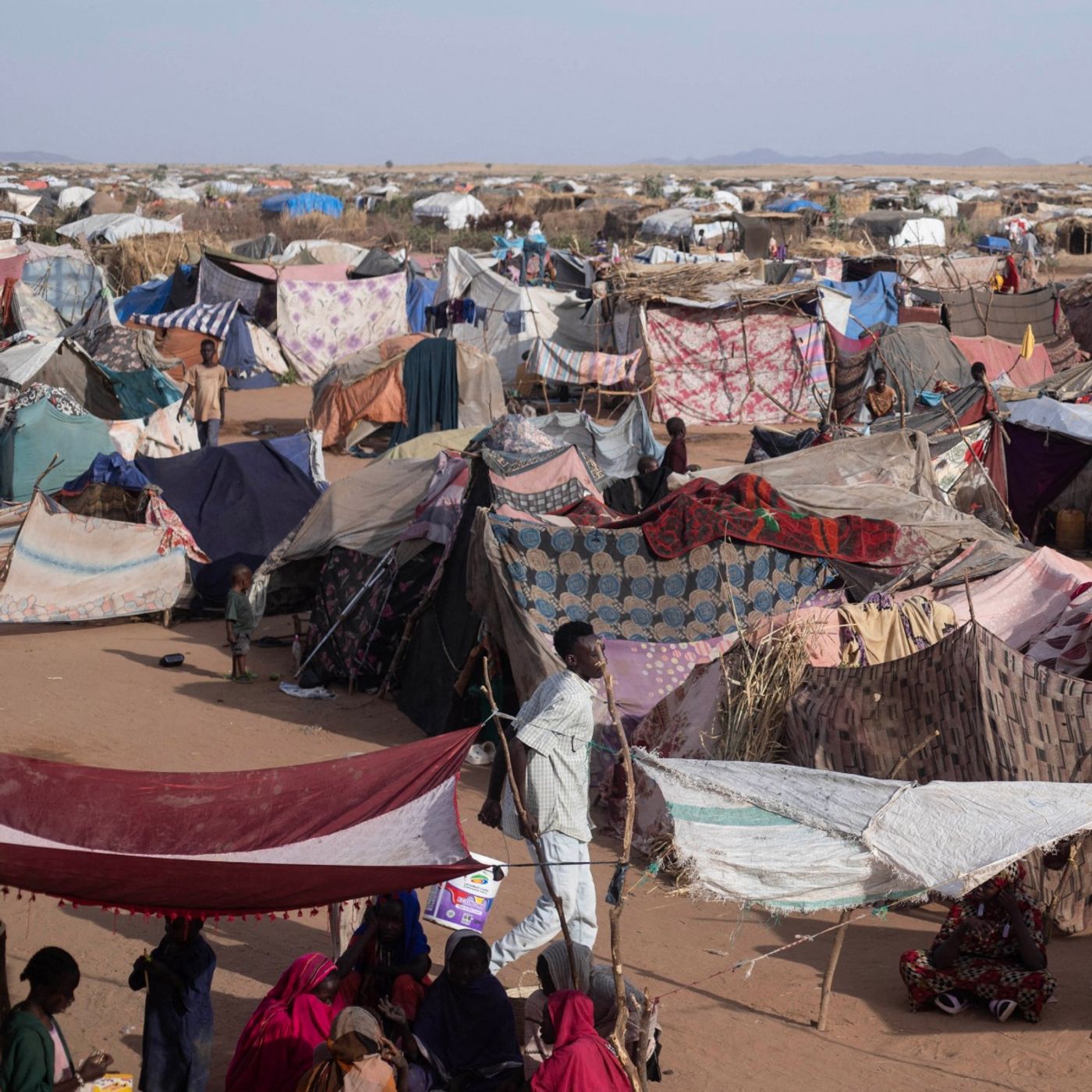
The Daily
The Gold Rush Behind a Civil War
00:27:37
Twenty years ago, a genocidal campaign in the Darfur region of Sudan shocked the world. Now, videos and images of new atrocities have captured global attention once more. Declan Walsh, who has been covering Sudan, discusses one of the worst humanitarian conflicts in decades, and how gold is fueling it.
Loading summary
Transcript60 lines
- [00:00]
A
This podcast is supported by AT&T, the network that helps Americans make connections. When you compare, there is no comparison. AT&T from the New York Times, I'm.
- [00:13]
B
Rachel Abrams, and this is the Daily.
- [00:16]
C
What we're about to talk about next might be the most undercovered story of human misery on planet Earth.
- [00:24]
B
Twenty years ago, a genocidal campaign in the Darfur region of Sudan shocked the world. Now videos and images of new atrocities have captured global attention once more.
- [00:36]
C
150,000 people have been killed, some 12 million displaced, half of them children.
- [00:42]
B
As another bloody conflict has returned to the region.
- [00:45]
C
This week, the people of Al Fashr, beaten and threatened, fled for their lives from a murderous militia that films itself unleashing ferocious violence.
- [00:58]
B
Today, my colleague Declan Walsh on what has become the worst humanitarian conflict in decades and the precious metal that is fueling it. It's Monday, November 10th. Declan, in recent weeks, there have been many horrific images coming out of Sudan, including what appear to be these very graphic execution videos. And this is all occurring as part of a civil war that you have been covering since the start. Tell me what has happened in Darfur over the past couple of weeks.
- [01:37]
C
Well, after 18 months of a pretty brutal siege led by this paramilitary group, the Rapid Support Forces, which had been trying to seize control of this city called El F, it was the last major urban center in western Sudan that was beyond its control. It finally broke the siege and its troops seized the entire city. They expelled the Sudanese military from it. And what followed was really days of reports of atrocities against about a quarter million civilians who'd been trapped inside the city. First we saw these videos start to come out showing bodies piled in buildings, sometimes fighters executing wounded people lying on the ground, often quite casually. These videos, it must be said, are filmed by the fighters themselves as kind of trophies for the war, which is a pattern we've seen since the start of the Sudan war. And since then, that's been added to by accounts from witnesses from people who fled the city, from aid groups, and now from open source investigators who are using satellite images to try and determine what's been happening in El Fahshur. And just last week, a new report from one of those groups saying that they had uncovered evidence that 80 had been killed in one specific incident. Others have found traces, in fact, from satellites of blood on the sands of the area around El FHR.
- [03:08]
B
This is, of course, coming 20 years after another bloody conflict made Darfur basically a byword for human rights atrocities. Can you talk to us about what is different this time?
- [03:20]
C
That's right. I mean, 20 years ago, Darfur, in fact, became synonymous with the word genocide. And that's because at that time, there was an armed milit called the Janjaweed that was leading a lot of the killing in Darfur, a conflict that killed as many as 300,000 people. The difference this time is that the Janjaweed has been replaced by another group called the Rapid Support Forces, effectively its descendant. And that group is better armed than ever before. In the past, the Janjaweed fought with horses and camels. This time, the Rapid Support Forces have got armored vehicles, extremely sophisticated Chinese drones. Last time, the Janjaweed were fighting alongside Sudan's army. This time, it's fighting against the army. And its ambitions are no longer limited to control of Darfur. It's part of this struggle for control of the entire country. Since the war started over two years ago, at least 12 million people have been forced from their homes in Sudan. As many as 400,000 have been killed, by some estimates. And about half the country is facing acute hunger, with many instances of declared famine, mostly in the same region of Darfur. And that's part of this civil war that's been raging in Sudan for the last two and a half years. And that war has led to what is now widely recognized as the world's largest humanitarian crisis.
- [04:49]
B
These numbers are obviously staggering. You mentioned 400,000 people have been killed. And I want to talk about what is driving this conflict, which is something that you spent a lot of time trying to report out, and you're reporting one of Pulitzer actually this year. Tell us about what you have learned about why this conflict has gotten so bloody.
- [05:11]
C
Well, when it started in April 2023, it looked quite simply like a power struggle between two rival generals at the top of Sudan's security forces. But very quickly, that conflict spread from the capital, Khartoum, across the country, engulfing Africa's third largest country. And, you know, the next logical question that stemmed from that, from me, was how are they all funding it?
- [05:36]
B
Right.
- [05:38]
C
So follow the money really became a central part of our reporting. And in part, that's what brought me to Khartoum earlier this year at a very dramatic moment, just as the city was changing hands.
- [05:54]
B
And what did the capital look like at that point after about, I guess, two years of war?
- [05:59]
C
It was absolutely devastated. You know, previously, just to paint you a brief picture, this was a very proud city on the Nile. This is a country that had significant oil resources, deep gold resources. It had a growing middle class. And now much of the city had been laid to waste. Entire neighborhoods of homes that had been looted, buildings destroyed, and in particular, the city centre around the Presidential Palace. The Presidential palace had become one of its biggest battlegrounds. At one point, we climbed into a sniper's nest beside the Nile river and overlooking that palace, and it was amazing to see how it had been absolutely reduced to rubble by the fighting. And it wasn't just that the entire city centre, many tall buildings, were also pocked with bullet marks and had been turned into fighting positions. It was really incredible to see how an entire city could be reduced to rubble by this two years of war, largely, it must be said, without being seen by the outside world. As the Sudanese military pushed into new areas, we followed them and often came across residents who were emerging from their homes kind of stunned. I was frightened and ran away. We talked to this one man who'd seen his neighbor get gunned down by RSF fighters. He heard the shooting, came out from his house. He wanted to know what is happening? So the militia of Oman shooted him. He was shooted by cold blood. And others brought these stories about abuse, about starvation, about people being killed. At one point, we found ourselves at a well that contained maybe a dozen bodies, and we were told that these were people who had been killed by fighters at a nearby checkpoint and dumped there.
- [08:05]
B
What was it like to report in that kind of environment? And what kind of clues could you find to answer your question about what is funding and fueling all of this destruction?
- [08:14]
C
Well, as we went through the city, we found ourselves in the abandoned villas of some of the RSF leaders. In one of them in particular, there were fighters lounging outside this empty swimming pool. The house had an internal elevator, you know, sort of markings of wealth that were such a contrast with the scenes we were seeing outside. And so as we walked through this house, I also found this sheaf of papers that evidently had been abandoned by the Orsath leaders as they left. And when we examined them more closely, they turned out to be corporate documents related to gold mines run by the same armed group in the south of the country. And this was a really important clue into what was funding a lot of the fighting. We already knew that Sudan had a huge gold industry going back many years, but it was very difficult to get a sense of just how important it had become to these groups that were fighting for control and how much it was fueling the fight itself. And here was this clue that really set us further along this track of trying to uncover what's really driving this destructive war in Sudan.
- [09:25]
B
It seems unusual that a war could be boiled down to something as simple as gold. It does remind me of the blood diamonds that fuel the conflict in Sierra Leone. But I'm curious if you see it this way.
- [09:37]
C
Well, look, you're absolutely right. There is a strong parallel between the issue of blood diamonds that were so famous years ago from West Africa and the importance of gold in this conflict. But, you know, Sudan's war is about many things. The fight between these two generals exposed this much deeper rift in the country. Tensions that go back to the genocide 20 years ago in Sudan that were never really healed. And now they've become mixed with ethnic problems, political problems, and focused inside this war that has engulfed the whole country. But on top of that, this is a country with a lot of rich agricultural land. It's got ports on the Red Sea. It's a huge country. So there are many reasons to fight over it. But gold is the one thing that is easy to mine in the middle of the conflict, and that now, of course, worth so much money. Gold prices are higher than they've ever been.
- [10:33]
B
Declan, can you talk a little bit about the gold economy, how much it's worth, if we have any idea how the gold actually moves and whose hands actually touch it along the way?
- [10:43]
C
Well, look, most of it is smuggled, so we don't know exactly, but it certainly, by most estimates, is worth billions of dollars every year. And it's a huge factor on both sides of the war, but particularly for the rsf. And the leader of the group, his name is Lieutenant General Mohammad Hamdan, widely known as Hemity, is a commander who in many ways came to prominence as a result of gold. Back in 2017, his forces seized one of the largest gold mines in the country, and that became a bedrock of the expansion of his military forces, but also of this sort of business empire that he built up that helped to make him such a power broker in the country.
- [11:25]
B
How has this General Hemity managed to both fight a war and mine for gold at the same time? Like, how does that operation work exactly?
- [11:34]
C
To be clear, his forces aren't mining the gold themselves. He relies on this enormous pool of people in Sudan who are willing to work in really terrible conditions to get the gold out of the ground. Very little of it in his areas are extracted through what you might think of as a classic industrial mine with lots of heavy machinery and so on. What actually happens is you've got thousands, sometimes tens of thousands of people who are extracting this gold in really rudimentary ways, hacking it out of the ground, literally using pickaxes, pulling the ore out of the ground. I've seen it firsthand myself when I visited some gold mining operations in Sudan a few years ago. And then they run it through this very rudimentary process to sift it using some pretty simple machines. Then they use mercury to help separate out the gold. That's extremely dangerous for people's health, obviously. And then eventually that gold is processed into sort of semi pure bars and then the tailings or the waste from that is further processed again and they extract the rest of the gold from that. So that's what's known as artisanal gold mining, as opposed to industrial mining, which involves classically, as we would think of a large plant with huge amounts of earth being moved around. So in many ways, the RSF and General Hamdan have relied on the fact that Sudan is such a poor country and there are so many people who are available to do this really tough work to get that ore out of the ground and process it into gold.
- [13:13]
B
Given what we know about how desperate the situation has been in Sudan, how poor people are, obviously there's been a famine for many years and how brutal the RSF has been. Would you call it forced labor? Is it slave labor?
- [13:27]
C
No, I would call it desperate labor. These are people who are turning to gold mining because frankly, there's no other source of income left. The war has devastated the country's economy. This is a country that has a lot of very fertile land and had other sources of income. So you've seen these areas that are now almost entirely controlled by RSF fighters, sometimes with a pretty brutal regime over these gold mines. But people are flocking to it from across the region because that's the only way they can get money to feed themselves or their families. But it's important to say that the RSF isn't doing this alone. Before the war, it was working with mercenaries from the Wagner Group, that's the Russian private military company that's become such a powerful force in this part of Africa.
- [14:17]
B
That's very closely tied to the Kremlin, right?
- [14:19]
C
Yeah, very closely tied to the Kremlin, now known in some other places as Afrika Korps. But in this part of the world, they still call it Wagner. And so Wagner was working with the RSF before the war, helping to extract the gold from some of these areas or to secure the gold as they transported it out of the country. A lot of it seems to have ended up ultimately in Moscow and in the war itself. Our reporting indicated that Wagner or the Russian mercenaries have continued to work with the RSF in parts of Darfur, particularly in this extremely remote area called Song, where you've got dozens of these small gold mines dotted around the terrain where people are mining for gold. But also there is a central location where what they call the tailings, that's the sort of the waste from the initial pass on the gold is processed. And that provides an entirely new process for extracting gold that is almost entirely in the hands of the RSF and their Russian partners.
- [15:25]
B
So you've just laid out very comprehensively one side of the conflict. Tell us about how gold fuels the other side of the conflict.
- [15:32]
C
Sudan's military is also deeply dependent on gold. It's a somewhat different structure on the other side of the country. Over there in the eastern and northern Sudan, there are a handful of these large industrial style mines. And in fact, production of gold, according to the official figures, has now ramped up to the point where more gold is being extracted over there than ever before, even during the relative peace before the war started. So the military controls or has a stake in several of these huge mines. And the military, like the rsf, runs some of these mines in association with foreign players, including some Russian business people.
- [16:14]
B
So Russia, in some ways is supporting and potentially benefiting from both sides of this conflict.
- [16:20]
C
Correct.
- [16:22]
B
Declan, you have both sides of this conflict using gold to fund their war efforts. Obviously, any kind of commodity needs a buyer who is purchasing all of this gold?
- [16:33]
C
Well, we found that nearly all of this gold, which has funded so much of the fighting and created so much misery and destruction in the country, goes to a single destination. And that's a country that has a deep interest in the war and could be the solution to ending it.
- [17:02]
B
We'll be right back.
- [17:05]
D
This podcast is supported by the International Rescue Committee. Co founded with help from Albert Einstein. The IRC has been providing humanitarian aid for more than 90 years. The IRC helps refugees whose lives are disrupted by conflict and disaster, supporting recovery efforts in places like Gaza and Ukraine, and responding within 72 hours of crisis. Donate today by visiting Rescue.orgRebuild brought to you by the Capital One Savor Card. With Savor, you earn unlimited 3% cash back on dining, entertainment and at grocery stores. That's unlimited cash back on ordering takeout from home or unlimited cash back on tickets to concerts and games. So grab a bite, grab a seat, and earn unlimited 3% cash back with the saver card. Capital One what's in your wallet terms apply. See capitalone.com for details.
- [17:57]
E
Mass General Brigham in Boston is an integrated hospital system that's redefining patient care through groundbreaking research and medical innovation. Top researchers and clinicians like Dr. Pamela Jones are helping shape the future of healthcare.
- [18:10]
B
Mass General Brigham is pushing the frontier of what's possible. Scientists collaborating with clinicians, clinicians pushing forward research.
- [18:17]
D
And I think it raises the level of care completely.
- [18:20]
E
To learn more about Mass. Gen. Brigham's multidisciplinary approach to care, go to nytimes.com mgb that's nytimes.com mgb.
- [18:32]
B
Declan, you mentioned that all of this gold is going to a single destination. Where is it going and how did you report that out?
- [18:40]
C
It's really hard to trace gold. You know, it can be melted down. It can be mixed with gold from other places. It doesn't have a sort of geological signature in the same way as diamonds do, for instance. So I reached out to contacts in countries all around Sudan. We went through flight records, company files, in an effort to pull the thread of one single shipment of gold that was coming out of the war zone and ending up in international markets. And that led us to this instance of a single shipment of about $25 million worth of gold that was mined in in Darfur in the middle of the war zone, was smuggled out through South Sudan, neighboring country, and that ended up on this luxury jet, which had been chartered from an American company and flown hundreds of miles across into the Persian Gulf to the country of the United Arab Emirates, which, as it turns out, is where 90% of smuggled gold from the continent of Africa ends up. And nearly all of Sudanese gold is traded as well.
- [19:48]
B
So, okay, that's what it took to trace just one shipment. How much money overall are we talking about that's flowing from Sudan to the uae?
- [19:56]
C
We are talking about billions of dollars in gold. A lot of it is undeclared, so it's hard to know exactly how much. But there was a study a few years ago by a Swiss group which found that in the decade from 2012 to 2022, $115 billion worth of undeclared gold from Africa had ended up in the uae and certainly a decent proportion of that would have come from Sudan. It's a part of the UAE economy that often gets obscured by the country's image, which tends to focus around its gleaming skyscrapers or its place as a location for reality TV shows or a certain amount of glamour. But, you know, the truth is that since the Emirates was a poor country seven or eight decades ago, it has had this gold industry and that gold industry has increased in leaps and bounds in recent years. And a lot of the gold that is traded there comes from Africa. And most of that gold, like the gold that comes from Sudan, is smuggled.
- [21:01]
B
And what have the Emirates said about their role in funding this conflict?
- [21:05]
C
Well, the Emirates staunchly denies that it supports either side in the conflict and in fact says that its main goal in Sudan is to work towards peace. But that contrasts with what we found in our own reporting and what's been said by numerous other sources, including human rights groups, United nations investigators, and even American lawmakers who've had intelligence briefings on this subject. And all of that points to the Emirates supplying weapons to the rsf. Our reporting even showed that some of this smuggling has taken place under the flag of one of the most respected symbols in humanitarian aid, the Red Crescent and the Red Cross. The Emiratis have supplied drones, they've supplied mercenaries to help the rsf, and they've also given political support to the group. Last year, Hemity, the leader of the rsf, did a tour of several African countries in which he met prime ministers and presidents and attempted to sort of burnish his image. And he did that on a Boeing jet which had been supplied by the uae. At the same time, it turns out the Emirates has an ownership stake in one of the largest government controlled industrialized gold mines in the country. That's called the Kush Mine. In other words, there's evidence that the UAE is arming one side in the war while funding the other.
- [22:30]
B
So the UAE is hedging its bets here. We haven't talked about the United States and any role that the US Might have in ending this war. So far, the US has been deeply invested in ending the wars in Ukraine and Gaza, but we have heard next to nothing about anything that the US Intends to do vis a vis Sudan. What has the Trump administration said publicly about this?
- [22:55]
C
Well, if I can pedal back just briefly to the previous administration, the Biden administration, there has certainly been a lot of US Concern among some officials at least, about what's going on in Sudan. The Biden administration recognized that the Emirates was a major factor in fueling the war and privately put pressure on the Emirates to try and stop that to little effect. The Trump administration initially didn't seem to be very concerned with Sudan. But as things have gotten worse in recent months, particularly as the siege of the city Al Fashr we talked about earlier intensified, the Trump administration has suddenly become much more engaged in Sudan. Since September, we've seen The US bring together this diplomatic grouping which it calls the Quad, and that is diplomats from the us from Saudi Arabia, from the United Arab Emirates and Egypt, and they say that they are working towards a ceasefire in the country. It didn't lead to much initially, but at least provides a sort of framework for what it hopes could at least stop the fighting and the war for the first time in over two and a half years.
- [24:01]
B
But given how much money is flowing into the UAE in the form of gold from Sudan, and the fact that they won't even acknowledge that they have a role in the conflict, what incentive would the UAE have in trying to solve this?
- [24:14]
C
Well, this is part of the problem. I mean, critics of this diplomatic initiative say, here's the US trying to bring peace to Sudan, but doing it through these talks with countries that are fueling either side in the war, particularly the uae. And, in fact, even when the UAE signed an agreement as part of the Quad in September denouncing foreign funding in the war, it was continuing to support the RSF and didn't seem to do anything to stop the terrible sea that we've seen in Al Fashr just over the last couple of weeks. So it's really a very uncertain effort. But it has to be said that as these images have been coming out of Sudan, showing these atrocities, it is generating outrage and attention around the world. And, in fact, I've even heard recently from very senior American officials that President Trump himself hasn't spoken much about Sudan, but has privately told officials how appalled he was at some of the things he's been seeing and asking what the United States can do at this stage to try and stop it.
- [25:20]
B
This war in Sudan started in 2023, and it has gotten so much less attention than the war in Gaza, which also started at the end of 2023. And we may now be talking about Sudan because there is a ceasefire, a fragile ceasefire, but a ceasefire nonetheless in Gaza. And. And I wonder whether these two things are related, that there is now room and space and attention to devote to this conflict in Sudan. Do you see it that way?
- [25:49]
C
I mean, look, one of the most striking things about this war in Sudan is just how little attention it's had, despite the immense destruction and human suffering that it has brought. But what's changed recently, I think, is that we're seeing these images coming out as there have been in Gaza that captured people's imaginations because they are so horrified with what they've been seeing. But the question now is, when those images do go away, whether public attention or even global attention will also wane and with it, even the the small amount of momentum that exists now towards finding a solution to the war.
- [26:43]
B
Declan, thank you so much.
- [26:44]
C
Thank you, Rachel.
- [27:00]
B
We'll be right back.
- [27:05]
A
In a world full of information, we're all searching for ways to understand it. TikTok helps millions do just that. On TikTok, entire communities are turning curiosity into connection. History lovers share stories that bring the past into focus, from ancient civilizations to modern traditions. Scientists and educators break down big ideas with experiments and insights that make discovery feel approachable. Book fans trade recommendations that revive old classics and propel new authors onto bestseller lists. Parents swap advice that feels both practical and reassuring, while home cooks share recipes and food traditions that make culture tangible and personal. And across art, language and everyday tips, people on TikTok give fresh perspectives on the world we share. The result is discovery, new ideas spark conversations, and fresh perspectives spread across communities. TikTok is a place for curiosity where learning is fun, connection is meaningful, and discovery never stops.
- [28:04]
D
This podcast is supported by NBC News. At a moment when the news feels overwhelming, NBC News works to bring clarity and context from every corner. NBC News reports on the facts that shape daily life and the stories that show who we are. It's coverage that looks deeper, listens wider and puts people at the center so you can see the full picture and form your own opinion. Facts that inform stories that connect NBC News reporting for America.
- [28:36]
B
Here's what else you need to know today. After a procedural vote Sunday night in the US Senate, the federal government appears poised to end its record breaking shutdown. The deal saw a handful of members of the Democratic Caucus Join all 53 Republican senators to advance a package of bills that would fund the government through January 30. In addition, the deal would fund programs related to agriculture, military construction and legislative programs for nearly a year. It would also require the government to rehire federal workers who were laid off during the shutdown. The deal, which Democratic Leader Chuck Schumer did not support, includes no guarantee on extending the health insurance subsidies that have been at the center of Democrats demand. The funding package must now be fully debated and passed by the Senate and approved by the House before the government can reopen. And Two of the BBC's top officials resigned abruptly on Sunday following a report suggesting that a program made by the public service broadcaster had misleadingly edited a speech by President Trump. The resignation of the officials, the BBC's director general and its chief executive officer for BBC News came several days after the Daily Telegraph published details of a leaked internal memo which argued that a documentary the broadcaster aired had juxtaposed comments by the president in a way that made it appear he'd explicitly encouraged the January 6 Capitol riot. Today's episode was produced by Mooj Zaidi, Nina Feldman and Sydney Harper, with help from Jessica Chung and Ricky Novetsky. It was edited by Michael Benoit with help from Chris Haxel, contains original music by Marian Lozano and was engineered by Alyssa Moxley. That's it for the Daily. I'm Rachel Abrams. See you tomorrow.
- [30:42]
E
This podcast is supported by BetterHelp. You might think therapy isn't for you, but millions swear by it, and your FSA or HSA can help cover the cost. So now's the perfect time. Before funds expire, BetterHelp makes it simple. Answer a few questions online, match with a licensed therapist, and work on what's keeping you up at night. Head to betterhelp.com thedaily to get 10 off your first month. That's betterhelp.com thedaily.